The post 18 Things to Do in Dubrovnik: City Walls, Lokrum & Sunset from Srđ appeared first on Destination Well Known.
]]>The Republic of Ragusa stayed independent for several hundred years by trading and negotiating its way around both Venice and the Ottomans, and that wealth is what you see in the palaces, the monasteries and the almost two kilometres of city walls.
The city was nearly flattened by the earthquake of 1667 and shelled during the siege of 1991, but today it is on the UNESCO World Heritage List and busier than ever.
That is also the problem. On a day with three cruise ships in port, Stradun is so packed that it’s no fun being there.
Here are my picks for the 18 best things to see and do in Dubrovnik, with prices, opening hours and tips on how to avoid the worst of the crowds. Prices are given in euros.
My most important rule of thumb is to do the city walls and the Old Town early in the morning or late in the afternoon, and spend the middle of the day on Lokrum, at the beach or on a boat trip.
It’s also worth considering the Dubrovnik Pass, because the city walls alone cost almost as much as a one-day pass covering all the museums and the buses.
Planning your trip to Dubrovnik at the last minute? 🇭🇷
Here are some of the best things to do, hotels and other tips for your trip to Dubrovnik.
🎡 Top Activities & Tours:
1. Experience the city walls without the worst of the crowds on a guided walk early in the morning or at sunset
2. Get to know the Old Town's side streets on a guided walking tour with a local guide
3. Follow in Cersei's footsteps on a Game of Thrones tour with a boat trip to Lokrum and the Iron Throne
🛌 Best Hotels:
1. Hotel Excelsior Dubrovnik is an iconic luxury hotel dating from 1913, with private beaches and views of the Old Town
2. Hotel More is a charming boutique hotel on the cliff above Banje Beach, with sea views
3. City Walls Hostel is a clean, central hostel in the Old Town, perfect for a tight budget
1. The city walls around the Old Town
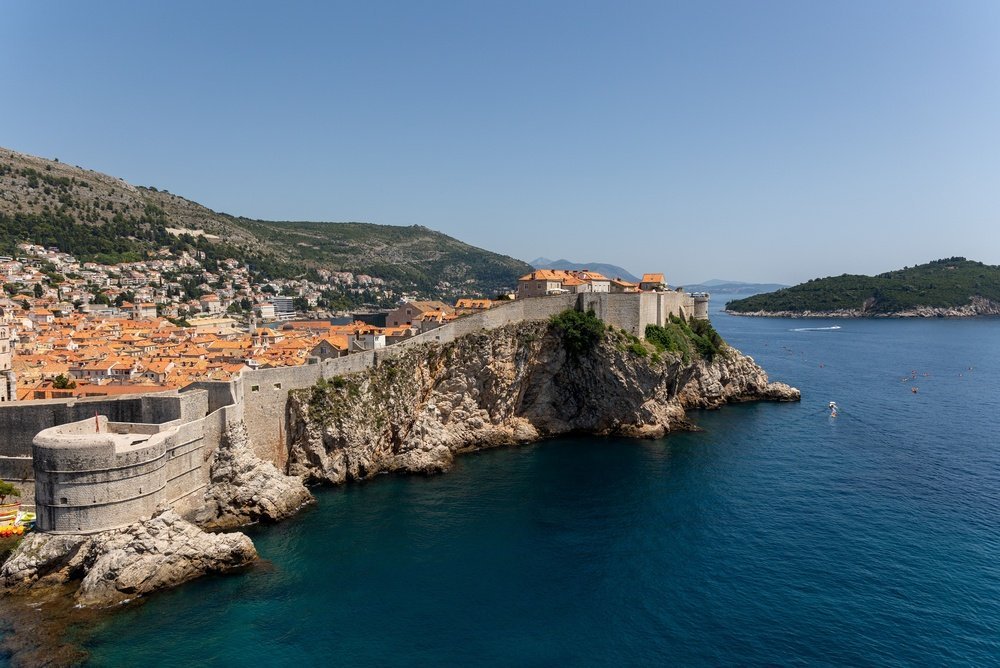
The city walls are the reason most people come to Dubrovnik, and they don’t disappoint. You walk all the way around the Old Town on roughly 1,940 metres of wall, which in places is 25 metres high and up to 6 metres thick on the landward side. The walk takes an hour and a half to two hours, with stops at the Minčeta Tower in the north-western corner, which is the highest point, and Fort Bokar facing Lovrijenac. Along the way you look down on the red rooftops, into people’s back yards and out over Lokrum.
A ticket costs around 40 euros for adults and 15 euros for children and young people aged 7 to 18, and it also covers Fort Lovrijenac, but you can only walk the walls once, as re-entry isn’t allowed. In summer the walls open at 8am and don’t close until the evening, while in winter they’re usually only open from 9am to 3pm. The only day they close is 25 December. There are three entrances: by the Pile Gate (the busiest), by the Ploče Gate and by St John’s Fortress down by the old harbour.
My tip is to go up just as they open, or two hours before closing. In the middle of a summer’s day there’s neither shade nor space, and the stone gets scorching hot. Bring water, because the few stalls up on the walls overcharge. If you start at the Ploče Gate instead of Pile, you’ll usually avoid the longest queue, and you’ll get the steepest steps out of the way first.
Book a guided walk on the city walls early in the morning or at sunset here.
2. Stradun and the Old Town
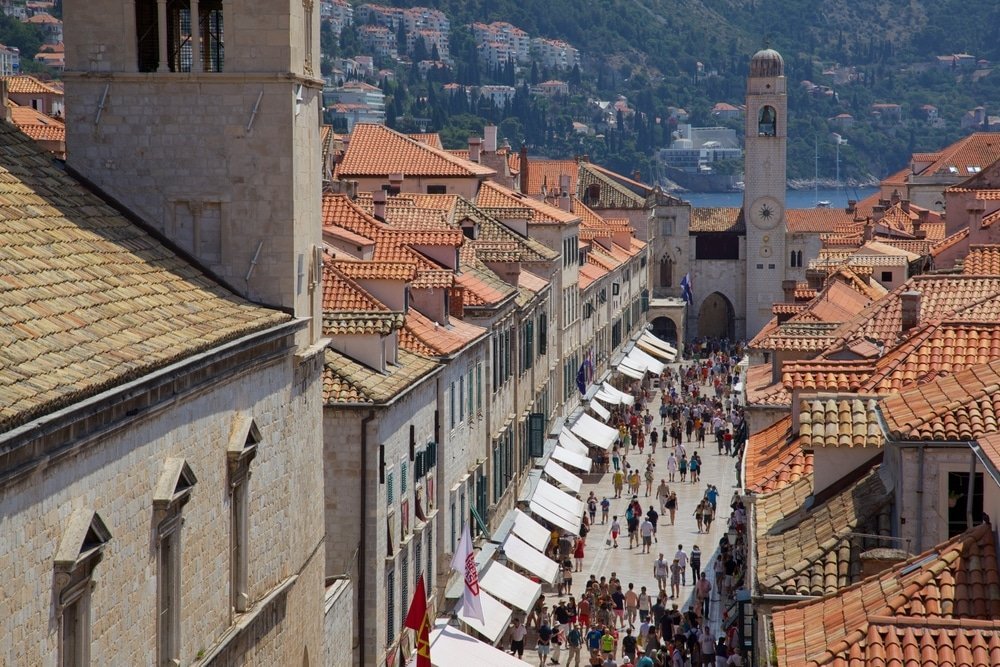
Stradun is the 300-metre-long main street of polished limestone that runs from the Pile Gate to the bell tower on Luža Square. The street was once a channel between the island where the city began and the mainland, and after the 1667 earthquake the houses along it were rebuilt in the same Baroque style, with a shop on the ground floor and living quarters above. At the Pile end stands Onofrio’s Great Fountain from 1438, which still supplies drinking water, and at the other end you’ll find Orlando’s Column, the Sponza Palace and the Church of St Blaise, with the statue of the city’s patron saint holding a model of the city in his hand.
The best thing about the Old Town, though, is the side streets. North of Stradun they climb as steep staircases up towards the walls, and this is where you’ll find the washing lines, the cats and the little konobas that don’t rely on cruise passengers. All of this is free, and you can also pop into the Sponza Palace and its atrium without a ticket.
Take a stroll at 7 or 8am before the shops open, and do it again after 9pm when the day-trippers have gone. This is where most visitors stay, and the Old Town is the first area in my guide to where to stay in Dubrovnik. You can also see hotels in the Old Town here.
Book a guided walking tour of the Old Town with a local guide here.
3. The Rector’s Palace
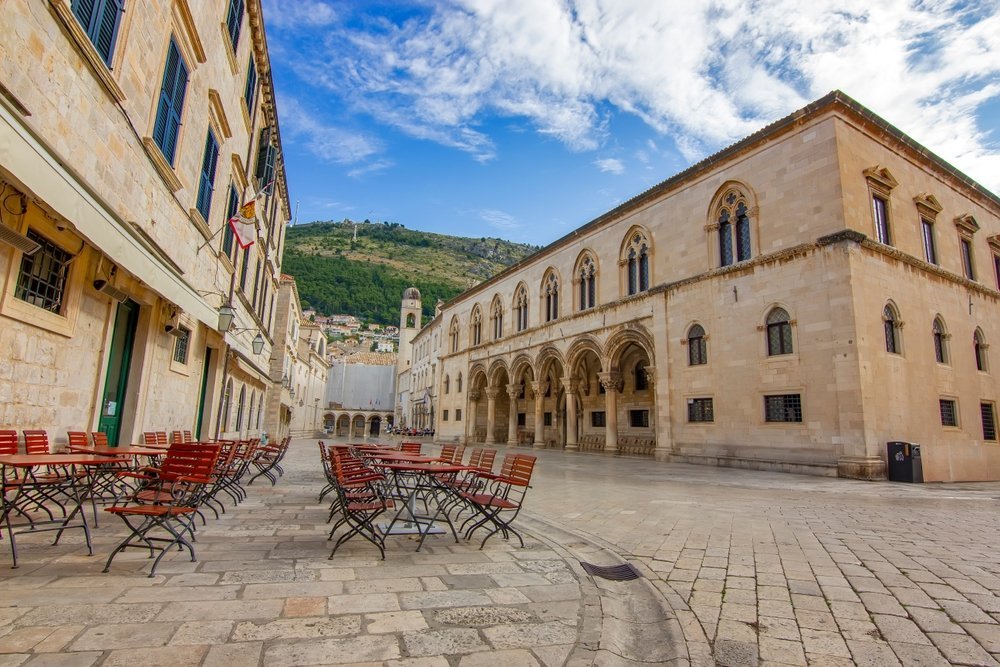
Knežev dvor was the seat of the republic’s rector, who was elected for one month at a time and wasn’t allowed to leave the palace during his term, so that no one could gather too much power. The building is a mix of Gothic and Renaissance from the 15th century, and above the entrance to the council chamber is the inscription “Obliti privatorum publica curate”, meaning forget your private interests and take care of the public good. The atrium with its arched colonnades is still used for concerts during the summer festival.
Today the palace houses the Cultural History Museum, with around 10,000 objects from the late 15th century to the early 20th century, including the rector’s private chambers, portraits, furniture and coins. A ticket costs 15 euros, while the combined ticket for all ten museums run by Dubrovnik Museums costs 20 euros and is valid for seven days. From April to October it’s open daily from 9am to 6pm; in winter it’s open from 9am to 4pm and closed on Mondays.
My tip is to get the combined ticket, because it also covers the Maritime Museum in St John’s Fortress and the Homeland War Museum up on Srđ, so the 5-euro difference quickly pays for itself. The palace stands on the square behind the bell tower, 30 seconds from Stradun.
4. The Franciscan Monastery and the old pharmacy
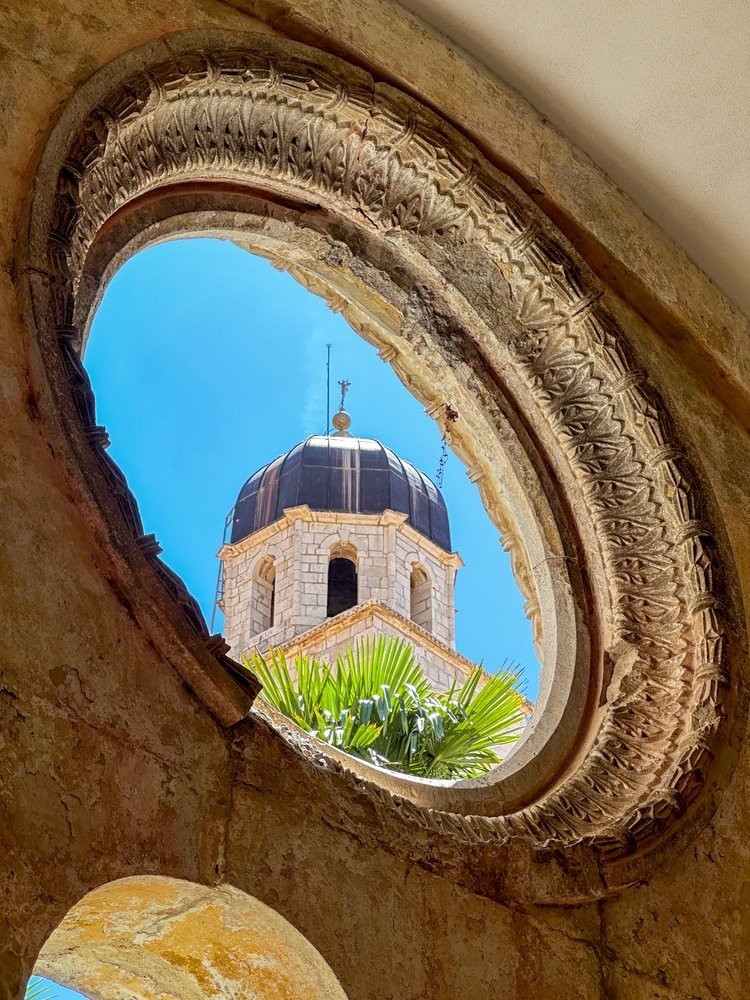
Just inside the Pile Gate, on your left as you step onto Stradun, is the Franciscan Monastery, home to one of the oldest pharmacies in Europe. The monks opened it in 1317 and it has served customers ever since, so you can still buy creams made to the monastery’s old recipes in the little shop facing the street. The cloister from 1360 is the most beautiful space in the Old Town, with double columns where every capital has its own face or animal, and orange trees and palms in the middle.
The monastery museum displays the old pharmacy’s jars, mortars and distilling equipment, a collection of old paintings and parts of the library, which is one of the largest monastery libraries in Croatia. Admission costs around 10 euros, and it’s normally open daily from 9am to 6pm, but check the sign at the entrance, as the hours change with the season. Above the church portal facing Stradun hangs a Pietà from 1498, one of the few things that survived the earthquake.
My tip is to go in at 9am, before the first groups have made their way here from the harbour. The cloister is small, and with 40 people in it the atmosphere is gone.
5. Dominican Monastery
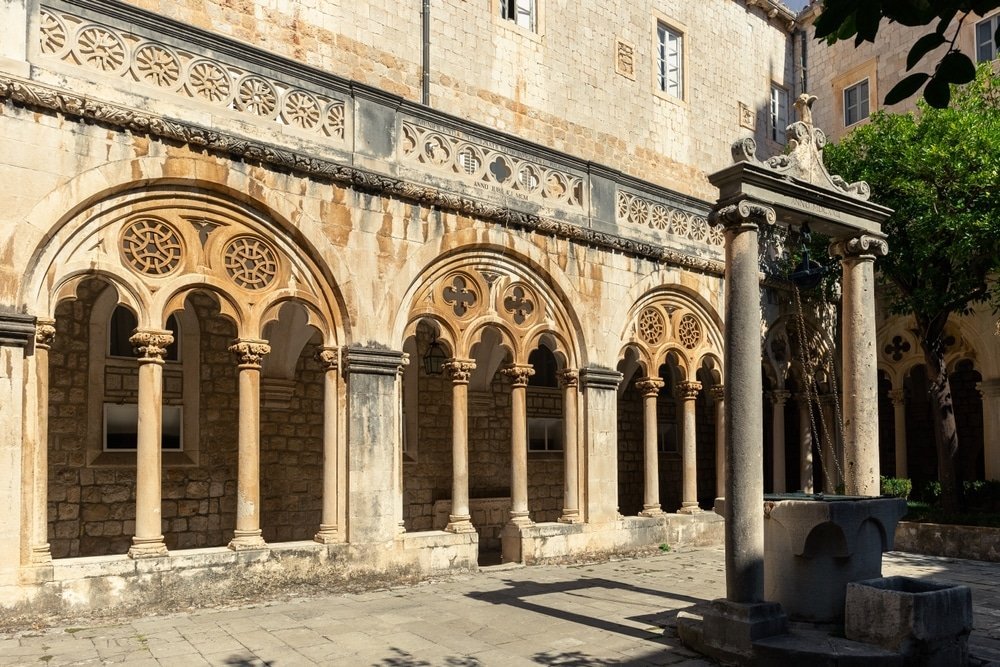
At the opposite end of the Old Town, squeezed up against the city walls by the Ploče Gate, stands the Dominican Monastery. Far fewer people visit it, even though in my opinion it’s at least as good. The cloister was built between 1456 and 1469 in a mix of Gothic and Renaissance styles, with 24 carved saints in the vaulting and a 16th-century well in the middle. Look out for the staircase up to the entrance, where the balusters have been bricked in so that nobody below could peek up the ladies’ dresses.
The museum in the old chapter house holds the monastery’s greatest treasure, Titian’s painting of St Blaise with Mary Magdalene from 1550, along with a painting by Nikola Božidarević showing what Dubrovnik looked like before the earthquake. The library was founded in 1492 and contains 239 incunabula and around 100 medieval manuscripts. Admission costs about €5, and it’s usually open from 9am to 6pm.
Combine your visit with a walk up Svetog Dominika, the street that runs alongside the monastery up to the Ploče Gate. It’s one of the best spots for photographing the walls and Fort Revelin, and there’s rarely anyone in the way.
6. The Cathedral and Treasury
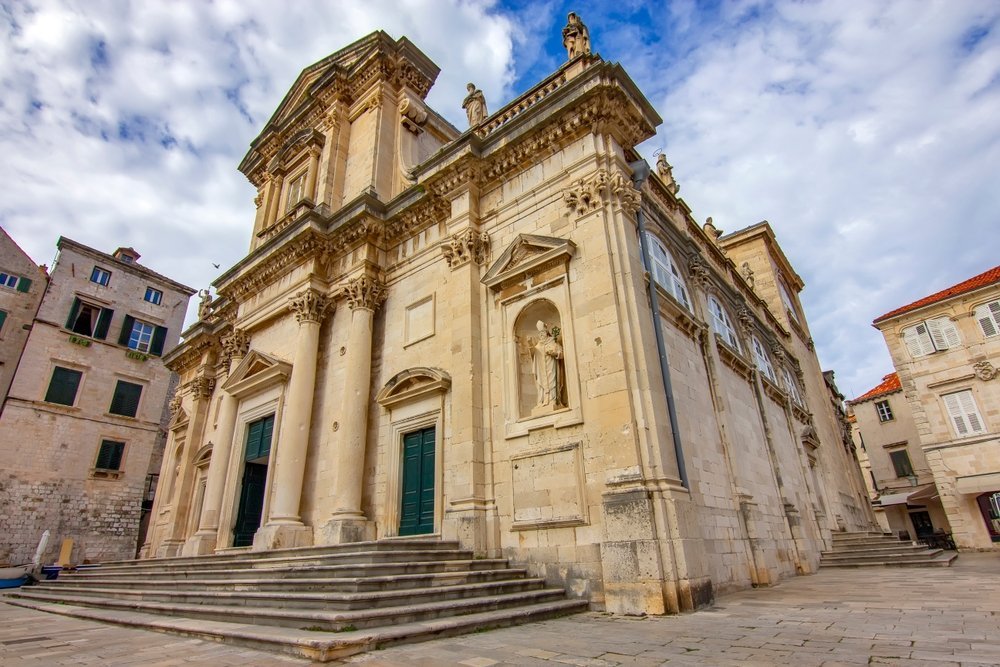
Legend has it that Richard the Lionheart paid for the first cathedral as thanks for surviving a shipwreck off Lokrum in 1192. The Romanesque church collapsed in 1667, and the Baroque cathedral you see today was built between 1671 and 1713, with a pale dome that’s visible from all along the city walls. Above the high altar hangs a polyptych of the Assumption of the Virgin, attributed to Titian’s workshop, and that alone is reason enough to go inside.
The treasury beside the altar holds 132 relics, the most important being the head, arm and leg of St Blaise in gold and enamel reliquaries, the head reliquary dating back to the 11th century. The church itself is free, while the treasury costs a small fee of about €4. It’s usually open from 9am to 5pm Monday to Saturday, while on Sundays it only opens after the morning Mass, and you can’t get in during services.
The cathedral stands on the square behind the Rector’s Palace, so visit the two together. If you’re here on 3 February, the whole city celebrates St Blaise with a procession in which the relics are carried through the streets, and it’s the one day of the year when Dubrovnik belongs to the locals.
7. Fort Lovrijenac and Gradac Park
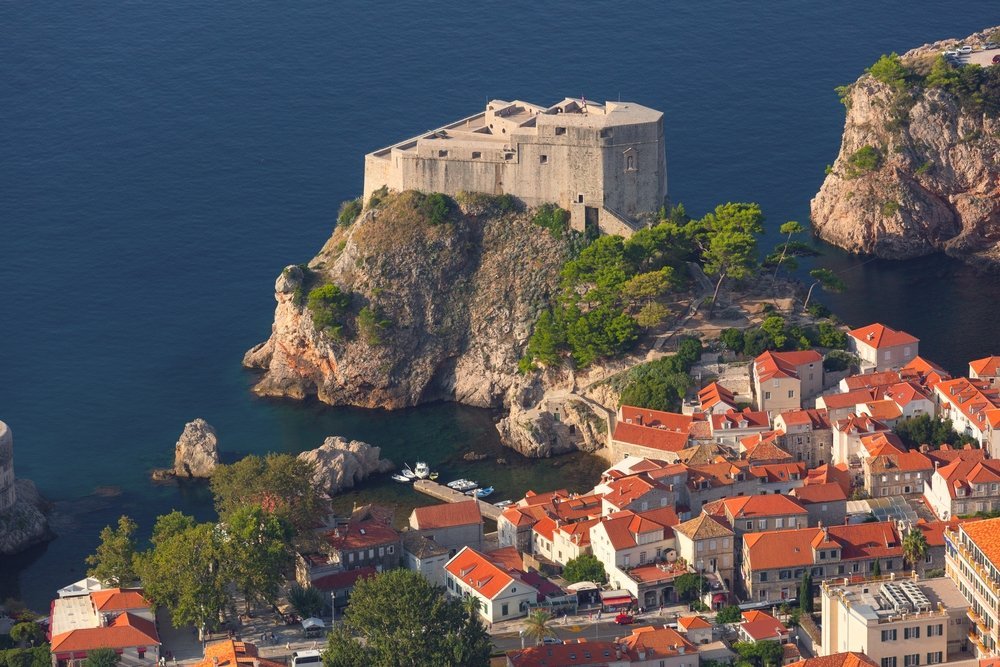
Lovrijenac towers on a 37-metre-high rock just west of the Pile Gate, outside the city walls themselves, and was built to keep Venice off the best rock in town. The fort is first mentioned in 1301, and above the gate is the republic’s motto “Non bene pro toto libertas venditur auro”: freedom is not sold for all the gold in the world. The walls facing the sea and the land are very thick, while the wall facing the city is thin, so that a commander could never turn the cannons on his own people.
The fort is included in the city walls ticket, and if you only buy entry here, it costs about €15. Opening hours largely follow those of the walls, so expect 8am until early evening in summer. The view back towards the Old Town and Fort Bokar is the best in the city, and this is where Hamlet is staged during the summer festival and where Game of Thrones filmed the Red Keep.
Afterwards, carry on along the path behind the fort to Gradac Park, a small pine grove on the cliffs with benches and clear views of Lovrijenac and the walls. The park is free, there’s hardly ever anyone there, and it faces west, so it’s my pick for the best place in the city to watch the sunset without buying an expensive drink.
8. Srđ Cable Car and Fort Imperial
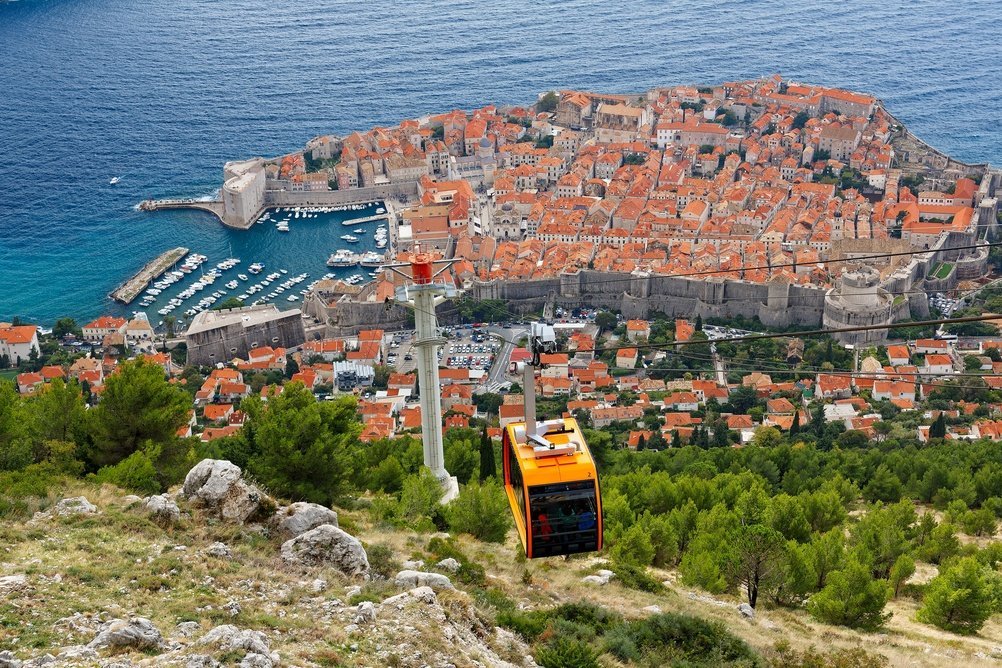
Mount Srđ rises 412 metres directly behind the Old Town, and the view from the top is the Dubrovnik you know from postcards: the entire walled city, with Lokrum and the Elaphiti Islands in the background. The cable car, dating from 1969, was shot to pieces during the war and reopened in 2010. It takes you up in about four minutes from the lower station, a few minutes’ walk uphill from the Buža Gate in the northern city walls.
The ride isn’t cheap. A return ticket costs €30, a single €17, and children aged 4 to 12 pay €8 for a return. It runs from 9am until as late as midnight in high summer, but is closed from December to March inclusive. At the top is Fort Imperial, built by the French in the early 19th century, which now houses the Homeland War Museum about the siege of Dubrovnik. The museum is open from 8.30am to 10pm from April to September, with shorter hours in winter, and is included in the Dubrovnik Museums combined ticket.
My tip is to buy a single ticket up and walk down the zigzagging path that ends at the Buža Gate. It takes about an hour, and the view stays with you all the way. If you’re fit, you can walk both ways and save €30, but don’t do it in the middle of the day in July. Go up an hour before sunset and stay until the lights come on in the Old Town.
Book a sunset tour to the top of Srđ with a glass of wine here.
9. Lokrum
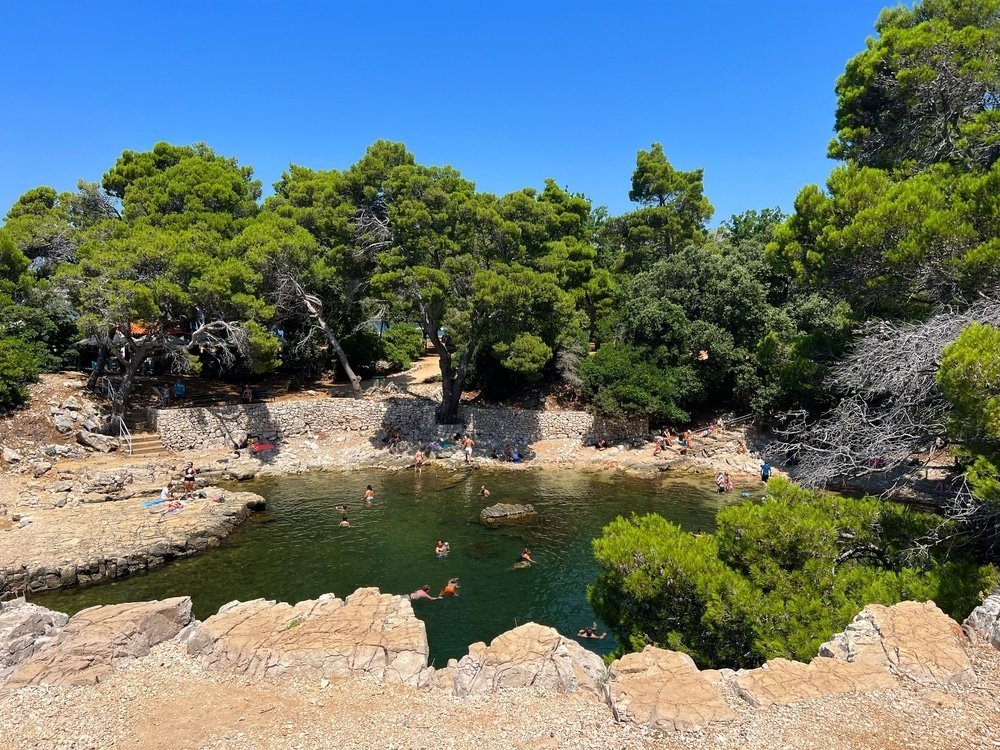
Lokrum lies 600 metres off the old harbour and is the easiest escape from the stone and the crowds of the Old Town. The island is a nature reserve with no hotels or cars, and from the jetty you walk through pine forest and a botanical garden to the 11th-century Benedictine monastery, where peacocks strut among the ruins. Archduke Maximilian of Austria used the island as a summer retreat and brought both peacocks and exotic plants here in the 19th century.
Boats leave the old harbour roughly every half hour from early morning, and the ticket including the return trip and entry to the reserve costs €30 for adults and €5 for children aged 7 to 18, while the youngest go free. The last boat back leaves in the late afternoon outside the high season and later in summer, so check the timetable at the ticket office, and expect the island to be closed in winter.
Take a swim in the Dead Sea, a small saltwater lake at the southern end that’s connected to the sea through the rock and stays completely calm even when there are waves outside. Then head up to Fort Royal at the top for views back towards the city, and find the replica of the Iron Throne in the monastery if you’re a Game of Thrones fan. Bring water shoes and water, and catch one of the first boats, because by midday the rocks by the harbour are packed.
Book a boat trip along the city walls to Lokrum and Betina Cave here.
10. Banje Beach and Sveti Jakov
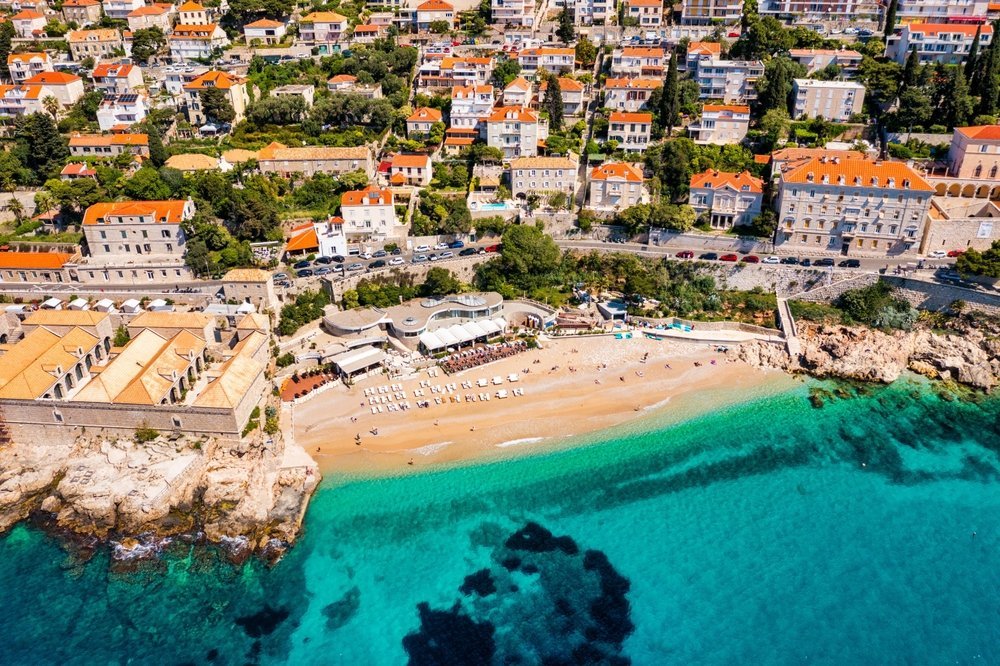
Banje is the town beach, a five-minute walk east of the Ploče Gate, and it has a view few beaches can match: the city walls and St John’s Fortress to the right, Lokrum straight ahead. The beach is pebbly and public, so you can lay your towel down for free at one end, while the beach club at the other rents out sunloungers at prices I don’t think make sense. In the middle of the day in July and August it’s packed.
If you want some peace, carry on for 20 to 25 minutes along Vlaha Bukovca street past the villas to Sveti Jakov. Here a long flight of steps leads down to a small sand and pebble beach facing straight towards the Old Town and Lokrum, and in the late afternoon you get the sunset behind the city walls. There’s a small bar and few people, precisely because you have to climb back up the steps.
Both beaches belong to the Ploče district, which sits on the hill just outside the eastern city gate and has the town’s most expensive hotels and the best views. You can see hotels in Ploče here.
11. Kayaking beneath the city walls
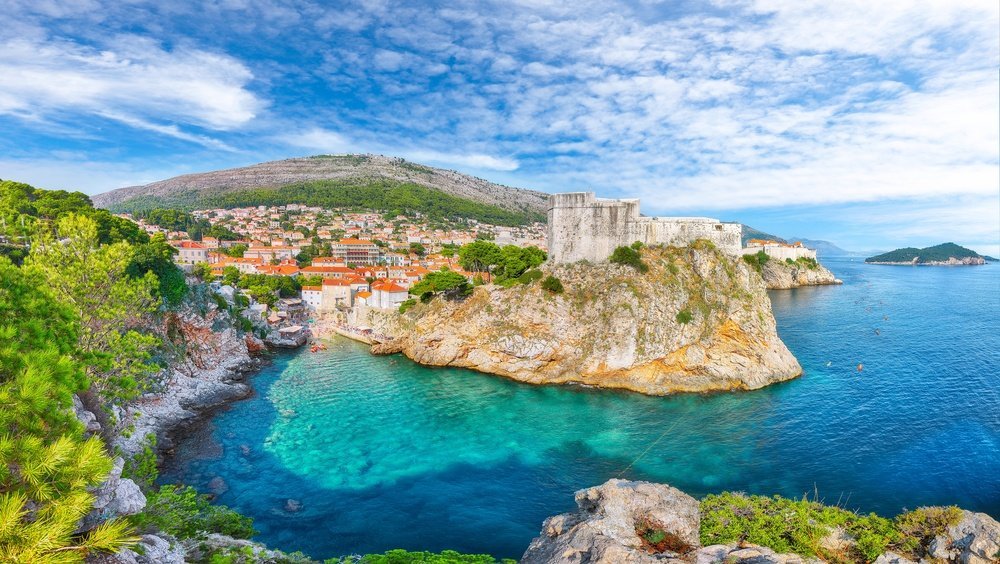
The best way to see the walls is from below. Kayak tours set off from the little cove below the Pile Gate, right under Lovrijenac, and paddle along the whole south side of the Old Town, where the walls rise straight out of the water, then on around Lokrum and into Betina Cave, which can only be reached from the sea. Here you stop for a swim and some snorkelling before heading back past the old harbour.
A two- to three-hour guided tour typically costs 25 to 35 euros, and the sunset tours with a glass of wine on a beach are around 40 euros. You don’t need any experience, the kayaks are stable two-seaters, and the guides adjust the pace. Tours are cancelled in strong winds, so don’t book one on your only free day.
Choose an early morning tour if you want the sea to yourself, or the sunset tour if you want the most beautiful light on the walls. In the middle of the day the water is full of boats circling the island.
Book a kayak tour beneath the city walls with snorkelling in Betina Cave here.
12. The Game of Thrones locations
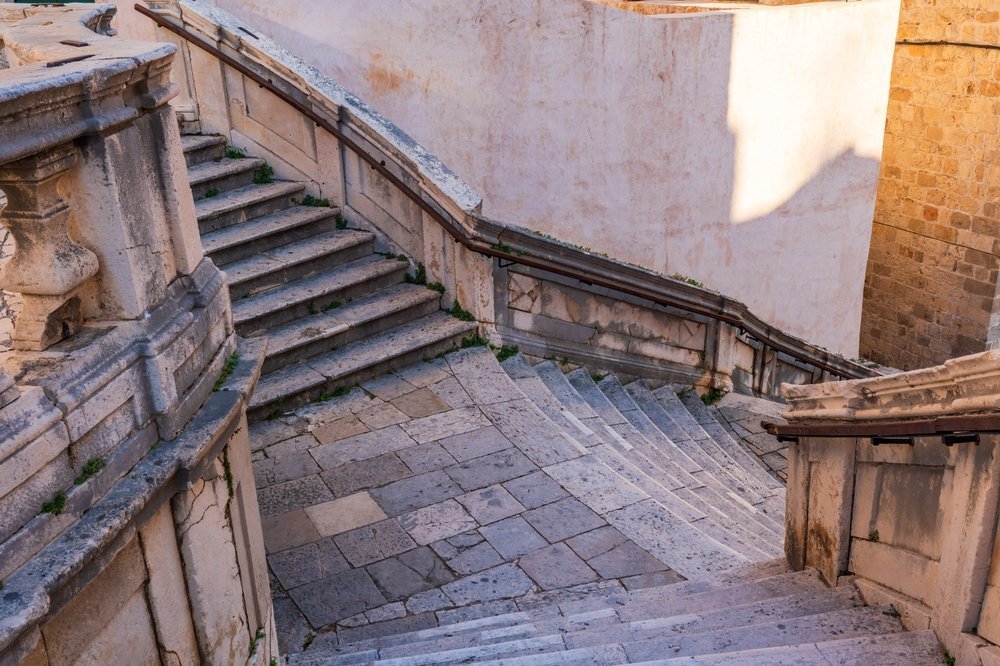
Dubrovnik was King’s Landing from season 2 onwards, and even if you’ve never watched the series, the locations are some of the best corners of the town. The bay below the Pile Gate was Blackwater Bay, Lovrijenac was the Red Keep, and the Minčeta Tower on the city walls was the House of the Undying in Qarth. The Jesuit Stairs up to the Church of St Ignatius were the setting for Cersei’s Walk of Shame, Gradac Park hosted the Purple Wedding, and Lokrum and Trsteno were used for Qarth and the gardens of the Red Keep.
The Jesuit Stairs from 1738 were modelled on the Spanish Steps in Rome and are lovely in their own right, and the baroque church at the top is free to enter. You can see all of it on your own without paying, and a route from Pile via the stairs to Gradac takes about an hour. If you want the stories from the filming and stills from the scenes to compare with, a guided tour makes sense, and most finish with a boat trip to Lokrum and the Iron Throne.
Walk the stairs early in the morning if you want them free of people. By midday there are several groups on them at once, and the shops around Gundulić Square below sell Game of Thrones souvenirs in quantities that are hard to take seriously.
Book a Game of Thrones tour with a boat trip to Lokrum and the Iron Throne here.
13. The Buža bars on the rocks
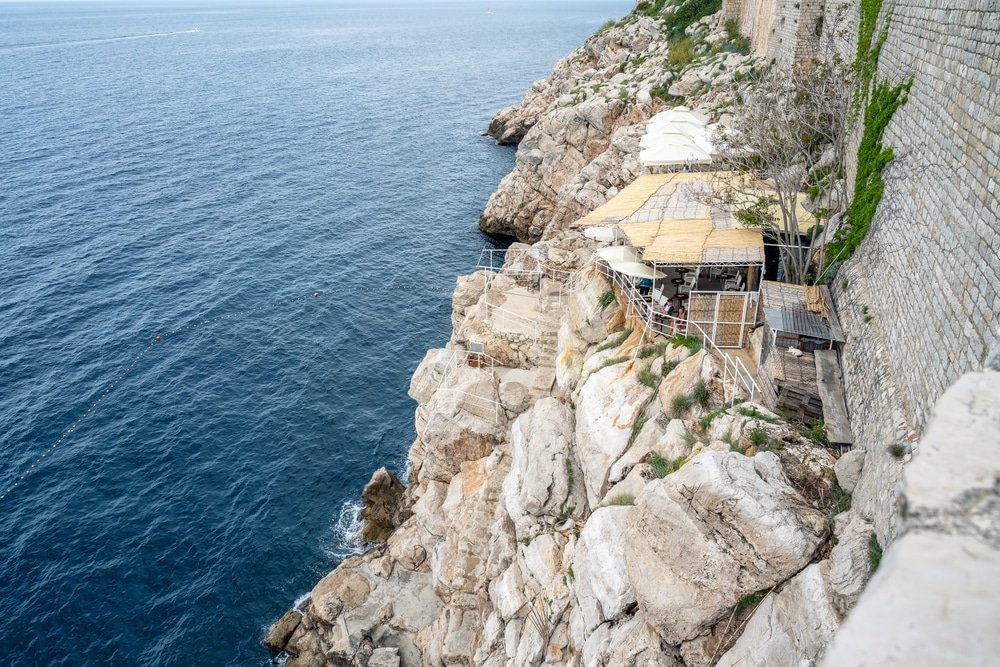
Buža means hole, and that’s exactly what you need to look for: two holes in the southern city wall that lead out to bars on the rocks with the Adriatic right beneath your feet. Follow the hand-painted “Cold drinks” sign from the square by the Church of St Ignatius and you’ll find one of them, then walk a little further east for the other. Both consist of plastic chairs and a few steps down to the water, and that’s exactly the charm.
You’re paying for the view, so expect prices well above the rest of town, and bring cash. The bars only open in season, and on evenings in high season you may have to wait for a chair. On the plus side, you can jump into the sea from the rocks, which the local youngsters do from spots I wouldn’t recommend.
My tip is to come in the morning with your swimwear, swim from the rocks and have a coffee while the place is still half empty. The sunset is better from Gradac Park, and there you won’t have to pay 8 euros for a beer.
14. War Photo Limited
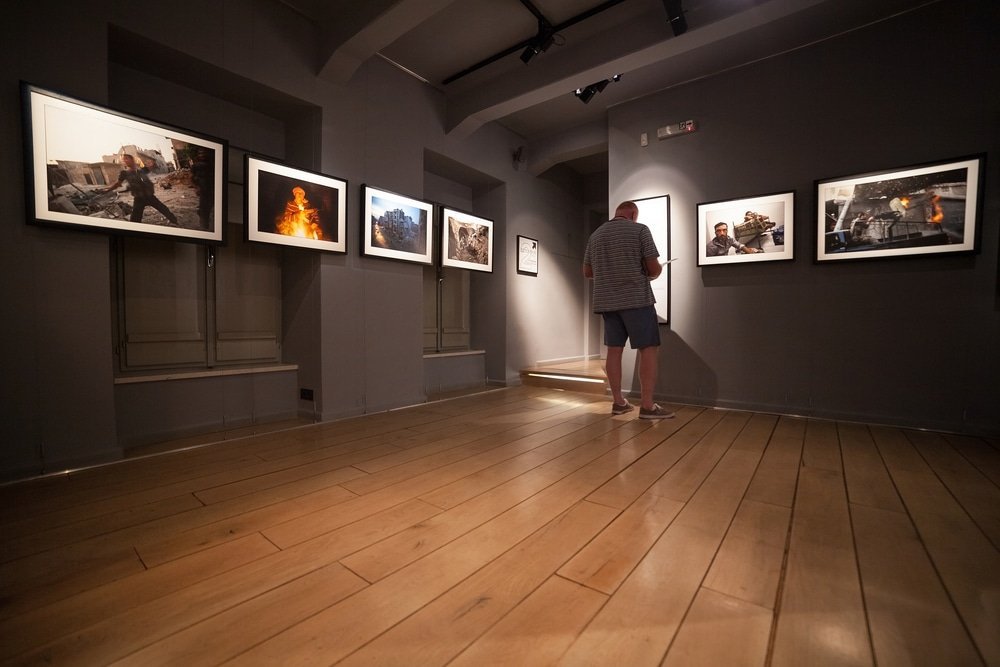
On a side street off Stradun, at Antuninska 6, is a small gallery that’s more relevant than most of the town’s museums. War Photo Limited shows war photography, with a permanent exhibition on the break-up of Yugoslavia and the wars in Croatia, Bosnia and Kosovo, shot by some of the best photojournalists who covered them. On top of that come changing exhibitions on conflicts elsewhere in the world.
Admission costs 10 euros and 6 euros for students, and the gallery is open daily from April to October, 10am to 10pm in the summer months and 10am to 5pm in April and October. It’s closed from November to March. Allow about an hour, and be aware that the images are powerful and not suitable for young children.
I think it makes most sense to visit the gallery on the same day as the Homeland War Museum on Srđ. One shows the bigger picture, the other shows what happened to this particular town when the shells fell on the roofs you’ve just walked around on the walls.
15. The Elaphiti Islands
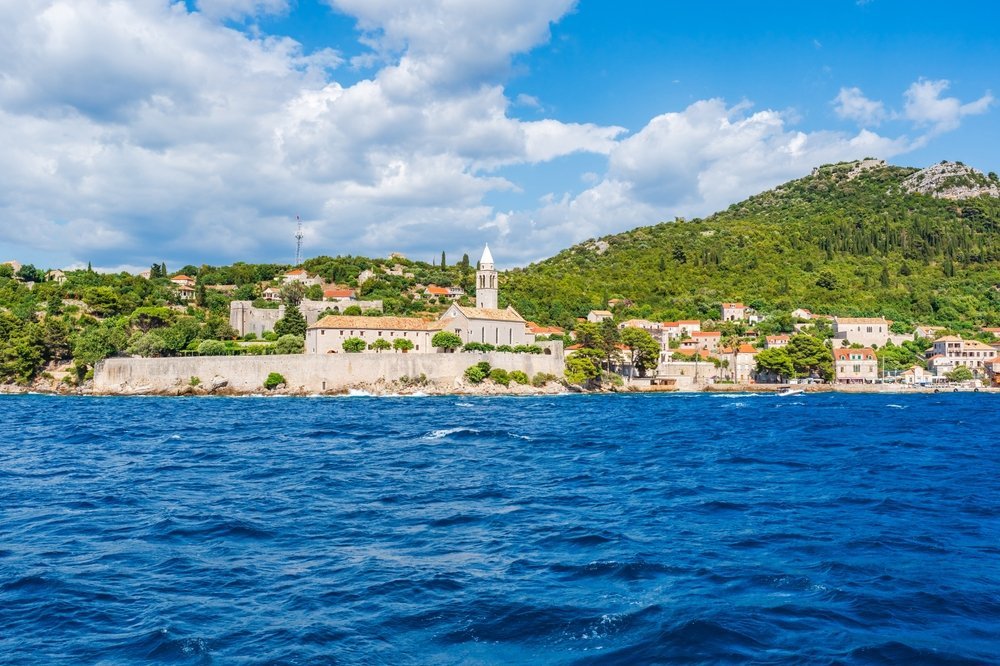
Koločep, Lopud and Šipan lie in a row off the coast north-west of Dubrovnik, and they’re largely car-free, with small harbour villages, pine forests and summer houses from the republic’s golden age. Lopud is my favourite, because in 20 to 25 minutes you can walk across the island to Šunj, one of the few proper sandy beaches in the area, with shallow water stretching far out. Koločep is the smallest and closest, and Šipan the largest, with olive groves and vineyards.
The cheap option is the local ferry, Jadrolinija’s line 807 from the port in Gruž, which sails to Koločep in about half an hour and to Lopud in about an hour, and a ticket costs just a few euros each way. Departures are few, especially in winter, so check the timetable and plan your return before you get off. The alternative is a full-day boat trip with lunch and swimming stops on all three islands, which typically costs 40 to 65 euros.
If you want to catch an early ferry, it’s handy to stay in the harbour district of Gruž, which is also home to the bus station and the market, and where prices are lower than inside the walls. You can see hotels in Gruž here.
Book a full-day boat trip to the Elaphiti Islands with lunch and swimming stops here.
16. Cavtat
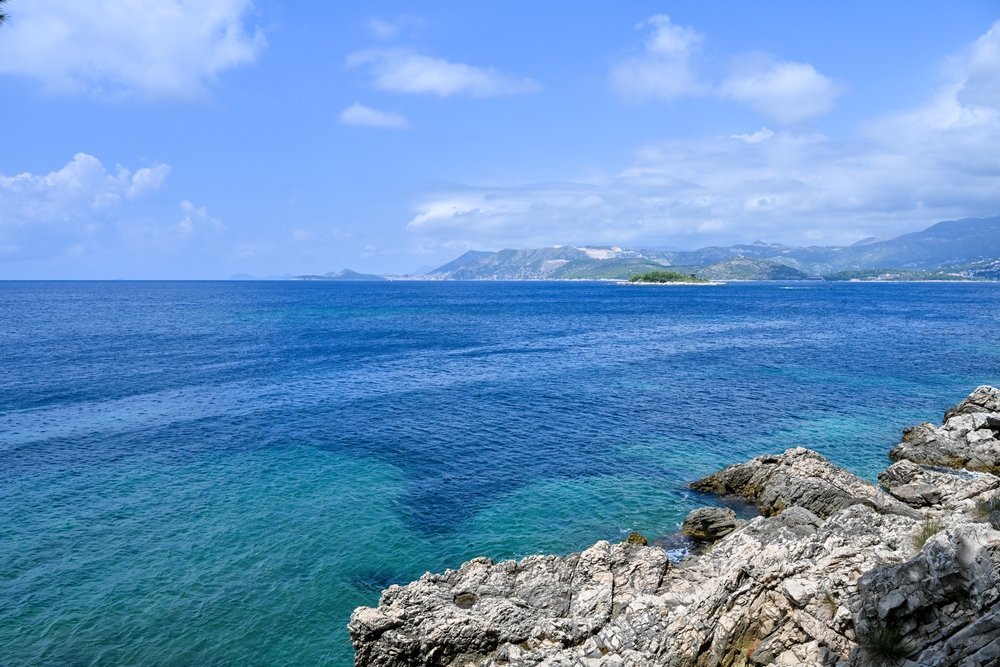
Cavtat is the small harbour town 20 kilometres south of Dubrovnik, right by the airport, and it’s the opposite of the Old Town: quiet, green and with room to breathe on the promenade. The town sits on a peninsula with two bays, a palm-lined waterfront full of restaurants and a path all the way around the headland, where you can swim off the rocks. Up on the hill by the cemetery stands the Račić Mausoleum, which the sculptor Ivan Meštrović built in the 1920s from white Brač stone, and the view from up there is worth the climb on its own.
The most enjoyable way to get there is by boat from the old harbour in Dubrovnik. The trip along the coast takes around 45 minutes to an hour, and the boats run from spring to autumn with several departures a day for about 15 euros each way or about 20 euros return. The cheap option is local bus 10, which runs from the bus station in Gruž in about half an hour. Boats are cancelled when the sea is rough, so check the weather.
My tip is to take the boat down in the morning, have lunch by the harbour, walk around the peninsula and catch the bus back. If you have an early flight the next day, Cavtat is also a great place to spend your last night.
17. Trsteno Arboretum and Ston
Head north along the coast road and after 20 kilometres you reach Trsteno, where the noble Gučetić family laid out the gardens around their summer residence between 1494 and 1502, and today the arboretum covers 28 hectares with a Renaissance garden, an aqueduct, a Baroque Neptune fountain and views over the sea. At the entrance stand two plane trees that are around 500 years old, with trunks measuring about 11 metres in circumference. Admission costs about 10 euros, and it’s open every day, with the longest hours in summer. The local buses from Gruž towards Trsteno and Slano get you here in around half an hour.
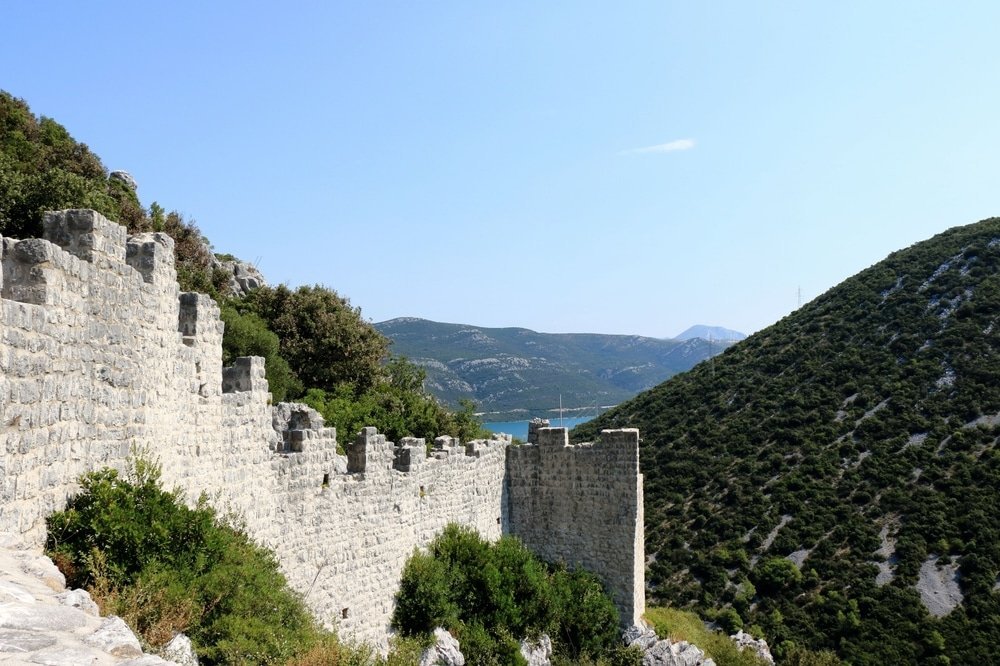
Carry on another 35 kilometres to Ston at the foot of the Pelješac peninsula, where from 1333 the republic built a wall almost seven kilometres long to protect its salt pans. Around 5.5 kilometres still stand, and you can walk the wall over the hill between Ston and Mali Ston in about an hour, passing 40 towers along the way. A ticket costs about 10 euros from March to October and half that in winter, and the wall opens at 8am and closes between 5.30pm and 7.30pm depending on the month. In Mali Ston you can eat oysters that have been farmed in the bay since the days of the republic, served raw with lemon by the harbour for a couple of euros each, and wash them down with red wine from Pelješac.
Both places are easiest to reach by car, and a hire car for a day often costs less than two seats on an organised excursion. You can compare car hire prices in Dubrovnik here. Do Trsteno in the morning while it’s cool, and walk the wall in Ston late in the afternoon, before the oysters.
Book the extended Game of Thrones tour, which also visits Trsteno and Srđ, here.
18. Day trip to Kotor or Mostar
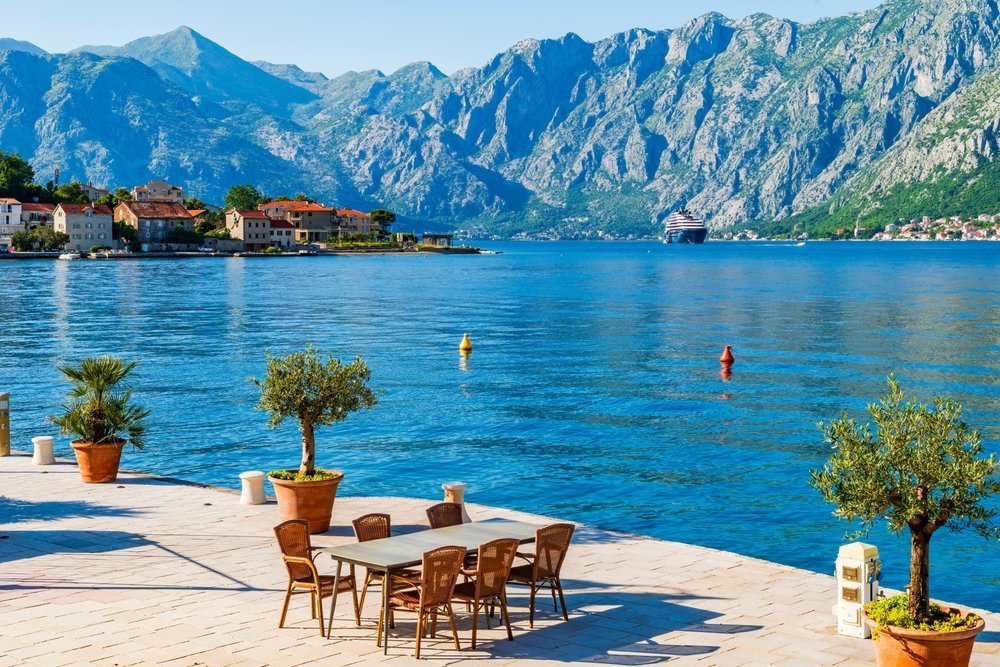
Dubrovnik sits so far south that two neighbouring countries are within reach in a day. Kotor in Montenegro is 90 kilometres away, and the journey takes two to two and a half hours including the border check, so remember your passport. The reward is the Bay of Kotor, which winds in between the mountains like a fjord, the town of Perast with the church island of Our Lady of the Rocks, and Kotor’s Old Town, where you can climb the 1,350 steps up to St John’s Fortress. If you want to stay longer than a day, I’ve written a guide to where to stay in Montenegro.
Mostar in Bosnia and Herzegovina is 140 kilometres away, roughly three hours each way, and the big draw here is the Ottoman bridge Stari Most from 1566. The bridge was shelled and destroyed in 1993 and rebuilt stone by stone in 2004, and in summer the locals dive the 24 metres into the Neretva river for tourists’ money. Most excursions also stop at the Kravica Waterfalls, where you can swim. Organised tours cost from around €30 to Mostar and from around €50 to Montenegro, but expect to be away from Dubrovnik for 11 to 12 hours.
My advice is to pick one of the trips, not both, unless you have a week. Choose Kotor if you want coastline and views, and Mostar if you want history and something that feels completely different from Croatia. In summer the border queue into Montenegro can take more than an hour, so tours that leave at 7am are better than those leaving at 9am.
Book a day trip to Kotor and Perast with a boat trip on the Bay of Kotor here, or book a day trip to Mostar and the Kravica Waterfalls here.
Practical travel tips for Dubrovnik
The Old Town is car-free, and you can walk anywhere inside the walls in ten minutes. For Lapad, Gruž and the beaches, use Libertas’ city buses, which converge at Pile Gate. A single ticket bought from the driver costs €2.50, and a day pass costs around €5.30 and is valid for 24 hours from first validation. If you stay in Lapad, the buses get you to Pile in a quarter of an hour, and you get a beach, a promenade and lower prices. You can see hotels in Lapad here.
The Dubrovnik Pass is one of the few city cards in Europe that actually pays off. It costs €40 for one day, €50 for three days and €60 for seven days, and it covers the city walls, Lovrijenac, the Rector’s Palace, the Maritime Museum, the Franciscan Monastery museum and a string of other museums, plus the city buses. Since the city walls alone cost around €40, the one-day card effectively gives you the museums and buses for free. The card is activated on first use, and each museum can be visited once.
The airport is 20 kilometres south of the city near Cavtat, and the shuttle bus runs to Pile and the bus station in Gruž in just under half an hour. All the options, including the city bus and taxis, are in my guide to getting from Dubrovnik Airport to the city centre.
July and August are hot, expensive and overcrowded, so I would travel in May, June, September or the first half of October, when the sea is still warm. Check the port’s cruise ship arrivals calendar, and plan the city walls and museums for the days with the fewest ships in port. In winter the city is almost empty and much cheaper, but the cable car, Lokrum, War Photo Limited and many restaurants are closed, and several of the museums have a fixed weekly closing day.
If you need the full selection, you can see all hotels in Dubrovnik on Booking.com. If you’re heading further up the coast, read my guides to where to stay in Split and where to stay on Hvar, or start with my overview of where to stay in Croatia.
The post 18 Things to Do in Dubrovnik: City Walls, Lokrum & Sunset from Srđ appeared first on Destination Well Known.
]]>The post Dubrovnik Airport to the Old Town – Transport Guide appeared first on Destination Well Known.
]]>The 10 euro airport bus is the best choice for most people staying in the Old Town, Ploče, Pile or Lapad. If you’re staying in Cavtat, a taxi or a transfer is by far the easiest option, and if there are three or four of you, a taxi or Uber can be worth it. Here you’ll find all the options with prices and journey times, where to get off, and how to carry on to Split and Montenegro.
Planning your trip to Dubrovnik at the last minute? 🇭🇷
Here are some of the best things to do, hotels and other tips for your trip to Dubrovnik.
🎡 Top Activities & Tours:
1. Experience the city walls without the worst of the crowds on a guided walk early in the morning or at sunset
2. Get to know the Old Town's side streets on a guided walking tour with a local guide
3. Follow in Cersei's footsteps on a Game of Thrones tour with a boat trip to Lokrum and the Iron Throne
🛌 Best Hotels:
1. Hotel Excelsior Dubrovnik is an iconic luxury hotel dating from 1913, with private beaches and views of the Old Town
2. Hotel More is a charming boutique hotel on the cliff above Banje Beach, with sea views
3. City Walls Hostel is a clean, central hostel in the Old Town, perfect for a tight budget
Quick overview
- Airport bus (Platanus): 10 euros, about 30 minutes to the Ploče Gate by the Old Town and about 35 minutes to the bus station in Gruž, leaving roughly 30 minutes after each landing from the first flight to the last.
- City bus (Libertas): routes 11, 27 and 38 pass the airport, but there are only a few departures a day, and none of them run on Sundays.
- Taxi: typically 35 to 50 euros to the Old Town, 30 to 35 minutes without traffic and up to an hour in high season.
- Uber: typically 25 to 40 euros, and the price is shown in the app before you book.
- Private transfer: from about 58 euros for up to three people to your hotel in Dubrovnik.
- To Cavtat: taxi typically 20 to 30 euros, about 15 minutes. The airport bus doesn’t go to Cavtat.
How to find transport at the airport
Dubrovnik Airport is small and easy to find your way around. Once you’ve collected your luggage, you come out into the arrivals hall in Terminal B. This is where you’ll find the Platanus ticket desk, and in the same area are the car hire companies, which have offices in the airport itself.
The airport bus stops just outside the arrivals hall, close to the main entrance. Look for a white post marked “Shuttle bus”, as that’s where the bus stops. The buses are clearly marked with the Platanus logo. Taxis also wait in front of Terminal B, and the taxi price list is on the noticeboard at the entrance to the arrivals hall. This is stated on the airport’s page about taxis and car hire.
If you book an Uber, the app shows you where to meet the driver. If you’ve booked a private transfer, the driver will usually wait in the arrivals hall with a name sign. The airport has gathered information on the airport bus, city buses and directions on its page about transport to and from the airport.
1. Airport bus to the Old Town and the bus station in Gruž
The airport’s official bus is run by the company Platanus. You may come across the name Atlas in older guides, as Atlas used to run the bus, but today the airport refers to Platanus. The bus doesn’t run to a fixed timetable. It leaves about 30 minutes after each landing, from the first flight in the morning to the last in the evening, including weekends and public holidays.
The route has only two stops in Dubrovnik. The first is at the Ploče Gate, one of the main entrances to the Old Town, and the journey there takes about 30 minutes. The bus then continues to the final stop at the bus station in Gruž, which you reach in about 35 minutes. In summer there’s a lot of traffic on the road into town, so allow a little longer in high season.
The bus doesn’t stop at the Pile Gate, even though some guides say it does. Platanus follows flight arrivals, so if your flight is late, you simply take the next bus. Arrival times and the bus’s expected departures are listed in the Platanus timetable, and they can change, especially in spring and autumn, when airlines change their schedules.
Prices and tickets
A single ticket costs 10 euros, and a return costs 15 euros, so you save 5 euros if you’re also taking the bus back. Children under 6 travel free. The price is fixed, with no supplements in the evening or in high season.
The ticket is valid on all departures on the day you travel, and one suitcase is included in the price. The staff put it in the luggage hold, so you don’t have to drag it onto the bus. For a solo traveller or a couple, it beats every other option on price.
Where to buy your ticket
You can’t buy a ticket on the bus. Buy it online from Platanus before you travel, or at the Platanus desk in the arrivals hall, where you can pay by card or in cash. Online you get a QR code to show on your phone when you board, so you don’t need to print anything.
In summer the buses fill up quickly, so Platanus recommends buying your ticket in advance in high season. If you’ve bought a return, you’ll also have your ticket ready when you head back to the airport.
Where should you get off?
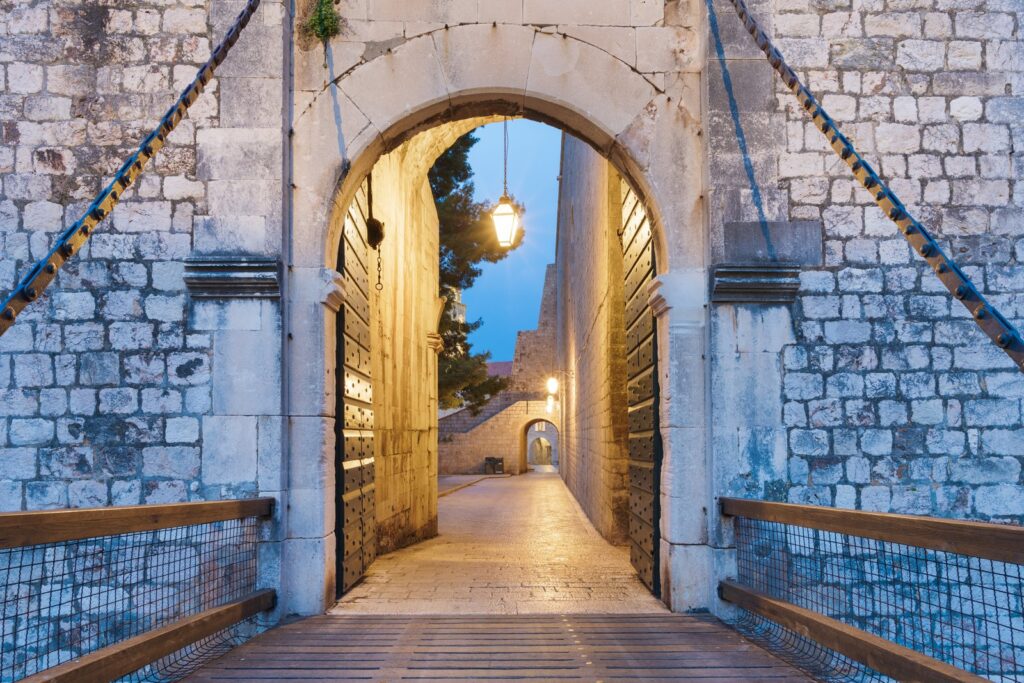
Ploče Gate (Old Town): Get off at the first stop if you’re staying in the Old Town or in the Ploče area east of the city walls. From the stop, walk to the Ploče Gate and into the Old Town, and the main street, Stradun, leads you on towards the Pile Gate at the other end. Many hotels in the Old Town and Ploče are on steps, so pack light. If you’d like to stay close to the stop, you can see hotels in the Old Town here.
Pile: If you’re staying in Pile by the western entrance to the Old Town, you also get off at the Ploče Gate and walk about 10 minutes through the Old Town along Stradun to the Pile Gate. With a heavy suitcase, it may be easier to take a taxi for the last stretch. If you haven’t chosen a hotel yet, read my guide to where to stay in Dubrovnik, where I go through the Old Town, Ploče and Pile.
Bus station in Gruž: The final stop is by the harbour in Gruž, about 500 metres from the ferry terminal. Get off here if you’re carrying on by ferry or long-distance bus, or if you’re staying in Gruž or on the Lapad peninsula. From the bus station, Libertas city buses run to Lapad, Babin Kuk and Pile, and a ticket bought from the driver costs 2.50 euros. Departures are listed in the city bus timetable. Lapad has lots of hotels at lower prices than the Old Town, and you can see hotels in Lapad here.
2. City bus from the airport with Libertas
The city’s bus company, Libertas, also serves the airport. According to the airport, routes 11, 27 and 38 run to and from the airport. They’re suburban routes running between Dubrovnik and the villages of Konavle further south-east, namely Molunat, Vitaljina and Gruda, and the airport lies on the way.
The problem is that there are only a few departures a day on each route. Routes 11 and 27 don’t run on Sundays and public holidays, and route 38 only runs on weekdays, mainly to suit school times. The bus therefore rarely fits in with your flight, and it doesn’t stop close to the arrivals hall the way the airport bus does.
The fare from the airport isn’t shown in the Libertas price list, so ask the driver. For comparison, a single ticket on the suburban bus to Cavtat costs 4 euros, and you can see the fares in the Libertas price list. Departures are listed in the timetable for the eastbound routes, which changes between summer and winter.
The city bus is only worth it if you want to save a few euros and have time to wait. The 10 euro airport bus is almost always the best option, and it runs after every landing.
3. Taxi and Uber
Taxis wait in front of Terminal B by the arrivals hall and run for as long as the airport is open. The airport doesn’t publish fixed fares on its website, but the price list is on the noticeboard at the entrance to the arrivals hall. Typically, expect to pay 35 to 50 euros to the Old Town, Ploče or Lapad, depending on the address and the time of day.
Agree the price before you set off and ask for a receipt. The driver is required to issue one, according to the airport. The journey takes 30 to 35 minutes without traffic, but in summer it can take up to an hour. The Old Town is car-free, so the taxi drops you at the Pile Gate or the Ploče Gate, and you walk the last bit from there.
Uber also operates in Dubrovnik. The app shows the price before you book and where to meet the driver. Typically, expect 25 to 40 euros to the centre, but the price rises when demand is high. You can book the ride in advance in the app, as stated by Uber.
If there are three or four of you, four airport bus tickets come to 40 euros. An Uber or taxi isn’t much more expensive, and it takes you right to the nearest road by your hotel.
4. Private transfer to your hotel
A private transfer is the most convenient option if you land late, travel with children or have a lot of luggage. The driver tracks your flight and waits in the arrivals hall, and the price is agreed in advance, so you avoid queuing for taxis or haggling over the fare.
You can book a private transfer from Dubrovnik Airport to your hotel here. It costs from about 58 euros for up to three people and is one of the most reviewed transfers from the airport. The journey takes about 35 minutes to hotels in Dubrovnik.
It’s more expensive than a taxi, but you know exactly what it costs, and you have a car waiting, even when you land in high season, when the taxi queue can be long. Book at least a day ahead, and remember to include your flight number in the booking so the driver can keep track if your flight is delayed.
Bear in mind that the driver can’t drive into the Old Town either. If you’re staying within the city walls, you’ll be dropped at the Pile Gate or the Ploče Gate. Ask your hotel which gate is closest and add it to the booking.
5. From the airport to Cavtat
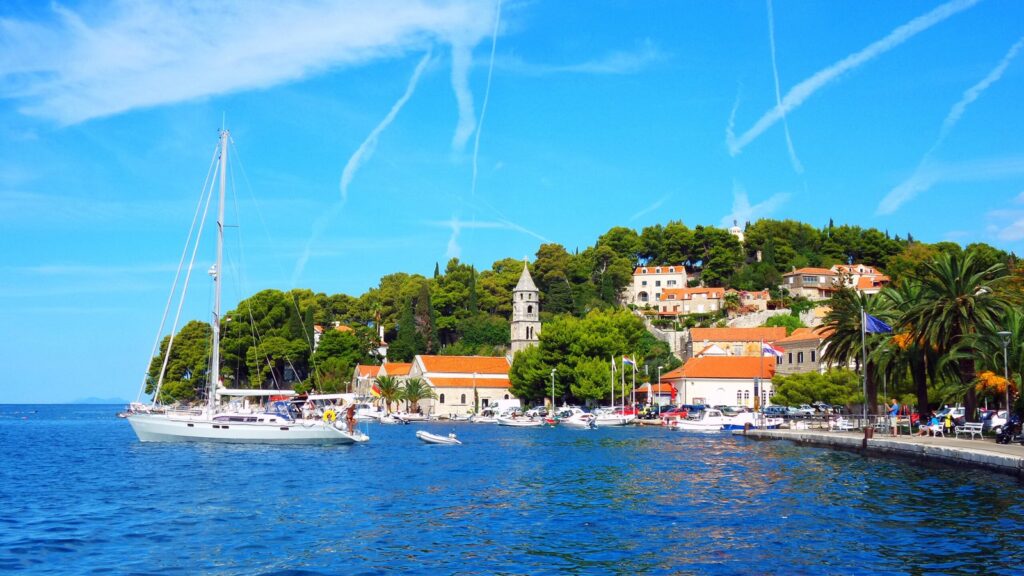
Cavtat is much closer to the airport than Dubrovnik. The little harbour town is only about 15 minutes’ drive from the terminal, so many people choose to stay here and take the boat into Dubrovnik. The problem is that the Platanus airport bus doesn’t go to Cavtat, and the suburban buses passing the airport don’t go into the town either.
The easiest option is therefore a taxi, which typically costs 20 to 30 euros. The price list is at the entrance to the arrivals hall, so check it and agree the price before you set off. You can also book an Uber to Cavtat. If you’d like everything sorted before you leave home, you can book a private transfer from the airport to Cavtat here. It costs from about 39 euros for up to four people.
When you’re staying in Cavtat, you can get to Dubrovnik on Libertas route 10, which runs between Dubrovnik and Cavtat roughly once an hour and a little less often on Sundays. A single ticket costs 4 euros. In summer, boats also sail from Cavtat harbour to the old harbour by the Old Town.
Cavtat is quieter and cheaper than Dubrovnik, and you have the beaches and the harbour promenade right on your doorstep. You can see hotels in Cavtat here.
Onward to Split and Montenegro straight from the airport
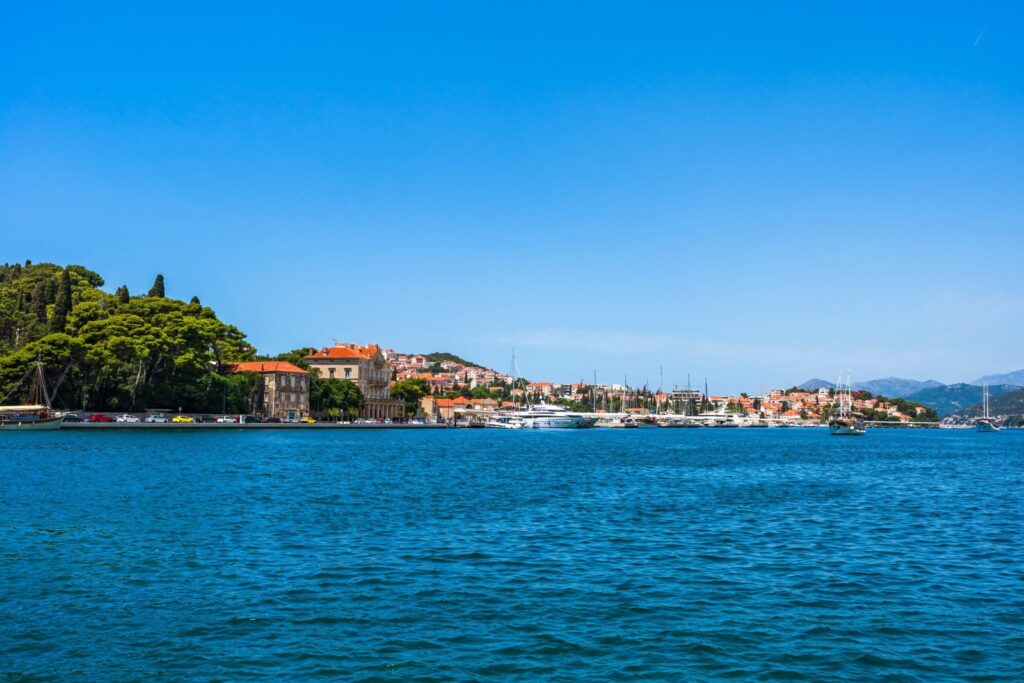
If you’re not staying in Dubrovnik but travelling on around Croatia, take the airport bus to the final stop at the bus station in Gruž. Long-distance buses to Split leave from here, and the journey usually takes 4 to 5 hours. Tickets typically cost 20 to 30 euros, and you can buy them at the bus station or online from the bus company. Bring your passport, as some routes pass through the short Bosnian stretch of coast at Neum.
In summer, catamarans also sail from Gruž harbour to Split, stopping at islands such as Korčula and Hvar. The crossing takes 4.5 to 6 hours and costs about 50 euros. Jadrolinija sails, among others, the Dubrovnik, Korčula, Hvar, Bol and Split route, and seasons and departures change from year to year, so check them before you travel. If you hire a car at the airport, the drive takes about 3 hours via the Pelješac Bridge and the motorway. Read my guide to where to stay in Split and my overview of the best places to stay in Croatia if you’re travelling around the country.
For Montenegro, the airport is actually a good starting point, as it’s close to the border. The Karasovići and Debeli Brijeg border crossing is south of the airport, and Herceg Novi is only about 30 kilometres away. Buses to Herceg Novi, Kotor and Budva leave from the bus station in Gruž and usually take 2 to 3 hours to Kotor, depending on the queue at the border.
In summer there can be long waits at the border, and Montenegro isn’t in the Schengen Area, so bring your passport. If you hire a car, you’ll need the rental company’s permission in advance to cross the border, and there’s usually a fee. Montenegro also uses the euro. If you’re staying on the other side of the border, read my guide to where to stay in Montenegro.
Getting back to the airport
The airport bus also runs the other way, with departures timed to flight departures from morning to evening. The bus starts at the bus station in Gruž, where it leaves from bay 8 near the entrance. It then stops at the Grawe stop and finally at the cable car stop above the Old Town, which is the stop closest to the Old Town.
From the bus station the journey takes about 35 minutes, from Grawe about 30 minutes and from the cable car stop about 25 minutes. Be at the stop at least 10 minutes before departure, and allow extra time in summer, when there’s heavy traffic out of town. Departures are listed on Platanus’ page about the airport bus.
Tickets can be bought online, at the office at the bus station or at the Platanus office by the cable car, but not on the bus. If you have a return ticket from your arrival, use that. If you’d rather take a taxi or an Uber, book it in good time in high season. If you’d like the car booked before you leave home, you can book a transfer from your hotel to the airport here. It costs from about 50 euros for up to eight people.
Which option should you choose?
Here’s my recommendation based on where you’re staying:
Old Town and Ploče: Take the airport bus to the Ploče Gate. It costs 10 euros, runs after every landing and gets there in about 30 minutes.
Pile: Take the airport bus to the Ploče Gate and walk through the Old Town along Stradun. With a lot of luggage, I’d take a taxi or an Uber straight there.
Lapad and Gruž: Take the airport bus to the bus station in Gruž and change to a city bus towards Lapad or Babin Kuk.
Cavtat: Take a taxi or a private transfer. The journey only takes about 15 minutes.
If there are three or four of you: Four bus tickets cost 40 euros, so an Uber or taxi doesn’t cost much more and takes you to the door.
If you land late: The airport bus also runs after the last landing of the evening. If in doubt, book a private transfer so you have a car waiting.
If you’re travelling on: Take the airport bus to the bus station in Gruž, where the buses to Split and Montenegro leave from and the ferry port is right next door.
Practical tips for getting from Dubrovnik Airport to Old Town
Buy your bus ticket online in summer. Platanus recommends this itself, as the buses fill up quickly in high season. You can’t buy a ticket on the bus.
Expect traffic in summer. Everyone uses the same road between the airport and Dubrovnik, and in July and August the journey can take twice as long as usual. Leave plenty of time for your return journey.
Pack light for the Old Town. The Old Town is car-free, and many of the streets are steps. No car can take you right to the door, so a suitcase with good wheels makes a big difference.
Choose your hotel based on the connection. The airport bus only stops at the Ploče Gate and the bus station in Gruž. If you’re staying in the Old Town or Ploče, you’re almost there when you get off, and you can see hotels in Ploče here.
Should you hire a car? The car hire companies have offices at the airport, but parking in Dubrovnik is scarce and expensive. Only hire a car if you’re travelling further along the coast or to Montenegro.
The post Dubrovnik Airport to the Old Town – Transport Guide appeared first on Destination Well Known.
]]>The post Where to stay in Dubrovnik? 3 Best Areas & Places to Stay (+ Where to Avoid!) appeared first on Destination Well Known.
]]>Dubrovnik is simply magical with its medieval city walls and turquoise blue waters, but also incredibly busy.
Planning your trip to Dubrovnik at the last minute? 🇭🇷
Here are some of the best things to do, hotels and other tips for your trip to Dubrovnik.
🎡 Top Activities & Tours:
1. Experience the city walls without the worst of the crowds on a guided walk early in the morning or at sunset
2. Get to know the Old Town's side streets on a guided walking tour with a local guide
3. Follow in Cersei's footsteps on a Game of Thrones tour with a boat trip to Lokrum and the Iron Throne
🛌 Best Hotels:
1. Hotel Excelsior Dubrovnik is an iconic luxury hotel dating from 1913, with private beaches and views of the Old Town
2. Hotel More is a charming boutique hotel on the cliff above Banje Beach, with sea views
3. City Walls Hostel is a clean, central hostel in the Old Town, perfect for a tight budget
In this guide, I will tell you about the best areas to stay in, whether you are looking for historical experiences within the city walls, luxurious beach hotels or an authentic Croatian atmosphere.
Let’s get started: where to stay in Dubrovnik?
Best Areas in Dubrovnik
Here’s a quick overview of the top areas to stay:
- Old Town – Best Area for First-Time Visitors ⭐️
- Ploče – A luxurious beachside area with stunning views 💎
- Pile – A perfect mix of history and peace and quiet 👨👩👧👦
Click the neighbourhood name to see the best hotels in each area.
1. Old Town – Best Area for First-Time Visitors ⭐️
Old Town is the very heart of Dubrovnik – a living medieval city surrounded by UNESCO-protected walls, where Game of Thrones meets authentic Croatian history.
Picture yourself staying inside a perfectly preserved medieval town, where every cobbled lane tells stories going back centuries. That’s exactly what you get in Dubrovnik’s Old Town.
When you wake up here, you’re literally surrounded by 15th-century architecture – but with modern comforts like WiFi and air con, naturally.
See the top hotels in the Old Town here.
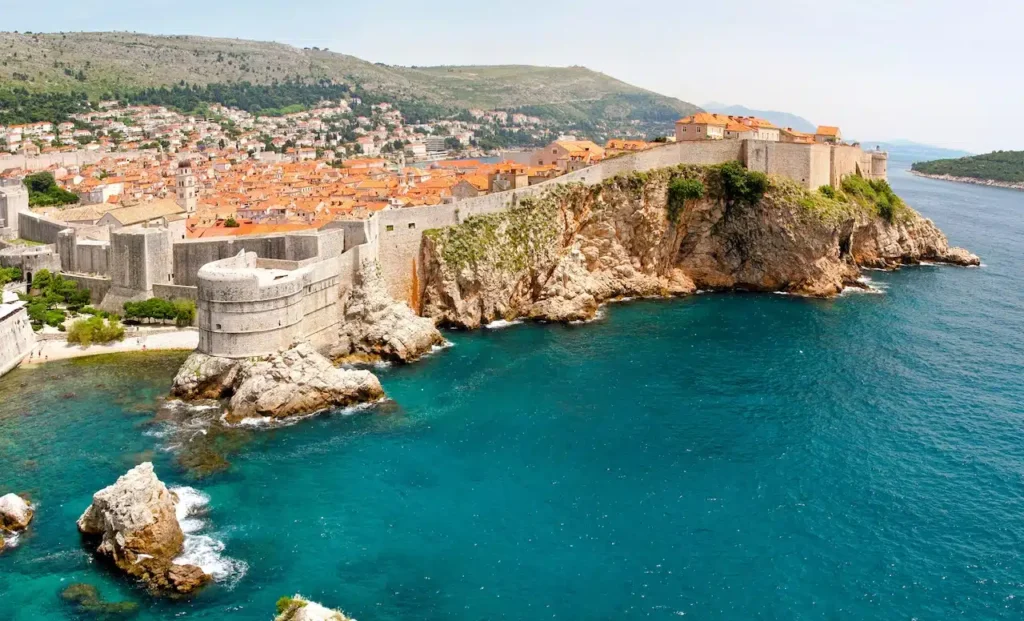
Stradun, the main street, is like a living postcard. You’ll find everything from charming cafés tucked into historic buildings to fine dining restaurants with Michelin recognition.
Restaurant 360 is a must for foodies, while Buzz Bar is perfect for post-sightseeing drinks.
And of course, there are all the Game of Thrones locations – it’s pretty surreal walking the same steps as Cersei Lannister.
Check out these Game of Thrones tours and attractions in Dubrovnik.
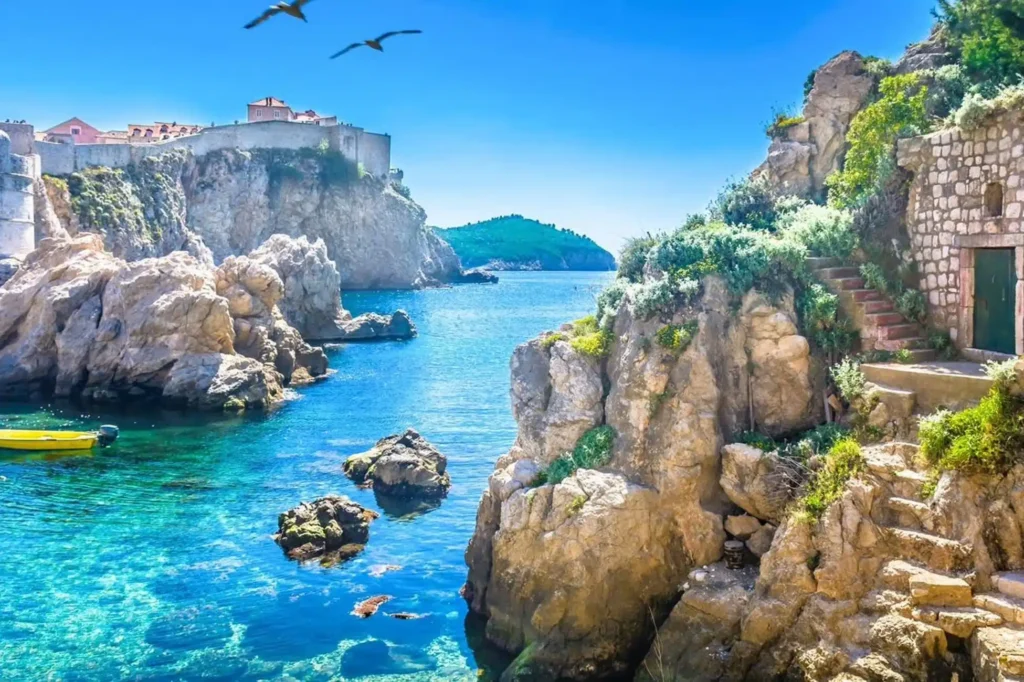
Getting around is a breeze – you can walk to all the top sights.
The city walls are right outside, the harbour’s a five-minute stroll away, and buses to other parts of town stop just by Pile Gate. Banje Beach is only a 10-minute walk.
It really is the best place to stay if you want to be close to it all.
The one big drawback? The crowds. Especially when cruise ships dock, it can feel a bit much.
And yes, prices are higher than elsewhere in the city. But believe me – the evening atmosphere, once the day-trippers have left, is nothing short of magical.
Hotels in the Old Town
Let’s take a look at three brilliant places to stay inside Dubrovnik’s Old Town:
Boutique Hotel Stari Grad ⭐️⭐️⭐️⭐️⭐️
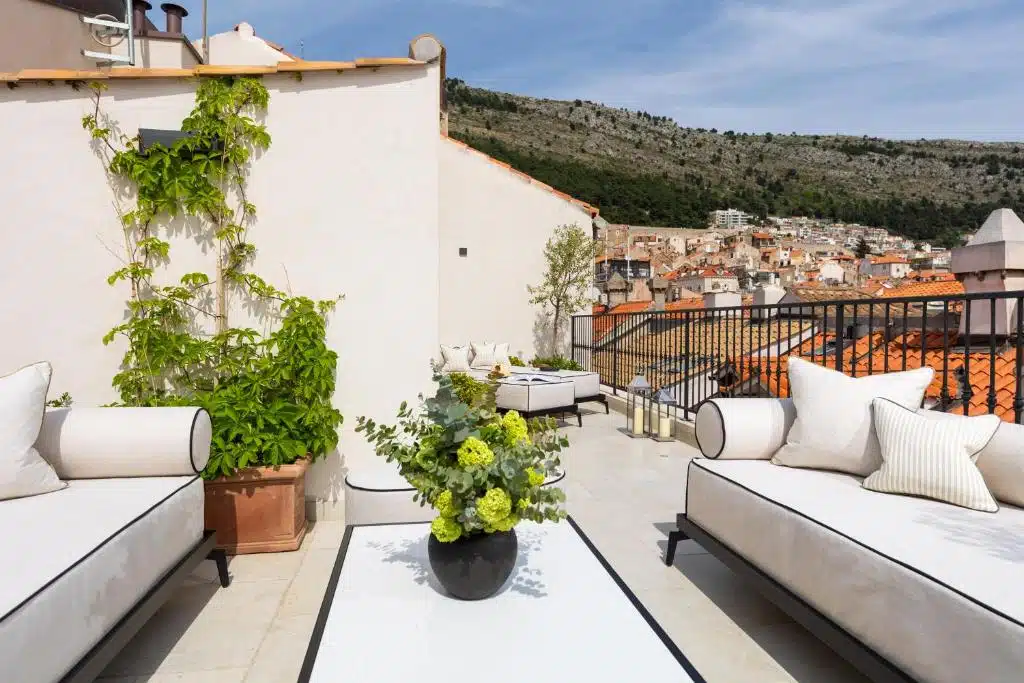
A lovingly restored 16th-century aristocratic residence with just nine unique rooms in the heart of Old Town. The hotel’s Above 5 rooftop restaurant – the only one in the Old Town – offers jaw-dropping views over the Adriatic and those iconic red rooftops.
Past guests rave: “Modern design blended perfectly with the building’s age, breakfast on the roof was exceptional!”
See more photos and book here.
Scalini Palace Heritage Hotel ⭐️⭐️⭐️⭐️⭐️
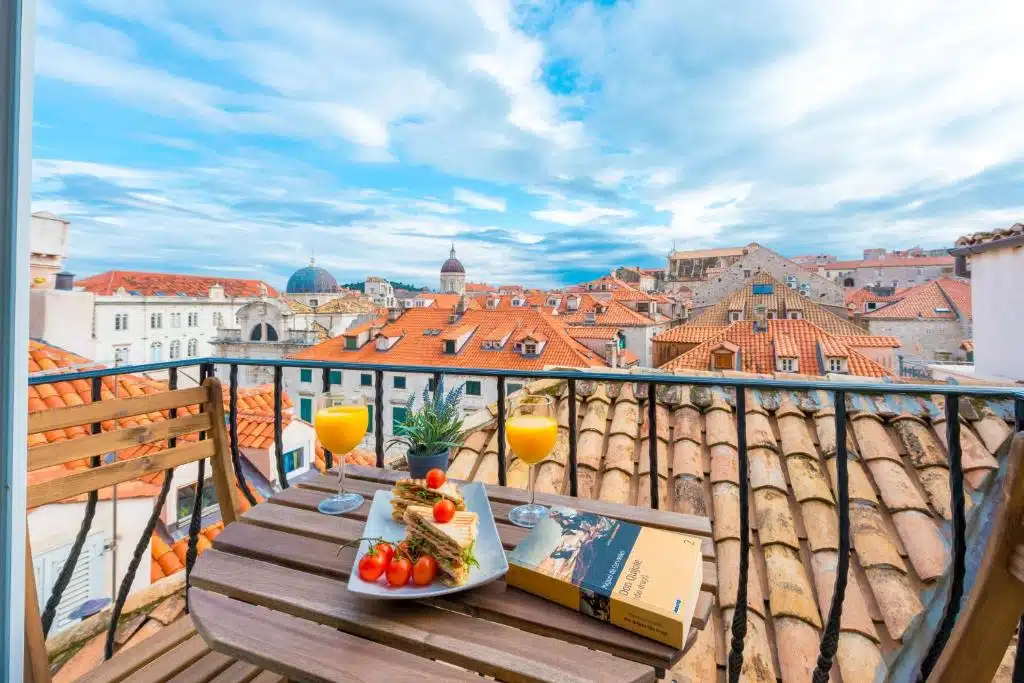
An exclusive boutique hotel in a fully renovated 16th-century palace that once belonged to famed Croatian scientist and diplomat Ruđer Bošković.
The hotel blends authentic baroque architecture with modern luxury. The eight elegant suites feature exposed stone walls, wooden floors and lofty ceilings that whisper of centuries past.
Each suite has a well-equipped kitchenette with hob, microwave and dining area. Some also boast a furnished balcony overlooking the Stradun promenade.
Highlights from guests: “Brilliant location right in the Old Town, room was clean and comfy with a stunning original stone wall” and “Super central, spacious room cleaned daily!”
This is Dubrovnik’s most authentic boutique hotel – ideal if you want to treat yourself to a mix of history, luxury and unforgettable charm.
See more photos and book here.
City Walls Hostel ⭐️⭐️⭐️
A clean and modern hostel in the heart of the Old Town, perfect for younger travellers looking to enjoy the nightlife.
Close to all the bars and restaurants, and the staff are happy to help organise tours and excursions.
Guests love: “Fantastic location for exploring the Old Town and great for meeting other travellers!”
See more photos and book here.
Are you planning to travel around Croatia? Also, read my big guide to where to stay in Split.
2. Ploče – Perfect for Luxury Travellers and Beach Lovers 💎
Ploče is Dubrovnik’s most exclusive neighbourhood. Situated just east of the Old Town, it has luxury hotels, direct access to Banje Beach and spectacular views over Lokrum Island.
If you’re dreaming of waking up to panoramic views of the turquoise Adriatic with Lokrum in the background, Ploče is the place to stay.
It’s Dubrovnik’s answer to the French Riviera – posh, picturesque and home to the best hotels in the city.
See the top hotels in Ploče here.
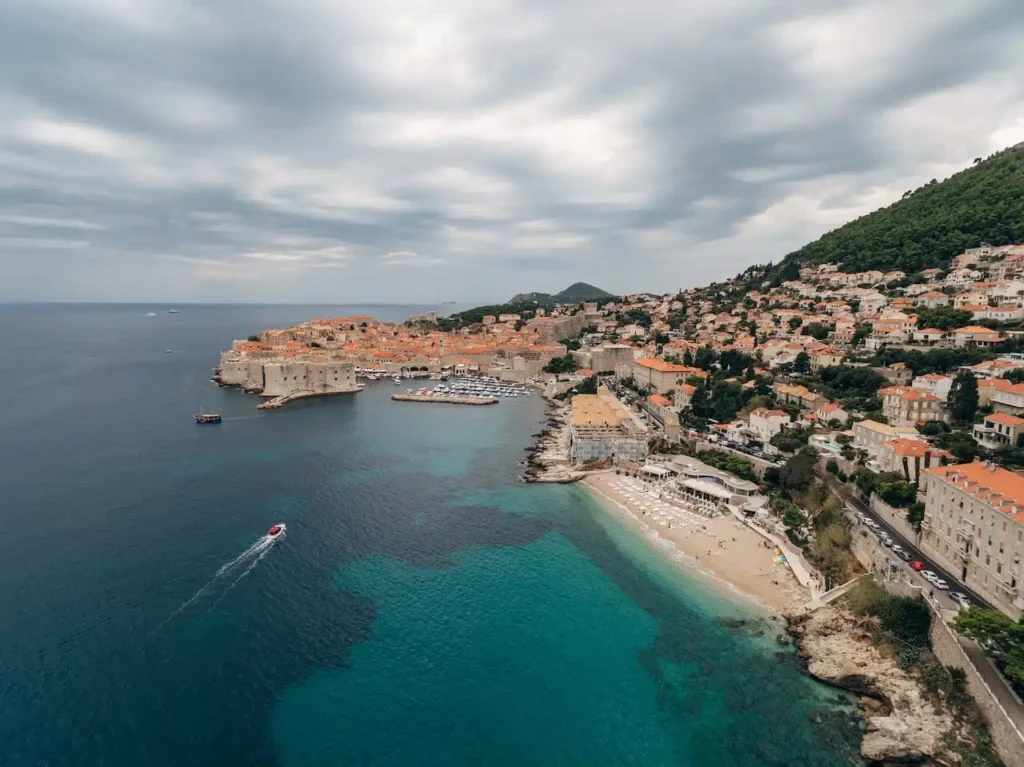
Ploče is just east of Ploče Gate, a mere five-minute walk from the Old Town, yet blissfully removed from the crowds and noise.
- It reminds me a bit of Nice, but with unmistakable Croatian charm.
Prices are the steepest in Dubrovnik, but you absolutely get what you pay for.
If you’re looking to splash out and have the budget for it, Ploče is spot on.
You get the best of both worlds – five-star comfort and easy access to the city’s historic sights.
Hotels in Ploče
Hotel Excelsior Dubrovnik ⭐️⭐️⭐️⭐️⭐️

An iconic luxury hotel dating back to 1913, housed in a former royal villa with a modern wing. Right on the waterfront, with views across to the Old Town and Lokrum Island.
Features include a spa, indoor pool, private beaches and three restaurants, including the renowned Prora.
Guests love: “Brilliant location by the sea and city walls, close to town but far from the noise!”
See more photos and book here.
Villa Dubrovnik ⭐️⭐️⭐️⭐️⭐️
A sleek modern luxury hotel built into the cliffside with tiered terraces, infinity pool and a top-class spa. Rooms are styled in soft whites and creams with floor-to-ceiling windows and private terraces.
The hotel restaurant has a Michelin recommendation.
A recent guest said: “Zen-like atmosphere with beautifully styled rooms and the most incredible view!”
See more photos and book here.
Hotel More ⭐️⭐️⭐️⭐️
A charming boutique hotel with sea views and modern facilities. Perched above Banje Beach, offering easy access to both the beach and Old Town. Rooms come with balconies or terraces overlooking the sea or city.
Guest favourites include: “Perfect location, amazing breakfast and super helpful staff!”
See more photos and book here.
3. Pile – Best Place to Stay for Families 👨👩👧👦
Pile is the ideal middle ground – just to the left of Pile Gate when looking at a map, with easy access to the Old Town, but much quieter, with parking and family-friendly options.
It’s my top pick for families or those wanting the best of both worlds. You’re only two minutes from the Old Town, but without the endless stream of tourists and the noise.
One big perk: many hotels in Pile have parking – something nearly impossible inside the city walls.
See the top hotels in Pile here.
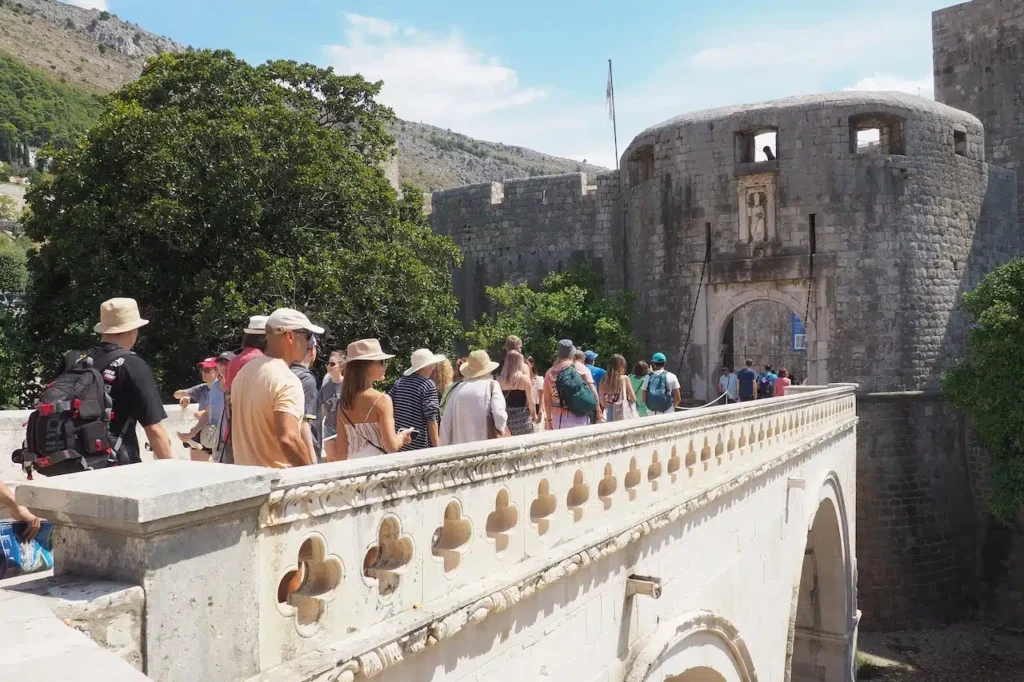
The area sits just outside the western entrance to the city and overlooks majestic Fort Lovrijenac – one of my absolute favourite Game of Thrones spots.
There are a few small beaches dotted along the coast, and the seaside promenade is ideal for evening strolls. Prices are lower than in the Old Town or Ploče, but you still get an authentic Dubrovnik experience.
For families, it’s spot on – the terrain is flatter than other areas, and there are bus links to the rest of the city if your legs need a break.
The locals actually live here too, so you get a more genuine feel of everyday Dubrovnik.
The only downside? Upper Pile can be quite steep. So if you’ve got mobility issues or you’re travelling with a pram, book a hotel closer to the main road.
Otherwise, it’s honestly just a brilliant place to stay in Dubrovnik.
Hotels in Pile
Hotel Dubrovnik Palace ⭐️⭐️⭐️⭐️⭐️
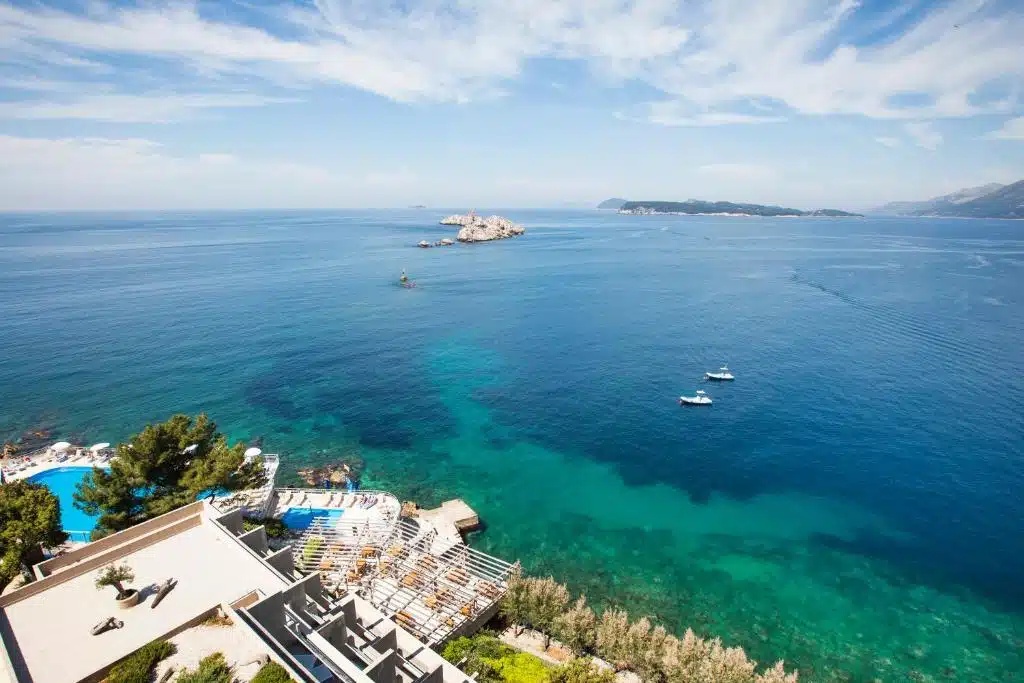
A large resort-style hotel with pools, spa and direct beach access. Great for families with kids – it has a kids’ club, family rooms and lots of activities. The location gives easy access to both the beach and Old Town.
Guests say: “Fantastic for families, big pool and beach bar, easy access to Old Town!”
See more photos and book here.
Hotel Bellevue ⭐️⭐️⭐️⭐️
A stylish cliffside hotel with jaw-dropping sea views and its own private beach. Modern design with Croatian touches, spa facilities and a gourmet restaurant. Built dramatically into the cliffs overlooking the Adriatic.
One guest noted: “Gorgeous design hotel with stunning views and an amazing restaurant!”
See more photos and book here.
Villa Klaic ⭐️⭐️⭐️
A family-run guest house with personal service and homemade breakfast. Simple but spotless rooms with air con and WiFi. In a quiet part of town with easy access to Old Town and a local vibe.
Guests love: “Wonderfully friendly hosts who treat you like family, lovely breakfast!”
See more photos and book here.
Where Not to Stay in Dubrovnik
While Dubrovnik is generally safe and lovely, there are a few areas I’d steer clear of if you want the full experience.
Gruž, near the harbour, may seem appealing thanks to the lower prices and local feel, but you’ll spend a lot of time on transport – it’s a 30-minute walk or a bus ride to the Old Town.
Unless you’re keen to stay far from the action and dodge Old Town prices, you’re better off staying closer in.
Babin Kuk, out on the Lapad peninsula, has some nice resort hotels, but it feels more like a purpose-built tourist zone than the real Dubrovnik.
A bit like staying on a cruise ship – pleasant enough, but you miss the connection to the city.
Kupari might tempt you with its abandoned hotels and haunting ruins, but there are no tourist facilities and the vibe can be a bit grim.
If you’re after a peaceful alternative, consider Cavtat instead – it has beaches and tranquillity without the eerie atmosphere.
In general: if a hotel price seems too good to be true compared to the Old Town, there’s probably a reason. It’s usually either distance or a lack of atmosphere.
Still Not Sure Where to Stay in Dubrovnik?
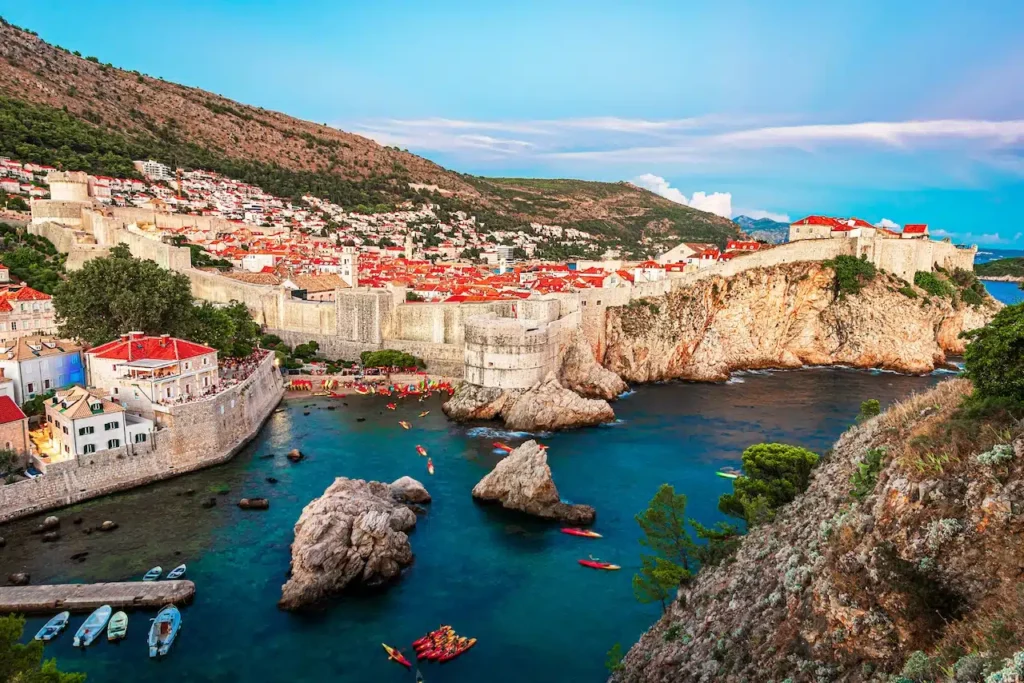
Dubrovnik is one of those cities where your choice of area can really make or break your experience, so choose wisely.
Go for:
Old Town if it’s your first visit and you value history and atmosphere over peace and quiet.
Ploče if you want luxury and beach life without sacrificing access to the city’s sights.
Pile for a well-balanced option that suits families and practical travellers.
Keep in mind that June to August is peak season – expect huge crowds and sky-high prices. Book at least six months in advance.
April to May and September to October offer lovely weather, fewer crowds and much better prices.
For a longer trip along the Adriatic, you can also cross the border into Montenegro. My guide to where to stay in Montenegro compares Kotor, Perast and the coastal towns, including their hotels and transport connections. Looking for a second base within Croatia, or still deciding which part of the country to stay in? Start with where to stay in Croatia, which covers seven bases from Split and Hvar to Istria and Zagreb.
Getting between areas is easy with buses (just a few quid per ride), taxis or water taxis. Dubrovnik is compact enough that you can easily explore different neighbourhoods during your stay.
One last practical tip: Dubrovnik is steep, with loads of stairs. Pack light and consider your physical fitness when picking a location. The Old Town is particularly stair-heavy.
Whatever you choose, be ready to be completely blown away by this incredible city.
Dubrovnik has that rare mix of authentic history and jaw-dropping beauty – it’s a place you’ll never forget.
The post Where to stay in Dubrovnik? 3 Best Areas & Places to Stay (+ Where to Avoid!) appeared first on Destination Well Known.
]]>