

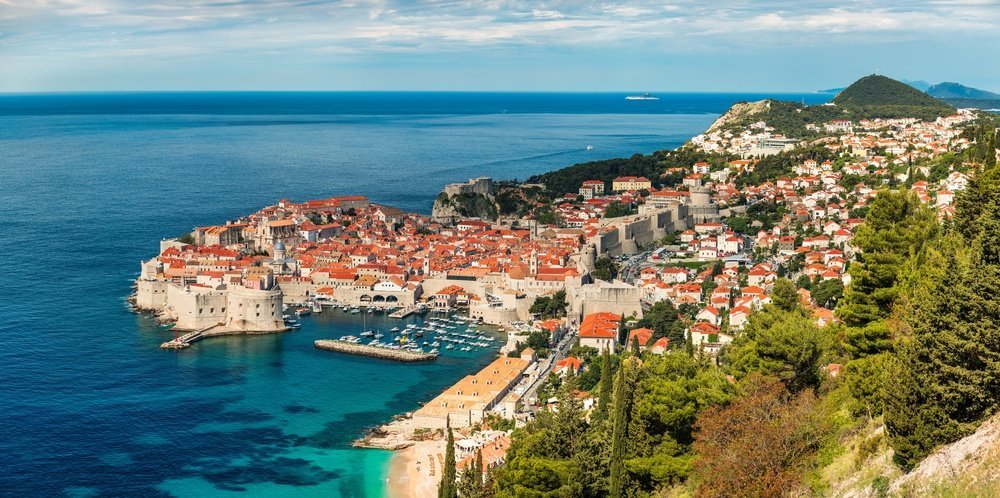
Dubrovnik sits right down in the far south of Croatia, squeezed between Mount Srđ and the Adriatic, and the Old Town inside its walls is one of the best-preserved fortified cities in Europe, packed with things to do in Dubrovnik. The Republic of Ragusa stayed independent for several hundred years by trading and negotiating its way around both Venice and the Ottomans, and that wealth is what you see in the palaces, the monasteries and the almost two kilometres of city walls. The city was nearly flattened by the earthquake of 1667 and shelled during the siege of 1991, but today it is on the UNESCO World Heritage List and busier than ever. That is also the problem. On a day with three cruise ships in port, Stradun is so packed that it’s no fun being there.
Here are my picks for the 18 best things to see and do in Dubrovnik, with prices, opening hours and tips on how to avoid the worst of the crowds. Prices are given in euros. My most important rule of thumb is to do the city walls and the Old Town early in the morning or late in the afternoon, and spend the middle of the day on Lokrum, at the beach or on a boat trip. It’s also worth considering the Dubrovnik Pass, because the city walls alone cost almost as much as a one-day pass covering all the museums and the buses.
Contents
1. The city walls around the Old Town
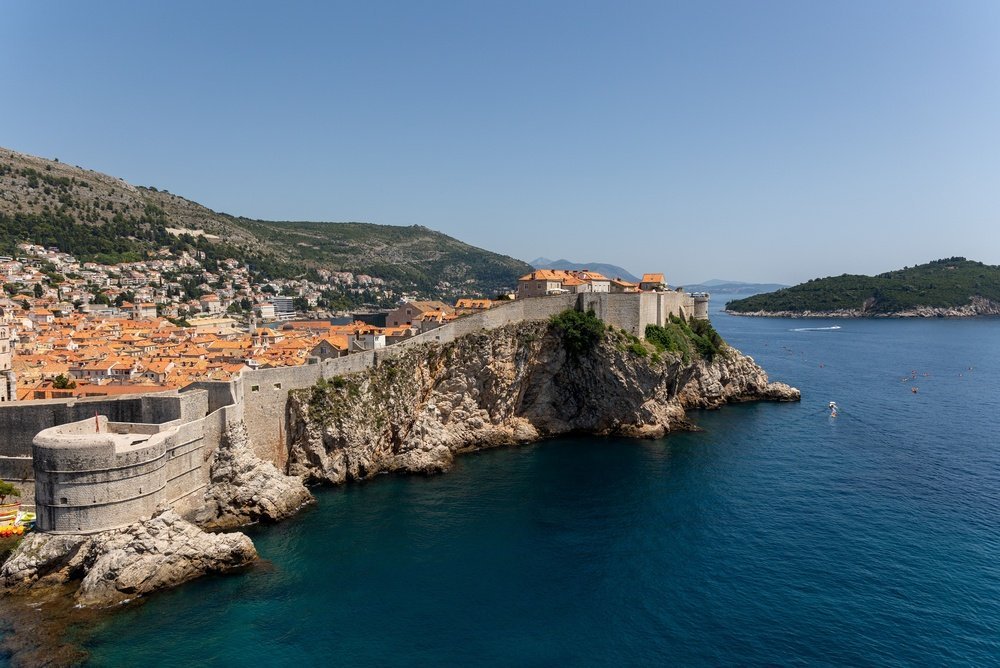
The city walls are the reason most people come to Dubrovnik, and they don’t disappoint. You walk all the way around the Old Town on roughly 1,940 metres of wall, which in places is 25 metres high and up to 6 metres thick on the landward side. The walk takes an hour and a half to two hours, with stops at the Minčeta Tower in the north-western corner, which is the highest point, and Fort Bokar facing Lovrijenac. Along the way you look down on the red rooftops, into people’s back yards and out over Lokrum.
A ticket costs around 40 euros (around £35) for adults and 15 euros (around £13) for children and young people aged 7 to 18, and it also covers Fort Lovrijenac, but you can only walk the walls once, as re-entry isn’t allowed. In summer the walls open at 8am and don’t close until the evening, while in winter they’re usually only open from 9am to 3pm. The only day they close is 25 December. There are three entrances: by the Pile Gate (the busiest), by the Ploče Gate and by St John’s Fortress down by the old harbour.
My tip is to go up just as they open, or two hours before closing. In the middle of a summer’s day there’s neither shade nor space, and the stone gets scorching hot. Bring water, because the few stalls up on the walls overcharge. If you start at the Ploče Gate instead of Pile, you’ll usually avoid the longest queue, and you’ll get the steepest steps out of the way first.
Book a guided walk on the city walls early in the morning or at sunset here.
2. Stradun and the Old Town
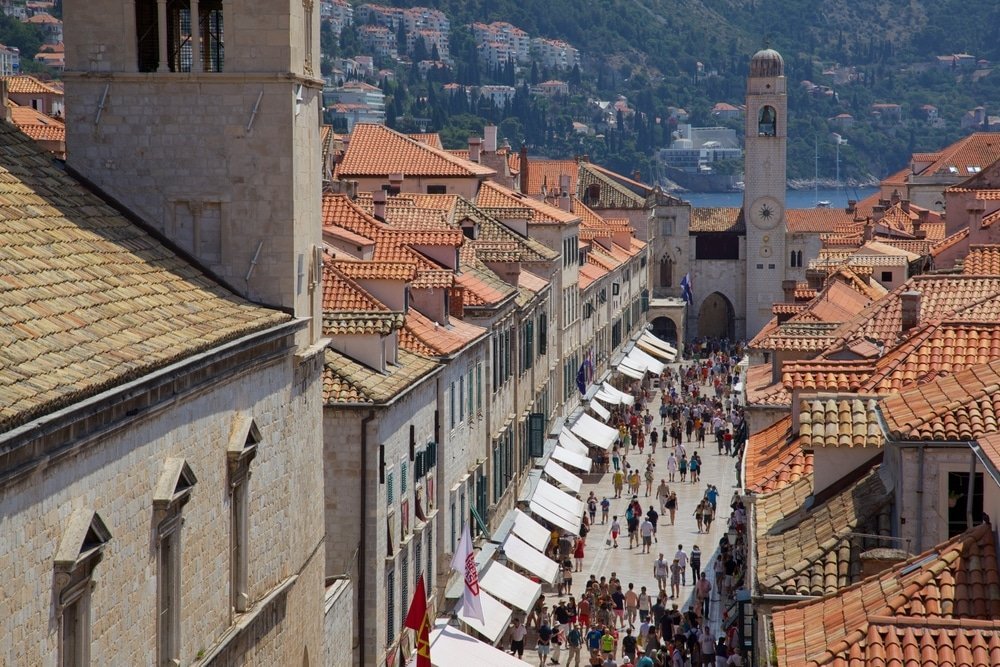
Stradun is the 300-metre-long main street of polished limestone that runs from the Pile Gate to the bell tower on Luža Square. The street was once a channel between the island where the city began and the mainland, and after the 1667 earthquake the houses along it were rebuilt in the same Baroque style, with a shop on the ground floor and living quarters above. At the Pile end stands Onofrio’s Great Fountain from 1438, which still supplies drinking water, and at the other end you’ll find Orlando’s Column, the Sponza Palace and the Church of St Blaise, with the statue of the city’s patron saint holding a model of the city in his hand.
The best thing about the Old Town, though, is the side streets. North of Stradun they climb as steep staircases up towards the walls, and this is where you’ll find the washing lines, the cats and the little konobas that don’t rely on cruise passengers. All of this is free, and you can also pop into the Sponza Palace and its atrium without a ticket.
Take a stroll at 7 or 8am before the shops open, and do it again after 9pm when the day-trippers have gone. This is where most visitors stay, and the Old Town is the first area in my guide to where to stay in Dubrovnik. You can also see hotels in the Old Town here.
Book a guided walking tour of the Old Town with a local guide here.
3. The Rector’s Palace
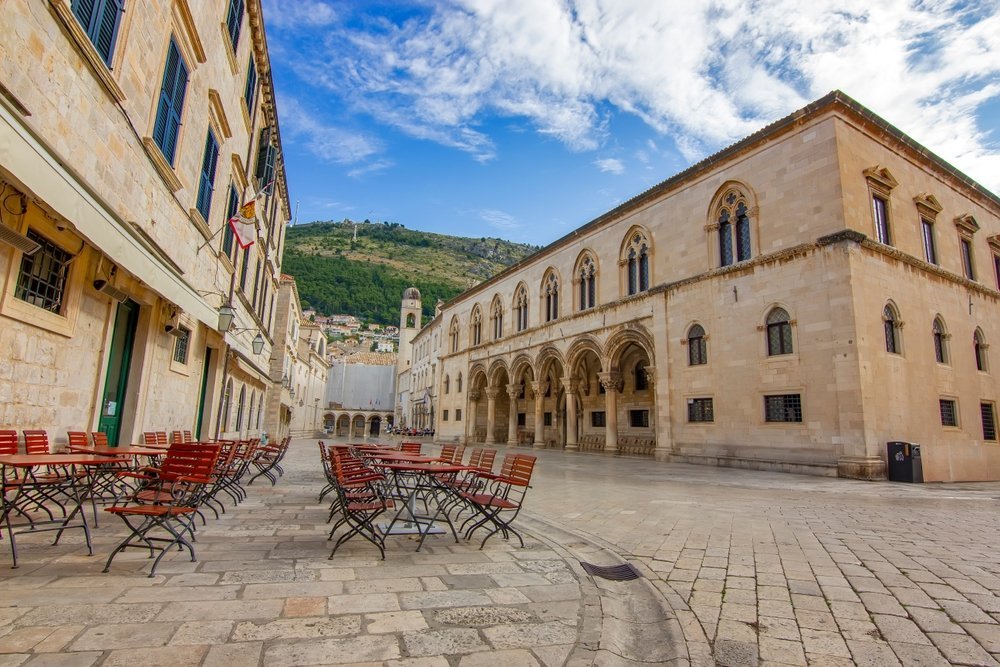
Knežev dvor was the seat of the republic’s rector, who was elected for one month at a time and wasn’t allowed to leave the palace during his term, so that no one could gather too much power. The building is a mix of Gothic and Renaissance from the 15th century, and above the entrance to the council chamber is the inscription “Obliti privatorum publica curate”, meaning forget your private interests and take care of the public good. The atrium with its arched colonnades is still used for concerts during the summer festival.
Today the palace houses the Cultural History Museum, with around 10,000 objects from the late 15th century to the early 20th century, including the rector’s private chambers, portraits, furniture and coins. A ticket costs 15 euros (around £13), while the combined ticket for all ten museums run by Dubrovnik Museums costs 20 euros (around £17) and is valid for seven days. From April to October it’s open daily from 9am to 6pm; in winter it’s open from 9am to 4pm and closed on Mondays.
My tip is to get the combined ticket, because it also covers the Maritime Museum in St John’s Fortress and the Homeland War Museum up on Srđ, so the 5-euro difference quickly pays for itself. The palace stands on the square behind the bell tower, 30 seconds from Stradun.
4. The Franciscan Monastery and the old pharmacy
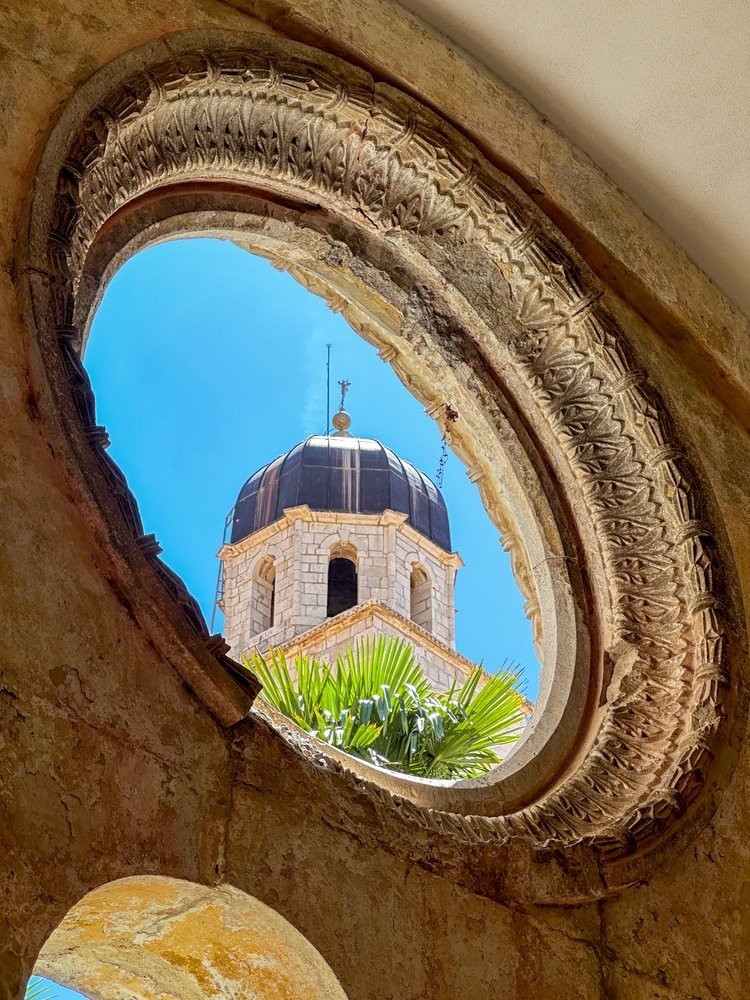
Just inside the Pile Gate, on your left as you step onto Stradun, is the Franciscan Monastery, home to one of the oldest pharmacies in Europe. The monks opened it in 1317 and it has served customers ever since, so you can still buy creams made to the monastery’s old recipes in the little shop facing the street. The cloister from 1360 is the most beautiful space in the Old Town, with double columns where every capital has its own face or animal, and orange trees and palms in the middle.
The monastery museum displays the old pharmacy’s jars, mortars and distilling equipment, a collection of old paintings and parts of the library, which is one of the largest monastery libraries in Croatia. Admission costs around 10 euros (around £8), and it’s normally open daily from 9am to 6pm, but check the sign at the entrance, as the hours change with the season. Above the church portal facing Stradun hangs a Pietà from 1498, one of the few things that survived the earthquake.
My tip is to go in at 9am, before the first groups have made their way here from the harbour. The cloister is small, and with 40 people in it the atmosphere is gone.
5. Dominican Monastery
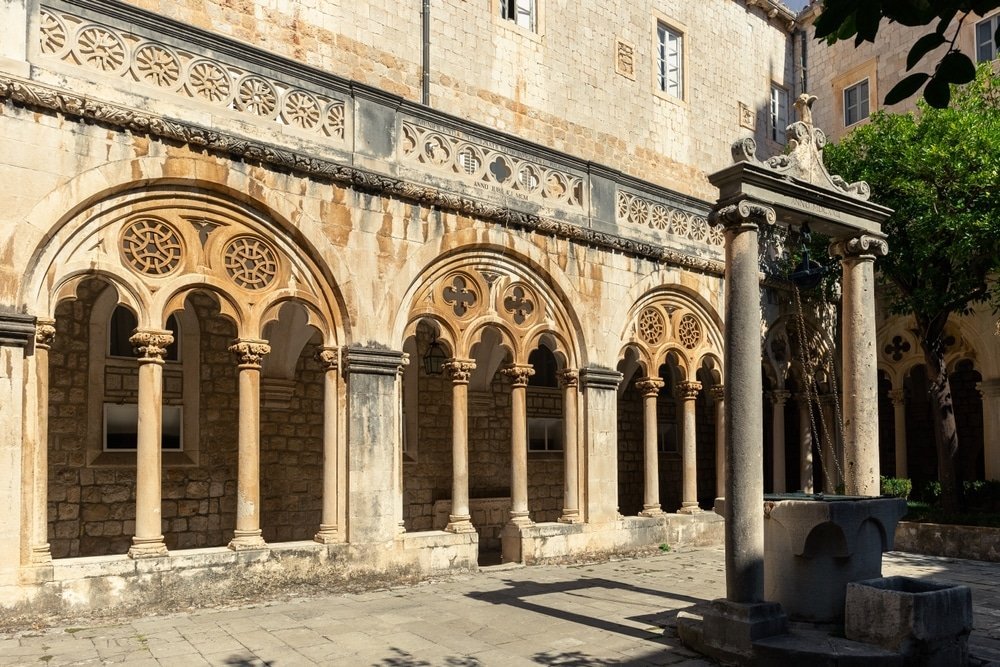
At the opposite end of the Old Town, squeezed up against the city walls by the Ploče Gate, stands the Dominican Monastery. Far fewer people visit it, even though in my opinion it’s at least as good. The cloister was built between 1456 and 1469 in a mix of Gothic and Renaissance styles, with 24 carved saints in the vaulting and a 16th-century well in the middle. Look out for the staircase up to the entrance, where the balusters have been bricked in so that nobody below could peek up the ladies’ dresses.
The museum in the old chapter house holds the monastery’s greatest treasure, Titian’s painting of St Blaise with Mary Magdalene from 1550, along with a painting by Nikola Božidarević showing what Dubrovnik looked like before the earthquake. The library was founded in 1492 and contains 239 incunabula and around 100 medieval manuscripts. Admission costs about €5 (around £4), and it’s usually open from 9am to 6pm.
Combine your visit with a walk up Svetog Dominika, the street that runs alongside the monastery up to the Ploče Gate. It’s one of the best spots for photographing the walls and Fort Revelin, and there’s rarely anyone in the way.
6. The Cathedral and Treasury
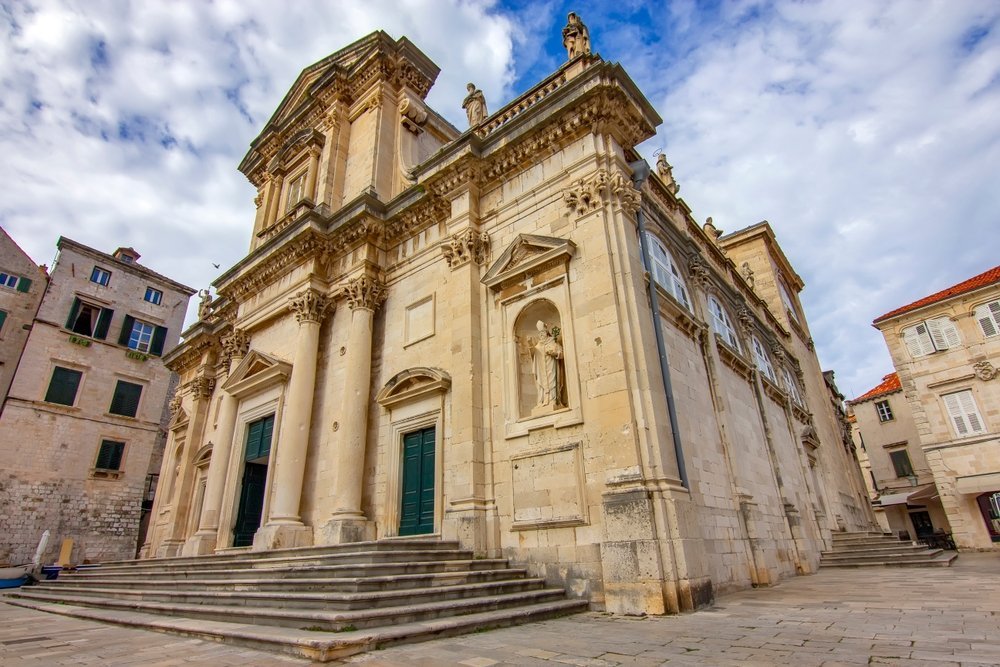
Legend has it that Richard the Lionheart paid for the first cathedral as thanks for surviving a shipwreck off Lokrum in 1192. The Romanesque church collapsed in 1667, and the Baroque cathedral you see today was built between 1671 and 1713, with a pale dome that’s visible from all along the city walls. Above the high altar hangs a polyptych of the Assumption of the Virgin, attributed to Titian’s workshop, and that alone is reason enough to go inside.
The treasury beside the altar holds 132 relics, the most important being the head, arm and leg of St Blaise in gold and enamel reliquaries, the head reliquary dating back to the 11th century. The church itself is free, while the treasury costs a small fee of about €4 (around £3.50). It’s usually open from 9am to 5pm Monday to Saturday, while on Sundays it only opens after the morning Mass, and you can’t get in during services.
The cathedral stands on the square behind the Rector’s Palace, so visit the two together. If you’re here on 3 February, the whole city celebrates St Blaise with a procession in which the relics are carried through the streets, and it’s the one day of the year when Dubrovnik belongs to the locals.
7. Fort Lovrijenac and Gradac Park
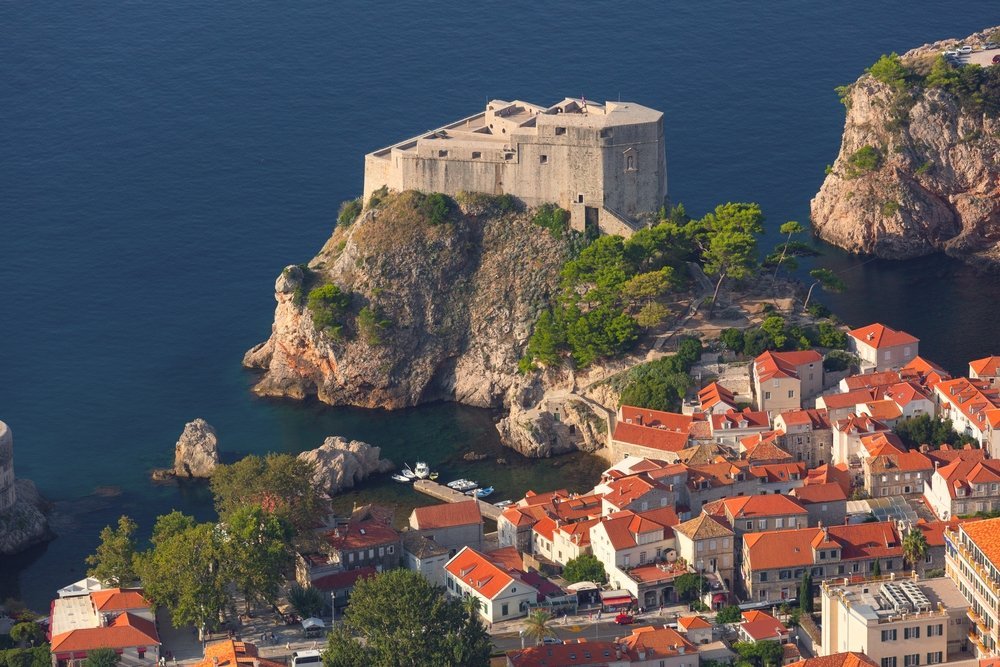
Lovrijenac towers on a 37-metre-high rock just west of the Pile Gate, outside the city walls themselves, and was built to keep Venice off the best rock in town. The fort is first mentioned in 1301, and above the gate is the republic’s motto “Non bene pro toto libertas venditur auro”: freedom is not sold for all the gold in the world. The walls facing the sea and the land are very thick, while the wall facing the city is thin, so that a commander could never turn the cannons on his own people.
The fort is included in the city walls ticket, and if you only buy entry here, it costs about €15 (around £13). Opening hours largely follow those of the walls, so expect 8am until early evening in summer. The view back towards the Old Town and Fort Bokar is the best in the city, and this is where Hamlet is staged during the summer festival and where Game of Thrones filmed the Red Keep.
Afterwards, carry on along the path behind the fort to Gradac Park, a small pine grove on the cliffs with benches and clear views of Lovrijenac and the walls. The park is free, there’s hardly ever anyone there, and it faces west, so it’s my pick for the best place in the city to watch the sunset without buying an expensive drink.
8. Srđ Cable Car and Fort Imperial
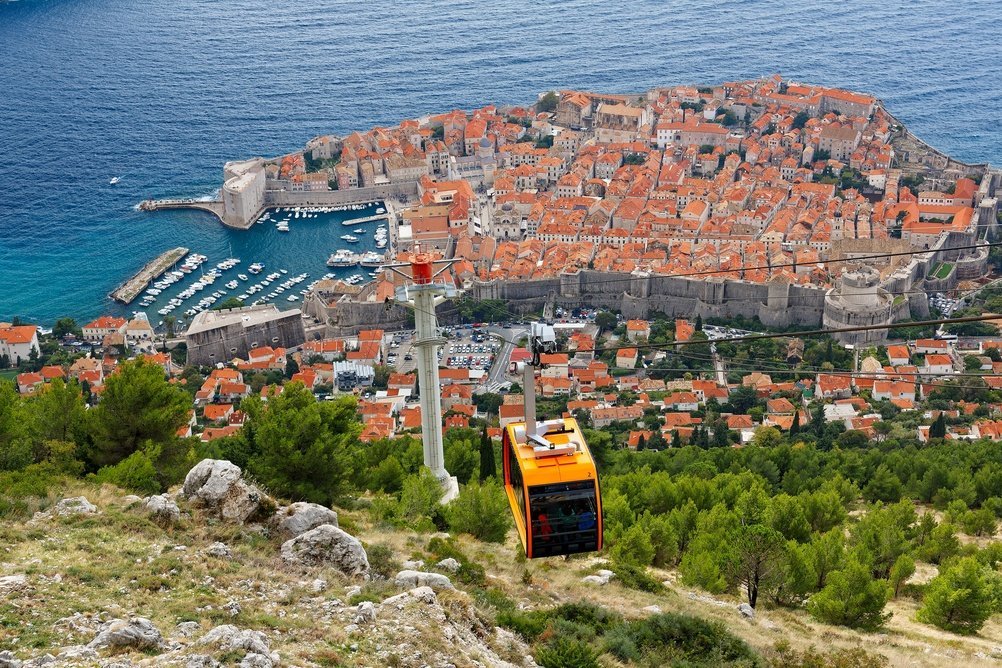
Mount Srđ rises 412 metres directly behind the Old Town, and the view from the top is the Dubrovnik you know from postcards: the entire walled city, with Lokrum and the Elaphiti Islands in the background. The cable car, dating from 1969, was shot to pieces during the war and reopened in 2010. It takes you up in about four minutes from the lower station, a few minutes’ walk uphill from the Buža Gate in the northern city walls.
The ride isn’t cheap. A return ticket costs €30 (around £25), a single €17 (around £14), and children aged 4 to 12 pay €8 (around £7) for a return. It runs from 9am until as late as midnight in high summer, but is closed from December to March inclusive. At the top is Fort Imperial, built by the French in the early 19th century, which now houses the Homeland War Museum about the siege of Dubrovnik. The museum is open from 8.30am to 10pm from April to September, with shorter hours in winter, and is included in the Dubrovnik Museums combined ticket.
My tip is to buy a single ticket up and walk down the zigzagging path that ends at the Buža Gate. It takes about an hour, and the view stays with you all the way. If you’re fit, you can walk both ways and save €30, but don’t do it in the middle of the day in July. Go up an hour before sunset and stay until the lights come on in the Old Town.
Book a sunset tour to the top of Srđ with a glass of wine here.
9. Lokrum
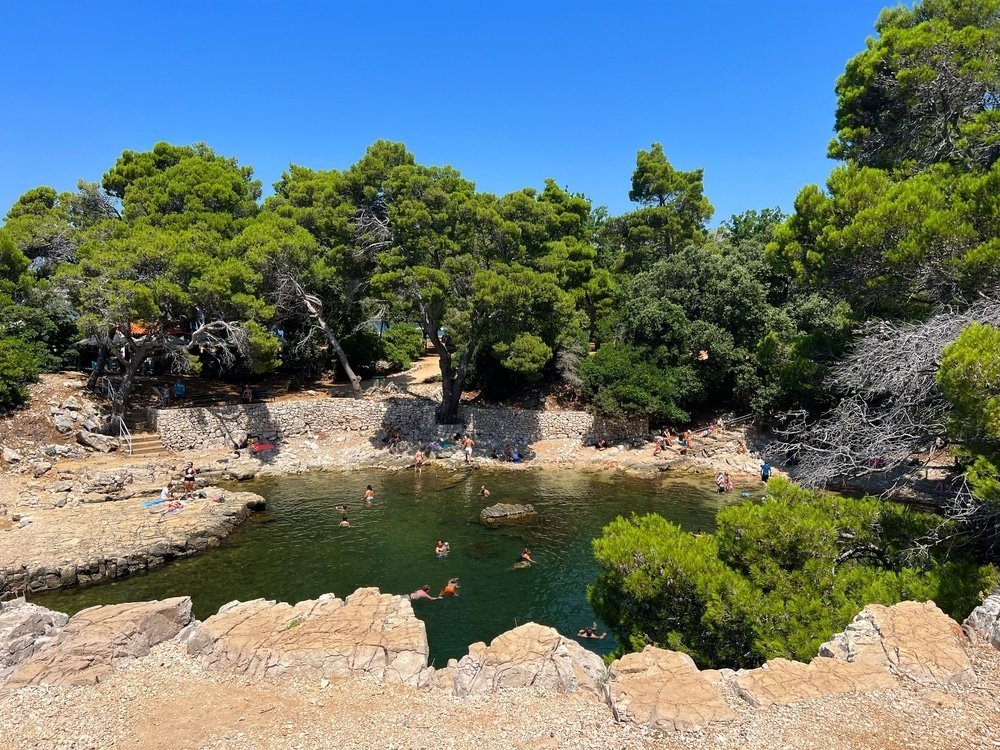
Lokrum lies 600 metres off the old harbour and is the easiest escape from the stone and the crowds of the Old Town. The island is a nature reserve with no hotels or cars, and from the jetty you walk through pine forest and a botanical garden to the 11th-century Benedictine monastery, where peacocks strut among the ruins. Archduke Maximilian of Austria used the island as a summer retreat and brought both peacocks and exotic plants here in the 19th century.
Boats leave the old harbour roughly every half hour from early morning, and the ticket including the return trip and entry to the reserve costs €30 (around £25) for adults and €5 (around £4) for children aged 7 to 18, while the youngest go free. The last boat back leaves in the late afternoon outside the high season and later in summer, so check the timetable at the ticket office, and expect the island to be closed in winter.
Take a swim in the Dead Sea, a small saltwater lake at the southern end that’s connected to the sea through the rock and stays completely calm even when there are waves outside. Then head up to Fort Royal at the top for views back towards the city, and find the replica of the Iron Throne in the monastery if you’re a Game of Thrones fan. Bring water shoes and water, and catch one of the first boats, because by midday the rocks by the harbour are packed.
Book a boat trip along the city walls to Lokrum and Betina Cave here.
10. Banje Beach and Sveti Jakov
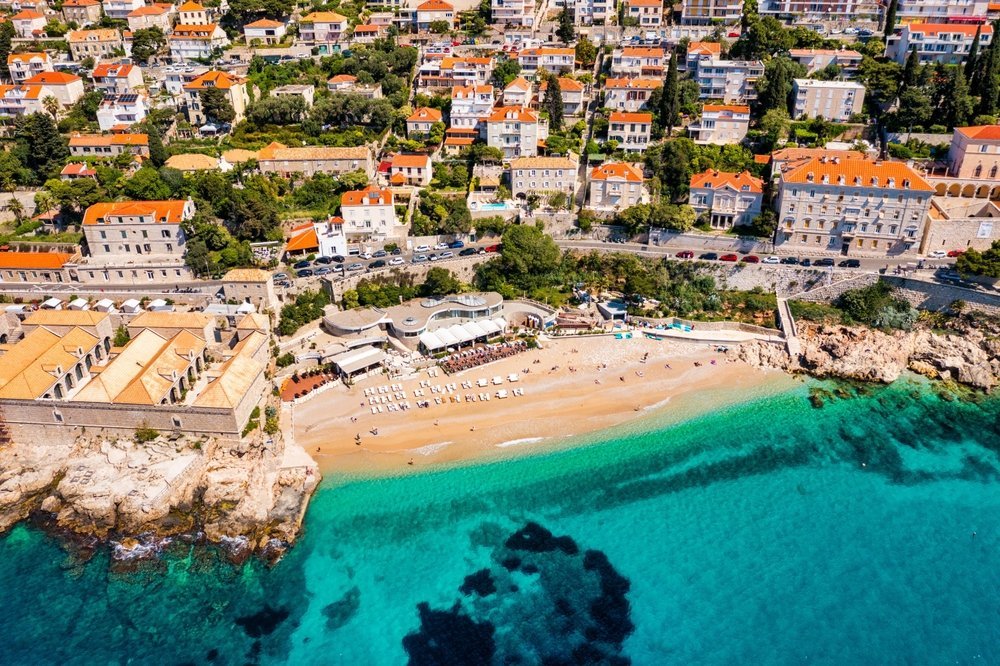
Banje is the town beach, a five-minute walk east of the Ploče Gate, and it has a view few beaches can match: the city walls and St John’s Fortress to the right, Lokrum straight ahead. The beach is pebbly and public, so you can lay your towel down for free at one end, while the beach club at the other rents out sunloungers at prices I don’t think make sense. In the middle of the day in July and August it’s packed.
If you want some peace, carry on for 20 to 25 minutes along Vlaha Bukovca street past the villas to Sveti Jakov. Here a long flight of steps leads down to a small sand and pebble beach facing straight towards the Old Town and Lokrum, and in the late afternoon you get the sunset behind the city walls. There’s a small bar and few people, precisely because you have to climb back up the steps.
Both beaches belong to the Ploče district, which sits on the hill just outside the eastern city gate and has the town’s most expensive hotels and the best views. You can see hotels in Ploče here.
11. Kayaking beneath the city walls
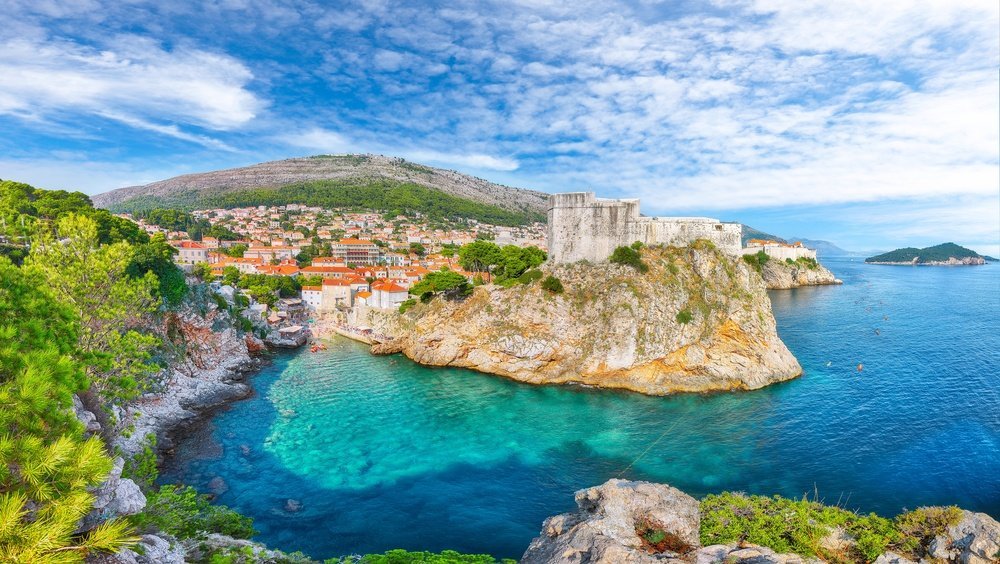
The best way to see the walls is from below. Kayak tours set off from the little cove below the Pile Gate, right under Lovrijenac, and paddle along the whole south side of the Old Town, where the walls rise straight out of the water, then on around Lokrum and into Betina Cave, which can only be reached from the sea. Here you stop for a swim and some snorkelling before heading back past the old harbour.
A two- to three-hour guided tour typically costs 25 to 35 euros (around £20 to £30), and the sunset tours with a glass of wine on a beach are around 40 euros (around £35). You don’t need any experience, the kayaks are stable two-seaters, and the guides adjust the pace. Tours are cancelled in strong winds, so don’t book one on your only free day.
Choose an early morning tour if you want the sea to yourself, or the sunset tour if you want the most beautiful light on the walls. In the middle of the day the water is full of boats circling the island.
Book a kayak tour beneath the city walls with snorkelling in Betina Cave here.
12. The Game of Thrones locations
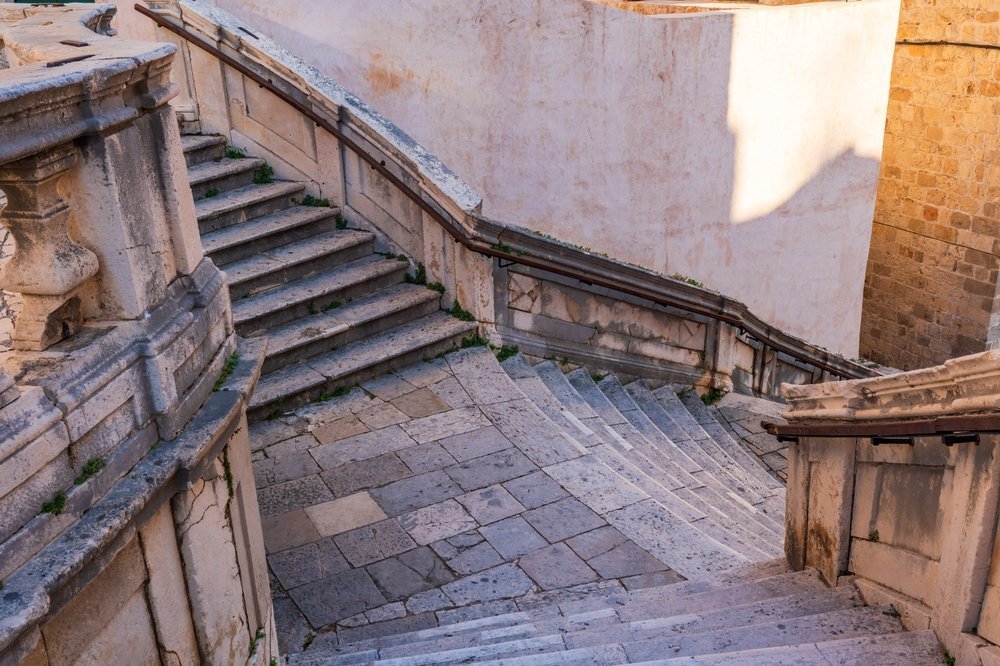
Dubrovnik was King’s Landing from season 2 onwards, and even if you’ve never watched the series, the locations are some of the best corners of the town. The bay below the Pile Gate was Blackwater Bay, Lovrijenac was the Red Keep, and the Minčeta Tower on the city walls was the House of the Undying in Qarth. The Jesuit Stairs up to the Church of St Ignatius were the setting for Cersei’s Walk of Shame, Gradac Park hosted the Purple Wedding, and Lokrum and Trsteno were used for Qarth and the gardens of the Red Keep.
The Jesuit Stairs from 1738 were modelled on the Spanish Steps in Rome and are lovely in their own right, and the baroque church at the top is free to enter. You can see all of it on your own without paying, and a route from Pile via the stairs to Gradac takes about an hour. If you want the stories from the filming and stills from the scenes to compare with, a guided tour makes sense, and most finish with a boat trip to Lokrum and the Iron Throne.
Walk the stairs early in the morning if you want them free of people. By midday there are several groups on them at once, and the shops around Gundulić Square below sell Game of Thrones souvenirs in quantities that are hard to take seriously.
Book a Game of Thrones tour with a boat trip to Lokrum and the Iron Throne here.
13. The Buža bars on the rocks
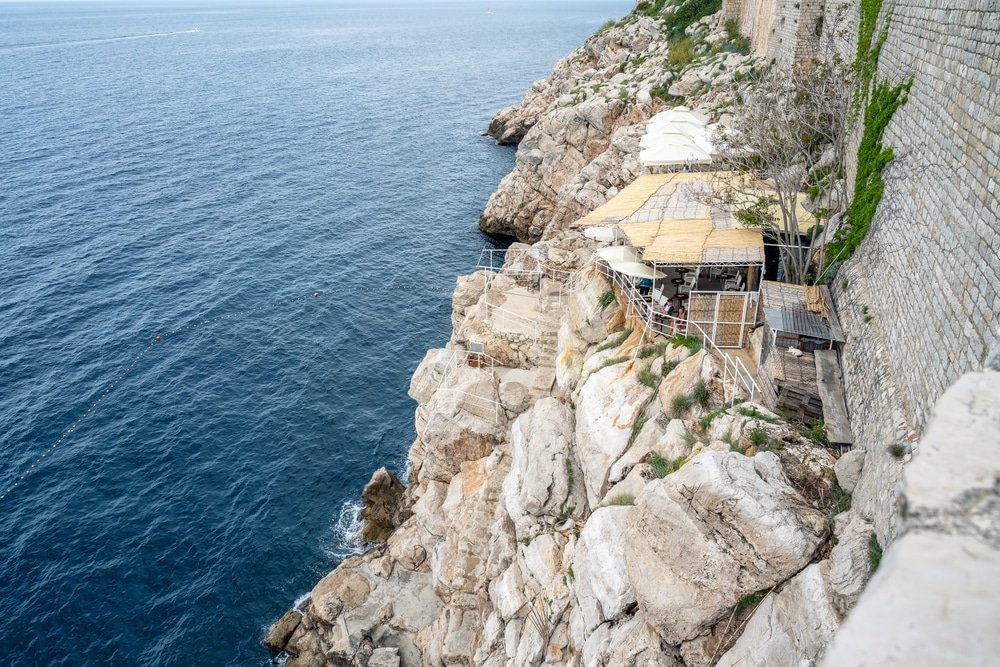
Buža means hole, and that’s exactly what you need to look for: two holes in the southern city wall that lead out to bars on the rocks with the Adriatic right beneath your feet. Follow the hand-painted “Cold drinks” sign from the square by the Church of St Ignatius and you’ll find one of them, then walk a little further east for the other. Both consist of plastic chairs and a few steps down to the water, and that’s exactly the charm.
You’re paying for the view, so expect prices well above the rest of town, and bring cash. The bars only open in season, and on evenings in high season you may have to wait for a chair. On the plus side, you can jump into the sea from the rocks, which the local youngsters do from spots I wouldn’t recommend.
My tip is to come in the morning with your swimwear, swim from the rocks and have a coffee while the place is still half empty. The sunset is better from Gradac Park, and there you won’t have to pay 8 euros (around £7) for a beer.
14. War Photo Limited
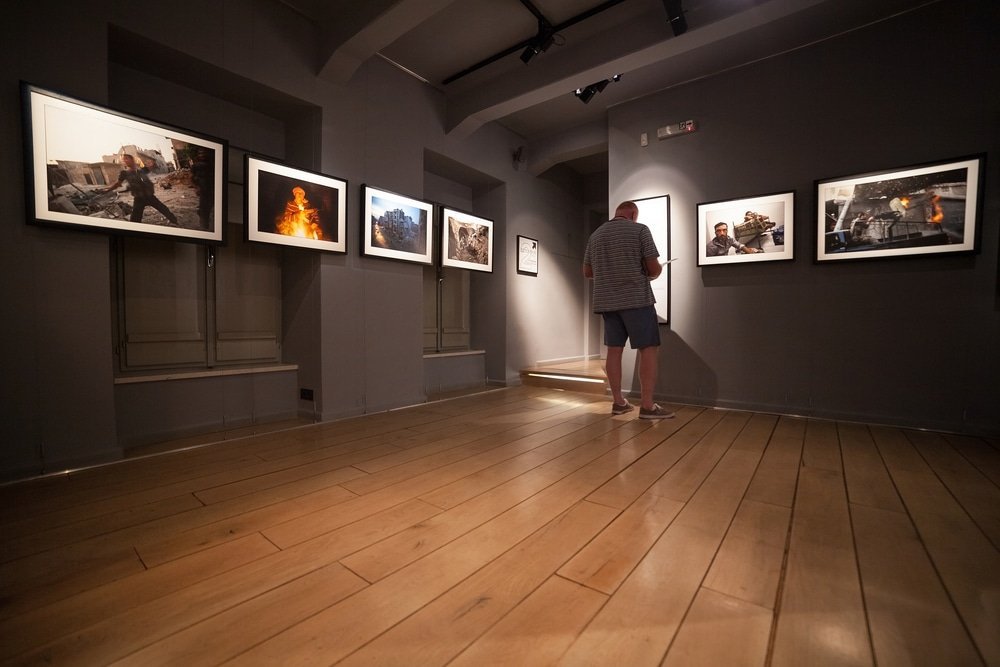
On a side street off Stradun, at Antuninska 6, is a small gallery that’s more relevant than most of the town’s museums. War Photo Limited shows war photography, with a permanent exhibition on the break-up of Yugoslavia and the wars in Croatia, Bosnia and Kosovo, shot by some of the best photojournalists who covered them. On top of that come changing exhibitions on conflicts elsewhere in the world.
Admission costs 10 euros (around £8) and 6 euros (around £5) for students, and the gallery is open daily from April to October, 10am to 10pm in the summer months and 10am to 5pm in April and October. It’s closed from November to March. Allow about an hour, and be aware that the images are powerful and not suitable for young children.
I think it makes most sense to visit the gallery on the same day as the Homeland War Museum on Srđ. One shows the bigger picture, the other shows what happened to this particular town when the shells fell on the roofs you’ve just walked around on the walls.
15. The Elaphiti Islands
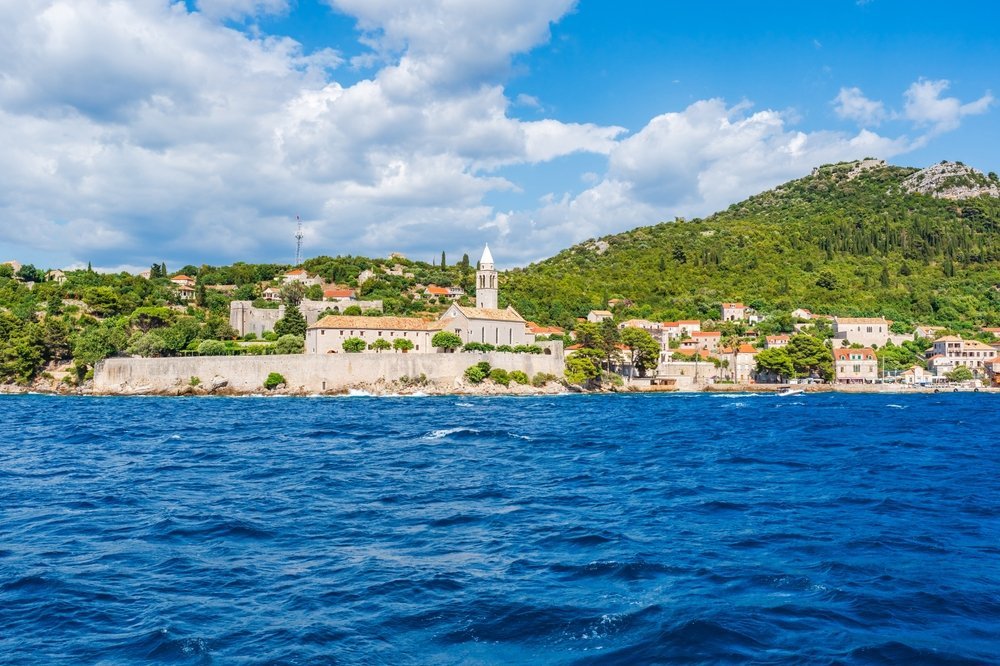
Koločep, Lopud and Šipan lie in a row off the coast north-west of Dubrovnik, and they’re largely car-free, with small harbour villages, pine forests and summer houses from the republic’s golden age. Lopud is my favourite, because in 20 to 25 minutes you can walk across the island to Šunj, one of the few proper sandy beaches in the area, with shallow water stretching far out. Koločep is the smallest and closest, and Šipan the largest, with olive groves and vineyards.
The cheap option is the local ferry, Jadrolinija’s line 807 from the port in Gruž, which sails to Koločep in about half an hour and to Lopud in about an hour, and a ticket costs just a few euros each way. Departures are few, especially in winter, so check the timetable and plan your return before you get off. The alternative is a full-day boat trip with lunch and swimming stops on all three islands, which typically costs 40 to 65 euros (around £35 to £55).
If you want to catch an early ferry, it’s handy to stay in the harbour district of Gruž, which is also home to the bus station and the market, and where prices are lower than inside the walls. You can see hotels in Gruž here.
Book a full-day boat trip to the Elaphiti Islands with lunch and swimming stops here.
16. Cavtat
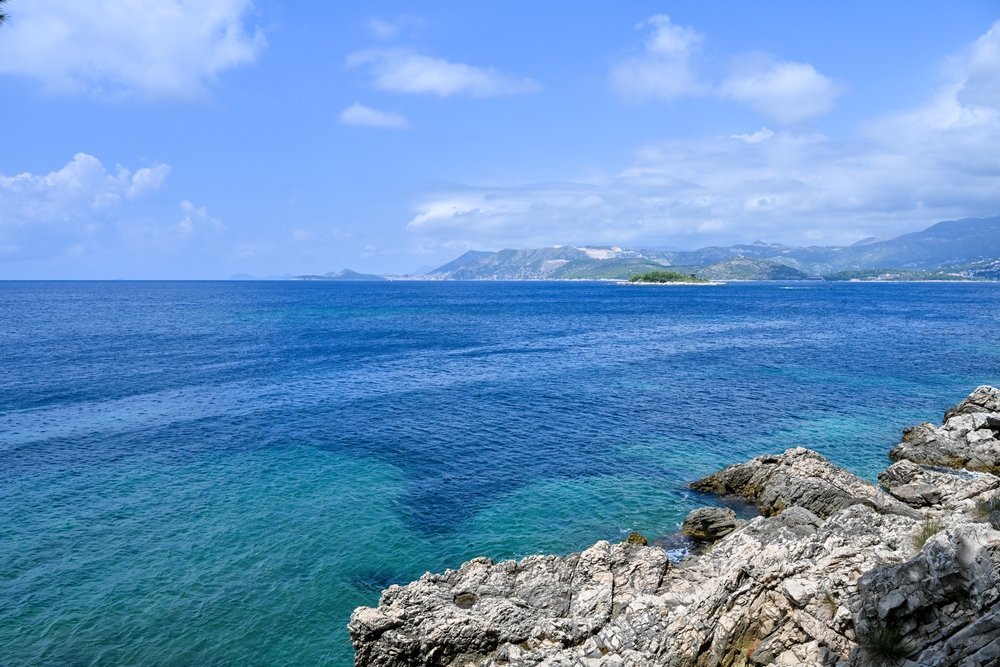
Cavtat is the small harbour town 20 kilometres south of Dubrovnik, right by the airport, and it’s the opposite of the Old Town: quiet, green and with room to breathe on the promenade. The town sits on a peninsula with two bays, a palm-lined waterfront full of restaurants and a path all the way around the headland, where you can swim off the rocks. Up on the hill by the cemetery stands the Račić Mausoleum, which the sculptor Ivan Meštrović built in the 1920s from white Brač stone, and the view from up there is worth the climb on its own.
The most enjoyable way to get there is by boat from the old harbour in Dubrovnik. The trip along the coast takes around 45 minutes to an hour, and the boats run from spring to autumn with several departures a day for about 15 euros (around £13) each way or about 20 euros (around £17) return. The cheap option is local bus 10, which runs from the bus station in Gruž in about half an hour. Boats are cancelled when the sea is rough, so check the weather.
My tip is to take the boat down in the morning, have lunch by the harbour, walk around the peninsula and catch the bus back. If you have an early flight the next day, Cavtat is also a great place to spend your last night.
17. Trsteno Arboretum and Ston
Head north along the coast road and after 20 kilometres you reach Trsteno, where the noble Gučetić family laid out the gardens around their summer residence between 1494 and 1502, and today the arboretum covers 28 hectares with a Renaissance garden, an aqueduct, a Baroque Neptune fountain and views over the sea. At the entrance stand two plane trees that are around 500 years old, with trunks measuring about 11 metres in circumference. Admission costs about 10 euros (around £8), and it’s open every day, with the longest hours in summer. The local buses from Gruž towards Trsteno and Slano get you here in around half an hour.
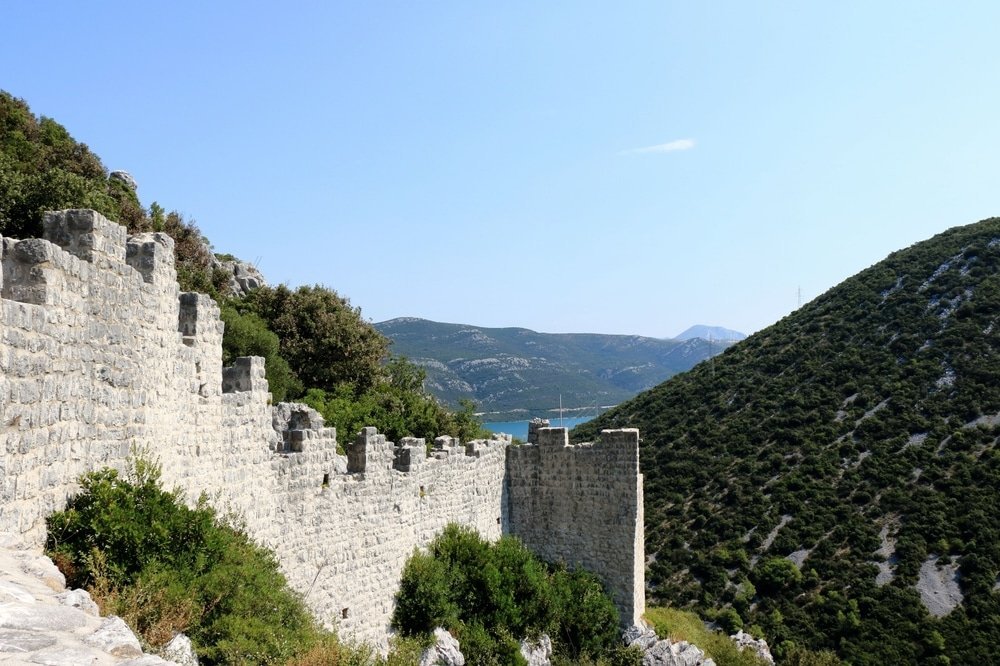
Carry on another 35 kilometres to Ston at the foot of the Pelješac peninsula, where from 1333 the republic built a wall almost seven kilometres long to protect its salt pans. Around 5.5 kilometres still stand, and you can walk the wall over the hill between Ston and Mali Ston in about an hour, passing 40 towers along the way. A ticket costs about 10 euros (around £8) from March to October and half that in winter, and the wall opens at 8am and closes between 5.30pm and 7.30pm depending on the month. In Mali Ston you can eat oysters that have been farmed in the bay since the days of the republic, served raw with lemon by the harbour for a couple of euros each, and wash them down with red wine from Pelješac.
Both places are easiest to reach by car, and a hire car for a day often costs less than two seats on an organised excursion. You can compare car hire prices in Dubrovnik here. Do Trsteno in the morning while it’s cool, and walk the wall in Ston late in the afternoon, before the oysters.
Book the extended Game of Thrones tour, which also visits Trsteno and Srđ, here.
18. Day trip to Kotor or Mostar
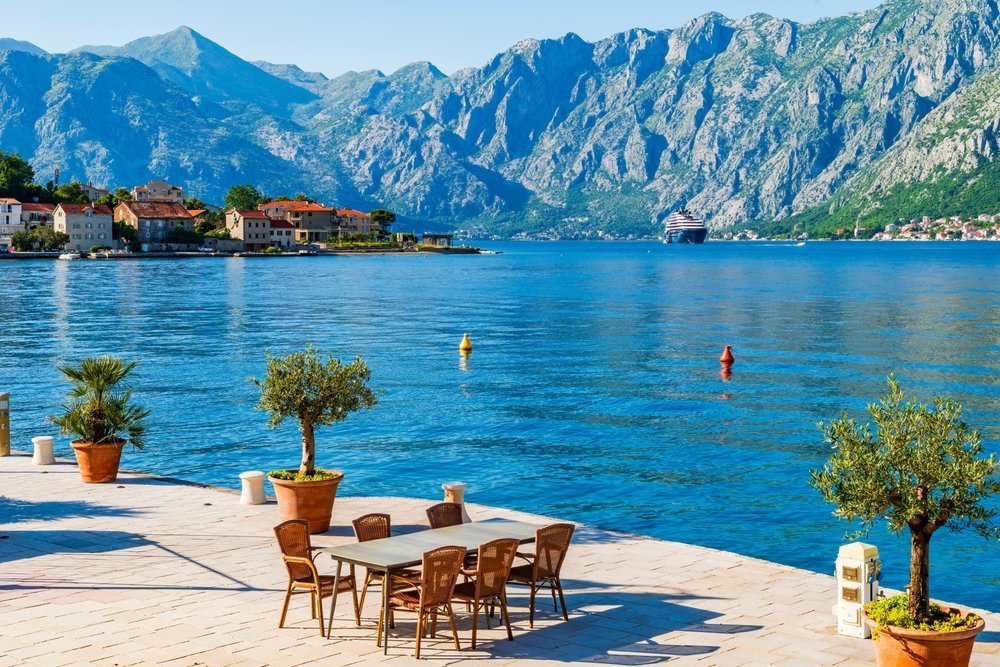
Dubrovnik sits so far south that two neighbouring countries are within reach in a day. Kotor in Montenegro is 90 kilometres away, and the journey takes two to two and a half hours including the border check, so remember your passport. The reward is the Bay of Kotor, which winds in between the mountains like a fjord, the town of Perast with the church island of Our Lady of the Rocks, and Kotor’s Old Town, where you can climb the 1,350 steps up to St John’s Fortress. If you want to stay longer than a day, I’ve written a guide to where to stay in Montenegro.
Mostar in Bosnia and Herzegovina is 140 kilometres away, roughly three hours each way, and the big draw here is the Ottoman bridge Stari Most from 1566. The bridge was shelled and destroyed in 1993 and rebuilt stone by stone in 2004, and in summer the locals dive the 24 metres into the Neretva river for tourists’ money. Most excursions also stop at the Kravica Waterfalls, where you can swim. Organised tours cost from around €30 (around £25) to Mostar and from around €50 (around £40) to Montenegro, but expect to be away from Dubrovnik for 11 to 12 hours.
My advice is to pick one of the trips, not both, unless you have a week. Choose Kotor if you want coastline and views, and Mostar if you want history and something that feels completely different from Croatia. In summer the border queue into Montenegro can take more than an hour, so tours that leave at 7am are better than those leaving at 9am.
Book a day trip to Kotor and Perast with a boat trip on the Bay of Kotor here, or book a day trip to Mostar and the Kravica Waterfalls here.
Practical travel tips for Dubrovnik
The Old Town is car-free, and you can walk anywhere inside the walls in ten minutes. For Lapad, Gruž and the beaches, use Libertas’ city buses, which converge at Pile Gate. A single ticket bought from the driver costs €2.50 (around £2), and a day pass costs around €5.30 (around £4.50) and is valid for 24 hours from first validation. If you stay in Lapad, the buses get you to Pile in a quarter of an hour, and you get a beach, a promenade and lower prices. You can see hotels in Lapad here.
The Dubrovnik Pass is one of the few city cards in Europe that actually pays off. It costs €40 (around £35) for one day, €50 (around £40) for three days and €60 (around £50) for seven days, and it covers the city walls, Lovrijenac, the Rector’s Palace, the Maritime Museum, the Franciscan Monastery museum and a string of other museums, plus the city buses. Since the city walls alone cost around €40, the one-day card effectively gives you the museums and buses for free. The card is activated on first use, and each museum can be visited once.
The airport is 20 kilometres south of the city near Cavtat, and the shuttle bus runs to Pile and the bus station in Gruž in just under half an hour. All the options, including the city bus and taxis, are in my guide to getting from Dubrovnik Airport to the city centre.
July and August are hot, expensive and overcrowded, so I would travel in May, June, September or the first half of October, when the sea is still warm. Check the port’s cruise ship arrivals calendar, and plan the city walls and museums for the days with the fewest ships in port. In winter the city is almost empty and much cheaper, but the cable car, Lokrum, War Photo Limited and many restaurants are closed, and several of the museums have a fixed weekly closing day.
If you need the full selection, you can see all hotels in Dubrovnik on Booking.com. If you’re heading further up the coast, read my guides to where to stay in Split and where to stay on Hvar, or start with my overview of where to stay in Croatia.
Travel ressources & websites I use all the time 👇
• Booking.com has the best offers on hotels and unique places to stay
• GetYourGuide is the best place to book tours & activities with free cancellation
• Welcome Pickups is the best & safest place to pre-book airport transfers
Psst 👀 Have you subscribed to my Youtube channel and my Instagram where I provide more useful travel tips?