

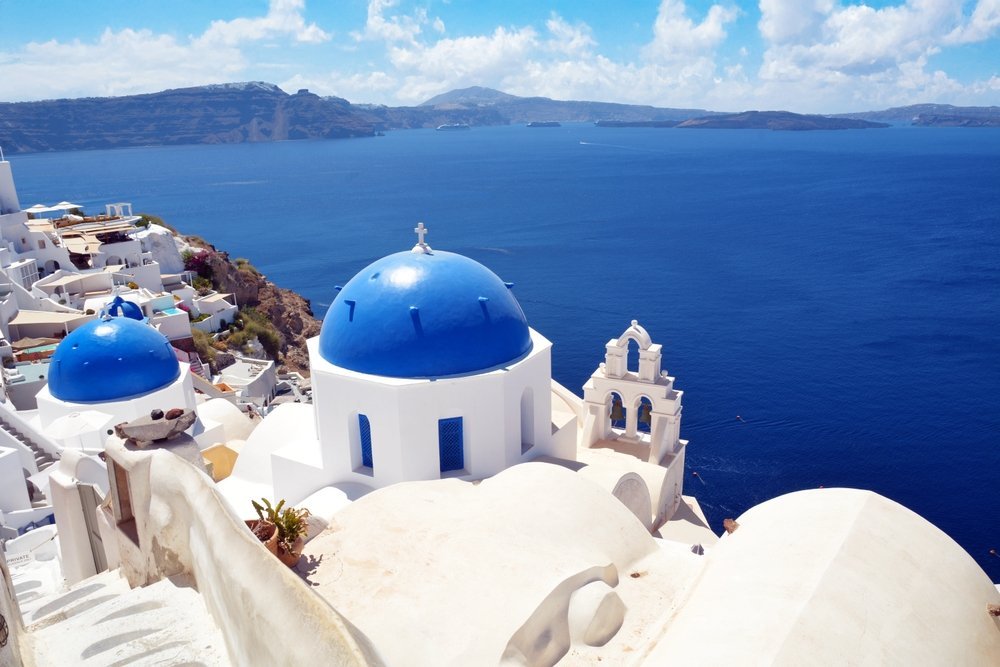
Santorini is what remains of a volcano that blew itself apart in a violent eruption around 3,600 years ago, after which the sea flooded the huge crater. Today the whitewashed towns of Fira, Imerovigli and Oia sit right on the rim of the caldera, high above the water, while the rest of the island has black-sand beaches, vineyards of low-growing vines and small inland villages. Here’s my guide to the best things to do in Santorini.
These are my picks for the 18 best things to see and do in Santorini, with prices, opening hours and transport tips. Prices are given in euros. The island’s museums and archaeological sites close on different days of the week, so read the sections before you plan your days, and book boat trips and wine tastings well in advance if you’re travelling in July or August. The final section covers a day trip to the neighbouring island of Thirassia.
Contents
1. Oia and the sunset
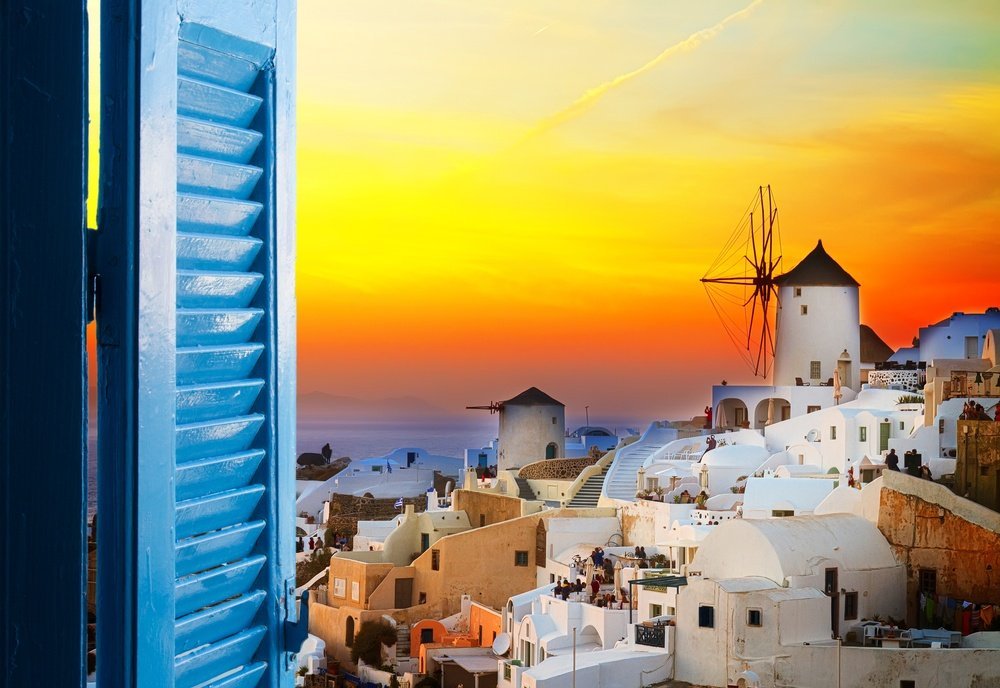
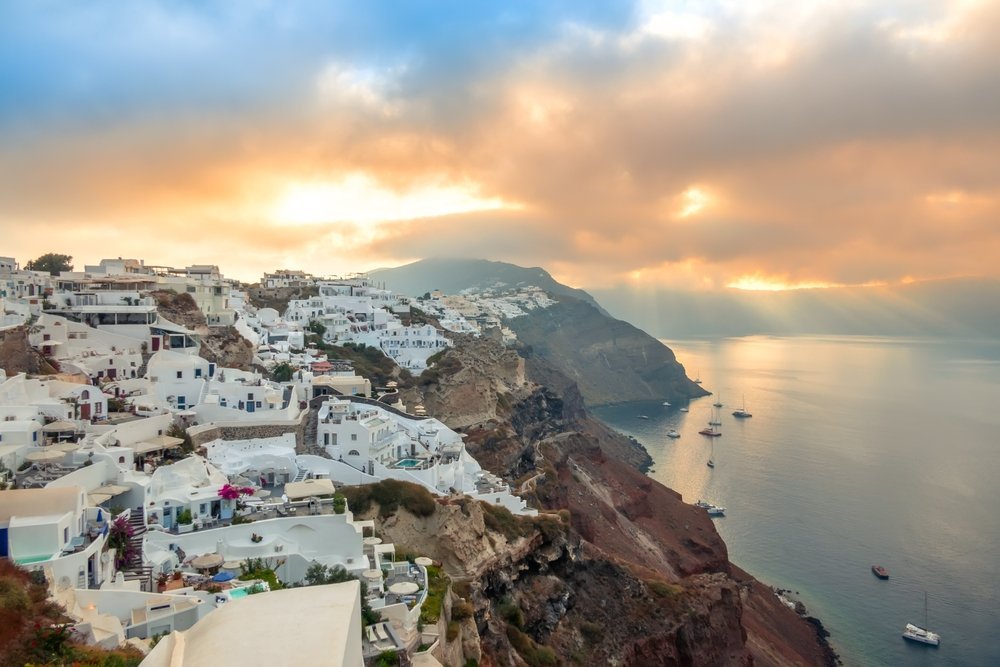
Oia sits on the northern tip of Santorini, and it’s the image most people have in mind when they think of the island: white houses and cave hotels built into the cliff, blue-domed churches and windmills on the edge of the caldera. According to Greece’s official tourism website, the Oia sunset is a ritual that thousands of people take part in every year, which also makes it the place on the island where you’ll find the biggest crowds at any one time.
The best-known viewpoint is the ruin of the Venetian castle, Kastro, at the very end of the headland. It’s free, but in high season it fills up long before sunset, so you need to be there at least an hour beforehand to get a good spot. Personally, I think it’s just as nice to find a place along the main street or by the windmills, where there’s a bit more room. It’s also worth strolling along the town’s marble-paved main street in the morning, before the cruise groups arrive.
The bus from Fira to Oia costs €2.20 (around £2) and leaves from the bus station in Fira. After sunset there are long queues for buses and taxis, so my tip is either to stay in Oia or to have dinner in town and wait until the worst of the queues has gone. Oia is the most expensive place to stay on the island, but if you want to wake up to the view, you can see hotels in Oia here.
Book a full-day island tour with wine tasting and sunset in Oia.
2. Fira
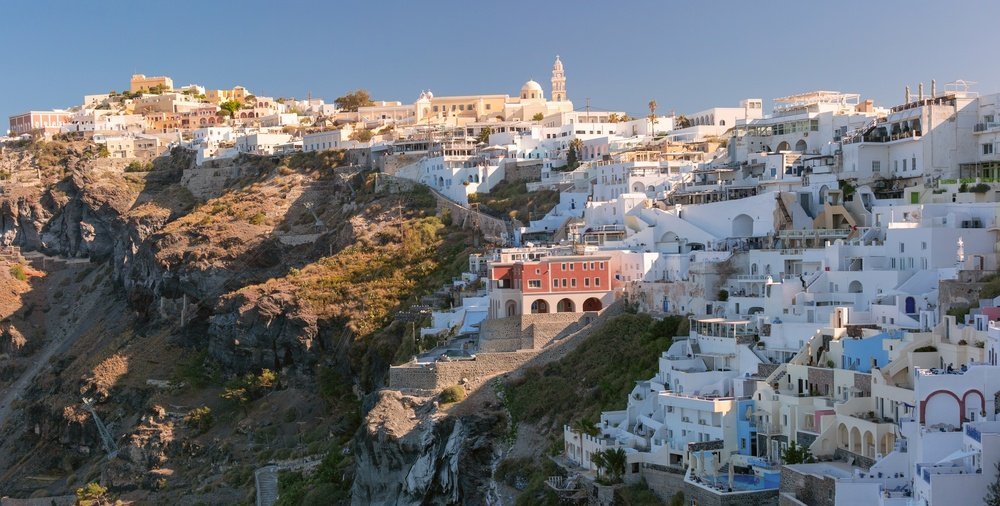
Fira is Santorini’s main town, sitting midway along the caldera rim on the west coast. It’s home to the bus station and most of the shops, bars and restaurants, and it’s the liveliest town on the island in the evening. The narrow streets wind down towards the edge of the cliff, and from the paths along the caldera you look out over the volcanic islands of Nea Kameni and Palea Kameni in the middle of the bay.
You can easily spend half a day wandering around. Start at the large Orthodox cathedral, then head north along the caldera path to Firostefani, about a 15-minute walk from the centre, which has some of the finest views back over Fira. On the way you’ll pass the Catholic cathedral and several small churches with bell towers facing the sea. You can watch the sunset from here too, with far fewer people than in Oia.
Fira is the most practical place to stay if you want to get around by bus, as all the bus routes on the island start here. In my guide to where to stay in Santorini, I cover Fira as well as the quieter neighbouring areas of Firostefani and Imerovigli. If you’d like to stay right in town, you can see hotels in Fira here. Bear in mind that hotels on the caldera rim itself often involve lots of steps, so check this if you have heavy luggage.
Book a guided food tour of Fira with tastings.
3. The walk from Fira to Oia
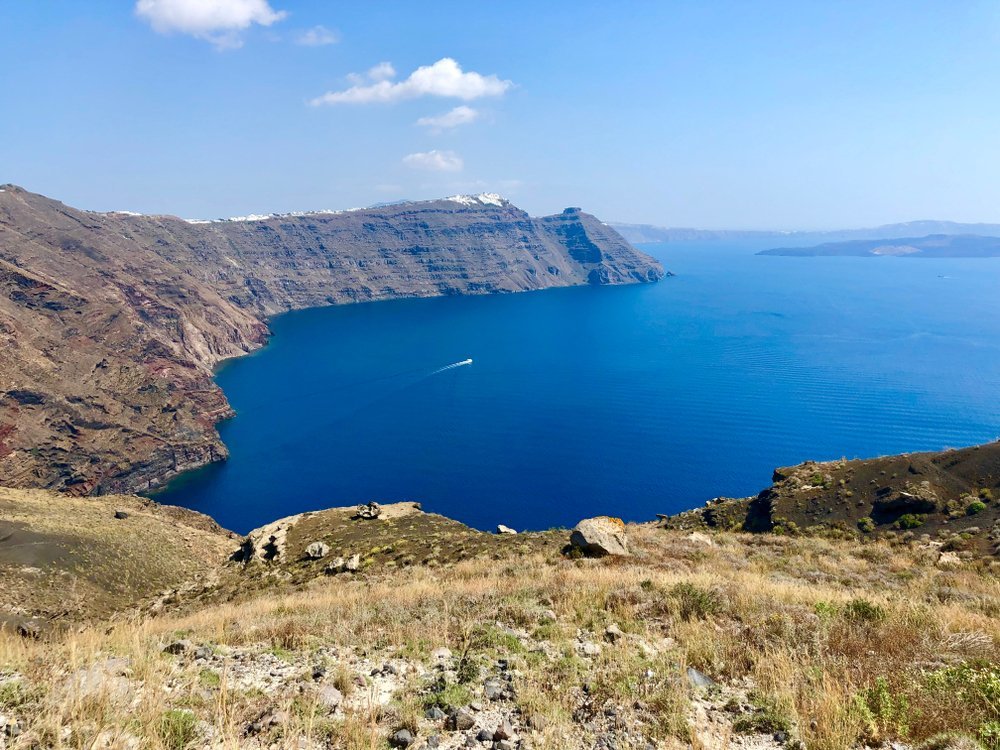
The path along the caldera rim from Fira to Oia is, in my opinion, the best free experience in Santorini. According to Discover Greece, the route is 10.5 kilometres long and takes 3 to 5 hours, with the highest point 350 metres above sea level. You walk through Firostefani and Imerovigli, past Skaros Rock and a string of small white chapels, and up over Mavro Vouno, the Black Mountain, before reaching Oia.
The first stretch to Imerovigli follows paved paths between hotels and cafés, with plenty of places to buy water. After Imerovigli the path becomes gravel and dirt with several climbs, and there’s practically no shade. There aren’t many places to buy anything on the second half either, so bring plenty of water. Good shoes are a must, as the pumice on the path is slippery.
My tip is to set off from Fira early in the morning so you reach Oia before it gets too hot, or to start late in the afternoon and arrive in time for sunset. Discover Greece names April, May and October as the best months for hiking on the island, and in the middle of the day in July and August the walk is tough. To get back to Fira, take the bus from Oia. If you don’t have time for the whole walk, you can just go to Imerovigli and back, which takes a couple of hours at a relaxed pace.
4. Skaros Rock and Imerovigli
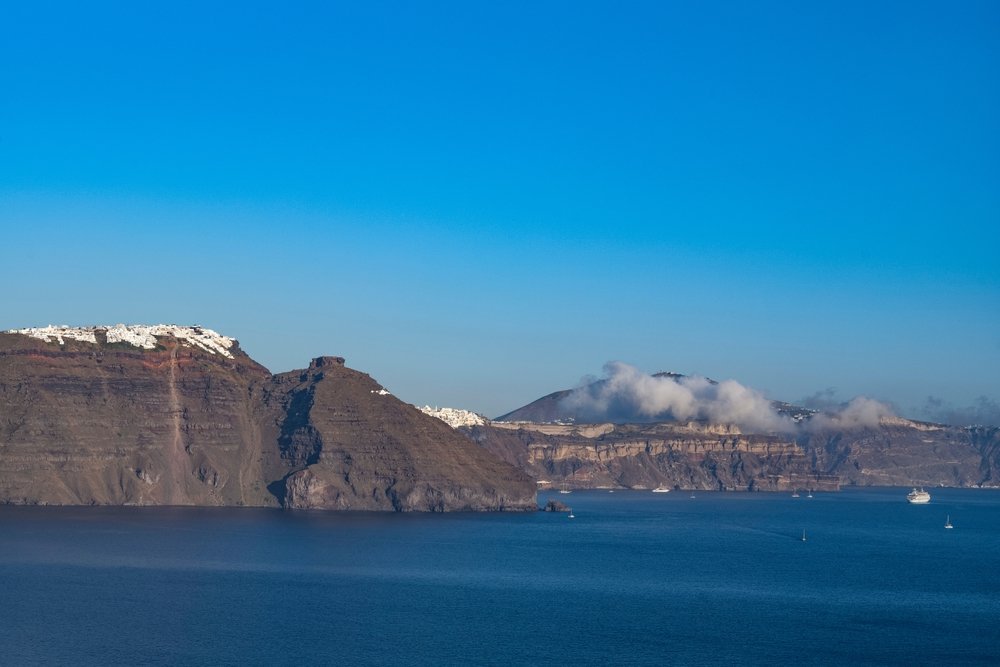
Imerovigli lies just north of Firostefani and is often called the balcony of the Aegean, because the view over the caldera is so wide from here. It’s quieter than Fira and Oia, and it’s home to many of the island’s most expensive hotels, with pools right on the edge. In the evening the streets are quiet, and there are only a handful of restaurants.
In front of the village, Skaros Rock juts out into the caldera. According to Discover Greece, the island’s medieval capital stood up there, with a Venetian castle, houses and churches, and today only ruins remain. From Imerovigli a path leads down steps and out to the rock. It takes about half an hour each way, and the final section up to the top is steep and uneven, so it’s only for those who are sure-footed. If you instead follow the path around the rock, you’ll reach the small white chapel of Theoskepasti, perched right above the sea.
Skaros Rock is free and one of the best places to watch the sunset without big crowds. My tip is to head out in the late afternoon and have your phone torch ready for the walk back up the steps. Imerovigli is also a good choice if you want to stay with a caldera view somewhere a little more peaceful than Oia, and you can see hotels in Imerovigli here.
5. Akrotiri
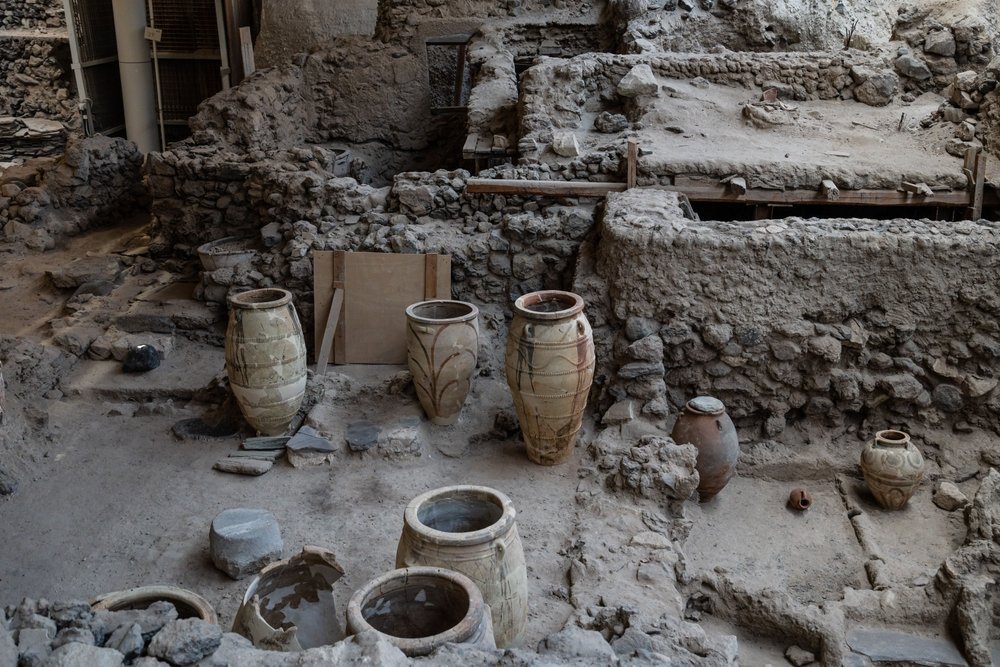
Akrotiri, in the south of the island, is Santorini’s most important archaeological site. It was a large Bronze Age town that was buried under ash during the volcanic eruption around 1600 BC, which is why it’s often called the Pompeii of the Aegean. The houses are preserved up to several storeys high, along with streets, squares and remnants of wall paintings, but no victims have been found in the ruins, so the inhabitants probably managed to flee before the volcano buried the town.
The entire site sits under a huge roof, so you can visit in the middle of the day too, and you walk along wooden walkways above the streets. Tickets cost 20 euros (around £17) for adults, and in the summer season the site is open from 8am to 8pm, though only from 8.30am to 3.30pm on Mondays and Thursdays. Last entry is 20 minutes before closing. Opening hours change with the seasons, so check them before you go. The bus from Fira to Akrotiri costs 2.20 euros (around £1.85).
To be honest, the ruins make far more sense with a guide or an audio guide, as otherwise it mostly looks like a row of stone houses. The famous wall paintings aren’t on site but at the Museum of Prehistoric Thera in Fira and the National Archaeological Museum in Athens. My tip is therefore to combine the site with the museum in Fira and fit in Red Beach and the lighthouse on the same day, as they’re close by.
Book a private guided tour of Akrotiri with a licensed guide (the price is for the whole group).
6. The museums in Fira
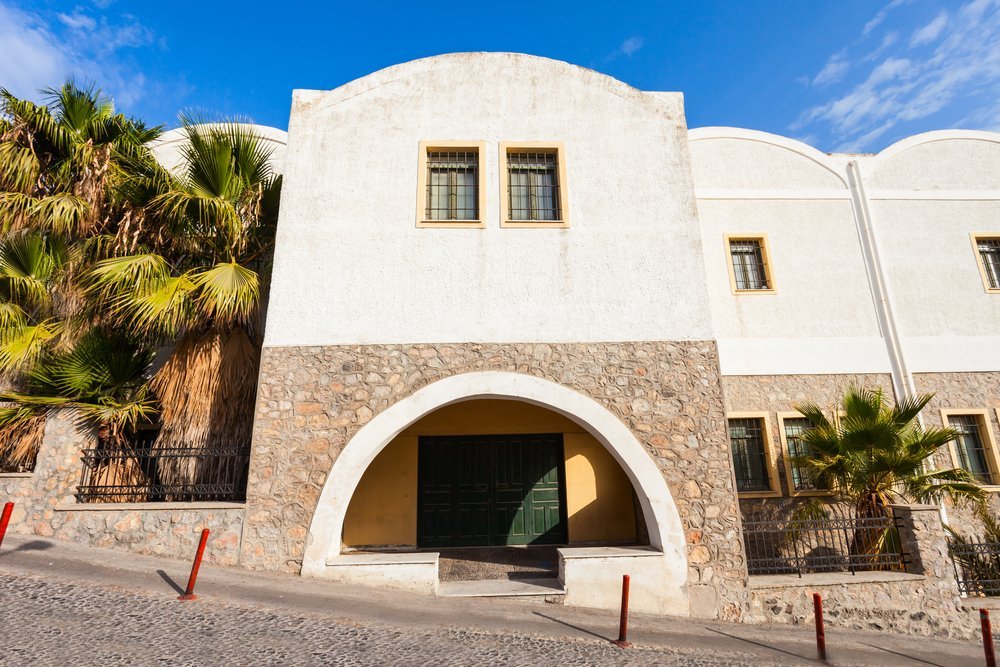
Fira has two archaeological museums, and they complement each other nicely. The Museum of Prehistoric Thera is close to the bus station and displays the finds from Akrotiri: pottery, tools, jewellery and some of the wall paintings discovered in the houses. This is where you really grasp how wealthy and advanced the town was more than 3,500 years ago.
The Archaeological Museum of Thera is in the northern part of the centre near the cable car and mainly houses finds from the ancient city of Thera on Mesa Vouno mountain and from the burial grounds around it, including pottery, sculptures and inscriptions. It’s the less visited of the two museums, and you’ll often have the rooms to yourself.
Both museums cost 10 euros (around £8.40) and are open from 8.30am to 3.30pm. The Museum of Prehistoric Thera is closed on Tuesdays, and the Archaeological Museum of Thera is closed on Mondays but is open from 9am to 9pm on Saturdays. These times apply in the summer season and may change, so check them before you go.
If you only have time for one museum, choose the prehistoric one. My tip is to go in the morning before heading out to Akrotiri and spend the afternoon at the beach, as both museums close early.
7. The old port and the cable car in Fira
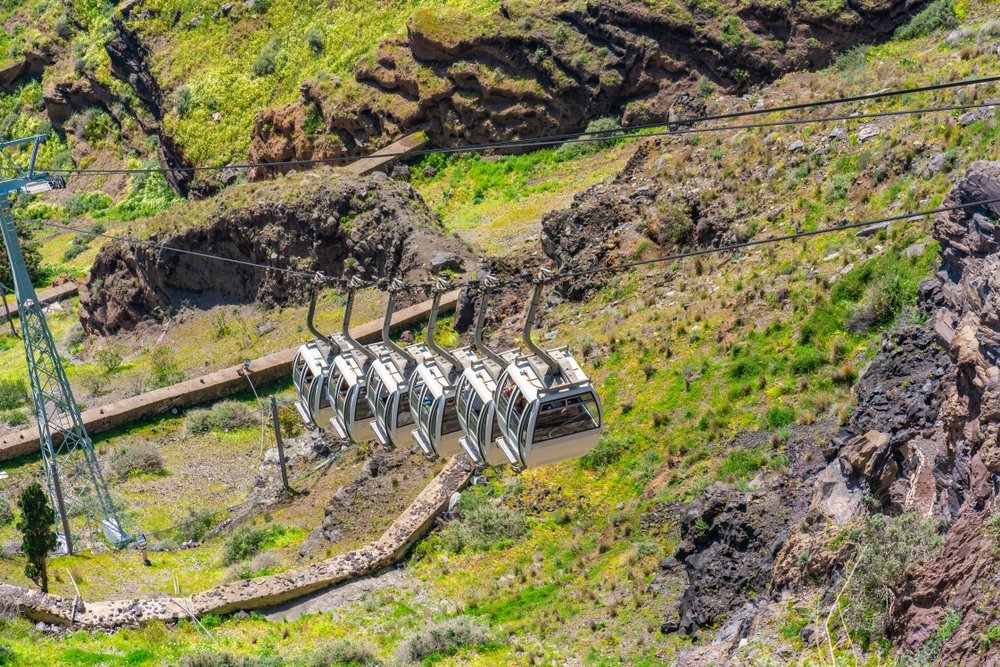
Below Fira lies the old port, Fira Skala, at the foot of the almost vertical cliff face. This is where the tender boats from the cruise ships drop off passengers, and some of the boats to the volcano also depart from here. Ferries from Athens and the other islands dock at the new port in Athinios further south, so you’ll only use the old port if you’re going out on a boat.
There are three ways to get up and down: the cable car, the steps and the donkeys. The cable car takes about five minutes, and a single ticket costs around 10 euros (around £8.40) for adults and 5 euros (around £4.20) for luggage. When several cruise ships are anchored in the bay, the queue can be long, and the cable car doesn’t run in strong winds. The path has around 600 steps and is shared with the donkeys, so it’s slippery and dirty.
My tip is to take the cable car down and walk up if you’re fit, or to walk down and take the cable car up at a time when there are no cruise ships in the bay. I’d recommend that you don’t ride the donkeys. Animal welfare organisations have criticised for many years how the animals work in the heat on the steep steps. Down at the port there are a couple of cafés, and the view up towards the town on the clifftop is lovely.
8. Nea Kameni and the hot springs
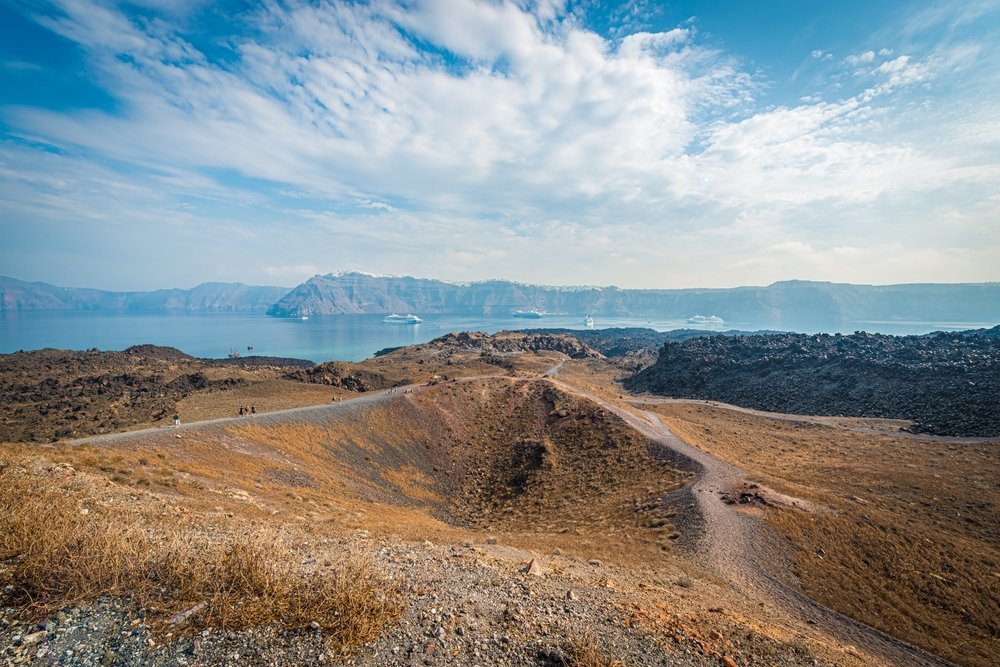
In the middle of the caldera lie the two black volcanic islands of Nea Kameni and Palea Kameni. They were formed by lava from later eruptions, and the volcano is still considered active, even though the last eruption was in 1950. On Nea Kameni you follow a path up to the craters, and according to Discover Greece the walk from the jetty up to the crater takes around 30 minutes. The landscape is black and reddish-brown, and from the top you can see the whole caldera with the white towns along the rim.
After the volcano, most tours carry on to Palea Kameni, where you jump into the water from the boat and swim to a small cove with hot springs. The water is reddish-brown from iron and lukewarm, but only a few degrees warmer than the surrounding sea, so don’t expect a spa bath. Wear old swimwear, as the iron can stain it.
You can only get there by boat. The cheapest tours leave from the old port in Fira or from Athinios and cost from around 30 euros (around £25). There’s also an entrance fee for the paths on Nea Kameni, which often isn’t included in the tour price, so bring cash. My tip is to take the first tour in the morning, as the path on the volcano has no shade and it’s very hot in the middle of the day. Wear sturdy shoes, as the lava is sharp.
Book a boat trip to the volcano and the hot springs.
9. Catamaran cruise on the caldera
A catamaran cruise is the most expensive of the boat trips, but also the most relaxing. Tours typically last around five hours and sail along the south coast with stops at Red Beach and White Beach, where you can swim and snorkel, and most tours also call in at the hot springs by Palea Kameni. On board you usually get a meal, often barbecued food, and drinks.
You can choose between a morning tour and one that ends with the sunset. The sunset tour is the most popular and the most expensive, but you get to watch the sun go down from the water without the crowds. Most catamarans depart from the marina in Vlychada on the south coast or from Ammoudi below Oia, and many tours include hotel pick-up. Prices start at around 60 euros (around £50) per person on the large boats, while smaller boats and private tours cost far more.
My tip is to choose a tour with a limited number of guests, as the deck can get cramped on the largest boats. Keep an eye on the weather forecast too, because in strong winds tours are cancelled or rerouted, and the boat can rock quite a bit. Take seasickness tablets if you’re at all unsure, and remember sun cream, as there isn’t much shade on deck.
Book a catamaran cruise with food and drinks.
10. Ammoudi Bay and the steps from Oia
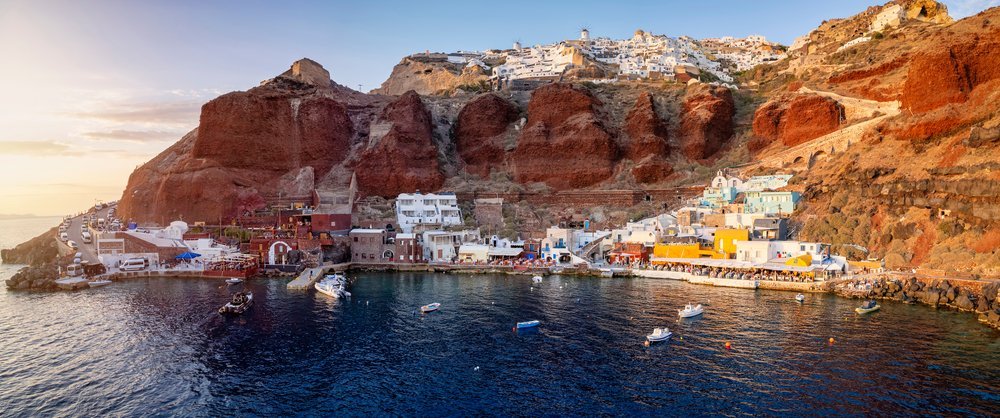
Ammoudi Bay is a small fishing harbour just below Oia, and according to Discover Greece it lies around 300 steps below the village. The bay has red and black cliffs, a few fishing boats and a handful of fish restaurants right at the water’s edge, where you sit with your feet close to the waves. It’s one of the most atmospheric places on the island for lunch, but the prices reflect that.
The steps start at the western end of Oia below the Kastro and wind down the slope in lots of bends. Going down is easy, but climbing back up in the heat is hard work, so head up early in the morning or late in the day, or take a taxi up the road. Donkeys are used on these steps too, so watch where you tread.
If you follow the path west from the harbour, you reach the rocks opposite the small island of Agios Nikolaos, where people swim and jump into the water from the rocks. There’s no beach or lifeguard, so it’s only for strong swimmers, and the rocks are slippery. My tip is to swim here in the afternoon, eat at the harbour and walk up to Oia just before sunset. The boats to Thirassia also leave from Ammoudi.
11. Pyrgos and Profitis Ilias
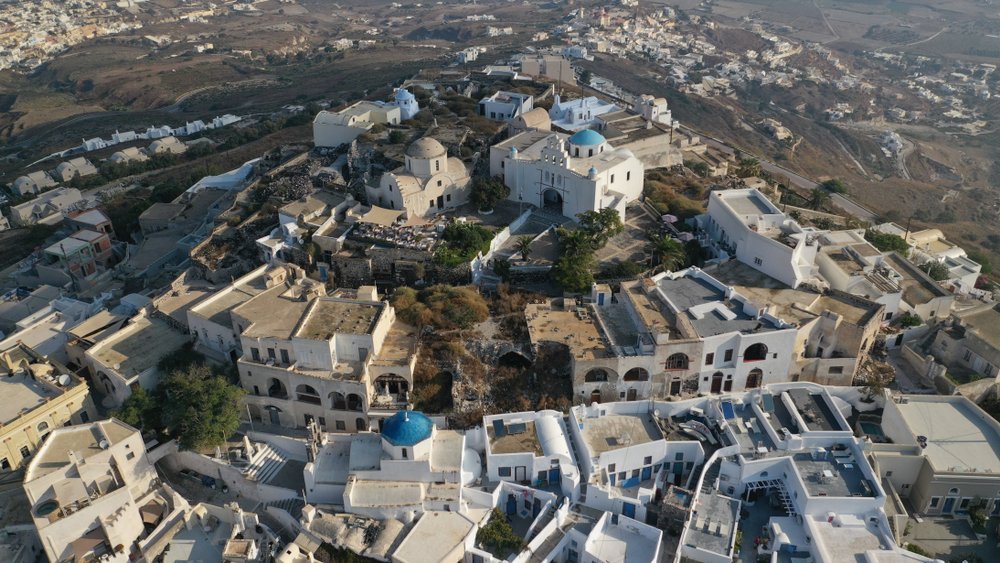
Pyrgos lies inland south of Fira and is one of the best-preserved villages on Santorini. The houses climb a hill around the remains of the Venetian castle, Kasteli, and the narrow lanes wind up to the top, where you can see both sides of the island. There are far fewer tourists than in Oia, and in the evening the cafés have a calm, relaxed atmosphere.
The village is also home to a small ecclesiastical collection at the Agia Triada church, with icons and church silver. Admission is 5 euros (around £4), and it’s open from 9.30am to 3.30pm, though only from 11am on Thursdays. The collection is closed on Tuesdays. The bus from Fira to Pyrgos costs 2.20 euros (around £2).
Above Pyrgos is the island’s highest point, Profitis Ilias, with the monastery of the same name, built in 1711. According to Discover Greece, the summit is 567 metres above sea level, and from here you can continue along a 5.1-kilometre path past Ancient Thera and down to Kamari in 2 to 3 hours. There are also military antennas on the top, so it isn’t pretty, but the view over the whole island is good. My tip is to visit Pyrgos late in the afternoon and stay for dinner in the village.
12. Wine tasting on Santorini
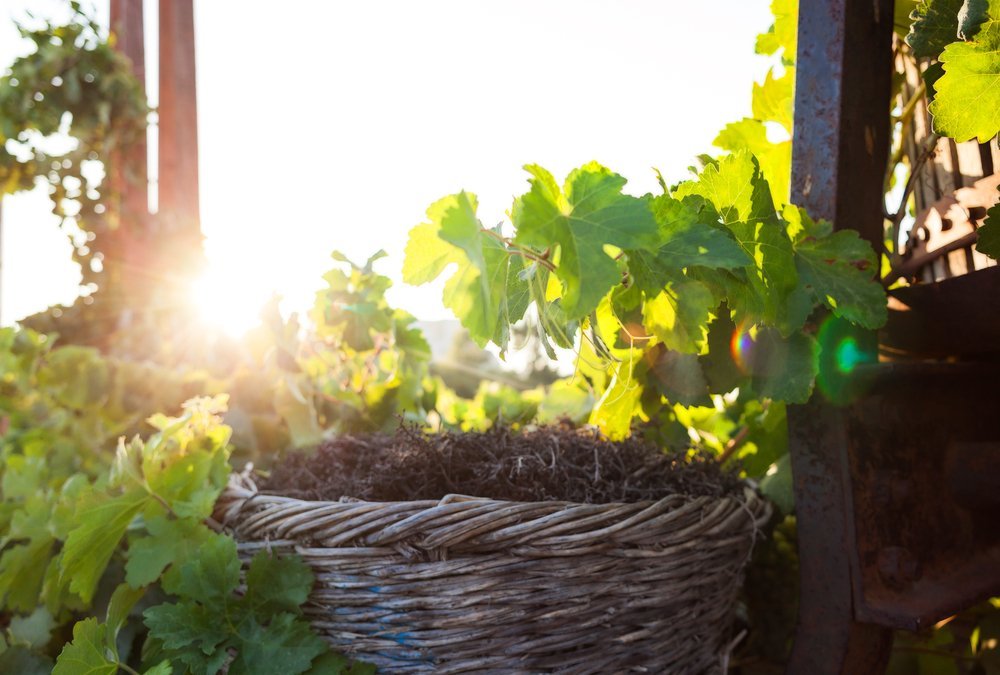
According to Discover Greece, Santorini has a winemaking tradition going back 3,000 years, and the wine tastes different from that on the rest of the Greek islands. The main grape is the white Assyrtiko, which produces fresh, mineral white wines, and the sweet dessert wine Vinsanto is made from sun-dried grapes. The vines are woven into low baskets, kouloures, close to the ground to protect them from the wind and sun.
There are 19 wineries on the island that you can visit, and most are in the south around Pyrgos, Megalochori and Vothonas. Santo Wines near Pyrgos sits on the caldera edge and is the most popular spot for a glass of wine at sunset, while Koutsoyannopoulos in Vothonas has a wine museum eight metres underground with 300 metres of tunnels, where you can see how wine was made from the 17th century onwards.
You can easily take a taxi to a single winery and pay for a tasting on the spot. A guided wine tour with pick-up costs from around 135 euros (around £115) and usually visits three wineries. It’s expensive, but you get to taste lots of wines and don’t have to worry about who’s driving home. My tip is to arrive at Santo Wines in good time if you want to watch the sunset from the terrace, as it fills up quickly.
Book a wine tour to three wineries with sunset at Santo Wines.
13. Red Beach
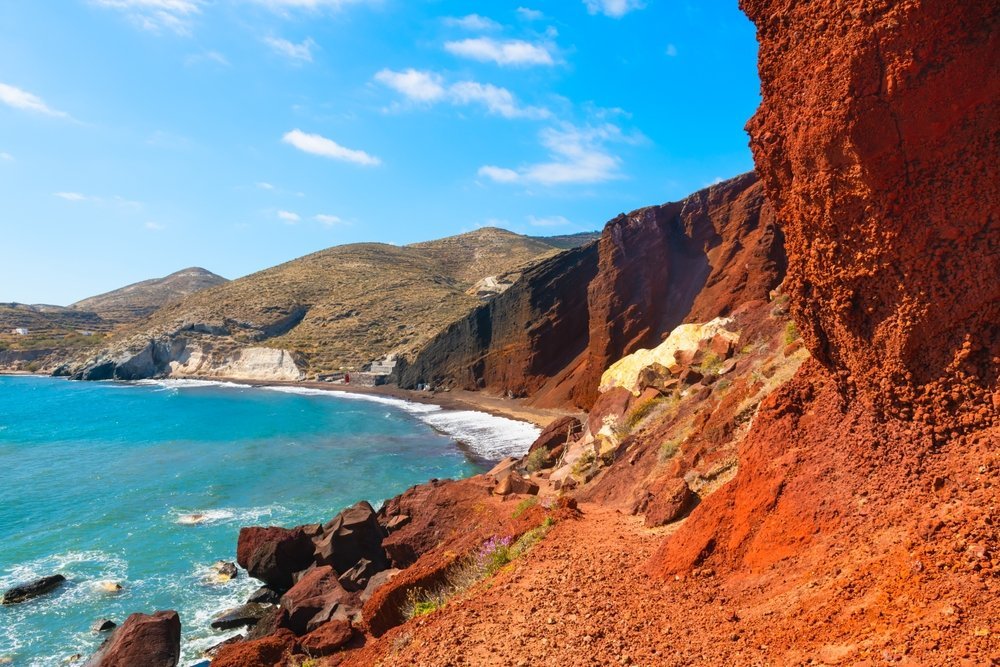
Red Beach, Kokkini Paralia, lies on the south coast near Akrotiri and is Santorini’s most photographed beach. It sits below tall cliffs of red and black volcanic rock, and according to Discover Greece it’s the volcanic soil that gives the beach its colour. With the red sand and the deep blue water, it looks more like a landscape from Mars.
The cliffs above the beach are unstable, and rocks fall, especially after earthquakes. The beach has at times been closed to access on foot, and the path from the car park crosses uneven rocks, so follow the signs and never go past a barrier. You can always see the beach from the viewpoint above the bay, and small boats run from the little harbour at Akrotiri to Red Beach and the nearby White Beach, which can only be reached by water or on foot from Kambia.
The bus from Fira to the beach at Akrotiri costs 2.20 euros (around £2). My tip is to combine Red Beach with the Akrotiri excavation and the lighthouse on the same day. To be honest, I think the beach looks best from above or from a boat, and if you want a full day by the water, the black beaches on the east coast are better.
14. Perissa and Perivolos
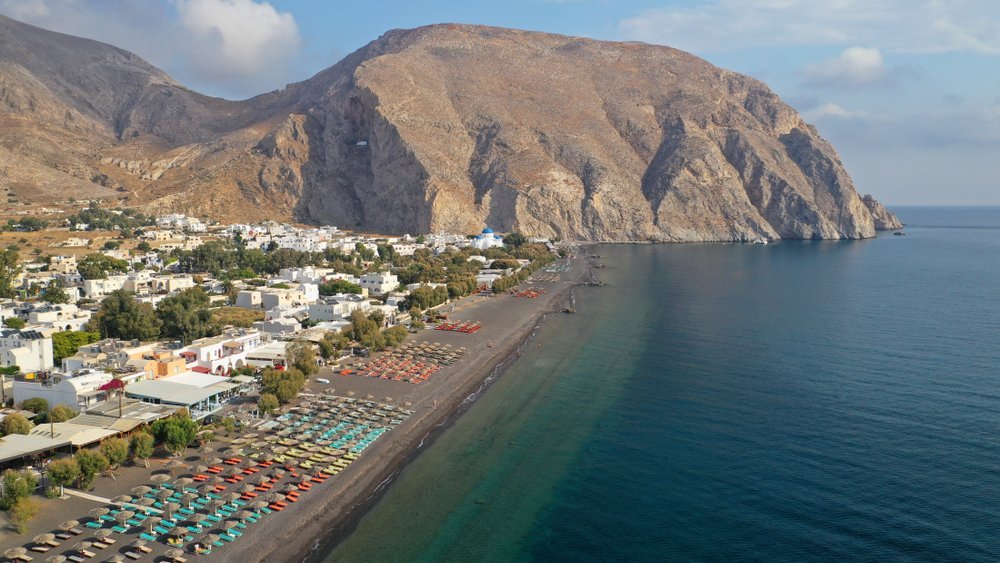
Perissa and Perivolos run into each other on the south-east coast and together form one long beach of black volcanic sand. There are sunbeds, beach bars, water sports and a long row of tavernas, and according to Discover Greece the bars hold daytime parties on the beach. The atmosphere is laid-back and younger than in the caldera villages, and behind Perissa the Mesa Vouno rock rises with Ancient Thera on top.
The black sand gets very hot in the middle of the day, so bring water shoes. The water gets deep quickly, and there can be waves when it’s windy. The bus from Fira to Perissa and Perivolos costs 2.70 euros (around £2.30). If you carry on along the beach to the south, it gets quieter the further you are from Perissa.
Perissa is one of the cheapest places to stay on Santorini, and many people choose the area if they’d rather have the beach on their doorstep than a view over the caldera. If you want to stay here, you can see hotels in Perissa here. My tip is to stay by the beach and take the bus to Fira and Oia for a couple of evenings, as the bus is cheap and you won’t have to hunt for parking.
15. Kamari
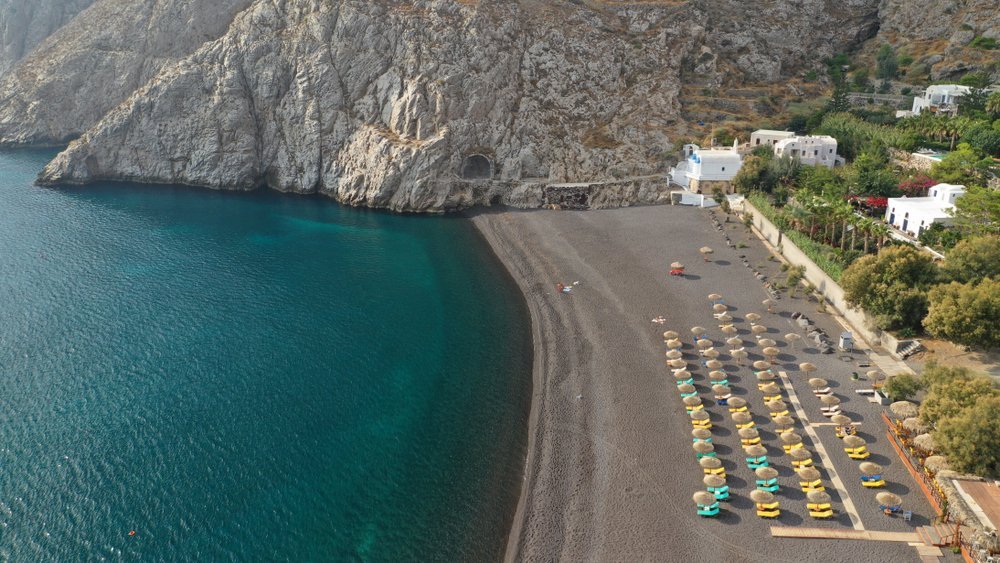
Kamari sits on the east coast, north of Mesa Vouno, and is Santorini’s other big beach resort. According to Discover Greece, the beach is one of the longest and best organised on the island, with sunbeds, parasols and water sports, and a long line of bars, tavernas and restaurants runs along the seafront. The sand is black and mixed with pebbles, and the water is clear.
Kamari is a little more family-friendly and quieter than Perissa, and it’s close to the airport. Kamari and Perissa lie on either side of Mesa Vouno, and there’s no coastal road between them. If you want to get from one to the other, you can walk over the mountain on the path past Ancient Thera, but by car or bus you’ll have to go inland.
The bus from Fira to Kamari costs €2.20 (around £2). My tip is to use Kamari as your base for visiting Ancient Thera, as the winding road up to the site starts just outside town. After a hot morning up on the mountain, it’s lovely to round off the day with a swim and a late lunch by the beach.
16. Ancient Thera
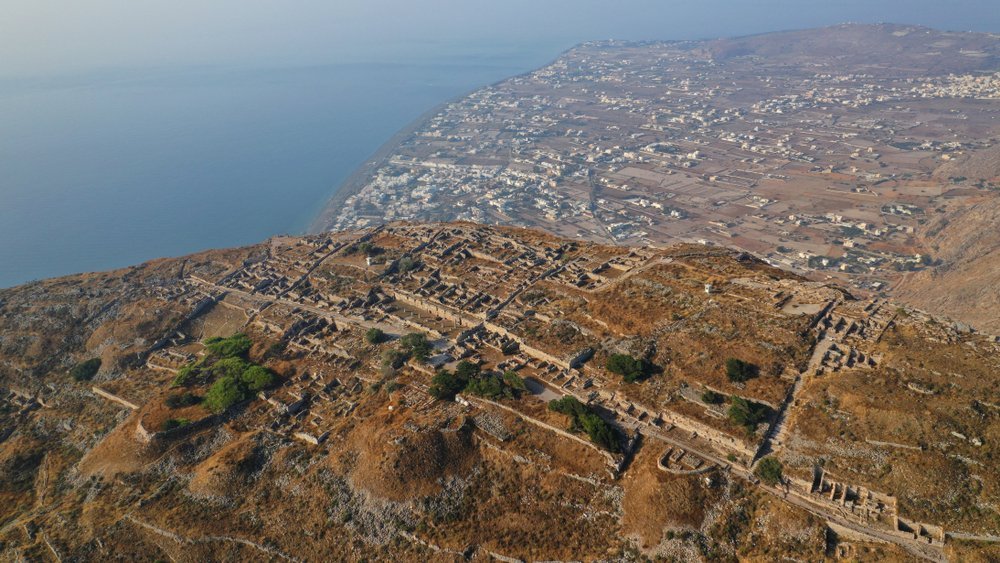
Ancient Thera sits high up on the summit of Mesa Vouno, between Kamari and Perissa. The city was founded by Dorian Greeks in antiquity and was inhabited for more than a thousand years, including under the Ptolemies and the Romans. You walk along the main street through the ruins of temples, the agora and houses, and according to Discover Greece there are also remains of a theatre and a gymnasium from the 4th century BC.
Entry is €10 (around £8), and in the summer season the site is open from 8.30am to 3.30pm. It’s closed on Wednesdays, and opening hours can change with the season. You get there via a winding road from Kamari up to a car park, and the last stretch is on foot along a path that takes about a quarter of an hour. There’s no shade, so bring water and a hat.
To be honest, the ruins are mainly for those interested in history, as there isn’t much left of the buildings. On the other hand, the view over Kamari, Perissa and the whole east coast is fantastic. My tip is to arrive when the site opens, as it gets very hot up there in the middle of the day. If you enjoy hiking, you can walk here from Pyrgos via Profitis Ilias and carry on down to Kamari.
17. Akrotiri Lighthouse
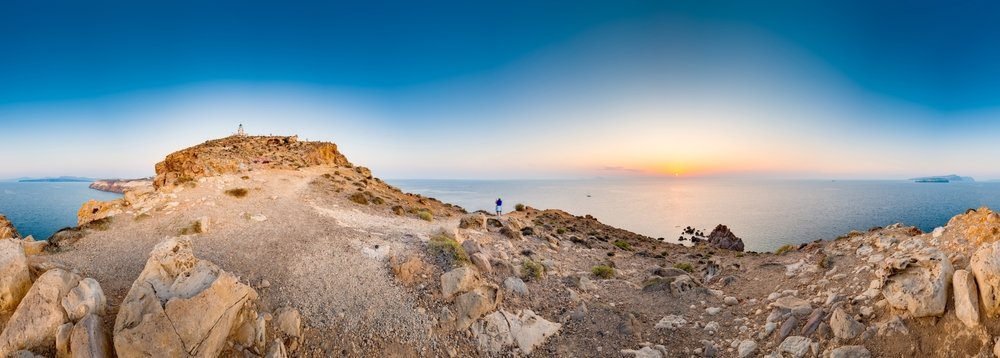
According to Discover Greece, Akrotiri Lighthouse stands at the very tip of Santorini’s south-western corner. The white lighthouse sits on the cliffs high above the sea, with views across the whole caldera and all the way up to Oia in the distance, and it’s one of the most popular alternatives to watching the sunset in Oia. There are no shops or cafés, just the cliffs, the lighthouse and the sea.
The lighthouse is still in use and you can’t go inside, but you can walk around on the cliffs surrounding it. The bus only goes as far as the village and beach at Akrotiri, so you’ll need a car, scooter or taxi to get all the way out there. The road is narrow and winding for the last few kilometres, and there aren’t many parking spaces, so they fill up quickly at sunset.
My tip is to combine the lighthouse with the Akrotiri excavations, Red Beach and the village of Akrotiri, where you can see the ruins of the Venetian castle of La Ponta. Arrive in good time if you want to watch the sunset from here, and bring a jacket, as it’s almost always windy out on the headland. Keep well back from the edge of the cliffs, especially when it’s windy.
18. Day trip to Thirassia
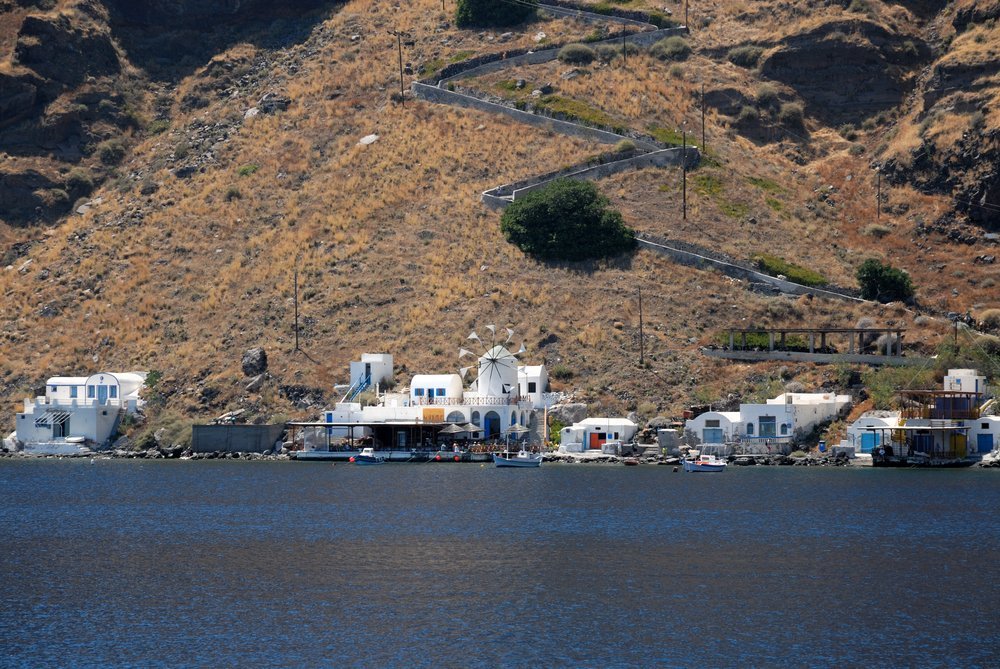
Thirassia is the small island on the other side of the caldera, opposite Oia. According to Discover Greece, it has just over 300 inhabitants and gives you an idea of what Santorini looked like 50 years ago. The main village, Manolas, sits on top of the cliff with white houses and views back towards Oia and Fira, and down by the harbours in Riva and Korfos you’ll find tavernas serving fish and seafood.
Small boats sail from Ammoudi below Oia to Riva and Korfos, and the crossing takes 10 to 15 minutes. According to the same source, a ticket costs just 1 to 2 euros (around £1 to £2). Ferries also run from Athinios, taking about 45 minutes. Sailings depend on the weather and the last boat back can leave early, so check the times before you set off. The easiest option is an organised tour, where Thirassia is part of a boat trip that also takes in the volcano and the hot springs.
If you have more time, you can take the ferry on to the neighbouring islands. I’ve written guides on where to stay on Naxos, Paros, Mykonos and Milos, all of which have ferry connections with Santorini during the summer season.
Book a full-day trip to the volcano, the hot springs, Thirassia and the sunset in Oia.
Practical travel tips for Santorini
In summer there are direct flights to Santorini’s airport from many European cities, including several in the UK, while the rest of the year you’ll usually fly via Athens. According to Discover Greece, the fast ferries from Piraeus take around 4 hours and the conventional ferries around 8 hours, and they dock at Athinios. If you’re flying into Athens and carrying on by ferry, you can read about getting from the airport in my guide to getting from Athens Airport to the city centre.
The buses are the cheapest way to get around, and all routes start from the bus station in Fira. According to the bus company’s price list, most journeys cost 2.20 euros (around £1.85), while the trip to Athinios and Perissa costs 2.70 euros (around £2.25), and tickets are 25 per cent more expensive at night. If you want to get out to the lighthouse, the wineries or the small villages, a hire car or scooter is easier, but the roads are narrow and parking in Fira and Oia is difficult.
Keep an eye on closing days: the Museum of Prehistoric Thera and the church collection in Pyrgos are closed on Tuesdays, the Archaeological Museum of Thera on Mondays and Ancient Thera on Wednesdays. The best time to visit Santorini is May, June, September and October, when it’s warm enough to swim and there are fewer people than in July and August. In winter, many hotels and restaurants close. It’s also worth checking how many cruise ships are in the bay, because on the busiest days Fira and Oia are packed to bursting. If you’re not sure where to stay, you can see all hotels in Santorini here.
Travel ressources & websites I use all the time 👇
• Booking.com has the best offers on hotels and unique places to stay
• GetYourGuide is the best place to book tours & activities with free cancellation
• Welcome Pickups is the best & safest place to pre-book airport transfers
Psst 👀 Have you subscribed to my Youtube channel and my Instagram where I provide more useful travel tips?