

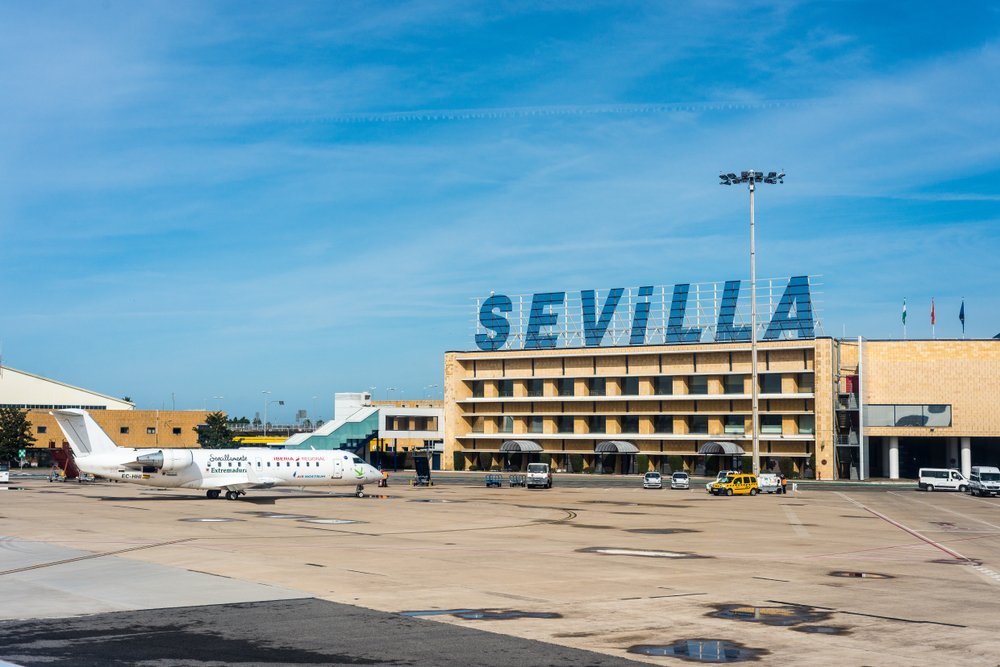
Seville Airport is officially called Aeropuerto de Sevilla, but most people still call it San Pablo. It lies about 10 kilometres north-east of the centre, out along the motorway towards Córdoba and Madrid, and it has just one terminal. The best way from Seville Airport to the city centre for most people is the EA bus, Especial Aeropuerto, which runs from the stop just outside the arrivals hall to Santa Justa railway station, San Bernardo, Prado de San Sebastián, Torre del Oro and the Plaza de Armas bus station in about 35 minutes for €6 (around £5).
If there are several of you, or you land in the middle of the night, a fixed-fare taxi to the centre for €26 or €29 is often the easiest option, and Uber, Cabify and Bolt also operate from the airport. Here you’ll find all the options with prices, journey times, stops and pitfalls, and I’ll also tell you how to carry on to Madrid, Córdoba, Malaga, Granada and the coast. There’s no train or metro to the airport, so you can forget about those.
If you’d rather drive yourself from the airport, you can compare prices on car hire at Booking.com.
Contents
Quick overview
- EA bus (Especial Aeropuerto): €6 (around £5) per journey, about 20 minutes to Santa Justa and 35 minutes to Plaza de Armas, running roughly every 15 to 30 minutes from early morning until around 1am.
- Fixed-fare taxi: €26 (around £22) on weekdays between 7am and 9pm, €29 (around £24) at night, at weekends, on public holidays and during Semana Santa and the Feria de Abril, 15 to 25 minutes.
- Uber, Cabify and Bolt: typically €20 to €30 (around £17 to £25), with the price shown in the app before you book, 15 to 25 minutes plus waiting time for the car.
- Private transfer: from about €50 (around £40) per car, with the driver waiting in the arrivals hall holding a sign with your name.
- Hire car: seven rental companies have desks in the terminal, but a car is for touring Andalusia, not for Seville itself.
- Train and metro: there aren’t any to the airport, as neither Renfe nor the Seville metro goes out there.
How to find your transport at the airport
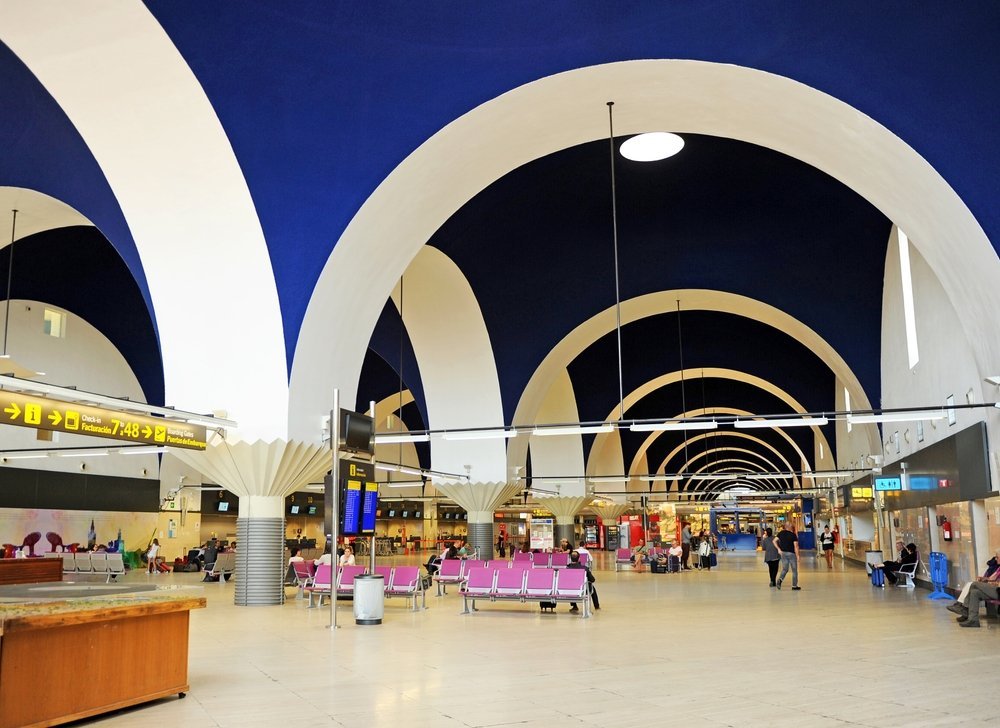
Seville Airport has one terminal, and the arrivals hall is on the ground floor. Once you’ve collected your luggage and walked out through the arrivals exit, you’re straight out on the forecourt, where the EA bus has its own stop and the taxi rank is on the same pavement. The signs say Autobús and Taxi, and you can’t really go wrong, because everything is grouped together outside the same exit. You’ll find the airport’s own overview of the bus and taxis at Aena, which runs the airport.
The car hire desks are also on the ground floor of the terminal, and drivers from private transfer companies wait inside the arrivals hall with a sign. If you book an Uber, Cabify or Bolt, the app will show you the pick-up point, which is in the car park about a minute’s walk from the terminal, not at the taxi rank.
1. EA bus to Santa Justa, the city centre and Plaza de Armas
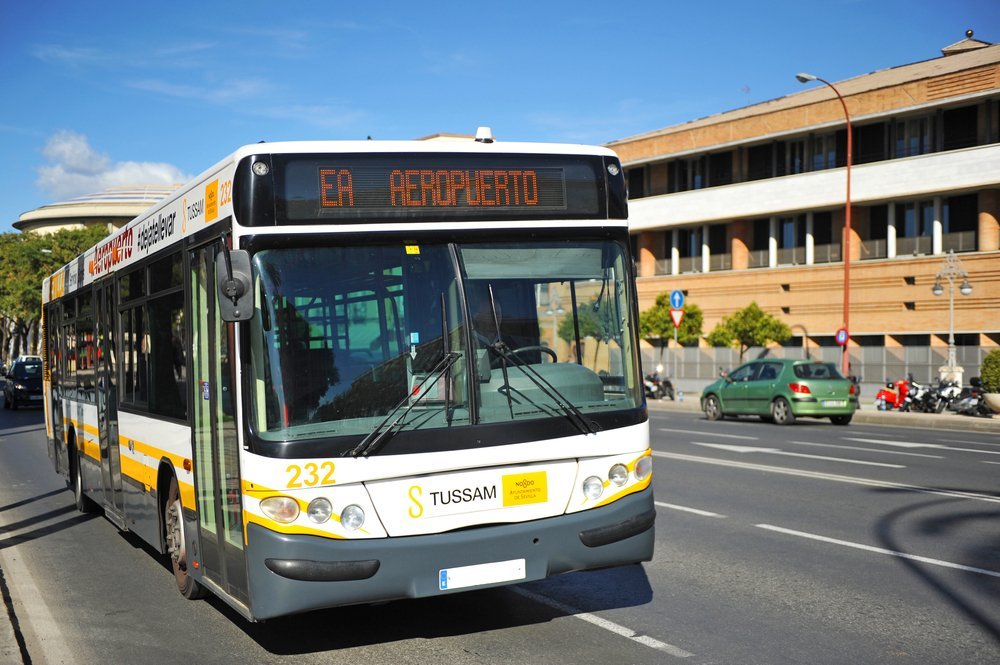
The EA bus is TUSSAM’s dedicated airport line, and it’s the only public transport to and from the airport. It heads in along Avenida Kansas City, stops at Santa Justa railway station, continues past San Bernardo and Prado de San Sebastián to Paseo de Colón by the Torre del Oro and finishes at the Plaza de Armas bus station on the western edge of the Old Town. The whole journey takes about 35 minutes, a bit longer in the morning rush hour and late in the afternoon.
It’s an ordinary city bus with an open area for suitcases, so you’ll need to keep an eye on your luggage on the bends. The bus is fine for most people, but if you’re staying in the heart of Santa Cruz, allow 10 to 15 minutes’ walk over cobblestones from the nearest stop, and that’s no fun with two big suitcases in 38-degree heat.
Fares and tickets
A single costs €6 (around £5), and it’s a special fare, so a standard €1.40 (around £1.20) TUSSAM ticket isn’t valid on this bus. The easiest way to pay is by contactless card directly on the card reader by the driver, and there’s usually a TUSSAM ticket seller at the airport stop who also accepts cash. TUSSAM also sells a return ticket for €8 (around £7) that’s only valid on the same day, but check whether it’s still available before you count on it. The ticket doesn’t let you transfer to other bus routes in the city.
Timetable and journey time
The bus runs every day all year round. From the airport the first bus leaves at around 5.20am and the last at around 1am. In the other direction it starts as early as around 4.30am from Plaza de Armas to serve the early morning flights. During the day it runs roughly every 15 minutes, and early in the morning and late in the evening about every half hour. The exact times are adjusted from time to time, so check the current timetable on TUSSAM’s website before you fly. If you land between 1am and 5am, the bus isn’t an option.
Where should you get off?
Santa Justa (José Laguillo stop): Get off here after about 20 minutes if you’re continuing by AVE train, or if you’re staying in Nervión or near the station. From Santa Justa it’s a 25-minute walk or a short taxi ride to the Old Town.
San Bernardo and Prado de San Sebastián: These two stops are on the south-eastern edge of the centre, and from Prado de San Sebastián it’s only a 10-minute walk through the Jardines de Murillo to the cathedral and Santa Cruz. If you’re staying in Santa Cruz, this is where to get off. You can see hotels in Santa Cruz here.
Paseo de Colón by the Torre del Oro: This stop is by the river a few hundred metres from Puerta de Jerez, and it’s the best stop for El Arenal, the cathedral and Avenida de la Constitución. From here you can walk to most of what I describe in my guide to the sights in Seville. If you want to stay right here, you can see hotels in El Arenal here.
Plaza de Armas: The final stop is the city’s bus station by the river, and from here you can cross the Puente de Isabel II bridge to Triana in 10 minutes or walk up Calle San Vicente to Alameda de Hércules in a quarter of an hour. It’s the right stop if you want to stay in Triana or around Alameda de Hércules. If you’re not sure which neighbourhood suits you, read my guide to where to stay in Seville.
2. Fixed-fare taxi to the city centre
Seville’s taxis charge a fixed fare between the airport and the city, so you needn’t worry about a detour or a meter running wild. On weekdays between 7am and 9pm the journey costs €26 (around £22), and at night between 9pm and 7am, at weekends, on public holidays and during Semana Santa and the Feria de Abril the fare is €29 (around £24). The fares are set by Seville City Council’s Instituto del Taxi, and they’re usually adjusted slightly every year, so treat the amounts as approximate.
The price covers the whole car with up to four passengers, and it only applies to the journey between the airport and the city. There’s no night surcharge beyond the night fare itself, but there may be a small supplement of €0.57 (around 50p) per suitcase over 10 kilos. The journey takes 15 to 25 minutes depending on the traffic on Avenida Kansas City. The taxi rank is just outside the arrivals hall, and the official taxis are white with a yellow stripe on the front doors. Ask for a receipt if anything seems wrong, as you can then complain to the council afterwards.
If you’re going to more than one address, the driver switches the meter on from the first stop, so carrying on from a hotel in the centre to somewhere else costs extra. And if you’re heading to a suburb or a town outside Seville, the fixed fare doesn’t apply, so you’ll need to agree a price or use the meter.
3. Uber, Cabify and Bolt
All three apps work in Seville. Cabify is the biggest locally and has its own pick-up points at the airport, while Uber and Bolt also have cars in the city. The app shows you the price before you book, and to the centre it’s typically €20 to €30 (around £17 to £25) depending on the time and demand. If lots of flights land at once, the price can easily end up above the taxis’ fixed fare, so compare before you hit book.
The meeting point isn’t the taxi rank. The app shows you a pick-up point in the car park a minute’s walk from the terminal, and Uber itself says that the assigned point isn’t always at the nearest exit, so follow the map in the app rather than the signs for the taxis. Only book once you’ve got your luggage, as drivers only wait a short time and you’ll pay a fee if you cancel too late.
The advantage of the apps is that you have the price and route in writing and can book a larger car if there are four of you with suitcases. The downside is the waiting time, which can easily be 10 to 15 minutes at night, when the taxis are ready to go straight away.
4. Private transfer
A private transfer is the option where the driver stands in the arrivals hall with your name on a sign and drives you straight to your hotel door. It costs from about €50 (around £40) per car for up to three people, so almost double a taxi, but you avoid queues, explaining the way through the narrow streets of Santa Cruz and worrying about cards or cash. The driver tracks your flight, so you don’t pay extra if it’s delayed.
I’d only recommend it if you land late at night, are travelling with children and need a child seat, or have so much luggage that an ordinary taxi won’t do. For one or two people with normal luggage, the bus or a taxi is better value. The transfer needs to be booked at least a couple of days in advance.
Book a private transfer from Seville Airport here.
5. Hire car from Seville Airport
Avis, Enterprise, Europcar, Goldcar, Hertz, OK Mobility and Sixt have desks on the ground floor of the terminal, so you can be sitting in the car a quarter of an hour after collecting your luggage. Some of the cheapest rental companies are located outside the airport grounds and pick you up in a shuttle bus, which can easily add half an hour each way, so check the location before you book.
In Seville itself, however, a car is a burden. The Old Town is full of pedestrian streets and one-way alleys, large parts of the centre are closed to cars without a permit, and multi-storey car parks are expensive and often full. If you’re staying in Santa Cruz, El Arenal or Triana, you won’t use the car a single day, because everything is within walking distance.
A car does make sense, though, if Seville is the start of a tour of Andalusia to Ronda, the white villages, Córdoba or the Costa de la Luz. In that case I’d stay car-free in the city first and pick up the car at the airport or at Santa Justa on the day you move on. That way you save both on parking and on the days when the car would just be sitting there.
Onwards from Seville to Madrid, Córdoba, Malaga, Granada and the coast
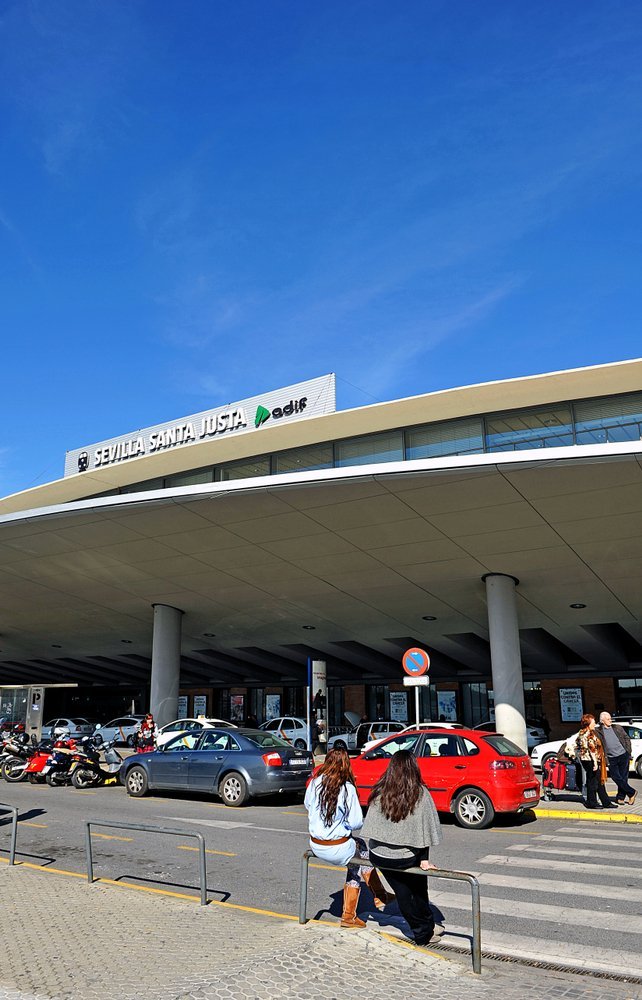
If you’re not staying in Seville, the EA bus is still your friend, as it stops at both of the city’s main departure points. From Santa Justa, Renfe’s AVE trains and competitors Iryo and Ouigo run to Madrid in about 2.5 hours, to Córdoba in under 45 minutes and to Malaga in about 2 hours, while Granada takes just over 2 hours with few daily departures. Buy your ticket in advance, as the high-speed trains have reserved seats, and there’s a luggage security check before the platform, so arrive 20 minutes before departure.
From Plaza de Armas, ALSA runs to Malaga, Granada and across the border to the Algarve coast and Lisbon, and Damas runs to Huelva. The buses to Cádiz and Costa de la Luz towns such as Conil, Chipiona, Rota and Tarifa, on the other hand, are run by Comes from the Prado de San Sebastián bus station, which is also a stop on the EA bus, so you don’t need to go all the way to Plaza de Armas to get to the coast.
If you’re heading on to one of the other two big cities in Andalusia, read my guides to where to stay in Granada and where to stay in Malaga. If you’re flying home from Malaga instead of Seville, I also have a guide to getting between Malaga Airport and the city centre.
The journey back to the airport
The EA bus runs back to the airport from Plaza de Armas, stopping at Paseo de Colón, Prado de San Sebastián, San Bernardo and Santa Justa, and the first departure from Plaza de Armas is at around 4.30am, so you can make even the earliest flights. Allow 35 minutes from Plaza de Armas and 20 minutes from Santa Justa, and add 10 minutes in the morning rush hour.
Get to the stop in good time, as the bus can be full in the early morning hours when lots of flights depart at once, and then you’ll have to wait for the next one. If you’ve got a lot of luggage, go to Plaza de Armas and catch the bus at the start of the route, where there’s still room for suitcases.
A taxi to the airport costs the same fixed fare as into the city, €26 or €29, and takes 15 to 25 minutes. If you book it by phone through your hotel, the driver may add the metered amount up to the pick-up point, though no more than the minimum fare. You can book Uber, Cabify and Bolt in advance in the app for a specific time, which is handy at 5am when you don’t want to be waiting on the street.
Seville Airport is small and easy to get around, but security can take a while during the morning wave, when lots of flights to the rest of Europe leave close together. Be there at least two hours before departure in the morning, and you’ll also have time for a coffee.
Which option should you choose?
Here’s my recommendation based on where you’re staying:
Santa Cruz and the area around the cathedral: Take the EA bus and get off at Prado de San Sebastián, leaving you a 10-minute walk. If you have more than one suitcase each, the €26 (around £22) taxi is worth the money, as the cobblestones of Santa Cruz are not kind to suitcase wheels.
El Arenal and Centro: EA bus to Paseo de Colón by the Torre del Oro. From here it’s under 10 minutes to most of El Arenal and Avenida de la Constitución.
Triana and Alameda de Hércules: EA bus to the final stop at Plaza de Armas, then a 10 to 15-minute walk. It’s the easiest journey of them all, as you don’t have to keep an eye out for the stops.
Nervión and the area around Santa Justa: EA bus to Santa Justa in about 20 minutes. The taxi costs the same fixed fare as to the centre, so here the bus is clearly the best value.
If you land at night: Between roughly 1am and 5am the bus doesn’t run, so a €29 (around £24) taxi or a pre-booked transfer is the answer. The taxis are waiting even when the last flights land.
If there are 3 to 4 of you: The taxi costs €26 to €29 for the whole car, and the bus costs €18 to €24 for three to four people, so the difference is small, and the taxi takes you to the door. Take the taxi.
If you have a lot of luggage: Taxi or private transfer. The bus has room for suitcases, but you have to drag them from the stop yourself, and that’s the annoying part.
If you’re heading straight on: EA bus to Santa Justa if you’re taking the train, to Prado de San Sebastián if you’re taking the bus to Cádiz, and to Plaza de Armas if you’re taking ALSA to Malaga, Granada or Portugal.
Practical tips for getting from Seville Airport to the city centre
Have a contactless card ready for the bus. You pay directly on the card reader by the driver, and it’s much quicker than cash. Tap the card on the reader once per person, and keep the receipt on the screen until you’ve got off.
Don’t expect to use your bus ticket elsewhere in the city. The EA ticket is only valid for the single journey to or from the airport. The city’s regular buses and the tram need a new ticket for €1.40 (around £1.20), and likewise the city’s one or three-day tourist card isn’t valid on the airport bus.
Check whether you’re landing during Semana Santa or the Feria de Abril. During Holy Week and the spring fair in April, taxis are more expensive, hotels are far more expensive, and the processions block the streets in the centre, so the bus may take detours or stop in different places from usual. The Visita Sevilla tourist office has the dates for both festivals, which change from year to year.
Only use the official taxis from the rank. Drivers offering a ride inside the arrivals hall aren’t taxis, and you’ll have no fixed fare and no way to complain. Go out to the rank and take the first white taxi in the queue.
Watch your belongings at Plaza de Armas. The bus station is a busy place with lots of travellers and suitcases, which attracts pickpockets. Keep your bag in front of you while you wait, and don’t leave your luggage unattended while you buy a ticket or look for the toilets.
Keep an eye on the airport’s own website if the bus lets you down. During strikes or roadworks on Avenida Kansas City, the EA bus may take detours or run less often, and Aena and TUSSAM are the first to announce it. If you have an early flight, book a taxi or a transfer the evening before rather than relying on the first bus.
Travel ressources & websites I use all the time 👇
• Booking.com has the best offers on hotels and unique places to stay
• GetYourGuide is the best place to book tours & activities with free cancellation
• Welcome Pickups is the best & safest place to pre-book airport transfers
Psst 👀 Have you subscribed to my Youtube channel and my Instagram where I provide more useful travel tips?