
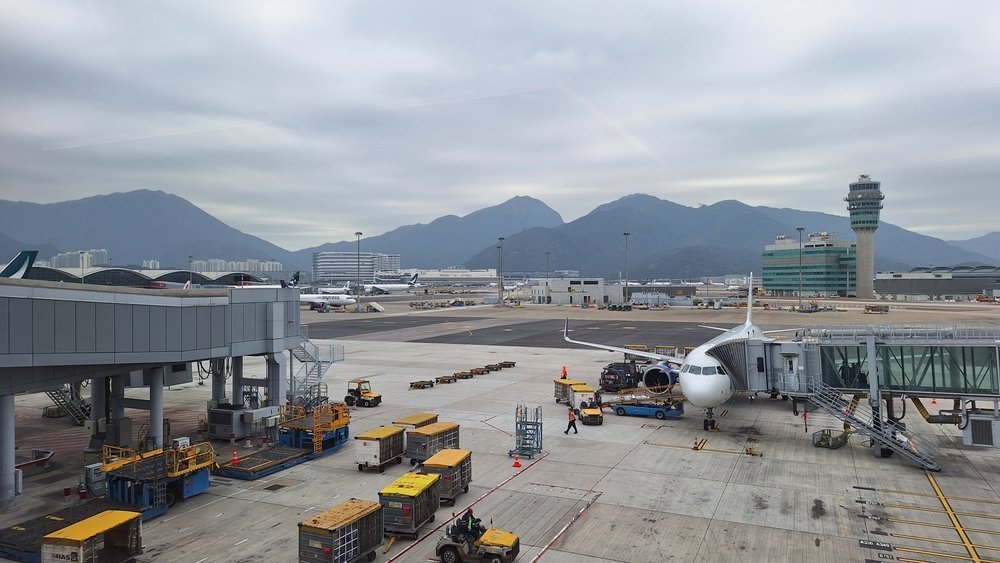
Hong Kong Airport is officially called Hong Kong International Airport, but many people also call it Chek Lap Kok after the island it is built on. It lies by Lantau, around 35 kilometres west of the centre, yet getting from Hong Kong Airport to the city centre is easy. The Airport Express runs from a station right by the arrivals hall to Hong Kong Station in Central in 24 minutes, and it is the best choice for most people. The buses are far cheaper, and a taxi will take you right to the door if there are several of you with lots of luggage.
Here you will find all the options with official prices, journey times and exactly where to find them at the airport: the Airport Express, the cheap route on the MTR’s Tung Chung line, the Cityflyer buses, the red, green and blue taxis, Uber, transfers and car hire. I also explain how to travel straight on to Macau and Zhuhai across the bridge, and how to check in your suitcase in the city on your way home. 1 Hong Kong dollar is worth around 10p.
Planning your trip to Hong Kong at the last minute? 🇭🇰
Here are some of the best things to do, plus hotels and other tips for your trip to Hong Kong.
🛌 Best Hotels:
1. The Peninsula Hong Kong is the classic luxury address on the harbour, with spacious rooms of 41 square metres
2. Page148, Page Hotels is a good mid-range hotel in Tsim Sha Tsui with a café and rooms of 18 to 23 square metres
3. Hop Inn is a hostel with private rooms close to two MTR stations
Contents
Quick overview
- Airport Express: 130 Hong Kong dollars (around £12.50) to Hong Kong Station and 115 Hong Kong dollars (around £11) to Kowloon Station, slightly cheaper with Octopus. 24 minutes to Central, with departures roughly every 10 minutes.
- Bus S1 and the MTR’s Tung Chung line: under 30 Hong Kong dollars (around £3) in total with Octopus, but with a change, and allow around an hour.
- Cityflyer buses: A11 to Hong Kong Island for 41.90 Hong Kong dollars (around £4) and A21 to Kowloon for 34.60 Hong Kong dollars (around £3.50). Night buses run when the train is not operating.
- Taxi: around 375 Hong Kong dollars (around £35) to Central and around 290 Hong Kong dollars (around £30) to Tsim Sha Tsui in a red taxi, plus luggage surcharges.
- Uber and transfers: you see the price in the app or when booking, and a private transfer starts from around 315 Hong Kong dollars (around £30) per person.
- Macau and Zhuhai: bus B4 to the bridge’s border crossing and the gold bus across the bridge for 65 Hong Kong dollars (around £6) during the day.
How to find transport from Hong Kong Airport to the city centre
All arrivals come out in Terminal 1, where the arrivals hall is split into Hall A and Hall B. Once you have collected your luggage and passed through customs, you are in the arrivals hall, and the Airport Express station is right in front of you on the same level, so you can wheel your suitcase straight onto the train without any stairs. The ticket desk and Airport Express customer service are in the arrivals hall, and you can also buy an Octopus card here.
The buses stop at the bus terminus next to Terminal 1, and you simply follow the signs for Buses. The taxi rank is by the ramp to the left as you come out of the arrivals hall, and there are separate queues for red, green and blue taxis. Pre-booked taxis and cars pick you up at the Prebooked Taxi Pick-up Zone next to the Car Park 1 multi-storey car park. The hotel bus desk is in Hall B, and the buses themselves stop at the bus terminus.
1. Airport Express to Hong Kong Station and Kowloon
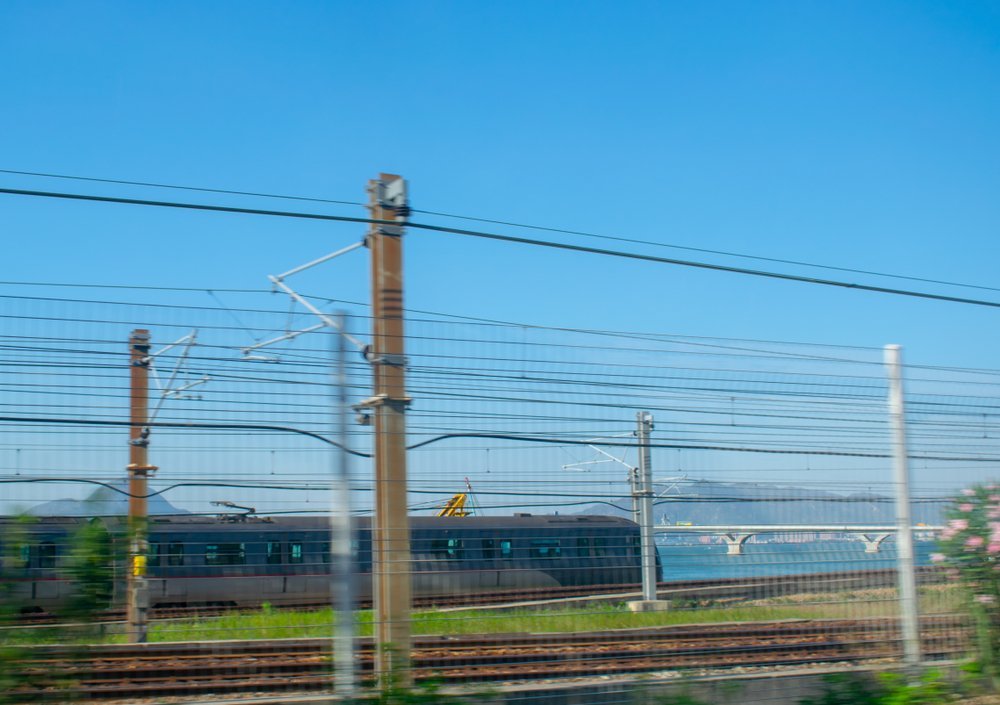
The Airport Express is MTR’s airport train, and it’s the fastest and most comfortable way into the city. The train stops at Tsing Yi, Kowloon and Hong Kong Station, where the line ends. According to the airport’s overview of the Airport Express, the journey to Central takes 24 minutes, and trains run roughly every 10 minutes from 05:54 to 00:48 every day. There’s plenty of room for suitcases in the carriages, and from your seat you can follow where the train is along the route.
Fares and tickets
A single ticket to Hong Kong Station costs 130 Hong Kong dollars (around £13), and a return costs 215 Hong Kong dollars (around £21). To Kowloon Station, a single costs 115 Hong Kong dollars (around £11) and a return 195 Hong Kong dollars (around £19). If you pay with an Octopus card, the fare is 120 Hong Kong dollars (around £12) to Hong Kong Station and 105 Hong Kong dollars (around £10) to Kowloon. Children travel at half price.
You can buy your ticket from the machines and at the counter in the arrivals hall, and at the new ticket gates you can also pay directly with your contactless bank card or your phone. If two, three or four of you are travelling together, ask for the group tickets at the counter. They give a noticeable discount per person, but must be bought together and are only valid on the same day. If you’ll be using public transport in the city afterwards, the Octopus card is the smart choice, as it also works on the MTR, buses, trams and the Star Ferry. You can read about the card at Octopus.
Where should you get off?
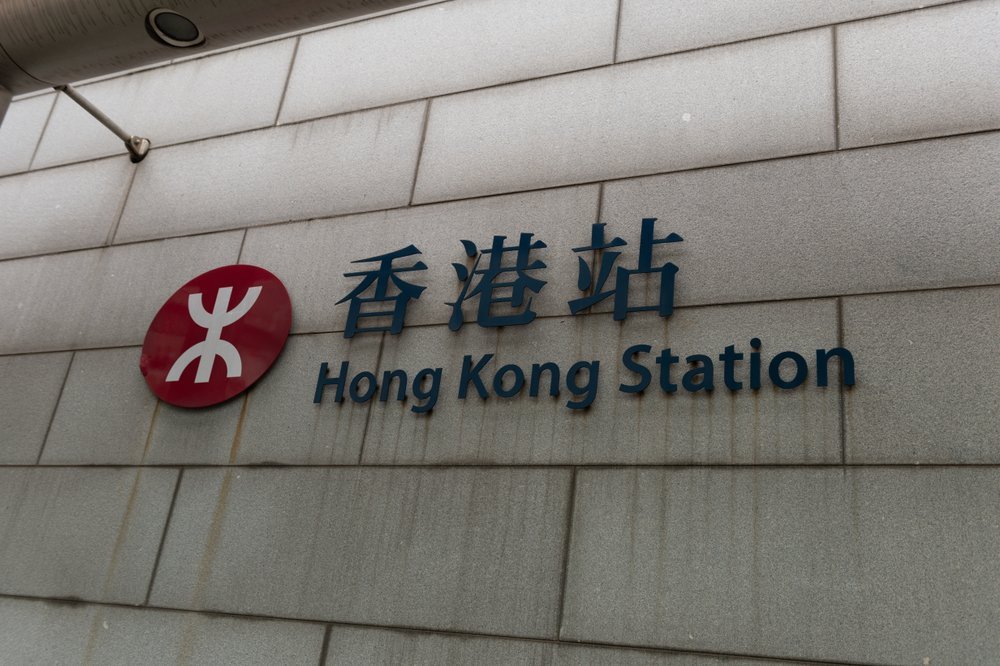
Hong Kong Station: The terminus lies beneath IFC in Central, and this is where you get off if you’re staying on Hong Kong Island. The station is linked to Central Station by pedestrian tunnels, so you can change to the Island Line towards Admiralty, Wan Chai and Causeway Bay or to the Tsuen Wan Line towards Tsim Sha Tsui. Four Seasons Hotel Hong Kong is in the same complex as the station, and if you’d like to walk straight from the train to your hotel, you can see prices for Four Seasons Hotel Hong Kong here.
Kowloon Station: The station is in West Kowloon beneath the Elements shopping centre and the ICC skyscraper, and it’s the closest if you’re staying in Tsim Sha Tsui, Jordan, Yau Ma Tei or Mong Kok. It’s just over a kilometre to Nathan Road, so most people take a taxi from the rank at the station for the last stretch. The Ritz-Carlton, Hong Kong sits at the top of the ICC right above the station, and if you fancy one of the city’s highest hotel bars, you can see prices for The Ritz-Carlton, Hong Kong here.
If you’re unsure which side of the harbour to stay on, read my guide to where to stay in Hong Kong, where I go through six areas from Tsim Sha Tsui to Causeway Bay with hotels in several price ranges and say which station is closest to each area.
Hotel shuttle buses from the stations
From Hong Kong Station and Kowloon Station, shuttle buses run to a number of hotels. At Hong Kong Station they leave from the waiting area on Level 2, and at Kowloon Station from Level G at Exit B. According to MTR’s page about the hotel shuttle buses, the hotels run them themselves, and the list of hotels and the timetables can change. In the past, free buses ran to almost all the big hotels, but don’t count on that today. Ask your hotel whether a bus runs from the station, and what it costs, before you travel.
2. Bus S1 and the MTR Tung Chung-line from Hong Kong Airport to the city centre
The cheapest rail option is a combination of bus and MTR. You take bus S1 from the bus terminus at Terminal 1 to Tung Chung Station, and from there the Tung Chung Line runs into Kowloon Station and Hong Kong Station, the same stations as the Airport Express. Bus S1 runs from 05:30 to midnight and costs 3.70 Hong Kong dollars (around 35p).
With Octopus, the journey from Tung Chung to Hong Kong Station costs 24.30 Hong Kong dollars (around £2.40) and to Kowloon Station 18.70 Hong Kong dollars (around £1.80). If you buy a single ticket from the machine, it costs 28 Hong Kong dollars (around £2.70) to Hong Kong Station. Allow about an hour from the terminal to Central including waiting time and the change, and the Tung Chung Line stops at several stations along the way.
It’s a good option if you’re travelling light and want to save money, or if you’re passing through Tung Chung anyway. From the station, the Ngong Ping 360 cable car runs up to the big Buddha statue, and the Citygate shopping centre is right next to the station. With large suitcases, I’d pay for the Airport Express, as the bus and the busy MTR aren’t built for lots of luggage.
3. The Cityflyer-buses A11 and A21
Citybus runs the airport buses under the name Cityflyer, and they stop at the bus terminus at Terminal 1. The buses are double-deckers with luggage racks, and from the top deck you get a lovely ride over the bridges at Tsing Yi. On the other hand, the journey takes longer than the train, and you should allow around an hour or more, depending on traffic and where you get off. The fares below are the airport’s own figures for an adult.
A11 to Hong Kong Island: The bus runs via Sheung Wan, Central, Admiralty, Wan Chai and Causeway Bay to North Point Ferry Pier. It costs 41.90 Hong Kong dollars (around £4) and runs from the airport from 05:35 to 00:30.
A21 to Kowloon: The bus runs down through Mong Kok, Yau Ma Tei, Jordan and Tsim Sha Tsui and ends at Hung Hom Station. It costs 34.60 Hong Kong dollars (around £3.40) and runs from 05:30 to midnight. It stops along Nathan Road, so you’ll often get closer to your hotel than with the Airport Express to Kowloon Station.
Night buses N11 and N21: If you land in the middle of the night, the N11 runs to Central at the Macau Ferry Terminal for 32.10 Hong Kong dollars (around £3.10), and the N21 runs to the Star Ferry in Tsim Sha Tsui for 23.80 Hong Kong dollars (around £2.30). They take a detour via Tung Chung, so the journey is long, but they run while the train is not operating.
The cheaper E buses, for example the E11 to Hong Kong Island and the E21 to Mong Kok, also run via Tung Chung and are mostly for people who work at the airport. Pay with Octopus or the exact fare, as the driver doesn’t give change.
4. Taxi from Hong Kong Airport
Hong Kong’s taxis are colour-coded according to where they’re allowed to operate, and the taxi rank has separate queues for each colour. The red urban taxis cover almost all of Hong Kong and are the ones you need for Hong Kong Island and Kowloon. The green taxis serve the northern parts of the New Territories, and the blue ones only operate on Lantau and around the airport, so they’re only relevant if you’re heading to places such as Tung Chung or Disneyland. All taxis are allowed to pick up at the airport.
The airport publishes guide fares, including tolls, to the various districts. In a red taxi, the journey costs about 375 Hong Kong dollars (around £35) to Central and Admiralty, about 370 Hong Kong dollars (around £35) to Wan Chai and Causeway Bay, about 290 Hong Kong dollars (around £28) to Tsim Sha Tsui and Jordan, and about 285 Hong Kong dollars (around £27) to Mong Kok. The journey takes about 30 to 45 minutes without traffic. You can see fares to more districts on the airport’s taxi page.
On top of the fare, there’s a charge of 6 Hong Kong dollars (around 60p) for each piece of luggage in the boot, and the meter starts at 29 Hong Kong dollars (around £3) in a red taxi. All fares and surcharges are listed by Hong Kong’s Transport Department. Many drivers speak only a little English, so have your hotel’s name and address in Chinese ready on your phone. Bring cash as well, as not all taxis take cards. If there are three or four adults with suitcases, a taxi to Kowloon doesn’t cost much more than four Airport Express tickets, and you avoid the change at the station.
5. Uber from Hong Kong Airport
Uber operates in Hong Kong, and in the app you can choose between private drivers and Uber Taxi, which lets you book an ordinary red taxi through the app. For many years Hong Kong had unclear laws on private drivers, but the city has passed a law that gives app-based ride-hailing fixed rules with licences. You’ll see the price in the app before you book, and it can be either lower or higher than a taxi from the rank.
Follow the instructions in the app on where you’ll be picked up. Pre-booked cars usually wait at the Prebooked Taxi Pick-up Zone by Car Park 1. Only book once you’ve collected your luggage and made it out into the arrivals hall, and always compare with the guide taxi fare before you tap book.
6. Private transfers and hotel coaches
A private transfer is a pre-booked car with a driver who waits for you in the arrivals hall and takes you all the way to your hotel. On GetYourGuide, prices start from about 315 Hong Kong dollars (around £30) per person, and the transfer must be booked at least 24 hours in advance. It makes most sense if you land late, are travelling with children, or want to be sure the driver knows the way to your hotel.
Book a private transfer from Hong Kong Airport here.
Enter your flight number when you book so the driver can keep track of any delays. If you’re staying at one of the big hotels, you can also book a seat on a hotel coach at counter B18 in Hall B. The coach runs from the bus terminus straight to the hotel door, but it stops at several hotels along the way, and you’ll be given the price at the counter.
7. Car hire from Hong Kong Airport
You can hire a car at the airport and compare prices on car hire at Booking.com, but to be honest, very few people need a car in Hong Kong. Traffic drives on the left, the roads in Kowloon and on Hong Kong Island are congested, parking is expensive, and the MTR, buses, trams and ferries go everywhere.
A car can make sense if you want to explore Lantau or head out to the beaches and hiking trails in Sai Kung. My advice is to take the train into the city and only hire a car for the days when you’re heading out into nature.
Onwards to Macau and Zhuhai over the bridge
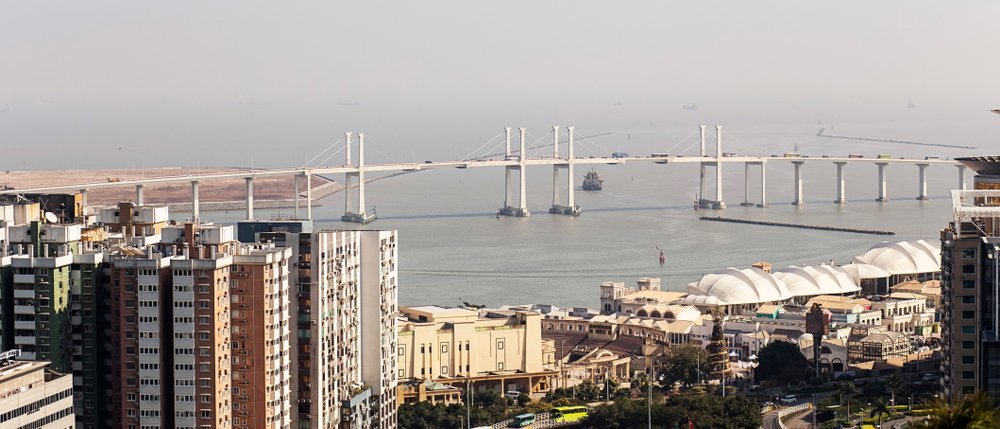
Lots of people fly into Hong Kong and carry on to Macau, and it’s easy, because the Hong Kong-Zhuhai-Macao Bridge starts right by the airport. You have two options, and which one is best depends on whether you want to go into Hong Kong first.
By bus B4 and the gold bus over the bridge
If you go through passport control at the airport, take bus B4 from the bus terminal to the bridge’s border crossing, Hong Kong Port. The bus runs around the clock and costs 9.80 Hong Kong dollars (around £1), and a taxi costs roughly 45 to 55 Hong Kong dollars (around £4.50 to £5.50). Once you’ve cleared exit control, buy a ticket for the bridge’s shuttle bus, which everyone calls the gold bus, and it runs to both Macau Port and Zhuhai Port.
According to Macau’s transport authority, the gold bus costs 65 Hong Kong dollars (around £6) from 06:00 to 23:59 and 70 Hong Kong dollars (around £7) at night. Children under 12 and under 1.2 metres tall pay half price. The bus runs around the clock, and you can buy your ticket at the counter, from the machines or in advance from the operator HZMBus. From Macau Port, the city’s buses and many of the hotels’ own shuttle buses continue to Cotai and the centre.
Directly without entering Hong Kong
If you’re only transferring in Hong Kong, you can take the SkyPier Terminal Transfer Coach straight from the airport to Macau Port or Zhuhai Port without going through Hong Kong passport control. Head to the ticket counter in Transfer Area E2 before you reach passport control, and bring your same-day flight ticket and your passport. Arrive at least 60 minutes before departure if you have checked luggage, and 30 minutes if you don’t. The ferries from SkyPier to Macau have been suspended at times, so check the airport’s website before you count on a ferry.
If you’re going to Zhuhai, you’ll be entering mainland China, so always check the visa rules before you travel. If you’re staying in Hong Kong and taking a day trip to Macau, TurboJet ferries also sail from the Hong Kong-Macau Ferry Terminal in Sheung Wan, a district I’ve covered in my guide to where to stay in Hong Kong.
The return trip and In-town Check-in
Hong Kong has a very handy system for your return journey. At Hong Kong Station and Kowloon Station you can check in and drop off your suitcase for free before taking the Airport Express to the airport. It’s called In-town Check-in, and according to the airport you can use it from a full day up to 120 minutes before departure. That means you can check out of your hotel, drop off your bag and spend the rest of the day in the city without luggage.
The service only applies to selected airlines, and you need an Airport Express ticket, so check with your airline before relying on it. Remember too that a return ticket is cheaper than two singles, so buy one as soon as you land if you know you’ll be taking the train back.
If you have a very early flight, check the first departures in the MTR app the evening before, or book a taxi. The alternative is to spend your last night at the airport. The Regal Airport Hotel is connected to Terminal 1 by a covered walkway, and you can see prices for the Regal Airport Hotel here.
Hong Kong Airport to the city centre: which option should you choose?
Here’s my recommendation based on where you’re heading and how you’re travelling:
Central, Sheung Wan, Wan Chai and Causeway Bay: Take the Airport Express to Hong Kong Station for 130 Hong Kong dollars (around £13) and continue by MTR or a short taxi ride. For Causeway Bay, bus A11 is a good, cheaper alternative if you’re not in a hurry.
Tsim Sha Tsui, Jordan, Yau Ma Tei and Mong Kok: The Airport Express to Kowloon Station and a taxi for the last stretch, or bus A21, which stops along Nathan Road, for 34.60 Hong Kong dollars (around £3.50).
On a budget with light luggage: Bus S1 to Tung Chung and the Tung Chung line into the city for under 30 Hong Kong dollars (around £3) in total.
If you land in the middle of the night: The night buses N11 and N21, or a red taxi from the rank.
3 to 4 adults with lots of luggage: A red taxi doesn’t cost much more than the Airport Express tickets and takes you right to the door.
Onwards to Macau or Zhuhai: Bus B4 to Hong Kong Port and the gold bus over the bridge, or the SkyPier Terminal Transfer Coach if you’re not entering Hong Kong.
If you’re combining Hong Kong with other big cities in Asia, I’ve also written about where to stay in Taipei and where to stay in Singapore. If you’re flying on to Japan, you can read my guide to getting from Tokyo’s airports to the city centre.
Travel ressources & websites I use all the time 👇
• Booking.com has the best offers on hotels and unique places to stay
• GetYourGuide is the best place to book tours & activities with free cancellation
• Welcome Pickups is the best & safest place to pre-book airport transfers
Psst 👀 Have you subscribed to my Youtube channel and my Instagram where I provide more useful travel tips?