

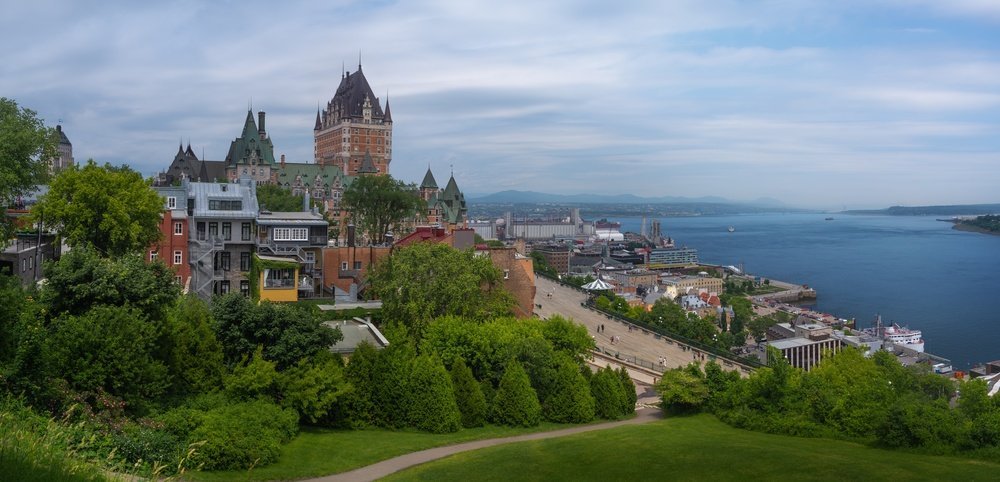
Quebec City is the most French city in North America, and that alone makes it one of the most rewarding things to do in Canada. Inside the city walls of Old Quebec, Château Frontenac towers high above the Saint Lawrence River, and down by the water lie the cobbled streets where Samuel de Champlain founded the city in 1608.
Here are my picks for the 17 best things to do in Quebec City, with prices, opening hours, transport and tips. First comes Old Quebec and the area just around it, followed by day trips to waterfalls, villages and the ice and snow of winter.
Planning your trip to Quebec City at the last minute? 🇨🇦
Here are some of the best things to do, plus hotels and other tips for your trip to Quebec City.
🎡 Top Activities & Tours:
1. Hear the stories behind the walls on a guided walking tour of Old Town from around £23.
2. Taste your way through the neighbourhood on a food tour with over ten tastings.
3. Explore the area around the city on a guided trip to Montmorency Falls and the Île d'Orléans.
🛌 Best Hotels:
1. Fairmont Le Château Frontenac is the city's best-known hotel, a five-star castle overlooking the river
2. Monastère des Augustines offers peace and history in a former convent, with no TVs at all
3. Hotel Champlain is a more affordable hotel within the walls, with free espresso around the clock
Prices are given in Canadian dollars. Many of the best experiences are free, because in Quebec City you mostly spend your time walking between the walls, terraces and staircases.
Contents
1. Old Quebec and the city walls
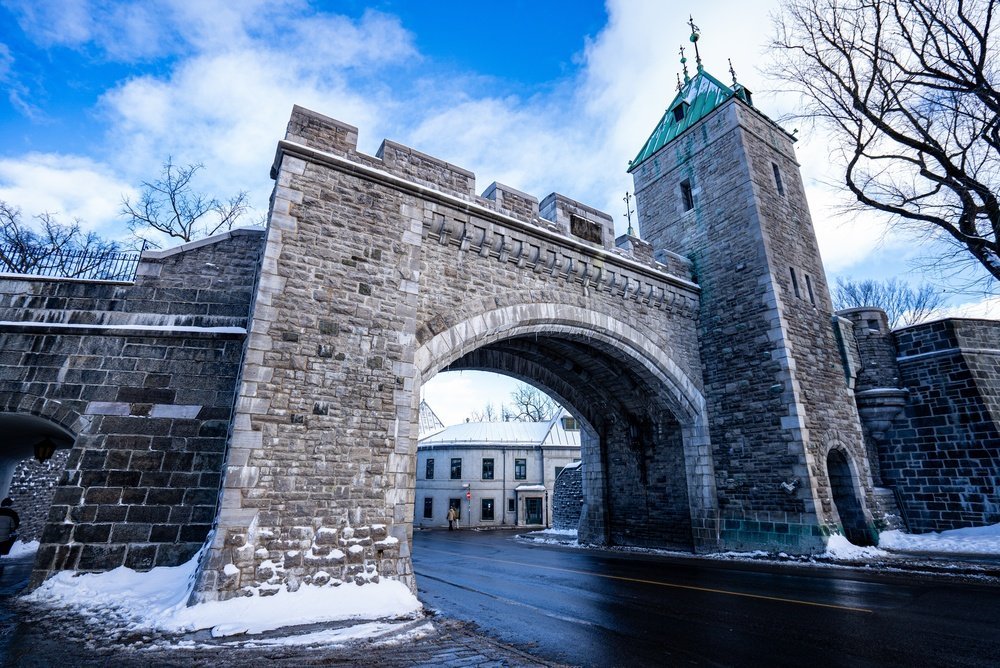
Old Quebec, Vieux-Québec in French, is the historic district up on the Cap Diamant cliff and down by the river. The area has been on the UNESCO World Heritage List since 1985, and according to UNESCO, Quebec City is the only city in North America to have preserved its city walls with bastions and gates. The fortifications are 4.6 kilometres long and accessible all year round.
The city is split into Haute-Ville up on the cliff and Basse-Ville down by the water. Most of the sights, restaurants and hotels lie within the walls of Haute-Ville, and you enter through the gates Porte Saint-Jean, Porte Saint-Louis and Porte Kent. The streets are narrow and steep, so this is a city best explored on foot. Behind Château Frontenac is the little alley Rue du Trésor, where local artists sell paintings and prints.
Walking along and on top of the walls is free, and there are no opening hours. My tip is to start at Porte Saint-Jean and walk along the top of the wall towards Porte Saint-Louis, so you see both Old Quebec and the city outside the walls. If you’re wondering where to stay, I’ve rounded up the best areas and hotels in Quebec City in a separate guide.
Book a guided walking tour of Old Quebec here.
2. Château Frontenac
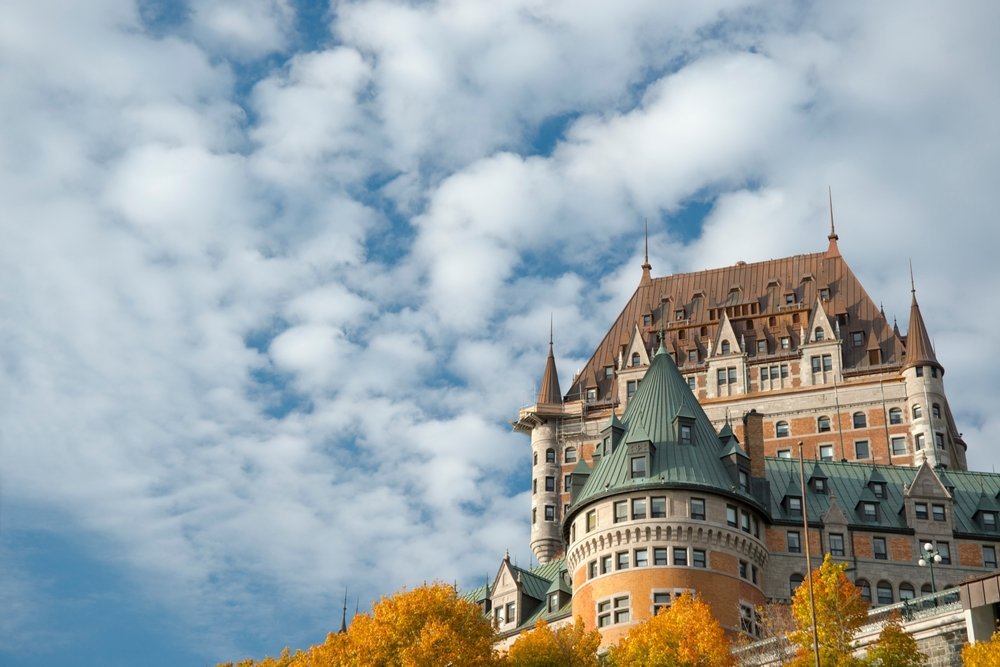
Château Frontenac is Quebec City’s landmark and the view you’ll see in almost every photo of the city. The hotel, with its green copper roofs and turrets, was built by the railway company Canadian Pacific and opened in 1893. It has been extended several times since, and today it’s one of Canada’s best-known hotels and a National Historic Site.
During the Second World War, Winston Churchill and Franklin D. Roosevelt met here for the Quebec Conferences in 1943 and 1944. You don’t need to stay at the hotel to see it. Walk all the way round the building, into the courtyard by the main entrance and down along the façade towards the river. There are also guided tours of the hotel with stories about its famous guests, which you book in advance.
My tip is to see the château from several angles: from Terrasse Pierre-Dugua-De-Mons right next door, from below on Rue du Petit-Champlain and from the ferry to Lévis. The best view is actually from the river. If you want to sleep in the city’s landmark yourself, you can check prices at Fairmont Le Château Frontenac, but expect the highest prices in town, especially during the Winter Carnival.
3. Terrasse Dufferin and Promenade des Gouverneurs
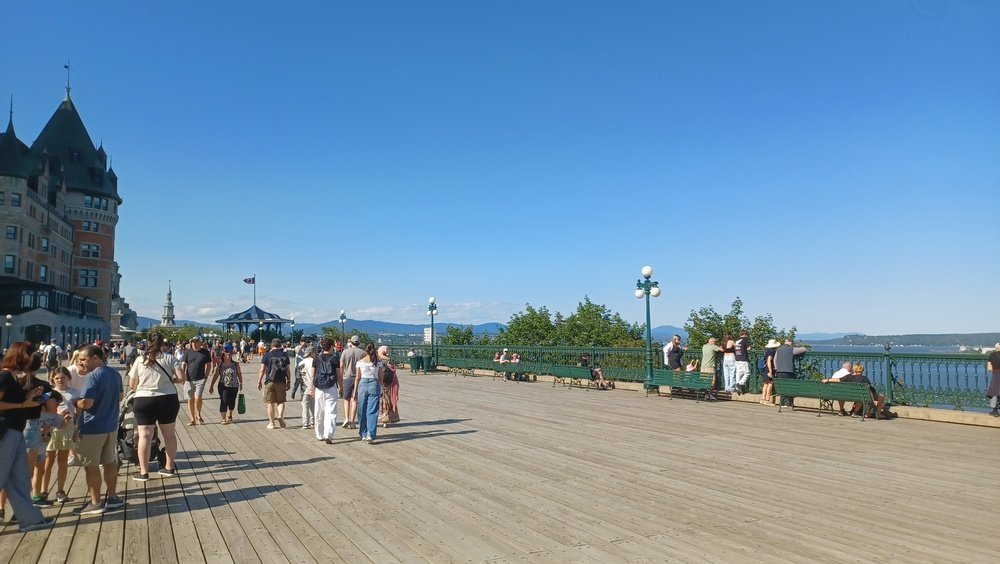
Terrasse Dufferin is the 430-metre wooden boardwalk in front of Château Frontenac, high above the Saint Lawrence River. It reached its current length in 1879 and has been the city’s favourite place for a stroll ever since. Six small pavilions with green and white roofs line the boardwalk, and in summer buskers play while people sit on the benches watching the ferries.
Beneath the boards lie the ruins of the governors’ old residence, Forts-et-Châteaux-Saint-Louis, a National Historic Site run by Parks Canada that you can visit. In winter the old toboggan run Au 1884 opens at the end of the terrace. It was built in 1884, the toboggans seat four people, and you hurtle down the ice at up to 70 km/h from mid-December to mid-March.
At the end of the terrace, a staircase leads up to Promenade des Gouverneurs, a wooden walkway along the cliff below the Citadel that ends at the Plains of Abraham. The walkway may be closed in winter when it’s icy. My tip is to come at sunset, when the light falls on the river and Lévis, and to take a ride on the toboggan run in the evening, when the terrace is lit up.
4. Petit-Champlain and the Funiculaire
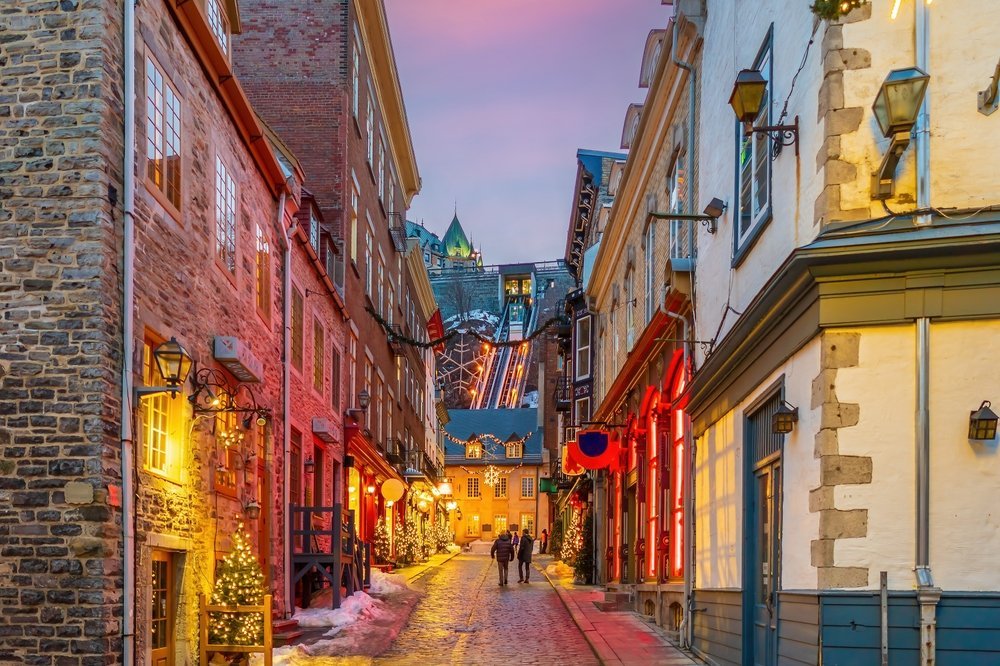
There are two ways down from Terrasse Dufferin to Basse-Ville: the steep Escalier Casse-Cou staircase or the Funiculaire du Vieux-Québec. The funicular has been running up and down the cliff since 1879, and its cars travel at a 45-degree angle. The upper station is on Terrasse Dufferin behind Château Frontenac, and the lower one is in Maison Louis-Jolliet on Rue du Petit-Champlain.
A ride costs 7 dollars per person each way, and you can only pay in cash, but there are cash machines at both stations. Children under 117 cm ride free. The funicular runs all year, usually from 9am to 9pm and an hour later in the summer holidays.
At the bottom is Rue du Petit-Champlain, a narrow pedestrian street with small shops, cafés and restaurants in old stone houses. At the end of the street, a gable wall is covered by a large mural about the area’s history, and in winter strings of lights hang thickly over the street. My tip is to walk down the stairs and take the funicular back up, saving your legs on the tough way.
Book a walking tour including a funicular ride here.
5. Place Royale and Notre-Dame-des-Victoires
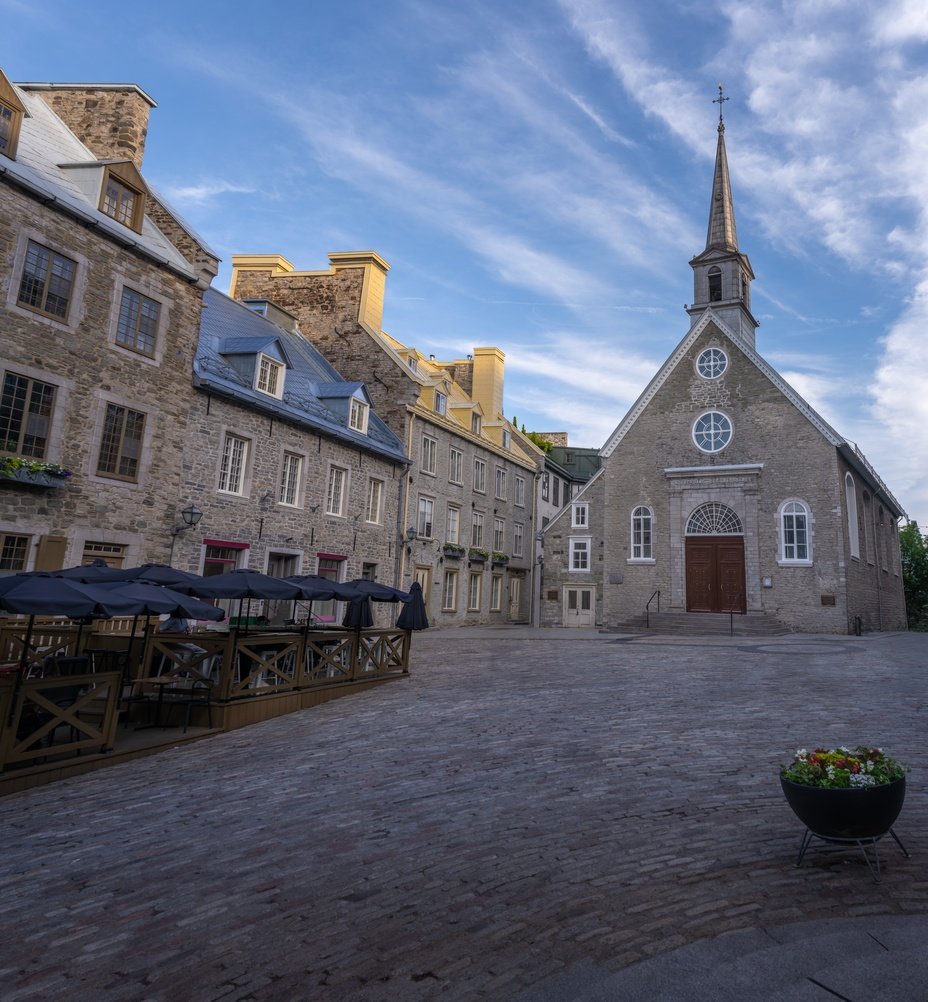
Place Royale is the small cobbled square in Basse-Ville where Samuel de Champlain built his first dwelling in 1608 and founded Quebec City. Québec Cité calls the square the cradle of French North America. The stone houses around the square were built after a fire in 1682, and in the middle stands a bust of Louis XIV, after whom the square is named.
On one side of the square is Notre-Dame-des-Victoires, begun in 1688 and considered the oldest stone church in North America. The church was destroyed during the siege of 1759 and rebuilt to the original plans. The outline of Champlain’s second dwelling is marked in the paving by the church, and the church is still in use, with Mass on Sundays.
A few steps away, a gable wall is painted with the Fresque des Québécois, a large trompe l’oeil mural featuring famous figures from the city’s history. It costs nothing to see the square, the church or the mural. My tip is to come early in the morning, before the groups arrive. If you want to stay in the heart of historic Basse-Ville, Auberge Saint-Antoine is a few minutes’ walk from the square.
6. Musée de la civilisation
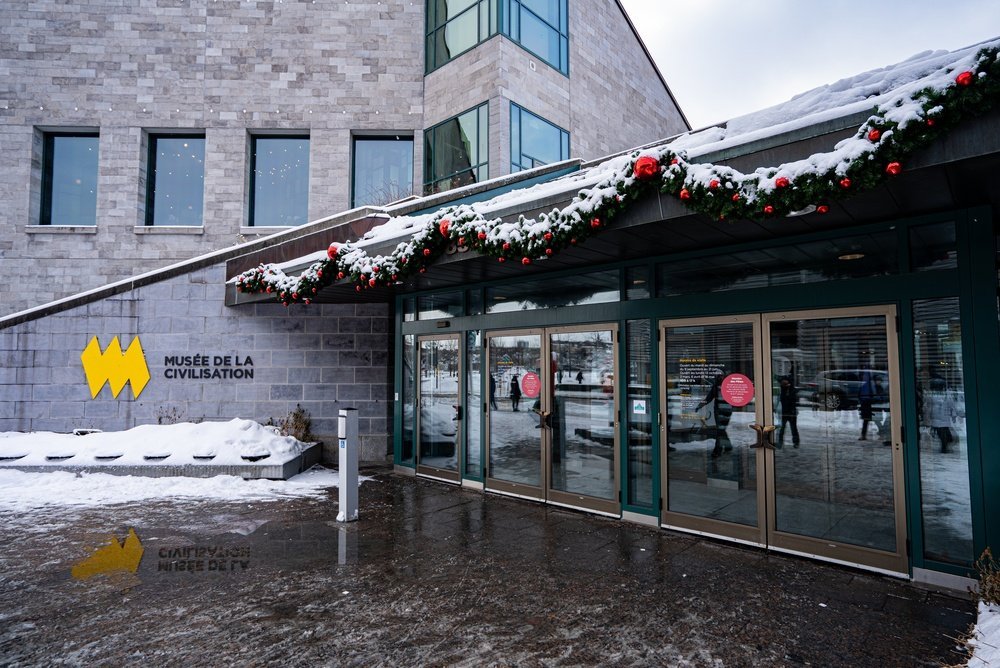
The Musée de la civilisation sits in Vieux-Port, a few minutes’ walk from Place Royale, and is the city’s big museum of Québec history and culture. The building is modern, but it has been built together with old houses from the harbour district, so you walk from glass and concrete into stone houses from the colonial era. The exhibitions change, and there are permanent exhibitions on the history of Québec and on the Indigenous peoples.
The price depends on your age. Adults aged 35 to 64 pay 27 dollars, those aged 18 to 34 pay 22 dollars and those aged 65 and over pay 26 dollars. Young people aged 12 to 17 pay 10 dollars, and children aged 5 and under get in free. The museum is open from 10am to 5pm, but outside the summer it’s closed on Mondays.
My tip is to save the museum for a rainy day or a cold winter afternoon, and then take a stroll along the harbour and Rue Saint-Paul with its antique shops afterwards. The ferry to Lévis leaves from the terminal right next door, so the two experiences go nicely together.
7. The Ferry to Lévis
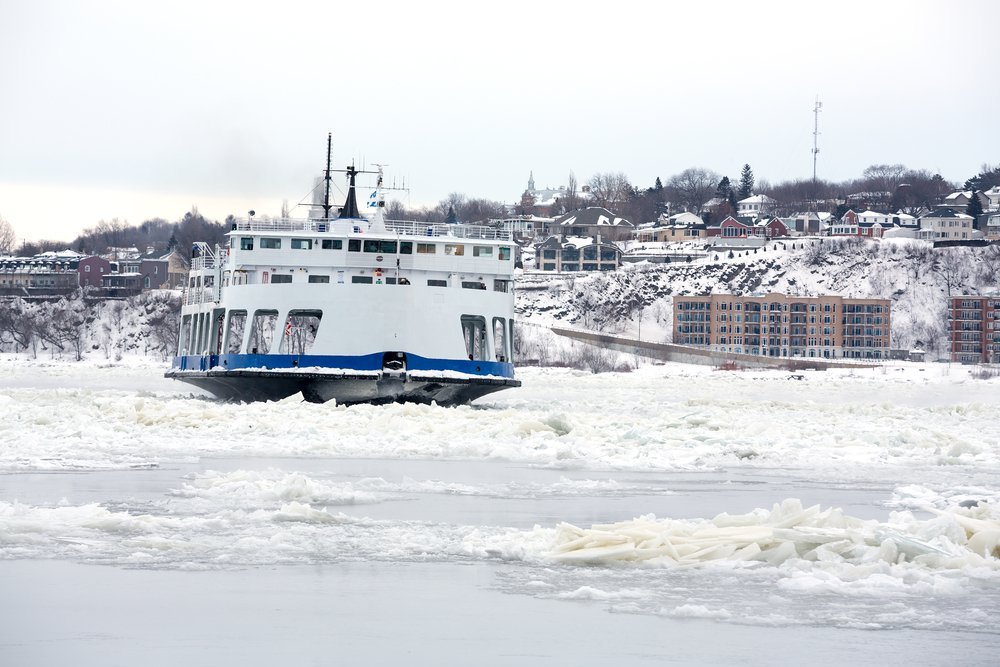
The best view of Quebec City is from the river, and the cheapest way to get out there is the regular ferry to Lévis on the south bank. The ferry leaves from the terminal in Basse-Ville close to the Musée de la civilisation and Petit-Champlain, and the crossing takes 12 minutes. It runs all year round, even when the river is full of ice floes.
A single ticket costs 4.25 dollars for adults aged 16 to 64, children aged 6 to 15 pay 2.95 dollars, and the youngest travel free. Prices exclude tax. How often the ferry runs depends on the time of day, so check the timetable before you head down to the terminal.
On the way across you have the Château Frontenac, the Citadel and the whole of Old Quebec in front of you, and in Lévis you can stroll through the park at Quai Paquet with views back towards the city. My tip is to sail there and back at dusk, when the lights come on in Old Quebec. In winter you can hear the ice floes knocking against each other as the ferry forces its way through.
8. Basilique-cathédrale Notre-Dame-de-Québec
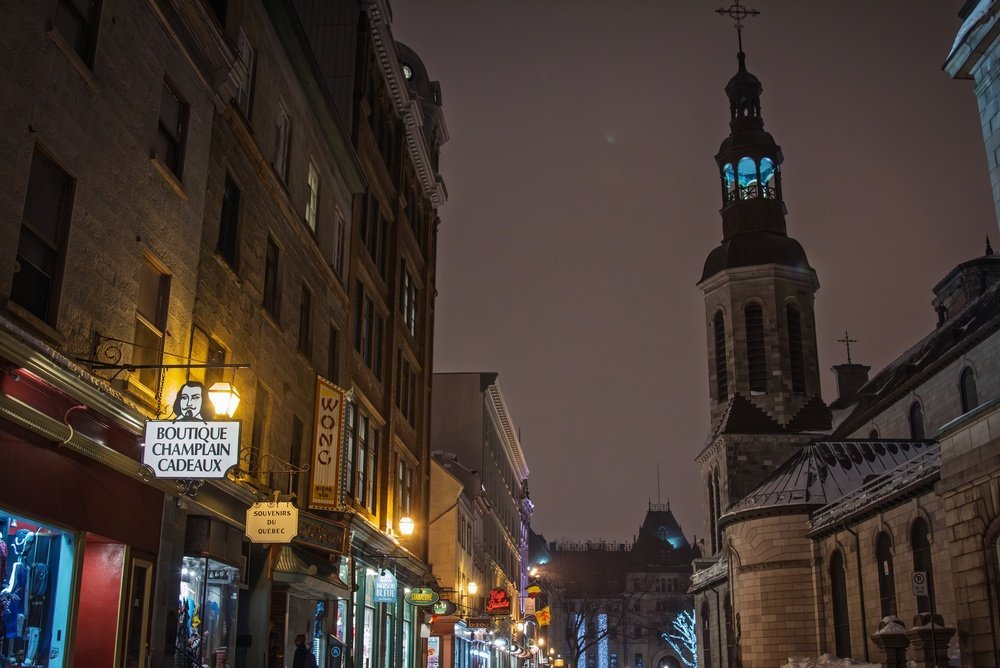
Notre-Dame-de-Québec is the city’s cathedral and stands on Place de l’Hôtel-de-Ville in the heart of Haute-Ville. According to Québec Cité, a church has stood on the site since 1647, and the building has been rebuilt several times after war and fire. Inside, a gilded canopy hangs over the altar, and four governors of New France and the city’s bishops are buried beneath the church.
François de Laval, the first bishop of Québec, lies in one of the chapels. The church also has a Holy Door, which was consecrated in 2013 for the parish’s 350th anniversary. According to Québec Cité, it’s one of only seven Holy Doors in the world and the only one outside Europe. The door is normally sealed and only opened in holy years, but you can always see it and touch it.
Opening hours vary with the season and services, so check the church’s own website before you go. My tip is to combine your visit with Rue du Trésor just around the corner and the Séminaire de Québec next to the church, which Laval founded in 1663. The square in front of the cathedral is also a good place to start a walk down Côte de la Fabrique towards Rue Saint-Jean.
9. Rue Saint-Jean and Porte Saint-Jean
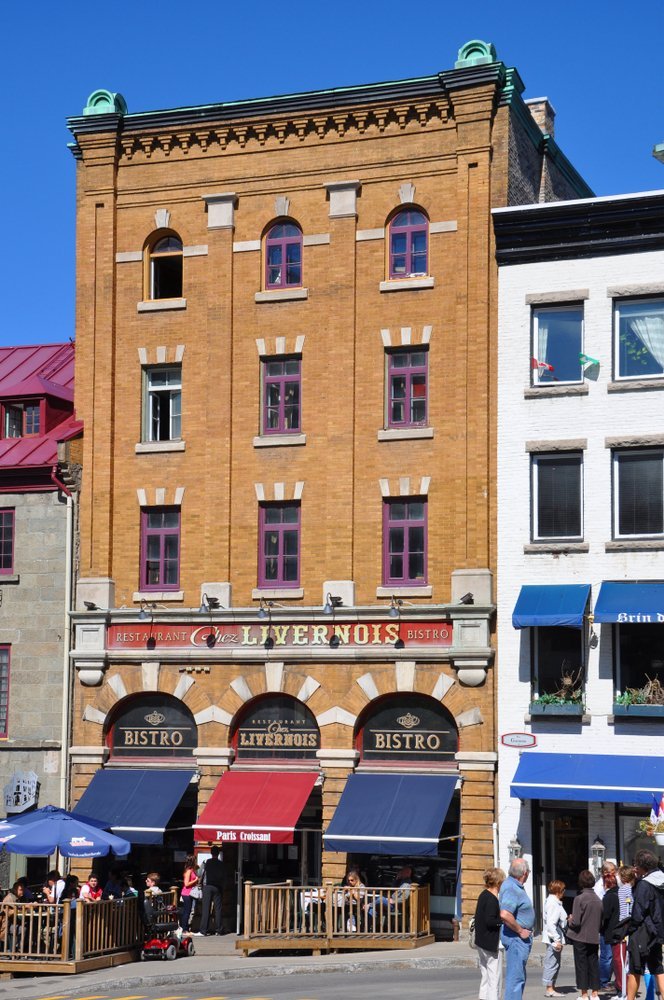
Rue Saint-Jean is Old Quebec’s liveliest street. It starts at Côte de la Fabrique inside the walls, continues through Porte Saint-Jean and, beyond the gate, becomes the main street of the Saint-Jean-Baptiste neighbourhood. Inside the walls the street is packed with restaurants, bars and shops, while outside it becomes more local, with bookshops, record shops and small eateries.
Pop into J.A. Moisan, one of North America’s oldest grocery shops, where you can buy cheese, maple syrup and picnic food, and carry on to Église Saint-Jean-Baptiste, the large church further along the street. Walking here is free, the shops are usually open from late morning until the evening, and the bars stay open late.
My tip is to walk the whole street in the evening, when Porte Saint-Jean is lit up, and to eat outside the walls, where prices are lower. If you’re a foodie, you can take a food tour through Old Quebec with tastings of local dishes such as poutine and maple syrup set on snow. That kind of thing is easiest to try when a local guide shows you the way.
Book a food tour with more than ten tastings here.
10. La Citadelle
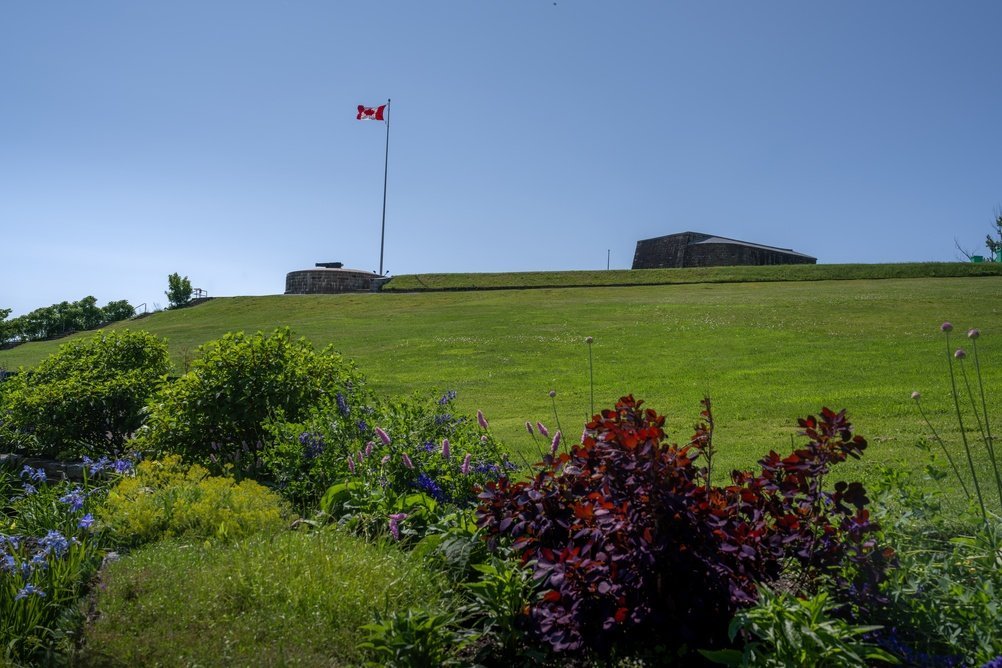
La Citadelle de Québec is the star-shaped fortress on top of Cap Diamant above the river. The British built it in the first half of the 19th century to defend the city, and today it’s still an active military base and home to the Royal 22e Régiment. It’s also one of the Governor General’s official residences.
You get around on a guided tour. Admission costs 22 dollars for adults and includes a 60-minute outdoor guided tour and entry to the regiment’s museum. Young people aged 11 to 17 pay 8 dollars, and children aged 10 and under go free. The Citadel is normally open from 9am in summer and from 10am the rest of the year, until 5.30pm.
In summer the regiment holds the Changing of the Guard in red uniforms and bearskin hats on the parade ground, and the times are listed on the Citadel’s website. My tip is to dress for the weather, as the tour takes place outdoors, and to walk up Côte de la Citadelle from Porte Saint-Louis. From the ramparts there are views over the river and the Plains of Abraham.
Book a ticket and guided tour of the Citadel here.
11. Plains of Abraham
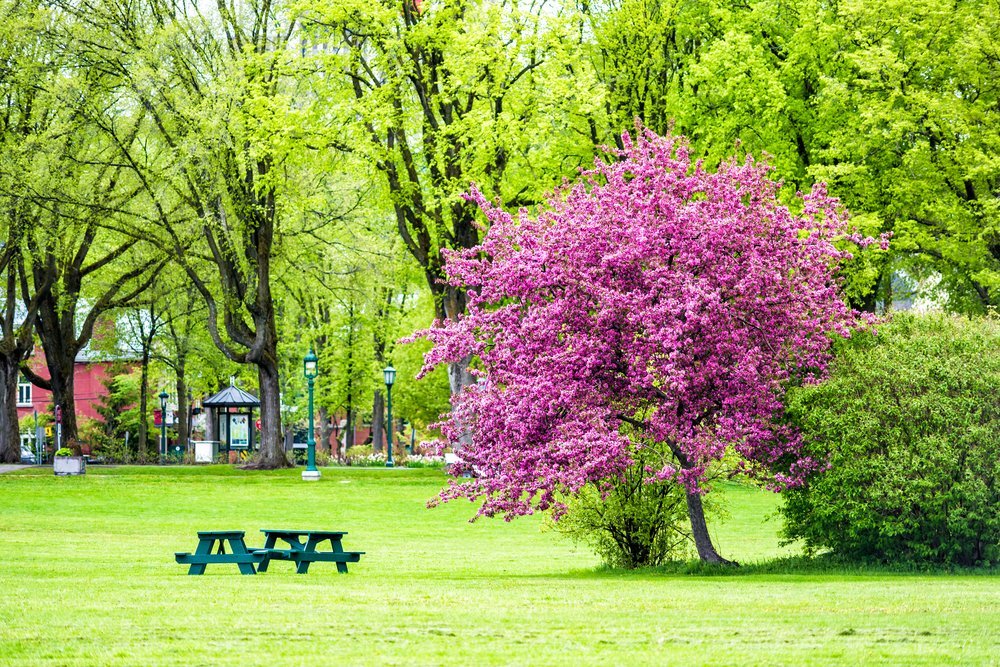
The Plains of Abraham, Plaines d’Abraham in French, is the large park on the clifftop west of the Citadel. This is where the battle of 13 September 1759 took place, when the British under James Wolfe defeated the French under Louis-Joseph de Montcalm, and both generals died of their wounds. The battle proved decisive in bringing New France under British rule.
Today the park is the city’s green lung, with lawns, paths and views over the river. It’s run by the National Battlefields Commission, and according to the commission it gets around four million visitors a year. At the Plains of Abraham Museum, exhibitions tell the story of the battle, and admission is 13.75 dollars plus tax outside the summer. In summer it costs 17 dollars including entry to Martello Tower 1.
The museum is open daily from 9am to 5pm, and the park is also home to the Musée national des beaux-arts du Québec art museum. My tip is to walk up the Promenade des Gouverneurs from Terrasse Dufferin and out onto the plains, take a break in the Jardin Jeanne-d’Arc flower garden and head back along Grande Allée. In winter locals use the park for cross-country skiing and sledging.
12. Parliament Building (Hôtel du Parlement)
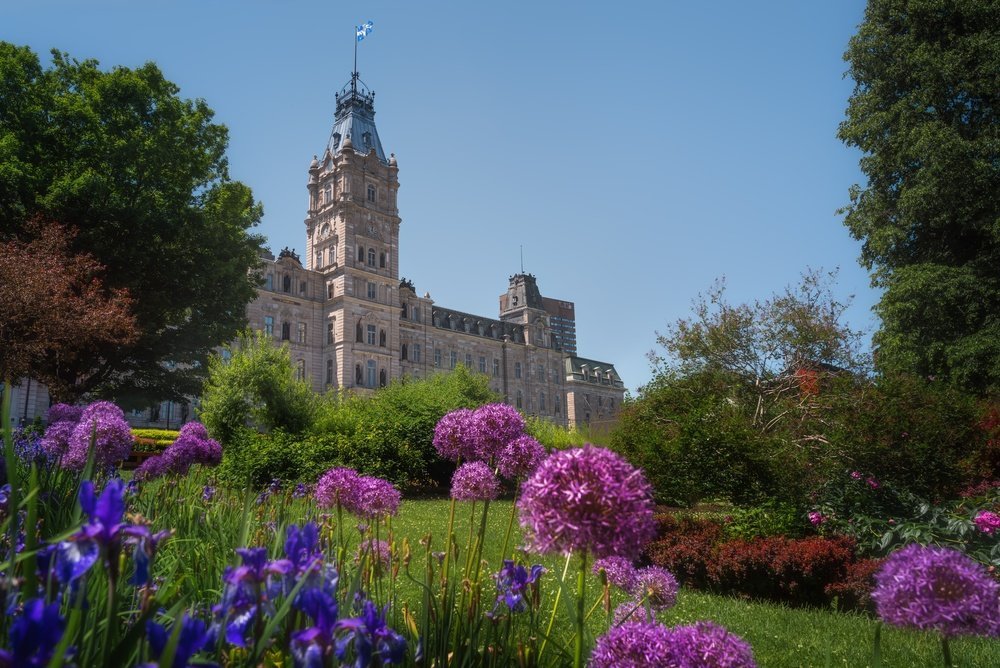
Hôtel du Parlement is Québec’s parliament building, and it sits just outside Porte Saint-Louis. It was built between 1877 and 1886 in the French Second Empire style, and its façade is full of bronze statues of figures from Québec’s history. The provincial motto, Je me souviens, is carved above the entrance, and the Fontaine de Tourny fountain stands in front of the building.
Guided tours are free, and the classic tour of the parliament takes around 60 minutes. You enter through the reception pavilion on Avenue Honoré-Mercier, where there’s airport-style security, and everyone aged 16 and over must show photo ID. Coats and large bags go in the free cloakroom, and the pavilion is normally open Monday to Saturday.
The building also has a restaurant, Le Parlementaire, if you fancy lunch in historic surroundings. My tip is to carry on along Grande Allée with its terraces and take the lift up to Observatoire de la Capitale on the 31st floor of Édifice Marie-Guyart, a few minutes’ walk away. Tickets are bought online, and from the top you can see the whole city and the river.
13. Montmorency Falls
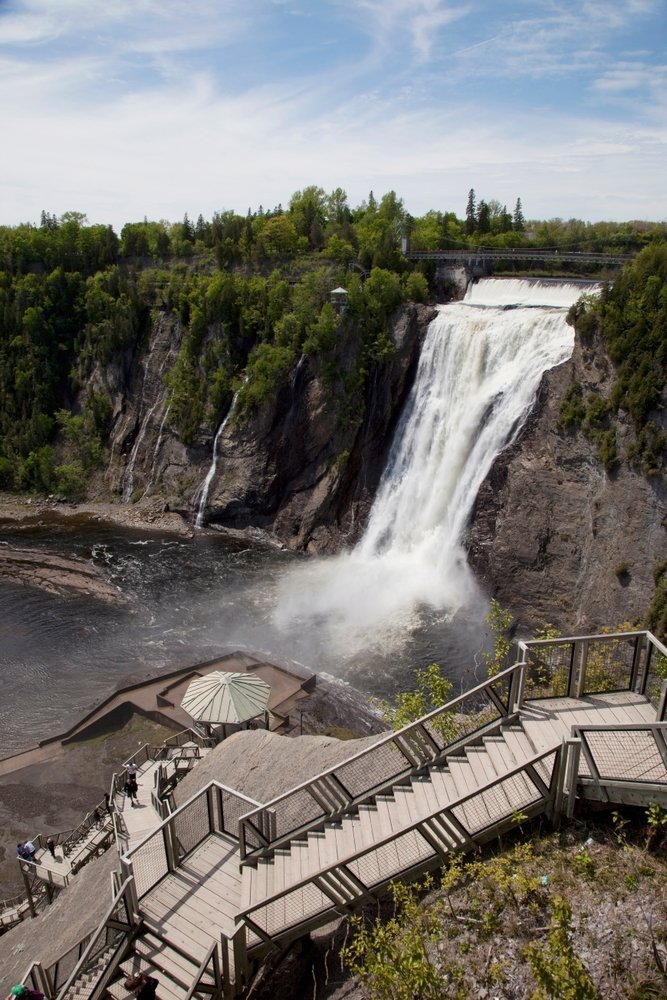
Chute Montmorency is only about 15 minutes by car from Old Quebec, where the Montmorency River plunges into the St Lawrence. According to the City of Québec, the waterfall is 83 metres high, making it 30 metres higher than Niagara Falls. It lies in Parc de la Chute-Montmorency, which is run by Sépaq and open all year round.
You can take the cable car up to Manoir Montmorency at the top, cross the suspension bridge right above the falls and take the 487-step panoramic staircase back down the cliff. If you’re feeling brave, you can whizz across the bay in front of the falls on a 300-metre zip line. In winter the spray freezes into a huge ice cone at the base, and people go ice climbing.
There’s an entrance fee for the park and the cable car costs extra, so check the current prices with Sépaq. Without a car, you can take bus 800 towards Beauport and get off at the des Rapides stop, which is a few minutes’ walk away. My tip is to take the cable car up and walk down the stairs, and to bring a rain jacket in summer, as the spray reaches a long way.
Book a half-day trip to Montmorency and Île d’Orléans here.
14. Île d’Orléans
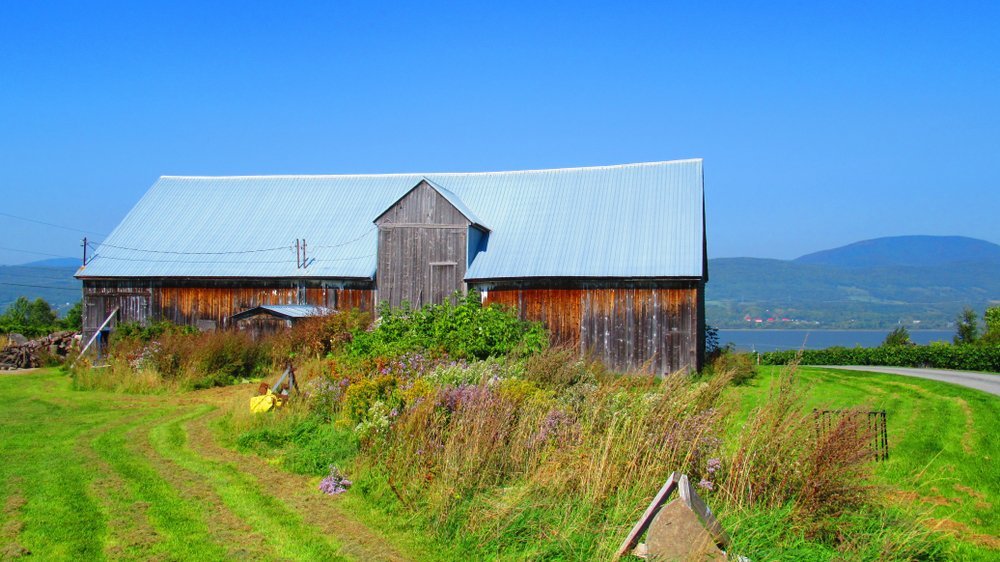
Île d’Orléans is the island in the St Lawrence River directly opposite Montmorency Falls, and the bridge onto the island is about 15 minutes from the centre. The island is around 34 kilometres long and 8 kilometres wide, and the Chemin Royal road winds round it through six small villages with old stone houses, churches, farm shops and views across the river.
The island is Quebec City’s larder. From late June to mid-July you can pick strawberries, and in September and October it’s apples and cider. You can taste blackcurrant liqueur at Cassis Monna & Filles, wine at several vineyards, chocolate and ice cream at Chocolaterie de l’Île d’Orléans and cheese at Les Fromages de l’isle d’Orléans. Driving round is free, and you only pay for what you taste and buy.
There’s hardly any public transport on the island, so a car is by far the easiest option. You can compare prices on car hire at Booking.com, and if you’d like to stay the night, have a look at accommodation on Île d’Orléans. My tip is to drive round anticlockwise, as Québec Cité recommends, and to visit between mid-June and mid-October, when most of the stalls are open.
15. Sainte-Anne-de-Beaupré
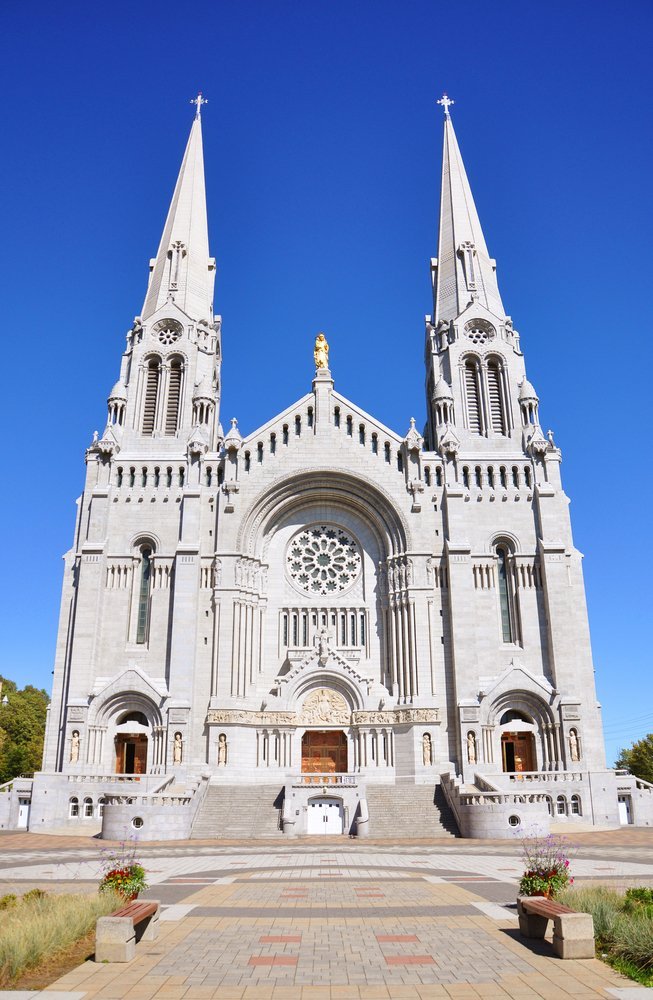
Sanctuaire Sainte-Anne-de-Beaupré lies about 35 kilometres north-east of Quebec City along the riverside road, and it’s the oldest pilgrimage site in North America. The large twin-towered basilica is dedicated to St Anne, Jesus’s grandmother, and according to Québec Cité it receives almost a million visitors a year.
Inside, the basilica is filled with mosaics, stained-glass windows and wooden sculptures, and a relic of St Anne is kept here. Outside you’ll find the Scala Santa, a holy staircase that pilgrims climb on their knees, and Stations of the Cross with 14 stations in the woods beside the basilica. Parking is free, and the shrine is normally open from morning until late afternoon, with the longest hours on Sundays.
Without a car, the easiest way to get here is on an organised tour, and most tours combine Sainte-Anne-de-Beaupré with Montmorency Falls and Île d’Orléans on the same day. My tip is to drive the old road, Avenue Royale, from Montmorency past old houses and churches, and to finish the day at the Canyon Sainte-Anne gorge a short distance away if you want more nature.
16. Wendake
Wendake is the Huron-Wendat Nation’s community about 15 kilometres north-west of Old Quebec, roughly 20 minutes by car. The people have lived here since the late 17th century, and a visit gives you a completely different picture of the region’s history from the churches and fortifications in the city. In the middle of Wendake is Kabir Kouba waterfall, set in a gorge carved out by the Saint-Charles River.
Musée huron-wendat tells the story of the Wendat people’s history and culture, and next to it stands the national longhouse Ekionkiestha’, where you can see how people used to live. The museum belongs to Hôtel-Musée Premières Nations, which also has the restaurant La Traite, serving dishes inspired by Indigenous cuisine. The museum is closed on some days of the week, so check the opening hours before you drive out.
If you want to experience the place at a relaxed pace, you can stay the night at Hôtel-Musée Premières Nations, which has an indoor pool and a high score on Booking.com. My tip is to combine the museum with a walk to Kabir Kouba and a visit to Site traditionnel huron Onhoüa Chetek8e, a reconstructed village with longhouses. A car or taxi is the easiest way to get there.
17. The Winter Carnival and Hôtel de Glace
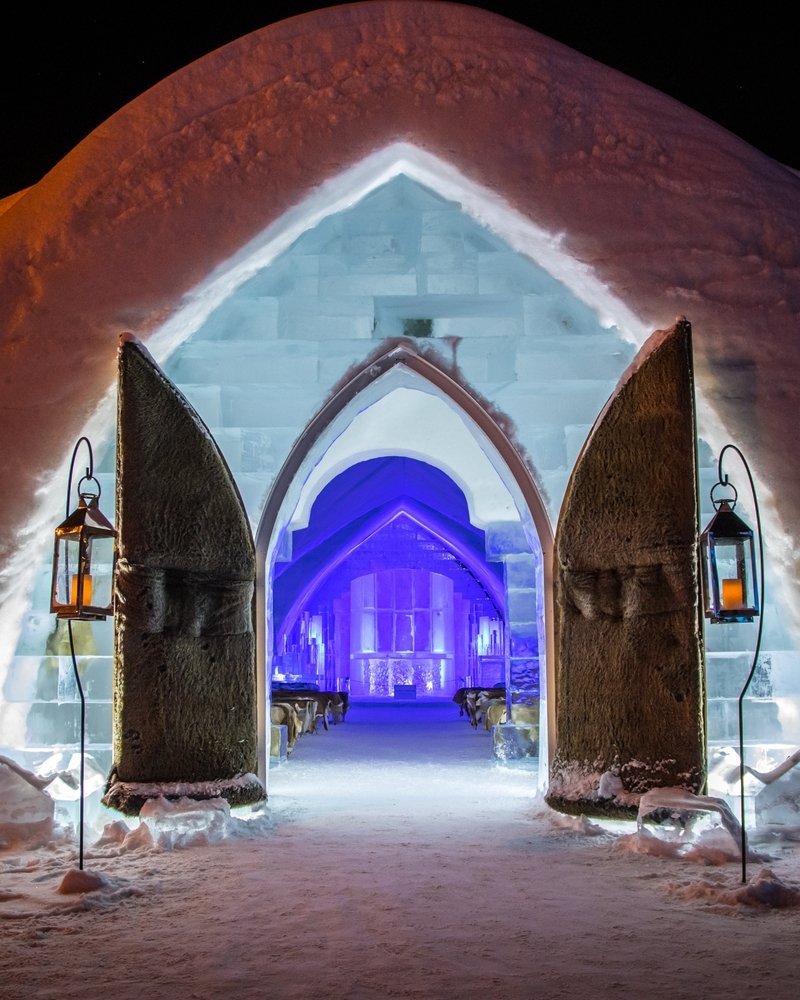
Quebec City is at its most beautiful in the snow, and the highlight is the Carnaval de Québec, one of the world’s largest winter carnivals, which has been running since 1955. The carnival lasts around ten days in late January or in February, with the mascot Bonhomme, night parades, music and canoe races across the ice on the St Lawrence River.
The Effigie pass gives you access to the carnival’s activities, and the Effigie costs 39 dollars plus tax, while children aged 12 and under don’t need one. Some of the big events, such as the night parades, are free to watch from the street. Hotels fill up quickly, so book several months in advance.
Around half an hour north of the city, you’ll find Hôtel de Glace at Village Vacances Valcartier, which calls itself North America’s only ice hotel. It’s built from ice and snow every winter and is open from around New Year until mid-March. You can visit during the day, and tickets cost from 25.99 dollars online compared with 39.99 dollars at the entrance. My tip is to buy your ticket in advance and take the shuttle bus from Old Quebec if you don’t have a car.
Book your entry ticket to Hôtel de Glace here.
Practical travel tips for Quebec City
You can easily explore Old Quebec on foot, but the city sits on a cliff, so bring shoes with a good grip, especially in winter when the pavements can be slippery. Between Haute-Ville and Basse-Ville, you take the stairs or the funicular, and you can walk or take RTC’s buses to Saint-Roch, Montcalm and the Plains of Abraham. For Montmorency, Île d’Orléans, Sainte-Anne-de-Beaupré and Wendake, a car or an organised tour is easiest.
The city’s own airport, Jean-Lesage, is 20 to 30 minutes from the centre by taxi, but many people fly into Montreal and take the VIA Rail train to Gare du Palais in about three to three and a half hours. If you land in Montreal, you can read my guide from Montreal Airport to the city centre, and if you’re combining the two cities, you can also read about where to stay in Montreal.
Summer, from June to September, is best for day trips, while December to March is the time for snow, the toboggan run, the carnival and Hôtel de Glace. In July, the city holds its big summer festival, and hotel prices rise. Everyone speaks French, but in the touristy areas you’ll get by fine in English. Remember that tax is added on top of prices at the till, and that tipping 15 to 20 per cent is normal in restaurants.
If your trip continues through Canada, I also have a guide to where to stay in Toronto. If you need the full selection, you can see all hotels in Quebec City on Booking.com.
Travel ressources & websites I use all the time 👇
• Booking.com has the best offers on hotels and unique places to stay
• GetYourGuide is the best place to book tours & activities with free cancellation
• Welcome Pickups is the best & safest place to pre-book airport transfers
Psst 👀 Have you subscribed to my Youtube channel and my Instagram where I provide more useful travel tips?