

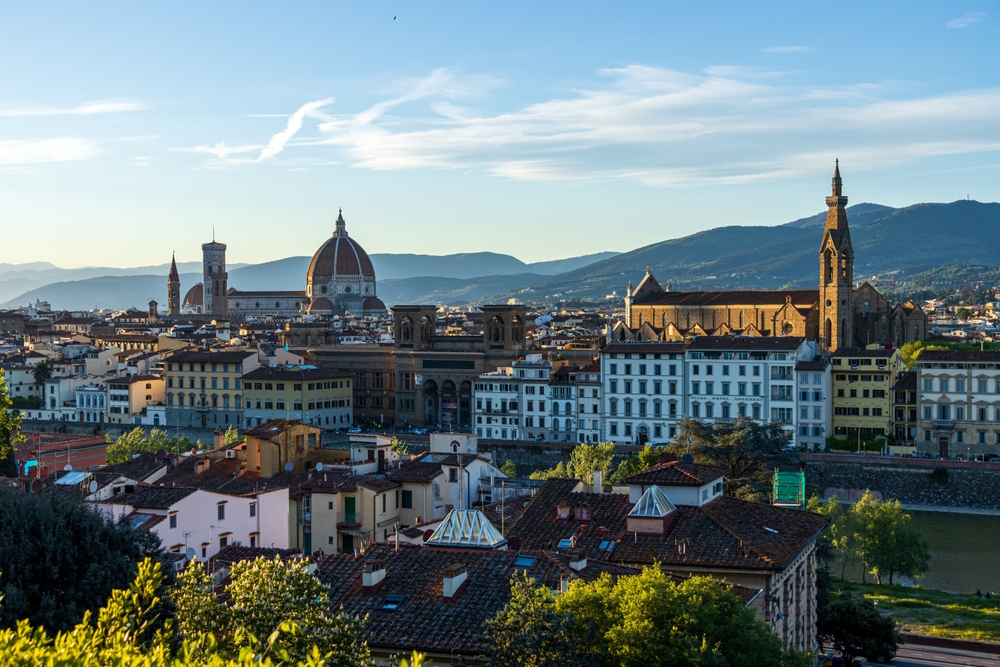
Florence is the city of the Renaissance. Michelangelo, Leonardo da Vinci, Botticelli and Brunelleschi all worked here, and most of what they created still stands within a half-hour walk of the cathedral. The whole historic centre is a UNESCO World Heritage Site, and the city is small enough for you to walk between almost everything.
Here are my picks for the 20 best things to see and do in Florence, with prices, opening hours and ticket tips. Prices are in euros. The biggest sights sell tickets for fixed time slots, so read the sections before you plan your days. Remember, too, that the state museums close on Mondays.
Contents
1. The Duomo and Brunelleschi’s Dome
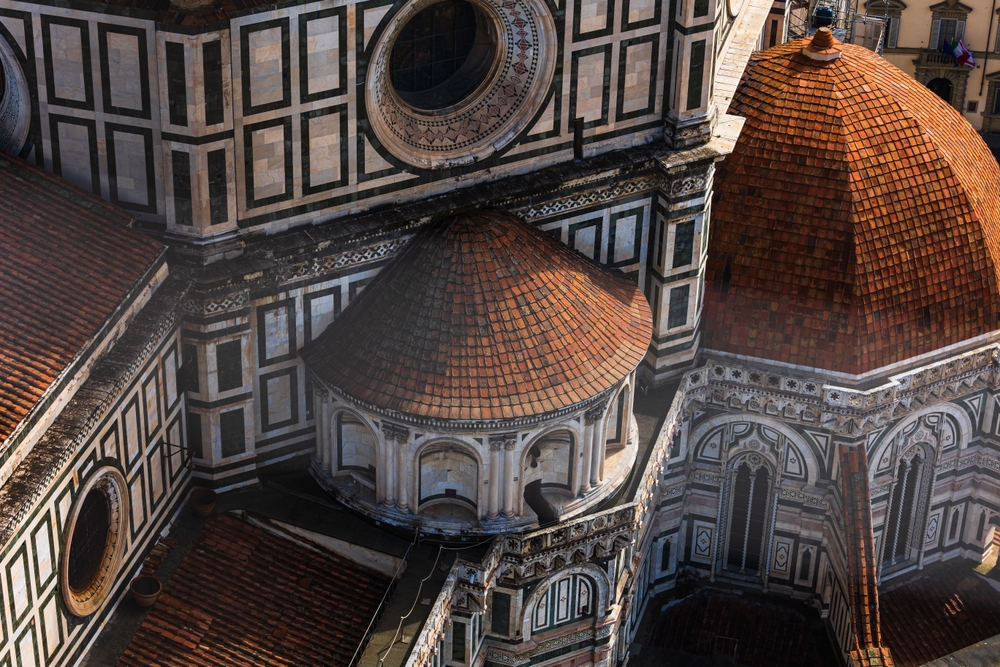
The cathedral of Santa Maria del Fiore, with its red dome, is Florence’s landmark. Filippo Brunelleschi built the dome from 1420 to 1436 without scaffolding from the ground, and it’s still the largest masonry dome in the world. The cathedral itself is free and needs no ticket. It’s open Monday to Saturday from 10.15am to 3.45pm and closed to visitors on Sundays. Shoulders and knees must be covered.
The big experience is the climb up the dome. You walk 463 steps between the dome’s two shells, there’s no lift, and on the way you get really close to Vasari and Zuccari’s huge fresco of the Last Judgement. To go up, you need a Brunelleschi Pass for €30, which also covers the bell tower, the Baptistery, the Duomo Museum and the Santa Reparata crypt for three days. The pass is personal, you choose the date and time for the dome when you buy it, and the time can’t be changed. If you’re more than five minutes late, your ticket is wasted.
Official tickets are only sold on the cathedral’s own website, and the popular slots go quickly, so buy them as soon as your trip is booked. Larger bags must be left at Piazza Duomo 38/r, which is free. If tickets are sold out, or you’d like a guide, you can book a tour that includes access to the dome, but it costs more.
Book a guided tour of the Duomo with access to Brunelleschi’s Dome.
2. Giotto’s Bell Tower, the Baptistery and the Duomo Museum
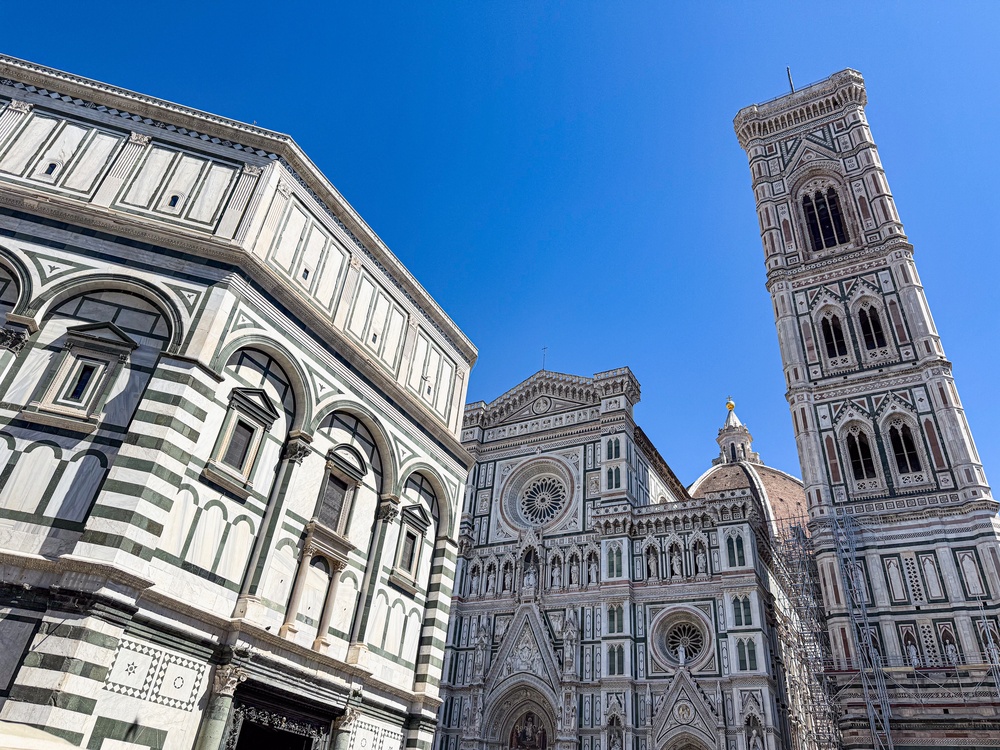
Around the cathedral are three more sights, all included in the passes. Giotto’s Bell Tower is almost 85 metres tall, with 414 steps to the top. The tower is currently wrapped in scaffolding because a restoration that’s expected to take around five years has begun. The terrace at the top is still open, but the view may be partly blocked, so the dome is the best choice if you only want to climb one.
The Baptistery opposite the cathedral was consecrated in 1059 and is one of the city’s oldest buildings. The gold mosaics on its ceiling are being restored and will be hidden until 2028, but you can still go inside. The bronze doors on the building are copies. The originals, including Ghiberti’s Gates of Paradise, are in the Duomo Museum behind the cathedral, together with Michelangelo’s late Pietà and Donatello’s Mary Magdalene. The museum is one of the city’s best and is rarely crowded.
The Giotto Pass for €20 covers everything except the dome, and the Ghiberti Pass for €15 covers the museum, the Baptistery and Santa Reparata. Both are valid for three days. The bell tower is open daily from 8.15am to 6.45pm, and the museum is closed on the first Tuesday of the month.
3. The Uffizi Gallery
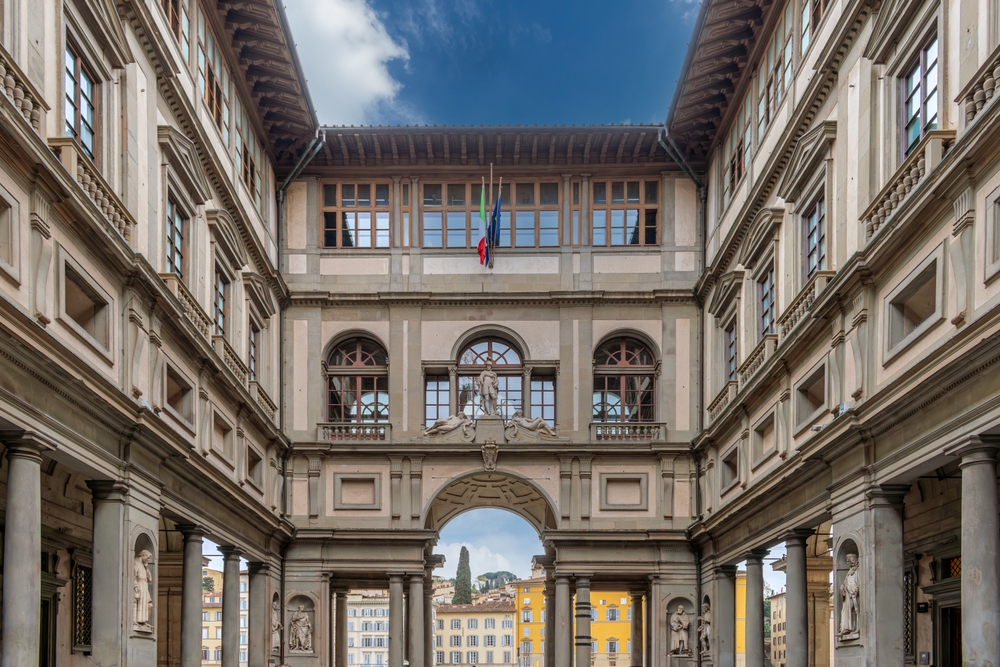
The Uffizi has the world’s most important collection of Italian Renaissance art. Here you’ll find Botticelli’s The Birth of Venus and Primavera, Leonardo da Vinci’s Annunciation, Titian’s Venus of Urbino, Caravaggio’s Bacchus and Michelangelo’s Doni Tondo, his only finished panel painting. The museum is large, so pick the rooms you most want to see and allow at least a couple of hours.
A ticket costs €25 if you buy it on the day and €29 if you buy it in advance. There’s also an afternoon ticket for €16 with entry from 4pm. That price applies when you buy on the day. It gives you two and a half hours in the museum and is the cheapest way in. The Uffizi is open Tuesday to Sunday from 8.15am to 6.30pm and closed on Mondays. Entry is free on the first Sunday of the month, but you can’t book a time then and will have to queue.
The Vasari Corridor, the 750-metre passage over Ponte Vecchio to Palazzo Pitti, has reopened. You need a combined ticket for €43 on the day or €47 in advance, and you walk through in groups of 25 accompanied by staff. If you also want to see Palazzo Pitti and the Boboli Gardens, the five-day PassePartout for €40 is cheaper than three separate tickets.
Book a timed-entry ticket to the Uffizi with an audio guide.
4. The Accademia and Michelangelo’s David
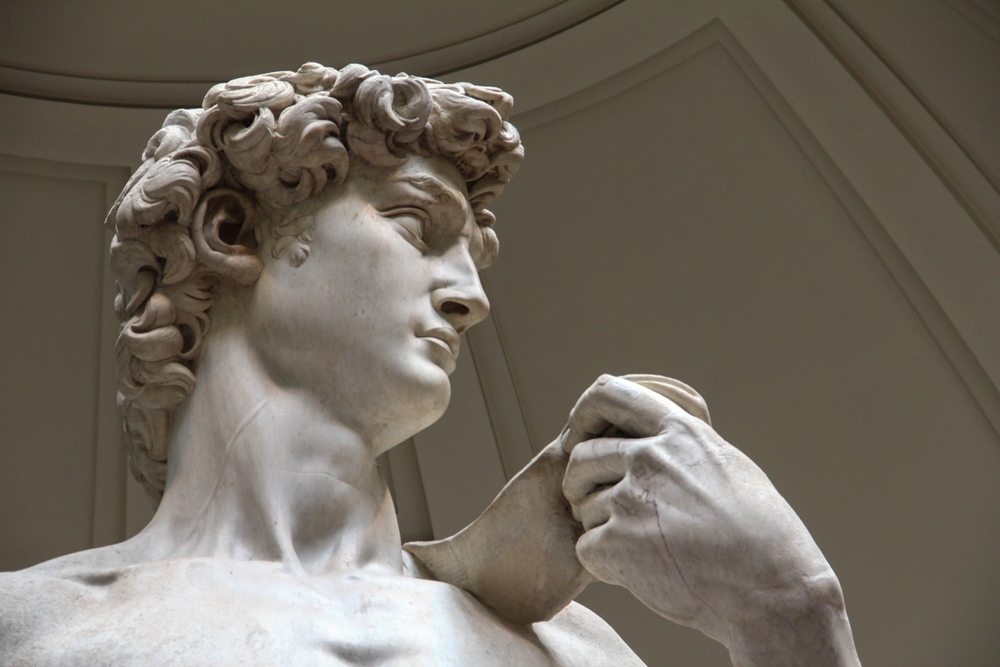
The Galleria dell’Accademia has one main attraction, and it’s enough. Michelangelo carved David from a single block of marble between 1501 and 1504. Including its base, the statue is 5.17 metres tall and weighs more than five and a half tonnes. It originally stood in front of Palazzo Vecchio, where a copy stands today.
The rest of the museum doesn’t take long. There’s a section with old musical instruments and a collection of Florentine painting, so an hour is usually plenty. A ticket costs €20, plus a €4 booking fee. The museum is open Tuesday to Sunday from 8.15am to 6.50pm and closed on Mondays.
Book ahead, because without a reservation the wait can be long. The museum has no cloakroom, and you’ll be turned away with a backpack or a large bag, so leave it at your hotel. If you also want to see the Bargello, there’s a joint ticket for €26 that’s valid for 48 hours.
Book a timed-entry ticket to the Accademia and Michelangelo’s David.
5. Ponte Vecchio
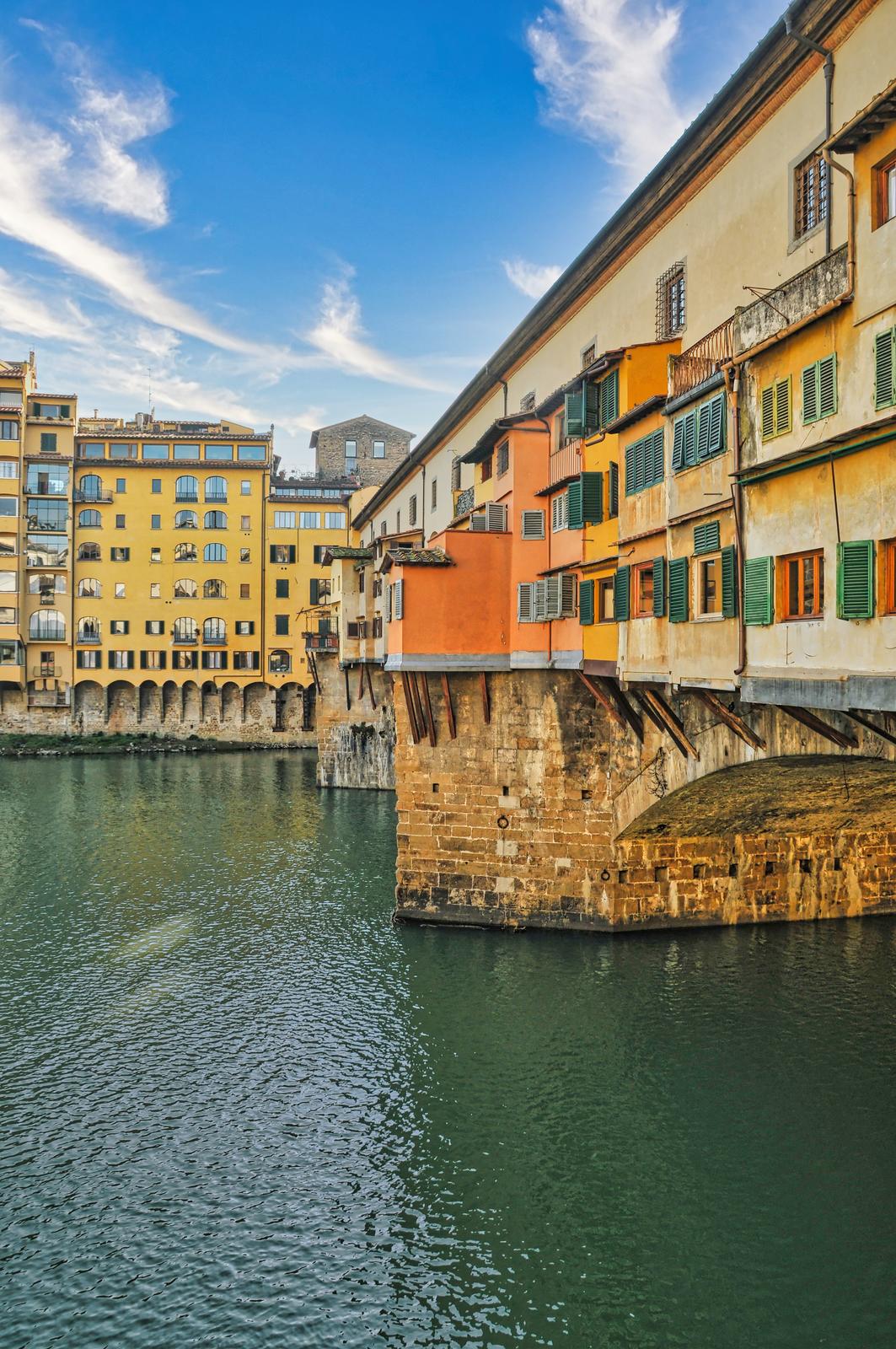
Ponte Vecchio is Florence’s oldest bridge and the only one that wasn’t blown up when the German troops withdrew from the city in August 1944. The current bridge dates from 1345 and has three arches and small shops on both sides that hang out over the River Arno.
Originally, butchers and fishmongers traded here. In 1593 they were replaced by goldsmiths, and the bridge has been the city’s jewellery street ever since. Above the shops runs the Vasari Corridor, built in 1565 so that the Medici family could walk from Palazzo Vecchio to Palazzo Pitti unseen and without getting wet. In the middle of the bridge is a bust of the goldsmith Benvenuto Cellini, and from here you can look up and down the river.
The bridge is a public street, so it’s free and always open. In the middle of the day it’s packed, and you’ll get the most out of it early in the morning, before the shops open, or in the evening. The best photo of the bridge itself is from its neighbour, Ponte Santa Trinita. The bridge has been restored in stages since 2024 but has stayed open throughout.
6. Piazza della Signoria and Palazzo Vecchio
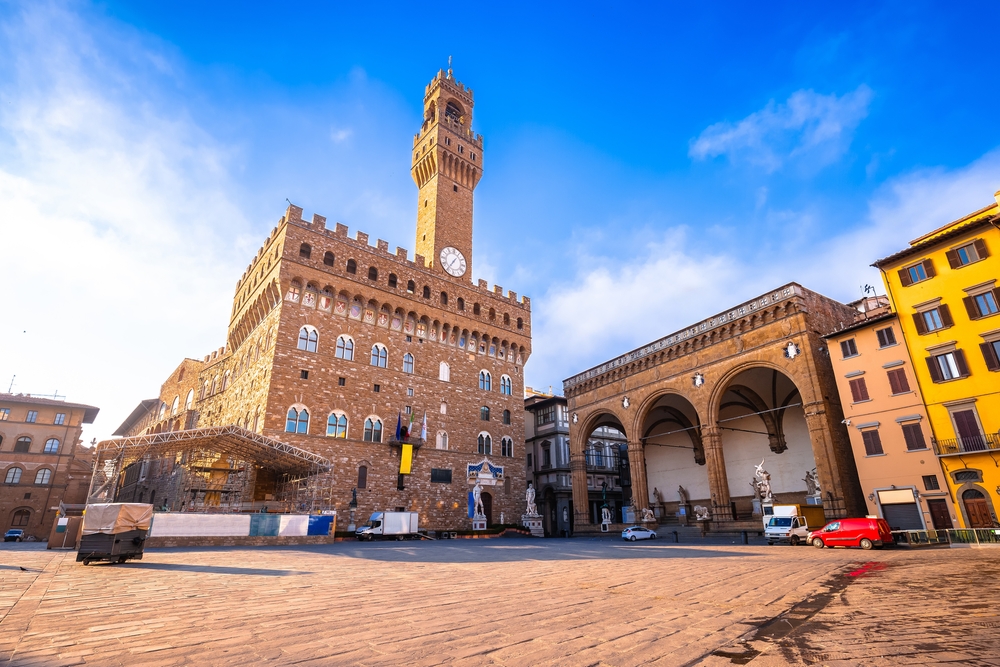
Piazza della Signoria has been Florence’s political centre since the Middle Ages and is a free open-air museum. In front of the town hall stand the Fountain of Neptune and the copy of David, and in the open loggia, Loggia dei Lanzi, you’ll find Cellini’s Perseus with the Head of Medusa and Giambologna’s Rape of the Sabine Women, among other works. A plaque in the paving marks the spot where the friar Savonarola was burned in 1498.
Work on Palazzo Vecchio began in 1299, and it’s still the city’s town hall. The museum costs €18 and takes you through the vast Salone dei Cinquecento and the Medici family’s private apartments. The 95-metre tower costs €20 and gives you one of the city’s best views of the cathedral. Children under six aren’t allowed up, and the tower closes when it rains.
The museum is open from 9am to 7pm, but on Thursdays it closes at 2pm. Because the city council uses the building, individual rooms or the whole museum can close at short notice, so check the day’s notices before you buy a ticket. The secret passages behind the walls can only be seen on a guided tour with very few participants.
Book a tour of the secret passages in Palazzo Vecchio.
7. Palazzo Pitti
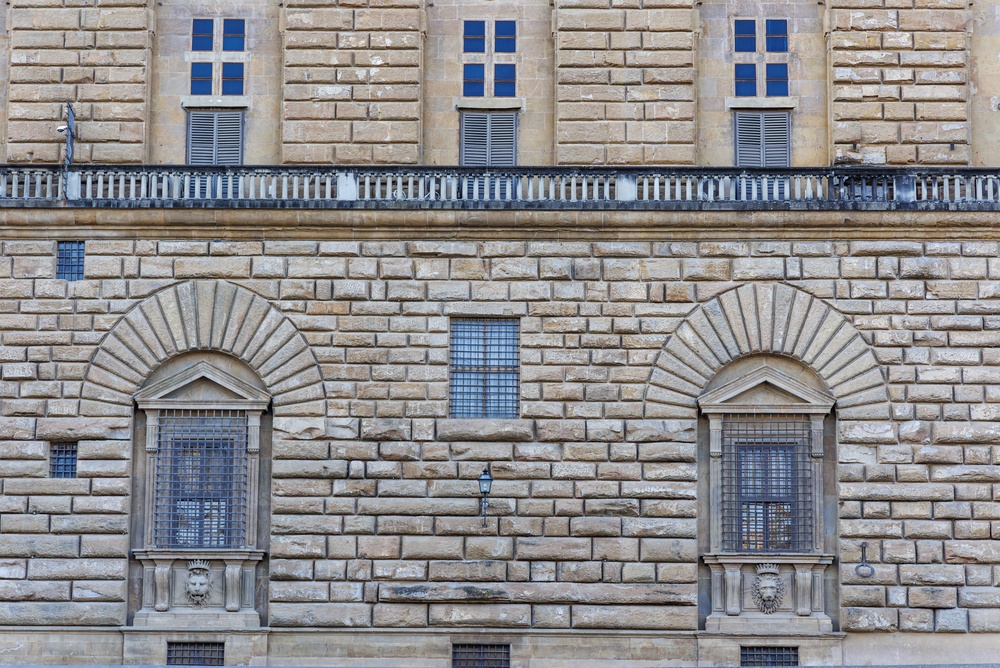
On the other side of the Arno is Florence’s largest palace. Palazzo Pitti was home to the Medici family, later to the House of Habsburg-Lorraine and finally to the Italian royal family. Today it houses several museums under one ticket.
The most important is the Galleria Palatina, where around 500 paintings hang close together in the old state apartments under ceilings painted by Pietro da Cortona. It has the world’s largest collection of works by Raphael, as well as paintings by Titian, Caravaggio and Rubens. The ticket also covers the Gallery of Modern Art and the Museum of Fashion and Costume. The Royal Apartments have reopened. They can only be seen on an accompanied tour of around 30 minutes, which costs nothing extra but must be booked together with your ticket.
A ticket costs €16 on the day and €19 in advance, and a joint ticket with the Boboli Gardens costs €22 on the day. The palace is open Tuesday to Sunday from 8.15am to 6.30pm. Some rooms, including the Treasury of the Grand Dukes, may be closed for restoration.
Book a ticket to Palazzo Pitti with an audio guide.
8. The Boboli Gardens
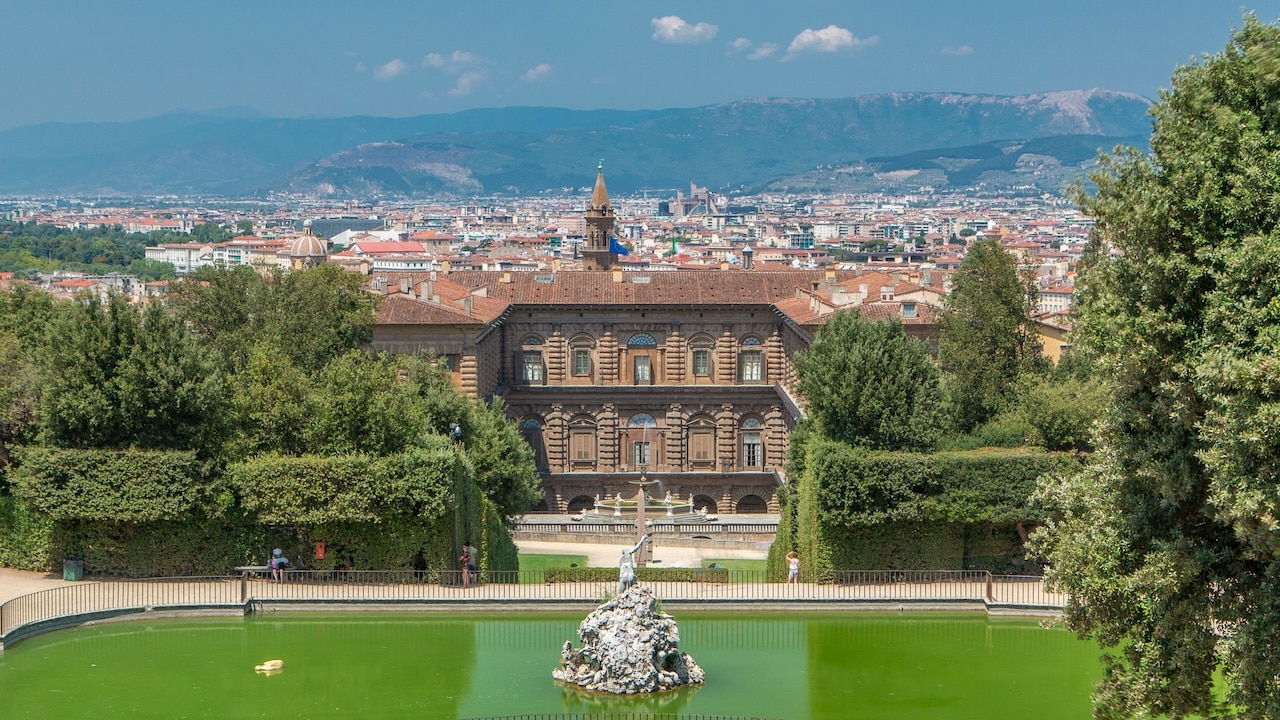
Behind Palazzo Pitti, the Boboli Gardens spread up the hillside. The Medici family laid them out in the 16th century, and they became the model for the Italian gardens that Europe’s royal courts later copied. They’re more of a sculpture park with avenues, fountains and grottoes than a flower garden.
See the Buontalenti Grotto with its artificial stalactites right by the entrance from the palace, the Fountain of Neptune in the middle of the gardens and the small rococo pavilion, the Kaffeehaus, which looks out over the city. There’s quite a lot of climbing and little shade, so bring water in summer. The gardens have four entrances, and you can leave by Forte di Belvedere and continue to the Bardini Garden.
A ticket costs €10 on the day and €13 in advance. The gardens open at 8.15am all year and close between 4.30pm in winter and 7.10pm in summer, with last entry an hour before. They’re closed on the first and last Monday of the month, and they also close at short notice when a storm warning has been issued. A joint ticket for Boboli and Bardini costs €15 and is only sold at the ticket office on the day.
Book a joint ticket to Palazzo Pitti and the Boboli Gardens.
9. Piazzale Michelangelo and San Miniato al Monte
The classic picture of Florence, with the dome, the tower of Palazzo Vecchio and Ponte Vecchio, is taken from Piazzale Michelangelo. The square was designed by the architect Giuseppe Poggi and completed in 1875. A bronze copy of David stands in the middle. It’s free, and at sunset the square is full of people.
Bus 13 goes up there, but the walk from the San Niccolò neighbourhood is short and passes the Rose Garden just below the square. The garden has more than 350 kinds of roses, a small Japanese garden and sculptures by the Belgian artist Folon. It’s open daily from 9am.
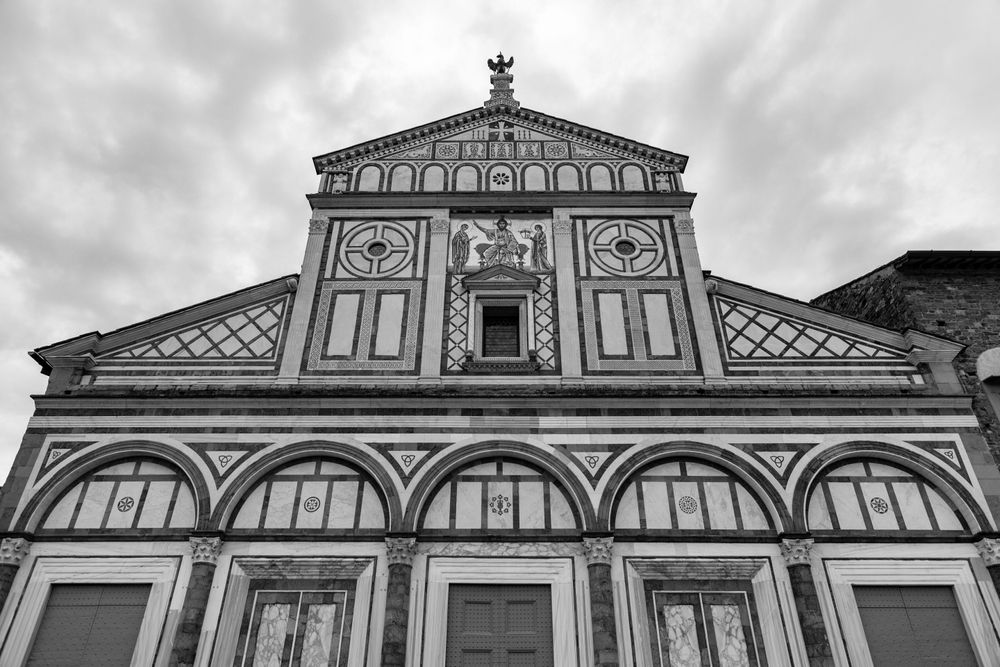
Walk five minutes further up to the church of San Miniato al Monte, which many people skip. Its white and green marble façade dates from the 11th to the 13th century, and the church is one of the finest examples of Florentine Romanesque architecture. Entry is free, and it’s open from 9.30am to 1pm and again from 3.30pm to 7pm. Every day at 6.30pm, the monks sing Gregorian vespers in Latin. You’re welcome to sit and listen, but you shouldn’t walk around the church while they sing. The view from here is just as good as from the square, and it’s much quieter.
10. Santa Croce
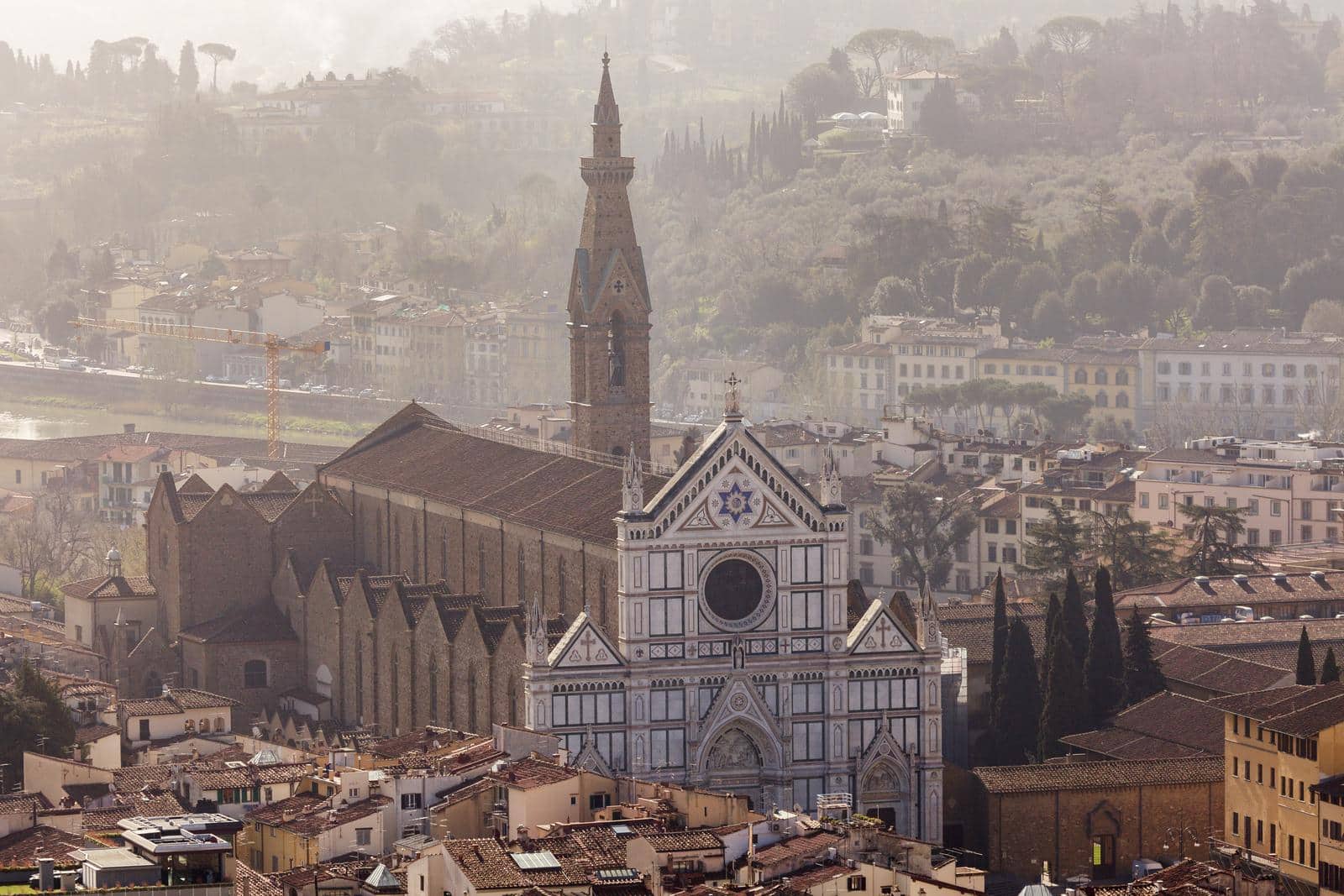
Santa Croce is the world’s largest Franciscan church and the place where Italy honours its greatest names. Construction began in 1295, and the church holds more than 200 tombs, among them those of Michelangelo, Galileo Galilei, Machiavelli and the composer Rossini.
The art is just as important as the tombs. Giotto painted the frescoes in the Bardi and Peruzzi chapels in the 14th century, and in the Bardi Chapel you can see scenes from the life of St Francis of Assisi. The ticket also covers Brunelleschi’s Pazzi Chapel in the cloister and Cimabue’s crucifix, which was badly damaged in the 1966 flood. Allow just under an hour.
A ticket costs €10, plus €1 if you book online, and it’s valid for a fixed time. The church is open Monday to Saturday from 9.30am and on Sundays from 2pm, and last entry is at 5pm. The entrance isn’t on the square in front of the church but on the north side, in Largo Bargellini. Shoulders and legs must be covered. Behind the church is the leather school, Scuola del Cuoio, with its entrance on Via San Giuseppe.
Book a guided tour of Santa Croce.
11. The Bargello
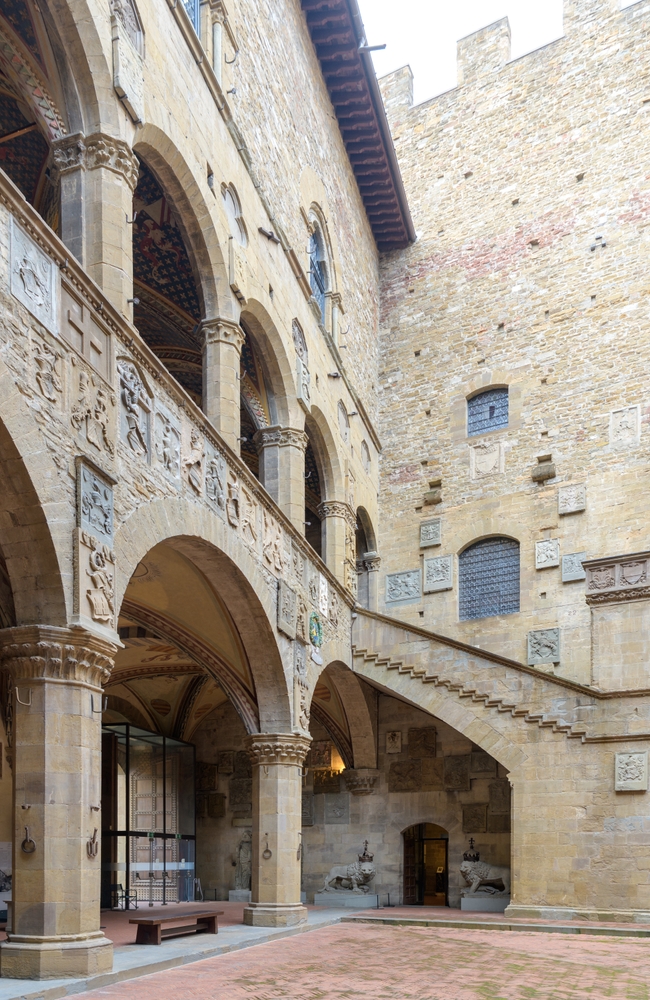
The Bargello is to sculpture what the Uffizi is to painting, and it’s far less crowded. The building, from 1255, is the city’s oldest public palace. It was first the seat of the city’s chief magistrate and, from the 16th century, a prison and the headquarters of the chief of police, il Bargello. In 1865 it opened as the first national museum of a united Italy.
On the ground floor are Michelangelo’s Bacchus and his Pitti Tondo. On the first floor are Donatello’s bronze David and his St George, and here you’ll also find the two bronze reliefs of the Sacrifice of Isaac that Ghiberti and Brunelleschi made for the 1401 competition for the Baptistery doors. That competition is often seen as the beginning of the Renaissance. The beautiful courtyard with its staircase and coats of arms is worth the visit on its own.
A ticket costs €12, and the museum is open Tuesday to Sunday from 8.15am to 6.50pm and closed on Mondays. The joint ticket with the Accademia costs €26, and a ticket to all five museums in the group costs €38 and is valid for 72 hours. The museum is on Via del Proconsolo, between the cathedral and Piazza della Signoria.
Book a ticket to the Bargello Museum.
12. The Medici Chapels and San Lorenzo
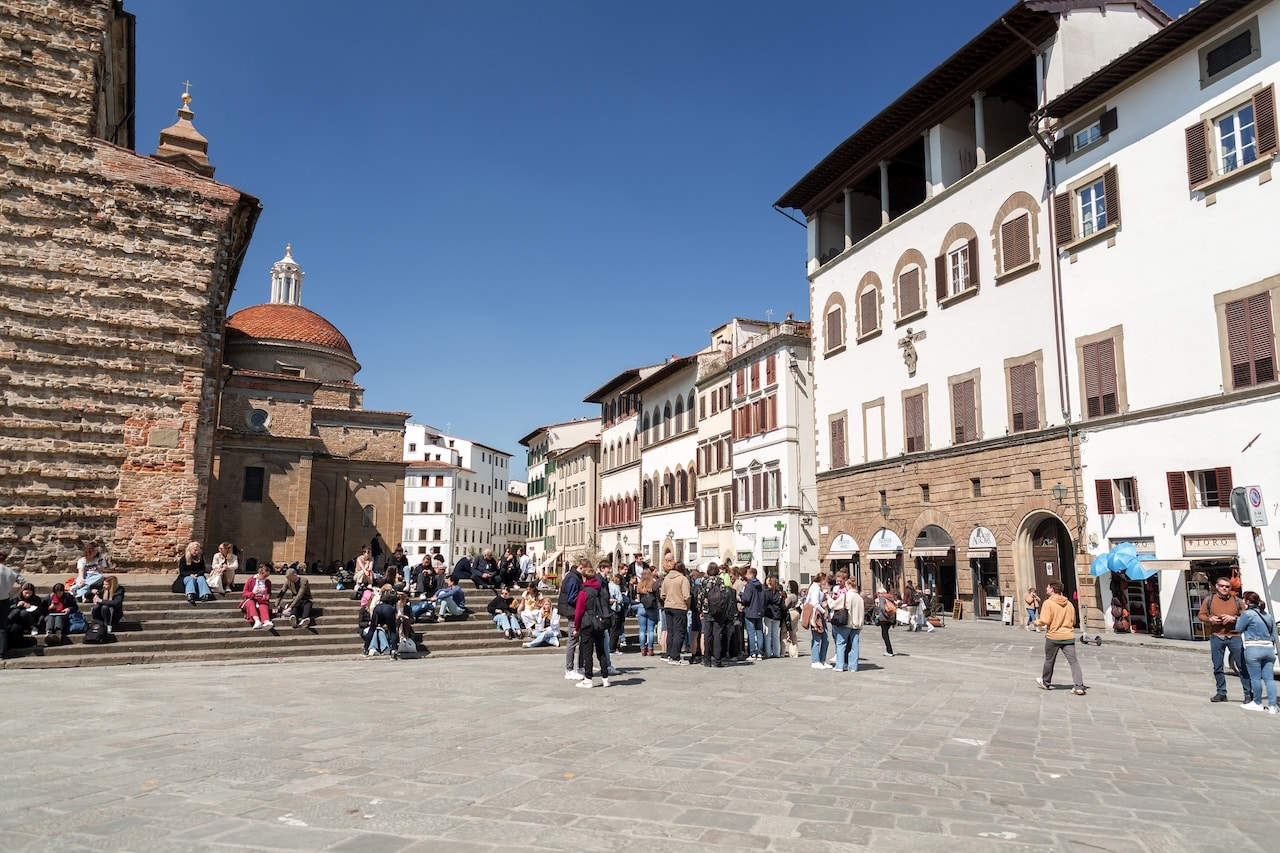
The Medici family are buried in the chapels behind the church of San Lorenzo. The New Sacristy was designed and decorated by Michelangelo from 1519 to 1534 and is a single work of architecture and sculpture, with his four figures Night, Day, Dusk and Dawn on the sarcophagi. The Chapel of the Princes next door is the complete opposite: a baroque mausoleum where the walls and floor are covered in inlaid marble and semi-precious stones.
A ticket costs €11, and the chapels are open Tuesday to Sunday from 8.15am to 6.50pm. Beneath the sacristy is Michelangelo’s secret room, with charcoal drawings on the walls, which only opened to the public in 2023. It costs €32 in total including the museum and booking, only four people go in at a time for 15 minutes, and children under ten aren’t admitted. Places must be booked well in advance through the museum’s official ticket office.
The church of San Lorenzo is a sight in its own right, with its own entrance and its own ticket for €9. It covers the church, Brunelleschi’s Old Sacristy and the cloisters, and it’s open Monday to Saturday from 10am to 5.30pm. Many people confuse the two, so check which ticket you’re buying.
Book a ticket to the Medici Chapels.
13. Mercato Centrale
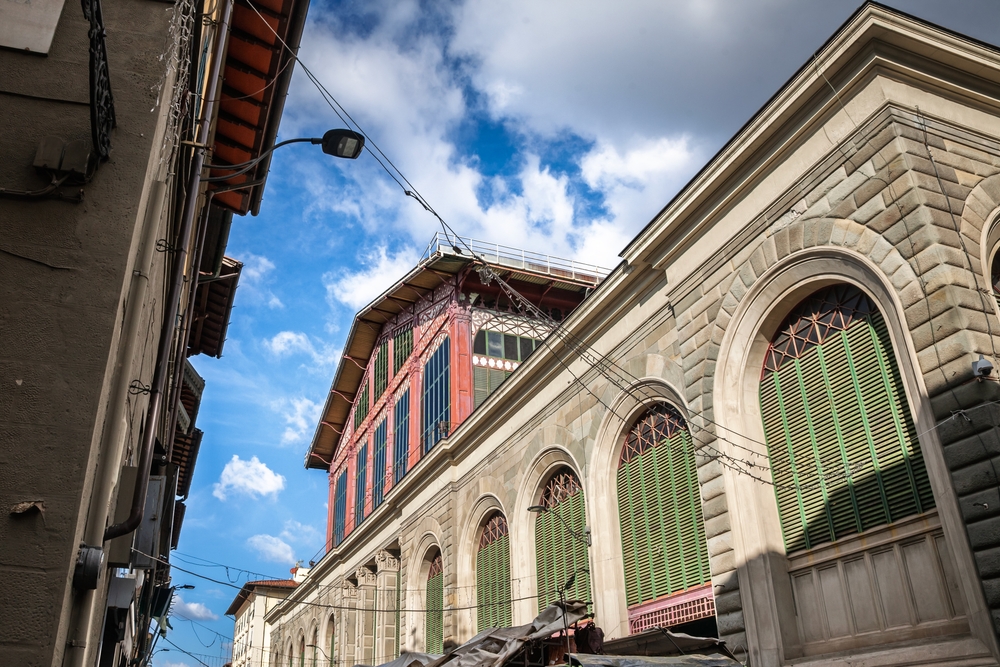
The large iron and glass market hall by San Lorenzo was designed by Giuseppe Mengoni, who was also behind the Galleria Vittorio Emanuele II in Milan, and opened in 1874. It houses two different markets.
On the ground floor is the old food market, with butchers, fishmongers, cheese, bread and vegetables. It’s a morning market, open Monday to Friday from 7am to 3pm and on Saturdays until 5pm, and it’s closed on Sundays. Here you can try the city’s street food, lampredotto, which is boiled cow’s stomach, sliced and served in a bread roll dipped in the broth. On the first floor, a food hall with food stalls and small eateries opened in 2014. It’s open daily from 9am to 11pm and is an easy place to eat when your group can’t agree.
The streets outside are full of stalls selling leather goods and souvenirs. The city’s own tourism website calls the market very touristy, so compare prices and check the goods carefully. If you want high-quality leather, the best shops and workshops are around Santa Croce and in Oltrarno.
Book a street food tour with wine and a local guide.
14. Santa Maria Novella
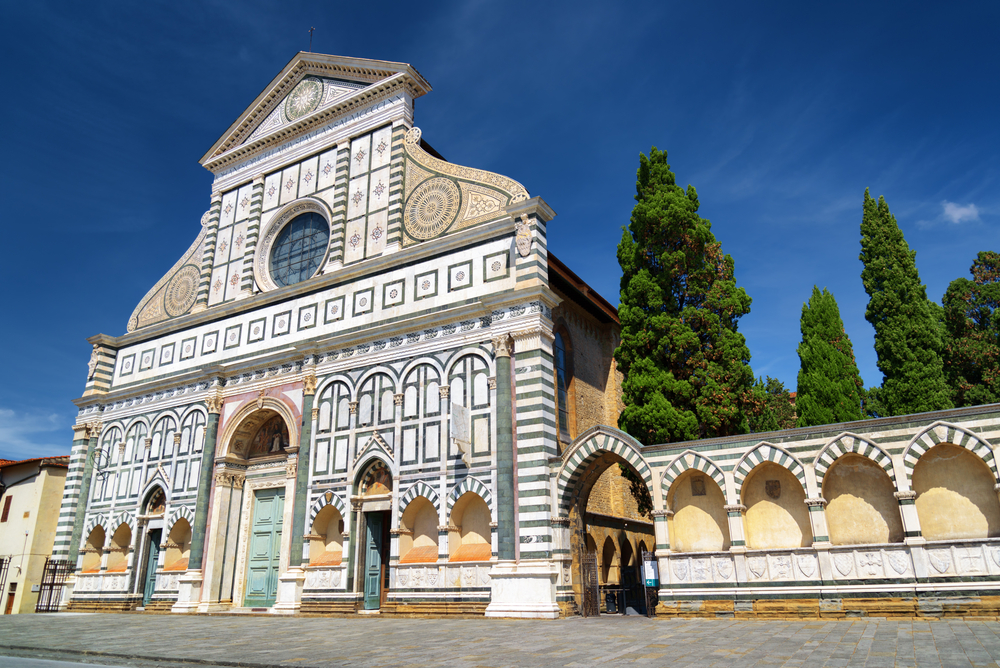
The church that gave the main railway station its name is the most overlooked of Florence’s great churches. Leon Battista Alberti completed its marble façade in 1470, and inside you’ll find some of the city’s most important art.
In the left aisle is Masaccio’s fresco of the Holy Trinity from 1425 to 1426, which is regarded as one of the first paintings with correct perspective. Giotto’s large crucifix hangs in the middle of the church, and the chancel is covered in frescoes by Domenico Ghirlandaio, which the young Michelangelo helped with as an apprentice. The ticket also covers the cloisters and the Spanish Chapel, with frescoes from the 14th century.
It costs €7.50, and you can buy a ticket at the door. The church is open Monday to Thursday from 9am to 5.30pm, but it doesn’t open until 11am on Fridays and 1pm on Sundays. Round the corner, at Via della Scala 16, is the Officina Profumo-Farmaceutica di Santa Maria Novella, a pharmacy founded by Dominican friars, with roots going back to 1221. Today it’s a perfume shop in the old rooms, open daily from 9.30am to 8pm. You can just walk in.
15. Palazzo Medici Riccardi and the San Marco Museum
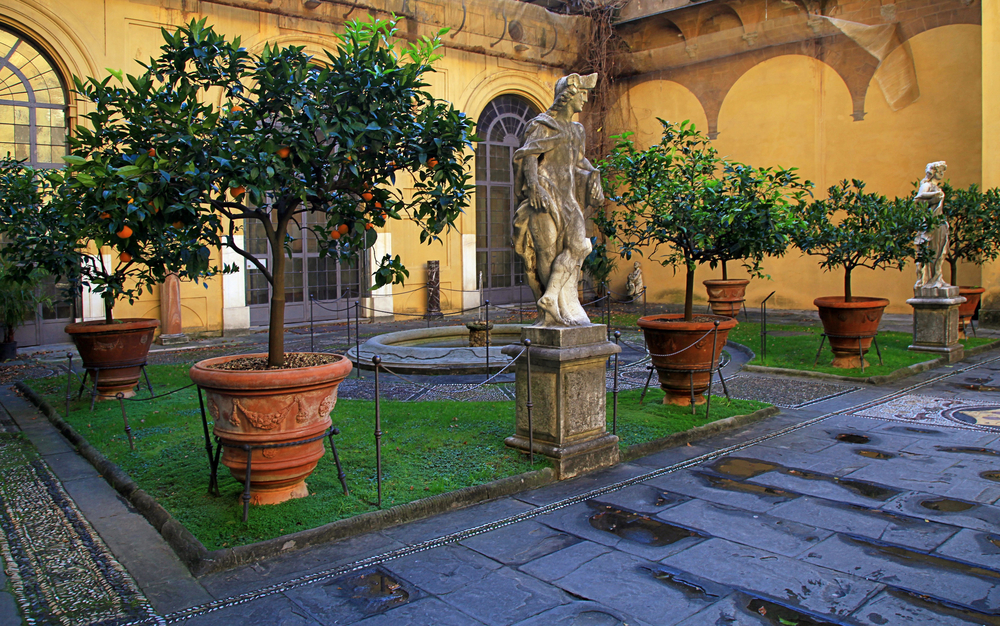
Palazzo Medici Riccardi was the Medici family’s first palace. The reason to go inside is the small Magi Chapel, which Benozzo Gozzoli painted from 1459. The procession of the Three Kings winds across three walls through a fairy-tale landscape, and the retinue includes portraits of members of the family, among them the young Lorenzo de’ Medici.
Only ten people are let into the chapel every five minutes, so you may have to wait in the courtyard. A ticket costs €15 from March to 1 November and €10 in winter. The palace is open from 9am to 7pm every day except Wednesday, which makes it a good place to go on a Monday, when the state museums are closed.
A few minutes’ walk away is the San Marco Museum, in a Dominican monastery paid for by the Medici family. The friar Fra Angelico painted a fresco in each of the cells from 1438 to 1445, and his Annunciation at the top of the stairs is one of the best-known images of the Renaissance. It costs €11. The museum is only open in the morning, from 8.30am to 1.50pm with last entry at 12.45pm, and it’s closed on Mondays and on the fifth Sunday of the month.
16. Oltrarno, Santo Spirito and the Brancacci Chapel
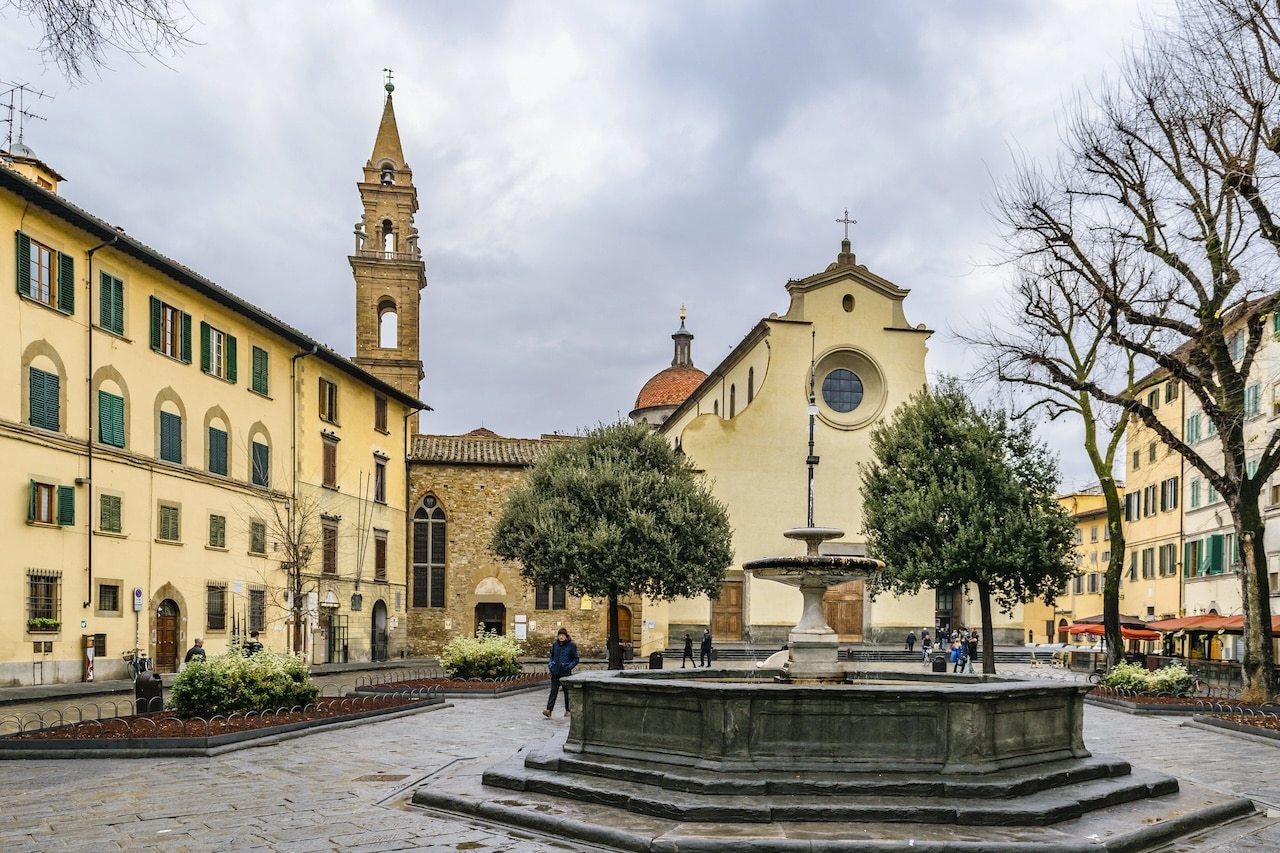
Oltrarno means “on the other side of the Arno” and is the quieter half of the centre, with workshops, antique dealers and small family-run restaurants. Goldsmiths, bookbinders, shoemakers and furniture restorers still work at street level here, especially around Via Maggio and in the San Frediano neighbourhood.
Piazza Santo Spirito is the neighbourhood’s living room, with a market in the morning and busy bars in the evening. The church on the square was designed by Brunelleschi and begun in 1444. It’s free, and for €2 you can go into the sacristy, where a wooden crucifix that Michelangelo carved at the age of 17 hangs. The church is closed on Wednesdays and closes for lunch from 1pm to 3pm.
Ten minutes’ walk to the west is the church of Santa Maria del Carmine with the Brancacci Chapel. Masaccio and Masolino began the frescoes of the life of St Peter in the 1420s, and Filippino Lippi finished them 60 years later. A ticket costs €10, and the chapel is open from 10am to 5pm, from 1pm on Sundays, and closed on Tuesdays. You can stay for 30 minutes. Booking is recommended, and the entrance is through the cloister at Piazza del Carmine 14.
Book a food tour in Oltrarno with Florentine steak and Tuscan wine.
17. The Bardini Garden
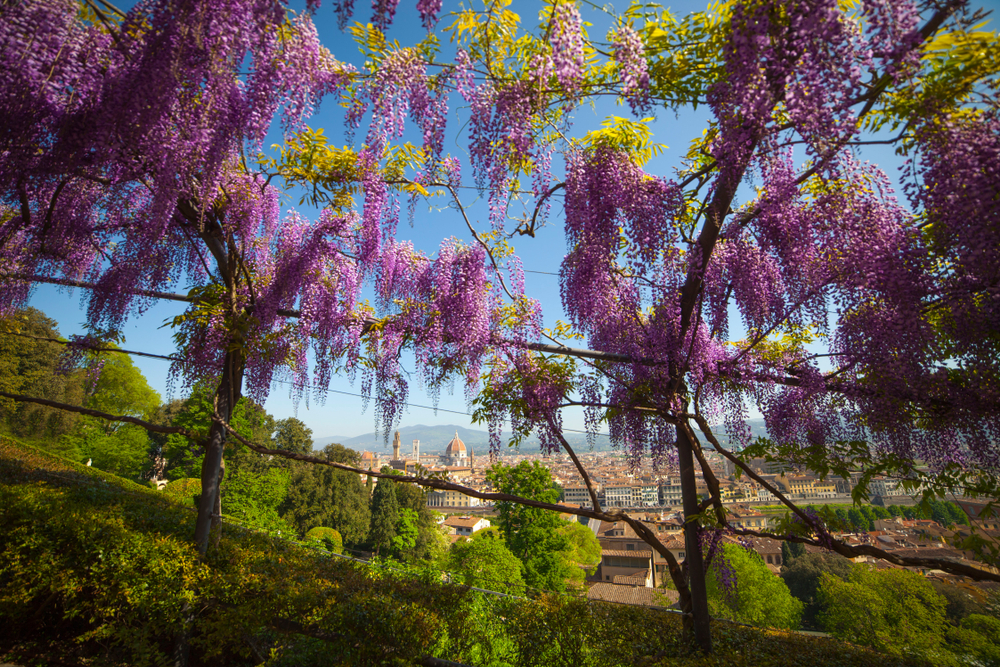
The Bardini Garden is Boboli’s little neighbour and far less well known. Its four hectares lie on the slope between Costa San Giorgio and the river and consist of a baroque staircase with flower beds, an orchard and a patch of woodland. The antiques dealer Stefano Bardini used the garden in the early 20th century to receive his wealthy clients.
From the loggia at the top of the staircase, you look straight down on the cathedral, Palazzo Vecchio and Santa Croce, and the view is one of the best in the city. In April and May, the garden’s long pergola blooms with purple and pink wisteria, and that’s the busiest time. The villa hosts changing exhibitions.
A ticket to the garden costs €10. If you’re also seeing Boboli on the same day, buy the joint ticket for €15 at the Boboli ticket office. The garden opens at 10am and is only closed on the first and last Monday of the month. Closing time varies with the season. There are two entrances: Costa San Giorgio 2 at the top and Via dei Bardi down by the river. If you come in at the top from Boboli and leave at the bottom, you avoid the climb.
18. Fiesole
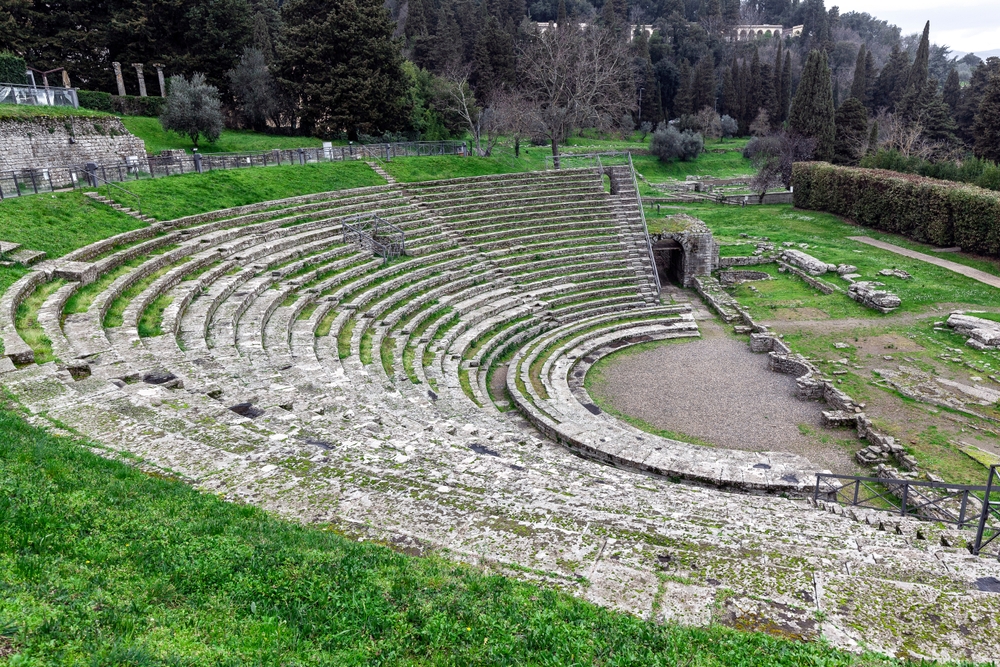
Fiesole sits on a hill north-east of Florence and is older than the city itself. The Etruscans founded it, and the Romans built on it. It makes a half-day trip with fresh air, ruins and views over the whole Arno Valley.
The archaeological area behind the cathedral contains a Roman theatre with room for more than 3,000 spectators, the remains of baths and an Etruscan-Roman temple. The theatre is still used for concerts in summer. Entry costs €7, or €10 with the archaeological museum. The site is open daily from 9am to 7pm in summer and from 10am to 6pm in October and March. From November to February, it closes at 3pm and is closed on Tuesdays.
Afterwards, walk up the steep street to the monastery of San Francesco, which stands where the ancient acropolis once was. The park next to it has the best view of Florence. Bus 7 runs from the area by the main railway station to the terminus on Fiesole’s main square, Piazza Mino, about every 20 minutes.
19. Day Trip to Siena, San Gimignano and Chianti
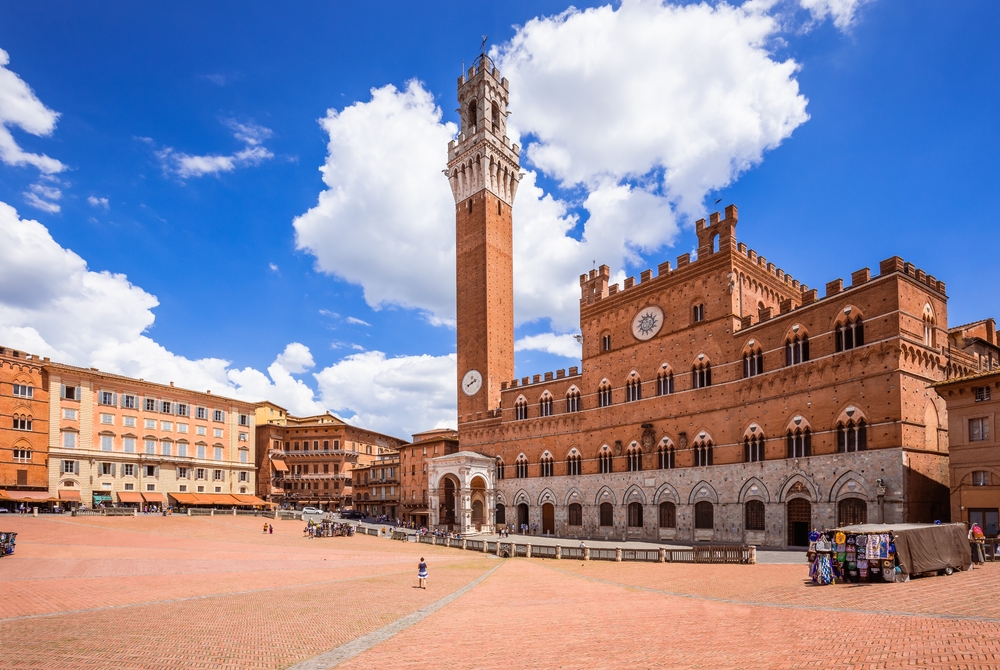
Siena is Florence’s old rival and the easiest day trip. Its historic centre has been a UNESCO World Heritage Site since 1995. The shell-shaped Piazza del Campo is one of Italy’s most beautiful squares, and twice a year, on 2 July and 16 August, it becomes the track for the Palio horse race.
Take the bus rather than the train. The 131R express bus runs from the bus station by Santa Maria Novella to Siena in 1 hour and 15 minutes and costs around €10 to €11 each way. Buy your ticket in advance, as it’s considerably more expensive from the driver. Be careful not to take the regular 131, which stops along the way.
San Gimignano, with its 14 medieval towers, has no railway station and means changing buses in Poggibonsi, so Siena and San Gimignano on the same day is difficult by public transport. This is where an organised tour is the practical choice. The full-day tours take 11 to 12 hours and combine the two towns with lunch and wine tasting at a winery in Chianti. If you only want the wine, a half-day tour to two wineries takes five to six hours. If you’d like more time in the region, you can also stay a few nights out in Tuscany rather than seeing it all on day trips from Florence. My guide to where to stay in Tuscany covers the seven best bases, from Siena and Chianti to the Val d’Orcia.
Book a day trip to Siena, San Gimignano and Chianti with lunch and wine tasting.
20. Day Trip to Pisa
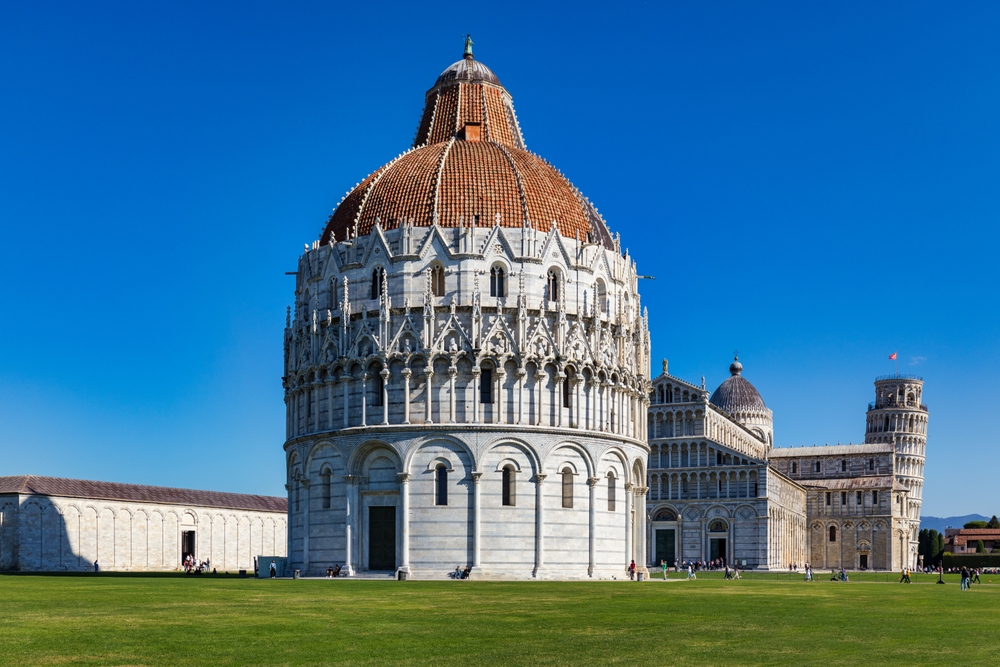
The regional train from Firenze Santa Maria Novella to Pisa Centrale takes between 50 minutes and 1 hour 20 minutes and costs just under €10. There’s at least one train an hour, so you don’t need to plan ahead. I’ve written more about the train between Pisa and Florence in my guide to Florence and Pisa airports.
The Leaning Tower is 58 metres tall and leans about five degrees. The climb up its more than 250 steps costs €20, and the ticket is only valid for the time printed on it. If you’re late, you won’t get in and you won’t get your money back. Bags must be left in the cloakroom first, so arrive in good time. Children who won’t turn eight in the current year aren’t allowed up. The cathedral next door is free, and with a tower ticket you can go in without a fixed time.
You can see Pisa in half a day. If you have more time, Lucca is a short train ride away. The town is surrounded by a 4.2-kilometre Renaissance wall that you can walk all the way round.
Book a ticket to the Leaning Tower of Pisa.
Practical Travel Tips for Florence
From Florence Airport, the T2 tram runs to Santa Maria Novella, the main railway station, in about 20 minutes, with a departure every five minutes. The ticket is a standard city ticket that costs €2 and is valid for 90 minutes. You can also pay contactless by card at the validator. A taxi to the centre has a fixed daytime fare of €28. If you land in Pisa, the PisaMover shuttle train runs to Pisa Centrale, where you change to the train to Florence. I go through all the options from both airports in my guide to getting from Florence and Pisa airports to central Florence.
In the city itself, you walk. The centre is closed to ordinary traffic for most of the week, and the zone is monitored by cameras, so don’t drive in with a hire car unless you’ve arranged it with your hotel. The Uffizi, Palazzo Pitti, the Accademia, the Bargello and the Medici Chapels are closed on Mondays. On that day, you can see the Duomo, Palazzo Vecchio, Santa Croce, Santa Maria Novella, Palazzo Medici Riccardi and the Brancacci Chapel instead. The state museums are free on the first Sunday of the month, but there are no reservations and the queues are long.
The Firenze Card costs €85 and gives access to more than 60 museums for 72 hours, but the cathedral dome and the other monuments on Piazza del Duomo aren’t included. You need to visit five to seven paid sights in three days before the card pays for itself. Under-18s get into the state museums for free, and EU citizens aged 18 to 25 pay only €2.
Florence charges a tourist tax per person per night for up to seven nights. It ranges from €3.50 at a one-star hotel to €8 at a five-star, and it’s €6 in holiday apartments. Children under 12 are exempt. July and August are very hot, with average daytime temperatures above 32°C, so April to June and September to October are the best months to visit.
Book a guided walking tour of Renaissance and Medici Florence.
By high-speed train, Bologna is just over half an hour away and Rome an hour and a half. If you’re unsure which neighbourhood to choose, read my guide to where to stay in Florence, or browse all hotels in Florence on Booking.com. If you’re heading further south, I’ve also written about the best things to do in Rome.
Travel ressources & websites I use all the time 👇
• Booking.com has the best offers on hotels and unique places to stay
• GetYourGuide is the best place to book tours & activities with free cancellation
• Welcome Pickups is the best & safest place to pre-book airport transfers
Psst 👀 Have you subscribed to my Youtube channel and my Instagram where I provide more useful travel tips?