
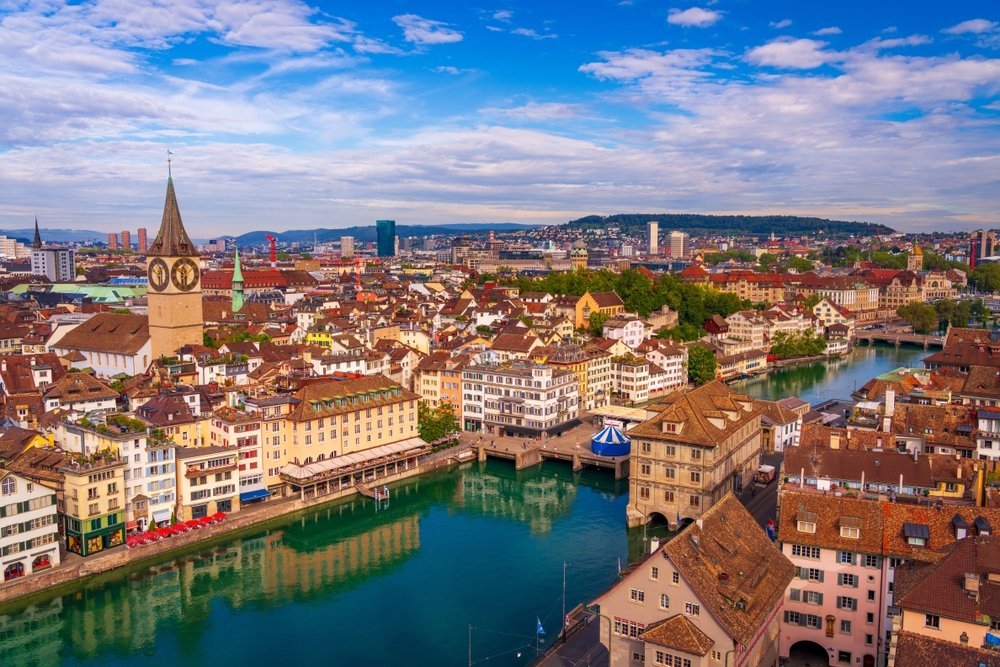
Zürich is Switzerland’s largest city, yet it’s often reduced to a place you land before heading on to the Alps. That’s a mistake. There are plenty of things to do in Zürich: the city sits at the end of Lake Zürich with snow-capped mountains on the horizon, the River Limmat flows right through the Old Town, and in summer half the city jumps into the lake after work. You get medieval churches, one of Europe’s best art museums, a mountain with an S-Bahn train to the top and a bathing culture I haven’t come across in any other big city.
Here are my picks for the 18 best things to see and do in Zürich, with prices, opening hours and tips on getting around. Prices are given in Swiss francs, and 1 franc is roughly 91p. Let me be honest from the start: Zürich is expensive, even by Swiss standards. That’s why I’ve also noted for each sight what’s free and where it pays to use an ordinary tram ticket instead of a tourist pass. Most museums are closed on Mondays, so plan your museum days for midweek.
Contents
1. Altstadt and Lindenhof
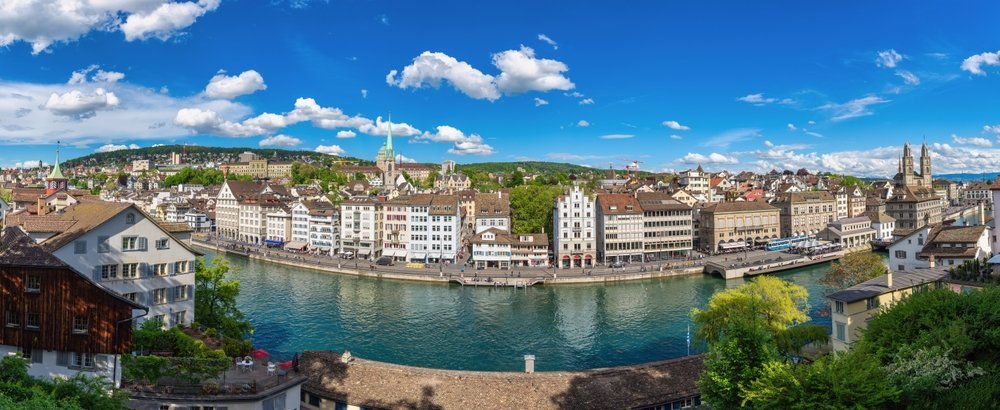
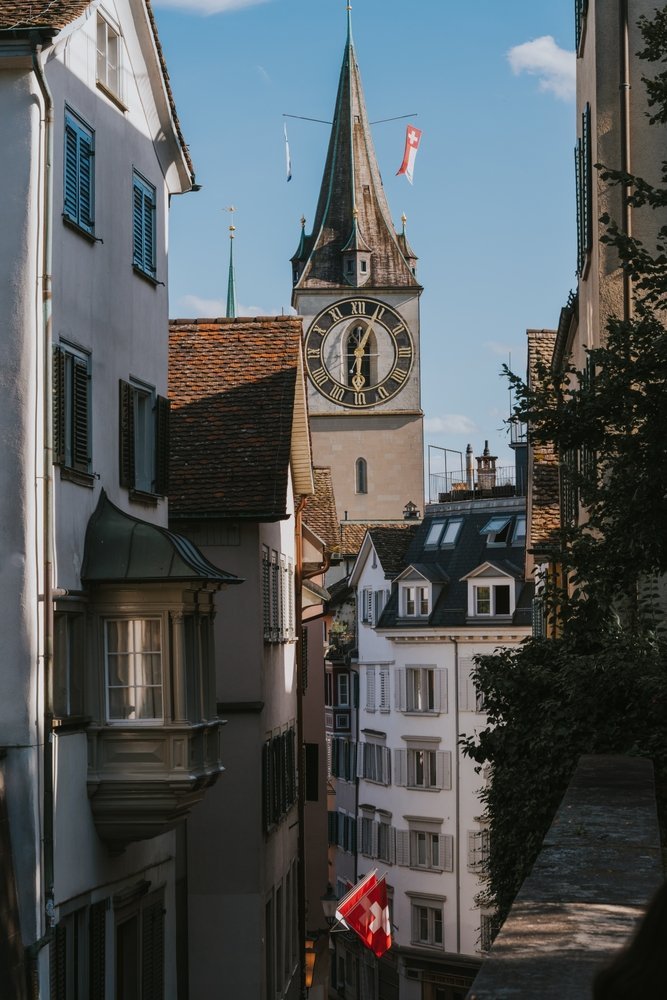
Zürich’s Old Town lies on both sides of the Limmat, and the west bank is the quiet, elegant side. Here you’ll find Augustinergasse with its colourful oriel windows, St. Peter with Europe’s largest church clock face, and Schipfe down by the river, the city’s oldest quarter. The streets are narrow and cobbled, and you can walk the whole area in an hour.
The highlight is Lindenhof, a small hill with lime trees where the Romans had a fort in the 4th century and where Charlemagne’s grandson later built a royal palace. Today it’s a green viewpoint where locals play chess under the trees and you look straight across to the Grossmünster, the town hall and ETH. On the way up stands a copy of a gravestone from the year 180 bearing the inscription Turicum, the first written mention of the city’s name. It’s free, and it’s the best place to start.
My tip is to head up to Lindenhof early in the morning before the groups arrive, then take Augustinergasse and Schipfe down towards the river afterwards. The Old Town is also the first area in my guide to where to stay in Zürich, and you can see hotels in the Altstadt here.
Book a guided walking tour of Zürich’s Old Town here.
2. Niederdorf and the Polybahn
Niederdorf is the eastern and livelier half of the Old Town. The whole quarter is car-free, and Niederdorfstrasse and Rindermarkt are lined with bars, small restaurants and shops. This is where the evenings happen, and it’s also where most of the city’s cheap places to eat are. Lenin lived on the side street Spiegelgasse in 1917, and a few doors away Cabaret Voltaire opened in 1916 as the birthplace of Dadaism.
Walk Niederdorf to its northern end and you’ll reach the square Central, where the little red Polybahn runs up to the Polyterrasse in front of ETH. The funicular opened in 1889, takes 100 seconds and runs every five minutes. A ride costs CHF 1.20 (around £1), but your ordinary ZVV ticket for zone 110 is also valid, so you don’t need to buy anything extra. It runs Monday to Friday 6.30am-9pm, Saturday from 7.30am and Sunday from 9am.
Up on the Polyterrasse you get one of the city’s best free views over the rooftops, the Limmat and the lake, with students sitting on the steps with their coffee. Niederdorf is ideal if you want to stay in the middle of the nightlife, and you can see hotels in Niederdorf here.
Book a guided Old Town tour including a ride on the Polybahn here.
3. Grossmünster and Karlsturm
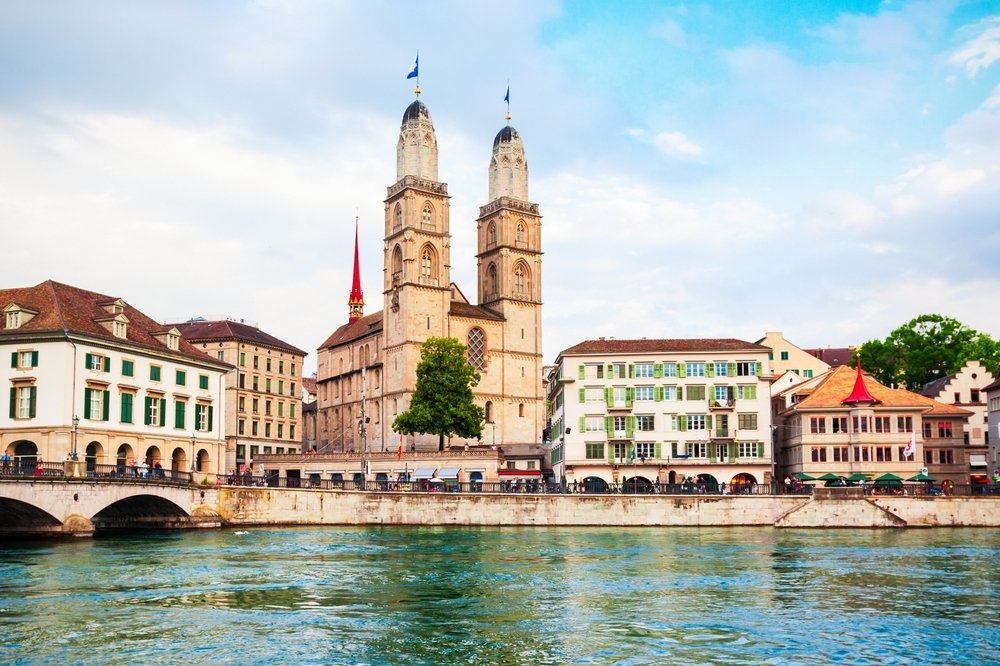
The twin towers of the Grossmünster are Zürich’s landmark, and it was from here that Huldrych Zwingli launched the Swiss Reformation in 1519. The church is Romanesque and rather bare inside, which is precisely the point, but look out for the modern stained-glass windows by Sigmar Polke and the crypt, where the original Charlemagne statue from the south tower stands. The crypt is free but closes on rainy days to protect the wall paintings.
The church itself is free, while climbing the Karlsturm costs CHF 5 (around £4.50) for adults and CHF 2 (around £2) for young people aged 6 to 16. The church is open Monday to Saturday 10am-6pm in summer and 10am-5pm in winter, and on Sunday only from 12pm after the service. The last ascent of the tower is an hour before the church closes, and the tower may have limited opening days at times, so check the website before planning around it. A combined ticket for both the Grossmünster and the Fraumünster costs CHF 8 (around £7) instead of CHF 10.
The view from the tower over the Old Town, the river and the lake is the best in the centre, and it’s worth the money. Arrive right at opening time, as the staircase is narrow and queues build quickly. The cloister, the Kreuzgang, is just round the corner and open every day.
4. Fraumünster and the Chagall windows
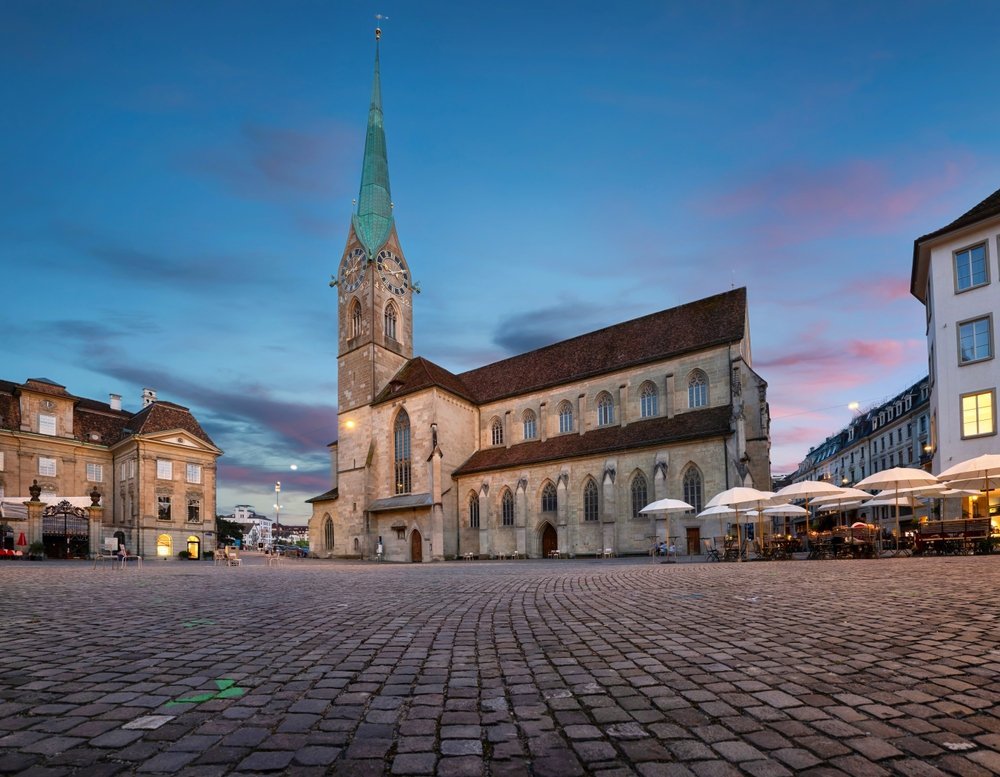
Just across the Münsterbrücke from the Grossmünster stands the Fraumünster with its slender green spire. The church was founded as an abbey in 853, but what people come for dates from 1970: the five stained-glass windows in the choir that Marc Chagall created at the age of 83. Each window has its own colour and its own biblical theme, and they’re at their best when the sun is on them. In the north transept there’s also a large window by Augusto Giacometti from 1945.
Admission is CHF 5 (around £4.50), which also covers the crypt museum and an audio guide in the app, while under-16s get in free. Opening hours follow the Grossmünster: Monday to Saturday 10am-6pm in summer and 10am-5pm in winter, Sunday from 12pm. Tickets are only sold on site, so you can’t buy them online, and they give you CHF 5 off at the Kunsthaus. You’re allowed to take photos without flash for private use.
My tip is to do the Fraumünster and the Grossmünster the same morning on the combined ticket and start here, as the groups from the boats and coaches usually arrive late in the morning. Münsterhof in front of the church is one of the finest squares in the city, and enjoying it costs nothing.
5. Bahnhofstrasse and Paradeplatz
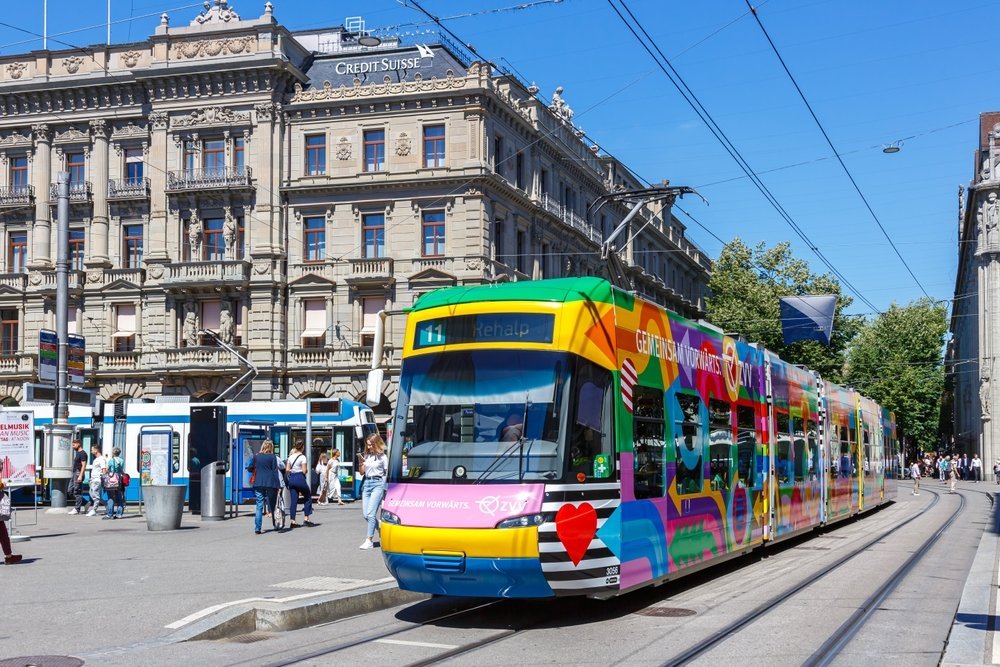
Bahnhofstrasse runs 1.4 kilometres from the Hauptbahnhof down to the lake and is one of the world’s most expensive shopping streets. Watches, jewellery, Louis Vuitton and Gucci sit side by side, and at Paradeplatz halfway along, the two big Swiss banks have their headquarters. It’s not where you’ll do your shopping, but it’s fun to walk it and window-shop, and it ends at Bürkliplatz with views over Lake Zürich and the Alps.
On the corner of Paradeplatz is Confiserie Sprüngli at Bahnhofstrasse 21, the place to try Luxemburgerli, the small, airy macarons that are Zürich’s best-known sweet treat. The first-floor café is pricey, but a small box of Luxemburgerli from the shop, eaten on a bench by the lake, is one of the better buys in the city.
If you’re on a budget, walk the whole way and spend your money down at Bürkliplatz instead. Trams run the length of the street, so you can always hop on if your legs get tired.
Book a chocolate walking tour of Zürich with tastings here.
6. Boat trip on Lake Zürich from Bürkliplatz
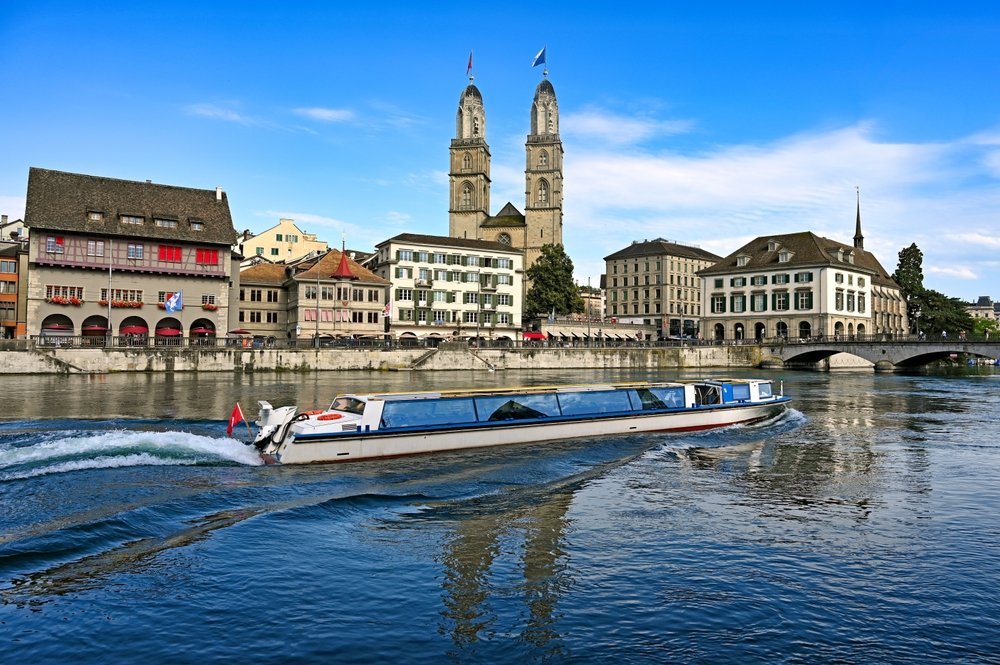
Lake Zürich is 40 kilometres long, and the ZSG boats depart from Bürkliplatz at the end of Bahnhofstrasse. The classic trip is the Kleine Rundfahrt, which takes an hour and a half, cruising past the villas of the Gold Coast and back again. It costs CHF 9.40 (around £8.50) in 2nd class, and it’s actually just a standard ZVV ticket for zones 110, 140 and 150. A one-hour mini cruise costs CHF 7.20 (around £6.50), and the grand four-and-a-half-hour round trip to Rapperswil costs CHF 28 (around £25).
The best money-saving tip in Zürich is the river boat on the Limmat. It runs from the Landesmuseum through the Old Town and out onto the lake in about an hour, and it costs the same as a single ticket for zone 110, which is CHF 4.70 (around £4.30). If you have a 24-hour city pass, it’s included in the price. The Limmat boats only run in the summer season, so check the timetable before you head down there.
The Zürich Card covers the mini cruise, the Kleine Rundfahrt and the Limmat boat. Sit on the upper deck on the starboard side on the way out, and you’ll have the Alps and the Gold Coast in front of you the whole way.
Book a city tour by bus with a boat trip on Lake Zürich here.
7. Opernhaus and Sechseläutenplatz
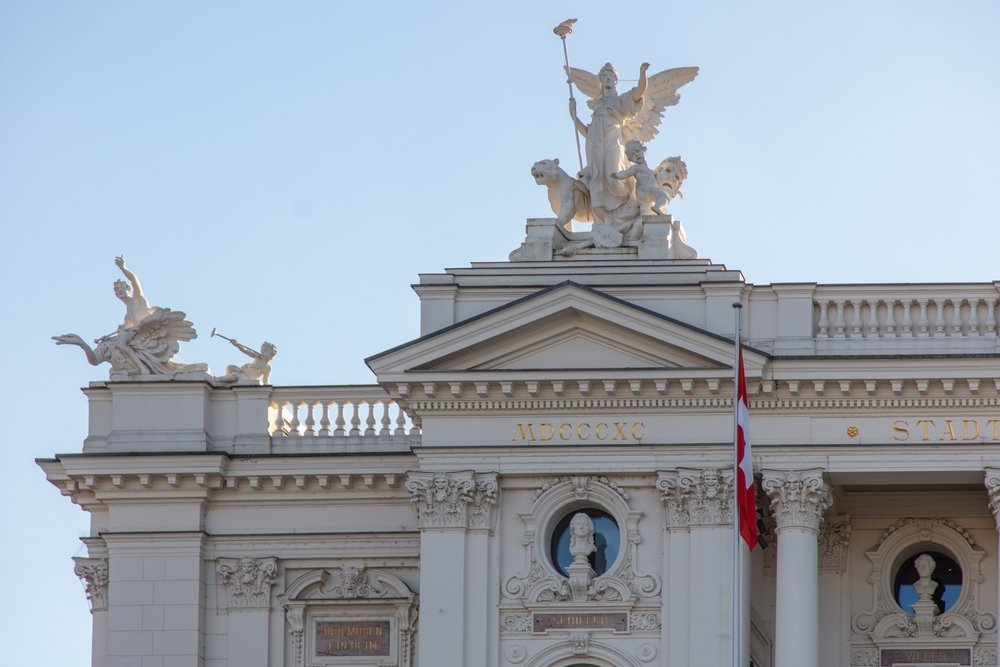
On the other side of the Quaibrücke from Bürkliplatz stands the Opernhaus Zürich from 1891, a white neo-Baroque building with angels on the roof, regarded as one of Europe’s finest opera houses. In front of it spreads Sechseläutenplatz, the city’s largest square, paved with quartzite from Vals. This is where Zürich burns the snowman Böögg every April at the Sechseläuten spring festival, and according to tradition, the faster his head explodes, the better the summer will be.
Opera tickets are usually expensive, but there are ways in. For the so-called Volksvorstellungen, tickets cost from CHF 15 to CHF 75 (around £14 to £70), students can buy leftover tickets for CHF 22 (around £20) an hour and a half before the performance, and twice a month same-day tickets are sold at half price. There’s no dress code. Every summer, an opera is also shown for free on a big screen on the square during Oper für alle.
In summer, the square and the Utoquai lakeside promenade just behind it are one of the best places to sit with an ice cream. Right behind the opera house begins Seefeld, the city’s smartest residential area with the lake as its neighbour, and you can see hotels in Seefeld here.
8. Badi culture: Seebad Enge, Utoquai and Flussbad Letten
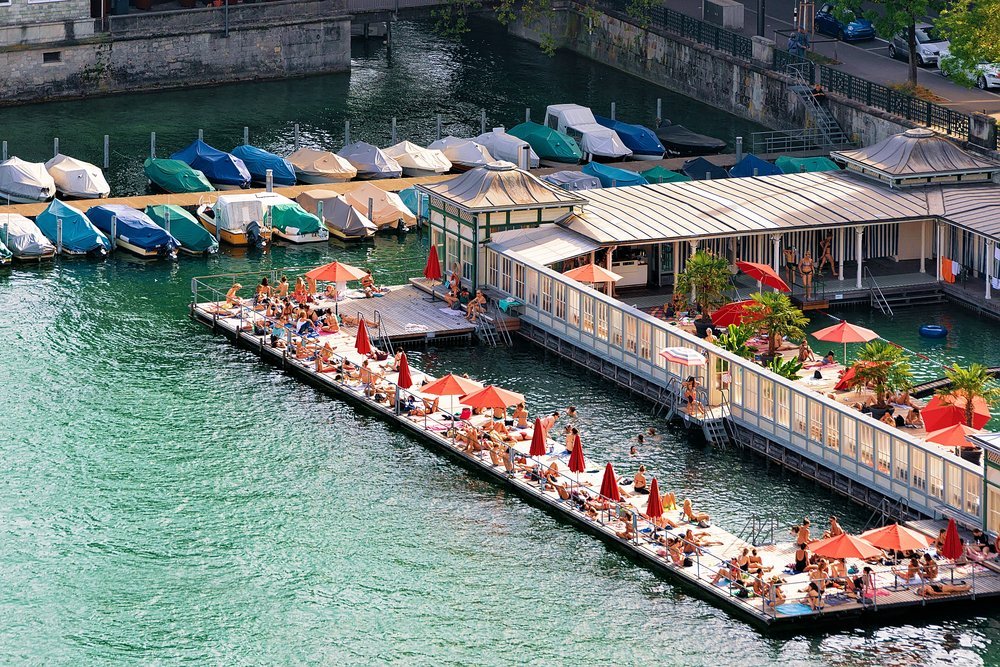
A badi is one of the city’s public open-air baths, and they’re the most local of all the things to do in Zürich. Seebad Enge is a wooden pontoon out on the lake by Mythenquai, where you swim with views of the Alps and have a beer at the bar in the evening, and in winter it becomes a sauna. Entry is CHF 8 (around £7). On the other side of the lake is Seebad Utoquai from 1890, with two-storey wooden decks and similar prices.
Frauenbad Stadthausquai on the Limmat, right by the Fraumünster, is women-only during the day, but in the evening it turns into the Barfussbar, where everyone is welcome as long as they take their shoes off. If you want to swim for free, head to Flussbad Oberer Letten north of the Hauptbahnhof, where entry is free and you let the current of the Limmat carry you down a long swimming channel before walking back and doing it all again.
The bathing season runs from mid-May to mid-September, and the lake water is over 20 degrees in July and August. Pack your swimming things in your bag, even when you’re just out sightseeing, because this is where the city is at its best on a warm day.
9. Uetliberg
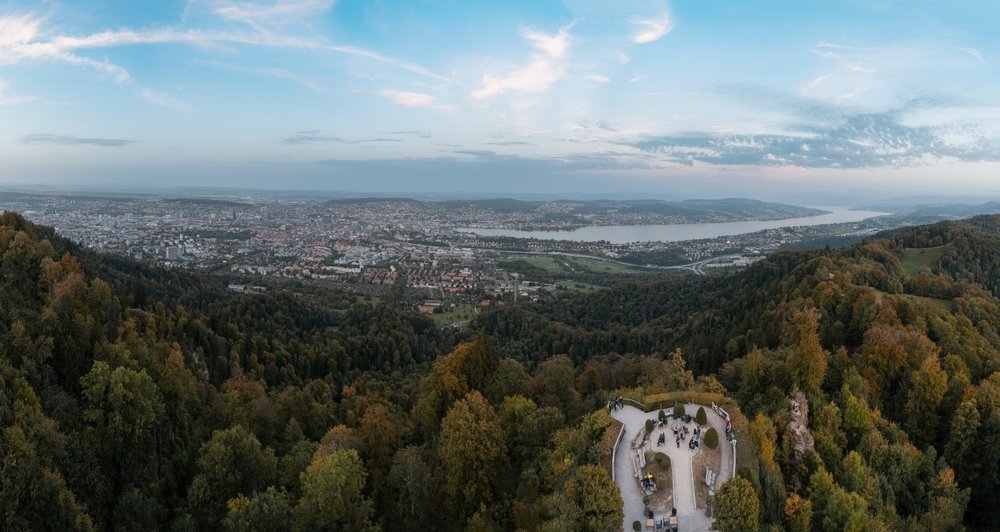
Uetliberg is Zürich’s very own mountain, about 870 metres above sea level, and it’s so close that the S10 S-Bahn train runs directly from the Hauptbahnhof to the station at the top in about 20 minutes. From the station, it’s a 10-minute walk up to the viewpoint, where the whole city, the lake and the Alps spread out in front of you. On a clear day, you can see from Säntis in the east to the Bernese Alps in the west, and there’s an observation tower if you want to go even higher.
The train is covered by the Zürich Card, which also gives you free public transport and free entry to many museums. If you’re travelling on a standard ticket, check the zones in the ZVV app, as Uetliberg sits on the edge of the city zone. The mountain itself is free, and you can walk back to the city along the forest paths in just over an hour.
My tip is the Planetenweg, a two-hour walk along the ridge to Felsenegg through a model of the solar system, where one metre equals one million kilometres. From Felsenegg, a cable car runs down to Adliswil, from where the S-Bahn takes you back to the city. In autumn and winter, Zürich often lies under a blanket of fog while Uetliberg pokes up into the sunshine, and it’s a sight that’s hard to forget.
Book a city tour with a train ride to the top of Uetliberg here.
10. Kunsthaus Zürich
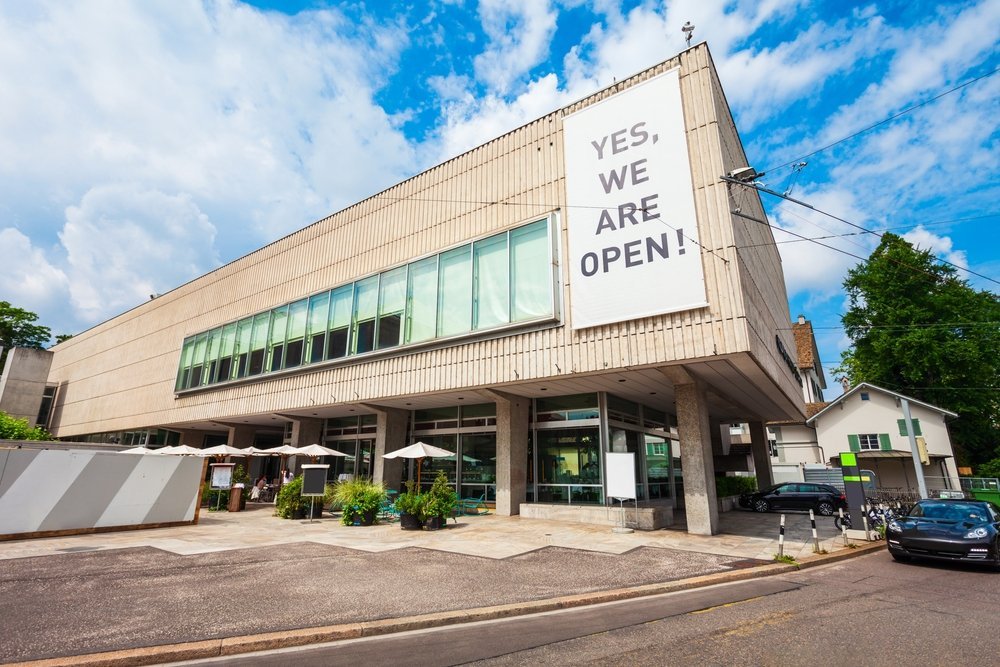
The Kunsthaus is Switzerland’s largest art museum, and since David Chipperfield’s new building opened opposite the old one on Heimplatz, it’s also one of Europe’s largest. The collection spans the Middle Ages to the present day, with the largest Munch collection outside Norway, an entire room devoted to Alberto Giacometti, Monet’s enormous water lily paintings and Swiss art from Hodler to Fischli and Weiss. The Chipperfield building also houses the controversial Bührle collection of French Impressionism.
Entry to the collection costs CHF 24 (around £22), but on Wednesdays the collection is free for everyone. The museum is open Tuesday to Sunday 10am-6pm and until 8pm on Thursdays, and it’s closed on Mondays. The audio guide is free if you buy your ticket online, and the Zürich Card gives free entry to the collection. Trams 3, 5, 8 and 9 stop right outside at the Kunsthaus stop.
My advice is to plan the Kunsthaus for a Wednesday and head straight for Giacometti and Munch if you only have a couple of hours. The art garden by the Chipperfield building is open all day and free.
Buy a ticket to the Kunsthaus Zürich collection here.
11. Landesmuseum Zürich
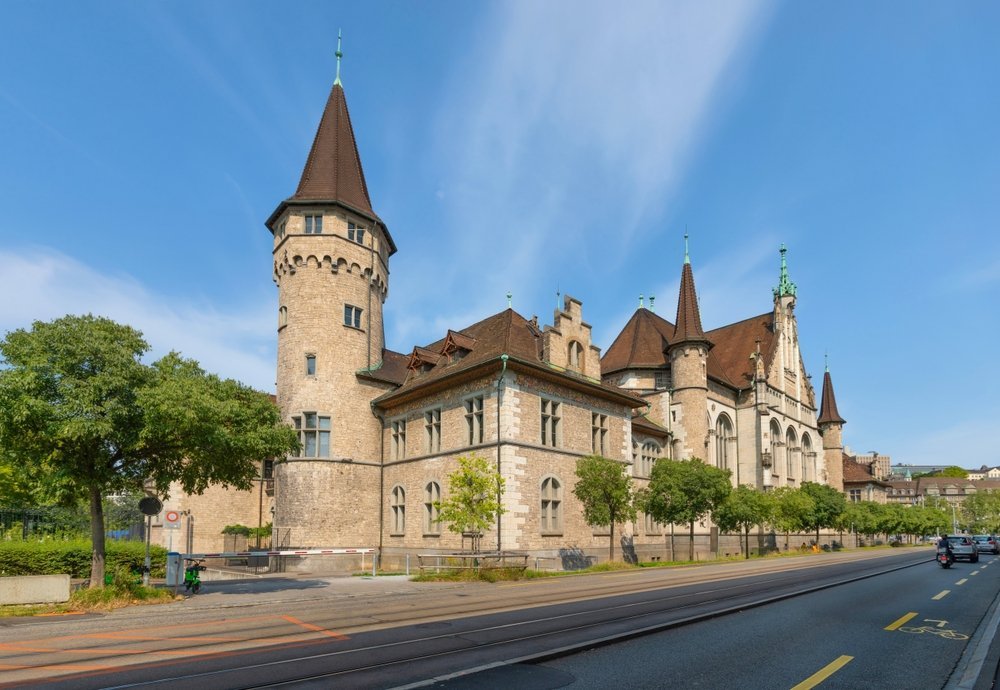
The Swiss National Museum sits like a fairy-tale castle, all towers and turrets, right next to Hauptbahnhof, and it’s the best place to understand how a small country with four languages became Switzerland. The exhibitions take you from archaeology and the Middle Ages to banking secrecy and neutrality, and the modern concrete extension is a sight in its own right.
Admission is CHF 13 (around £12), and children and young people up to 16 get in free. The museum is open Tuesday to Sunday 10am-5pm and closed on Mondays, and the Zürich Card gives you free entry. It’s a two-minute walk from the platforms, so it’s perfect if you have a couple of hours before your train leaves.
Behind the museum is Platzspitz park, where the rivers Sihl and Limmat meet. It’s free and a good spot to sit with a sandwich from the station, and the river boat on the Limmat stops right here.
Buy tickets for Landesmuseum Zürich here.
12. FIFA Museum
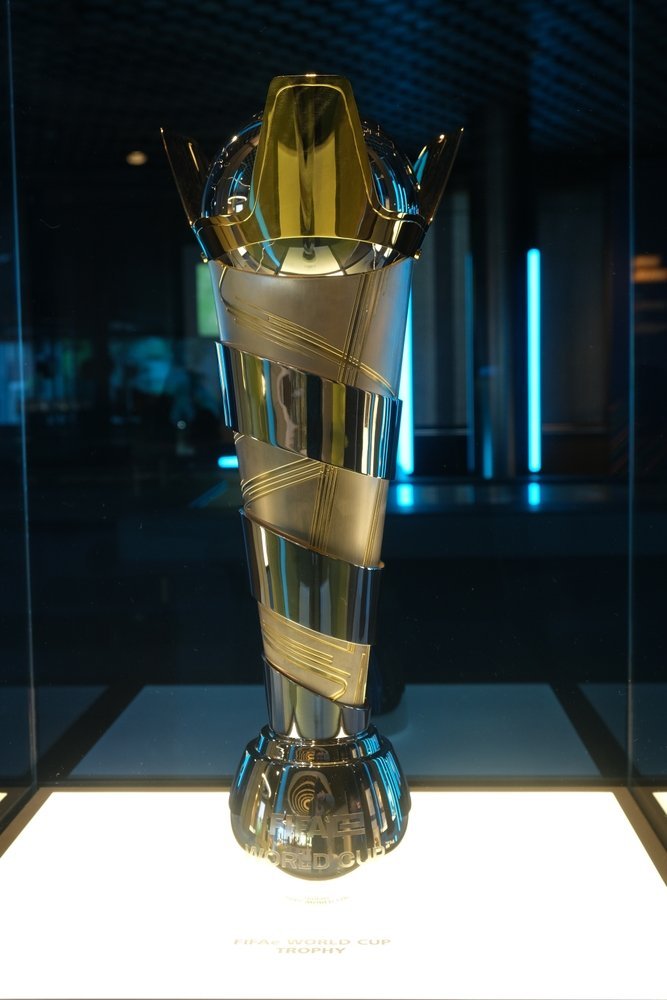
FIFA has its headquarters in Zürich, and the museum on Tessinerplatz by Bahnhof Enge is built for fans. Across three floors you’ll see the original World Cup trophy, more than 1,000 objects from football history, the shirts of all 211 member nations on a single wall and a giant pinball machine you play with your feet. It’s interactive enough to keep children entertained for a couple of hours.
Admission is CHF 26 (around £24) for adults and CHF 15 (around £14) for children aged 7 to 15, while children under 7 get in free. The museum is open Tuesday to Sunday 10am-6pm and closed on Mondays, and entry is free with the Zürich Card. Take the S-Bahn two stops from Hauptbahnhof to Bahnhof Enge, or tram 7 from Paradeplatz.
If you’re not into football, skip it, as the price is steep. If you are, combine it with Museum Rietberg, a ten-minute walk away in Rieterpark.
Buy tickets for the FIFA Museum here.
13. Museum Rietberg
Museum Rietberg is Switzerland’s only museum dedicated to art from Asia, Africa, the Americas and Oceania, and it’s housed in two historic villas in Rieterpark, the city’s most beautiful park, on the hill above Bahnhof Enge. Richard Wagner lived in Villa Wesendonck in the 1850s, and today Tibetan thangkas, Japanese woodblock prints and African masks hang where he worked on Tristan and Isolde. The green glass pavilion, Smaragd, leads down to the underground exhibition halls.
Admission costs CHF 18 (around £16), and the museum is open Tuesday to Sunday 10am-5pm, with late opening until 8pm on Thursdays. It’s closed on Mondays, and the Zürich Card gives you free entry. Tram 7 stops at Museum Rietberg, and it takes about 15 minutes from Hauptbahnhof.
Rieterpark itself is free and one of the best picnic spots in the city, with views over the lake between the old trees. I think it’s Zürich’s most overlooked museum, and it’s rarely overrun.
14. Zürich West
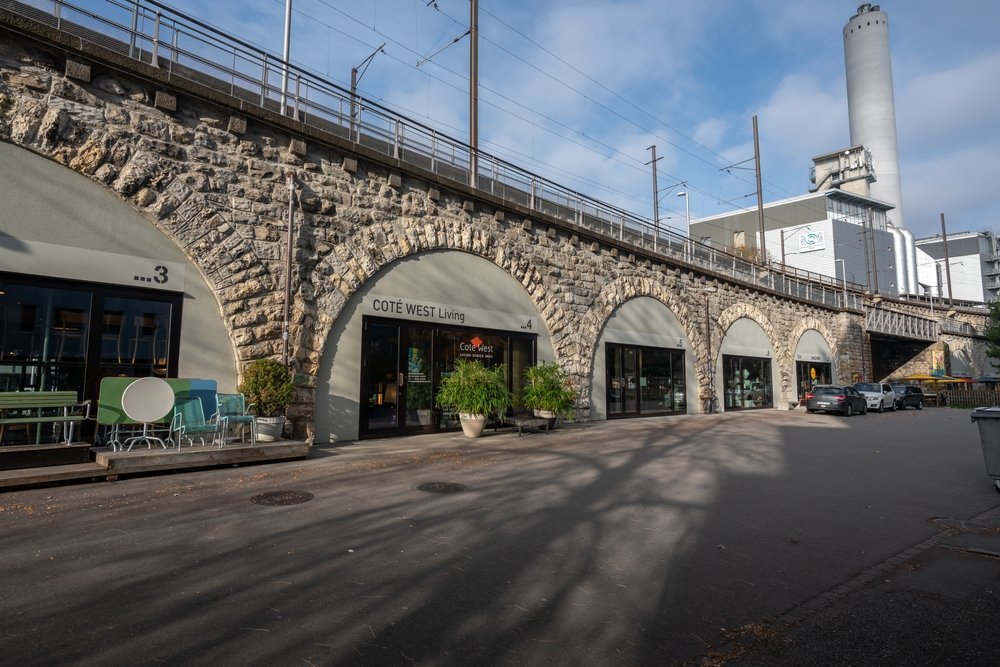
Zürich West in Kreis 5 was the city’s industrial quarter, with a shipyard, a brewery and engineering works, and today it’s the district for design shops, galleries and nightlife. Its landmark is Prime Tower, a 126-metre office tower with the restaurant Clouds at the top, where a coffee at the bar is the cheapest way to get the view. At its foot is Frau Gerolds Garten, an urban garden built from shipping containers, which is a terrace restaurant in summer and a fondue hut with fire pits in winter.
The best thing about the area is Im Viadukt, where the old railway arches are filled with shops and places to eat. Markthalle is open Monday to Saturday 9am-8pm, and it’s the place to buy Swiss cheese, bread and lunch at an affordable price. Trams 4, 13 and 17 stop at Löwenbräu, and the old brewery buildings now house Kunsthalle Zürich and the Migros Museum of contemporary art.
Come out here in the late afternoon, start at Markthalle, wander beneath the arches and finish at Frau Gerolds Garten as the sun goes down. The area has several of the city’s newer design hotels, and you can see hotels in Zürich West here.
15. Zoo Zürich and the Masoala Rainforest
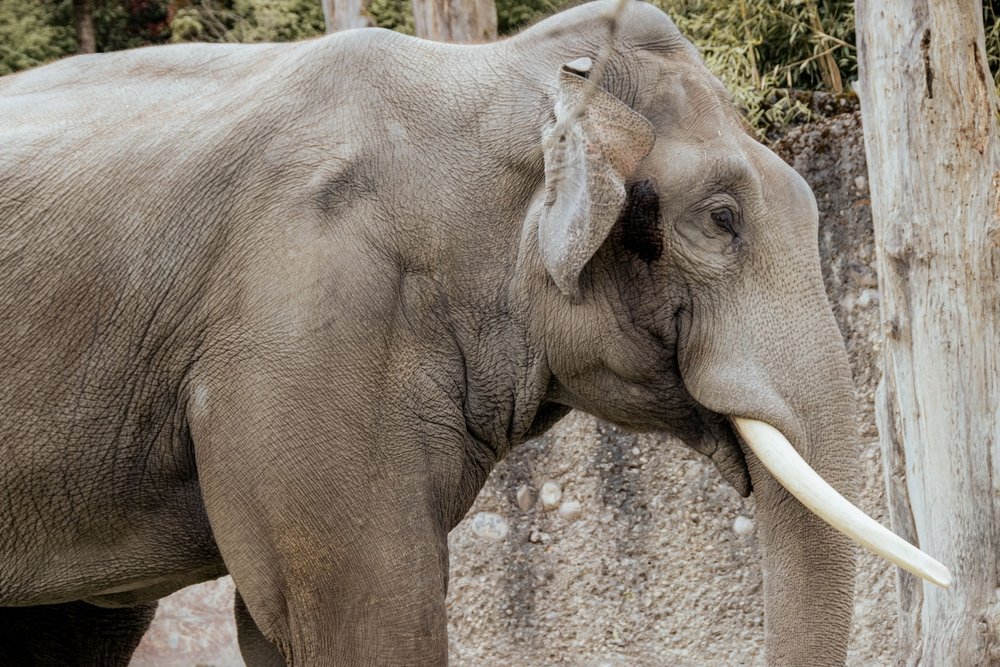
Zoo Zürich sits up on the Zürichberg and is one of Europe’s best zoos. The main attraction is Masoala, a rainforest hall covering more than a hectare, where lemurs, chameleons and birds from Madagascar roam freely among the trees, and where you walk around in 25-degree heat and high humidity. On top of that there’s the Kaeng Krachan Elephant Park with an indoor bathing pool and the Lewa Savanna with giraffes and rhinos.
Adult admission is around CHF 32 (around £29), and prices vary by day, so check the current price when you buy your ticket online. The zoo is open daily 9am-6pm from March to October and 9am-5pm from November to February, and Masoala opens at 10am. The Zürich Card gives you a 10 per cent discount. Tram 6 runs from Bahnhofplatz by Hauptbahnhof to the Zoo terminus in about 20 minutes.
It’s expensive, but it fills a whole day, and it’s the best rainy-day plan in the city because Masoala is indoors. Arrive early, as the lemurs are most active in the morning.
16. Lindt Home of Chocolate in Kilchberg
Lindt has been making chocolate in Kilchberg, south of the city, since 1899, and next to the factory is the Lindt Home of Chocolate museum. The entrance hall is dominated by a chocolate fountain more than nine metres tall, with 1,500 kilos of chocolate circulating through it, and the exhibition takes you from the cocoa plantations through the history of Swiss chocolate to a test kitchen where you can watch the chocolatiers at work. And then there are the tastings, which are unlimited.
Admission is CHF 17 (around £15) for adults and CHF 10 (around £9) for children aged 8 to 15, while children under 8 get in free. The museum is open daily 10am-7pm, but the timed tickets often sell out day by day, so book online well in advance. Take the S8 or S24 from Hauptbahnhof to Kilchberg and walk ten minutes, or take bus 165 from Bürkliplatz, which stops right outside.
My tip is to skip lunch before you come. The tastings are generous, and the shop afterwards is the cheapest way to buy Lindt chocolate in Switzerland.
Buy tickets for the Lindt Home of Chocolate here.
17. Day trip to the Rhine Falls at Schaffhausen
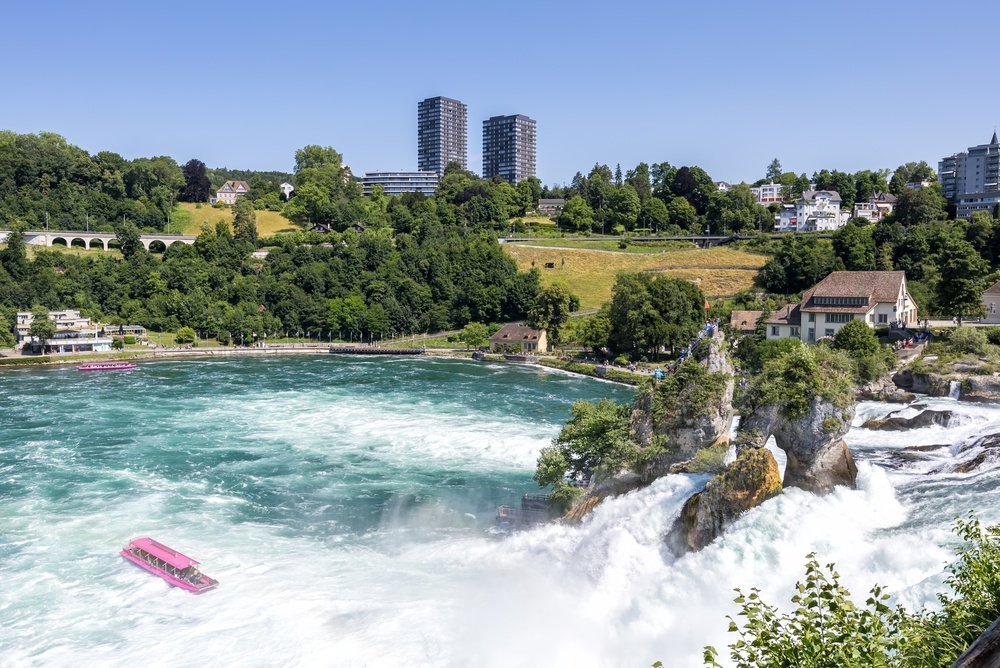
The Rhine Falls are Europe’s largest waterfall by volume of water, and they’re just an S-Bahn ride from Zürich. The Rhine plunges 23 metres over a 150-metre-wide rock ledge, and in spring and early summer, when the snow melts in the Alps, several hundred cubic metres of water thunder past you every second. You feel it in your body before you see it.
The best view is from Schloss Laufen on the south side, where the Känzeli and Belvedere platforms jut out over the water. Entry costs CHF 5 (around £4.50) for adults and CHF 3 (around £2.70) for children aged 6 to 15, and the ticket also covers the small Historama exhibition. From the north side at Schlössli Wörth in Neuhausen, the view is free around the clock, and from here boats head out to the rock in the middle of the falls, where you can stand with spray in your face.
The S12 runs directly from Zürich Hauptbahnhof to Schloss Laufen am Rheinfall station in about 50 minutes, and it stops right by the castle gate. Combine the trip with Schaffhausen’s Old Town or the medieval town of Stein am Rhein, and you’ve got a full day.
Book a half-day trip from Zürich to the Rhine Falls here.
18. Day trip to Lucerne and Rigi
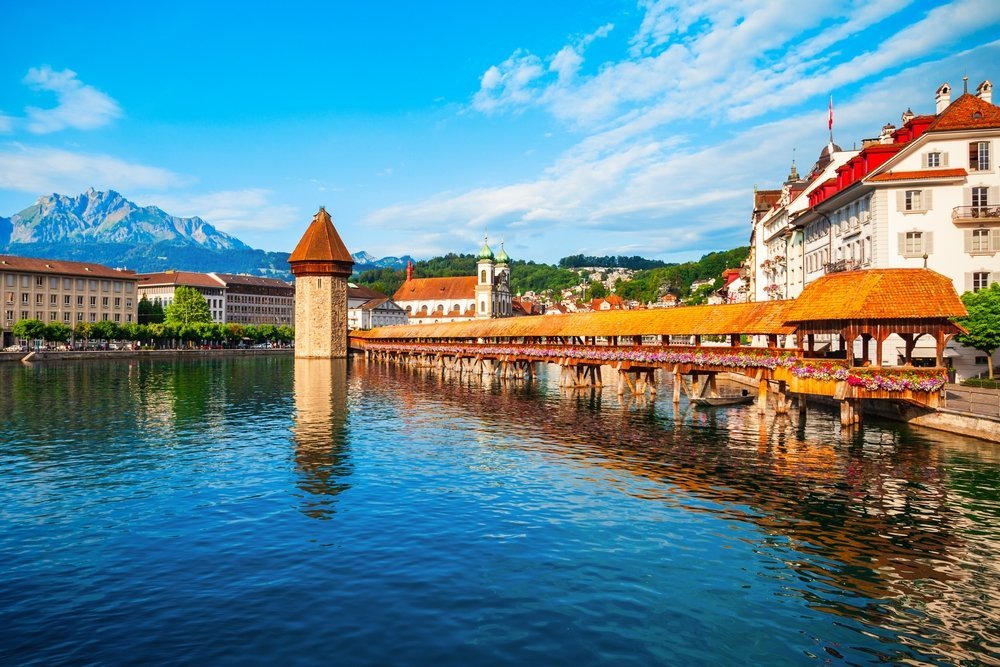
Lucerne is less than an hour by train from Zürich, and it’s Switzerland straight off a chocolate box: the Chapel Bridge (Kapellbrücke), the covered wooden bridge from the 1300s with its water tower in the middle of the River Reuss, the Lion Monument carved into the rock, and the Musegg Wall (Museggmauer), where you can climb several of the towers for free in summer. The bridge and the Old Town cost nothing, and you can see the town in a morning.
If you want to head up into the mountains, take the boat from Lucerne to Vitznau and ride the cog railway up to Rigi Kulm. Opened in 1871, it was Europe’s first mountain railway, and from the summit at almost 1,800 metres you look out over Lake Lucerne and the Alps. A return ticket from Vitznau costs CHF 84 (around £75), half price with the Halbtax card, and children up to 15 travel free with an adult. The trip is included with the Swiss Travel Pass.
It’s a long and expensive day, so I’d catch an early train and buy the tickets online in advance. If you’re thinking of staying a few nights in Central Switzerland rather than going back and forth, I’ve put together my picks in the guide to where to stay in Switzerland.
Book a day trip from Zürich to Rigi and Lake Lucerne here.
Practical travel tips for Zürich
Zürich is small enough for you to walk between the Old Town, Bahnhofstrasse and the lake, and ZVV’s trams, buses, S-Bahn trains and boats handle the rest on a single shared ticket. The whole city is zone 110, which counts as two zones. A single ticket costs CHF 4.70 (around £4.30) and is valid for an hour, while a short trip of up to five stops costs CHF 2.80 (around £2.50). If you’ll use public transport more than twice in a day, buy a 24-hour pass for CHF 9.40 (around £8.50), which also covers the Polybahn and the river boat on the Limmat. Tickets are sold at the machines or in the ZVV app, and there’s no validating, so you just need to buy your ticket before you board.
The Zürich Card costs CHF 29 (around £26) for 24 hours and CHF 56 (around £50) for 72 hours, and children aged 6 to 15 pay CHF 19 (around £17) and CHF 37 (around £35). The card covers all 2nd-class transport including the airport, Uetliberg and the short boat trips, and it gives free entry to the Kunsthaus collection, the Landesmuseum, the FIFA Museum and Museum Rietberg. My rule is that the card pays for itself if you visit two museums and take a boat trip on the same day, but remember that the museums are closed on Mondays, so don’t buy it for a Monday.
The airport is ten minutes by train from Hauptbahnhof, and that’s by far the easiest way into the city. All the options, prices and which zones you need a ticket for are in my guide to getting from Zürich Airport to the city centre.
The best time to visit is from May to September, when the lidos (Badis) are open, the boats are running and you can sit outside in the evening. December is a lovely alternative, with Christmas markets in Hauptbahnhof and on Sechseläutenplatz, but expect cold days and fog, which Uetliberg often pokes up through. Have lunch at Markthalle in Zürich West or from the station supermarkets if you’re watching your budget, because an ordinary restaurant dinner can easily cost twice what it would back home.
If you need the full range of hotels, you can see all hotels in Zürich on Booking.com. If you’re travelling on northwards, Munich is just four hours away by direct train, and you’ll find my picks of neighbourhoods and hotels in the guide to where to stay in Munich.
Travel ressources & websites I use all the time 👇
• Booking.com has the best offers on hotels and unique places to stay
• GetYourGuide is the best place to book tours & activities with free cancellation
• Welcome Pickups is the best & safest place to pre-book airport transfers
Psst 👀 Have you subscribed to my Youtube channel and my Instagram where I provide more useful travel tips?