

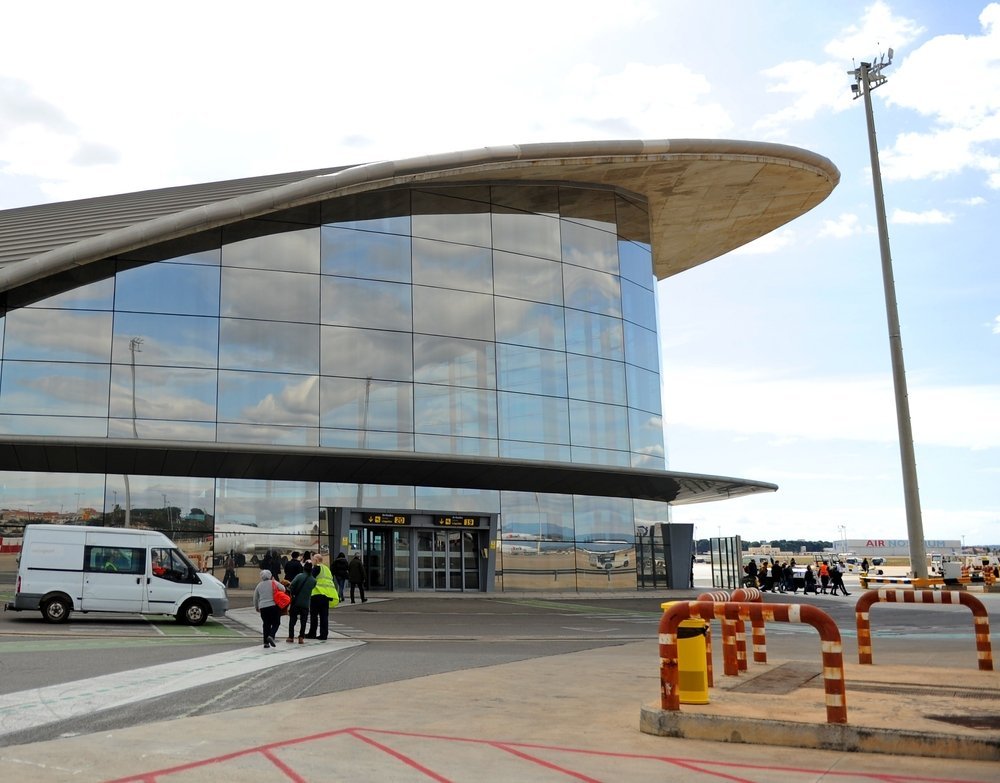
Valencia Airport is officially called Aeropuerto de València and lies in the suburb of Manises, only around 8 kilometres west of the city centre. Getting from Valencia Airport to the city centre is one of the easiest airport transfers in Spain, because Metrovalencia’s lines 3 and 5 run from a station beneath the terminal itself to Xàtiva by Estación del Norte in around 20 minutes for €4.80 (around £4) plus €1.10 (around £1) for the travel card the ticket is loaded onto. The metro is the best option for most people, and it runs from early morning until late in the evening.
If you land in the middle of the night, are travelling as a group with lots of luggage, or are staying out by the beach, a taxi for around €20 to €25 can be worth the money, and Uber, Cabify and Bolt also operate from the airport. Here you’ll find all the options with prices, journey times and stops, and I’ll also explain how to travel on to Madrid, Barcelona and Alicante by train and bus.
If you’d rather drive yourself from the airport, you can compare prices on hire cars at Booking.com.
Contents
Quick overview: Valencia Airport to the city centre
- Metro lines 3 and 5: €4.80 (around £4) plus €1.10 (around £1) for the card, around 20 minutes to Xàtiva by Estación del Norte, each line runs roughly every 15 minutes on weekdays and roughly every 20 minutes at weekends from early morning until about 11.30pm.
- Bus 150: €4.80 (around £4), 45 to 55 minutes to Avinguda de l’Oest by Mercat Central, roughly every half hour Monday to Saturday, no services on Sundays and public holidays.
- Taxi: around €20 to €25 (around £17 to £21) to the city centre on the meter, 15 to 20 minutes without traffic, minimum fare €12.50 (around £10) from the airport.
- Uber, Cabify and Bolt: roughly the same price as a taxi, all three have pick-up at the terminal, and the app shows you exactly where.
- Private transfer: from around €110 (around £90) per car, the driver waits in the arrivals hall with a sign.
- Hire car: the rental desks are on the ground floor of the terminal, and the cars are parked in car park P1 directly opposite. Fine for Albufera and the coast, a hassle in the city centre.
How to find the transport at the airport
Valencia Airport has one connected terminal building, where T1 and the smaller regional terminal T2 sit under the same roof, so you can’t get lost. The arrivals hall is on the ground floor, and when you come out from baggage reclaim, just follow the signs with the red metro logo. Aeroport metro station lies beneath the regional part of the terminal, a couple of minutes’ walk from the arrivals hall, and Metrovalencia has an information office in the arrivals area where you can get help with your ticket. The city’s tourist office also has a desk in the arrivals hall, and this is where you collect a Valencia Tourist Card if you’ve bought one in advance.
Bus 150 stops just outside the arrivals hall in T1, and the taxi rank is also just outside the arrivals exit. Uber, Cabify and Bolt have pick-up at the terminal, and the app shows you the exact meeting point when you book. The car hire desks are on the ground floor of the terminal, while the cars themselves are parked in car park P1 directly opposite the building. You’ll find an overview of all the transport options and maps of the terminal at Aena, which runs the airport.
1. Metro lines 3 and 5 to Àngel Guimerà, Xàtiva and Colón
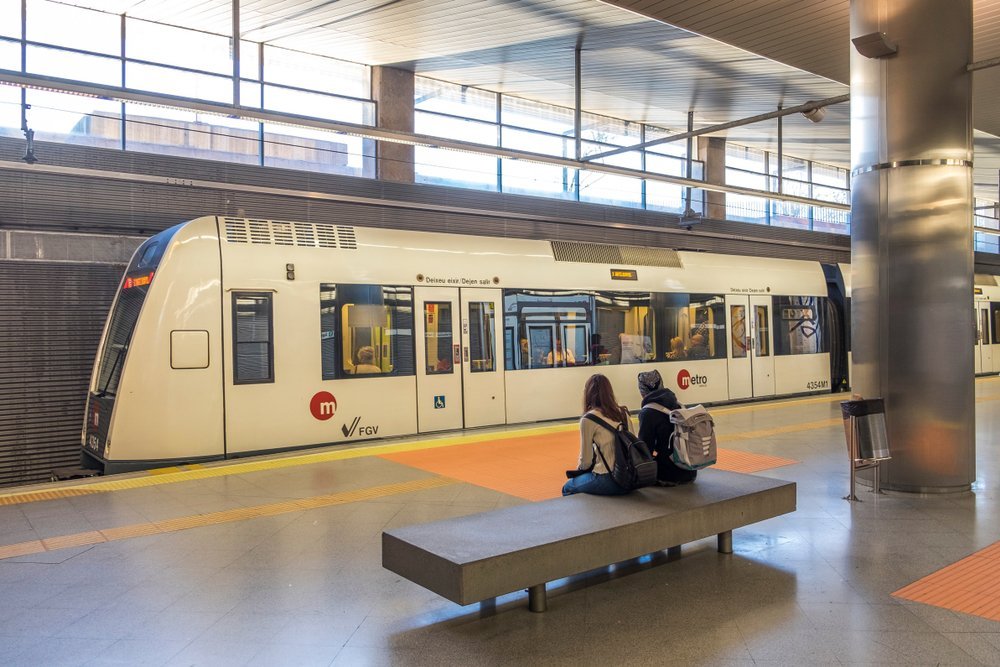
The metro is by far the easiest way to get from Valencia Airport to the city centre. Lines 3 and 5 share the same route from Aeroport station through Manises, Quart de Poblet and Mislata and on under the city, so you can simply hop on the first train that turns up if you’re heading for the centre. In the city, both lines stop at Nou d’Octubre, Avinguda del Cid, Àngel Guimerà, Xàtiva, Colón and Alameda, and only after that do they split: line 3 carries on north to Benimaclet and Rafelbunyol, while line 5 turns east to Marítim by the port. The journey to Àngel Guimerà and Xàtiva takes around 20 minutes, and you’ll reach Colón in about 25 minutes.
Each line runs roughly every 15 minutes on weekdays and about every 20 minutes at weekends and on public holidays, and because the two lines follow the same route into town, you’ll rarely wait more than 10 minutes for a train. The first trains into the city leave just after 5.30am on weekdays and a little later at weekends, and the last regular departures run at around 11.30pm, with a few extra night trains on Friday and Saturday nights. Times change regularly, and during engineering works the last services may terminate before the airport, so check the current timetable with Metrovalencia before you count on a late metro.
Fares and tickets
Aeroport station sits in its own fare zone, so a single ticket from the airport to the centre costs €4.80 (around £4), plus €1.10 (around £1) for the cardboard card the ticket is loaded onto, which brings your first ticket to €5.90 (around £5). By comparison, a standard journey within the city costs €1.50 (around £1.25), so the airport supplement is noticeable. You’ll find the fares on Visit Valencia. You buy your ticket from the machines in the station, which accept bank cards, and you need to use the same card at the ticket barriers both on the way in and on the way out. Metrovalencia is in the process of replacing its barriers so that you’ll eventually be able to pay directly with a bank card, but don’t count on that working at your station just yet.
Hang on to the cardboard card, as you can top it up for the rest of the week. If you’ll be making several journeys, you can load a SUMA 10 onto it, a 10-journey ticket valid on the metro, trams, city buses and Metrobus, with free transfers within 90 minutes. A SUMA 10 for the city (zone A) normally costs about €9 (around £7.50), but the price has at times been cut thanks to public subsidies, so check the current fare with the transport authority ATMV. Metrovalencia’s own stored-value card, TuiN, still exists, but it’s only valid on the metro and trams, so for most visitors the SUMA 10 is the simplest choice.
If you’ll be using the metro and buses a lot, the Valencia Tourist Card is often the best deal. It costs around €17 (around £14) for 24 hours, €24 (around £20) for 48 hours and €30 (around £25) for 72 hours, and it covers all public transport in zones A and B, including the metro to and from the airport, so you save on both the airport ticket and the cardboard card. You can buy it online at a discount and collect it from the tourist office in the arrivals hall, and you can read more in Visit Valencia’s shop.
Where should you get off?
Àngel Guimerà: The first major interchange in the city, where you can change to lines 1 and 2. The station lies west of the centre in the Extramurs district, and this is where to get off if you’re heading on to the bus station by the Túria or to a hotel on Gran Vía Fernando el Católico.
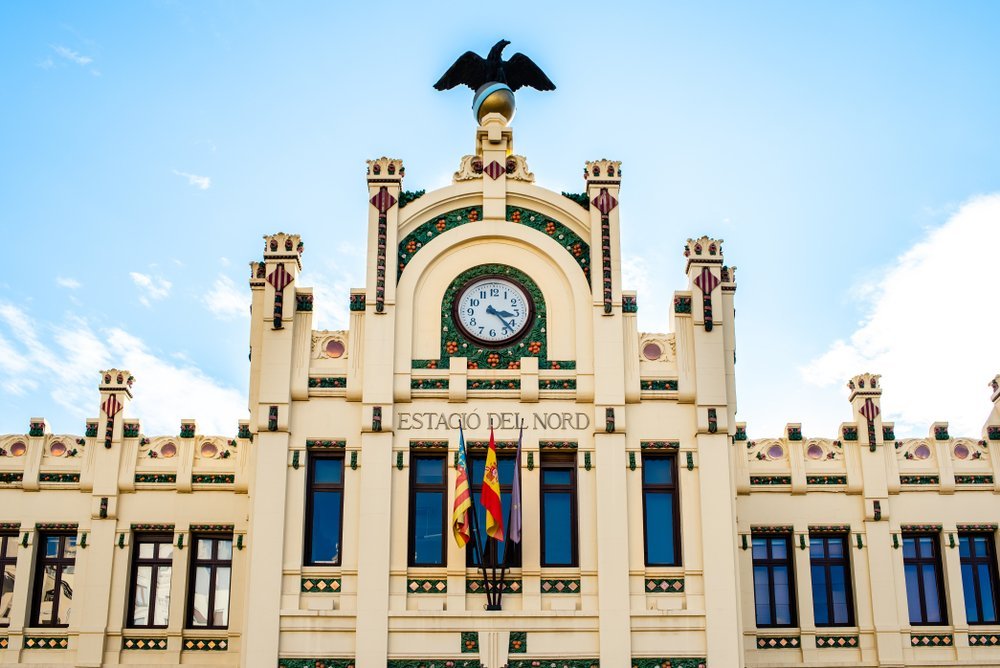
Xàtiva: The stop for most people. You come up right by the beautiful Estación del Norte railway station and the bullring, and from here it’s a 3-minute walk to Plaza del Ayuntamiento and 10 minutes to the cathedral. If you’re staying in Ciutat Vella, Valencia’s Old Town, this is your stop, and you can see hotels in Ciutat Vella here. If you’re staying in trendy Ruzafa with all its cafés, walk 10 minutes south-east round the back of the railway station, and you can see hotels in Ruzafa here.
Colón: The station beneath the shopping street Carrer de Colón on the eastern edge of the centre, close to Mercado de Colón and the smart part of Eixample. If you’re staying north or east of the Old Town, you’ll often save yourself a bit of walking by going one stop further than Xàtiva.
Alameda: This station lies beneath the Turia Gardens in the dried-up riverbed, and from here it’s about a 25-minute walk through the park to the City of Arts and Sciences. It’s a lovely stroll without luggage, but with suitcases I’d take a taxi from the airport instead. If you’d like to stay near the futuristic complex, you can see hotels near the City of Arts and Sciences here.
Marítim: The terminus of line 5, out by the port. From here, change to tram line 6 towards Tossal del Rei, which takes you to Les Arenes and Eugènia Viñes just behind Malvarrosa beach in a few minutes. The tram is part of Metrovalencia, so the transfer is normally included in the same ticket when you change straight away. If you want to wake up to a sea view, you can see hotels near Malvarrosa here. If you’re unsure which part of the city suits you best, read my guide to where to stay in Valencia, where I go through the areas and the hotels.
2. Bus 150 to Avinguda de l’Oest
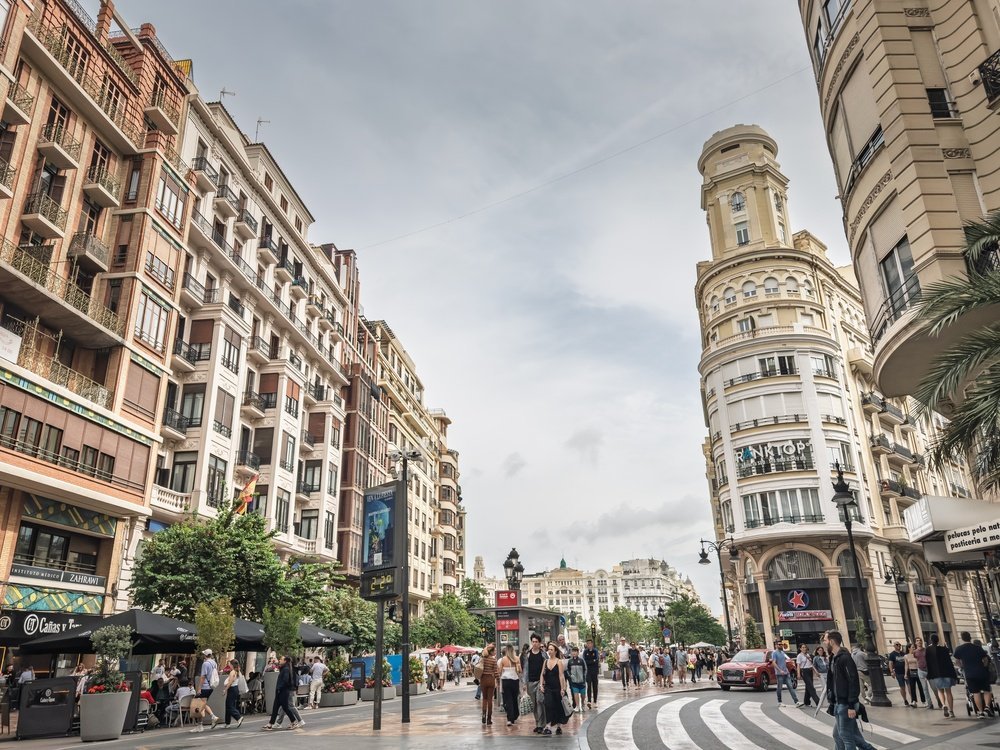
Bus 150 is the regional Metrobus route between the airport and Valencia, run by the company Fernanbus under the transport authority’s shared Met Go brand. The bus stops just outside the arrivals hall at T1 and runs through Manises, Quart de Poblet and Mislata before continuing along Avenida del Cid into the city. On the way into the centre, its stops include Gran Vía Ramón y Cajal near Estación del Norte, and it terminates at Avinguda de l’Oest by Mercat Central, about a 5-minute walk from Plaza del Ayuntamiento. Allow 45 to 55 minutes for the whole journey, and longer at rush hour.
A single ticket costs €4.80 (around £4) and is bought from the driver, and both a SUMA 10 including the airport zone and the Valencia Tourist Card are valid on the bus. Buses run roughly every half hour from around 5.20am until about 11pm on weekdays, slightly less often on Saturdays, and in August a reduced summer timetable applies. Route 150 doesn’t run at all on Sundays and public holidays, and at night there’s only a night service, 150N, with just a few departures. You’ll find the timetable and stops on Met Go.
Here’s my honest verdict: the bus costs exactly the same as the metro and takes twice as long, so it’s only plan B. It makes sense if you’re staying along Avenida del Cid or in Mislata, or if the metro is closed for engineering works. If you land on a Sunday, you can forget about it altogether.
3. Taxi from Valencia Airport
The taxi rank is just outside the arrivals hall, and there are almost always enough cars, even at night. Taxis in Valencia always run on the meter, and there is no official fixed fare between the airport and the city centre, so don’t accept offers of a “fixed price” from drivers who approach you inside the terminal.
Fares and supplements
Fares are set by the regional government for the whole Valencia area. On weekdays between 7am and 9pm, tariff 1 applies, with a starting fare of 2 euros (around £1.70) and roughly 1.36 euros (around £1.15) per kilometre, while tariff 2 applies at night, on Saturdays and on public holidays, with a starting fare of 2.60 euros (around £2.20) and roughly 1.48 euros (around £1.25) per kilometre. On top of that there’s an airport supplement of around 5.40 euros (around £4.50), and a ride from the airport always costs at least 12.50 euros (around £10), even if you’re only going to Manises. The current fares are listed in the regional government’s fare sheet for Valencia’s taxis, and they’re usually adjusted once a year, so treat the amounts as approximate.
In practice, this means a ride to Plaza del Ayuntamiento or Ciutat Vella typically comes to 20 to 25 euros (around £15 to £20) during the day and a bit more at night and at weekends. If you’re heading out to the City of Arts and Sciences or the beach at Malvarrosa, expect to pay 25 to 30 euros (around £20 to £25). The journey takes 15 to 20 minutes without traffic. Most taxis take cards, but ask before you get in, and you can also book through the Pidetaxi app or through Uber, which books regular taxis in Valencia.
A taxi makes sense if there are three or four of you with suitcases, as it then costs roughly the same as four metro tickets, if you land after the last metro, or if you’re staying somewhere the metro doesn’t reach anyway. For one person heading to the city centre, it’s pure luxury compared with the metro.
4. Uber, Cabify and Bolt
All three apps work in Valencia, and they all operate from the airport. Cabify and Bolt won the airport’s tender for their own signposted pick-up zones at the terminal, and Uber shows you the meeting point in the app when you book. Uber offers both its own cars in the UberX, Comfort and Van categories and regular taxis through the app, so you can compare prices straight away. You can read about pick-ups on the Uber website.
Price-wise, the three apps are usually on a par with taxis, around 20 to 30 euros (around £15 to £25) to the city centre, and they can be a little cheaper outside peak times and more expensive when lots of flights land at once, because prices follow demand. The advantage is that you know the price in advance, you don’t have to explain the address, and you can pre-book a car for a specific time, which is handy if you land late. Wait until you’ve got your luggage before booking, otherwise the car will arrive before you’re ready, and drivers aren’t allowed to wait long.
5. Private transfer
A private transfer is a pre-booked car with a driver who waits in the arrivals hall with your name on a sign and drives you straight to your hotel door. In Valencia it’s honestly overkill for most people, because the airport is so close to the city that a taxi does the same job for a fraction of the price. Prices start at around 110 euros (around £90) per car, so it only makes sense if you’re a larger group needing a minibus, if you need child seats or have special requirements, or if you’re heading to a hotel outside the city and want the price sorted before you leave home.
Book a private transfer from Valencia Airport here.
Remember to enter your flight number when booking so the driver can keep track of any delays, and check how many passengers and suitcases the price covers. Most providers require booking at least 12 hours in advance, so it’s not something you can sort out in the arrivals hall.
6. Car hire from Valencia Airport
The car hire desks are on the ground floor of the terminal, and you’ll find Avis, Enterprise, Europcar, Goldcar, Hertz, OK Mobility and Sixt, among others. The cars themselves are in car park P1 directly opposite the terminal, so you’re on your way within minutes. The airport sits right by the V-11 motorway, which links the A-3 towards Madrid with the V-30 ring road, so you’ll be out of the city before you’ve got used to the car.
A car is excellent if you want to see the Albufera Natural Park and the rice fields south of the city, the long beaches at El Saler and Cullera, the seaside town of Gandía, the castle in Xàtiva or the wine region around Requena. If you’d like to see what else there is to experience in and around the city, I’ve put it all together in my guide to the sights of Valencia. But in the city itself, a car is a millstone round your neck. Large parts of Ciutat Vella are reserved for residents and monitored by cameras, the city has a low emission zone, and parking in the centre is expensive and hard to find. My recommendation is therefore to stay in the city without a car and only pick one up at the airport or from a hire company in town on the day you head out into the countryside. The easiest way to compare prices is via the link at the top of the article.
Onward from Valencia Airport to Madrid, Barcelona and Alicante
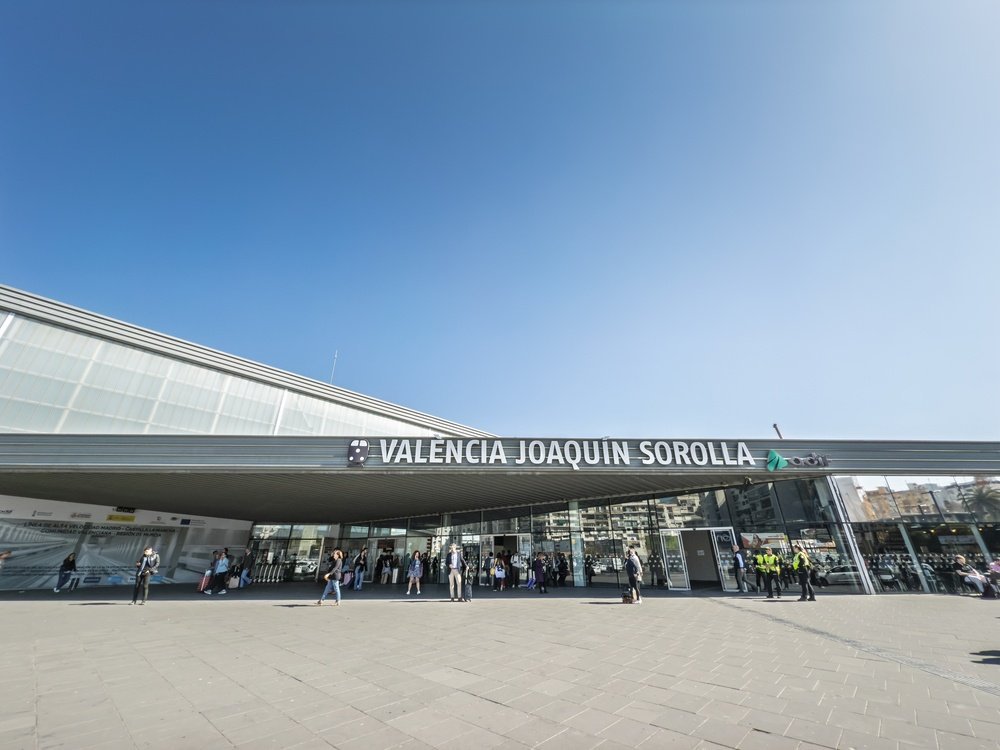
Valencia makes a good hub if you want to combine the city with other parts of Spain. All long-distance trains leave from Joaquín Sorolla station, and long-distance coaches from the Estación de Autobuses, and both are easy to reach from the airport.
Trains from Joaquín Sorolla
Joaquín Sorolla is Valencia’s high-speed station, about 800 metres south of Estación del Norte. From the airport, take the metro to Xàtiva and walk 10 to 12 minutes along Carrer de Bailén, or hop on the free shuttle bus that Renfe runs between the two stations for passengers with a train ticket. Jesús metro station on lines 1 and 2 is also just a few minutes’ walk from Joaquín Sorolla if you change at Àngel Guimerà, and a taxi straight from the airport costs around 20 to 25 euros (roughly £17 to £21).
To Madrid, AVE trains run to Atocha and Chamartín in around 1 hour 40 minutes to 1 hour 50 minutes, and the budget operators Iryo and Ouigo run the same route, so there are departures almost every hour. To Barcelona Sants, the Euromed runs along the coast in around 2 hours 50 minutes to 3 hours, and to Alicante the Euromed and other long-distance trains take around 1 hour 45 minutes to 2 hours. Prices vary hugely with demand, from around 20 euros (about £17) if you book well ahead to well over 60 euros (about £50) close to departure, so book on Renfe as soon as your dates are fixed. If you’re staying in the capital, I have a guide on where to stay in Madrid, and one on where to stay in Barcelona if you’re heading north.
Coaches from Estación de Autobuses
Long-distance coaches leave from the Estación de Autobuses on Avenida de Menéndez Pidal, north of the Turia park. From the airport, take the metro to Àngel Guimerà, change to line 1 or 2 and get off at Túria, from where it’s about a 5-minute walk. ALSA runs from here to Alicante, Benidorm and Barcelona and on to Andalusia, while Avanza runs to Madrid and Madrid’s airport. The coach is cheaper than the train but takes roughly twice as long, so it’s mainly for you if you’re on a budget or heading to a town without a rail connection. If you’re thinking of combining Valencia with the Costa Blanca, you can read my guide on where to stay in Alicante, and if you’re flying home from there, I also have a guide to getting from Alicante Airport to the city centre.
Getting back to the airport
From the centre, take the metro from Xàtiva, Colón or Àngel Guimerà towards Aeroport. Lines 3 and 5 stop at the same platform on the stretch through the city, but keep an eye on the sign on the train, as some services, especially late in the evening and during engineering works, terminate before the airport. The first trains to the airport run early in the morning on weekdays and later at weekends, so if you have a flight before 7am, check the timetable the evening before or take a taxi instead. Allow 20 to 25 minutes on the metro plus the walk from your hotel.
A taxi from the centre to the airport costs around 20 to 25 euros (roughly £17 to £21) and takes 15 to 20 minutes, but Avenida del Cid can be gridlocked in the morning rush hour, so give yourself extra time. Uber, Cabify and Bolt can be pre-booked for a set time, which is handy if you need to leave before the metro starts running. Bus 150 runs back to the airport from Avinguda de l’Oest and Àngel Guimerà, but remember that it doesn’t run on Sundays.
If you’re returning a hire car, follow the signs for the airport’s P1 car park, where the rental companies have their drop-off bays, and fill up the tank beforehand, otherwise the company will add a fee on top. Valencia Airport is medium-sized, but in summer and at weekends there can be long queues at security in the morning, so be there 2 hours before departure.
Which option should you choose?
Here’s my recommendation based on where you’re staying:
Ciutat Vella and Plaza del Ayuntamiento: Take the metro to Xàtiva or Colón for 4.80 euros (around £4) plus the card. You’ll be there in 20 to 25 minutes and can walk to most hotels in the Old Town.
Ruzafa: The metro to Xàtiva and a 10-minute walk round the back of Estación del Norte. With heavy suitcases, a taxi for around 20 euros (about £17) is a good alternative.
Malvarrosa and the beach: Line 5 to Marítim and tram 6 to Les Arenes or Eugènia Viñes, around 40 minutes in total. A taxi costs around 25 to 30 euros (roughly £21 to £25) and is the easiest option with luggage.
Ciudad de las Artes: Here I’d take a taxi for around 25 euros (about £21), as the metro doesn’t stop nearby. Without luggage, the metro to Alameda and a stroll through the Turia park is a lovely start to your holiday.
If you land at night: The metro stops at around 11.30pm on weekdays, and bus 150 doesn’t run at night apart from the few departures on the night line. The taxi rank is staffed around the clock, and Uber, Cabify and Bolt also operate, so those are your real options.
3 to 4 people or lots of luggage: A taxi at 20 to 25 euros (roughly £17 to £21) costs about the same as three or four metro tickets with cards, and you avoid hauling your cases through changes and up stairs.
Travelling straight on: If you need to catch a train from Joaquín Sorolla, a taxi straight from the airport is the safe choice. If you have plenty of time, the metro to Xàtiva and the walk or shuttle bus is cheaper.
Practical tips for getting from Valencia Airport to the city centre
Consider the Valencia Tourist Card before you land. The card covers the metro journey to and from the airport and all other public transport in the city, and it gives you discounts at a number of museums. If you’re going to be using the metro and buses every day anyway, it pays for itself in two days, and you avoid queuing at the ticket machine with jet lag and suitcases.
Keep the cardboard card from the machine. You pay for the card the first time, and it can be topped up with new tickets for the rest of your holiday. Each person needs their own card for single tickets, while a SUMA 10 can be shared by several people travelling together, as long as you validate once per person.
Watch the direction on your way back. At the stations in the city centre, both line 3 and line 5 towards Aeroport leave from the same platform, but in the opposite direction they run to different terminuses, and some trains terminate before the airport. If the sign doesn’t say Aeroport, wait for the next one.
Taxis always run on the meter. There’s no fixed fare from the airport, so a driver who offers you a round sum before you set off is usually trying to make a bit extra. Get into a car from the taxi rank, check that the meter is switched on, and expect to pay 20 to 25 euros (around £17 to £21) to the city centre.
If you land on a Sunday, forget bus 150. The route doesn’t run on Sundays and public holidays, and it has no regular night services either. The metro, on the other hand, runs every day of the week, just with slightly longer gaps between trains at the weekend.
Buy your onward train ticket before you land. AVE trains to Madrid and Euromed trains to Barcelona and Alicante quickly become expensive close to departure, and the cheapest seats disappear weeks in advance. Allow at least 2 hours between landing and your train’s departure, so a delay or a long queue at passport control doesn’t cost you your ticket.
Travel ressources & websites I use all the time 👇
• Booking.com has the best offers on hotels and unique places to stay
• GetYourGuide is the best place to book tours & activities with free cancellation
• Welcome Pickups is the best & safest place to pre-book airport transfers
Psst 👀 Have you subscribed to my Youtube channel and my Instagram where I provide more useful travel tips?