

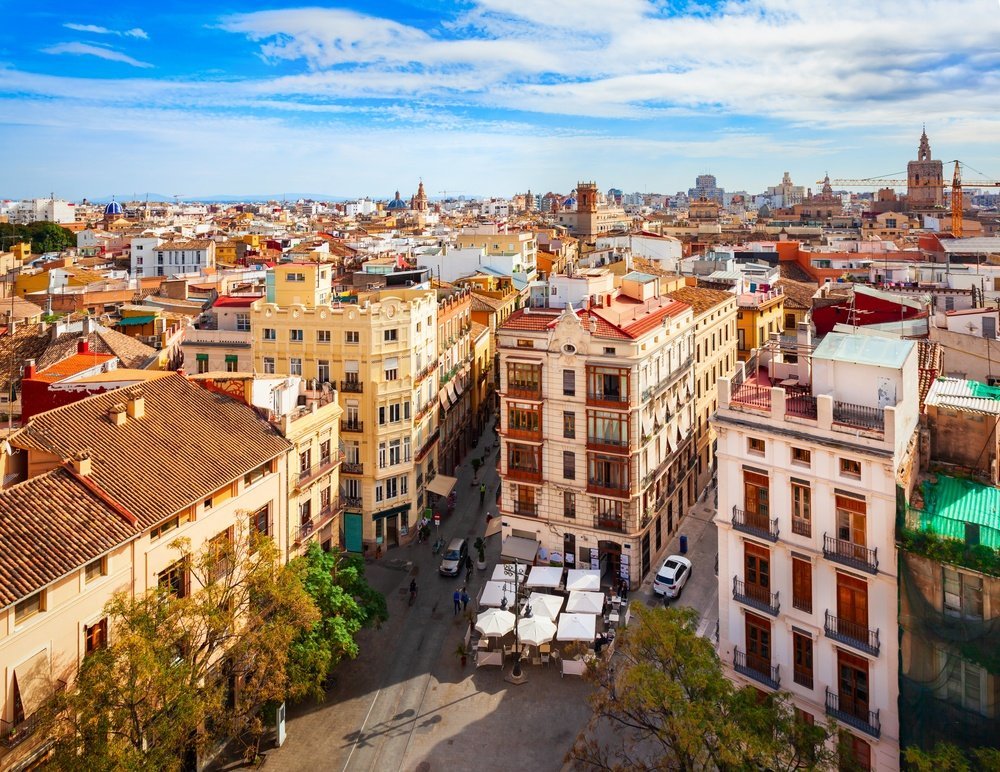
Valencia is Spain’s third-largest city, and it combines a city break and a beach holiday better than most, which makes for plenty of things to do in Valencia. On one side lies the Old Town with the cathedral, the silk exchange La Lonja and one of Europe’s most beautiful food markets, and on the other stand the futuristic white buildings of the Ciudad de las Artes y las Ciencias at the end of a nine-kilometre park in the old riverbed. Head a little further out and you reach both the city’s wide sandy beaches and the rice fields around Albufera, where paella has its roots.
Here are my picks for the 17 best things to see and do in Valencia, with prices, opening hours and tips on what’s worth booking before you go. Prices are given in euros, with approximate amounts in pounds. Several of the city’s municipal monuments are free on Sundays, while a number of museums are closed on Mondays, and the food markets Mercado Central and Mercado de Ruzafa close at 3pm and are closed on Sundays. The final section covers a day trip to Albufera.
Contents
1. Ciudad de las Artes y las Ciencias
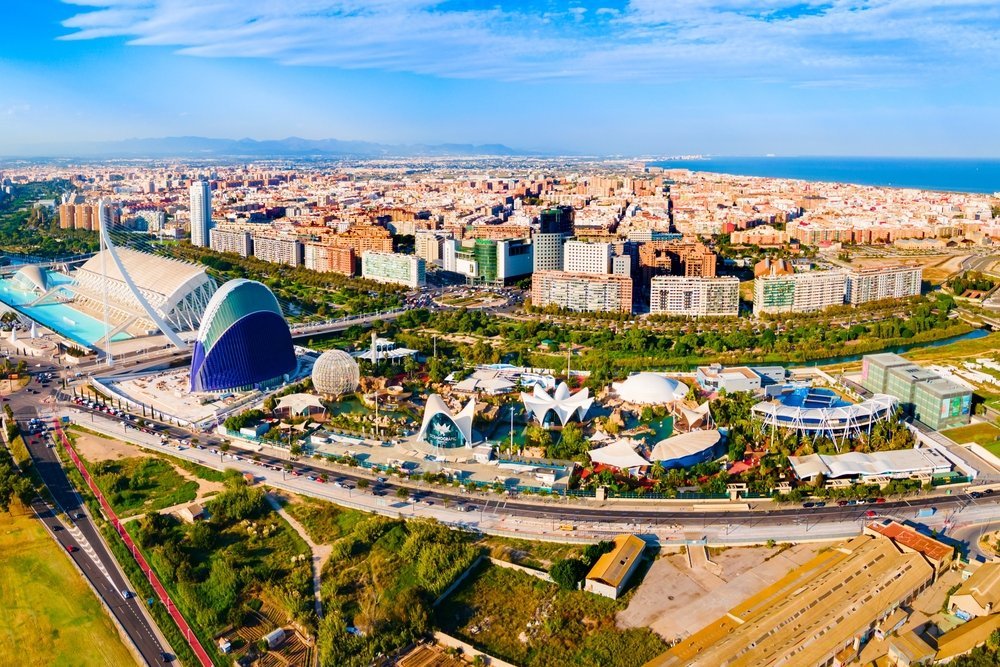
The Ciudad de las Artes y las Ciencias (City of Arts and Sciences) is Valencia’s modern landmark. The complex was designed by the Valencian architect Santiago Calatrava and stretches almost two kilometres along the old riverbed. The white buildings stand in shallow pools of turquoise water, and even if you don’t go inside anywhere, it’s one of the most photogenic walks in Spain.
The Hemisfèric looks like a giant eye and houses an IMAX cinema and a planetarium with shows lasting about 45 minutes. The Museu de les Ciències is an interactive science museum where you can walk freely into the building itself, while the exhibitions require a ticket. The Palau de les Arts opera house can be seen on an audio-guided tour from 14 euros (around £12), and the Umbracle is an open garden of more than 17,000 square metres with Mediterranean plants and sculptures that you can wander around freely. The Àgora is now used by CaixaForum for exhibitions.
A ticket to the Museu de les Ciències costs 9.90 euros (around £8) for adults and 7.60 euros (around £6) for children aged 4 to 12, and the Hemisfèric costs 8.90 euros (around £7.50). A combined ticket for the Oceanogràfic, the museum and the Hemisfèric costs 47.75 euros (around £40). You can get here on metro line 10 or one of the many buses, including lines 19, 40 and 95. My tip is to come back after dark, when the buildings are lit up and reflected in the water.
Book a ticket to the Museu de les Ciències.
2. Oceanogràfic
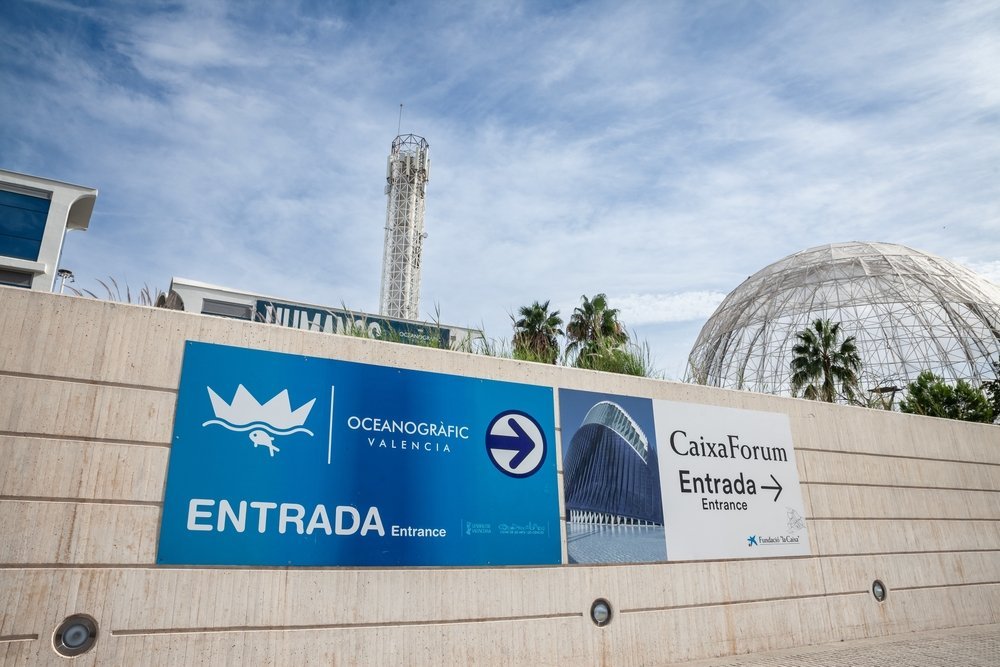
The Oceanogràfic sits at the southern end of the Ciudad de las Artes y las Ciencias and is billed as Europe’s largest aquarium. It’s home to up to 45,000 animals from around 500 species, and the buildings are divided by marine ecosystem, so you move from the Mediterranean to the Arctic, the Antarctic and tropical islands. The shark tunnel, where you walk beneath the water with sharks over your head, is the highlight for most people, and the belugas and penguins are popular too.
A digital ticket costs 39.45 euros (around £33) for adults aged 13 and over and 29.05 euros (around £24) for children aged 4 to 12 and over-65s, while children up to 3 go free. The aquarium opens at 10am, and according to the tourist office it closes at 8pm in high season and 6pm in low season. Allow at least three to four hours.
It’s an expensive experience, but I think it’s worth the money if you’re travelling with children or love marine life. My tip is to arrive at opening time and do the shark tunnel and the Arctic areas first, before the school groups and tour groups arrive. The dolphin show is included in the ticket, but I’d skip it if you’re short on time. If you also want to see the science museum, the combined ticket is cheaper than two separate tickets.
Book a ticket to the Oceanogràfic.
3. The cathedral, the Holy Grail and the Miguelete
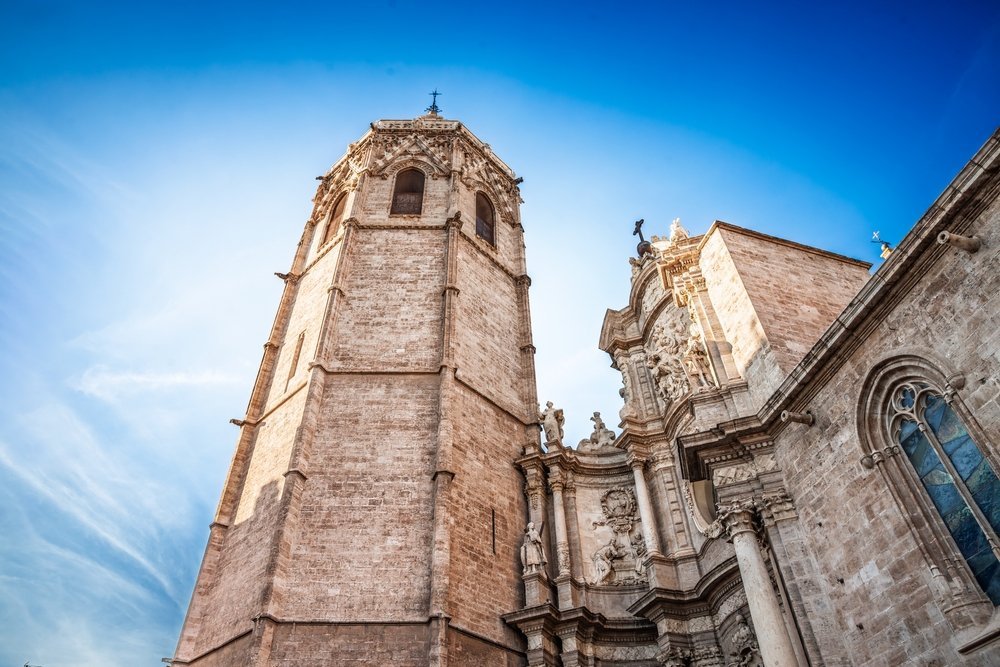
Valencia Cathedral was built between the 13th and 15th centuries on the site of first a Roman temple and later a mosque. That’s why you see Romanesque, Gothic and Baroque architecture in the same building. The biggest draw is the chapel where the Santo Cáliz stands in a glass case. It’s a chalice of polished agate which, according to tradition, is the cup Jesus used at the Last Supper, and according to researchers the cup itself was made somewhere between the 4th century BC and the 1st century AD.
A culture ticket with an audio guide to the cathedral and museum costs 12 euros (around £10), and the reduced price is 6 euros (around £5) for students, pensioners and children aged 8 to 17, among others, while children under 8 go free. The cathedral is open to visitors Monday to Friday from 10.30am to 6.30pm, Saturday from 10.30am to 5.30pm and Sunday from 2pm to 5.30pm, with longer weekend hours in summer. It’s closed to tourist visits on a number of public holidays.
The Miguelete bell tower, which Valencians call El Micalet, was built from 1381 to 1424. There are 207 steps up a very narrow spiral staircase to the top at just under 51 metres, and it costs 3 euros (around £2.50). The tower is open from 10am to 6.45pm, with the last climb half an hour before closing. My tip is to be in Plaza de la Virgen on a Thursday at noon, when the water court, the Tribunal de las Aguas, meets in front of the Apostles’ Door and settles irrigation disputes in Valencian, as it has done for centuries.
Book a guided tour of the cathedral and the Holy Grail.
4. La Lonja de la Seda
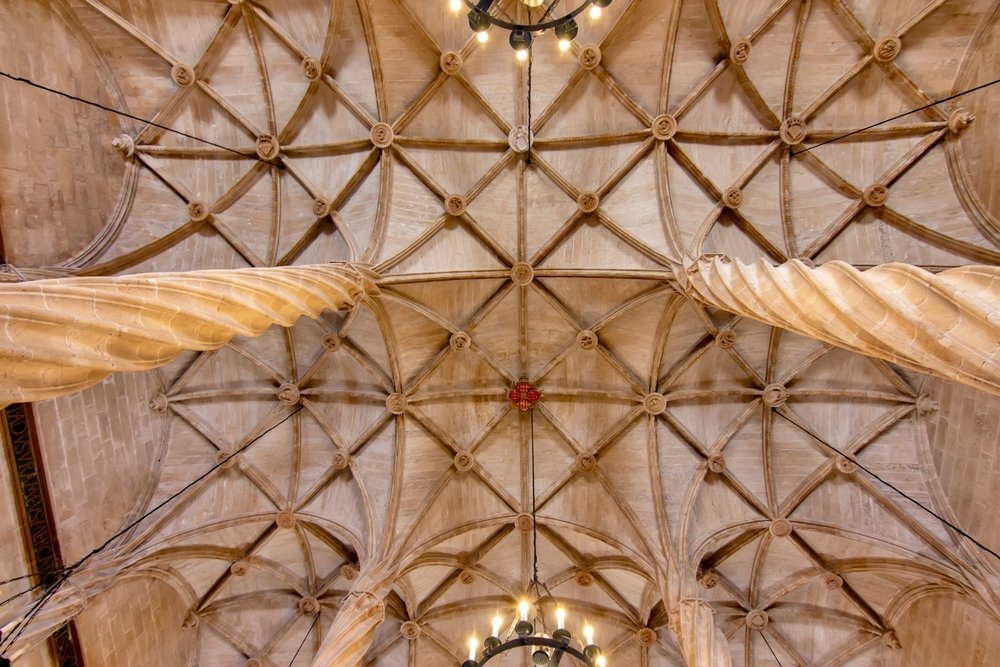
La Lonja de la Seda, the silk exchange, is in my opinion the most beautiful building in Valencia. It was built from 1482 to 1533, when Valencia was one of the richest trading cities in the Mediterranean, and it has been on the UNESCO World Heritage List since 1996. It’s one of the finest examples of late Gothic secular architecture in Europe.
The highlight is the trading hall, the Sala de Contratación, where eight twisted stone columns almost 16 metres tall rise towards the vaults like palm trunks in a stone forest. This is where merchants struck their deals, and a Latin inscription on the walls reminds them to trade honestly. You also see the Consolat del Mar with the gilded ceiling of the Golden Hall, the chapel and the small courtyard of orange trees.
Admission costs just 2 euros (around £1.70), and it’s free on Sundays and public holidays. La Lonja is open Monday to Saturday from 10am to 7pm and on Sundays and public holidays from 10am to 2pm. You only need half an hour to an hour inside, and the building is right opposite the Mercado Central, so the two fit perfectly into the same morning. My tip is to look up at the facade before you go in, as it’s covered in gargoyles and little figures, several of them rather cheeky.
5. Mercado Central
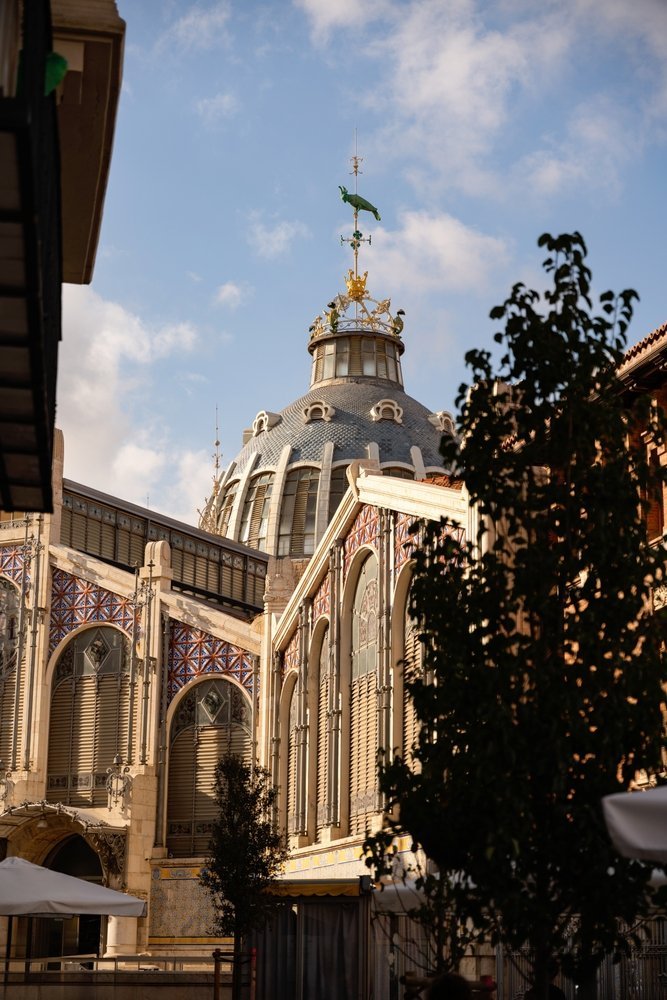
The Mercado Central is Valencia’s great food market, and the building is a piece of Modernisme with iron, glass, domes and colourful tiles. The market opened in 1928 and was designed for 959 stalls, and Valencians still do their everyday shopping here. You’ll find fruit and vegetables from the fields around the city, fish and seafood, hams, cheeses, spices and the special rice varieties used for paella.
The market is open Monday to Saturday from 7.30am to 3pm and closed on Sundays. Most stalls pack up a while before closing time, so come in the morning. There are also a couple of bars inside the market where you sit at the counter in the middle of the hall and can have a coffee, a glass of wine or a sandwich made with local produce.
My tip is to buy fruit, olives and a little jamón here and take it down to the Turia Gardens for a picnic lunch. If you want to learn to make paella, there are cookery classes where you first shop at the market with a chef and then cook the dish from scratch. It’s a pricey class, but an enjoyable way to understand Valencian cooking.
Book a paella class with a Mercado Central tour.
6. The Turia Gardens and Gulliver Park
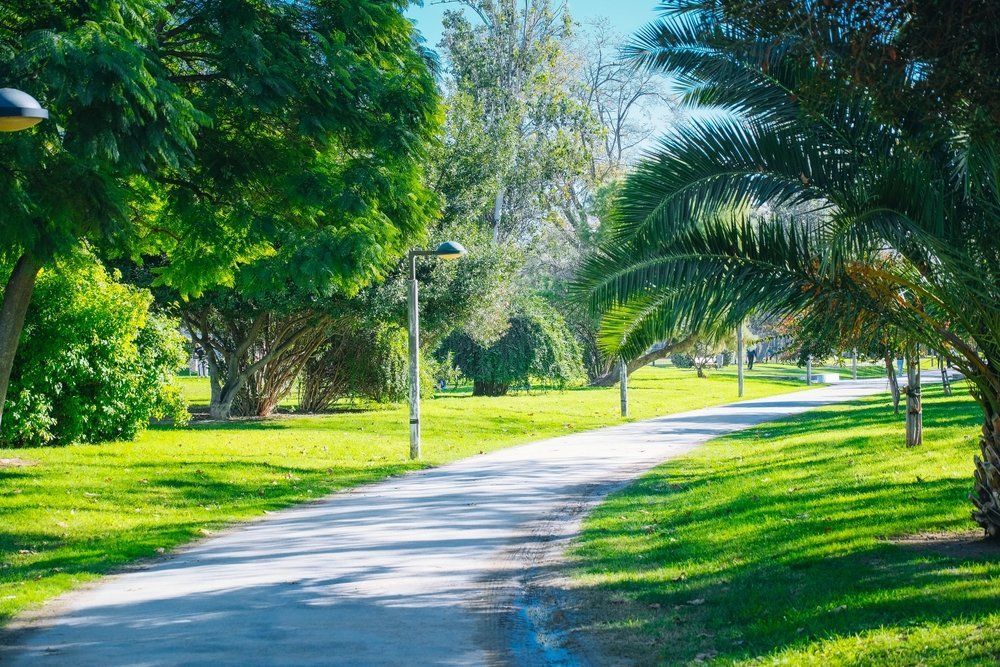
The Jardín del Turia is Valencia’s great green lung and one of the best examples of urban planning I know. The River Turia once flowed through the city, but after the great flood of 1957 it was diverted south of Valencia, and the empty riverbed was turned into a park. Today it stretches nine kilometres through the city from west to east, with cycle paths, running tracks, sports pitches, palms and orange trees, and the old bridges still cross over it.
The park is spanned by bridges from different centuries, including the 15th-century Pont de la Trinitat, the city’s oldest bridge, and Calatrava’s white Pont de l’Exposició. Next to the Ciudad de las Artes y las Ciencias is Gulliver Park, where a 70-metre figure of Gulliver lies on his back and children can climb and slide on him like one of the Lilliputians. It’s free and a hit with kids.
The best way to see the park is by bike, as it’s completely flat and free of traffic, and you can cycle the whole length in about half an hour. You can hire a bike from around 10 euros (around £8) for 24 hours. My tip is to cycle from the Bioparc at the western end down to the Ciudad de las Artes y las Ciencias at the eastern end and finish at Gulliver.
Book a guided bike tour of Valencia’s highlights.
7. Barrio del Carmen
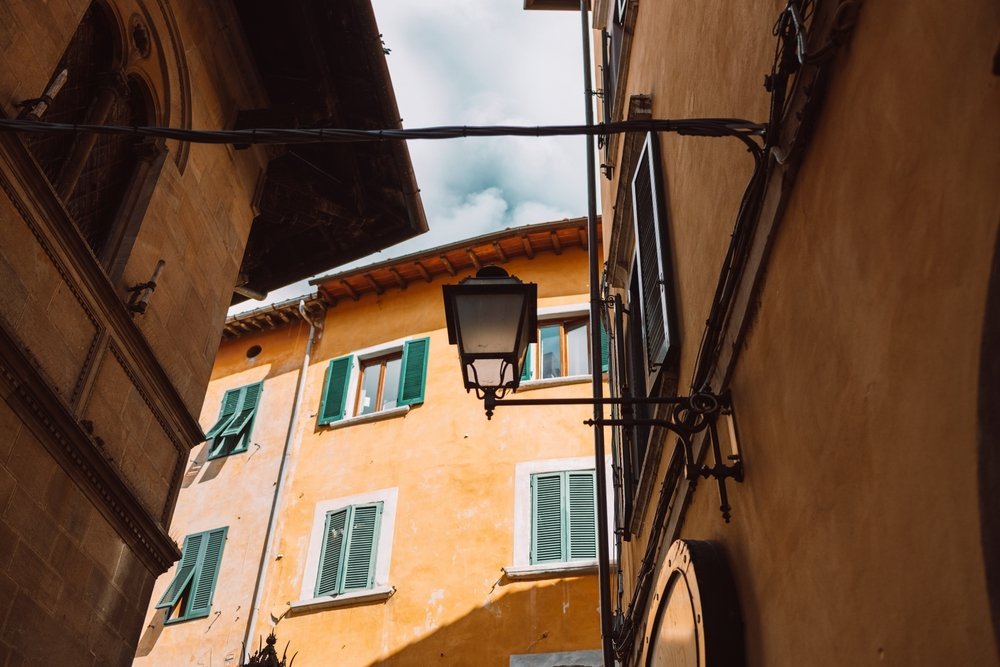
Barrio del Carmen, or El Carme in Valencian, is the northern part of the Old Town and the neighbourhood I think has the most character. It grew up between the old Arab and Christian city walls, and here you walk through narrow streets with old mansions, little squares and washing hanging from the balconies. The area is also known for its street art, and on Calle de Moret the walls are covered with works by both local and international artists.
On Calle Museo is the Casa de los Gatos, a tiny house for the city’s cats with balconies and its own fountain, and right next to it is a plaque commemorating the 1957 flood. The Portal de Valldigna was a gate in the Arab wall, and the Centre del Carme cultural centre occupies a former monastery with Gothic and Renaissance cloisters. The IVAM art museum is also in the neighbourhood.
In the evening, life gathers around Plaza del Tossal, where the terraces fill with young Valencians. It’s a lovely area to stay if you want to walk everywhere, but choose a room facing a courtyard if you’re a light sleeper. Ciutat Vella and El Carmen are the first area in my guide to where to stay in Valencia, and you can also see hotels in Ciutat Vella here.
8. Torres de Serranos and Torres de Quart
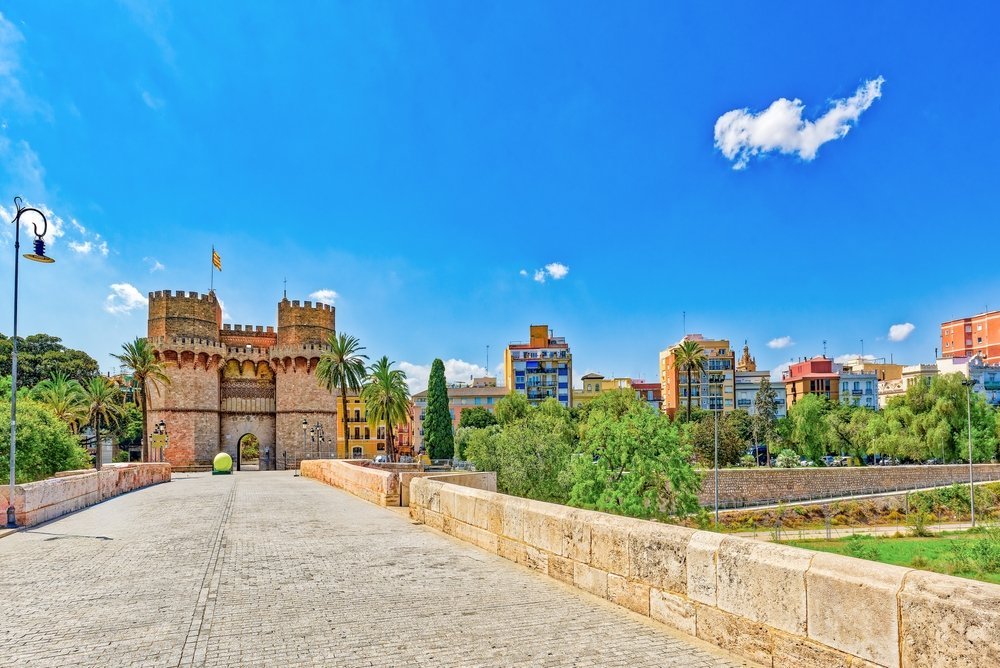
Valencia was once surrounded by a Christian city wall, and today the two great city gates are the most visible part of it that remains. The Torres de Serranos by the Turia Gardens were built in the 14th century under King Pedro IV and were the city’s main entrance from the north. You can climb the stairs to the top and look out over the Old Town, the riverbed and the cathedral tower.
The Torres de Quart on the western side of the Old Town were built from 1441 to 1460, modelled on the gate of Castel Nuovo in Naples. The towers have served as both a women’s prison and a military prison, and on the outside you can still see the holes left by cannonballs from the French siege of 1808.
Both towers cost 2 euros (around £1.70) and are free on Sundays and public holidays. They’re open Monday to Saturday from 10am to 7pm and on Sundays and public holidays from 10am to 2pm, and they’re closed on 1 and 6 January, 1 May and 25 December. In rain, fog or strong wind the climb may be closed for safety reasons. My tip is to do the Torres de Serranos first thing, walk through El Carmen and finish at the Torres de Quart.
9. Palacio del Marqués de Dos Aguas
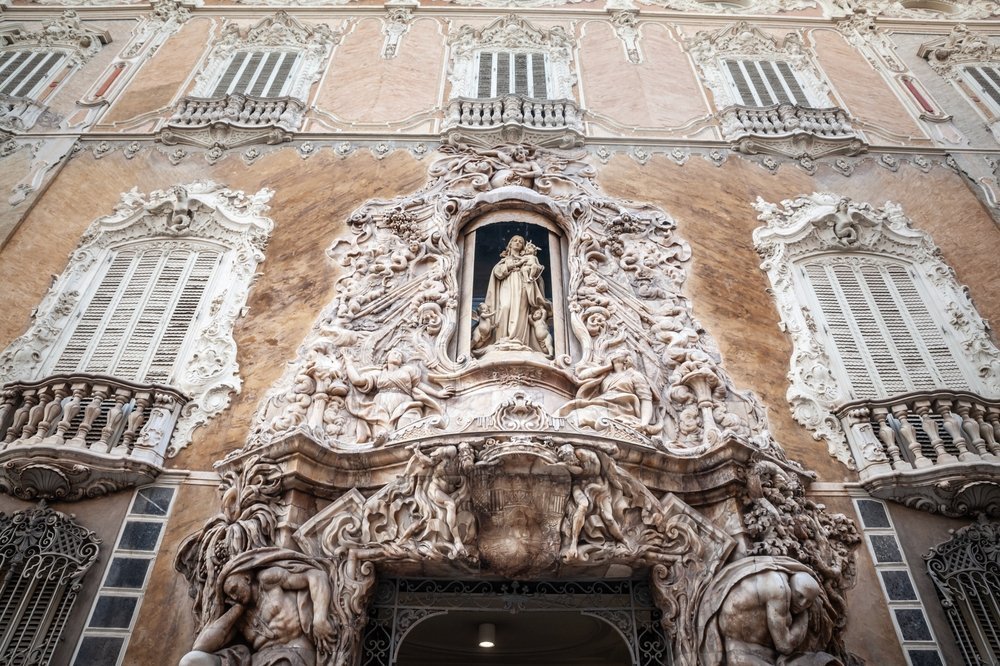
The Palacio del Marqués de Dos Aguas has the most extravagant facade in Valencia. The main doorway is carved in alabaster as a Baroque cascade of figures, and the two men pouring water from jars represent the rivers Júcar and Turia, the “two waters” the palace is named after. Above them stands a figure of the Virgin Mary with the rosary. The facade is worth seeing even if you don’t go inside.
Inside the palace is the national ceramics museum, the Museo Nacional de Cerámica, with ceramics from the 8th century onwards, including works by Picasso. You also walk through the palace’s magnificent rooms, and 18th-century carriages stand in the courtyard. At Christmas the museum displays an 18th-century Neapolitan nativity scene.
Admission costs 3 euros (around £2.50), and the museum is free on Saturdays from 4pm and on Sundays. Under-18s and over-65s also go free. The museum is open Tuesday to Saturday from 10am to 2pm and from 4pm to 8pm, and on Sundays and public holidays from 10am to 2pm, and it’s closed on Mondays. Note the midday break on weekdays. The palace is a few minutes’ walk from both the cathedral and the Mercado Central.
10. Mercado de Colón and horchata
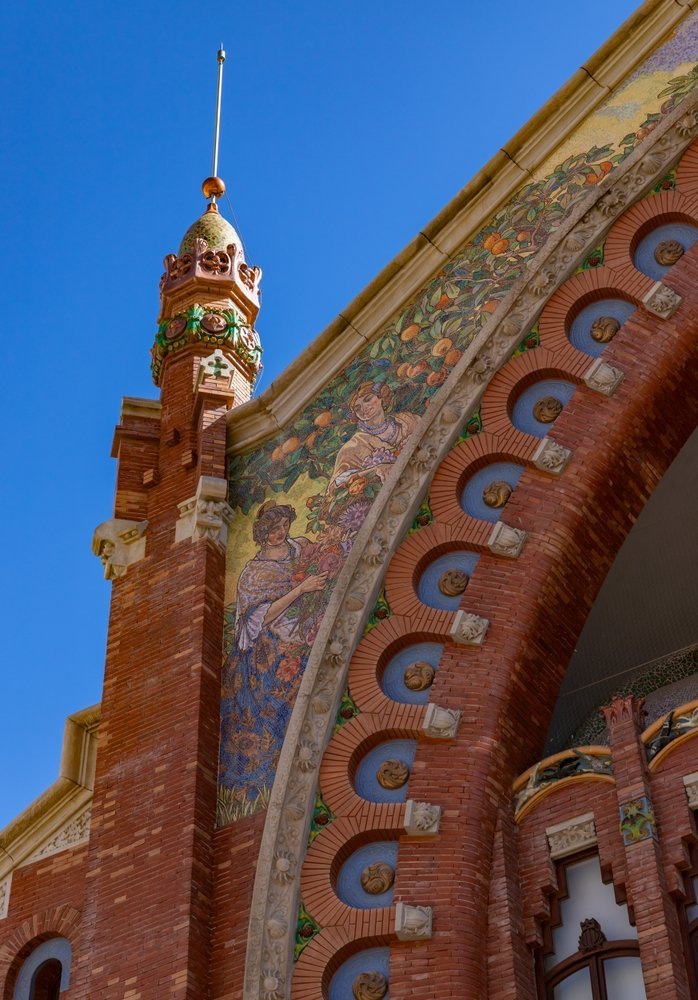
The Mercado de Colón is Valencia’s other great Modernista market, though these days you won’t do much fruit and fish shopping here. The building was designed by the architect Francisco Mora Berenguer and started life as a municipal market in the early 20th century. The facade is decorated with colourful mosaics and ceramics, and the hall is light and airy.
Today the market houses around 20 cafés, bars and restaurants, and it’s a popular spot for lunch or an evening drink. The market is open from 7.30am to 2am Sunday to Thursday and until 3am on Friday and Saturday, but individual venues set their own hours. It’s in Eixample, right by Colón metro station.
My tip is to order a horchata, Valencia’s cold drink made from tiger nuts, with a couple of fartons, soft elongated buns you dip into the drink. You can get them at Horchatería Daniel inside the market, among other places. Horchata tastes sweet and slightly nutty, and it’s exactly what Valencians drink on a hot afternoon. The area around the market is also the city’s upmarket shopping district, with the shops along Calle Colón.
11. Ruzafa
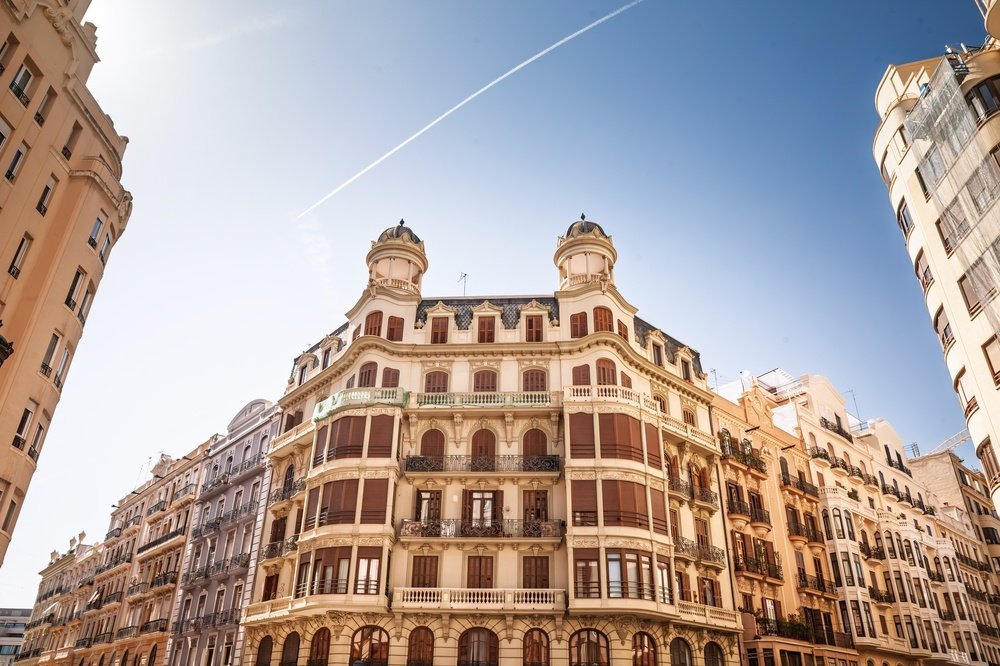
Ruzafa, or Russafa in Valencian, lies just south of the Old Town and the Estació del Nord railway station, and it’s the city’s creative quarter. The tourist office calls it Valencia’s Soho, and the streets are full of small art galleries, vintage shops, speciality coffee bars and some of the city’s best restaurants. It’s also the neighbourhood for tardeo, when Valencians meet for drinks on the terraces in the late afternoon.
In the middle of the neighbourhood is the Mercado de Ruzafa, a Brutalist market from 1962 designed by Julio Bellot Senent. In 2010 the facades were given the colourful gradients that now make the building one of the area’s most photographed sights. The market is open Monday to Saturday from 7.30am to 3pm and closed on Sundays, and it’s where locals shop, so it’s less touristy than the Mercado Central.
My tip is to head to Ruzafa in the evening and eat tapas on one of the side streets, as this is where you’ll find the city’s best restaurant scene. During the day the area is quieter, and a wander round the shops fits nicely after a visit to the Old Town. If you want to stay right in the middle of the dining scene, you can see hotels in Ruzafa here, but choose a room away from the street if you’re a light sleeper.
12. Malvarrosa and Cabanyal beaches
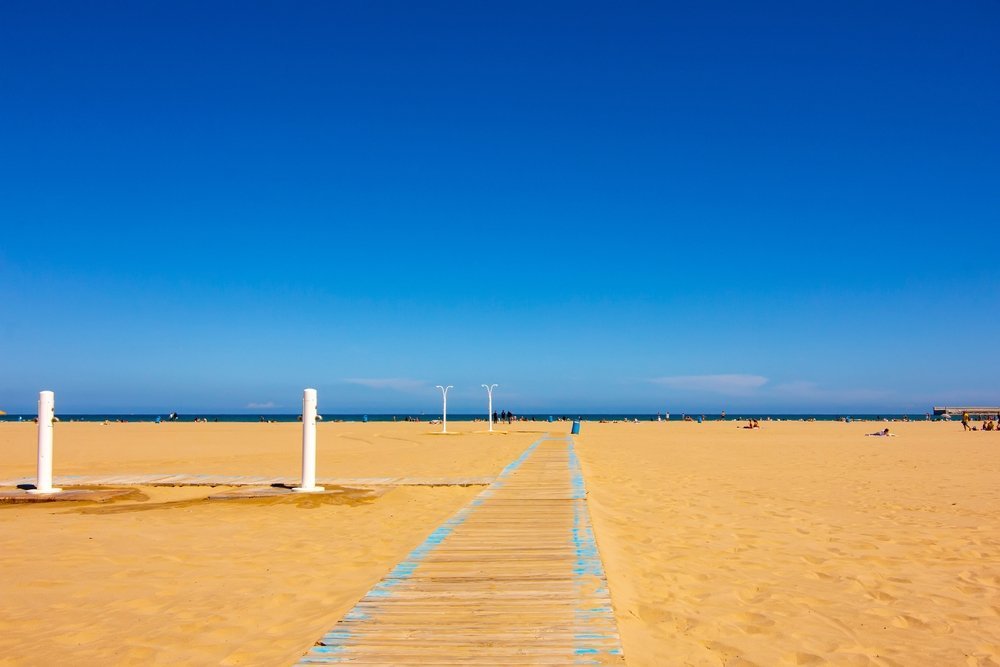
Valencia has wide sandy beaches within the city limits, and you can take the metro or tram straight down to the water. Malvarrosa and Cabanyal beach join up in one long stretch, and it’s hard to tell where one ends and the other begins. Malvarrosa alone is around 1,300 metres long and 140 metres wide, and a promenade with restaurants, beach bars and palm trees runs along the beach.
The name comes from the mallow roses grown in the area in the 19th century, and the writer Vicente Blasco Ibáñez had his villa right by the beach, which is now a museum. On the beach there are toilets, showers, a playground, sunloungers and parasols for hire and a tourist office at Las Arenas. You can get here on metro and tram lines 6, 7 and 8 or on several buses from the centre.
Behind the beach lies El Cabanyal, the old fishing quarter with low houses clad in colourful tiles, and it’s worth a stroll through its parallel streets. My tip is to swim in the morning and have paella on the promenade for lunch. If you’d rather have a beach holiday than a city break, you can see hotels by Cabanyal beach here. Catamarans also sail from the port along the coast, and a sunset trip is a lovely way to end a beach day.
Book a catamaran trip along Valencia’s coast.
13. Eat a proper paella valenciana
Paella comes from Valencia, and people here take it seriously. According to the tourist office, the classic paella valenciana is made with rice, chicken, rabbit and vegetables from the fields around the city, while seafood paella is a different dish. It’s cooked in a large flat pan over an open fire, and the crispy layer of rice at the bottom, the socarrat, is the best part.
The classic place to eat paella is by the beach, and the tourist office mentions Malvarrosa, El Cabanyal and the Marina harbour area as good spots for a paella by the water, including at the restaurant Casa Carmela. Even more traditional is heading out to El Palmar in Albufera, known as the birthplace of paella, where the restaurants line up side by side along the canals. Many places require paella to be ordered for at least two people, and it’s cooked from scratch, so expect a bit of a wait.
My tip is to eat paella at lunchtime, as Valencians do, not for dinner. Avoid the restaurants on the big tourist squares with signs showing garish photos of paella, as they’re rarely the best. In my opinion, chorizo and a mix of meat and seafood in the same pan are also a sign it’s been made for tourists. If you fancy learning to make it yourself, a paella class is a good option, and you can read more about that under Mercado Central.
14. Bioparc
The Bioparc is Valencia’s zoo, built around African animals in large, natural enclosures. You walk through savannah, wetlands, equatorial rainforest and a Madagascar section. Residents include lions, giraffes, hippos and lemurs, and the enclosures are designed as landscapes resembling the animals’ natural habitats, so you don’t feel you’re walking between cages.
A ticket costs from 29.50 euros (around £25) for adults aged 13 to 64 and from 23.50 euros (around £20) for children aged 4 to 12 and over-65s, and children up to 3 go free. Prices vary by season, and you save 1 euro per ticket by buying online. The park is open every day of the year, with last entry an hour before closing.
The Bioparc is at the western end of the Turia Gardens. The easiest way there is metro line 3, 5 or 9 to Nou d’Octubre station followed by a walk of about ten minutes, and buses 98 and 99 stop at the entrance. My tip is to combine the Bioparc with a bike ride back through the Turia Gardens towards the centre afterwards. Allow three to four hours in the park, and come early on hot days before the heat sets in.
Book a ticket to Bioparc Valencia.
15. Las Fallas and the Museo Fallero

Las Fallas is Valencia’s big spring festival and has been on UNESCO’s Intangible Cultural Heritage list since 2016. Each neighbourhood builds enormous figures poking fun at politicians, celebrities and society, and the festival peaks from 14 to 19 March. On the final night the figures are set alight in the streets as fireworks roar. Every day from 1 to 19 March at 2pm there’s the mascletà in Plaza del Ayuntamiento, a deafening gunpowder show you feel right through your body.
If you’re not travelling in March, you can see the figures that escaped the flames at the Museo Fallero. Since 1934, figures have been saved from the bonfire each year by public vote, and the museum displays these ninots indultats alongside old posters and photos from the festival. Admission costs 2 euros (around £1.70) and is free for children under 16 and on Sundays and public holidays.
The museum is open Tuesday to Saturday from 10am to 7pm and on Sundays and public holidays from 10am to 2pm, and it’s closed on Mondays. It’s in Plaza Monteolivete close to the Ciudad de las Artes y las Ciencias, so you can easily visit on the same day. My tip is to book your hotel very early if you want to go to Las Fallas, as the city is full, prices rise sharply and there’s noise and partying around the clock. It’s an incredible experience, but not a relaxing holiday.
16. Iglesia de San Nicolás
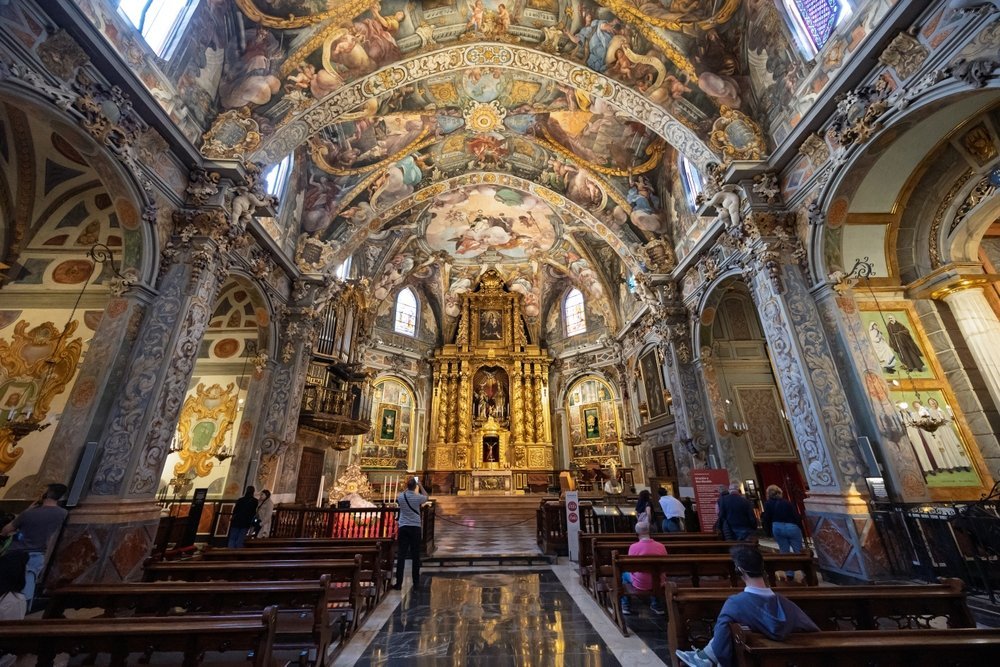
From the outside the Iglesia de San Nicolás doesn’t look like much, as the church is tucked away between the houses of the Old Town. But inside, the vault is covered in Baroque frescoes in vivid colours and gold, which is why the church is called Valencia’s Sistine Chapel. It’s one of the churches in the city where you really must remember to look up, as every centimetre of the ceiling is painted and the gold glitters in the light from the windows.
A ticket with an audio guide and the immersive experience, where the frescoes are lit with video mapping and music, costs 16 euros (around £13) online and 18 euros (around £15) at the ticket office, and children up to 12 go free. The church is closed to tourists on Mondays and open Tuesday to Sunday, with last entry an hour before closing. You can’t walk around during Mass, so check the times on the church’s website.
The price is high compared with the city’s other churches, but I think it’s one of the biggest surprises in Valencia. My tip is to combine the visit with La Lonja and the Mercado Central, which are a few minutes’ walk away. Spend a little time looking up without the video mapping, as the frescoes are at their most beautiful when you can simply sit and gaze at them.
Book a ticket to the Iglesia de San Nicolás.
17. Day trip to Albufera and El Palmar
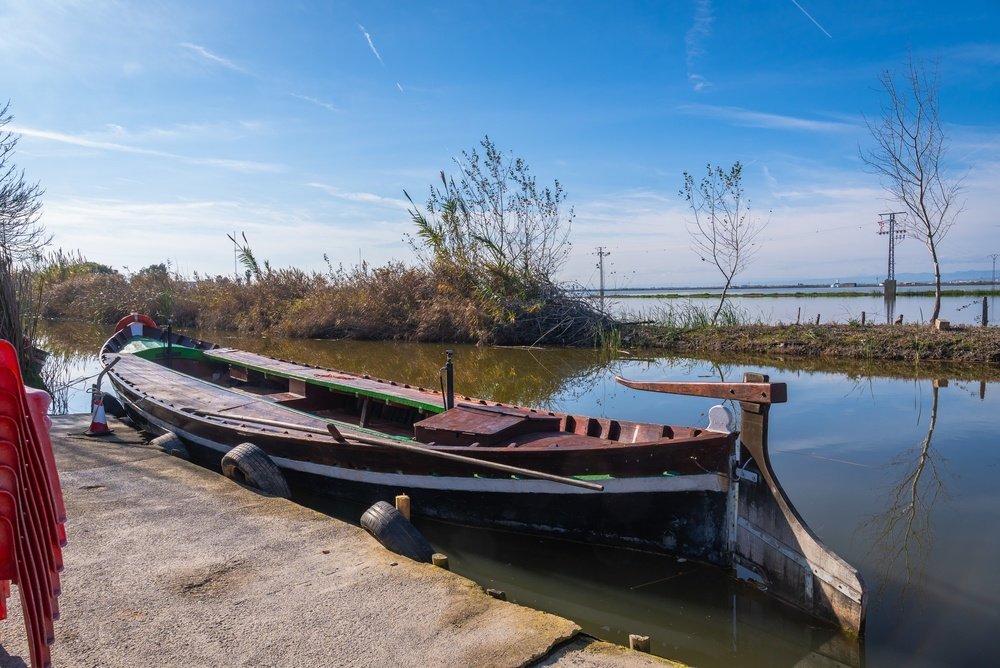
Just south of Valencia lies L’Albufera Natural Park, a large freshwater lagoon surrounded by rice fields, canals and a narrow strip of dunes and pine forest along the sea. This is where the rice for paella is grown, and the area is an important site for migrating birds. In the village of El Palmar, which the tourist office calls the birthplace of paella, the restaurants stand side by side, and you can still see the traditional barracas, small thatched cottages.
The classic thing to do is take a trip on the lagoon in one of the flat wooden boats. The boat trip takes about 40 minutes, and the most popular time is sunset, when the lagoon turns red and gold. Boats leave from El Palmar and El Saler, among other places. According to the tourist office, the rice fields look their best from May to July and from November to January, while they lie dry in March and April.
You can get here on EMT bus lines 24 and 25, which run from the city out through the natural park in under an hour and are free with the Valencia Tourist Card. You can also go on an organised tour with bus, boat trip and paella. My tip is to take the bus out for lunch in El Palmar, walk along the canals and finish with a boat trip at sunset. On the way are the beaches at El Saler, which are wilder and quieter than the city beaches.
Book a boat trip on the Albufera, including at sunset.
Practical travel tips for Valencia
The Old Town is so compact that you can walk between most of the sights, and for the rest of the city you use the metro, trams and buses. An EMT bus ticket costs 2 euros (around £1.70), and the metro costs from 1.50 euros (around £1.30) for one zone, plus a rechargeable card. From the airport, metro lines 3 and 5 run into the centre, and a single ticket costs 4.80 euros (around £4).
If you plan to see a lot, the Valencia Tourist Card can pay off. The card, for 24, 48 or 72 hours, costs from 15.30 euros (around £13) online and gives you free public transport, including to and from the airport, free entry to a number of museums and monuments and discounts at places such as the Ciudad de las Artes y las Ciencias.
Plan your days around the days of the week. La Lonja, the towers and several municipal museums are free on Sundays, but the Mercado Central and Mercado de Ruzafa are closed, and the ceramics museum and Museo Fallero are closed on Mondays. Spring and autumn are the best times to visit, as summer gets very hot, and during Las Fallas in March the city is full and expensive.
If you want the full selection, you can see all hotels in Valencia on Booking.com. If you’re continuing your trip, you can find out where to stay in Alicante further down the coast, or take the high-speed train to the capital and read my picks of things to do in Madrid. If you’re heading north, I’ve also written about things to do in Barcelona.
Travel ressources & websites I use all the time 👇
• Booking.com has the best offers on hotels and unique places to stay
• GetYourGuide is the best place to book tours & activities with free cancellation
• Welcome Pickups is the best & safest place to pre-book airport transfers
Psst 👀 Have you subscribed to my Youtube channel and my Instagram where I provide more useful travel tips?