

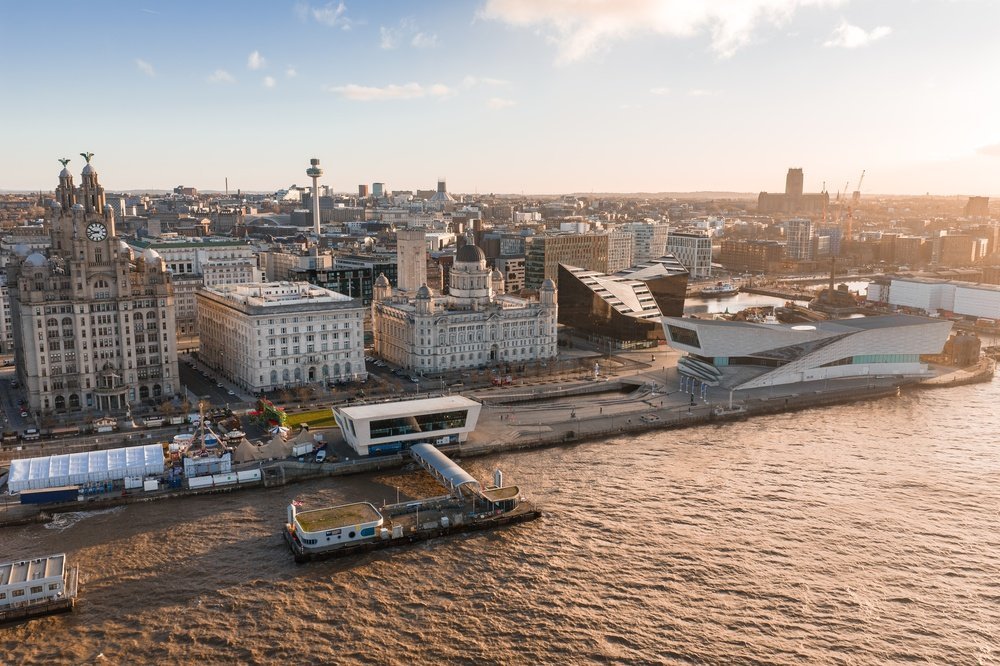
Liverpool is the port city that gave the world The Beatles, two of England’s biggest football clubs and a waterfront that ranks among the finest in Britain. The city has a proud, slightly rough-edged charm, and the local Scousers are known as some of the chattiest people in the country. Many of the best things to do in Liverpool cost nothing, and the centre is so compact that you can reach the waterfront, the Cavern Quarter and the cathedrals on foot in a single day.
I’ve picked out 18 experiences I would prioritise, from the Royal Albert Dock, the Cavern Club and Anfield to the cathedrals, the wartime bunker beneath the city and the iron men on Crosby Beach. All prices are in pounds sterling. Several of the free museums close a couple of days a week, so plan around the days of the week. At the end you’ll find my practical tips on trains, ferries and tickets.
Contents
1. Royal Albert Dock
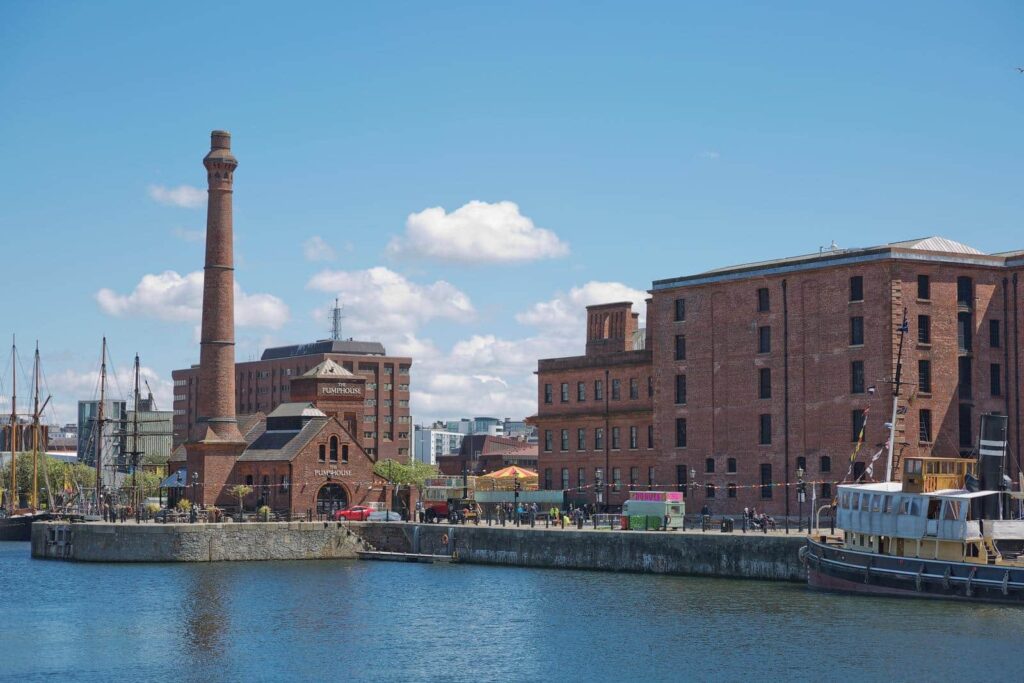
The Royal Albert Dock is where most people start, and it’s easy to see why. The red-brick warehouses with their sturdy iron columns were designed by the engineer Jesse Hartley and opened in 1846 as the first warehouses in Britain built entirely without combustible wood. Today they house restaurants, bars, shops and museums, and from the quayside you look across the basins to the Pump House and the Royal Liver Building. It’s free to wander around.
Tate Liverpool’s building at the dock has been closed for a major redevelopment, and in the meantime the gallery is showing its exhibitions for free at RIBA North on Mann Island, so check Tate’s website before you go. The Merseyside Maritime Museum and the International Slavery Museum have also been closed for a lengthy refurbishment. From Liverpool ONE and James Street Station it’s about a five-minute walk down here.
Come early in the morning if you want to photograph the dock without the crowds. If you’d like to stay right by the water, Holiday Inn Express Liverpool-Albert Dock is inside one of the old warehouse buildings, and in my guide to where to stay in Liverpool you’ll find more hotels on the waterfront.
Book an amphibious tour with a splashdown in the Royal Albert Dock here.
2. The Beatles Story
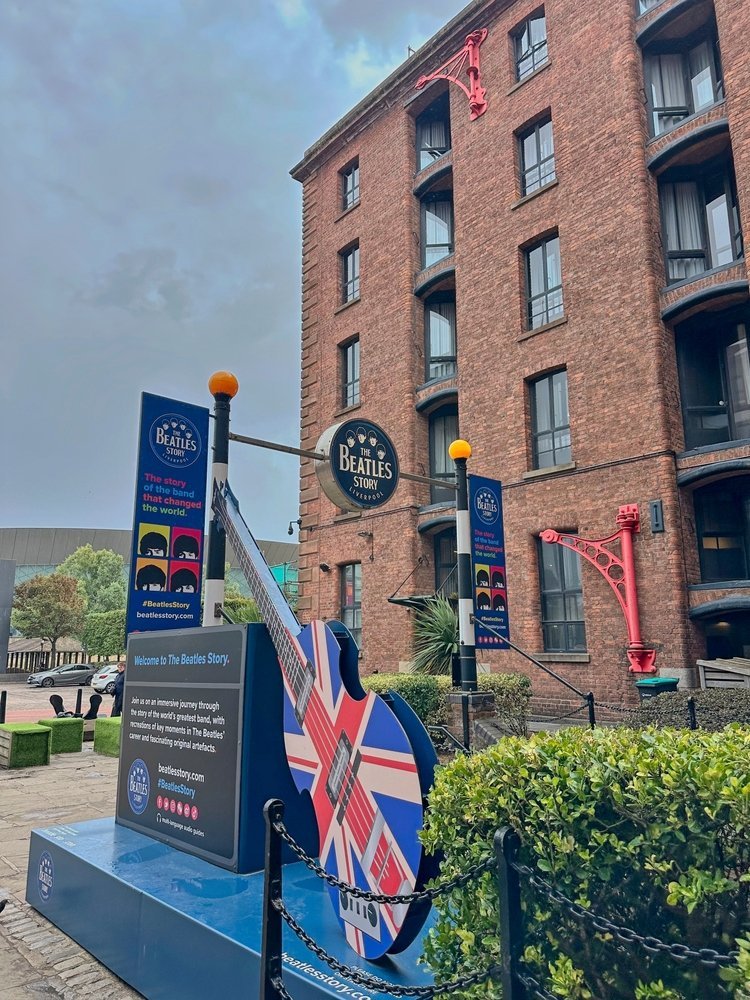
The Beatles Story sits in the vaults beneath one of the warehouses at the Albert Dock and is the world’s largest permanent exhibition about the band. You follow John, Paul, George and Ringo from their childhood in Liverpool, via Hamburg and their early days at the Cavern Club, to Beatlemania, Abbey Road and their solo careers. Along the way you walk through a replica of the Cavern Club, sit in a plane from the US tour and finish in an all-white room with the piano on which John Lennon wrote Imagine.
An adult ticket costs £20, and an audio guide in 12 languages is included in the price. The museum is normally open every day from 9am, and on Saturdays it stays open an hour longer than on weekdays. You can’t pay cash on the door, so it’s best to book online and choose a time slot.
Allow an hour and a half to two hours, and take the audio guide, because that’s what tells the story. Arrive early in the day at weekends and during the school holidays, when the corridors fill up quickly.
Book tickets for The Beatles Story here.
3. The Cavern Club and Mathew Street
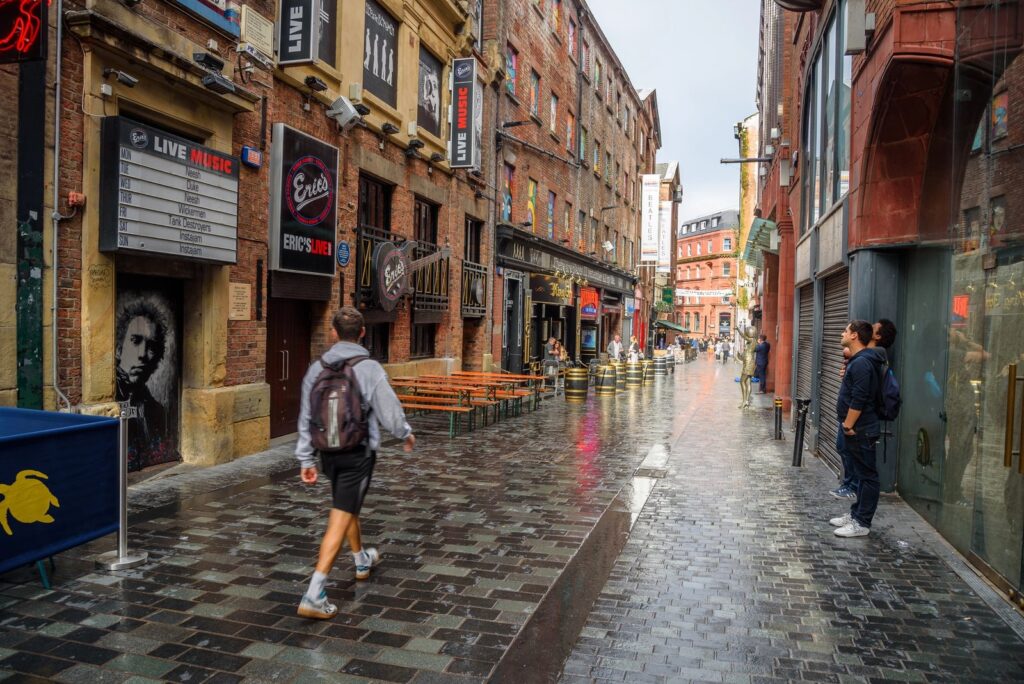
On narrow Mathew Street in the Cavern Quarter, The Beatles played around 300 times in the cellar that made them famous. The original Cavern Club was demolished in 1973, but it was rebuilt almost on the same spot using many of the old bricks, and the atmosphere under the low vaulted ceilings is still great. There’s live music every day, and on the street you’ll find the John Lennon statue, the Wall of Fame with the names of bands who have played here, and several Beatles-themed pubs.
The club opens every day at 11am, entry costs £6, and a pass for the whole day and evening costs £8.50. It’s card only, children under 12 get in free, and 12 to 17-year-olds can stay until 8pm with an adult. From Moorfields and Liverpool Central it’s just a few minutes’ walk.
Come in the afternoon if you want a spot close to the stage, as there are long queues on weekend evenings. If you’d like to stay right in the Beatles quarter, the Hard Days Night Hotel is just around the corner.
Book a guided Beatles walking tour here.
4. Magical Mystery Tour, Penny Lane and Strawberry Field
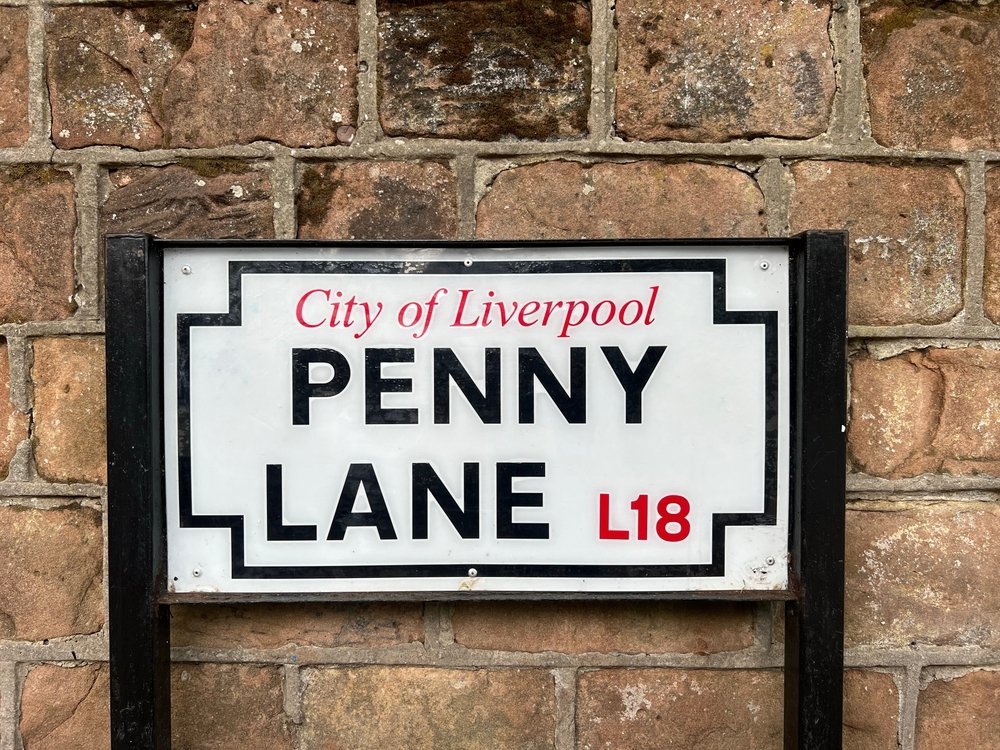
Many of the places that inspired Beatles songs are in the suburbs south of the centre, and the easiest way to see them is on a bus tour. The Magical Mystery Tour runs in a brightly painted bus resembling the one from the film, and in around two hours you pass George Harrison’s birthplace, Ringo Starr’s childhood home, the houses where John Lennon and Paul McCartney grew up, the Penny Lane street sign and the red gates at Strawberry Field. The guide tells the stories behind the songs, and Beatles music plays the whole way.
The tour starts at Anchor Courtyard by the Albert Dock and ends at the Cavern Club, with entry included in the ticket. An adult ticket typically costs around £30. You see the houses from the outside, but Lennon’s and McCartney’s childhood homes can also be visited inside on special National Trust tours.
Book well ahead in summer, when departures often sell out. If the Magical Mystery Tour is full, other companies run similar bus tours for less.
Book a Beatles bus tour to Penny Lane and Strawberry Field here.
5. Pier Head, the Three Graces and RLB360
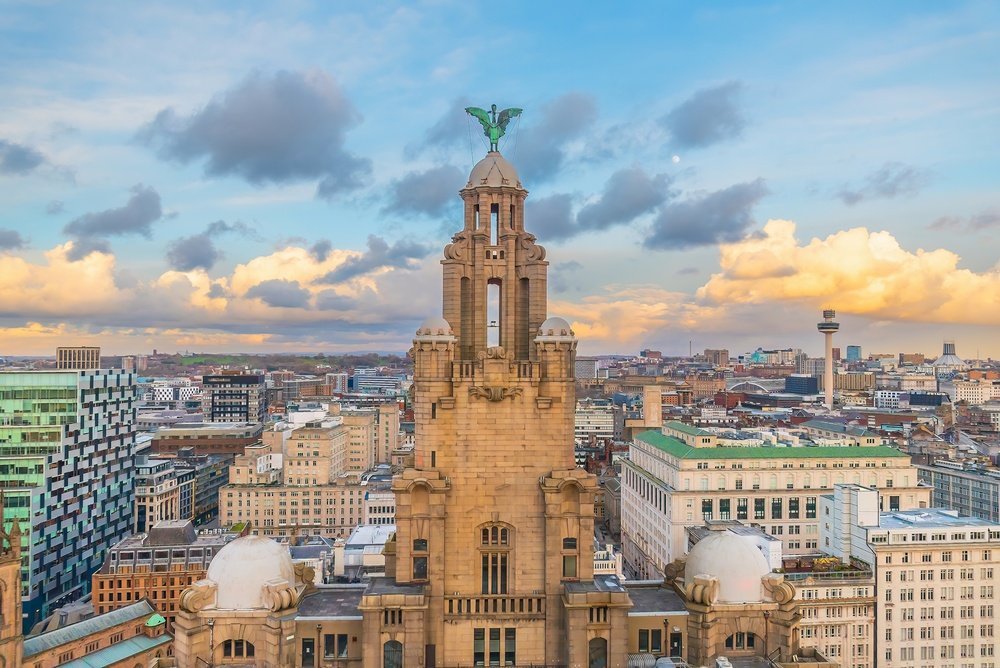
At Pier Head stand the three buildings that are Liverpool’s landmark, the Three Graces. The Royal Liver Building from 1911 was one of the world’s first large reinforced-concrete buildings, and on top of its two clocks perch the copper Liver Birds. Legend has it that one looks out to sea for the sailors and the other looks over the city. Next to it are the Cunard Building and the domed Port of Liverpool Building, and on the square in front the four Beatles stroll in bronze.
RLB360 takes you up one of the clock towers with views over the whole city and the River Mersey. An adult ticket costs £16, the tour takes around 70 minutes, and you have to climb 124 steps yourself above the 10th floor. Children under five aren’t allowed. James Street Station is a five-minute walk away.
Take the ferry across to the Wirral side if you want all three buildings in one shot. The classic skyline photo is best taken from Seacombe in the late afternoon.
Book the tour up the Royal Liver Building here.
6. Museum of Liverpool
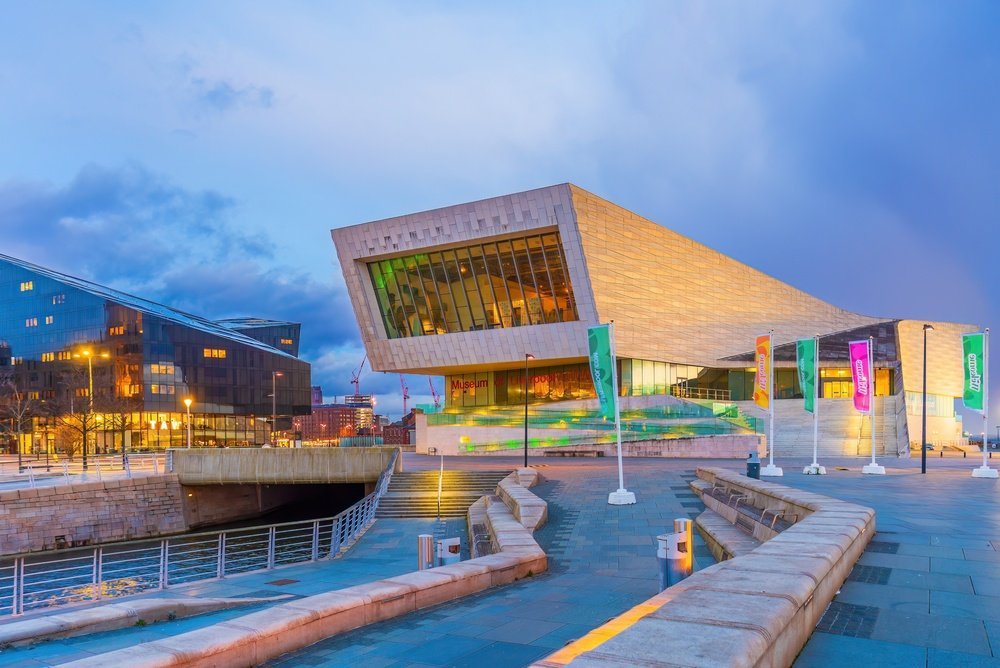
The Museum of Liverpool is the white, modern building on Mann Island between Pier Head and the Albert Dock, and it’s the best place to get to grips with the city. The exhibitions tell Liverpool’s story from the first settlements, through the port’s heyday and emigration to America, to the music, the football and the humour. You can sit inside a carriage from the Liverpool Overhead Railway, the elevated line that once ran along the docks, and take in the huge windows looking out over the river. There’s also a great area for the youngest children.
Admission is free, and the museum is usually open from 10am to 5pm, but National Museums Liverpool has at times kept some of its museums closed on Mondays and Tuesdays, so check the opening days before you go. It’s a two-minute walk from the Albert Dock and Pier Head.
Head up to the large panoramic windows on the first floor, where you get one of the best free views of the river and Pier Head. Allow at least an hour and a half for the museum.
7. Western Approaches
Beneath the Derby House office building behind the Town Hall lies one of Liverpool’s best-kept secrets. This is where the Battle of the Atlantic was directed during the Second World War, as the Allies fought the German U-boats to keep Britain’s supply lines open. The bunker has more than 100 rooms, and the vast map room, with its charts of the Atlantic, telephones and boards, looks as though the staff have only just gone home. You’ll also see the teleprinter room, the officers’ offices and the tiny sleeping quarters.
The museum is open daily from 10am to 6pm with last entry at 5pm, and an adult day ticket costs £16.50. The entrance is on Rumford Street by Exchange Flags, and it’s a five-minute walk from Moorfields Station.
Allow an hour and a half and read the signs in the map room, because it’s the stories of the convoys that bring the place to life. It’s a good choice on a rainy day, and there’s rarely a queue.
8. Anfield and the stadium tour
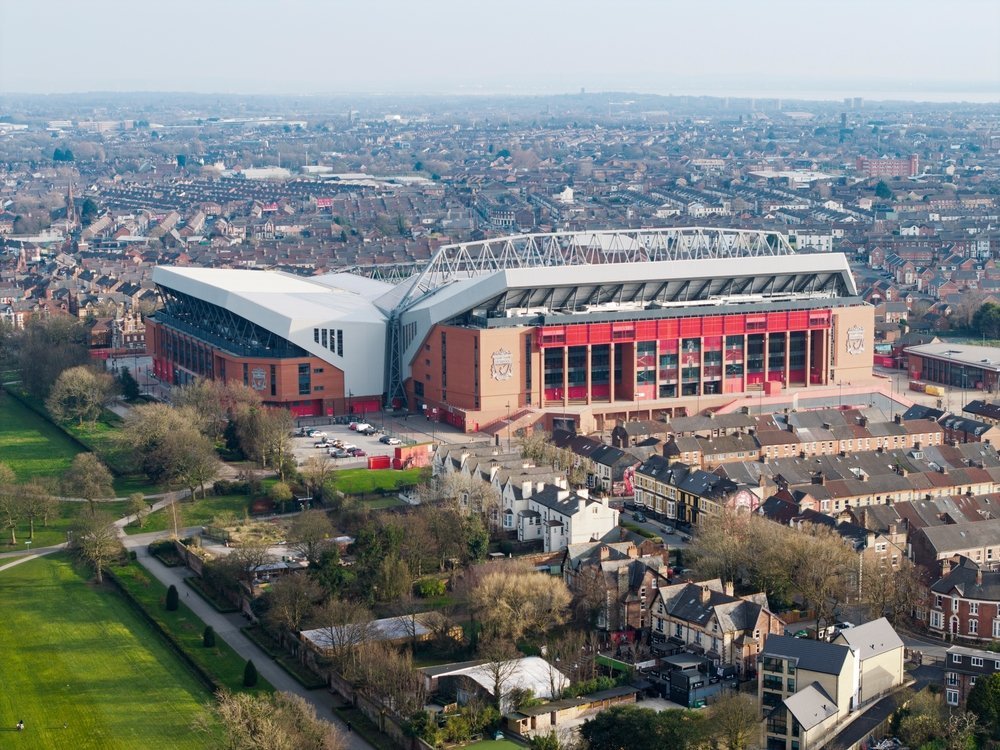
Anfield has been Liverpool FC’s home ground since 1892, and even on non-match days the atmosphere around the stadium is something special. On the stadium tour you walk through the home dressing room, touch the famous This is Anfield sign and head out through the players’ tunnel to the dugouts by the pitch. The museum displays the club’s trophies, from the European Cup finals to the latest titles. Outside stand the Shankly Gates, the statues of Bill Shankly and Bob Paisley and the memorial to the 97 victims of the Hillsborough disaster.
An adult ticket for the stadium tour and museum costs £26 when you book in advance, and it’s more expensive on the door. The tour takes around an hour and a half, and tours are limited on match days. The stadium is about four kilometres north-east of the city centre, and buses from Queen Square take around 20 minutes.
Wander the streets behind the stadium, where the gable ends are covered in huge murals of club legends. If you have more time, Stanley Park and Goodison Park are right next door.
Book the Anfield stadium tour here.
9. Everton: Hill Dickinson Stadium and Goodison Park
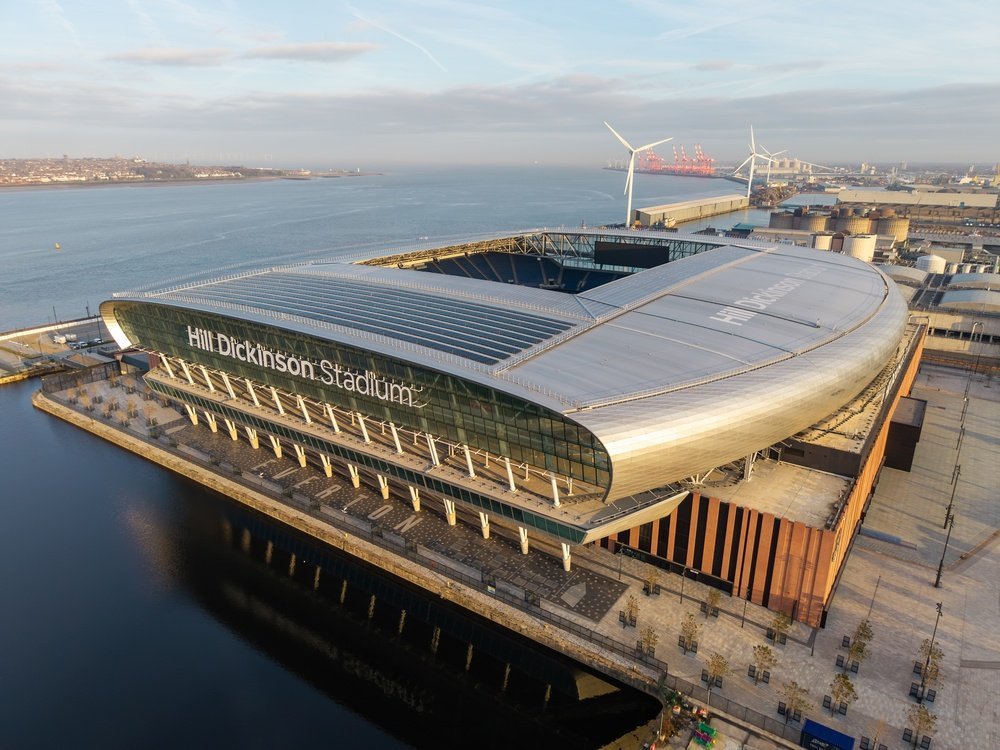
Everton played for more than 130 years at Goodison Park on the other side of Stanley Park, but in 2025 moved to the Hill Dickinson Stadium at Bramley-Moore Dock, right on the River Mersey. The new stadium holds around 52,800 spectators, and its brickwork and the old dock walls help it blend in among the warehouses. On the tour you’ll see the dressing room, the players’ tunnel, the pitch and the press room, and from the large South Stand there are views over the river and the city.
Everton offers tours of both the Hill Dickinson Stadium and Goodison Park, where the club’s women’s team now plays. The tour of the new stadium takes around an hour and a half and costs about £26, while the Goodison Park tour costs around £20. It’s a 15-minute walk from Sandhills Station to the new stadium.
Afterwards, walk south along the quayside to Stanley Dock, where the old tobacco warehouse is one of the largest brick buildings in the world. One of the warehouses is home to Titanic Hotel Liverpool, which is ideal for a football weekend with Everton.
Book a guided tour of the Hill Dickinson Stadium here.
10. St George’s Hall
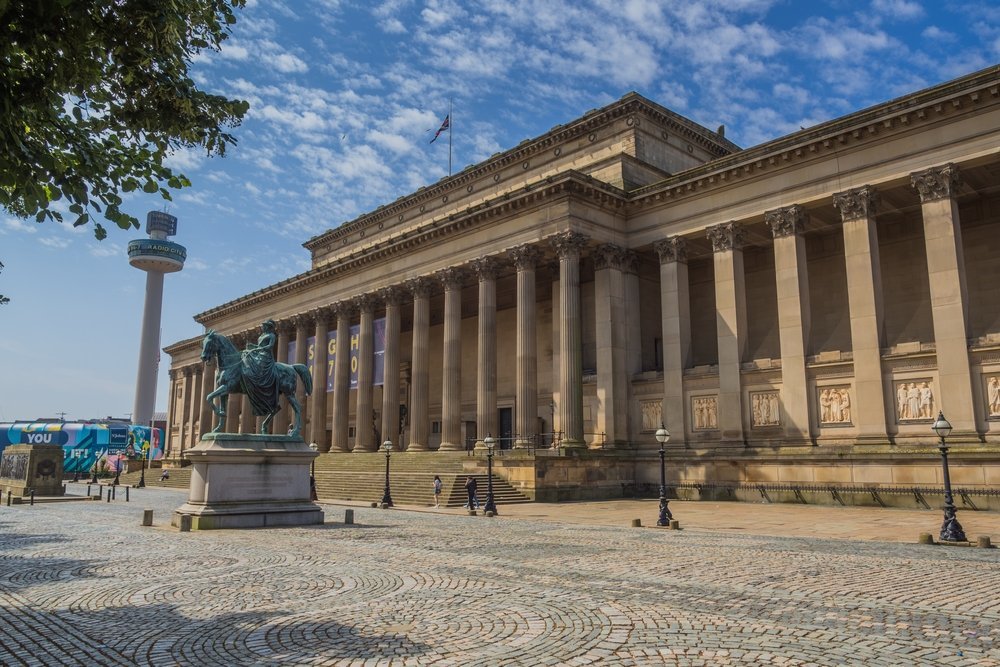
When you step out of Lime Street Station, the first thing you see is St George’s Hall. The neoclassical building with its long colonnades opened in 1854 and housed both a concert hall and the city’s law courts. Inside, the Great Hall, with its vaulted ceiling and huge organ, is one of the finest rooms in England, and beneath the wooden floor lies a floor of more than 30,000 Minton tiles, which is only uncovered a few times a year. In the old courtrooms and the cells in the basement you can see where the convicted waited.
The visitor centre is normally open Monday to Saturday from 9.30am to 5pm, but the building itself can only be seen on guided tours on selected dates, as it’s still used for weddings and events. Check the hall’s programme for tours and prices. It’s a four-minute walk from Lime Street.
Walk round the back of the building to St John’s Gardens, where it’s peaceful and there are benches looking out at the columns. In December, the city’s Christmas market fills the square in front.
11. Walker Art Gallery and World Museum
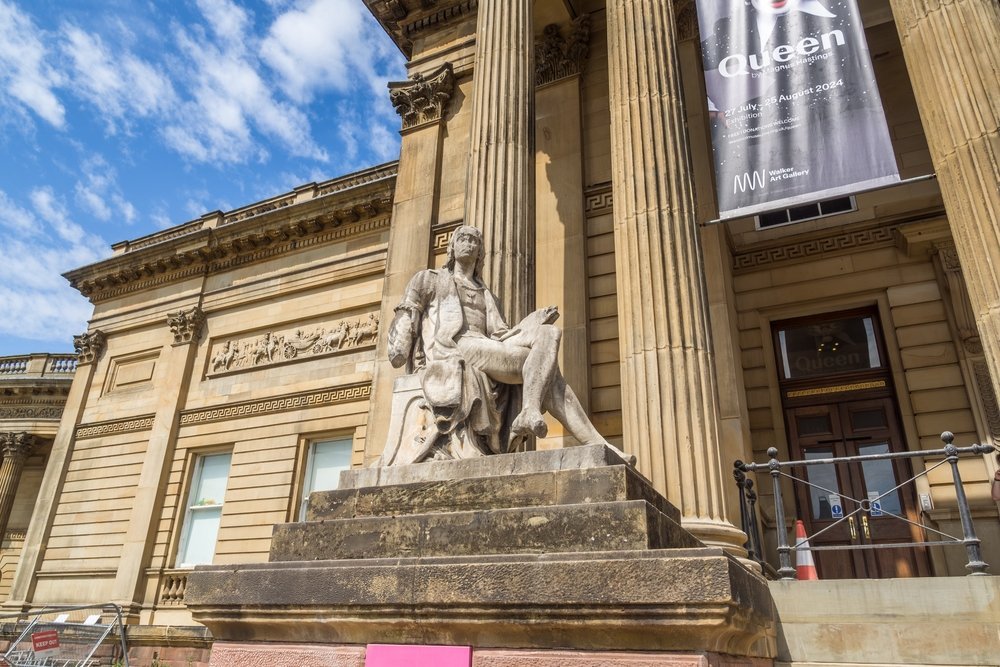
On William Brown Street, opposite St George’s Hall, is the city’s cultural quarter, with three free institutions side by side. The Walker Art Gallery has one of the best art collections outside London, with paintings by Rembrandt, Rubens and Turner, a large collection of Pre-Raphaelites and David Hockney’s Peter Getting Out of Nick’s Pool. Next door, the World Museum has dinosaurs, Egyptian mummies, an aquarium and a planetarium, and it’s one of the best places in the city with children.
Both museums are free to enter and are usually open Wednesday to Sunday from 10am to 5pm, while the planetarium charges a small fee. Between them is the Central Library with the circular Picton Reading Room, which you can also pop in and see for free. Lime Street Station is a five-minute walk away.
Come on a weekday if you want to enjoy the Walker Art Gallery in peace, as the World Museum is packed with families at weekends. Take the lift to the top floor of the library, where a roof terrace looks out over the cultural quarter.
12. Liverpool Cathedral and Metropolitan Cathedral
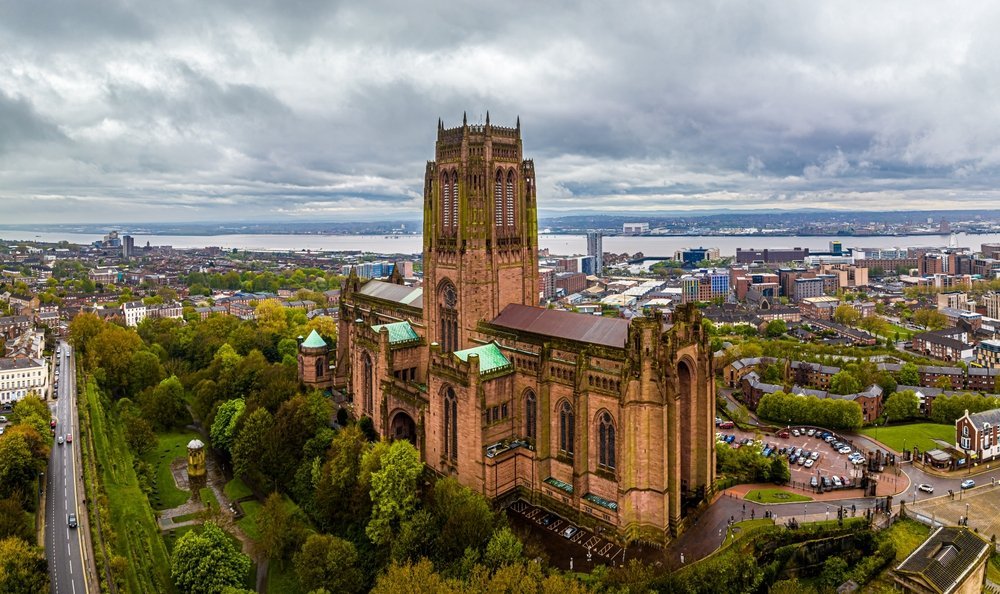
Liverpool has two cathedrals, one at each end of Hope Street, and they are about as different as two churches can be. The Anglican Liverpool Cathedral, built in red sandstone, is the largest cathedral in Britain and was designed by Giles Gilbert Scott, who also designed the red telephone box. Construction ran from 1904 to 1978, and the interior is so vast that you have to see it to believe it. The Catholic Metropolitan Cathedral from 1967 is circular and has a tower of stained glass, which has earned it the nickname Paddy’s Wigwam.
Liverpool Cathedral is free to visit, and the tower costs £8, with two lifts and 108 steps to the top. The Metropolitan Cathedral is free too, and beneath it lies the crypt of the enormous cathedral that Edwin Lutyens never got to build. From Liverpool Central, you can walk to either in 15 minutes.
Walk along Hope Street between the two and look out for the artwork of stacked suitcases on the pavement. If you’d like to stay in the quiet Georgian Quarter, Hope Street Hotel sits right between the two cathedrals.
Book a ghost tour along Hope Street to the cathedral here.
13. Bold Street and St Luke’s Bombed Out Church
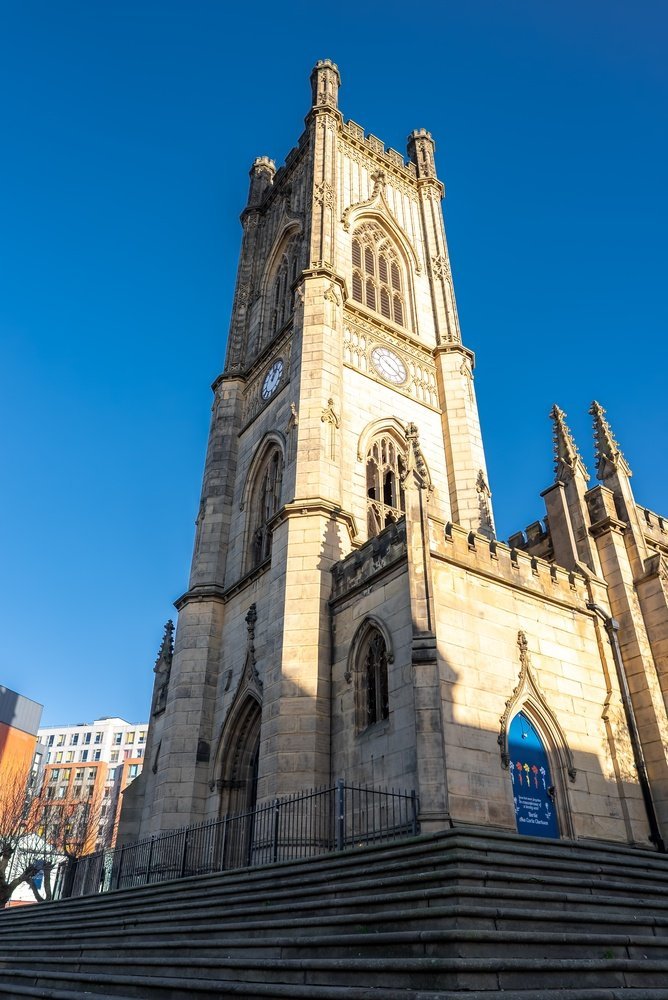
Bold Street runs uphill from Liverpool Central, and it’s the city’s best street for cafés, small restaurants, vintage shops and record shops. At the very top stands St Luke’s Church, which was hit by an incendiary bomb during the major air raid in May 1941. The church burnt out, but the walls and tower survived, and today the roofless ruin is a memorial to the bombing of the city. In the garden stands the statue All Together Now, depicting the Christmas truce of 1914, with a British and a German soldier shaking hands.
It’s free to walk up Bold Street and see the ruin from the outside. The garden is often open during the day, while concerts, markets and film nights inside the church require a ticket, so check the programme. From Liverpool Central, it’s a five-minute walk.
Have breakfast or lunch on Bold Street, where some of the city’s best cafés are packed close together. The street is close to the Adagio at Liverpool Central, which you can read about in my review of Aparthotel Adagio Liverpool City.
14. Baltic Triangle
South of the centre, between Chinatown and the docks, lies the Baltic Triangle, an old warehouse and industrial district that creative businesses have taken over. The gable walls are covered in street art, and the former workshops now house bars, breweries, music venues and the large Baltic Market in Cains Brewery Village, where food stalls sell everything from pizza and tacos to Korean and Vietnamese dishes. The area is quiet during the day, but from Friday afternoon it fills up with people heading out.
It’s free to wander around, and you only pay for food and drinks. The food market isn’t open every day of the week, so check the days, and many bars don’t open until late afternoon. From Albert Dock and Liverpool ONE, it’s a 15-minute walk.
Walk along Jamaica Street and Greenland Street to see the biggest murals, and finish with dinner at Baltic Market. Come between Thursday and Saturday if you want to experience the area at its liveliest.
15. A Trip on the Mersey Ferry
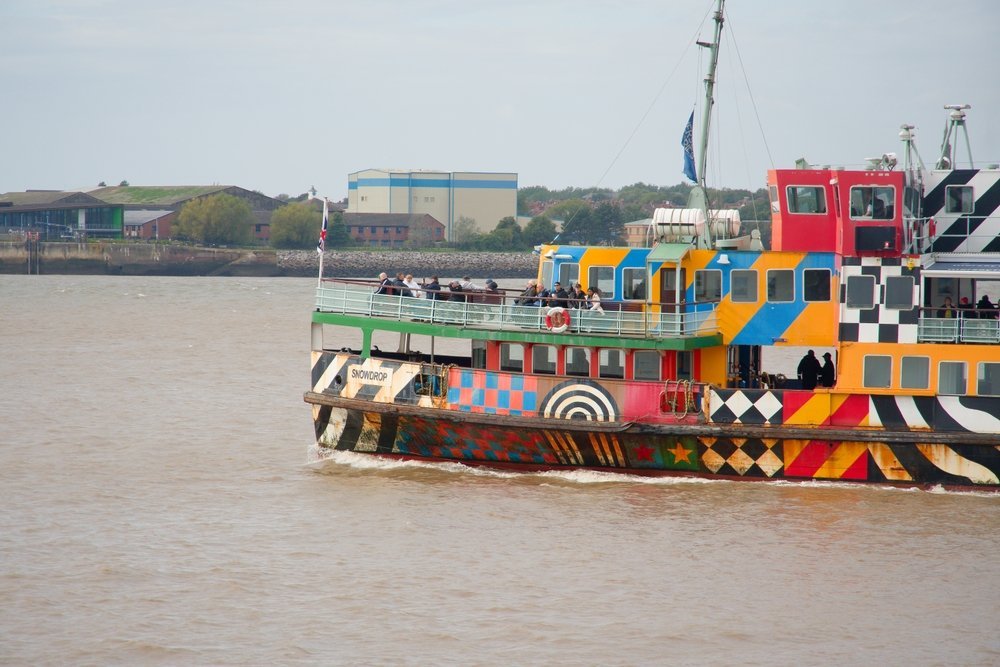
Ferries have crossed the Mersey for more than 800 years, and the song Ferry Cross the Mersey by Gerry and the Pacemakers made them famous around the world. Today, the River Explorer Cruise is the best way to see the waterfront. The trip starts at Pier Head, sails across to Seacombe and Woodside on the Wirral side and back again, while a commentary tells you about the port, the war and the music. From the water, you see the Three Graces, Albert Dock and the cathedrals lined up.
The River Explorer Cruise takes 50 minutes and costs £14 for adults, and it sails every day all year round. On weekday mornings and afternoons, the ferry also runs as a commuter service, where a single ticket is cheaper. From James Street Station, it’s a five-minute walk down to the terminal.
Stand on deck rather than sitting inside, and bring a jacket, as it’s almost always windy on the river. Go on a clear day in the late afternoon, when the light falls on the buildings.
Book your Mersey Ferry cruise here.
16. Sefton Park and Palm House
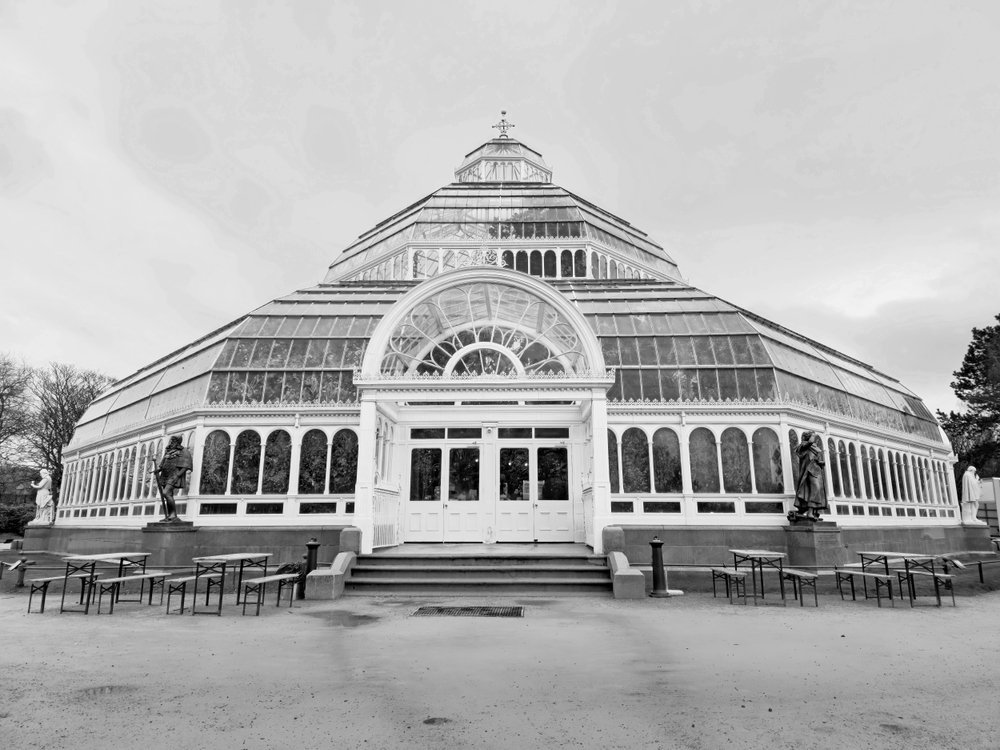
Sefton Park in the south of the city is Liverpool’s largest park and was laid out in 1872 with lakes, waterfalls, bridges and large lawns. In the middle of the park stands the Palm House, an octagonal glass and iron glasshouse from 1896 with palms and plants from all over the world. Around the glasshouse stand statues of famous explorers and botanists, including Charles Darwin, Captain Cook and Christopher Columbus. In summer, the park is full of picnics, and it hosts concerts and festivals.
Entry to both the park and the Palm House is free, and the Palm House is usually open from 10am to 5pm. The glasshouse occasionally closes for private events, so check the website before you head out. Take Merseyrail from Liverpool Central to Aigburth in 15 minutes, then walk to the park in about 15 minutes.
Combine your visit with Lark Lane right next to the park, which has pubs, cafés and small restaurants. It’s a good place for lunch if you need a break from the city centre.
17. Crosby Beach and Another Place
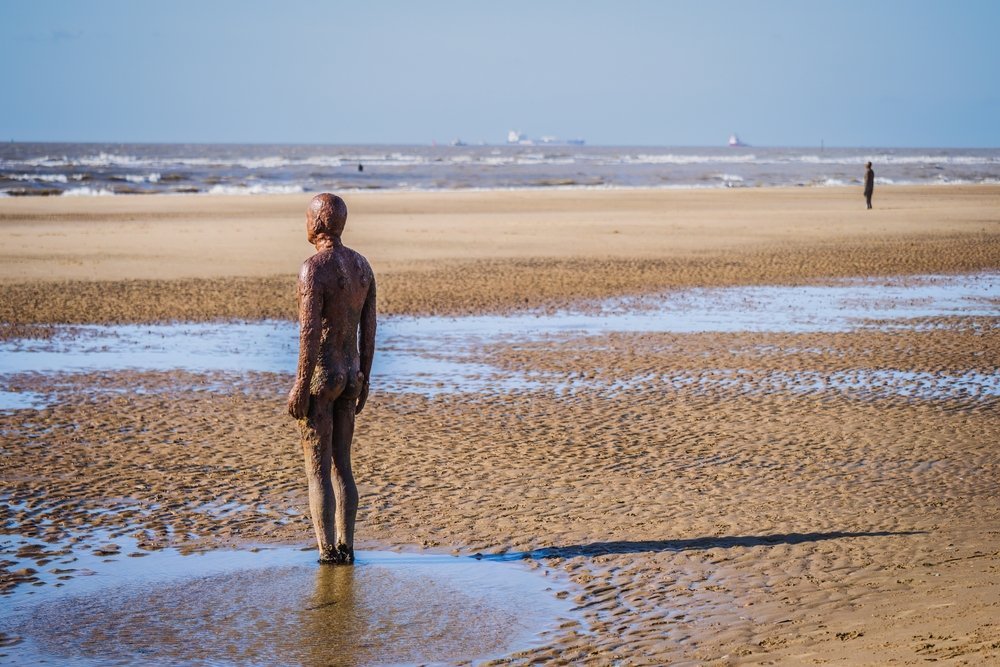
North of Liverpool, 100 cast-iron men stand on the beach gazing out to sea. The artwork Another Place by Antony Gormley is spread over three kilometres of coastline and almost a kilometre out into the water, and every figure is a cast of the artist’s own body. When the tide comes in, they disappear one by one beneath the waves, and when it goes out, they stand there covered in rust, barnacles and mussels. It’s one of the most atmospheric experiences around Liverpool, and it’s rarely crowded.
It’s free and open around the clock. Take Merseyrail towards Southport to Blundellsands & Crosby, from where it’s a ten-minute walk to the beach, and stay within 50 metres of the promenade, as there is soft mud and the tide comes in quickly. The journey from the centre takes about 20 minutes.
Check the tide tables and come when the tide is going out, so you can see the most figures. Walk north along the beach to Hall Road Station and take the train back from there.
18. Day trip to Chester
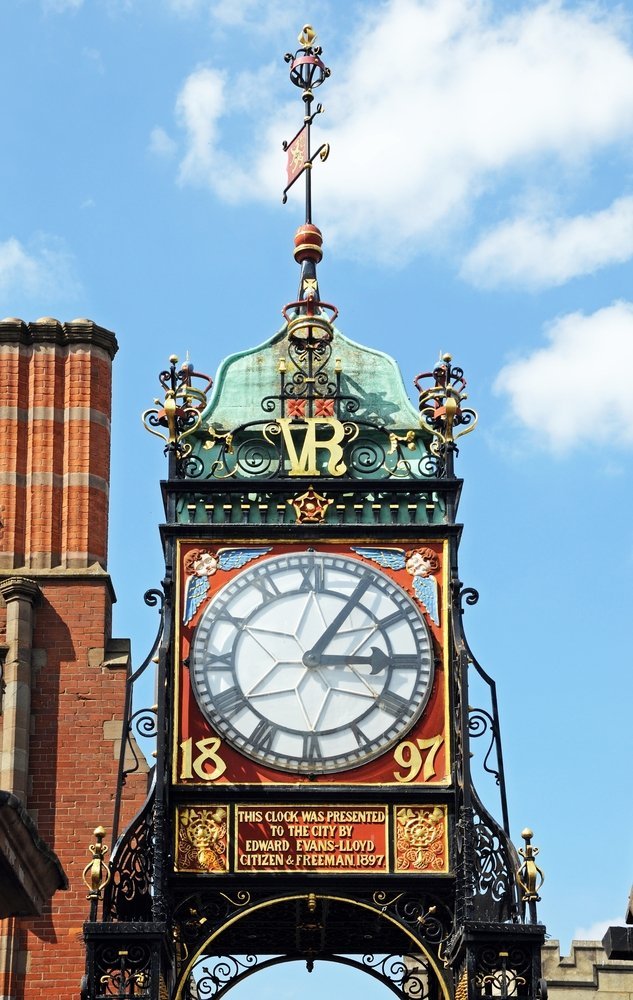
Less than an hour from Liverpool lies Chester, one of England’s best-preserved historic cities. The Roman and medieval city walls run all the way round the centre, and you can walk the roughly three kilometres along the top of them. Inside the city you’ll find The Rows, streets of half-timbered buildings with two tiers of shops and covered galleries, and above the Eastgate stands the ornate clock from 1899. Chester Cathedral, Britain’s largest Roman amphitheatre and the River Dee with its rowing boats are also well worth seeing.
Walking the city walls and seeing the amphitheatre is free. Merseyrail’s Wirral line runs from Liverpool Central and James Street to Chester roughly every 15 minutes during the day, and the journey takes around 45 minutes. From Chester Station it’s a ten-minute walk into the centre.
Start at Eastgate, walk the walls anticlockwise and come down by the cathedral. Catch the train after the morning rush hour, when there’s more room, and have lunch in one of the cafés in The Rows.
Practical travel tips for Liverpool
The city centre is compact, and you can walk between Lime Street, the Cavern Quarter, Albert Dock and Hope Street in 15 to 20 minutes. For Crosby, Sefton Park and Chester, take Merseyrail, which runs in a tunnel beneath the centre with stations at Lime Street, Central, Moorfields and James Street. A Saveaway day ticket costs £5.10 for two zones and £6.80 for all zones, and is valid on trains, buses and the ferry between Liverpool and the Wirral after 9.30am on weekdays and all day at weekends.
From Liverpool John Lennon Airport, the 500 bus runs to the city centre, but many people also fly into Manchester, where there are direct trains from the airport to Lime Street. See all the options in my guide to getting from Manchester Airport to the city centre. Hotel prices rise sharply when Liverpool or Everton are playing at home and when there are big concerts, so check the fixture list before you book. You can see all hotels in Liverpool on Booking.com, and in my guide to where to stay in Liverpool, I go through the best areas.
Manchester is just 35 to 50 minutes away by train from Lime Street, so the two cities are easy to combine. I’ve written about the trip in a city break in Manchester and Liverpool, and if you’d like to spend a few nights in the neighbouring city, you can read my guide to where to stay in Manchester and the best things to do in Manchester.
It rains a lot, and the wind off the sea can be cold, so bring a waterproof jacket and save the free museums for the wet days. May to September gives you the longest days by the waterfront, while the last week of August is Beatleweek, when the city is packed with concerts and fans. Plan around the days of the week, as several of the national museums have been closed on Mondays and Tuesdays.
Travel ressources & websites I use all the time 👇
• Booking.com has the best offers on hotels and unique places to stay
• GetYourGuide is the best place to book tours & activities with free cancellation
• Welcome Pickups is the best & safest place to pre-book airport transfers
Psst 👀 Have you subscribed to my Youtube channel and my Instagram where I provide more useful travel tips?