

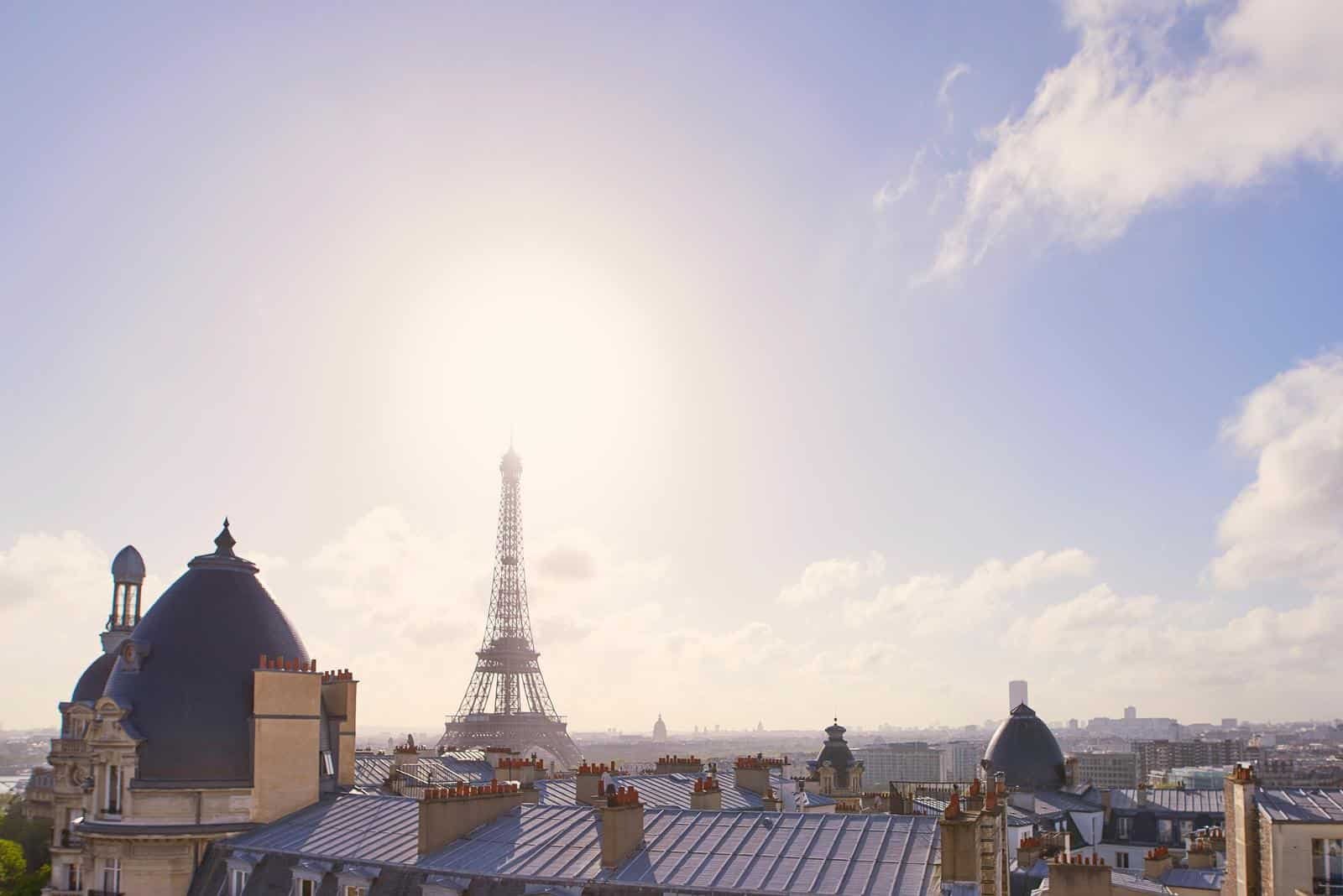
France is Paris and the Riviera, but it’s also vineyards, Alpine lakes, chalk cliffs and an island in the middle of the Mediterranean. It’s a big country with long distances between the highlights. Even the fastest train from Paris to Nice takes over five and a half hours, which is why deciding where to stay in France matters so much.
I would pick two to four bases in the same part of the country rather than trying to see everything on one trip. Here are my recommendations for twelve places to stay in France, with good hotels in three price ranges in each one.
Contents
Where to Stay in France: The Best Areas
- Paris - best city for first-time visitors and city breaks
- Nice & the Riviera - best area for beaches and city life on the Mediterranean
- Provence - best area for lavender, markets and Roman ruins
- Marseille - best city for harbour life, food and the Calanques
- Corsica - best island for beaches, mountains and road trips
- Lyon - best city for food and a city break without the big crowds
- Annecy & the Alps - best area for lakes, mountains and hiking
- Strasbourg & Alsace - best area for Christmas markets, wine and half-timbered houses
- Normandy - best area for D-Day, the coast and Mont-Saint-Michel
- Loire Valley - best area for châteaux, wine and cycling
- Bordeaux - best city for wine and vineyards
- Toulouse - best city for south-west France and Carcassonne
I cover the bases in four groups: first Paris, then south-east France with the Riviera, Provence, Marseille and Corsica, then Lyon, the Alps and Alsace in the east, and finally Normandy, the Loire Valley, Bordeaux and Toulouse in the west and south-west. For each place you get a map, travel times and three places to stay: the most expensive first, then a mid-range option and finally one for a smaller budget. The travel times come from the rail operator, the airports and the tourist offices, and where I’ve added times together myself, I say that it’s an estimate.
For a week’s holiday, I would choose one or two bases in the same part of the country. For a city break, Paris, Lyon, Bordeaux or Strasbourg is enough on its own, and for a beach holiday, Nice or Corsica is the obvious choice. If you have two weeks or more, you can do a tour, but stick to one or two regions so your days aren’t spent travelling.
The TGV trains radiate out from Paris like the spokes of a wheel. According to SNCF Connect, the fastest trains take 1 hour and 45 minutes to Strasbourg, just under two hours to Lyon, around two hours to Bordeaux and just over three hours to Marseille. Travelling across the country is slower, so from Bordeaux to the Riviera, for example, a domestic flight may be a better choice than the train. For Corsica, the villages of Provence and the wine châteaux, you’ll need a car.
1. Paris - best city for first-time visitors and city breaks 🗼
- 📍 Distance to the centre: The map shows Île de la Cité in the middle of the Seine. The three hotels are in the Marais, from around 600 metres to just over a kilometre away.
- 🚇 Transport: Metro and RER. Tickets are stored in the Île-de-France Mobilités app or on a Navigo Easy card, which you tap at the barriers.
- ✈️ Time from the airport: RER B runs from Charles de Gaulle (CDG) to Gare du Nord in 25 to 30 minutes. From Orly (ORY), metro line 14 takes under 25 minutes to Châtelet.
- 💰 Price level: €€ to €€€€. Paris is the most expensive place to stay in France, and the cheap rooms are small.
- 👮 Safety: Generally a safe city. Pickpockets work the metro and the big sights, so keep your bag in front of you.
Paris is where most trips to France begin, and the city deserves at least three to four nights. This is home to the Louvre, the Eiffel Tower, Montmartre and Notre-Dame, and you could easily fill a whole week without leaving the city. On a tour of the country, Paris is also the practical hub, as most TGV lines start here.
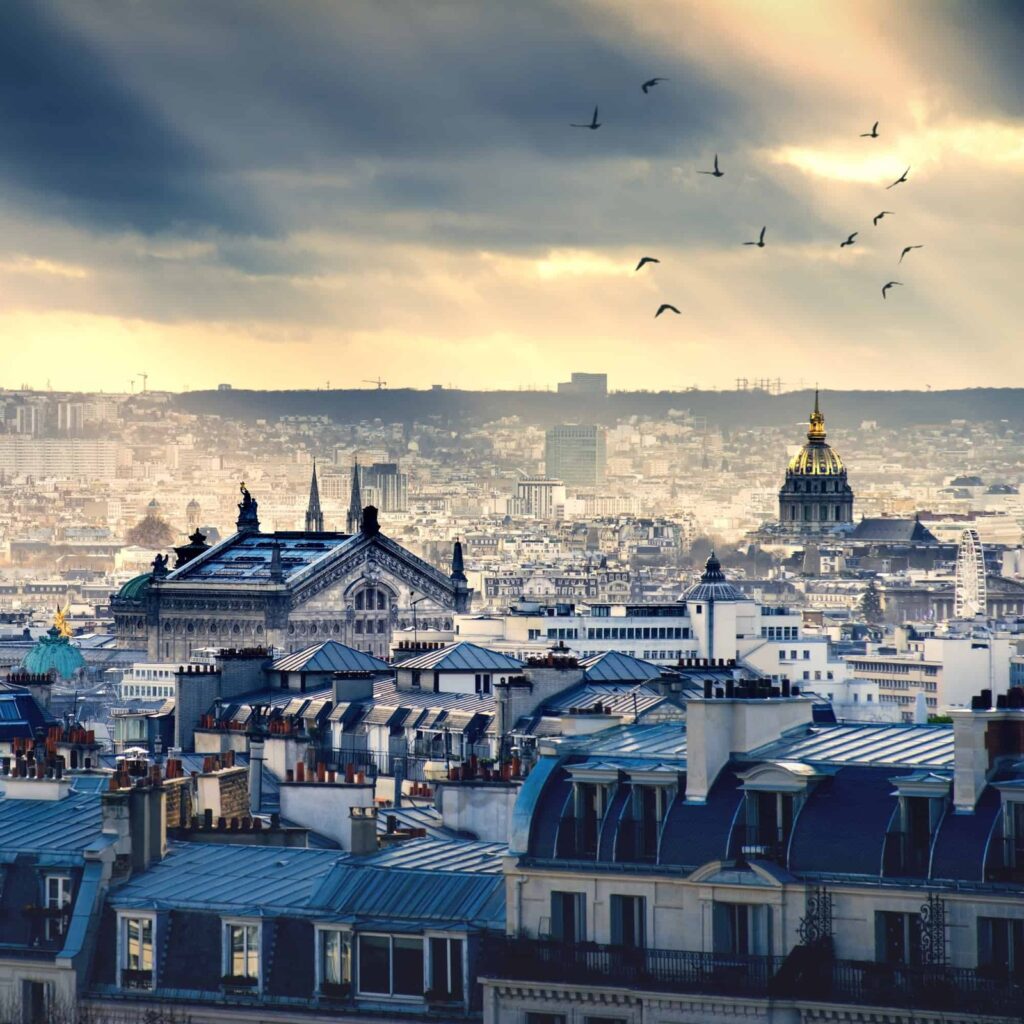
I’ve picked three hotels in the Marais because the neighbourhood is right in the middle of the city, within walking distance of Île de la Cité, the Centre Pompidou and Place des Vosges. It’s full of cafés, small shops and restaurants, and the streets are lively in the evening. If you’d rather stay in Montmartre, the Latin Quarter or near the Opéra, I’ve written a whole guide on where to stay in Paris, with five areas to choose from.
Most people land at Charles de Gaulle, where RER B runs to Gare du Nord in 25 to 30 minutes and taxis charge a fixed fare. All the options are in my guide to getting from Charles de Gaulle to the city centre. If you land at Orly, read my guide on how to get from Orly to Paris, and if you’re flying with a budget airline to Beauvais, the airport is a long way outside the city, so have a look at my guide to Paris Beauvais Airport too.
If you’re travelling on around the country, check which station your train leaves from. Trains to Lyon, Provence, the Riviera and the Alps leave from Gare de Lyon, trains to Strasbourg from Gare de l’Est, trains to Bordeaux and Toulouse from Montparnasse and trains to Normandy from Saint-Lazare. What to see in the city itself is covered in my guide to things to see in Paris, and if you’re travelling with children, Disneyland Paris is an easy day trip on RER A.
Hotels in Paris
Le Pavillon de la Reine & Spa - five-star hotel with a spa on Place des Vosges
Le Pavillon de la Reine is on Place des Vosges in the Marais, and you enter the hotel through a courtyard with flowers and ivy. The hotel has a spa with a hot tub and steam room, a gym, a bar and a restaurant, and there’s parking on site.
The smallest double rooms are 21 square metres, which is decent for the Marais. It’s my pick for a romantic trip or a special occasion. Breakfast costs extra, and one guest was disappointed with the view from their junior suite, so ask for a room facing the courtyard or the square.
One guest writes on Booking.com: “I really enjoyed my stay, a wonderful location and a very lovely hotel.”
See photos and book Le Pavillon de la Reine & Spa here.
Hôtel Duo - four-star hotel close to the Hôtel de Ville
Hôtel Duo is on Rue du Temple in the southern Marais, just under 200 metres from the Hôtel de Ville (city hall) and around 600 metres from Notre-Dame. The hotel has a bar, a gym and a sauna, and you can book a massage.
It’s my suggestion if you want to stay in the thick of it for less than on Place des Vosges. The smallest double rooms are only 14 square metres, and one guest writes that there was hardly any space beyond the double bed. So choose a larger room category if you have big suitcases. Breakfast costs extra.
About the staff, one guest writes on Booking.com: “Good location and friendly, professional staff.”
See photos and book Hôtel Duo here.
Hôtel Bellevue et du Chariot d’Or - two-star hotel with a lift in the northern Marais
Hôtel Bellevue et du Chariot d’Or is on Rue de Turbigo in the northern Marais, less than 500 metres from the Centre Pompidou. It’s a simple hotel with a bar, a lift, a 24-hour reception and family rooms.
It’s usually the cheapest of my three suggestions in Paris, and the hotel has thousands of reviews with a good score. The rooms are small, with the smallest doubles at 12 square metres, and one guest found the beds a little uncomfortable. Breakfast costs extra, but there are cafés on every corner.
After their stay, one guest writes on Booking.com: “I can recommend the hotel, and I’d happily stay here again.”
See photos and book Hôtel Bellevue et du Chariot d’Or here.
2. Nice & the Riviera - best area for beaches and city life on the Mediterranean ☀️
- 📍 Distance to the centre: The map shows the Old Town in Nice. The hotels range from just under 500 metres from Place Masséna to around 1.5 kilometres from the Old Town out on the Promenade des Anglais.
- 🚆 Transport: Trams and buses in the city, and trains along the coast to Villefranche-sur-Mer, Monaco, Antibes and Cannes.
- ✈️ Time from the airport: Tram line 2 runs from Nice Airport (NCE) to Jean Médecin in the centre in under 30 minutes.
- 💰 Price level: €€ to €€€€. Highest in July and August and during big events such as the Cannes Film Festival and the Monaco Grand Prix.
- 👮 Safety: Generally a safe city. Watch out for pickpockets on the Promenade des Anglais, in the Old Town and on the trains along the coast.
Nice is the main city on the French Riviera and the best base if you want to combine beach time with city life. Here you’ll find the Old Town with its narrow streets and the market on Cours Saleya, the Promenade des Anglais along the bay and some of the best art museums in the South of France. Since 2021, the city has been on the UNESCO World Heritage List as a winter resort.
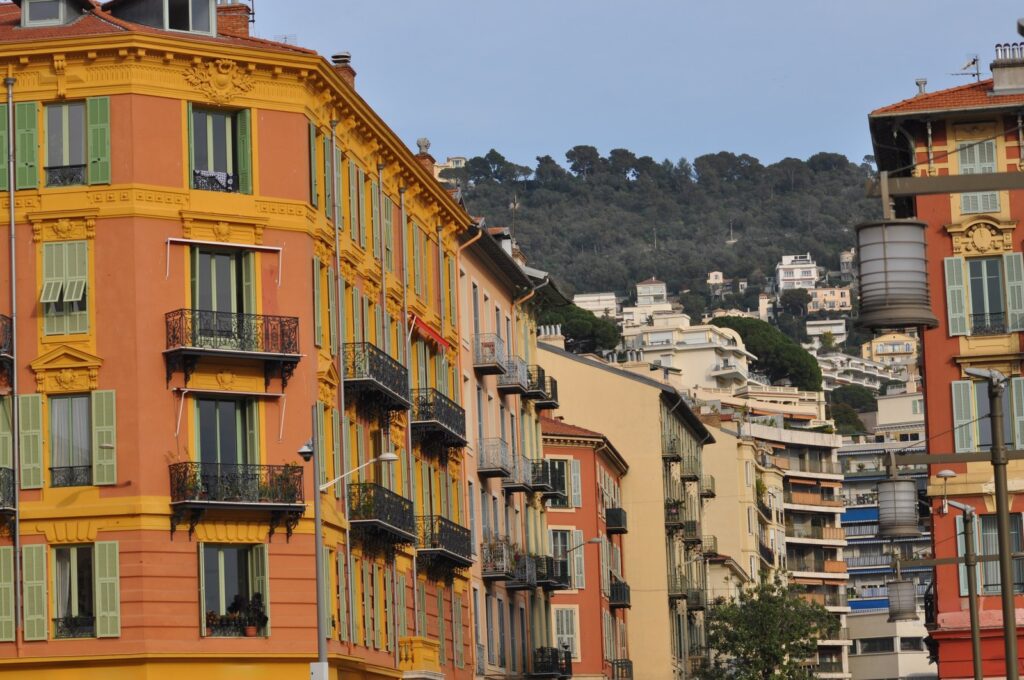
The big advantage of Nice is its location. The train runs along the coast to Villefranche-sur-Mer, Monaco and Menton to the east and to Antibes and Cannes to the west, so you can see most of the Riviera without a car. Hotels in Nice are also cheaper than in Cannes and Monaco. If you want to pick a neighbourhood in the city, read my guide to where to stay in and around Nice, and for your days out I’ve put together the things to do in Nice in a separate guide.
From Nice Airport, tram line 2 runs into the city, and taxis charge a fixed fare to the centre. All the options, including the express bus to Monaco, are in my guide to getting from Nice Airport to the city centre. If you’re thinking of staying in Monaco itself, read my guide to where to stay in Monaco first. The principality is expensive, and many people choose to stay in Nice and take the train there.
The beaches in Nice are pebble beaches, and some of them are beach clubs where you pay for sunloungers. If you want sand under your feet, there are sandy beaches in Antibes and around Cannes. Book early if you’re travelling in July or August, as prices rise along the whole coast.
Hotels in Nice
Hotel Le Negresco - classic five-star hotel with a beach club on the Promenade des Anglais
Le Negresco, with its pink dome, sits on the Promenade des Anglais overlooking the bay, around a kilometre from Place Masséna. The hotel has an indoor pool, spa, sauna, gym, restaurants, a bar and a private beach club on the other side of the promenade.
Rooms start at 25 square metres, and the hotel suits you if you want the classic Riviera with all the trimmings. Breakfast costs extra, and one guest feels it’s all a bit pricey, especially the sunloungers at the beach club. If you’re arriving by car, there’s valet parking.
One delighted guest writes on Booking.com: “The best hotel of my entire trip.”
See photos and book Hotel Le Negresco here.
Hotel Le Grimaldi by Happyculture - four-star hotel between Place Masséna and the railway station
Le Grimaldi is on a street in the centre, just under 500 metres from Place Masséna and just over 600 metres from Nice-Ville station. The hotel has a bar, a 24-hour reception and a lift, and the beach is a few minutes’ walk away.
This is my pick if you want to be able to walk to the beach, the Old Town and the train. The smallest double rooms are 18 square metres. One guest feels the room and bathroom are a little worn, but clean and comfortable.
One guest writes on Booking.com: “Everything about this hotel is just perfect!”
See photos and book Hotel Le Grimaldi by Happyculture here.
Hotel Villa Rivoli - three-star hotel with a garden close to the Promenade des Anglais
Hotel Villa Rivoli is on a side street around 250 metres from the Promenade des Anglais and just under a kilometre from Place Masséna. The hotel has a garden, a bar and private parking on site.
It’s usually the cheapest of my three suggestions and good if you want to stay close to the beach without paying for a sea view. The rooms are small, with the smallest doubles at 13.5 square metres, and one guest writes that both the room and the bed were small, but clean and comfortable. Breakfast costs extra.
Short and sweet, one guest on Booking.com says: “It’s a beautiful hotel.”
See photos and book Hotel Villa Rivoli here.
3. Provence - best area for lavender, markets and Roman ruins 💜
- 📍 Distance to the centre: I use Avignon as my base. The three hotels are all inside the city walls, no more than about 600 metres from Place de l’Horloge, as the map shows.
- 🚆 Transport: TGV trains stop at Avignon TGV outside the city, and from there a local train runs to Avignon Centre in about six minutes. Inside the city walls, you get around on foot.
- ✈️ Time from the airport: About an hour by car from Marseille Provence Airport (MRS). From Paris, the fastest trains to Avignon TGV take just over two and a half hours.
- 💰 Price level: € to €€€€. Most expensive in July, when the theatre festival fills the city.
- 👮 Safety: A safe city. Keep an eye on your bag in the crowds on Place de l’Horloge and during the festival, and stick to well-lit streets at night.
Provence means lavender fields, hilltop villages, markets and Roman ruins, and the region suits you if you want a slower pace than on the coast. I’ve chosen Avignon as the base because the city is easy to reach by train and has connections on to the rest of the region. The popes’ enormous palace, the Palais des Papes, sits in the middle of the Old Town together with the half-bridge Pont Saint-Bénézet, and the whole area is a UNESCO World Heritage Site.
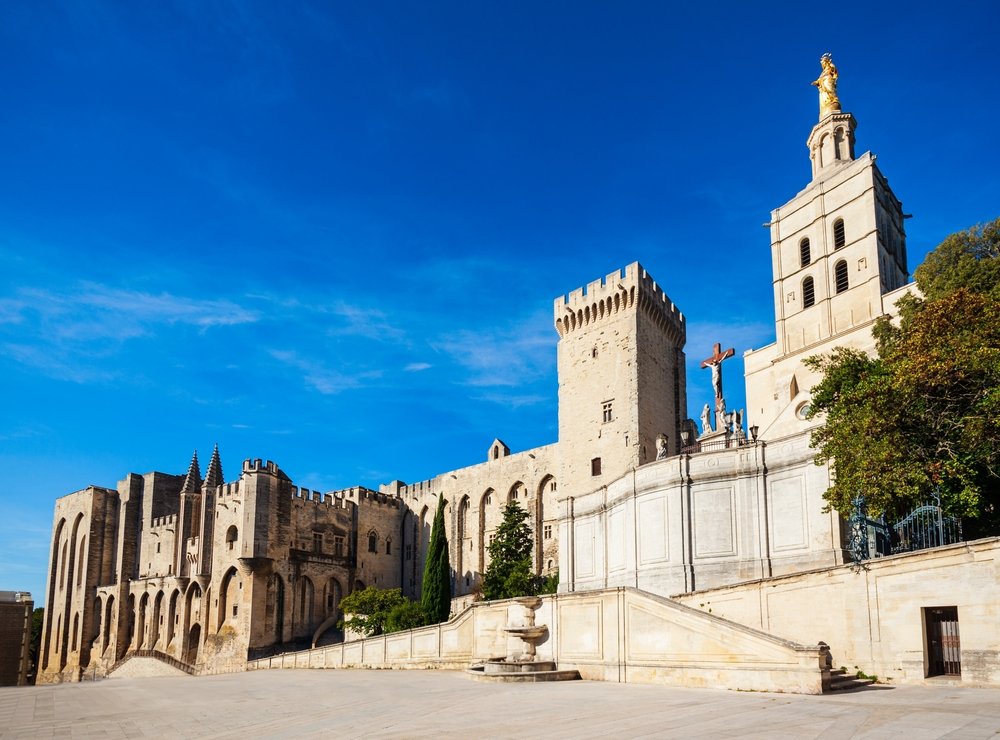
From Avignon, the train to Arles takes under 20 minutes, and there are local trains to L’Isle-sur-la-Sorgue and buses to Saint-Rémy-de-Provence. If you’d rather stay in one of the smaller towns, I’ve covered six of them in my guide to where to stay in Provence. Gordes and Saint-Rémy-de-Provence suit couples with a car best, and Aix-en-Provence has the most city life.
The lavender usually blooms from late June into July, which is also when hotels are at their most expensive. If you’re travelling in July, book Avignon early, as the Festival d’Avignon theatre festival fills the whole city. In May, June and September there are fewer people and lower prices.
For the Luberon and Sénanque Abbey you’ll need a car, as the buses between the villages run infrequently. Hire the car at Avignon TGV or at the airport, and only pick it up on the day you leave the city, as parking inside the city walls can be a hassle.
Hotels in Avignon
La Mirande - five-star hotel in a historic mansion behind the Palais des Papes
La Mirande sits right behind the Palais des Papes, so you can’t stay any closer to the popes’ palace. The hotel has a restaurant, bar, garden and terrace, and it also runs cookery classes.
Rooms start at 25 square metres, and guests praise the interiors. This is the hotel for a special trip where you want to stay somewhere historic in the heart of the Old Town. Breakfast costs 35 euros (around £30) per person, and one guest felt the bathrooms could do with a renovation.
One guest describes it like this on Booking.com: “An elegant and beautifully decorated hotel with lavish furnishings and a stunning design.”
See photos and book La Mirande here.
Hôtel Cloître Saint Louis - four-star hotel in a former cloister with a rooftop pool
Hôtel Cloître Saint Louis is in the southern part of the Old Town, a couple of hundred metres from Avignon Centre station and about 600 metres from Place de l’Horloge. The hotel has a restaurant, bar, garden, parking and a rooftop pool that’s open in season.
This is my pick if you’re arriving by train and want a pool without paying five-star prices. The smallest double rooms are 18 square metres, and breakfast costs 17 euros (around £14) per person. One guest wasn’t happy with the bathroom layout.
One guest highlights on Booking.com: “The hotel’s location was fantastic.”
See photos and book Hôtel Cloître Saint Louis here.
Hôtel Le Colbert - small three-star, adults-only hotel with a courtyard garden
Hôtel Le Colbert is in the southern part of the Old Town, just under 600 metres from Place de l’Horloge and a short walk from Avignon Centre station. It’s a small hotel with a garden and terrace, and it only accepts adults.
It’s usually the cheapest of my three suggestions and suits couples who want a simple, central stay. There’s no lift, and the smallest double rooms are only 12 square metres, so pack light. Breakfast costs extra.
Short and sweet, one guest writes on Booking.com: “Everything was perfect.”
See photos and book Hôtel Le Colbert here.
4. Marseille - best city for harbour life, food and the Calanques ⚓
- 📍 Distance to the centre: The three hotels are no more than about 850 metres from the old harbour, the Vieux-Port, as the map shows.
- 🚇 Transport: Metro, trams and buses. Boats to the islands in the bay leave from the Vieux-Port.
- ✈️ Time from the airport: The Navette shuttle bus runs from Marseille Provence Airport (MRS) to Saint-Charles station in about 30 to 50 minutes. From there it’s two stops on metro line M1 to the Vieux-Port.
- 💰 Price level: € to €€€. Usually cheaper than Nice and the rest of the Riviera.
- 👮 Safety: The area around the Vieux-Port is busy and safe during the day. In the evening, I’d stick to well-lit streets and take care around the station.
Marseille is France’s oldest city and a completely different experience from Nice. It’s noisy and full of food from all over the Mediterranean, and in the mornings the fishermen sell their catch on the quayside at the Vieux-Port. The basilica of Notre-Dame-de-la-Garde looks down over the city, and in Le Panier, the oldest neighbourhood, you can wander narrow streets full of street art and little cafés.
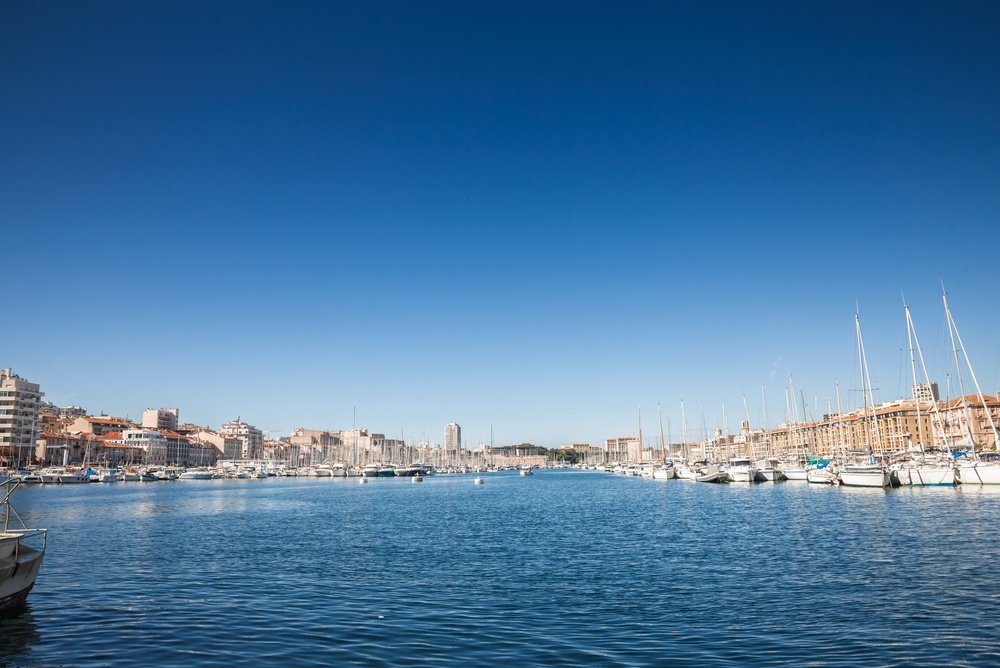
The biggest reason to stay in Marseille is the nature just outside the city. The Calanques National Park, with its limestone cliffs and narrow coves, begins on the city’s southern edge, and boats sail from the Vieux-Port to the Château d’If and the Frioul Islands. The city also makes a good base for Cassis and Aix-en-Provence. If you need help choosing a neighbourhood, I’ve written a guide to where to stay in Marseille, covering six areas from Le Panier to the beaches at Prado.
If you arrive by train, you’ll come into Saint-Charles. The fastest trains from Paris take just over three hours, and Marseille is also one of the ports the ferries to Corsica sail from. That makes the city an obvious last stop before you head over to the island.
Stay close to the Vieux-Port if it’s your first visit. This is where the restaurants, the boats and the metro are, and in the evening the quays are packed with people. I’d give Marseille two to three nights, so you have one day in the city and one day in the Calanques.
Hotels in Marseille
InterContinental Marseille Hotel Dieu - five-star hotel in the city’s old hospital above the Vieux-Port
The InterContinental Marseille is housed in the Hôtel-Dieu, the city’s old hospital, on the slope between Le Panier and the harbour, about 600 metres from the Vieux-Port. The hotel has an indoor pool, a spa, a gym, a restaurant, a bar and a terrace.
The smallest double rooms are 28 square metres, which is generous for a big city. Breakfast costs extra, and one guest mentions slow service on the terrace. The hotel sits on a hill, so expect a steep walk up from the harbour.
One guest writes honestly on Booking.com: “The hotel is very beautiful, but the slope is far too steep.”
See photos and book InterContinental Marseille Hotel Dieu here.
Grand Hotel Beauvau Marseille Vieux-Port - historic four-star hotel on the harbour
The Grand Hotel Beauvau sits at the eastern end of the Vieux-Port, a few steps from the quay and the metro station. It’s a historic hotel with a bar and a 24-hour reception.
This is my pick if you want to stay right by the water without paying for a five-star hotel. The smallest double rooms are 17 square metres, and breakfast costs extra. One guest feels the rooms could offer a bit more for a four-star hotel.
One guest writes on Booking.com: “The hotel is historic and well maintained.”
See photos and book Grand Hotel Beauvau Marseille Vieux-Port here.
Hôtel Carré Vieux Port - three-star hotel on the street behind the harbour
Hôtel Carré Vieux Port is on Rue Beauvau, a few minutes’ walk from the Vieux-Port and close to the opera house. The hotel has a bar, a terrace, a lift and a 24-hour reception.
It’s usually the cheapest of my three suggestions, and you’re still staying centrally. The rooms are small, and the smallest double rooms are just 10 square metres. Breakfast costs extra, but guests rave about it.
One guest highlights on Booking.com: “Excellent location, very friendly staff and a superb breakfast.”
See photos and book Hôtel Carré Vieux Port here.
5. Corsica - the best island for beaches, mountains and a road trip 🏝️
- 📍 Distance to the centre: I use Ajaccio as a base. The three hotels are no more than about 900 metres from the citadel by the harbour, as the map shows.
- 🚗 Transport: Hire car. Trains run between Ajaccio, Corte and Bastia, but you’ll need a car to reach the beaches and mountain villages.
- ✈️ Time from the airport: Bus 11 runs from Ajaccio Airport (AJA) to the centre in about 20 to 30 minutes. The island also has airports in Bastia, Calvi and Figari.
- 💰 Price level: €€ to €€€€. Prices rise sharply in July and August.
- 👮 Safety: A safe island. The mountain roads are narrow and winding, so drive carefully and expect journeys to take longer than the map suggests.
Corsica lies in the Mediterranean south of the Riviera, and it’s the French island where the mountains run right down to the sea. You’ll find sandy beaches with clear water, mountain villages, citadels and hiking trails, and the island feels wilder than the rest of France. It’s an island for a road trip, as the highlights are far apart and the buses run infrequently.
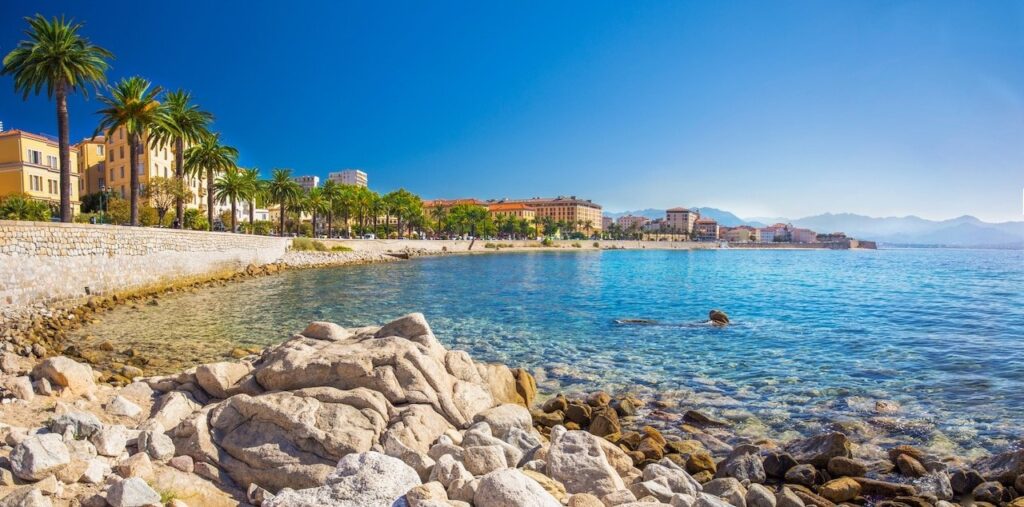
I’ve chosen Ajaccio as the base because the town has the island’s largest airport, ferries from the mainland and stays open for most of the year. Napoleon was born here, and his family home is in the Old Town behind the harbour. It’s quite a drive to the beaches around Porto-Vecchio and the clifftop town of Bonifacio in the south, so on a week’s holiday I’d split my stay between Ajaccio and the southern tip. In my guide to where to stay in Corsica, I go through six towns, and in the guide to things to do in Corsica you’ll find what you shouldn’t miss on the island.
Corsica’s tourist board states that the island has four airports: Ajaccio, Bastia, Calvi and Figari. If you want to bring your own car, ferries sail from Marseille, Toulon and Nice and from several ports in Italy. If you’re hiring a car on the island, see car hire in Corsica here, and book early for July and August, as cars can sell out.
Travel in June or September if you can. The sea is warm enough for swimming, and there are fewer people on the roads and beaches than in high season. Many hotels outside the towns close in winter, so if you’re travelling out of season, Ajaccio and Bastia are the safest choices.
Hotels in Ajaccio
Hotel San Carlu Citadelle - four-star hotel by the citadel and the town’s little beach
Hotel San Carlu sits opposite the citadel in the Old Town, close to the small Saint-François beach. The hotel has a restaurant, bar and sun terrace, and you can book a massage.
The rooms are small for a four-star hotel. The smallest double rooms are 16 square metres, and several guests mention that the rooms are rather small. Breakfast costs extra, and the hotel makes it with local island produce.
One guest writes on Booking.com: “Fantastic location and comfortable, clean rooms.”
See photos and book Hotel San Carlu Citadelle here.
Hôtel Fesch & Spa - three-star hotel with a spa and rooftop pool in the Old Town
Hôtel Fesch is on Rue Cardinal Fesch, the town’s charming shopping street, about 400 metres from the citadel. The hotel has a spa with a sauna and hot tub, a gym, a restaurant and a small rooftop pool that’s open in season.
This is my pick if you want a spa and pool in the middle of town for a lower price. The smallest double rooms are 14 square metres, and breakfast costs extra. One guest found that the air conditioning didn’t work, so tell reception straight away if that happens to you.
One guest writes briefly on Booking.com: “Fantastic location.”
See photos and book Hôtel Fesch & Spa here.
Hotel le Dauphin - two-star hotel close to the ferries
Hotel le Dauphin is on Boulevard Sampiero near the ferry terminal, about 900 metres from the citadel. It’s a simple hotel with a bar, terrace, lift and air conditioning.
It’s usually the cheapest of my three suggestions and handy if you’re arriving or leaving by ferry. The smallest double rooms are 14 square metres, and one guest missed having a kettle and fridge in the room. Breakfast costs extra.
One guest says on Booking.com: “The room was small but clean, and the air conditioning was good.”
See photos and book Hotel le Dauphin here.
6. Lyon - best city for food and a city break without the big crowds 🍷
- 📍 Distance to the centre: The three hotels are on the Presqu’île and in Vieux Lyon, no more than about 800 metres from Place Bellecour, as the map shows.
- 🚇 Transport: Metro, tram and the funicular up to Fourvière. You can get around most of the centre on foot.
- ✈️ Time from the airport: Rhônexpress runs from Lyon-Saint Exupéry (LYS) to Part-Dieu in about half an hour, and from there you continue by metro.
- 💰 Price level: €€ to €€€€. Usually cheaper than Paris for the same standard.
- 👮 Safety: A safe city in the centre. Take care around Place Gabriel Péri in Guillotière in the evening.
For many French people, Lyon is the country’s number one food city, and it makes an obvious stop between Paris and the South of France. Here you eat in the traditional bouchons, shop in the Les Halles de Lyon Paul Bocuse food hall and wander through the hidden passageways, the traboules, in Vieux Lyon and Croix-Rousse. The city’s historic centre is a UNESCO World Heritage Site.
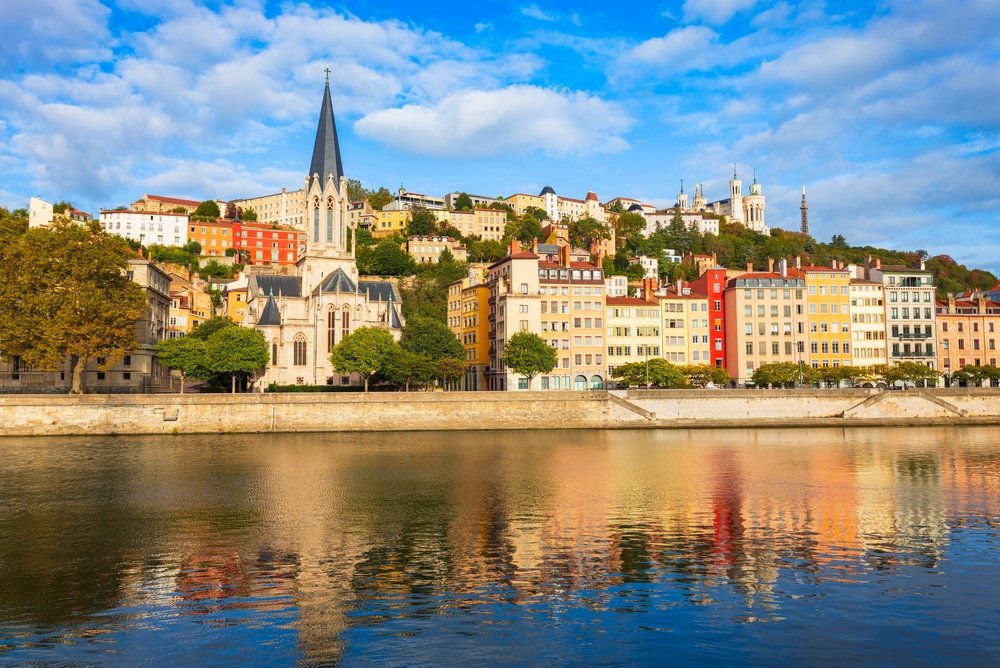
I’ve picked hotels on the Presqu’île, the peninsula between the Rhône and Saône rivers, and in Vieux Lyon below Fourvière hill. From here you can walk to most things, and the metro takes care of the rest. If you’d rather stay somewhere more local in Croix-Rousse or close to the trains at Part-Dieu, read my guide to where to stay in Lyon, where I go through six areas.
From Paris Gare de Lyon, the fastest trains take just under two hours, and it’s just under two hours to Annecy on the fastest direct trains. That makes Lyon a good stop on the way to the Alps or further south through the Rhône Valley to Avignon and Marseille.
Two to three nights is enough for most people. That gives you time for Fourvière, Vieux Lyon and a few long dinners, and it’s a good idea to book a table well in advance at the well-known restaurants at weekends. During the Fête des Lumières festival of light in early December, hotels are expensive and fully booked.
Hotels in Lyon
Villa Florentine - five-star hotel with a pool and views over the city
Villa Florentine sits on the slope above Vieux Lyon, just under 300 metres from Saint-Jean Cathedral and about 800 metres from Place Bellecour. The hotel has a heated outdoor pool with a view, a spa, sauna, gym and restaurant.
Rooms start at 25 square metres, and this is the hotel for a romantic weekend. The downside is its location on a steep hill, which one guest also mentions, so take a taxi when you have luggage. Breakfast costs extra.
One guest writes briefly on Booking.com: “Beautiful hotel. Comfortable beds.”
See photos and book Villa Florentine here.
Carlton Hotel Lyon MGallery - four-star hotel with a spa on the Presqu’île
Carlton Hotel Lyon is on the Presqu’île close to Place de la République, about 500 metres from Place Bellecour. The hotel has a spa with a steam room, a bar and a 24-hour reception.
This is my pick if you want to stay centrally with a bit of luxury. The smallest double rooms are 18 square metres, and breakfast costs 28 euros per person (around £25). One guest noticed a bad smell from the drain in the lobby, so it’s not quite perfect.
A happy guest writes on Booking.com: “The hotel was fantastic, and we were upgraded to a superior room.”
See photos and book Carlton Hotel Lyon MGallery here.
Hôtel Silky by HappyCulture - four-star hotel with a terrace close to Cordeliers
Hôtel Silky is on a small square close to Cordeliers, about 600 metres north of Place Bellecour. It has a 24-hour reception and a terrace, and you can walk to both Vieux Lyon and Les Halles.
It’s usually the cheapest of my three suggestions in Lyon. The smallest double rooms are 16 square metres, and breakfast costs extra. One guest felt the room didn’t look like the photos, so read the room description carefully.
One guest highlights on Booking.com: “The location is good, with a short walk to the sights.”
See photos and book Hôtel Silky by HappyCulture here.
7. Annecy & the Alps - best area for lakes, mountains and hiking 🏔️
- 📍 Distance to the centre: The map shows Palais de l’Isle in the Old Town. Two of the hotels are by the railway station, less than a kilometre away, and the third is by the lake, about 1.5 kilometres away.
- 🚶 Transport: You can get around Annecy on foot, and buses and boats run around the lake. Chamonix is about an hour and a half away by car. That’s an estimate.
- ✈️ Time from the airport: About 1 hour and 10 minutes on bus 272 from Geneva Airport (GVA) to Annecy railway station, or about 45 minutes by car without traffic.
- 💰 Price level: €€ to €€€€. Highest in summer, when lots of people come for the lake.
- 👮 Safety: Safe. Watch out for pickpockets on the Old Town bridges in high season, and check the weather before you head into the mountains.
Annecy sits on a clear Alpine lake surrounded by mountains, and its Old Town, with canals and flowers on the bridges, is one of the prettiest in France. In summer you can swim in the lake, cycle along the shore and take the boat to the little towns around it. Annecy is the best base if you want both a town and nature in the French Alps.
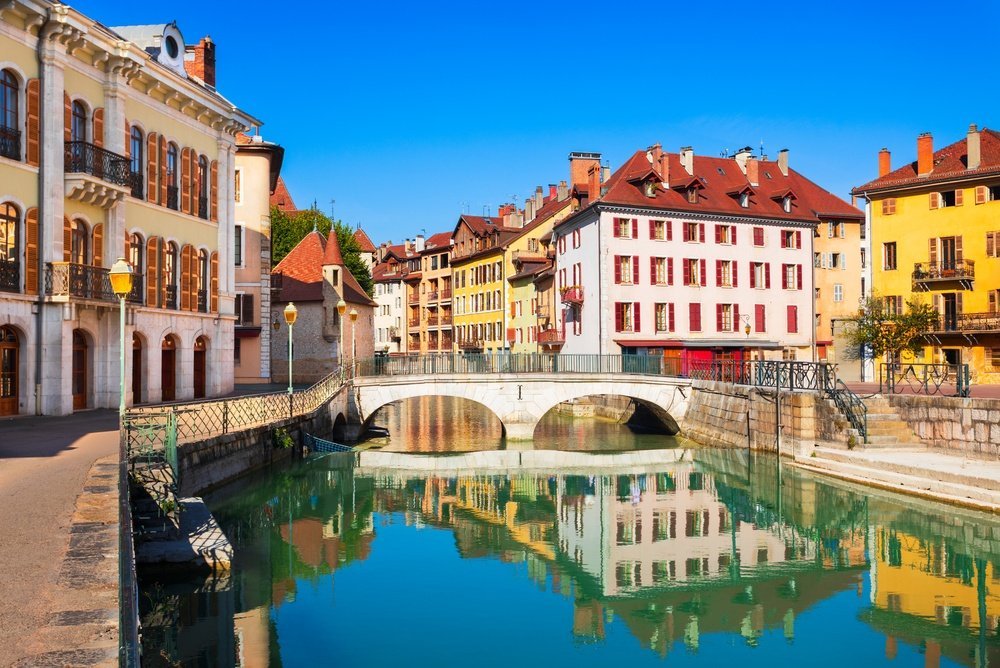
I’ve picked hotels in Annecy itself because the town has restaurants, trains and buses and is close to Geneva Airport. If you’d rather stay out by the lake, read my guide to where to stay in Annecy, where I also cover Sévrier and Talloires.
If you want to go higher into the mountains, Chamonix at the foot of Mont Blanc is the next step. It’s France’s best-known mountain town, with hiking trails in summer and skiing in winter, and according to Chamonix tourist office the cable car to the Aiguille du Midi reaches an altitude of 3,842 metres. I’d give Annecy two to three nights and add a couple of nights in Chamonix afterwards if you want to hike. See hotels in Chamonix here.
Direct TGV trains run from Paris to Annecy in just under four hours, and from Lyon it takes just under two hours. If you’re flying from the UK, Geneva Airport is the easiest way in, and you’ll be in Annecy in just over an hour by bus. If you’re heading on across the border, I’ve also written a guide to where to stay in Switzerland.
Hotels in Annecy
Impérial Palace - four-star palace hotel by the lake with a spa and casino
Impérial Palace sits right on the lakeshore in Albigny, about 1.5 kilometres from the Old Town along the promenade. The hotel has an indoor pool, spa, sauna, gym, restaurant, bar and casino.
Rooms start at 28 square metres, and the hotel suits you if you want the lake right outside the door. Breakfast costs extra, and one guest felt the pillows could be better. Prices are high in summer.
One guest writes on Booking.com: “The staff are fantastic, so helpful and friendly, and the hotel is excellent.”
See photos and book Impérial Palace here.
Best Western Plus Hotel Carlton Annecy - four-star hotel right by the railway station
Hotel Carlton is just under 200 metres from the railway station and about 400 metres from the Old Town, so you can walk to the train with your suitcase. There’s a bar, 24-hour reception and garage parking.
This is my pick if you’re arriving by train or bus from Geneva. The smallest double rooms are only 11 square metres, so choose a larger category if there are two of you with suitcases. Breakfast costs extra.
On breakfast, one guest writes on Booking.com: “Breakfast was good, as it always is at a Best Western hotel.”
See photos and book Best Western Plus Hotel Carlton Annecy here.
Hotel Les Terrasses - three-star hotel with a garden near the railway station
Hotel Les Terrasses is in a quiet neighbourhood just over 250 metres from the railway station and about 800 metres from the Old Town. The hotel has a garden, terrace, bar and private parking.
It’s usually the cheapest of my three suggestions, and the rooms are bigger than at many hotels in town. The smallest double rooms are 20 square metres. Breakfast costs extra, and one guest found parking difficult.
After their stay, one guest writes on Booking.com: “The room was spacious, bright and modern.”
See photos and book Hotel Les Terrasses here.
8. Strasbourg & Alsace - best area for Christmas markets, wine and half-timbered houses 🎄
- 📍 Distance to the centre: All three hotels are on the island of Grande Île, no more than about 600 metres from the cathedral, as the map shows.
- 🚋 Transport: Trams and pedestrian streets. Regional trains run to the wine villages of Alsace, and the train to Colmar takes about half an hour.
- ✈️ Time from the airport: About half an hour from Strasbourg Airport (SXB) on the airport train to the main station, then a tram or a short walk.
- 💰 Price level: € to €€€€. Prices rise sharply during the Christmas market in December.
- 👮 Safety: A safe city. Keep a firm grip on your bag in the crowds around the cathedral and at the Christmas markets.
Strasbourg sits right on the German border, and the city is a mix of French and German. Grande Île, the island between the two arms of the River Ill, is a UNESCO World Heritage Site, and it is home to the Gothic cathedral, the half-timbered houses of Petite France and the canals where the sightseeing boats glide past. In December the city hosts one of Europe’s oldest Christmas markets, dating back to 1570.
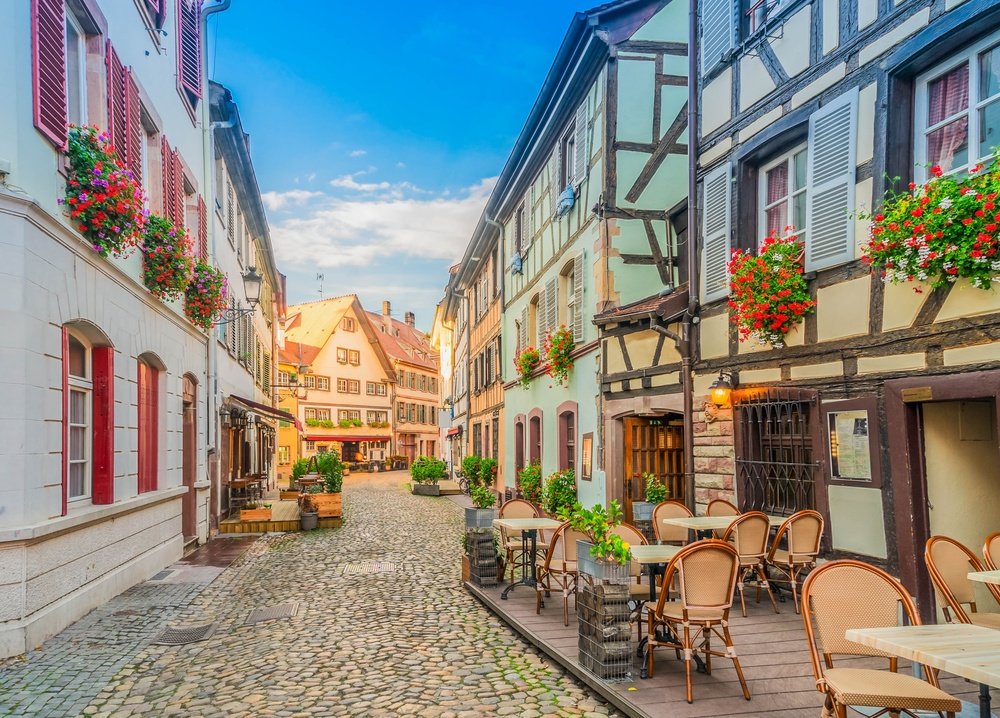
The city is also the gateway to Alsace, with its wine route and small towns such as Colmar, Riquewihr and Eguisheim. Without a car, you can take the train to Colmar and stay there for a couple of nights, and with a car you can drive the wine route between the villages. If you want help choosing a neighbourhood in Strasbourg, I’ve written a guide on where to stay in Strasbourg, covering six areas from Grande Île to the European Quarter.
See hotels in Strasbourg here.
The fastest trains from Paris Est reach Strasbourg in 1 hour and 45 minutes, so the city is easy to combine with a few days in Paris. If you’re going for the Christmas market, book as early as you can, as many hotels sell out in December and prices are far higher than the rest of the year.
Two nights is enough for the city itself. Add one or two nights in Colmar or out on the wine route, and you get the best of Alsace on the same trip.
Hotels in Strasbourg
Maison Rouge Strasbourg Hotel & Spa - five-star hotel with a spa near Place Kléber
Maison Rouge is on Grande Île near Place Kléber, just under 400 metres from the cathedral. The hotel has a spa with a sauna, steam room and hot tub, plus a gym, restaurant and bar.
The smallest double rooms are 19 square metres, and several guests feel the rooms are small for a five-star hotel. Breakfast costs extra. On the plus side, you’re staying in the heart of the city and can walk to all the Christmas markets.
One guest sums it up on Booking.com: “The location is fantastic.”
See photos and book Maison Rouge Strasbourg Hotel & Spa here.
HANNONG Hotel & Wine Bar - four-star hotel with a wine bar between Place Kléber and Petite France
HANNONG is on Rue du 22 Novembre between Place Kléber and Petite France, about 600 metres from both the cathedral and the railway station. The hotel has a wine bar, a terrace and garage parking.
This is my pick if you want to stay centrally with a bit of style and a glass of Alsace wine in the bar. The smallest double rooms are only 13 square metres, and one guest felt the room was too small. Breakfast costs extra.
One guest highlights the interior on Booking.com: “Beautiful and superbly designed with great attention to detail.”
See photos and book HANNONG Hotel & Wine Bar here.
Le Kléber Hôtel - three-star hotel on Place Kléber
Le Kléber Hôtel is right on Place Kléber, the city’s main square, just under 500 metres from the cathedral. The hotel has a 24-hour reception, a lift and garage parking.
It’s usually the cheapest of my three suggestions. The smallest double rooms are 12 square metres, and one guest writes that there was hardly any space beside the bed and that the décor was worn. Breakfast costs extra.
One guest writes on Booking.com: “Excellent location, friendly and helpful staff and a good breakfast.”
See photos and book Le Kléber Hôtel here.
9. Normandy - best area for D-Day, the coast and Mont-Saint-Michel 🎖️
- 📍 Distance to the centre: I use Bayeux as my base. The three hotels are no more than about 250 metres from the cathedral, as the map shows.
- 🚆 Transport: Trains from Paris Saint-Lazare take just over two hours. To get out to the D-Day beaches and Mont-Saint-Michel, you’ll need a car or a guided tour.
- ✈️ Time from the airport: About 3 hours and 15 minutes by car from Paris-Charles de Gaulle (CDG).
- 💰 Price level: €€ to €€€. Cheaper than Paris, but the town has few hotels, so book early for the summer.
- 👮 Safety: Very safe and peaceful. Watch out for traffic on the narrow roads out by the beaches.
Normandy means the chalk cliffs at Étretat, the harbour in Honfleur, the abbey island of Mont-Saint-Michel and the beaches where the Allies landed on 6 June 1944. The region is close enough to Paris for a long weekend, but the sights are spread far apart, so I’d give it at least three nights.
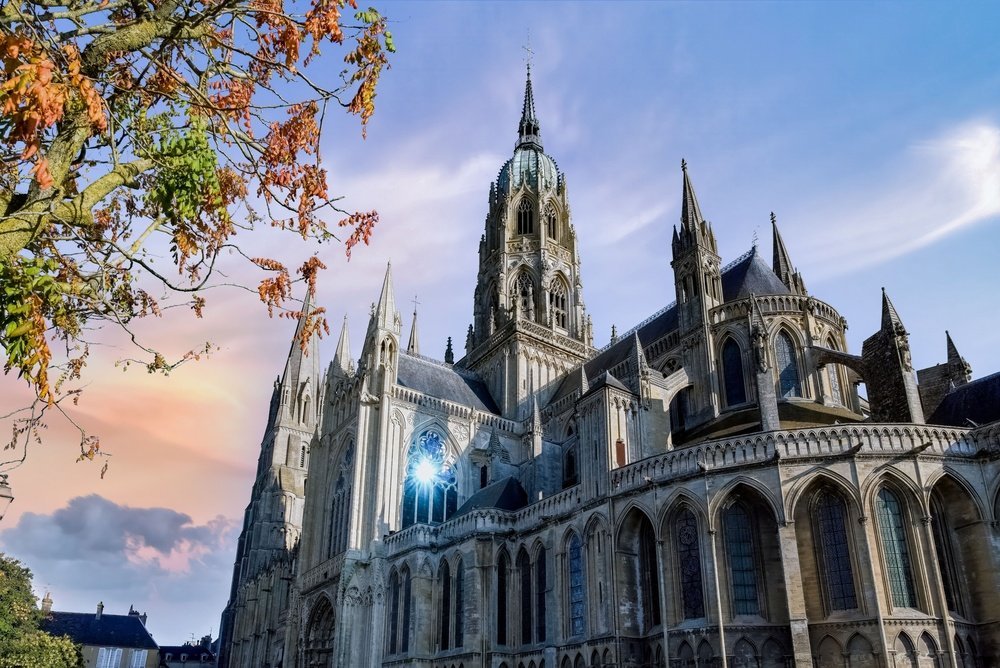
I’ve chosen Bayeux as my base because the town is close to the D-Day beaches and has trains from Paris. Bayeux escaped the war almost undamaged, so you’ll be staying in a medieval town with a huge Gothic cathedral. The town is also famous for the Bayeux Tapestry, but the museum can be closed for periods, so check before you go. From Bayeux you can reach Arromanches, Omaha Beach and the American Cemetery at Colleville-sur-Mer in half an hour.
If D-Day isn’t the main reason for your trip, Honfleur or Rouen are better choices. Honfleur is the most charming harbour town, and Rouen has the most trains from Paris. I cover six towns in my guide to where to stay in Normandy, where you’ll also find my suggestions for a night at Mont-Saint-Michel. The abbey island is a UNESCO World Heritage Site, and the atmosphere is at its best early in the morning and in the evening, once the day-trippers have gone home.
The beaches are spread along many kilometres of coastline, and buses are infrequent, so a car makes a big difference here. Take the train from Paris to Caen and hire a car there, so you avoid the traffic around Paris.
Hotels in Bayeux
Villa Lara Hotel - small five-star hotel with free parking close to the cathedral
Villa Lara is on Place du Québec, just under 200 metres from the cathedral. It’s a small five-star hotel with a bar, garden, terrace and free private parking.
Rooms start at 30 square metres, and breakfast may be included in the price, so check when you book. One guest was surprised that there were only two hot dishes at breakfast. The hotel is expensive for a small town, but it’s the place to stay if you want a touch of luxury in Normandy.
One guest writes on Booking.com: “Excellent location, and the room was lovely and clean.”
See photos and book Villa Lara Hotel here.
Churchill Hotel Bayeux Centre - three-star hotel on the town’s main street
Churchill Hotel is on Rue Saint-Jean, about 250 metres from the cathedral. The hotel has a bar, a terrace and a 24-hour reception.
The smallest double rooms are only 13.5 square metres, and one guest missed having a kettle in the small room. On the other hand, you get a lot for your money, and guests praise the breakfast. I’d choose it if you want to stay in the middle of town and spend your days out at the beaches.
On the breakfast, one guest writes on Booking.com: “Breakfast was excellent and good value for money.”
See photos and book Churchill Hotel Bayeux Centre here.
Hotel Reine Mathilde - two-star hotel with a restaurant close to the cathedral
Hotel Reine Mathilde is just under 150 metres from the cathedral in the heart of Bayeux. The hotel has a restaurant, bar and terrace.
It’s usually the cheapest of my three suggestions. The rooms are small, with the smallest doubles just under 11 square metres, and one guest found the shower too small. Breakfast costs extra.
One guest writes on Booking.com: “The hotel was excellent for a two-star hotel.”
See photos and book Hotel Reine Mathilde here.
10. Loire Valley - best area for châteaux, wine and cycling 🚲
- 📍 Distance to the centre: I use Amboise as my base. The three hotels are no more than about 400 metres from Château d’Amboise, as the map shows.
- 🚆 Transport: Direct regional trains run from Paris Austerlitz in just under two hours, or you can take the TGV from Montparnasse to Saint-Pierre-des-Corps and change there. To reach the châteaux you’ll need a car or a bike, or you can join a guided tour.
- ✈️ Time from the airport: There’s no major airport nearby, so most people travel via Paris. With the fastest train connections, it takes about 1 hour and 25 minutes from Paris to Amboise.
- 💰 Price level: €€ to €€€€. Most hotels are small, and the best ones get booked up early for spring and summer.
- 👮 Safety: Very safe and peaceful. Watch out for cars if you’re cycling on the smaller roads between the châteaux.
The Loire Valley is France’s château country. UNESCO has added around 280 kilometres of the valley between Sully-sur-Loire and Chalonnes to its World Heritage List, and this is where you’ll find châteaux such as Chambord, Chenonceau, Blois and Amboise. The landscape is flat and green, with vineyards and small towns along the river, and it’s one of the best places in France for cycling.
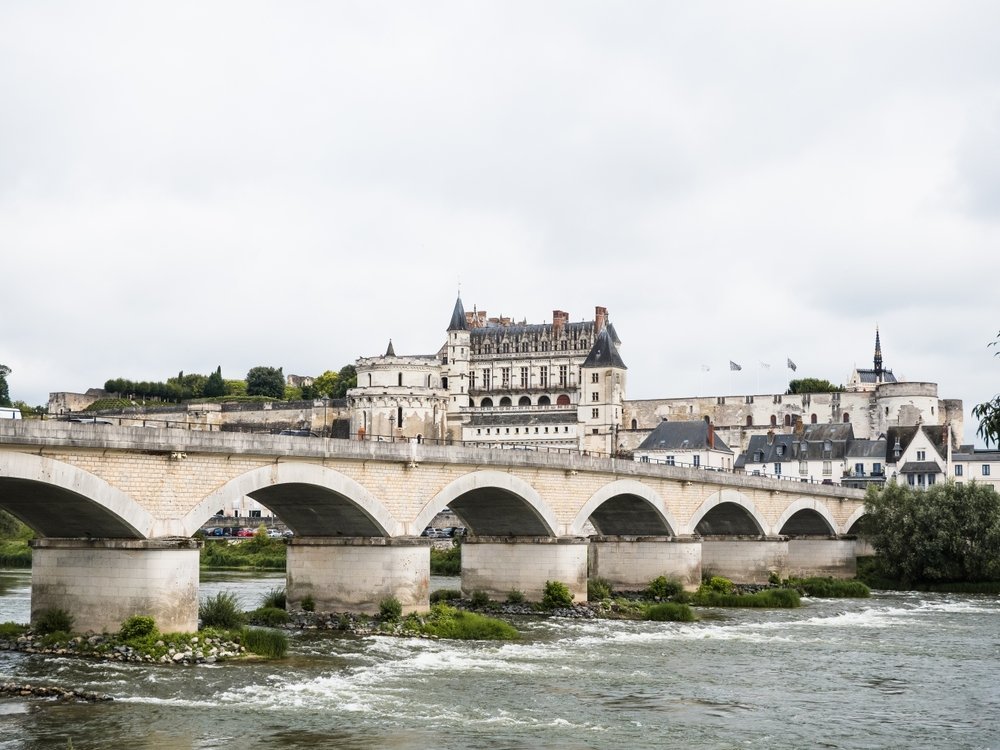
I’ve chosen Amboise as a base because the town sits right between the big châteaux and is a lovely place to stay. Château d’Amboise stands on the cliff above the river, and a short distance away is Clos Lucé, where Leonardo da Vinci spent his final years. Chenonceau is about 20 minutes away by car and Chambord about 45 minutes. Both times are estimates.
Without a car, you can cycle. The La Loire à Vélo cycle route follows the river, and in Amboise you can hire bikes to ride out to the châteaux. If you’d rather stay in a bigger city, Tours is a handy alternative with more trains, restaurants and hotels, and from there the train to Amboise takes about 20 minutes.
Give the Loire Valley at least two nights, ideally three, so you can see a couple of châteaux a day without rushing. Go in May, June or September, when the gardens look their best and there are fewer people than in July and August. If you want to drive yourself between the châteaux, see car hire in France here.
Hotels in Amboise
Le Clos d’Amboise - four-star hotel with a pool and garden in the middle of town
Le Clos d’Amboise is on Rue Rabelais in the centre of Amboise, just under 400 metres from the château. The hotel has an outdoor pool, garden, sauna, restaurant and bar, and parking is free.
The smallest double rooms are 20 square metres. It’s the most expensive of my three suggestions and suits couples who want a pool and garden after a day of châteaux. The pool is only open in season, breakfast costs extra, and one guest mentions that the driveway into the hotel is narrow.
One guest writes on Booking.com: “The location was fantastic.”
See photos and book Le Clos d’Amboise here.
Hôtel Le Pavillon des Lys - four-star hotel with a garden and free parking
Hôtel Le Pavillon des Lys is on Rue d’Orange, about 200 metres from the château and just over 500 metres from Clos Lucé. The hotel has a garden, terrace, bar and free parking.
This is my mid-range suggestion. The smallest rooms are only 10 square metres, and one guest was given a room in a small annexe by the car park, so read the room description before you book. Breakfast costs extra.
One guest highlights the staff on Booking.com: “Lovely staff who could give us good advice and tips.”
See photos and book Hôtel Le Pavillon des Lys here.
Hôtel Le Blason - two-star hotel in the middle of town
Hôtel Le Blason is on Place Richelieu in the centre, about 350 metres from the château. It’s a simple hotel with a 24-hour reception, a terrace and private garage parking.
It’s usually the cheapest of my three suggestions. The rooms are small, the smallest being 10 square metres, and one guest feels the price is a little high for a two-star hotel. Breakfast may be included in some rates, so check when you book.
One guest writes on Booking.com: “A wonderful little hotel right in the middle of everything.”
See photos and book Hôtel Le Blason here.
11. Bordeaux - best city for wine and vineyards 🍇
- 📍 Distance to the centre: The three hotels are between just under 400 metres and about a kilometre from Place de la Bourse, as the map shows.
- 🚋 Transport: Trams and pedestrian streets. Regional trains run to the wine town of Saint-Émilion, and for the châteaux in the Médoc you’ll need a car or a guided tour.
- ✈️ Time from the airport: About 35 minutes by tram from Bordeaux-Mérignac Airport (BOD) to Hôtel de Ville, followed by a walk of about 15 minutes.
- 💰 Price level: €€ to €€€€. Most expensive at weekends and in summer.
- 👮 Safety: The centre feels safe. Keep an eye on your bag around Saint-Jean station, especially in the evening.
Bordeaux is an elegant city with pale limestone façades, broad quays along the River Garonne and some of the world’s most famous vineyards right on its doorstep. The city centre is a UNESCO World Heritage Site, and at Place de la Bourse the façades are reflected in the huge Miroir d’eau water mirror.
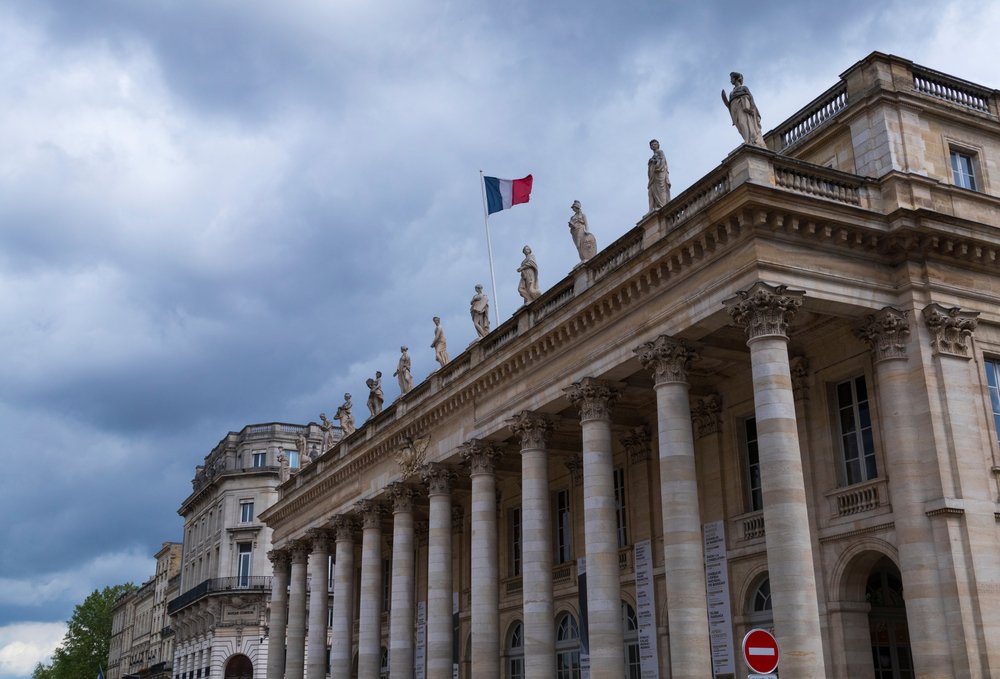
Wine is the reason many people come here. The Cité du Vin wine museum sits by the river north of the centre, and from Bordeaux you can take day trips to Saint-Émilion, the Médoc and Pessac-Léognan. You can reach Saint-Émilion by regional train, whereas you’ll need a car or a guided tour for the châteaux in the Médoc. If you want help choosing a neighbourhood, I’ve written a guide to where to stay in Bordeaux, covering six areas from Saint-Pierre to Chartrons.
The fastest trains from Paris Montparnasse take about two hours, so Bordeaux is easy to combine with the capital. The city also makes a good stop on the way south towards Biarritz and the Basque Country, and if you’re carrying on across the border into Spain, you can read my guide to where to stay in San Sebastian.
Two to three nights suits most people. That gives you a day in the city and a day in the vineyards. Stay in the centre if it’s your first visit, and choose Chartrons if you want wine bars and a more local feel in the evening.
Hotels in Bordeaux
InterContinental Bordeaux Le Grand Hotel - five-star hotel opposite the Grand Théâtre
InterContinental Bordeaux Le Grand Hotel is on Place de la Comédie, directly opposite the Grand Théâtre opera house and just under 400 metres from Place de la Bourse. The hotel has a spa with an indoor pool, a sauna, a gym, restaurants and a bar.
The smallest double rooms are 20 square metres, and breakfast costs extra. This is the hotel for you if you want to stay at the city’s finest address. One guest feels the décor is a little old-fashioned, but the location could hardly be better.
One guest writes on Booking.com: “A first-class hotel in every way!”
See photos and book InterContinental Bordeaux Le Grand Hotel here.
Hôtel de Sèze & Spa - four-star hotel with a spa on Allées de Tourny
Hôtel de Sèze is on Allées de Tourny close to the Grand Théâtre, about 600 metres from Place de la Bourse. The hotel has a spa with a sauna and steam room, a gym, a restaurant and a bar.
This is my pick if you want a spa at a lower price than at Le Grand Hotel. The smallest double rooms are 18 square metres, and one guest writes that there wasn’t enough space for two people and two suitcases. Breakfast costs extra.
One guest writes briefly on Booking.com: “Good location and a lovely hotel.”
See photos and book Hôtel de Sèze & Spa here.
Hôtel Notre Dame - small three-star hotel in the Chartrons district
Hôtel Notre Dame is on Rue Notre-Dame in Chartrons, about a kilometre north of Place de la Bourse. The street is known for its antique shops and small restaurants.
It’s usually the cheapest of my three suggestions. According to one guest, the hotel is on the third floor of a building with no lift, so pack light. The smallest double rooms are 15 square metres, and breakfast costs 11 euros per person (around £9).
One guest writes on Booking.com: “Clean, tidy hotel in a good location.”
See photos and book Hôtel Notre Dame here.
12. Toulouse - best city for South-West France and Carcassonne 🌹
- 📍 Distance to the centre: The three hotels are no more than about 350 metres from Place du Capitole, as the map shows.
- 🚇 Transport: Metro and buses, but you can easily get around the centre on foot. The train to Carcassonne takes about an hour.
- ✈️ Time from the airport: About 30 to 40 minutes on the Navette Aéroport from Toulouse-Blagnac Airport (TLS) to the Jeanne d’Arc stop, then a 5 to 10-minute walk from there.
- 💰 Price level: € to €€€. Usually cheaper than Bordeaux and Paris.
- 👮 Safety: A safe city centre. Keep your wits about you around Matabiau station in the evening.
Toulouse is known as the pink city because its buildings are made of red brick that glows in the evening sun. Airbus has its headquarters here, the city has a large student population, and it’s cheaper than most big French cities. In the middle of town is Place du Capitole with the city hall, and in the evening young people gather on the quays along the River Garonne.
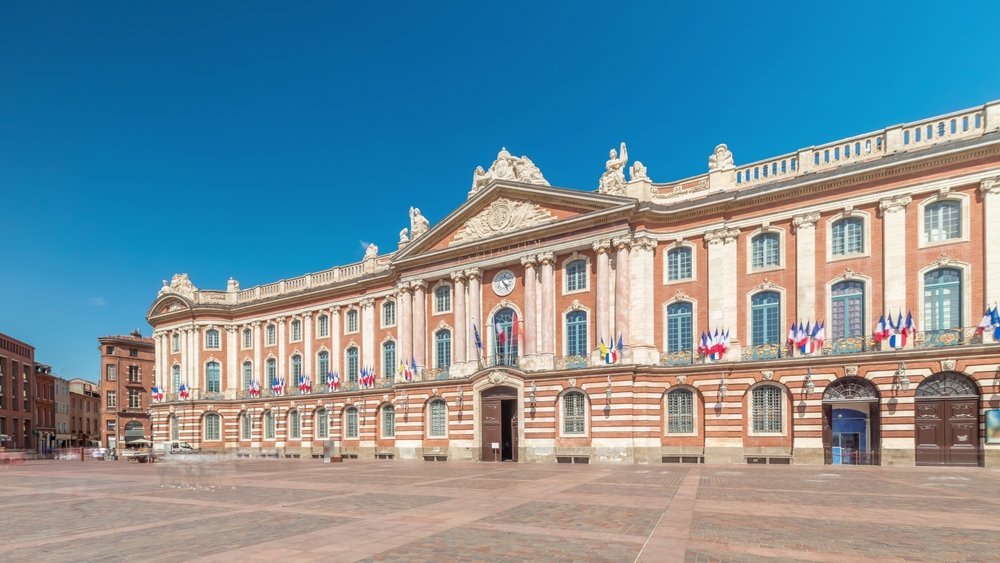
Toulouse is the best base in South-West France if you want to see the Canal du Midi and the medieval town of Carcassonne without changing hotels every day. The Canal du Midi is a UNESCO World Heritage Site and runs right through the city, and the train to Carcassonne, with its fortified Cité, takes about an hour. If you need help choosing a neighbourhood, I’ve written a guide to where to stay in Toulouse, covering five areas from Capitole to Saint-Cyprien.
From Paris, the fastest direct TGV trains take about four and a half hours, so many people fly here instead. If you’re travelling with children, the Cité de l’espace space centre and the Aeroscopia aviation museum by the airport make great day trips.
Toulouse is also well placed if your trip continues towards the Pyrenees and Spain. If you’re heading on to the Mediterranean on the Spanish side, have a look at my guide to where to stay on the Costa Brava, or the guide to where to stay in Barcelona.
Hotels in Toulouse
Le Grand Balcon Hotel - four-star hotel right by Place du Capitole
Le Grand Balcon is just under 100 metres from Place du Capitole. The hotel is famous for having housed the pilots of the airmail company Aéropostale, among them Antoine de Saint-Exupéry, and it has a bar and a 24-hour reception.
The smallest double rooms are 18 square metres, and breakfast costs 18 euros (around £15) per person. It’s the most expensive of my three suggestions and ideal for a weekend for two. One guest would have liked a bit more space in the lobby and communal areas.
One guest writes on Booking.com: “A beautiful hotel with lovely rooms and helpful staff.”
See photos and book Le Grand Balcon Hotel here.
Hotel Albert 1er - three-star hotel on a side street off Place du Capitole
Hotel Albert 1er is on Rue Rivals, just over 200 metres from Place du Capitole. The hotel has a 24-hour reception and a lift.
It’s my mid-range pick and a good choice if you want to walk everywhere. The rooms are small, with the smallest doubles at 13 square metres, and one guest found their room very small. Breakfast costs extra.
One guest writes on Booking.com: “I would recommend this hotel to everyone.”
See photos and book Hotel Albert 1er here.
Hôtel Ours Blanc Wilson - simple hotel by Place Wilson
Hôtel Ours Blanc is close to Place Wilson, about 350 metres from Place du Capitole. The hotel has a 24-hour reception and a lift.
It’s usually the cheapest of my three suggestions. The smallest double rooms are 13 square metres, and one guest describes their room as small but fine for a couple of nights. Breakfast costs 11 euros (around £9) per person.
One guest writes on Booking.com: “Great location with very helpful staff and a good breakfast.”
See photos and book Hôtel Ours Blanc Wilson here.
Where not to stay in France?
I wouldn’t try to see all of France in one trip. Getting from Strasbourg to Bordeaux or from Normandy to the Riviera takes a whole day of travelling, and your holiday ends up being spent packing suitcases. Pick one part of the country instead, and stay at least two nights in each place.
I also wouldn’t stay at the big TGV stations outside the cities, such as Avignon TGV and Aix-en-Provence TGV, or in the business parks by the motorways, just because the hotels are cheaper. You save a little on the room, but you pay for it in time every day. Don’t stay in a small village without a car either, as buses in the countryside are infrequent. Brittany, the Dordogne and Champagne aren’t among the twelve bases, because they’re best suited to a road trip where you stay in the region for the whole holiday.
If you have a week, I’d spend three nights in Paris and four in either Normandy, the Loire Valley or Alsace, all of which are easy to reach by train. With two weeks, you can take the train from Paris to Lyon and Provence and finish on the Riviera, or you can fly to Nice and split your time between the Riviera, Provence and Marseille. Corsica deserves a week of its own.
May, June and September are the best months in most of the country. July and August are hot and expensive on the coast, and many French people go on holiday at the same time. You’ll find inspiration for the regions on the official French tourist board website France.fr.
France is also easy to combine with its neighbours. The Riviera continues into Italy, so if you’re carrying on along the coast, have a look at my guide to where to stay in Genoa. If you’re coming from the north, where to stay in Brussels is a good place to start before taking the train on to Paris.
Travel ressources & websites I use all the time 👇
• Booking.com has the best offers on hotels and unique places to stay
• GetYourGuide is the best place to book tours & activities with free cancellation
• Welcome Pickups is the best & safest place to pre-book airport transfers
Psst 👀 Have you subscribed to my Youtube channel and my Instagram where I provide more useful travel tips?