

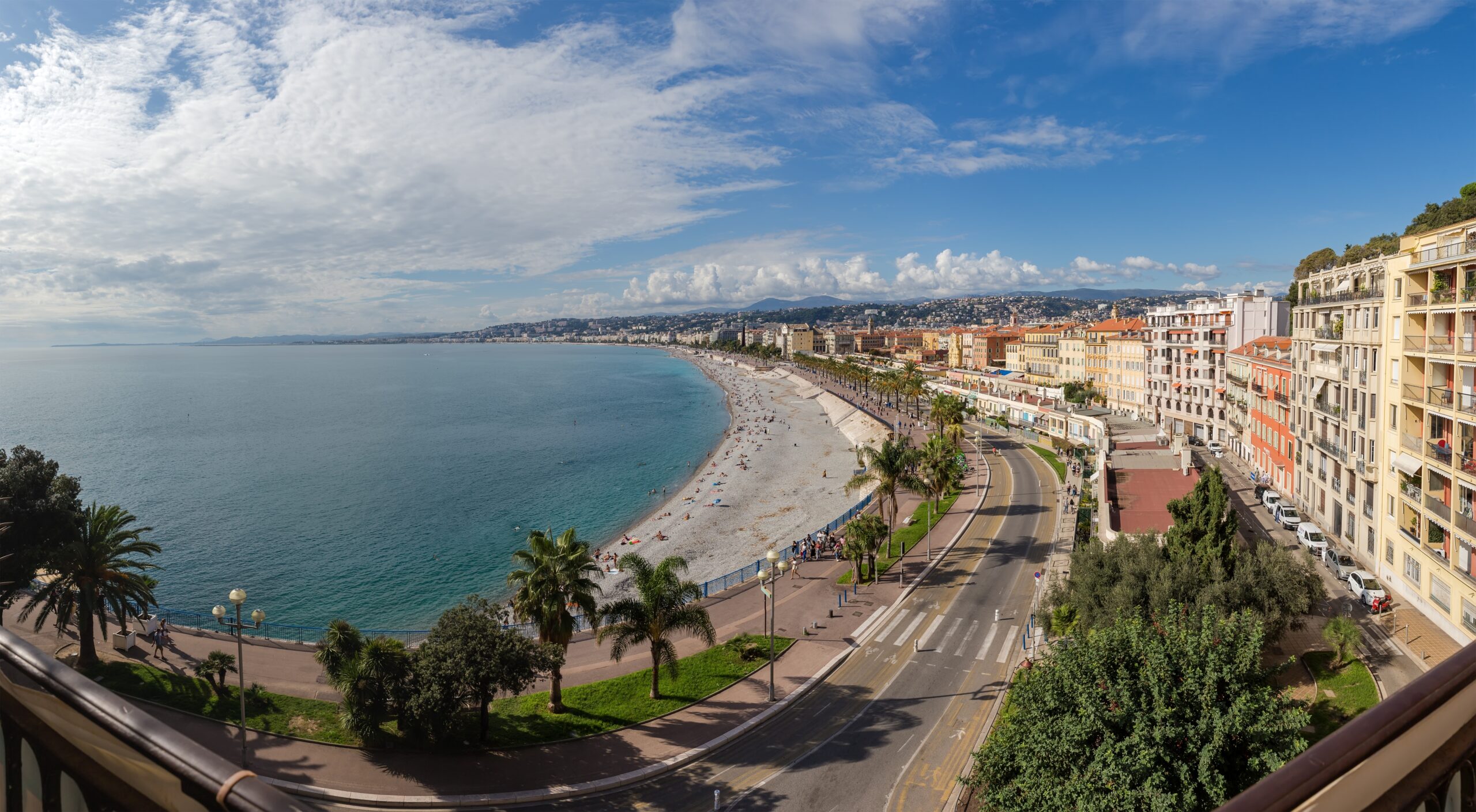
Nice is the largest city on the Riviera, and it’s a city where you can go from a morning on the beach to an art museum and on into the narrow streets of the Old Town without getting on a bus. The Promenade des Anglais runs along the Baie des Anges, the Matisse and Chagall museums are up in Cimiez, and by train you can reach Monaco, Antibes and Cannes in under an hour.
Here are my picks for the 17 best things to see and do in Nice, with prices, opening hours and transport tips. Prices are in euros, and €1 is roughly £0.84. Several of the museums, including the Musée Matisse and the Musée Chagall, are closed on Tuesdays, and on Mondays the flower market on the Cours Saleya is replaced by an antiques market, so read the sections before you plan your days. The last five sections are about trips along the coast.
Contents
1. Promenade des Anglais
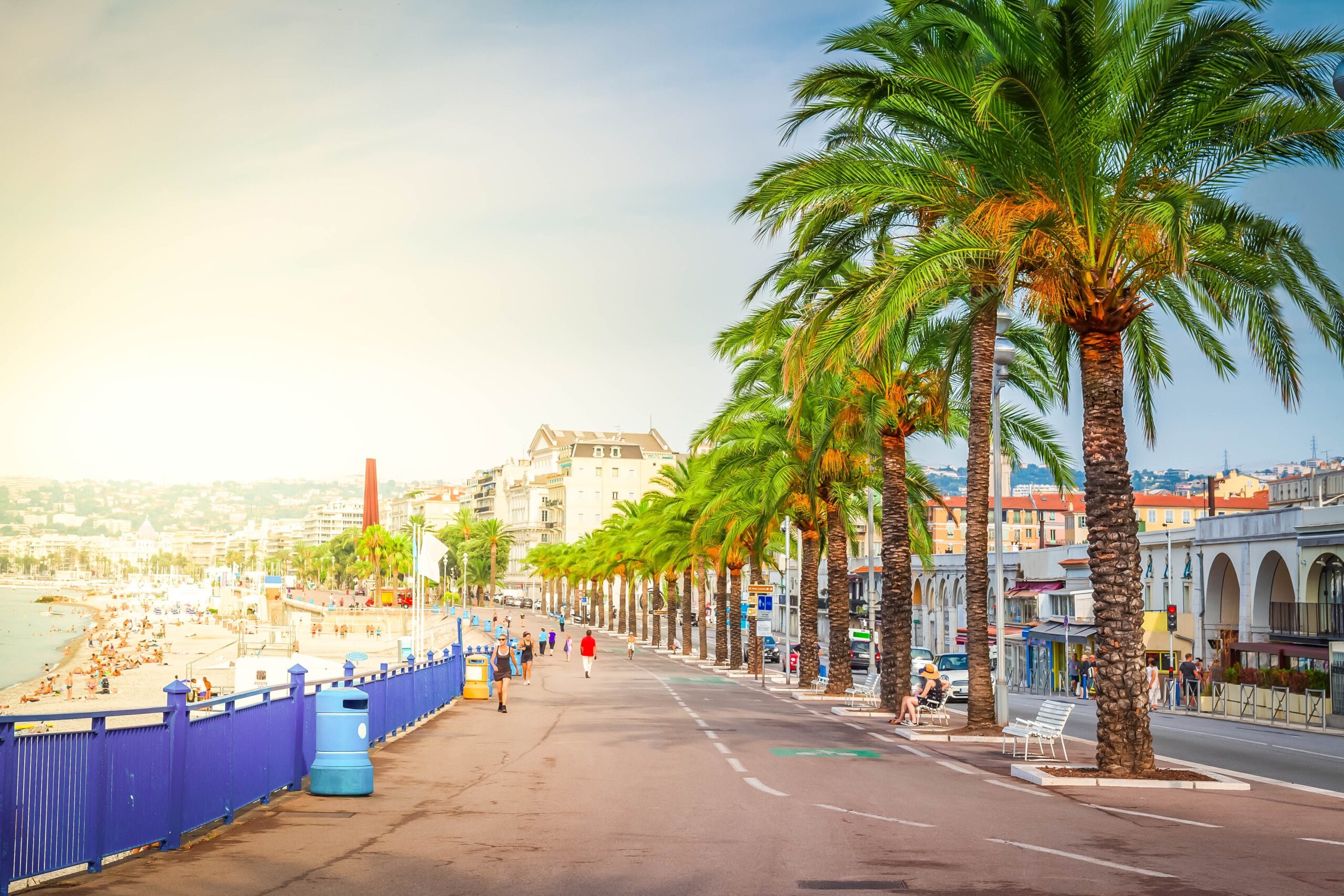
The Promenade des Anglais stretches almost seven kilometres along the Baie des Anges, from the airport in the west to the foot of the Colline du Château in the east. It began in 1824, when the British clergyman Lewis Way had a path laid out along the coast to provide work after a hard winter, and it’s named after the English colony of winter visitors who helped create it. Today it’s a wide promenade with palm trees and the famous blue chairs, where people walk, run and cycle with the sea right beside them.
The promenade is a big part of the reason Nice was added to UNESCO’s World Heritage List in 2021 as a winter resort town of the Riviera. The beaches below the promenade are pebble beaches, not sandy ones, and there are both public beaches, where you just lay down your towel, and private beach clubs, where you pay for a sunbed and a parasol.
My tip is to walk a stretch of the promenade westwards from the Old Town early in the morning or at sunset, when the light is softest, and to bring water shoes, because the pebbles are hard underfoot. Bus 12 runs along the promenade, and tram line 2 runs along the western part out towards the airport. If you’d like to wake up to a view of the bay, you can see hotels on the Promenade des Anglais here.
2. Old Town (Vieux Nice)
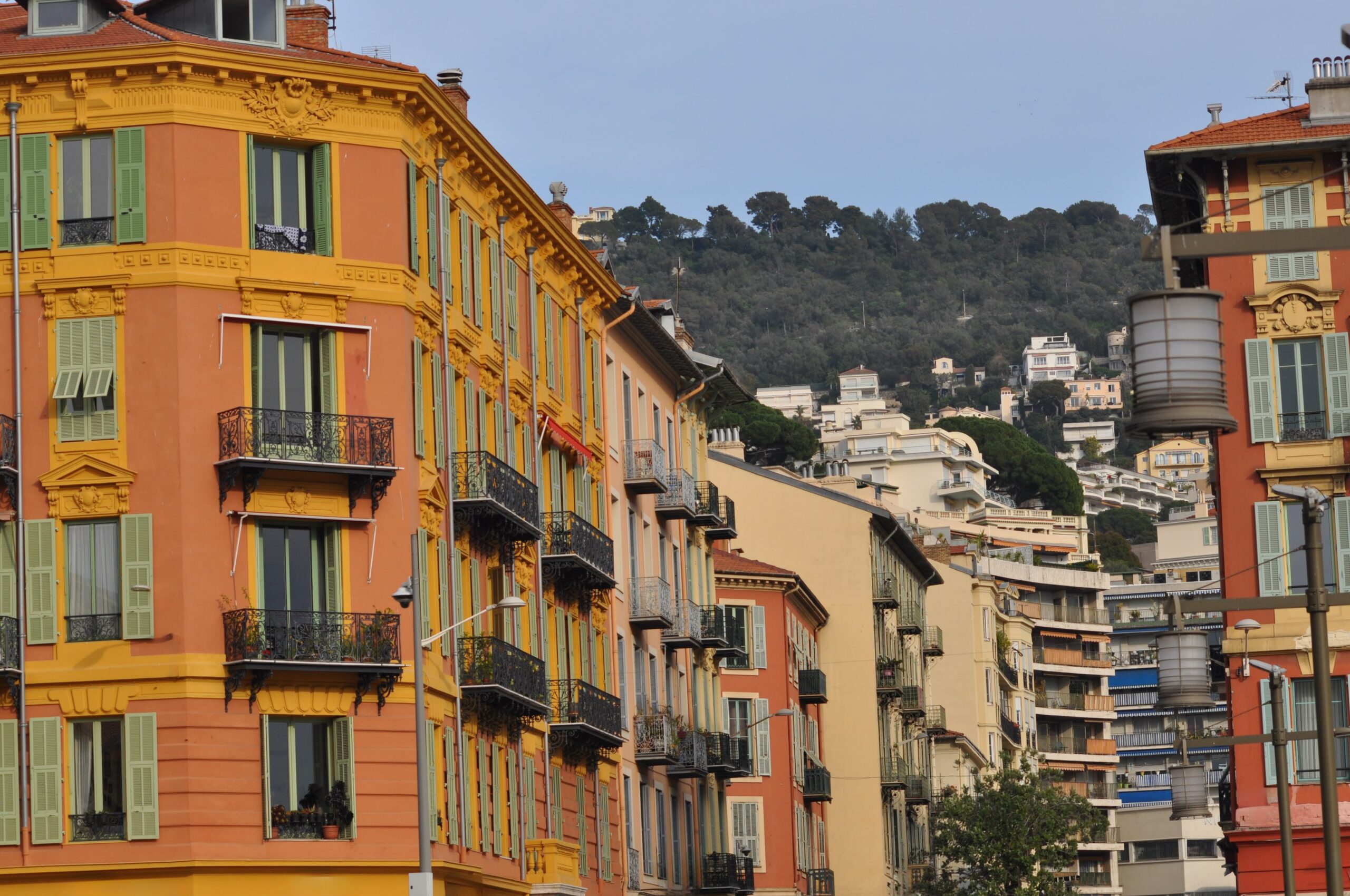
The Old Town, called Vieux Nice in French, lies between the Colline du Château and Place Masséna. It’s a maze of narrow streets with ochre and pink houses, washing hung between the windows and small squares with cafés. The city’s cathedral, Sainte-Réparate, stands on Place Rossetti, and all around the neighbourhood you’ll find baroque churches, delis and stalls selling socca, the thin chickpea flour pancake that’s Nice’s best-known street food.
It’s free to walk around, and the area is at its best in the morning, before the day-trippers arrive, or in the evening, when the restaurants fill the streets with tables. I’ll be honest: the restaurants on the most central squares are often expensive and mediocre, so walk a couple of streets away before you sit down. Rue Droite and Rue de la Préfecture are good streets to start in.
The Old Town is also the most obvious place to stay if it’s your first visit to the city, and it’s the first area in my guide to where to stay in Nice. Here you can see hotels in Vieux Nice. If you’d like the history too, a guided walking tour is a good way to start your stay.
Book a guided walking tour of the Old Town and the Colline du Château.
3. Cours Saleya and the Flower Market
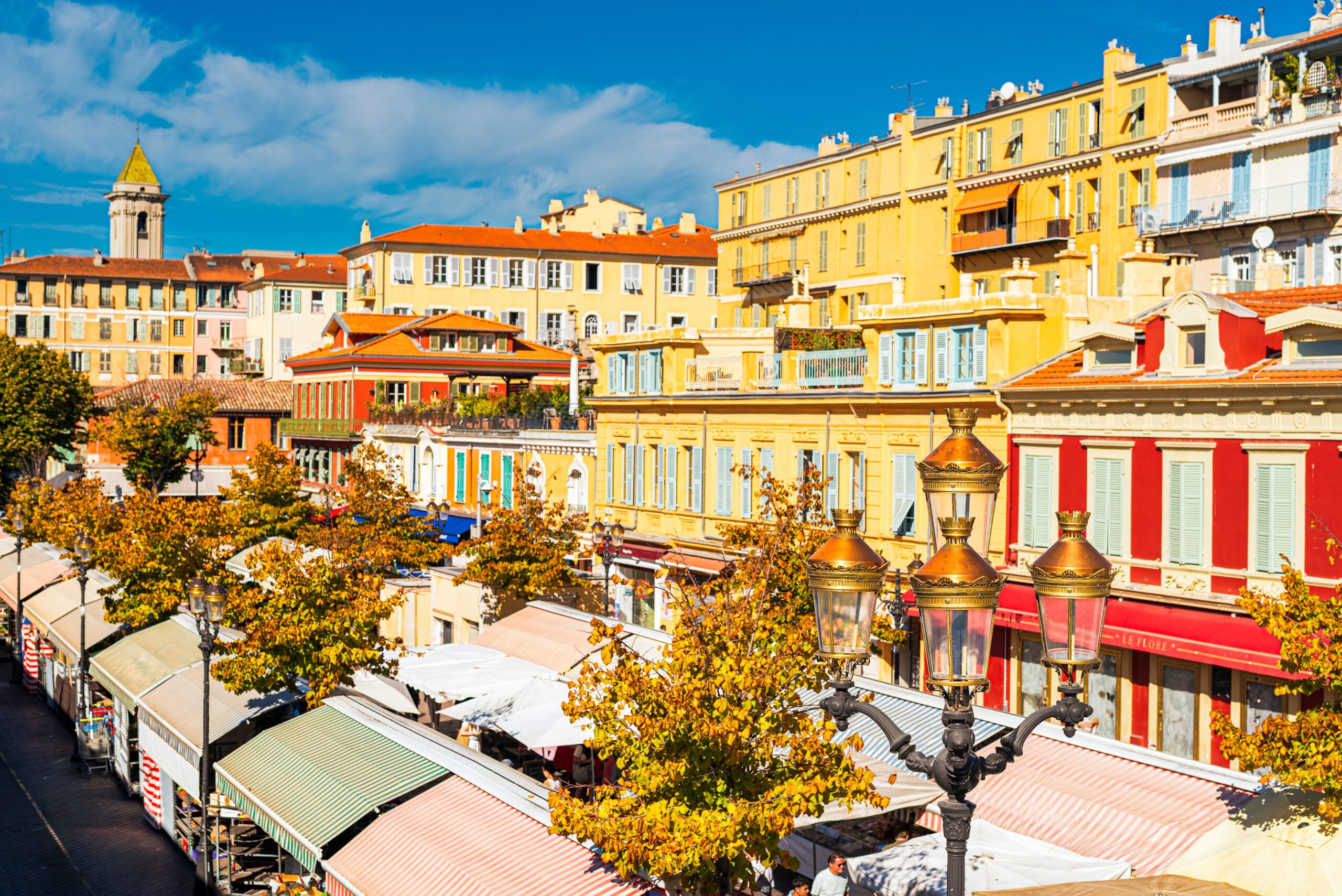
The Cours Saleya is the long square in the southern part of the Old Town, just behind the seafront promenade. The square is known for its flower market, but the stalls also sell fruit, vegetables, olives, spices and local specialities, and the market has been named one of the 100 most picturesque markets in France. Around the square there are cafés and restaurants with tables out on the cobbles.
The flower market is held from Tuesday to Sunday, while every Monday the square fills up with the antiques market, selling everything from old postcards and silverware to paintings and furniture. In summer there are also stalls with art and crafts in the evening. It’s free to walk around, and the market is liveliest in the morning, so come early.
My tip is to buy a piece of socca from one of the stalls and eat it while it’s still hot. You’ll get the best view over the square from the top of the steps at Les Ponchettes, opposite Place Pierre Gautier. If you’d like to taste your way through the local cuisine with pan bagnat, pissaladière and socca, there are food tours with a local guide through the Old Town.
Book a food tour with local tastings in Nice.
4. Colline du Château
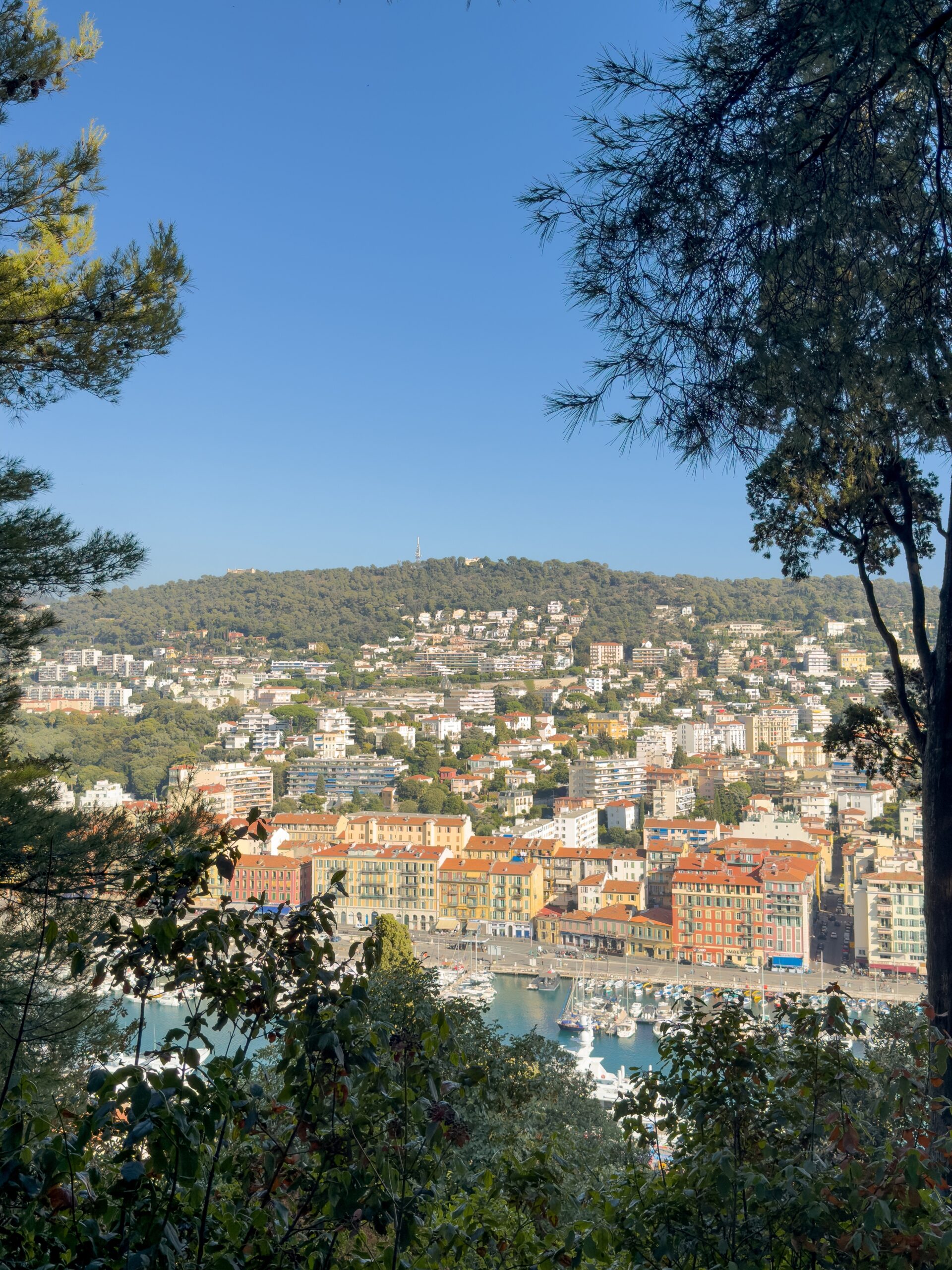
The Colline du Château is the green hill between the Old Town and the harbour. The city’s castle once stood here, but it was pulled down in the early 1700s, and today the top is a park with shady paths, playgrounds, ruins and an artificial waterfall, the Cascade du Château, where many local families head on hot days. The city’s old cemetery is also on the hill.
This is where you get the classic view of Nice, with the Baie des Anges, the red roofs of the Old Town and the harbour on the other side of the hill. The park is free to enter and open every day from 8.30am to 6pm from October to March and until 8pm from April to September. You can walk up the steps from the eastern end of the seafront promenade or from the Old Town, and there’s also a lift if you’d like to save your legs.
The walk up the steps takes about a quarter of an hour at a gentle pace. My tip is to go up late in the afternoon and stay for the sunset, and to bring water, because it gets hot on the steps in summer. If you walk down the other side of the hill, you’ll come out right by Port Lympia, so you can easily combine the hill and the harbour in one outing.
5. Place Masséna and the Promenade du Paillon
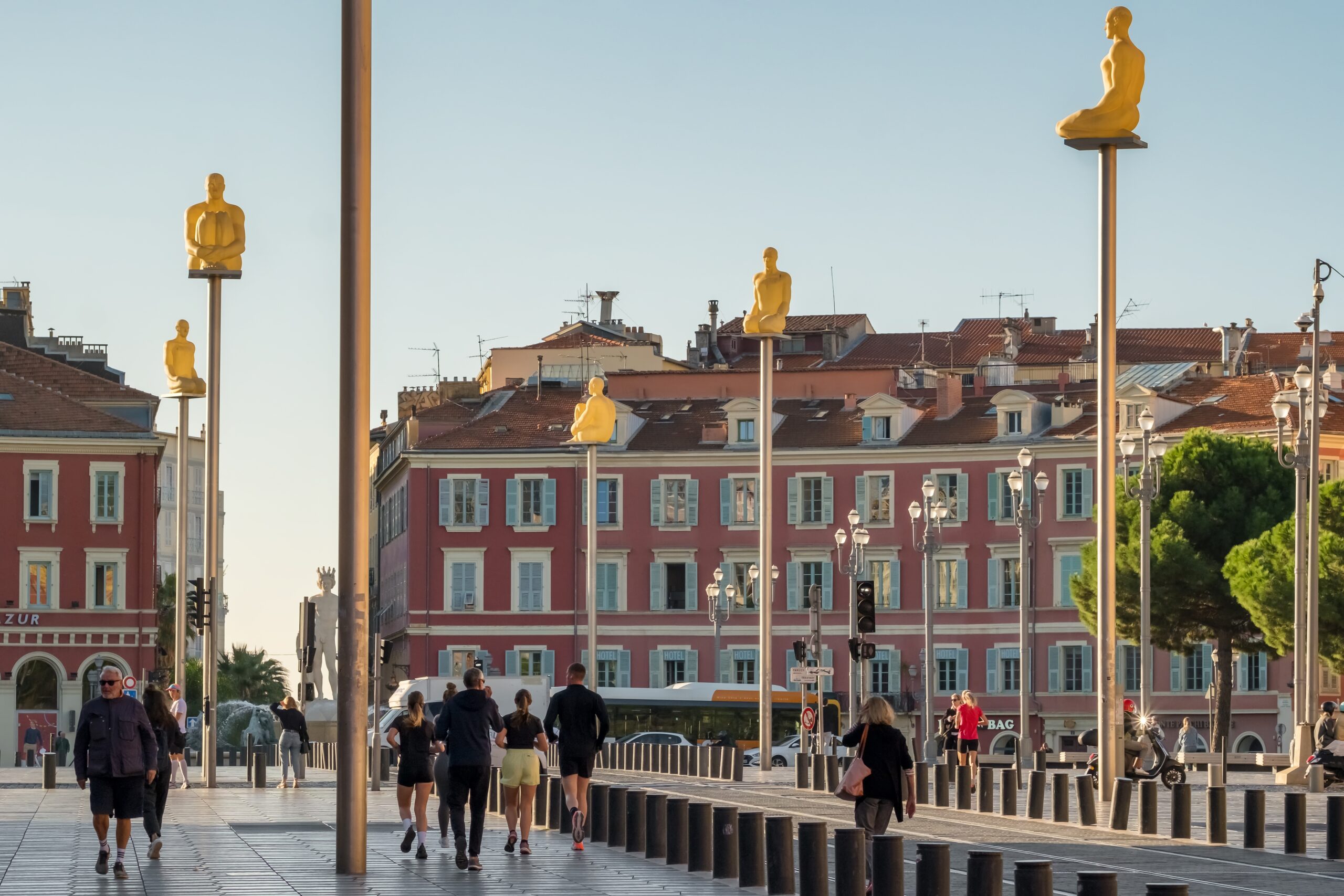
Place Masséna is Nice’s main square and the link between the Old Town and the newer part of the city around Avenue Jean Médecin. The buildings around the square are painted in the red and ochre shades typical of Nice, and the paving is laid in a black and white chequered pattern. At the southern end stands the Fontaine du Soleil with a large statue of Apollo, and above the square seven figures by the Catalan artist Jaume Plensa sit on tall poles. In the evening they light up in changing colours.
From the square, the Promenade du Paillon park runs to the north-east. It’s a 14.5-hectare city park, and right by Place Masséna is the Miroir d’eau, a 3,000-square-metre water mirror with 128 jets, where both children and adults run around when it’s hot. The park is free and open from 7am to 9pm from October to March and until 11pm from April to September, while the water mirror is switched on from 9am to 8pm in winter and until 10pm in summer.
Tram line 1 stops at Masséna, and line 2 stops at Jean Médecin, a couple of minutes’ walk away. My tip is to come back after dark, when the statues are lit up and the water mirror is covered in mist. Avenue Jean Médecin is the city’s main shopping street if you want to hit the shops.
6. Port Lympia and Place Garibaldi
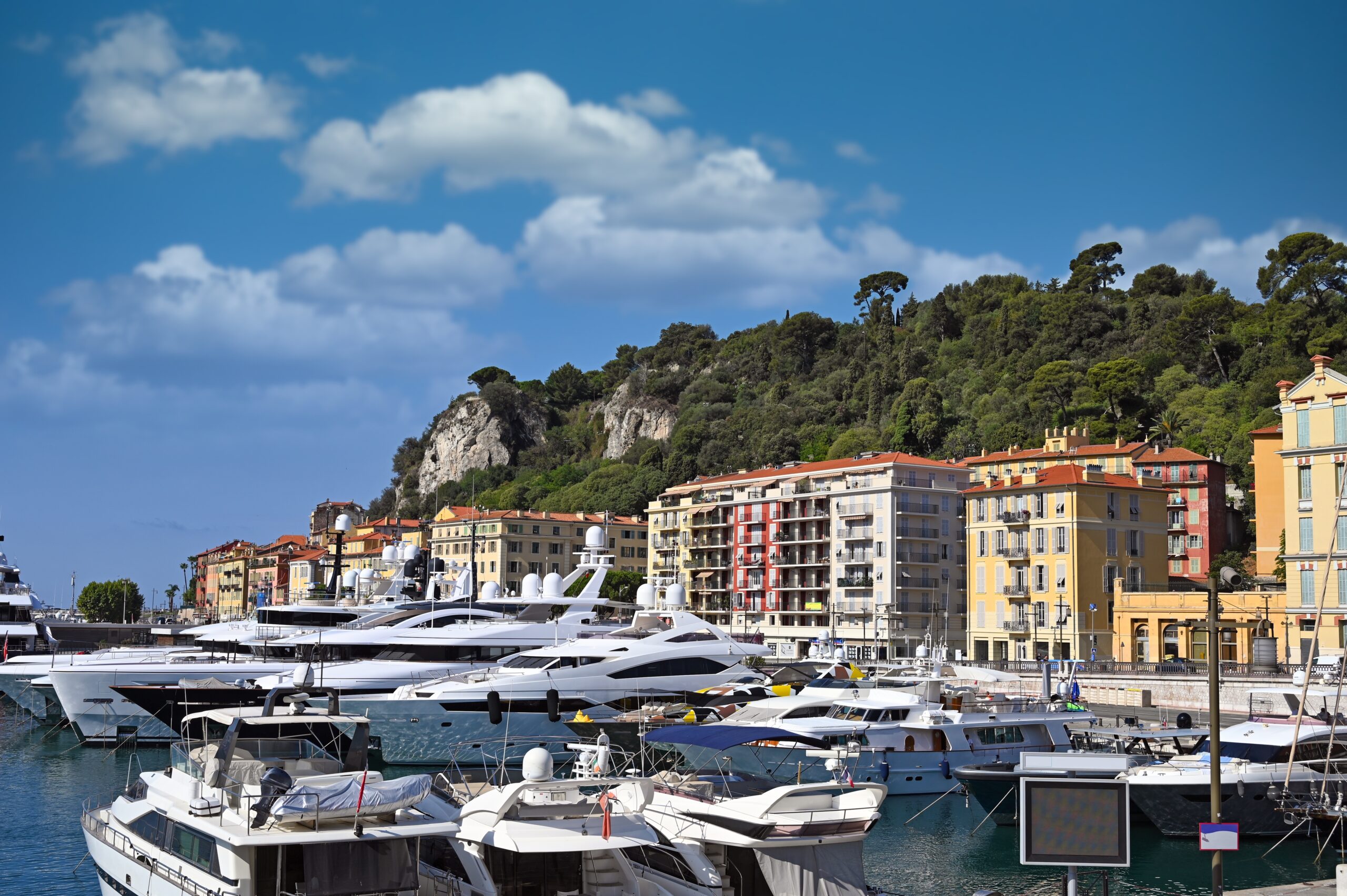
East of the Colline du Château lies Port Lympia, Nice’s old harbour. The façades around the basin are painted ochre, yellow and red, and along the quays luxury yachts are moored side by side with around a hundred traditional wooden boats, known as pointus. The ferries to Corsica also leave from here, and if you’re heading on to the island, you can read my guide to where to stay in Corsica.
From the harbour, you walk along Rue Cassini up to Place Garibaldi, a large arcaded square named after the hero of Italian unification, Giuseppe Garibaldi, who was born in Nice. The area between the harbour and the square feels more local than the Old Town, with wine bars, fish restaurants and antique shops. Tram line 2 terminates at Port Lympia, and line 1 stops at Garibaldi.
The harbour is a good choice if you want to stay somewhere a little quieter than the Old Town but still be able to walk everywhere, and you can see hotels by the harbour in Nice here. My tip is to take a short boat trip along the coast towards Villefranche and Cap Ferrat, so you can see the grand villas from the water.
Book a one-hour cruise from Nice to the bay of Villefranche.
7. Musée Matisse
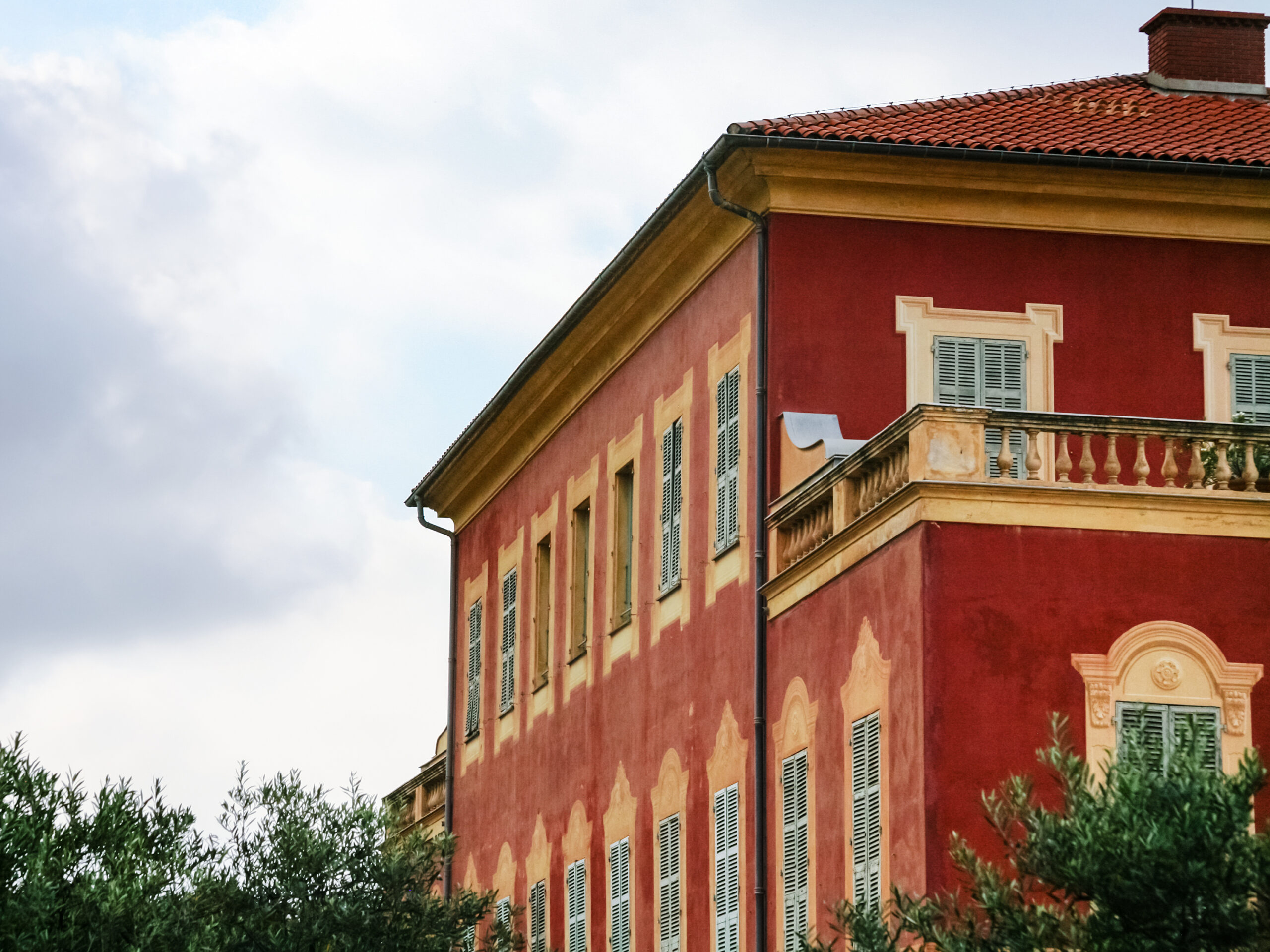
Henri Matisse lived in Nice from 1917 until his death in 1954, and the museum bearing his name is housed in a red 17th-century Genoese villa in the middle of the olive grove in Cimiez. The collection follows his whole career, from the early paintings through drawings and sculptures to the large paper cut-outs he made in his final years, and you can also see objects from his studio.
The museum is open from 10am to 6pm from April to October and from 10am to 5pm from November to March. It’s closed on Tuesdays and on 1 January, Easter Sunday, 1 May and 25 December, and the ticket office closes half an hour before the museum. A ticket costs €10 (about £8), and a museum pass valid for four days at ten of the city’s museums costs €15 (about £13). Under-18s and students get in for free with proof.
Cimiez is on a hill north of the centre, so take the bus up there and find the easiest connection in the Lignes d’Azur journey planner. My tip is to combine the Matisse museum with the Roman ruins and the monastery garden right next door and finish at the Chagall museum on your way back down towards the centre. That gives you a good half day, and with the museum pass you only pay once.
8. Musée National Marc Chagall
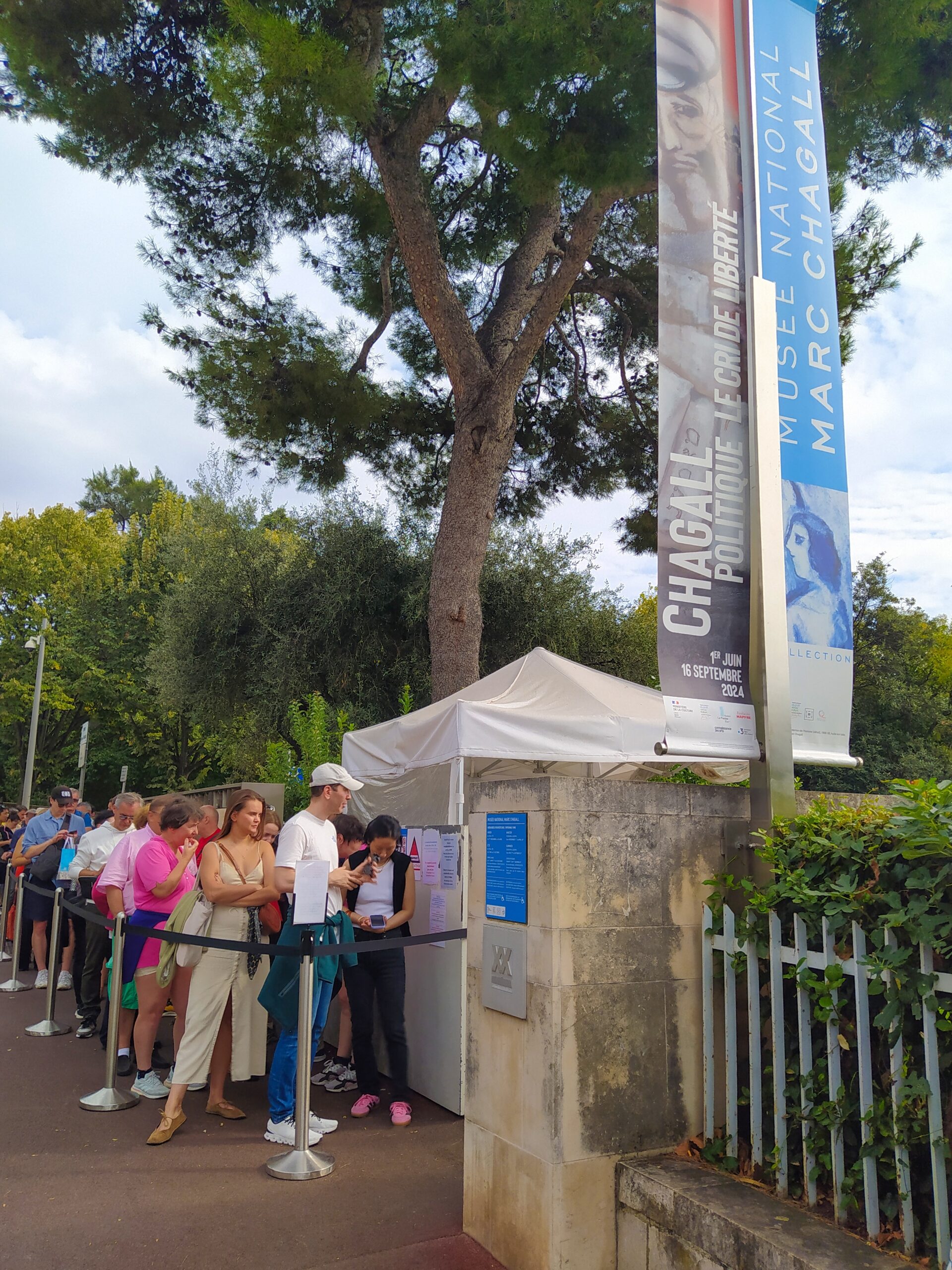
The Musée National Marc Chagall was built for the artist’s great biblical series, Le Message Biblique, and opened in 1973, while Chagall was still alive. The main works are 17 large paintings with scenes from the Old Testament in strong blues, reds and greens, and the museum also has mosaics, stained glass windows in the concert hall and a small garden with Mediterranean plants.
The museum is closed on Tuesdays and on 1 January, 1 May and 25 December. It’s open from 10am to 6pm from May to October and until 5pm from November to April, and in March it closes as early as 4.30pm. At times the museum has closed in the middle of the day from 1pm to 2.30pm, so check the tourist office’s page before you go. Admission costs €10 (about £8), or €12 (about £10) when there’s a special exhibition. Under-18s get in for free, and so does everyone on the first Sunday of the month.
The museum is on Avenue du Docteur Ménard at the foot of Cimiez, and you can walk there from Nice-Ville station. My tip is to spend a good hour here before you carry on up the hill to the Matisse museum, or to plan your visit for the first Sunday of the month if you’re in town anyway.
9. Cimiez with Roman Ruins and a Monastery Garden
Cimiez was an elegant villa district for winter visitors in the 19th century, but its history goes back much further. The Roman town of Cemenelum stood here, and at the Musée d’Archéologie de Nice-Cimiez you walk among three Roman bath complexes, a residential quarter, an amphitheatre and an early Christian church complex. The cold bath in one of the bathhouses still stands more than ten metres high.
The museum is on Avenue des Arènes de Cimiez right by the Matisse museum and is open from 10am to 6pm from May to October and until 5pm the rest of the year. It’s closed on Tuesdays. Admission costs €5 (about £4), and the €15 (about £13) museum pass is valid here too.
Right next door is the olive grove of the Jardin des Arènes, which is free to enter, and a little further on is the Franciscan monastery with its church, a monastery garden with views over the city and the cemetery where Matisse and the painter Raoul Dufy are buried. The cemetery is open from 8.30am to 6pm from March to October and until 5pm in winter. My tip is to bring a packed lunch and eat it in the shade of the olive trees before you head on to the museums.
10. Saint-Nicolas Russian Orthodox Cathedral
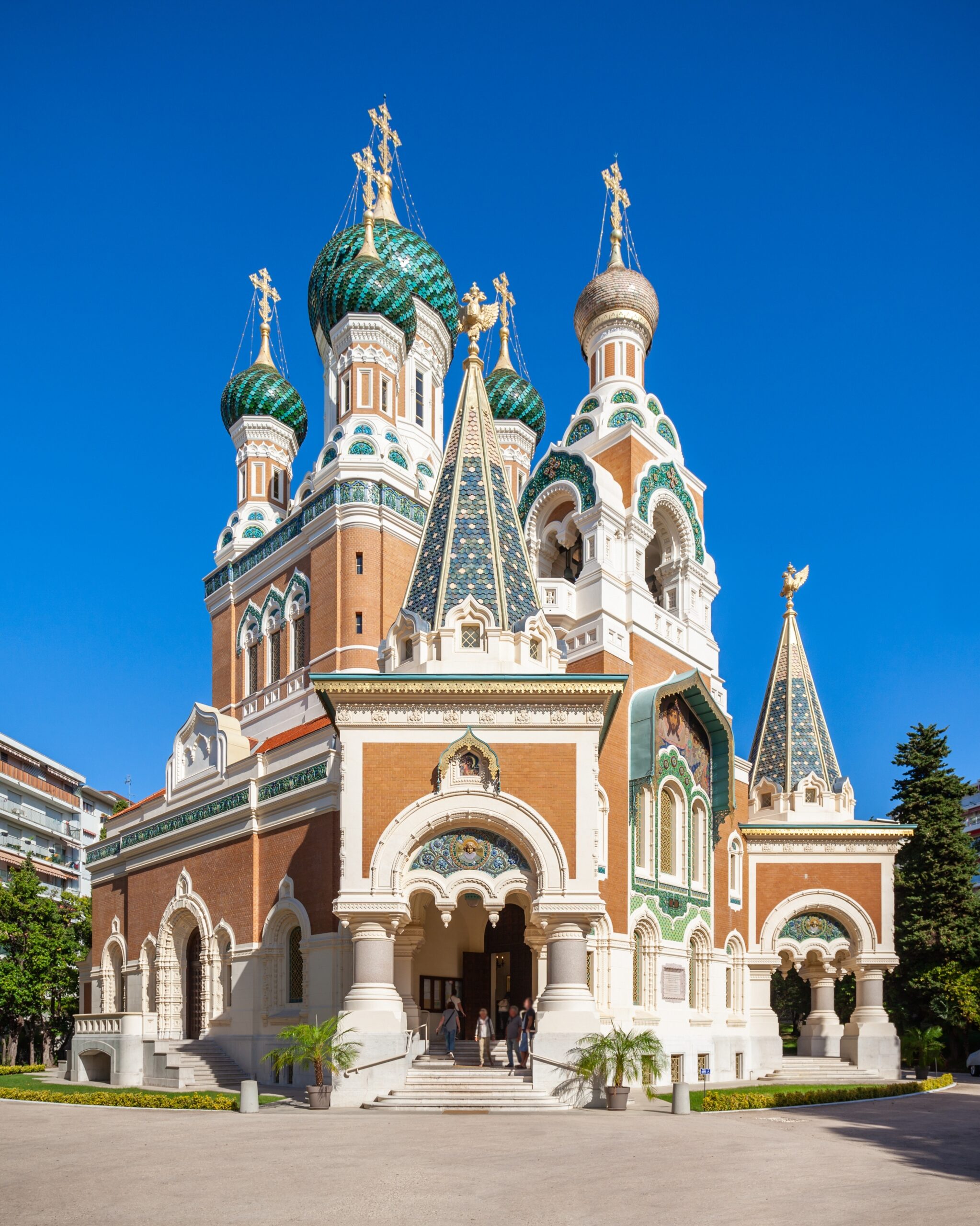
It’s a bit of a surprise to find a Russian Orthodox cathedral with onion domes in the middle of a residential area in Nice, but it makes sense once you know that Russian aristocrats and the tsar’s family spent their winters on the Riviera in the 19th century. Saint-Nicolas Cathedral was consecrated in 1912 and is the largest Russian Orthodox church in Western Europe. Inside, there are icons, carved wood and a heavy scent of incense.
According to the regional tourist board, entry is free, while a guided tour of about 35 minutes costs €10 (about £8) for adults and is free for children under 12. Respectful clothing is required, and men aren’t allowed in bare-chested. It’s a working church, so you can’t walk around during services, and opening hours can vary.
The cathedral is on Avenue Nicolas II, about a quarter of an hour’s walk from Nice-Ville station, so it fits in nicely if you’re taking the train anyway. My tip is to drop by on your way to or from one of the day trips, and to bring a scarf or a cardigan if you’re walking around in shorts and with bare shoulders in summer.
11. Palais Lascaris
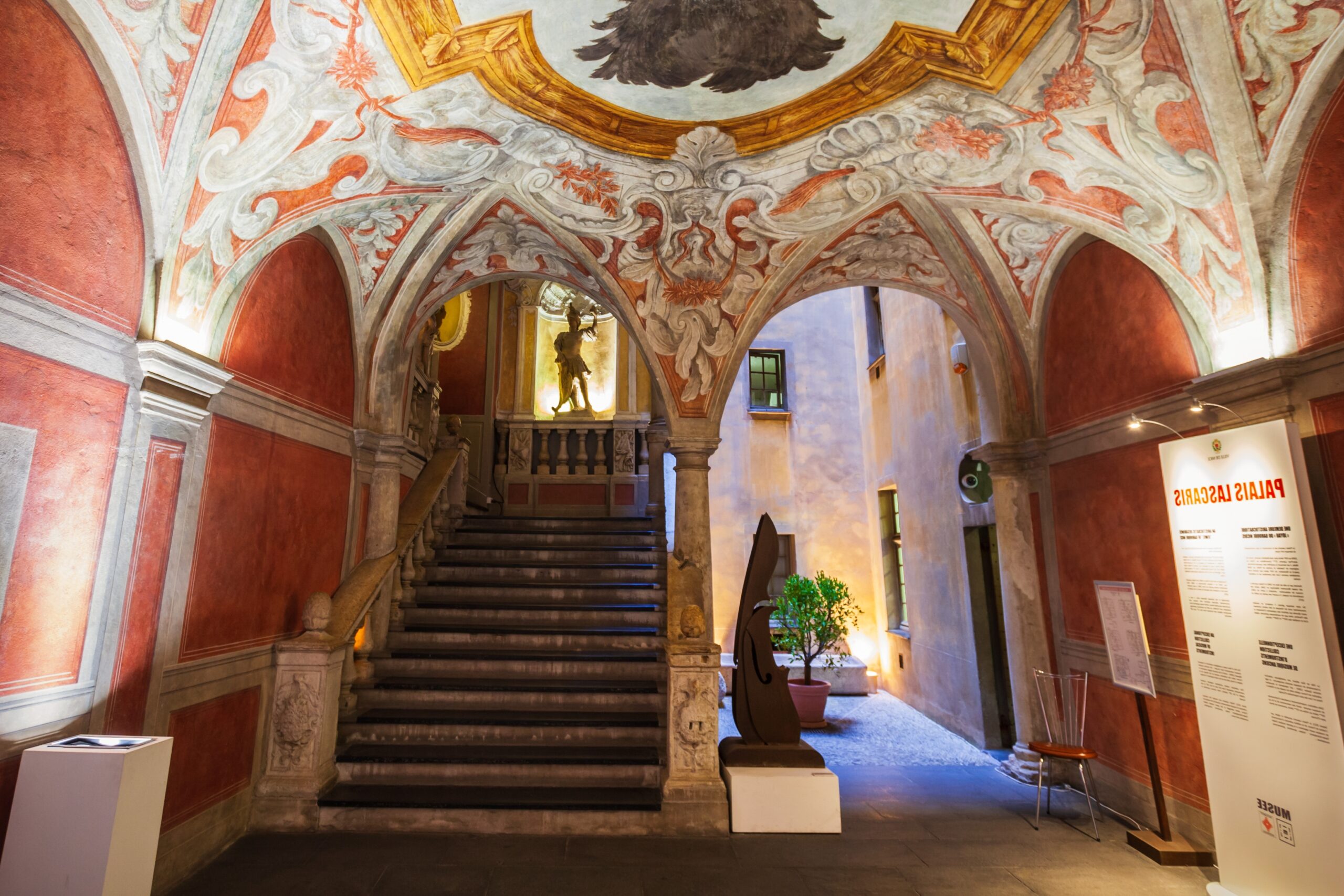
The Palais Lascaris is a 17th-century aristocratic palace in the middle of the Old Town, and the tourist office calls it the most remarkable example of baroque architecture in Nice outside the churches. From the narrow Rue Droite, you go in through the gateway and up a grand staircase with frescoes to salons with painted ceilings, tapestries and furniture.
Today the palace is a museum of 17th- and 18th-century art and music, and its large collection of historic musical instruments is the reason many people come. You’ll see violins, harps, guitars and wind instruments, among others, and some of them came to the museum as a gift from the collector Antoine Gautier in 1904.
The palace is open from 10am to 6pm every day except Tuesday and is closed on 1 January, Easter Monday, 1 May and 25 December. Admission costs €5 (about £4), and children under 13 get in for free. It’s not a place most tourists find, and that’s exactly why I think it’s a good stop. My tip is to save it for a hot afternoon or a rainy day, because it’s cool behind the thick walls, and a visit takes about an hour.
12. Mont Boron and Fort du Mont Alban
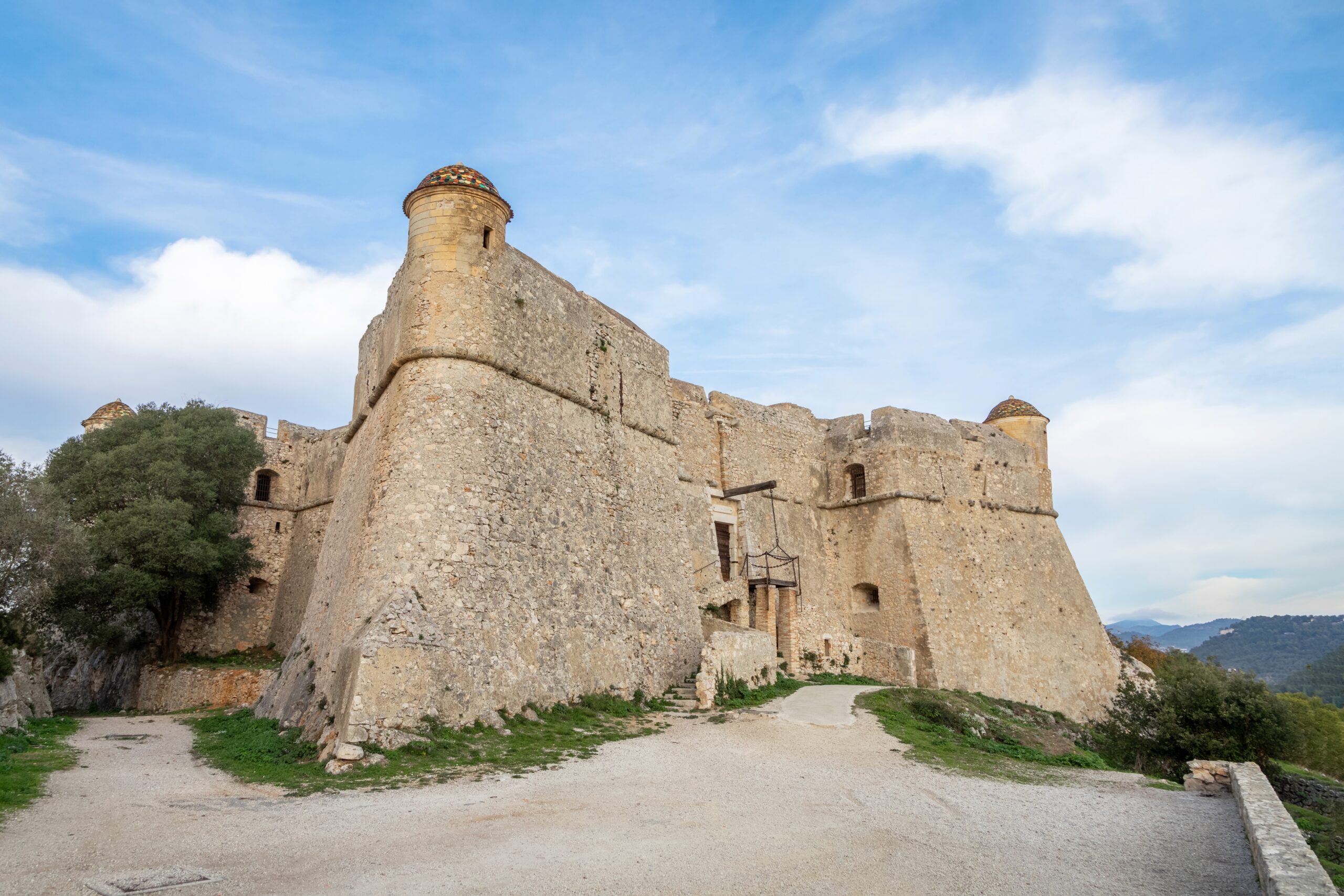
East of the harbour, Mont Boron rises between Nice and Villefranche-sur-Mer. The whole hill is a 57-hectare forest park with 11 kilometres of paths among the pine trees, and it’s free to enter. It’s the best place to get away from the traffic without leaving the city, and along the way you look down on the luxury villas on the slopes.
At the top stands the Fort du Mont Alban, a 16th-century fortress. According to the tourist office, from the terrace you can see all the way from Bordighera in Italy to the Estérel mountains west of Cannes, and on clear days you can sometimes see Corsica. Tours inside the fort have been suspended, so expect to see it from the outside, and check the page before you count on getting in.
You can walk up from the harbour along paths and steps, but it’s a steep climb, so bring good shoes and water. If you’d rather not walk, there are guided tours in small electric cars that drive up to the viewpoint at the Fort du Mont Alban and on to Villefranche-sur-Mer. My tip is to head up late in the afternoon, when the sun is low over the Baie des Anges.
Book a guided electric car tour to the Fort du Mont Alban and Villefranche-sur-Mer.
13. Villefranche-sur-Mer
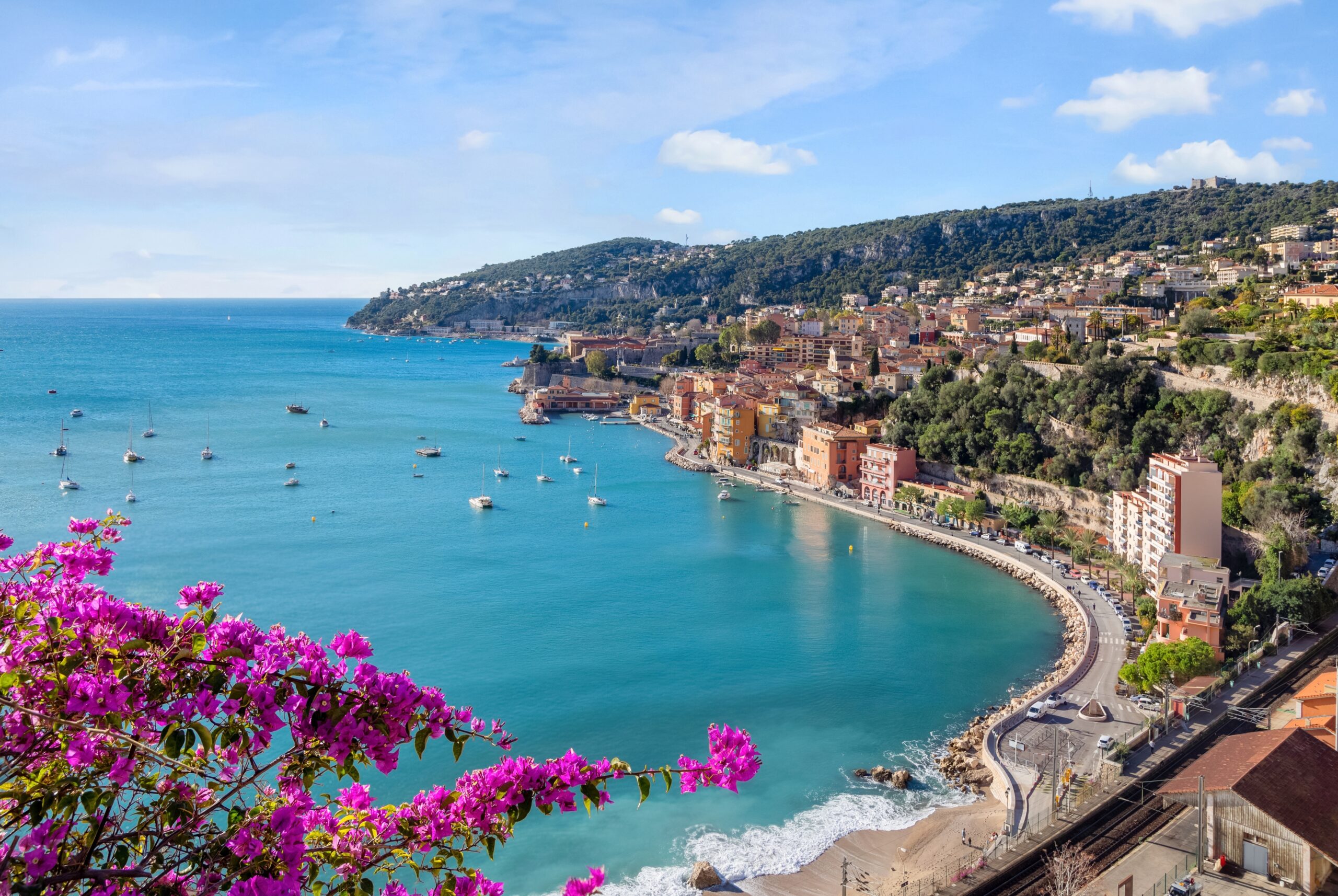
Villefranche-sur-Mer sits on the bay just east of Mont Boron and is one of the most beautiful small towns on the whole Riviera. The colourful houses climb the hill from the harbour, and behind the waterfront there are narrow alleys and stairways, including the covered street Rue Obscure. By the harbour stands the large 16th-century citadel, which today houses the town hall and a couple of small museums.
By the fishing harbour is the Chapelle Saint-Pierre, which the poet and artist Jean Cocteau decorated between 1956 and 1957. The chapel is open Wednesday to Sunday from 9.30am to 12.30pm and from 2pm to 6pm and closes every year from mid-November to mid-December. Admission costs €4 (about £3), and children under 15 get in for free.
The train from Nice-Ville takes about five minutes, and a single ticket costs €3.60 (about £3). At the town’s beach you can swim in calm water, and you can easily see it all in half a day. My tip is to stay for dinner by the harbour, once the day-trippers have gone home. If you’d like to stay somewhere quieter than Nice, you can see hotels in Villefranche-sur-Mer here.
14. Day Trip to Monaco and Monte-Carlo
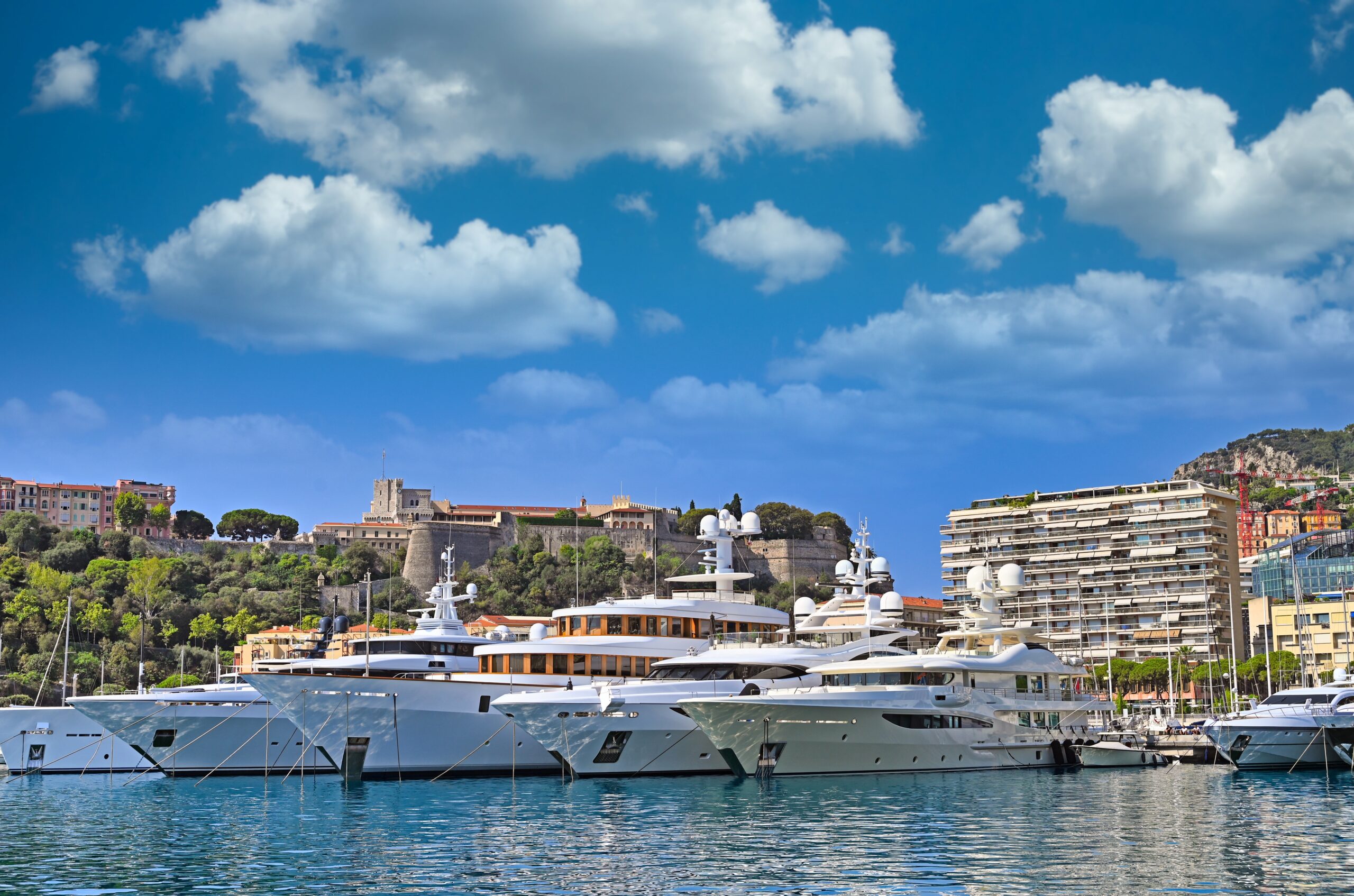
The Principality of Monaco is a short train ride from Nice and the most popular day trip from the city. Monaco is an independent country but uses the euro, and there are no passport checks at the border, although you need to bring ID. Monaco-Ville with the Prince’s Palace sits on the rock known as Le Rocher, and the changing of the guard in front of the palace takes place every day at 11.55am and lasts seven minutes. The palace’s Grands Appartements can be visited from April to October, and a ticket costs around €10 (about £8).
The rock is also home to the Musée Océanographique, where a ticket costs €22.50 (about £19) for adults and €14 (about £12) for children aged 4 to 17. It’s open every day except 25 December and the Formula 1 weekend. Down in Monte-Carlo is the casino, which you can look around inside in the morning from 10am to 1pm for €20 (about £17). From 2pm the gaming rooms also cost €20, but then you have to be over 18 and show a passport or ID card, and there’s a dress code.
The train from Nice-Ville takes about 20 minutes, and a single ticket costs €6.10 (about £5). I think Monaco is worth seeing once, but eating and drinking there is expensive, so feel free to bring a packed lunch up to the rock. If you’d rather go by boat, there’s also a ferry from Nice.
Book a return ferry ticket from Nice to Monaco.
15. Day Trip to Èze
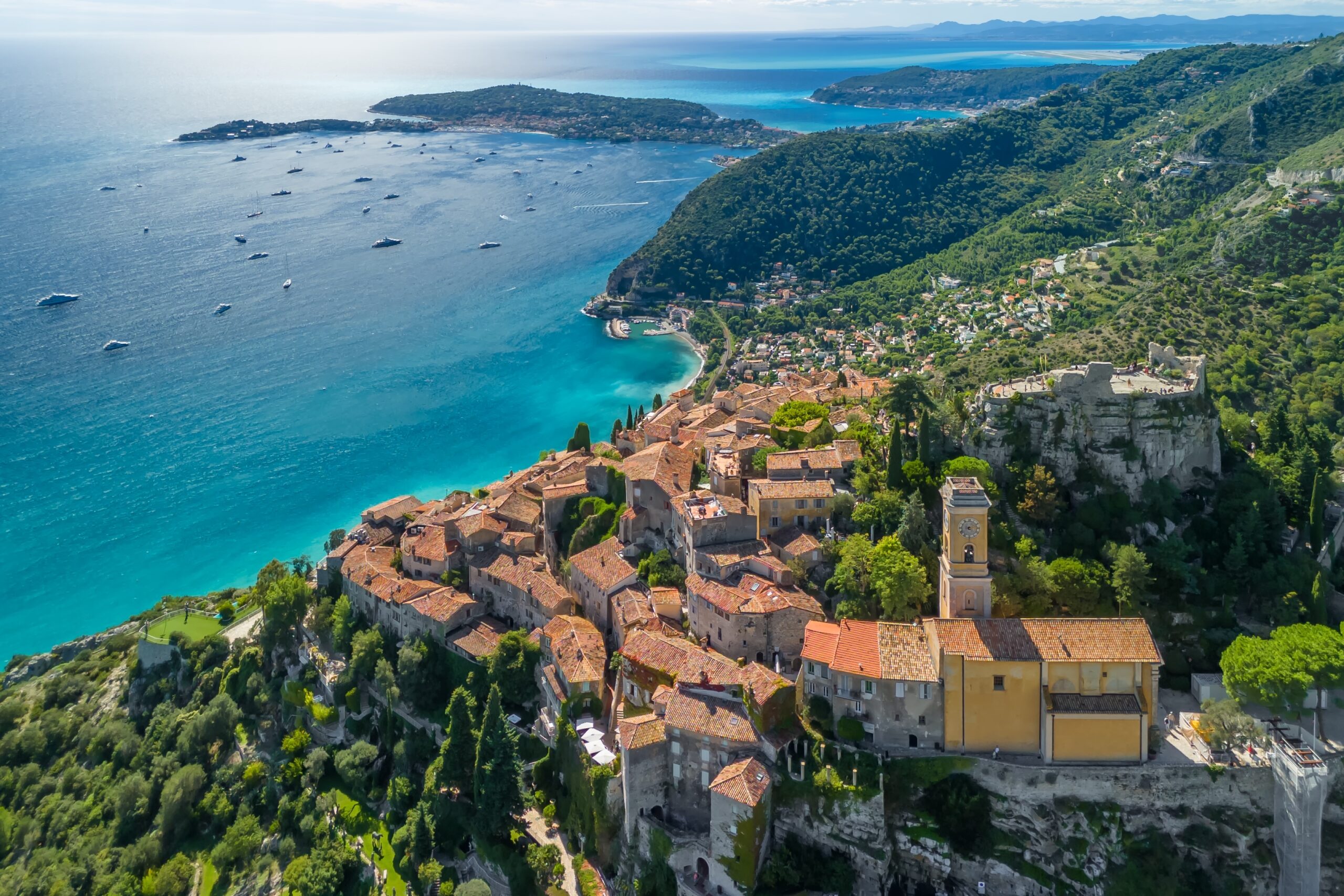
Èze is a medieval village perched like an eagle’s nest on a clifftop high above the sea between Nice and Monaco. The streets are so narrow and steep that cars can’t get through, and the old stone houses are now home to galleries, small shops and restaurants. At the very top, in the ruins of the old castle, is the cactus garden, the Jardin Exotique d’Èze, 429 metres above sea level with views along the whole coast.
The garden is full of cacti, aloes and agaves among sculptures and viewpoints, and it costs €10 (about £8) for adults and €6 (about £5) for young people aged 12 to 17 and students, while children under 12 get in for free. The garden is open every day from 9am to 4.30pm from November to March, until 6.30pm in April, May, June and October and until 7.30pm from July to September. Down by the main road is the Fragonard perfume factory.
Bus 82 runs from Vauban in Nice up to the Eze Village stop, but departures are few and far between, so check the timetable. You can also take the train to Èze-sur-Mer and walk up the Chemin de Nietzsche, but it’s a steep path that takes about an hour. My tip is to arrive early in the morning, before the tour coaches, or to join an organised tour that combines Èze with Monaco.
Book a half-day trip to Èze, Monaco and Monte-Carlo from Nice.
16. Day Trip to Saint-Paul-de-Vence
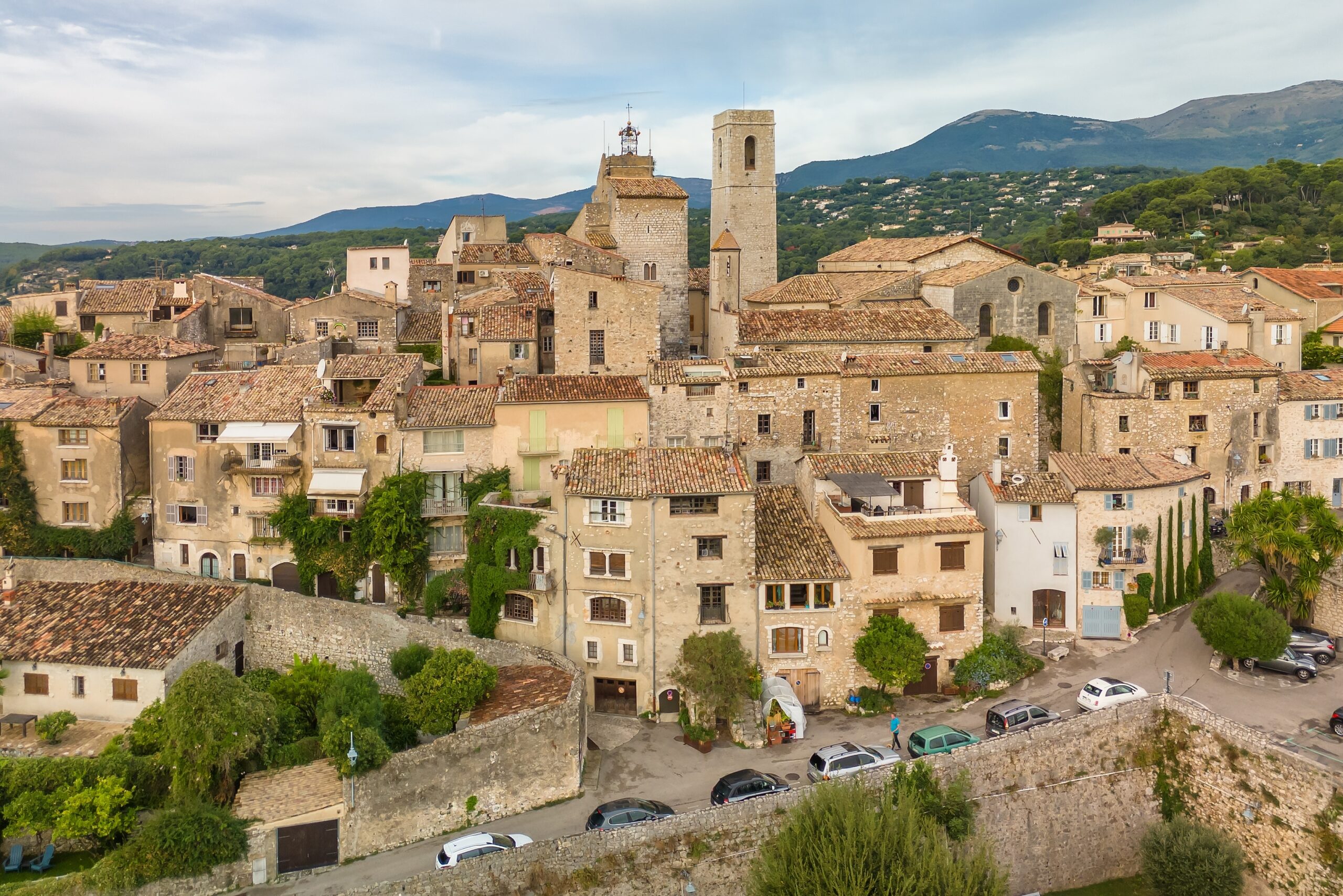
Saint-Paul-de-Vence is a fortified hilltop village inland between Nice and Cannes. The 16th-century ramparts still encircle the small village centre, and inside the walls the streets are full of art galleries, because the village has drawn painters and artists for many years. Marc Chagall lived here in his final years and is buried in the small cemetery at the southern end of the village.
Just outside the village is the Fondation Maeght, one of France’s most important private museums of modern art, with works by Miró, Giacometti, Chagall and Braque, among others, in buildings and gardens created for the collection. The museum is open every day from 10am to 6pm and until 7pm in July and August, and a ticket costs €18 (about £15), or €14 (about £12) for young people aged 16 to 18 and students.
From Nice, take the train to Cagnes-sur-Mer and then bus 655 towards Vence to the St Paul Village stop, from where it’s about a ten-minute walk to the Fondation Maeght. My tip is to arrive early, because the narrow streets are packed in the middle of the day in summer. The village gives you a good taste of Provence, and if you want to head further inland, you can read my guide to where to stay in Provence.
17. Day Trip to Antibes and Cannes
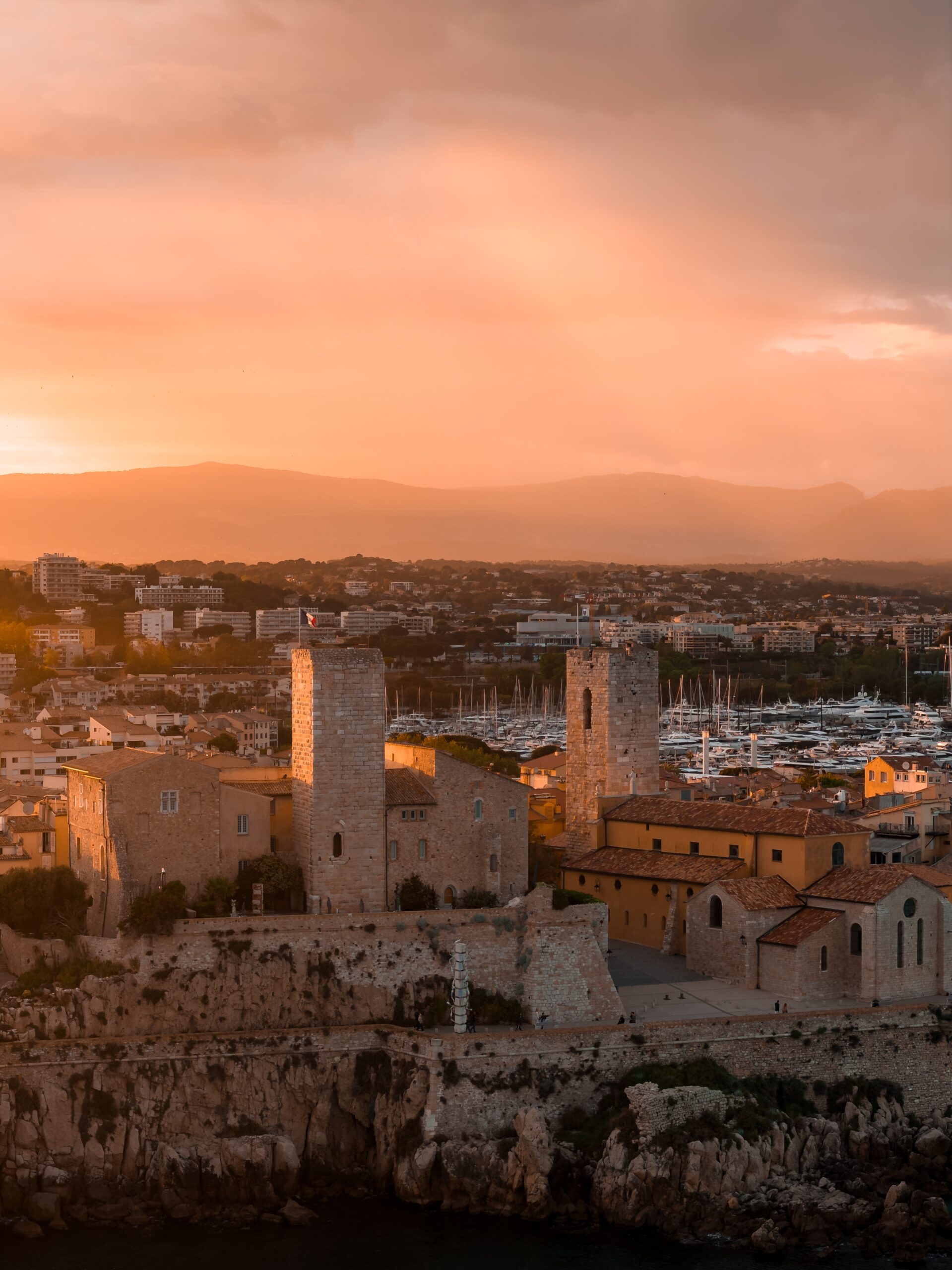
West of Nice, two of the Riviera’s best-known towns lie on the same railway line. Antibes has its own Old Town inside the harbour walls and the Port Vauban marina, and the Musée Picasso is housed in the Château Grimaldi by the sea. Picasso worked at the château from mid-September to mid-November 1946, and when he returned to Paris, he left behind 23 paintings and 44 drawings. The museum is closed on Mondays, and a combined ticket for the town’s museums and Fort Carré costs €15 (about £13) and is valid for seven days.
Cannes is the film festival town. Here you can stroll along the seafront promenade La Croisette, see the steps of the Palais des Festivals, where the stars walk up the red carpet, and climb up to the historic Le Suquet quarter. From the old harbour, boats sail to the island of Sainte-Marguerite, where you can see the cells in the Fort Royal, where the Man in the Iron Mask was held prisoner. Today the fort houses the Musée du Masque de Fer et du Fort Royal.
The train from Nice-Ville to Antibes takes about 20 minutes and costs €7 (about £6), and to Cannes it takes about 35 minutes and costs €9.70 (about £8). My tip is to visit Antibes in the morning and carry on to Cannes in the afternoon. The train continues along the coast, and if Marseille is also on your list, I’ve written about where to stay in Marseille.
Book a full-day tour to Cannes, Antibes, Saint-Paul-de-Vence, Èze and Monaco from Nice.
Practical Travel Tips for Nice
You can easily walk between the Old Town, the Promenade des Anglais and the harbour, and for the rest of the city you use the Lignes d’Azur trams and buses. A Solo ticket costs €1.70 (about £1) and is valid for one journey with transfers within 74 minutes. If you’ll be getting around several times a day, the Pass 1 jour costs €7 (about £6) for 24 hours, and the Pass 7 jours costs €20 (about £17). The buses to Èze and Villefranche-sur-Mer are also run by Lignes d’Azur, while the train to Monaco, Antibes and Cannes requires a TER ticket.
From the airport, tram line 2 runs directly to Jean Médecin and on to the harbour. You can read about all the options in my guide to getting from Nice Airport to the city centre.
Plan the museums around the days of the week. The Musée Matisse, the Musée Chagall, the Palais Lascaris and the archaeological museum in Cimiez are closed on Tuesdays, and the Musée Picasso in Antibes is closed on Mondays. On Mondays there’s an antiques market instead of the flower market on the Cours Saleya, and on the first Sunday of the month the Chagall museum is free. The swimming season runs from June to September, but I think May, September and October are the best months for sightseeing, because it’s warm without being as crowded as in July and August.
If you’d like to see the full range, you can see all hotels in Nice on Booking.com.
Travel ressources & websites I use all the time 👇
• Booking.com has the best offers on hotels and unique places to stay
• GetYourGuide is the best place to book tours & activities with free cancellation
• Welcome Pickups is the best & safest place to pre-book airport transfers
Psst 👀 Have you subscribed to my Youtube channel and my Instagram where I provide more useful travel tips?