

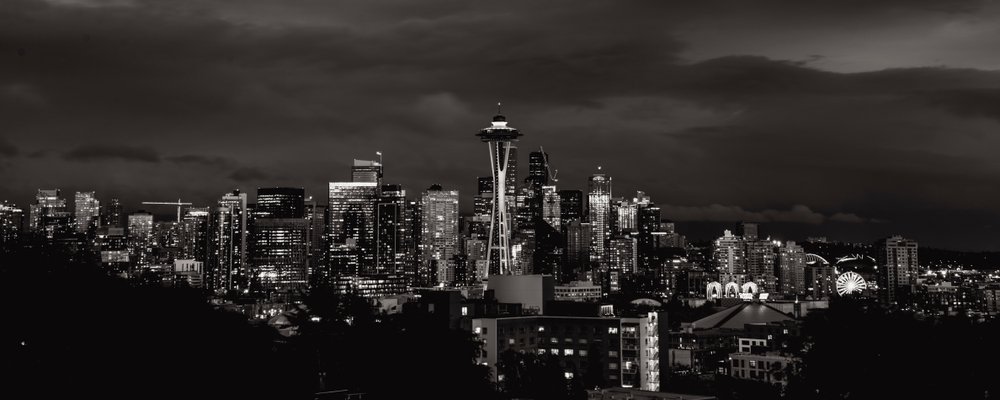
Seattle is the city where you can drink your morning coffee at the first Starbucks, watch salmon battle their way up a fish ladder in the afternoon and eat dinner with a view of a snow-capped volcano.
There are plenty of things to do in Seattle, which sits between Puget Sound and Lake Washington in the north-western corner of the USA. It’s known for the Space Needle, Pike Place Market, grunge and a coffee culture the rest of the world has copied.
Within a couple of hours’ drive, some of the country’s most beautiful national parks are waiting.
Here are my picks for the 18 best things to do in Seattle, with prices, opening hours, transport and tips, first in the city itself and then on day trips to Bainbridge Island, Snoqualmie Falls, Mount Rainier and Olympic National Park.
Prices are given in dollars. Many of the big attractions use daily pricing that rises on busy days, so it almost always pays to buy your tickets online well in advance.
Planning your trip to Seattle at the last minute? 🇺🇸
Here are some of the best things to do, plus hotels and other tips for your trip to Seattle.
🎡 Top Activities & Tours:
1. See the city from above with a combined ticket for the Space Needle and Chihuly Garden and Glass
2. Taste your way around the market on a chef-led food tour of Pike Place Market
3. See the skyline and Elliott Bay from the water on a harbour cruise with a local guide
🛌 Best Hotels:
1. Fairmont Olympic Hotel is a classic five-star grand hotel with an indoor pool and spa
2. Crowne Plaza Seattle is a renovated hotel in Downtown with no resort fee
3. Green Tortoise Hostel Seattle is a popular, budget-friendly hostel right opposite Pike Place Market
Contents
1. Pike Place Market and the Gum Wall
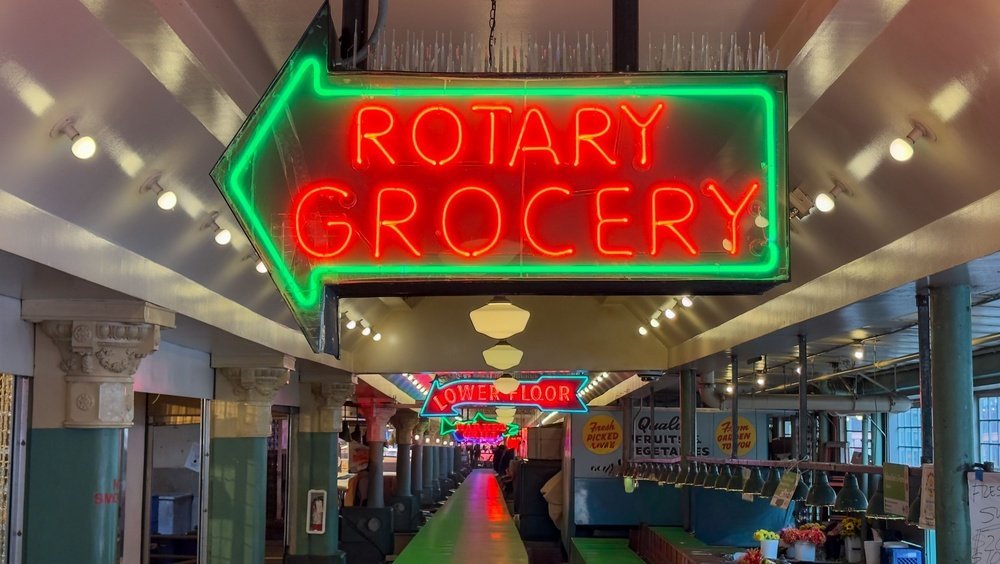
Pike Place Market is Seattle’s most visited sight and one of the oldest public markets in the USA. It opened in 1907, and today it spreads over several levels down the slope towards Elliott Bay, packed with fishmongers, fruit stalls, flowers, bakeries and small restaurants. Under the clock at the main entrance stands Rachel the bronze pig, the market’s mascot, and right next to her the fishmongers at Pike Place Fish throw salmon through the air whenever a customer buys a fish.
Below the market in Post Alley, the walls by the Market Theater are covered in thousands of pieces of chewing gum. The Gum Wall is a bit disgusting, but very photogenic. The market is open 363 days a year, closing only on Thanksgiving and Christmas Day, and most stalls are open from 9am to 5pm.
My tip is to arrive before 11am on a weekday, as it’s busiest from Thursday to Monday. Buy lunch in small portions from the stalls and eat it on the MarketFront terrace with a view over the water. If you want to stay right in the thick of it, Inn at the Market sits just above the market, and in my guide to where to stay in Seattle, I cover the area and five other neighbourhoods.
Book a food tour of Pike Place Market with a local chef and tastings at nine stalls here.
2. The coffee culture and the first Starbucks
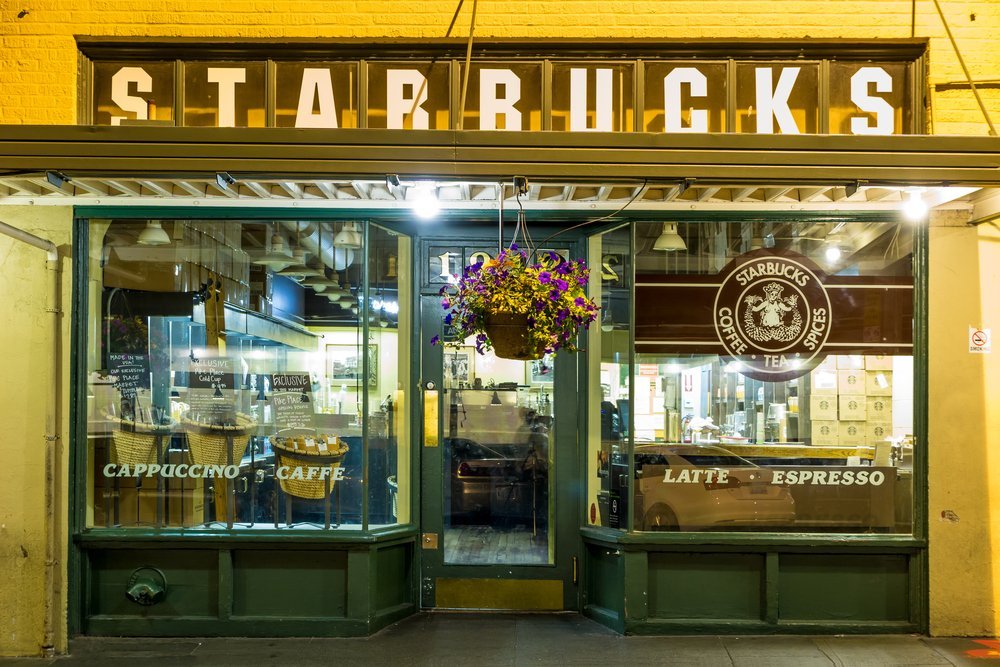
Seattle is the coffee capital of the USA. Starbucks was founded here in 1971, and the shop at 1912 Pike Place in Pike Place Market calls itself the first Starbucks. It still has the old brown mermaid logo, and the queue often stretches far out onto the pavement. There isn’t much room inside, so most people come for the photo and a mug with the old logo.
If you want the big coffee experience, head up to the Starbucks Reserve Roastery on Pike Street on Capitol Hill. It’s a coffee bar and roastery in one, where the beans are roasted in the middle of the room and you can taste coffee brewed in lots of different ways. The Roastery opened in 2014 and is about a 15-minute walk up the hill from Westlake Center.
It’s the small independent coffee shops, though, that make Seattle’s coffee culture special. The city has hundreds of them, and many roast their own beans. My tip is to visit the first Starbucks early in the morning or late in the afternoon, when the queue is shortest, and to drink your next cup at a local coffee shop on Capitol Hill or in Fremont.
3. Waterfront Park and the Seattle Great Wheel
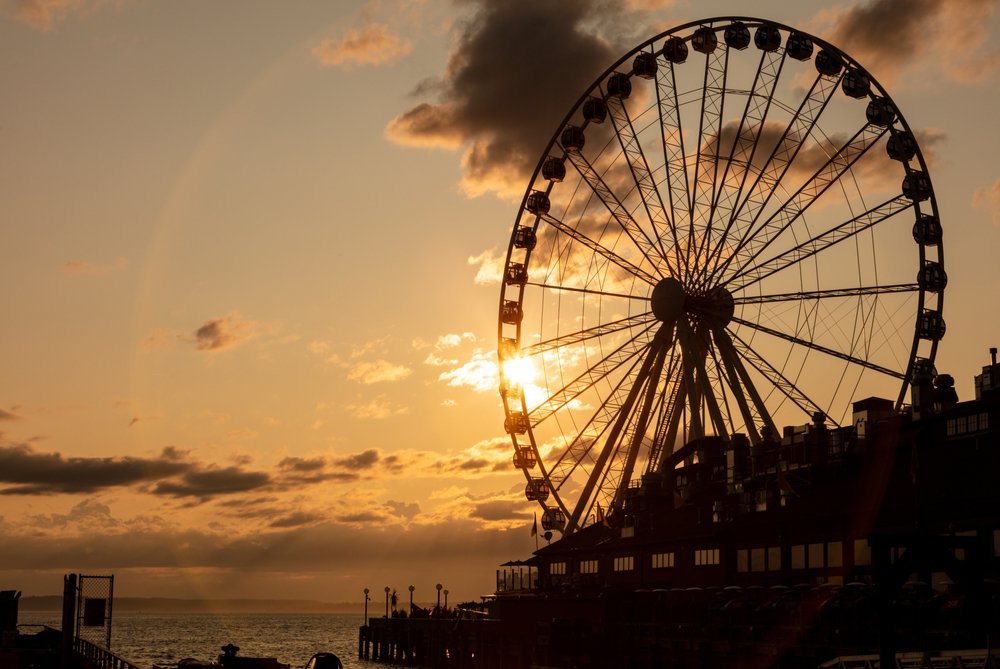
Seattle’s waterfront has been given a whole new look. The old elevated motorway along the water has been torn down, and in its place a long promenade with a cycle path, trees and benches runs along Elliott Bay from Pioneer Square to Belltown. From Pike Place Market, the Overlook Walk footbridge leads straight down to the water and the aquarium, so you can skip the steep steps.
On Pier 57 stands the Seattle Great Wheel, a Ferris wheel with 42 enclosed gondolas, jutting out almost 12 metres over the water at the end of the pier. A ride is three rotations and takes 12 to 20 minutes in summer and a little less in winter, and there’s also a single VIP gondola. The price is the same online and at the wheel, which is normally open from late morning until late in the evening.
Along the piers you’ll find seafood restaurants serving fish and chips and mussels, and harbour cruises sail out onto Elliott Bay from Pier 55. My tip is to ride the wheel on a clear evening around sunset, when the light falls over the Olympic Mountains on the other side of the water. Then walk south along the promenade to Colman Dock, where the ferries to Bainbridge Island depart, and watch the skyline light up.
Book a harbour cruise with a local guide from the waterfront here.
4. Seattle Aquarium
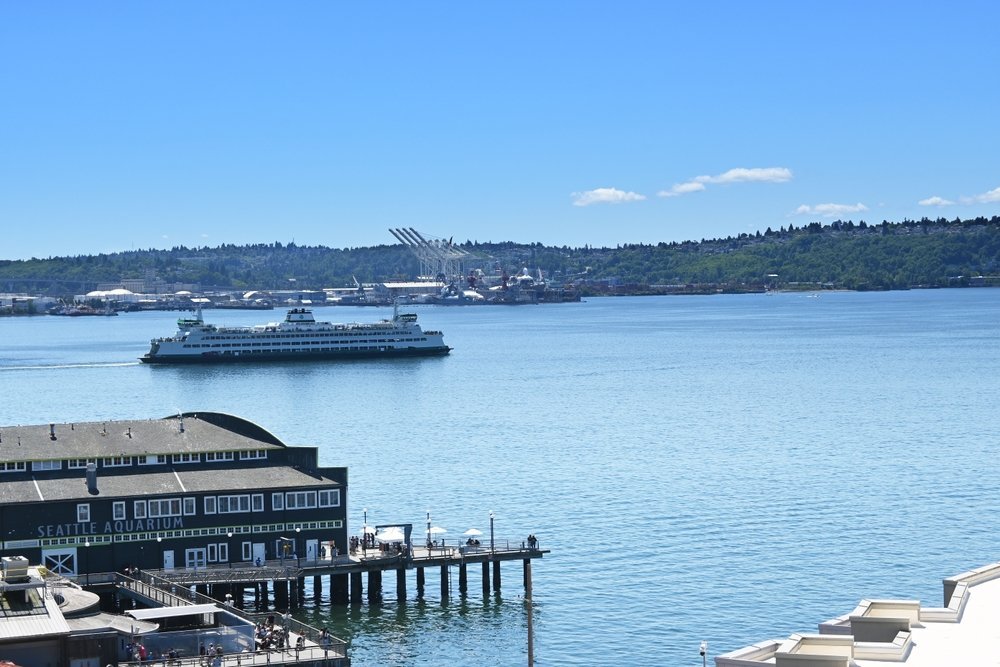
Seattle Aquarium sits on Pier 59 in the middle of the waterfront and is all about life in Puget Sound and the Pacific. The big draw is the sea otters, floating around the pool on their backs, and the same pier is home to harbour seals and northern fur seals. In the newest building, the Ocean Pavilion, across the square, there’s a large reef with tropical fish that you can see both from above and through an underwater window.
One ticket covers both piers and the Ocean Pavilion, and the aquarium is normally open daily from 9.30am to 6pm, with last entry at 5pm. The ticket price depends on the day and how busy it’s expected to be, and it’s always lower online than at the entrance, so it pays to buy well in advance. Children aged 4 to 12 pay less, and children aged 3 and under get in free.
My tip is to check the times of talks and feedings when you arrive and to be at the sea otters at that time. The aquarium is perfect for a rainy day with children, and it’s one of the regular attractions in the Seattle CityPASS, which I describe in the practical tips at the bottom.
5. Seattle Art Museum and Olympic Sculpture Park
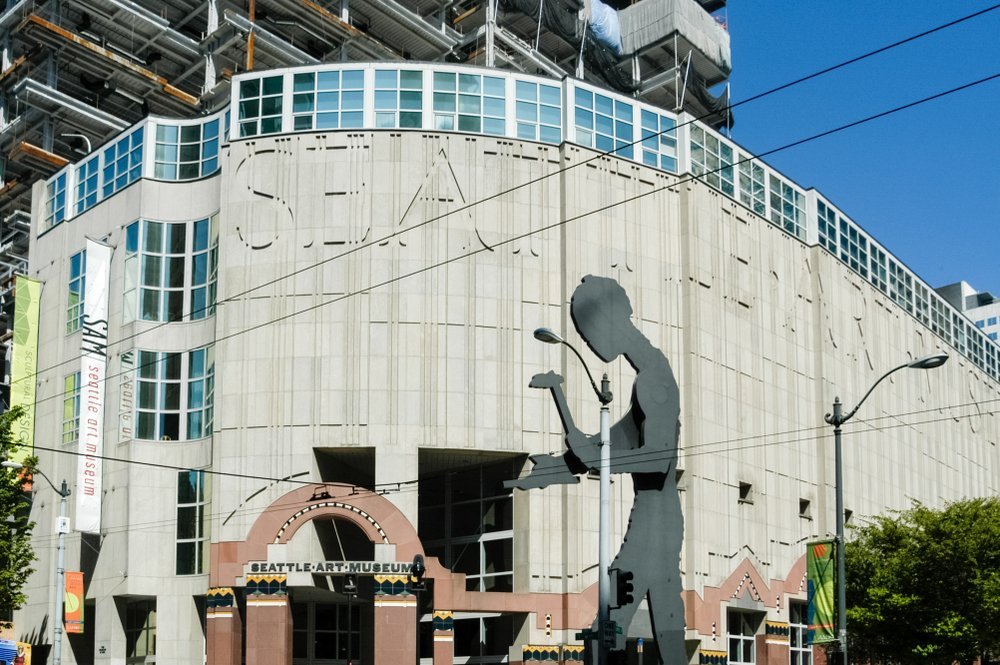
Seattle Art Museum, which everyone calls SAM, sits on First Avenue a few minutes’ walk south of Pike Place Market. You can’t walk past without noticing Hammering Man, a black figure almost 15 metres tall that slowly hammers away in front of the entrance. The collection ranges from masks and carvings by the Indigenous peoples of the Northwest Coast to European, African and American art, and there are always temporary exhibitions on.
Tickets cost $29.99 (around £22), and the museum is open Wednesday to Sunday from 10am to 5pm and until 8pm on Thursdays, while it’s closed on Mondays and Tuesdays. Entry is free for everyone on the first Thursday of the month, so it’s worth planning your visit around that.
The museum also runs Olympic Sculpture Park, a free waterfront sculpture park in Belltown about a 20-minute walk to the north. Here you’ll find large works by artists including Alexander Calder and Richard Serra, and a zigzagging path leads down to the water with views across Elliott Bay and the Olympic Mountains. The park is open from half an hour before sunrise to half an hour after sunset. My tip is to do the museum on a rainy morning and the sculpture park once it clears up, then carry on along the water to Myrtle Edwards Park.
6. Pioneer Square and the Underground Tour
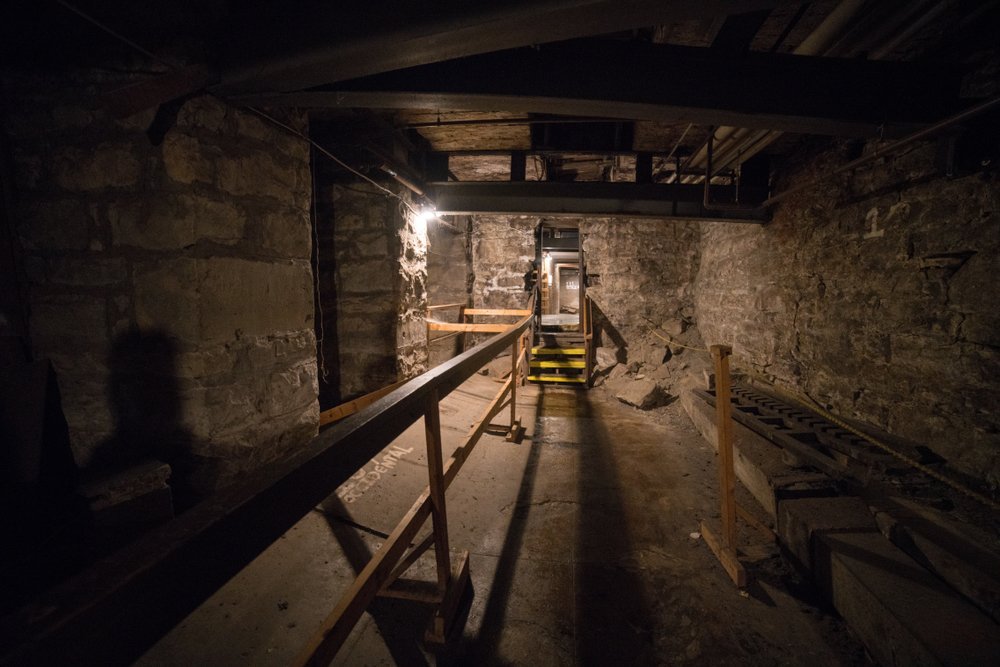
Pioneer Square is Seattle’s oldest neighbourhood and the place where the city grew up in the 1850s. After the Great Fire of 1889, the area was rebuilt in brick and sandstone, and today the streets are full of old buildings, galleries and bars. Look out for the pergola and the totem pole on Pioneer Place and for Smith Tower, which was the tallest building west of the Mississippi when it was completed in 1914.
After the fire, the city raised the streets by one to two storeys to put an end to the flooding, and the old pavements and shopfronts ended up underground. That’s what you see on Bill Speidel’s Underground Tour, a guided walk of about 75 minutes that starts beneath Doc Maynard’s Public House and runs every hour on the hour from 10am to 6pm all year round. The ticket office is at 614 First Avenue, and children aged 6 and under go free.
A few minutes’ walk away is Klondike Gold Rush National Historical Park, a free museum about the gold rush of the late 1890s, when Seattle became the starting point for tens of thousands of prospectors heading north. My tip is to do the tour in the morning and stick to the busier streets in the evening, as there are a lot of homeless people around Pioneer Square. Pioneer Square light rail station is right in the middle of the neighbourhood.
7. The Spheres at Amazon’s headquarters
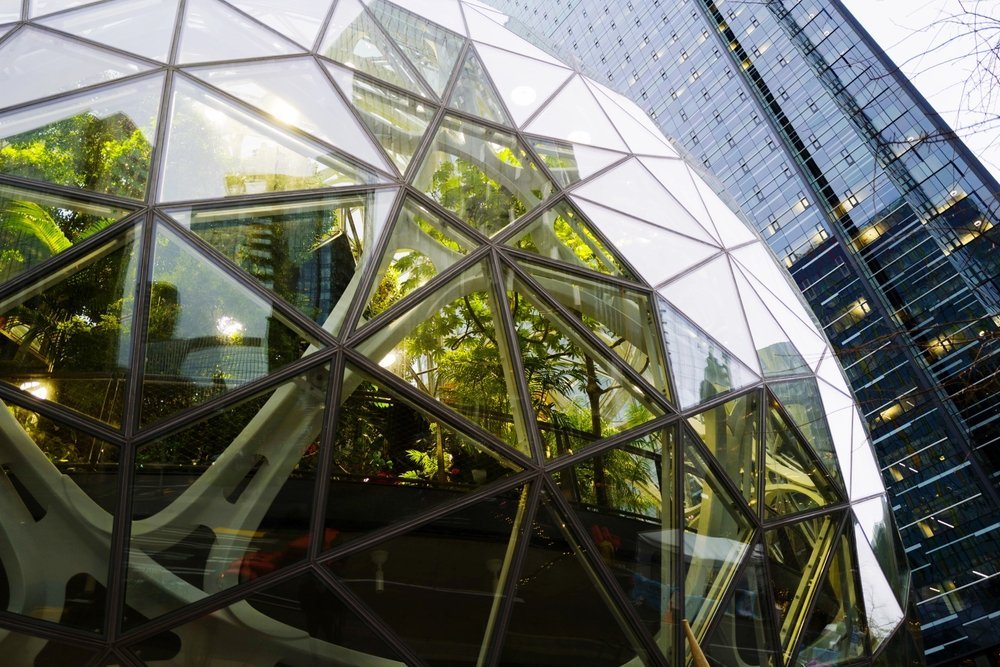
In the middle of Amazon’s office towers north of Downtown stand The Spheres, three large globes of glass and steel that opened in 2018. Inside grow more than 40,000 plants from the cloud forests of over 30 countries, and the building serves as a workplace and meeting space for Amazon’s staff. In the evening, when the lights are on inside, you can see the greenery through the glass from the street.
It’s free to see The Spheres from outside, and on the ground floor is the Understory visitor centre, where you can learn about the plants and the building. It’s usually open Monday to Saturday from 10am to 6pm, but times can change. On certain weekend days members of the public can go inside the spheres themselves, but you need to reserve in advance via the Spheres’ own website, so book well ahead if you’d like to go in.
The address is 2101 7th Avenue, about a 10-minute walk from Westlake Center. My tip is to stop by on your way between Pike Place Market and the Space Needle, so you also see the new Seattle with Amazon’s headquarters.
8. Space Needle
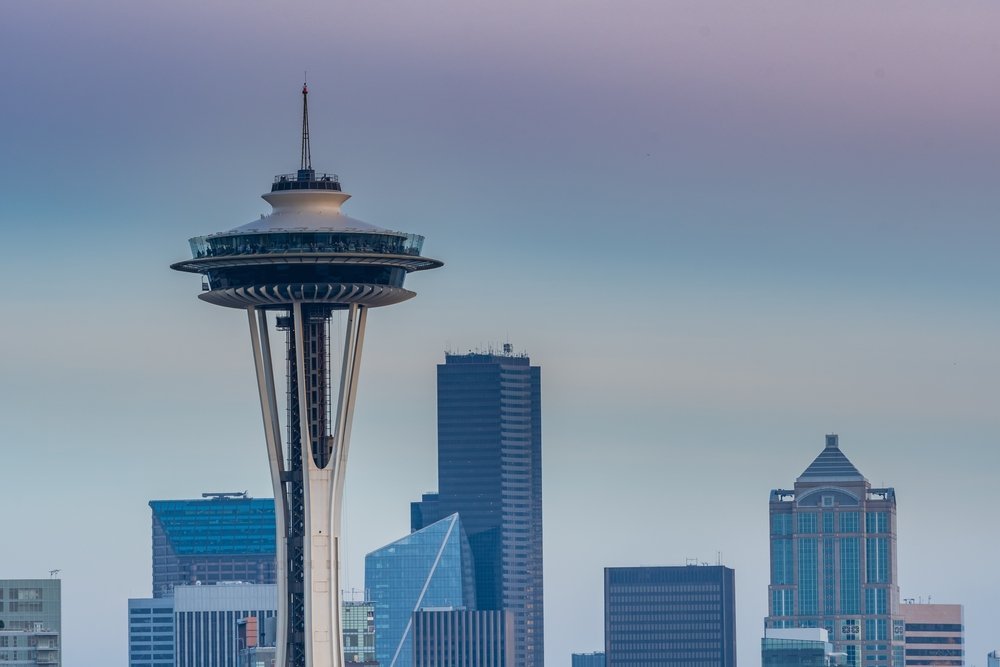
The Space Needle was built for the 1962 World’s Fair and is still Seattle’s landmark. The tower is 184 metres tall, and the lift takes you 158 metres up to the observation level. At the top there’s an outdoor deck with glass walls and glass benches where you can lean out over the city, and the level below has The Loupe, a revolving glass floor where you look straight down on Seattle Center.
On clear days you can see both Mount Rainier and the Olympic Mountains from the top. A standard ticket costs $35 to $55 (around £25 to £40) depending on the time, and the tower is open from late morning until the evening, with the longest hours at weekends. If you buy a combined ticket with Chihuly Garden and Glass, you can visit the glass museum at any time on the same day.
The 1962 monorail runs from Westlake Center to Seattle Center in about two minutes and costs $4 (around £3). My tip is to check the weather before you buy a ticket, because in fog and low cloud you won’t see a thing. If it’s clear, go up an hour before sunset so you get both daylight and the city lights. If you want to stay nearby, The Maxwell Hotel is just north of Seattle Center and has an indoor pool.
Book a combined ticket for the Space Needle and Chihuly Garden and Glass here.
9. Chihuly Garden and Glass
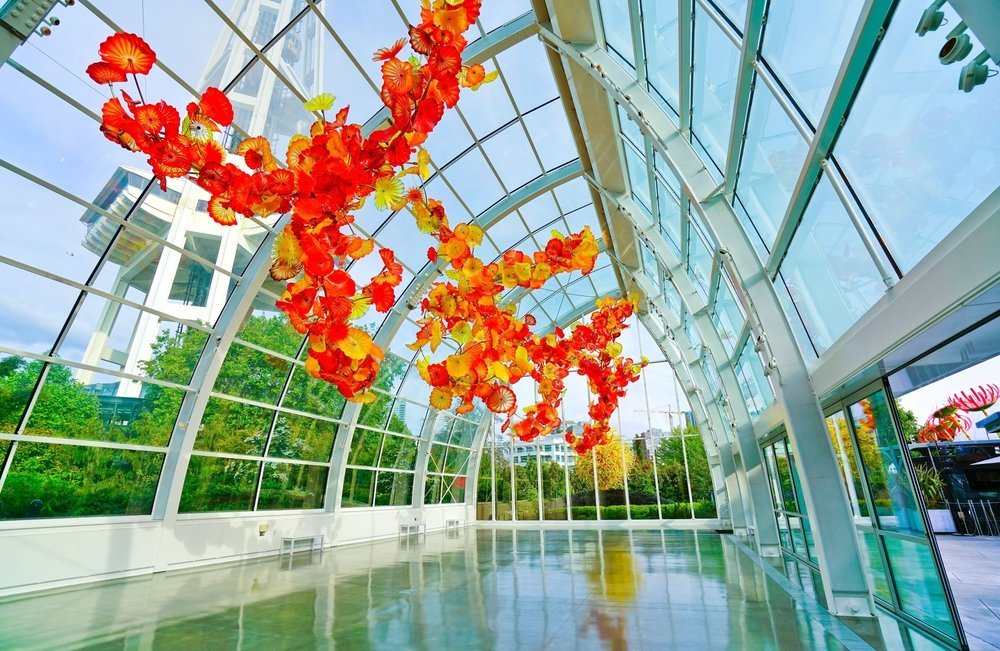
Right at the foot of the Space Needle is Chihuly Garden and Glass, showcasing glass art by Dale Chihuly, who comes from Tacoma south of Seattle and is one of the world’s best-known glass artists. The museum opened in 2012 and consists of a series of dark galleries where the vividly coloured glass sculptures glow, a large glasshouse and a garden where the glass works stand among the plants.
The glasshouse is the highlight. Beneath the glass roof hangs a long sculpture of glass flowers in red, orange and yellow, and with the Space Needle just outside, it’s one of the most photographed spaces in the city. There are usually glassblowing demonstrations every day from 11am too.
An adult ticket costs $40 to $45 (around £30 to £35) depending on the day, and the museum recommends setting aside one to two hours. It’s usually open from 11am to 5pm on weekdays and a little longer at weekends, but the glasshouse can be booked for private events, so check the website before your visit. Large bags, suitcases and selfie sticks aren’t allowed inside, but the cloakroom is free.
My tip is to do Chihuly first and the Space Needle afterwards if you have a combined ticket, so you can hold off on the tower until the light is at its best.
10. Museum of Pop Culture (MoPOP)
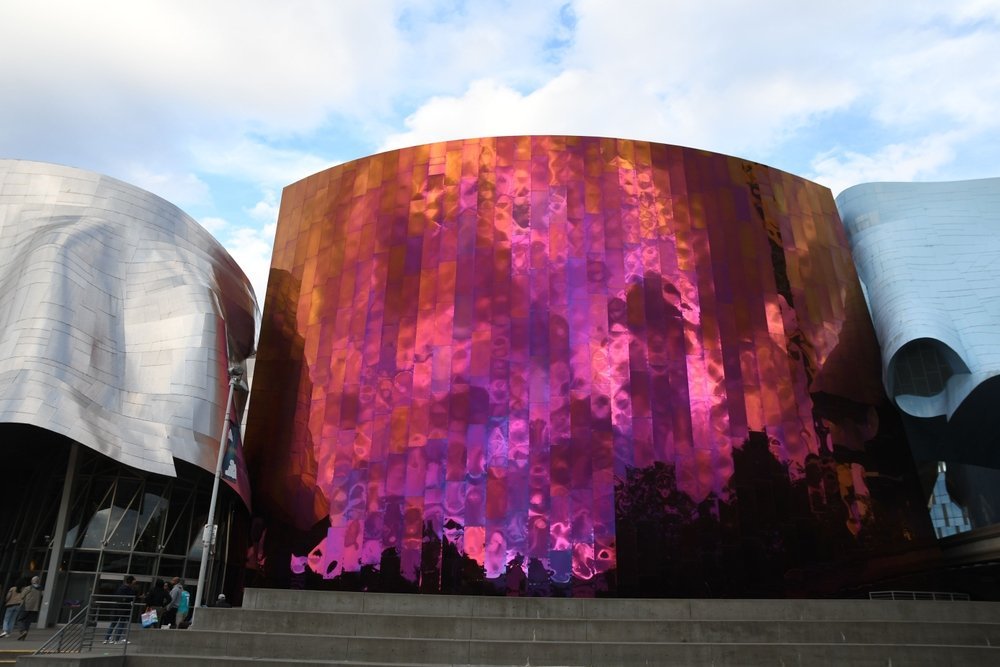
You can’t miss the Museum of Pop Culture. The building was designed by Frank Gehry and looks like a rippling lump of metal in purple, red, gold and silver, with the monorail running straight through it. The museum was founded by Microsoft co-founder Paul Allen and opened in 2000 as a music museum, and music still plays a big part in a city that gave the world Jimi Hendrix and the grunge wave of Nirvana and Pearl Jam.
Today MoPOP covers pop culture in the broadest sense, with exhibitions on science fiction, fantasy, horror films and video games. In the Sound Lab you can play guitar, drums and keyboards yourself in small sound studios, and in the Sky Church hall there are music and light shows on a huge LED screen. The exhibitions change, so check what’s on before you go.
The museum is usually open daily from 10am to 5pm, and tickets have daily prices that depend on the season and demand, so the cheapest option is to buy online in advance. MoPOP is also one of the choices in the Seattle CityPASS. My tip is to save the museum for a rainy day and set aside two to three hours, especially if you have children or teenagers with you who want to try the instruments in the Sound Lab.
11. Kerry Park
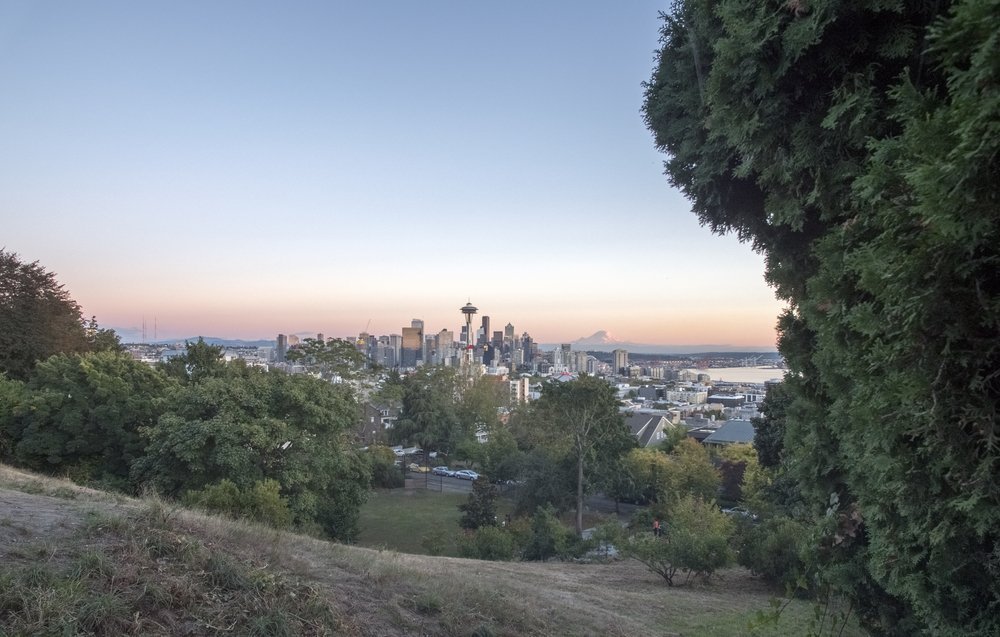
Kerry Park isn’t a park you spend a whole day in, but a small patch of lawn on the slope of Queen Anne Hill with Seattle’s most famous view. From here you see the Space Needle in front of the Downtown skyscrapers, Elliott Bay with its ferries and, on clear days, Mount Rainier as a white cone behind the city. It’s the postcard view, and it doesn’t cost a thing.
The park is on West Highland Drive. From Seattle Center it’s about a 20-minute walk up steep streets, or you can take the bus or a taxi up the hill. There are very few parking spaces, and at sunset cars circle around looking for a spot, so come on foot if you can.
My tip is to come at sunset and stay for the blue hour afterwards, when the city lights come on and the Space Needle lights up. Then walk a few minutes west along Highland Drive to the lesser-known Betty Bowen Viewpoint, where you look out over Puget Sound and the Olympic Mountains. If you’re in the area during the day, round things off with lunch or a coffee in Upper Queen Anne a little further up the hill.
12. Fremont Troll and Fremont
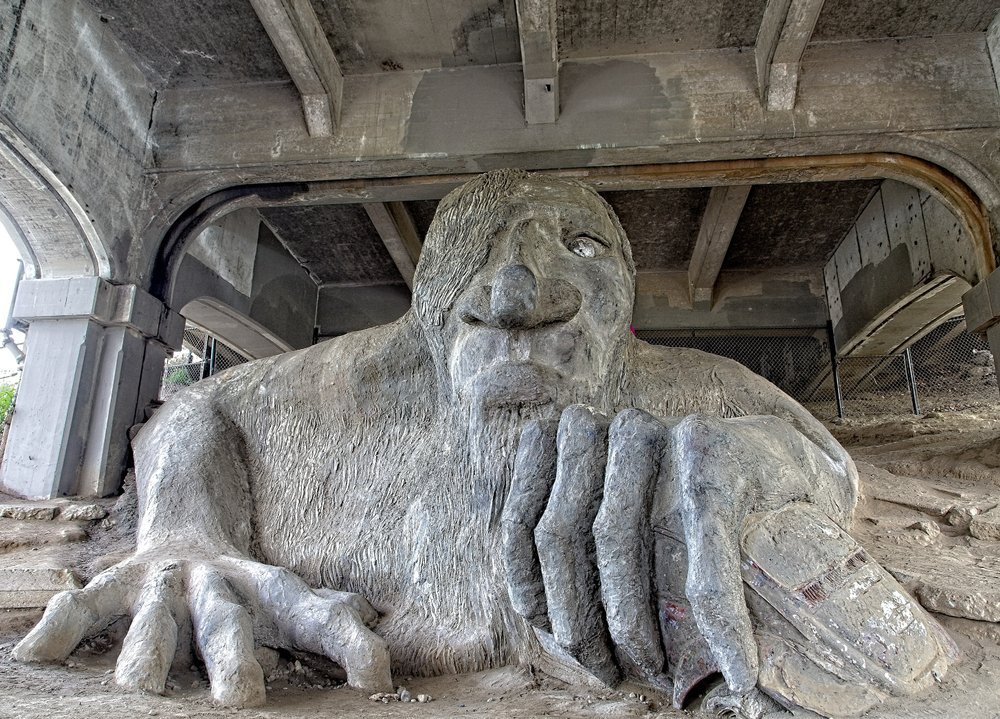
Under the Aurora Bridge in the Fremont neighbourhood, a 5.5-metre-tall troll crawls out of the ground clutching a real Volkswagen Beetle in one hand. The Fremont Troll was made by four local artists in 1990 to turn a dark, neglected corner under the bridge into something better, and today it’s one of the city’s best-loved sights. It’s free, and you’re welcome to climb on the troll and take photos.
Fremont calls itself The Center of the Universe and is a quirky, creative neighbourhood with cafés, breweries and vintage shops. It’s also home to a large statue of Lenin that was shipped here from Slovakia, and on Sundays there’s a market with crafts and flea-market finds. Walk east along the canal to Gas Works Park, a park on the remains of an old gasworks, where you get a lovely view across Lake Union to the skyline.
From Downtown it takes about 20 minutes by bus and 10 to 15 minutes by taxi. My tip is to combine the troll with the Ballard Locks further west on the same day and finish with a beer at one of the small breweries in Fremont or Ballard. If you come on a Sunday, take in the market before you move on.
13. Ballard Locks
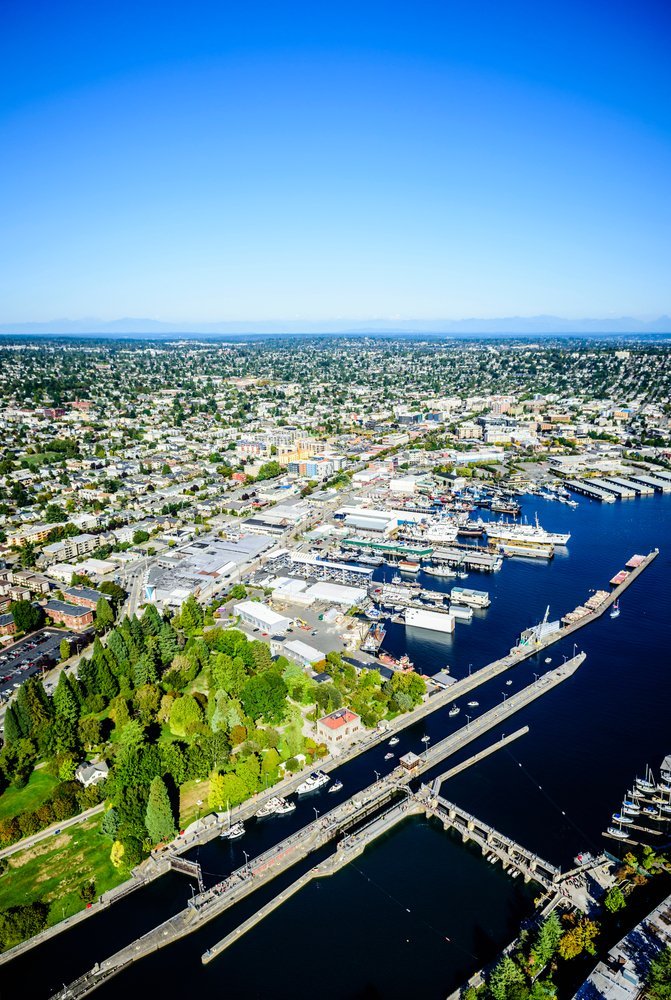
The Hiram M. Chittenden Locks, which everyone calls the Ballard Locks, opened in 1917 and connect the salt water of Puget Sound with the fresh water of Lake Union and Lake Washington. Almost 50,000 boats pass through the locks every year, from kayaks and pleasure boats to fishing vessels on their way home from Alaska, and it’s hypnotic to watch the water rise and fall by between two and eight metres while the boats wait in the lock chamber.
On the other side of the locks is the fish ladder with 21 steps and a viewing room with underwater windows, where you can watch the salmon swim past. Sockeye salmon arrive from June to October, peaking in July, Chinook salmon from July to November, peaking in the last two weeks of August, and coho salmon from August to November, peaking at the end of September.
Visiting the locks, the fish ladder and the Carl S. English Jr. Botanical Garden is free, and in summer there are free guided tours from the visitor centre. My tip is to come on a sunny summer weekend, when there are the most boats, and to carry on into Ballard afterwards. The neighbourhood was built by Scandinavian immigrants, and it’s home to the National Nordic Museum, which tells the story of the Nordic people in the northwestern USA.
14. Discovery Park
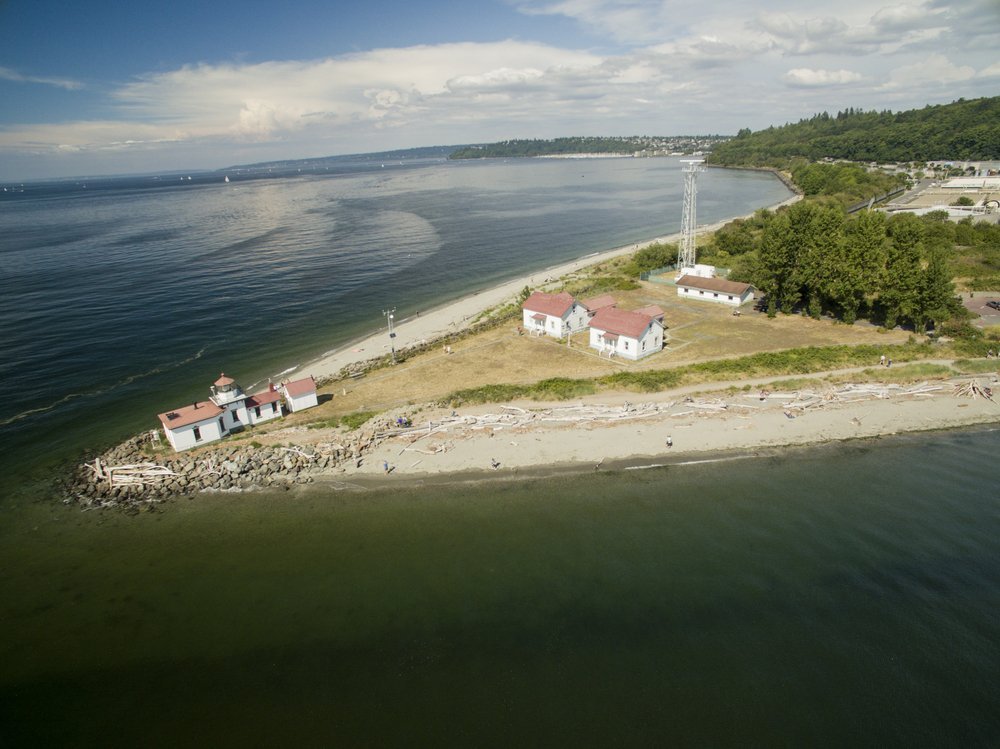
Discovery Park is Seattle’s largest park, with over 200 hectares of forest, meadows, bluffs and beaches in the Magnolia neighbourhood northwest of the centre. The area used to be the Fort Lawton military base, and some of the old officers’ quarters still stand in the park. The trails lead through forest and open meadows out to the bluffs, where you can see across Puget Sound to the Olympic Mountains and, on clear days, Mount Rainier to the south.
Down by the water, West Point Lighthouse from 1881 sits on a small point, and along the coast there are about three kilometres of protected beach. The park is free and open from 4.30am to 11pm. You can’t park by the beach without a special permit, so park at one of the regular car parks and walk down the trail, and be prepared for a steep walk back up.
My tip is to walk down to the lighthouse late in the afternoon and stay for the sunset over the Olympic Mountains. Bring proper shoes and rain gear, as the trails can be muddy for most of the year. From Downtown it takes about 20 minutes by car or taxi, while the bus takes longer. The park is a good place to end a day in Fremont and Ballard, which are on the same side of the city.
15. The Ferry to Bainbridge Island
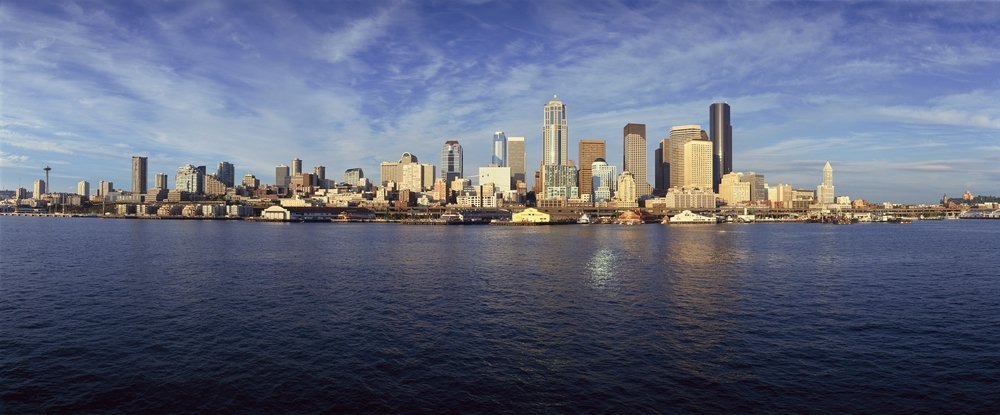
One of the best things to do in Seattle is also one of the cheapest. From Colman Dock on the waterfront, Washington State Ferries runs its big green and white ferries across Puget Sound to Bainbridge Island, and the crossing takes around 35 minutes. On the way out, you watch the Seattle skyline fade behind you, and on the way back you have the city, the Space Needle and, on clear days, Mount Rainier right in front of you.
As a foot passenger, you only pay on the way out of Seattle, and an adult ticket costs around $11 (around £8) for the return trip. You can find the current price in the ferry company’s fare calculator, and you buy your ticket from the machines or at the ticket office in the terminal. The ferries run from morning until late in the evening, so you don’t need to plan the trip down to the minute.
From the ferry terminal, it’s just a few minutes’ walk up to Winslow, the island’s small main town with cafés, restaurants, shops and the Bainbridge Island Museum of Art, which is free. My tip is to take an afternoon ferry over, have dinner in Winslow and sail back at sunset. Stand on the deck at the front of the ferry on the return trip, and you’ll have the skyline right in front of you as the lights come on.
16. Snoqualmie Falls
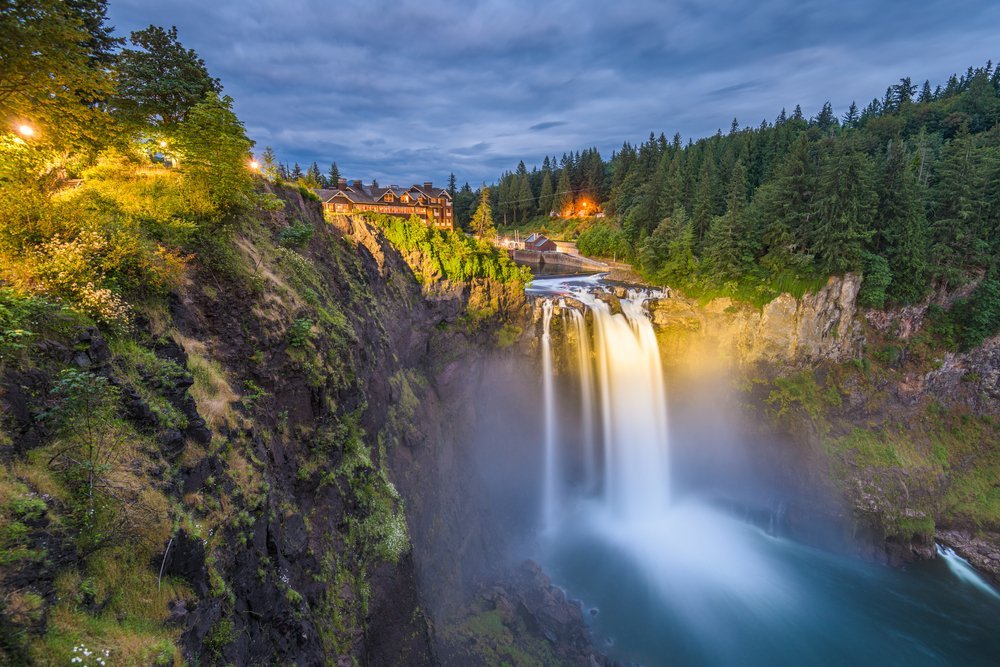
Snoqualmie Falls lies around 45 kilometres east of Seattle at the foot of the Cascade Mountains, where the water plunges 82 metres down a granite cliff face. That’s higher than Niagara Falls, and in spring, when the snow melts, the volume of water is enormous. The waterfall is a sacred site for the Snoqualmie people, and the surrounding park is run by the energy company Puget Sound Energy.
From the upper car park, you walk across a footbridge to two viewpoints over the gorge, and at the top of the falls sits Salish Lodge, which many people will recognise from the TV series Twin Peaks. The upper car park is free, while the lower one costs $7 (around £5). From the top, a steep path leads down to the river and a viewpoint closer to the falls.
It takes around 40 minutes to drive there from Seattle on the I-90 motorway, and there’s no practical public transport, so take a hire car or an organised tour. My tip is to arrive early in the morning or on a weekday, as the car parks fill up quickly at weekends. Combine the falls with the wineries in Woodinville or the small town of Snoqualmie with its old railway museum.
Book a tour to Snoqualmie Falls and the Woodinville wineries with transport from Seattle here.
17. Mount Rainier National Park
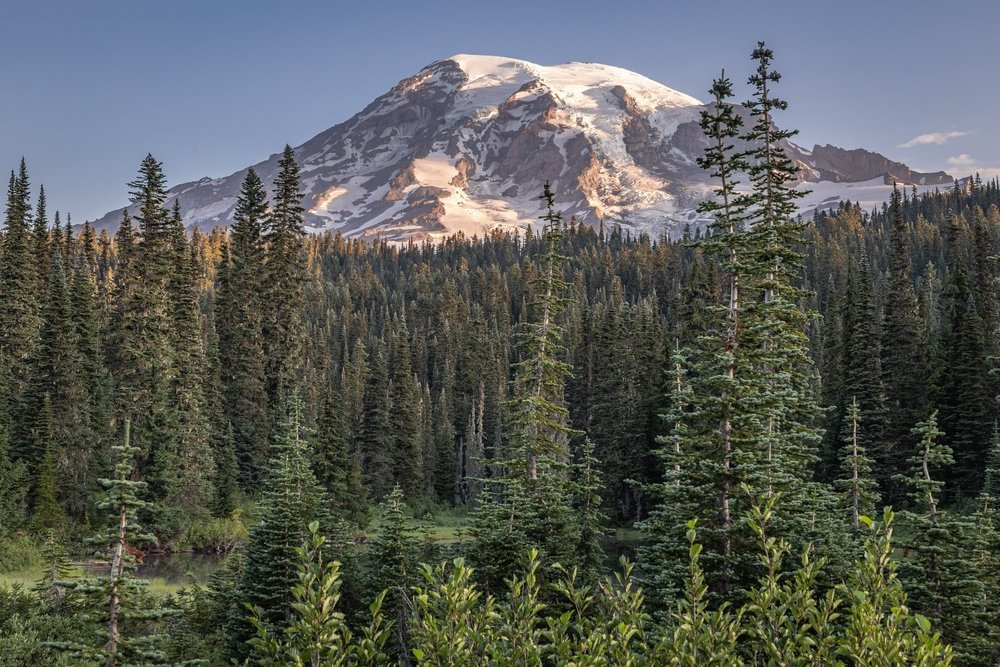
On clear days, Mount Rainier hangs over Seattle like a giant white cone. The volcano is 4,392 metres high and has more glaciers than any other mountain in the USA outside Alaska. The national park around it has ancient forests with giant trees, waterfalls and meadows that are full of wildflowers in July and August.
Most people drive to Paradise on the south side, around two to two and a half hours from Seattle, where there’s a visitor centre, the historic Paradise Inn and hiking trails such as the Skyline Trail with views straight up to the glaciers. The road to Sunrise on the east side is only open in summer. Entry is $30 (around £22) per car and is valid for seven days, while you pay $15 (around £11) per person on foot or by bike, and the park doesn’t accept cash at the entrances.
There’s no public transport into the park, so you’ll either need to drive yourself or join an organised tour. If you want a car, you can compare car hire prices in Seattle here. My tip is to set off early, as the car parks at Paradise fill up on sunny summer days. In winter, you’ll need snow chains in the car.
Book a guided day trip to Mount Rainier National Park from Seattle here.
18. Olympic National Park
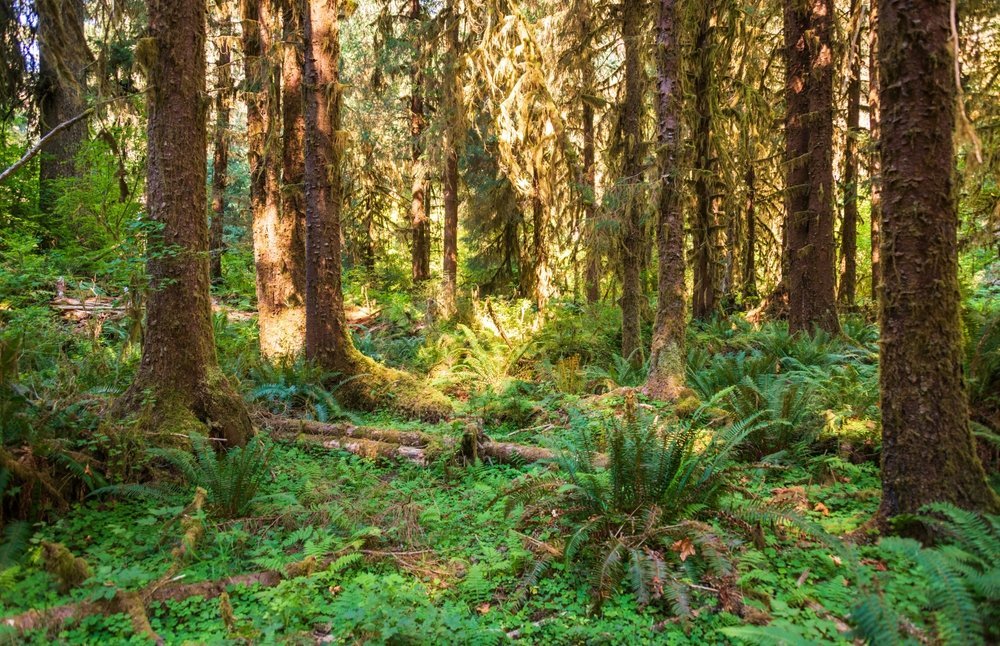
Olympic National Park, on the peninsula west of Seattle, is a UNESCO World Heritage Site with three completely different landscapes in one park: snow-capped mountains with glaciers, temperate rainforest and a wild Pacific coastline with rocky sea stacks and driftwood on the beaches.
In the Hoh Rain Forest you walk the Hall of Mosses trail among giant maples and spruces draped in thick layers of moss, while Lake Crescent is a deep, clear mountain lake surrounded by forest. From Port Angeles a winding road climbs up to Hurricane Ridge with views over the mountains, and on the coast you’ll find the wild beaches of Ruby Beach and Rialto Beach. The entrance fee is the same as at Mount Rainier National Park.
The park is huge, and just getting to Port Angeles takes about two and a half hours from Seattle with the ferry to Bainbridge Island and a drive on the other side, while the Hoh Rain Forest is about four hours away. So my tip is to stay at least one night in Port Angeles or at Lake Crescent rather than squeezing it all into one day. You can see hotels in Port Angeles here, and check the park’s website for road conditions, especially for Hurricane Ridge, before you set off.
Practical travel tips for Seattle
You can manage Downtown, Pike Place Market, the waterfront and Pioneer Square on foot, but the city is hilly. The 1 Line light rail runs from the airport through Downtown to Capitol Hill for $3 (around £2), and you pay with your contactless card at the card reader. If you’re landing at Sea-Tac, you can read more in my guide to getting from Seattle Airport to the city centre. For Fremont, Ballard and Discovery Park, the bus, Uber or a taxi is easiest.
If you’re planning to see several of the big attractions, do the maths on the Seattle CityPASS. The pass costs $139 (around £105) for an adult, is valid for nine days and covers the Space Needle and Seattle Aquarium plus three of your choice from Chihuly Garden and Glass, the harbour cruise with Argosy Cruises, MoPOP, Woodland Park Zoo and Pacific Science Center. It pays off if you want to visit at least four of them.
The best time to visit is from June to September, when it’s dry and warm and the roads to Sunrise and Hurricane Ridge are usually open. From October to April it often rains, so pack a rain jacket. Remember to tip 15 to 20 per cent in restaurants, and note that prices in shops and on menus exclude sales tax, which is added at the till.
Many people combine Seattle with Vancouver, about three hours to the north, and here you can read about where to stay in Vancouver. If you’re carrying on south along the West Coast, I also have a guide to where to stay in San Francisco, and if you’re planning a longer road trip, start with my overview of where to stay in the USA.
If you need the full selection, you can see all hotels in Seattle on Booking.com.
Travel ressources & websites I use all the time 👇
• Booking.com has the best offers on hotels and unique places to stay
• GetYourGuide is the best place to book tours & activities with free cancellation
• Welcome Pickups is the best & safest place to pre-book airport transfers
Psst 👀 Have you subscribed to my Youtube channel and my Instagram where I provide more useful travel tips?