

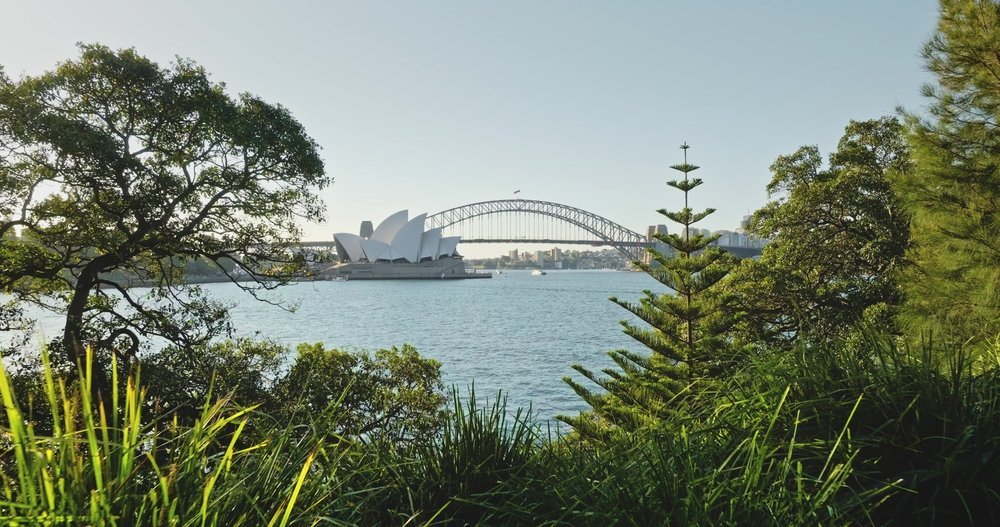
Sydney is built around one of the world’s most beautiful natural harbours, and it’s the harbour that ties the city together.
The Opera House and Harbour Bridge sit right in the centre, ferries run scheduled services between the neighbourhoods, and half an hour from Circular Quay you’ll find surf beaches, coastal walks and rock pools.
Many of the best things to do in Sydney are a short ride away: drive a couple of hours out of the city and you’re in the Blue Mountains, in one of the world’s oldest national parks or among the vineyards of the Hunter Valley.
Here are my picks for the 18 best things to do in Sydney, with prices, opening hours and tips, first in the city itself and then on day trips.
Prices are given in Australian dollars, and 1 Australian dollar is worth roughly 53p.
Many of the best experiences are free, while the big attractions cost more than in most European cities, so it pays to plan what you want to spend your money on.
Planning your trip to Sydney at the last minute? 🇦🇺
Here are some of the best things to do, plus hotels and other tips for your trip to Sydney.
🛌 Best Hotels:
1. Park Hyatt Sydney is the city's luxury hotel, with a rooftop pool and views across the harbour to the Opera House
2. Rendezvous Hotel Sydney The Rocks gives you a base in The Rocks and an outdoor pool at a reasonable price
3. YHA Sydney Harbour is a hostel with private rooms and a rooftop terrace overlooking the harbour
Contents
1. Sydney Opera House and the guided tour
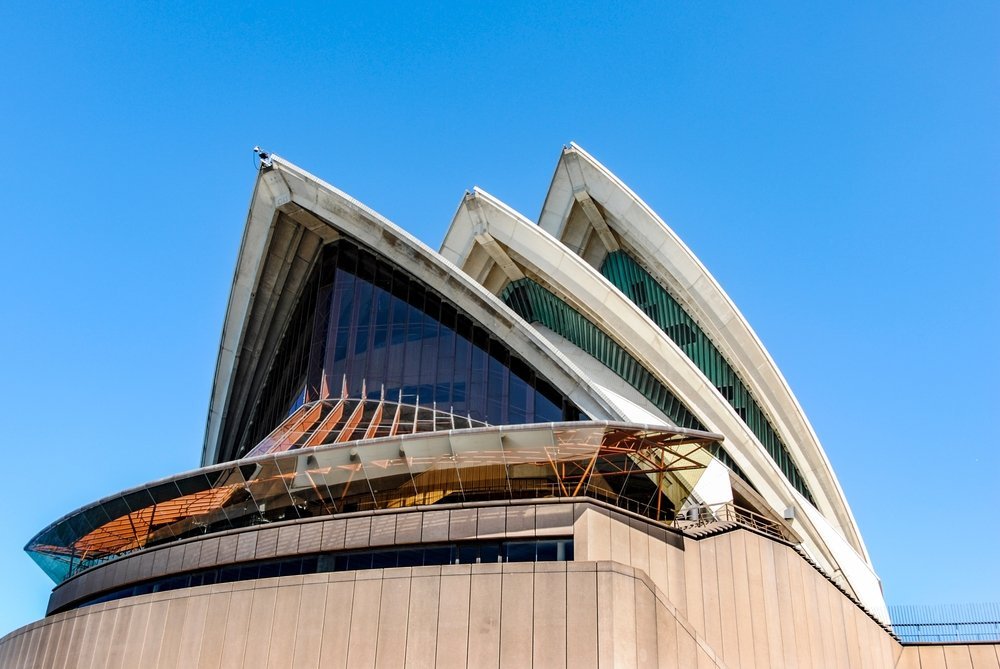
The Opera House is Sydney’s landmark, and the story behind it is a good one. The Danish architect Jørn Utzon won the design competition in 1957 but left the project in 1966 after a dispute over the budget, and the building was only opened in 1973, without him. It has been on the UNESCO World Heritage List since 2007. The white sails are covered in more than a million ceramic tiles, which change colour with the light over the course of the day.
You can walk around the building and up the grand staircase for free, but if you want to go inside without buying a ticket for a performance, you’ll need to join a tour. The classic tour lasts 60 minutes, is available in several languages, and involves climbing up and down around 300 steps with no lift. An adult ticket costs about 50 dollars (around £25).
My tip is to combine the tour with a performance if you can, because it’s only with an audience in the hall that the building really makes sense. Come back after dark too, when the sails are lit up, and have a drink on the steps down by the water. Tours sell out quickly in high season, so book a few days ahead.
Book the official Sydney Opera House tour here.
2. Harbour Bridge, BridgeClimb and Pylon Lookout
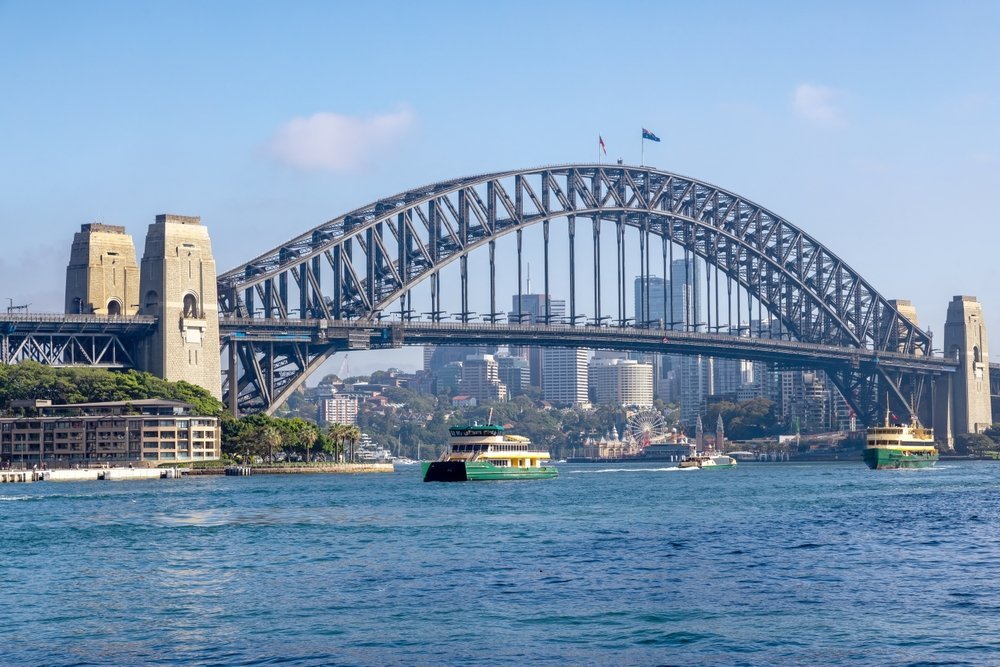
The Harbour Bridge opened in 1932, and locals call it The Coathanger because of its huge steel arch. It costs nothing to walk across on the footpath on the eastern side, and you get up there via the stairs or the lift from Cumberland Street in The Rocks. The walk across to Milsons Point on the north side is just over a kilometre, with the Opera House right below you along the way.
If you want to go all the way up, BridgeClimb is the big experience. You’re clipped to a cable and climb the arch in small groups to the summit, 134 metres above the water, in around three hours. The daytime Summit climb costs from 375 dollars (around £195), while the night climb starts at 325 dollars (around £170), and children must be at least 8 years old.
If that’s too pricey, head up the south-east pylon, where the old Pylon Lookout is now part of the BridgeMuseum. You climb more than 200 steps to a platform 87 metres above sea level, and tickets cost 39.95 dollars (around £21) online and 49.95 dollars (around £26) at the door. It’s the best view in the city for the money.
Book BridgeClimb to the top of the Harbour Bridge here.
3. Circular Quay and The Rocks
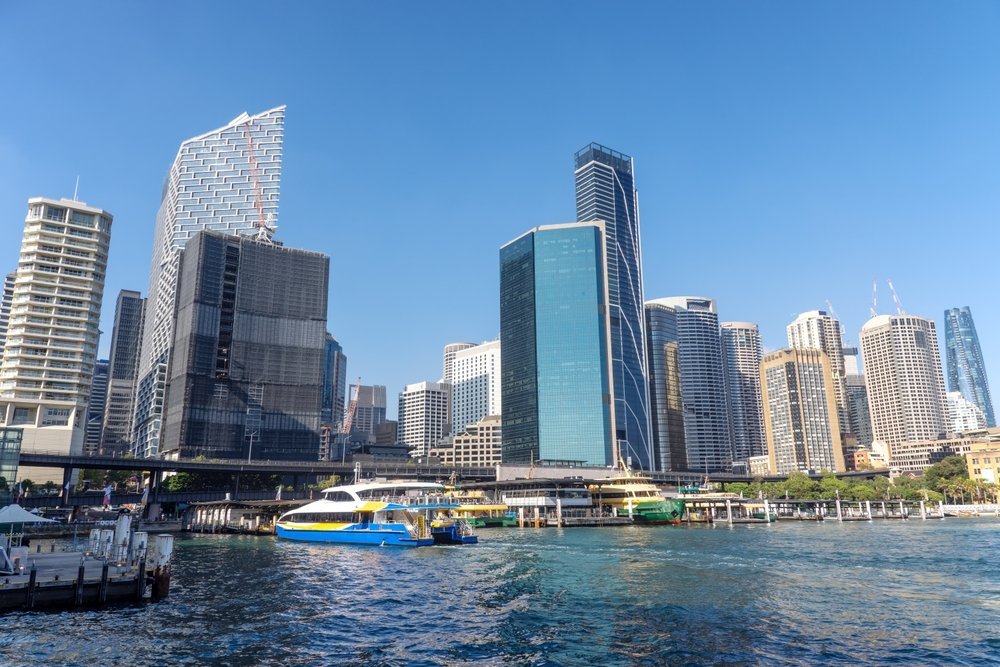
Circular Quay is Sydney’s ferry terminal and the busiest spot on the city’s waterfront. From here, ferries sail to Manly, Taronga Zoo, Watsons Bay and the rest of the harbour, and the promenade links the Opera House with The Rocks on the other side of the cove. Street performers, cafés and cruise ships at the quay make it a great place to simply sit and watch.
The Rocks is where modern Sydney began in 1788, and here you wander among sandstone buildings, old pubs and narrow stairways leading up towards the bridge. One of the city’s oldest houses, Cadmans Cottage, sits down by the water, and the Museum of Contemporary Art offers free entry to its collection but is usually closed on Tuesdays. At weekends there’s a market with more than 200 stalls in the streets around George Street.
If you want to stay within walking distance of both the Opera House and the ferries, The Rocks is the obvious area. In my guide to where to stay in Sydney, I cover The Rocks and five other areas, with hotels in a range of price brackets. If you fancy luxury right by Circular Quay, you can see prices for Four Seasons Hotel Sydney here.
Book a harbour cruise from Circular Quay here.
4. Royal Botanic Garden and Mrs Macquarie’s Chair
The botanic garden was founded in 1816 and stretches from the Opera House around Farm Cove. You stroll among palms, giant figs, rose gardens and The Calyx glasshouse, and on the lawns you’ll find both locals on their lunch break and ibises hunting for leftovers. Entry is free, and the garden is open every day from 7am until sunset, so closing time changes with the seasons.
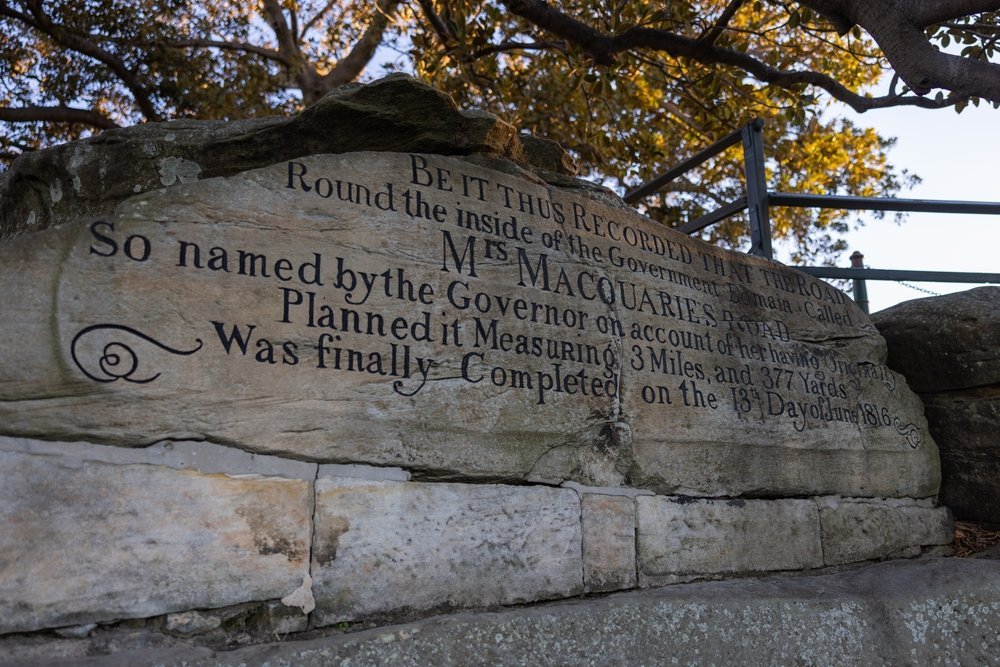
At the tip of the peninsula between Farm Cove and Woolloomooloo Bay lies Mrs Macquarie’s Chair, a bench that convicts carved out of the sandstone rock in 1810 for Elizabeth, the wife of Governor Lachlan Macquarie. From here you can see the Opera House in front of the Harbour Bridge in the same shot, and it’s one of the most photographed views in Sydney.
My tip is to walk from the Opera House through the garden to Mrs Macquarie’s Chair half an hour before sunset and stay until the lights come on on the bridge. The walk takes around 20 minutes along the water. Bring a packed lunch, as cafés are few and far between at the end of the peninsula, and pack water if you’re walking in the middle of a hot summer’s day.
5. Art Gallery of New South Wales
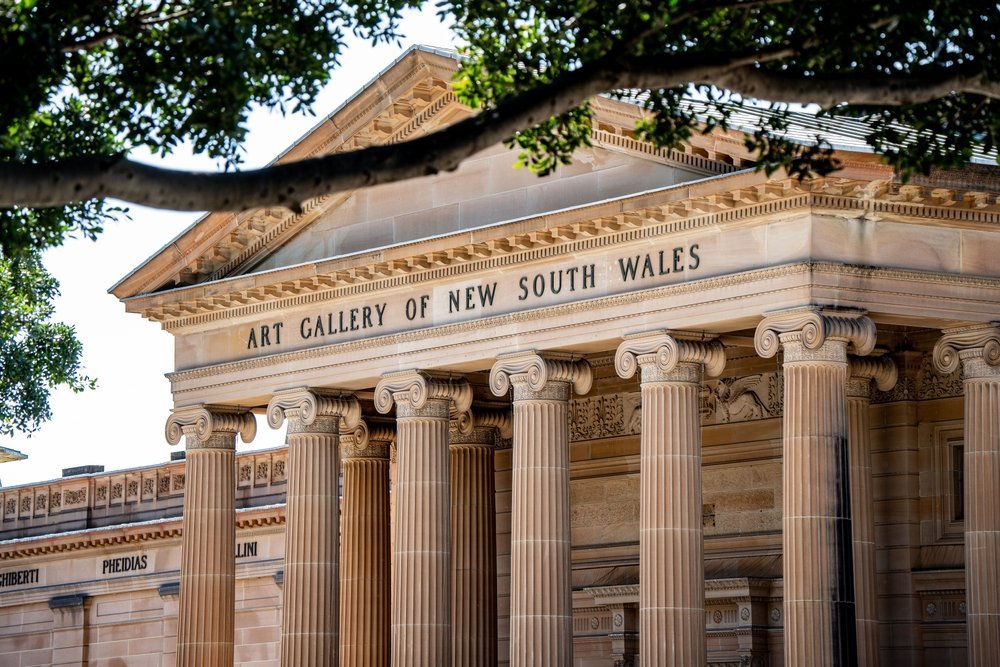
The state art gallery sits in The Domain parkland right next to the botanic garden and is made up of two buildings. The old sandstone building with the columns is now called Naala Nura, and the new, light-filled building with terraces stepping down towards the harbour is called Naala Badu. The collection ranges from European paintings and Asian art to Australian art and one of the country’s largest collections of Aboriginal art.
Entry to the collections is free, and the gallery is open every day from 10am to 5pm, and until 10pm on Wednesdays. Some of the temporary exhibitions charge admission. From Martin Place and St James Station, it’s around a 15-minute walk through The Domain.
My tip is to come on a Wednesday evening, when it’s open late and there are often events on. Head down to the lowest level of Naala Badu too, where an old Second World War oil tank facility has been turned into a vast, dark exhibition space. It’s an ideal spot on a rainy day, and it costs nothing.
6. Queen Victoria Building and Hyde Park
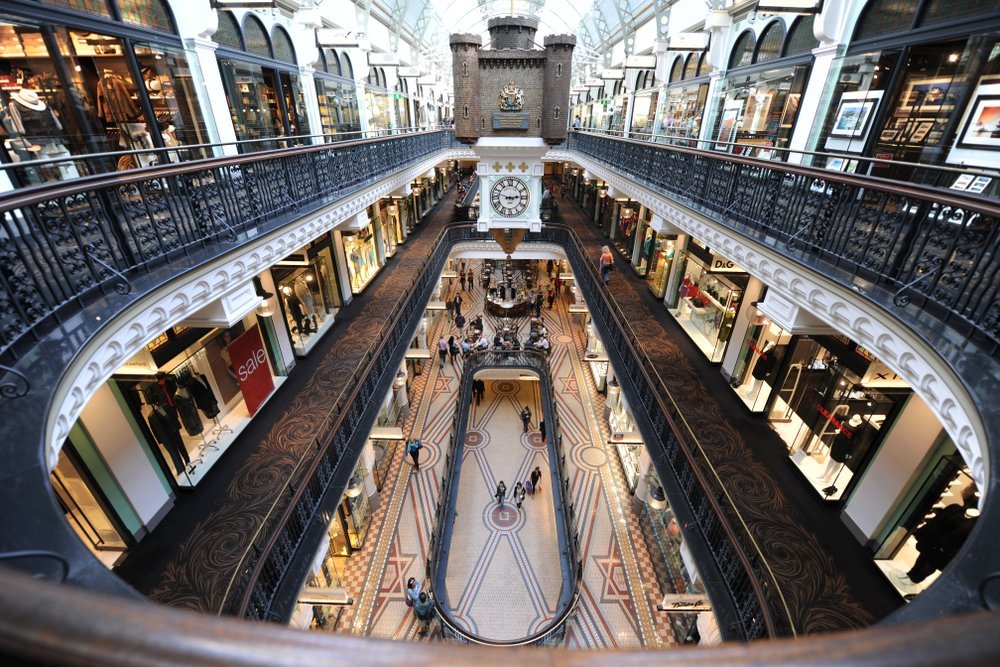
The Queen Victoria Building, which everyone calls the QVB, takes up an entire block on George Street. Designed by George McRae and completed in 1898 as a market hall, it is now a shopping centre with a glass dome, mosaic floors, wrought-iron balustrades and two large clocks hanging from the ceiling. It costs nothing to wander in and have a look, and the shops are open seven days a week.
A few streets to the east is Hyde Park, laid out as early as 1810 and one of the oldest parks in Australia. In the middle of the park stands the Archibald Fountain beneath an avenue of large fig trees, at the southern end is the ANZAC Memorial, and across College Street is St Mary’s Cathedral. Along the way you pass Sydney Tower Eye, where you can look out over the city from a height of 250 metres.
My tip is to head up to the top floor of the QVB, where you get the best view down through the building and across to the hanging clocks. Town Hall station is right next door, so it’s easy to start a walk around the city here and carry on through Hyde Park towards The Domain and the art gallery.
7. Darling Harbour
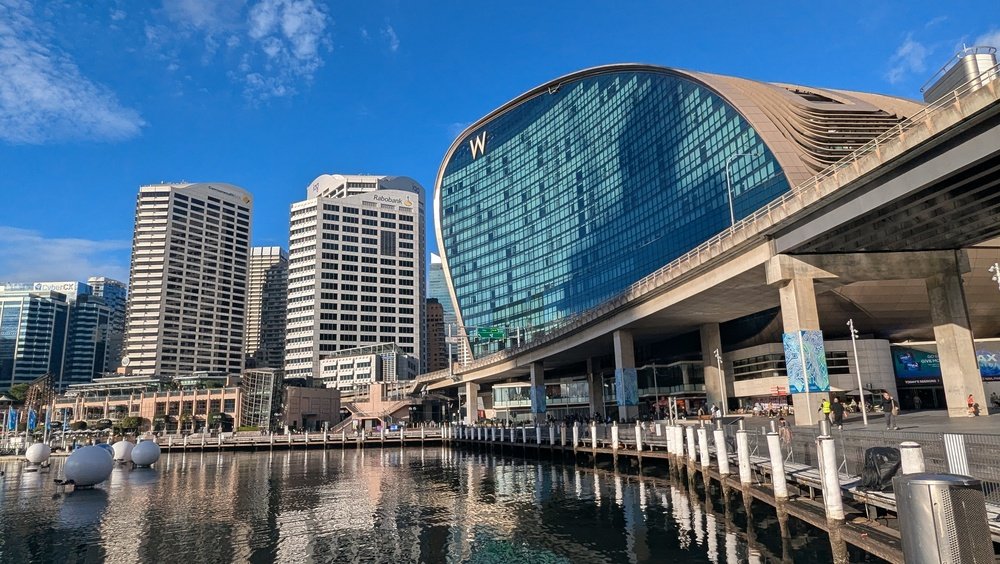
Darling Harbour is the bay on the western side of the centre, where the old docks and railway yards have been turned into promenades, restaurants and family attractions. SEA LIFE Sydney Aquarium, WILD LIFE Sydney Zoo and Madame Tussauds sit side by side, and aquarium tickets cost from around 44 dollars (around £35) if you buy them in advance. Spanning the water is Pyrmont Bridge, a swing bridge from 1902 that is now for pedestrians only.
At the end of the bridge is the Australian National Maritime Museum, where you can go aboard a destroyer, a submarine and a replica of James Cook’s ship Endeavour. The museum is open every day from 10am to 4pm, and you need a ticket for the ships. At the southern end of the bay is the Chinese Garden of Friendship, with ponds, pavilions and waterfalls.
My tip is to take the ferry from Circular Quay to Pyrmont Bay instead of walking, as the trip under the Harbour Bridge is a mini harbour cruise in itself. You’re better off eating at the food stalls in Darling Square than at the restaurants along Cockle Bay, where you pay for the view. If you have children, the playground in Darling Quarter is a good place for a break.
8. Barangaroo Reserve
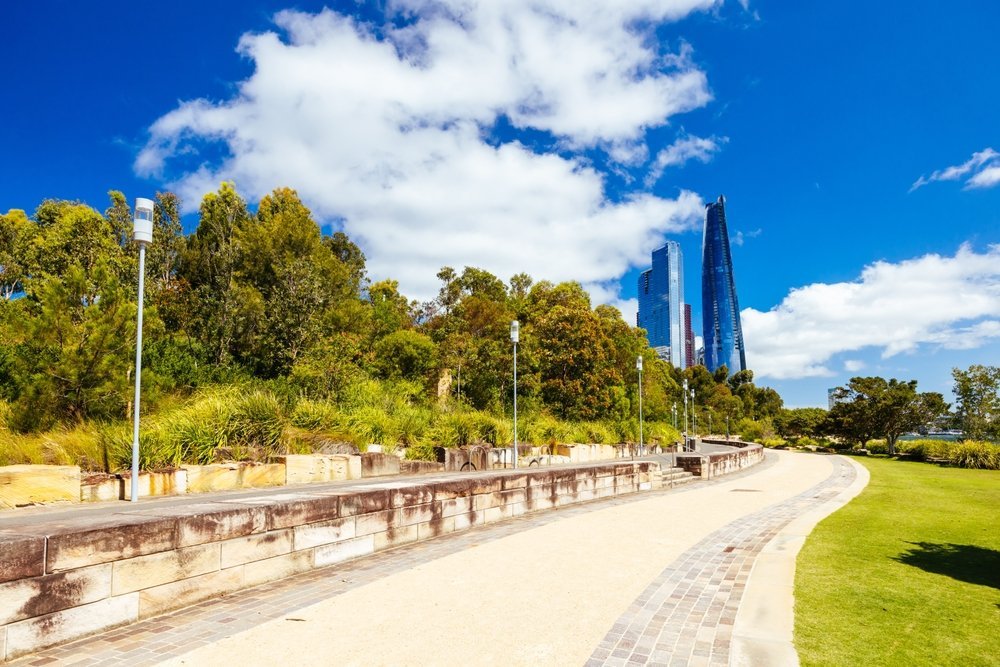
Barangaroo was a run-down container and dock area until the city recreated the original headland and opened Barangaroo Reserve in 2015. The park covers six hectares and is built from around 10,000 sandstone blocks quarried on site, with around 75,000 native plants. The headland is named after Barangaroo, an Aboriginal woman of the Cammeraygal people who was alive when the first British settlers arrived in Sydney.
From the rocks by the water you look out across the western part of the harbour towards Balmain and the Harbour Bridge, and it’s free to walk around the park. South of the park, the Wulugul Walk promenade leads past the restaurants of Barangaroo and the tall Crown Sydney tower on to Darling Harbour, so you can walk the whole way along the water. The metro stops at Barangaroo station, and it’s only a ten-minute walk from The Rocks.
My tip is to come here late in the afternoon, when the sun sets behind the western side of the harbour and the locals sit out on the sandstone blocks. It’s one of the places where you see Sydney without the big tour groups.
9. The Manly Ferry and Manly
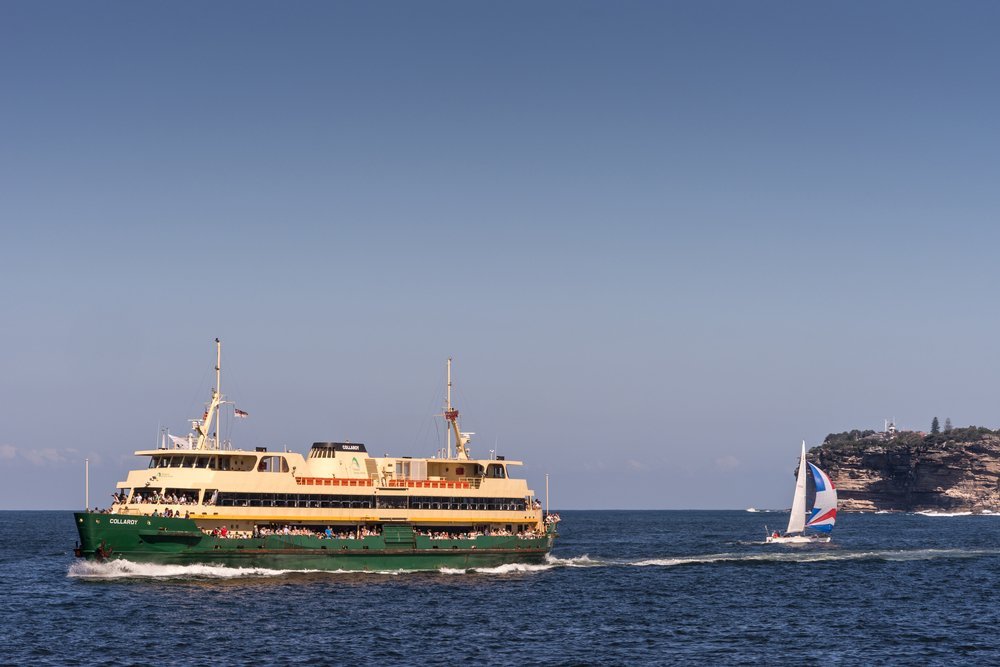
The ferry from Circular Quay to Manly is one of the best and cheapest things to do in Sydney. The trip takes around half an hour, and you sail past the Opera House, Fort Denison and the leafy suburbs before the ferry crosses the harbour entrance between North Head and South Head, where you can feel the Pacific swell. A trip costs around 9 dollars (around £7) with contactless payment or an Opal card.
From the wharf you walk along The Corso, a pedestrian street with surf shops and pubs, and a few minutes later you’re on Manly Beach. Tall Norfolk pines line the promenade, and if you head south along the path around the headland, you reach Shelly Beach in the protected Cabbage Tree Bay, where the water is calm and good for snorkelling.
My tip is to sail out in the morning and walk the ten-kilometre trail between Manly and Spit Bridge if you have a whole day, or simply go for a swim at Shelly Beach and sail back at sunset. Sit outside at the front of the ferry on the way out and on the back deck on the way home. If you’d like to stay a few nights by the beach, you can see hotels in Manly here.
10. Taronga Zoo
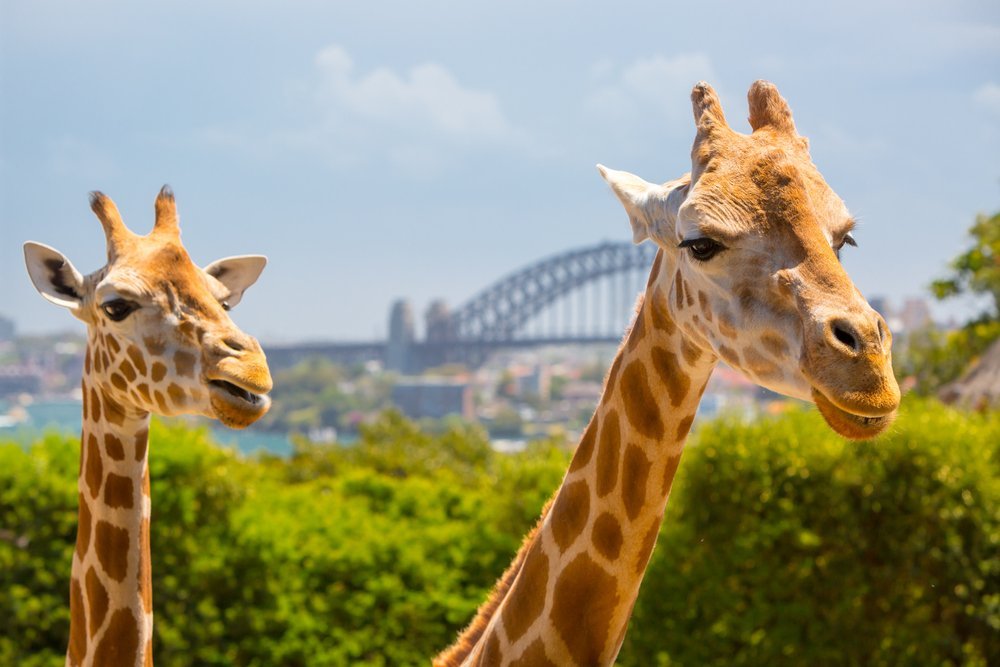
Taronga Zoo sits on a hillside on the north side of the harbour, and no other zoo in the world has a view like this. Giraffes stand with the Opera House and the skyscrapers behind them, and you can see koalas, kangaroos, platypuses and other Australian animals alongside animals from the rest of the world. There are more than 15 keeper talks and shows every day.
The zoo is open every day from 9.30am to 5pm from September to April and until 4.30pm from May to August, and the ferry from Circular Quay takes 12 minutes. An adult ticket costs around 57 dollars (around £45) when you buy it in advance.
My tip is to take the bus from the wharf up to the main entrance at the top and walk downhill through the zoo towards the ferry, so you don’t have to climb the hill on tired legs. Arrive early, as the animals are most active in the morning, and set aside at least half a day. You can easily combine the zoo with an afternoon in Manly or around Circular Quay.
Book tickets to Taronga Zoo with a return ferry from Circular Quay here.
11. Bondi Beach and Bondi Icebergs
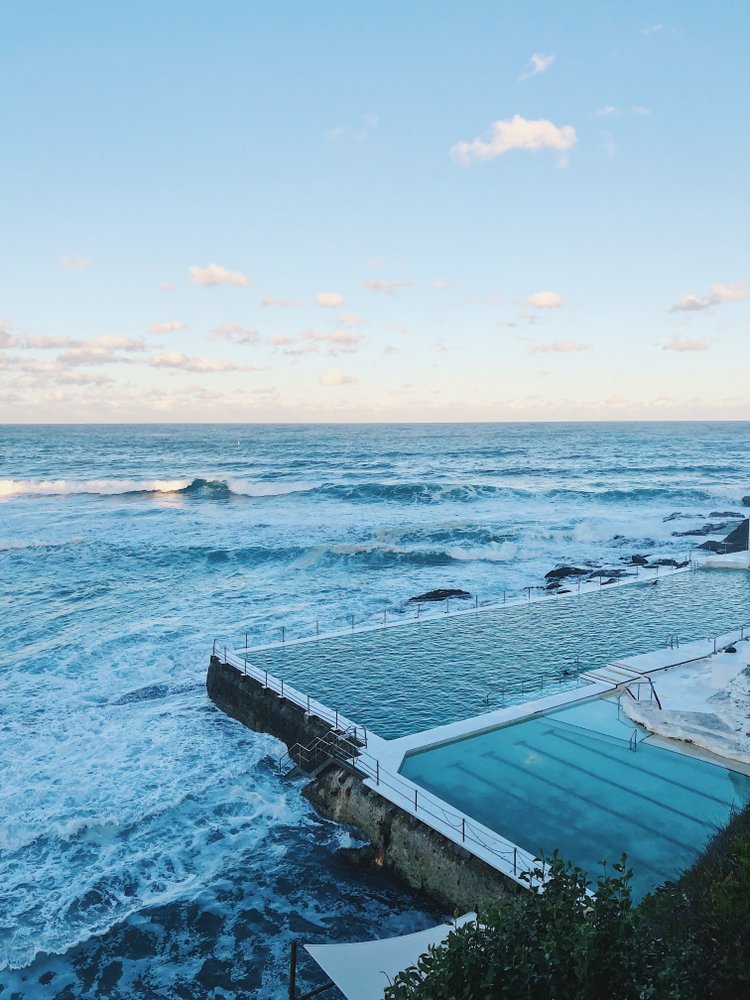
Bondi Beach is Australia’s most famous beach, a crescent of pale sand just under a kilometre long with surfers in the waves all year round. Campbell Parade is lined with cafés, surf shops and restaurants, and there’s a food market on Saturdays and a market with clothes and crafts on Sundays. Lifeguards patrol the beach, and you should always swim between the red and yellow flags, as the currents can be strong.
At the southern end is Bondi Icebergs, the swimming club from 1929 with the famous ocean pool where the waves crash over the edge. Visitors are welcome to swim, and a ticket to the pool costs 10 dollars (around £7.50) for adults and 7 dollars (around £5) for children. The pool is usually closed on Thursdays for cleaning.
Trains don’t go all the way to the beach. Take bus 333 from Circular Quay, or take the train to Bondi Junction and the bus for the last stretch. My tip is to come early in the morning, when the locals are swimming and surfing and the beach hasn’t filled up yet. Afterwards, walk up onto the rocks by Icebergs, as this is where you get the classic photo of the whole bay.
12. The Bondi to Coogee Coastal Walk
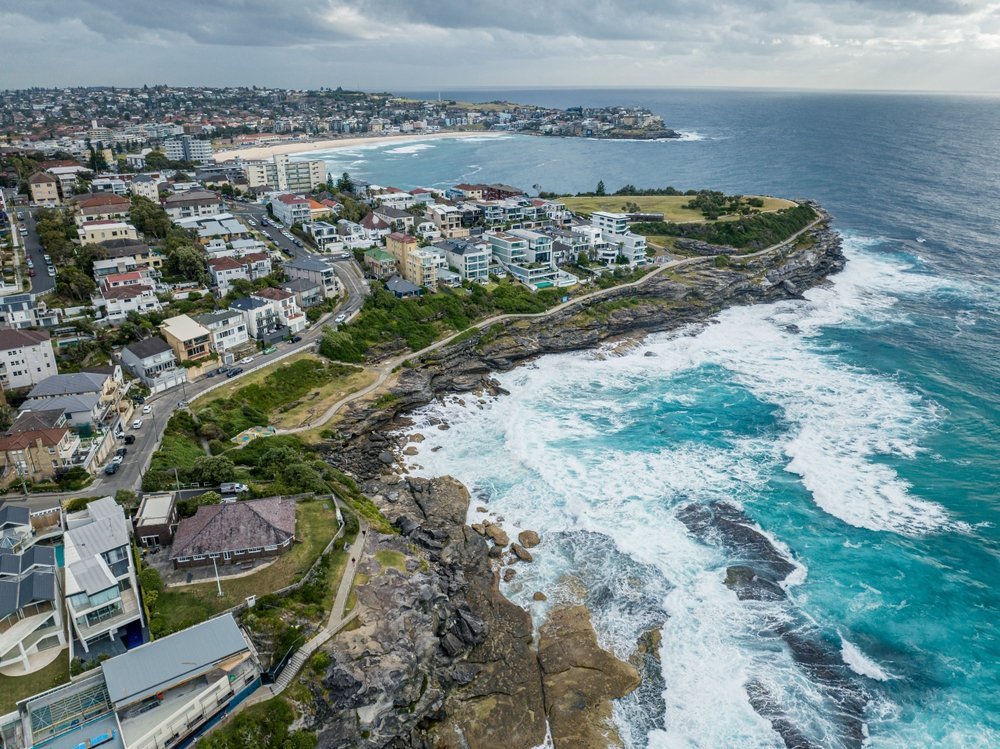
The Bondi to Coogee Coastal Walk is Sydney’s most popular walk, and it’s free. The path is six kilometres long and takes two to three hours, depending on how often you stop, and it follows the clifftops past a string of small beaches. You start at Icebergs at the southern end of Bondi and walk past Tamarama, Bronte, Clovelly and Gordons Bay before you reach Coogee.
At Marks Park, just south of Bondi, you can see ancient Aboriginal rock carvings, and at Bronte there’s both an ocean pool and a small natural rock pool. After Bronte the path runs alongside Waverley Cemetery, where the marble graves face out to sea and the poet Henry Lawson is buried. Every year in the Australian spring, the stretch between Bondi and Tamarama fills with more than 100 sculptures during the Sculpture by the Sea exhibition.
My tip is to bring your swimming things and take a dip along the way, for example in the calm water at Clovelly. There’s drinking water and toilets at the beaches, but almost no shade, so walk in the morning or late afternoon. From Coogee you can take bus 350 to Bondi Junction and the train from there back to the city centre.
13. Watsons Bay and South Head
Watsons Bay is an old fishing village at the far end of the southern side of the harbour entrance, and the F9 ferry from Circular Quay gets you there in under 20 minutes. By the ferry wharf you’ll find Doyle’s, where you can buy fish and chips to take over to the lawn in Robertson Park, and a few minutes’ walk away is the small sandy beach of Camp Cove with its calm water.
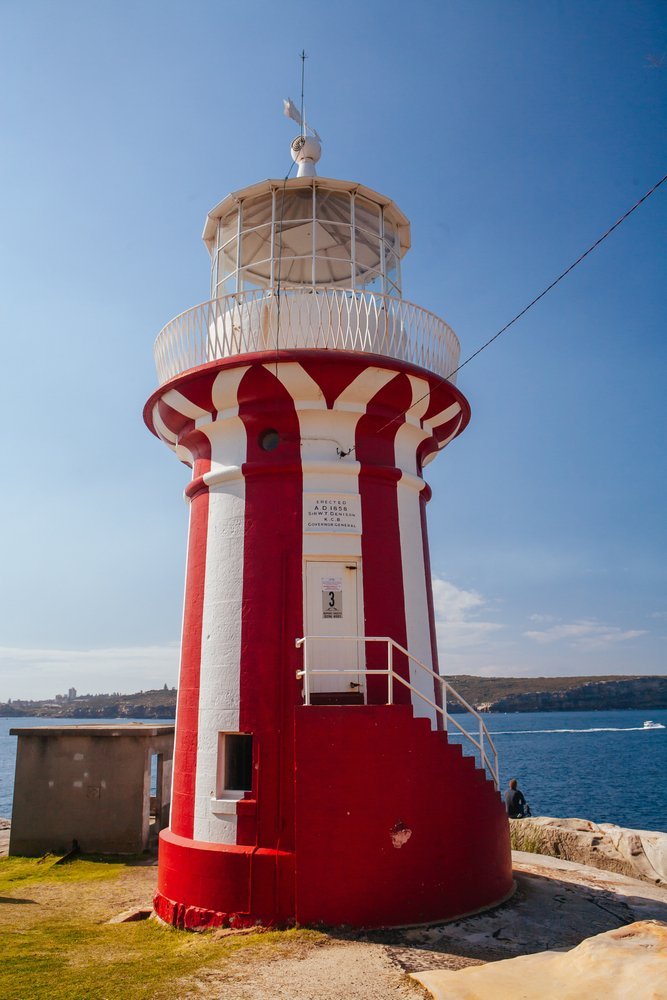
From Camp Cove, the South Head Heritage Trail leads out to the headland, where the red and white striped Hornby Lighthouse stands. It was built in 1858, the year after the ship Dunbar was wrecked on the cliffs in the dark, and from the headland you can look across to North Head and in over the whole harbour. On the other side of the village is The Gap, where the sandstone cliffs drop around 80 metres straight into the sea.
My tip is to sail out in the late afternoon, walk to the lighthouse and eat fish and chips by the water as the sun sets behind the city skyline. From May to November, with a bit of luck, you can spot whales from the cliffs at The Gap. Keep well back from the cliff edge, as it’s steep and the rocks can be slippery.
14. Paddington and Surry Hills
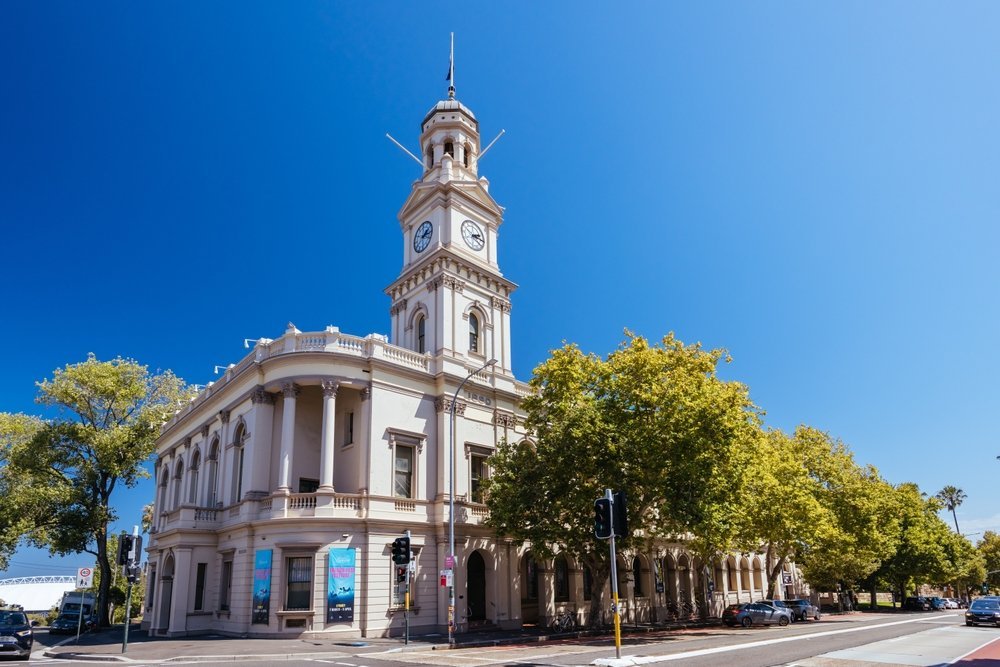
If you want to see how Sydney lives, spend an afternoon in Paddington and Surry Hills, east and south of the city centre. Paddington is known for its Victorian terraced houses with wrought-iron balconies, and along Oxford Street you’ll find designer shops, galleries and Paddington Town Hall. Many of the buses towards Bondi run along Oxford Street, so it’s easy to get there.
On Saturdays, Paddington Markets takes place at the church at 395 Oxford Street, where there has been a market since 1973. There are more than 150 stalls selling crafts, clothes, jewellery and food, and the market is open every Saturday from 10am to 4pm, rain or shine. Right next door is the large Centennial Park, if you need a break from the city.
Surry Hills is a ten-minute walk from Central Station, and it’s the neighbourhood for you if you plan your day around where you’ll eat. Crown Street is packed with cafés, restaurants and bars, and cafés such as Single O and Reuben Hills have helped give the area its reputation for great coffee. My tip is to start with breakfast in Surry Hills, then walk up to Oxford Street and on through the side streets of Paddington.
15. Day trip to the Blue Mountains
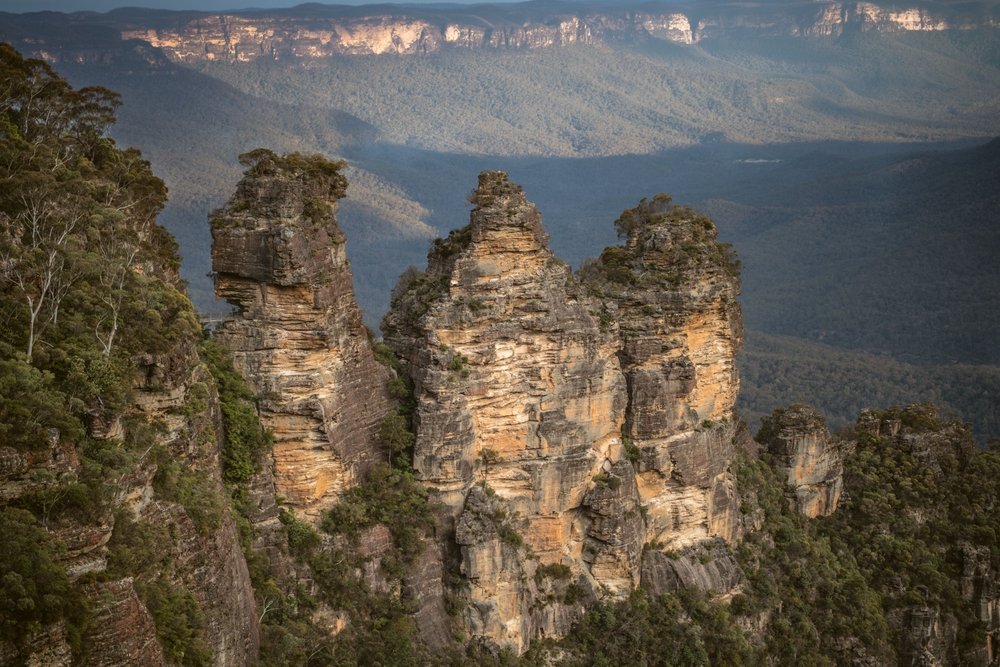
The Blue Mountains west of Sydney are part of the Greater Blue Mountains Area World Heritage Site, a sandstone plateau with deep valleys, waterfalls and more than 90 species of eucalyptus. The blue haze over the valleys comes from the fine oil given off by the eucalyptus trees. The best-known view is of the Three Sisters rock formation from Echo Point in Katoomba, and it’s free.
From Echo Point you can follow the Prince Henry Cliff Walk along the cliff edge to Leura Cascades, or take the Giant Stairway down into the valley. A little further west is Scenic World, with cable cars and a railway that calls itself the world’s steepest, and the village of Leura is a good spot for lunch. If you want to stay the night in Katoomba, you can see prices for Mountain Heritage Hotel here.
Express trains from Central Station to Katoomba take around 90 minutes and the slower ones up to two hours, and you pay with an Opal card or a contactless card. My tip is to go on a Friday, Saturday or Sunday, when you never pay more than 9.65 dollars (around £5) for all public transport for the whole day. Set off early, as the valleys are often clearest in the morning.
Book a day trip to the Blue Mountains with a waterfall walk and lunch here.
16. Day trip to the Royal National Park
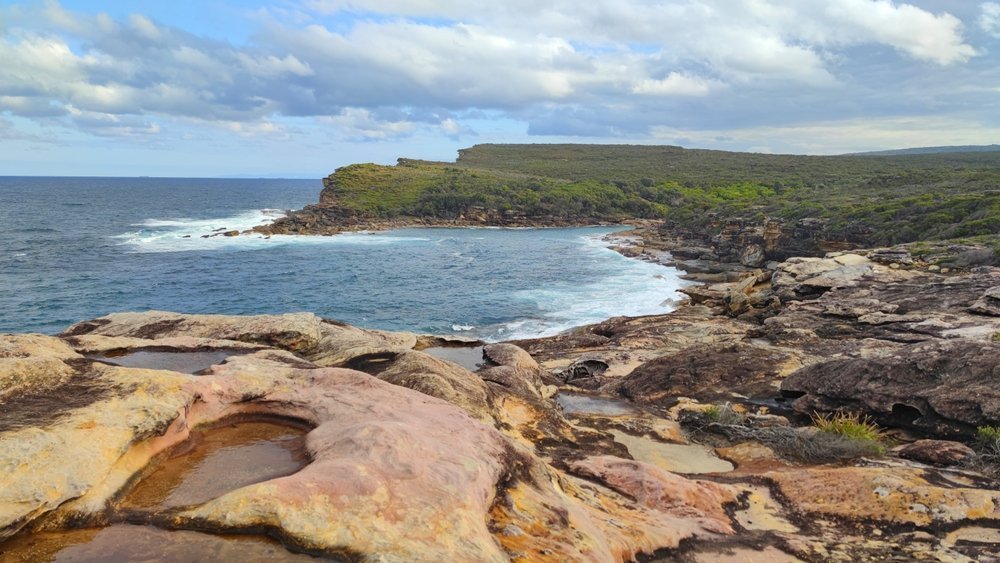
The Royal National Park south of Sydney was established in 1879 and is the world’s second-oldest national park after Yellowstone. The park isn’t just forest: there’s also a wild coastline with sandstone cliffs, deserted beaches and the lagoon at Wattamolla, where a waterfall tumbles into a small swimming cove. The 27-kilometre Coast Track runs from Bundeena to Otford and usually takes two days, but a section of it makes a great day walk.
Driving into the park costs 12 dollars (around £6) per car per day, and the park is open from 7am to 8.30pm. Without a car, you can take the train to Cronulla and the little ferry across Port Hacking to Bundeena, or the train to Otford at the southern end. The famous Figure Eight Pools rock pools can only be visited at low tide and in calm seas, and big waves have swept people across the rock shelf, so check the conditions before you head out.
My tip is to take the ferry to Bundeena and walk the first few kilometres of the Coast Track and back again. Bring plenty of water, as there’s almost nothing to buy along the way.
Book a hike in the Royal National Park with a picnic and pick-up in Sydney here.
17. Day trip to Palm Beach and Barrenjoey Lighthouse
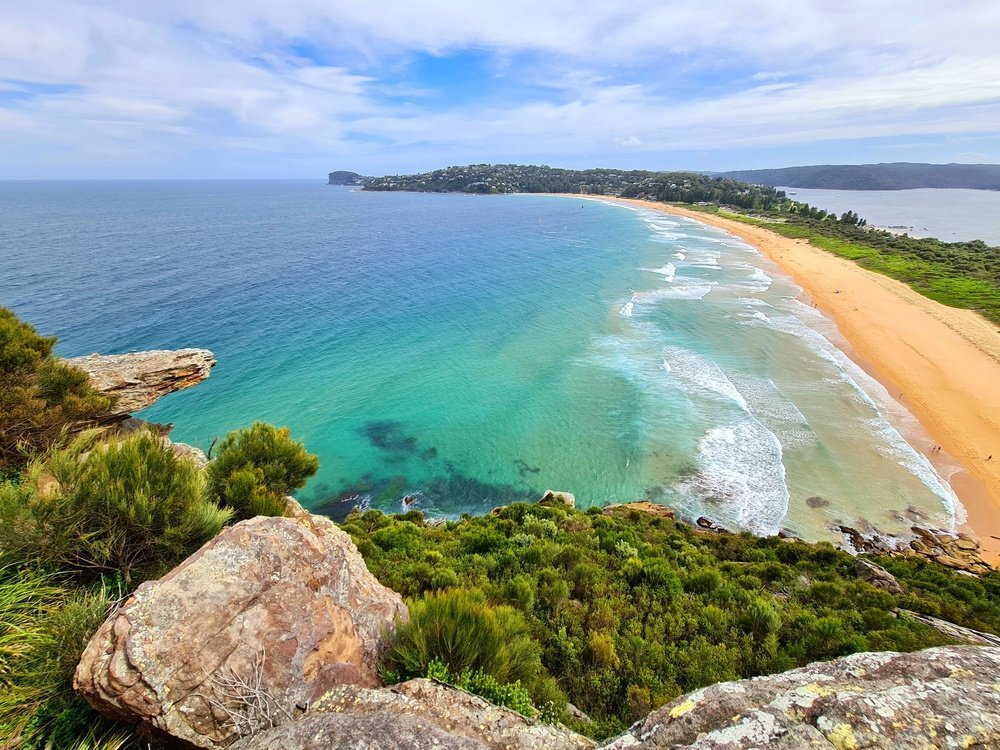
Palm Beach sits at the very tip of the Northern Beaches, Sydney’s northernmost point, with the ocean on one side and the calm waters of Pittwater on the other. The beach is long and pale, and the area is known for its expensive holiday homes on the hillsides. Many people know the place from the TV series Home and Away, which is filmed here and stands in for the town of Summer Bay.
At the end of the beach is the headland of Barrenjoey Head with Barrenjoey Lighthouse, built in 1881 from local sandstone. The Barrenjoey track is around a kilometre long and takes about half an hour each way from the car park at Governor Phillip Park, while the Smugglers Track is shorter and steeper. It’s free to walk up, and there are guided tours of the lighthouse on Sundays.
Without a car, you take the ferry to Manly and then bus 199 up the coast, but expect a long journey. My tip is to drive and stop at the beaches along the way, such as Dee Why and Avalon. Walk up to the lighthouse in the morning before it gets hot, and have lunch by Pittwater afterwards. From May to September you can spot whales from the top.
18. Day trip to the Hunter Valley
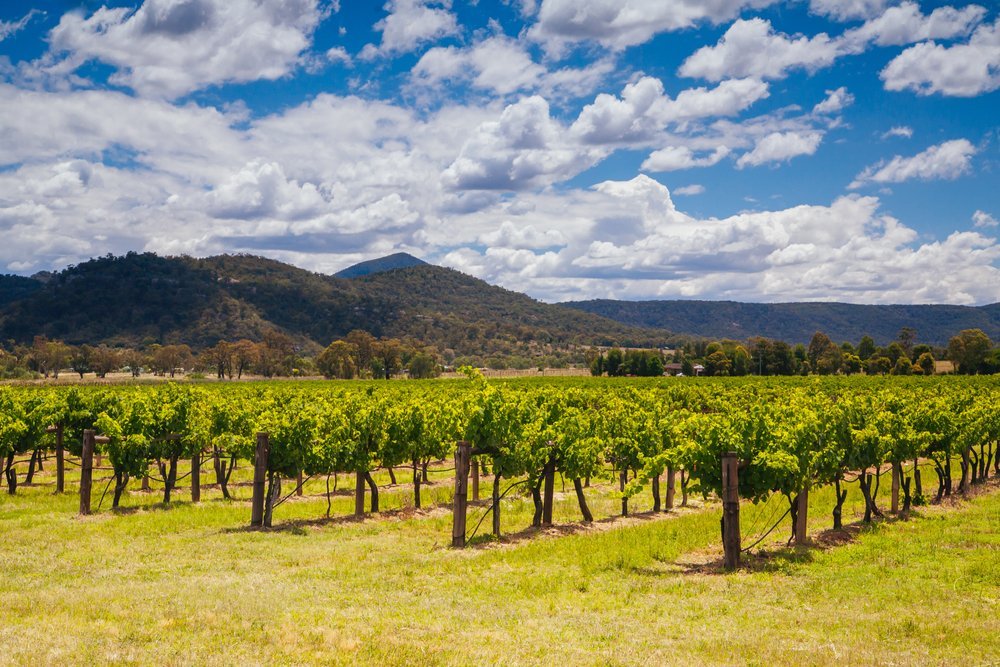
The Hunter Valley is Australia’s oldest wine region, around a two-hour drive north of Sydney. The wineries are clustered around Pokolbin, and most have a cellar door where you can taste the wines. The region is especially known for Semillon and Shiraz, and between the wineries you’ll find cheesemakers, chocolatiers and restaurants.
There are no trains out to the wineries, so you either need to drive yourself or join a tour. Australia has strict drink-driving rules, so if you plan to taste a lot of wine, an organised tour or a night in Pokolbin is the best option. If you want a car, you can compare car hire prices in Sydney here, and you can check prices at Pokolbin Village Estate here if you’d like to stay among the vineyards.
My tip is to stay the night and take a hot-air balloon flight over the vineyards at sunrise, as that also gives you time for a long dinner without having to drive back. Book a table at the popular restaurants in advance, especially at weekends.
Book a day trip to the Hunter Valley with wine tasting at three wineries here.
Practical travel tips for Sydney
Trains, the metro, buses, light rail and ferries are all part of one system, and you pay with a contactless bank card, your phone or an Opal card. Tap the card on the reader when you get on and off. There’s a cap on how much you pay: 19.30 dollars (around £10) a day Monday to Thursday, 9.65 dollars (around £5) Friday to Sunday and on public holidays, and 50 dollars (around £25) a week. Fares are usually adjusted once a year.
The airport train runs from the airport to Central Station in 13 minutes, but there’s a station access fee on top of the fare. I’ve gathered all the options and prices in my guide to getting from Sydney Airport to the city centre. You don’t need a car in the city itself, but for the Hunter Valley, Palm Beach and Royal National Park a hire car is the most flexible option. Remember that Australia drives on the left, just like the UK.
Sydney’s summer runs from December to February, when it’s hot and the beaches are busy, while spring from September to November and autumn from March to May bring pleasant temperatures for both city walks and coastal paths. The sun is very strong, even on cloudy days, so wear sun cream and a hat, and always swim between the flags. Allow at least four days for the city and a couple of extra days if you want to take day trips.
Many people combine Sydney with Melbourne, about an hour and a half away by plane, and here you can read where to stay in Melbourne. If your trip continues across the Tasman Sea, I also have a guide to where to stay in New Zealand.
If you’d like the full selection, you can see all hotels in Sydney on Booking.com.
Travel ressources & websites I use all the time 👇
• Booking.com has the best offers on hotels and unique places to stay
• GetYourGuide is the best place to book tours & activities with free cancellation
• Welcome Pickups is the best & safest place to pre-book airport transfers
Psst 👀 Have you subscribed to my Youtube channel and my Instagram where I provide more useful travel tips?