

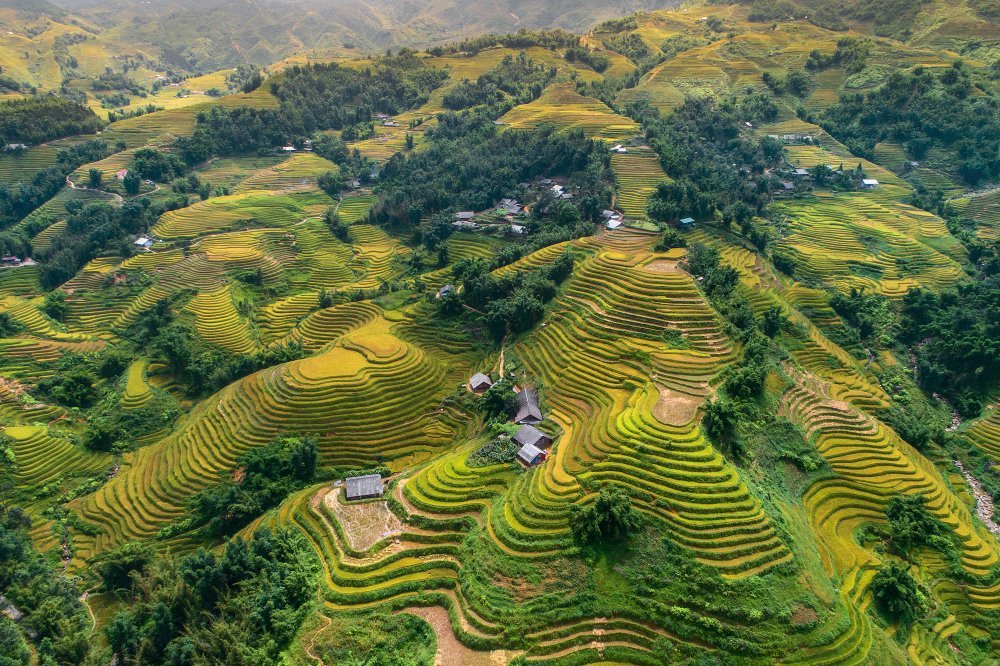
Sapa sits high up in the mountains of north-west Vietnam, close to the border with China. Rice terraces tumble down the mountainsides in layers, and above the town rises Fansipan, the highest mountain in Indochina.
So, where to stay in Sapa? The big choice is between the town itself, with its restaurants and the mountain railway to Fansipan, and the villages down in the Muong Hoa Valley, where you stay in lodges and homestays among the rice terraces.
Planning your trip to Sapa at the last minute? 🇻🇳
Here are some of the best things to do, plus hotels and other tips for your trip to Sapa.
🎡 Top Activities & Tours:
1. Skip the long queues for the Fansipan cable car by booking your ticket in advance.
2. Walk between the rice terraces to Lao Chai and Ta Van on a guided trek with lunch.
🛌 Best Hotels:
1. Hotel de la Coupole MGallery is a five-star design hotel in the centre, right by the mountain train to Fansipan
2. Sapa Mountain Queen House is a good mid-range choice if you want to stay in central Sapa
3. Viet Valley Hotel & Spa Lake View is a budget-friendly choice in town with views of the lake
Here are my six suggestions for areas, with three places to stay in each, from luxury to budget.
Contents
The Best Areas to Stay in Sapa
- The square and the lake - best area for first-time visitors
- Cau May and Muong Hoa Street - best area for valley views
- The west side and Cat Cat - best area for luxury and Fansipan
- Lao Chai and Y Linh Ho - best area for lodges with a view
- Ta Van - best area for homestays and trekking
- Ta Phin - best area for peace and herbal baths
I start on the square by the Stone Church and the lake, then head down Cau May and Muong Hoa Street towards the valley, before moving over to the west side of town by Cat Cat. After that, we follow the road down into the Muong Hoa Valley to Lao Chai and Ta Van, and finish in Ta Phin, north of town. For each area you get a map, transport, price level and three places to stay. Prices come from a search for a weekend in March for two people, and are in Vietnamese dong.
The town or the valley?
Sapa is the name of both the town and the whole area around it, and that’s important to know when you book. The town itself sits on a mountainside about 1,500 metres above sea level, with hotels, restaurants, a market and a bus station, while the rice terraces and small villages lie down in the valleys outside town.
My honest advice is to split your stay. Spend one or two nights in town, where the restaurants and the mountain railway to Fansipan are right on your doorstep, then spend a night in a village such as Ta Van or Lao Chai. That’s where you get the quiet mornings with mist over the fields that the town can’t give you.
The town has grown very quickly, and there’s still construction in many places, so it’s far busier and more commercial than many people expect. On the other hand, there’s a wide choice of hotels in every price range, and in the villages you can stay for very little with families who also arrange treks.
Fansipan and the mountain railway
Fansipan is 3,143 metres high and is known as the Roof of Indochina. With Sun World Fansipan Legend, the trip starts at the station right next to Hotel de la Coupole in the centre, where a mountain train takes you out to the cable car. From there you glide over the valley almost all the way to the top, and for the last stretch you either climb the steps or take a small funicular.
The cable car is more than six kilometres long and holds a Guinness World Record for the greatest elevation difference on a cable car of its type, at 1,410 metres. Just below the summit is a large area with temples, paths and a huge Buddha statue, so allow half a day, even though the ride up itself is quick.
The summit is often in the clouds and it’s noticeably colder than in town, so bring a warm jacket and check the weather in the morning. Queues can be long at weekends and on Vietnamese public holidays, so arrive early, and if you want to skip the ticket queue, you can buy your ticket in advance.
Trekking among the rice terraces
Trekking is the main reason to visit Sapa. The classic route runs from town down through Y Linh Ho and Lao Chai and on along the valley to Ta Van, past rice terraces, bamboo forest and small bridges over the river. Many people do the walk in a day and get picked up in Ta Van, while others spend the night in a homestay and carry on the next day.
You can walk the roads on your own, but the paths between the fields are hard to find, and a local guide makes the trip far more interesting. Hotels and village hosts can almost always find you a guide, or you can book a guided trek with lunch to Lao Chai and Ta Van. You may be charged a small entrance fee when you enter the villages.
The paths get slippery and muddy after rain, so wear good walking shoes. Fansipan and the highest peaks around Sapa lie in Hoang Lien National Park, which is designated an ASEAN Heritage Park, and if you want to climb all the way up Fansipan on foot, it’s a tough hike that requires a local guide.
The weather and the best time to visit
Sapa lies high up, so it’s cooler than Hanoi all year round. Winter is cold and often grey and misty, and in summer there’s a lot of rain, but the rice terraces are lush and green. According to Vietnam’s tourism authority, the best time is from September to November, when the rice is golden and the skies are clear, while spring is mild with trees in blossom.
If you travel in winter, choose a hotel with heating in the room, as many cheap places and homestays are built of wood and not insulated against the cold. Also check that there’s hot water, and pack a warm jumper, even if it’s hot in the rest of Vietnam.
Bac Ha and the Sunday market
Every Sunday, a big market is held in the mountain town of Bac Ha, where Hmong and other peoples from the surrounding villages trade everything from vegetables and livestock to handmade textiles. Bac Ha lies on the other side of Lao Cai, so it’s a long day trip from Sapa, and most people go there by car with a driver or on an organised tour.
If you want to be at the market early, before the tour buses from Sapa arrive, you can stay overnight in Bac Ha on the Saturday night. There isn’t much to do in town the rest of the week, though, so I wouldn’t spend more than one night there.
Night train, bus and car from Hanoi
Sapa has neither an airport nor a railway station. The classic way is the night train from Hanoi to Lao Cai on the Chinese border, and you’ll find timetables and tickets with the state-owned Vietnam Railways. Several private companies also run their own sleeper carriages on the trains. From the station in Lao Cai, it’s about 35 kilometres up the mountain road, and you cover the last stretch by minibus or taxi.
The most popular option is the sleeper buses and limousine buses that run directly from Hanoi to Sapa on the motorway, and many of them pick up passengers in the Old Quarter. If you’re staying in Hanoi before or after, see my guide to Hanoi. Buses from Hanoi stop at the bus station in the eastern part of Sapa, and many hotels can book a seat for you.
If you’re coming straight from the airport, it’s just under 300 kilometres from Noi Bai to Sapa, and a car with a driver is the easiest option. You can read about other ways of getting on from the airport in the guide from Hanoi airport. Personally, I wouldn’t rent a scooter or a car on the mountain roads, as they’re steep, winding and often shrouded in mist.
Before you travel, check the current entry requirements, and if you need a visa, apply on Vietnam’s official e-visa website. Always carry cash in dong for the villages, the guides and the small restaurants.
1. The Square and the Lake - best area for first-time visitors ⛪
- 📍 Distance to the centre: You’re right in the centre, between the Stone Church on the square and Sapa Lake, which are only about 400 metres apart.
- 🚶 Transport: Everything in town is within walking distance. The mountain train to Fansipan leaves from the station by the square, and the bus station is just over a kilometre east of the church.
- ✈️ Time from the airport: Sapa has no airport. From Noi Bai in Hanoi, it’s just under 300 kilometres by road via Lao Cai.
- 💰 Price level: Low to high. The three hotels below cost around 500,000 to 3,450,000 dong per night when I searched for a weekend in March.
- 👮 Safety: Safe. Watch out for the traffic on the steep streets, and take care on steps and pavements after rain.
The square in front of the old Stone Church from the French colonial era is the heart of Sapa. Cafés, restaurants and the mountain train station surround the square, and in the evening both locals and tourists gather here when the church is lit up. Just behind the church, paths lead up Ham Rong Mountain with its gardens, rocks and a viewpoint over the town, and north-east of the square lies Sapa Lake with a path running all the way around it.
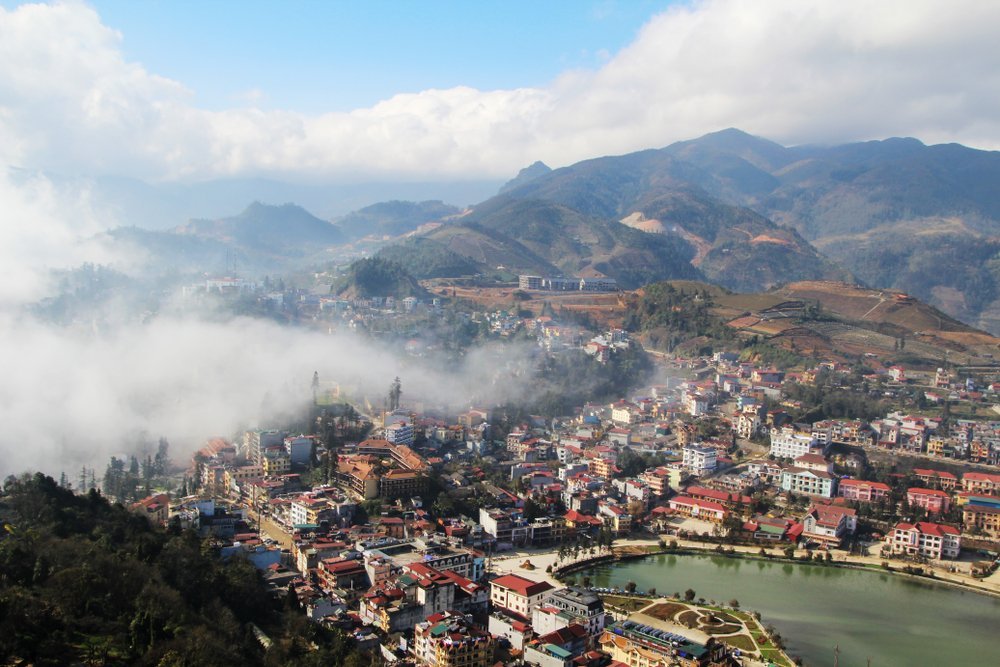
The lake is the quietest spot in the centre, especially early in the morning when the mist hangs over the water. From here you can walk to most places, as Cau May Street with its shops and restaurants starts at the square, and the paths down towards Cat Cat begin a little further west. The market and the bus station are east of the lake, so this is also where you’ll arrive if you come by bus from Hanoi. Around the square, women from the villages sell embroidery and bags, and this is also where you’ll meet many of the local guides offering trekking tours.
See hotels in the centre of Sapa here.
I’d stay here if it’s your first trip to Sapa, or if you only have a couple of nights and want to be able to walk out for dinner and take the mountain train to Fansipan without needing a taxi. It suits couples, families and anyone who wants plenty of restaurants and hotels to choose from.
The downside is that the centre is busy and has become very commercial, with large hotels, traffic and loud music from bars and karaoke, especially at weekends when many Vietnamese head to the mountains on holiday. Choose a room away from the street if you’re a light sleeper, and ask for a view, as many rooms look straight onto the facade of the hotel next door.
Hotels by the square and the lake
Hotel de la Coupole MGallery - five-star design hotel right by the mountain train to Fansipan
Hotel de la Coupole is on Hoang Lien Street, about 200 metres from the church and right next to the mountain train station, and it has a heated indoor pool, a spa with sauna and steam room, a gym, a restaurant and a bar. It scores 9.5 from more than 1,700 reviews, and the price was around 3,450,000 dong per night. One guest felt the breakfast was too expensive.
One guest writes on Booking.com: “The friendly staff, the facilities and most importantly the interior design are excellent!”
See photos and book Hotel de la Coupole here.
Sapa Mountain Queen House - very highly rated four-star hotel close to the lake
Sapa Mountain Queen House is on a side street about 250 metres west of the lake and has a restaurant, bar, garden, terrace, massages and cooking classes, but no pool. It scores an impressive 9.5 from more than 1,400 reviews, and the price was around 1,350,000 dong per night. One guest mentions noise from nearby construction.
From a review: “Fantastic hotel and fantastic location.”
See photos and book Sapa Mountain Queen House here.
Viet Valley Hotel & Spa Lake View - budget hotel with massages a few steps from the lake
Viet Valley is on Ngu Chi Son Street, about 250 metres east of the lake, and has a lift, 24-hour reception, room service and a spa with massages, but no restaurant. The price was only around 500,000 dong per night, and it scores 9.1 from more than 180 reviews. One guest would have liked a little more choice at breakfast.
One of the guests highlights: “The staff were incredibly helpful and friendly. The breakfast was delicious, and the ladies make everything fresh on the spot.”
See photos and book Viet Valley Hotel here.
2. Cau May and Muong Hoa Street - best area for views over the valley 🌄
- 📍 Distance to the centre: Cau May starts at the town square, and Muong Hoa Street leads down from there towards the valley. The hotels below are between about 200 metres and a kilometre from the church.
- 🚶 Transport: On foot in the upper part. Further down Muong Hoa Street, you take a taxi or the hotel shuttle up to the square, as the road is steep.
- ✈️ Time from the airport: Just under 300 kilometres from Noi Bai by road. Many buses from Hanoi drop guests right at the hotels in the centre.
- 💰 Price level: Low to high. The three hotels below cost around 550,000 to 2,350,000 dong per night when I searched for a weekend in March.
- 👮 Safety: Safe. The pavements are narrow and the traffic is heavy, so walk carefully along Muong Hoa Street after dark.
Cau May is Sapa’s tourist street. Restaurants, bars, cafés and shops selling trekking gear and handmade textiles sit side by side here, and this is where you’ll find most of the travel agencies and trekking guides. From the southern end of the street, Muong Hoa Street carries on down the mountainside towards the valley of the same name, and the further down you go, the more open the views become.
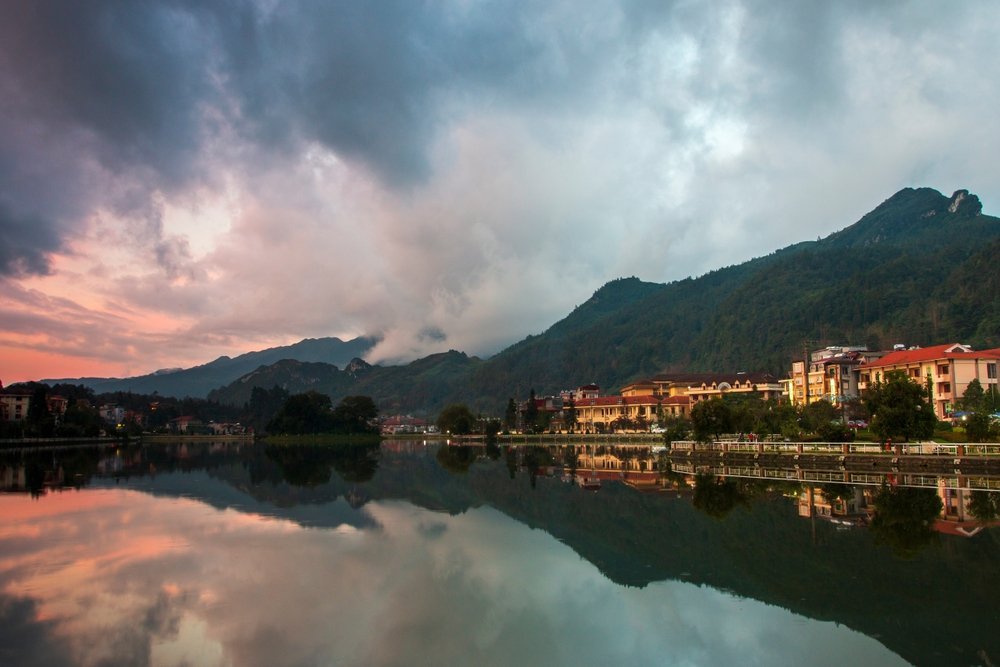
It’s the view that makes this area special. The hotels along Muong Hoa Street sit on the edge of town facing the valley, and from the upper floors you can look down over the rice terraces and across to the mountains around Fansipan when the clouds lift. The road continues down to Lao Chai and Ta Van, so it’s also a good base if you want to walk in the valley in the morning and be back at the restaurants in the evening.
See hotels on Muong Hoa Street here.
I would stay here if you want a room with a view over the valley and still be able to walk to the restaurants on Cau May. It suits couples well, and anyone who wants a five-star hotel with a pool without paying the highest prices in town, as several of the hotels here are cheaper than the biggest luxury hotels on the west side.
The downside is the hills. Muong Hoa Street is long and steep, and if you stay far down, the climb up to the square is tough after a long day on the trails. Cau May is also the noisiest street in town in the evening, and the view depends entirely on the room, so it’s better to pay a little extra for a valley-facing room than for one facing the street.
Hotels on Cau May and Muong Hoa Street
Pao’s Sapa Leisure Hotel - five-star hotel with an indoor pool and views over the valley
Pao’s Sapa Leisure Hotel is on Muong Hoa Street about a kilometre south of the church and has a heated indoor pool with a view, a spa, a gym, a kids’ club and a restaurant. It scores 9.2 from more than 1,500 reviews, and the price was around 2,350,000 dong per night. Some guests mention noise, including from neighbouring rooms.
One guest writes on Booking.com: “The view from the room was amazing.”
See photos and book Pao’s Sapa Leisure Hotel here.
Bamboo Sapa Hotel - popular five-star hotel with an infinity pool close to the square
Bamboo Sapa Hotel sits at the top of Muong Hoa Street about 200 metres from the church and has both an indoor pool and an infinity pool with a view, a sauna, a spa, a gym and a kids’ club. It scores 9.0 from more than 2,300 reviews, and the price was around 1,550,000 dong per night, which is low for a five-star hotel. One guest did, however, find some of the reception staff rude.
From a review: “Fantastic room, good breakfast and lovely, helpful staff.”
See photos and book Bamboo Sapa Hotel here.
Mega View Homestay - budget place with a view on a side street off Cau May
Mega View Homestay is on a narrow side street off Cau May about 350 metres from the church and has a restaurant, a garden, a terrace and a tour desk, but no pool. The price was around 550,000 dong per night, and it scores 8.8 from more than 1,200 reviews. There are steps up to the property, which can be awkward with heavy luggage.
One guest highlights: “The room is very nice and comfortable, and the location is strategic!”
See photos and book Mega View Homestay here.
3. The West Side and Cat Cat - best area for luxury and Fansipan 🚡
- 📍 Distance to the centre: The hotels below are on the western side of town, 400 to 600 metres from the church. The village of Cat Cat lies just over a kilometre south-west of the church as the crow flies, down in the valley.
- 🚡 Transport: On foot to the square, but the roads are steep. To reach Cat Cat, you walk down the road and the steps, and the lower cable car station is just under two kilometres west of the church.
- ✈️ Time from the airport: Just under 300 kilometres from Noi Bai by road. Several of the big hotels can arrange transport from Hanoi or Lao Cai for a fee.
- 💰 Price level: Mid-range to high. The three hotels below cost around 750,000 to 3,000,000 dong per night when I searched for a weekend in March.
- 👮 Safety: Safe. The steps and paths down to Cat Cat are steep and slippery in the rain, so wear good shoes.
West of the square, the town climbs up the hillsides, and this is where you’ll find several of Sapa’s largest and best-reviewed hotels, with views out over the valley. Fansipan street leads down from here towards Cat Cat, a Hmong village at the bottom of the valley with a waterfall, water wheels, suspension bridges and small workshops selling crafts and textiles. It’s the easiest village visit from town, because you can walk down on your own, and from several of the hotels you can look down over the village and up towards the ridge, where Fansipan often hides in the clouds.
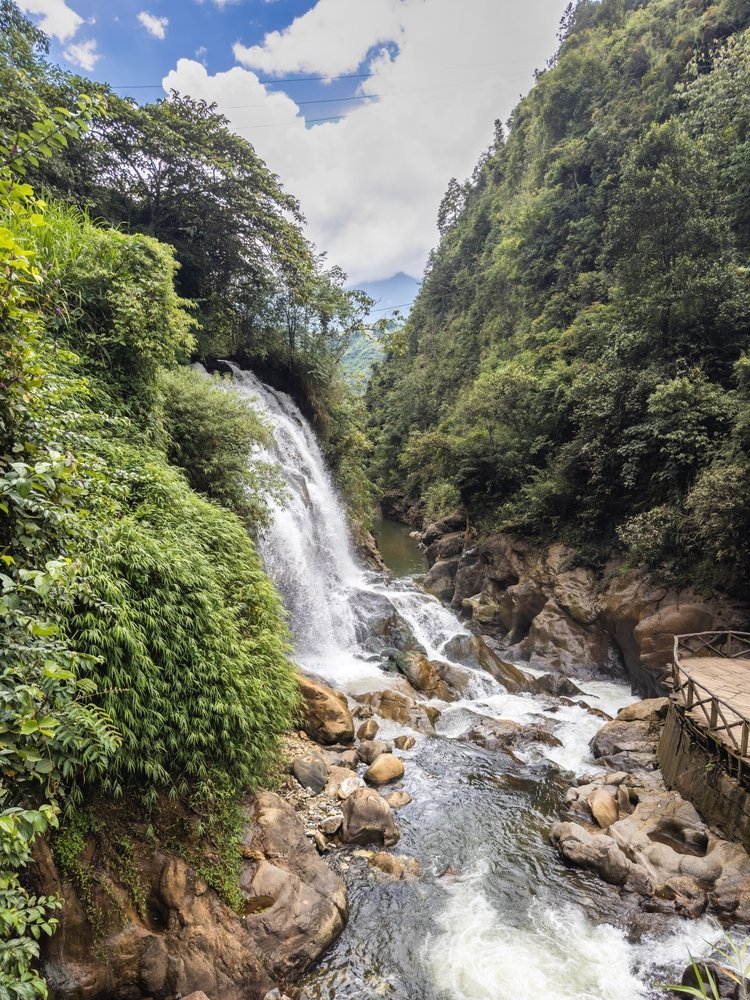
Cat Cat is also the most touristy village in the area, with an entrance fee, photo spots and traditional costumes for hire. If you’d prefer somewhere quieter, you can carry on to the neighbouring village of Sin Chai. The Fansipan cable car has its lower station on this side of town, and the road west continues past the Thac Bac waterfall to the O Quy Ho Pass, one of the best-known mountain passes in northern Vietnam.
See hotels near Cat Cat and on the west side here.
I would stay here if you want to treat yourself to one of the town’s best hotels with a pool and spa, while staying a little away from the noise on Cau May. It suits couples and families well, and if Fansipan and the mountain pass are top of your list, you’ll be closer to both from here than from the eastern part of town.
The downside is that you’re staying on a hill, and the walk back from the restaurants in the evening is up steep roads. Some hotels here have a shuttle to the centre, but it doesn’t run all the time. There’s also a lot of construction on this side of town, so check the latest reviews for building noise before you book.
Hotels near Cat Cat and on the west side
Silk Path Grand Sapa Resort & Spa - the town’s big luxury resort with a spa on the hill
Silk Path Grand sits on Doi Quan hill on the west side of town and has a heated indoor pool, a spa with sauna and hot tub, a gym, a kids’ club and a restaurant. It scores 9.5 from more than 2,100 reviews, and the price was around 3,000,000 dong per night. One guest felt it was a long way to the centre and that the shuttle only ran once an hour.
One guest writes on Booking.com: “Excellent room, restaurant, service and staff.”
See photos and book Silk Path Grand here.
Pistachio Hotel Sapa - four-star hotel with a rooftop infinity pool
Pistachio Hotel is on Thac Bac street, around 400 metres west of the church, and has a rooftop infinity pool, a heated indoor pool, a sauna, a steam room, a spa and a gym. It scores 9.0 from 1,600 reviews, and the price was around 2,250,000 dong per night. One guest was bothered by construction noise outside the hotel.
From one review: “The view and the location were excellent. The staff were also very nice.”
See photos and book Pistachio Hotel here.
Sapa Vista Hotel - friendly mid-range hotel on the road down to Cat Cat
Sapa Vista Hotel is on Fansipan street, around 550 metres from the church, and has a restaurant, a bar, a garden, a terrace and massages, and there are family rooms. The price was around 750,000 dong per night, and it scores 9.0 from more than 400 reviews. One guest mentions that the hotel is uphill from the central area.
One of the guests highlights: “Lovely view from our room. Our triple room was also quite spacious and clean.”
See photos and book Sapa Vista Hotel here.
4. Lao Chai and Y Linh Ho - best area for lodges with a view 🌾
- 📍 Distance to the centre: Lao Chai lies about four kilometres south-east of the church as the crow flies, and further along the winding road down into the valley. Sapa Jade Hill is closer to town, just under two kilometres from the church.
- 🚕 Transport: Taxi, Grab or the hotel’s shuttle into town. You can walk to Ta Van along the road or on the paths through the rice terraces.
- ✈️ Time from the airport: About 300 kilometres from Noi Bai by road. Several lodges can arrange transport from Hanoi or Lao Cai for a fee.
- 💰 Price level: Low to very high. The three places below cost around 350,000 to 4,450,000 dong per night when I searched for a weekend in March.
- 👮 Safety: Safe and peaceful. The road down into the valley is steep and winding, so don’t hire a scooter unless you’re used to riding in the mountains.
Lao Chai is a Hmong village down in the Muong Hoa Valley, and a little further up the river is Y Linh Ho. These are the first villages you reach when you walk or drive down into the valley from town, and here the rice terraces sweep down towards the river in long, curving layers, with houses scattered between the fields. Together with Ta Van, this is the part of Sapa most people know from the photos.
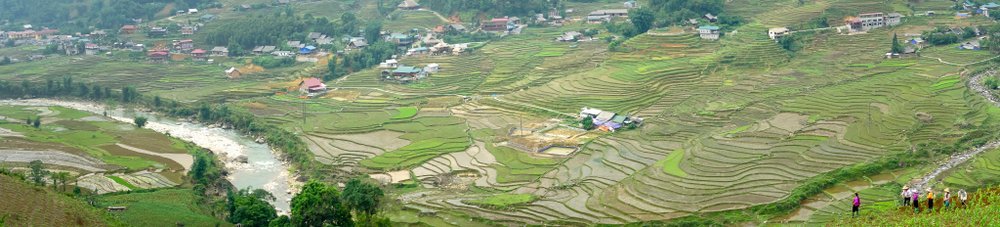
Many of the area’s lodges sit on the slopes above Lao Chai and Y Linh Ho, with infinity pools, big windows and terraces facing the valley. The classic trekking route from town passes right by, so you can set off straight from the door, and between Lao Chai and Ta Van you’ll find the large boulders with ancient carvings known as Sapa’s old stone field. In the evening it’s completely quiet, and darkness falls over the fields without the lights and traffic of town.
See hotels near Lao Chai here.
I’d stay here if you want to wake up to views over the rice terraces and have a pool to relax by after a day on the trails. It suits couples well, and anyone who wants somewhere beautiful and peaceful while still being close enough to town to take a taxi in for dinner one evening.
The downside is that there are hardly any restaurants outside the lodges and homestays, so you’ll usually eat where you stay. The roads down to many of the places are narrow, potholed and steep, and every trip into town or to Fansipan needs a car. Check the map, as some places with Lao Chai in their name are high up on the mountainside.
Hotels near Lao Chai and Y Linh Ho
Sapa Jade Hill Resort & Spa - five-star resort with bungalows on the slope above the valley
Sapa Jade Hill is in the village of Ly in Lao Chai commune, just under two kilometres from the church, and has bungalows with balconies and mountain views, a heated indoor pool, a spa, a kids’ club, a playground and a restaurant. It scores 9.0 from almost 600 reviews, and the price was about 4,450,000 dong per night. Some guests mention poor soundproofing and dogs barking at night.
One guest writes on Booking.com: “All the staff are very friendly and helpful, and the place is very clean.”
See photos and book Sapa Jade Hill here.
SaPa Farmer House - exceptionally well-reviewed place in the middle of Lao Chai village
SaPa Farmer House is in Lao Chai itself, about five kilometres from town, and has a restaurant, a garden, a sun terrace, a shared kitchen and bike tours, plus family rooms. It scores an impressive 9.7 from almost 900 reviews, and the price was about 1,250,000 dong per night. One guest mentions that the road to the property is uneven and potholed.
From a review: “Fantastic location, wonderful staff, lovely room and great food!”
See photos and book SaPa Farmer House here.
Eco Rice Fields House Sapa - cheap family-run place among the rice fields
Eco Rice Fields House is in Lao Chai right by the rice terraces and has a restaurant, a shared kitchen, a garden and a sun terrace, and the hosts help arrange treks. The price was only about 350,000 dong per night, and it scores an impressive 9.8 from over 200 reviews. It’s a simple place, and one guest would have liked better lighting in the bathroom.
One of the guests highlights: “The host family went far beyond what I expected to make my stay comfortable.”
See photos and book Eco Rice Fields House here.
5. Ta Van - best area for homestays and trekking 🏡
- 📍 Distance to the centre: Ta Van lies about six kilometres south-east of the church as the crow flies and quite a bit further by road, some way further down the valley than Lao Chai.
- 🚕 Transport: Taxi, Grab or motorbike taxi into town. Many hosts will pick you up in Sapa, and from the village the trails continue on to the neighbouring villages.
- ✈️ Time from the airport: About 300 kilometres from Noi Bai by road. Most people come to Sapa by bus or train and take a taxi for the last stretch.
- 💰 Price level: Low. The three places below cost around 400,000 to 750,000 dong per night when I searched for a weekend in March.
- 👮 Safety: Safe and quiet. The paths are slippery after rain, and it’s dark between the houses in the evening, so bring a torch.
Ta Van is the largest village in the lower part of the Muong Hoa Valley, and it’s home to both Giay and Hmong people. The village sits on both sides of the river with rice terraces climbing the mountainsides, and it has become Sapa’s number one homestay village, with cafés, small restaurants, massage places and bicycle and scooter hire dotted between the houses.
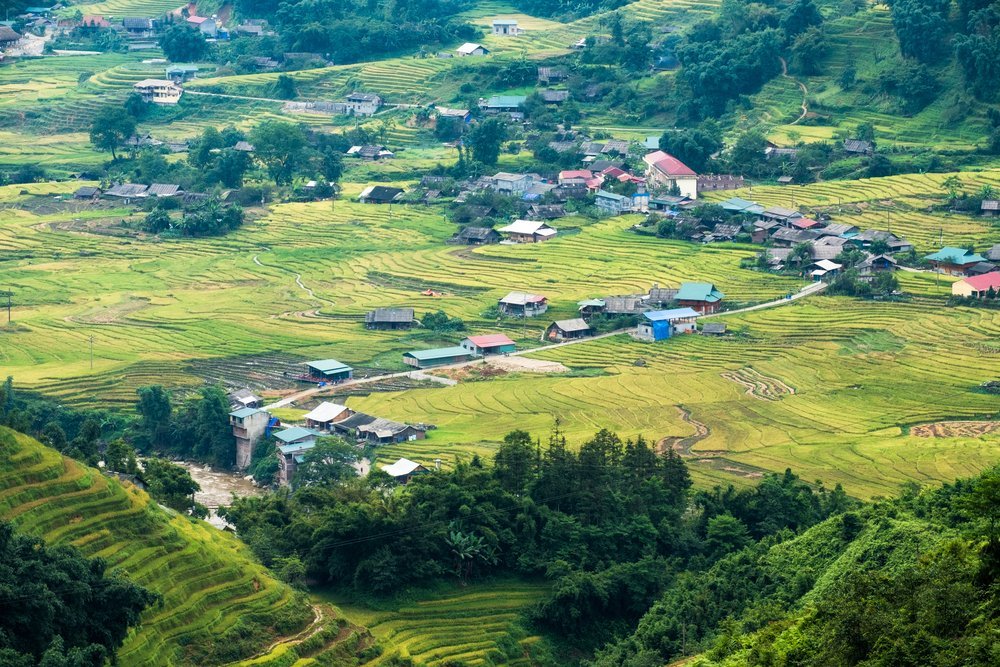
This is where most treks from town finish, and many people spend the night with a local family before carrying on the next day towards the villages further down the valley. Plenty of groups pass through during the day, but in the evening it goes quiet, and you can sit on a terrace and watch the mist roll in over the fields. If you want real luxury, Topas Ecolodge sits on a hilltop deeper in the mountains, but then you’ll be staying a long way from both Ta Van and town.
See homestays and hotels in Ta Van here.
I’d stay here if you want to experience a village in the evening and morning, not just in passing on a trek. It suits backpackers, couples and families with slightly older children, and prices are the lowest in the whole area, even for a room with a private bathroom and views over the fields.
The downside is that Ta Van has grown a lot, and new homestays are going up in many places, so the view from your room could be a building site. It’s a long way to town, and although some places have a pool and a restaurant, the standard is simpler than in town. Check the photos and the latest reviews, and ask your host about transport before you arrive.
Hotels and homestays in Ta Van
Sapa Eco Bungalows & Spa - bungalows with a pool and spa in the middle of the village
Sapa Eco Bungalows is right in the middle of Ta Van and has an outdoor pool with a pool bar, a spa, a restaurant serving both Vietnamese and Western food, and bungalows with balconies and garden views. It scores 8.8 from almost 900 reviews, and the cheapest rooms were around 750,000 dong per night. Several guests mention that it’s a long way to town, so you’ll need a taxi.
One guest writes on Booking.com: “The view was absolutely incredible.”
See photos and book Sapa Eco Bungalows here.
En Hotel Sapa - hotel with a rooftop infinity pool in Ta Van
En Hotel Sapa is in the part of the village called Ta Van Giay and has a rooftop infinity pool, a children’s pool, a spa, a restaurant, a bar and a lift. It scores 8.8 from over 1,000 reviews, and the price was around 650,000 dong per night. One guest found that their room wasn’t cleaned, even though this had been agreed.
From one review: “Really lovely staff, a quiet and peaceful hotel, wonderful food and a lovely break.”
See photos and book En Hotel Sapa here.
Hmong House Sapa - popular, budget-friendly homestay with shared dinners
Hmong House is in Ta Van Giay and has a restaurant, a bar, a shared kitchen, a barbecue, pool and darts, and there are family rooms with balconies. The price was around 400,000 dong per night, and it scores an impressive 9.5 from over 1,300 reviews. It’s a homestay rather than a hotel, and one guest felt the rooms could do with a few small improvements.
One of the guests highlights: “Very friendly, welcoming and helpful staff.”
See photos and book Hmong House here.
6. Ta Phin - best area for peace and quiet and herbal baths 🌿
- 📍 Distance to the centre: Ta Phin lies about seven kilometres north of Sapa as the crow flies, and quite a bit further along the winding road through the mountains.
- 🚕 Transport: Taxi, Grab or transport arranged by your hotel. It’s a long way to town and there are no regular buses, so plan your trips in advance.
- ✈️ Time from the airport: Just under 300 kilometres from Noi Bai by road. Most people travel via Sapa and take a taxi for the final stretch.
- 💰 Price level: Low to mid-range. The three places below cost around 350,000 to 1,200,000 dong per night when I searched for a weekend in March.
- 👮 Safety: Safe and very quiet. The road out there is narrow and potholed in places, and the vendors by the cave can be pushy.
Ta Phin is a village in a wide valley north of Sapa, where the Red Dao live alongside the Hmong. You’ll recognise the Red Dao women by their red headscarves, and the village is especially known for its traditional herbal baths, where you sit in a wooden tub of hot water boiled with plants from the forest. Several families run small bathhouses, and a bath is a lovely way to end a cold, wet day.
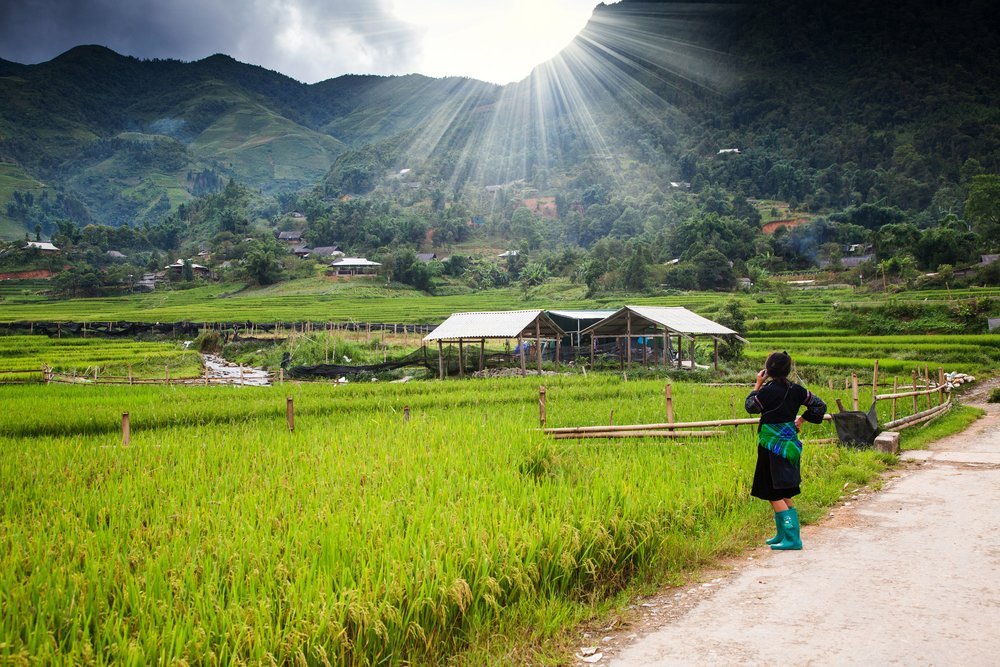
Next to the village is Ta Phin Cave, which you can explore with a torch and a local guide, and in the valley stand the ruins of an old monastery from the French era. The rice fields are less steep than in the Muong Hoa Valley and far fewer tourists come here, so it’s a good choice if you’ve already been to Ta Van or want to see a different side of the area. Many hosts arrange short walks around the valley and cooking sessions with local dishes.
See homestays in Ta Phin here.
I would stay here if you want peace and nature rather than restaurants and views of the famous rice terraces. It suits couples and nature lovers, and anyone who’d like to stay with a family and have time for a herbal bath, a walk and a long dinner without other tourists around.
The downside is the distance. It’s a long way to town, Fansipan and the trekking routes in the Muong Hoa Valley, so every excursion needs a car, and there are only a few places to eat outside the homestays. At the cave and in the village you’ll often be followed by women selling embroidery, so politely say no thank you if you don’t want to buy anything.
Hotels and homestays in Ta Phin
Ta Phin Cottage - small, very highly rated bed and breakfast in the valley
Ta Phin Cottage is in the southern part of Ta Phin and has a restaurant, bar, garden, shared kitchen, outdoor fireplace and cooking classes. It scores an impressive 9.6 from just under 100 reviews, and the price was around 1,200,000 dong per night. One guest wished for better ventilation in the room, as it was damp in summer.
One guest writes on Booking.com: “The extremely polite staff and a beautiful location.”
See photos and book Ta Phin Cottage here.
Sapaxa Spring Garden Ecolodge - lodge with a spa and playground on the road to Ta Phin
Sapaxa Spring Garden Ecolodge sits on the road between Sapa and Ta Phin, a couple of kilometres before the village, and has a restaurant, bar, spa with massages, garden, playground and cooking classes. The price was around 650,000 dong per night, and it scores 8.8 from over 800 reviews. Several guests mention that it’s a long way to the centre.
From one review: “Lovely hosts and beautiful rooms!”
See photos and book Sapaxa Ecolodge here.
May Kim Ta Phin Homestay - cosy family homestay close to the cave
May Kim is a couple of hundred metres from Ta Phin Cave and has a garden, shared kitchen, outdoor dining area and family rooms with a balcony and mountain views. The price was around 350,000 dong per night, and it scores an impressive 9.7 from over 140 reviews. One guest warns that it can get cold, so bring warm clothes.
One of the guests highlights: “They make you feel at home, and the food is excellent.”
See photos and book May Kim Homestay here.
Where not to stay in Sapa?
I wouldn’t stay in Lao Cai. It’s an ordinary border town down in the valley, and it only makes sense if your train arrives in the middle of the night. Nor would I do Sapa as a day trip from Hanoi, as it’s far too far.
Always check the map before you book. Many places have Sapa in their name even though they’re in villages several kilometres from town along steep roads, and that’s no fun to discover when you arrive in the dark. In town, many new hotels sit on busy roads or next to building sites, so read the latest reviews for noise.
If you’re heading up Fansipan early in the morning, don’t stay far down in the valley that night, and if you’re travelling in winter, avoid places without heating in the room.
If it’s your first trip, I’d give Sapa three nights: two in town by the square or on Muong Hoa street, and one in a homestay in Ta Van or Lao Chai. That way you get Fansipan, the restaurants and a full day on the trails. If you want luxury and a pool, choose the west side or a lodge near Lao Chai, and if you want the fewest tourists, head to Ta Phin.
Sapa fits nicely into a tour of northern Vietnam, and many people combine the mountains with the limestone islands of Ha Long Bay and the rice fields and boat trips you can read about in my guide to Ninh Binh. If you’re seeing the whole country, I’ve gathered the best bases from north to south in the guide to Vietnam.
Travel ressources & websites I use all the time 👇
• Booking.com has the best offers on hotels and unique places to stay
• GetYourGuide is the best place to book tours & activities with free cancellation
• Welcome Pickups is the best & safest place to pre-book airport transfers
Psst 👀 Have you subscribed to my Youtube channel and my Instagram where I provide more useful travel tips?