

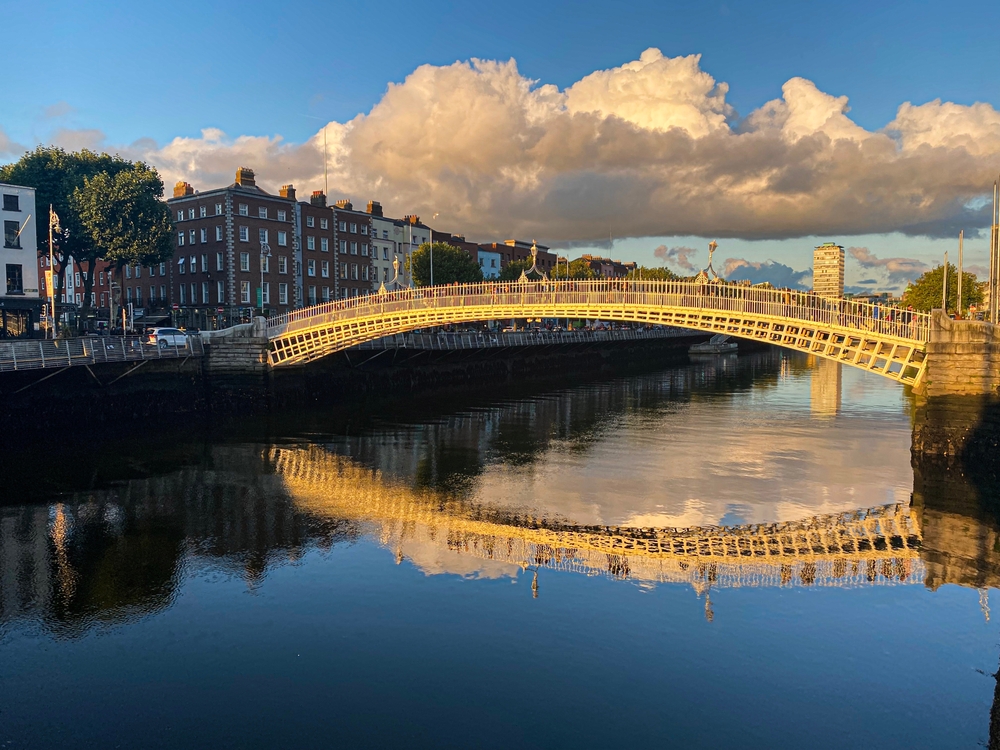
Dublin is the capital of Ireland and sits on the River Liffey, which divides the city into a northern and a southern half. The centre is so compact that you can walk between most of the sights, and in just a few days you can take in medieval churches, Georgian squares, free national museums, the prison where the leaders of the 1916 Easter Rising were held and a pub scene that many people travel here for in its own right. The coast at Howth and the Wicklow Mountains are both within reach on a day trip.
Here are my picks for the 18 best things to see and do in Dublin, with prices, opening hours and tips on what to book before you go. Prices are in euros. Several of the big sights sell tickets for fixed time slots, and you can only get into Kilmainham Gaol with a ticket bought in advance, so read the sections before you make your plan. On the other hand, several of the city’s best museums are free.
Contents
1. Trinity College and the Book of Kells
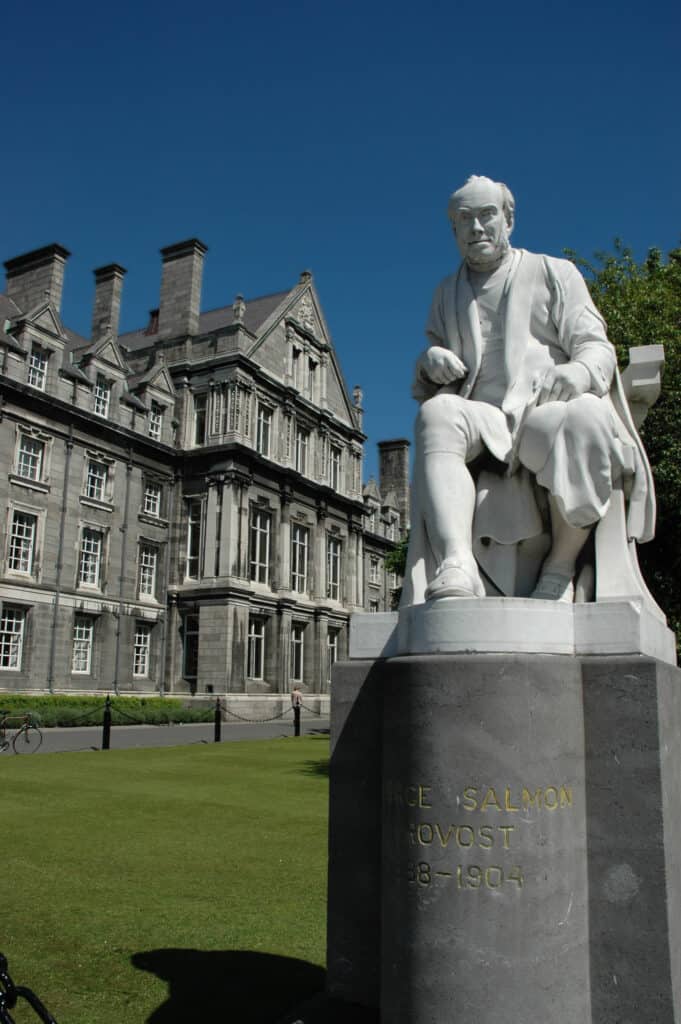
Trinity College is right in the middle of the city, and it’s where Ireland’s most famous book is kept. The Book of Kells is a gospel manuscript from the ninth century with colourful illustrations, and only one double page is on display at a time. Afterwards, you go up to the Long Room, the library hall of just under 65 metres built between 1712 and 1732, which normally holds 200,000 of the library’s oldest books.
The library is being renovated in stages, and many of the books may have been taken down from the shelves, so the hall can look different from the famous photos. The standard ticket to the Book of Kells Experience costs from €25, takes about 90 minutes and also includes the Red Pavilion, with three digital exhibitions, and a free audio guide. If you only want to see the book and the Long Room, it costs from €19.
It’s open Monday to Thursday from 8.30am to 6.30pm, Friday and Saturday until 7pm and Sunday from 9am to 6.30pm. Tickets are for a fixed time and can’t be refunded, so buy them in advance, and don’t bring your suitcase, because there’s no left luggage.
Book a guided tour of historic Dublin with a ticket to the Book of Kells.
2. Guinness Storehouse
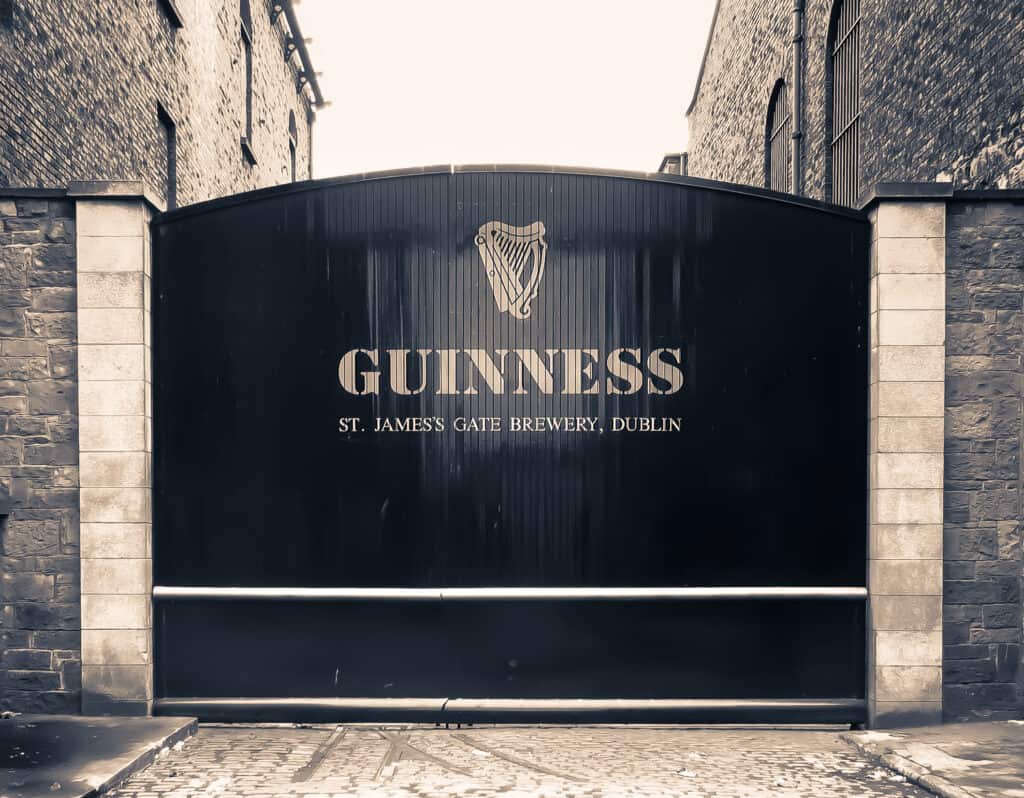
The Guinness Storehouse is on the brewery site at St. James’s Gate, west of the centre. It’s a museum about everything from the ingredients and the brewing to the famous adverts, and the visit ends in the Gravity Bar, where you get a pint of Guinness or Guinness 0.0 with views out over the city. It’s expensive, but it’s also the experience most first-time visitors look forward to the most.
The self-guided ticket costs from €24 on the brewery’s own website and takes about 90 minutes. With the Guinness Academy, from €36, you learn to pour the perfect pint and get a certificate, and with STOUTie, from €32, you get an extra pint with your own photo in the foam.
It’s open every day from 9.30am. Last entry is at 5pm Monday to Thursday and on Sundays, and at 6pm on Fridays and Saturdays, and the building closes two hours later. Under-18s must be with an adult and get a soft drink or water instead of beer. The hop-on hop-off buses stop at the entrance on Market Street. The ticket on GetYourGuide costs more than the brewery’s own, but it can be cancelled free of charge.
Book a ticket to the Guinness Storehouse with a pint in the Gravity Bar.
3. Kilmainham Gaol
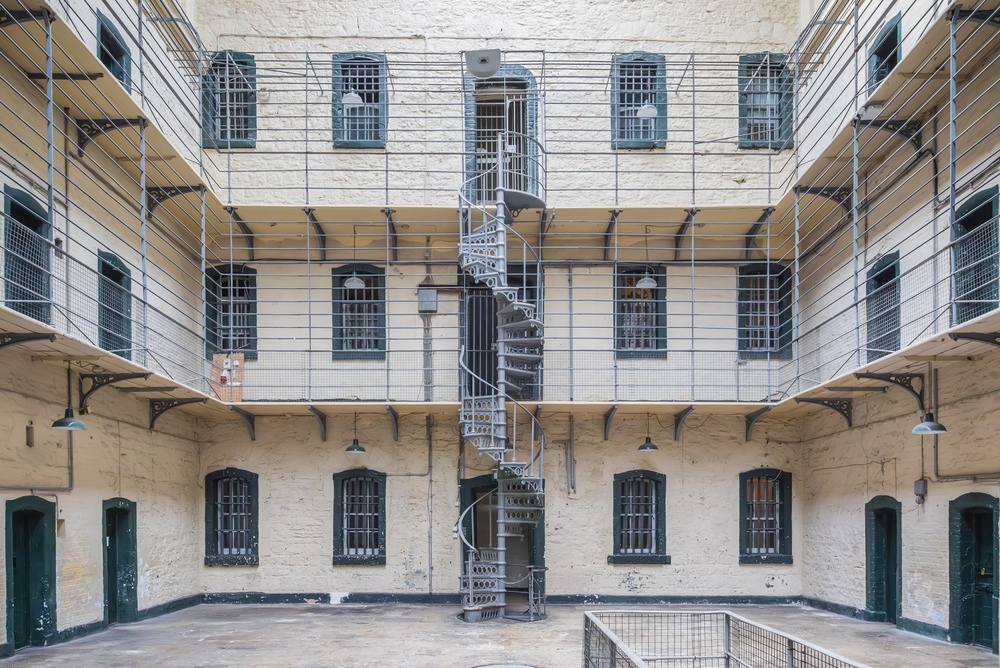
Kilmainham Gaol opened in 1796 as Dublin’s new prison and closed in 1924. Many of those who rebelled against British rule were held here, among them Robert Emmet, Anne Devlin and Charles Stewart Parnell, and several of the leaders of the 1916 Easter Rising were imprisoned here and some of them executed. I think it’s the most important museum in the city if you want to understand Irish history.
You can only get in on a guided tour, which lasts an hour, and afterwards you have access to the museum, so allow an hour and a half in total. A ticket costs €8, €6 for seniors and €4 for students, and a family ticket costs €20. Children under 12 go free but still need a ticket, and the prison isn’t recommended for children under six.
All tickets have to be bought in advance on the prison’s own website, and tickets from other sellers are turned away at the door. Some of the tours are released 28 days ahead at midnight Irish time, and cancellations go on sale the same day from 9.15am, so check the site in the morning if everything is sold out. The prison is 3.5 kilometres from the centre. Take bus 60 from Wellington Quay or Heuston Station, or take the Luas Red Line to Suir Road.
4. St. Patrick’s Cathedral
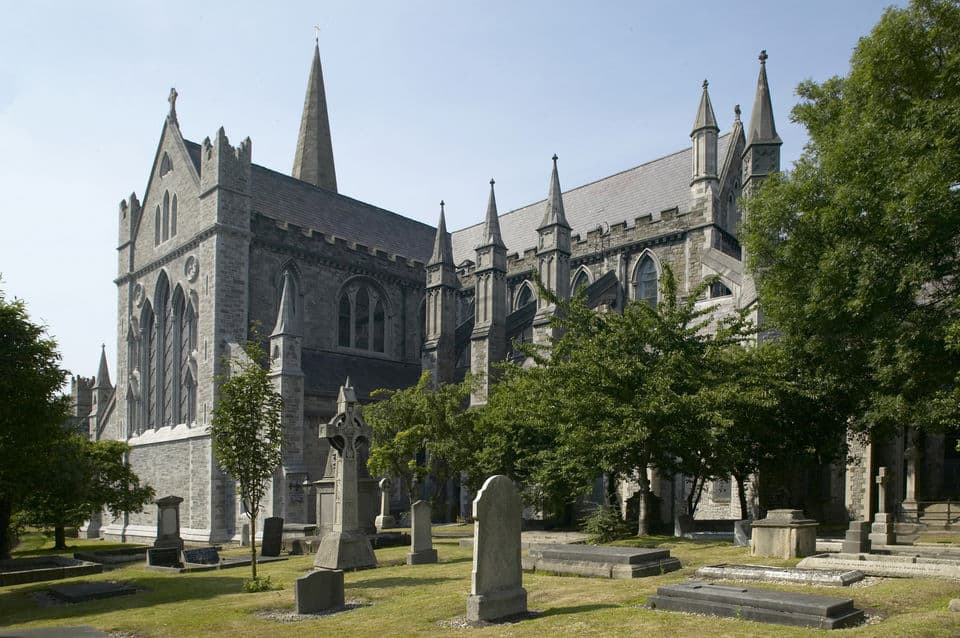
St. Patrick’s Cathedral is the largest cathedral in Ireland. According to tradition, Saint Patrick baptised people at a well on the site 1,500 years ago, and the present church was built from 1220 to 1259. Jonathan Swift, who wrote Gulliver’s Travels, was dean here and is buried in the church, and the cathedral’s choir school has been singing services since 1432.
A ticket costs €11.50, €10 for students and seniors, and a family ticket for two adults and up to three children costs €31. If you’d also like to see Marsh’s Library next door, a joint ticket costs €17. Monday to Saturday at 10.30am and 2.30pm, there are free guided tours for ticket holders.
The church opens to visitors at 9.30am on weekdays, with last entry at 5pm, and at 9am on Saturdays, with last entry at 6pm. On Sundays, the cathedral holds services, so tourists can only get in during three time slots starting at 9am, 1pm and 4.30pm, and there are no guided tours. The cathedral is a short walk south of Christ Church Cathedral, so the two are easy to see in the same morning.
Book a ticket to St. Patrick’s Cathedral in advance.
5. Christ Church Cathedral and Dublinia
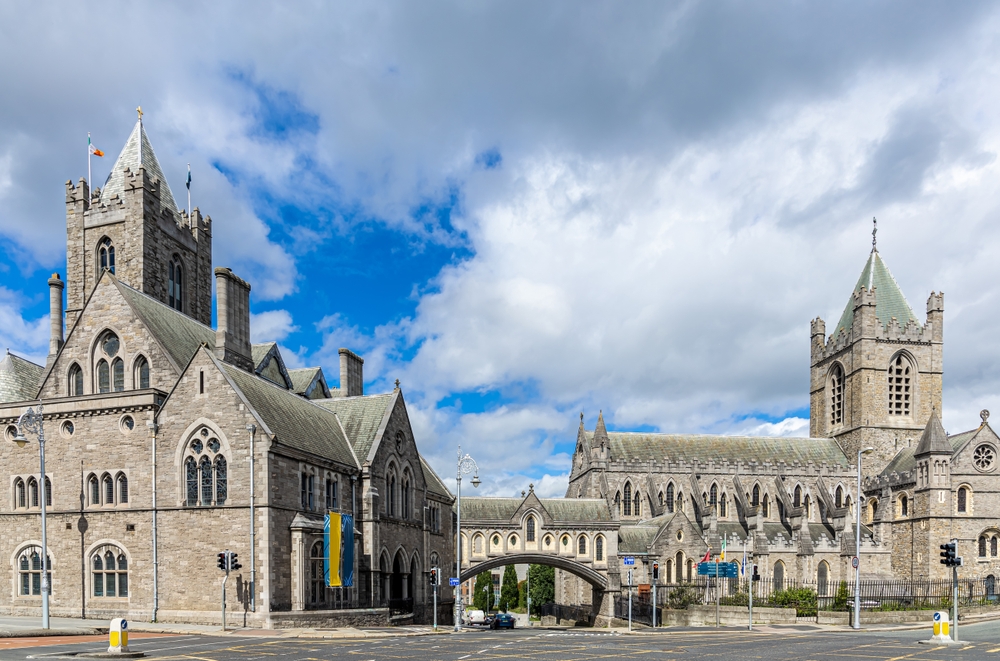
Christ Church Cathedral began as a Viking church and has welcomed visitors for almost 1,000 years. Beneath the church is the crypt, the oldest building in Dublin that’s still in use. Strongbow is buried in the church, and then there are the cathedral’s best-known residents, a mummified cat and a mummified rat.
A self-guided visit with an audio guide takes about an hour and costs €12 at the door and €11.50 on the cathedral’s ticket page. It’s open Monday, Wednesday, Friday and Saturday from 9.30am to 6pm, Tuesday and Thursday until 5.30pm and Sunday from 12.30pm to 3pm and again from 4.30pm to 6pm. Last entry is 45 minutes before closing. Ask at the welcome desk about the guided tours, which take you up into the bell tower, where you get to ring the bells.
Next to the cathedral is Dublinia, a museum about Viking and medieval Dublin that’s good for families. A combined ticket to the cathedral and Dublinia costs €25, takes about two and a half hours and is sold at the cathedral’s welcome desk or at Dublinia’s ticket office.
Book a ticket to Christ Church Cathedral with a self-guided tour.
6. Temple Bar and the Ha’penny Bridge
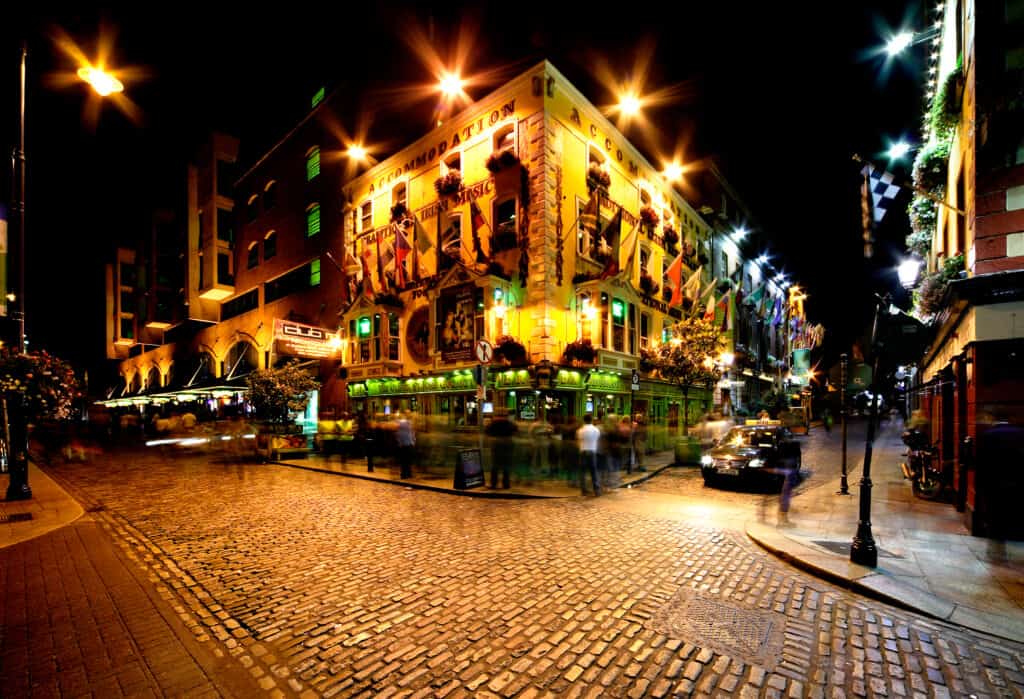
Temple Bar is the district of cobbled streets, pubs with live music and restaurants where most tourists go out in the evening. I think it’s fun to walk through, but drink most of your pints a few streets away, where there are fewer tourists and it’s quieter for a chat. If you want to stay right in the middle of it all, Temple Bar and the city centre is the first area in my guide to where to stay in Dublin, and you can see hotels in Temple Bar here.
On Saturdays, there are markets in the district. The food market on Meeting House Square is open from 9.30am to 3.30pm, and the book market on Bernardo Square from 10am to 5pm. On Thursdays, there’s a market on Temple Bar Square from noon to 6pm.
From Temple Bar, you cross the Ha’penny Bridge to the north side of the river. The cast-iron bridge was built in 1816 and is the oldest footbridge over the Liffey. The name comes from the halfpenny it cost to cross, right up until 1919. Come early in the morning if you want to photograph the bridge without people, or at sunset, when the light falls across the river. If you’d like to hear traditional Irish music in pubs you wouldn’t find on your own, go with a local guide.
Book a guided tour of four traditional pubs away from the tourist area.
7. Dublin Castle and Chester Beatty
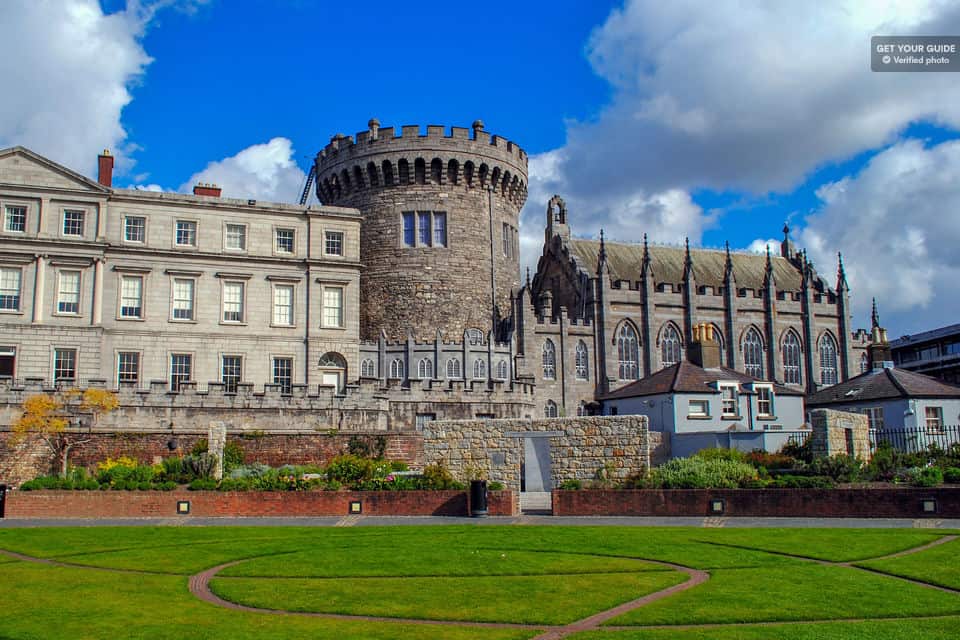
Dublin Castle is in the middle of the city and is still used by the Irish state for official events. On a visit, you’ll see the State Apartments, the Chapel Royal, the medieval tower, the Viking excavation and the castle gardens. A self-guided tour costs €8 and a guided tour €12, and it’s normally open every day from 9.45am to 5.45pm, with last entry at 5.15pm.
The castle grounds can sometimes be closed to the public altogether when the castle is used for state visits and official events, so check the castle’s website before you go.
In the castle gardens is the Chester Beatty, a free museum whose collection includes a statue of the Chinese god of war Guandi and a metal binding for the four Gospels from 17th-century Constantinople. The museum can sometimes be closed altogether, so check the Chester Beatty’s website before you go. It’s normally open Monday to Saturday from 9.45am to 5.30pm, on Wednesdays until 8pm and on Sundays from noon to 5.30pm. From November to February, it’s closed on Mondays. The museum asks for a voluntary donation of €5.
8. EPIC The Irish Emigration Museum
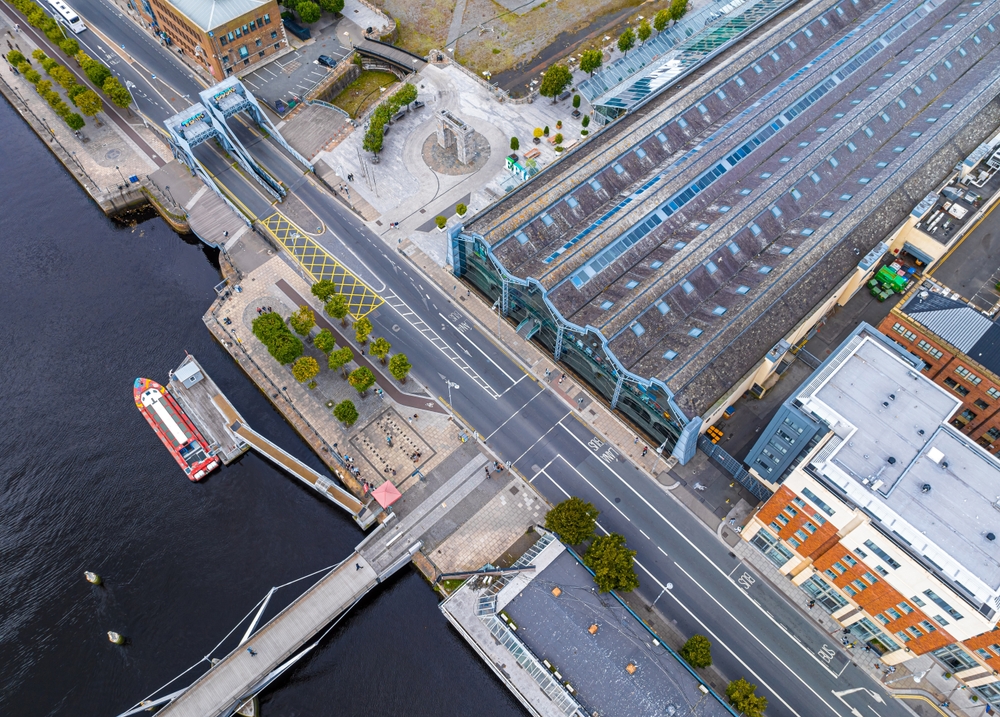
EPIC is about the Irish who left for other parts of the world and the mark they made on their new countries. The museum is in the CHQ Building on Custom House Quay, an eight-minute walk from O’Connell Street, and has 20 interactive galleries. It’s a good choice on a rainy day, and it also works for teenagers who quickly get bored in traditional museums.
A ticket costs from €22, and you should allow about an hour and a half. Every day at 1pm, there’s a guided tour for €25, and a combined ticket with the ship Jeanie Johnston costs €34. It’s open every day of the week from 10am to 6.45pm, with last entry at 5pm.
If you have Irish roots, stop by the Irish Family History Centre in the same building, where genealogists can help you trace your family’s history.
Book a ticket to EPIC The Irish Emigration Museum.
9. National Museum of Ireland, Archaeology
The National Museum’s archaeology branch on Kildare Street is free, and it’s one of the best places to understand Ireland from prehistoric times to the Middle Ages. The most famous room is Kingship and Sacrifice, with Iron Age bog bodies. Among them is Old Croghan Man, who was found in 2003, and his well-preserved hands make a strong impression. Younger children may find it creepy.
In the Ór exhibition, you’ll see Ireland’s gold, and The Treasury holds the Ardagh Chalice, among other things. There are also permanent exhibitions on Viking Ireland, on the Middle Ages from 1150 to 1550 and on ancient Egypt, as well as an exhibition about the monastery at Glendalough, which is good to have seen if you’re taking a day trip there.
The museum is open Tuesday to Saturday from 10am to 5pm and on Sundays and Mondays from 1pm to 5pm, so don’t come in the morning at the start of the week. It’s close to the National Gallery, which is also free, so you can easily combine the two in one day.
10. National Gallery of Ireland and Merrion Square
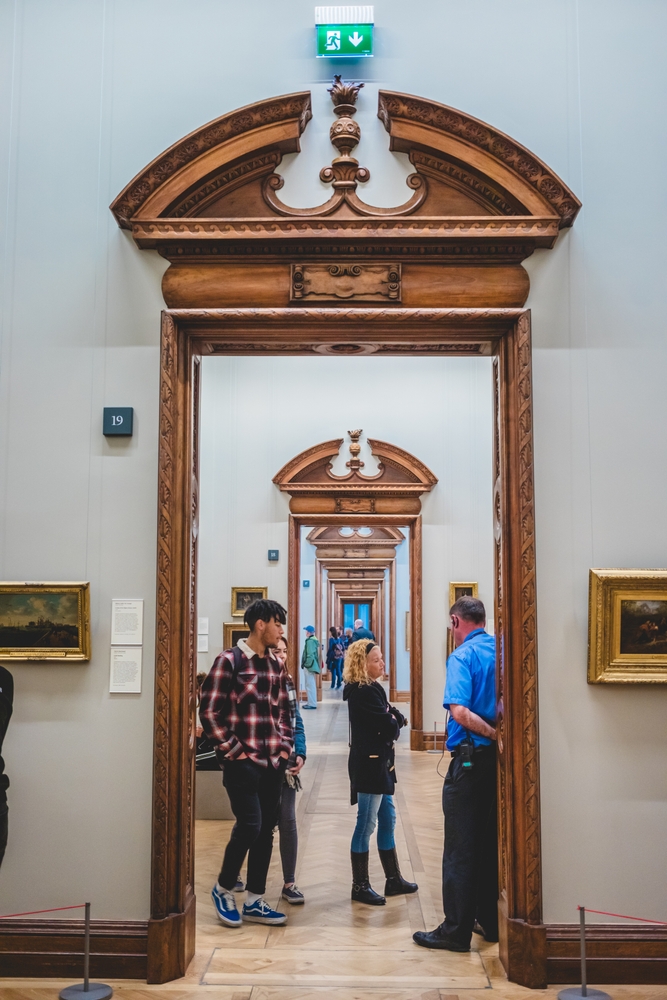
Ireland’s national gallery is on Merrion Square West, and the permanent collection is free to see. Some of the temporary exhibitions charge admission. The gallery also has an archive with collections on the painter Jack B. Yeats and his family, and it’s a good place to relax for an afternoon with art and a cup of coffee in the café.
The gallery is open on Mondays and Sundays from 11am to 5.30pm, Tuesdays and Wednesdays from 9.15am to 5.30pm, Thursdays from 9.15am to 8.30pm and Fridays and Saturdays from 9.15am to 5.30pm. The entrance closes a quarter of an hour earlier. That makes Thursday evening a good time if your days are full.
Afterwards, take a walk in Merrion Square Park, in the middle of one of Dublin’s most beautiful Georgian squares. The houses around the park were built from 1762 over roughly the next 30 years, and Oscar Wilde, W.B. Yeats and Daniel O’Connell all lived here. In the park, there’s a memorial to Oscar Wilde from 1997. The park opens at 10am every day, and closing time changes with the seasons, from 5pm in winter to 10pm in June and July.
11. Grafton Street and St. Stephen’s Green
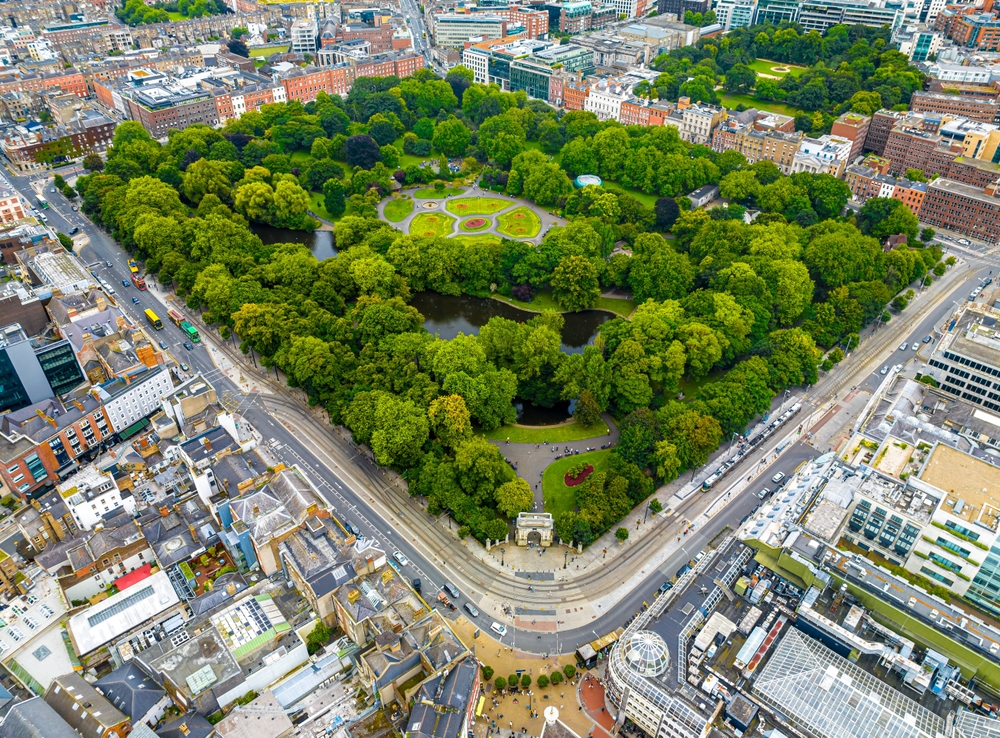
Grafton Street is Dublin’s best-known pedestrian street. It’s been closed to traffic since 1979 and runs from St. Stephen’s Green down towards College Green and the entrance to Trinity College. It’s lined with shops and department stores, and buskers play all day, so even if you don’t buy anything, it’s a good street for a stroll. Bewley’s Oriental Café, at numbers 97 to 98, is the city’s best-known café and a good place for a coffee along the way.
At the end of the street, you walk through Fusiliers’ Arch into St. Stephen’s Green, the city’s most central park, with a lake, flower beds and plenty of benches. The park is free. It opens at 7.30am Monday to Saturday and at 9.30am on Sundays and public holidays, and closing time changes with the seasons, from 4pm in late November to 9pm in summer.
Bring a sandwich and eat your lunch by the lake on a dry day, as many locals do. The Little Museum of Dublin is just across the road along the park. If you’d like to stay in the quiet streets around the park, you can see hotels near St. Stephen’s Green here.
12. Little Museum of Dublin
The Little Museum of Dublin is in a beautiful old building at 15 St. Stephen’s Green and tells the city’s story through objects donated by people from all over Ireland. You can only get in with a guide, and the tours are known for being entertaining, so this is the place if you’d rather have Dublin’s history told by a guide than read it on information boards.
After a major renovation, the museum has more exhibition space, a lift and a small terrace. Tours run every 40 minutes.
A ticket costs €18, seniors and students pay €16, and a family ticket for two adults and up to three children costs €45. It’s open every day from 9.30am to 5pm, with last entry at 4.30pm. The tours fill up quickly, so book a time in advance, especially at weekends.
13. GPO Witness History and O’Connell Street
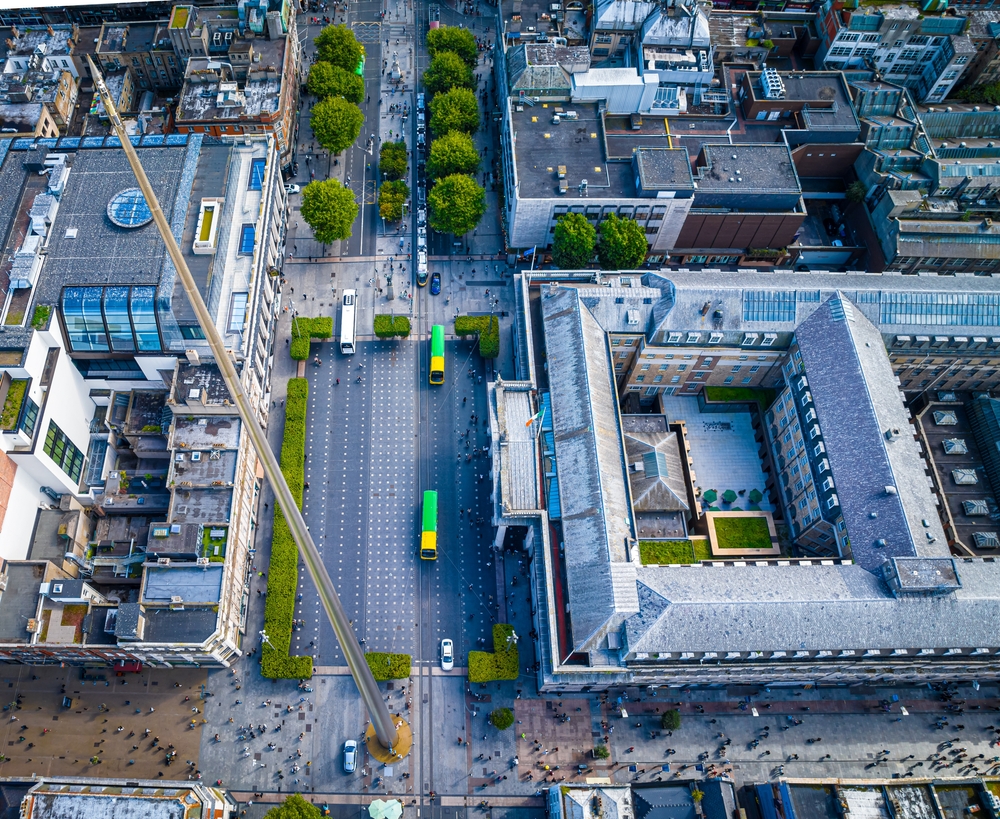
The General Post Office on O’Connell Street is one of the most important buildings in Irish history. During the 1916 Easter Rising, the rebels occupied the building, and Patrick Pearse read out the Proclamation of the Republic from the portico at the front. Inside the building is GPO Witness History, an interactive exhibition about the Rising and Ireland’s more recent history.
A ticket costs €17, and students and seniors over 65 pay €15. Tickets for children over five start at €8.50. The exhibition is open Monday to Saturday from 10am to 5pm, with last entry at 4pm, and is closed on public holidays.
See Kilmainham Gaol and the GPO on the same day or on two days in a row, and you’ll get the whole story of 1916, from the Rising on O’Connell Street to the executions at the prison. From the Ha’penny Bridge, it’s a short walk over to O’Connell Street on the north side of the river, and EPIC is within walking distance from there too. The Aircoach buses from the airport also stop on O’Connell Street.
14. Jameson Distillery Bow St.
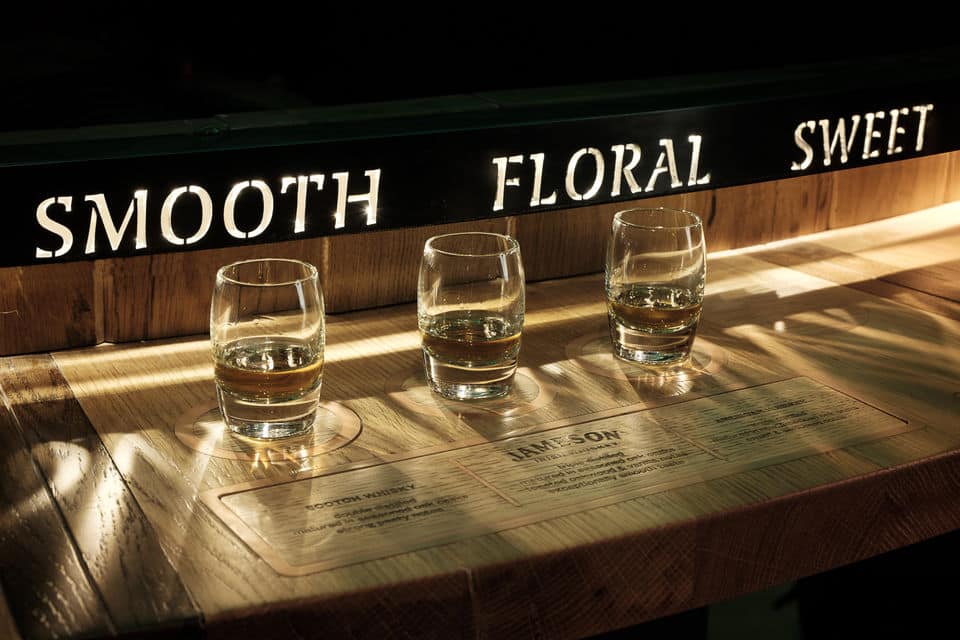
If you prefer whiskey to stout, head to Jameson Distillery Bow St. in the Smithfield district north of the river. The classic tour is called the Bow St. Experience. It takes 45 minutes, ends with a comparative tasting of three Jameson whiskeys and a cocktail, and costs from €26. Smithfield is also a good area to stay in, and you can see hotels in Smithfield here.
There are tours every day of the week. Children under 12 go free, and if you don’t drink alcohol, there’s an alcohol-free ticket for €15. If you want more than the standard tour, the distillery also runs cocktail and blending classes and a secret tasting in JJ’s Office.
It’s a shorter and more intimate experience than the Guinness Storehouse, and the two are on opposite sides of the river, so you can easily fit both into one day. The ticket is cheapest on the distillery’s own website, while the ticket on GetYourGuide costs a little more but can be cancelled free of charge.
Book a guided tour of Jameson Distillery with a whiskey tasting.
15. Phoenix Park and Dublin Zoo
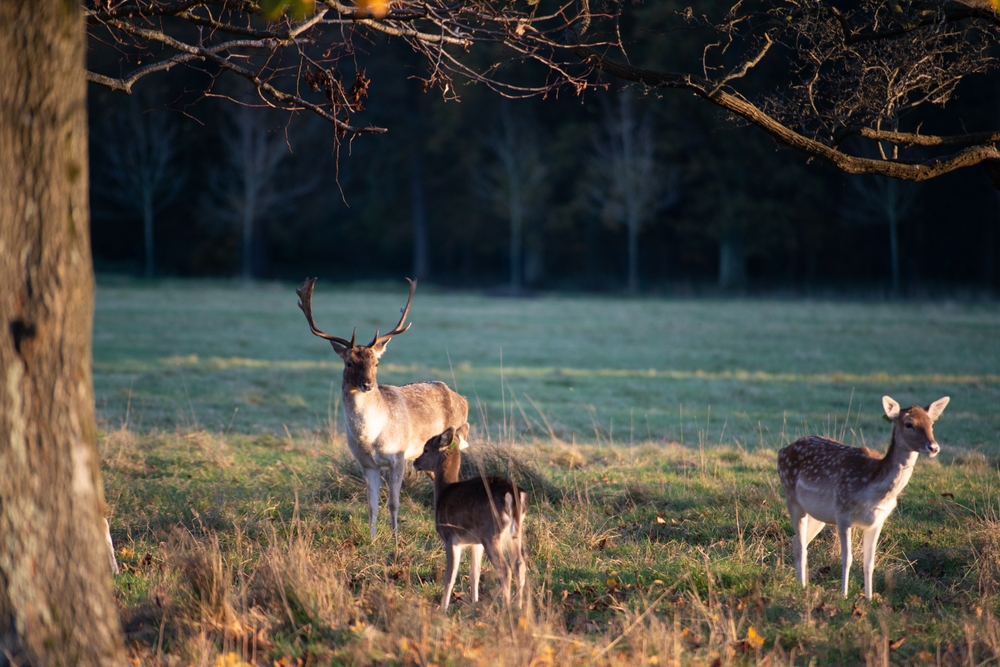
Phoenix Park is one of the largest enclosed parks in any European capital, and it’s free and open around the clock. It’s home to a large herd of wild fallow deer, and you mustn’t feed them or go close to them. In the park stands the Wellington Testimonial, which at just over 62 metres is the tallest obelisk in Europe, and the Papal Cross, which was put up for Pope John Paul II’s visit in 1979. On Saturdays, there are free tours of the President’s residence, Áras an Uachtaráin, and tickets are handed out at the Phoenix Park Visitor Centre from 9.30am on a first-come, first-served basis.
Dublin Zoo is also in the park. An adult ticket costs €22.50 online and €26.50 at the gate, and children aged 3 to 15 pay €17 online. The zoo is open every day from 9.30am to 5.30pm, with last entry at 4.30pm, so it pays to buy your ticket in advance.
Bus 99 runs from Parkgate Street to the Phoenix Park Visitor Centre and stops at the zoo. From Heuston Station, it’s about a 20-minute walk to the zoo.
16. Glasnevin Cemetery
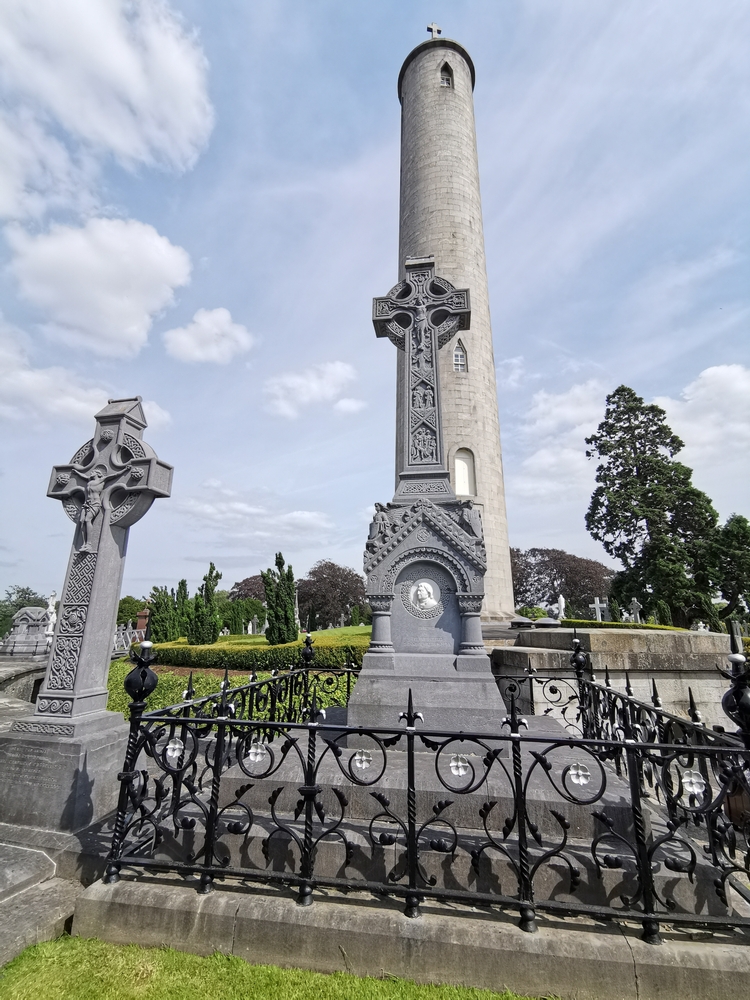
Glasnevin is Dublin’s large historic cemetery north of the centre, and it’s run by a committee that Daniel O’Connell set up in 1828. Many of the people you hear about at Kilmainham Gaol and the GPO are buried here, among them Michael Collins, Daniel O’Connell and Countess Markievicz, and the guided history tour also goes down into O’Connell’s crypt.
The history tour takes 1 to 1.5 hours and costs about €14.50, and you can go up O’Connell Tower for about €9. The museum and cemetery are normally open every day from 10am to 5pm. I haven’t been able to confirm the current prices with the cemetery itself, so check them on the museum’s own website before you go.
Book the tower in advance in particular. The cemetery is one of the places in Dublin where a guide really makes a difference, because without the stories, it’s mostly gravestones. It’s a peaceful place to end a day of Irish history.
17. Howth
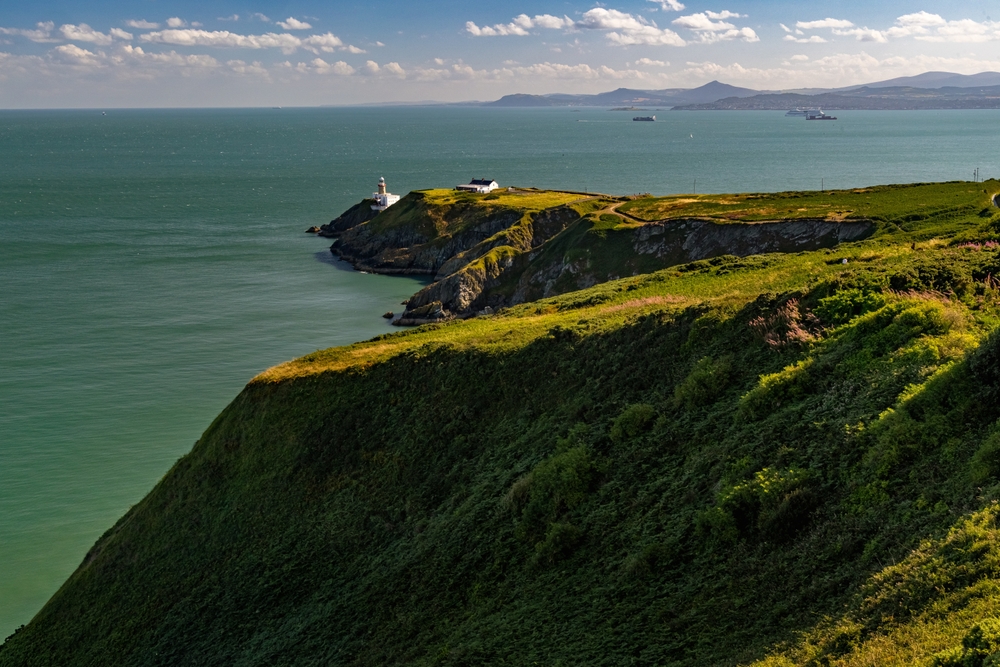
Howth is a fishing village on a peninsula north of Dublin, and it’s the easiest trip into nature from the city. You take the DART train to the end of the line at Howth, and the Cliff Path Loop starts at the station. The route is 7.8 kilometres long, takes about two hours and follows the cliffs with views out to sea until the Baily Lighthouse comes into view.
The route is graded moderate, and the path can be uneven, so wear proper shoes. The walk is free, and afterwards you can head down to the harbour for lunch. The DART is part of the city’s regular public transport, so a Leap Visitor Card is also valid for the trip out there.
Check the weather forecast before you set off, because it’s much windier on the cliffs than in the city, and the path is no fun in rain and fog. If you’d rather have a guide and skip the planning, there are half-day tours from Dublin.
Book a guided walk on the Howth cliff path from Dublin.
18. Day Trip to Glendalough
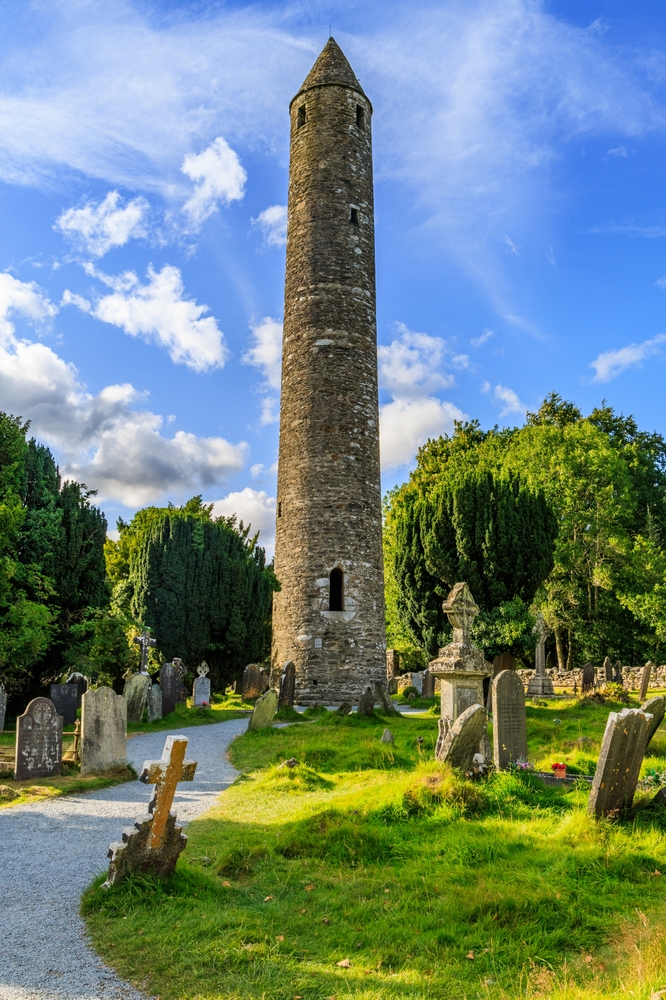
Glendalough, in the Wicklow Mountains south of Dublin, is one of the most famous monastic sites in Ireland. Saint Kevin founded the monastery in the sixth century, and today the ruins and the tall round tower stand in a valley between the mountains.
The visitor centre costs €5, and a family ticket costs €13. If you pay for parking at the centre, you get one free ticket included. From mid-March to 14 October, the visitor centre is open every day from 9.30am to 6pm, and the rest of the year from 9.30am to 5pm. Last entry is 45 minutes before closing.
Without a car, the easiest option is an organised day trip from Dublin. Many of the tours cross the Wicklow Gap and combine Glendalough with the medieval town of Kilkenny, so you see a lot of the Irish countryside in one day. There are also buses to Laragh and Glendalough, but that takes more planning.
Book a day trip to the Wicklow Mountains, Glendalough and Kilkenny.
Practical Travel Tips for Dublin
The centre is small, and you can walk between most of the sights. For Kilmainham Gaol, Phoenix Park, Glasnevin and Howth, you’ll need a bus, the Luas or the DART. With a Leap Visitor Card, you can travel as much as you like on Dublin Bus, the Luas and the DART for one, three or seven days, but the card isn’t valid on the hop-on hop-off buses or Bus Éireann.
Book the big three first: the Book of Kells, the Guinness Storehouse and Kilmainham Gaol have tickets for fixed time slots, and the prison only sells tickets in advance. Then fill the rest of your days with the free museums. The National Museum and the National Gallery cost nothing, but remember that the National Museum doesn’t open until 1pm on Sundays and Mondays.
If you want to get your bearings on your first day, a guided walking tour is a good start, because then you’ll know what you’d like to see more of.
Book a guided walking tour of Dublin’s highlights.
If you’d like to see the full range, you can browse all hotels in Dublin on Booking.com. If you’re heading on to Scotland, I’ve also written about the best things to do in Edinburgh.
Travel ressources & websites I use all the time 👇
• Booking.com has the best offers on hotels and unique places to stay
• GetYourGuide is the best place to book tours & activities with free cancellation
• Welcome Pickups is the best & safest place to pre-book airport transfers
Psst 👀 Have you subscribed to my Youtube channel and my Instagram where I provide more useful travel tips?