

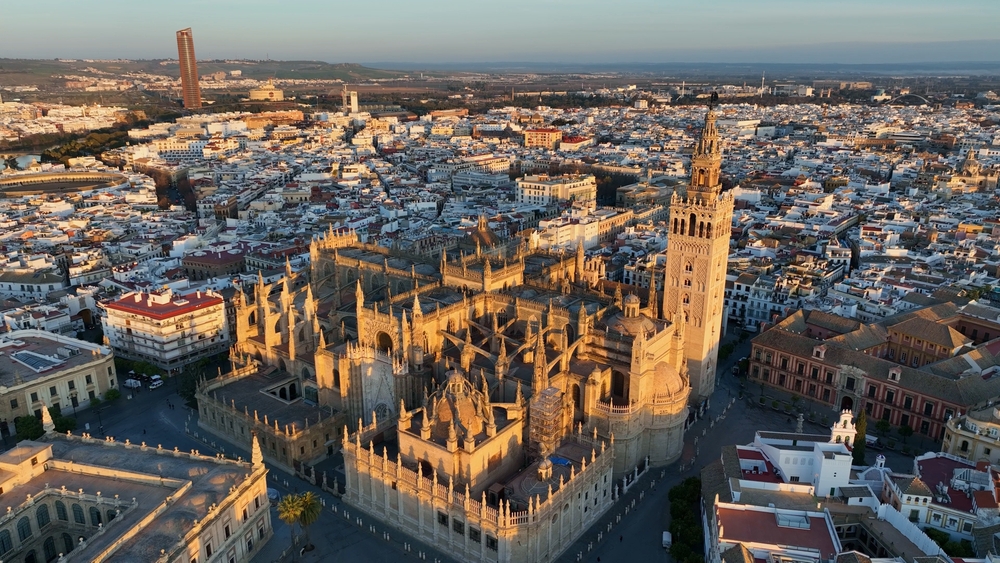
Seville is the capital of Andalusia and one of the most beautiful cities in Spain. It’s home to the Real Alcázar royal palace, one of the world’s largest Gothic cathedrals and the old Jewish quarter of Santa Cruz, where narrow lanes and little squares with orange trees sit side by side, and across the River Guadalquivir lies Triana, where flamenco and ceramics have deep roots. The city is flat and easy to get around on foot, and Córdoba and Ronda are close enough for a day trip.
Here are my picks for the 17 best things to see and do in Seville, with prices, opening hours and tips on what to book before you go. Prices are in euros, and 1 euro is roughly £0.84. Book your tickets for the Real Alcázar and the cathedral online, because the queues get long. Several museums are closed on Mondays, so read the sections before you plan your days. The last two sections are about day trips.
Contents
1. Real Alcázar
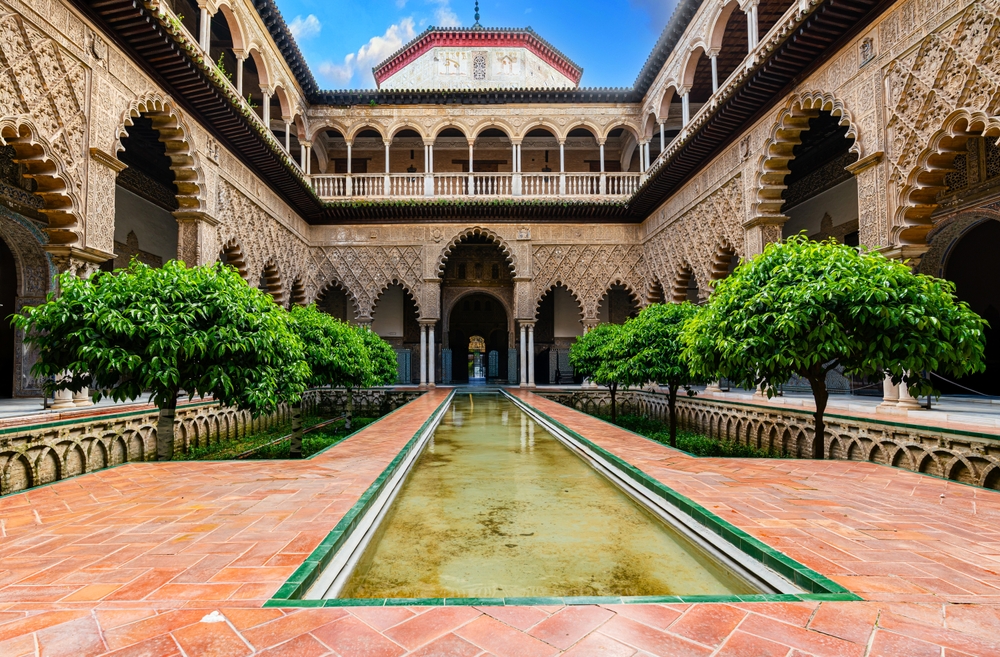
The Real Alcázar is Seville’s royal palace and, in my opinion, the city’s greatest experience. The palace was founded by the Muslim rulers, and after the Christian reconquest, the Spanish kings kept building. Its heart is the 14th-century Palace of Pedro I in Mudéjar style, where you walk through the Patio de las Doncellas with its long water channel, the Patio de las Muñecas and the golden Salón de Embajadores with its dome of carved wood. Behind the palaces lie the large gardens with fountains, palm trees, pavilions and peacocks, and many people will recognise the place as Dorne from Game of Thrones.
A standard ticket costs €15.50 (about £13), and the Alcázar is open every day from 9.30am to 7pm from April to September and from 9.30am to 5pm from October to March. The reduced price is €8 (about £6.50) for students and over-65s, among others, and children up to the age of 13 get in for free, but they need a free ticket. If you’d also like to see the royal apartments on the first floor, the Cuarto Real Alto, it costs €5.50 (about £4.50) extra. The Alcázar is closed on 1 and 6 January, Good Friday and 25 December. The ticket office in the Patio de Banderas only takes cards.
Come for the first entry slot in the morning, and save the gardens for last, because they’re lovely when the sun is high. You should allow at least two hours. If you buy your ticket through a reseller, you’ll pay a little more than on the Alcázar’s own website, but in return you get easy cancellation.
Book a ticket for the Real Alcázar.
2. The Cathedral and the Giralda
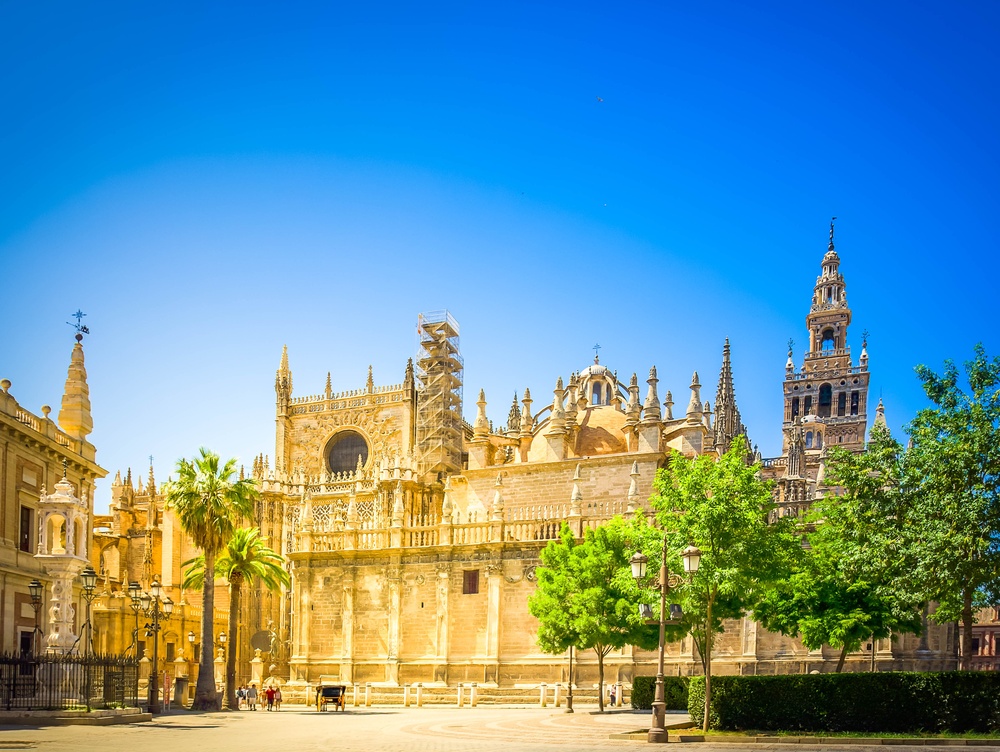
Seville Cathedral is one of the largest Gothic churches in the world, and it was built on the site of the city’s great mosque. The Giralda was the mosque’s minaret, and according to UNESCO, it’s a masterpiece of Almohad architecture. Today, it’s the cathedral’s bell tower. The cathedral, the Alcázar and the Archivo de Indias were added to the World Heritage List together in 1987. Inside the cathedral, you’ll see the huge gilded altarpiece and Christopher Columbus’ tomb, where the coffin is carried by four figures representing the old Spanish kingdoms.
You walk up the Giralda on ramps instead of stairs. They were built so that people could ride up on horseback, and from the top you look out over the whole Old Town. A ticket for the cathedral and the Giralda costs €13 (about £11) online and €14 (about £12) at the ticket office, and the reduced price is €7 (about £6) online. It’s open Monday to Saturday from 10.45am to 7pm and on Sundays from 2.30pm to 7pm, and the ticket office closes at 6pm. The times can change for services and religious festivals.
On Sundays, there’s free entry for part of the afternoon when the church calendar allows it. The tickets are handed out at the Puerta del Príncipe from 5pm, and there’s often a queue. My tip is to buy a ticket online for an early slot and finish in the orange tree courtyard, the Patio de los Naranjos. If you’d like everything explained, there are guided tours that combine the cathedral, the Giralda and the Alcázar in one morning.
Book a guided tour of the Alcázar, the cathedral and the Giralda.
3. Plaza de España
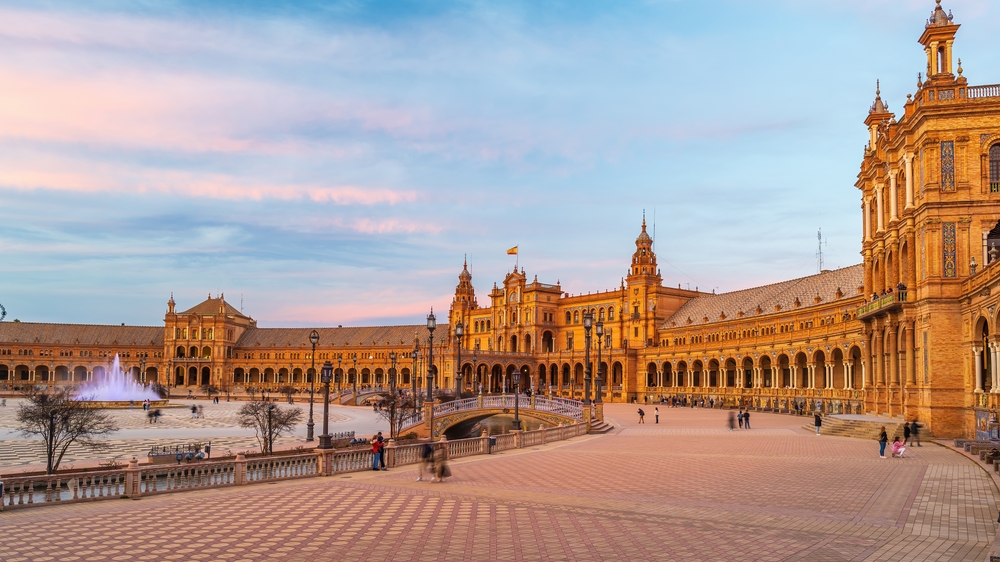
The Plaza de España is Seville’s most photographed spot, and it’s free. The square was built for the Ibero-American Exposition of 1929 and designed by the architect Aníbal González. According to Spain’s official tourism website, it blends Renaissance-inspired architecture with local materials such as exposed brick, ceramics and wrought iron. The building forms a large semicircle with a tower at each end, and in front of it runs a canal with small bridges clad in blue and white tiles.
Along the wall stands a row of benches with painted tiles, and each bench represents one of Spain’s provinces with a map, a coat of arms and a scene from the province’s history. It’s fun to find the provinces you’ve visited yourself. You can hire a small rowing boat on the canal, and the square is also known from films such as Star Wars: Episode II and Lawrence of Arabia.
Come early in the morning or late in the afternoon, when the light is soft and there are fewer people. In the middle of the day in summer, there’s almost no shade on the square itself, so bring water. You can walk here from the cathedral in about 20 minutes, or you can take the tram to Prado de San Sebastián and walk the last stretch. In the evening, street performers often dance flamenco under the arcades.
4. Parque de María Luisa
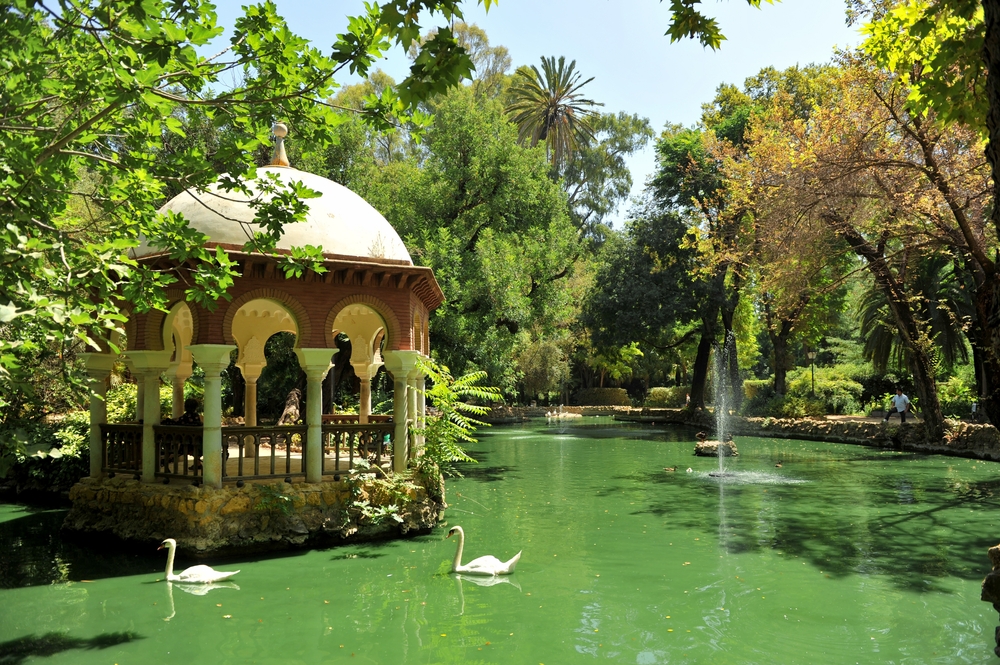
Right next to the Plaza de España lies the Parque de María Luisa, Seville’s big park and the best place to find some shade. The park was originally part of the gardens of the San Telmo Palace, and the Infanta María Luisa donated it to the city in 1893. For the 1929 exposition, it was redesigned by the French landscape architect Jean-Claude Nicolas Forestier with avenues, fountains, ponds, tiled benches and pavilions.
At the southern end lies the Plaza de América with two of the exposition’s pavilions. One houses Seville’s archaeological museum, and the other houses the museum of folk art and traditions, the Museo de Artes y Costumbres Populares. Between them, the square is full of pigeons strolling around among the tourists. Other little spots in the park are the duck pond, the Isleta de los Patos, and the Glorieta de Bécquer, a monument to the poet Gustavo Adolfo Bécquer beneath a large, old tree.
Entry to the park is free. My tip is to combine the park with the Plaza de España, so you see the square first and then head into the park when it gets hot. You can also hire a bike or a four-wheeled pedal cart at the entrance if you’re a family with children. The park is a good place for a break with a sandwich in the middle of the day, and in the mornings, locals go for their runs on the paths.
5. Barrio Santa Cruz
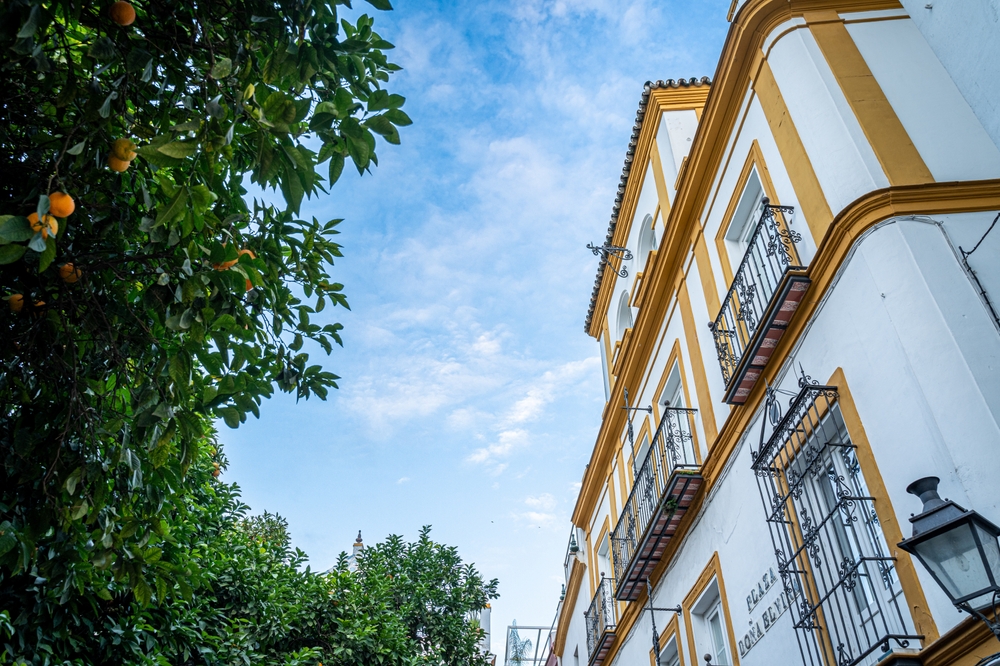
Barrio Santa Cruz was Seville’s Jewish quarter in the Middle Ages, and today it’s the most charming part of the Old Town, with whitewashed houses, narrow lanes, flower boxes and little squares with orange trees. The neighbourhood lies just east of the Alcázar and the cathedral, and it’s easy to get lost, which is half the charm.
Walk through the Callejón del Agua, the little lane along the Alcázar’s wall, where a water conduit once ran into the palace. Also look for the Plaza de Doña Elvira with its tiled benches and orange trees, the Plaza de Santa Cruz and the Plaza de los Venerables. The streets themselves are free, and it isn’t hard to find somewhere for tapas, but be aware that the restaurants right around the cathedral are more expensive and often worse than the ones a couple of streets further in.
Come early in the morning, before the groups arrive, or in the evening, when the streets are full of locals on their way out to eat. Santa Cruz is also the area I recommend for a first visit in my guide to where to stay in Seville, because you’ll be within walking distance of almost everything. If you’d like to stay in the neighbourhood, you can see hotels in Santa Cruz here. Remember that cars can’t get all the way into the narrow lanes, so pack light.
6. Metropol Parasol (Las Setas)
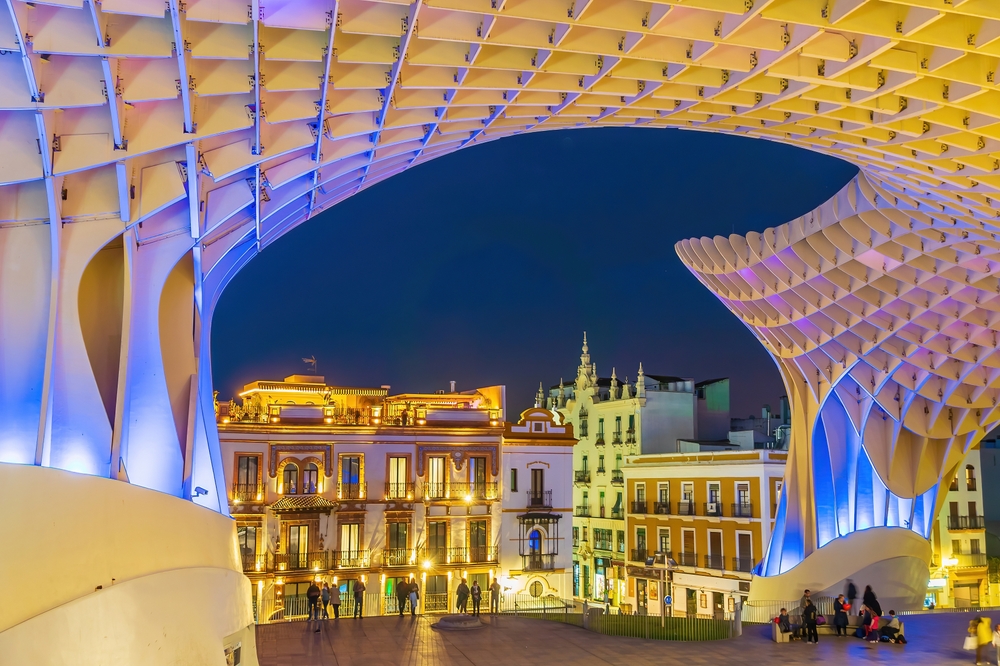
The Metropol Parasol, which the people of Seville call Las Setas, or the mushrooms, is Seville’s modern landmark. The German architect Jürgen Mayer designed the huge undulating structure over the Plaza de la Encarnación, and it opened in 2011. According to Spain’s official tourism website, it’s the world’s largest wooden structure, and it’s 29 metres high. In the basement is the Antiquarium museum with Roman excavations, and on the ground floor there’s a food market.
Up on the roof, you follow a winding walkway between the mushrooms, and the view over the Old Town, the cathedral and the Giralda is one of the best in the city. A ticket costs from €16 (about £13) and gives you access to the walkway, a short film about Seville and the Aurora light show, which runs in the evenings from April to October. It’s open every day from 9.30am until 1am, with last entry at 12.15am, and a visit takes about an hour. There’s also a combined ticket with a flamenco show.
My tip is to go up at sunset, when the light hits the rooftops and the city switches on its lights. It’s the most popular time, so book ahead. Las Setas is in the Centro and Alfalfa area, about a ten-minute walk north of the cathedral, and there are good tapas bars in the streets around the square.
Book a ticket for Setas de Sevilla.
7. Triana and Mercado de Triana
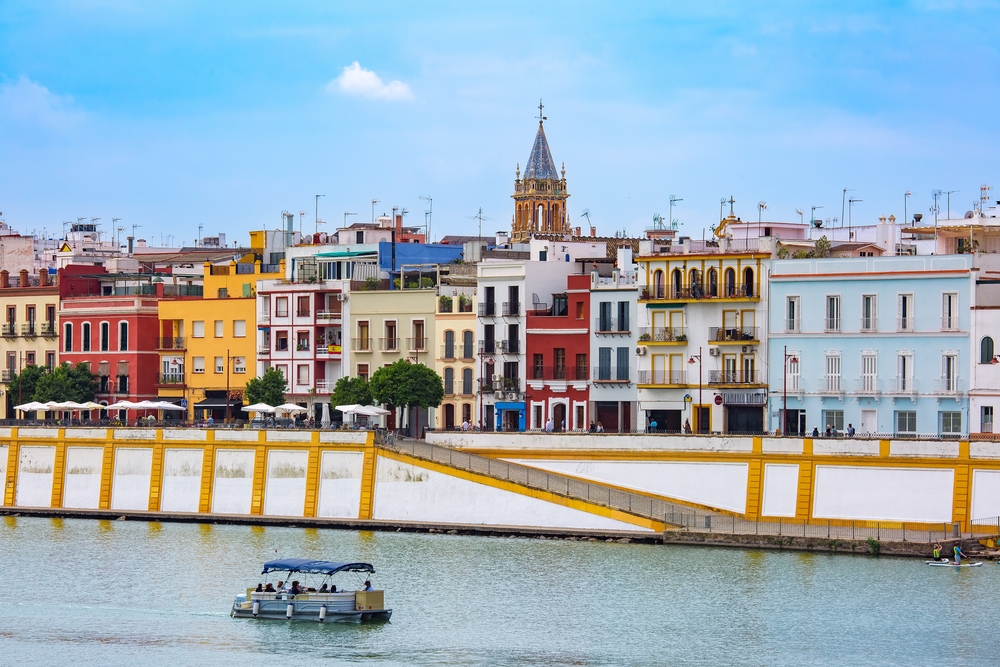
Triana lies on the other side of the Guadalquivir, and the neighbourhood has its own proud identity. Sailors, potters and many flamenco artists lived here, and the area is still known for its ceramics. You cross the river on the Puente de Isabel II, which most people simply call the Triana Bridge, and from the bridge you look out over the colourful row of houses along Calle Betis.
Right at the end of the bridge is the Mercado de Triana, a covered market with fruit, fish, ham and small bars where you can have tapas and a glass of wine. The market is built on top of the remains of the Castillo de San Jorge, the castle where the Inquisition was based, and in the basement there’s a small free museum about the history of the Inquisition. Also walk down Calle San Jacinto and Calle Alfarería, where you’ll find ceramics workshops and shops selling tiles, and past the Capilla de los Marineros, the sailors’ chapel.
Come to the market in the morning, when the stalls are open, and stay for lunch. In the evening, locals sit along Calle Betis with a view across the river to the Torre del Oro, and this is where I think Seville is at its best. Triana is a good alternative if you’d like to stay somewhere a little more local, and you can see hotels in Triana here.
8. Flamenco in Seville
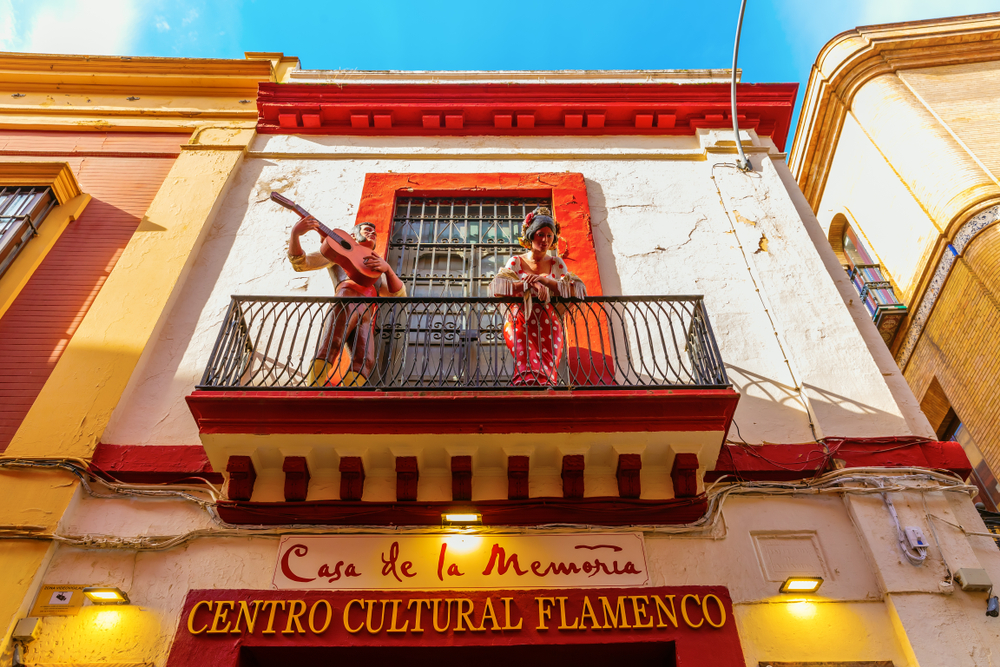
Andalusia is the home of flamenco, and you should see at least one show while you’re in Seville. A good performance has a guitarist, a singer and one or more dancers, and it’s far more intense than you’d think when you’re sitting just a few metres from the stage. Many of the small venues in Santa Cruz and Triana have shows every evening, and they usually last an hour.
If you’d like to learn a little about the history of flamenco first, visit the Museo del Baile Flamenco, which was founded by the dancer Cristina Hoyos and is on Calle Manuel Rojas Marcos near the Plaza de la Alfalfa. The museum costs €6 (about £5) and is open from 10am to 6.45pm. It also has its own shows at 5pm, 7pm and 8.45pm, which cost €29 (about £24), and a combined ticket with the museum costs €33 (about £28).
My tip is to choose a small venue rather than the big tablaos with dinner, where the food is often expensive and mediocre. Casa de la Memoria in Centro is one of the most popular places, and the shows often sell out, so book a few days ahead. Prices are usually between €20 and €30 (about £17 to £25), and drinks aren’t always included.
Book a ticket for the flamenco show at Casa de la Memoria.
9. Torre del Oro and the Guadalquivir
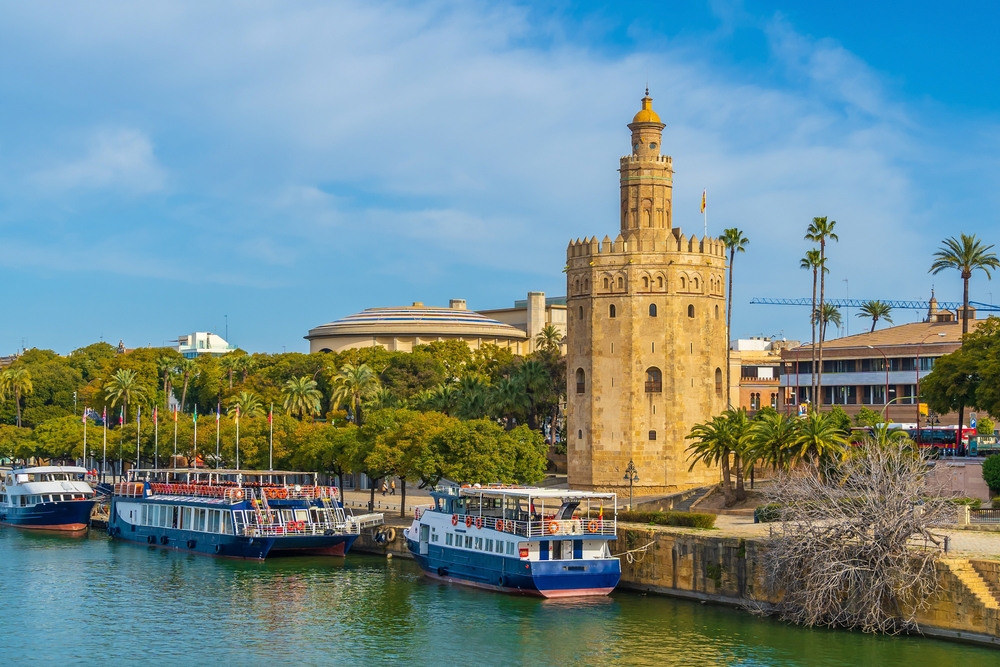
The Torre del Oro is the twelve-sided defensive tower that stands by the River Guadalquivir just below the cathedral. The Almohads built it in the early 13th century as part of the city’s defences, and from the tower, the river could be blocked with a chain across to the other bank. The name means the Tower of Gold, and there are several explanations for it, including that the tower’s walls once shone golden in the sun.
Today, the tower houses Seville’s naval museum, with model ships, old maps and the story of the city’s role in the trade with the Americas. Entry costs €3 (about £2.50), and entry is free on Mondays. It’s a small museum that takes half an hour, but the view from the terrace at the top is nice.
A promenade runs along the river from the Torre del Oro, and you can walk north along it to the Triana Bridge. This is also where the river boats leave from. My tip is to take a boat trip late in the afternoon, once the heat has eased. You’ll see the Torre del Oro, Triana and the bridges from the water, and the trip takes about an hour.
Book a guided boat trip on the Guadalquivir.
10. Casa de Pilatos
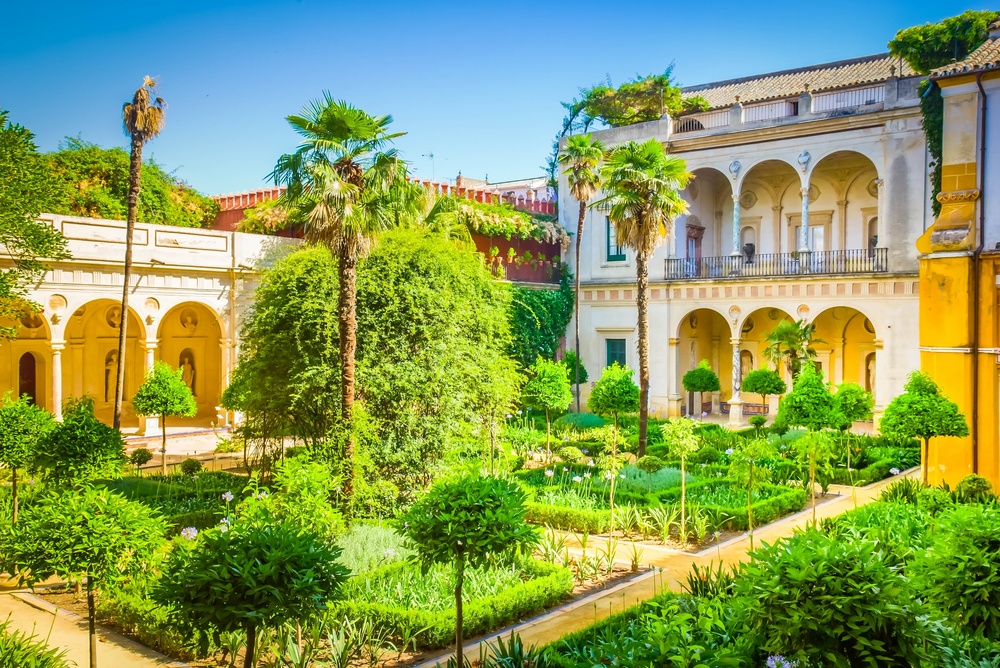
The Casa de Pilatos is one of Seville’s most beautiful palaces, and I think it’s underrated. The palace belongs to the Dukes of Medinaceli, and it blends Mudéjar style, Gothic and the Italian Renaissance. In the large main courtyard, busts of Roman emperors stand around a fountain, and the walls are covered in tiles with patterns that make your eyes swim. From here, you continue to the gardens, the halls and the staircases with their fine tiles.
A ticket for the ground floor costs €12 (about £10), and the first floor costs €6 (about £5) extra. The tickets include an audio guide in several languages, and children up to the age of 11 get in for free with an adult. The palace is open every day from 9am to 6pm. The first floor can only be seen on a guided tour with a limited number of places, so buy the combined ticket early in the day if you’d like to see it.
The Casa de Pilatos lies just north-east of Santa Cruz, about a ten-minute walk from the cathedral. My tip is to come here in the middle of the day, when the queues at the Alcázar and the cathedral are at their longest. The courtyards are quiet, and you can take your time. The name comes from a legend that the palace was built as a copy of Pontius Pilate’s house in Jerusalem.
Book a ticket for the Casa de Pilatos.
11. Palacio de las Dueñas
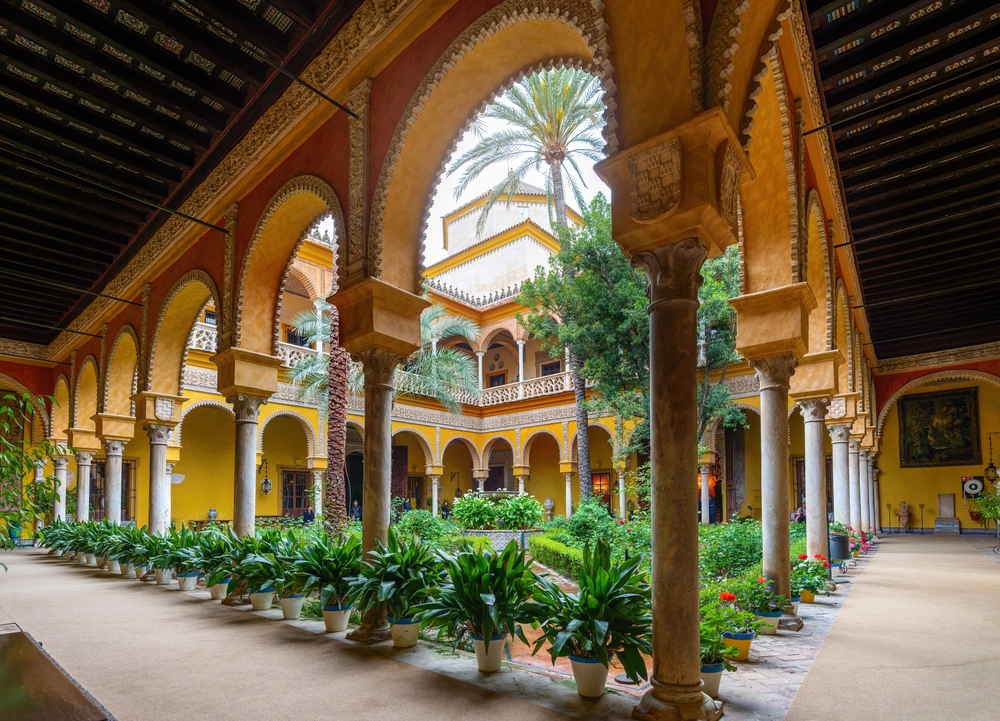
The Palacio de las Dueñas is a 15th and 16th-century palace in Gothic Mudéjar and Renaissance style, and since 1612 it has belonged to the Spanish noble House of Alba. According to the palace’s own website, the poet Antonio Machado was born here in 1875, when his father was one of the palace’s tenants and stewards. The famous Duchess Cayetana of Alba lived here, and her family has opened the palace to visitors.
You walk through courtyards with palm trees, lemon trees and bougainvillea, a small chapel and rooms holding the family’s collection of more than 1,400 works of art and pieces of furniture. It feels more like a private home than a museum, and that’s exactly what makes the place special. Entry costs around €15 (about £13) with an audio guide, and there are reduced prices for students and pensioners, among others. The palace opens at 10am and closes at 6pm in winter and later in summer, and it’s closed on 1 and 6 January and 25 December.
The palace is in the northern part of the Old Town, about a ten-minute walk from Las Setas, so the two go well together on the same morning. My tip is to come early, while the garden is still in the shade.
12. Archivo de Indias
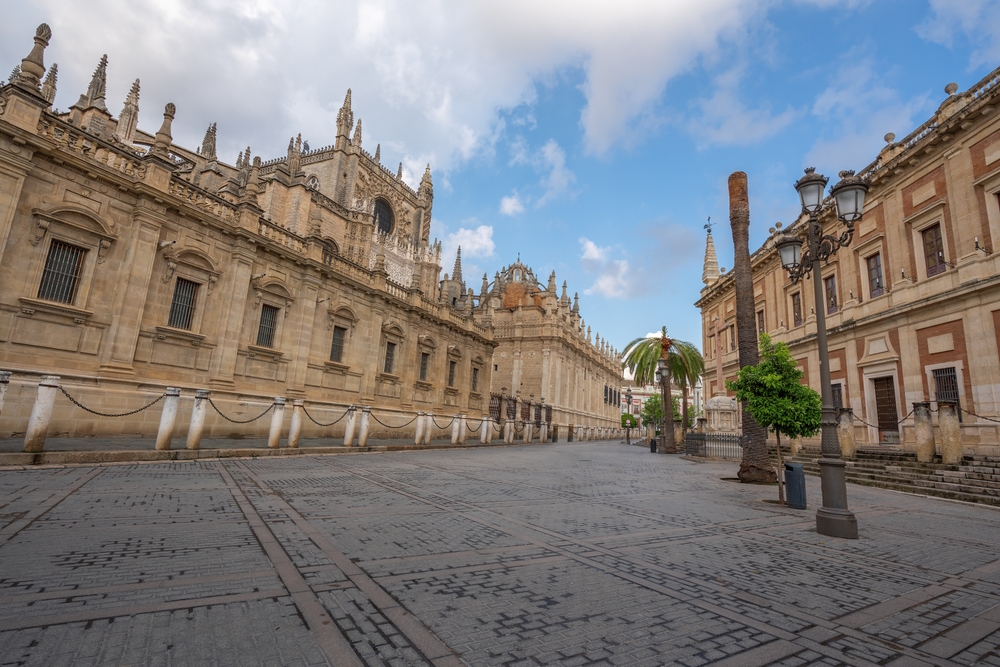
Between the cathedral and the Alcázar lies the Archivo General de Indias, Spain’s great archive of its colonies in the Americas and Asia. The building was originally the 16th-century merchants’ exchange, the Casa Lonja de Mercaderes, and it was designed by Juan de Herrera, who was also behind the monastery palace of El Escorial near Madrid. The building has housed the archive since the late 18th century, and it was added to UNESCO’s World Heritage List together with the cathedral and the Alcázar.
Most of the archive is reserved for researchers, but you can walk up the grand marble staircase and see the long galleries with shelves of dark wood and changing exhibitions of maps and documents from the voyages of discovery. Entry is free, and the archive is open Tuesday to Saturday from 9.30am to 5pm and on Sundays and public holidays from 10am to 2pm. It’s closed on Mondays.
Many people walk past without going in, which is a shame, because a visit only takes half an hour and makes a good break from the heat. My tip is to pop in while you’re waiting for your time slot at the Alcázar or the cathedral, because it’s right next door. Remember that you’ll have to go through a small security check at the entrance.
13. Plaza de Toros de la Real Maestranza
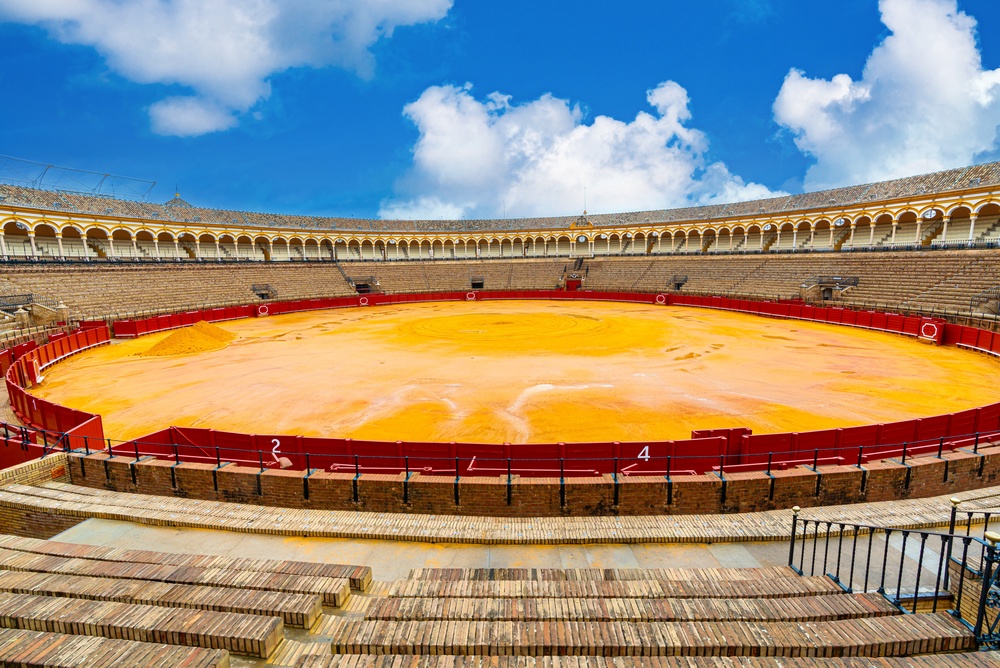
By the river in the El Arenal district lies the Real Maestranza, Seville’s great bullring with its white and ochre facade. It’s one of the oldest and best-known bullrings in Spain, and its construction stretched over more than a hundred years from the middle of the 18th century. Bullfighting is controversial, in Spain too, but the arena itself and the museum are interesting, even if you don’t care for the tradition.
On a guided tour, you’ll see the museum with costumes and paintings, the chapel where the bullfighters pray before the fight and the arena itself with its yellow sand. A ticket costs €12 (about £10), and there’s a reduced price of €7 (about £6) for students, young people and over-65s and €4 (about £3.50) for children aged 7 to 11. On bullfighting days, the arena closes earlier to visitors, so check the times on the arena’s website.
El Arenal lies between the cathedral and the river, and it’s a good area to stay in if you want to be close to both the Old Town and Triana. You can see hotels in El Arenal here. My tip is to combine the bullring with the Torre del Oro, which is five minutes further down the river.
Book a guided tour of the Real Maestranza.
14. Museo de Bellas Artes
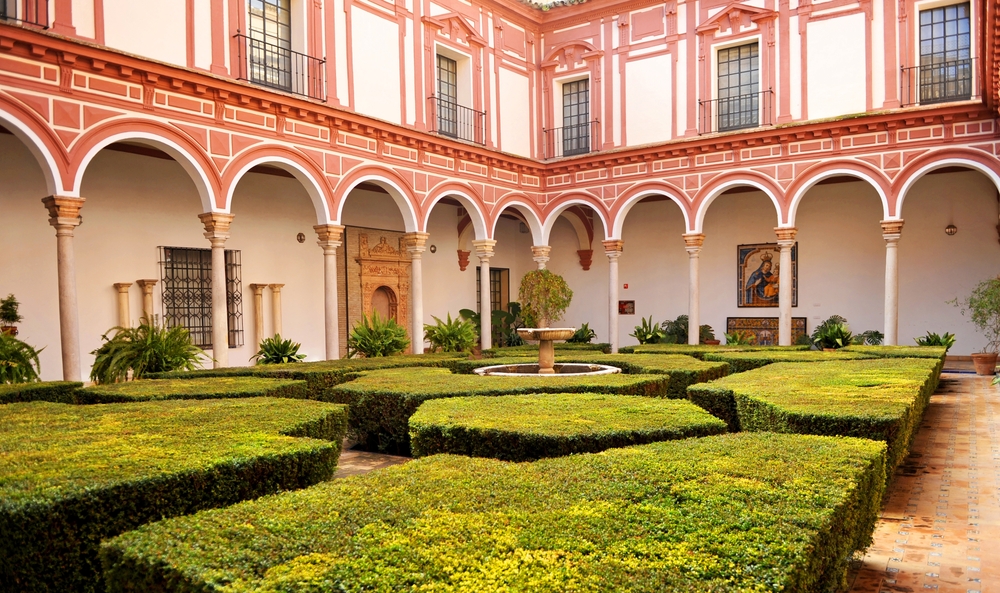
The Museo de Bellas Artes is Seville’s art museum, and according to Andalusia’s official tourism website, it’s considered one of the most important art museums in Spain. The museum is housed in a former 17th-century convent with three beautiful courtyards, and the collection is especially strong on paintings from the Seville school, with Murillo, Zurbarán and Valdés Leal.
The best room is the old convent church, where Murillo’s large religious paintings hang beneath the painted dome. You don’t need to be an art expert to get something out of a visit, because the building itself, with its courtyards, tiles and ceiling paintings, is an experience in its own right. Entry is a token charge of about €1.50 (about £1.30), and EU citizens get in for free, so remember your passport or ID. The museum is closed on Mondays.
The museum is on the Plaza del Museo in the western part of Centro, about a ten-minute walk from Las Setas. On Sundays, there’s often a small art market on the square in front. My tip is to spend an hour here on a hot afternoon, because the thick convent walls keep the cool in, and it’s rarely crowded.
15. Basílica de la Macarena and Alameda de Hércules
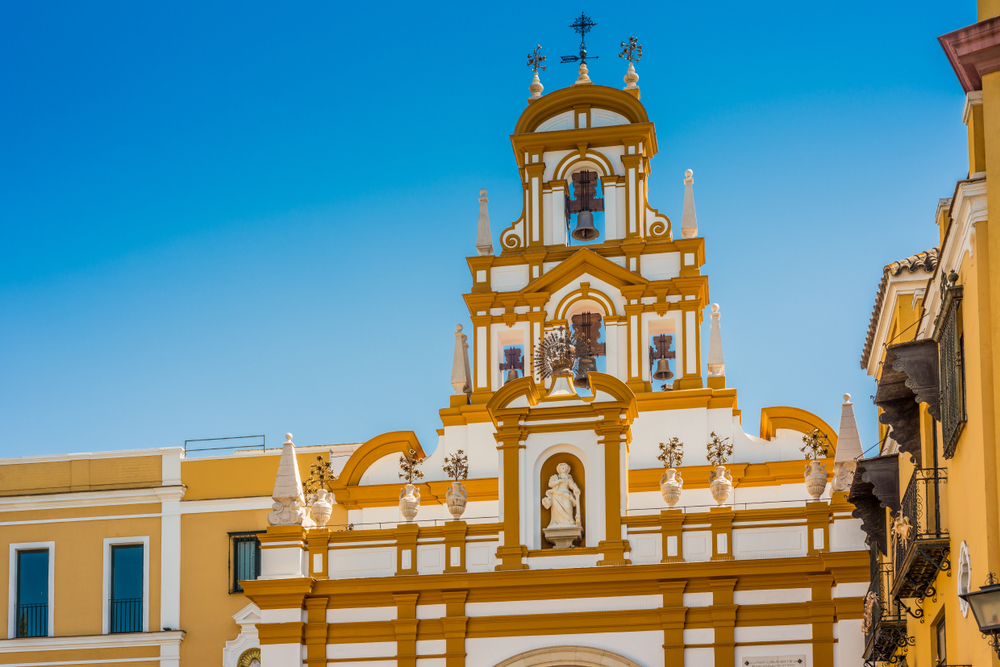
North of the Old Town lies the Macarena district with the Basílica de la Macarena, home of the Esperanza Macarena, Seville’s most beloved statue of the Virgin. According to the city’s tourism website, the statue was made by an unknown artist in the 17th century, and during Holy Week, Semana Santa, she’s carried through the city at night in front of thousands of people. The basilica is open every day from 9am to 2pm and from 5pm to 9pm.
Right next to it stand more than 100 metres of the old 12th-century city wall, which the Almohads built as part of the city’s defences. It’s the longest stretch of city wall preserved in Seville, and it’s free to see from the outside.
Afterwards, walk south to the Alameda de Hércules, a long, tree-lined square with two columns topped by statues of Hercules and Julius Caesar at one end. The square is surrounded by bars and cafés, and in the evening it’s one of the liveliest places in the city, with a younger and more local crowd than in Santa Cruz. My tip is to spend an evening here with tapas and a beer once you’ve seen the big sights.
16. Day Trip to Córdoba
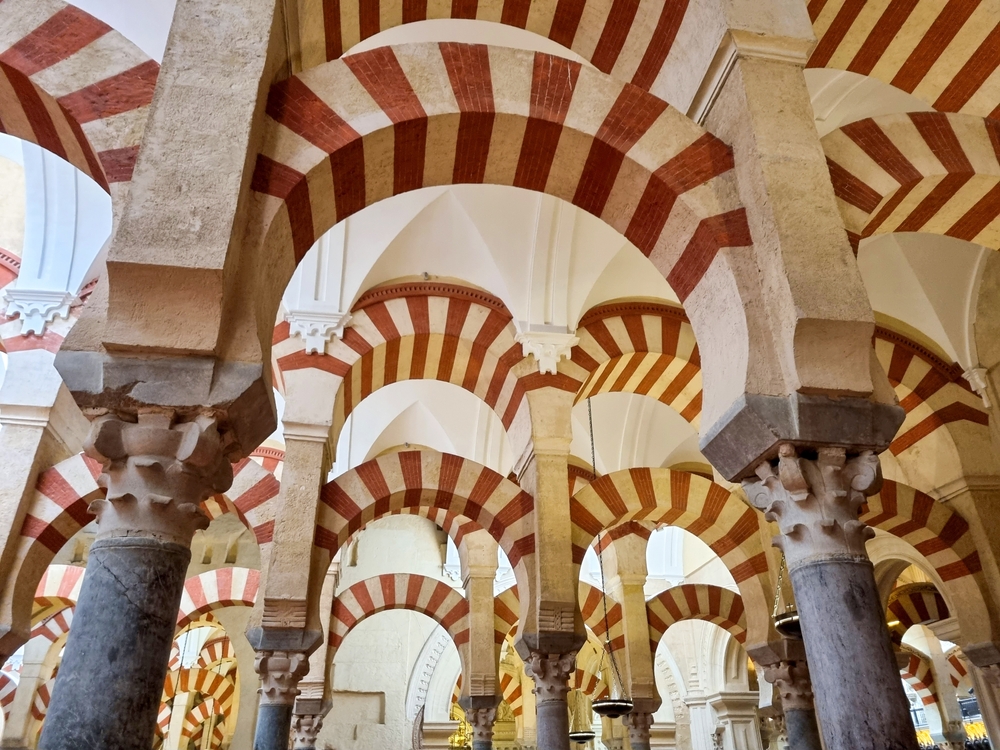
Córdoba was the capital of the Muslim caliphate in Spain, and the city’s big attraction is the Mezquita, the mosque that became a cathedral. Inside stands a forest of columns with red and white arches, and in the middle of it all is a 16th-century cathedral. The city’s historic centre is on UNESCO’s World Heritage List, and around the mosque lie the old Jewish quarter, with white streets and courtyards full of flowers, and the Roman bridge over the Guadalquivir.
A ticket for the Mezquita costs €15 (about £13), and from Monday to Saturday between 8.30am and 9.30am, entry is free for individual visitors, though not on days with special services. The bell tower costs €4 (about £3.50) extra. The mosque is usually open from 10am to 7pm, but the times can change, so check the website before you set off.
By high-speed train from Sevilla Santa Justa, the journey takes about 45 minutes, so it’s the easiest day trip from Seville. My tip is to catch an early train and make it in time for the free morning hour in the mosque. An organised tour is a good option if you’d like to have a guide with you. If you’re heading on to the Alhambra, take a look at my guide to where to stay in Granada, because Granada is too far for a day trip from Seville if you want time to see everything.
Book a day trip to Córdoba, the Mezquita and Carmona from Seville.
17. Day Trip to Ronda
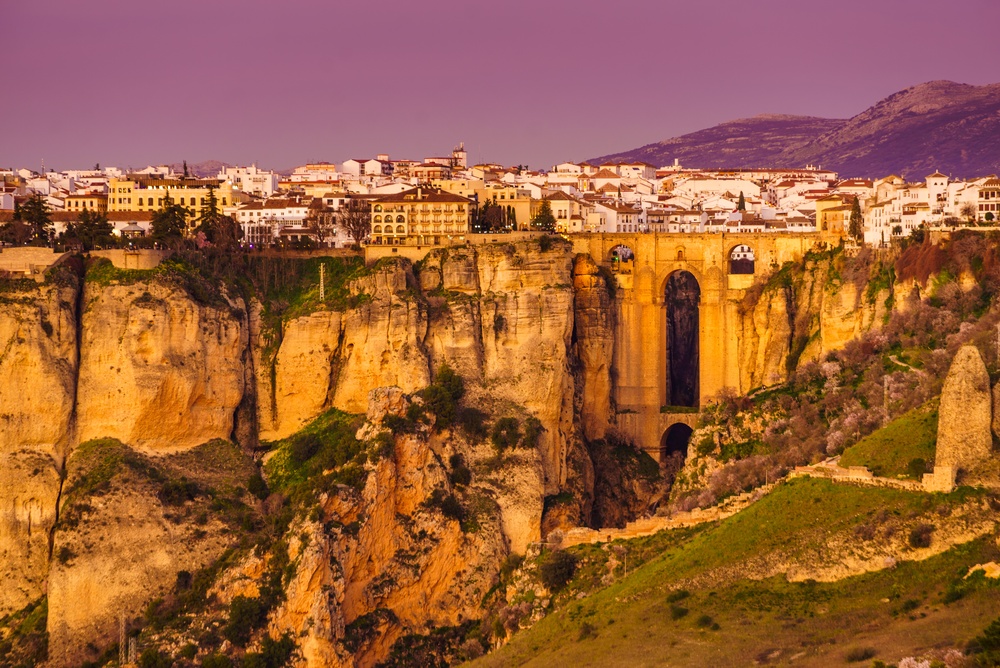
Ronda sits on a cliff in the Serranía de Ronda mountains, and the town is split in two by the El Tajo gorge, which according to Spain’s official tourism website is more than 100 metres deep. Across the gorge stands the Puente Nuevo, the 18th-century bridge that rises up to 98 metres above the river and connects the Old Town with the newer part of town. The view from the bridge and from the viewpoints along the gorge is what most people come for.
Ronda also has one of the oldest bullrings in Spain, Arab baths and an Old Town with white houses and small churches. The drive from Seville takes about two hours each way, and the bus takes a little longer, so it’s a long day. That’s why I think an organised tour is the best option, especially if it also stops at some of the white villages, the pueblos blancos, along the way.
My tip is to walk down the path below the Puente Nuevo, where you’ll see the bridge from the bottom of the gorge. Wear good shoes, because the paths are steep. Ronda is closer to Malaga than to Seville, so if you’re carrying on towards the coast, you can read about the best things to do in Malaga and on the Costa del Sol and about where to stay in Malaga.
Book a day trip to Ronda and the white villages from Seville.
Practical Travel Tips for Seville
The Old Town is flat and compact, and you can walk to almost all the sights. For longer distances, the city has Tussam buses, a short tram line that runs from the Plaza Nueva past the cathedral towards San Bernardo, and a metro line. A single bus ticket costs about €1.40 (about £1.20). From the airport, the EA bus runs to the centre, and it has its own fare. High-speed trains to Córdoba and Madrid leave from Santa Justa, and you can check timetables and prices with Renfe. The train to Madrid takes about two and a half hours, and if Madrid is also on your list, take a look at my picks of the best things to do in Madrid.
Plan your week around the closing days. The Archivo de Indias and the Museo de Bellas Artes are closed on Mondays, while the Torre del Oro has free entry on Mondays. The cathedral doesn’t open until the afternoon on Sundays. Book the Real Alcázar, the cathedral and Las Setas at sunset online well in advance.
Seville is one of the hottest cities in Europe, and in July and August it often reaches over 40°C in the middle of the day. The best time to go is in spring and autumn. During Holy Week, Semana Santa, and the spring festival, the Feria de Abril, the city is full of life, but hotels are expensive and sell out quickly. If you’d like to see the full range, you can see all hotels in Seville on Booking.com.
Travel ressources & websites I use all the time 👇
• Booking.com has the best offers on hotels and unique places to stay
• GetYourGuide is the best place to book tours & activities with free cancellation
• Welcome Pickups is the best & safest place to pre-book airport transfers
Psst 👀 Have you subscribed to my Youtube channel and my Instagram where I provide more useful travel tips?