

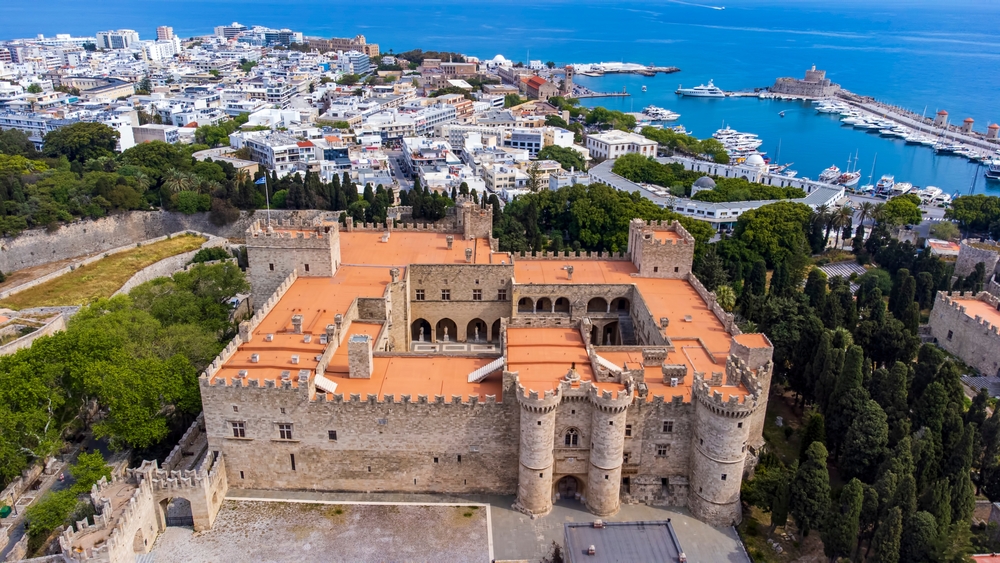
Rhodes is the largest island in the Dodecanese, and it has both beaches and more history than most people expect. In Rhodes Town, people still live inside the medieval city walls, where the Knights of St John built their palace and their inns, and on the east coast the white village of Lindos sits below an acropolis looking out over the Aegean Sea. The rest of the island hides swimming coves, springs, monasteries on mountaintops and the ruins of two of the island’s three ancient cities.
Here are my picks for the 18 best things to see and do in Rhodes, with prices, opening hours and tips on getting around. Prices are in euros, and 1 euro is roughly £0.84. The Palace of the Grand Master and the Archaeological Museum have long opening hours from April to October, but in winter they close early and stay closed on Tuesdays, so read the sections before you plan your days. The last sections cover the most remote places and a day trip to the neighbouring island of Symi.
Contents
1. The Old Town in Rhodes Town
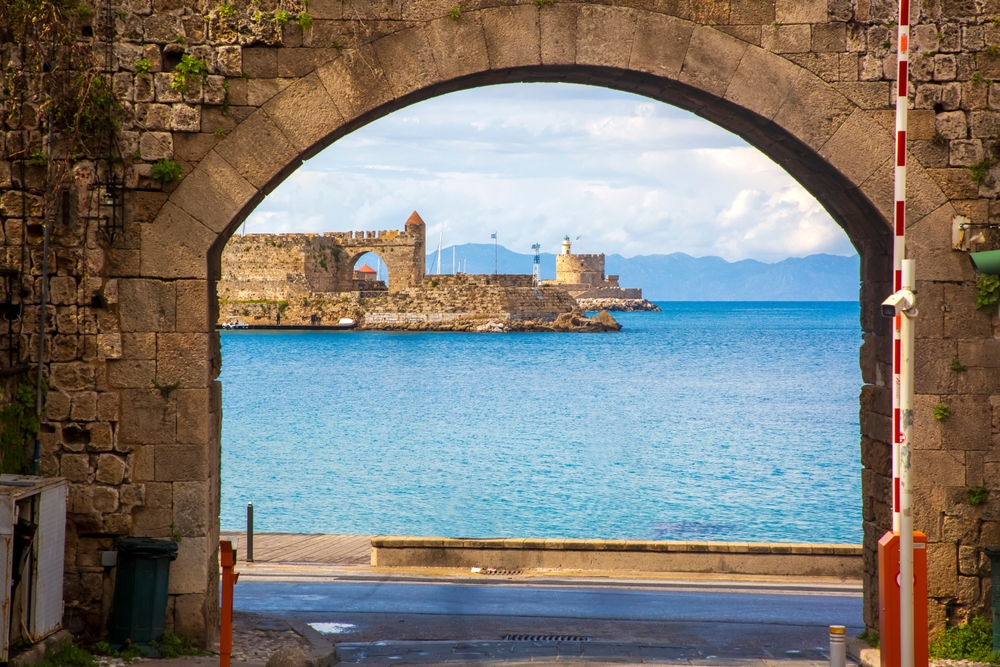
The Old Town in Rhodes Town is the main reason to come to the island. The Knights of St John held Rhodes from 1309 to 1523, and they turned the town into a fortress with a ring of walls around four kilometres long. The medieval town has been on UNESCO’s World Heritage List since 1988, and people still live here, so you walk between cafés, shops and ordinary homes in the narrow cobbled streets.
The town is split in two. The upper part, the Collachium, was home to the knights, with the palace, the hospital and the Street of the Knights. The lower part was where the Greeks, the Jews and later the Turks lived, and after 1523 many of the churches were turned into mosques. This is where you’ll find Sokratous Street with its shops, the pink Suleiman Mosque and Hippocrates Square with its fountain, where many of the restaurants are. There’s no entry fee for the Old Town itself, and you get in through one of the gates in the wall.
My tip is to walk around early in the morning or late in the day, once the cruise passengers have sailed on. It’s also where most people choose to stay, and in my guide to where to stay in Rhodes, Rhodes Town is the first area. If you’d like to stay inside the walls, you can see hotels in the Old Town here. Wear flat shoes, because the cobblestones are slippery and uneven.
Book a guided walking tour of the Old Town in Rhodes Town.
2. Palace of the Grand Master
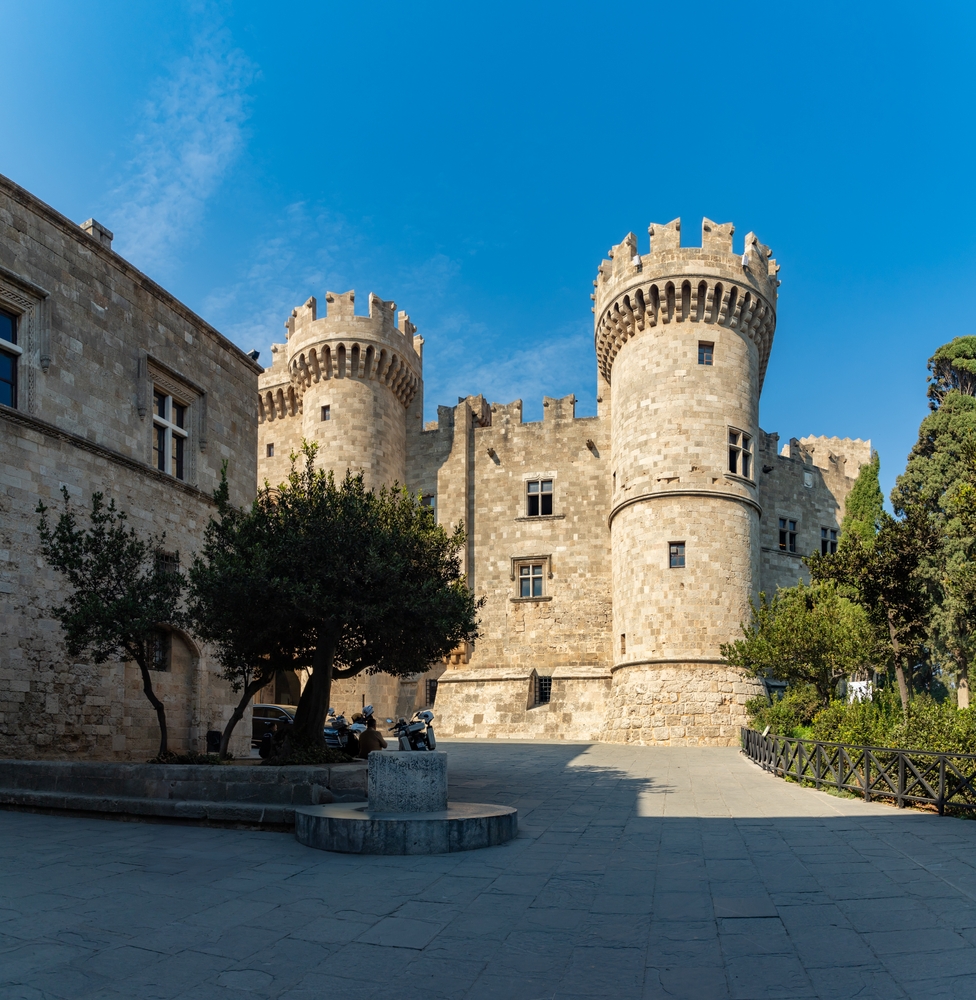
The Palace of the Grand Master stands at the top of the Old Town at the end of the Street of the Knights. The knights built it in the 14th century as a castle and home for the Grand Master of the order. In 1856, a gunpowder store nearby exploded, and the palace was almost destroyed. What you see today is the Italian reconstruction from the late 1930s, when Rhodes was Italian, and it was meant to be a residence for King Victor Emmanuel III and Mussolini.
Inside, you walk through large halls with marble floors, old furniture and ancient mosaic floors, which the Italians brought over from excavations on Kos. On the ground floor, there are exhibitions about the town’s history. A ticket costs €20 (around £17), and from 1 April to 31 October the palace is open from 8am to 8pm. From 1 November to 31 March, it’s open from 8.30am to 3.30pm, and the palace is closed on Tuesdays. Some of the exhibitions have shorter opening hours or are closed in winter.
I think €20 is a steep price for a palace that’s mostly a reconstruction, but the halls and the courtyard are beautiful, and it’s the best-known building on Rhodes. My tip is to come when it opens, because the groups from the cruise ships arrive in the middle of the day.
3. Street of the Knights
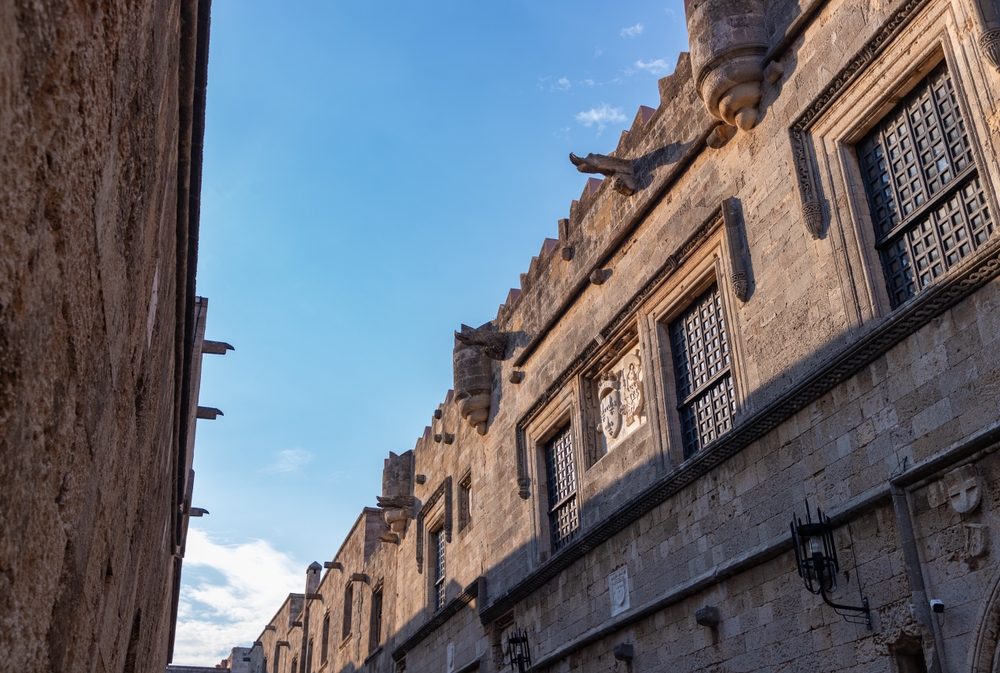
The Street of the Knights, Odos Ippoton in Greek, is a straight cobbled street of about 200 metres that runs from the area by the old hospital up to the Palace of the Grand Master. It’s one of the best-preserved medieval streets in Europe. The Order of St John was divided into groups by language and nationality, the so-called tongues, and each tongue had its own inn here on the street, where the knights met and ate.
Along the street, you’ll see the inns of France, Italy, Spain and Provence, among others, with coats of arms above the doorways. The Inn of France is the most richly decorated, with Gothic details and lilies carved into the stone. According to the Rhodes tourism organisation, the buildings were used as lodgings for knights from the different European countries, and today several of them house offices and cultural institutions, so you can’t go inside all of them.
The street is free and always open. It’s right next to the Archaeological Museum, so you can easily do the street, the palace and the museum in one morning. My tip is to walk up the street in the evening, when it’s almost empty and the lanterns are lit. During the day, it’s full of groups, and it’s hard to get a photo without people in it.
4. Archaeological Museum
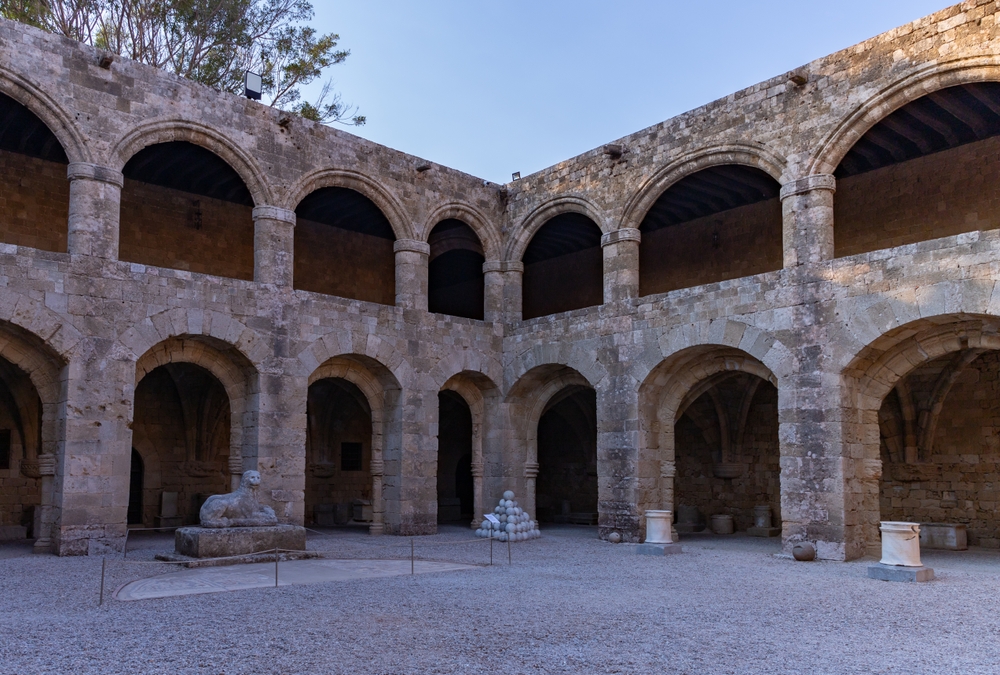
The Archaeological Museum of Rhodes is housed in the knights’ old hospital at the foot of the Street of the Knights. Construction began in 1440 and was finished in 1489, and the building, with its large courtyard and two storeys of arcades, is one of the most beautiful in the Old Town in its own right. On the first floor, you can see the long hall where sick knights and pilgrims were cared for.
The collection includes finds from all over the island, such as gravestones, pottery, jewellery and sculptures from the ancient cities of Kamiros and Ialyssos. The best-known work is a small marble statue of Aphrodite kneeling and wringing out her hair after bathing. A ticket costs €10 (around £8). From 1 April to 31 October, the museum is open from 8am to 8pm, and from 1 November to 31 March from 8.30am to 3.30pm, closed on Tuesdays. Some of the smaller exhibitions are only open on certain days of the week, and the museum is closed on the major Greek public holidays.
I think the museum is better value than the palace, especially if you’re also going to see Kamiros or Lindos, because this is where you get the context. My tip is to spend the hottest part of the day in here, because the thick walls keep it cool, and the courtyard is a good place for a break in the shade.
5. The Moat and City Walls
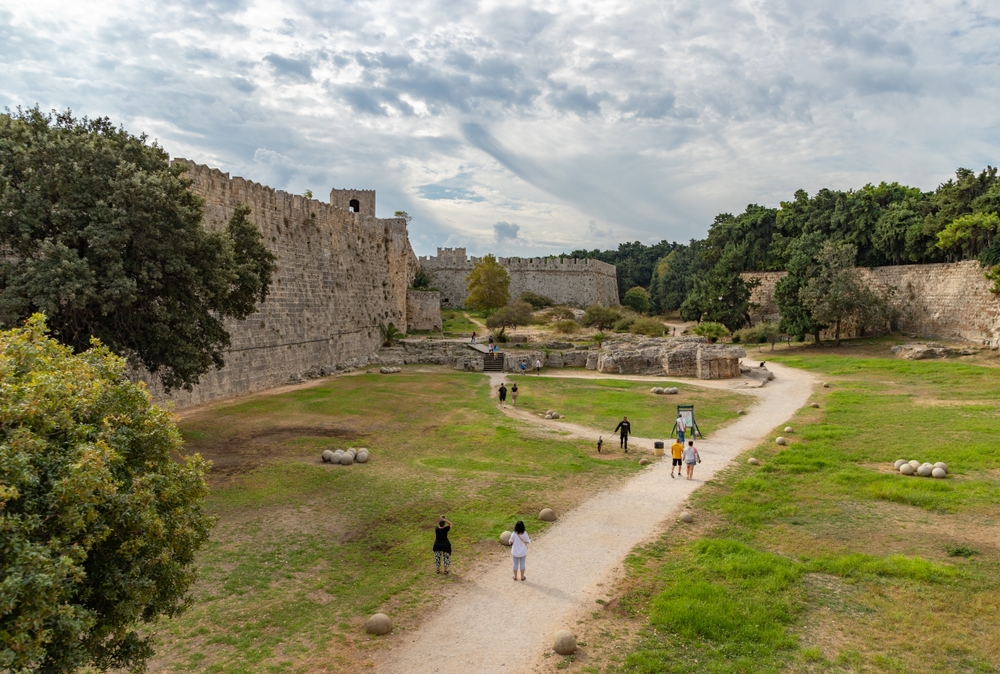
The knights didn’t just build a wall around the town. They built two rings of walls with a wide, dry moat in between, and the bastions were strengthened in the 15th and 16th centuries as cannons got better. The walls held out during the great siege of 1480, but in 1522 the knights had to surrender to the Ottoman sultan Suleiman, and the following year they left the island.
Today, the moat is a green area with paths, where you walk along the bottom between the high walls. Stone cannonballs from the sieges still lie in the grass, and you get a good sense of how big the fortress was. Entry to the moat is free, and you can get down into it in several places, including by the d’Amboise Gate close to the Palace of the Grand Master.
Every now and then, you can also go on a walk along the top of the walls themselves, but it has had limited opening hours and can be closed for periods, so ask at the Palace of the Grand Master if you’d like to go up. My tip is to walk the moat late in the afternoon, when the sun is low and there’s shade between the walls. The walk all the way round takes about an hour, and it’s flat and easy. Bring water, because there are no kiosks along the way.
6. Mandraki Harbour
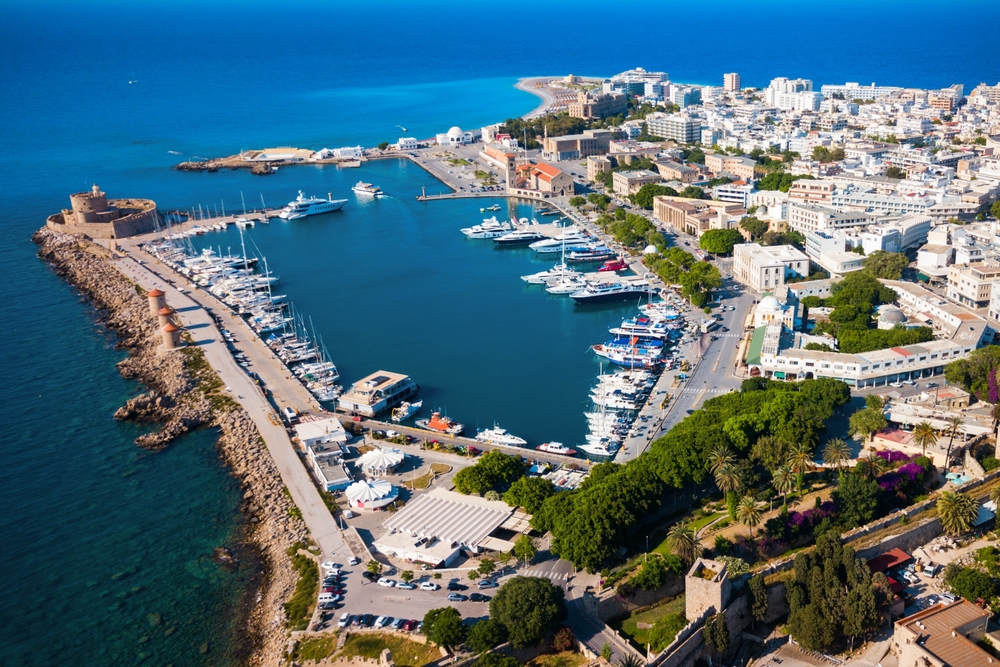
Mandraki is the old harbour just north of the Old Town, and it’s where most of the excursion boats leave from. At the harbour entrance, two bronze deer stand on top of their own columns, a stag and a doe, and they’ve become the town’s emblem. According to the island’s official tourism site, the island was once called Elafousa, the island of deer. Many people will tell you the Colossus of Rhodes stood right here, but nobody knows for sure where the huge bronze statue of the sun god Helios stood before it fell in an earthquake in ancient times.
On the long breakwater stand three old windmills, and right at the end is the 15th-century Fort of Agios Nikolaos. Along the quay, you’ll see the Italian buildings from the 1920s and 1930s, including the Church of the Annunciation (Evangelismos) and the round market hall, Nea Agora, with cafés and souvlaki stalls. It costs nothing to walk along the harbour, and from the Old Town it’s a five-minute walk through the Liberty Gate.
My tip is to walk out along the breakwater to the windmills at sunset, when you get a view back over the harbour and the walls. If you’d like to get out on the water, an old wooden schooner runs short trips around the town from Mandraki.
Book a sunset cruise from Mandraki Harbour.
7. The Acropolis of Rhodes Town
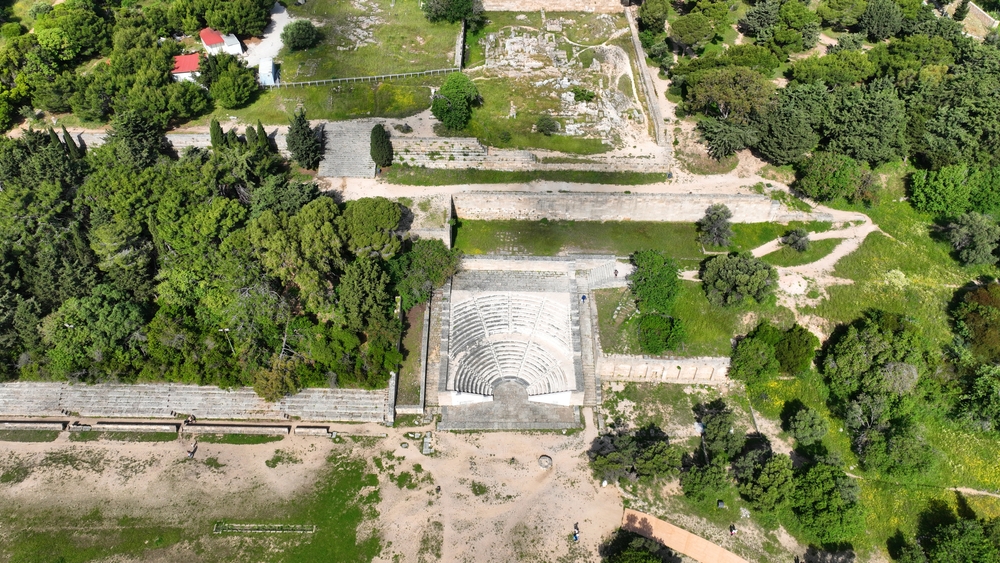
Most people only know the acropolis in Lindos, but Rhodes Town has one of its own too. It sits on the Monte Smith ridge a couple of kilometres west of the Old Town, which is named after the British admiral Sidney Smith, who used the hill as a lookout during the Napoleonic Wars. In ancient times, there were temples, a stadium and a small theatre here, and according to Visit Rhodes the temple was dedicated to the god Apollo.
Of the Temple of Pythian Apollo, only a few re-erected columns and part of the foundations are left today, but the setting high above the town is beautiful. Below the temple lies the stadium from the Hellenistic period, and next to it the small theatre, which the Italians restored. The excavation is an open site, and entry is free.
Buses from the centre run up to Monte Smith, but you can also walk up from the Old Town in 30 to 40 minutes if it isn’t too hot. I think it’s one of the best places to watch the sunset in Rhodes Town, because from here you see the sun go down into the sea to the west. Bring water, because there’s very little shade, and try to arrive an hour before sunset, so you have time to walk around the stadium first.
8. The Acropolis of Lindos
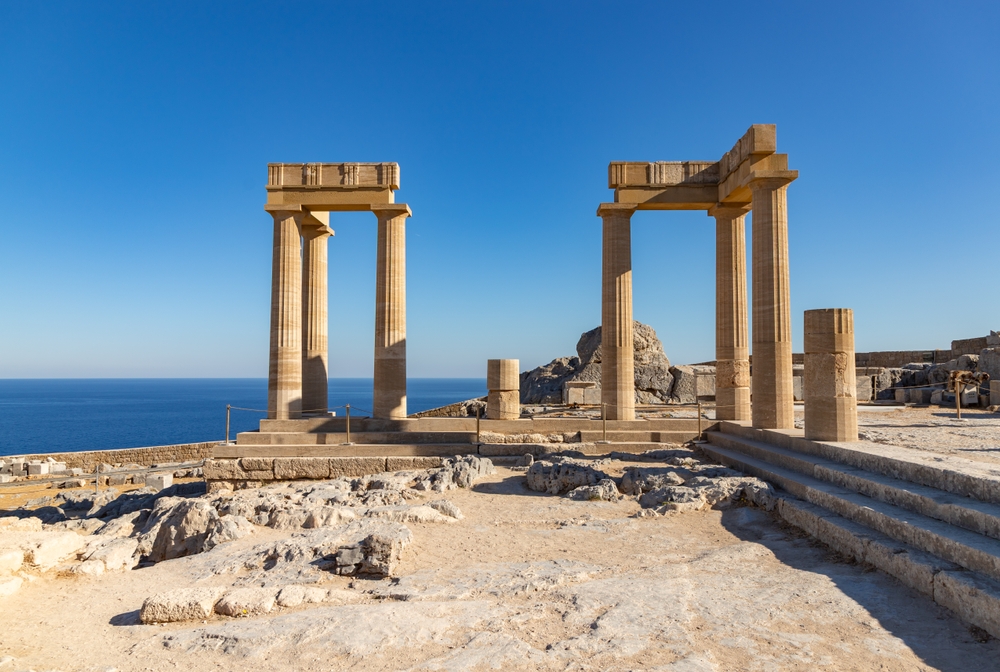
The Acropolis of Lindos sits on a rock 116 metres above the sea, and it’s the most famous ancient monument on Rhodes. At the top stand the remains of the Temple of Athena Lindia, which was built around 300 BC, and in front of it a large Hellenistic stoa with a wide staircase. When the Knights of St John came to the island, they built a castle around the sanctuary, so you walk in through medieval walls before you reach the temple. Right by the steps up, you can see a relief of an ancient warship carved straight into the rock.
Entry costs about €20 (around £17), and you can buy your ticket on the official ticket site for Greek heritage sites or at the entrance. In the summer half of the year, the acropolis is open from morning to evening, while the opening hours are shorter in winter, so check the times before you set off. From the village, you walk up steps and steep paths, and it takes about a quarter of an hour.
You can also ride up on a donkey, but I’d recommend walking yourself. It’s hard going in the heat, and there’s hardly any shade at the top, so my tip is to be at the entrance when it opens or to come late in the afternoon, once the big coaches have left.
Book a ticket for the Acropolis of Lindos with an audio guide.
9. Lindos Village and St Paul’s Bay
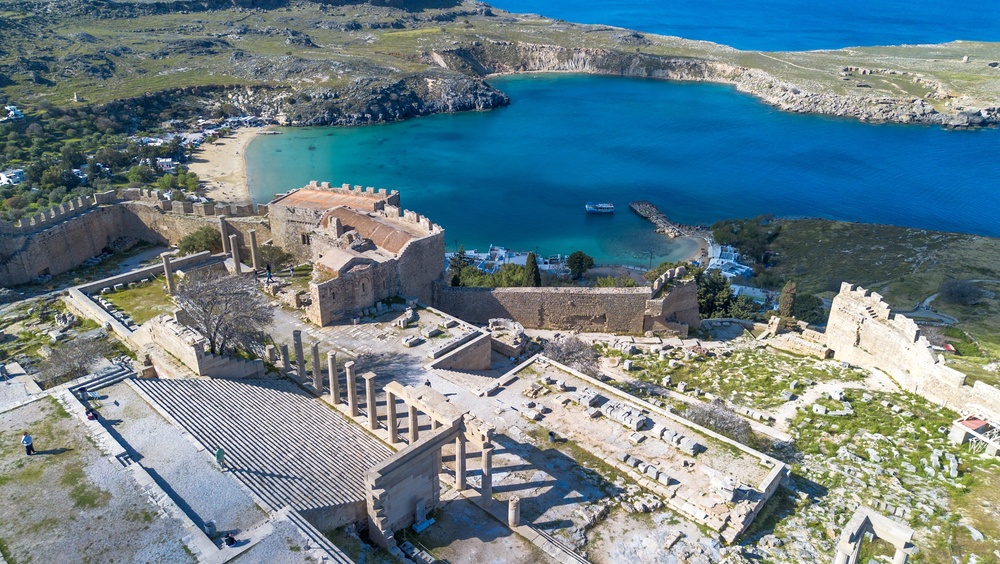
Lindos lies about 50 kilometres south of Rhodes Town on the east coast, and it’s one of the most beautiful villages in the Greek islands, with white houses, narrow alleys and views over two bays. Cars aren’t allowed into the old part, so you wander between small shops, roof terraces and captains’ houses several hundred years old with fine stone doorways and courtyards paved with black and white pebble mosaics.
Just south of the acropolis lies St Paul’s Bay, a small, almost enclosed bay with clear water and a white chapel by the beach. According to tradition, the apostle Paul came ashore here during a storm. The bay is popular for weddings and a lovely place to swim, while the main beach below the village is bigger and has sunbeds and tavernas. You can get to Lindos by bus from Rhodes Town in just over an hour, but the car parks outside the village fill up quickly.
Lindos is expensive, and during the day it’s packed with day-trippers, so my tip is to stay a night. In the evening, the village goes quiet, and the view from the roof terraces over the floodlit acropolis is the best on the whole island. You can see hotels in Lindos here.
Book a day trip to Lindos from Rhodes Town.
Book a boat trip from Lindos past St Paul’s Bay.
10. Anthony Quinn Bay
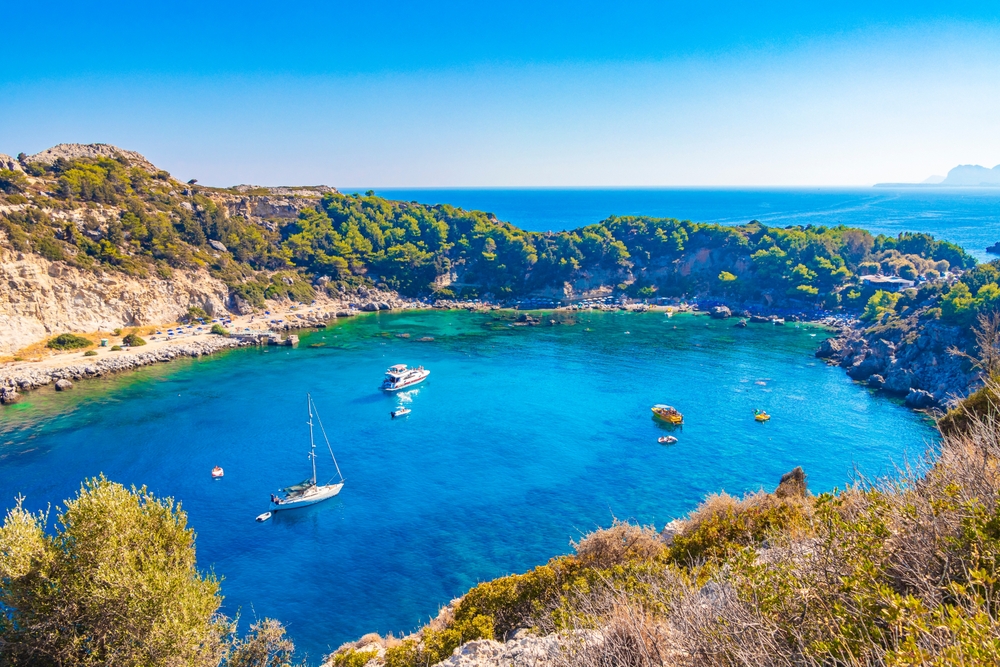
Anthony Quinn Bay is on the east coast a little south of Faliraki and is one of the most photographed bays on Rhodes. It’s named after the American actor Anthony Quinn, who, according to the tourism organisation Visit Rhodes, fell for the place when he was filming The Guns of Navarone in 1961. The bay is small, with rocks and pine trees running down to turquoise water that’s clear enough for snorkelling.
The beach itself is mostly rocks and pebbles, and there isn’t much space, so in summer it fills up fast. There are sunbeds and a small beach bar, but you can also lie on the rocks. Bring water shoes, because the stones are slippery. Right next door is Ladiko Bay, which is a bit bigger and often quieter if Anthony Quinn Bay is full.
My tip is to arrive before 10am, because the small car park fills up quickly, and later in the day the boats from Faliraki arrive. If you don’t have a car, the bay is close enough to Faliraki to take a taxi. Faliraki is also a good place to stay if you want the beach and the lively streets right on your doorstep, and you can see hotels in Faliraki here. I think the bay works best as a short stop with a snorkel and mask rather than a whole beach day.
11. Kallithea Springs
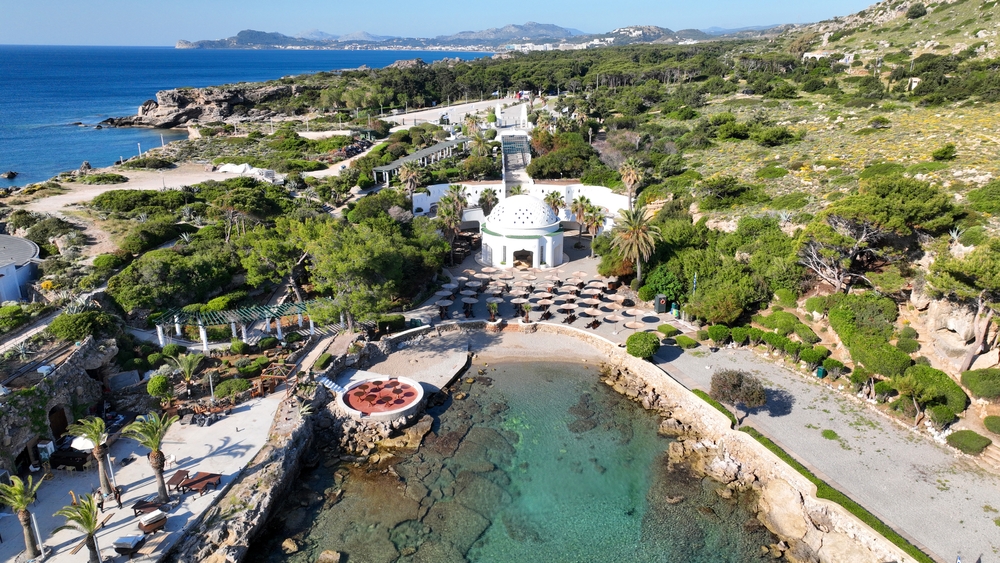
Kallithea Springs is on the coast about ten kilometres south of Rhodes Town, and it’s an old spa with hot springs that the Italians rebuilt in the 1920s. According to the island’s official tourism site, the complex was designed by the Italian architect Florestano Di Fausto, and it mixes art deco with oriental details, with domes, arcades and pebble mosaics.
The spa closed many years ago, but the buildings have been restored, and today you can walk around the gardens, see the rotunda and the old spring hall and swim in the small cove below, where you can rent sunbeds. The water is clear and good for snorkelling between the rocks. The complex has been used as a backdrop in several films, and it’s also used for weddings and events.
There’s an entry fee of about €5 (around £4), but check the price at the entrance, as it can change. Buses from Rhodes Town towards Faliraki stop at Kallithea. My tip is to combine Kallithea Springs with an afternoon in Rhodes Town, because it’s close by, and the gardens are quietest in the morning before the groups arrive.
12. Butterfly Valley (Petaloudes)
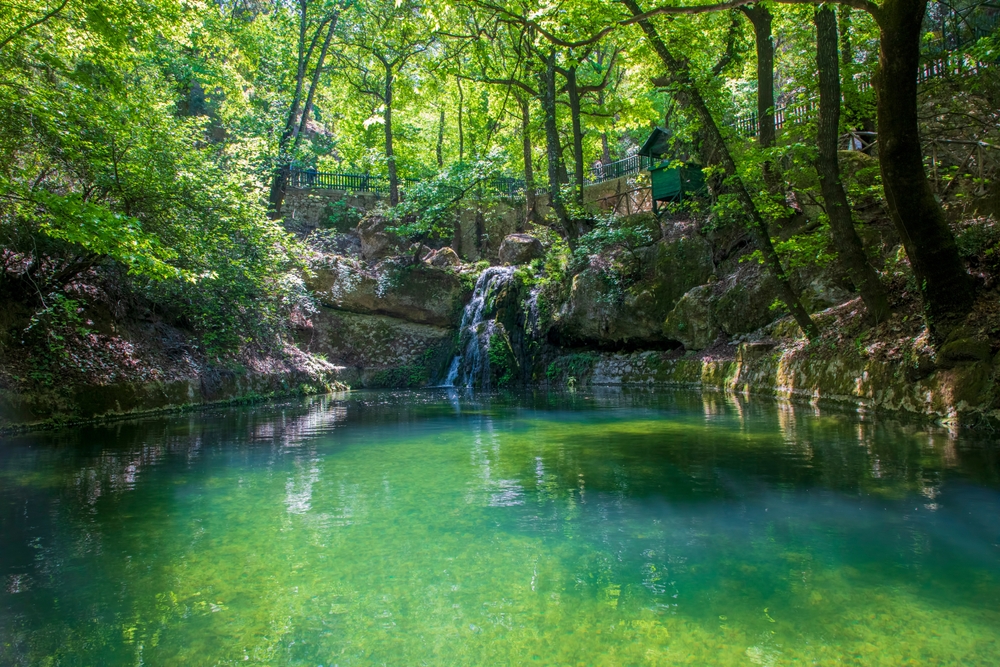
Petaloudes, or Butterfly Valley, lies inland about 25 kilometres from Rhodes Town. It’s a wooded valley with a small river, paths, bridges and little waterfalls under tall oriental sweetgum trees, and in summer thousands of Jersey tiger moths (Panaxia quadripunctaria) gather on the tree trunks, because they’re drawn to the scent of the trees’ resin.
According to the Municipality of Rhodes, they’re there from mid-June to mid-September, and the rest of the year you’ll only see the valley and the woods. By the entrance, there’s a small natural history museum, and from the top part of the path you can walk up to the Kalopetra Monastery, which was built in 1782. There’s a small entry fee of a few euros. The path goes uphill and there are lots of steps, but it isn’t a hard walk.
The moths sit still during the day, and they use up energy every time they’re disturbed, so don’t clap or shout to make them fly. I think Petaloudes is lovely, especially for children, but it isn’t worth a long detour outside the season. My tip is to come in the morning in July or August, when there are the most moths and the woods are at their coolest.
13. Seven Springs
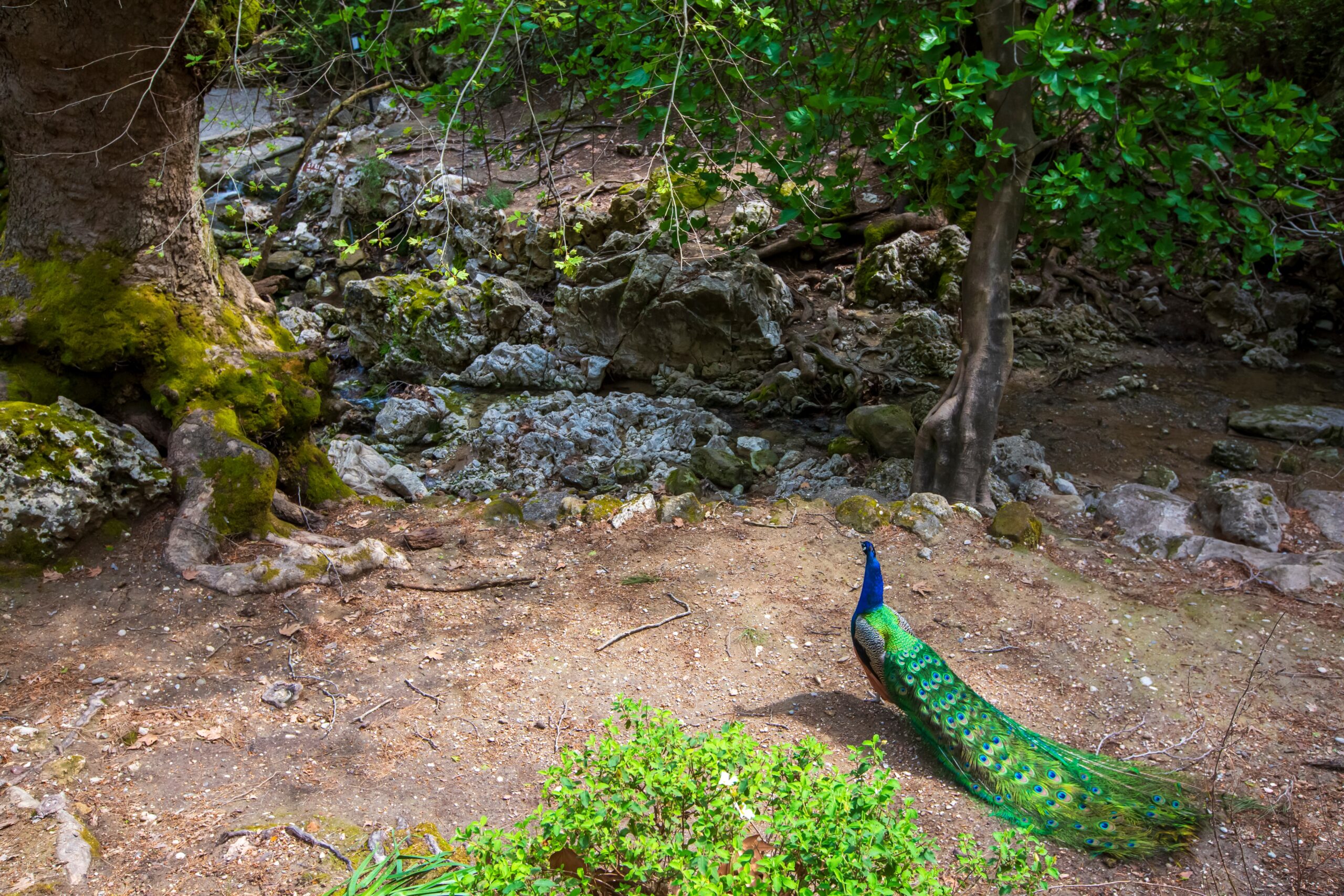
Seven Springs, Epta Piges in Greek, lies in a lush valley inland on the east side of the island near the town of Archangelos. Seven springs gather in a small pond under pine and plane trees, and peacocks, geese and ducks wander between the tables at the taverna. In summer, it’s one of the coolest places on Rhodes.
The most fun part is the tunnel, which the Italians dug to carry the water on to an artificial lake further down. According to Visit Rhodes, the tunnel is 186 metres long, and you can walk through it in ankle-deep water. It’s dark and narrow, so it’s hard to turn back once you’ve gone in, and it’s not for anyone with claustrophobia. You can also walk round it on a path above ground.
It costs nothing to get into the area, but parking and food cost money. There’s no direct bus here, so you’ll need a car or a tour that combines Seven Springs with Lindos. My tip is to wear sandals that can get wet and to bring a torch or use your phone’s light for the tunnel.
Book a bus tour to Seven Springs and Lindos.
14. Filerimos and Ialyssos
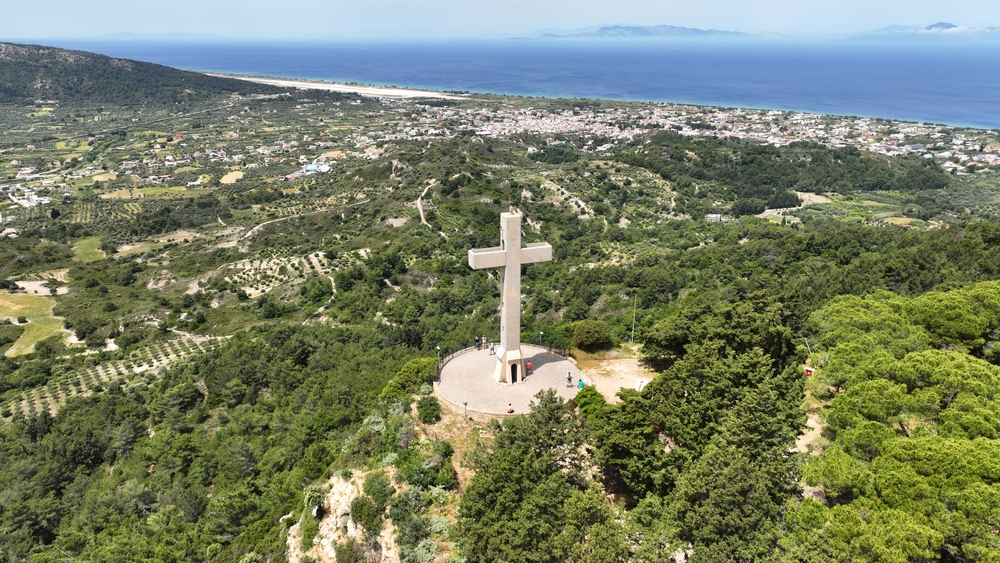
Filerimos is a hill just outside the town of Ialyssos, about 15 kilometres south-west of Rhodes Town. This was the site of the acropolis of Ialyssos, one of the three ancient cities on Rhodes, and according to the tourism organisation you can still see the remains of the Temple of Athena and the foundations from the Hellenistic period.
Next to the ruins stands the Monastery of Our Lady of Filerimos, which the Knights of St John built in the 15th century and the Italians restored in the 20th century. The church has a pretty cloister with cypress trees, and peacocks roam freely in the garden. From the monastery, the Way of the Cross, a path with reliefs of the Passion of Christ, leads out to a large cross with views over the west coast and out to sea.
There’s an entry fee for the monastery and the ruins, and you can buy your ticket at the entrance. No bus goes all the way up, so you’ll need a car or a taxi from Ialyssos. My tip is to come late in the afternoon, when it’s cooler, and walk the Way of the Cross to the end, because the view from the cross is the best part of the visit. Ixia and Ialyssos just below are popular areas to stay, with lots of big hotels along the west coast.
15. Kamiros
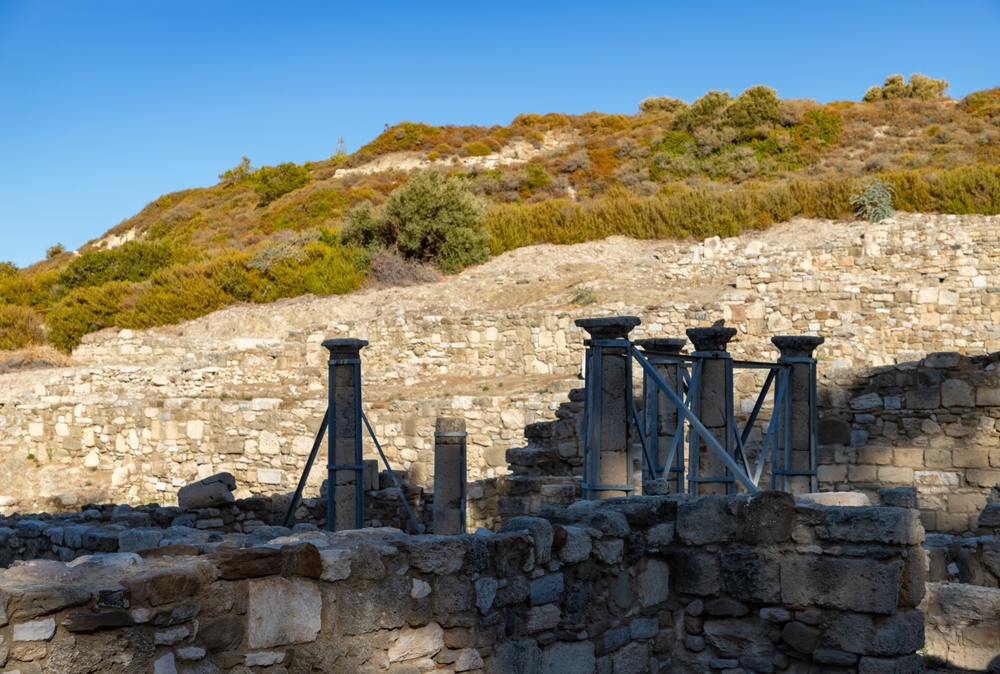
Kamiros on the west coast was one of the three great ancient cities on Rhodes, along with Lindos and Ialyssos, and according to Visit Rhodes the city was laid out in terraces on a slope running down to the sea. It was hit by earthquakes in ancient times and later abandoned, so it has never been built over. That makes Kamiros one of the best places in Greece to see how a Hellenistic city was laid out.
You walk from the lower part, with its sanctuaries and the square, the agora, up the main street between the foundations of the houses to a large water cistern and the remains of a long stoa at the top. There’s an entry fee, and you buy your ticket at the entrance. Kamiros is about 35 kilometres from Rhodes Town, and the west coast buses run to the area, but they’re not very frequent.
There isn’t much shade, so my tip is to come early and combine your visit with the castle ruins at Kritinia a little further south and a fish lunch in the small harbour of Kamiros Skala. If you’re not into ruins, you can skip Kamiros, but I think it has more atmosphere than Lindos, because there are so few people.
Book a guided tour to Kamiros and the west coast.
16. Tsambika
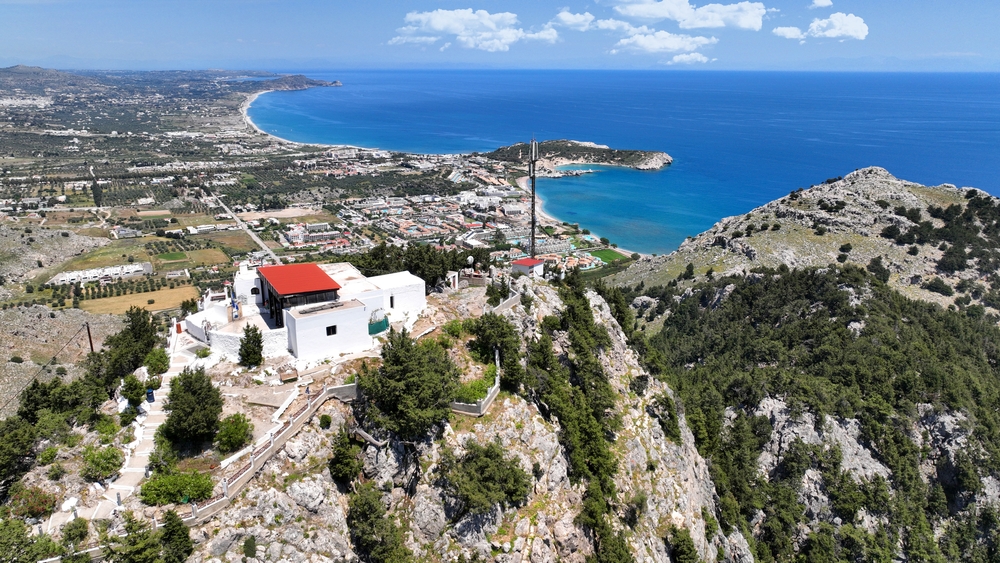
Tsambika is both a beach and a monastery on the east coast between Kolymbia and Archangelos. The beach is a long, golden stretch of sand with shallow water and one of the best on Rhodes for families with children. There are sunbeds, parasols and water sports, and the rocks at either end frame the beach. There are no big hotels here, so it feels more natural than Faliraki.
High above the beach stands the small white monastery of Panagia Tsambika. You drive up a winding road to a car park and a small café, and from there you climb about 300 steps to the church at the top. The church is known for couples who want children walking up to pray to the Virgin Mary, and children born after a visit are often named Tsambikos or Tsambika. The view over the coast from the top is one of the best on the island.
My tip is to walk up to the monastery early in the morning, before the sun gets too strong, and then spend the rest of the day on the beach. Remember to cover your shoulders and knees in the church. The bus between Rhodes Town and Lindos stops at the road down to the beach, but from there it’s a fair walk.
17. Prasonisi
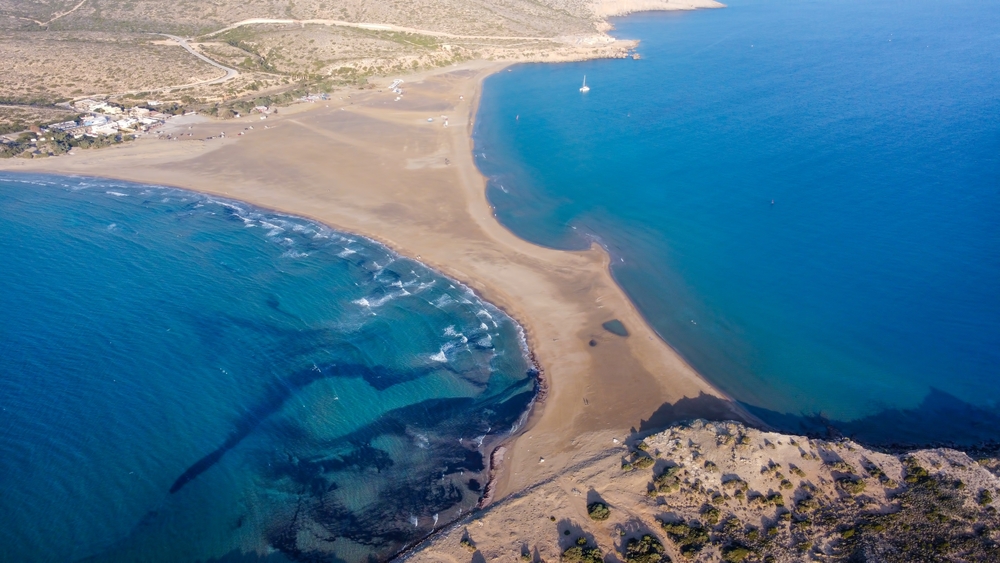
Prasonisi is at the southernmost tip of Rhodes, about 90 kilometres from Rhodes Town. Here, the island is joined to a small peninsula by a sandbar, which, according to the Municipality of Rhodes, is about 500 metres long. In winter, the sea can cover the sandbar, so Prasonisi becomes a real island, but in summer you can walk across with dry feet.
What makes it special is that there are two seas, one on each side of the sandbar. One side has waves and strong wind, while the other is calmer and flatter. According to the island’s official tourism site, Prasonisi is one of the world’s best spots for windsurfing and kitesurfing, and there are several surf schools where you can rent equipment and take lessons. The calm side is good for beginners.
Apart from the surf schools, there are only a couple of tavernas and a few places to stay, so it’s a long way from the resort towns. Buses are rare, and it takes about an hour and a half by car from Rhodes Town. My tip is to combine the trip with Lindos on the way and walk up to the lighthouse on the peninsula for the view. Bring sun cream and a windproof jacket, because it’s almost always windy here.
Book an island tour to Prasonisi, Lindos and Butterfly Valley.
18. Day Trip to Symi
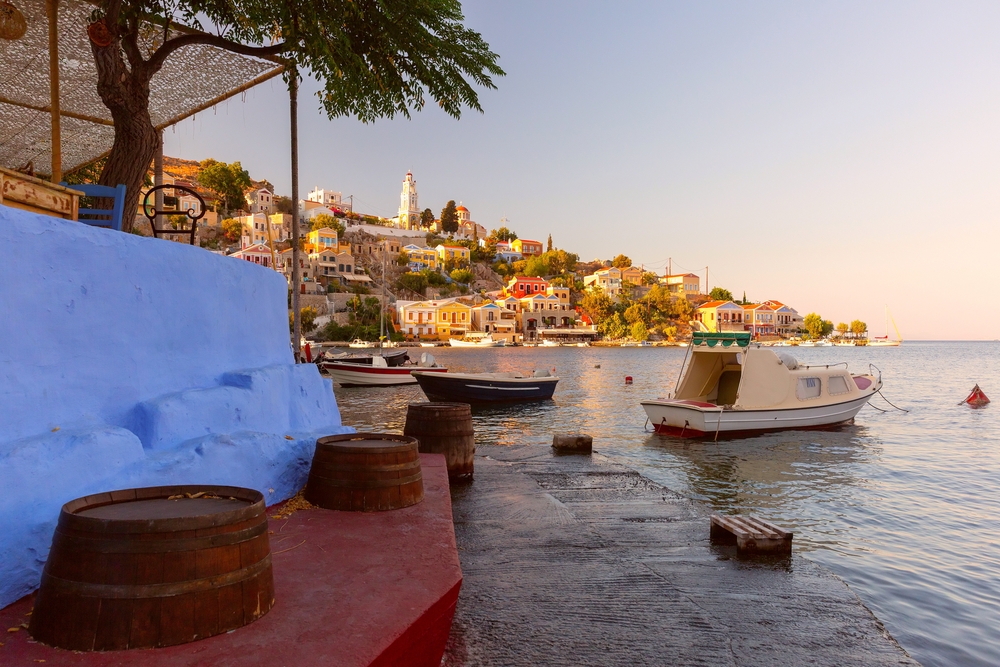
Symi lies north-west of Rhodes, close to the Turkish coast, and it’s the most popular day trip from the island. As the boat sails into the harbour at Gialos, you’ll see the brightly coloured neoclassical houses rising in terraces up the mountainside. They were built by the wealthy shipbuilders and sponge divers who made Symi rich in the 19th century.
From the harbour, a long staircase, the Kali Strata, climbs up to the upper town, Chorio, with views over the harbour. Many day trips also stop at the Panormitis Monastery in the south of the island, which is dedicated to the Archangel Michael and is an important place of pilgrimage. The island is known for its small, crispy shrimps, the Symi shrimps, which you should try in one of the tavernas by the harbour. According to Visit Rhodes, Blue Star Ferries, Dodekanisos Seaways and SAOS Ferries all sail to Symi.
On a fast boat, the trip takes about an hour, while the slower excursion boats take longer. My tip is to choose a trip that gives you at least a couple of hours on your own in Gialos. If you enjoy island hopping in the Dodecanese, you can also sail from Rhodes to Kos, and you can read about where to stay in Kos here.
Book a day trip to Symi by fast boat.
Practical Travel Tips for Rhodes
According to the tourism organisation, Rhodes’ airport, Diagoras, is 14 kilometres south-west of Rhodes Town. The island has two bus companies. KTEL runs along the east coast to places such as Faliraki, Kolymbia, Tsambika and Lindos, while RODA runs in Rhodes Town and along the west coast towards Ialyssos and Kamiros. You’ll find the timetables on the Municipality of Rhodes’ website. If you’d like to see Seven Springs, Filerimos, Kamiros and Prasonisi on your own, a hire car is the easiest option, because buses rarely go to those places.
Plan around the season. From April to October, the big museums and archaeological sites have long opening hours. From November to March, the Palace of the Grand Master and the Archaeological Museum close at 3.30pm and stay closed on Tuesdays, and you should expect shorter opening hours at the other sites too. You’ll only see the moths in Petaloudes in summer. I think May, June, September and October are the best months, because in July and August it gets very hot on the acropolis in Lindos and in Rhodes Town.
If you’d like to see the full range, you can see all hotels on Rhodes on Booking.com. If more Greek islands are on your list, take a look at my picks of the best things to do in Crete, or start your trip with the best things to do in Athens.
Travel ressources & websites I use all the time 👇
• Booking.com has the best offers on hotels and unique places to stay
• GetYourGuide is the best place to book tours & activities with free cancellation
• Welcome Pickups is the best & safest place to pre-book airport transfers
Psst 👀 Have you subscribed to my Youtube channel and my Instagram where I provide more useful travel tips?