

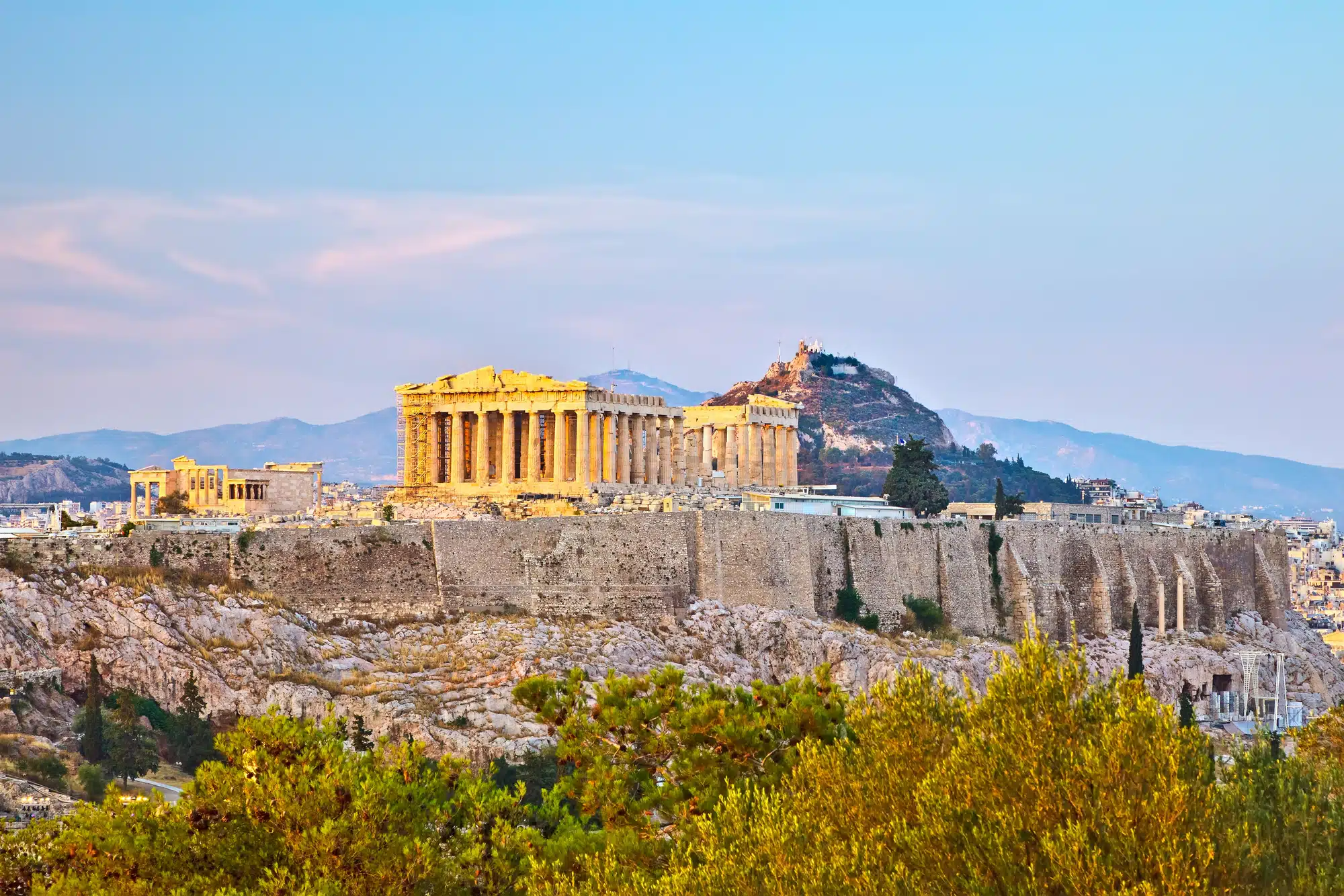
Athens is a city that hits you right in the gut. There’s no filter here. You’re walking down a dusty street covered in graffiti and scooters – and then you look up, and there’s the Parthenon glowing in the sunset. It’s 2,500 years old, and it still looks incredible. Athens is chaotic, noisy and absolutely fantastic.
Here are my top picks for things to see and do in the Greek capital. This guide was updated in September 2026 with the current ticket rules for the Acropolis and the other sites, so you won’t get caught out by the changes Greece made to its archaeological tickets.
Contents
1. The Acropolis and the Parthenon
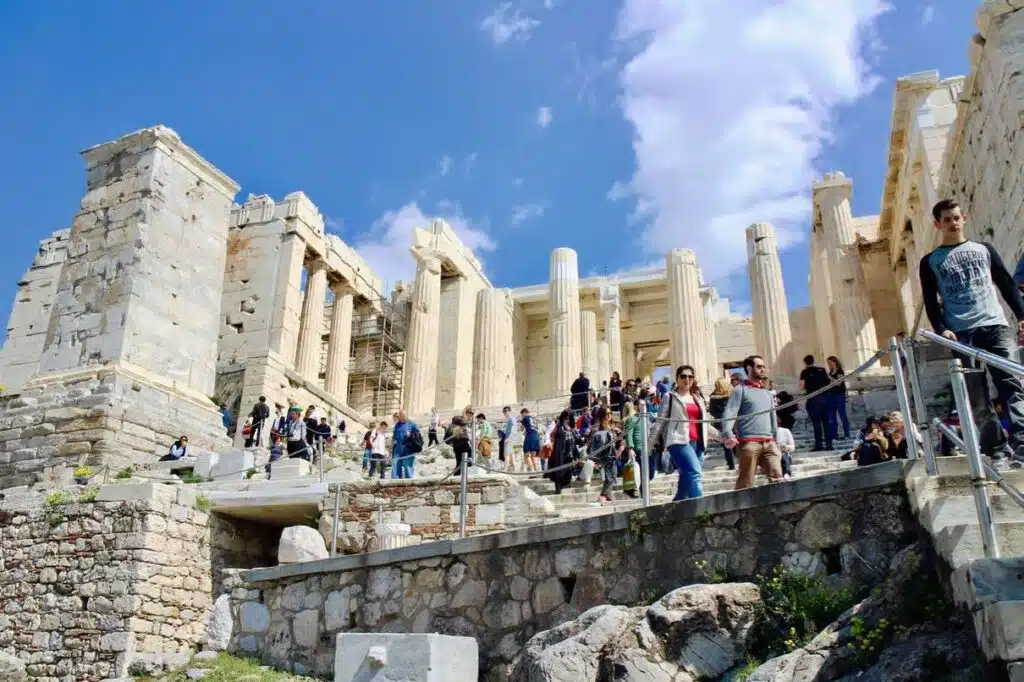
Let’s start with the elephant in the room. The Acropolis is the reason most people book a flight to Athens in the first place – and rightly so. The limestone hill with the Parthenon on top is simply one of the most impressive things you’ll ever see. The Parthenon was built in the 5th century BC as a temple to the goddess Athena, and although it’s taken a few knocks over the years, it’s still enormous.
A ticket costs €30 for adults (the price increased in April 2025, and there’s no longer a winter discount). You need to choose a time slot when booking online, and I strongly recommend you do. The queue at the entrance can be brutal, especially in the middle of the day. My best advice: book the earliest time slot and use the south entrance on Dionysiou Areopagitou Street, a two-minute walk from Akropoli metro station. It’s far less chaotic than the main entrance. Opening hours vary by season – in summer (April to October) 08:00-20:00, in winter 08:00-17:00. Allow 1.5-2 hours for the visit itself.
Book a guided tour of the Acropolis with entry – it makes the experience significantly better when a guide can tell the stories behind the temples.
2. The Acropolis Museum
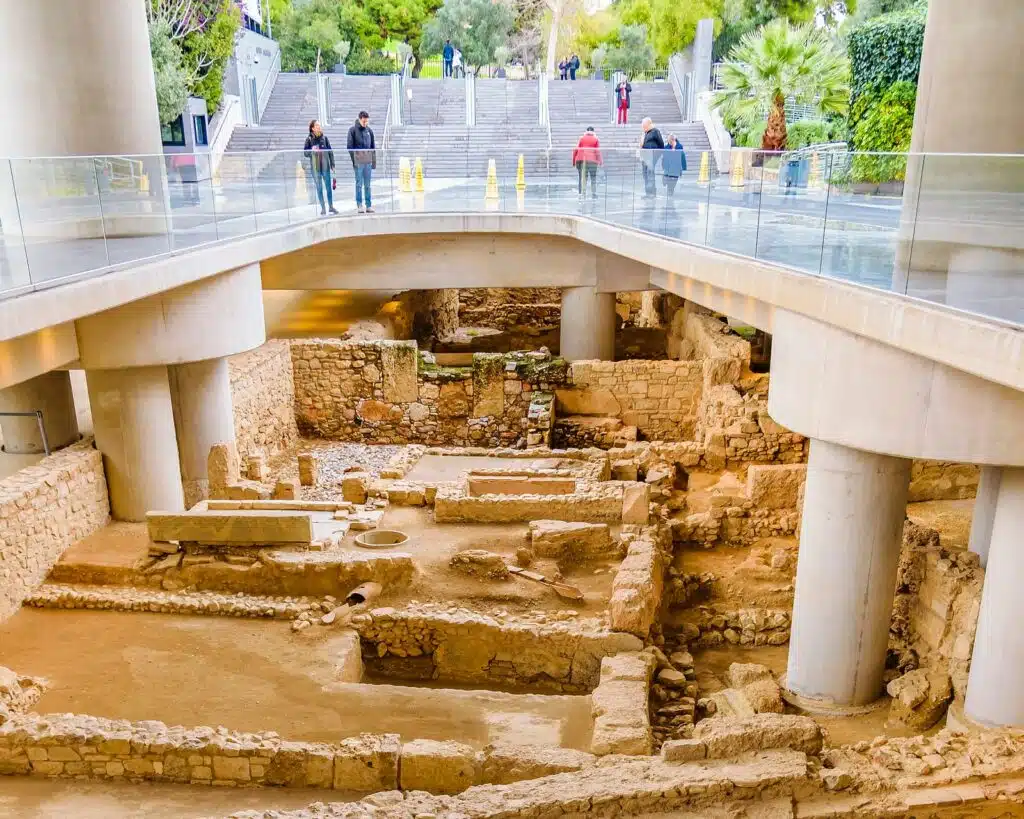
Credit where credit’s due: this museum is just as important as the Acropolis itself. It sits at the foot of the hill and houses over 4,000 finds from the excavations. The building itself is an experience – you literally walk on glass floors and can look down at archaeological excavations beneath you.
The top floor is the wildest part. Here you’ll find a full-size recreation of the Parthenon frieze, and you can look out at the real Parthenon through the windows. Tickets cost €15 in high season (April-October) and €10 in low season.
- Important: the ticket to the Acropolis Museum is not included in your Acropolis ticket. They’re two separate things. The museum has its own website with information about opening hours.
Don’t use your camera in the Archaic Gallery hall – it’s not permitted there because the sculptures still have traces of their original colours.
3. Plaka – Athens’ Oldest Quarter
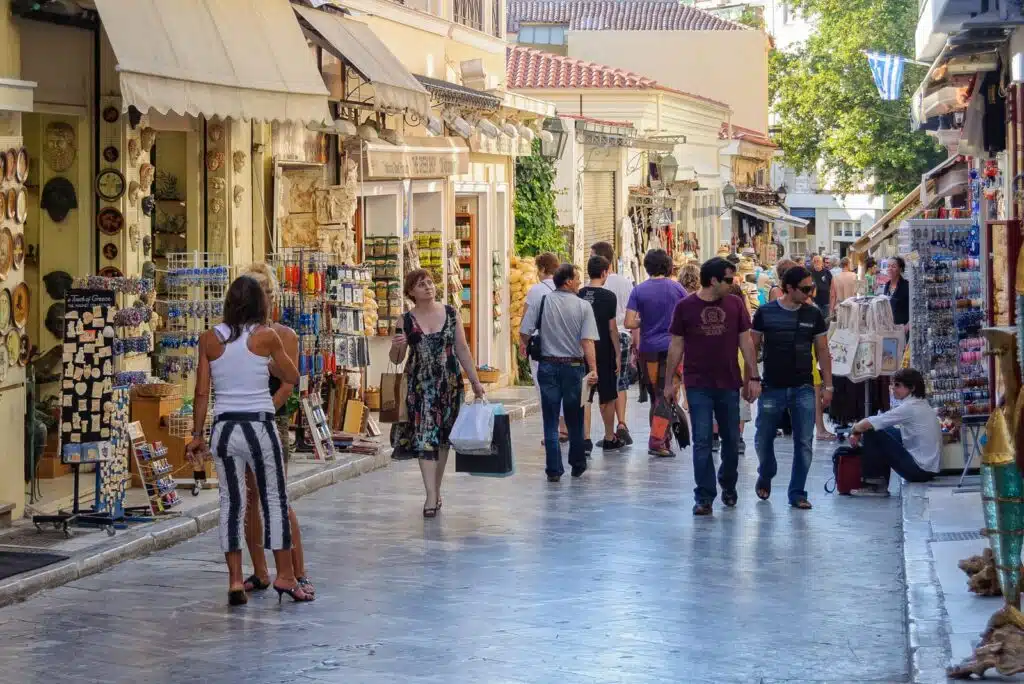
Plaka is the oldest inhabited quarter in Athens, and it feels like an entirely different world from the rest of the city. The cars have (almost) disappeared, and instead you’ll find narrow cobblestone alleyways, neoclassical houses with flowering balconies and small Byzantine churches tucked away around corners.
Take a walk along Lysiou Street, where the scent of Greek coffee and freshly baked pastries hangs in the air. Plaka is perfect for a morning stroll before the tourist coaches arrive. The quarter sits between the Acropolis and Syntagma Square, so you can reach both on foot in under 15 minutes. There are plenty of souvenir shops here – most are overpriced, but the flea market in Plaka is actually quite charming if you’re into old drachma coins and tavli board games.
If you want to stay right in the thick of things, check out the hotels in the Plaka quarter. The location is hard to beat.
Also check out my guide on where to stay in Athens with more area and hotel recommendations.
4. Anafiotika – The Hidden Island Village
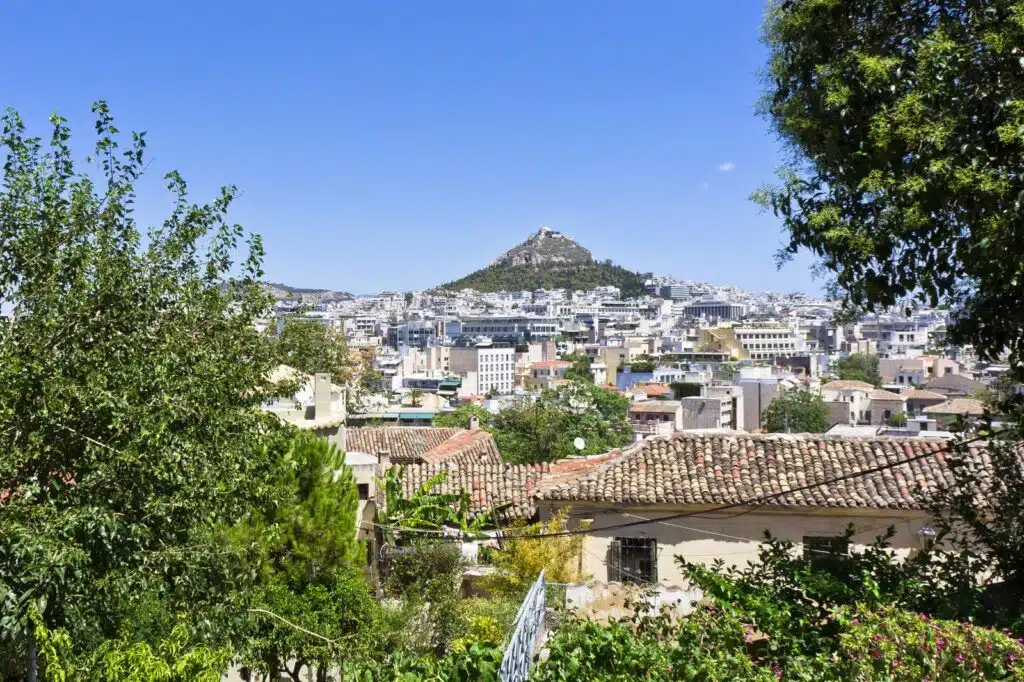
This is one of those things that only locals know about – and now you know it too. Anafiotika is a small pocket of whitewashed houses clinging to the north side of the Acropolis hill. It literally feels like a Greek island in the middle of Athens.
The story is fantastic: in the 1830s, construction workers came from the tiny island of Anafi (which today has roughly 271 inhabitants) to build the royal palace. They missed their island, so they built a miniature version of it – complete with whitewashed facades, blue doors and flowering courtyards.
Today only 45 houses remain, but that’s enough to make you feel like you’ve stepped into a time capsule. Just walk up the steps from Plaka and follow the narrow alleyways. There are no signs, no tickets, no queues. Just you and quiet streets with the scent of basil.
5. The Changing of the Guard at Syntagma Square
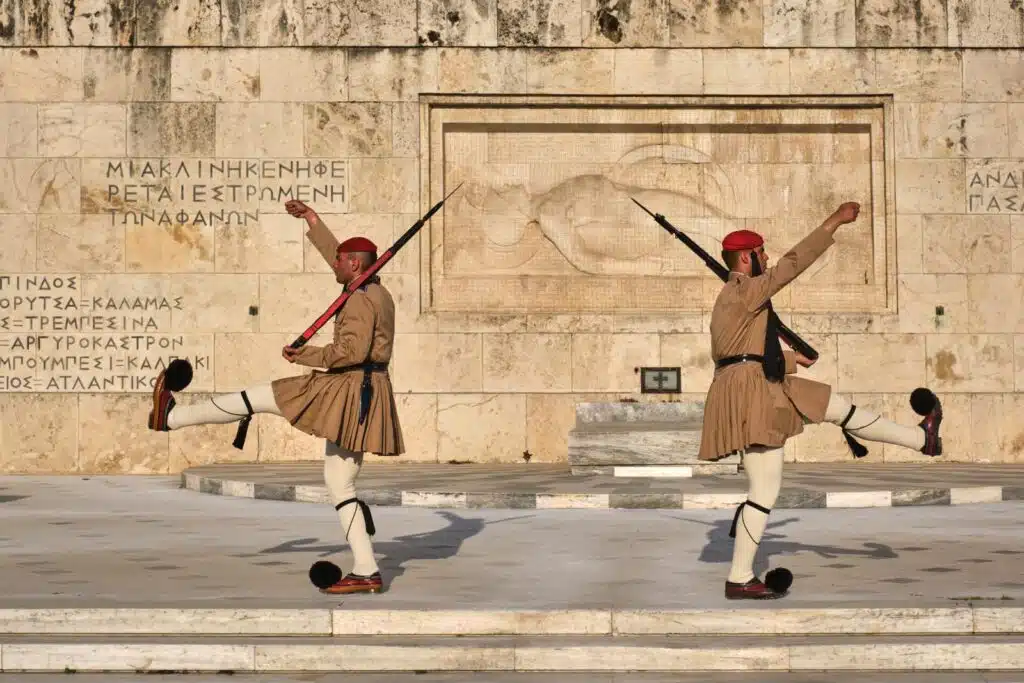
In front of the Greek Parliament on Syntagma Square, the Evzone soldiers stand guard at the Tomb of the Unknown Soldier. Every hour there’s a changing of the guard with a rather special ceremony, where the soldiers in their traditional uniforms (complete with pom-pom shoes) perform a synchronised march.
But it’s Sunday at 11:00 that you really need to come. That’s when there’s a full parade with an entire platoon of soldiers marching up to the tomb with a military band. It’s free, it’s colourful, and it’s one of the most photographed events in Athens.
Arrive 15-20 minutes early to get a good spot. Syntagma Square is also a good starting point for walking down Ermou Street, Athens’ main shopping street.
6. The Ancient Agora and the Temple of Hephaestus
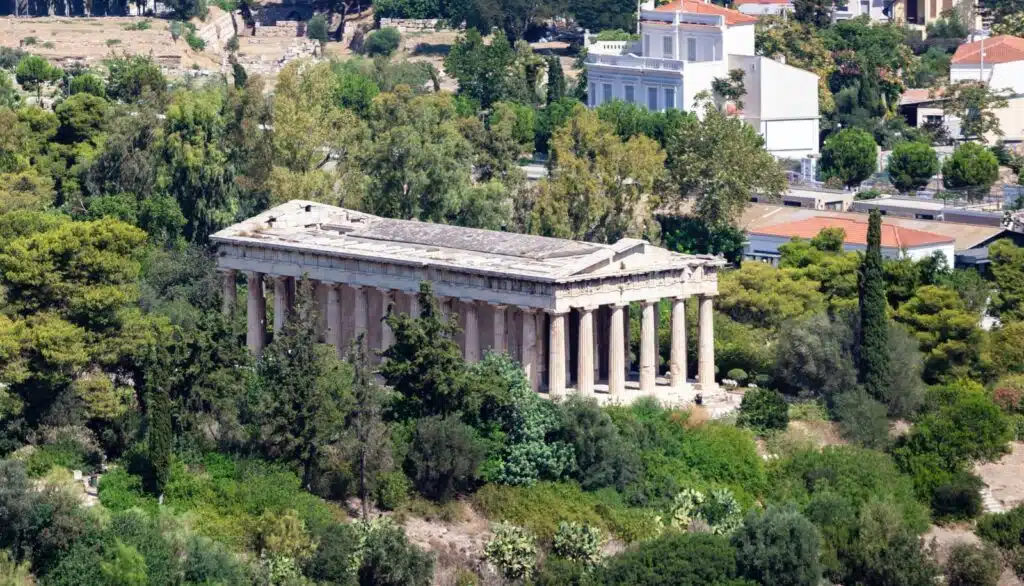
Many tourists settle for the Acropolis and completely miss the Ancient Agora, which sits just below it. That’s a shame, because this is where real life took place in ancient Athens. The Agora was the city’s marketplace, courthouse and social gathering point. Socrates debated here. Democracy was practised here.
The Temple of Hephaestus, which sits at the edge of the Agora, is actually better preserved than the Parthenon. It’s almost complete and gives you a better sense of what an ancient Greek temple actually looked like. Since the combination ticket was abolished in April 2025, you need to buy a separate ticket for the Agora.
- Check prices and opening hours on the Greek Ministry of Culture’s website.
7. Monastiraki Square and the Flea Market
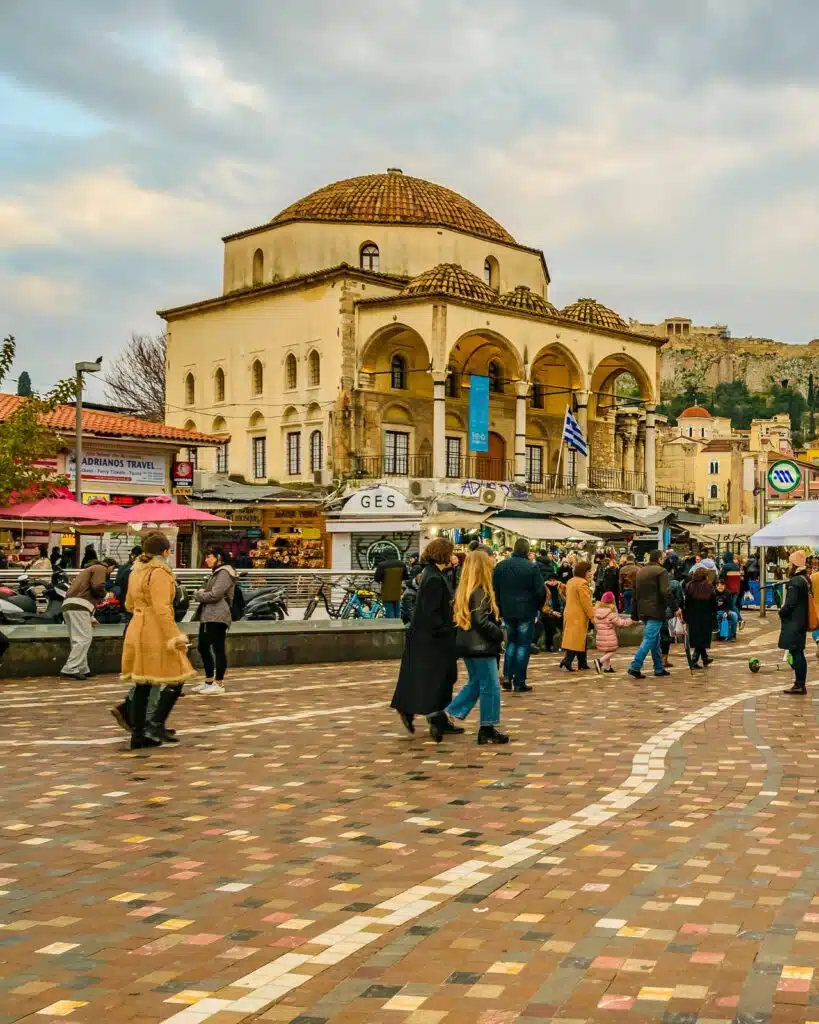
Monastiraki is Athens’ beating heart. The square is named after the small monastery (now a church) that sits in the middle of it, and from here you can see the Acropolis towering behind. On Sundays the area explodes into a huge flea market where you can find everything from vintage vinyl records to handmade jewellery and antique coins.
But Monastiraki is also fantastic on a completely ordinary day. Grab a souvlaki from one of the stalls (try Thanasis by the square – it’s legendary) and sit on a bench with a view of the Acropolis. In the evening the square buzzes with street performers and live music.
From here it’s also a short walk to the Psyrri quarter and Varvakios Central Market.
8. Psyrri – Street Art, Bars and Nightlife
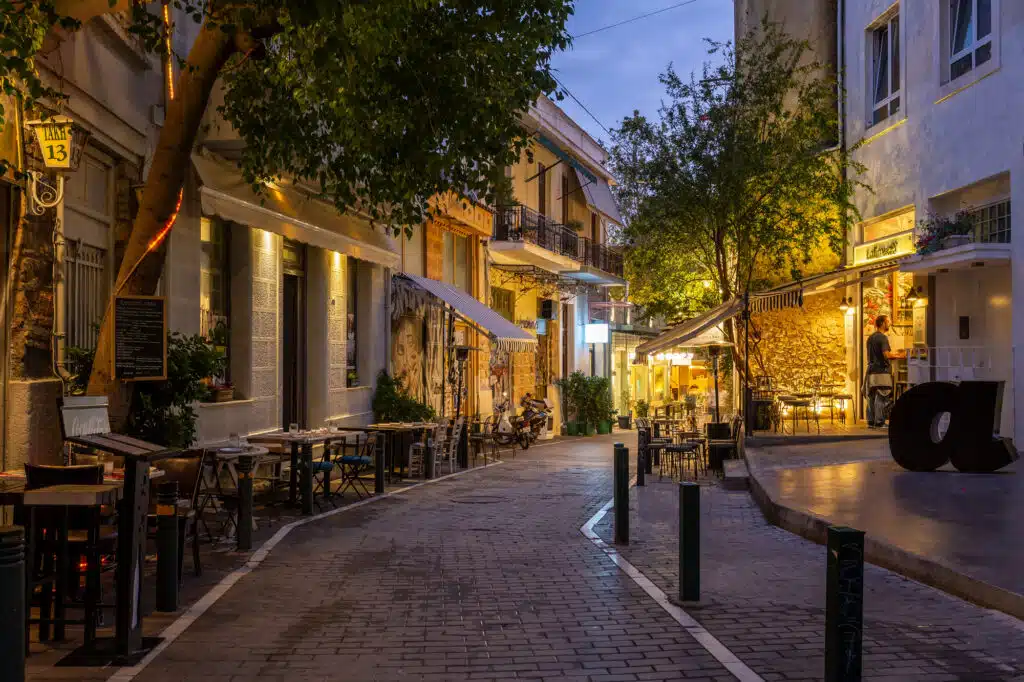
Psyrri is Monastiraki’s cool older brother. The quarter was once a grim industrial area, but today it’s one of Athens’ most exciting neighbourhoods. The street art is incredible – entire buildings are covered in colourful murals by local artists. And in the evening, the quarter’s narrow streets transform into a festival of rooftop bars, creative meze restaurants and cocktail bars.
Iroon Square is the quarter’s gathering point, where all generations hang out well into the night. Also pop by the eccentric Little Kook cafe, which changes theme by season – it’s Instagram gold, even if you’re not into coffee.
And if you want to experience the real Athenian food scene, head up Athanais Street to Varvakios Central Market – Athens’ answer to a giant food market where local chefs and housewives compete for the best meat, fish and vegetables.
9. Food Tour Through Athens’ Streets
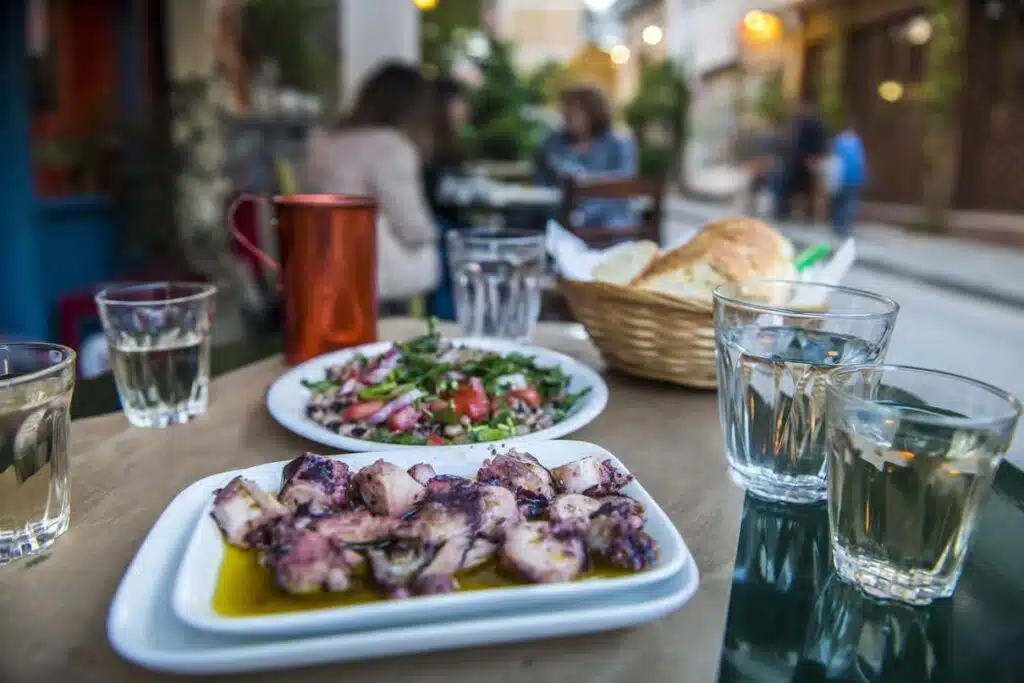
Greek food is far more than gyros and moussaka (although both are fantastic). A food tour is one of the best ways to experience Athens, because it takes you to places you’d never find on your own. You’ll taste koulouri (sesame bread rings), spanakopita (spinach pie with feta), loukoumades (Greek mini-doughnuts with honey) and of course proper souvlaki from local spots.
I recommend a food tour that takes you through Monastiraki, Psyrri and down around the central market.
This popular food walking tour lasts 3.5 hours and includes 8-10 tastings. Come hungry. Seriously.
10. Areopagus Hill – The Best View in Athens
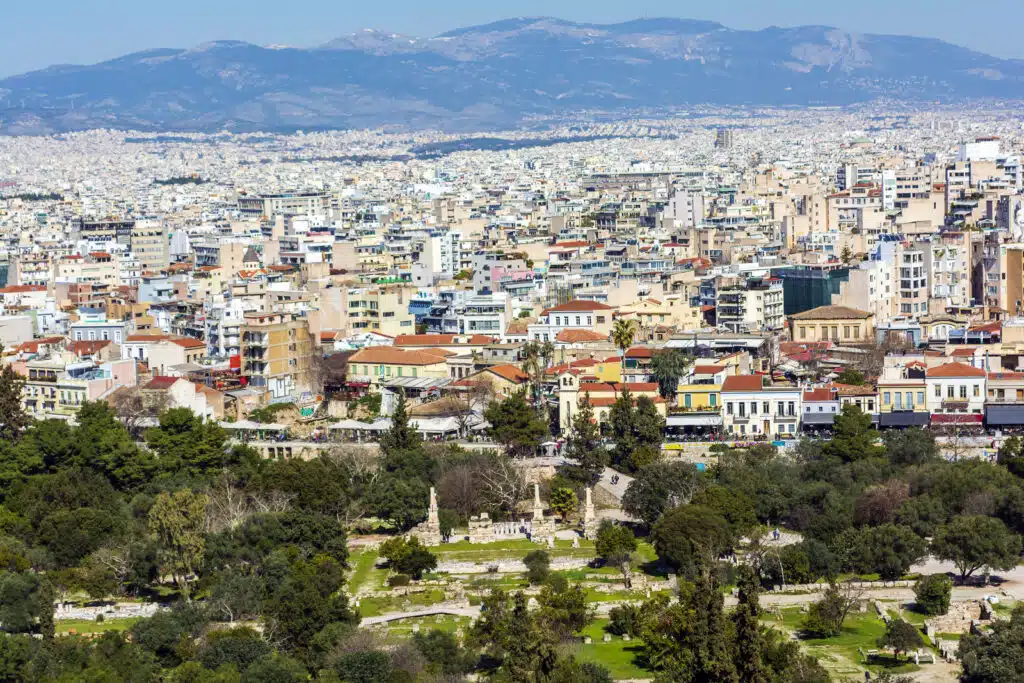
Here’s my honest tip for the best free experience in Athens: go up to Areopagus Hill (also known as Mars Hill) at sunset. It’s a large smooth rock outcrop just below the Acropolis, and the view is utterly absurd.
You can see all of Athens spreading out below you, with the Acropolis lit up behind.
The rock is low enough that the walk only takes five minutes, and it’s completely free. In the evening, locals and tourists sit side by side with wine and snacks enjoying the sunset. Be careful – the rock has been worn smooth by millions of feet, so tread carefully, especially if it’s been raining.
You’ll find the entrance right by the main entrance to the Acropolis on Theorias Street.
11. Temple of Olympian Zeus (Olympieion)
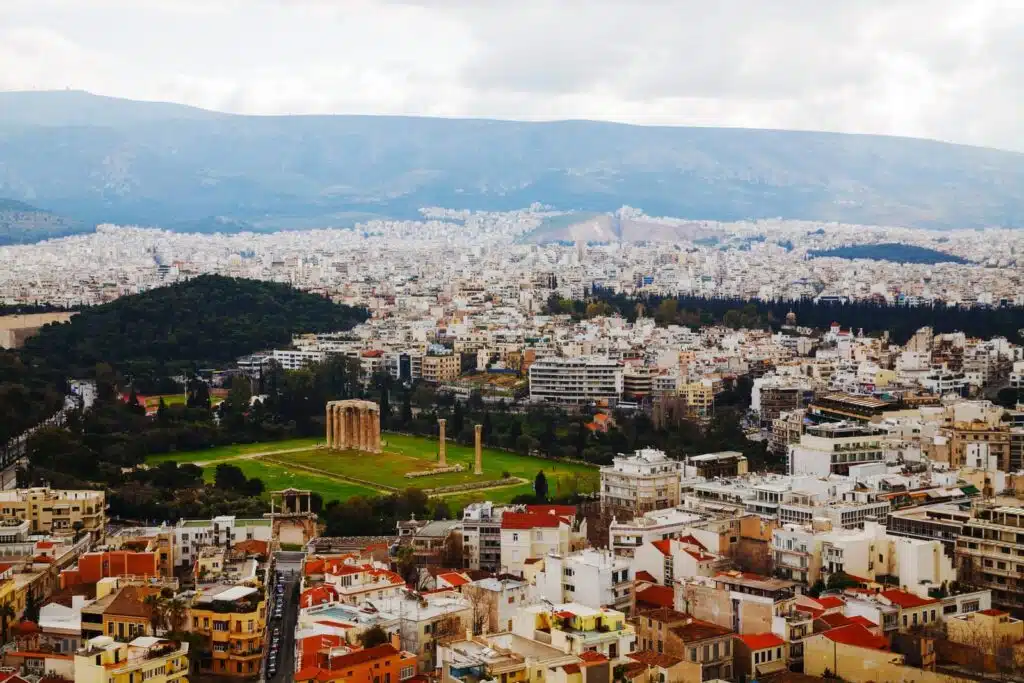
This temple was once the largest in the entire ancient world. Construction started in the 6th century BC, but it took over 600 years to complete – it was only finished under the Roman Emperor Hadrian. Today 15 enormous columns remain of the original 104, and they’re impressive. Each column is 17 metres tall.
The temple is a short walk from the Acropolis, right by the famous Hadrian’s Arch, which marked the boundary between ancient Athens and Hadrian’s new city. A separate ticket is required since the combination ticket was abolished.
12. Panathenaic Stadium (Kallimarmaro)
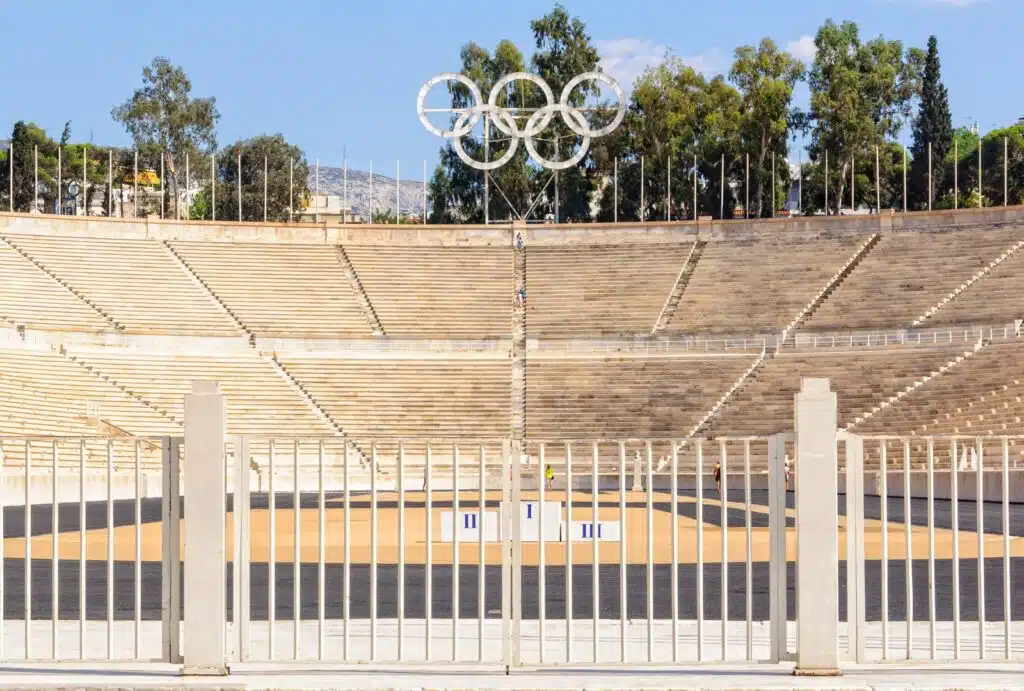
This is the only stadium in the world built entirely from white marble. It’s ancient – it was built in 330 BC and rebuilt in marble in 144 AD. But it’s most famous for hosting the opening and closing ceremonies of the first modern Olympic Games in 1896. And in 2004 it was used again for the Olympics.
You can walk around on the track and stand on the very spot where athletes stood over 2,000 years ago. There’s also a small museum about the Olympic Games beneath the stands. The stadium is still the finish line for the Athens Classic Marathon.
Check current prices and opening hours on the stadium’s official website.
13. Lycabettus Hill
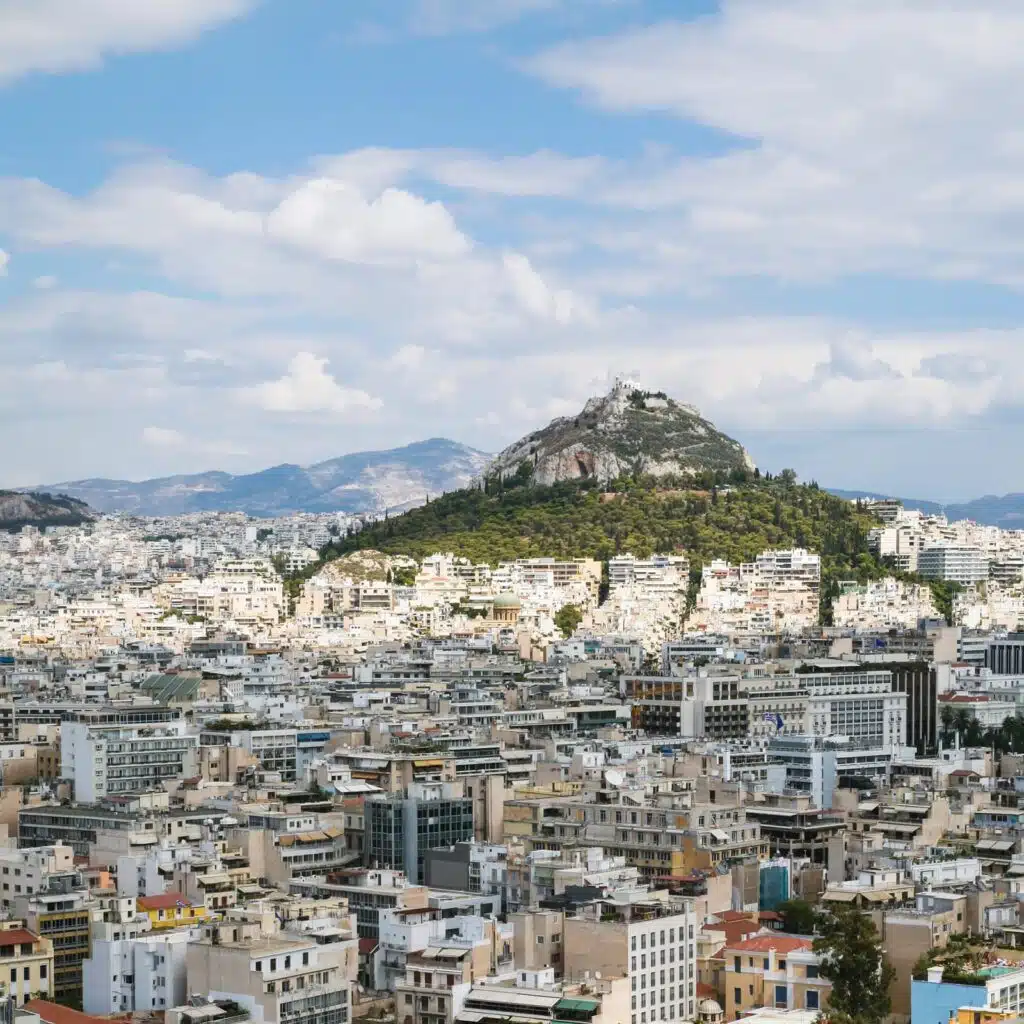
If you want a panoramic view over all of Athens (and on a clear day all the way to the sea and the Saronic Islands), then Lycabettus Hill is the place. It’s Athens’ highest point at 277 metres, and the view from the top is spectacular – especially at sunset.
You can walk up (it takes about 30-45 minutes from the Kolonaki quarter), or you can take the funicular. At the top you’ll find the small whitewashed Church of St. George and a restaurant with a view. The funicular runs from Aristippou Street in Kolonaki. Wear good shoes – the path is uneven.
14. National Archaeological Museum
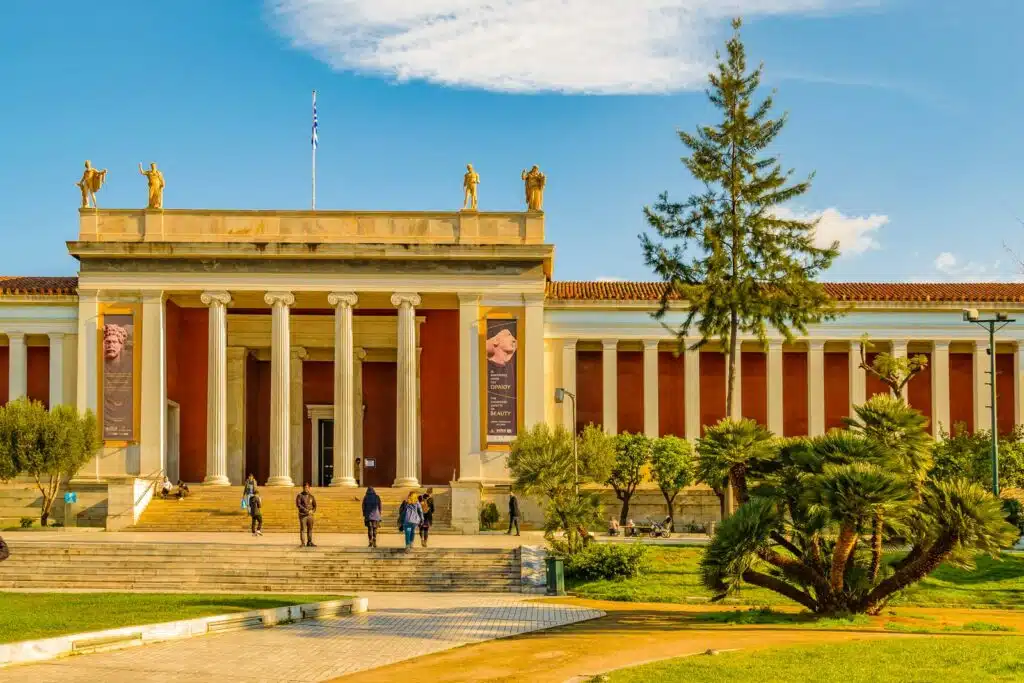
If you only have time for one museum besides the Acropolis Museum, choose this one. The National Archaeological Museum is one of the world’s most important museums for ancient Greek art and culture. The collection is enormous – from the golden Mask of Agamemnon to fantastic bronze sculptures and ceramics that are thousands of years old.
The museum is located in the Exarchia quarter, slightly north of the centre. Allow at least 2-3 hours if you want to see it properly. It’s a perfect alternative on a rainy or heatwave day.
15. Exarchia – The Alternative Athens
Exarchia is Athens’ most controversial quarter – and that’s precisely why it’s exciting. It’s the university neighbourhood, filled with students, artists, bookshops, vinyl stores and alternative bars. Street art is everywhere, and the atmosphere is completely different from the polished tourist areas.
The quarter is known for its political activism and bohemian vibe. Here you’ll find cheap and fantastic food, unique cafes and a nightlife that starts late and finishes very late. The Exarchia Farmers’ Market on Saturdays is an experience in itself.
Just be aware that the quarter can be a bit rough around the edges, and there are occasional demonstrations.
16. Philopappos Hill
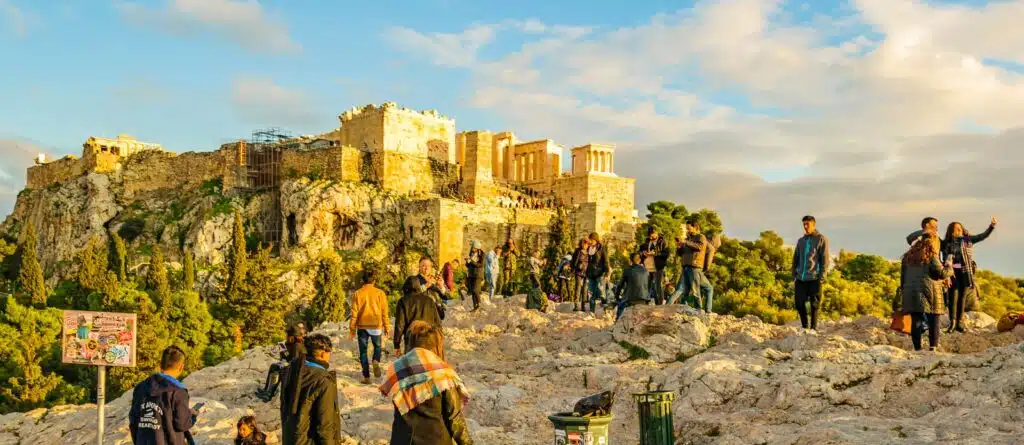
Let me save you some time: if you want the iconic view of the Acropolis that you know from all the postcards, this is where you need to go. Philopappos Hill sits southwest of the Acropolis and offers the best frontal view of the Parthenon.
The walk up takes 15-20 minutes along a path lined with pine and olive trees. At the top you’ll find the Philopappos Monument from the 2nd century. The best time is late afternoon, when the sun is low and bathes the Acropolis in golden light.
Free entry, no tickets needed.
17. Cape Sounion and the Temple of Poseidon
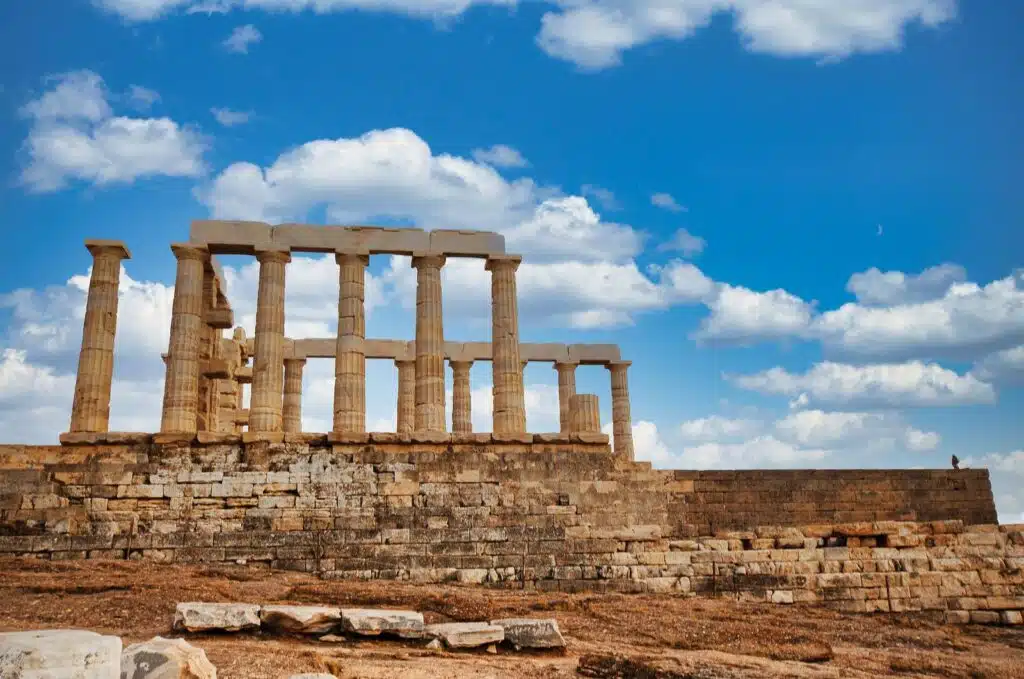
Okay, this one technically isn’t in Athens, but it’s one of the best day trips you can take from the city. Cape Sounion is about 70 km southeast of Athens, on the southernmost tip of the Attica peninsula. Here the Temple of Poseidon sits on a cliff 60 metres above the Aegean Sea.
The temple dates from 444 BC and the view is absolutely mind-blowing – especially at sunset, when the sea changes colour behind the white marble columns. The drive along the coast is an experience in itself with lovely beaches and coastal towns along the way.
Book a half-day trip to Cape Sounion if you haven’t hired a car.
18. Rooftop Bars with Acropolis Views
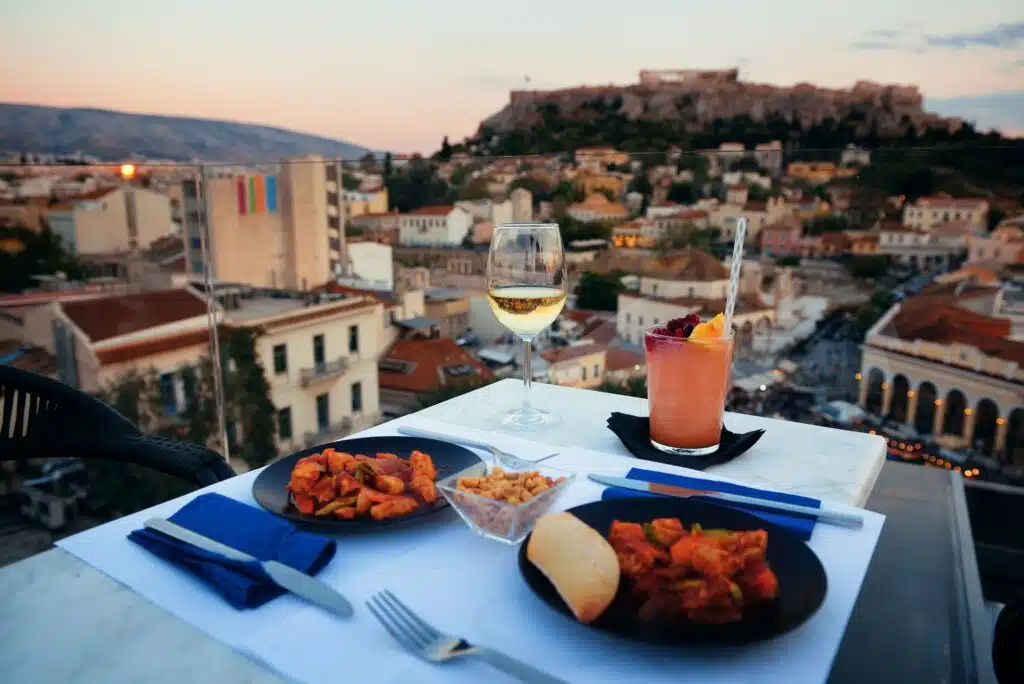
Athens is the world’s best city for rooftop bars. And the reason is simple: no matter which direction you look, there’s a good chance you can see the Acropolis. A cocktail with the illuminated Parthenon in the background is one of those experiences you’ll remember.
A for Athens on Monastiraki Square is the most well-known (and most touristy). If you want a bit more local atmosphere, try the rooftop bars in the Koukaki or Thissio quarters. Prices are Athens prices – meaning far cheaper than you’d pay in Copenhagen, London or Paris. Expect to pay 10-14 euros for a cocktail with the best view in town.
If you want to stay at a hotel with a rooftop bar and Acropolis views, check out the hotels around Monastiraki.
19. Stavros Niarchos Foundation Cultural Center
If you need a break from ancient ruins (it happens to all of us), head to the Stavros Niarchos Foundation Cultural Center. It’s a modern architectural masterpiece designed by Renzo Piano, and it houses an opera house, a national library and a fantastic park with sea views.
The park is free and perfect for a relaxed afternoon. There are fountains, labyrinth-like gardens and an artificial canal where children (and adults) can play with model boats. In summer there are free concerts and events. It’s slightly outside the centre by Kallithea, but easy to reach by bus or metro.
Check their website for current events.
20. A Day on the Athenian Riviera
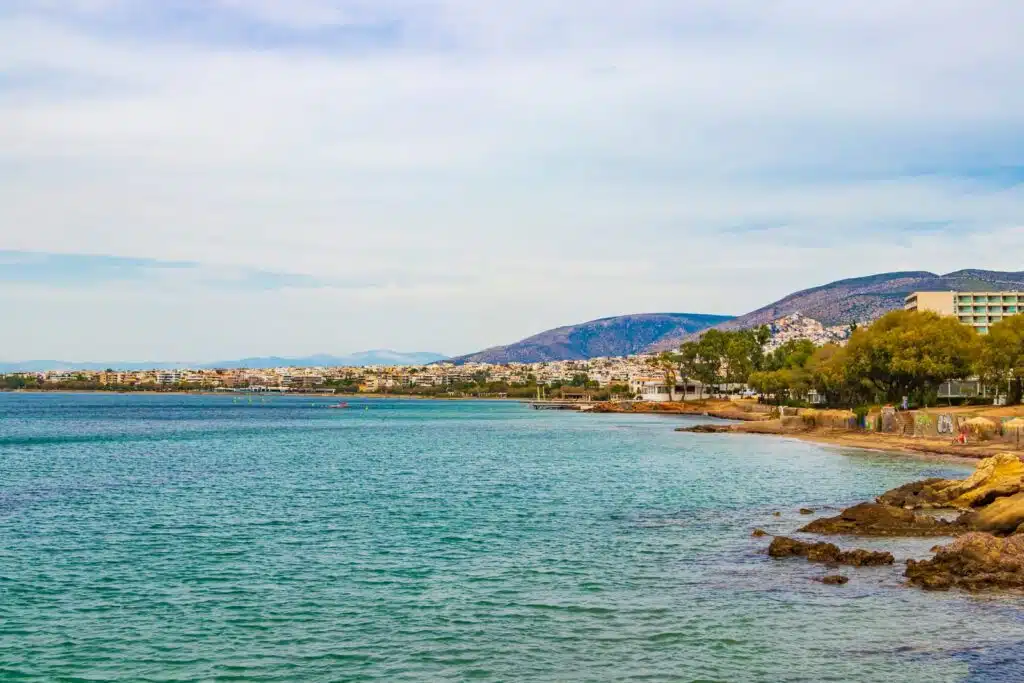
Most people don’t know this, but Athens has a coastline. The Athenian Riviera stretches from Faliro Bay down to Vouliagmeni and onwards towards Cape Sounion. Here you’ll find beach clubs, waterfront fish restaurants and a completely different atmosphere from the centre.
Lake Vouliagmeni is a natural thermal pool surrounded by cliffs and greenery – perfect for a swim. And if you just want sand between your toes, there are lovely beaches all along the coast. The tram line runs from Syntagma Square all the way down to the coast, so you don’t need a car. It’s the perfect complement to a week of temple ruins and museums.
Practical Travel Tips for Athens
Tickets: The old combination ticket for Athens’ archaeological sites was unfortunately abolished in April 2025. You now need to buy separate tickets for each site. Book online in advance at Hellenic Heritage to avoid queues. The Acropolis requires time-slot booking.
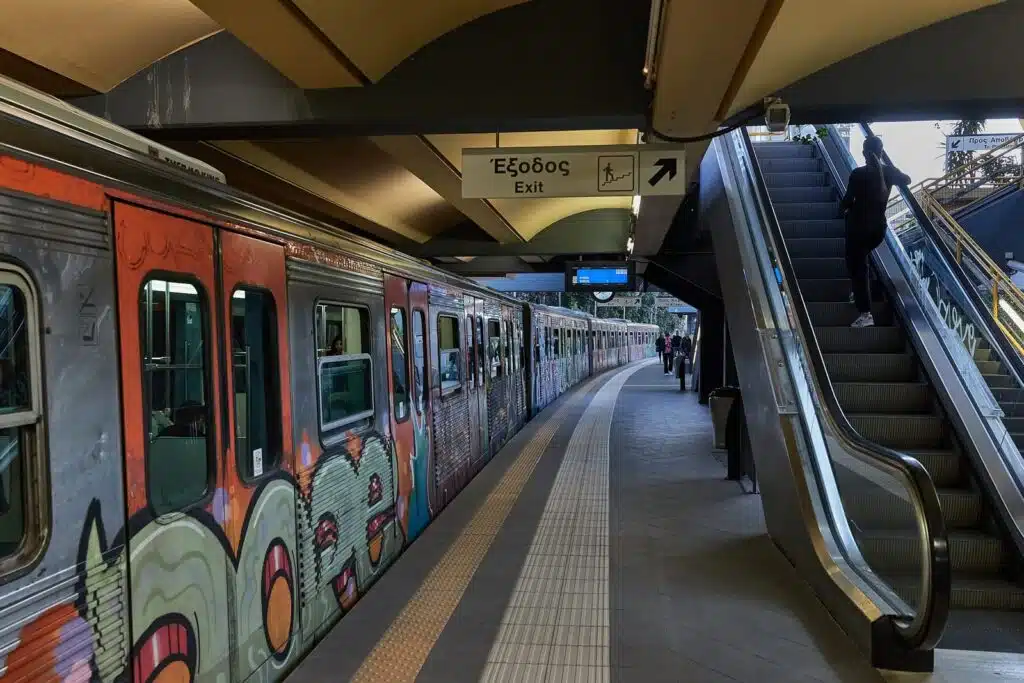
Transport: The metro in Athens is cheap, efficient and covers most of the sights. Line 2 (red) stops at Akropoli station.
Heat: In summer Athens can get extremely hot (40+ degrees is not uncommon). The Acropolis has even closed during midday heatwaves in 2025. Plan your outdoor visits for early morning or late afternoon. Carry water everywhere.
When should you go? Spring (April-June) and autumn (September-November) are the best periods. The weather is perfect, prices are lower and there are fewer tourists. July and August are hot and packed.
Money: Athens is generally cheaper than most Western European capitals. A solid souvlaki costs 3-4 euros, a beer at a bar 4-6 euros, and a proper dinner for two can be had for 40-50 euros.
Have a fantastic trip to Athens.
Where to Stay in Athens
Still need a hotel? My full guide to where to stay in Athens goes through the best areas and my favourite hotels in each, from Plaka and Koukaki to Monastiraki. If you’d rather see everything in one place, compare current hotel prices across Athens on Booking.com here. Book a couple of months ahead for April to June and September to October, which are the best and busiest months.
Frequently Asked Questions About Athens
What are the top things to see in Athens if I only have one day?
Start at the Acropolis when it opens at 8:00, walk down through the Acropolis Museum and Plaka, have lunch around Monastiraki, see the Ancient Agora in the afternoon and finish with sunset from Areopagus or Philopappos Hill. That’s the greatest hits in one walkable loop.
How many days do you need in Athens?
Two full days cover the main sights comfortably. Three days lets you add Lycabettus Hill, the National Archaeological Museum and a proper food tour, and with four you can fit in a half day at Cape Sounion or the Athenian Riviera.
Is Athens safe for tourists?
Yes. Athens is generally safe, and the central areas around Plaka, Monastiraki, Koukaki and Syntagma are fine at night. Keep an eye on your pockets on the metro and in crowded markets, and use the same common sense around Omonia and the edges of Exarchia late at night that you’d use in any big city.
What’s the best area to stay in Athens?
Plaka and Koukaki are my picks for first-time visitors, because both are walkable to the Acropolis and full of restaurants. Monastiraki and Psyrri are best if you want nightlife and rooftop bars. My where to stay in Athens guide goes through each area with hotel picks.
Travel ressources & websites I use all the time 👇
• Booking.com has the best offers on hotels and unique places to stay
• GetYourGuide is the best place to book tours & activities with free cancellation
• Welcome Pickups is the best & safest place to pre-book airport transfers
Psst 👀 Have you subscribed to my Youtube channel and my Instagram where I provide more useful travel tips?