

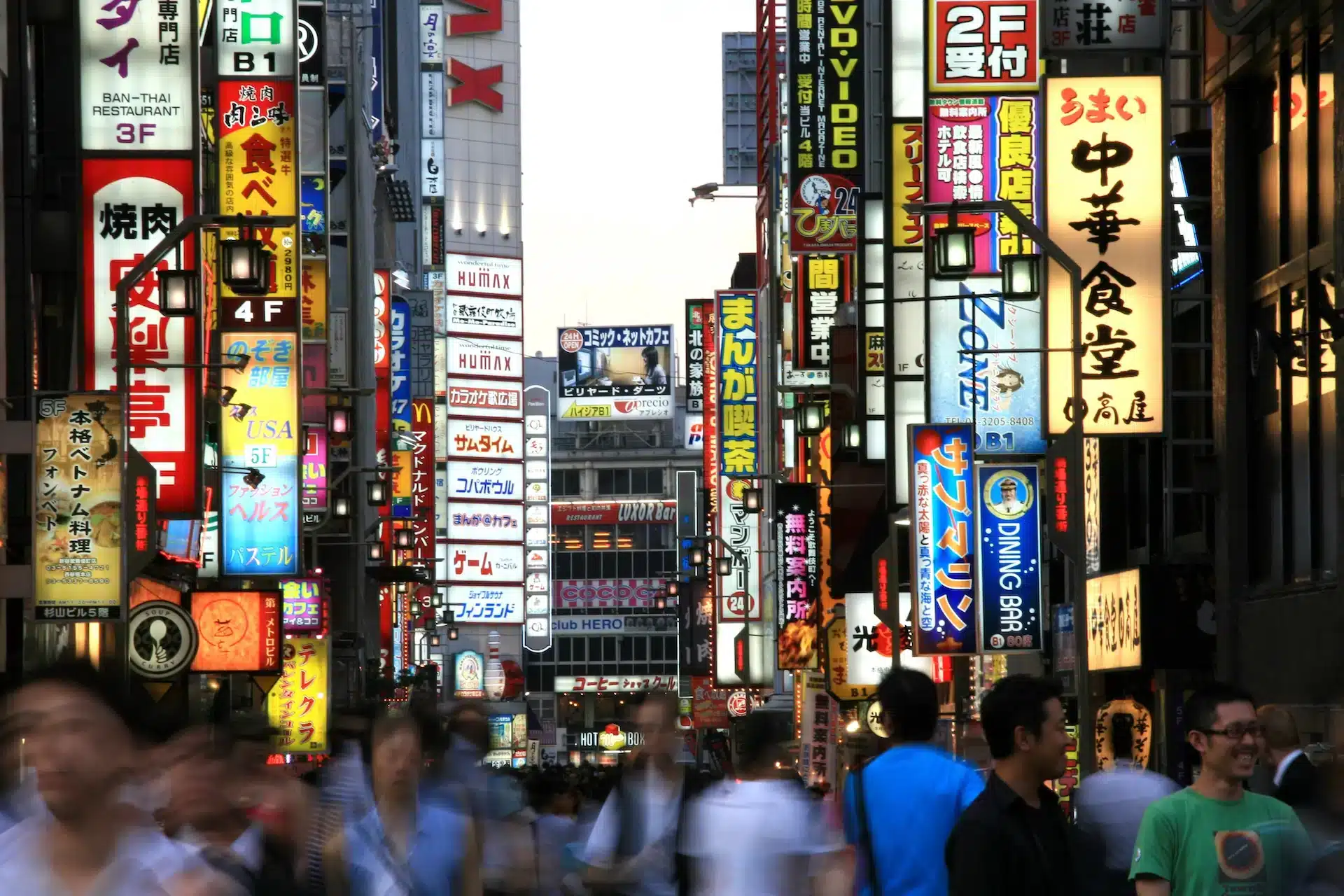
Are you planning a trip to Tokyo and unsure where to stay? Then you’ve landed in exactly the right place.
Tokyo is a fantastic metropolis with futuristic skyscrapers, historic temples, and breathtaking nature side by side.
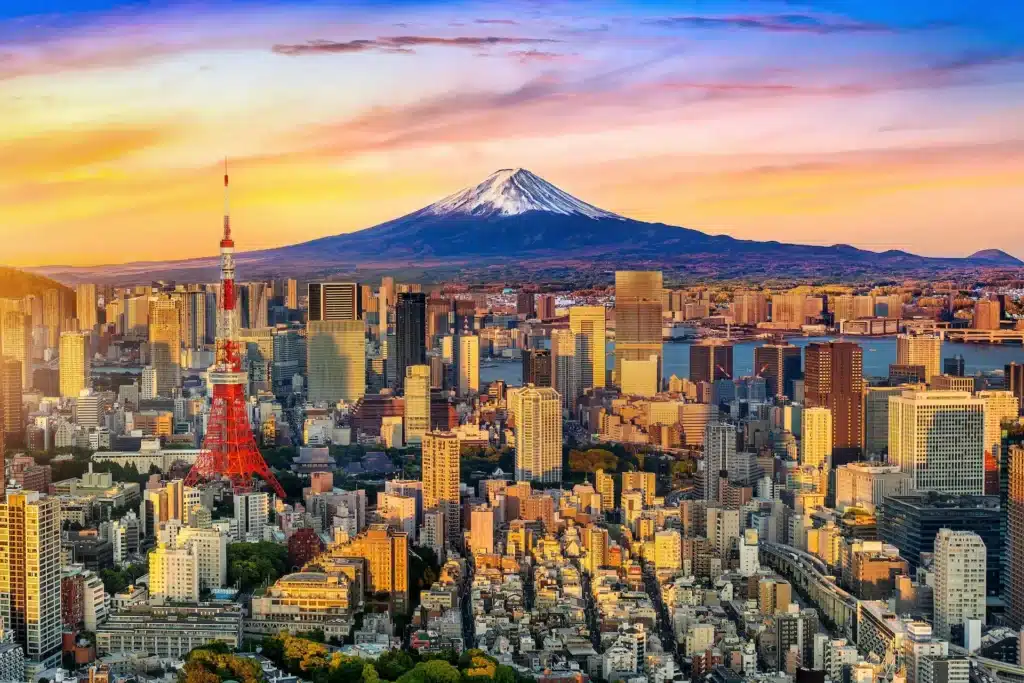
In this guide, you’ll get an overview of the best areas to stay in, whether you’re into shopping, nightlife, or cultural experiences.
Where to stay in Tokyo? Let’s get started with the guide.
Contents
Best Areas to Stay in Tokyo
If you’re in a rush or just want a quick look, here’s an overview of the best areas to stay in Tokyo:
- Shibuya – youthful energy and iconic scramble crossing 🌈
- Shinjuku – the city’s busiest transport hub and skyscrapers ⭐️
- Ginza – luxury shopping and finer restaurant scene 💎
- Tokyo Station/Marunouchi – perfect for transport and business travellers 🚅
- Asakusa – traditional atmosphere and historic temples 🏛️
- Roppongi – cosmopolitan nightlife and modern art 🍹
Click on the area’s name to see the best hotels in that area.
1. Shibuya – Young People’s Absolute Favourite 🌈
Shibuya is the heart of Tokyo’s youth culture and the place where you can truly feel the city’s pulse. With the famous Shibuya Crossing and an energy that reminds you of Times Square – just much more Japanese!
Shibuya is the perfect area for you who want to stay right in the middle of everything that’s happening.
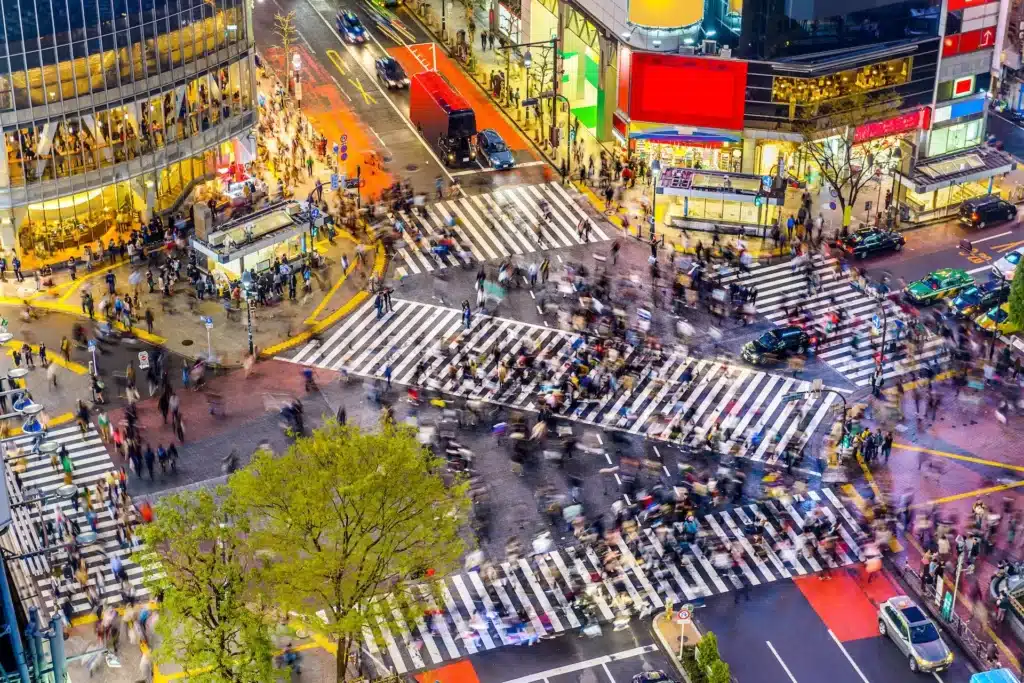
Here you’ll find the world-famous Shibuya Scramble Crossing, where up to 3,000 people cross the street at the same time! The area buzzes with life around the clock with young Tokyoites shopping, eating, and partying.
See the best hotels in Shibuya here.
From Shibuya Station, you have fantastic access to the rest of Tokyo via the Yamanote Line. In just 10 minutes you can be in Harajuku to see the wild fashion styles, or head to Yoyogi Park for a break from the city noise.
The district is packed with massive shopping complexes like Shibuya 109, which is the mecca for teenage fashion, and Center Gai – a pedestrian street filled with karaoke bars and restaurants.

The restaurant scene is phenomenal with everything from conveyor belt sushi to Michelin-starred restaurants. Food Show in Shibuya’s underground is a labyrinth of food establishments where you can taste your way through most of Japanese food culture without spending a fortune.
The only minus about Shibuya is that it can be a bit overwhelming. If you’re not into constant noise and crowds, then maybe it’s not the right choice for you.
But if you want the genuine Tokyo experience at full throttle, then book yourself in here!
Quick Info: Shibuya
📍 Distance to centre: 0 km (you ARE in the centre!)
🚇 Nearest metro: Shibuya Station (JR Yamanote, Metro)
✈️ Time to airport: 35 minutes to Haneda
🏪 Supermarket: Konbini everywhere, Food Show in the basement
💰 Price level: €€€ (4/5)
👮 Safety: ⭐⭐⭐⭐ (4/5)
If you’re wondering how to get into the city once you’ve landed, have a look at my guide to getting from Narita and Haneda airports to central Tokyo.
Places to stay in Shibuya
Shibuya Excel Hotel Tokyu ⭐️⭐️⭐️⭐️⭐️
With an unrivalled location directly above the iconic Shibuya crossing in Tokyo, this hotel is the perfect choice for you who want to stay right in the city’s pulsating heart.
The hotel is located on the upper floors of the Shibuya Mark City building, and many of the rooms offer panoramic views over Tokyo’s cityscape and on clear days even to Mount Fuji!
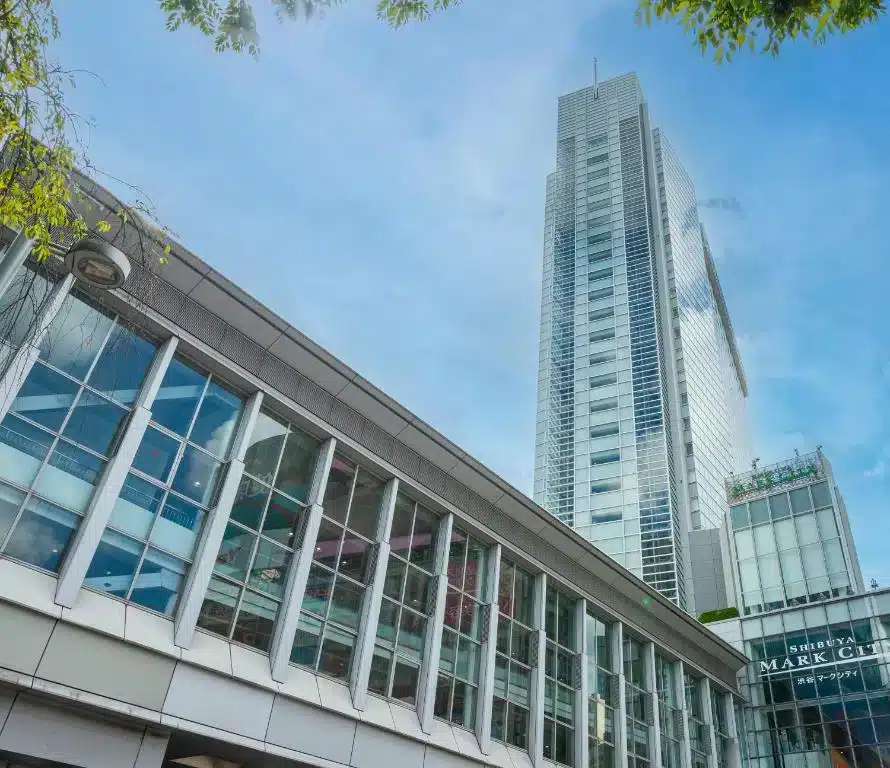
The rooms are modern, spacious, and well-insulated against the city’s noise, with large windows, comfortable beds, and everything you’d expect from a good city hotel. There’s direct access to trains, metro, and airport buses from the hotel entrance, ideal for both new and experienced travellers.
The restaurant on the top floor serves breakfast with views over Shibuya, whilst the evening menu combines Japanese and Western dishes in elegant surroundings.
A guest recently wrote: “The view over Shibuya crossing from our room was like having a living film outside the window and the location couldn’t be better.”
See more photos and book here.
Hotel Indigo Tokyo Shibuya ⭐️⭐️⭐️⭐️
A newly opened boutique hotel with modern design and fantastic location just a few minutes’ walk from the station and Shibuya Scramble Crossing.
It’s a modern hotel with focus on art and design, and suits travellers well who want to stay right in the lively urban area with easy access to shopping, restaurants, and transport.

The rooms are nicely furnished and have everything you’d expect from a good hotel. There’s also really good sound insulation, which can be an advantage in an area like Shibuya that never really sleeps.
The hotel also has a smaller fitness centre, a bar, and two restaurants. Design and architecture draw on local cultural references and modern art, which gives the place a slightly different atmosphere than more classic hotels in the same area.
A guest wrote: “The location is super practical, close to the station and right in the thick of it all. The staff were helpful, and the room had all the necessities.”
The Millennials Shibuya ⭐️⭐️⭐️
Japan is known for their brilliant capsule hotels, and this is an excellent example of exactly that.
Here you stay in small “pods” that consist of small, private cabins containing the most necessary: a bed and practical storage.
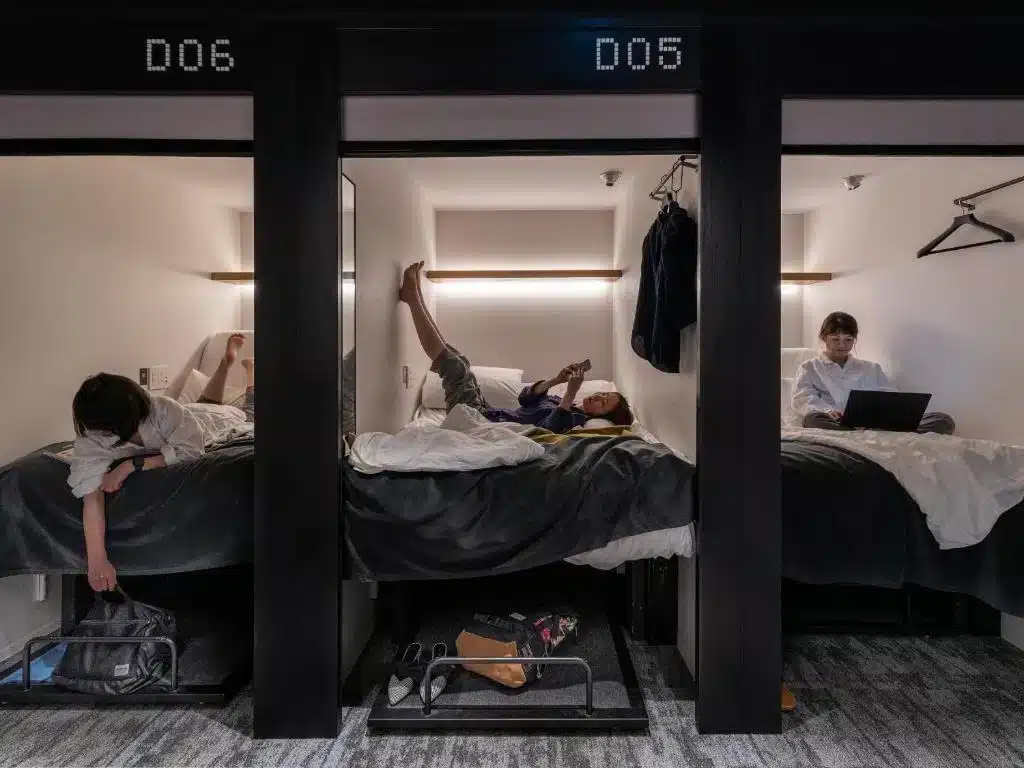
The bathrooms are shared with other guests but are clean and modern. On the 4th floor you’ll find a large common area with kitchen, lounge, and opportunity to meet other travellers, for example over the free beer each evening.
The place is adults only and particularly appeals to you who travel alone or as a couple and want a relaxed, social base in the heart of the city.
A guest highlights: “More space than other capsule hostels and really comfortable bed. Cosy common area with good kitchen.”
2. Shinjuku – Transport and Skyscraper Mecca ⭐️
Shinjuku is the city’s absolute nerve centre and the area I always recommend to first-time visitors. Here you get everything in one go: shopping, transport, and genuine big city vibes.
With Shinjuku Station as the world’s busiest railway station (3.6 million passengers daily – that’s mental!), this is the most practical place to stay.
From here you can get literally anywhere in Tokyo and the rest of Japan. The Yamanote Line connects you to all the major destinations, and the shinkansen (bullet train) to Kyoto and Osaka departs from Tokyo Station, which is just a 15-minute train ride away.
See the best hotels in Shinjuku here.
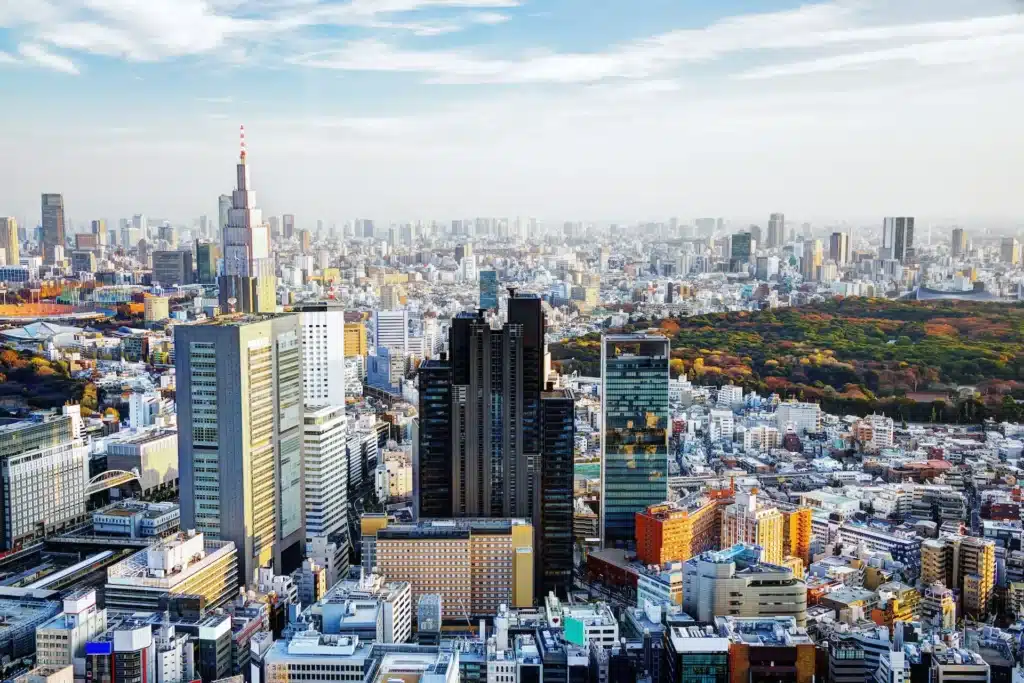
The area is divided into different zones, each with their own character.
East Shinjuku is shopping paradise with massive department stores like Takashimaya, Lumine, and Isetan. Here you’ll also find the slightly wilder part called Kabukicho, which is Tokyo’s largest red light district. It’s not dangerous, but can get a bit noisy in the evening.
West Shinjuku is the business district with Tokyo’s tallest skyscrapers, including the iconic Tokyo Metropolitan Government Building with free observation decks.
One of my favourite experiences in Shinjuku is Shinjuku Gyoen, which is a massive park that’s perfect during cherry blossom season. It’s like stepping into a completely different world in the middle of all the concrete and neon.

And then there’s Golden Gai, a labyrinth of 280 small bars, each with room for only 4-6 people. It’s the most authentic bar experience you can get in Tokyo!
If you’re a proper foodie, then the food scene is world-class. From Michelin restaurants on the top floors of skyscrapers to ramen stalls in basements and underpasses – you won’t go hungry in Shinjuku. Just prepare yourself to eat your way through the depachika (food courts) in the department stores!
Quick Info: Shinjuku
📍 Distance to centre: 0 km (mega central!)
🚇 Nearest metro: Shinjuku Station (all lines meet here)
✈️ Time to airport: 40 minutes to Haneda with express train
🏪 Supermarket: Don Quijote 24/7, Takashimaya basement
💰 Price level: €€€ (3/5)
👮 Safety: ⭐⭐⭐⭐ (4/5)
Places to stay in Shinjuku
Imano Tokyo Hostel ⭐️⭐️⭐️
If you’re travelling on a budget, Imano is a good shout; an informal and social hostel right in Shinjuku, with perfect location.
Here you stay within walking distance of both shopping and transport, and the atmosphere is far more café than classic hostel. The common area on the ground floor functions as both breakfast spot and hangout with bar in the evening, which many use to meet others before heading out on the town.
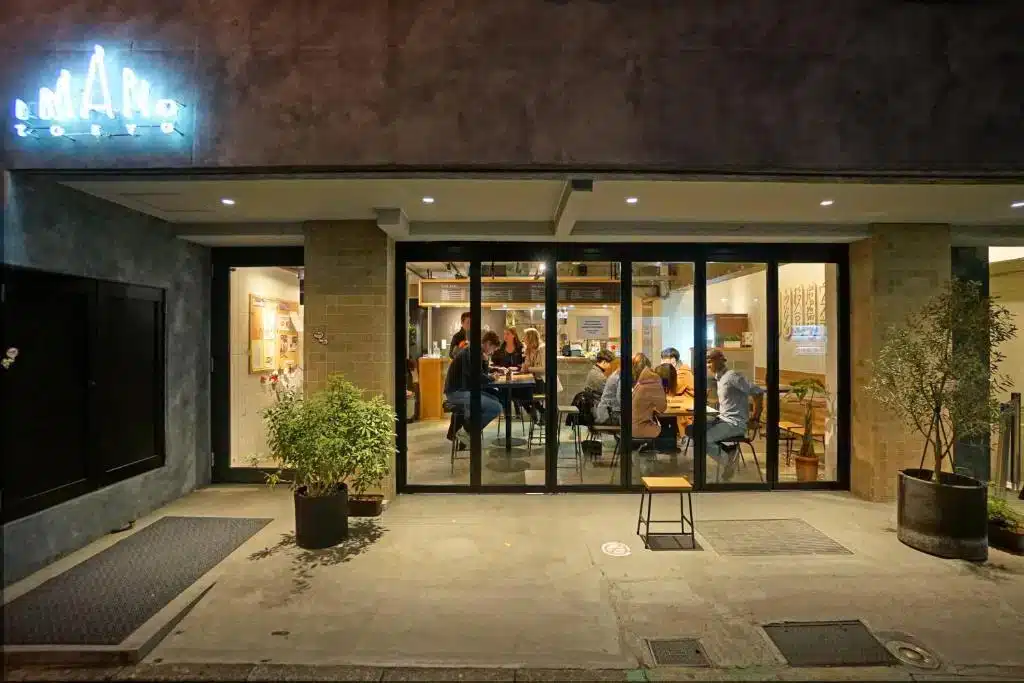
You can choose private rooms with bathrooms or spots in dormitories that have small private “pods” which are far more private than classic bunk beds.
A guest wrote: “The social café on the ground floor made it easy to connect with others, and even though I stayed in a dorm, it felt private.”
See more photos and book here.
3. Ginza – Where Luxury Meets Tradition 💎
Ginza is Tokyo’s most polished and elegant quarter. A kind of Japanese version of the Champs-Élysées or Fifth Avenue. If you want a more refined Tokyo experience, then Ginza is the place for you.
Here you’ll find the finest shops, galleries, and restaurants the city can offer. We’re talking Louis Vuitton, Gucci, and Mikimoto (Japan’s famous pearl brand) side by side with traditional Japanese department stores like Ginza Six and Mitsukoshi.
Ginza is also the artists’ quarter with many small galleries and exhibition spaces sponsored by big companies like Sony and Nissan.
See the best hotels in Ginza here.
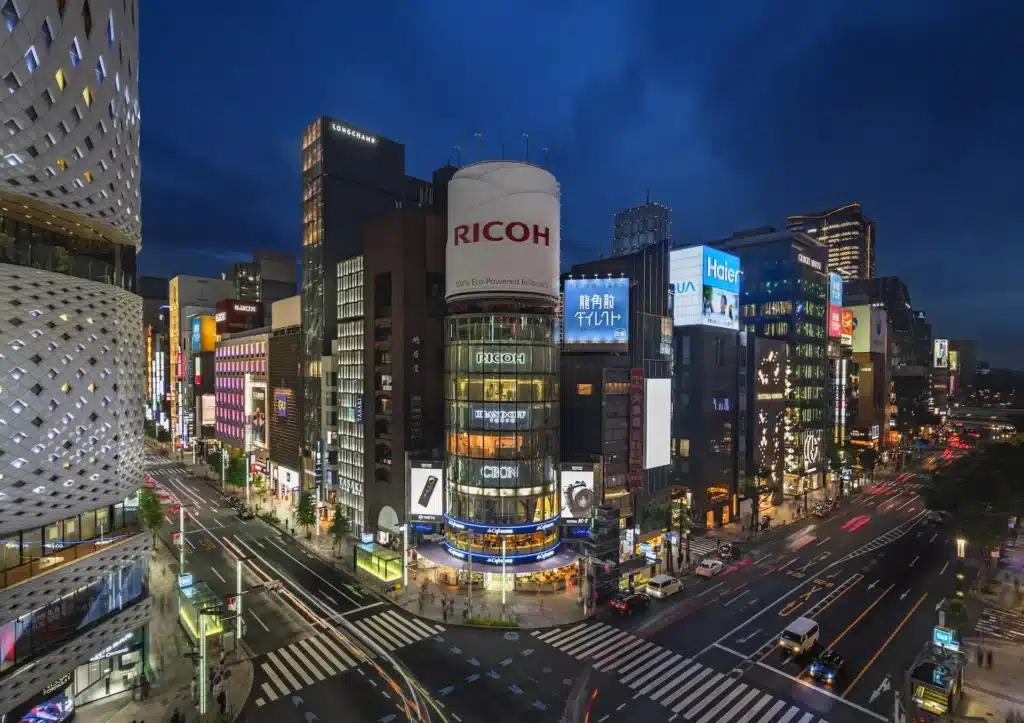
The restaurant scene in Ginza is absolutely top notch. Here you’ll find some of Tokyo’s best sushi restaurants, many with Michelin stars.
On Sundays, the main street, Chuo-dori, becomes car-free and transforms into a large pedestrian street – perfect for a relaxed shopping trip.
Practically speaking, Ginza is super central with good connections to both Tokyo Station and most of the city. There’s also easy access to the Tsukiji area (the old fish market) and Nihonbashi (Tokyo’s historic centre) as well as the beautiful Ginza and Hibiya parks.
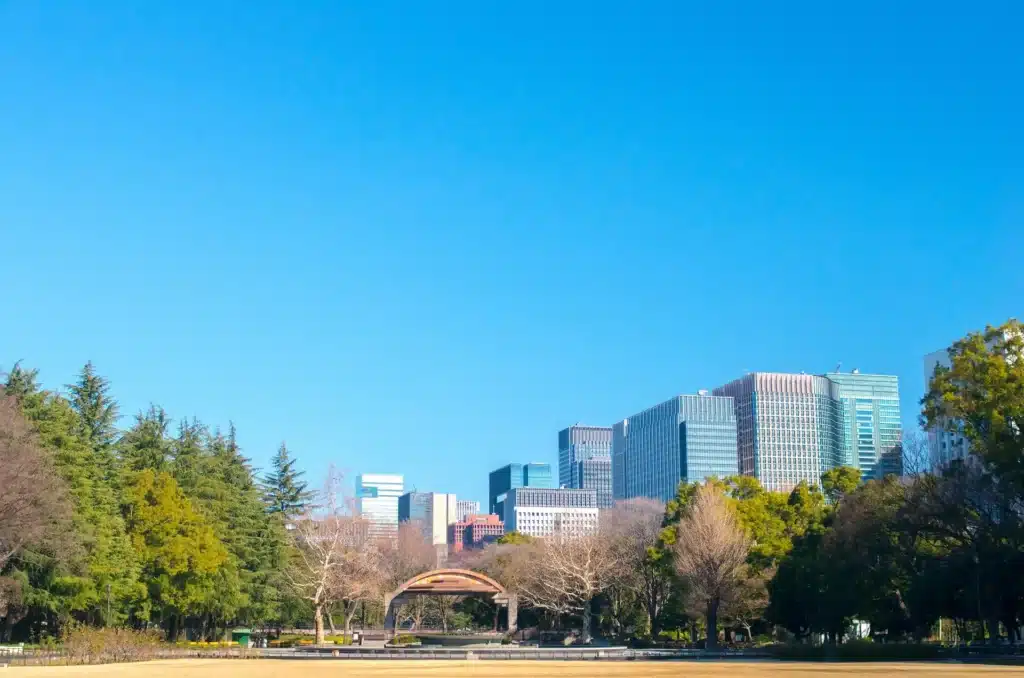
The only downside about Ginza is the price. Everything is a bit more expensive here, and the area can seem a bit sterile compared to the more lively quarters.
But in return, it’s one of Tokyo’s safest and most well-ordered areas, perfect for the more mature traveller.
Quick Info: Ginza
📍 Distance to centre: 2 km from Tokyo Station
🚇 Nearest metro: Ginza Station (Ginza, Hibiya, Marunouchi Line)
✈️ Time to airport: 30 minutes to Haneda
🏪 Supermarket: Basement in Mitsukoshi and Ginza Six
💰 Price level: €€€€€ (5/5)
👮 Safety: ⭐⭐⭐⭐⭐ (5/5)
Places to stay in Ginza
The Peninsula Tokyo ⭐️⭐️⭐️⭐️⭐️
The Peninsula Tokyo is the definition of luxury right in Tokyo’s pulsating heart. With views of both the Imperial Palace and Hibiya Park, you get a peaceful base – without giving up the city’s tempo.
The hotel offers elegant rooms with Japanese details and world-class technology. You can take a dip in the indoor pool with panoramic windows or get a relaxing treatment in their award-winning spa. Many also highlight the breakfast, which is something beyond the ordinary.
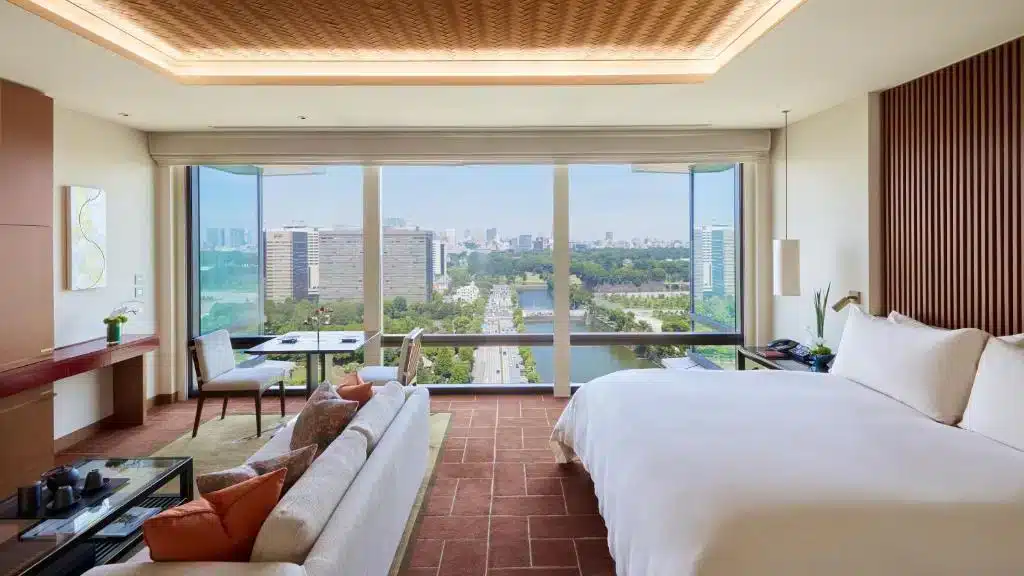
If you’re into top-class service and a discreet, exclusive atmosphere, then The Peninsula Tokyo is just right for you.
Previous guests say: “Always in the running to become the best hotel in Tokyo with a fantastic location and outstanding service.”
See more photos and book here.
Tokyo EDITION, Ginza ⭐️⭐️⭐️⭐️
A brand new luxury hotel that opened in December 2023. Modern design meets Japanese elegance, and the rooftop bar is simply fantastic with views over all of Tokyo.
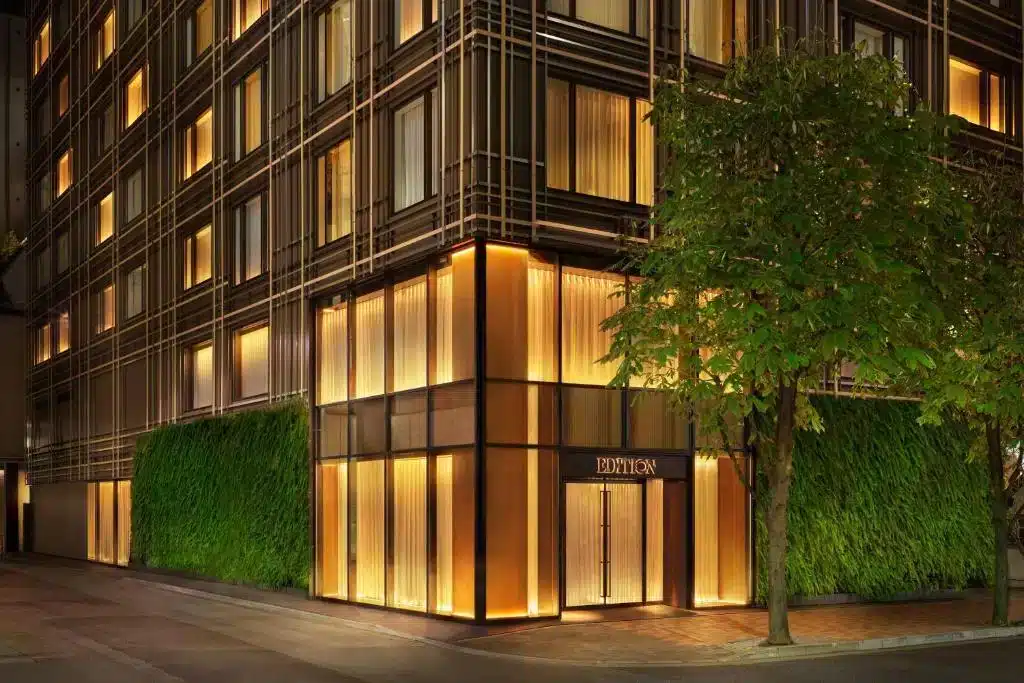
If you want to experience Tokyo from a sophisticated but down-to-earth angle, EDITION Ginza is the place to check in.
A guest recently wrote: “Fantastic new hotel with an incredible rooftop terrace bar in the heart of Ginza.”
See more photos and book here.
Hotel Monterey Ginza ⭐️⭐️⭐️
A more budget-friendly choice right in Ginza with classic décor and good service. Perfect location for shopping and sightseeing.
The rooms are nice and cosy, and the hotel’s breakfast often gets praise for its variety and quality. It’s an obvious choice if you want to stay centrally in Ginza without paying top price and still get both comfort and style in the package.
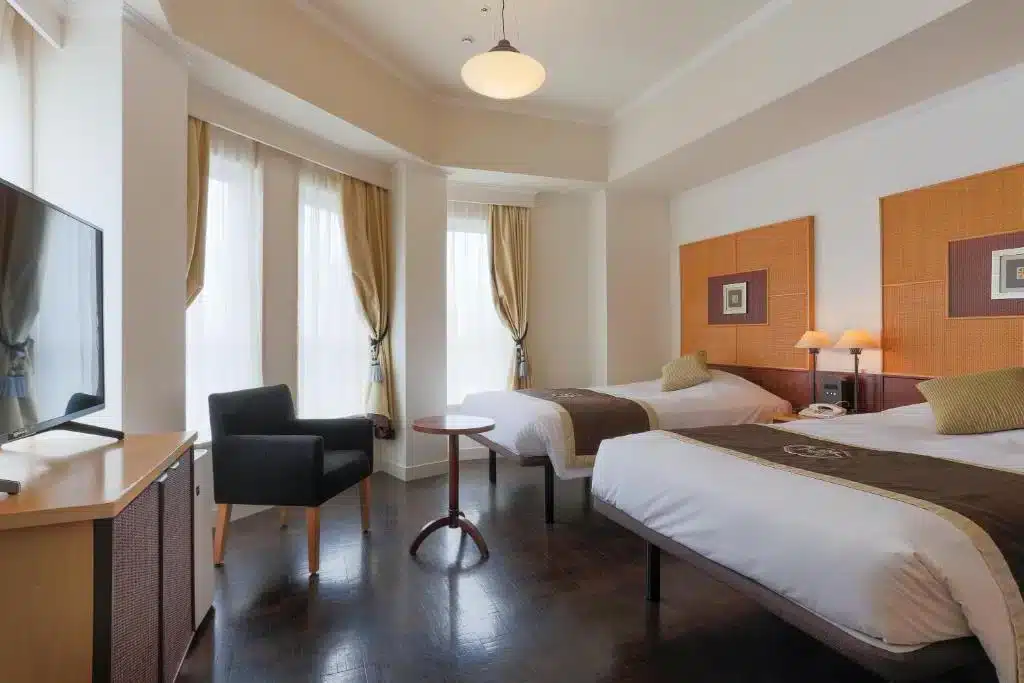
Guests particularly love: “Great location in the middle of Ginza at a reasonable price with comfortable rooms.”
See more photos and book here.
4. Tokyo Station/Marunouchi – Transport Hub and Business Central 🚅
The Tokyo Station area isn’t just the city’s transport hub, it’s actually one of the best places to stay, especially if you’re planning day trips outside Tokyo or just want easy access to EVERYTHING.
Tokyo Station is the terminal for shinkansen (bullet trains) to Kyoto, Osaka, and the rest of Japan, so if you’re continuing into the country, you can’t get a better base.
See the best hotels around Tokyo Station.
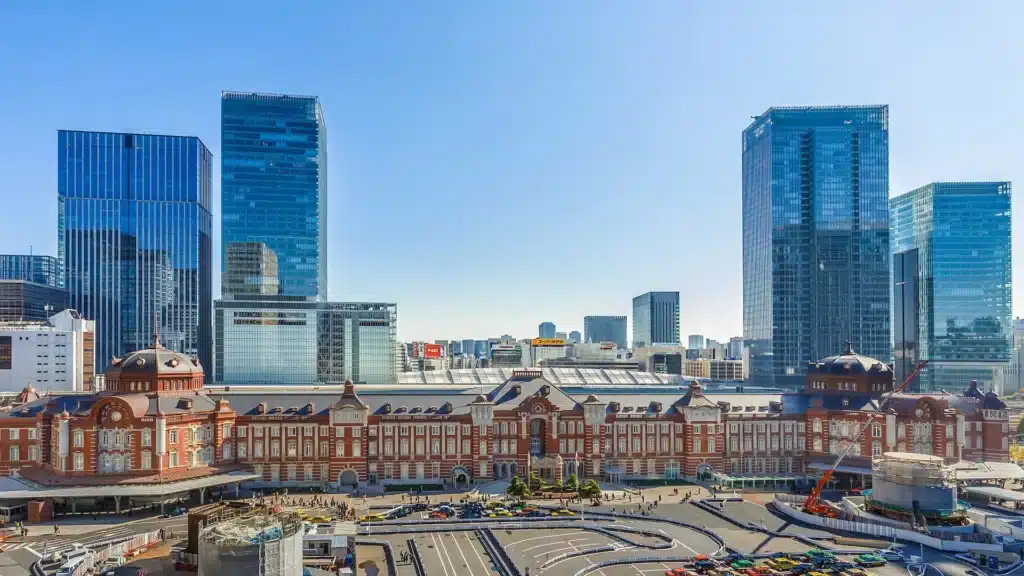
The Marunouchi district around the station is Tokyo’s most important business quarter with broad, elegant streets that remind you a bit of central London or Paris.
Here you’ll find massive shopping centres like Daimaru and Tokyo Ramen Street in the station’s basement (eight of Tokyo’s best ramen restaurants under one roof).
The best thing about the area is the combination of practical location and cultural experiences. You have the Imperial Palace and the beautiful East Gardens right next door, and the Nihonbashi area, which is technically Tokyo’s absolute centre, is within walking distance with its traditional shops and restaurants.
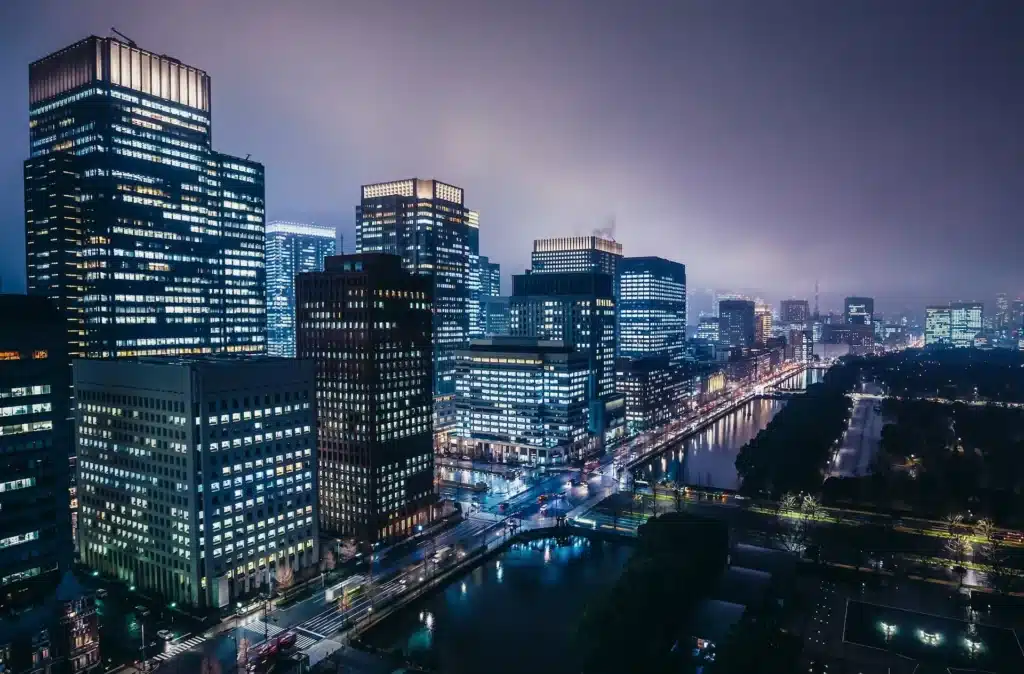
In the evening, the area becomes a bit quieter than Shibuya or Shinjuku, which can be nice if you want the opportunity to relax. There are still loads of restaurants and bars, but it’s more balanced and less chaotic.
Quick Info: Tokyo Station/Marunouchi
📍 Distance to centre: 0 km (completely central!)
🚇 Nearest metro: Tokyo Station (shinkansen + all major lines)
✈️ Time to airport: 30 minutes to Haneda, 60 to Narita
🏪 Supermarket: Gransta in the station, Daimaru basement
💰 Price level: €€€€ (4/5)
👮 Safety: ⭐⭐⭐⭐⭐ (5/5)
Places to stay in Tokyo Station/Marunouchi
Four Seasons Hotel Tokyo at Otemachi ⭐️⭐️⭐️⭐️⭐️
Four Seasons Otemachi is the essence of modern luxury on the upper floors of a skyscraper, with panoramic views over the Imperial Palace and Tokyo Bay. In short, perfect if you want peace and luxury without leaving the centre.
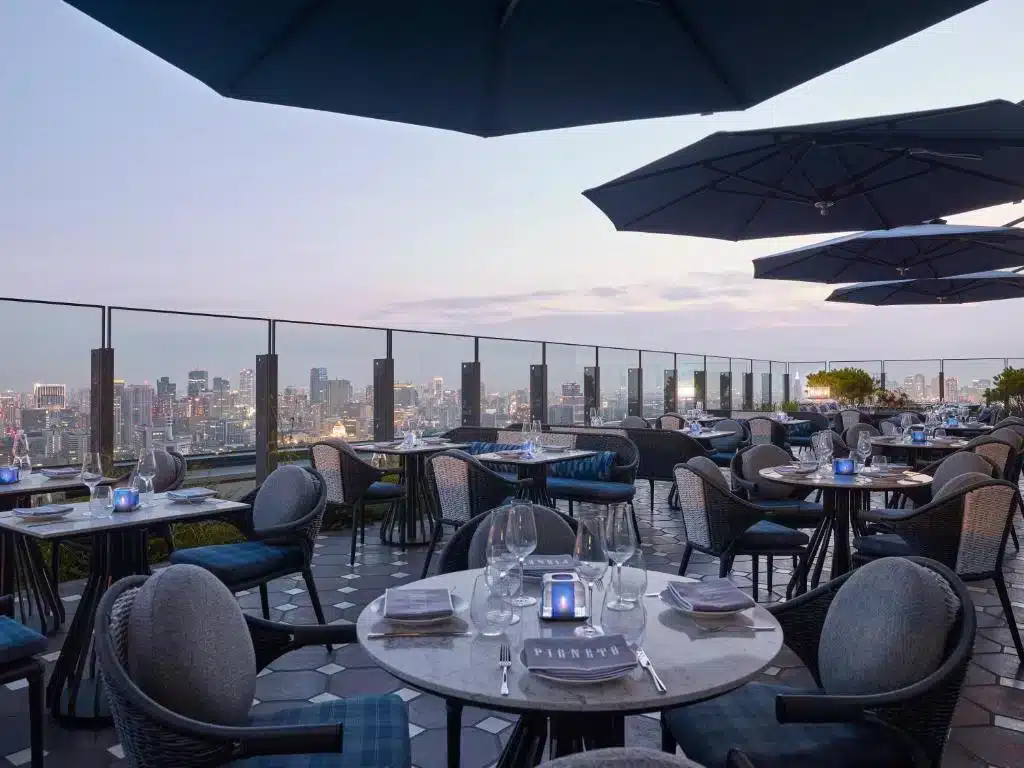
The rooms are bright and stylish with Japanese details and large floor-to-ceiling windows. The spa and long pool are obvious places to completely switch off, and the restaurants range from relaxed to Michelin level.
Previous guests particularly highlight: “The spa and pool were fantastic after a long day of walking.”
See more photos and book here.
Hotel Ryumeikan Tokyo ⭐️⭐️⭐️
A charming boutique hotel with modern ryokan atmosphere.
The hotel is a good choice if you want to stay centrally with Tokyo Station just around the corner. Here you get comfort without big gestures and a little touch of Japanese tradition in the décor.
The rooms are compact but well-functioning, and there’s attention to detail, from the duvets to the Japanese high-tech toilet experience. Many guests mention the good night’s sleep and practical location as clear pluses.
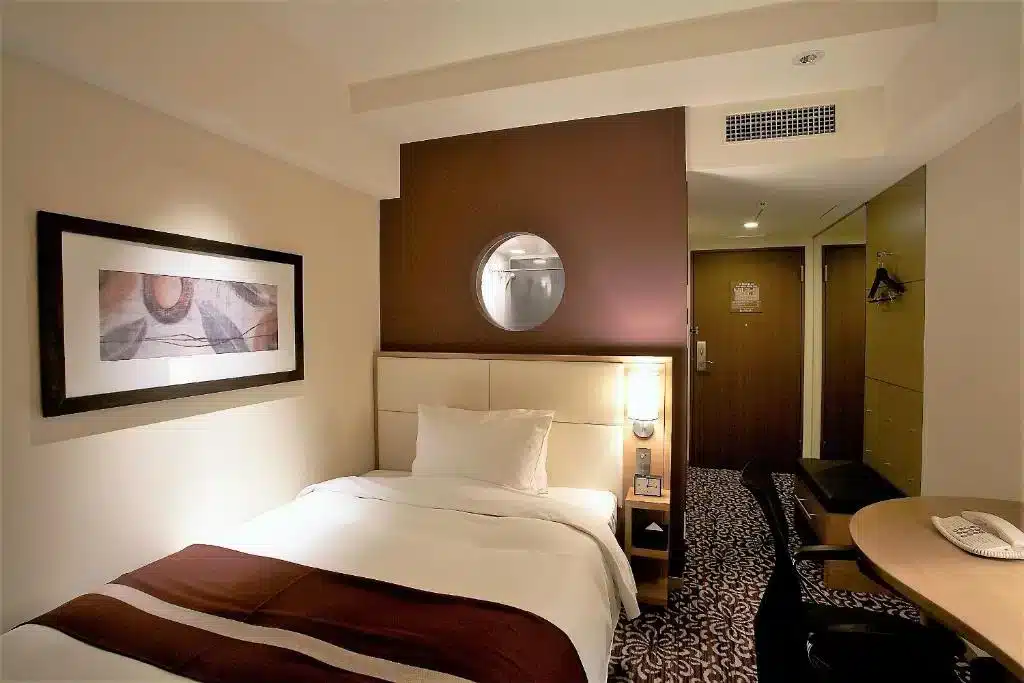
A good place to land if you want easy access to the whole city without spending a fortune.
Guests particularly love: “The location was perfect, access to all of Tokyo from the station across the street, clean and large rooms with very reasonable room rates.”
See more photos and book here.
5. Asakusa – Traditional Charm and Authentic Atmosphere 🏛️
Asakusa is Tokyo’s answer to Kyoto. An area where you can really feel old Japan in the middle of a modern metropolis. If you want to experience more than just skyscrapers and neon, then Asakusa is absolutely perfect.
The whole area centres around Sensoji Temple; Tokyo’s oldest and most important temple from the year 645.

Nakamise dori, the street leading up to the temple, is a 250-metre-long shopping street filled with traditional souvenirs, street food, and handicrafts. Here you can buy everything from origami and fans to taiyaki (fish-shaped cakes with various fillings) and ningyo yaki (doll-shaped cakes).
See the best hotels in Asakusa here.
The area has maintained a very authentic Japanese atmosphere with low wooden buildings, traditional restaurants, and small alleys where time has almost stood still.

You’ll find many izakaya (Japanese pubs) and traditional restaurants serving tempura, soba, and other classic dishes.
Hoppy Street is a small street packed with retro izakaya, perfect for an authentic Japanese evening.
From Asakusa you have a fantastic view of Tokyo Skytree (the world’s second tallest tower), and you can take a lovely cruise down the Sumida River to other parts of the city.
The area is also perfect for cherry blossom viewing in Sumida Park in spring.
The only minus is that Asakusa is located a bit further from the main activities in west Tokyo, so you need to allow for slightly longer transport time to places like Shibuya and Shinjuku. But in return, you get a completely different and more authentic side of Tokyo.
Quick Info: Asakusa
📍 Distance to centre: 6 km from Shinjuku
🚇 Nearest metro: Asakusa Station (Ginza, Asakusa Line)
✈️ Time to airport: 45 minutes to Haneda
🏪 Supermarket: Don Quijote Asakusa, local shops
💰 Price level: €€ (2/5)
👮 Safety: ⭐⭐⭐⭐⭐ (5/5)
Places to stay in Asakusa
The Gate Hotel Kaminarimon ⭐️⭐️⭐️⭐️⭐️
The Gate Asakusa Kaminarimon is located in the heart of Asakusa, right by Thunder Gate and Sensoji Temple. So just steps from both loads of life and a glimpse of Tokyo’s history.
The hotel has stylish, compact rooms with modern design and good storage options. The décor blends modern function with a discreet Japanese touch. Perfect if you want something simple but special.
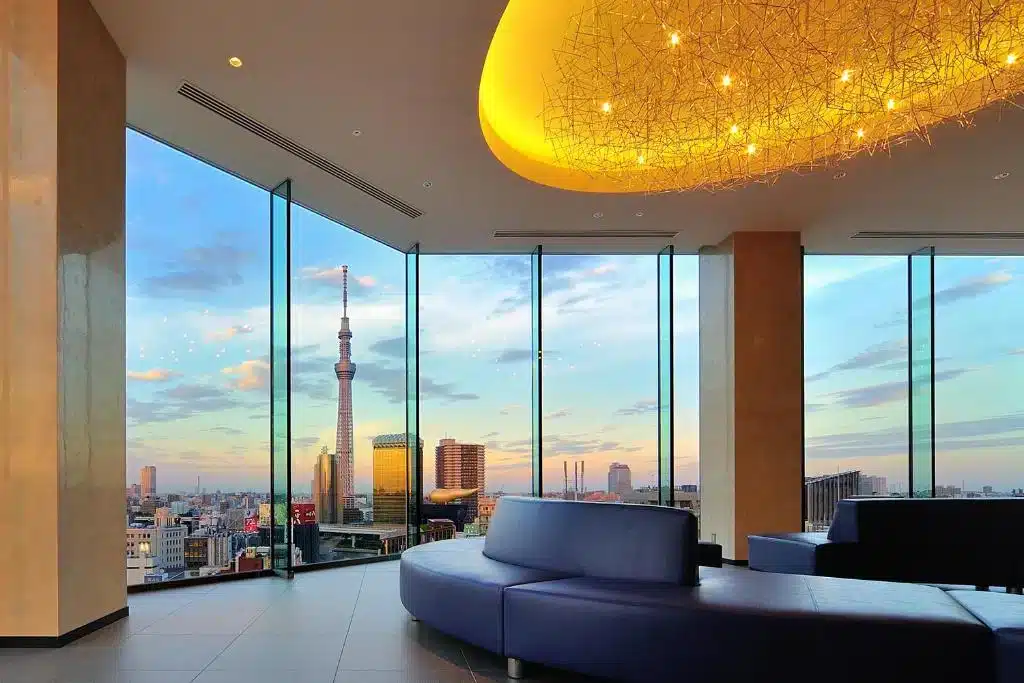
Previous guests particularly highlight: “Excellent location, lovely rooms, and fantastic staff who were very helpful.”
See more photos and book here.
Asakusa View Hotel ⭐️⭐️⭐️⭐️
A classic hotel with fantastic views of Tokyo Skytree and good location for all of Asakusa’s attractions. Has been a favourite among travellers for many years.
The rooms vary from standard to really high-end, but the true reason to choose the hotel is the view.
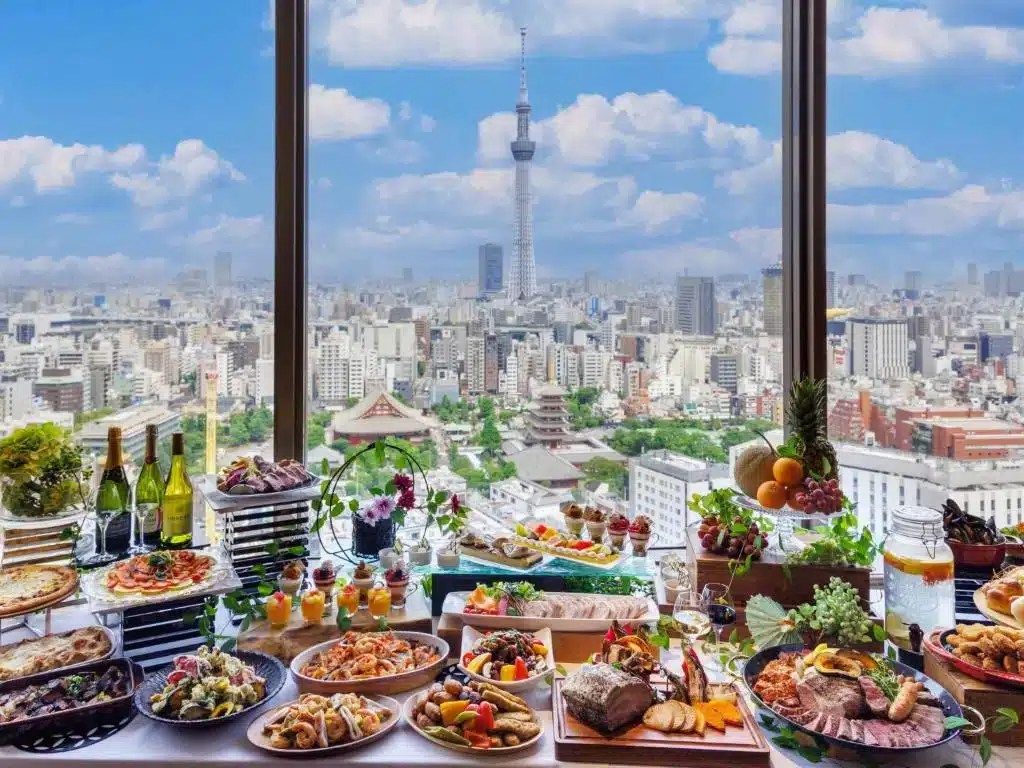
A guest recently wrote: “Fantastic location, view from the room and also from the breakfast area.”
See more photos and book here.
6. Roppongi – International Nightlife and Modern Art 🍹
Roppongi is Tokyo’s most international quarter and the place for those who love nightlife, modern art, and cosmopolitan atmosphere. It’s a bit like a mix of SoHo and the Meatpacking District in New York.
This area has been Tokyo’s party central for decades and attracts both expats, tourists, and Japanese who want to experience the city’s wildest nightlife.
Here you’ll find everything from rooftop bars with spectacular views to underground clubs that stay open until well into the night. Mori Art Museum and National Art Center give the area a sophisticated cultural dimension.
See the best hotels in Roppongi here.
Roppongi Hills and Tokyo Midtown are two massive shopping and business complexes with luxury shops, restaurants, and offices. From the observation deck in Mori Tower you get one of Tokyo’s best views, especially beautiful at sunset when the city’s lights begin to switch on.
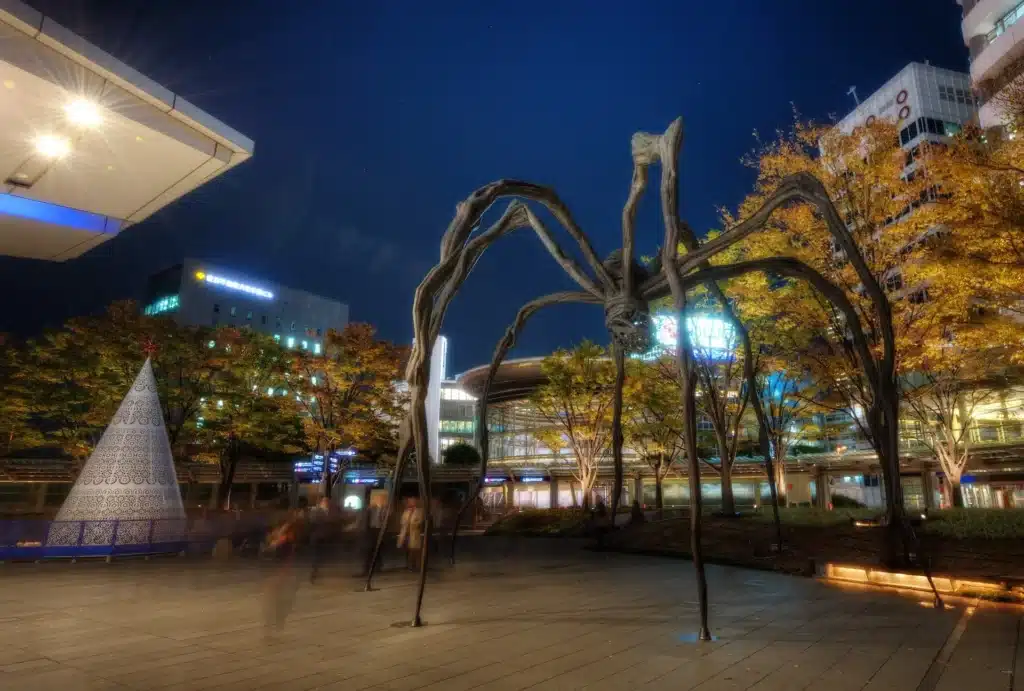
The restaurant scene is international with everything from Michelin-starred French restaurants to authentic Indian, Italian, and Middle Eastern cuisines. It’s here you’ll find Tokyo’s best selection of non-Japanese food.
Watch out: Roppongi can get wild at night, and there are quite a few touts trying to get tourists into expensive bars.
The area also has a reputation for attracting a few dodgy types, so keep your eyes open, especially late at night. But during daytime and early evening hours it’s completely safe.
Quick Info: Roppongi
📍 Distance to centre: 4 km from Tokyo Station
🚇 Nearest metro: Roppongi Station (Hibiya, Oedo Line)
✈️ Time to airport: 40 minutes to Haneda
🏪 Supermarket: Grocery stores in Roppongi Hills and Midtown
💰 Price level: €€€€ (4/5)
👮 Safety: ⭐⭐⭐ (3/5) – be careful at night
Places to stay in Roppongi
Grand Hyatt Tokyo ⭐️⭐️⭐️⭐️⭐️
Grand Hyatt Tokyo is a classic luxury hotel and is located in the heart of Roppongi Hills with easy access to shopping, museums, and nightlife. The hotel is modern and stylish, and the rooms have a simple, Japanese-inspired décor with focus on comfort.
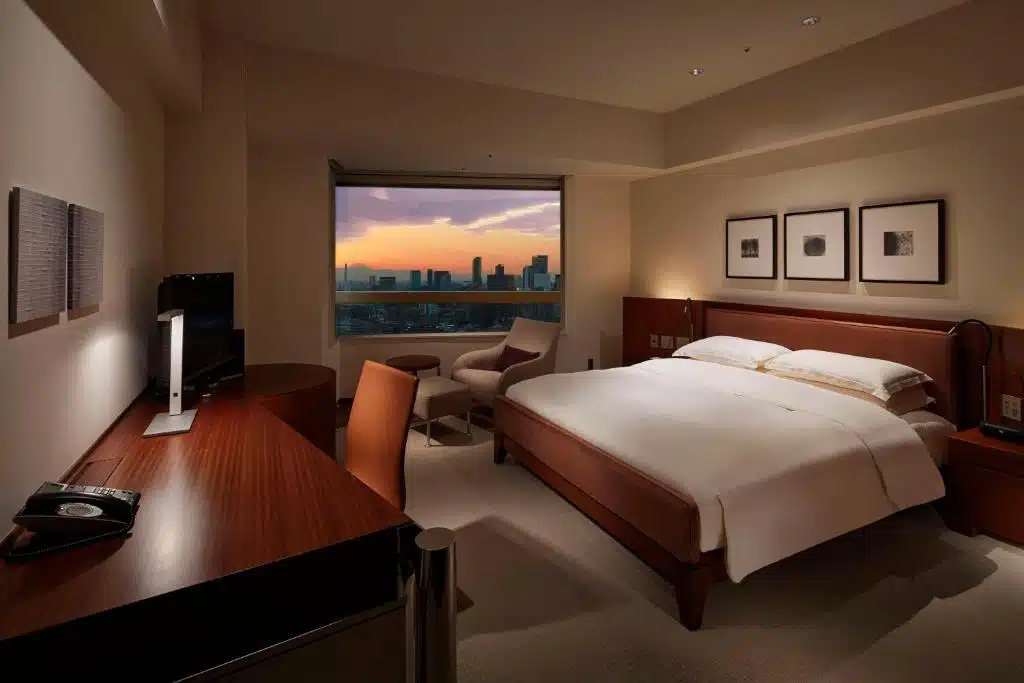
There’s a good spa and indoor pool, which provides a quiet break from the city’s tempo, as well as several restaurants with different cuisines.
A good choice if you want to stay centrally with everything gathered under one roof.
A guest recently wrote: “Perfect location in Roppongi Hills with outstanding service and facilities.”
See more photos and book here.
Hotel Villa Fontaine Roppongi ⭐️⭐️⭐️
A practical business hotel with good location and reasonable prices for the area.
The metro station is practically at the door, so you can be on your way to new experiences in just a few minutes.
The rooms are compact but well-furnished with all the necessities. The location means you have restaurants, bars, and culture right nearby, but when you close the door, it’s quiet.
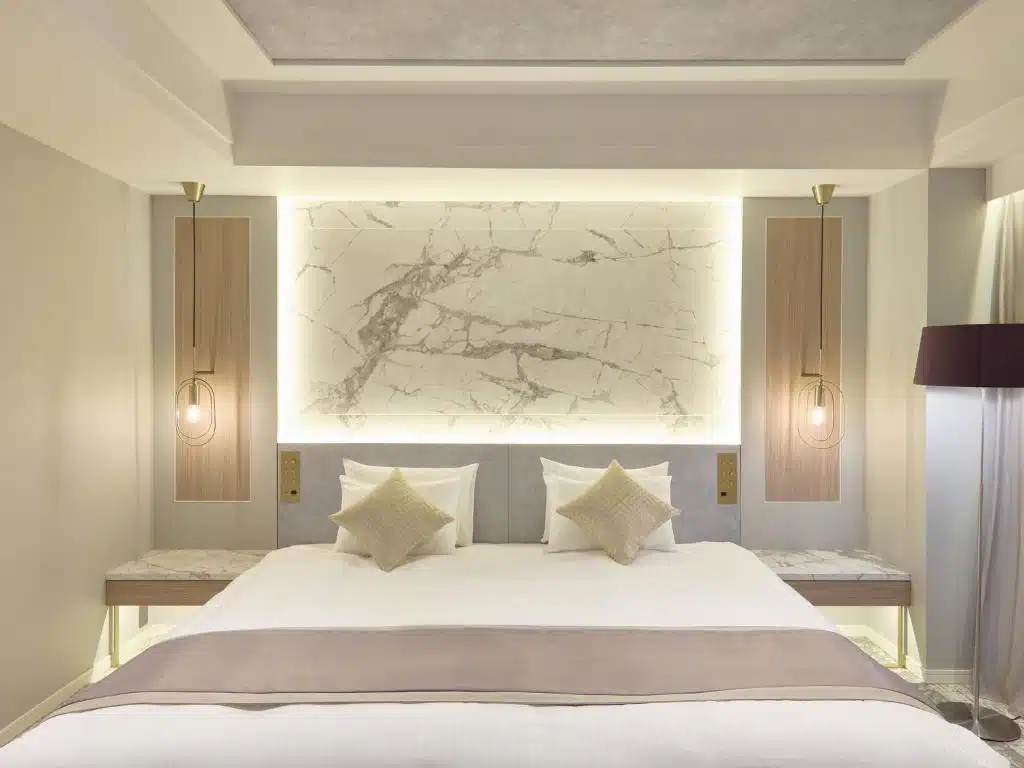
The breakfast is simple but fine, and the staff are known for being accommodating. An obvious choice if you want to stay centrally but still have a base that feels relaxed and straightforward.
Guests particularly love: “Good value for money in expensive Roppongi with clean rooms and convenient location.”
See more photos and book here.
For a trip beyond Tokyo, you can also compare my guides to where to stay in Osaka and where to stay in Kyoto. They explain which areas work best for restaurants, sightseeing and onward train journeys. If your trip also includes South Korea, my guide to where to stay in Seoul compares bases near the palaces, shopping streets and nightlife.
Where Not to Stay in Tokyo ❌
Although Tokyo is generally one of the world’s safest major cities, there are still some areas I’d recommend you avoid. Not necessarily because they’re dangerous, but because they either don’t give you the best tourist experience or can be a bit too intense.
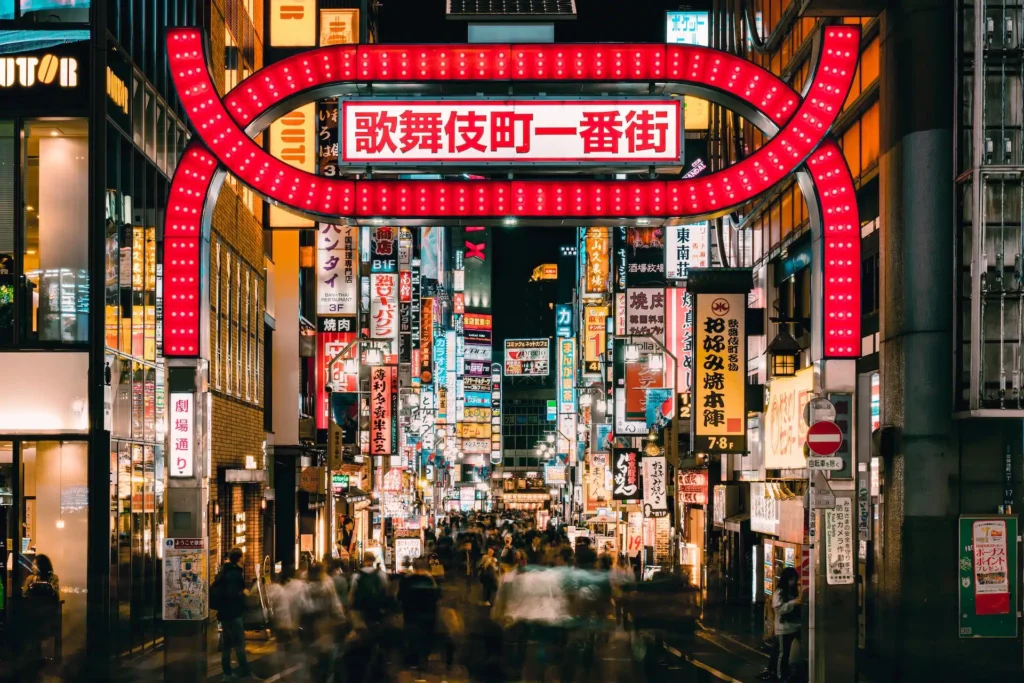
Kabukicho (part of Shinjuku)
This is Asia’s largest red light district and can get quite wild at night. While it’s not directly dangerous, there can be many touts trying to lure tourists into expensive bars and dodgy places.
The area is filled with host bars, massage clinics, and other “entertainment venues”. If you’re considering Shinjuku, then stick to the area around the station itself or west Shinjuku instead.
Uguisudani (north of Ueno)
Located just north of the otherwise family-friendly Ueno area, but is primarily known for its love hotels and has a slightly strange atmosphere, especially at night. You’ll get a better experience staying directly in Ueno instead.
Shin-Koiwa
This area in east Tokyo has a reputation for having the most crime incidents and is generally not particularly interesting for tourists. There are no major attractions here, and you’re far away from the areas you’ll probably want to visit.
Areas far from the Yamanote Line
Avoid staying too far from the Yamanote Line (Tokyo’s most important ring line), as you’ll spend much longer on transport. Areas like Adachi or parts of outer Setagaya might be cheaper, but you lose too much time getting to and from the attractions.
If you’re considering one of these areas, then book in Shibuya, Shinjuku, or the Tokyo Station area instead, where you get much more value for money and a better base for exploring the city.
Still unsure where to stay in Tokyo?
Tokyo is a massive city, but with the right areas as a base, it becomes much more manageable. Shibuya is my top choice for young travellers who want to feel Tokyo’s pulse, whilst Shinjuku is perfect for first-time visitors who want easy access to everything.
Ginza suits the more sophisticated traveller with a bigger budget, and Asakusa is fantastic if you want to experience traditional Japan.
For families, I recommend the Tokyo Station area.
- Roppongi is only for those who really want to experience Tokyo’s nightlife and don’t mind a bit more chaos.
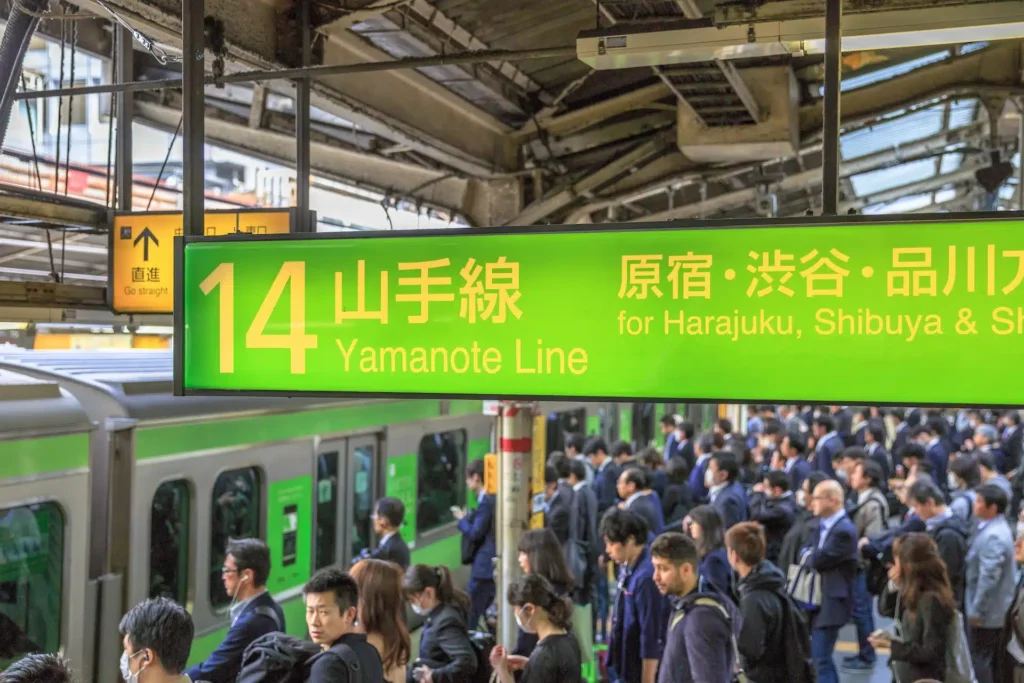
Transport-wise, the most important thing is to stay close to the Yamanote Line – it connects all the major areas and makes your journey so much easier. Remember to buy an IC card (Suica or Pasmo) at the airport, it makes all public transport super easy.
Regardless of which area you choose, you’re going to love Tokyo. It’s a city that constantly surprises, and with a good base area, your experience becomes even better.
If you’re combining Tokyo with another big city in Asia, you can also read my guides to where to stay in Hong Kong and where to stay in Taipei. Enjoy your Tokyo adventure, you’re going to have an absolutely brilliant time.
Which Season is Best to Visit Tokyo?
Spring (March–May) and autumn (September–November) are the most pleasant with mild weather and beautiful colours. Spring offers cherry blossoms, whilst autumn has clear days and red leaves. Summer is hot and humid, and winter is cool but dry.
Is Tokyo Expensive?
Tokyo can be expensive, but there are opportunities to make it cheaper. Food, transport, and experiences can easily be reasonable, especially if you choose local restaurants, use public transport, and mix free attractions with paid ones.
Can You Manage Without Speaking Japanese?
Yes, no problem. Many signs are also in English, and people are generally helpful. A translation app can be handy, especially at small eateries or in areas without many tourists.
What’s the Easiest Way to Get Around Tokyo?
Trains and metro are fast, punctual, and cover almost the entire city. An IC card like Suica or Pasmo makes it easy to travel without buying tickets each time, and these can be purchased at the airport.
How Long Should You Spend in Tokyo?
At least 4–5 days to see the main quarters and attractions at a relaxed pace. However, you can easily fill up days even with a visit spanning several weeks.
Travel ressources & websites I use all the time 👇
• Booking.com has the best offers on hotels and unique places to stay
• GetYourGuide is the best place to book tours & activities with free cancellation
• Welcome Pickups is the best & safest place to pre-book airport transfers
Psst 👀 Have you subscribed to my Youtube channel and my Instagram where I provide more useful travel tips?