

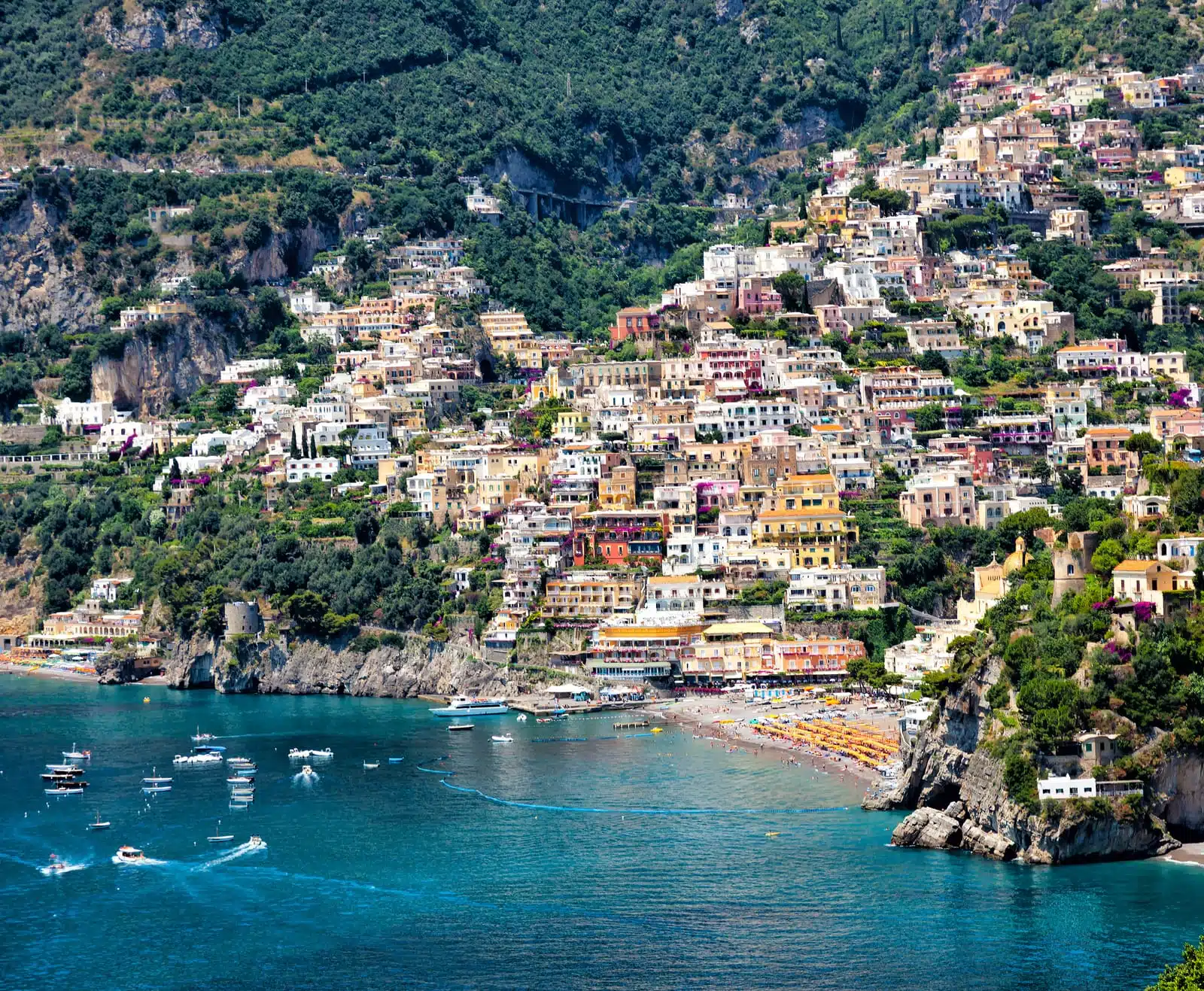
The Amalfi Coast is the kind of place that makes you breathe a little deeper. Pastel-coloured houses clinging to vertical cliffs, turquoise sea, lemons the size of softballs and the scent of basil and freshly baked pizza drifting up from narrow alleyways.
It’s all packed into a 50-kilometre stretch of coastline in Southern Italy that has been a UNESCO World Heritage Site since 1997. Here are my top picks for things to see and do along the Amalfi Coast.
Contents
1. Positano – The Coast’s Most Photographed Town
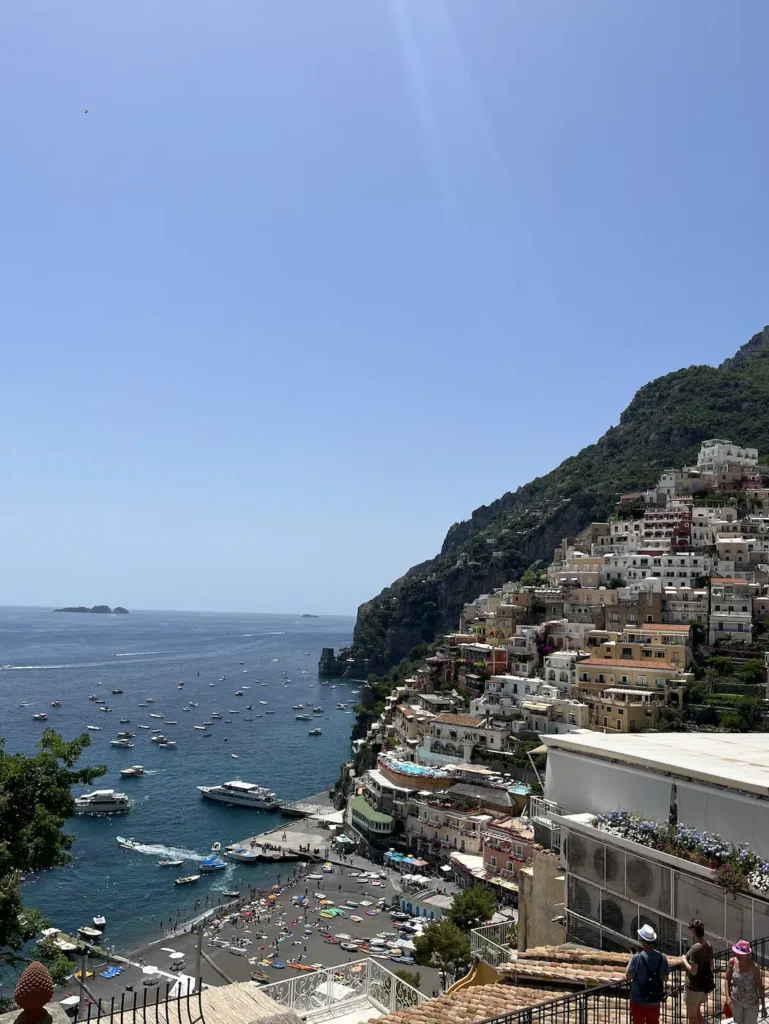
Let’s start with the town you’ve already seen hundreds of photos of. Positano is the iconic cliff town where colourful houses cascade down towards the sea like a living mosaic. And yes, it lives up to the pictures. The only problem is that everyone else knows it too.
Positano is built vertically. That means stairs. Lots and lots of stairs. Wear good shoes and take it easy. Walk from the top of town down towards Spiaggia Grande (the main beach) and enjoy the views along the way. Pop into Chiesa di Santa Maria Assunta with its beautiful majolica dome. Shop for handmade sandals (the town’s speciality) in the small boutiques along Via dei Mulini. And sit down with an Aperol Spritz at one of the beach bars while gazing out at the sea.
My honest advice: come early in the morning or late in the afternoon. In the middle of the day during peak season, it’s a battle for space. And never park in Positano itself – it’s a nightmare. Take the SITA bus or the ferry from Amalfi instead.
2. Amalfi Town and the Duomo di Sant’Andrea
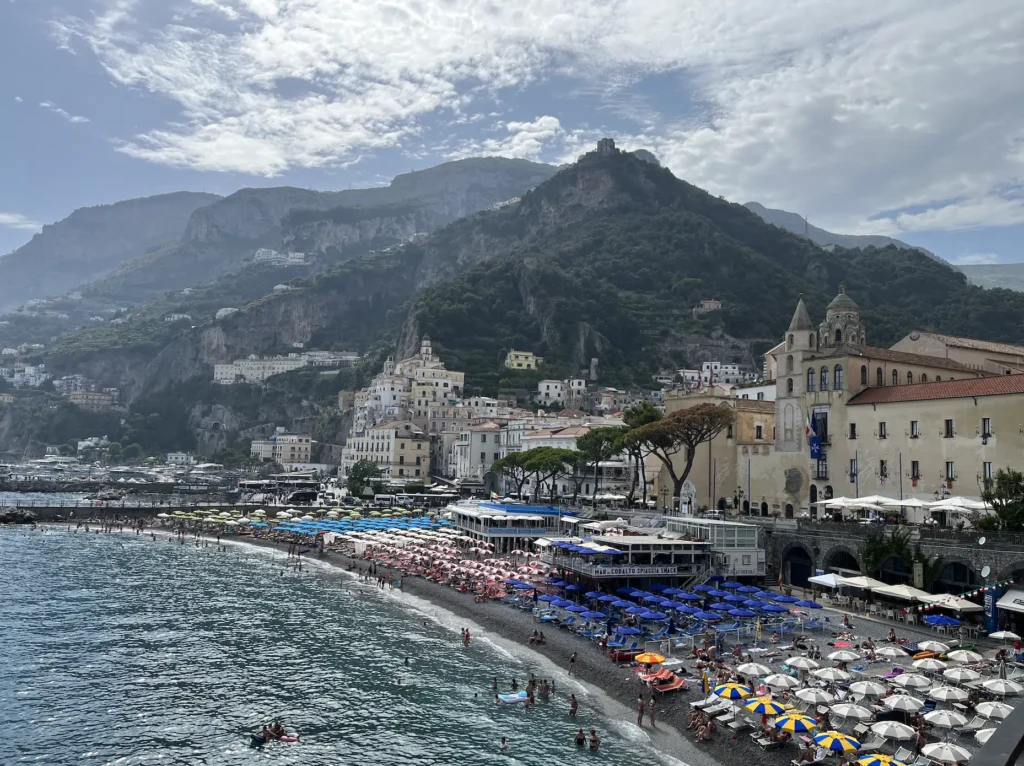
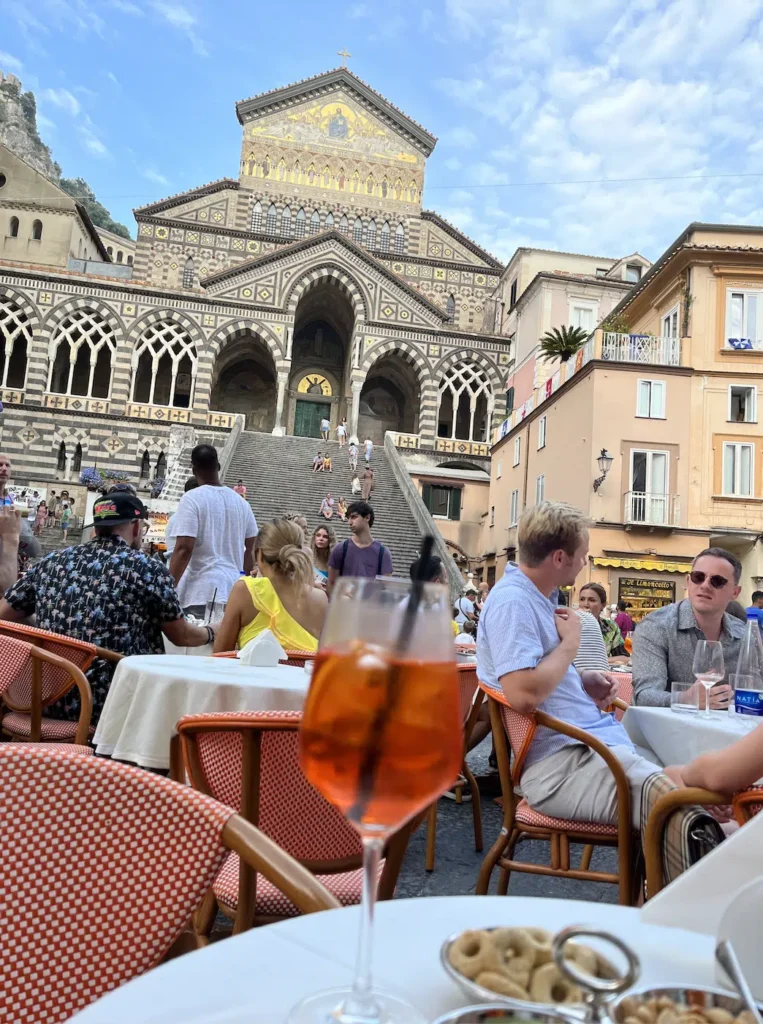
The town that gave the entire coast its name was once one of Italy’s four powerful maritime republics. Today Amalfi is a charming little coastal community with an absolutely incredible cathedral at its centre. The Duomo di Sant’Andrea sits atop a monumental staircase of 62 steps, and the facade is a mix of Arab-Norman, Byzantine and Baroque styles unlike anything else in Italy.

The cathedral itself can often be entered for free during mass. But for the full Monumental Complex – including the Cloister of Paradise (Chiostro del Paradiso), the crypt with St. Andrew’s relics and the Basilica del Crocifisso – tickets cost €4. It’s worth the money. The Cloister of Paradise is a quiet oasis with Moorish columns and medieval sarcophagi, and the crypt is surprisingly beautiful with gilded ceilings.
- Opening hours: March-June 09:00-18:45, July-September 09:00-19:45, November-February 10:00-13:00 and 14:30-16:30.
Piazza del Duomo below is perfect for an espresso while gazing up at the cathedral. Do take a walk through the narrow alleyways behind it, where the tourists disappear and local life takes over.
3. Ravello – The Garden Above the Clouds
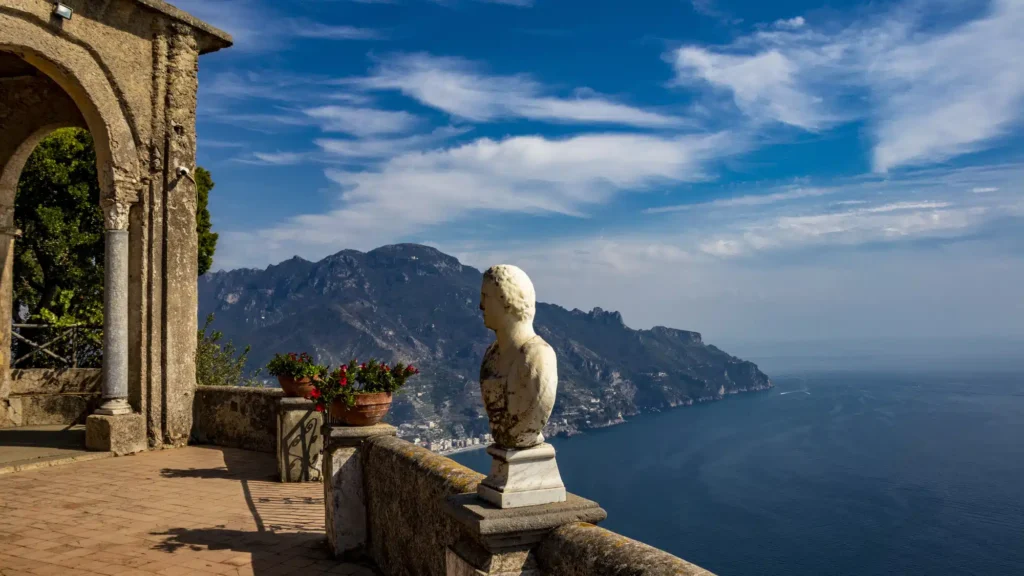
Ravello sits 350 metres above the sea, and it feels as though you’re floating above the entire coast. While Positano and Amalfi are tightly packed tourist towns, Ravello is calm, elegant and filled with an almost magical atmosphere.
The town has attracted artists and musicians for centuries – Richard Wagner completed the second act of Parsifal here, and there’s still a major classical music festival every summer.
The two big experiences are Villa Rufolo and Villa Cimbrone. Villa Rufolo (€8, opens at 09:00) has beautiful gardens overlooking the bay and is the setting for the Ravello Festival’s summer outdoor concerts. Villa Cimbrone (€7, 09:00 until sunset) is the one that takes your breath away, though.
Walk through the Avenue of Eternity (Viale dell’Immenso) and out to the Terrazza dell’Infinito – a terrace with antique busts where the horizon simply vanishes into a blue nothingness. It’s arguably the most beautiful view on the entire Amalfi Coast.
You can reach Ravello by bus from Amalfi in about 25 minutes. There’s no reason to hire a car – parking is limited and expensive.
I’ve also mentioned Ravello in my full guide on where to stay on the Amalfi Coast.
4. The Path of the Gods (Sentiero degli Dei)
If you only do one active thing on the Amalfi Coast, make it this hike. Sentiero degli Dei is a 6.5-kilometre trail that runs along the cliff edge 500 metres above the sea from the village of Bomerano to Nocelle. The views are utterly absurd. You can see the entire coast, the island of Capri in the distance, and the colourful towns down by the water look like toys.
The route from Bomerano to Nocelle is primarily downhill and takes 2-3 hours for most people. The path is well marked (follow the signs with “02”), but it’s uneven and has sections without railings close to the cliff edge, so it’s not ideal for those with a fear of heights. Take SITA bus line 5020 from Amalfi to Bomerano to start. In Nocelle you can take a local bus down to Positano or walk the famous 1,500 steps down to the beach.
Best time: April-May or September-October. In summer it’s scorching hot and the path is overcrowded. Start early in the morning regardless, and bring plenty of water. There’s no shade on large parts of the route.
Check out my guide on where to stay on the Amalfi Coast here:
5. Boat Trip Along the Coast
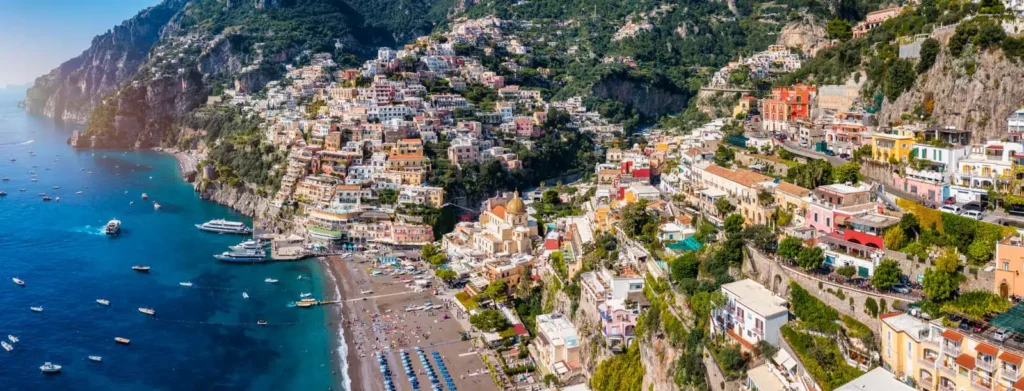
The Amalfi Coast was built to be seen from the sea. From land you see beautiful towns and dramatic cliffs. From the water you see caves, hidden beaches, natural rock arches and a coastline that’s even more overwhelming than you thought. A boat trip is probably the most popular experience on the entire coast, and with good reason.
Most trips depart from Amalfi or Positano and last 4-6 hours. You sail past Conca dei Marini, the Fjord of Furore (Italy’s only natural fjord), Praiano and various secret caves. There are stops for snorkelling and swimming at beaches you can only reach by boat.
This boat trip with snorkelling from Amalfi sails in a traditional gozzo boat with a maximum of 10 guests and includes prosecco, limoncello and fruit.
A shared boat trip typically costs from €50-80 per person. Private charter is more expensive (€400+), but you decide the route yourself. Always book in advance during peak season.
6. Grotta dello Smeraldo (The Emerald Grotto)
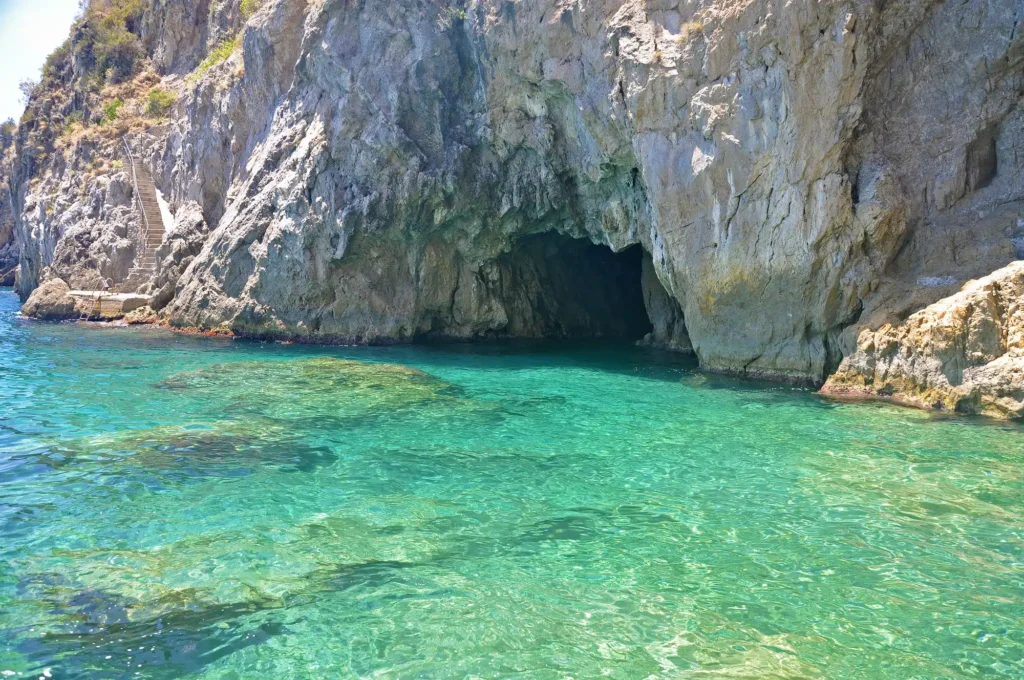
Capri’s Blue Grotto steals all the attention, but the Emerald Grotto at Conca dei Marini is just as spectacular – and far less crowded. Here sunlight enters through an underwater opening and colours everything in a surreal emerald-green glow. The effect is almost supernatural.
The cave was only discovered in 1932. On the bottom of the crystal-clear water you can see an underwater nativity scene in ceramics, placed there by local divers. Entry costs approximately €5-7 per person. You can reach the grotto by lift or stairs from the coastal road (SS163), or as a stop on a boat trip. The boat trip is by far the best way to experience it – you sail directly into the grotto in a small rowing boat.
- Note: the grotto may be closed in rough seas. Check with local operators on the day itself.
7. Atrani – One of Italy’s Smallest Municipalities
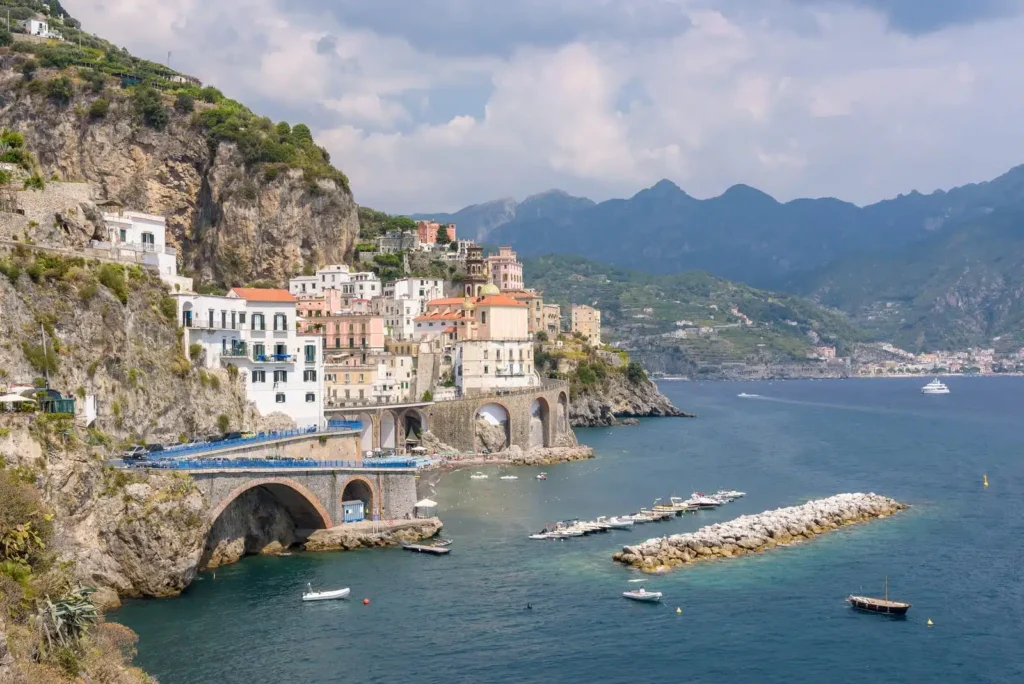
Here’s a secret that surprisingly few tourists know about: just five minutes’ walk from Amalfi town lies Atrani, one of Italy’s smallest municipalities. It’s the kind of place where you turn a corner, walk under an arch, and suddenly you’re standing in a small piazza with a beach, a Byzantine church and a handful of cafes.
Atrani has no major attractions. That’s the point. Here locals sit on benches and chat, children play football in the square, and there are almost no tourists. The beach is small but charming, and Chiesa di San Salvatore de Birecto (from 940 AD) is worth a visit for its historical significance – this is where doges of the Amalfi Republic were crowned.
Grab a beer at one of the beach bars and enjoy the feeling of having found a place that tourism has forgotten.
Travelling around Italy? Also read the full guide to the best things to do in Rome.
8. Lemon Experiences and Limoncello Tasting
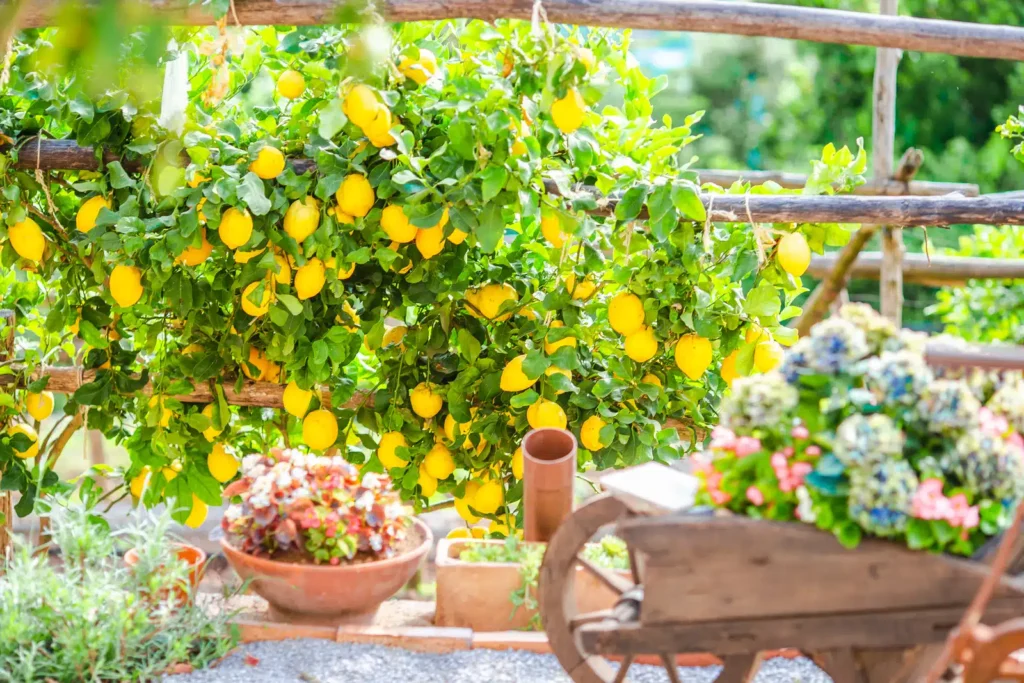
Lemons are the Amalfi Coast’s unofficial symbol. They’re everywhere – in the gardens, on the postcards, in the food and of course in the famous limoncello. And these aren’t just ordinary lemons. The Sfusato Amalfitano lemon is enormous, aromatic and has a sweeter peel than most lemons you know.
You can visit a lemon grove (limonaia) and learn about the cultivation, taste freshly squeezed lemon lemonade and see how limoncello is made. Several places also offer cooking classes where you use lemons in everything from pasta to cakes. It’s one of those experiences you can only have here – and it tastes completely different from the bottle of limoncello you can buy in the supermarket back home.
Also try delizia al limone (lemon cake) and sfogliatella Santa Rosa, a local variant of the famous Neapolitan pastry that was invented by nuns at the Santa Rosa convent in Conca dei Marini.
9. Fiordo di Furore
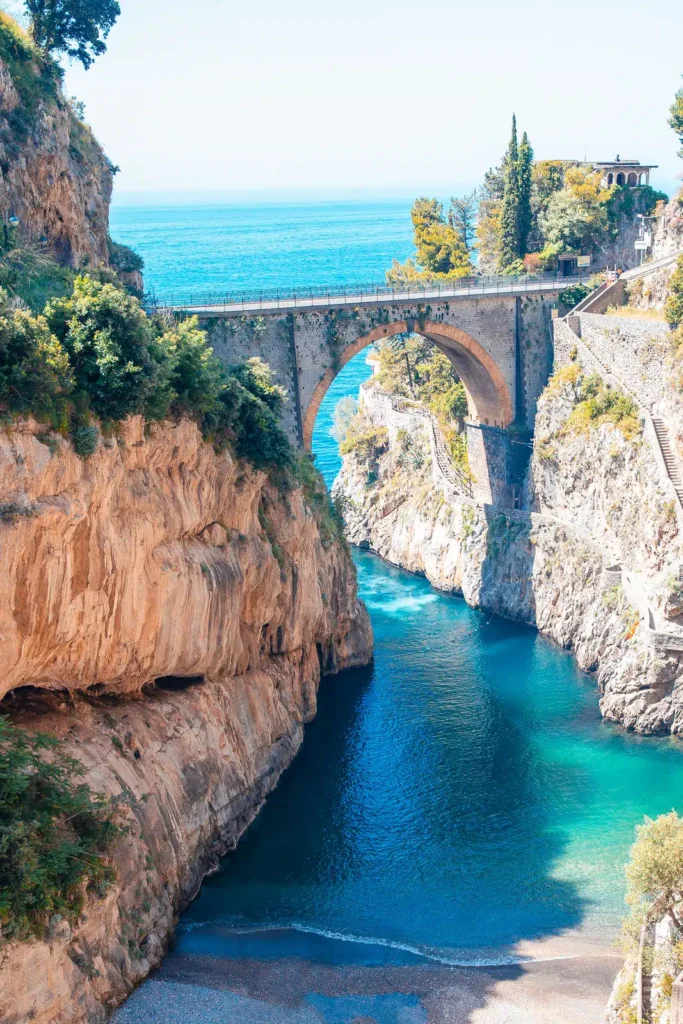
This is one of those places that looks photoshopped but is actually real. Fiordo di Furore is Italy’s only natural fjord – a dramatic gorge where the cliffs rise vertically on both sides, and a small bridge crosses 28 metres above the water. Every July, professional divers jump from the bridge during the international MarMeeting diving competition.
Down at the bottom of the fjord there’s a tiny beach (one of Amalfi’s most Instagrammed), which you can reach via a narrow path from the coastal road. The beach is tiny and fills up quickly, so come early. Most people see the fjord best from the water during a boat trip, where you can sail right in and admire the wild rock formations.
Furore is also an interesting little village in itself. The houses are scattered across the cliffs, and the town calls itself “the village that doesn’t exist” (il paese che non c’è), because there’s no actual town centre.
10. Praiano – The Quiet Alternative
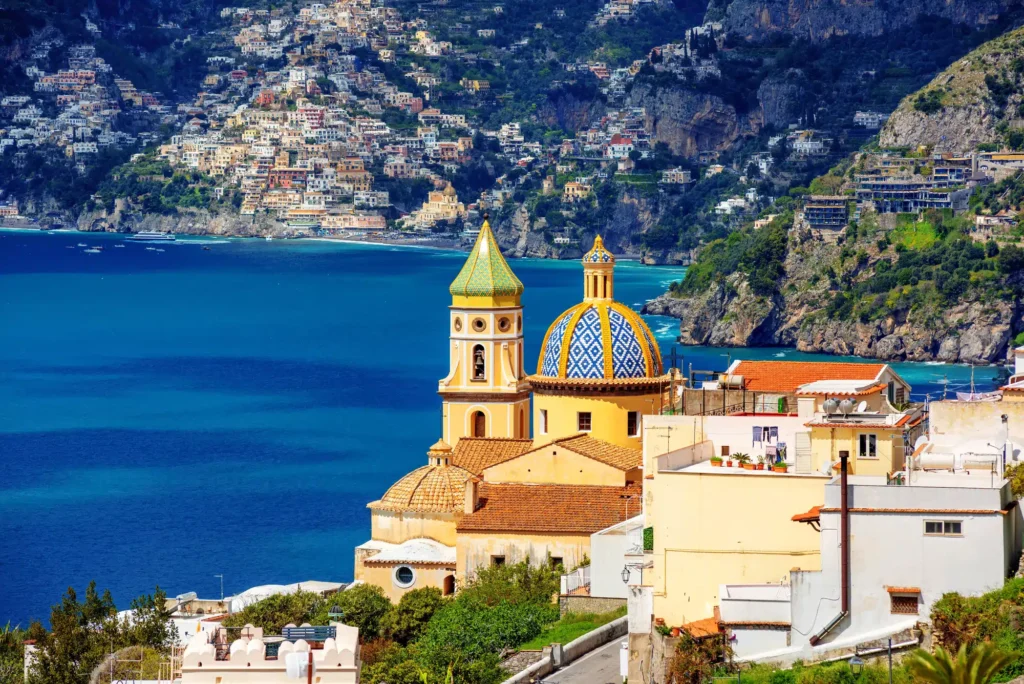
If Positano is too busy and Amalfi too touristy, Praiano is your spot. The small town sits between the two and has a relaxed atmosphere that the rest of the coast has lost. There are no souvenir shops lined up in rows. Instead you’ll find local bakeries, a beautiful cliff-top church and some of the coast’s best sunsets.
Marina di Praia is Praiano’s little beach – a cosy cove surrounded by old fishermen’s houses and cliff walls. It’s far less chaotic than the beaches in Positano. In the evening, Africana opens – a legendary nightclub built into a sea cave that has existed since the 1960s. Even if you’re not into nightclubs, it’s worth stopping by just to see the place.
Praiano is also the starting point for an alternative route up to the Path of the Gods, if you want to avoid the busiest starting village of Bomerano.
11. Food on the Amalfi Coast
Forget counting calories. The food here is an experience in itself, and it’s far more varied than most people imagine. The Amalfi Coast is one of those places in the world where you simply have to eat local. The key dishes you need to try:
Scialatielli ai frutti di mare – fresh, thick pasta ribbons with seafood. It’s the coast’s signature pasta, invented in Amalfi. Frittura di paranza – a mix of small deep-fried fish served in a paper cone. Perfect as street food. Melanzane alla parmigiana – aubergine with tomato and Parmesan that tastes completely different here than in the rest of Italy. And for dessert: delizia al limone, an airy lemon cake with cream filling.
Never eat at the first restaurant you see by the harbour. Walk a couple of streets up – the prices drop and the quality rises.
In Amalfi town, the area around Piazza dei Dogi is a good place to start. In Positano you need to head up to the higher streets to find the local favourites.
12. Day Trip to Capri
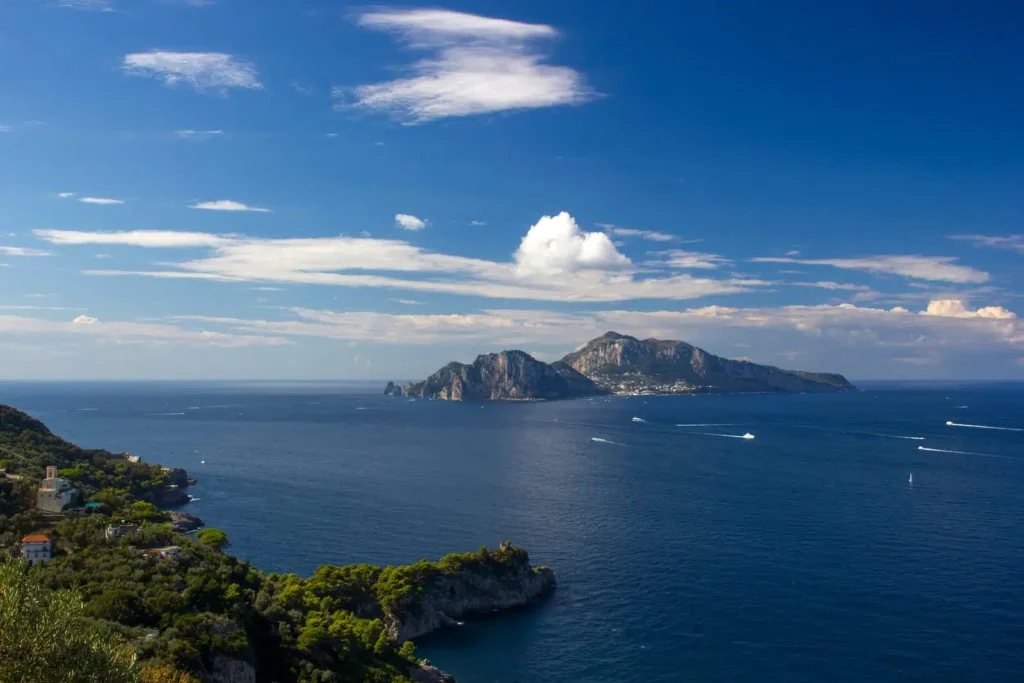
Capri is just 30-40 minutes by boat from the Amalfi Coast and makes the perfect day trip. The island is famous for its dramatic rock formations (the Faraglioni rocks), the exclusive shopping street Via Camerelle, and of course the legendary Blue Grotto (Grotta Azzurra), where the sea glows neon blue.
You can take the ferry from Amalfi or Positano (€15-25 each way, depending on route and company). Or even better: combine it with a boat trip where you sail along the coast and around Capri.
This full-day boat trip from Amalfi to Capri includes snorkelling, drinks and three hours of free time on the island.
Tip: the Blue Grotto can have up to three hours’ waiting time in peak season. Consider visiting it on your own via local ferry companies that offer quicker access, rather than as part of a group tour.
13. Day Trip to Pompeii
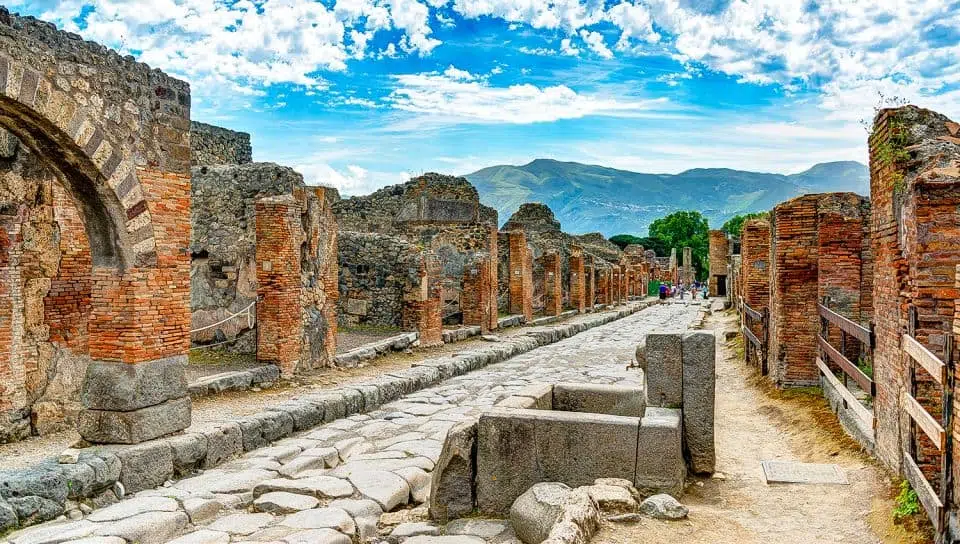
Okay, technically Pompeii isn’t on the Amalfi Coast. But it’s close enough that it would be silly not to go. The ancient Roman city, buried under volcanic ash from Vesuvius in 79 AD, is one of the world’s most fascinating archaeological excavations. You can walk on the original streets, see intact frescoes, visit a 2,000-year-old brothel and stand in the enormous amphitheatre.
From Amalfi it takes about an hour by car. You can also take the SITA bus to Salerno and then the train to Pompeii. A guided tour is strongly recommended – the excavation site is enormous, and without a guide you’ll miss the stories behind what you’re seeing.
- Entry tickets cost €18 for adults. Allow at least 2-3 hours for the visit.
Alternatively you can visit Herculaneum (Ercolano), which is smaller but better preserved than Pompeii. It’s closer to the Amalfi Coast and far less crowded.
Also check out my guide on where to stay in Naples if you’re considering staying a bit closer to Pompeii or simply want to take in everything this part of Italy has to offer.
14. Valle delle Ferriere – The Jungle Behind Amalfi
This is one of the Amalfi Coast’s best-kept secrets. Just a couple of kilometres behind Amalfi town lies Valle delle Ferriere, a nature reserve that feels like a tropical jungle in the middle of Southern Italy. Waterfalls, giant ferns, rare orchids and ruins of old ironworks from the Middle Ages. It’s completely surreal.
The reserve is home to Woodwardia radicans, a rare fern normally only found in the tropics. It survives here thanks to the constant humidity from the streams. The hike from Amalfi town takes about 1.5 hours each way and is moderate in difficulty. Entry to the protected area costs a couple of euros. Wear waterproof shoes – the path can be muddy.
It’s the perfect contrast to a day at the beach and an experience that 95% of tourists don’t know about.
15. Vietri sul Mare – The City of Ceramics
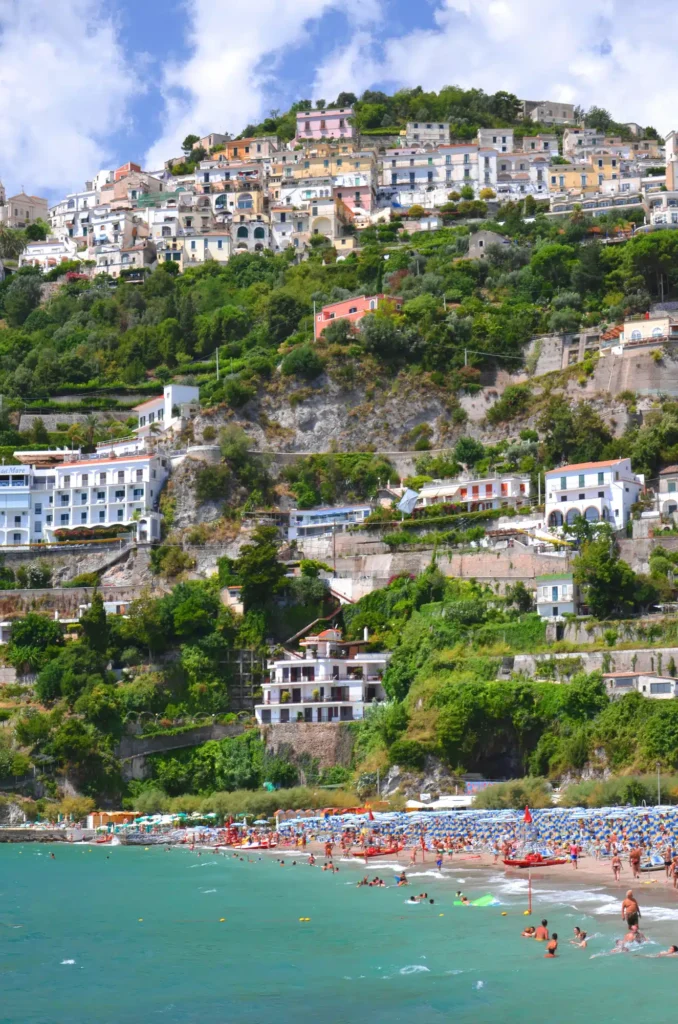
The Amalfi Coast’s eastern gateway is Vietri sul Mare, a small town that has been Italy’s ceramics capital for centuries. Everywhere you look you’ll see colourful, hand-painted tiles – on facades, staircases, signs and of course in the countless ceramics shops and workshops.
It’s an excellent place to buy souvenirs that are actually worth taking home. Hand-painted tiles, plates, vases and decorative items in the characteristic yellow, blue and green Vietri pattern. Prices are significantly lower than in Positano and Amalfi. Visit the Museo della Ceramica to understand the history of the tradition, and take a walk down to Marina di Vietri – a cosy beach popular with locals.
Vietri is easy to reach from Salerno (10 minutes by bus) and is the natural first or last stop on a trip along the coast.
16. Cooking Class

Making Italian food with a local chef is one of those experiences that truly sticks with you. Most classes last 3-4 hours and include a visit to the local market (or a lemon grove), preparation of 2-3 dishes and of course eating it all afterwards with a glass of local wine.
You’ll learn to make fresh pasta, work with local ingredients and understand why Italian cooking is more about respect for the produce than complicated techniques. Classes are available in almost every town along the coast. Ravello and Amalfi have particularly good options. Expect to pay €70-120 per person all inclusive.
Check out the selection of cooking classes here.
It’s also an excellent activity if the weather isn’t playing along – and it does actually rain quite a bit on the Amalfi Coast outside of peak season.
17. Sorrento as a Base
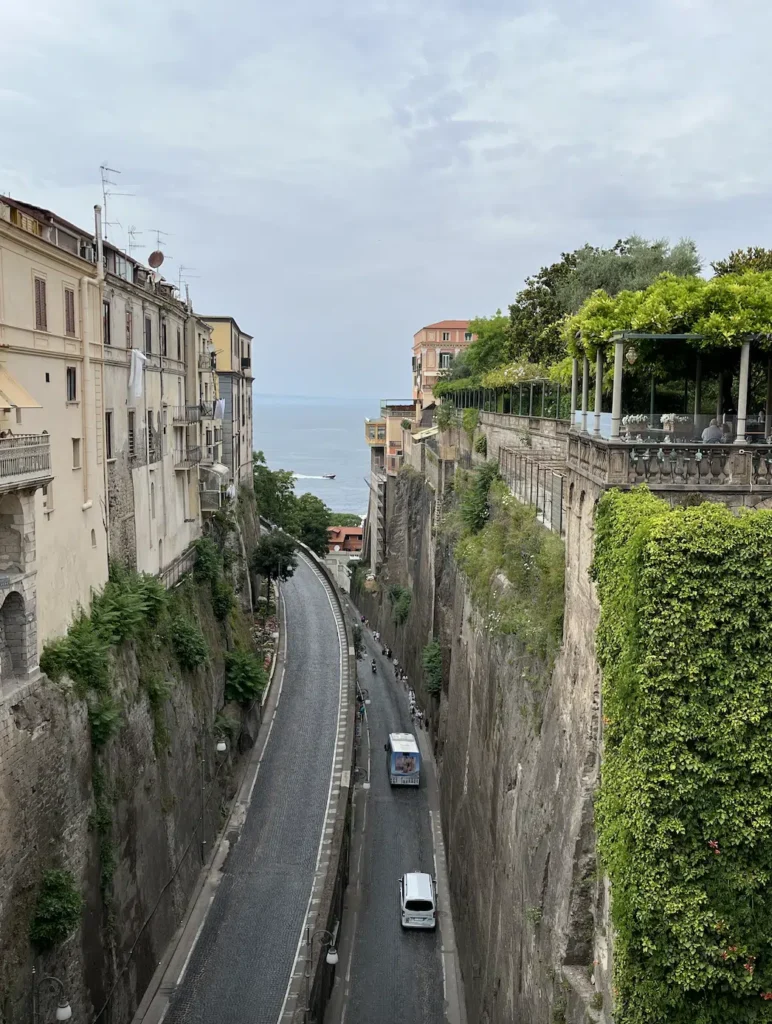
Sorrento isn’t technically on the Amalfi Coast, but most people use the town as a base, and there are good reasons for that. The town has better transport connections than anywhere on the coast itself.
From here you can take the Circumvesuviana train to Naples and Pompeii, the ferry to Capri and Ischia, and the SITA bus to the Amalfi Coast.
Sorrento is also cheaper than Positano and Amalfi, and it has a charming old town with good restaurants and shopping. Piazza Tasso is the town’s heart, and from here you can walk down to Marina Grande, the old fishing quarter with colourful houses and excellent fish restaurants. Also visit the beautiful Cloister at the Church of San Francesco – it’s free and surprisingly peaceful in the middle of town.
If you want to stay centrally with good connections to the entire coast, check out the hotels in Sorrento. The location is hard to beat as a base for the entire [Amalfi Coast].
Practical Tips for the Amalfi Coast
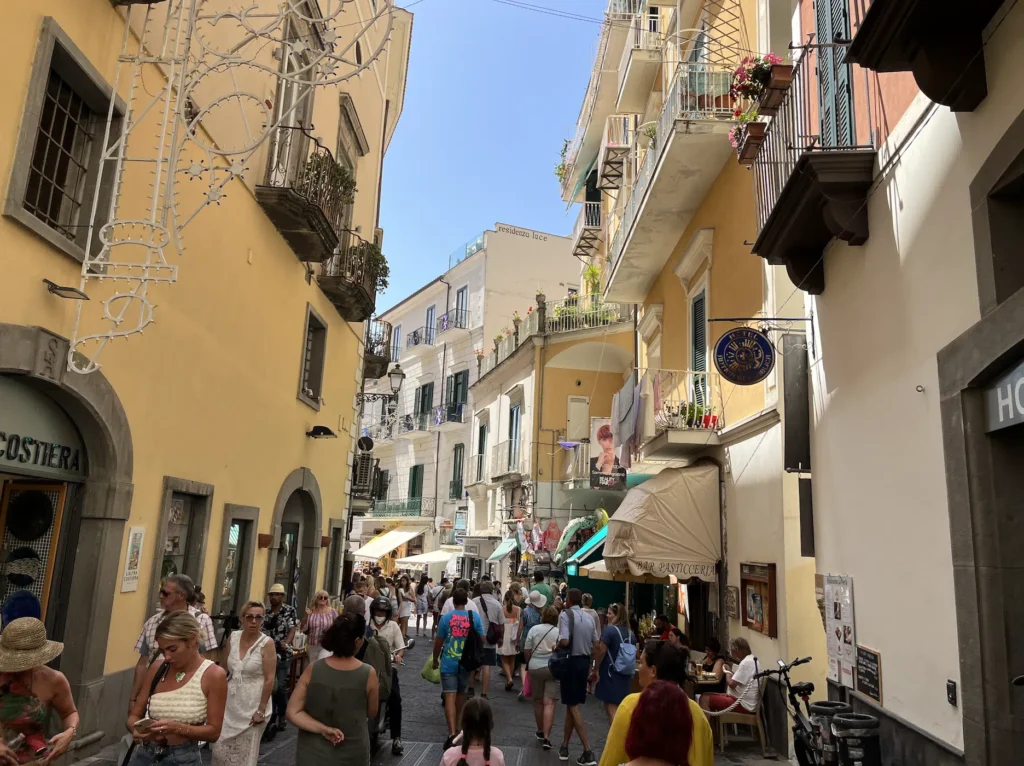
When should you go? April-June and September-October are the best months. The weather is warm, prices are lower than peak season, and there are significantly fewer tourists. July-August is a proper battle – overcrowded beaches, doubled prices and temperatures above 35 degrees. November-March is low season with cheap prices, but many things are closed and the weather is unpredictable.
How do you get around? The SITA buses are cheap (€2-4 per trip) but can be overcrowded in peak season – and there are people who literally can’t get on. The ferries (Travelmar and others) run from April to October and are fantastic but expensive. Never hire a car unless you have nerves of steel. Parking is impossible and costs €30-50 per day. Use the SITA Sud website to check bus timetables.
Where should you stay? It depends on your budget and priorities. Positano is beautiful but expensive. Amalfi is central and practical. Ravello is calm and romantic. Sorrento is the cheapest and has the best transport connections. Praiano and Atrani are the best options for a more local experience. Compare hotels in Amalfi here.
Budget: The Amalfi Coast isn’t cheap. A meal for two with wine easily costs €60-100 at an average restaurant. A sun lounger and parasol on the beach costs €15-25 per person per day. Plan your budget accordingly – and do walk a bit away from the waterfront to save significantly.
If you have any questions about your trip to the Amalfi Coast, leave a comment and I’ll do my best to help 🤝
Travel ressources & websites I use all the time 👇
• Booking.com has the best offers on hotels and unique places to stay
• GetYourGuide is the best place to book tours & activities with free cancellation
• Welcome Pickups is the best & safest place to pre-book airport transfers
Psst 👀 Have you subscribed to my Youtube channel and my Instagram where I provide more useful travel tips?