

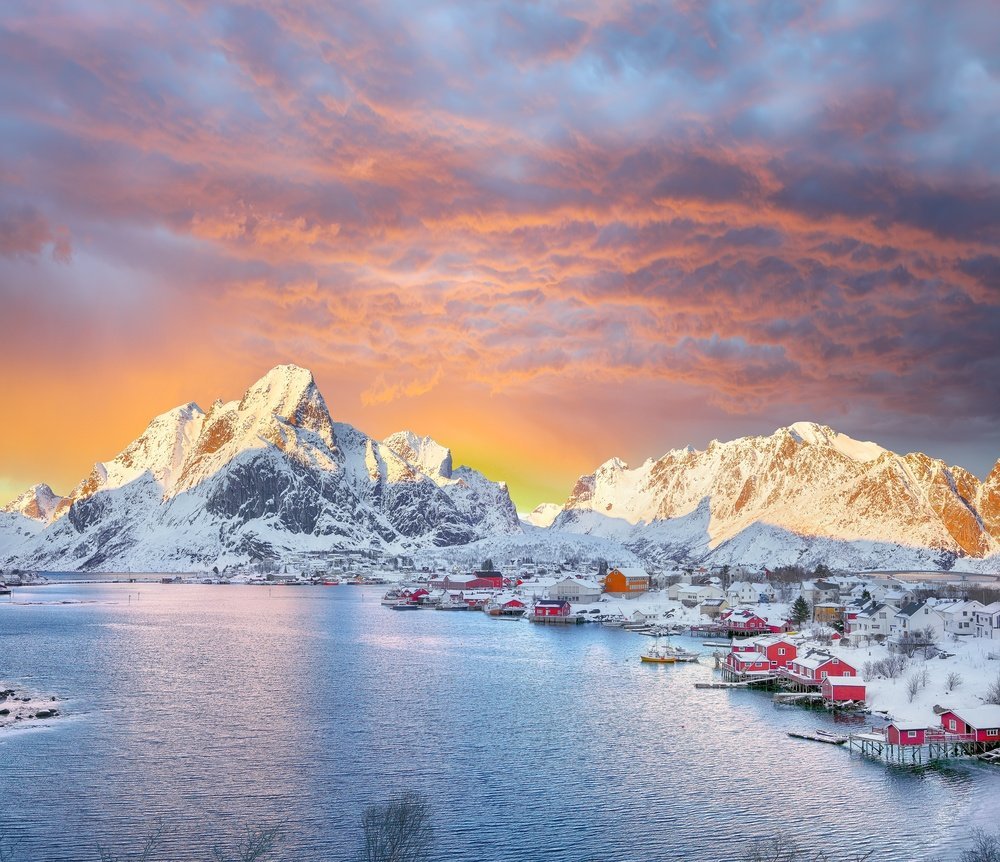
Norway is a capital city and fjords, fishing villages beneath steep peaks and the northern lights over the Arctic Ocean. Working out where to stay in Norway matters, because the country is long: from Stavanger in the south to Tromsø in the north it is around 1,300 kilometres as the crow flies, further than from London to Rome. Your choice of base therefore decides how much of your holiday you spend seeing Norway and how much you spend getting around.
You’re better off choosing two to four places and staying a few nights in each than racing along the whole coast in a week. Here are my recommendations for eight places to stay in Norway, with good hotels in three price ranges in each. Prices are high, so I’ll also tell you honestly where you get the most for your money.
Contents
Where to Stay in Norway: The Best Areas
- Oslo - best city for first-time visitors and the start of a round trip
- Bergen - best city for the fjords, Bryggen and harbour life
- Flåm - best base for the Sognefjord and the Nærøyfjord
- Stavanger - best city for Preikestolen (Pulpit Rock) and the Lysefjord
- Ålesund - best city for Art Nouveau architecture and views over the archipelago
- Geiranger - best place for the Geirangerfjord and the great mountain roads
- Lofoten - best area for fishing villages, hiking and the midnight sun
- Tromsø - best city for the northern lights and winter in Northern Norway
I’ll go through the eight places from Oslo west to the fjords and then up the coast to Lofoten and Tromsø. For each place you get a map, transport from the nearest airport and three places to stay: the most expensive first, then a mid-range option and finally one for a smaller budget. Journey times come from the official operators, and where I’ve added times together myself, I say that it’s an estimate. I give prices in Norwegian kroner with the approximate amount in pounds in brackets. 100 NOK is roughly £8.
If you have a week, I’d choose the classic route through Southern Norway: Oslo, the train over the mountains to Flåm and on to Bergen. According to Vy, the Bergen Line between Oslo and Bergen takes around six and a half to seven and a half hours, and it climbs to 1,237 metres above sea level. If you have two weeks, you can add Stavanger and Preikestolen in the south or Ålesund and Geiranger to the north. Lofoten and Tromsø lie so far north that you would normally fly there, and they work best as a trip of their own or as the finale of a long journey.
Hurtigruten sails between the towns on the west coast, calling at Bergen, Ålesund, Trondheim, Svolvær and Tromsø, among others. It’s a slow but beautiful way to travel if you have the time. Trondheim, with its Nidaros Cathedral, isn’t one of the eight bases, but the city makes a good stop if you’re travelling by train or ship between Southern and Northern Norway. Outside the big cities, a car makes everything much easier, especially in fjord country and on Lofoten. Compare car hire prices in Norway here. Expect toll roads and ferries along the way, and allow plenty of time, as the narrow fjord roads are slower than the map suggests.
1. Oslo - best city for first-time visitors and the start of your round trip 🎭
- 📍 Distance to the centre: The map shows Oslo S, the city’s main railway station. The three hotels here are no more than around 400 metres from it, and the Opera House and Karl Johans gate are just a few minutes’ walk away.
- 🚇 Transport: Metro (T-bane), trams and buses around the city. The Bergen Line towards Flåm and Bergen and the trains to Trondheim and Stockholm all leave from Oslo S.
- ✈️ Time from the airport: Around 20 minutes on Flytoget from Oslo Airport Gardermoen (OSL) to Oslo S. Vy’s regional trains take a little longer and are cheaper.
- 💰 Price level: €€ to €€€€. Expensive by UK standards, but there are more good budget hotels here than in the rest of the country.
- 👮 Safety: A safe city. Around Oslo S and the lower end of Grønland it gets busy in the evenings, so keep an eye on your bag.
Oslo is the natural starting point for a trip to Norway. You can fly here from all over Europe, and the city is small enough to walk between most things. The Opera House with its sloping marble roof, MUNCH, the National Museum and Akershus Fortress are close together along the harbour, and in summer the ferries sail out to the islands in the Oslofjord. Give the city two to three nights before you take the train west.
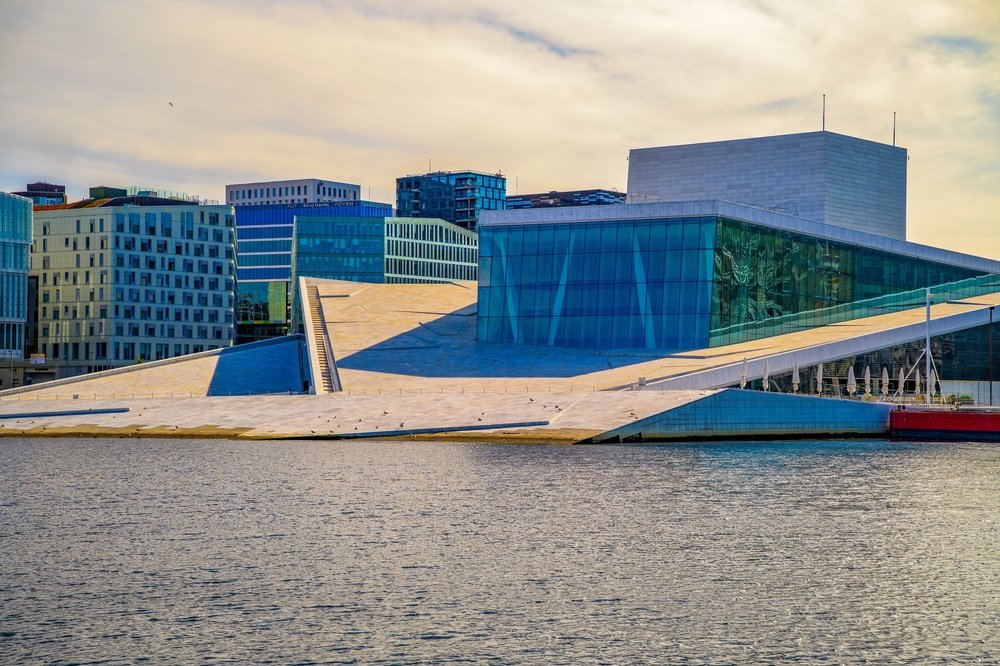
I’ve chosen three hotels close to Oslo S because that’s the practical choice on a round trip. You arrive here on Flytoget, and on the morning you continue on the Bergen Line, you simply wheel your suitcase across the square. According to Visit Oslo, Flytoget takes around 20 minutes from the airport, and all the transport options are covered in my guide to getting from Oslo Airport to the city centre.
If you’d rather stay by the water at Aker Brygge, among the cafés of Grünerløkka or on the quiet streets of Frogner, I’ve written a full guide to where to stay in Oslo, with five neighbourhoods to choose from. And once your hotel is sorted, you can plan your days with my guide to things to do in Oslo.
Check whether breakfast is included before you book. Norwegian hotel breakfasts are generous, and you save both time and money when you don’t have to go out and buy it in town. Oslo is also the city in Norway where it’s easiest to save on your hotel, as there are more simple self-service hotels with small rooms here than anywhere else in the country.
Hotels in Oslo
Amerikalinjen - design hotel with a sauna in the shipping line’s former headquarters by Oslo S
Amerikalinjen is on Jernbanetorget, just over 200 metres from Oslo S, in the former headquarters of the shipping company Den Norske Amerikalinje. It’s a four-star hotel with a brasserie, a bar, a 24-hour gym and a Finnish sauna.
Rooms range from 20 square metres to deluxe rooms of 28 and suites of 50. It’s my pick if you want to start or end your trip in style and still be able to walk to the train. It’s pricey, and one guest mentions that the room temperature was hard to control.
One guest writes on Booking.com: “Fantastic location and beautiful décor, both in the room and throughout the rest of the hotel.”
See photos and book Amerikalinjen here.
Thon Hotel Opera - four-star hotel between Oslo S and the Opera House
Thon Hotel Opera is around 200 metres from Oslo S on the Bjørvika side, so the Opera House and MUNCH are right nearby. The hotel has a restaurant, a bar and a gym with an outdoor terrace.
The standard double rooms are 20 square metres, and the business rooms are 30. It’s a solid choice if you want to stay centrally and close to the train without paying luxury prices. Guests mention that you can hear the trains from some rooms and that the hotel’s laundry service is expensive.
On the breakfast, one guest writes on Booking.com: “Breakfast was good with a wide selection.”
See photos and book Thon Hotel Opera here.
Citybox Oslo - simple self-service budget hotel close to Oslo S
Citybox Oslo is on Prinsens gate, just under 400 metres from Oslo S. You check yourself in, and there’s a shared kitchen and lounge, but no restaurant, and you buy breakfast next door.
The rooms are small. The smallest doubles are 11 square metres, the standard ones 14, and the family rooms 18. The hotel suits you if you’re out all day and just need a clean bed close to the train. Guests mention small rooms and a bit of street noise.
One guest highlights the location on Booking.com: “Super close to the train station and right next to the main street.”
See photos and book Citybox Oslo here.
2. Bergen - best city for the fjords, Bryggen and harbour life ⛵
- 📍 Distance to the centre: The map shows Bryggen by the harbour. Two of the hotels are no more than about 450 metres from there, and the third is just over 400 metres from the railway station.
- ⛴️ Transport: You can get around the centre on foot. The Bybanen light rail runs to the airport, the Bergensbanen railway heads towards Flåm and Oslo, and the express boats sail out into the fjords from the Strandkaiterminalen.
- ✈️ Time from the airport: Around 45 minutes on the Bybanen from Bergen Airport Flesland (BGO) to Byparken, or 20 to 30 minutes on the Flybussen.
- 💰 Price level: €€ to €€€€. Highest in summer, when the cruise ships are in port.
- 👮 Safety: A safe city. The streets up the hillside are steep and slippery in the rain, so wear good shoes.
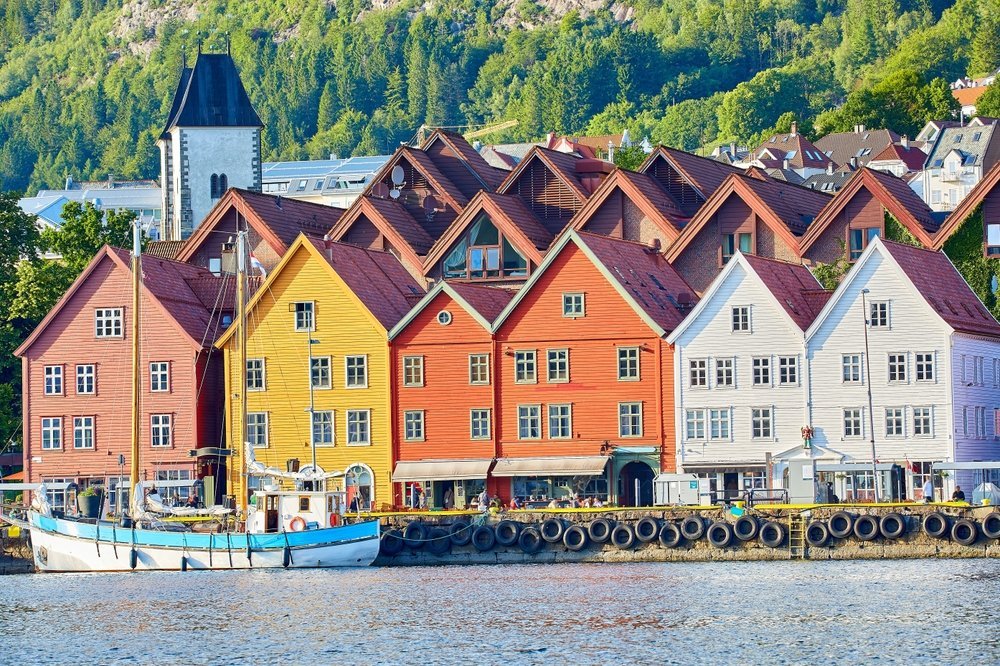
Bergen is the gateway to the fjords and the city I would choose if you only have time for one base in fjord country. The colourful wooden houses on Bryggen are a UNESCO World Heritage Site, the fish market sits by the harbour, and the Fløibanen funicular takes you up to the view over the city in just a few minutes. The city is compact, so you can walk between most things in a day.
This is also where many people set off on a fjord trip. The express boats sail into the Sognefjord, and by train and bus you can do the classic round trip via Voss, Gudvangen and Flåm in one long day. If you have more time, stay the night in Flåm instead, as you can then fit in both the fjord and the Flåmsbana railway without rushing. Bergen is also the coastal city where Hurtigruten begins its journey north.
From the airport, the Bybanen takes around 45 minutes to Byparken in the centre, and the Flybussen is a little quicker. All the options are in my guide to getting from Bergen Airport to the city centre. If you want to choose between Bryggen, Nordnes, Marken and the other neighbourhoods, I’ve written a whole guide to where to stay in Bergen, covering six areas.
Pack waterproofs. Bergen is known for its many rainy days, even in summer, so it’s a good idea to stay centrally where you can quickly get back to your hotel. Give the city two to three nights, and ideally make one of them after your fjord trip, so you don’t have to rush for a flight the same evening.
Hotels in Bergen
Opus XVI - five-star boutique hotel by Torget
Opus XVI is on Vågsallmenningen, close to the fish market and Torget, just over 450 metres from Bryggen and just under 500 metres from the railway station. It’s a five-star hotel and a member of Small Luxury Hotels of the World, with a restaurant, bar and gym.
The smallest rooms are 16 to 18 square metres, and the suites go up to 69. This is the hotel for you if you want the best possible stay in Bergen and to walk everywhere. There’s no sauna, and guests mention that the cheapest rooms are small, so choose a superior or deluxe room if there are two of you with large suitcases.
One guest writes on Booking.com: “The breakfast was one of the best we’ve had at a hotel.”
See photos and book Opus XVI here.
Det Hanseatiske Hotel - four-star hotel right behind Bryggen
Det Hanseatiske Hotel is on Finnegaardsgaten, around 200 metres from the wooden houses on Bryggen and not far from the Strandkaiterminalen, where the express boats to the fjords depart. The hotel has a bar and a shared lounge, but no gym.
The standard rooms are 18 square metres, the deluxe rooms 25 and the junior suites 30. I would choose it if you want to stay in the middle of the historic part of the city and are heading out by boat. Avoid the small 15-square-metre rooms if there are two of you. Guests also mention poor lighting in the rooms.
One guest highlights the location on Booking.com: “The location is perfect if you’re arriving in the city by express boat.”
See photos and book Det Hanseatiske Hotel here.
Citybox Bergen City - budget hotel with a shared kitchen near the railway station
Citybox Bergen City is on Nygårdsgaten, around 400 metres from the railway station and just over a kilometre from Bryggen. You check yourself in, and there’s a shared kitchen and lounge, but no restaurant and no gym.
The double rooms are 14 to 16 square metres, and the family rooms are 21. It’s a good choice if you’re arriving on the Bergensbanen or continuing by train and want to keep costs down. Breakfast isn’t included, and one guest missed having a kettle in the room.
One guest writes briefly on Booking.com: “The room was quiet, comfortable and perfectly adequate for my needs.”
See photos and book Citybox Bergen City here.
3. Flåm - best base for the Sognefjord and Nærøyfjord 🚂
- 📍 Distance to the centre: Flåm is a small village at the end of the Aurlandsfjord. The station, the ferry quay and most of the hotels are within about 800 metres of each other.
- 🚂 Transport: The Flåmsbana up to Myrdal on the Bergen Line, fjord boats to Gudvangen through the Nærøyfjord and, in summer, an express boat to Bergen.
- ✈️ Time from the airport: Flåm has no airport. Fly to Bergen or Oslo and take the train to Myrdal, then the Flåmsbana down. From Bergen it takes about three hours and from Oslo about six hours to reach Flåm. Both are estimates.
- 💰 Price level: €€€ to €€€€. There are few hotels and demand is high in summer, so prices are steep.
- 👮 Safety: A very safe village. Lots of cruise passengers arrive during the day, but it’s quiet in the evening.
Flåm sits at the innermost point of the Aurlandsfjord, an arm of the Sognefjord, and is the most practical base if you want to see the fjords without a car. The village is small, and during the day cruise passengers and day-trippers fill the harbour. That’s exactly why I’d stay the night: once the last boats and trains have left, you have the fjord almost to yourself, and the next morning you can catch the train or the boat before the day-trippers arrive.
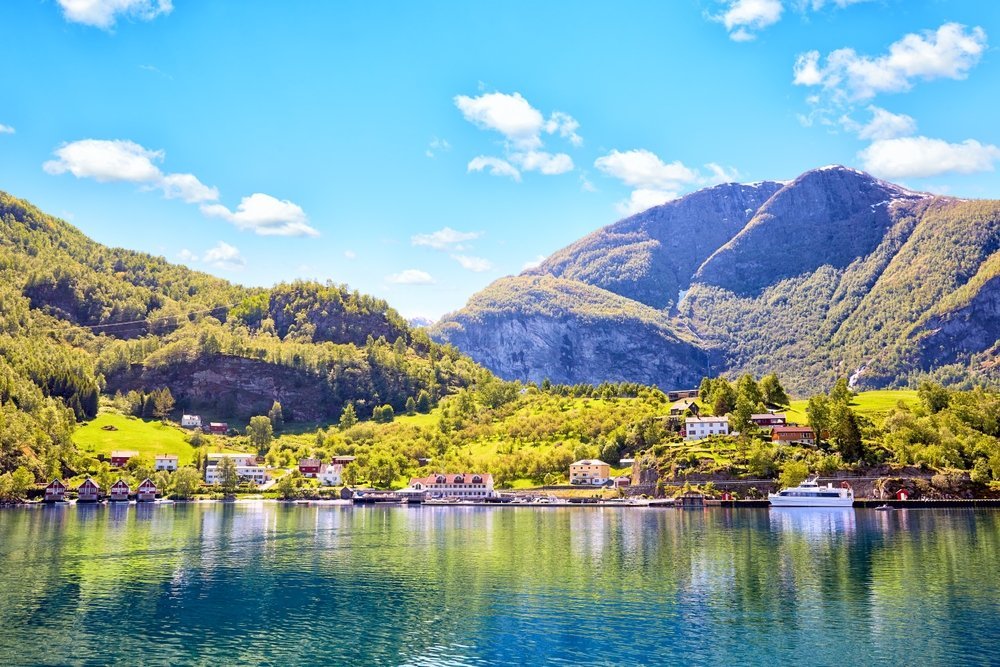
The big attraction is the Flåmsbana. According to Vy, the line is 20 kilometres long and runs from Myrdal, 867 metres above sea level, down to Flåm in about an hour. Most of the route has a gradient of 5.5 per cent, and a single ticket costs from around 400 NOK (around £30). From Flåm, the fjord boats sail through the Nærøyfjord to Gudvangen, and this narrow fjord is on the UNESCO World Heritage List together with the Geirangerfjord.
According to UNESCO, the Nærøyfjord and the Geirangerfjord are about 120 kilometres apart, and the mountain walls rise up to 1,400 metres above sea level. If you don’t have time for both, choose Flåm if you’re travelling by train from Oslo or Bergen, and Geiranger if you’re driving further north.
One night is enough for the Flåmsbana and a fjord trip, while two nights give you time for a hike up the Flåm Valley or a trip to the Stegastein viewpoint above the Aurlandsfjord. Book early for summer, as there aren’t many beds in the village. You can also stay in neighbouring Aurland a few kilometres along the fjord if Flåm is sold out, but then you’ll need a car or have to take the bus.
Hotels in Flåm
Fretheim Hotel - historic hotel with fjord views by the station
Fretheim Hotel is about 150 metres from Flåm stasjon and is the village’s large, classic hotel with a restaurant, bar and café. The rooms face the Aurlandsfjord or the mountains.
The double rooms are just under 20 square metres, and the junior suites are 38. This is my pick if you want to stay as close as possible to the train and the boats and have the restaurant on site. Guests mention that some of the rooms are a little worn, and parking costs extra.
One guest writes on Booking.com: “The location was truly exceptional, with a fantastic view.”
See photos and book Fretheim Hotel here.
Flåm Marina - rooms with kitchenettes and fjord views by the marina
Flåm Marina is by the marina, about 400 metres from the station. There’s a restaurant, and all the rooms have views over the fjord. It has one of the highest guest ratings in Flåm.
The basic double rooms are 18 square metres, and the double and family rooms with kitchenettes are 35 to 40. I’d go for one of the larger rooms if you’re a family or want to do a bit of cooking yourselves, as it helps the budget in an expensive village. Guests mention small bedrooms and a limited breakfast selection.
One guest writes about the place on Booking.com: “Lovely rooms and a restaurant in spectacular surroundings.”
See photos and book Flåm Marina here.
Brekke Apartments - simple apartments with kitchens in the inner part of the village
Brekke Apartments is just under 800 metres from the station by the river in the Flåm Valley. You stay in studios and apartments with kitchenettes, and there’s an outdoor barbecue, but no restaurant and no breakfast.
The studios are 25 square metres and the one-bedroom apartments 45, so you get more space here than at the hotels. It’s usually the cheapest of my three suggestions and suits families and anyone who wants to do their own shopping. The guest rating is lower than the others, though. Guests write that the apartments are basic with limited kitchen equipment, and one feels the price is high for what you get.
One guest sums it up like this on Booking.com: “Good location, simple but adequate facilities.”
See photos and book Brekke Apartments here.
4. Stavanger - best base for Preikestolen and the Lysefjord ⛰️
- 📍 Distance to the centre: The map shows Vågen harbour in the middle of town. The three hotels are no more than about 600 metres from there, and two of them are close to the railway station.
- 🚌 Transport: You can get around the centre on foot. From May to September, buses run to the start of the trail up to Preikestolen, and fjord boats sail from the harbour into the Lysefjord.
- ✈️ Time from the airport: Around 20 to 30 minutes on the Flybussen from Stavanger Airport Sola (SVG) to the centre.
- 💰 Price level: €€ to €€€. Usually cheaper than Bergen, especially at weekends.
- 👮 Safety: A safe city. The bars along Vågen are lively on Friday and Saturday evenings, so choose a room away from the quayside if you’re a light sleeper.
Stavanger is both an oil town and a harbour town, and it sits right next to one of Norway’s most famous hikes. In the middle of town is Vågen harbour with its restaurants and bars, and on the western side is the Old Town with narrow streets and white wooden houses. The city is small and easy to walk around, and it’s a good place to stay if you want to combine city life with a day in the mountains.
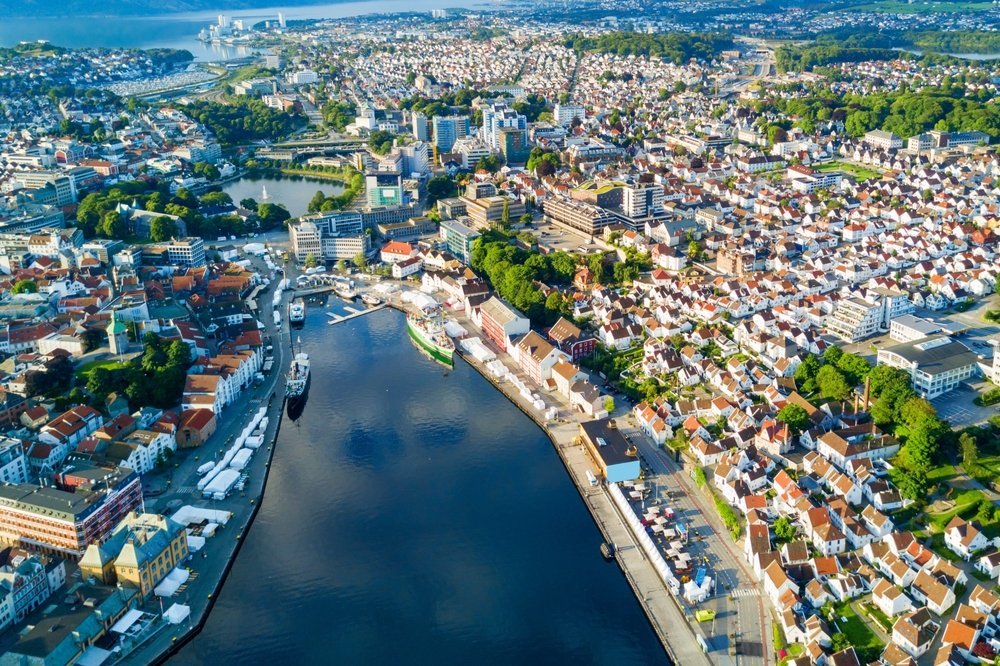
The hike to Pulpit Rock, signposted as Preikestolen, is the reason most people come here. The rock plateau rises around 600 metres above the Lysefjord. According to Fjord Norway, the trail is 3 to 4 kilometres each way with 350 metres of ascent, and it takes experienced hikers about two hours each way. Children and less experienced walkers will need longer. Bring hiking boots, warm clothes and a packed lunch, and set off early in summer before the trail gets busy.
The bus to Preikestolen goes to Preikestolen Fjellstue, where the trail begins, and it runs most frequently from May to September. If you don’t fancy the walk, you can see the rock from the water on a fjord cruise on the Lysefjord. According to Avinor, the Flybussen from the airport takes about 20 to 30 minutes to reach the centre.
Two nights is enough: one day for Preikestolen and one for the city and a fjord trip. The Sørlandsbanen railway runs from Stavanger towards Kristiansand and Oslo, but to get to Bergen it’s quicker to take the bus or fly. Stavanger is also the city on this list where you’ll most often find good weekend rates, because many of the hotels rely on business travellers during the week.
Hotels in Stavanger
Hotel Victoria - classic four-star hotel right by Vågen harbour
Hotel Victoria is on Skansegaten, about 150 metres from the harbour and close to the Old Town. It’s a classic hotel with a cocktail bar and breakfast buffet, and it has the highest guest rating of my three picks in the city.
Rooms range from small Classic Petite rooms of 12 square metres through superior rooms of 17 to deluxe rooms of 25 and suites of 40. Go for at least a superior room if there are two of you. This is the hotel for you if you want to stay by the water and walk to the restaurants. The rooms don’t have air conditioning, so on hot summer days you’ll need to open the window.
One guest writes on Booking.com: “The hotel exceeded most of our expectations. The location is perfect!”
See photos and book Hotel Victoria here.
Thon Hotel Maritim - four-star hotel with a gym near the railway station
Thon Hotel Maritim is on Kongsgaten by the Breiavatnet lake, about 250 metres from the railway station and bus terminal and just under 600 metres from Vågen. The hotel has a bar, a gym and a breakfast buffet.
Standard rooms are 17 square metres, superior rooms 24 and family rooms 22. It’s a good choice if you’re arriving by train or bus or need an early start for Preikestolen. Guests mention long, dark corridors, and one guest was disappointed with the view from their room.
One guest writes briefly on Booking.com: “Fantastic breakfast and a convenient, central location.”
See photos and book Thon Hotel Maritim here.
Comfort Hotel Square - relaxed hotel with a bar between the station and the harbour
Comfort Hotel Square is on Løkkeveien, about 350 metres from Vågen and just under 500 metres from the railway station. There’s a bar, a snack bar and a gym, but no proper restaurant.
Rooms are 20 square metres and superior rooms 25, so you get more space than at many cheaper hotels in Norway. It’s usually the cheapest of my three picks. The guest rating is lower than the other two, and guests mention cramped desks and a breakfast with less choice than elsewhere.
One guest sums it up on Booking.com: “Good location. Cosy bar. Friendly and helpful staff.”
See photos and book Comfort Hotel Square here.
5. Ålesund - best town for Art Nouveau and archipelago views 🏘️
- 📍 Distance to the centre: Ålesund is small. The three hotels are no more than about 400 metres from the Brosundet canal in the middle of town, as the map shows.
- 🚶 Transport: You can get around town on foot. To reach Geiranger you’ll need a car, bus or fjord boat, and Hurtigruten calls at the harbour.
- ✈️ Time from the airport: According to Vy, around 25 minutes by bus from Ålesund Lufthavn Vigra (AES) to the town’s bus station.
- 💰 Price level: €€ to €€€. Highest in summer, when the cruise ships are in port.
- 👮 Safety: A very safe town. The steps up to Aksla are steep and can be slippery in the rain.
Ålesund sits right out on the coast across a string of islands, and it looks different from the rest of Norway. After the great fire of 1904, the centre was rebuilt in Art Nouveau style with towers, spires and decorated façades, and that still shapes the streets around the Brosundet canal. It’s a lovely town to stay in for a few days, and if you’re wondering where to stay in Norway for the Geirangerfjord but would rather be in a town than a small fjord village, it makes a good base.
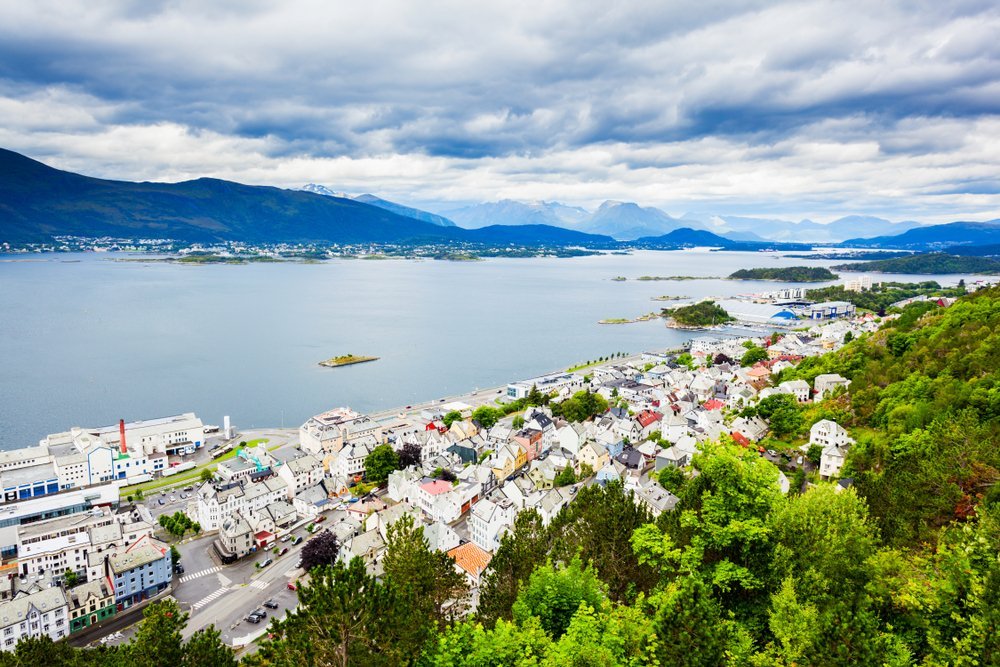
The best overview is from Aksla, the town’s own mountain. From Byparken, a staircase of just over 400 steps leads up to the Fjellstua viewpoint, where you look out over the town, the islands and the Sunnmøre Alps. If you want to learn more about the style, visit Jugendstilsenteret, which according to the museum is housed in the old Svaneapotek, an Art Nouveau building from 1907 with its original interiors.
From Ålesund it’s roughly a three-hour drive to Geiranger, with a ferry crossing along the way. That’s an estimate, and in summer there are also organised day trips and fjord boats. I’d stay two nights in Ålesund and one or two in Geiranger, so you don’t have to drive there and back on the same day.
The town is also a good place to end a trip through fjord country, as Vigra has flights to Oslo and Bergen. If you have an extra day, drive out to the bird cliffs on the island of Runde, where puffins breed in summer. In winter the town is quiet, but it’s open all year round, which Geiranger isn’t.
Hotels in Ålesund
Hotel Brosundet - design hotel with a sauna right on the canal
Hotel Brosundet sits right on the Brosundet canal in Apotekergata, in the heart of the Art Nouveau town. The hotel has a seafood restaurant, a sauna and a gym, and guests praise the communal areas and the breakfast.
This is the hotel for you if you want to wake up by the water and have the best location in town. The rooms in the cheapest categories are small, though, so I’d go for at least a superior room or a 27-square-metre junior suite. Guests also mention a bit of street noise.
One guest writes on Booking.com: “Good location by the harbour. The communal areas are beautifully designed.”
See photos and book Hotel Brosundet here.
Scandic Parken - four-star hotel with a sauna by Byparken
Scandic Parken is on Storgata by Byparken, about 300 metres from Brosundet, so you have both the centre and the steps up to Aksla close by. The hotel has a restaurant, a sauna and a gym.
The standard rooms are 15 square metres, and the larger superior rooms are 25. It’s a good choice for families and for anyone who wants a big hotel with all the facilities. Guests mention that you have to pay extra for a room with a view.
One guest writes on Booking.com: “Nice hotel with a central location, even though Ålesund isn’t big.”
See photos and book Scandic Parken here.
Hotel Noreg - hotel with a sauna and a big breakfast on Kongensgate
Hotel Noreg is on Kongensgate, just under 400 metres from Brosundet, with restaurants and the harbour a few minutes’ walk away. The hotel has a sauna and a gym, and the breakfast gets good reviews.
The double rooms are 15 square metres and the family rooms 25. It’s usually the cheapest of my three suggestions and suits you if you want to stay centrally and spend your money on trips out to the fjords. One guest mentions that it was hard to control the temperature in the room.
One guest writes about their stay on Booking.com: “Very comfortable room. Fantastic location close to the centre of Ålesund.”
See photos and book Hotel Noreg here.
6. Geiranger - best place for the Geirangerfjord and the great mountain roads 🏞️
- 📍 Distance to the centre: Geiranger is a small village at the end of the fjord. One hotel is about 500 metres from the harbour, and the other two are a couple of kilometres out along the steep roads on either side of the village.
- 🚗 Transport: A car is easiest. In summer, the car ferry sails to Hellesylt, and there are buses from Ålesund and other towns in the region.
- ✈️ Time from the airport: Geiranger has no airport. From Ålesund Lufthavn Vigra it’s roughly a three and a half hour drive, including a ferry crossing. That’s an estimate.
- 💰 Price level: €€€ to €€€€. Few hotels, a short season and high summer prices.
- 👮 Safety: A safe area. The roads are narrow with lots of hairpin bends, so drive calmly and pull into the passing places to let others by.
The Geirangerfjord is the fjord many people have seen on postcards: a narrow, deep fjord between sheer mountain walls, with waterfalls plunging into the water. The village of Geiranger sits at the innermost end of the fjord, and from here the roads wind up in hairpin bends to the viewpoints. Ørnevegen climbs up one side of the fjord, and on the other side you drive past Flydalsjuvet and up towards Dalsnibba.
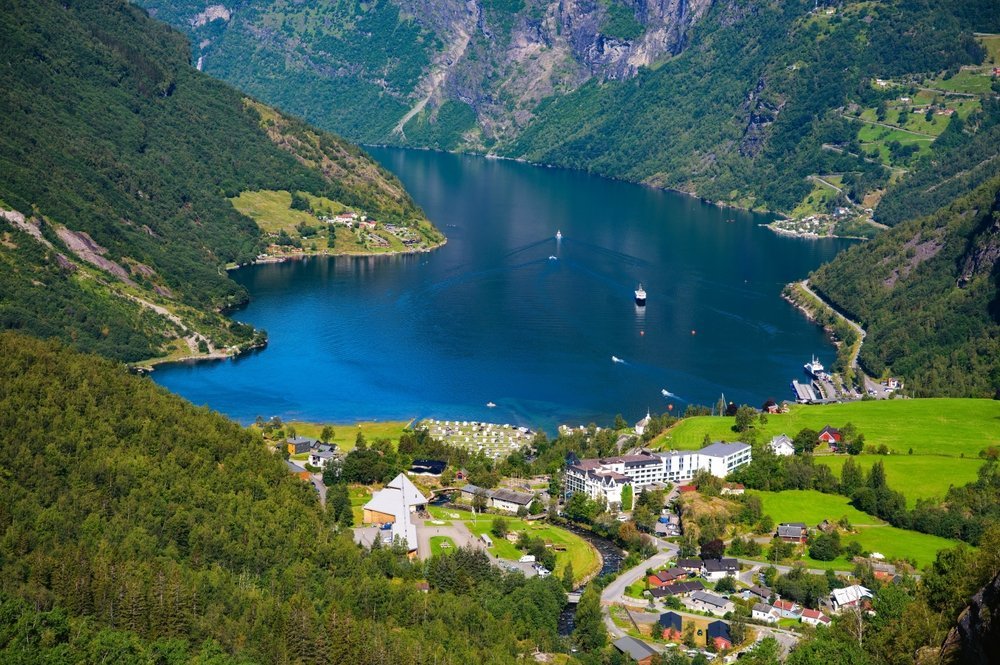
The best way to see the fjord itself is from the water. According to Norway’s Best, the ferry between Geiranger and Hellesylt takes about an hour and five minutes, and along the way you sail past the Seven Sisters and the Suitor waterfalls and the abandoned mountain farms perched high up on the rocky ledges. The fjord has been on the UNESCO World Heritage List since 2005, together with the Nærøyfjord near Flåm.
Stay the night here if you can. During the day the village is packed with day-trippers and cruise passengers, but in the evening and early morning the fjord is quiet. Two nights give you time for the ferry, the viewpoints and a short walk, for example along the stepped path beside the Storfossen waterfall in the middle of the village.
Geiranger is a summer destination. Several hotels close in winter, and the high mountain roads around the fjord are closed for much of the year, so always check that your hotel and the roads are open before planning your route. If you’re travelling without a car, it’s easier to stay in Ålesund and take an organised day trip here.
Hotels in Geiranger
Union Geiranger Resort & Spa - spa hotel with indoor and outdoor pools above the fjord
Union Geiranger Resort & Spa sits on the hillside above the village, about 500 metres from the harbour as the crow flies. It’s the village’s biggest hotel, with a restaurant, bar, spa, heated outdoor pool and a large indoor pool, and it’s open all year round.
The Classic rooms are 25 square metres, and many of the rooms face the fjord. It’s my pick for a family or couple who want a spa and pool after a day on the mountain roads. Prices are high in summer, and guests mention that parking spaces can be limited and that the menu is short.
One guest writes on Booking.com: “The indoor pool was very large, and the outdoor pool was nicely heated.”
See photos and book Union Geiranger Resort & Spa here.
Hotel Utsikten - summer hotel with views high above the Geirangerfjord
Hotel Utsikten means “Hotel The View”, and the name fits. The hotel sits high up on the road towards Flydalsjuvet, a couple of kilometres up the steep road from the village, and has a restaurant, bar and terrace overlooking the fjord. It’s normally only open from May to September.
The double rooms are 15 square metres, and the largest sea-view rooms are 22. Choose a room with a fjord view, as that’s the reason to stay here. You’ll need a car, as it’s a long walk down to the village. The hotel has no lift, and one guest feels the price is high for the size of the rooms.
On the service, one guest writes on Booking.com: “Very well-trained staff and good service.”
See photos and book Hotel Utsikten here.
Grande Fjord Hotel - waterside hotel with a high guest rating on Ørnevegen
Grande Fjord Hotel sits by the fjord on Ørnevegen, about two kilometres from the village. The hotel has a restaurant, bar and free parking, and it has the highest guest rating of my three suggestions in Geiranger.
The rooms are 15 square metres, and several of them look out over the fjord. It’s usually the cheapest of the three and a good choice if you have a car and want to stay by the water. There’s no pavement all the way into the village, so plan on driving.
One guest writes simply on Booking.com: “The view from the room was fantastic.”
See photos and book Grande Fjord Hotel here.
7. Lofoten - best area for fishing villages, hiking and the midnight sun 🎣
- 📍 Distance to the centre: Lofoten is a long archipelago. The map shows Svolvær, the islands’ largest town, where all three places to stay are no more than about 1.2 kilometres from the centre.
- 🚗 Transport: A car is by far the easiest option. Buses run between the towns, but less often than in the rest of the country, and Hurtigruten calls at Svolvær.
- ✈️ Time from the airport: Svolvær has its own small airport a few minutes’ drive from town. From Harstad/Narvik Airport Evenes (EVE), it’s roughly a three-hour drive. This is an estimate.
- 💰 Price level: €€ to €€€€. Rorbuer in high season are the most expensive, and availability is limited in summer.
- 👮 Safety: A very safe area. The weather changes quickly in the mountains, so check the forecast before you set off on a hike.
Lofoten is all about jagged peaks rising straight out of the sea, white sandy beaches and red fishermen’s cabins on stilts above the water. The islands lie north of the Arctic Circle, so in summer the sun never sets, and in winter you can see the Northern Lights. This isn’t somewhere you can see on a day trip. Give Lofoten at least three to four nights, and ideally a week.
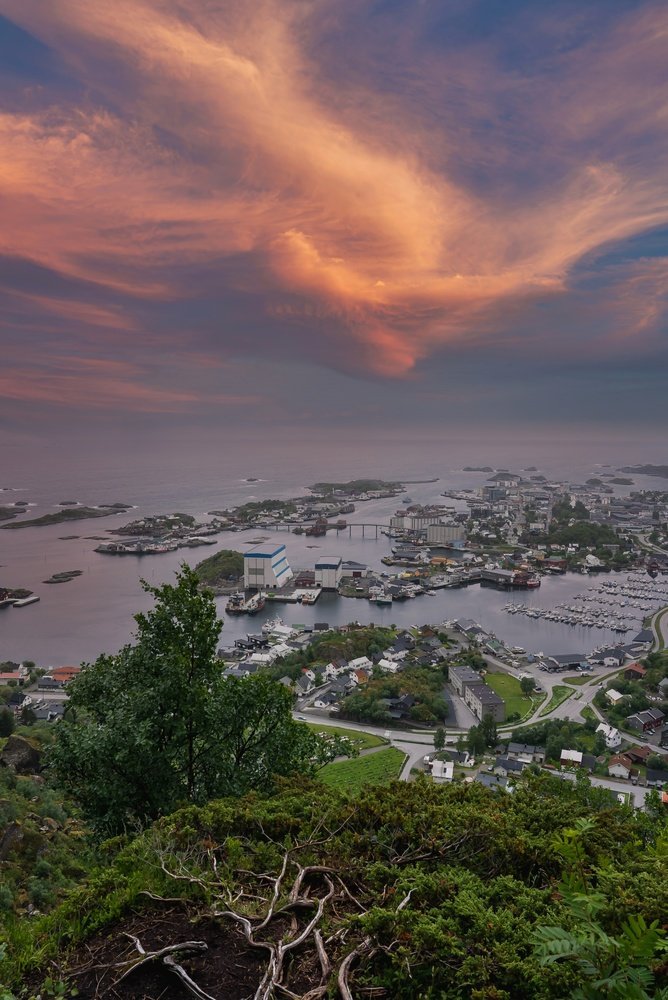
I’ve chosen Svolvær as a base because the town has an airport, restaurants, shops and most of the bus and boat departures. From here it’s a short trip to the fishing village of Henningsvær. If you’d rather stay closer to the most photographed spots, Reine and Hamnøy, spend a couple of nights at the far south-western end, but allow two hours or more to drive there from Svolvær.
According to Visit Lofoten, the archipelago has three airports, and express buses run from Evenes. You can also drive all the way via the Lofast mainland connection or take the ferry from Bodø or Skutvik. On the islands, a car is a huge advantage, as the beaches, hiking trails and small fishing villages are spread out. See car hire prices here, and book well ahead for summer, as there aren’t many cars to go round.
The traditional way to stay is in a rorbu, an old fisherman’s cabin by the water that has now been converted into holiday accommodation with a kitchen. It’s cosy and practical, as there are few places to eat outside Svolvær and Reine. In winter there’s often snow and the days are short, so drive carefully and don’t plan overly long stretches.
Hotels in Lofoten
Svinøya Rorbuer - five-star rorbuer on a small island by Svolvær
Svinøya Rorbuer is on the small island of Svinøya, which is linked to Svolvær by a bridge, around 700 metres from the centre. You stay in restored rorbuer by the water with your own kitchen, and some of the largest have their own sauna. The restaurant Børsen Spiseri is on site.
The smallest rorbuer are 35 square metres and the largest are over 100, so there’s plenty of space for couples and families alike. It’s the obvious choice if you want to try a rorbu with hotel service. Prices are high in summer, and one guest mentions that the view isn’t the same from every cabin, so read the description before you book.
One delighted guest writes on Booking.com: “The most special stay ever. I can’t recommend it enough.”
See photos and book Svinøya Rorbuer here.
Scandic Svolvær - four-star hotel on an islet in the middle of the harbour
Scandic Svolvær is on the small islet of Lamholmen in the harbour, around 350 metres from the centre, with water on several sides. The hotel has a restaurant and bar, and several of the rooms have a balcony facing the harbour.
It’s a good choice if you want to stay in the middle of town with breakfast and a restaurant on site and don’t want to cook for yourself. The rooms are small, so go for a superior room if you can. Guests also mention that parking costs extra.
About the breakfast, one guest writes on Booking.com: “The breakfast was excellent, with a large selection of hot and cold dishes.”
See photos and book Scandic Svolvær here.
Lofoten Rorbuer - rorbuer and rooms with a shared kitchen in the northern part of Svolvær
Lofoten Rorbuer is on Jektveien by the water, just over a kilometre from the centre of Svolvær. There are rooms, studios and apartments with sea views, a shared kitchen, a terrace and free parking, and the guest rating is high.
The simple double rooms are 12 square metres and in some cases share a bathroom, while the sea-view apartments are 40. It’s usually the cheapest of my three suggestions and good for you if you have a car or don’t mind a walk of around a quarter of an hour into town. Check whether your room has its own bathroom before you book.
One guest writes about their stay on Booking.com: “Our stay in Svolvær was fantastic!!”
See photos and book Lofoten Rorbuer here.
8. Tromsø - best city for the northern lights and winter in Northern Norway 🌌
- 📍 Distance to the centre: The map shows the Visit Tromsø tourist information office on Storgata. The three hotels are no more than around 450 metres from there.
- 🚌 Transport: You can get around the centre on foot. City buses run over the bridge to the Arctic Cathedral and Fjellheisen, and most northern lights tours pick up in the centre.
- ✈️ Time from the airport: Around 10 to 15 minutes on the airport bus from Tromsø Airport (TOS) to the centre.
- 💰 Price level: €€€ to €€€€. Highest in the northern lights season and around Christmas and New Year.
- 👮 Safety: A safe city. In winter the pavements are often icy, so bring shoes with a good grip or ice cleats.
Tromsø is the largest city in Northern Norway and the easiest base if you dream of seeing the northern lights. The city sits on an island between mountains and fjords, and you have restaurants, museums and a lively city life to come back to after a night out in the cold. According to Visit Tromsø, the northern lights can be seen from late August to early April, when it is dark and clear.
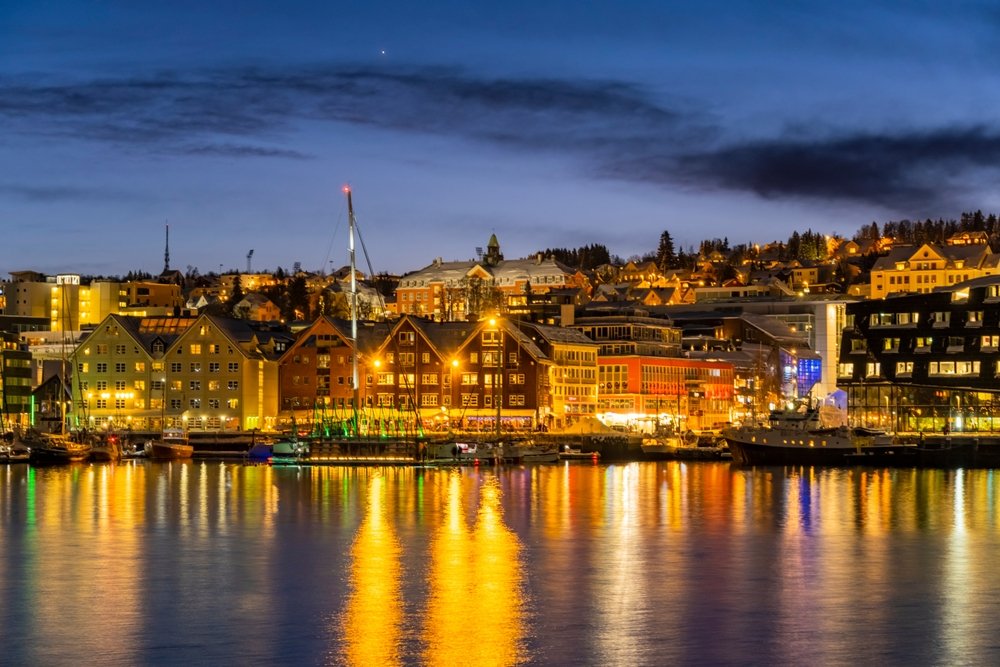
In summer the city is a completely different experience. According to Visit Tromsø, the midnight sun lasts from around 20 May to 22 July, so you can go hiking in the mountains in the middle of the night. The Arctic Cathedral and Fjellheisen, the cable car up to the viewpoint over the city, are the classic sights, and in winter you can go dog sledding or head out to see whales in the fjords.
I would stay in the centre and take one or two organised northern lights tours. The city lights make it hard to see the aurora from the streets, and the guides drive to wherever the sky is clear. If you would rather stay by the fjord or out on Kvaløya, I have written a full guide on where to stay in Tromsø, covering six areas.
Give the city at least three nights in winter, so you have more chances if one evening is cloudy. Book well ahead for December and February, as hotels fill up during the northern lights season. If you want to compare with the northern lights in Finland, you can also read my guide on where to stay in Lapland.
Hotels in Tromsø
The Dock 69°39 by Scandic - four-star hotel by the harbour with a high guest rating
The Dock 69°39 is on Skansegata by the harbour, around 450 metres from Storgata. The hotel has a restaurant, a bar, a gym and a sauna, which costs extra, and it has the highest guest rating of my three picks in Tromsø.
The standard rooms are 16 square metres, the superior rooms 20 and the family rooms 22 to 27. It is my choice if you want a modern stay by the water and a good breakfast. Guests mention small rooms in the cheapest categories and awkward parking.
One guest writes on Booking.com: “The staff were attentive, friendly and always helpful.”
See photos and book The Dock 69°39 here.
Clarion Hotel The Edge - large hotel on the quayside close to Hurtigruten
Clarion Hotel The Edge is on Kaigata by the harbour, just under 400 metres from Visit Tromsø and close to the quay where Hurtigruten docks. The hotel has a restaurant, a bar and a gym.
The standard rooms are 16 square metres, the deluxe rooms 22 and the family rooms 31. It is a good choice if you are travelling with Hurtigruten or want a large hotel in the middle of the city. Guests mention small rooms and unreliable internet.
One guest sums it up on Booking.com: “The location, the friendly staff and the good breakfast.”
See photos and book Clarion Hotel The Edge here.
Smarthotel Tromsø - simple hotel with small rooms in the heart of the city
Smarthotel Tromsø is on Vestregata, around 300 metres from Storgata in the heart of the centre, where most northern lights tours pick up. There is a bar and a small shop in the lobby, but no restaurant.
The rooms are only 10 square metres, so here you are paying for the location rather than the space. It is usually the cheapest of my three picks and suits you if you are out most of the time and just need somewhere to sleep. Guests say plainly that the rooms are very small and that the breakfast has a limited selection.
One guest writes on Booking.com: “The location was excellent. And the staff were really good.”
See photos and book Smarthotel Tromsø here.
Where not to stay in Norway?
I wouldn’t stay in Oslo or Bergen for the whole trip and do the fjords as long day trips. It is doable, but the days get long, and you see the fjords in the middle of the day along with everyone else. One night in Flåm or Geiranger makes a big difference. I also wouldn’t try to fit Southern Norway, Lofoten and Tromsø into one week, as the distances are huge and you spend too much time on planes, trains and in the car.
Be wary of the cheap hotels by the airports and in the suburbs, too. The prices look tempting, but in Norway the daily transport into the city costs money as well. And don’t book a small fjord village out of season thinking everything will be open. In Geiranger and several other fjord villages, many hotels close in winter, and the high mountain roads are closed for much of the year.
If I had to pick one route for a first trip, it would be Oslo, Flåm and Bergen by train over the mountains. If you have more time and a car, carry on north to Geiranger and Ålesund, or make a detour south to Stavanger and Preikestolen. If you want to see the northern lights, Tromsø is the safest bet in winter, while Lofoten is best in summer, when the days are long and the hiking trails are free of snow.
Choose your season based on what you want to see. From June to August you get long, light days, open mountain roads and the most boat and bus departures, but also the highest prices. May and September are quieter and cheaper in fjord country. From late August to early April there is a chance of the northern lights in the north, and from December to March there is snow and winter activities in Tromsø.
Norway is also easy to combine with its neighbours. If you are continuing to Sweden, you can read about where to stay in Stockholm, and if you want to head further out into the North Atlantic, I have written guides on where to stay in Iceland and where to stay in the Faroe Islands.
Travel ressources & websites I use all the time 👇
• Booking.com has the best offers on hotels and unique places to stay
• GetYourGuide is the best place to book tours & activities with free cancellation
• Welcome Pickups is the best & safest place to pre-book airport transfers
Psst 👀 Have you subscribed to my Youtube channel and my Instagram where I provide more useful travel tips?