

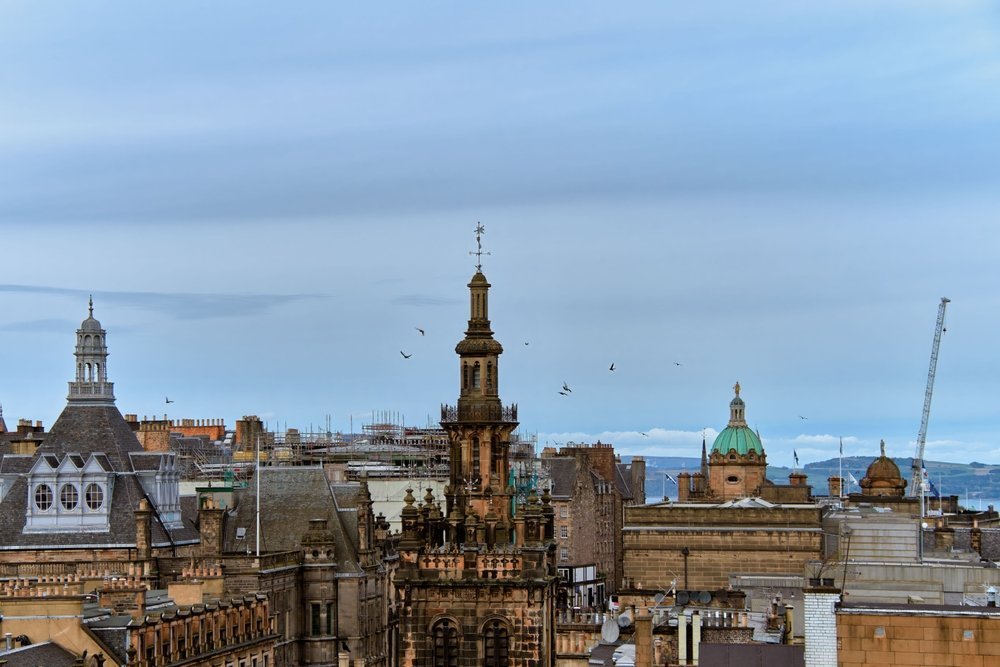
Glasgow is Scotland’s largest city, and it feels completely different from Edinburgh. You’ll find Victorian sandstone streets, shipbuilding history along the River Clyde, Charles Rennie Mackintosh’s buildings, huge murals and a live music scene that ranks among the best in Britain. The best part is that many of the top things to do in Glasgow are free, because the city’s museums don’t charge admission.
Here are the 18 things I would prioritise, from Kelvingrove, the cathedral and the Necropolis to the West End, street art, football, whisky and day trips to Loch Lomond and Edinburgh. All prices are in pounds sterling. Several places are closed or open later on certain days of the week, so check the times before you make your plan. At the bottom I’ve gathered practical tips on the Subway, trains and tickets.
Contents
1. Kelvingrove Art Gallery and Museum
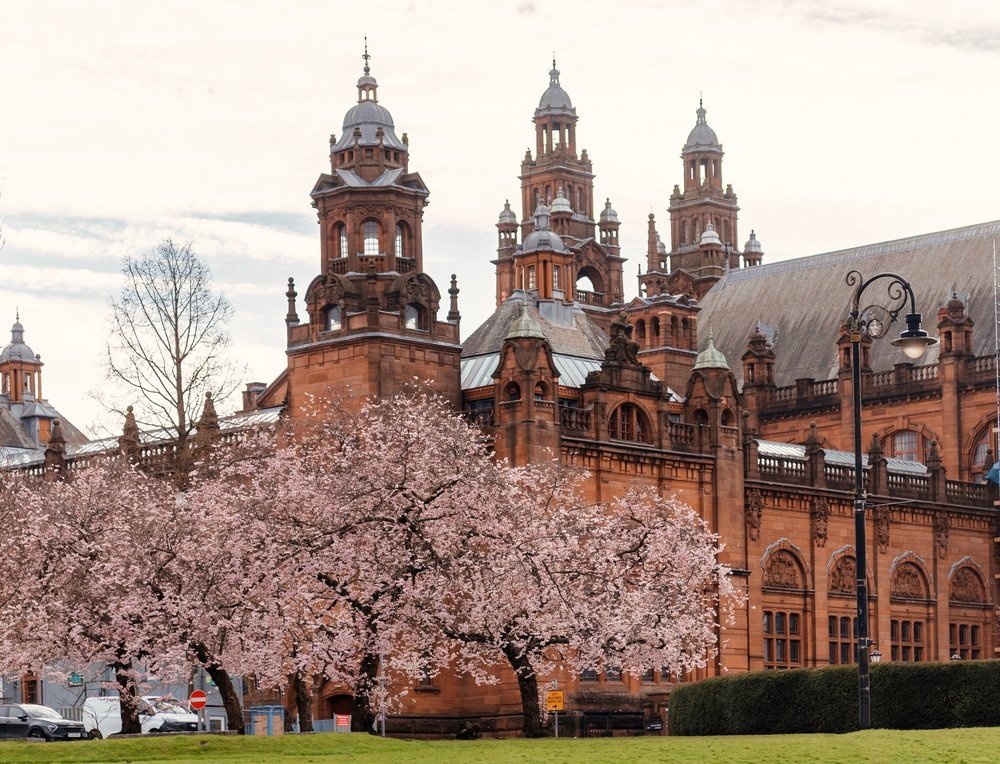
Kelvingrove is Glasgow’s most visited museum, and the red sandstone building from 1901 is almost a sight in its own right. Inside, the collection mixes art and natural history in a way that makes it fun for children and adults alike. A Spitfire hangs from the ceiling in one gallery and an elephant stands in another, while the great central hall is home to Sophie Cave’s installation of more than 50 floating heads with different facial expressions. The most famous work is Salvador Dalí’s painting Christ of St John of the Cross, and there’s also an entire section devoted to Mackintosh and the Glasgow Style.
Admission is free, and the museum is open every day from 10am to 5pm, though not until 11am on Fridays and Sundays. From Kelvinhall Subway station it’s about a ten-minute walk.
Catch the free organ recital in the central hall, which usually takes place at 1pm, and at 3pm on Sundays. Afterwards, take a stroll through Kelvingrove Park, where you can look up at the university tower.
2. Glasgow Cathedral and the Necropolis
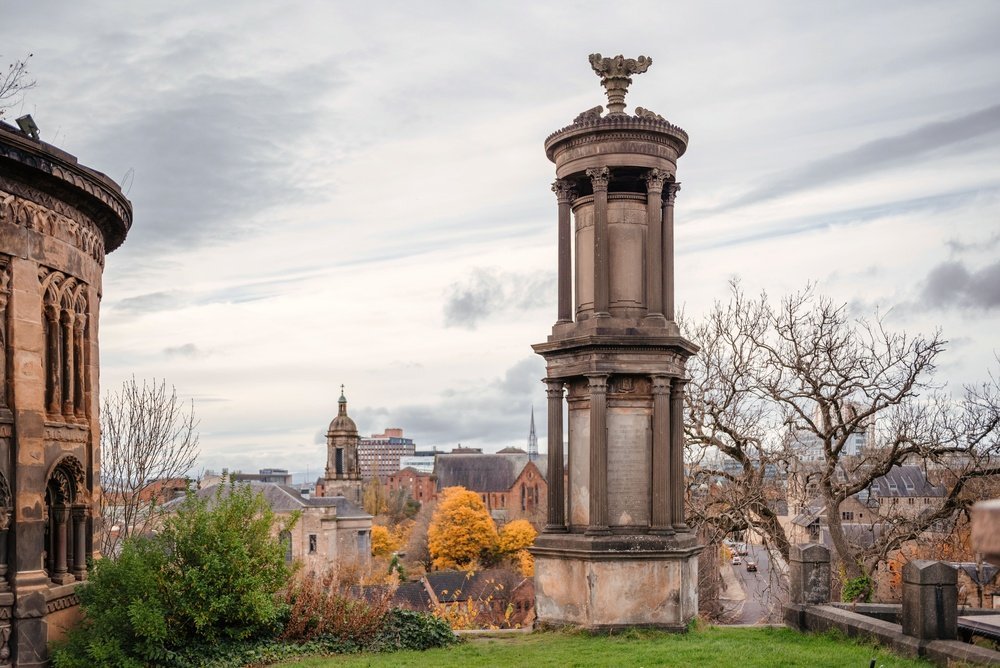
Glasgow Cathedral is the only medieval cathedral on the Scottish mainland to have survived the Reformation almost intact. The Gothic church was built between the 12th and 15th centuries over the tomb of the city’s patron saint, St Mungo, and the tomb still lies in the dark lower church with its low vaults. Behind the cathedral, you cross the Bridge of Sighs and climb the hill to the Necropolis, the Victorian cemetery with several thousand monuments, mausoleums and obelisks. At the top stands the monument to the reformer John Knox, and from here you get one of the best views over the city.
Entry to the cathedral is free, and from April to September it’s open Monday to Saturday from 9.30am to 5pm and on Sundays from 1pm to 5pm, while in winter it closes at 4pm. The Necropolis is free and open every day during daylight hours. Opposite the cathedral is Provand’s Lordship from 1471, the city’s oldest house, which is also free. From George Square it’s about a 15-minute walk along High Street.
Head up to the Necropolis in the late afternoon, when the light falls across the city, and wear good shoes, as the paths are steep and can be slippery in the rain.
Book a guided tour of the Necropolis here.
3. Riverside Museum and The Tall Ship
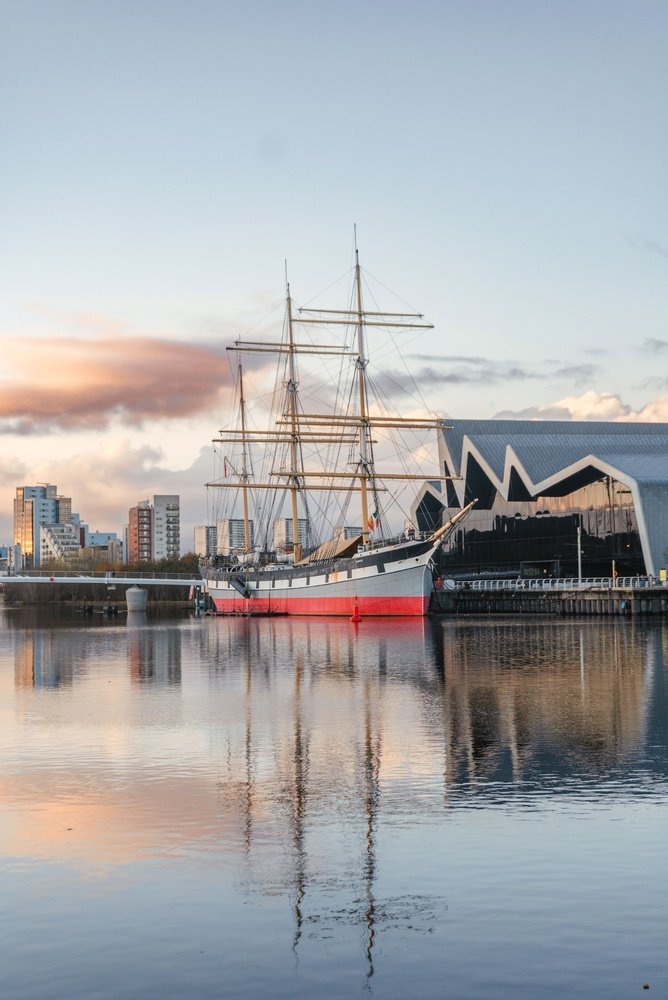
The Riverside Museum on the River Clyde is Glasgow’s transport museum, and the building with its jagged zinc roof was designed by Zaha Hadid. The museum opened in 2011 and was named European Museum of the Year in 2013. Inside you’ll find trams, steam locomotives, old buses, motorbikes and cars from Scotland’s own car factories, and one wall is filled with model ships from the yards that once made Glasgow the shipbuilding capital of the world. You can also walk down a recreated street from old Glasgow, complete with shops, a pub and a Subway station.
Outside the museum lies The Tall Ship, the sailing ship Glenlee, which was built in Port Glasgow in 1896 and has sailed around the world several times. You can go aboard and see the cargo hold, the cabins and the galley. Both the museum and the ship are free, and the museum has the same opening hours as Kelvingrove. From Partick Subway station it’s about a ten-minute walk.
Combine the Riverside Museum with Kelvingrove on the same day, as they’re only a 20-minute walk apart, and the museum café looks straight out over the river.
4. The Burrell Collection in Pollok Country Park
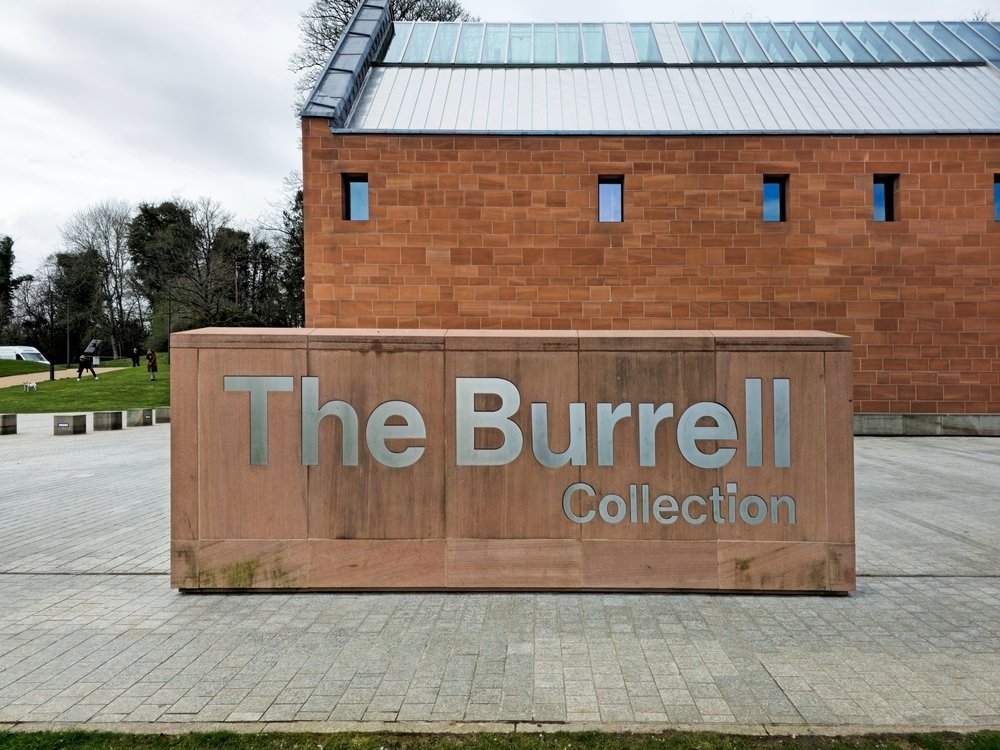
The Burrell Collection is one of the largest art collections ever assembled by one man. In 1944 the shipowner Sir William Burrell gave more than 9,000 objects to the city, and the museum sits in a bright building of glass and sandstone out in the woods of Pollok Country Park. You’ll find Chinese ceramics, medieval stained glass, tapestries, arms and armour, ancient finds from Egypt and paintings by Degas and Cézanne, among others. After a long renovation the museum reopened in 2022, and the large windows make the woodland feel almost like part of the exhibition.
Admission is free, and it’s open every day from 10am to 5pm, though not until 11am on Fridays and Sundays. The train from Glasgow Central to Pollokshaws West takes about ten minutes, and from there it’s a five-minute walk to the park entrance. A free electric bus runs through the park to the museum.
Set aside half a day and carry on to the stately home Pollok House and the fields of shaggy Highland cattle, which are also part of the park.
5. George Square and the City Chambers
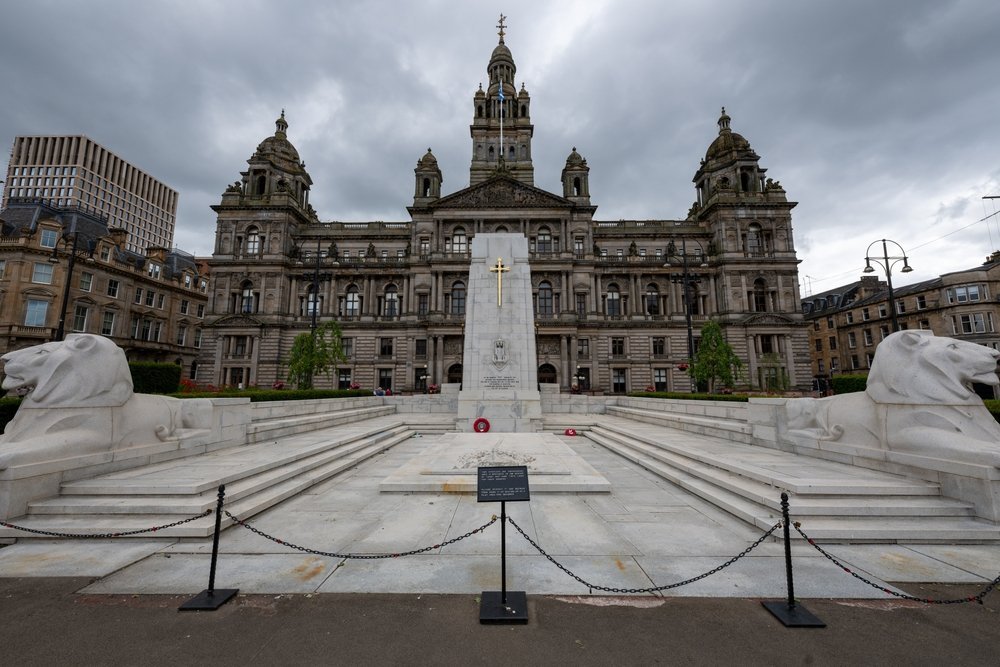
George Square is Glasgow’s main square and a good place to start exploring the city. The square is filled with statues of figures including Robert Burns, James Watt and Sir Walter Scott, whose column stands in the middle, and in front of the City Chambers stands the memorial to those who fell in the First World War. The entire east side of the square is taken up by the City Chambers, the city’s council headquarters from 1888. The façade is grand, but it’s inside that the building really shows how wealthy Glasgow was in the Victorian era, with Italian marble staircases, a mosaic ceiling and a banqueting hall decorated with murals.
It’s free to wander around the square, and the City Chambers offers free guided tours on weekdays, usually at 10.30am and 2.30pm. Tours can be cancelled when there are meetings or events in the building, so ask at reception. Queen Street Station is right by the square, and Buchanan Street Subway station is a few minutes away.
If you want to stay right in the thick of it, Native Glasgow occupies a former shipping office on St Vincent Place, a minute’s walk from the square.
Book a walking tour of Glasgow city centre here.
6. Merchant City and the Gallery of Modern Art
Merchant City, east of George Square, is the district where the tobacco merchants built their mansions in the 18th century. Their fortunes came from plantations in America worked by enslaved people, and street names such as Virginia Street are still a reminder of the trade. Today the warehouses and banks have been turned into restaurants, cocktail bars and shops, and at Glasgow Cross the Tolbooth Steeple from 1626 still stands as a remnant of the old town hall.
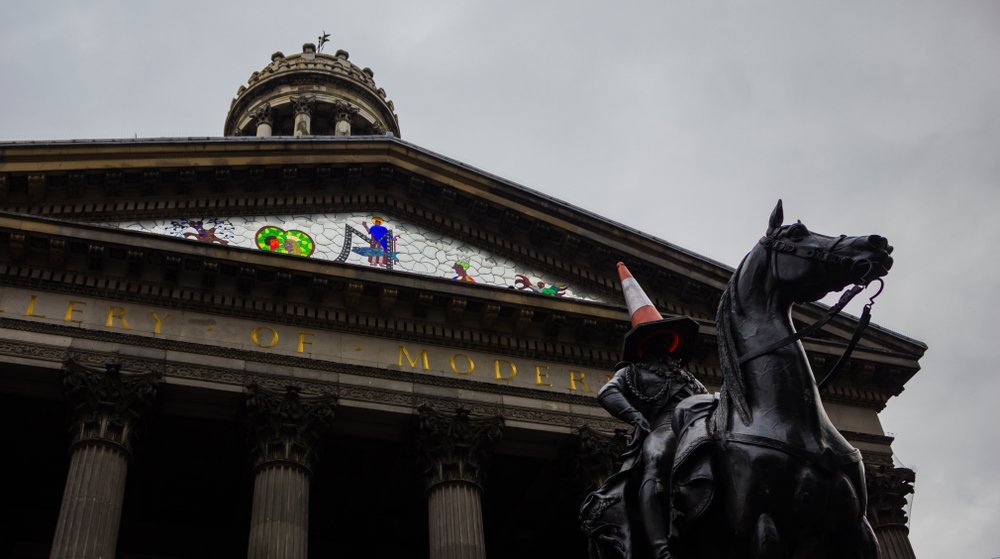
On the edge of the district is the Gallery of Modern Art, GoMA, housed in tobacco merchant William Cunninghame’s mansion from 1778 on Royal Exchange Square. The museum hosts changing exhibitions of modern art, and admission is free. Out front stands the equestrian statue of the Duke of Wellington, which almost always has a traffic cone on its head. The city has tried to remove it many times, but it always comes back, and today the cone has become one of Glasgow’s symbols.
Come in the evening, when the restaurants fill the streets. Merchant City is also one of the areas I recommend in my guide to where to stay in Glasgow.
7. City Centre Mural Trail
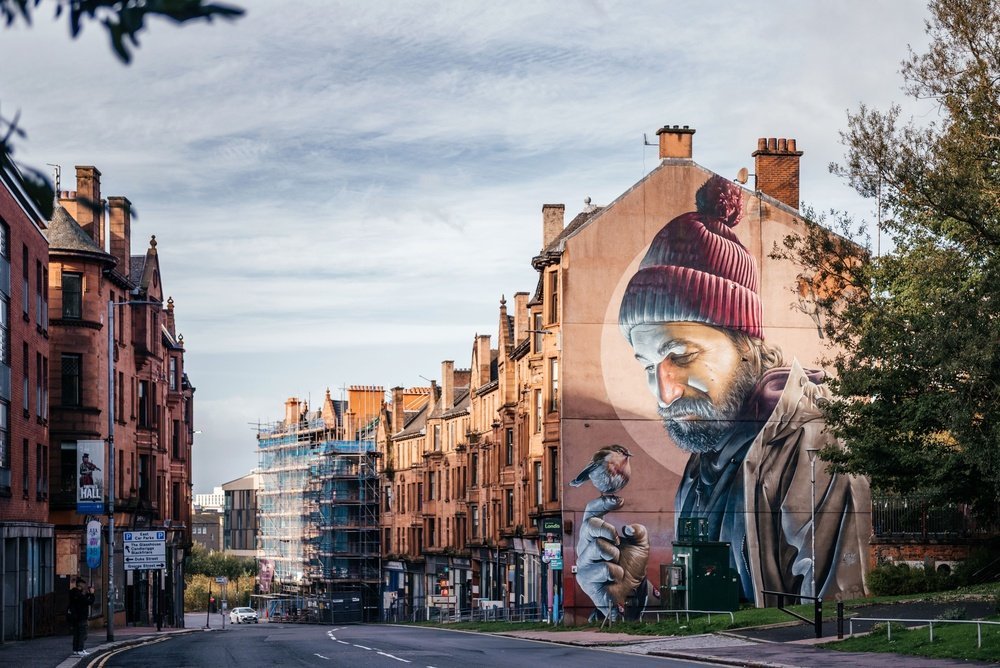
Glasgow has some of the largest murals in Britain, and the city has gathered around 25 of them into a free route through the centre, the City Centre Mural Trail. On High Street near the cathedral, the artist Smug has painted St Mungo as a modern man with a robin in his hand, and on Mitchell Street a giant girl holds a magnifying glass in the piece Honey, I Shrunk the Kids. The comedian Billy Connolly, who was born in the city, has been given three portraits, and several of the other works are tucked away in back streets and alleys you would otherwise never walk down.
It’s free, and you can walk the trail whenever you like. Pick up the map from VisitScotland or on the city’s tourism website, and allow two to three hours if you want to see it all. Most of the murals are between Central Station, Buchanan Street and High Street.
Split the trail up, doing the western part around Mitchell Street one day and High Street with the cathedral the next. For a street art weekend, Motel One Glasgow is an affordable option by Central Station, a few minutes from the first murals.
8. The Mackintosh Trail: The Lighthouse, Willow and Glasgow School of Art
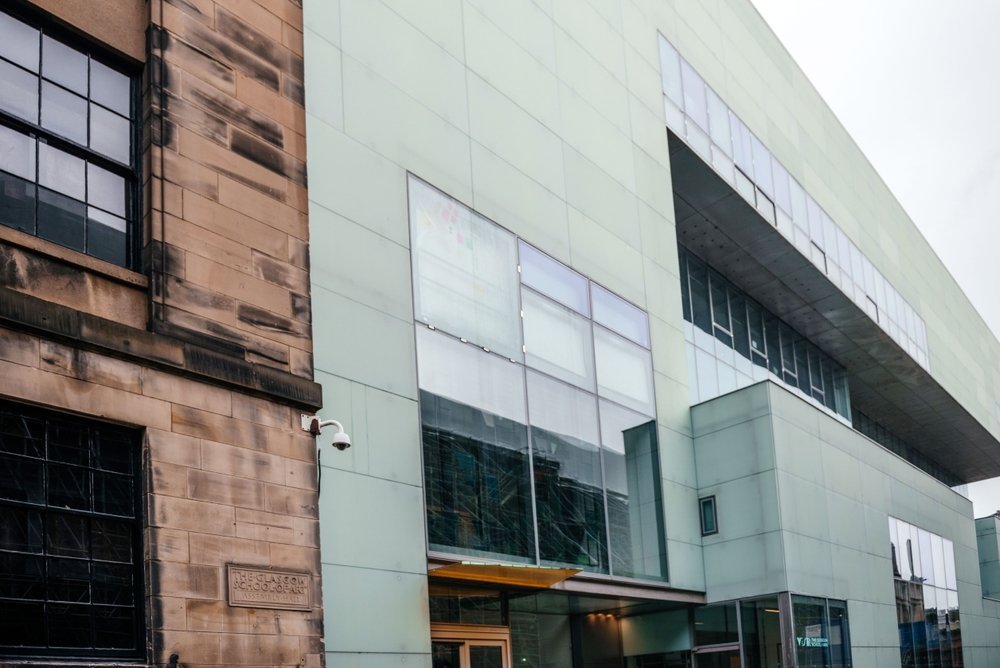
The architect Charles Rennie Mackintosh left his mark on Glasgow around 1900, and you can follow in his footsteps on a short walk through the centre. The Lighthouse in Mitchell Lane was his first public commission, a newspaper building from 1895, and today it is Scotland’s centre for design and architecture, with an exhibition about Mackintosh. Admission is free, it’s open Monday to Saturday from 10.30am to 5pm and on Sundays from noon, and from the viewing platform on the sixth floor you can look out over the whole city.
On Sauchiehall Street you’ll find Mackintosh at the Willow, the tearoom he designed for Kate Cranston in 1903. It’s free to eat in the tearoom, while the exhibition costs £6.50. A little further up the hill on Renfrew Street stands Glasgow School of Art, whose Mackintosh building was destroyed by fires in 2014 and 2018, and the school is working to rebuild it. Opposite is the school’s modern Reid Building.
Book a seat in the Salon de Luxe at the Willow well in advance if you want to see the finest room, as access is only at set times.
9. University of Glasgow and the Hunterian Museum
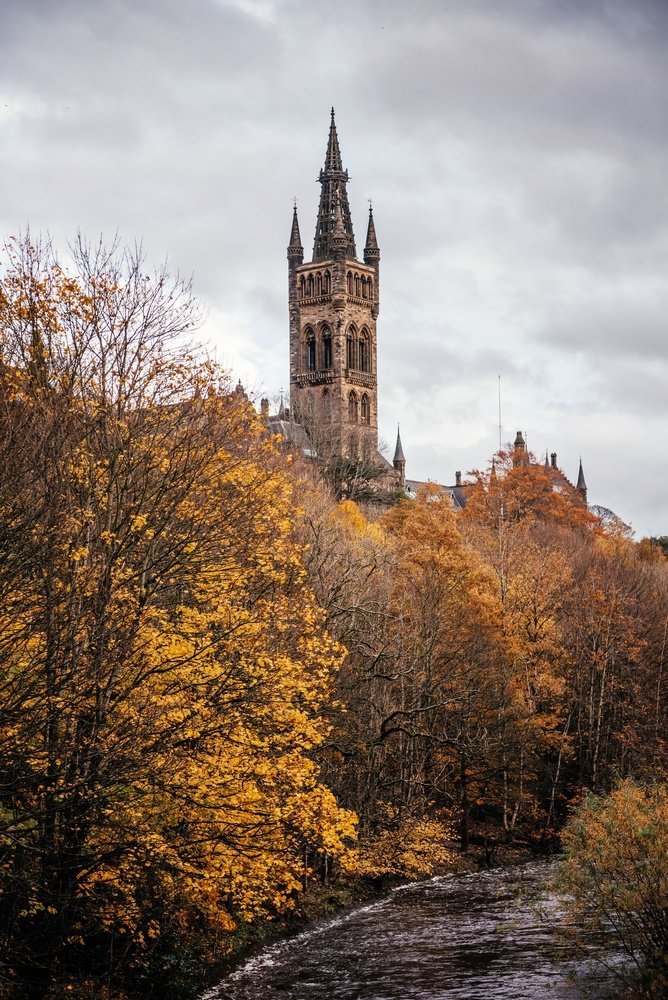
The University of Glasgow was founded in 1451 and is one of the oldest universities in the English-speaking world. The main building on Gilmorehill in the West End was designed by George Gilbert Scott in 1870, and with its tower, two quadrangles and vaulted cloisters beneath the building, it looks like something out of Harry Potter. The cloisters are free to walk through and one of the most photographed spots in the city.
Inside the main building is the Hunterian Museum, Scotland’s oldest public museum, with fossils, coins, Roman finds from the Antonine Wall and the physician William Hunter’s collections. Admission is free, and the museum is open Tuesday to Sunday from 10am to 5pm. Across University Avenue is the Hunterian Art Gallery, with paintings by James McNeill Whistler, and The Mackintosh House, where Mackintosh’s own home has been recreated inside. This requires a ticket. Hillhead Subway station is a ten-minute walk away.
Note that the museum is closed on Mondays. Walk down through Kelvingrove Park afterwards, and you’ll have Kelvingrove Art Gallery right in front of you.
10. Ashton Lane and Byres Road
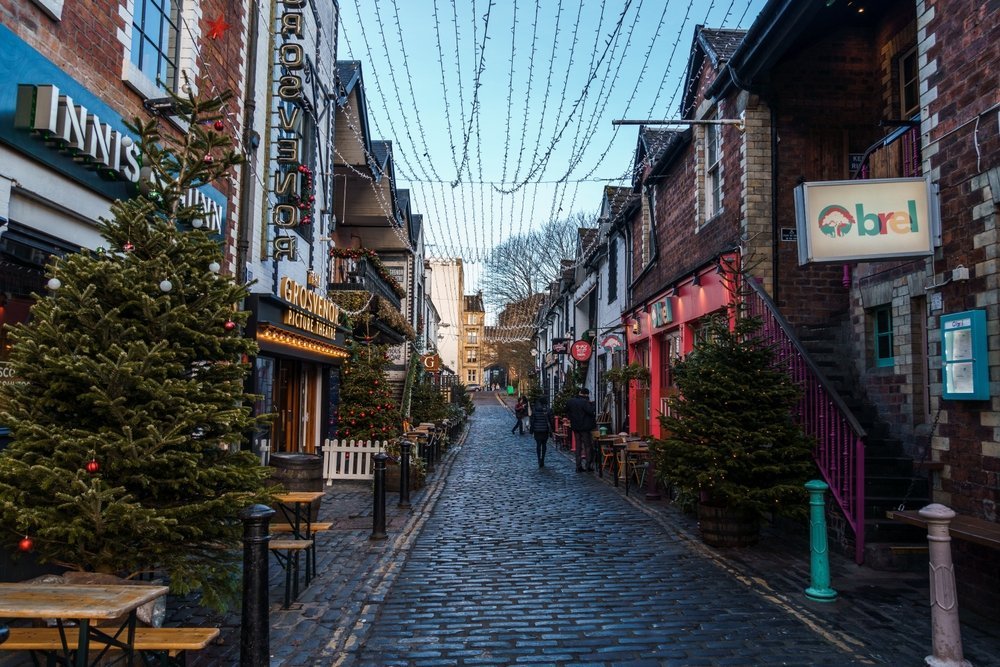
Ashton Lane is a small cobbled lane just behind Hillhead Station in the West End, and this is where students and locals meet for a pint in the evening. Fairy lights are strung above the lane, and the old stable buildings house pubs, restaurants, a small cinema and Ubiquitous Chip, which has been serving Scottish food since 1971. Right next to it is Byres Road, the West End’s main street with cafés, delis, vintage shops and bookshops, and several other little lanes branch off it, such as Ruthven Lane with its second-hand shops and places to eat.
It’s free to wander around, and most bars stay open until midnight or later. Hillhead Subway station is on Byres Road, and the journey from the centre takes about ten minutes.
Come on a Friday or Saturday evening if you want to see the lane at its liveliest. If you’d like to eat your way through the area with a guide, you can join a food tour with haggis, whisky and cranachan.
Book a West End food tour here.
11. Botanic Gardens and the Kibble Palace
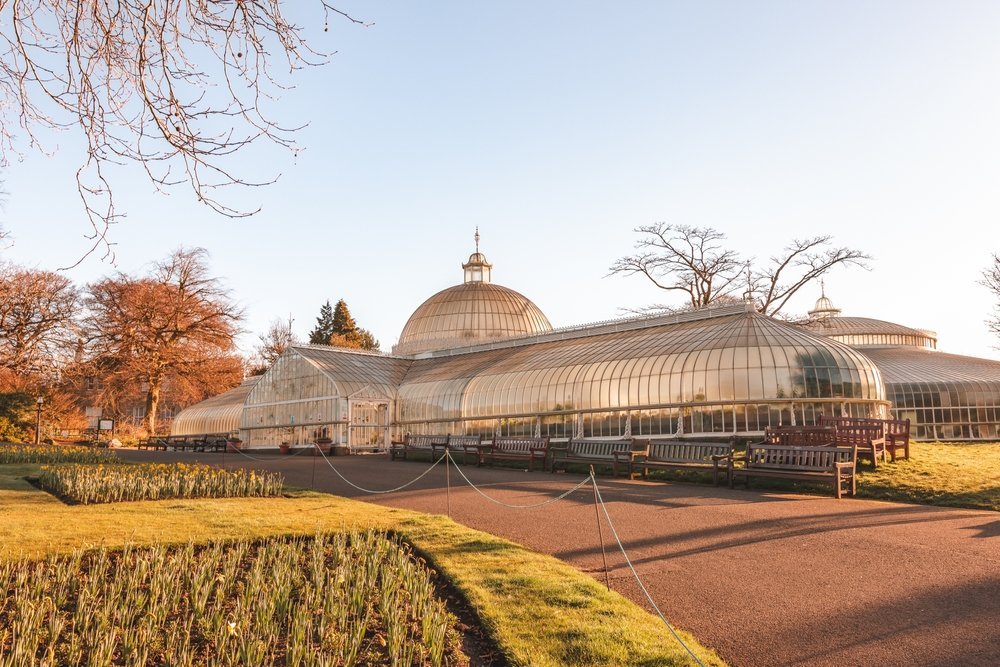
Glasgow Botanic Gardens, at the end of Byres Road, is the West End’s green escape, with lawns, flower beds, an arboretum and paths down to the River Kelvin. The gardens were founded in 1817, and the best-known feature is the Kibble Palace, a large glasshouse of white-painted iron and glass. It originally stood in businessman John Kibble’s garden by Loch Long and was shipped here and reassembled in 1873. Inside are tree ferns from Australia and New Zealand and marble statues among the palms, and the other glasshouses hold orchids, cacti and tropical plants.
Entry is free. The gardens open at 7am and close at dusk, while the glasshouses have shorter opening hours, from 10am until late afternoon. Hillhead Subway station is a five-minute walk away.
Save the Kibble Palace for a rainy day, when it’s lovely to wander around in the warmth under the glass. If you’d like to stay in one of the city’s finest hotels right by the gardens, One Devonshire Gardens a Hotel Du Vin occupies a row of Victorian terraced houses a 15-minute walk along Great Western Road.
12. Glasgow Green and the People’s Palace
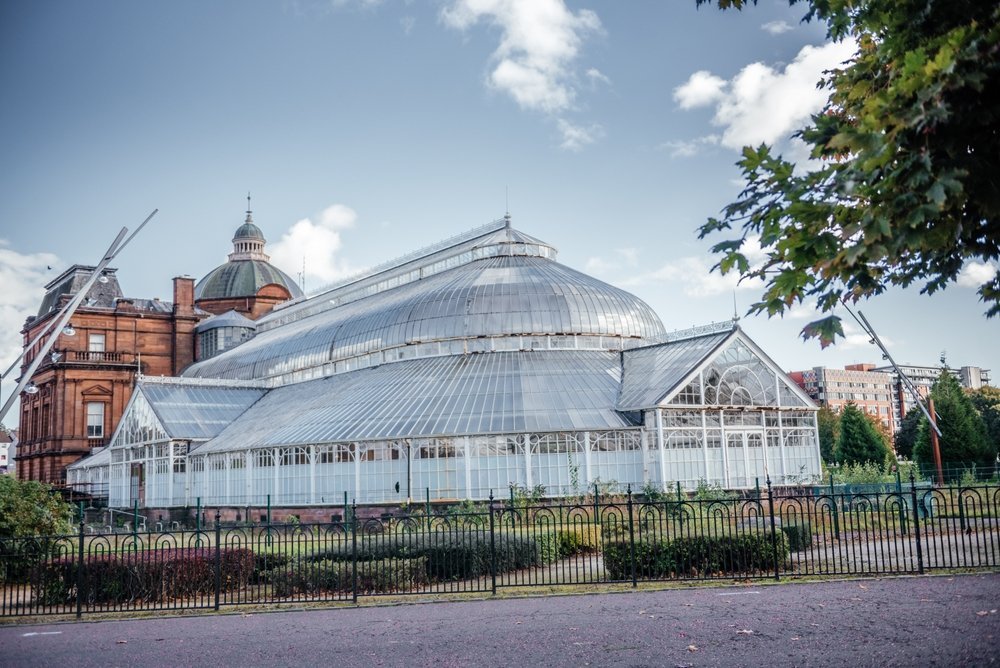
Glasgow Green, along the River Clyde, is the city’s oldest park, and the area has been Glasgow’s shared green space since the 15th century. This is where you’ll find the Doulton Fountain from 1888, the largest terracotta fountain in the world, with Queen Victoria at the top and figures from across the British Empire below. Behind the fountain is the People’s Palace, the city’s museum about the lives of ordinary Glaswegians, along with the Winter Gardens glasshouse. A little further away stands the Templeton Building, a former carpet factory built as a copy of the Doge’s Palace in Venice, which now houses a brewery with a beer garden.
The park is free and open around the clock. The People’s Palace and Winter Gardens are closed for an extended period due to a major renovation, so check the Glasgow Life website before you count on getting inside. From Merchant City, it’s about a ten-minute walk down to the park.
Combine your visit with Barras Market just north of the park, and finish with a beer at the brewery in the Templeton Building.
13. Barras Market and the Barrowland
The Barras on Gallowgate in the East End is Glasgow’s old flea market, started by Margaret and James McIver, who rented out barrows in the 1920s. You’ll find stalls selling second-hand goods, tools, records, clothes, old signs and just about everything else, and several of the old market halls have now been turned into street food kitchens, bars and small design shops. It isn’t neat and polished, and quite a few of the stalls mostly sell cheap junk, but it’s an honest picture of the old working-class city. Above the market glows the neon sign of the Barrowland Ballroom, one of the UK’s best-loved concert venues, where everyone from local bands to global stars has played.
The market is open on Saturdays and Sundays from 10am to 4pm, and it’s free to wander around. From Glasgow Cross, it’s a five-minute walk.
Bring cash for the small stalls, and check the Barrowland’s gig listings if you’re in town for an evening.
14. Clydeside Distillery
You don’t have to head to the Highlands to visit a whisky distillery. Clydeside Distillery is housed in the old pumphouse at Queen’s Dock from 1877, which once operated the harbour’s swing bridge, and it was the first single malt distillery in Glasgow for more than a hundred years. On the tour, you’ll hear about the shipyards and the old docks, see the copper stills and fermentation vessels in the glass-walled room overlooking the river, and finish by tasting three different whiskies.
The standard tour takes about an hour and costs £19.50, while the whisky and chocolate tour costs £39. The distillery is on Stobcross Road between the SEC and the Riverside Museum, and it’s about a ten-minute walk from Exhibition Centre Station.
Book well ahead for weekends, as the tours are small and often sell out. If you’d like to see a classic Highland-style distillery, Glengoyne is half an hour’s drive north of the city.
Book the tour and whisky tasting at Clydeside Distillery here.
15. Football at Celtic Park and Ibrox
Football is a big deal in Glasgow, and the rivalry between Celtic and Rangers, known as the Old Firm, is one of the most famous in the world. Celtic Park in Parkhead in the East End, with around 60,000 seats, is Scotland’s largest club stadium, and on the stadium tour you’ll see the dressing room, walk out through the players’ tunnel and hear about the club’s European Cup win in 1967. Ibrox in Govan, south of the river, is Rangers’ home ground, and the main stand with its red-brick façade was designed by Archibald Leitch in 1928. Here, the tour shows you the trophy room, the dressing room and a seat in the dugout.
The Celtic Park tour costs around £17 to £18, and the Ibrox tour starts at around £27. To get to Celtic Park, take the train to Dalmarnock and walk for about ten minutes, while Ibrox has its own Subway station.
There are no tours on match days, so check the fixtures before you book. Tickets for the matches themselves are hard to get without a membership, so the stadium tour is often the easiest option.
Book the Ibrox stadium tour here or the Celtic Park stadium tour with dinner here.
16. A Concert at the OVO Hydro and SEC
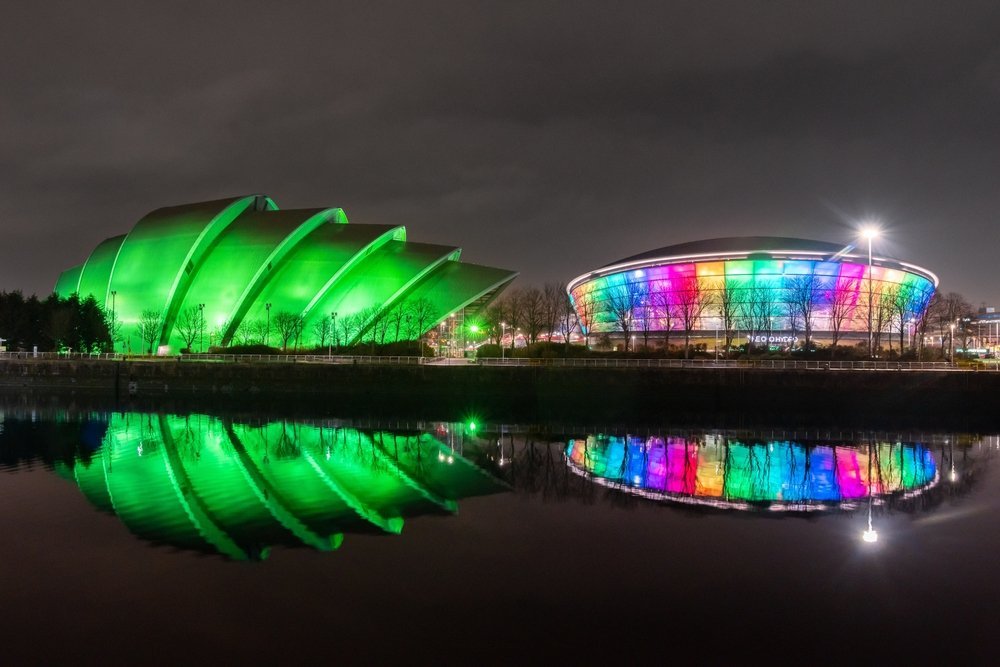
Glasgow is one of the UK’s best cities for live music, and the big names play the OVO Hydro by the River Clyde. The round arena opened in 2013, holds up to 14,000 people and is one of the busiest concert arenas in the world. Right next door is the Clyde Auditorium, which locals call The Armadillo because of its scaled roof, and the old Finnieston Crane, a reminder of the days when locomotives were hoisted aboard ships here. Together they make up the SEC, the city’s big concert and exhibition complex.
Ticket prices depend entirely on the concert. Exhibition Centre Station is right by the complex, and the train from Glasgow Central gets you there in a few minutes. Before the show, you can eat in Finnieston, where Argyle Street has some of the city’s best restaurants and bars.
Book your hotel early, as prices rise when there are big concerts on. If you’d like to walk back after the encore, Radisson RED Glasgow is at Finnieston Quay, with a rooftop bar and views over the Hydro.
17. Day Trip to Loch Lomond
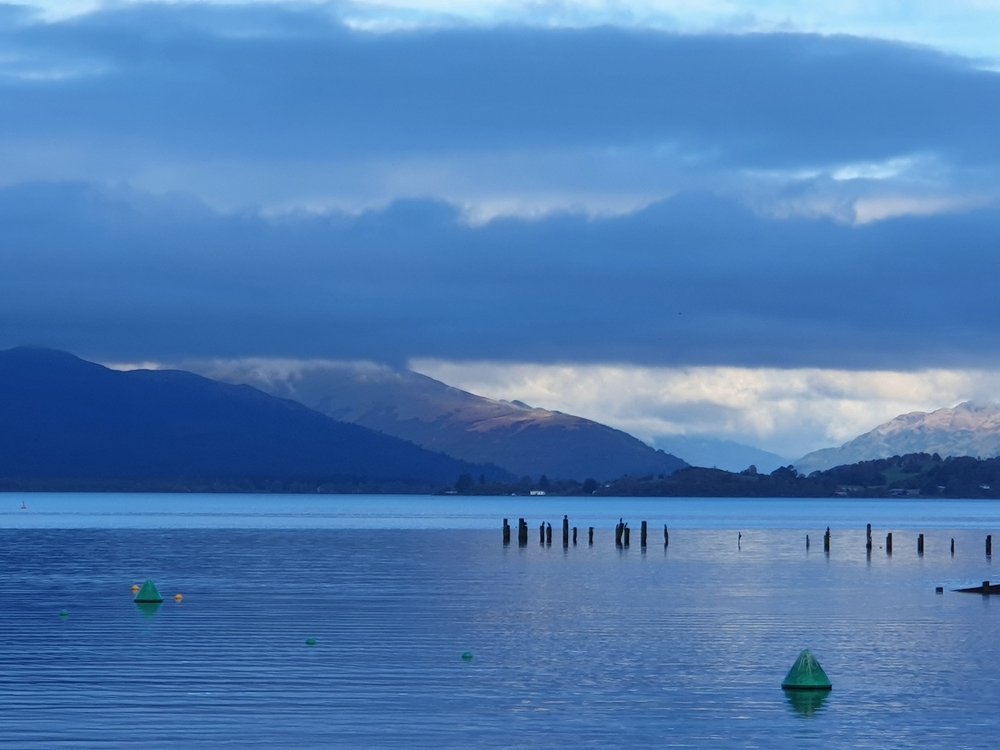
Less than an hour from Glasgow lies Loch Lomond, the largest lake in Great Britain by surface area, surrounded by mountains and small islands. The loch is part of Loch Lomond and The Trossachs National Park, Scotland’s first national park. In Balloch at the southern end, you can take a boat trip on the loch or walk along the shore at Loch Lomond Shores. The village of Luss on the western shore has little stone cottages and a beach, and from Balmaha on the eastern side you can walk up Conic Hill for one of the best views over the loch.
The train from Glasgow Queen Street reaches Balloch in under an hour, and the boats leave from the pier close to the station. If you want to get to Luss and on towards the Highlands at your own pace, it’s easiest to hire a car in Glasgow.
If the scenery wins you over, you can read my guide to where to stay in the Scottish Highlands and my guide to where to stay on the Isle of Skye.
Book a day trip to Loch Lomond, The Trossachs and Stirling Castle here.
18. Day Trip to Edinburgh
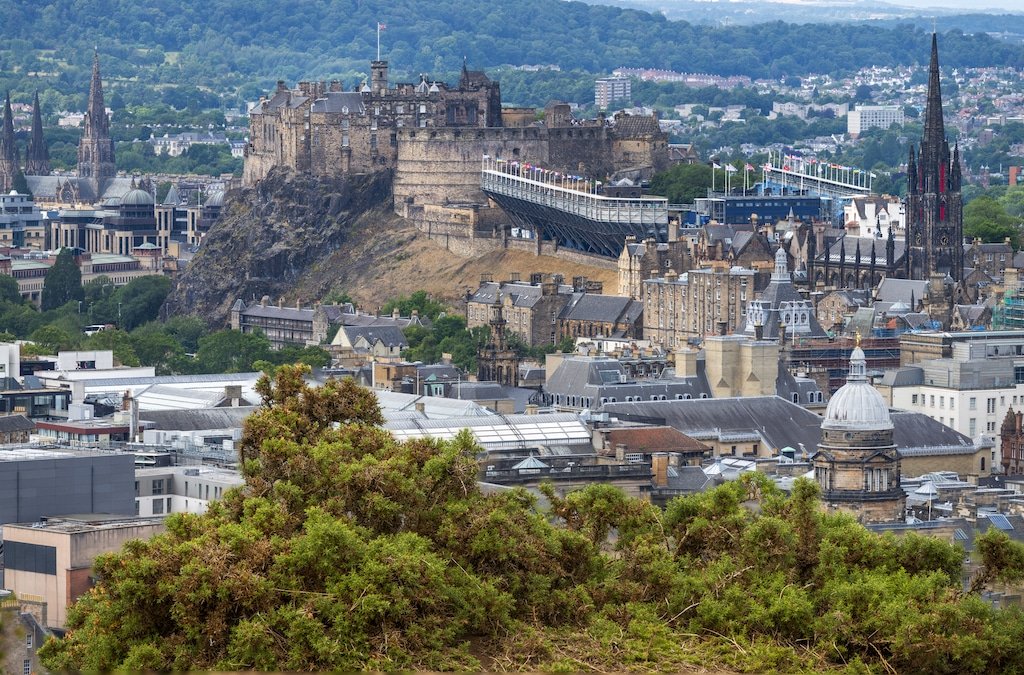
Edinburgh lies only around 70 kilometres to the east, and Scotland’s capital is the obvious day trip from Glasgow. The city is smaller and more classically beautiful, with the castle on its rock, the Royal Mile running down through the Old Town, the streets of the New Town and the views from Calton Hill. Many travellers combine the two cities on the same trip because they complement each other so well: Glasgow with its music, museums and shipbuilding history, and Edinburgh with its castle and medieval streets.
Trains from Glasgow Queen Street to Edinburgh Waverley run several times an hour, and the journey takes about 50 minutes. Waverley sits right between the Old Town and the New Town, so you can walk straight up to the castle. I’ve gathered the best things to do in Edinburgh in a separate guide.
Buy a standard off-peak return so you’re not tied to a specific train. If you’d rather stay a couple of nights, have a look at my guide to where to stay in Edinburgh.
Practical Travel Tips for Glasgow
The city centre is easy to explore on foot, and for the West End, Riverside and Ibrox you can take the Subway. It opened in 1896 and is one of the oldest underground railways in the world. It runs in a loop around the centre with 15 stations, and locals call it the Clockwork Orange because of its orange trains. A single ticket costs £1.80 with contactless payment, and a day ticket costs £3.40. For the Burrell Collection, Loch Lomond and Edinburgh, take the train from Glasgow Central or Queen Street.
Hotel prices go up when there are big concerts at the Hydro or home matches, so book well in advance. For a first visit, I recommend staying in the City Centre, Merchant City or the West End, and I’ve compared the areas in my guide to where to stay in Glasgow. You can also see all hotels in Glasgow on Booking.com. If you’re flying into Edinburgh, I’ve covered the options in my guide to getting from Edinburgh Airport to the city centre, and from there trains and buses continue on to Glasgow.
It rains a lot in Glasgow, so bring an umbrella and a waterproof jacket, and save the museums for the wet days. May to September brings the longest days, while in December the city centre is decorated with Christmas lights and has a Christmas market. Plan around the days of the week, as the Hunterian Museum is closed on Mondays, the Barras is only open at weekends, and the council-run museums don’t open until 11am on Fridays and Sundays. If you want to get your bearings on your first day, the sightseeing buses stop at most of the places in this guide to things to do in Glasgow.
Book a ticket for the hop-on hop-off bus in Glasgow here.
Travel ressources & websites I use all the time 👇
• Booking.com has the best offers on hotels and unique places to stay
• GetYourGuide is the best place to book tours & activities with free cancellation
• Welcome Pickups is the best & safest place to pre-book airport transfers
Psst 👀 Have you subscribed to my Youtube channel and my Instagram where I provide more useful travel tips?