
Germany is a country many travellers think they already know. But it’s a big place, and it’s a long way from the beaches on the Baltic Sea to the mountains of Bavaria. In between you’ll find big cities such as Berlin and Hamburg, medieval towns full of half-timbered houses, wine towns along the Rhine and the dark woods of the Black Forest. So if you’re wondering where to stay in Germany, the answer depends on the kind of trip you have in mind.
That’s why choosing your base is the most important decision when you plan your trip. Here are my picks for eleven places to stay in Germany, from city breaks to beach holidays and mountain trips, with three good hotels in different price ranges in each place.
Contents
Where to Stay in Germany: The Best Areas
- Berlin - best city for first-time visitors, history and big-city life
- Hamburg - best city for the harbour, musicals and an easy weekend break
- Rügen and the Baltic Coast - best area for a beach holiday and long sandy beaches
- Dresden - best city for baroque architecture, art and trips into the Elbe Valley
- Cologne and the Rhine - best city for the cathedral, traditional beer halls and cruises on the Rhine
- Frankfurt - best city for a short city break and as a starting point for a tour
- Heidelberg - best city for romance, castle ruins and student life
- Freiburg and the Black Forest - best area for nature, hiking and wine
- Nuremberg - best city for the Christmas market, the castle and the Romantische Straße
- Munich - best city for beer halls, culture and day trips to the Alps
- The Bavarian Alps - best area for mountain hikes and fairytale castles
The list runs from north to south: first the big cities in the north and east, then the Rhine and south-west Germany, and finally Bavaria and the mountains. For each place you get a map, the nearest airport and three hotels: the luxury option first, then a mid-range one and finally a cheaper alternative. Train and transfer times are estimates unless I mention the source, so always check the timetable before you book.
Your first decision is whether you want a single base or to travel around. For a long weekend, one city is enough, and Berlin, Hamburg and Munich are the obvious choices. If you have a week or more, you can combine two or three places on the same rail line, such as Cologne, Frankfurt and Heidelberg along the Rhine, or Nuremberg, Munich and the Alps in Bavaria. I wouldn’t try to fit all eleven places into one trip. It takes around four hours on the fastest ICE trains between Berlin and Munich, and the Baltic coast and the Alps are at opposite ends of the country.
The train is the easiest way to get around between the cities. The long-distance ICE and IC trains run between all the major cities, and tickets are usually cheapest when you book well in advance. If you’re staying in one area for a long time, take a look at the Deutschland-Ticket from Deutsche Bahn. It’s a monthly subscription valid on regional trains, S-Bahn, buses and trams across the whole country, but not on ICE, IC and EC trains.
A car makes the most sense on the Baltic coast, in the Black Forest, in the Alps and along the Romantische Straße, where many of the small towns are some distance from the railway. If you’re not driving your own car, you can hire a car in Germany here. Bear in mind that many cities have low-emission zones where you need a green emissions sticker on your windscreen, and that parking in city centres is expensive and a hassle. So I’d leave the car at the hotel and walk or use public transport to get around the cities.
There are more German destinations on the site than there’s room for here. The Harz Mountains between Hamburg and Berlin don’t have their own section, but I’ve written a full guide on where to stay in the Harz Mountains, covering five towns in the mountains.
1. Berlin - best city for first-timers, history and big-city life 🐻
- 📍 Distance to the centre: The map shows Alexanderplatz in the Mitte district. Two of the hotels are at Alexanderplatz, and the third is by the Brandenburg Gate, about three kilometres to the west.
- 🚇 Transport: U-Bahn, S-Bahn, trams and buses. Mitte, Kreuzberg and Prenzlauer Berg are well connected by public transport.
- ✈️ Time from the airport: From Berlin Brandenburg Airport (BER), the FEX airport express takes 23 minutes to Hauptbahnhof. By S-Bahn, the journey to Alexanderplatz takes about 45 minutes.
- 💰 Price level: € to €€€€. Berlin is usually cheaper to stay in than the other big Western European capitals, especially outside the major trade fairs and concert weekends.
- 👮 Safety: A mostly safe big city. Watch out for pickpockets around Alexanderplatz and on crowded trains, and stay out of the parks at night.
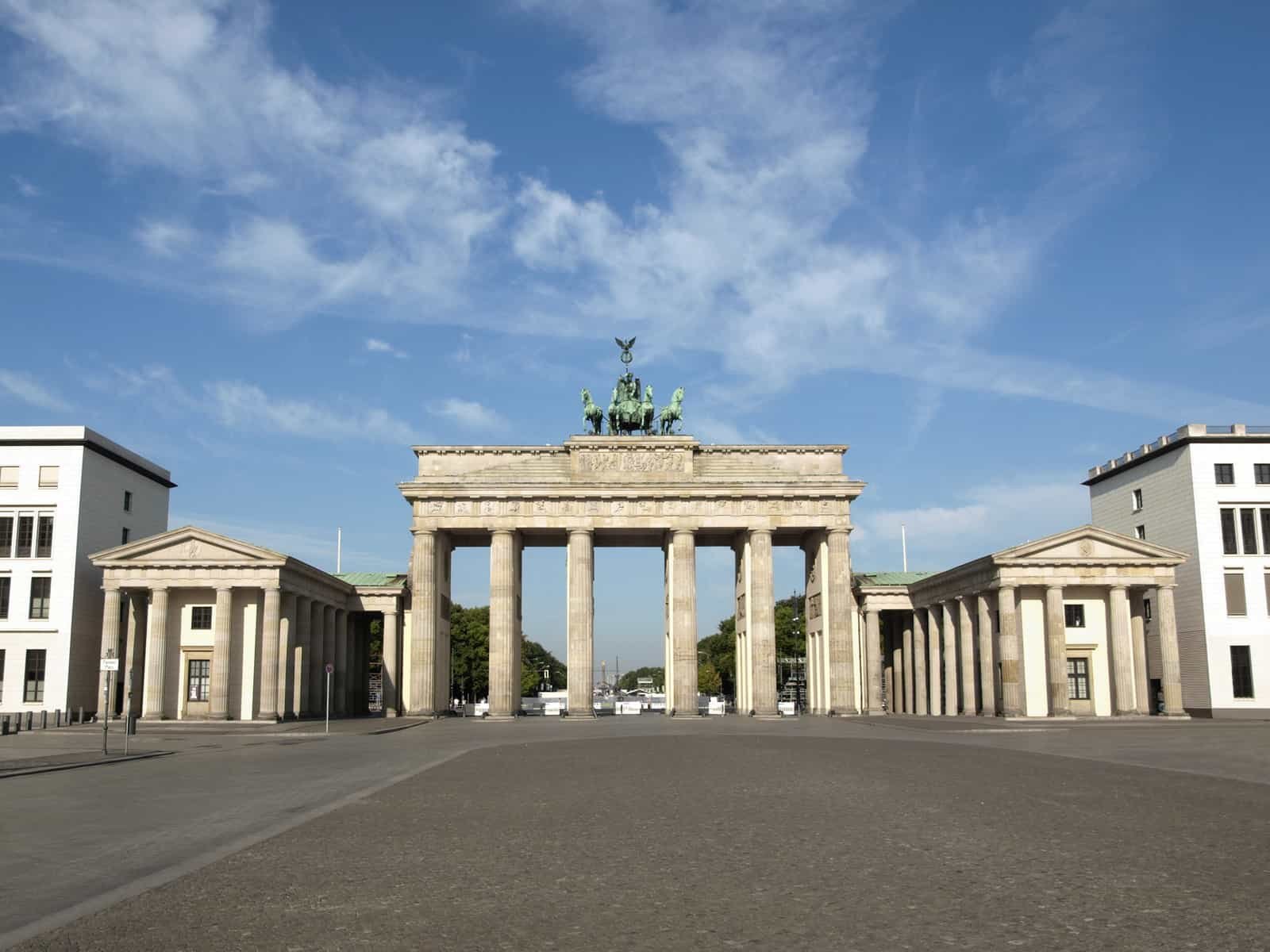
Berlin is the obvious place to start if it’s your first trip to Germany. The city has it all: the Brandenburg Gate, the Reichstag building, the museums on Museum Island and the remains of the Wall, but also nightlife and a food scene that no other German city can match. Give it at least three nights. Berlin is spread over a large area, and the famous sights are dotted across several different districts.
I’ve picked three hotels in Mitte because from here you can walk to most of the classic sights. If you’d rather stay among the cafés of Prenzlauer Berg or in more alternative Kreuzberg, I’ve written a whole guide to where to stay in Berlin, covering five areas. For what to see while you’re there, read my guide to the top sights in Berlin.
Its long history is the biggest reason to visit Berlin. You can walk along the old route of the Wall at Bernauer Straße, see the East Side Gallery by the Spree and stand on Potsdamer Platz, which was no man’s land for decades. My guide to the Berlin Wall shows where you can still see it. If you’re heading further out into the city, read up on public transport in Berlin before you buy tickets. The city is divided into zones A, B and C, and the airport is in zone C.
BER airport lies south of the city. The FEX airport express runs directly to Hauptbahnhof, stopping at Südkreuz and Potsdamer Platz, and all the options are in my guide to getting from Berlin Airport to the city. From Hauptbahnhof, trains run on to Hamburg in just under two hours and to Dresden in about two hours, so Berlin makes a good starting point for a tour of Germany. Potsdam, with its palaces and parks, is so close that you can take the S-Bahn out there on a day trip.
Hotels in Berlin
Hotel Adlon Kempinski Berlin - legendary five-star hotel by the Brandenburg Gate
Hotel Adlon Kempinski sits on Unter den Linden right by Pariser Platz, so you can see the Brandenburg Gate from the front door. It’s a five-star hotel with several restaurants, a bar, a spa and an indoor pool.
The smallest double rooms are 40 square metres, so you get plenty of space. This hotel is for you if you want to stay in the very heart of historic Berlin with all the service you’d expect. The price is high, and breakfast costs extra. One guest also mentions that the carpets in their room were stained, so it isn’t perfect everywhere.
One guest writes on Booking.com: “Everything was excellent, especially the breakfast.”
See photos and book Hotel Adlon Kempinski Berlin here.
Park Inn by Radisson Berlin Alexanderplatz - four-star high-rise hotel with city views
Park Inn by Radisson is right on Alexanderplatz in the tall hotel next to the station. It has a restaurant, bar, gym and spa, and the upper floors have views over Berlin and the TV Tower.
The smallest rooms are 19 square metres. It’s my pick if you want to stay centrally with trains, the U-Bahn and trams right outside the door. It’s a big hotel with lots of guests, so expect a busy lobby. Breakfast costs extra, and one guest would have liked more variety at the buffet.
One guest highlights the rooms on Booking.com: “Lovely hotel rooms that were spacious and comfortable.”
See photos and book Park Inn by Radisson Berlin Alexanderplatz here.
Motel One Berlin-Alexanderplatz - simple design hotel a few minutes’ walk from Alexanderplatz
Motel One Berlin-Alexanderplatz is on Grunerstraße, about 300 metres from Alexanderplatz and close to Museum Island. The hotel has a bar and a 24-hour reception, but no restaurant.
The double rooms are 16 square metres, and guests say plainly that they’re small. In return, you get a clean, modern room within walking distance of most of Mitte. Breakfast costs extra. It suits you if you’re out all day and want to stick to a budget.
One guest on Booking.com puts it simply: “Fantastic location, 10/10!!!”
See photos and book Motel One Berlin-Alexanderplatz here.
2. Hamburg - best city for the harbour, musicals and an easy weekend break ⚓
- 📍 Distance to the centre: The map shows Jungfernstieg by the Binnenalster lake. One hotel is by the lake, one is in HafenCity near the Elbphilharmonie and one is by St. Michaelis church. None of them is more than about two kilometres from the others.
- 🚆 Transport: U-Bahn, S-Bahn, buses and harbour ferries. The ferries are part of the public transport network and a cheap way to see the harbour from the water.
- ✈️ Time from the airport: The S-Bahn S1 runs from Hamburg Airport to Hauptbahnhof in around 25 minutes with no changes.
- 💰 Price level: €€ to €€€€. Prices rise sharply during major trade fairs, concerts and the harbour festival.
- 👮 Safety: A safe city. The Reeperbahn in St. Pauli is a party street and gets noisy and full of drunk people late in the evening, but it isn’t dangerous.
Hamburg is a major German city that works perfectly for a long weekend. It’s a port city full of canals, bridges and big red-brick warehouses. Musicals, the Sunday fish market and evenings in St. Pauli are a big part of the reason to come here.
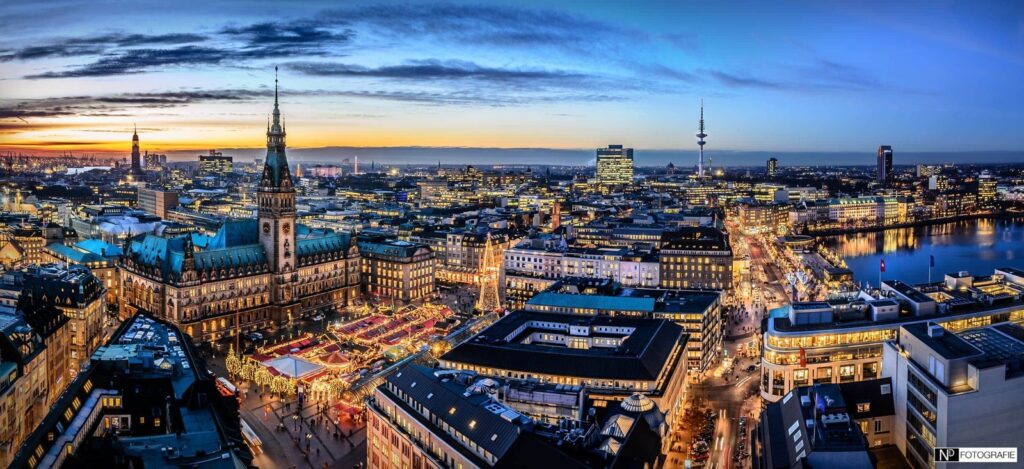
I’ve picked hotels in the central part of the city around the Binnenalster and the harbour, where you can walk to most things. Hamburg has seven boroughs, and if you’d rather stay in charming Altona or one of the city’s other districts, you can read my guide to where to stay in Hamburg. In it, I go through all seven.
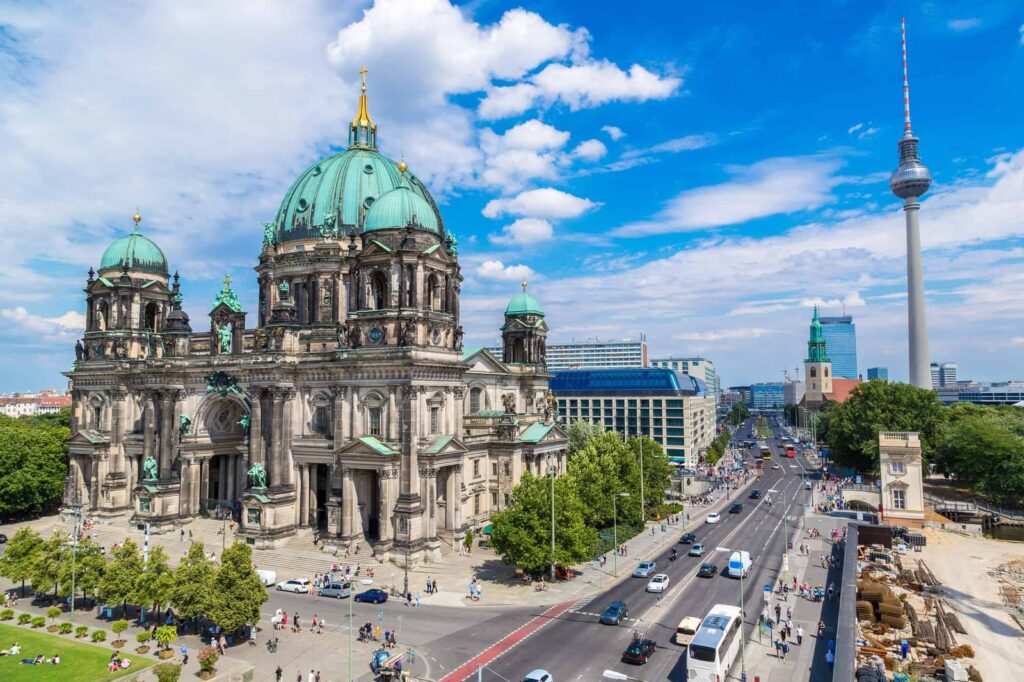
The Speicherstadt warehouse district and the new HafenCity district sit side by side on the harbour, and this is also where you’ll find the Elbphilharmonie concert hall. From the Plaza viewing platform, which according to the concert hall is 37 metres above the ground, you can walk all the way around the building and look out over the harbour. You need a ticket for the Plaza, and you can book it in advance. You’ll find more ideas in the guide to things to see in Hamburg.
The airport is north of the city, and the S-Bahn runs from there to Hauptbahnhof with no changes. All the options are in my guide to getting from Hamburg Airport to the city centre. Many visitors arrive by car or by train, though. If you’re driving, choose a hotel with parking, as street parking in the centre is expensive. The train to Berlin takes just under two hours, so the two cities are easy to combine.
Hotels in Hamburg
Fairmont Hotel Vier Jahreszeiten - classic five-star hotel on the Binnenalster
Fairmont Hotel Vier Jahreszeiten is on Neuer Jungfernstieg on the shore of the Binnenalster, around a kilometre from the Elbphilharmonie. It’s a five-star hotel with restaurants, a bar, a spa, a gym and a terrace facing the lake.
The smallest double rooms are 25 square metres, and some of them have lake views. The hotel is for you if you want to stay somewhere stylish and central, with the shops on Jungfernstieg and Neuer Wall just around the corner. It’s one of Hamburg’s most expensive hotels, and breakfast costs extra.
An enthusiastic guest writes on Booking.com: “Everything was perfect. Service, facilities, food, the room, the bed, the bathroom, the location, etc.”
See photos and book Fairmont Hotel Vier Jahreszeiten here.
25hours Hotel Hamburg HafenCity - informal design hotel with a harbour theme in HafenCity
25hours Hotel Hamburg HafenCity is on Überseeallee in the new district by the harbour, less than a kilometre from the Elbphilharmonie. The hotel has a restaurant, a bar, a sauna and a gym, and the décor is inspired by life at sea.
The atmosphere is relaxed, and the hotel suits you if you want a modern stay close to the harbour and Speicherstadt. Read the room type carefully: the smallest rooms are 20 square metres and have bunk beds, and one guest felt they were too small for two friends with room for their clothes. Breakfast costs extra.
One guest highlights the atmosphere on Booking.com: “Relaxed, welcoming atmosphere and good music in the communal areas.”
See photos and book 25hours Hotel Hamburg HafenCity here.
Motel One Hamburg am Michel - simple hotel by St. Michaelis church
Motel One Hamburg am Michel is on Ludwig-Erhard-Straße close to St. Michaelis church, which locals call the Michel. The Elbphilharmonie is around one and a half kilometres away, and Landungsbrücken on the harbour is close by. There’s a bar and parking, but no restaurant.
The double rooms are 16 square metres, and breakfast costs extra. This is my suggestion if you want to stay centrally between the harbour and St. Pauli without paying for luxury. Hamburg is an expensive city, though, and one guest felt the room was very basic for the price.
One guest writes about the location on Booking.com: “It was close to where I wanted to be, all the sights.”
See photos and book Motel One Hamburg am Michel here.
3. Rügen and the Baltic Coast - best area for a beach holiday and long sandy beaches 🏖️
- 📍 Distance to the centre: The map shows the Seebrücke pier in Binz on Rügen. All three hotels are in Binz, no more than about a kilometre from the pier and a few minutes’ walk from the beach.
- 🚗 Transport: A car is easiest if you want to explore the island. Binz has its own railway station, with trains running there via Stralsund on the mainland.
- ✈️ Time from the airport: There’s no major airport nearby. If you fly into Berlin, allow three to four hours by train or car to Binz. That’s an estimate.
- 💰 Price level: €€ to €€€. Peak season is July and August, when the best beachfront hotels get booked up early. The seaside resorts charge a small tourist tax per night.
- 👮 Safety: A very safe area. Outside peak season, the beach promenade is quiet in the evenings.
The Baltic coast is Germany’s classic seaside holiday destination, with long sandy beaches, wicker beach chairs and white 19th-century seaside hotels. Rügen is Germany’s largest island and the obvious choice if you’re wondering where to stay in Germany for a bit of everything: beaches, chalk cliffs, forest and small harbour towns. The seaside resort of Binz is the island’s largest and the most practical base, with a long beach promenade and a pier right in the middle of town.
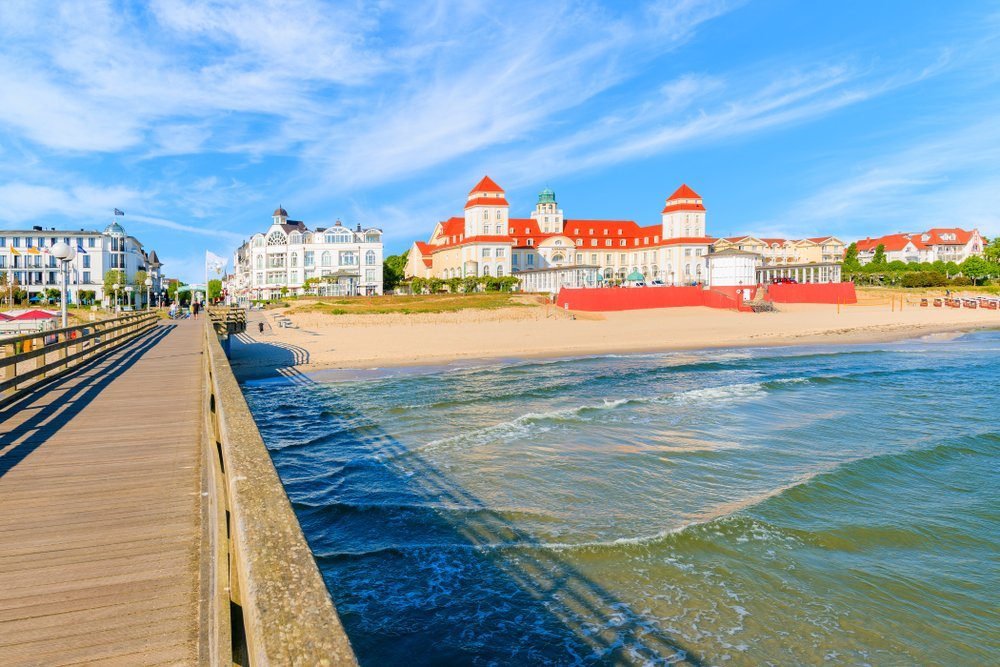
Binz is known for its white villas in the so-called resort architecture style, with balconies and wooden fretwork. From town you can walk or cycle along the beach, and it’s a short drive to the chalk cliffs of Jasmund National Park in the north-east of the island. Just north of Binz lies Prora, the enormous holiday complex the Nazis began building in the 1930s. Part of it now houses a documentation centre.
Rügen is easiest to reach by car. The ferry between Gedser and Rostock takes just under two hours, and from there it’s about a two-hour drive to Binz. That’s an estimate, and traffic over the bridge to Rügen can be heavy during the summer holidays. If you don’t have your own car with you, you can hire a car for the Baltic coast here, so you can drive around the island yourself.
Rügen isn’t the only option on the Baltic. Warnemünde near Rostock is a charming seaside resort with a wide sandy beach, and it’s good for a short stay if you arrive by ferry. The island of Usedom further east has three seaside resorts linked by a long promenade. If you want to combine beach and city, add a few nights in Hamburg or Berlin before or after. For a week’s classic beach holiday with children, though, I’d choose Binz.
Hotels in Binz
Grand Hotel Binz - five-star seaside hotel with a pool right by the beach
Grand Hotel Binz is on the beach promenade in the southern part of town, about 500 metres from the Seebrücke. It’s a five-star hotel with a restaurant, bar, indoor pool, sauna and spa, and the beach is just across the promenade.
The rooms are spacious, and the smallest double rooms with a balcony or terrace are 36 square metres. Breakfast is included. The hotel suits you if you want a beach holiday with a pool and spa for when the Baltic weather doesn’t play ball. One guest felt the hotel was a little worn in places.
On the location, one guest writes on Booking.com: “The location couldn’t be better.”
See photos and book Grand Hotel Binz here.
Arkona Strandhotel - four-star hotel with a pool on the beach promenade
Arkona Strandhotel is on the beach promenade in the northern part of Binz, just under a kilometre from the Seebrücke and two minutes’ walk from the beach. The hotel has a restaurant, bar, indoor pool, sauna and playroom.
The smallest double rooms are 25 square metres with views over the town, so if you want to see the sea, choose a room type with a sea view. Breakfast is included. It’s my pick for families who want to stay by the beach and have a pool. One guest wasn’t happy with where the bed was positioned in the room.
One guest writes simply on Booking.com: “The hotel is truly excellent.”
See photos and book Arkona Strandhotel here.
Hotel Meersinn - modern hotel with a pool two streets from the promenade
Hotel Meersinn is on Schillerstraße in the middle of Binz, about five minutes’ walk from the beach and a few hundred metres from the Seebrücke. The hotel has a restaurant, indoor pool and spa.
The rooms are at least 30 square metres, and breakfast is included. As the hotel isn’t directly on the promenade, it’s usually cheaper than the other two. If you’re coming by car, check the parking: one guest found the public parking nearby expensive.
One guest highlights the location on Booking.com: “Perfect location very close to the beach promenade.”
See photos and book Hotel Meersinn here.
4. Dresden - best city for baroque, art and day trips in the Elbe Valley 🎻
- 📍 Distance to the centre: The map shows the Frauenkirche on Neumarkt square. All three hotels are in the Old Town, no more than about 800 metres from the church.
- 🚶 Getting around: You can explore the Old Town on foot. Trams cross the Elbe to the Neustadt district and run to the Hauptbahnhof.
- ✈️ Time from the airport: S-Bahn line S2 runs from Dresden Airport to the Hauptbahnhof in around 20 to 25 minutes. That’s an estimate. Many people fly into Berlin instead and take the train from there, which takes about two hours.
- 💰 Price level: € to €€€€. Dresden is usually cheaper than Berlin and Munich, except during the Christmas season.
- 👮 Safety: A safe city. In the evening, most of the action is in Neustadt on the other side of the river.
Dresden is the city for you if you love baroque architecture, art and classical music. The Old Town along the Elbe is packed with palaces, churches and museums, and the view over the river from the Brühlsche Terrasse is one of the finest in Germany. The city was almost wiped out by the air raids of 1945, and much of what you see today has been rebuilt. That history is a big part of the place, and you feel it everywhere.
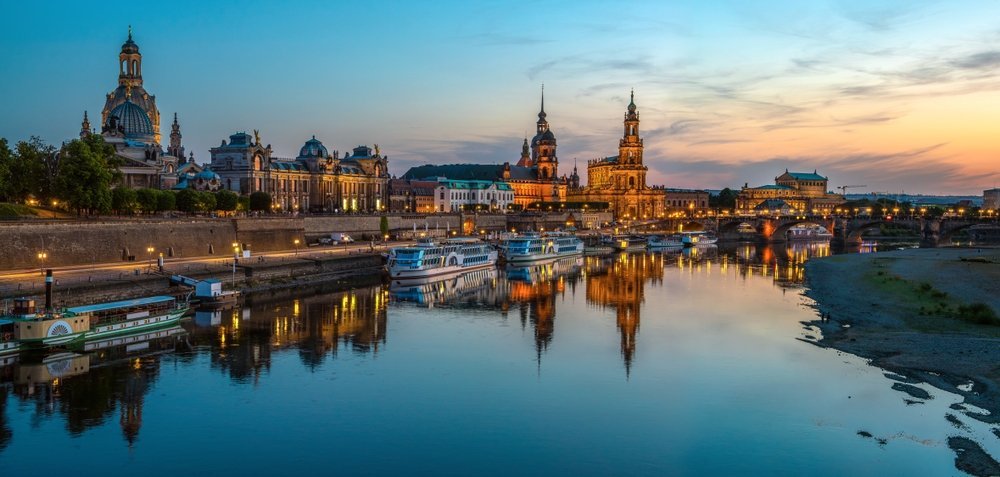
The clearest example is the Frauenkirche with its great dome. According to the church itself, it was destroyed at the end of the Second World War, and the current building has risen from the ruins. Today you can climb up into the dome and look out over the city. Close by you’ll find the Zwinger palace with its painting collections, the Semperoper opera house and the Royal Palace with the Grünes Gewölbe treasury.
I’ve chosen three hotels in the Old Town, because from here you can walk to all the main sights. If you’d rather stay among bars and cafés, take a look at Neustadt on the northern side of the Elbe. The district is younger and more alternative, and it’s less than half an hour’s walk to the Frauenkirche. Two nights is enough for most people, three if you want to fit in a day trip.
The obvious day trip is to Saxon Switzerland (Sächsische Schweiz), an area of sandstone cliffs along the Elbe south-east of the city. The S-Bahn runs out there, and from Kurort Rathen you can walk up to the Bastei viewpoint. Dresden is also easy to combine with Berlin, and Prague in the Czech Republic is just over the border by train. In December the city holds the Striezelmarkt Christmas market, one of the oldest in Germany, so book your hotel early.
Hotels in Dresden
Hotel Taschenbergpalais Kempinski - five-star hotel in a baroque palace by the Zwinger
Hotel Taschenbergpalais Kempinski is set in a rebuilt baroque palace in the Old Town, about 400 metres from the Zwinger and 500 metres from the Frauenkirche. The hotel has a restaurant, bar, spa and indoor pool.
The smallest rooms are 35 square metres, so there’s plenty of space. It’s Dresden’s best-known luxury hotel, and you’re right between the palace, the opera house and the other palaces. Breakfast costs extra. One guest felt the bar lacked atmosphere and was disappointed with the wine list.
One guest writes on Booking.com: “It’s a magnificent hotel.”
See photos and book Hotel Taschenbergpalais Kempinski here.
HYPERION Hotel Dresden Am Schloss - large hotel with a spa between the palace and the Frauenkirche
HYPERION Hotel Dresden Am Schloss is on Schloßstraße, about 200 metres from the Zwinger and 500 metres from the Frauenkirche. The hotel has a restaurant, bar, spa and gym.
The smallest rooms are 20 square metres. This is my pick if you want to stay just as centrally as at the Kempinski without paying luxury prices. Breakfast costs extra. One guest mentions that the corridors are worn and could do with a refresh.
An enthusiastic guest writes on Booking.com: “Absolutely fantastic! One of our favourite hotels ever!”
See photos and book HYPERION Hotel Dresden Am Schloss here.
Motel One Dresden am Zwinger - simple hotel with a roof terrace right by the Zwinger
Motel One Dresden am Zwinger is on Postplatz, about 100 metres from the Zwinger and 800 metres from the Frauenkirche. The hotel has a bar and a terrace, but no restaurant.
The double rooms are 16 square metres, and breakfast costs extra. It suits you if you want a central base for less money and plan to spend your days out in the city. The rooms are small, but one guest still found them comfortable.
One guest highlights the location on Booking.com: “The hotel’s location is fantastic.”
See photos and book Motel One Dresden am Zwinger here.
5. Cologne and the Rhine - best city for the cathedral, beer halls and Rhine cruises ⛪
- 📍 Distance to the centre: The map shows Cologne Cathedral. Two of the hotels are right by the cathedral, and the third is on Neumarkt square, about a kilometre away.
- 🚆 Transport: Hauptbahnhof is right next to the cathedral, and the U-Bahn and trams cover the rest of the city.
- ✈️ Time from the airport: From Cologne Bonn Airport, the S-Bahn S19 runs to Hauptbahnhof in about 15 minutes.
- 💰 Price level: €€ to €€€€. Prices rise sharply during major trade fairs and the carnival in February or March.
- 👮 Safety: A safe city. The area around Hauptbahnhof is busy around the clock, so keep an eye on your bag.
Cologne is all about the cathedral, the Rhine and the laid-back atmosphere of its beer halls, where the local Kölsch beer is served in small glasses until you put a beer mat on top. The cathedral is the first thing you see when you step out of the station, and it’s one of the most famous buildings in Europe. Climb the roughly 500 steps up the south tower and you’ll get a view over the whole city and the river.

I’ve picked three hotels close to the cathedral and the Old Town, because that’s the practical choice if you’re arriving by train. The city has plenty of other good neighbourhoods, though, such as Belgisches Viertel with its cafés and shops, and Südstadt by the Rhine. I cover those in my guide to where to stay in Cologne, where you can choose between six areas.
Cologne is also the northern gateway to the most famous stretch of the Rhine. Between Bingen and Rüdesheim in the south and Koblenz in the north, the river flows through a 65-kilometre valley on the UNESCO World Heritage List, where around 40 castles and fortresses sit on the slopes. The train from Cologne to Koblenz takes about an hour, and from there you can take one of the river boats up the Rhine and the train back. That’s an estimate, and the boats mostly run in summer.
If you want to stay in the Rhine Valley itself, the small wine towns such as Bacharach and St. Goar are charming, but there isn’t much to do in the evenings outside the season. So I’d use Cologne as a base and do the valley as a day trip. From Cologne, the fastest ICE trains also reach Frankfurt in about an hour, so the two cities are easy to combine.
Hotels in Cologne
Excelsior Hotel Ernst am Dom - five-star classic directly opposite the cathedral
Excelsior Hotel Ernst is on Domplatz, directly opposite Cologne Cathedral and about 300 metres from Hauptbahnhof. It’s a five-star hotel with several restaurants, a bar, a spa and a gym.
The smallest double rooms are 30 square metres, and some rooms look straight out at the cathedral. The hotel is for you if you want classic luxury in the city’s best location. Breakfast costs extra. One guest felt the room didn’t live up to the standard of a hotel in that class.
One guest writes on Booking.com: “An excellent location with skilled staff.”
See photos and book Excelsior Hotel Ernst am Dom here.
Hotel Mondial am Dom Cologne MGallery - four-star hotel between the cathedral and the Rhine
Hotel Mondial am Dom is on Kurt-Hackenberg-Platz, about 150 metres from the cathedral and 300 metres from Hauptbahnhof. The hotel has a restaurant, a bar and a gym, and from some rooms you can see the cathedral.
The smallest rooms are only 16 square metres, and one guest says plainly that the room was very small. Go for a larger category if there are two of you with suitcases. Breakfast costs extra. This is my pick if you want to stay just as close to the cathedral as at the Excelsior for a lower price.
One guest writes briefly on Booking.com: “An absolutely superb hotel.”
See photos and book Hotel Mondial am Dom Cologne MGallery here.
Motel One Köln-Neumarkt - simple hotel with a terrace near the shopping streets
Motel One Köln-Neumarkt is on Cäcilienstraße by Neumarkt square, about a kilometre from the cathedral and close to the shopping streets Schildergasse and Hohe Straße. The hotel has a bar and a terrace.
The double rooms are 16 square metres, and breakfast costs extra. It suits you if you want to stay centrally and for less than near the cathedral. Neumarkt is a hub for trams and the U-Bahn, so getting around is easy. One guest mentions that the room is very small.
One guest writes on Booking.com: “The location is super!”
See photos and book Motel One Köln-Neumarkt here.
6. Frankfurt - best city for a short city break and to start your tour 🏙️
- 📍 Distance to the centre: The map shows Römerberg in the Old Town. Two of the hotels are no more than about a kilometre away, and the third is in the Gallus district just under two kilometres to the west.
- 🚇 Transport: U-Bahn, S-Bahn and trams. The centre is small enough for you to walk most places.
- ✈️ Time from the airport: From Frankfurt Airport, the S-Bahn S8 and S9 run to Hauptbahnhof in about 12 minutes.
- 💰 Price level: €€ to €€€€. Prices can multiply during the big trade fairs, so check the trade fair calendar before you book.
- 👮 Safety: A mostly safe city. The Bahnhofsviertel around Hauptbahnhof has a visible drug scene, and I wouldn’t wander around there late in the evening.
Frankfurt is Germany’s financial centre, with skyscrapers along the River Main, but it’s also a city with a rebuilt Old Town, museums and traditional cider taverns. Many travellers only ever pass through the airport, which is the country’s largest, and that’s a shame. The city is great for a long weekend and a practical starting point for a tour, because trains run directly from the airport to the rest of the country.
I’ve chosen hotels in the centre and close to the trade fair grounds, where most travellers stay. If you’d rather stay in charming Sachsenhausen south of the river or in Bornheim, you can read my guide to where to stay in Frankfurt, where I go through six areas. What to see is covered in the guide to things to do in Frankfurt.
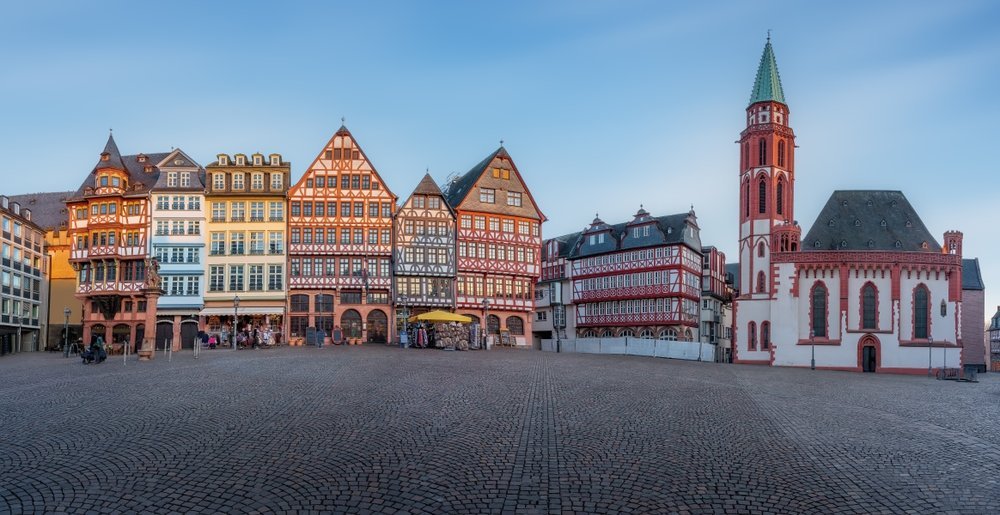
Römerberg, with the Römer town hall and the reconstructed half-timbered houses, is the heart of the Old Town. From here you can walk across the Eiserner Steg footbridge to the Museumsufer row of museums and on to Sachsenhausen, where the local cider, Apfelwein, is served in mugs in the taverns. Two nights is enough for most people, and a third gives you time for a day trip.
Frankfurt is a good base for day trips. The train to Rüdesheim at the southern end of the Rhine Valley takes about an hour, and Heidelberg is just as close. By ICE you’re in Cologne in about an hour. If you have a whole week, you can start here and carry on south to Heidelberg and the Black Forest or east to Nuremberg and Munich. Many trains towards Bavaria run via Nuremberg, so the two cities go well together.
Hotels in Frankfurt
Steigenberger Icon Frankfurter Hof - historic five-star hotel in the centre
Steigenberger Icon Frankfurter Hof is on Kaiserplatz right in the centre, about a kilometre from both Römerberg and Hauptbahnhof. It’s a five-star hotel from the 19th century with restaurants, a bar, a spa and a gym.
The smallest double rooms are 25 square metres. It’s the city’s classic grand hotel and a good choice if you want to stay somewhere elegant within walking distance of the Old Town, the opera house and the Zeil shopping street. Breakfast costs extra, and one guest had poor wifi in their room on the first day.
One guest writes on Booking.com: “Beautiful hotel, large room, skilled staff. The best location in Frankfurt.”
See photos and book Steigenberger Icon Frankfurter Hof here.
NH Collection Frankfurt Spin Tower - modern high-rise hotel close to the trade fair
NH Collection Frankfurt Spin Tower is in a new high-rise in the Gallus district, about 800 metres from Hauptbahnhof and close to the trade fair grounds. The hotel has a restaurant, a bar, a sauna and a gym.
The smallest rooms are 21 square metres, and breakfast is included in some of the rates. It’s my pick if you’re going to a trade fair or want to stay somewhere modern close to the station. It’s just under two kilometres to the Old Town, so expect to take the tram or walk. One guest found the walls thin.
One guest praises the breakfast on Booking.com: “Superb hotel! The breakfast is absolutely top-notch with a large selection.”
See photos and book NH Collection Frankfurt Spin Tower here.
Motel One Frankfurt-Römer - simple hotel a few minutes from Römerberg
Motel One Frankfurt-Römer is on Berliner Straße, a couple of hundred metres from Römerberg and the cathedral. The hotel has a bar and a 24-hour reception, but no restaurant.
The double rooms are 16 square metres, and breakfast costs extra. It suits you if you want to stay in the Old Town and spend your money on cider and museums rather than the hotel. One guest found the air in the room warm and dry.
One guest writes on Booking.com: “We liked most things. The lobby, the staff, the breakfast, no frills.”
See photos and book Motel One Frankfurt-Römer here.
7. Heidelberg - best city for romance, castle ruins and student life 🏰
- 📍 Distance to the centre: The map shows the old bridge, Alte Brücke, over the Neckar. One hotel is by the bridge, one is at the western end of the Old Town and one is by the Hauptbahnhof, about three kilometres away.
- 🚌 Transport: You can get around the Old Town on foot. Trams and buses link the Old Town with the Hauptbahnhof, and a funicular runs up to the castle.
- ✈️ Time from the airport: Heidelberg has no airport. From Frankfurt Airport it takes about an hour by train or car. That’s an estimate.
- 💰 Price level: €€ to €€€€. Hotels in the Old Town are the most expensive, and hotels by the station are usually the cheapest.
- 👮 Safety: A very safe city. In the evening the Old Town’s pubs are full of students, but the atmosphere is relaxed.
Heidelberg is the romantic side of Germany: a red sandstone castle ruin on the hillside, an old stone bridge over the River Neckar and an Old Town full of student pubs. The city has Germany’s oldest university, and all the students keep the streets lively all year round. Heidelberg is small, and many people visit on a day trip from Frankfurt, but I would stay a night or two. In the evening, once the coaches have left, the city is far more charming.
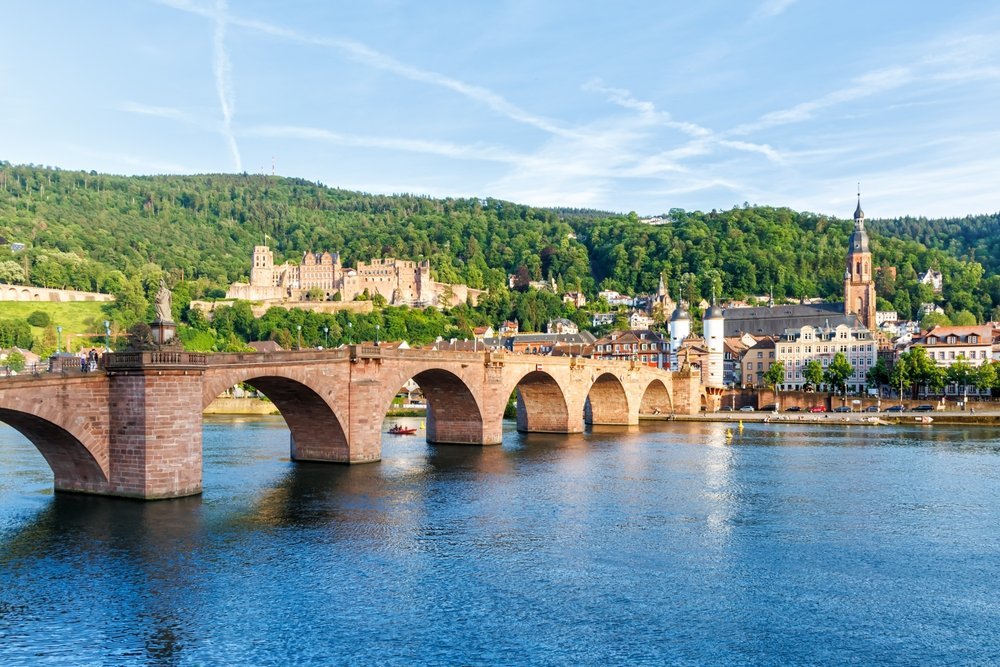
The castle is Heidelberg’s landmark, and you can walk up the paths or take the funicular from Kornmarkt. Inside the castle courtyard is the Fasskeller with the huge wine barrel, which Heidelberg Castle describes as a barrel holding 220,000 litres of wine. On the other side of the river, the Philosophenweg path climbs the hill and offers one of the finest views over the city and the castle.
See hotels in Heidelberg here.
Stay in the Old Town if you can. The main street, Hauptstraße, is a long pedestrianised street running through the whole Old Town, and from here you can walk to everything you’ve come to see. The Hauptbahnhof is about three kilometres from the Alte Brücke in the modern part of the city. It’s handy if you’re only here for one night on your way somewhere else, but in the evening you’ll need to take the bus or tram into the pubs.
Heidelberg fits nicely into a route along the Rhine between Frankfurt and the Black Forest. By train it’s about an hour to Frankfurt and about two hours to Freiburg, and the city is also a natural starting point if you want to drive east along the Castle Road, Burgenstraße, which runs through the Neckar Valley. If you’re coming by car, choose a hotel with parking, as spaces are scarce in the Old Town.
Hotels in Heidelberg
Hotel Europäischer Hof Heidelberg - five-star family-owned hotel with a rooftop pool
Hotel Europäischer Hof is on Friedrich-Ebert-Anlage at the western end of the Old Town, close to Bismarckplatz and about one and a half kilometres from both the Alte Brücke and the Hauptbahnhof. It’s a five-star hotel with a restaurant, bar, spa and a heated rooftop pool.
The smallest rooms are 30 square metres, and breakfast is included in the price. It’s Heidelberg’s finest hotel and my choice for a romantic trip where you want to treat yourselves. You can walk to most of the Old Town, but it’s a fair walk to the castle. One guest felt the air conditioning was turned up too high.
One guest writes briefly on Booking.com: “Everything is perfect here.”
See photos and book Hotel Europäischer Hof Heidelberg here.
City Partner Hotel Holländer Hof - three-star riverside hotel right by the Alte Brücke
City Partner Hotel Holländer Hof is on Neckarstaden by the river, about 100 metres from the Alte Brücke. Some of the rooms look out over the Neckar, and from here it’s a short walk to both the pubs and the funicular up to the castle.
Rooms are at least 17 square metres, and breakfast is included in the price. It’s my suggestion if you want to stay in the heart of romantic Heidelberg without paying five-star prices. The Hauptbahnhof is just over two and a half kilometres away, so take a bus or taxi with your luggage. One guest felt the breakfast choice was limited.
One guest writes about the location on Booking.com: “The hotel’s location couldn’t be better.”
See photos and book City Partner Hotel Holländer Hof here.
ibis Heidelberg Hauptbahnhof - simple hotel right by the station
ibis Heidelberg Hauptbahnhof is on Willy-Brandt-Platz right next to the station and just under three kilometres from the Alte Brücke. There’s a 24-hour reception and a small bar.
The rooms are small, the smallest being 12 square metres, and one guest mentions that the bathroom is very small. Breakfast costs extra. The hotel is usually the cheapest of the three and suits you if you’re arriving late by train or leaving early. To get to the Old Town, take the bus or tram from the station.
One guest writes on Booking.com: “The location close to the main station was convenient for us.”
See photos and book ibis Heidelberg Hauptbahnhof here.
8. Freiburg and the Black Forest - best area for nature, hiking and wine 🌲
- 📍 Distance to the centre: The map shows Freiburger Münster in the middle of the Old Town. Two of the hotels are no more than about 500 metres from the cathedral, and the third is north of the centre, about one and a half kilometres from Hauptbahnhof.
- 🚆 Transport: Trams in Freiburg, plus regional trains and buses out into the Black Forest. A car is the easiest way to reach the small villages.
- ✈️ Time from the airport: The nearest airport is EuroAirport near Basel, and the bus from there to Freiburg takes about an hour. That’s an estimate. From Frankfurt Airport it’s about two hours by train.
- 💰 Price level: €€ to €€€€. Freiburg is an expensive university city, while the guesthouses in the Black Forest villages are usually cheaper.
- 👮 Safety: A very safe city. In the Black Forest, the main things to watch out for are the narrow, winding roads and the mountain weather.
The Black Forest is all forest, mountains, waterfalls and little villages with farmhouses and cuckoo clocks in the south-western corner of Germany. Freiburg is the largest city in the southern Black Forest and the base I would choose if you’re wondering where to stay in Germany for nature. You get a charming Old Town with little streams running through the streets, a huge cathedral and plenty of restaurants, and the forest and mountains begin just outside the city.
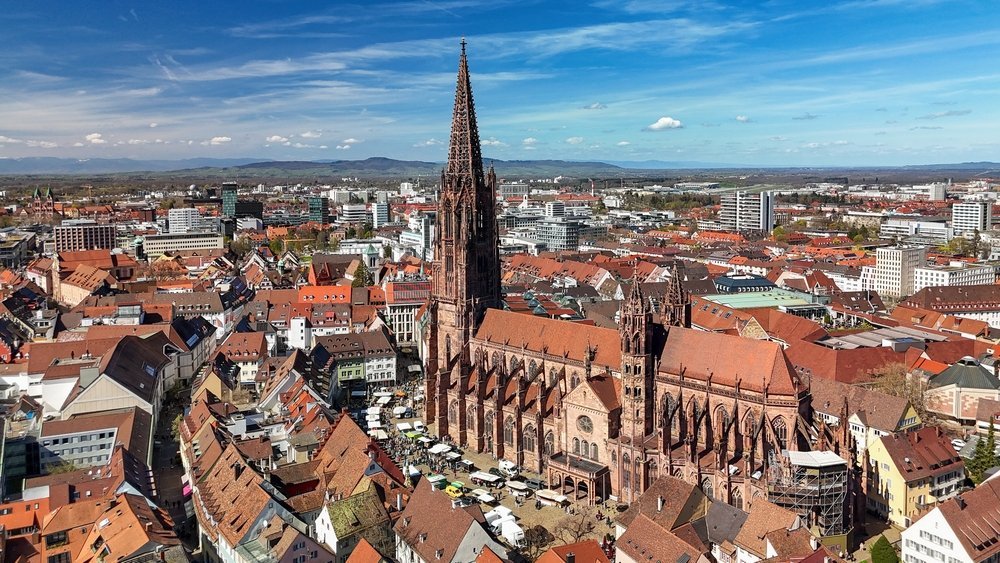
In the middle of the Old Town stands the Freiburger Münster cathedral with its tall red sandstone tower. A market is held on the square around it every day except Sunday. Just outside the city, the Schauinslandbahn cable car runs up Schauinsland mountain, where you get views over the forest. Freiburg lies in the heart of the Baden wine region, so have a glass of the local wine when you eat out.
From Freiburg, the regional train runs through the Höllental valley up to Lake Titisee in under an hour, and further on is Feldberg, the highest mountain in the Black Forest. If you stay with a host that’s part of the scheme, you get the KONUS guest card. According to the Black Forest tourist board, it gives you free travel on regional trains and buses throughout the Black Forest, but not on ICE and IC trains or mountain railways. Ask your hotel whether it takes part.
If you want to see the small villages, the Triberg waterfalls and the spa town of Baden-Baden in the northern part of the forest, a car is the easiest option. The Black Forest is also close to both France and Switzerland. Strasbourg makes an obvious side trip, and here you can read where to stay in Strasbourg. If you carry on south, you can read my guide to where to stay in Switzerland.
Hotels in Freiburg
Colombi Hotel - five-star hotel with a pool and fine dining by the Old Town
Colombi Hotel is on Rotteckring on the edge of the Old Town, about 500 metres from the cathedral and 550 metres from Hauptbahnhof. It’s a five-star hotel with a restaurant, bar, spa, gym and indoor pool.
The smallest rooms are 30 square metres. This is Freiburg’s classic luxury hotel and a good choice if you want to combine the city with fine dinners and a spa day after your hike. Prices are high, and breakfast costs extra.
One guest writes on Booking.com: “A lovely hotel in Freiburg’s Old Town.”
See photos and book Colombi Hotel here.
Boutiquehotel Oberkirch im Zentrum - traditional hotel with a restaurant right opposite the cathedral
Boutiquehotel Oberkirch is on Münsterplatz, directly opposite the cathedral and just under a kilometre from Hauptbahnhof. The hotel has its own restaurant serving regional dishes.
The rooms are small, the smallest being 15 square metres, and the décor is old-fashioned. Breakfast is included. This is my pick if you want to stay with views of the cathedral and the market in the middle of the Old Town. One guest feels the furniture and room are so old-fashioned that they’re not entirely comfortable.
One guest describes the atmosphere like this on Booking.com: “The hotel takes you back in time.”
See photos and book Boutiquehotel Oberkirch im Zentrum here.
Premier Inn Freiburg City Nord - modern budget hotel north of the centre
Premier Inn Freiburg City Nord is on Zita-Kaiser-Straße north of the centre, about one and a half kilometres from Hauptbahnhof and two and a half kilometres from the cathedral. The hotel has a restaurant and a 24-hour reception.
The rooms are 17 square metres, and breakfast costs extra. It suits you if you’re arriving by car or don’t mind taking the tram into the Old Town. One guest feels the location could be more central.
One guest writes on Booking.com: “I can’t recommend it enough.”
See photos and book Premier Inn Freiburg City Nord here.
9. Nuremberg - best city for the Christmas market, the castle and the Romantic Road 🎄
- 📍 Distance to the centre: The map shows Hauptmarkt in the middle of the Old Town. Two of the hotels are by the Hauptbahnhof on the southern edge of the Old Town, and the third is at Plärrer just outside the city walls.
- 🚶 Getting around: You can explore the Old Town inside the city walls on foot. The U-Bahn and trams run to the rest of the city.
- ✈️ Time from the airport: From Nuremberg Airport, U-Bahn line U2 takes you to the Hauptbahnhof in about 12 minutes with no changes.
- 💰 Price level: € to €€€. Prices rise sharply during the Christmas market and the big trade fairs.
- 👮 Safety: A safe city. The area around the Hauptbahnhof is busy, but the Old Town is quiet in the evening.
Nuremberg is the medieval city of Franconia, with its imperial castle on the rock, city walls and half-timbered houses. The city was badly hit during the war, but the Old Town has been rebuilt, and from the castle you can look out over the rooftops. Nuremberg is also where you get closest to the history of the Nazi era in southern Germany, at the Nazi Party Rally Grounds and the courtroom of the Nuremberg Trials.
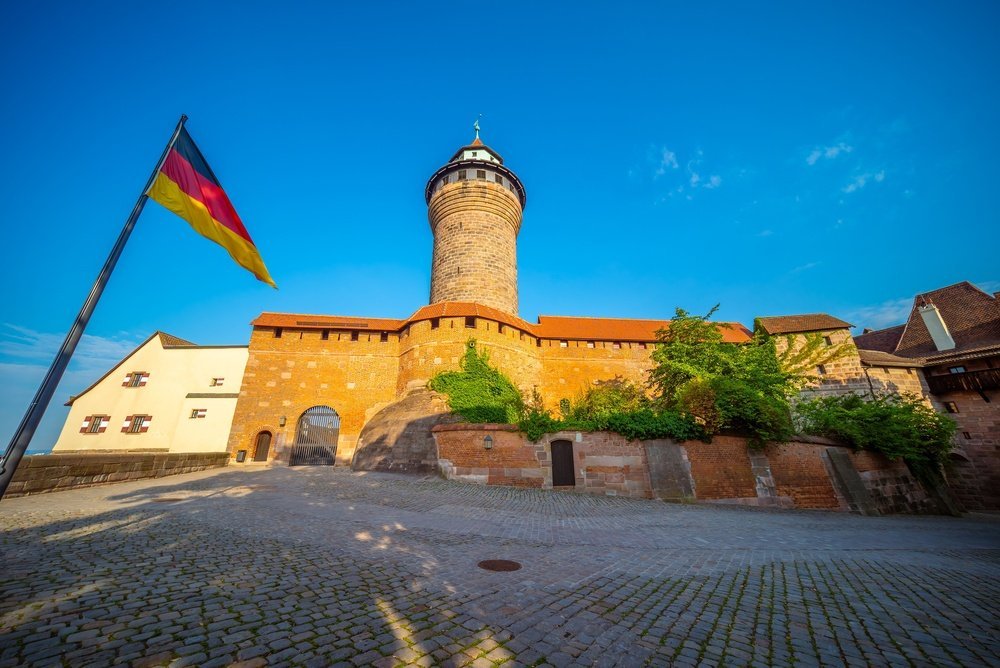
The city is probably best known for its Christkindlesmarkt Christmas market on Hauptmarkt, which according to the Christmas market’s own website takes place in the heart of the city on the historic market square. It opens at the end of November and closes on Christmas Eve, and during that period you need to book your hotel very early. If you’d like to see the city’s neighbourhoods, I’ve written a guide on where to stay in Nuremberg, with six areas to choose from.
Nuremberg is also a good base for the Romantic Road. According to Romantische Straße, the route runs from Würzburg to Füssen near the Alps and is 460 kilometres long. The best-known town on the route is Rothenburg ob der Tauber, with its town wall and half-timbered houses. By regional train with a couple of changes, the journey takes about an hour and a half, and it’s a little quicker by car. Bamberg, with its Old Town on the River Regnitz, is another good day trip, less than an hour away by train.
If you stay in Rothenburg, you can experience the town in the evening once the day-trippers have gone home. Even so, I would use Nuremberg as a base if you’re not driving, as there are far more restaurants and train connections here. The fastest ICE trains reach Munich in just over an hour, so Nuremberg fits in nicely on the way towards Bavaria and the Alps.
Hotels in Nuremberg
Le Méridien Grand Hotel Nürnberg - historic grand hotel opposite the main station
Le Méridien Grand Hotel is on Bahnhofstraße directly opposite the Hauptbahnhof, about 800 metres from Hauptmarkt. It’s a large, classic hotel with a restaurant, bar, sauna and gym.
The hotel suits you if you want a classic stay and a short walk to the train. The rooms vary a lot in size, so choose one of the larger categories if there are two of you. Breakfast costs extra. One guest found the restaurant empty on a Saturday evening with a limited menu, so you may prefer to eat out in the Old Town.
One guest writes on Booking.com: “Beautiful hotel, friendly staff and a good location.”
See photos and book Le Méridien Grand Hotel Nürnberg here.
Hotel Drei Raben - quirky design hotel with themed rooms in the Old Town
Hotel Drei Raben is on Königstraße inside the city walls, about 450 metres from the Hauptbahnhof and 600 metres from Hauptmarkt. The hotel has a bar and a breakfast lounge, and the rooms are decorated with themes from the city’s history and legends.
The smallest rooms are 15 square metres, and breakfast is included in the price. This is my pick if you want somewhere personal and different, right on the pedestrian street between the station and Hauptmarkt. The price can vary a lot, so compare it with the other two before you book.
One guest writes on Booking.com: “Lovely staff who were very helpful, in a quirky but very comfortable hotel with a fantastic location.”
See photos and book Hotel Drei Raben here.
Motel One Nürnberg-Plärrer - simple hotel by the U-Bahn just outside the city walls
Motel One Nürnberg-Plärrer is on Steinbühler Straße just outside the city walls, about a kilometre from the Hauptbahnhof and a kilometre and a half from Hauptmarkt. The hotel has a bar and terrace, and Plärrer U-Bahn station is close by.
The double rooms are 16 square metres, and breakfast costs extra. It’s usually the cheapest of the three and suits you if you want to save money and don’t mind a short walk into the Old Town. One guest felt the location outside the historic centre wasn’t ideal.
One guest writes after their stay on Booking.com: “Clean room, excellent shower, lovely staff, big breakfast buffet.”
See photos and book Motel One Nürnberg-Plärrer here.
10. Munich - best city for beer halls, culture and day trips to the Alps 🍺
- 📍 Distance to the centre: The map shows Marienplatz. Two of the hotels are in the Old Town, less than ten minutes’ walk from the square, and the third is in Haidhausen on the other side of the River Isar.
- 🚇 Transport: U-Bahn, S-Bahn and trams. All the S-Bahn lines run through the centre via Marienplatz and Hauptbahnhof.
- ✈️ Time from the airport: The S-Bahn S8 runs from Munich Airport to Marienplatz in 36 minutes. The S1 is a little slower.
- 💰 Price level: €€ to €€€€. Munich is one of Germany’s most expensive cities, and prices shoot up during Oktoberfest and major trade fairs.
- 👮 Safety: A very safe city. During Oktoberfest there are lots of drunk people in the streets and on the trains in the evening.
Munich is the capital of Bavaria and the city of beer halls, beer gardens and Oktoberfest, but it also has major art museums, palaces and one of Europe’s largest parks, the Englischer Garten. The city is wealthy, clean and well organised, and it’s the natural base if you want to combine city life with day trips to the Alps. Give it three nights or more if you want to fit in some day trips.
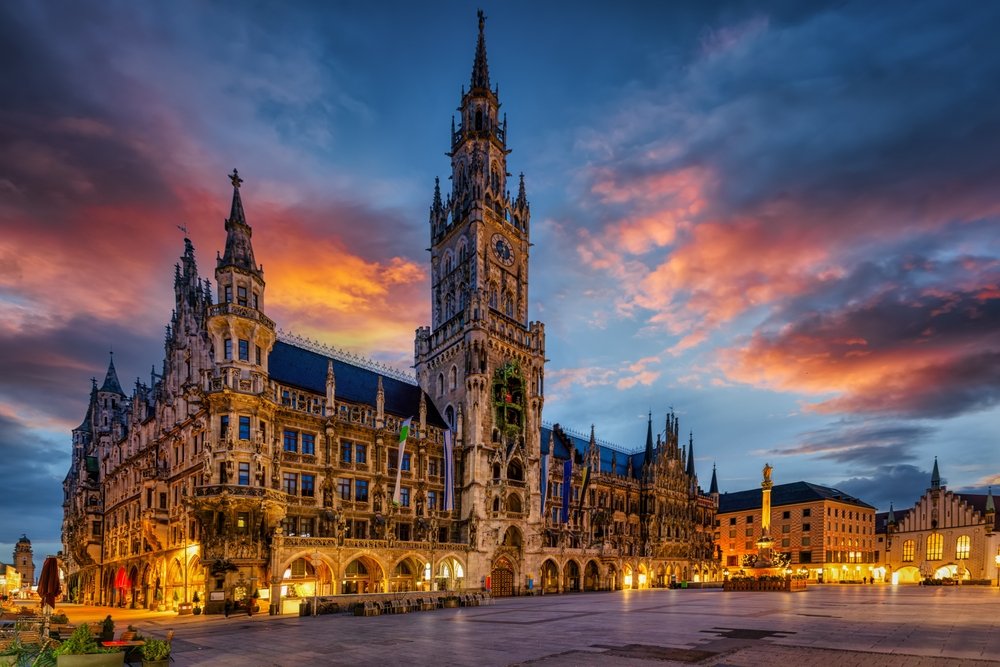
I’ve chosen hotels in and just outside the Old Town, so you can walk to Marienplatz, the Viktualienmarkt and the Hofbräuhaus. If you’d rather stay in the student district of Maxvorstadt or in Schwabing near the park, you can read my guide on where to stay in Munich. What to see is covered in the guide to things to do in Munich.
The airport is about 30 kilometres north-east of the city, and all the options for getting into the centre are in the guide to getting from Munich Airport. Oktoberfest runs from late September to early October. If you want to go, book your hotel many months in advance, and if you don’t, travel outside the festival weeks, as prices are much lower then.
From Munich, the train to Garmisch-Partenkirchen by the Zugspitze takes about an hour and a half, and Füssen, near Neuschwanstein Castle, is a little further away. You can reach Salzburg in Austria in about an hour and a half by train, and here you can read where to stay in Salzburg. Innsbruck is just on the other side of the Alps, and my guide on where to stay in Innsbruck will help if you want to carry on there.
Hotels in Munich
Hotel Bayerischer Hof - legendary five-star with a rooftop pool
Hotel Bayerischer Hof is on Promenadeplatz in the Old Town, about five minutes’ walk from Marienplatz. It’s a five-star hotel with several restaurants and bars, a spa and a rooftop pool with views over the city’s towers.
The smallest rooms are 30 square metres. It’s Munich’s best-known luxury hotel, and you’re right in the middle of the city with everything within walking distance. Breakfast costs extra and is pricey, and one guest actually felt it was the hotel’s only weak point.
One guest writes on Booking.com: “Simply the best hotel in Munich!”
See photos and book Hotel Bayerischer Hof here.
Hotel MIO by AMANO - modern design hotel with a roof terrace near Sendlinger Tor
Hotel MIO by AMANO is on Sendlinger Straße in the Old Town, about six minutes’ walk from Marienplatz. The hotel has a bar and a roof terrace, but no restaurant.
The rooms are small, and the smallest are only 12 square metres, so choose a larger category if there are two of you with suitcases. Breakfast costs extra. This is my pick if you want to stay somewhere modern in the heart of the Old Town for less than the classic hotels.
One guest writes briefly on Booking.com: “Excellent hotel in the centre of Munich.”
See photos and book Hotel MIO by AMANO here.
Motel One München-Deutsches Museum - simple hotel in Haidhausen near the S-Bahn
Motel One München-Deutsches Museum is on Rablstraße in the Haidhausen district, close to Rosenheimer Platz S-Bahn station. From here it’s only a couple of minutes on the S-Bahn to Marienplatz, and the Deutsches Museum is just across the Isar.
The double rooms are 16 square metres, and breakfast costs extra. It suits you if you want to save on your hotel in an expensive city and don’t mind taking the S-Bahn or walking across the river into the centre. Guests find the rooms small.
One guest writes on Booking.com: “Good value for money, clean hotel for a weekend in Munich.”
See photos and book Motel One München-Deutsches Museum here.
11. The Bavarian Alps - best area for mountain hikes and fairytale castles 🏔️
- 📍 Distance to the centre: The map shows the station in Garmisch-Partenkirchen. Two of the hotels are no more than about 1.2 kilometres from the station, and the third is on the western edge of town, about 2.7 kilometres away.
- 🚞 Transport: Regional trains from Munich, a cog railway and cable cars up into the mountains, and local buses to Lake Eibsee and the Partnachklamm gorge.
- ✈️ Time from the airport: The nearest major airport is Munich. From there, allow about two hours by train or car to Garmisch-Partenkirchen. This is an estimate.
- 💰 Price level: €€ to €€€€. Prices are highest in summer and during the ski season, and many hotels have free parking.
- 👮 Safety: A very safe area. In the mountains, respect the weather, wear proper footwear and check whether the trails are open.
The Bavarian Alps are Germany’s mountain country, with green valleys, lakes and villages full of painted houses. Garmisch-Partenkirchen is the most practical base, because the train runs direct from Munich and the town sits at the foot of the Zugspitze. According to the city of Munich, the regional train takes about an hour and a half, and at 2,962 metres the Zugspitze is Germany’s highest mountain. You can read about both on the City of Munich website.
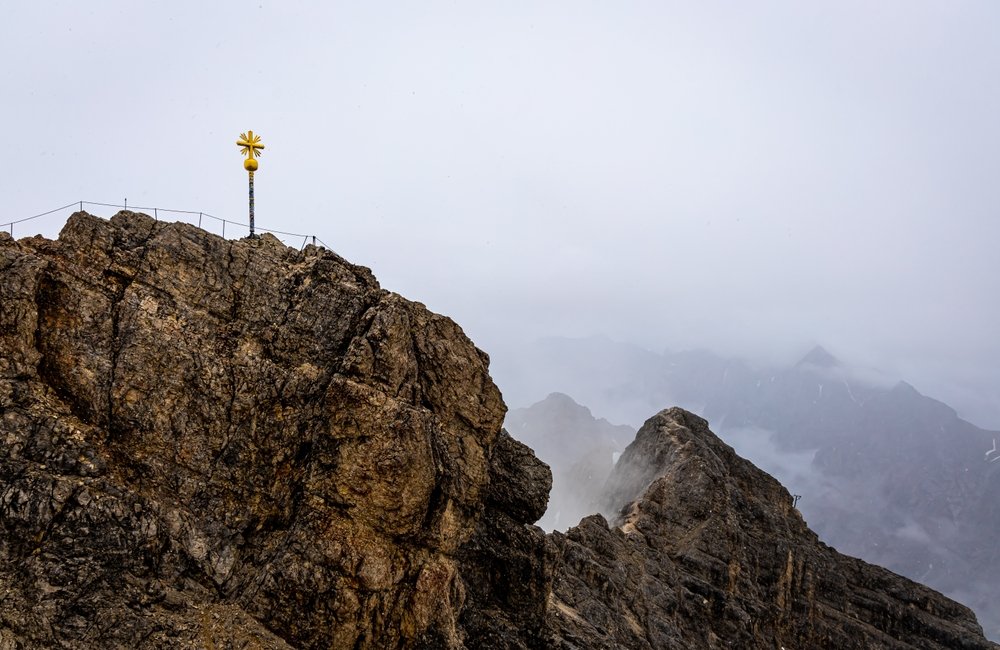
To get up the Zugspitze, you can take the cog railway from Garmisch-Partenkirchen via Eibsee to the Zugspitzplatt and then the final short cable car to the summit. On the way down, you can take the big cable car straight to Eibsee. The mountain railway company itself reckons on three to four hours for the full round trip, so set off early before the clouds roll in. The Partnachklamm gorge by the ski stadium is a shorter outing and one of the most beautiful in the area.
See hotels in Garmisch-Partenkirchen here.
Neuschwanstein Castle is near Füssen further west, about an hour’s drive from Garmisch-Partenkirchen. This is an estimate. According to the official ticket centre in Hohenschwangau, the castle can only be seen on a guided tour at a fixed time, and you should buy your ticket online well in advance. If you turn up without one, the day’s tickets may be sold out. The Rococo palace of Linderhof and the village of Oberammergau are on the way, so with a car you can fit it all into one day.
If you’d rather stay by a lake, Berchtesgaden by the Königssee is a good alternative in the eastern part of the Alps, close to Salzburg. A car is a big advantage in the Alps, because many of the best viewpoints, lakes and castles are some distance from the railway stations. Garmisch-Partenkirchen is, however, one of the few mountain towns where you’ll manage perfectly well without one.
Hotels in Garmisch-Partenkirchen
Werdenfelserei - modern timber hotel with a rooftop pool and mountain views
Werdenfelserei is on Alleestraße, about 1.2 kilometres from the station. The hotel is built from wood and has a restaurant, bar, spa and a heated rooftop infinity pool with views of the mountains. Parking is free.
The smallest rooms are 28 square metres, and breakfast is included. It’s my first choice if you want to treat yourself after a day in the mountains, and it’s the most expensive of the three. One guest would have liked a bit more variety at the breakfast buffet.
One guest highlights the views on Booking.com: “Design, location, the view from the terrace, the view from the room over the mountains.”
See photos and book Werdenfelserei here.
Hotel Rheinischer Hof - four-star hotel with pool and spa on the edge of town
Hotel Rheinischer Hof is on Zugspitzstraße in the western part of Garmisch-Partenkirchen, about 2.7 kilometres from the station on the road towards Grainau and Eibsee. The hotel has a spa, an indoor pool and free parking.
The smallest rooms are 21 square metres, and breakfast is included. It suits you well if you’re arriving by car and want a quiet stay with the mountains right outside your window. Some of the rooms are in the building opposite the main hotel, so read the room description before you book.
One guest writes about the views on Booking.com: “The views in every direction are simply breathtaking.”
See photos and book Hotel Rheinischer Hof here.
Atlas Grand Hotel - historic hotel on the old high street in Partenkirchen
Atlas Grand Hotel is on Ludwigstraße with its painted houses in Partenkirchen, less than a kilometre from the station. The hotel has a restaurant, bar, sauna and garden.
The smallest rooms are 18 square metres, and breakfast costs extra. The hotel is usually cheaper than the other two and suits you if you want a central base with restaurants right on your doorstep. If you’re arriving by car, bear in mind that one guest felt the parking was a long way from the hotel.
One guest writes on Booking.com: “Our stay at this hotel exceeded all our expectations.”
See photos and book Atlas Grand Hotel here.
Where not to stay in Germany?
I wouldn’t book a hotel in a big city without checking the trade fair calendar first. In Frankfurt, Cologne, Munich, Hamburg and Nuremberg, prices can multiply during major trade fairs, and the same goes for Munich during Oktoberfest. If you can shift your trip by a week, you’ll often save a lot of money.
In Frankfurt, I wouldn’t stay in the Bahnhofsviertel to save money if you’re travelling with children or coming back late. In Berlin, I’d avoid cheap hotels far out in the eastern suburbs, because you pay back the difference in time on the S-Bahn every day. And I wouldn’t choose an airport hotel unless you have an early departure. Trains into the centre are fast everywhere.
I also wouldn’t try to cover the whole country in one trip. With a week, you can combine two or three places, such as Hamburg and Berlin, Cologne, Frankfurt and Heidelberg, or Munich and the Alps. If you have two weeks, you can plan a route from Berlin via Dresden and Nuremberg to Munich and finish with a few nights in the mountains.
If I had to pick one base for a first trip, it would be Berlin. If you’re travelling with children and want a beach, it’s Binz on Rügen, and if you want nature and mountains, it’s Garmisch-Partenkirchen or Freiburg and the Black Forest. For Christmas markets, Nuremberg and Dresden are my favourites, and if you want a romantic trip, head to Heidelberg.
Book your hotels well in advance if you’re travelling in the summer holidays, in December or during major events. That way you’ll have the widest choice, and you can pick the location rather than taking whatever is left.
Travel ressources & websites I use all the time 👇
• Booking.com has the best offers on hotels and unique places to stay
• GetYourGuide is the best place to book tours & activities with free cancellation
• Welcome Pickups is the best & safest place to pre-book airport transfers
Psst 👀 Have you subscribed to my Youtube channel and my Instagram where I provide more useful travel tips?