

Munich is the capital of Bavaria, and even though it’s a big city, most of the sights are close together. From Marienplatz, it’s only a few minutes’ walk to the Frauenkirche, Viktualienmarkt, the Residenz palace and into the Englischer Garten, and all over the city you’ll find beer halls and beer gardens where locals and tourists sit at the same long tables. At the same time, the Alps, King Ludwig II’s castles and Salzburg are close enough for a day trip.
Here are my picks for the 18 best things to see and do in Munich, with prices, opening hours and tips on what to book before you go. Prices are in euros. Several of the art museums only cost €1 on Sundays, and quite a few museums are closed on Mondays, so read the sections before you plan your days. The last three sections are about day trips out of the city.
Contents
1. Marienplatz and Neues Rathaus
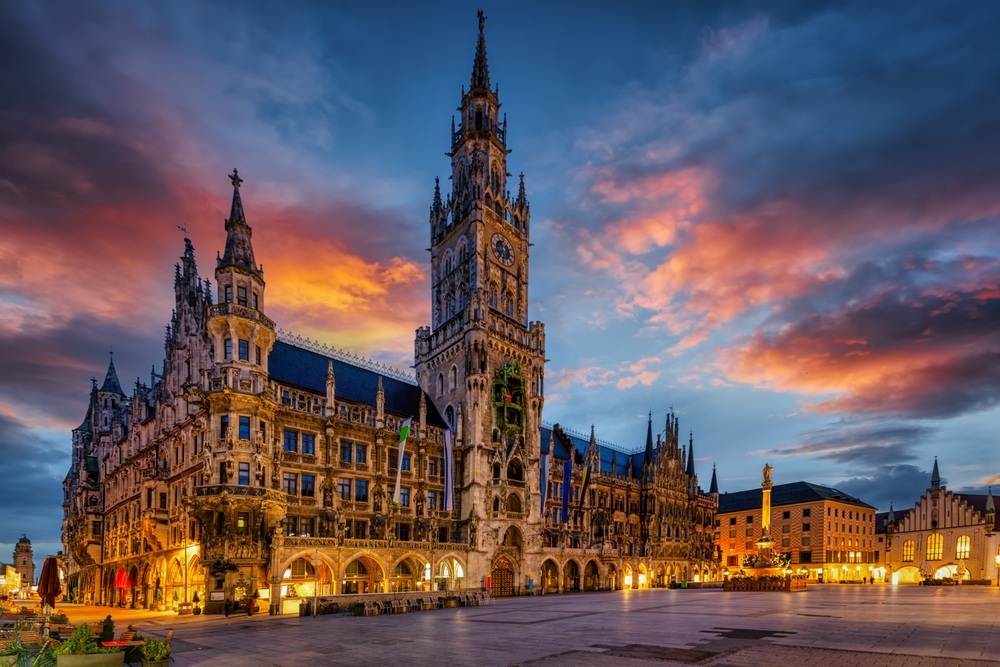
Marienplatz is Munich’s central square and the natural place to start. The whole north side is taken up by the neo-Gothic town hall, Neues Rathaus, which was built in three stages from 1867 to 1905. Its tower holds the city’s famous Glockenspiel, which plays every day at 11am and noon and, from March to October, at 5pm as well. At the top, you’ll see a knights’ tournament from Duke Wilhelm V’s wedding in 1568, which the Bavarian knight naturally wins, and below it the coopers dance the old Schäfflertanz.
You can take a lift up the 85-metre tower. Tickets cost from €7, and the tower is open every day from 10am to 8pm, with the last trip up at 7.40pm. Visits are split into 20-minute time slots, and you buy your ticket online or at the tourist information office in the town hall. The tower is closed on a number of public holidays.
The square is packed at 11am and noon. My tip is to watch the Glockenspiel at 5pm in the summer half of the year and then take the lift up. Marienplatz has its own U-Bahn and S-Bahn station. You can read how to get here from the airport in my guide to getting from Munich Airport to the city centre.
Book a guided walking tour of Munich’s Old Town.
2. Frauenkirche
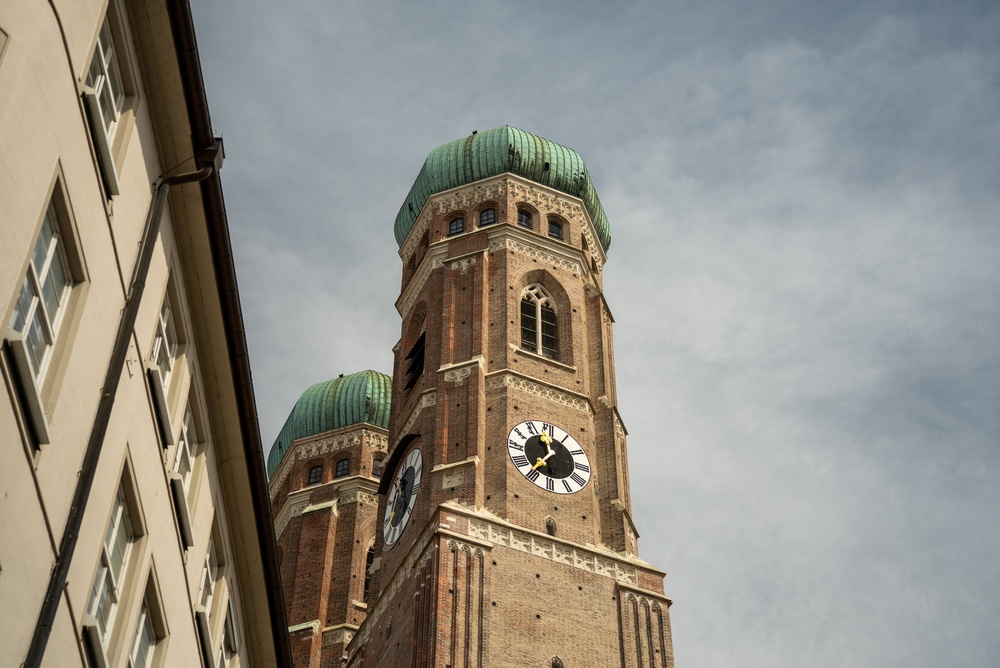
The Frauenkirche, with its two towers and green onion domes, is Munich’s landmark. The foundation stone was laid in 1468, and the brick church itself was finished after just 20 years, while the domes were added around 1525. The towers are just under 99 metres high, and no building in the Old Town is taller.
In the entrance hall, you can see the Teufelstritt, a footprint in the floor. According to legend, the devil made a bet with the master builder that the church had no visible windows. From that exact spot, the pillars hide all the windows, so the devil stamped on the floor in triumph. When he took one more step, he saw the windows and realised he’d been tricked.
The church is open every day from 8am to 8pm, and entry is free, but you can’t walk around during services. The south tower is open Monday to Saturday from 10am to 5pm and on Sundays and public holidays from 11.30am to 5pm, with the last ascent at 4.30pm. It costs €7.50 for adults and €5.50 for children aged 7 to 16. First you climb about 90 steps up a spiral staircase, and then you take the lift to the viewing platform. The church is a two-minute walk from Marienplatz.
3. Residenz
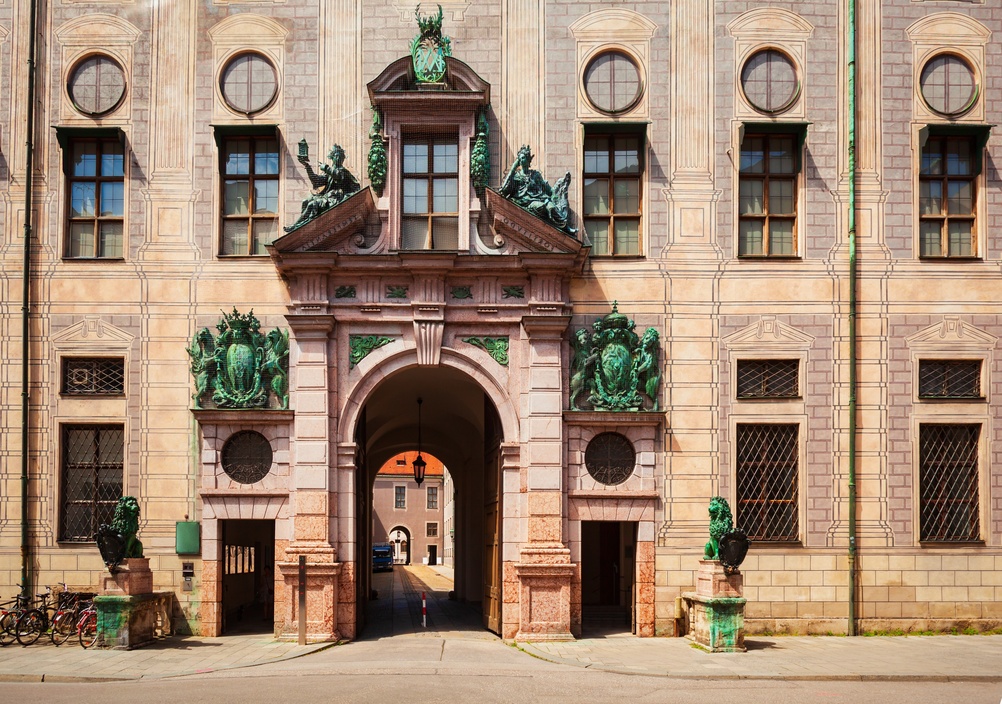
The Residenz was the palace of the Bavarian dukes and kings, and the complex takes up a whole block between Marienplatz and Odeonsplatz. In the Residenzmuseum, you walk through room after room, including King Ludwig I’s apartments and the Herkulessaal, which is still used for concerts. The treasury, the Schatzkammer, holds the crown and regalia of the Bavarian kings, and the small red and gold rococo theatre, the Cuvilliés-Theater, is still in use.
The Residenzmuseum and the treasury each cost €10, and a combined ticket for both costs €15. With the Cuvilliés-Theater added, it costs €20. Under-18s get in for free. The museum and the treasury are open every day from 9am to 6pm from late March to late October and from 10am to 5pm the rest of the year, and last entry is an hour before closing. The Residenz is closed on 1 January, Shrove Tuesday and 24, 25 and 31 December.
The main entrance is on Max-Joseph-Platz. Behind the palace lies the palace garden, the Hofgarten, with the round Diana Temple, and it’s free. My tip is to get the combined ticket and save the garden for afterwards.
Book a guided tour of the Residenz and the Hofgarten.
4. Englischer Garten and the Eisbach Wave
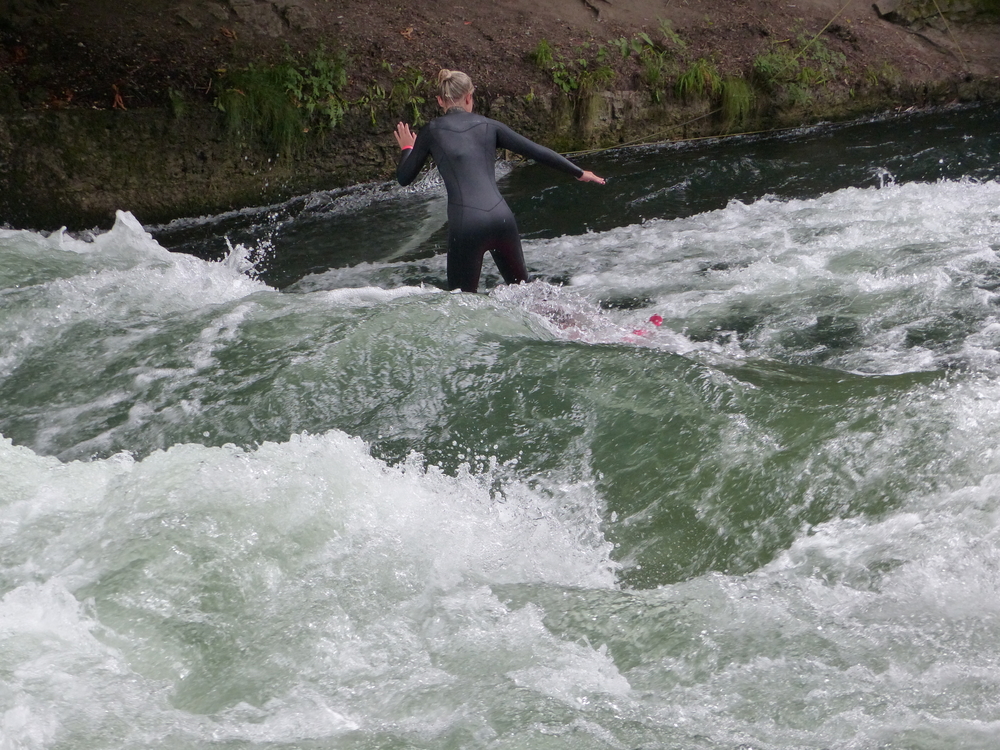
The Englischer Garten was laid out from 1789 as a park for the people of the city. It covers 375 hectares, which is bigger than Central Park in New York, and it stretches five and a half kilometres north from the edge of the Old Town.
On the southern edge of the park on Prinzregentenstraße, right by the Haus der Kunst, you’ll find the Eisbach wave. It’s a standing wave in a small river, where surfers ride their boards on the same spot almost all year round, and you can watch from the bridge. According to the city’s website, surfing is only allowed with a special safety leash and not after 10pm, and swimming in the Eisbach is forbidden.
Further into the park stands the Chinese Tower (Chinesischer Turm), with a beer garden of around 7,000 seats, one of the largest in Bavaria. On a small hill sits the Greek-style temple Monopteros, which was built in 1836 and 1837, and from there you can see the Frauenkirche, the Theatinerkirche and the town hall. Barbecues, fires and swimming aren’t allowed in the park. You can reach the southern end on bus 100 to Nationalmuseum/Haus der Kunst or on the U3 and U6 to Universität. My tip is to start at the Eisbach, walk up to the Monopteros and finish in the beer garden at the Chinese Tower. If you’d like to stay close to the park, you can see hotels in Schwabing here.
5. Viktualienmarkt

Viktualienmarkt has been in its current spot since 1807 and is Munich’s big food market, just a few steps from Marienplatz. There are more than 100 traders spread over just over 18,500 square metres, selling fruit, vegetables, cheese, sausages, fish and flowers, and there are stalls with food you can eat on the spot. In the middle of the market stands the blue and white maypole, and between the stalls you’ll find the market’s own beer garden.
The market is open Monday to Friday from 8am to 8pm and on Saturdays from 8am to 3pm, but each stall sets its own opening hours, and many close earlier. There’s no market on Sundays. If you’d like to stay in the Old Town (Altstadt) close to the market and Marienplatz, Altstadt-Lehel is the first area in my guide to where to stay in Munich, and you can see hotels in Altstadt here.
Come for lunch on a weekday, buy a few different things from the stalls and find a seat in the beer garden. I think it’s one of the best places in the centre for a cheap lunch, and you can easily do it on your own. If you’d like to taste your way around with a local guide who tells you about the Bavarian specialities along the way, there are guided food tours of the market.
Book a guided food tour of Viktualienmarkt.
6. Hofbräuhaus am Platzl
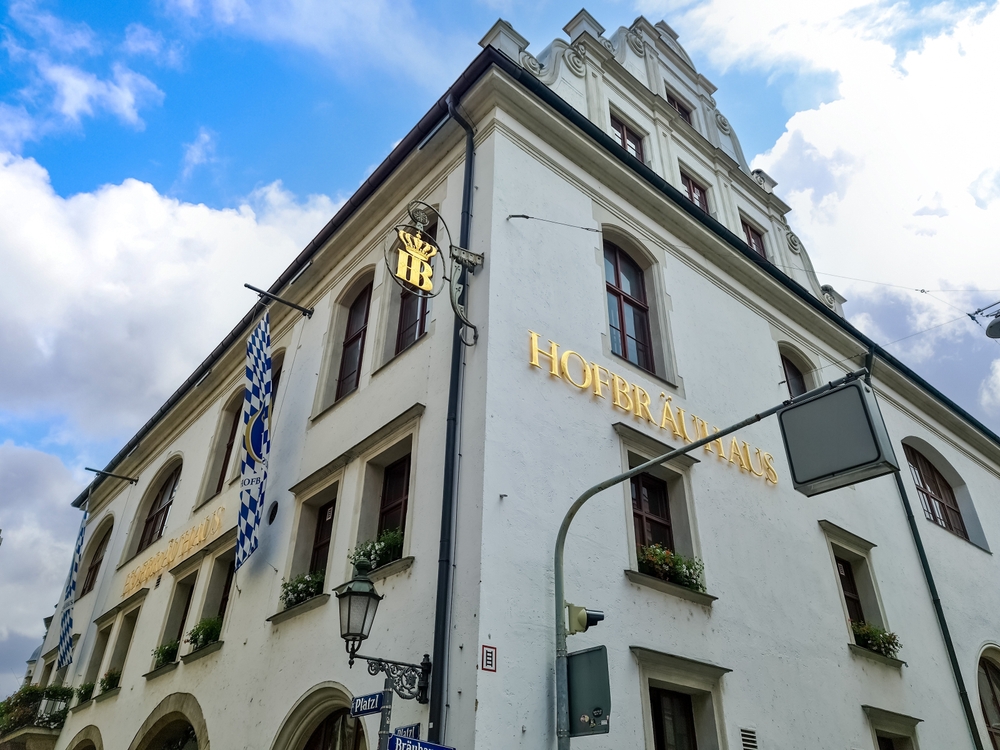
The Hofbräuhaus is probably Munich’s best-known beer hall. The brewery was founded in 1589 by Duke Wilhelm V, King Ludwig I opened the Hofbräuhaus to the public in 1828, and the beer hall you sit in today is the result of a major rebuild from 1896 to 1897.
Inside the large vaulted hall, you sit at long wooden tables, the beer comes in big mugs, and the kitchen serves Bavarian food. There’s also a beer garden in the courtyard. The Hofbräuhaus is at Platzl 9 and is open every day from 11am to midnight. The kitchen closes at 10pm, and last orders at the bar are at 11.30pm. If there are fewer than four of you, you don’t need to book. You just sit down wherever there’s a free seat, and it’s completely normal to share a table with strangers.
I’ll be honest. The Hofbräuhaus is touristy, noisy and not the cheapest place to eat in Munich, but I still think it’s part of a first visit. Come early in the afternoon if you want to be sure of a table, and move on to one of the other beer halls afterwards.
Book a guided tour of Munich’s beer halls and breweries.
7. Schloss Nymphenburg
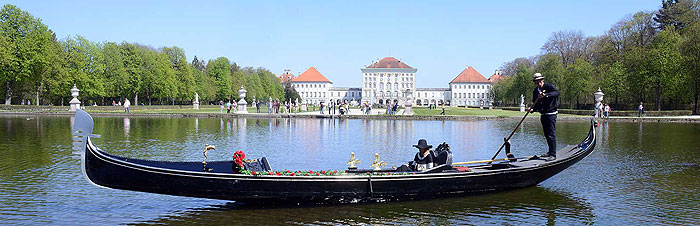
Work on Nymphenburg began in 1664 as a summer residence for Elector Ferdinand Maria after the birth of the heir to the throne, Max Emanuel, and the palace and park were later extended to the size they are today. King Ludwig II, who built Neuschwanstein, was born in the palace in 1845.
Besides the palace itself, you can see the Marstallmuseum with the royal carriages and Nymphenburg porcelain, as well as the small park palaces of Amalienburg, Badenburg, Pagodenburg and Magdalenenklause out in the park. The palace costs €10, and the Marstallmuseum costs €8. The combined ticket for everything costs €20 from 1 April to 15 October and €16 in winter, when the park palaces are closed. Under-18s go free.
The palace and the Marstallmuseum are open every day from 9am to 6pm from April to mid-October and from 10am to 4pm the rest of the year. The park opens at 6am and closes between 6pm and 9.30pm, depending on the season. Take the U-Bahn to Rotkreuzplatz and the tram from there to the Schloss Nymphenburg stop. My tip is to come in the summer half of the year, so you can see the park palaces too.
8. Deutsches Museum
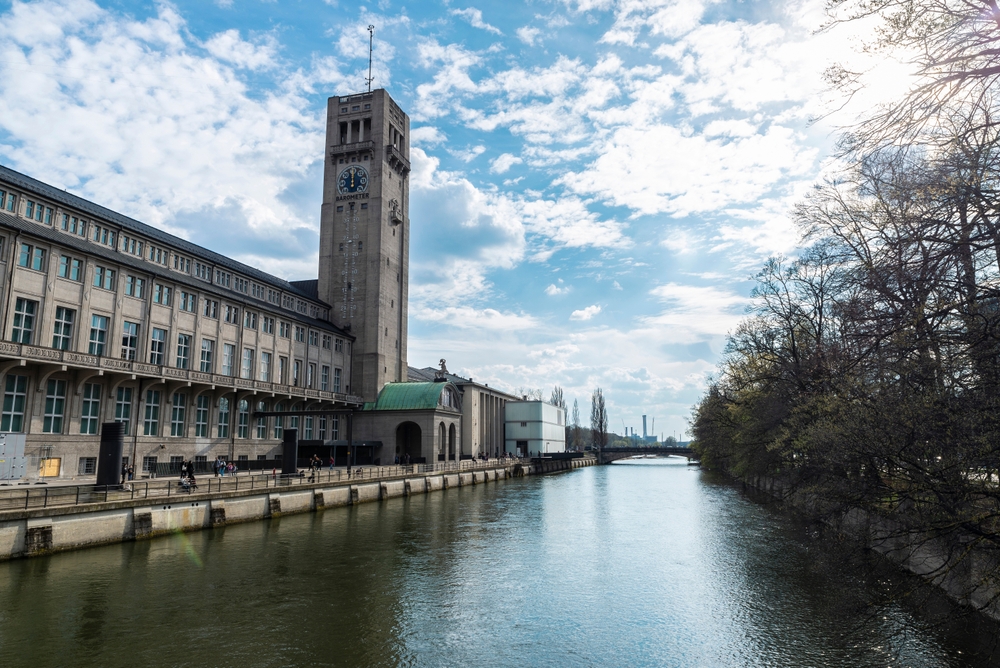
The Deutsches Museum stands on an island in the River Isar and is a huge museum of science and technology. The exhibitions cover around 20,000 square metres spread over 19 permanent exhibitions, and the building itself stands on more than 1,500 piles in the riverbed.
The museum is being renovated in stages, so some sections may be closed when you visit. It’s open every day from 9am to 5pm, with last entry at 4.30pm, and it’s closed on 1 January, Good Friday, 1 May, 1 November and 24, 25 and 31 December. A ticket costs €16 for adults and €9 for children aged 6 to 17 and students. The family ticket for two adults and their children costs €33, and children up to the age of five go free.
Take the S-Bahn or tram 16 to Isartor, and it’s a short walk to the museum. My tip is to choose two or three sections in advance, because you won’t manage everything in one day, and it’s a particularly good choice on a rainy day.
9. Alte Pinakothek and Kunstareal
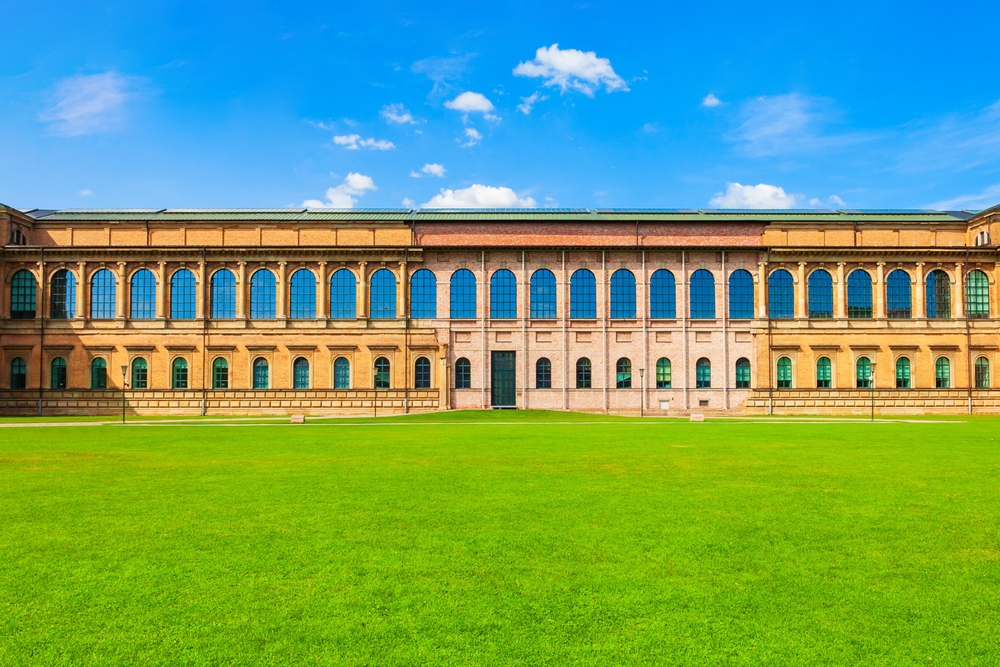
In the Maxvorstadt district lies the Kunstareal, where several of Munich’s big art museums stand side by side. For most people, the most important one is the Alte Pinakothek, with European paintings by the Old Masters. Among the works on display are Dürer’s self-portrait from 1500, Rubens’ Great Last Judgement, Raphael’s Canigiani Holy Family, Leonardo da Vinci’s Madonna of the Carnation and a self-portrait by Rembrandt from 1629.
The Alte Pinakothek is open from 10am to 6pm, until 8pm on Tuesdays and Wednesdays, and it’s closed on Mondays. A ticket costs €9, but only €1 on Sundays. The Pinakothek der Moderne, with art and design from the 20th and 21st centuries, costs €10 and Museum Brandhorst €7, and they also cost €1 on Sundays. A day ticket for €12 is valid at the Alte Pinakothek, the Pinakothek der Moderne, Museum Brandhorst and the Sammlung Schack. The Neue Pinakothek is closed for a long renovation, so check the museums’ website before you count on seeing it.
Trams 27 and 28 run to the Pinakotheken stop, and so does bus 100. My tip is to plan your visit for a Sunday. Maxvorstadt is also a good area to stay in, and you can see hotels in Maxvorstadt here.
10. BMW Welt and BMW Museum
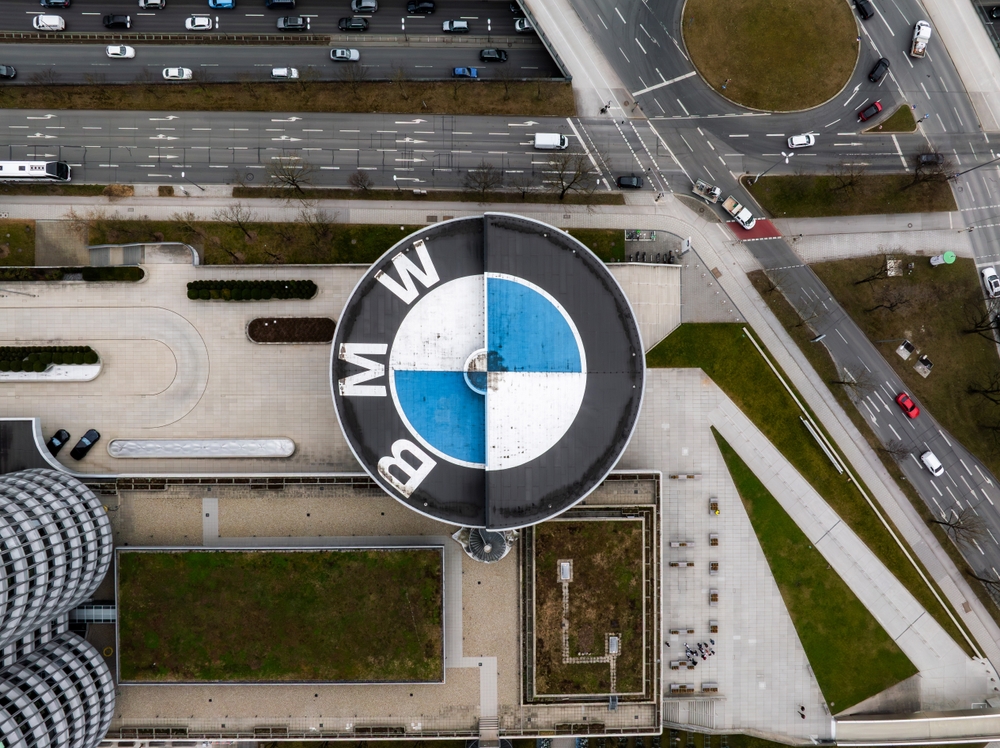
North of the centre, by the Olympiapark, is BMW’s headquarters, and here you can see both BMW Welt and the BMW Museum. BMW Welt is the car brand’s large showroom building with the latest models, and entry is free. It’s open Monday to Saturday from 7.30am to midnight and on Sundays and public holidays from 9am to midnight, but it’s closed on a few days a year, including around Christmas and New Year.
Opposite BMW Welt is the BMW Museum, where you’ll see cars and motorbikes from the brand’s entire history. The museum is open Tuesday to Sunday from 10am to 6pm, with last entry at 5.30pm, and it’s closed on Mondays. A ticket costs €17, or €9 reduced, and a family ticket for two adults and up to three children under 18 costs €38.
Take the U3 to Olympiazentrum. My tip is to start at BMW Welt, which is free, and only pay for the museum if you really love cars. Afterwards, walk over to the Olympiapark, and you’ll have a good half day in the northern part of the city.
11. Olympiapark
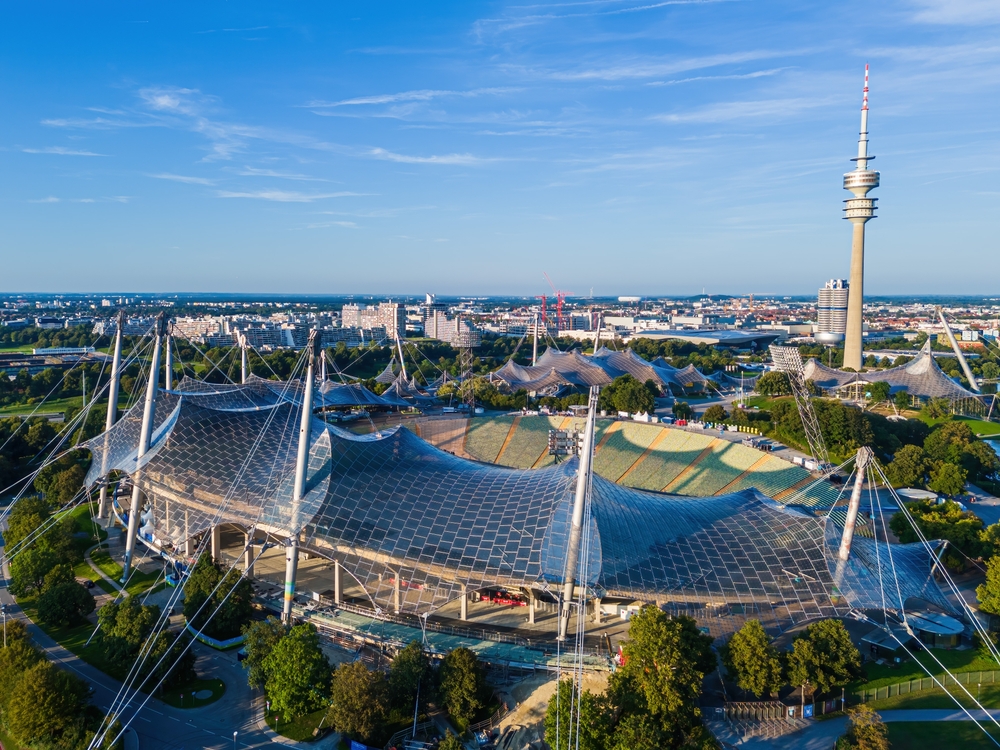
The Olympiapark was built for the 1972 Summer Olympics, and the large tent-like roof over the stadium and the halls is still one of Munich’s best-known sights. The roof covers more than 75,000 square metres and is held up by 58 steel masts. Around the lake, the Olympiasee, there are paths and green lawns where you can wander in peace and quiet.
You get the best view from the Olympiaberg, a hill built from the rubble of the buildings in Munich that were destroyed during the Second World War. It’s about 56 metres high, and from the top you can see out over the city’s rooftops and the stadium and, on clear days, all the way to the Alps.
Be aware that both the Olympiaturm and the Olympiastadion are closed for a long renovation, so check the park’s own website before you count on going up the tower or into the stadium. If you still want to get up high, the park’s Skylift tour takes you round with a guide and 70 metres up in the air. It costs €28 and lasts 90 to 120 minutes. Take the U3 or U8 to Olympiazentrum, and walk up the Olympiaberg at sunset.
12. Allianz Arena and FC Bayern Museum
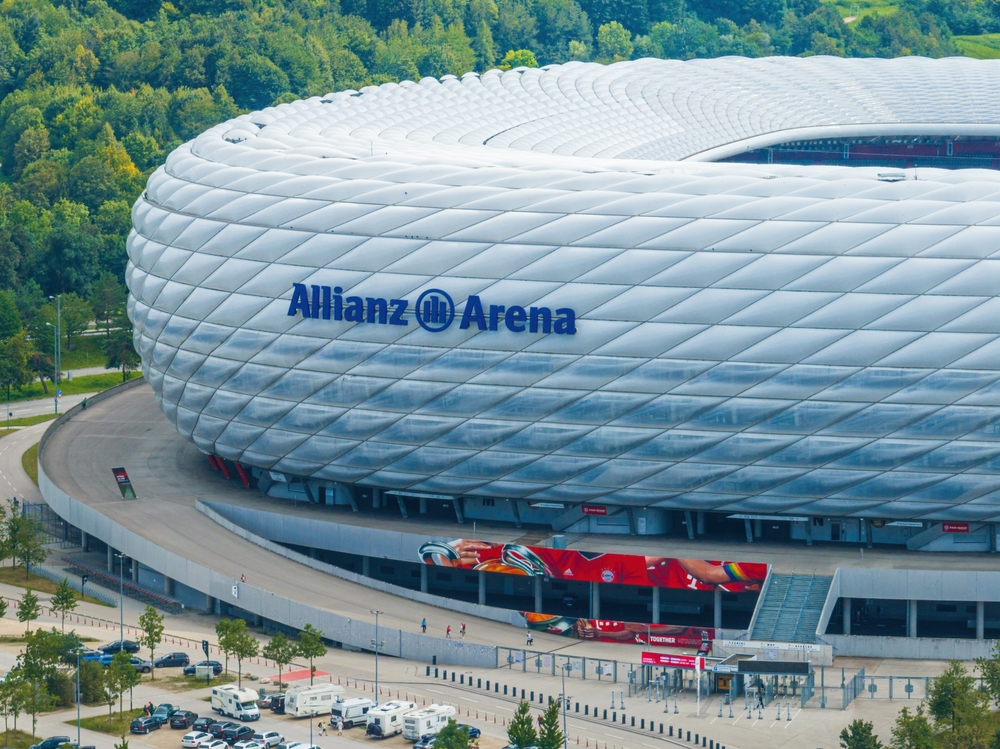
The Allianz Arena in the north of Munich is the home ground of FC Bayern Munich. Even if you don’t have a ticket for a match, you can see the stadium on an Arena Tour and visit the FC Bayern Museum, which tells the story of the club.
The museum alone costs €12, and the museum with the Arena Tour costs €25 for adults and €11 for children aged 6 to 13. A family ticket costs €59. On non-match days, it’s open every day from 10am to 6pm, with last entry at 5.15pm, and the tour with the museum takes about two and a half hours. Only a ticket bought online in advance guarantees you a place on the Arena Tour, because on many days you can’t buy one at the entrance. Special opening hours apply on match days.
Take the U6 towards Garching-Forschungszentrum to Fröttmaning. The journey from Marienplatz takes about 16 minutes, and from there it’s a 15 to 20-minute walk to the stadium. Check the fixture list before you book.
Book a ticket for the FC Bayern Museum and Arena View with an audio guide.
13. Alter Peter
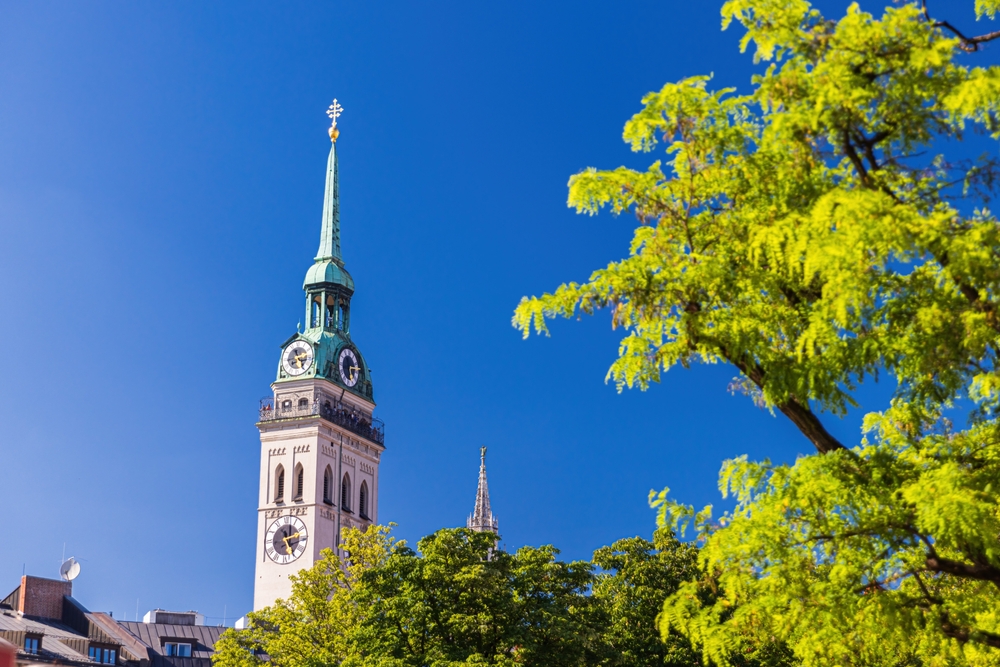
St Peter’s Church is Munich’s oldest parish church, and its history goes back to the 12th century. Locals call its tower Alter Peter, or Old Peter. During the Second World War, the church was almost completely destroyed, and only a stump of the tower was left standing, so the rebuilding went on right up until 2000.
You climb around 300 steps up to the viewing platform at a height of 56 metres. The tower costs €5 for adults and €2 for schoolchildren aged 6 to 18, and the church itself is free. From April to October, it’s open every day from 9am to 7.30pm, with last entry at 7pm. From November to March, the tower closes at 6.30pm on weekdays. It’s closed on Good Friday, Shrove Tuesday, Christmas Day and New Year’s Day.
The church is right by Marienplatz. I think the view from here is better than from the town hall tower, because you can see both the town hall and the Frauenkirche’s two towers. Come early in the day or late in the afternoon, when the queue at the ticket office is shorter.
14. Asamkirche
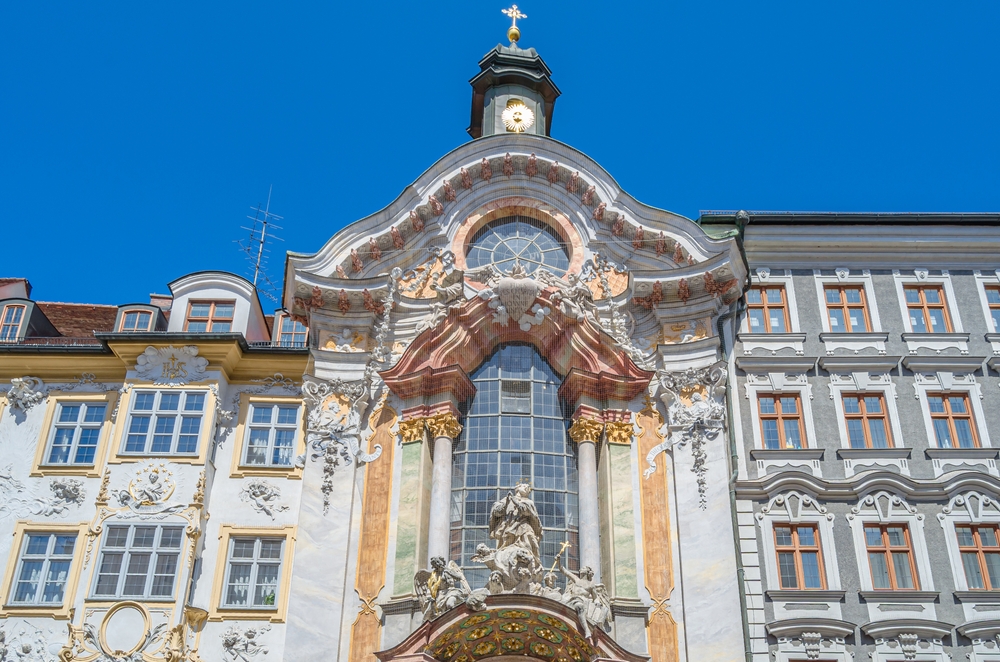
The Asamkirche, officially called St. Johann Nepomuk, is a small baroque church squeezed in between the houses on Sendlinger Straße, and it’s easy to walk past. The brothers Cosmas Damian and Egid Quirin Asam built it from 1733 to 1746 as their private church next to their own house, but neither of them lived to see it finished.
The interior is only 22 by 8 metres, but it’s decorated from floor to ceiling. The high altar has four twisted columns, a nod to Bernini’s baldachin in St Peter’s Basilica in Rome, and the crucifix hangs lower than usual, directly opposite the pulpit.
The church is open from April to October every day from 9am to 7pm, though not until 1pm on Fridays. From November to March, it closes an hour earlier. Entry is free, but the church welcomes a donation towards its upkeep. You can’t walk around during Mass, and it’s a place where people speak quietly. The church is at Sendlinger Straße 32, a short walk from Marienplatz. My tip is to look in on your way between Marienplatz and Sendlinger Tor, because a visit only takes about a quarter of an hour.
15. Dachau Concentration Camp Memorial Site
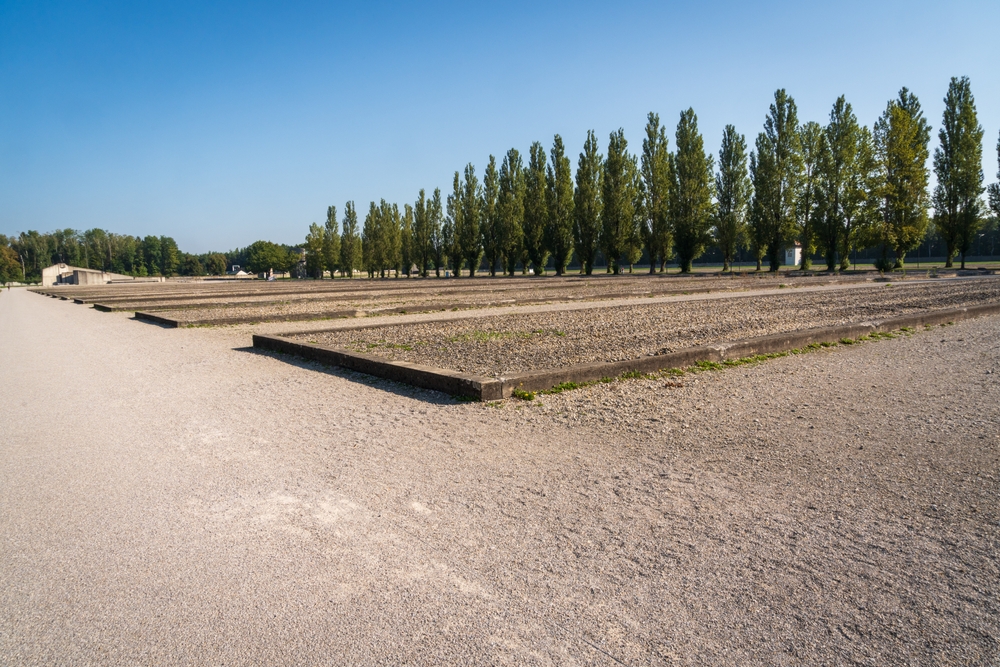
The Nazis opened the concentration camp in Dachau, north-west of Munich, on 22 March 1933 on the site of a former gunpowder and munitions factory. More than 200,000 prisoners from over 40 countries were held in Dachau and the camp’s subcamps, and at least 41,500 people died here before American soldiers liberated the camp on 29 April 1945. The memorial site, with a documentary exhibition, opened in 1965.
It’s a harrowing experience, but it’s also one of the most important places to visit if you want to understand the history. The exhibitions and grounds are open every day from 9am to 5pm, the area around the former crematorium closes at 4.30pm, and the site is only closed on 24 December. Entry is free, and you don’t need to book.
Take the S2 towards Dachau/Petershausen to Dachau station, which takes around 25 minutes from Hauptbahnhof, and from there bus 726 towards Saubachsiedlung to the KZ-Gedenkstätte stop. The memorial site recommends a day ticket that covers both the train and the bus. Set aside at least half a day, and consider going with a guide who can put the place in context.
Book a guided tour of the Dachau Memorial Site from Munich.
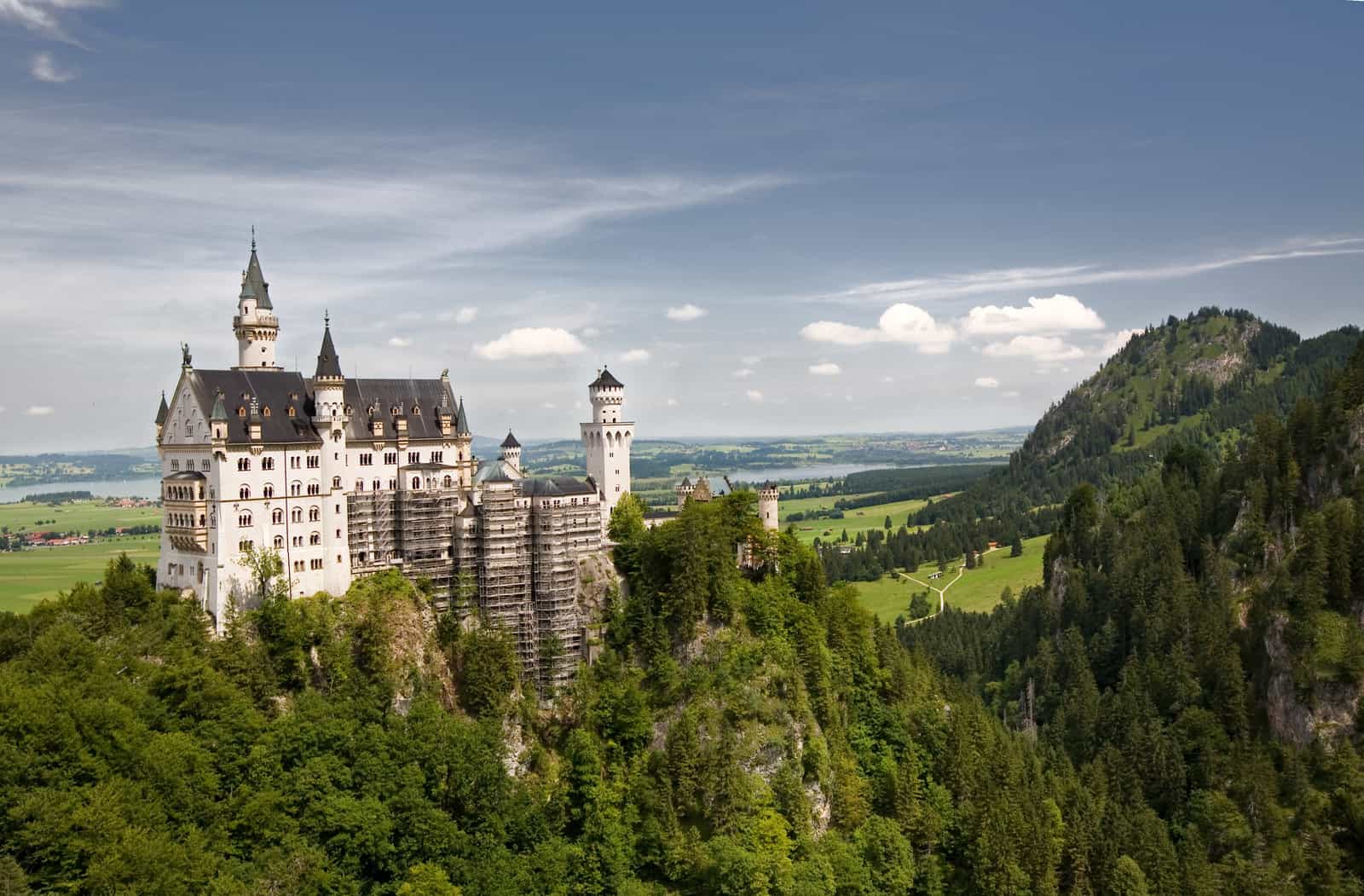
16. Day Trip to Neuschwanstein
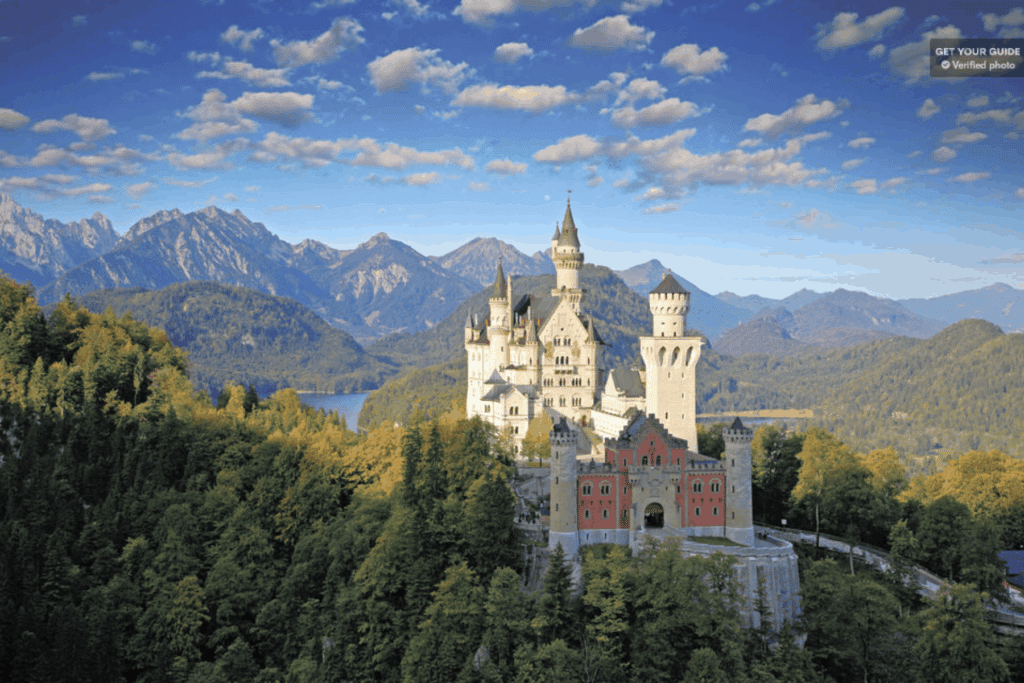
Neuschwanstein is the fairy-tale castle that King Ludwig II started building in 1868 in the mountains near Füssen, and it was never completely finished. Together with Linderhof, the king’s house on the Schachen and Herrenchiemsee, it was added to UNESCO’s World Heritage List in 2025.
You can only see the castle on a guided tour of about 30 minutes at a fixed time, and if you’re late, you can’t join it. A ticket costs €21, plus a €2.50 booking fee if you buy online. Under-18s go free but also need a ticket. The ticket centre in Hohenschwangau only sells tickets for the same day, and they often sell out early, so book online well in advance. The castle is open every day from 9am to 6pm from late March to mid-October and from 10am to 4pm the rest of the year, and it’s closed on 1 January and 24, 25 and 31 December. Backpacks and pushchairs aren’t allowed inside.
The journey by train and bus from Munich takes about two hours each way, so it’s a long day. An organised day trip with a ticket for the castle is the easiest option, and the most popular one combines Neuschwanstein with Linderhof.
Book a day trip to Neuschwanstein and Linderhof from Munich.
17. Day Trip to the Zugspitze
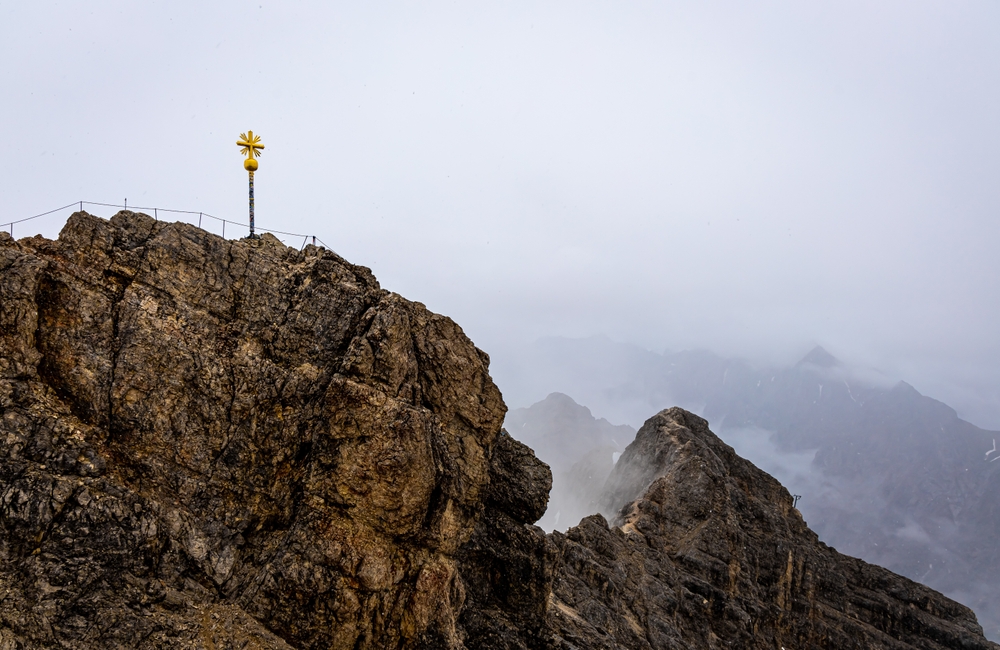
The Zugspitze is Germany’s highest mountain and sits on the border with Austria near Garmisch-Partenkirchen, south-west of Munich. From the summit, you can see out over the Alps in every direction, and there are restaurants and viewing platforms at the top.
You can go up on the cogwheel railway from Grainau and the glacier cable car, or on the Seilbahn Zugspitze cable car, and the classic round trip combines them, so you go up one way and down another. The round trip costs €78 for adults, €62.50 for young people aged 16 to 18 and €39 for children aged 6 to 15, and children under 6 travel free with a parent. In the winter season, the ticket is cheaper if you buy it online.
It’s an expensive excursion, and it only makes sense in good weather, because in the clouds you won’t see anything from the top. My tip is to keep an eye on the weather forecast and only decide on the day once you’re in Munich. Even in summer, it’s cold up there, so bring an extra jumper. If you don’t want to drive yourself, you can go on an organised tour with transport from Munich and a stop in Garmisch.
Book a day trip to the Zugspitze and Garmisch from Munich.
18. Day Trip to Salzburg
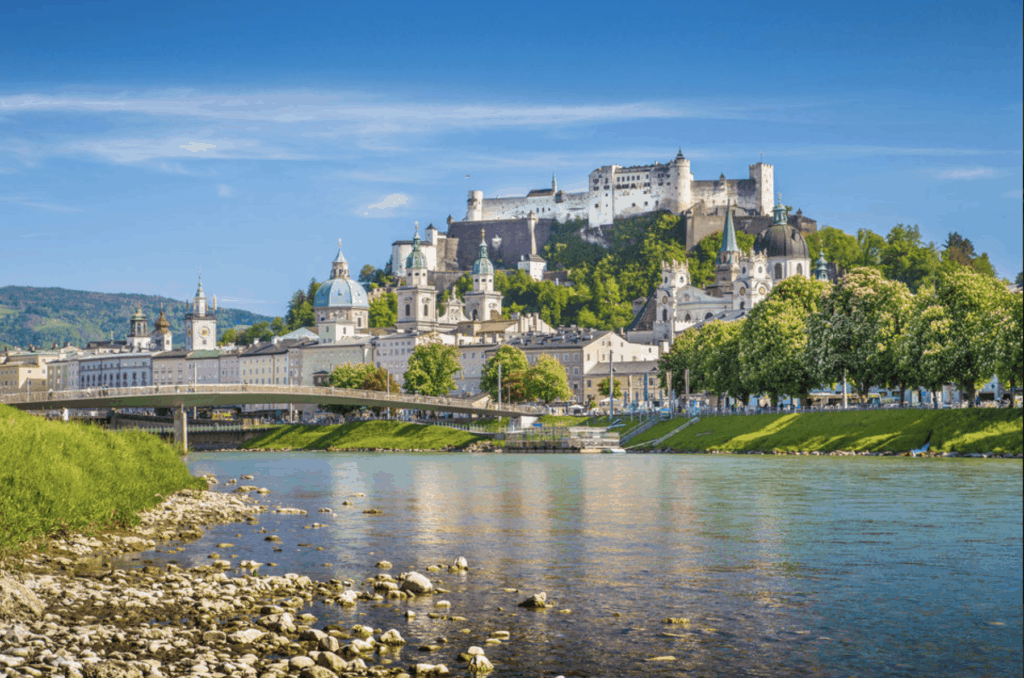
Salzburg lies just across the border in Austria and is the obvious day trip if you’d also like to see another city. For several hundred years, Salzburg was an ecclesiastical state ruled by prince-archbishops, and Italian architects gave the city its baroque character. The historic centre has been on UNESCO’s World Heritage List since 1996, and the city is also known as Mozart’s birthplace.
The big sights are the Hohensalzburg Fortress high above the city, Mozart’s birthplace on Getreidegasse and the Mirabell Gardens. Everything is so close together that you can see it all in a day, and the city’s tourist office has a good overview of the ten most popular places.
The train from Munich Hauptbahnhof takes about an hour and a half each way. Austria also uses the euro, but remember your passport or ID card when you cross the border. A guided day trip by train is an easy option if you’d like the city’s history without having to plan the route yourself. If you’d like to see more of Austria, I’ve also written about the best things to do in Vienna.
Book a guided day trip by train to Salzburg from Munich.
Practical Travel Tips for Munich
You can easily explore the Old Town on foot, and for the rest of the city you use the U-Bahn, S-Bahn, trams and buses on the same tickets. A single ticket in zone M costs €4.20, and a day ticket for zone M costs just over €10, so the day ticket already pays for itself on your third journey.
From the airport, the S1 and S8 S-Bahn trains run to the centre, and between them there’s a train every ten minutes. The journey to Hauptbahnhof takes about 40 minutes.
Plan the museums around the days of the week. The Pinakothek museums and the BMW Museum are closed on Mondays, while the Deutsches Museum, the Residenz and Nymphenburg are open every day of the week. On Sundays, the Alte Pinakothek, the Pinakothek der Moderne and Museum Brandhorst only cost €1, but on the other hand there’s no market at Viktualienmarkt. Neuschwanstein and the Arena Tour at the Allianz Arena should be booked online well in advance.
If you’d like to see the full range, you can see all hotels in Munich on Booking.com. If Berlin is also on your list, take a look at my picks of the best things to do in Berlin.
Travel ressources & websites I use all the time 👇
• Booking.com has the best offers on hotels and unique places to stay
• GetYourGuide is the best place to book tours & activities with free cancellation
• Welcome Pickups is the best & safest place to pre-book airport transfers
Psst 👀 Have you subscribed to my Youtube channel and my Instagram where I provide more useful travel tips?