


Vienna was an imperial capital for more than 600 years, and you can still see it everywhere. The palaces, opera house, museums and broad boulevards are so close together that you can walk between most of them. When your legs need a rest, settle into a coffee house with a newspaper and a slice of cake. The city is clean, well organised and easy to get around.
Here are my picks for the 20 best things to see and do in Vienna, with prices, opening times and advice on what to book ahead. Prices are in euros. Several major museums now use timed entry tickets, and a couple of well-known places are closed or being renovated. I’ve included those details under the relevant sights.
Contents
1. Schönbrunn Palace
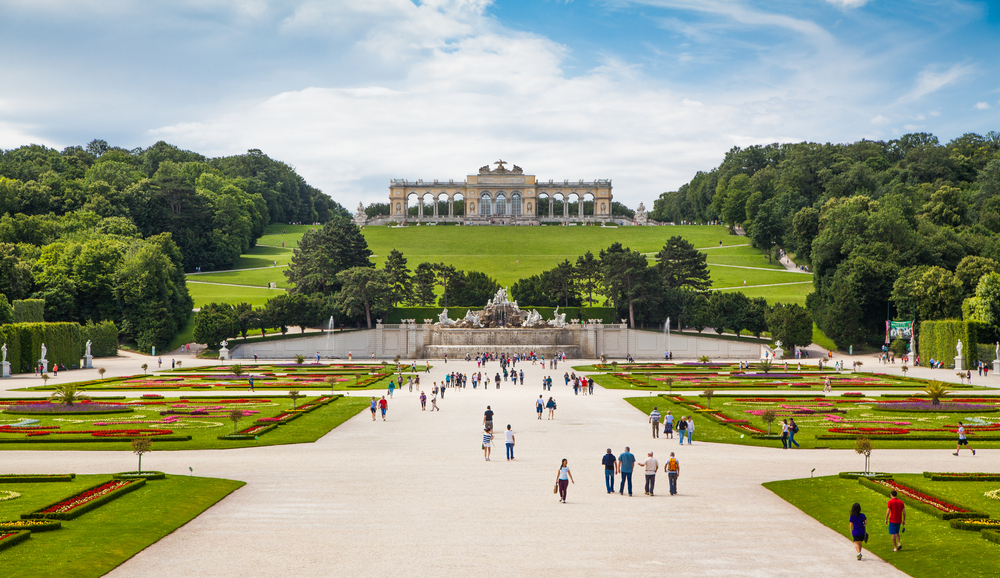
The Habsburgs’ summer palace is one of Vienna’s biggest attractions and has been a UNESCO World Heritage Site since 1996. It has 1,441 rooms, of which you can visit 45, including the Hall of Mirrors, where Mozart performed at the age of six, and the Great Gallery.
You have a choice of two tickets. The State Apartments ticket costs €30 and takes around 40 minutes, while the €42 Palace Ticket covers all the rooms on the main floor and takes about 75 minutes. Both include an audio guide and are valid for a fixed entry time that you must stick to. The palace opens daily at 8.30am and closes between 5pm and 6pm, depending on the season. Check the current opening times on the palace website.
The park is free and opens at 6.30am. Walk up the hill to the Gloriette for views over the palace and city. The grounds also contain Tiergarten Schönbrunn, the world’s oldest zoo still in operation, where admission costs €29. Take the U4 to Schönbrunn. Only buy tickets from the official ticket shop or established sellers: the palace itself warns visitors about fake ticket websites.
Book a guided tour of Schönbrunn Palace and its gardens with skip-the-line access.
2. St Stephen’s Cathedral
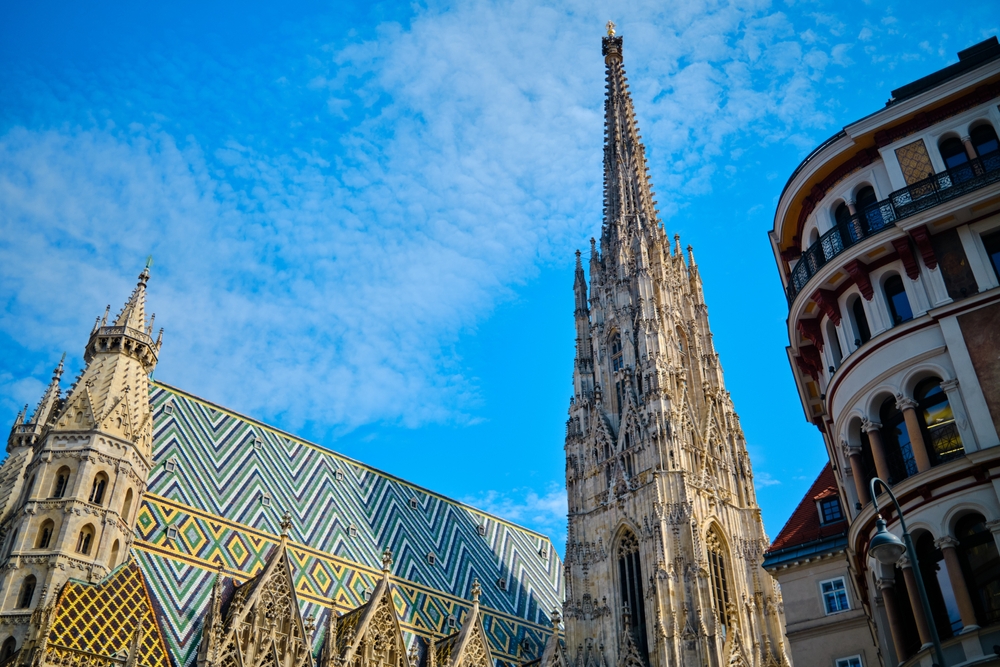
The cathedral in the heart of the city is Vienna’s best-known landmark. Its Gothic south tower, completed in 1433, stands 136 metres high, and the roof’s colourful tiles are visible from much of the centre. You can enter the rear part of the church for free, but the other sections charge admission.
Each section costs €8: the main church interior, the catacombs, the south tower and the north tower. The south tower has 343 steps and no lift. In the north tower, a lift takes you up to the Pummerin bell, which weighs more than 21 tonnes and is Austria’s largest. The catacombs can only be visited on a guided tour. To see everything, the combined ticket costs €29 and includes Dom Museum Wien.
Tourists can visit the church from Monday to Saturday, 9am to 11.30am and 1pm to 4.30pm. On Sundays, visits only start at 1pm because of church services. The U1 and U3 stop at Stephansplatz, right outside.
Buy the combined ticket for St Stephen’s Cathedral and Dom Museum Wien here.
3. Hofburg and the Sisi Museum

The Hofburg was the Habsburgs’ winter residence and seat of government for more than 600 years, and the complex occupies an entire neighbourhood. Its most popular section is the Sisi Museum and Imperial Apartments, where you can see how Franz Joseph and Empress Elisabeth lived. The museum displays more than 300 objects, including her dresses, jewellery and a replica of her private railway carriage.
The ticket covers both the museum and the apartments, includes an audio guide and has previously cost €20. Allow about an hour for the visit. You need to buy a timed ticket online through the museum’s own website.
The museum is being expanded. Until 18 November 2026, the museum section itself is closed, while the apartments remain open at a reduced price. A new, larger visitor route opens on 19 November 2026 with 12 extra rooms, and the Silver Collection, or Silberkammer, which has been closed since 2023, will become part of the tour. The entrance is beneath the dome at Michaelerplatz. The nearest station is Herrengasse on the U3.
Book a guided tour of the Sisi Museum, Hofburg and gardens.
4. Spanish Riding School
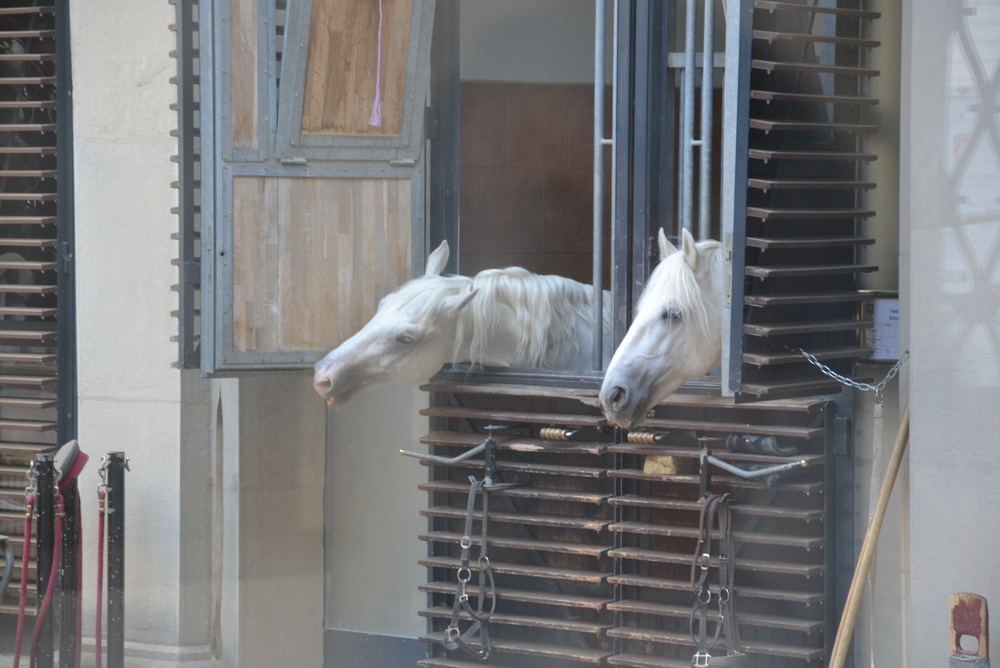
The Spanish Riding School in the Hofburg is home to the white Lipizzaner stallions. Its classical horsemanship was added to UNESCO’s list of intangible cultural heritage in 2015. Performances take place beneath the chandeliers of the Baroque Winter Riding School, built in 1735.
The cheapest way to watch the horses work is morning exercise, held from Tuesday to Friday at 10am and lasting about an hour. Standing tickets cost €17 to €18, while seats cost up to €29. Bear in mind that the famous jumps are rarely performed during training. The full performances are usually on Saturdays and Sundays at 11am, with prices ranging from €33 for a standing ticket to €155 for the best seats.
The €24 guided tour takes you inside the riding hall and the stables in the Stallburg. The riding school’s ticket website shows dates up to a year ahead. Photography isn’t allowed, and there’s no cloakroom.
Book the guided tour of the Spanish Riding School here.
5. The State Hall of the Austrian National Library
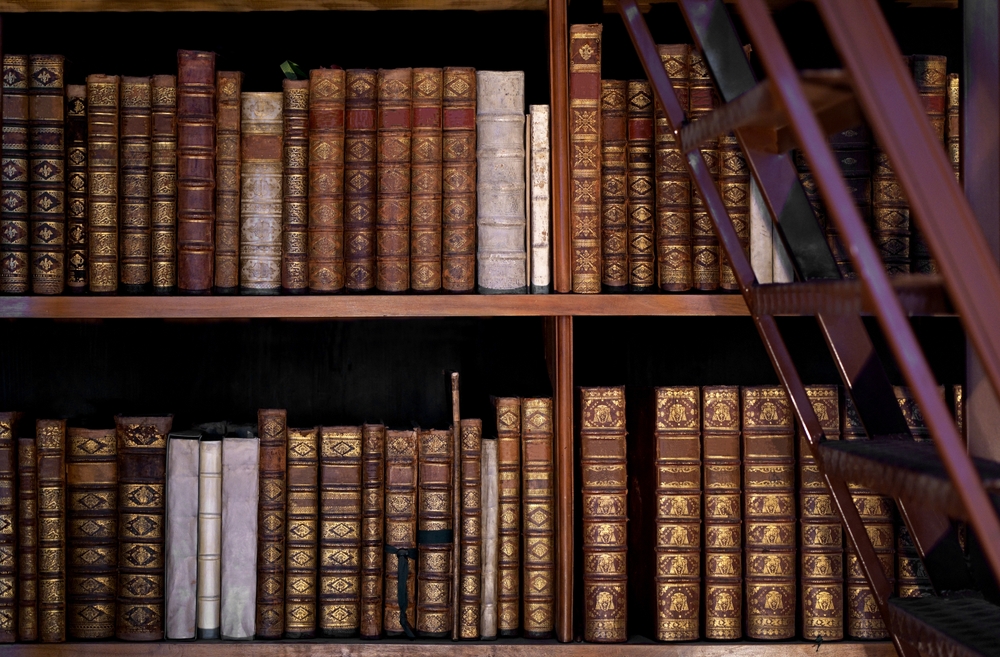
A few steps from the riding school is one of the world’s most beautiful libraries. The Prunksaal, or State Hall, was built between 1723 and 1726 as Emperor Charles VI’s court library. The hall is almost 80 metres long and 20 metres high, with paintings inside its dome and around 200,000 books dating from 1501 to 1850 on its shelves.
A statue of the emperor stands in the middle of the hall, surrounded by four large Venetian globes. The books include Prince Eugene of Savoy’s collection of 15,000 volumes bound in red, blue and yellow leather. It’s only one room, so a visit doesn’t take long, but it’s one of the places in Vienna that leaves the strongest impression.
Admission costs €12, and visitors under 19 enter free. It’s closed on Mondays from October to May. Throughout the year, it stays open until 9pm on Thursdays, when it tends to be quieter. The entrance is on Josefsplatz.
6. Belvedere Palace

The Belvedere consists of two Baroque palaces with a French formal garden between them, built for the military commander Prince Eugene of Savoy in the early 18th century. The Upper Belvedere houses 24 paintings by Gustav Klimt, including The Kiss, probably Austria’s most famous painting. Its Marble Hall was also where the Austrian State Treaty was signed in 1955.
The Upper Belvedere costs €23, while the Lower Belvedere, which hosts temporary exhibitions, costs €20. A combined ticket for both costs €32, and visitors under 19 enter free. You need a ticket for a specific time slot, so book ahead, especially at weekends and during holidays.
With time for just one palace, choose the Upper Belvedere. It opens every day from 9am to 6pm. Tram D runs from the Ringstrasse to the Schloss Belvedere stop.
Buy a ticket for the Upper Belvedere and Klimt’s The Kiss here.
7. Kunsthistorisches Museum
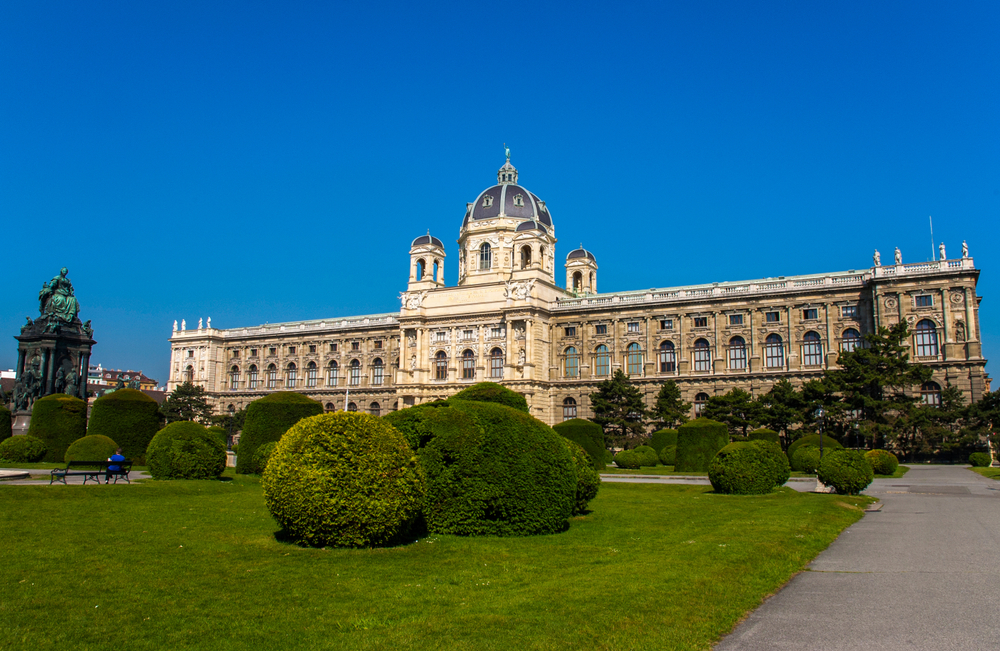
The imperial family’s art collection gained its own palace on the Ringstrasse in 1891, and the building’s marble staircases and domed hall are an attraction in their own right. The museum has the world’s largest collection of paintings by Pieter Bruegel the Elder: 12 works, including The Tower of Babel, Hunters in the Snow and The Peasant Wedding.
On the ground floor, the Kunstkammer contains around 2,200 objects from the Habsburg treasuries. Its star piece is Benvenuto Cellini’s gold salt cellar. With only a couple of hours, I’d concentrate on the Bruegel room and the Kunstkammer.
Tickets cost €22 online or €24 at the door, and visitors under 19 enter free. Since September 2026, the museum has only admitted visitors with reserved time slots, so buy your ticket online. It opens from 10am to 6pm, staying open until 9pm on Thursdays. The museum opens seven days a week until 4 January 2027, but check Mondays if you’re travelling later. Take the U3 to Volkstheater or tram D to Burgring.
Buy a ticket for the Kunsthistorisches Museum here.
8. MuseumsQuartier and Leopold Museum
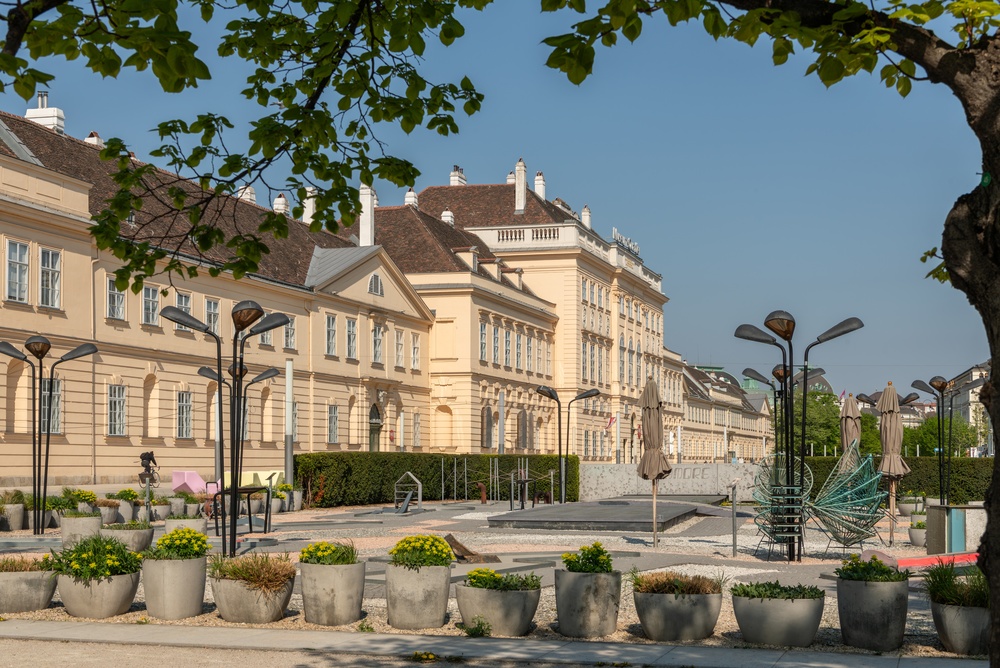
The former imperial stables opposite the Kunsthistorisches Museum are now one of the world’s largest cultural complexes, with more than 50 institutions. The courtyards are free and open around the clock. In the warmer months, locals lounge on the colourful plastic furniture with a drink. It’s a good place for a break, even without a museum ticket.
The main museum here is the Leopold Museum, which has the world’s largest Egon Schiele collection, with more than 220 works, alongside major paintings by Gustav Klimt. Admission costs €19. Visitors under 19 pay €2.50, so it isn’t free for them as most other museums in the city are. It’s closed on Tuesdays.
Next door, mumok displays modern art from Picasso to Warhol. Admission costs €18, and it’s closed on Mondays. A combined ticket for the two museums costs €33. Take the U2 to MuseumsQuartier.
Buy a ticket for the Leopold Museum here.
9. Albertina
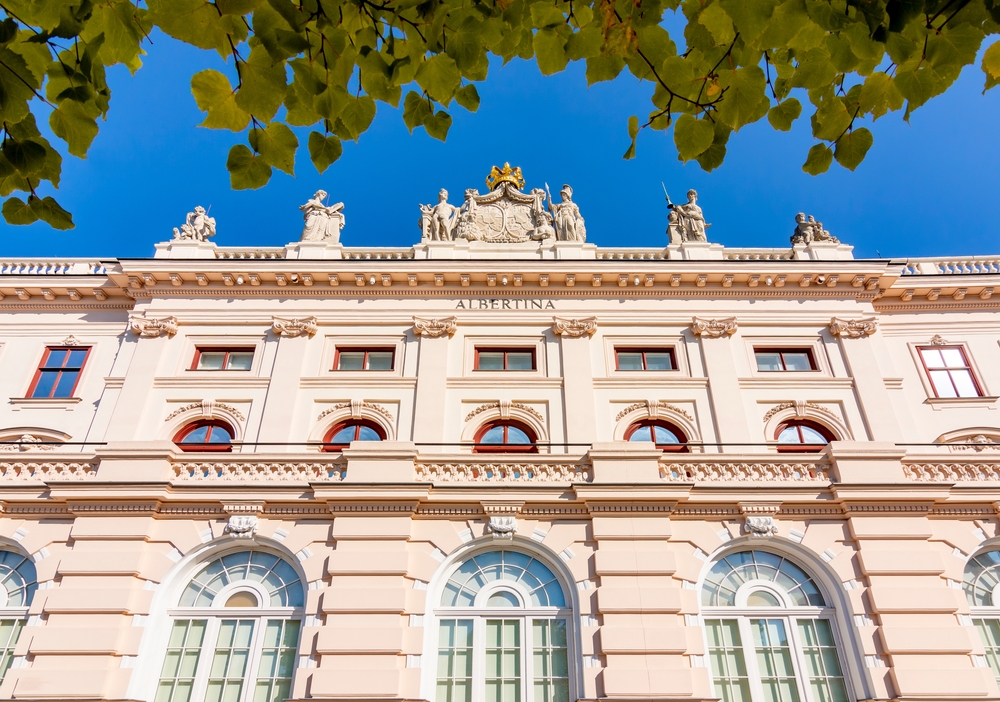
The Albertina occupies the Habsburgs’ largest residential palace, just behind the opera house. It owns one of the world’s largest collections of graphic art, with more than a million prints and 60,000 drawings. Albrecht Dürer’s Young Hare is its best-known work. The drawings are sensitive to light, so they only go on display occasionally.
What you can always see is the permanent exhibition from Monet to Picasso, with works by Degas, Cézanne, Matisse and Chagall among others. Your ticket also covers the yellow, green and turquoise state rooms where the archdukes lived.
Admission costs €19.90. A €24.90 combined ticket also covers Albertina Modern near Karlsplatz and is valid for a year, so you don’t need to visit both on the same day. The museum opens daily from 10am to 6pm, with late opening until 9pm on Wednesdays and Fridays. You don’t need to reserve a time slot, but an online ticket saves queuing at the ticket desk.
10. Vienna State Opera
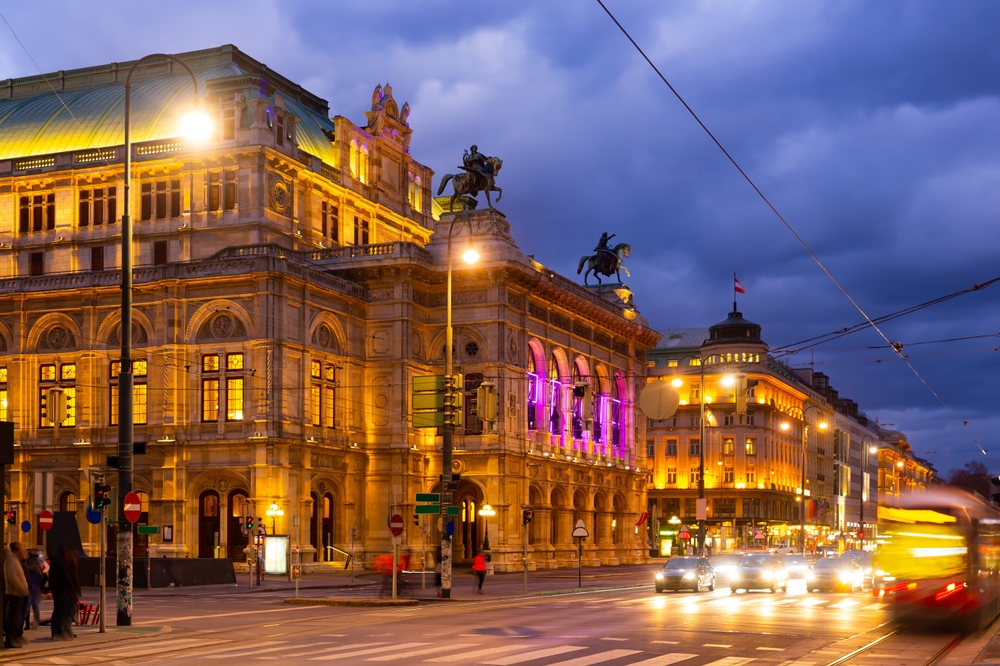
The State Opera, which opened in 1869, is one of the world’s leading opera houses and stages around 50 different operas and ballets each season. The season runs from September to June. Every seat has its own small screen with subtitles in English and other languages, and there’s no dress code.
You don’t need to spend hundreds of euros to get in. The opera house sells 435 standing tickets for €13 to €18, available only on the day of the performance. You can buy them online from 10am or at the standing-room box office by the Operngasse entrance, which opens 80 minutes before the performance.
To see the building without attending a performance, the guided tour lasts 40 minutes and costs €13. Times vary from day to day, and tickets are sold online and are non-refundable. The opera house is beside Karlsplatz station, where the U1, U2 and U4 meet.
11. Karlskirche
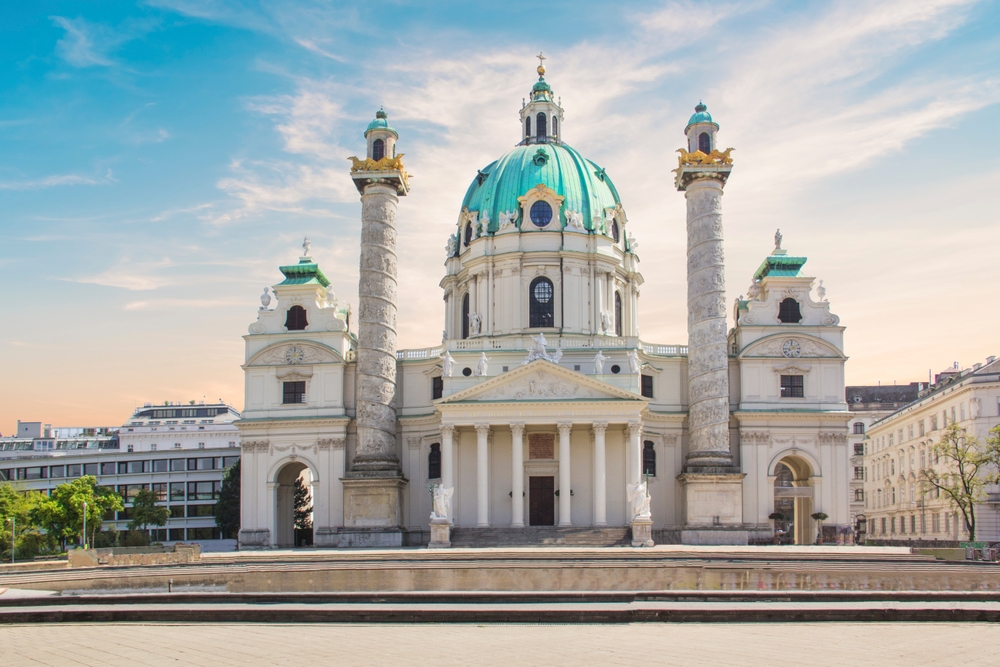
Karlskirche on Karlsplatz is Vienna’s finest Baroque church. Emperor Charles VI pledged to build it during a plague epidemic, and it was completed in 1739. Two 47-metre columns stand in front of its green dome. Inside, the dome’s frescoes cover 1,250 square metres.
The €9.50 ticket includes an audio guide, the treasury, the organ gallery and the panoramic terrace above the entrance, which looks out over the city’s rooftops. Children under 10 enter free. The church opens from Monday to Saturday, 9am to 6pm, and on Sundays and public holidays from 11.45am to 7.15pm.
In the evenings, Vivaldi’s Four Seasons is performed on historical instruments inside the church. It’s one of Vienna’s most popular classical concerts for visitors, and the setting makes it special.
Book tickets for Vivaldi’s Four Seasons at Karlskirche.
12. Secession and Naschmarkt
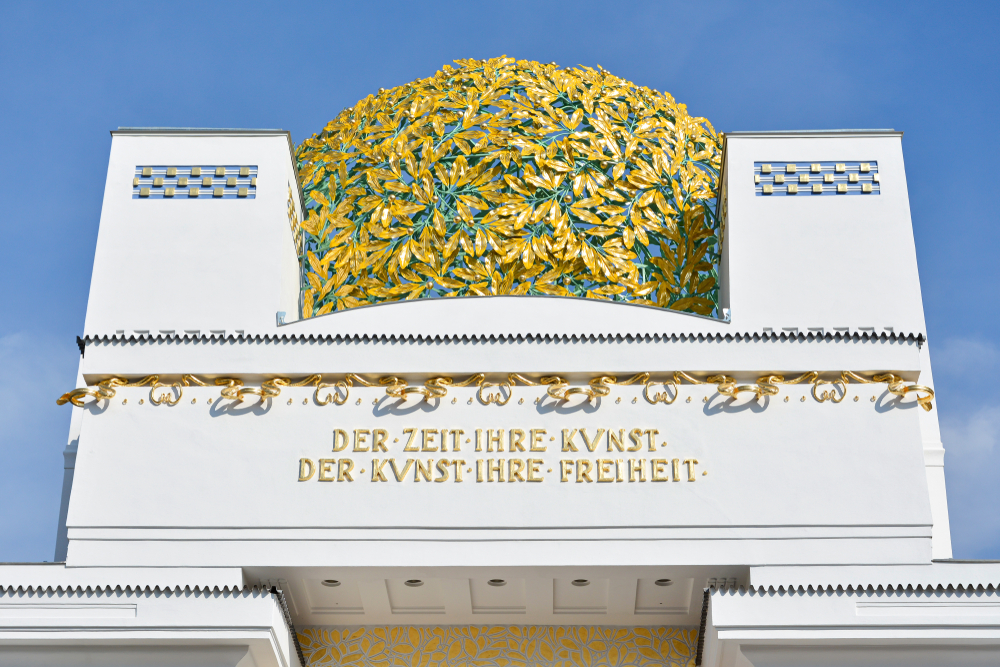
A few minutes’ walk from Karlsplatz is the Secession, a white exhibition building crowned with a dome of gilded laurel leaves. The artists behind it broke away from the established art scene in 1897. Downstairs, Gustav Klimt’s Beethoven Frieze from 1902 stretches across three walls. Admission costs €13, with free entry on the first Wednesday of each month. It’s closed on Mondays.
Just across the road begins the Naschmarkt, the city’s largest market, with around 120 stalls and places to eat. You can buy cheese, olives, spices and fruit or sit down at one of the many restaurants. The stalls open from Monday to Friday, 6am to 9pm, and on Saturdays from 6am to 6pm. They’re closed on Sundays.
On Saturdays, a flea market takes place near Kettenbrückengasse station from 6.30am until early afternoon. The market’s old car park has become a park and a new market hall. The rest of the area is scheduled for redevelopment in 2027, so the flea market may be affected. The U4 stops at Kettenbrückengasse, right in the middle of it all.
Book a food tour with tastings at the Naschmarkt.
13. Prater and the Giant Ferris Wheel

The Riesenrad, or Giant Ferris Wheel, has been turning in the Prater since 1897 and stands almost 65 metres high. A ride in its red wooden cabins takes 12 to 15 minutes and costs €14.50. Come at sunset and buy your ticket online to avoid the queue at the ticket desk. Opening times vary with the season.
The Wurstelprater amusement park surrounds the wheel. Entry is free around the clock, and you pay for each ride separately, typically €3.50 to €15. There are more than 250 attractions, from old carousels to modern roller coasters.
The season runs from 15 March to 31 October. Only some rides operate in winter, and most are closed in January, although the Ferris wheel runs all year. Behind the amusement park begins the green part of the Prater, with a long avenue where locals run and cycle. Praterstern station, on the U1 and U2, is right by the entrance.
Buy a Giant Ferris Wheel ticket with skip-the-cashier-desk access.
14. Hundertwasserhaus and Kunst Haus Wien
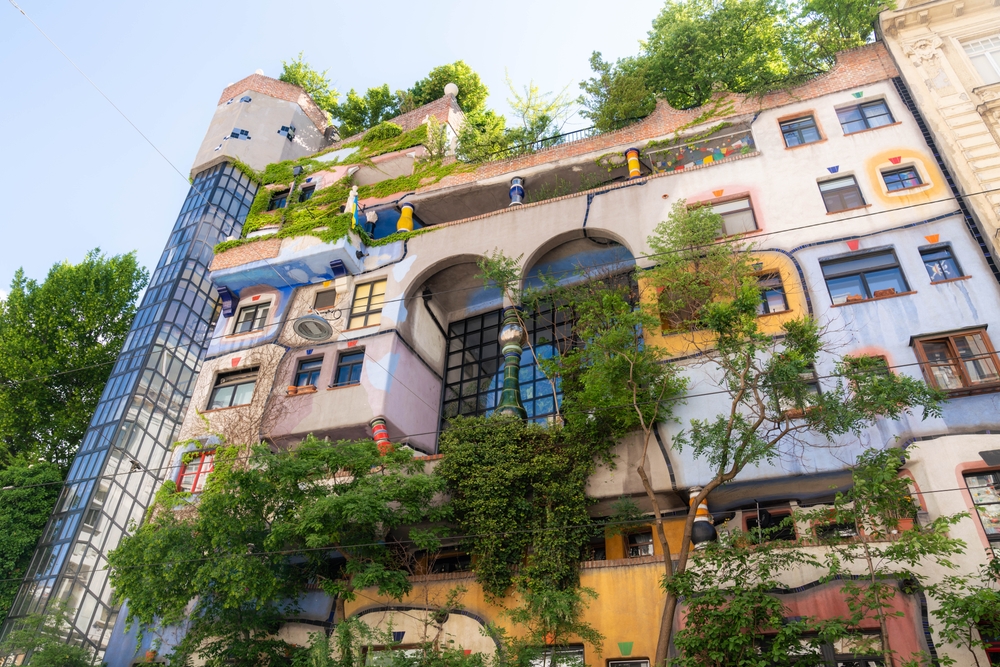
The artist Friedensreich Hundertwasser hated straight lines, and it shows in the Hundertwasserhaus apartment building, completed in 1985. Its façade is a patchwork of colours, the floors undulate, and more than 200 trees and shrubs grow on its roofs and balconies. Ordinary tenants live here, so you can only view it from outside.
Opposite is Hundertwasser Village, a small shopping arcade in the same style that you can enter. Allow 20 to 30 minutes for the two places. The address is Kegelgasse 34.
To see his paintings and architectural models, walk five to ten minutes to Kunst Haus Wien, home to Museum Hundertwasser. Admission costs €16, and the museum opens daily from 10am to 6pm. Tram 1 from Schwedenplatz and tram O from Praterstern stop at Radetzkyplatz. The Vienna City Card gives you a 30 per cent discount, one of the card’s largest reductions.
Buy a ticket for Kunst Haus Wien and Museum Hundertwasser here.
15. Ringstrasse, City Hall and Parliament
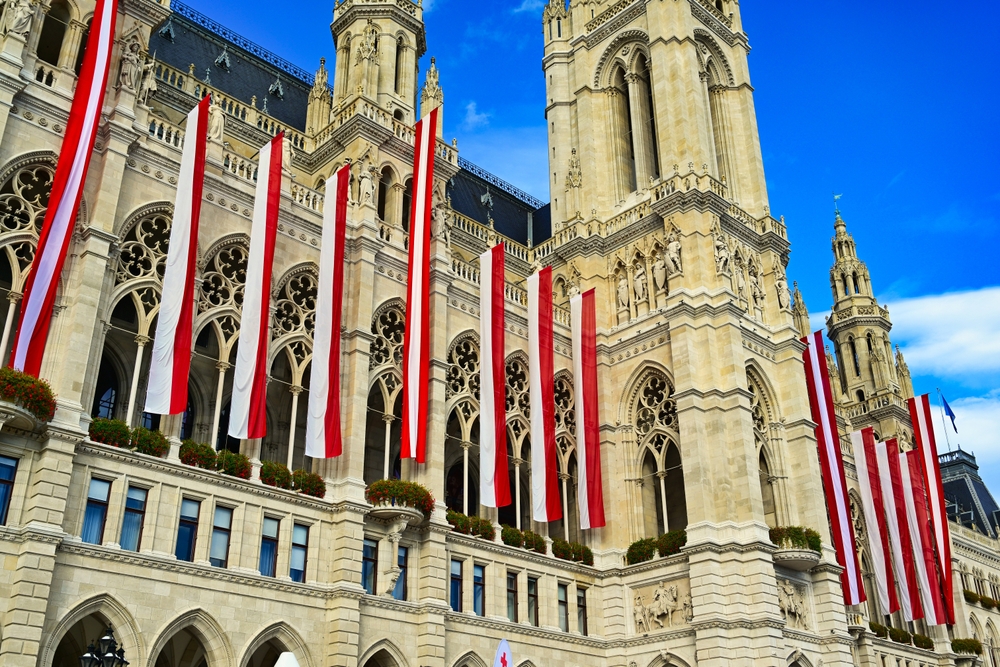
The Ringstrasse is the broad boulevard laid out after the city walls were demolished in the 1860s. The opera house, Hofburg, two major museums, parliament, city hall and Burgtheater line its route. The easiest way to see it is aboard tram 1 or 2, which cover most of the ring on an ordinary transport ticket. The yellow tourist Ring Tram no longer operates.
Parliament is the obvious free attraction along the route. The visitor centre is free to enter with photo ID. Guided tours are also free, but you need to book online. It stays open until 9pm on Thursdays and is closed on Sundays.
City Hall offers free guided tours on Mondays, Wednesdays and Fridays at 1pm. The tour is in German, with an English audio guide, and you must register online. The square outside hosts the city’s major events. The Christkindlmarkt Christmas market runs here from 13 November to 26 December 2026, the Wiener Eistraum ice rink from 22 January to 7 March 2027, and there’s a free film festival in summer.
Book a hop-on hop-off bus tour around Vienna.
16. Vienna’s Coffee Houses
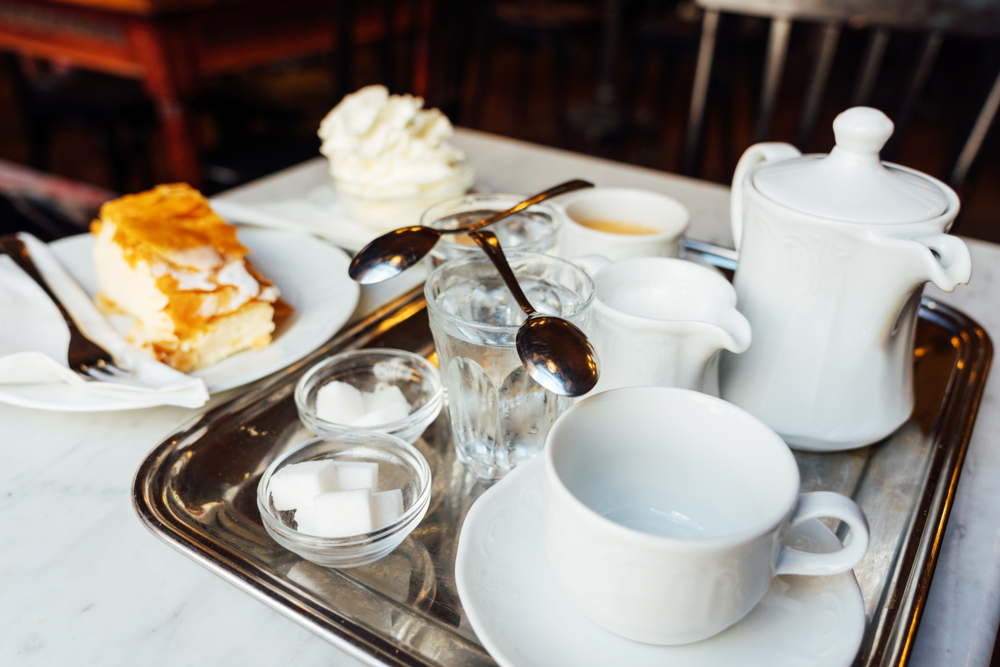
The coffee house is the Viennese equivalent of a second living room. In 2011, the city’s coffee house culture was added to Austria’s list of intangible cultural heritage. Expect marble tables, bentwood chairs, newspapers on racks and waiters in black and white. You can linger over a single cup for as long as you like. Order a Melange, which is similar to a cappuccino.
The most famous, Café Central, has been closed for renovation since March 2026 and isn’t expected to reopen until the winter. Café Sacher, opposite the opera house, serves the original Sachertorte at €11.50 a slice. You can reserve a table to avoid the queue. Demel, the former imperial confectioner on Kohlmarkt dating from 1786, doesn’t take reservations, so you’ll need to queue there.
For the atmosphere without tourist prices, try Café Sperl, founded in 1880. A Melange costs €4.90 and a slice of Sachertorte €5.40, and the billiard tables are still there. Café Landtmann beside the Burgtheater and Café Hawelka in a side street off Graben are two other classics. At Hawelka, warm Buchteln yeast buns come out of the oven from 8pm. It’s usual to round up the bill or leave around 10 per cent as a tip.
Book a guided tour of Vienna’s coffee houses.
17. Haus der Musik
Haus der Musik is an interactive sound museum spread across four floors, and it’s the best museum in Vienna for a visit with children. You climb a staircase that plays like a piano, experiment with sound and hearing, and visit rooms devoted to Mozart, Beethoven, Strauss and the other great composers who lived in the city.
On the top floor, you can try conducting the Vienna Philharmonic on a large screen, with the orchestra following your tempo. The building also houses the Vienna Philharmonic’s own museum.
Admission costs €19 for adults and €8 for children under 12. A family ticket for two adults and up to three children costs €39. The museum opens daily from 10am to 10pm, with last entry at 9pm, making it one of the few sights you can save for a rainy evening. It’s on Seilerstätte, between the opera house and St Stephen’s Cathedral.
Buy a ticket for Haus der Musik here.
18. Zentralfriedhof
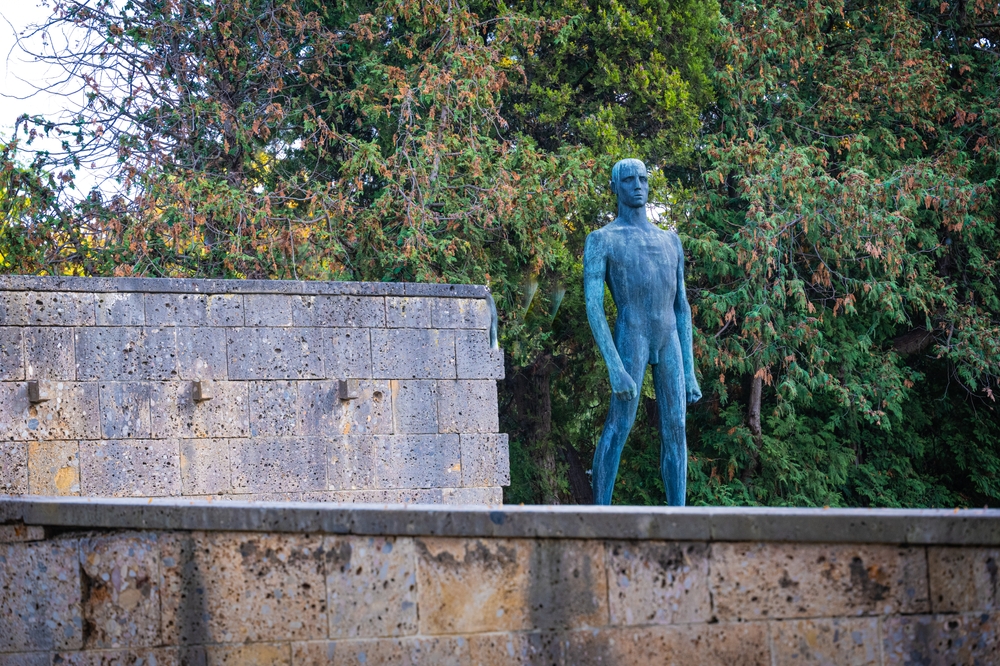
Vienna’s Central Cemetery is enormous, with 330,000 graves across 2.4 square kilometres, and it’s worth visiting if you love music. In section 32A, Beethoven, Schubert, Brahms and both Johann Strauss senior and junior lie side by side. Mozart has a memorial here, but not a grave, while the pop star Falco is buried in section 40.
Use Gate 2, the main entrance. From here, walk straight towards the large Art Nouveau church, completed in 1910. The composers’ graves are along the way. An information point by the gate has a guide to the honorary graves.
Entry is free. The cemetery opens at 7am for most of the year and at 8am in winter, closing between 5pm and 7pm depending on the season. Tram 71 runs from the Ringstrasse near the opera house to Zentralfriedhof 2. Tor, taking 20 to 30 minutes. Avoid 1 November, when seemingly the whole city visits.
Book a guided tour of the famous graves at the Zentralfriedhof.
19. Kahlenberg and a Heuriger in Grinzing
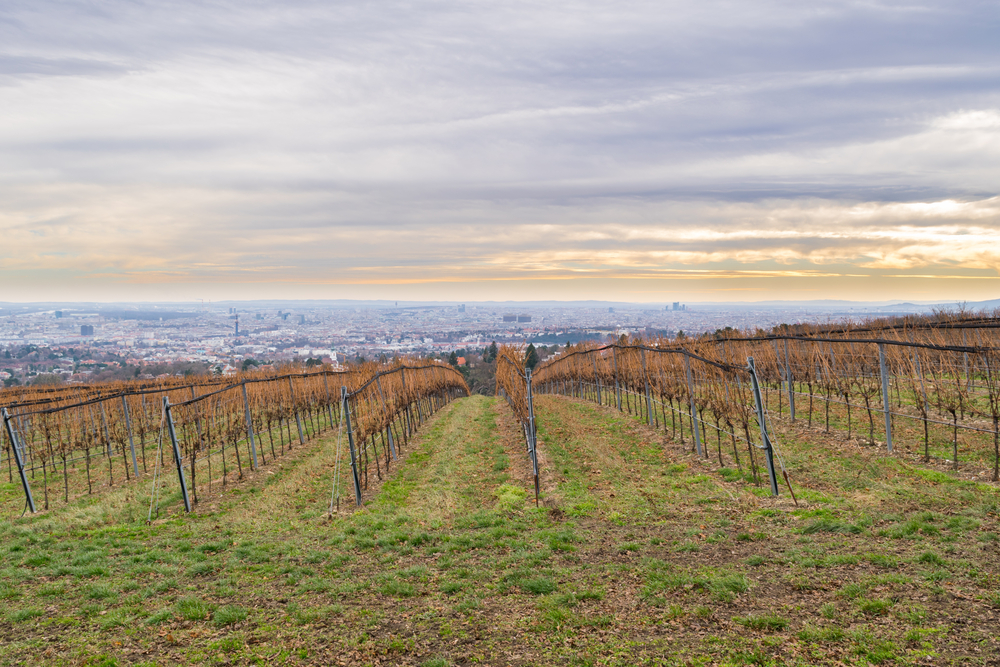
Vienna has working vineyards within its city limits. From the 484-metre Kahlenberg on the edge of the Vienna Woods, you can look out across the entire city and the Danube, and on clear days as far as the Alps. Bus 38A runs from Heiligenstadt U4 station to the summit in under half an hour.
From here, you can walk down through the vineyards to Nussdorf or Grinzing and finish at a heuriger. The word means both the wine tavern and the current year’s wine, and only winegrowers serving their own wine may use the name. You can recognise a traditional heuriger by the bundle of pine branches above the door and a sign reading Ausg’steckt.
Order a glass of Wiener Gemischter Satz, Vienna’s own white wine, made from at least three grape varieties grown and harvested together in the same vineyard. The food is traditionally cold and served from a buffet. To get back, take tram 38 from Grinzing to Schottentor or tram D from Nussdorf, which runs all the way to the Ringstrasse. Without time to travel out here, you can book a wine tasting in a private cellar in the city centre.
20. Danube Tower and Danube Island
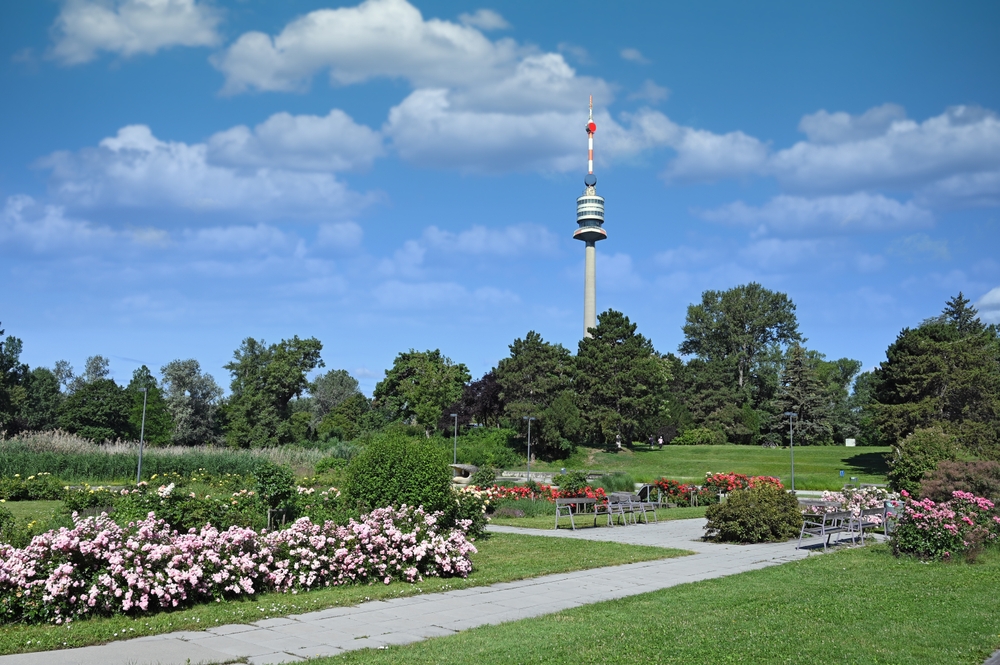
At 252 metres, the Donauturm, or Danube Tower, is Vienna’s tallest structure. The lift takes 35 seconds to reach the viewing platform at 150 metres, where you have views in every direction. Above it are a rotating café and restaurant. For an extra thrill, you can take a slide down the outside of the tower from 165 to 150 metres.
Tickets cost around €19.90 at the ticket desk or €18 online. The tower opens every day at 10am, with the last lift up at 9.45pm. Take the U1 to Alte Donau or Kaisermühlen-VIC and walk through the park, or catch bus 20A to the entrance. A combined ticket for the tower and the Giant Ferris Wheel costs €27.50.
In summer, combine your visit with a swim. The Donauinsel, or Danube Island, is a 21-kilometre island in the river with free bathing beaches along its length. At the Alte Donau, you can also swim for free in several places and hire an electric boat, pedalo, canoe or kayak. Both are served by the U1.
Buy a skip-the-line ticket for the Danube Tower here.
Practical Travel Tips for Vienna
Transport: The underground, trams and buses use the same tickets. A single journey costs €3 in the app or €3.20 on paper. A 24-hour ticket costs €9.70, and a seven-day ticket costs €25.20 in the app. The 48-hour and 72-hour tickets were discontinued on 1 January 2026, so the seven-day ticket is cheapest for stays of three days or more. Paper tickets must be stamped in the blue machines before you travel. Wiener Linien lists all the fares, and I’ve covered the journey from the airport in my guide to getting from Vienna Airport to the city centre.
Vienna City Card and Vienna Pass: The Vienna City Card costs €19 for 24 hours, €31 for 48 hours or €37 for 72 hours. It’s primarily a transport ticket with small museum discounts, and is best value when you’re travelling with a child under 15, who can travel with you for free. The Vienna Pass costs €109 for one day or €175 for three days and includes entry to up to 90 attractions, but no public transport. It only makes sense if you visit plenty of paid attractions in a short time. Buy the Vienna Pass here.
Day trips: From Vienna, the train takes about an hour to Melk Abbey in the Wachau Valley, where admission costs €16. From late March until 1 November, sightseeing boats run along the Danube between Melk and Krems. Book a day trip to the Wachau by bus and boat. Slovakia’s capital, Bratislava, is also just an hour away by train, with two departures an hour. During the warmer half of the year, the Twin City Liner catamaran gets you there in 75 minutes. Book a guided day trip to Bratislava by bus and boat.
Closing days and timed tickets: There isn’t one shared closing day. The Leopold Museum closes on Tuesdays, mumok and the Secession on Mondays, and the State Hall on Mondays from October to May. Schönbrunn, the Sisi Museum, the Belvedere and the Kunsthistorisches Museum require timed tickets. Shops close on Sundays, as do the Naschmarkt stalls.
Tourist tax and drinking water: Hotels charge a tourist tax, which has been 5 per cent of the room price since 1 July 2026 and is scheduled to rise to 8 per cent on 1 July 2027. Tap water comes from Alpine springs, and there are 1,800 public drinking fountains around the city, so bring a bottle.
Christmas in Vienna: The Christmas markets start early. The 2026 season at Schönbrunn runs from 6 November to 6 January, while the Christkindlmarkt on Rathausplatz runs from 13 November to 26 December.
Where to stay and where to go next: I’ve written a guide to where to stay in Vienna to help you compare the neighbourhoods, and you can also browse hotels in Vienna here. It’s easy to take the train from Vienna to neighbouring countries’ capitals, so have a look at my guides to things to do in Prague and things to do in Budapest too.
Travel ressources & websites I use all the time 👇
• Booking.com has the best offers on hotels and unique places to stay
• GetYourGuide is the best place to book tours & activities with free cancellation
• Welcome Pickups is the best & safest place to pre-book airport transfers
Psst 👀 Have you subscribed to my Youtube channel and my Instagram where I provide more useful travel tips?