

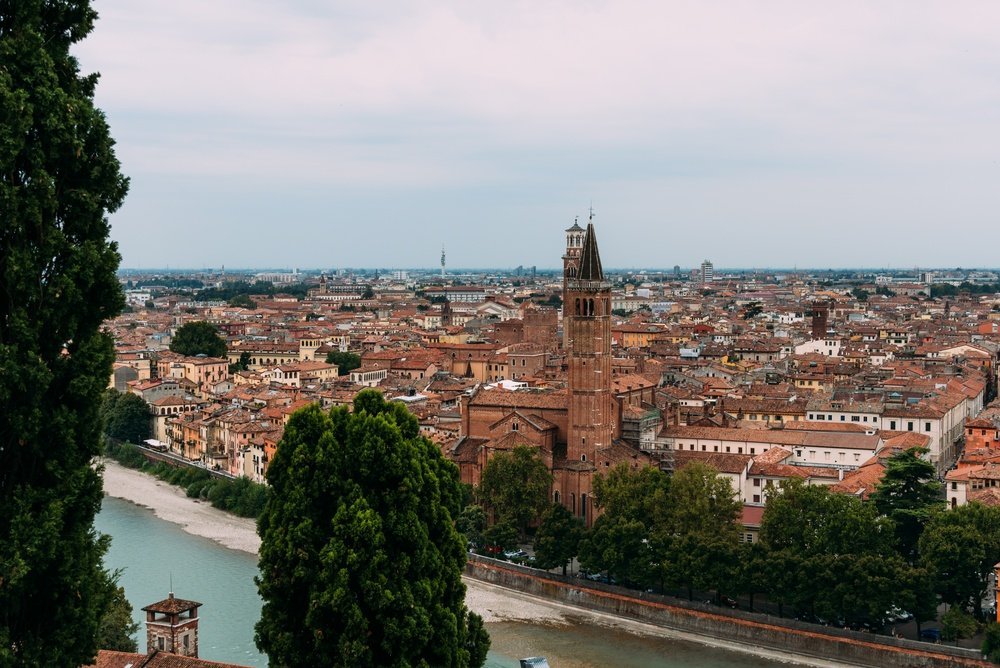
Verona sits in a bend of the River Adige between Venice and Lake Garda, and most people know it as the city where Shakespeare had Romeo and Juliet fall in love.
But Verona was an important city long before Shakespeare, and there are far more things to do in Verona than the famous love story. The Romans built the amphitheatre, the theatre and the bridge that are still standing, and in the Middle Ages the Della Scala family ruled the city from their castle and their tombs in the centre.
The entire historic centre is on the UNESCO World Heritage List, and it’s so compact that you can walk to almost everything in a quarter of an hour.
Here’s my pick of the best sights in Verona with prices, opening hours and practical tips, from the Arena and Juliet’s balcony to Romanesque churches, the Renaissance garden Giardino Giusti and day trips to Valpolicella and Lake Garda.
Prices are given in euros.
If you’re planning to see more than three or four of the places, take a look at the Verona Card in the practical tips at the bottom, because it’s one of those city cards that actually pays for itself.
Planning your trip to Verona at the last minute? 🇮🇹
Here are some of the best things to do, hotels and other tips for your trip to Verona.
🎡 Top Activities & Tours:
1. Watch opera under the open sky with tickets to the opera at the Arena in the Roman amphitheatre
2. See the Arena from the inside with a skip-the-line guided tour and save time queuing
🛌 Best Hotels:
1. Hotel Gabbia d'Oro is a five-star boutique hotel in a historic palazzo on Piazza delle Erbe
2. Hotel Europa is a classic three-star hotel close to Piazza Bra with its own car park
3. Residenza CuordiVerona is a small guesthouse with stylish interiors, about 230 metres from the Arena
Contents
1. Arena di Verona and Piazza Bra
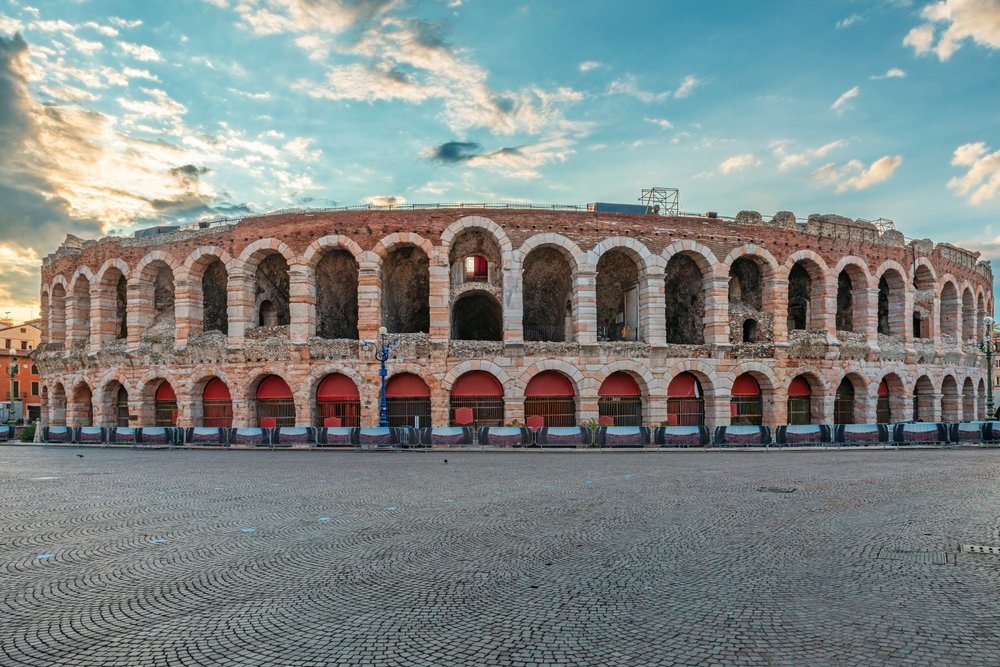
The Arena is the city’s landmark and one of the best-preserved Roman amphitheatres in the world. It was built in the 1st century AD just outside the Roman city walls and could hold around 30,000 spectators for gladiator fights and animal hunts. An earthquake in 1117 brought down almost the entire outer ring, and today only four arches of it remain, while the inner ring with its many tiers of stone steps is almost intact.
Admission is around 10 to 12 euros (around £8 to £10), and the Arena is included in the Verona Card, which also gets you faster entry at gate 5. From October to May it’s closed on Mondays, and on summer performance days the monument closes as early as the afternoon so the stage can be prepared.
The Arena stands on Piazza Bra, the city’s largest square, where the wide pavement promenade known as the Liston is lined with cafés. Opposite the Arena is the town hall, Palazzo Barbieri, and through the old city gates, Portoni della Bra, you come out towards Corso Porta Nuova. My tip is to have a coffee on the Liston in the late afternoon for the view and then eat a couple of streets away, because on the promenade you’re mostly paying for the location.
Book a guided tour of the Arena with skip-the-line entry here.
2. Open-air opera in the Arena
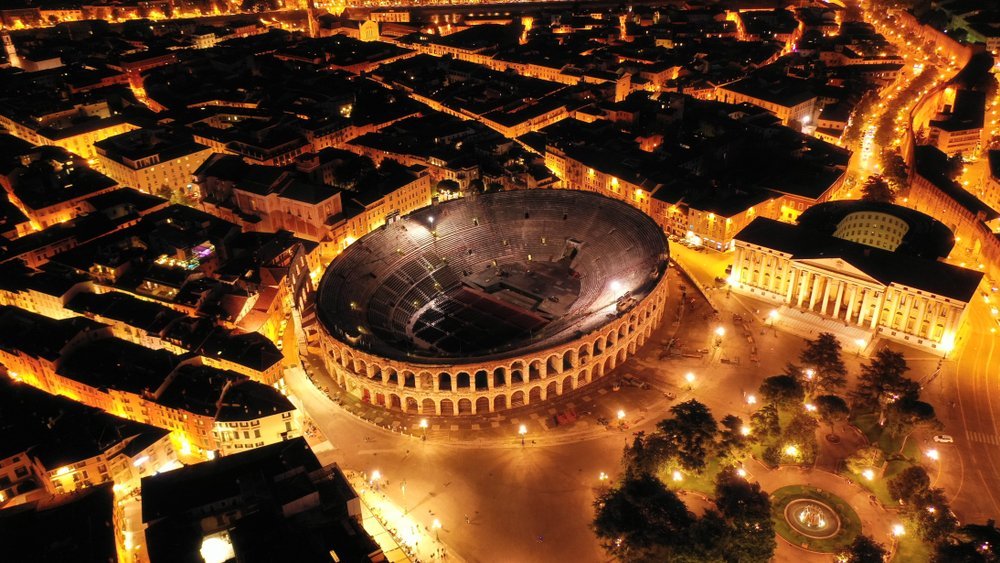
In 1913 Verdi’s Aida was staged in the Arena to mark the centenary of the composer’s birth, and since then the amphitheatre has hosted the world’s largest open-air opera festival. Every summer from June to the end of August, the great classics such as Aida, Carmen, La Traviata and Tosca are performed to thousands of spectators at a time. As darkness falls, many in the audience light small candles on the stone steps, and it’s one of those experiences people talk about for years afterwards.
Ticket prices vary widely. The cheapest are numbered seats directly on the stone steps in the upper sectors from around 28 euros (around £23), while the best seats in the stalls cost several hundred euros. Performances start late in the evening, and the long operas often don’t finish until after midnight.
If you’re sitting on the stone steps, rent or bring a cushion, take a jumper for after midnight and buy water before you go in. Also check the rain policy when you buy your ticket, as a shower can delay or cancel the performance. Hotels around Piazza Bra get expensive and sell out quickly during the festival, so book well in advance.
Book tickets for the opera in the Arena here.
3. Piazza delle Erbe
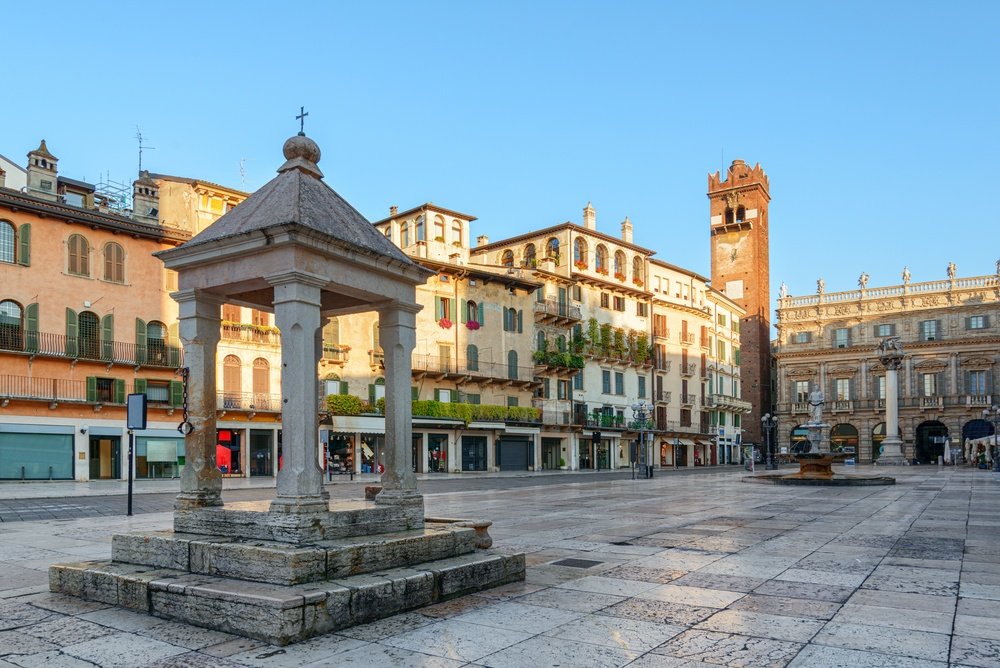
Piazza delle Erbe lies where the Roman forum once stood and is still the city’s liveliest square. In the middle stands the fountain with the statue Madonna Verona, which is actually a Roman statue that was given a new head and a new role in the 14th century. Around the square you’ll find Casa Mazzanti with its painted façades, the Baroque Palazzo Maffei with statues on the roof, and the column topped by the Lion of St Mark, showing that Verona belonged to Venice from 1405.
By day the square is full of market stalls, mostly selling souvenirs and fruit in cups, and in the evening the bars take over for aperitivo. Look up as you walk under the Arco della Costa arch in one corner. A whale rib hangs there, which legend says will fall the day someone who has never told a lie walks beneath it. The square is free, and it’s at its most beautiful early in the morning before the stalls open.
The area around Piazza delle Erbe is also one of my top picks in the guide to where to stay in Verona, because you have all the Old Town sights within a few minutes. You can see hotels near Piazza delle Erbe here.
Book a walking tour of the Old Town with a local guide here.
4. Torre dei Lamberti
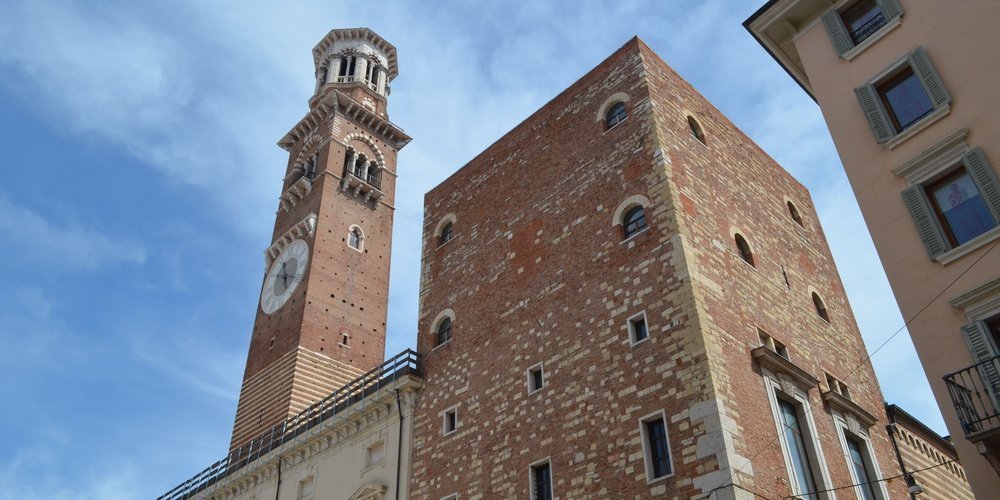
The city’s tallest tower rises 84 metres above Piazza delle Erbe and was begun in 1172. It grew in several stages, and you can see this in the masonry: the lower part is built in stripes of tuff and brick, while the octagonal belfry at the top was only added in the 15th century. The two large bells are called Marangona and Rengo, and in the old days they rang to warn of fire and to summon the city council.
A ticket costs 6 euros (around £5), and it’s open from 10am to 6pm on weekdays and from 10.30am to 7pm at weekends. You can climb the 360-odd steps or take the lift most of the way up. With the Verona Card you get in free via the stairs, while the lift costs 1 euro extra (around £1).
The entrance is from the courtyard Cortile del Mercato Vecchio, where the Gothic staircase Scala della Ragione leads up to Palazzo della Ragione, and it’s worth a photo in its own right. Choose a clear day, because from the top you can see the Arena, the river and the hills, and on the best days all the way to the Alps. In high season it’s a good idea to book a time slot in advance.
5. Piazza dei Signori and the Scaliger Tombs
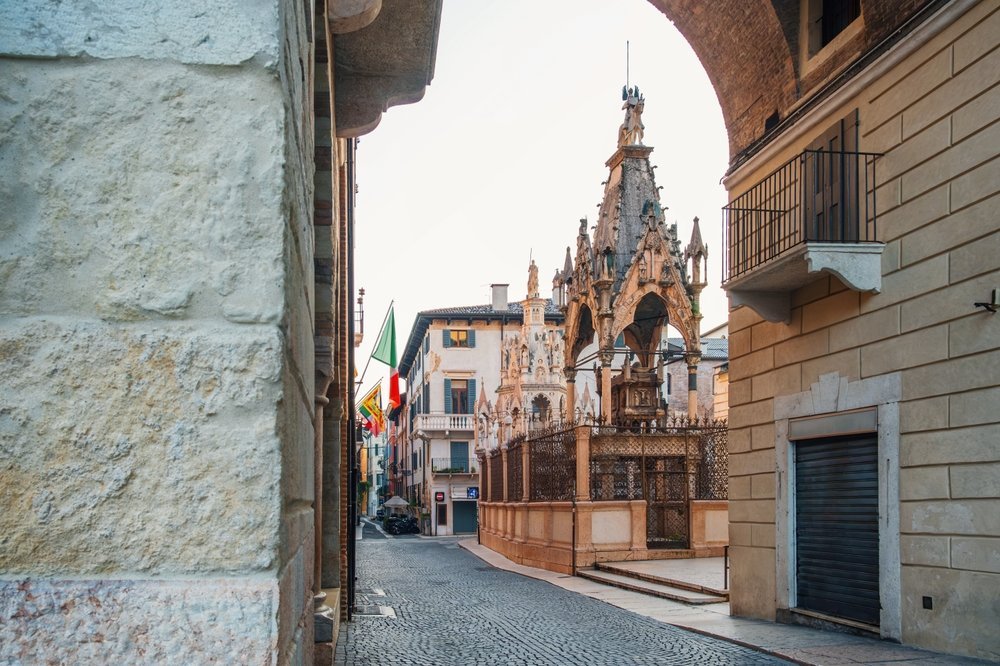
Through an arch from Piazza delle Erbe you enter Piazza dei Signori, which is far quieter and more elegant. From here the Della Scala family ruled Verona from 1262 to 1387, and the square is surrounded by their old palaces and the fine 15th-century Loggia del Consiglio. In the middle of the square stands a statue of Dante, who lived in Verona during his exile as a guest of Cangrande I della Scala.
Just around the corner are the Arche Scaligere, the family’s Gothic tombs behind a wrought-iron railing full of little ladders, because scala means ladder and was the family’s coat of arms. Above the entrance to the small church of Santa Maria Antica, Cangrande I sits on horseback on top of his tomb. The equestrian statue here is a copy; the original is in Castelvecchio. The tombs of Mastino II and Cansignorio are even larger, with spires, canopies and figures of saints.
You can see most of it for free through the railing, and at certain times there’s access to the burial ground itself, which is then included in the Verona Card. Come back in the evening when the square is lit up and the cafés have tables out under the loggia.
6. Juliet’s House and Balcony
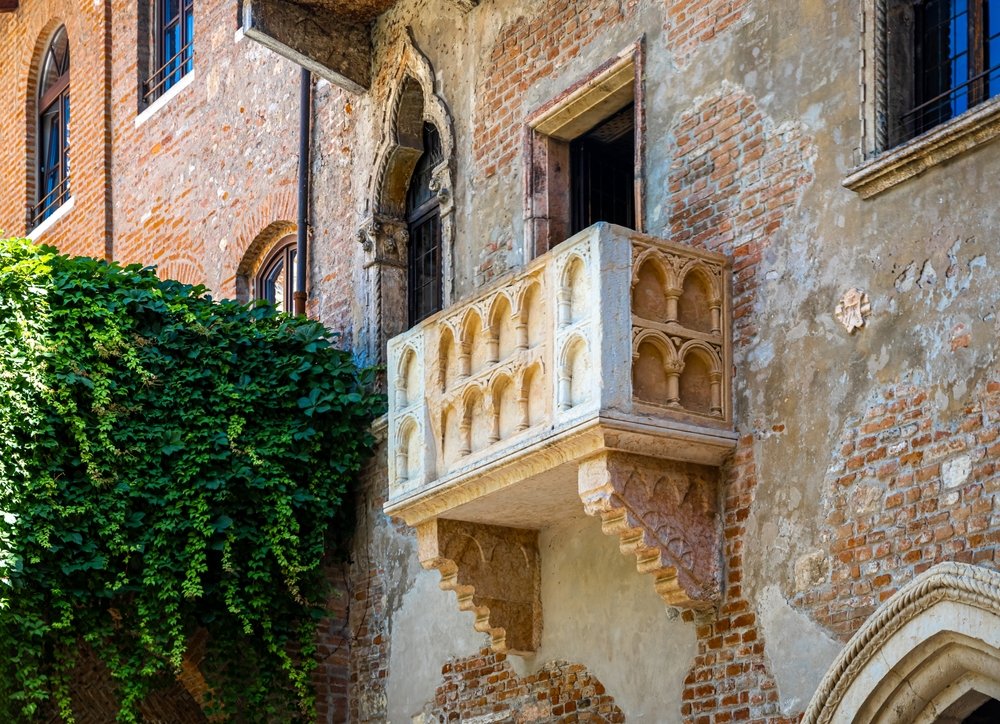
Casa di Giulietta on Via Cappello is Verona’s most visited sight and, in my opinion, also the most overrated. The 13th-century house belonged to the Dal Cappello family, whose name resembles Shakespeare’s Capulets, and that is the entire link to Juliet, who never existed. The famous balcony was added in the 20th century to give visitors what they came for, and in the courtyard stands a bronze statue of Juliet.
You need a ticket for the courtyard. The courtyard alone costs 5 euros (around £4), and the courtyard together with the house itself costs 12 euros (around £10). Tickets are only sold online with a fixed time slot, even if you have the Verona Card. The entrance is through Teatro Nuovo on Piazzetta Navona, and it’s open from 9am to 7pm, although on Mondays it doesn’t open until 2pm. Inside the house you’ll see furniture, frescoes and the bed from Franco Zeffirelli’s film of Romeo and Juliet, and you can stand on the balcony yourself.
Honestly, that’s a lot of money for a 20th-century balcony. If you want the Romeo and Juliet atmosphere for free, walk past Romeo’s House instead, a medieval house with a defensive wall and battlements on Via Arche Scaligere, which can only be seen from the outside.
7. Castelvecchio and Ponte Scaligero
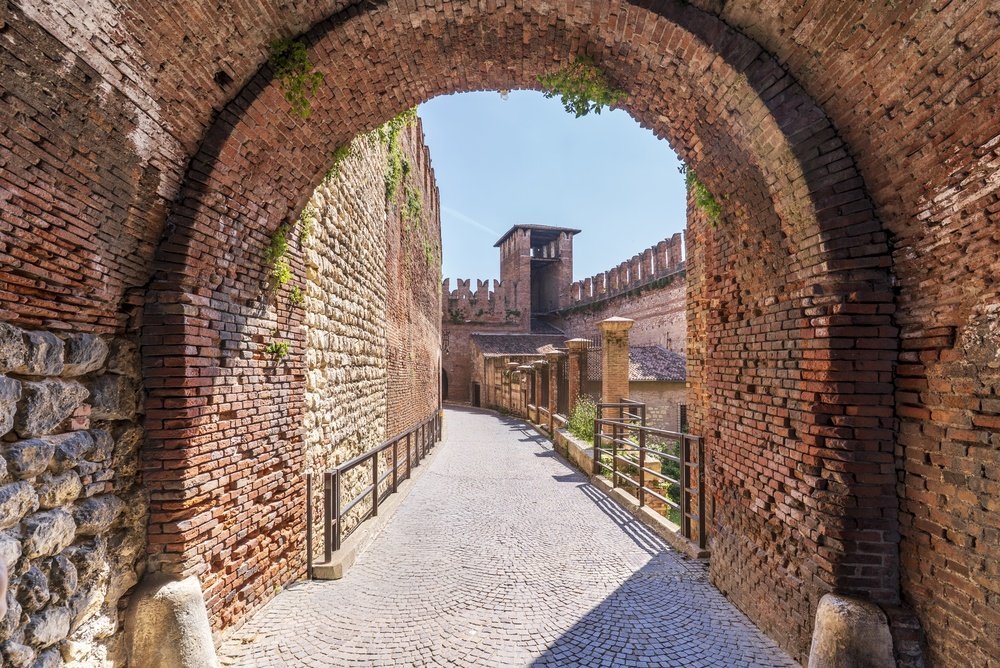
Cangrande II della Scala built the castle between 1354 and 1356, and the red-brick Ponte Scaligero gave him a private escape route across the Adige should the townspeople turn against him. German troops blew up the bridge in 1945, but after the war it was rebuilt using the original stones and bricks, which were recovered from the river. The bridge is free and always open, and the view back towards the castle from the north bank is best in the late afternoon, when the bricks glow red.
Inside the castle, Museo di Castelvecchio fills 29 rooms, designed by the architect Carlo Scarpa in the late 1950s. The collection covers art from the Middle Ages to the 18th century, with works by Pisanello, Mantegna, Bellini and Veronese, as well as weapons, ceramics and the city’s old bells. The highlight is the original equestrian statue of Cangrande I, which Scarpa positioned so that you see it from several levels as you make your way through the museum.
A ticket costs 9 euros (around £7.50), and it also covers the walkway along the castle walls. The museum is open Tuesday to Sunday from 10am to 6pm and is closed on Mondays. Allow an hour and a half to two hours, then carry on along the river towards San Zeno afterwards.
8. Basilica di San Zeno
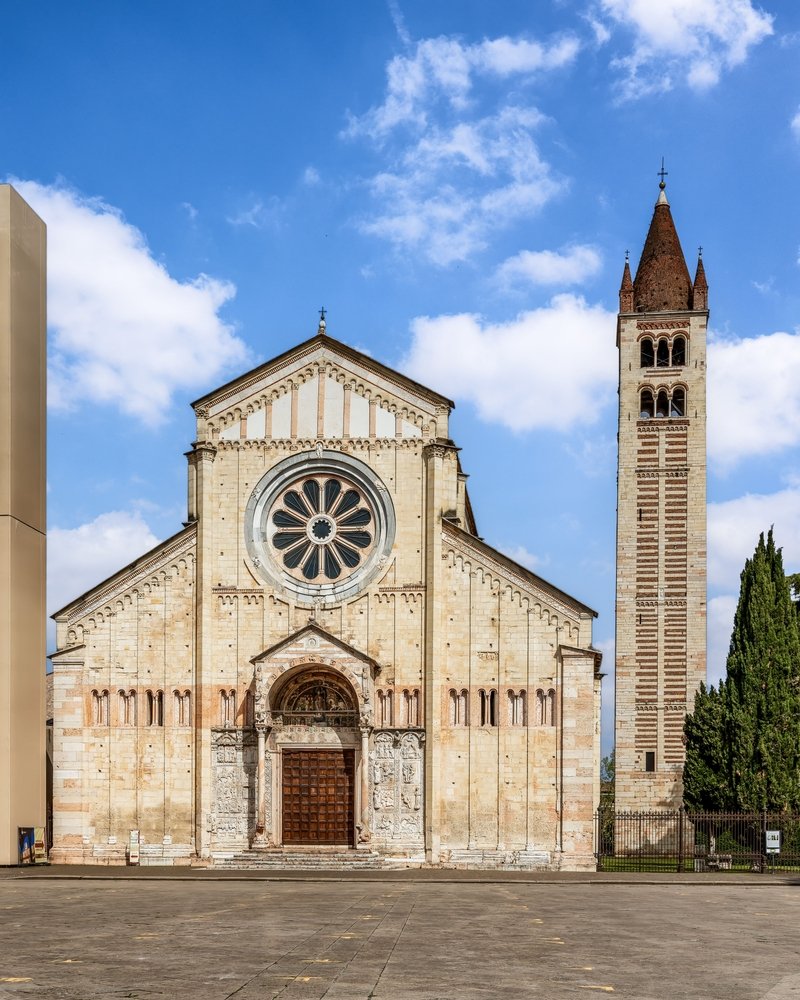
San Zeno Maggiore is about a 15-minute walk west of Castelvecchio and, in my opinion, the most beautiful church in Verona. The Romanesque basilica dates from the 12th century and is built over the tomb of the city’s patron saint, Bishop Zeno. The façade has a large rose window known as the Wheel of Fortune, and the main door is covered in bronze panels showing scenes from the Bible and from the life of St Zeno. Beside it stands a slender bell tower in stripes of tuff and brick.
Inside, above the high altar, hangs Andrea Mantegna’s large altarpiece from the 1450s, and down in the crypt lies the saint. According to local legend, this is where Romeo and Juliet were married. The cloister next to the church is quiet and green. Admission costs 4 euros (around £3.50), while a combined ticket for the four major churches costs 8 euros (around £7) and is valid for 90 days. From March to October it’s open from 9am to 6pm on weekdays and from 1pm on Sundays.
The San Zeno district has some of the city’s best trattorias and is calm in the evening, so it’s a good place to stay if you want to get a little away from the tourists. You can see hotels in San Zeno here.
9. Sant’Anastasia
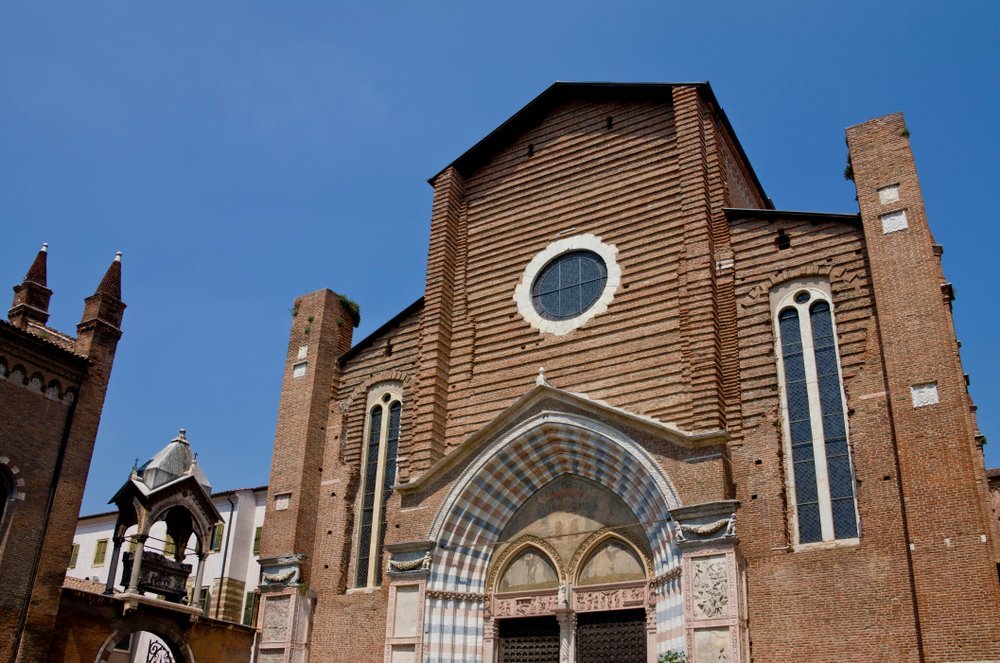
Sant’Anastasia is Verona’s largest church. The Dominicans began building it in the late 13th century, and it wasn’t consecrated until the 15th century, but the façade was never finished and still stands in bare brick above the elegant marble portal. Inside, the space is tall and bright, with columns of red marble and a ceiling painted with floral tendrils.
Look out for the two holy water stoups by the entrance, carried on the backs of two crouching figures that the people of Verona call i gobbi, the hunchbacks. Touching them is said to bring good luck. The church’s greatest treasure is Pisanello’s fresco of St George and the Princess from the 1430s, one of the masterpieces of late Gothic art in Italy, and several of the side chapels are covered in frescoes from the 14th and 15th centuries.
A ticket costs the same as for the other churches and is included in the combined ticket and the Verona Card. The church is at the northern end of the Old Town, a few minutes’ walk from Piazza delle Erbe and right by Ponte Pietra, so visit it on your way to the river. On Sundays it doesn’t open to visitors until around midday.
10. The Cathedral
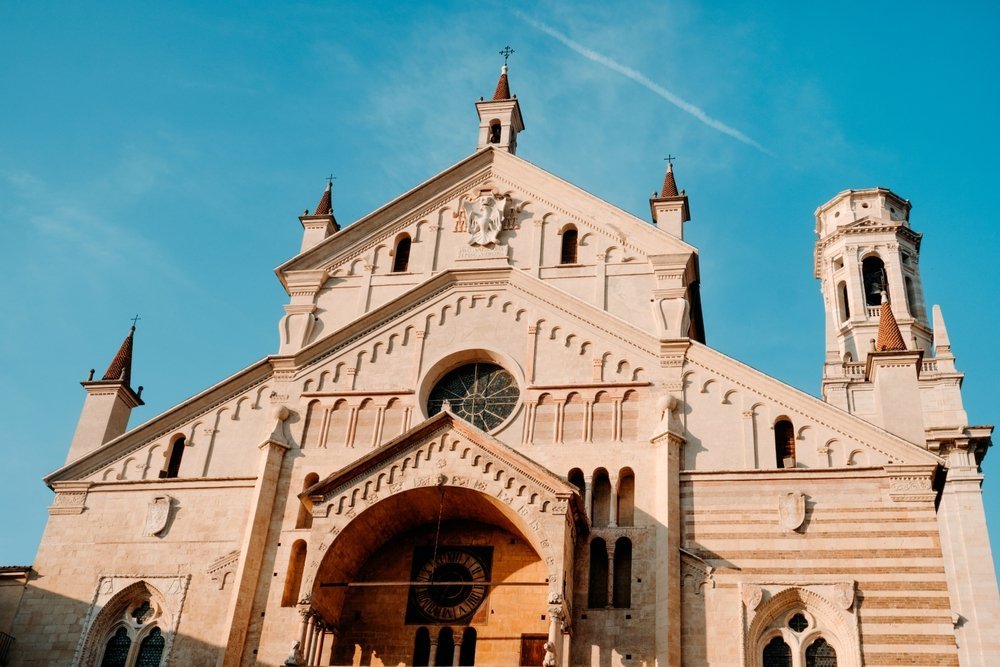
Verona’s cathedral, Santa Maria Matricolare, sits in the northern corner of the Old Town by the river and is built on top of two earlier churches. The 12th-century Romanesque façade has a portal whose columns rest on the backs of two griffins, and beside it stand the figures of Roland and Oliver, Charlemagne’s knights. Inside, the church is Gothic, with painted pilasters and rows of side chapels.
The masterpiece is Titian’s Assumption of the Virgin from the 1530s in the first chapel on the left. The cathedral is part of a whole complex, so the same ticket also gets you into the baptistery of San Giovanni in Fonte, with an octagonal font carved from a single block of marble, and the church of Sant’Elena, where you can see remains of floor mosaics from the first Christian churches on the site.
The ticket is the same as for the other churches and is also covered by the combined ticket. The complex has shorter opening hours than the others, typically 11am to 5.30pm on weekdays, shorter on Saturdays and only in the afternoon on Sundays, so plan it in early. From the cathedral it’s a two-minute walk to Ponte Pietra.
11. San Fermo Maggiore
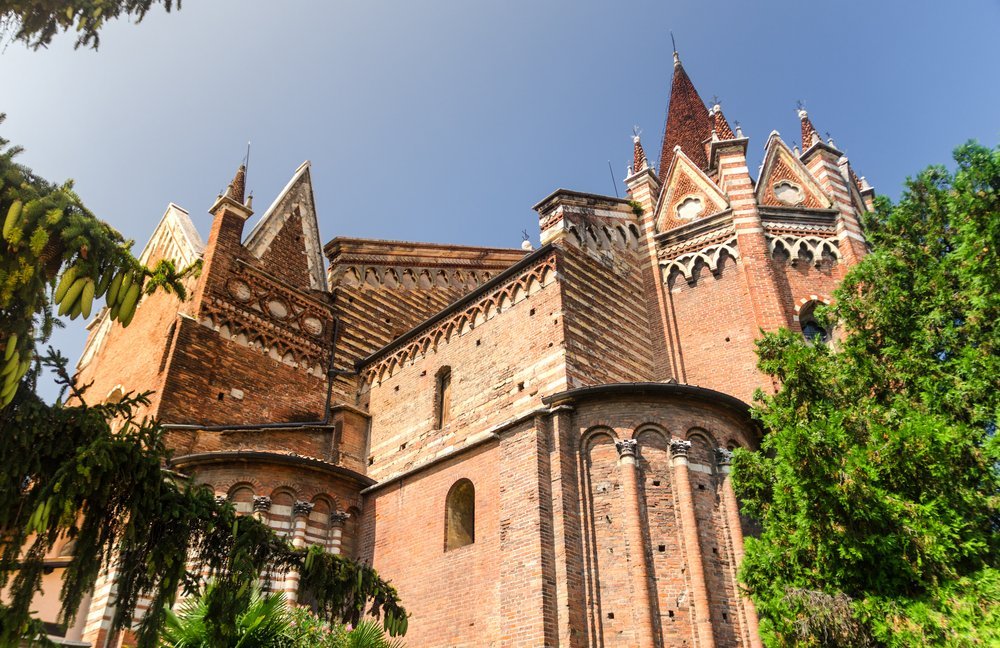
San Fermo is two churches, one on top of the other. The lower one is 11th-century Romanesque and built over the spot where the martyrs Fermo and Rustico were buried, while the upper one is Gothic and was built by the Franciscans in the 14th century. You can see this on the façade, where Romanesque stripes of tuff and brick meet Gothic pointed arches.
The upper church has one of the finest ceilings in Verona, a wooden ceiling shaped like an upturned ship’s hull, dating from 1314 and painted with saints. By the entrance is the Brenzoni Monument with Pisanello’s fresco of the Annunciation, one of the few surviving works by him. The lower church is dim and atmospheric, with old frescoes on the columns and low vaults.
San Fermo is by the river at the end of Via Leoni, about a five-minute walk from Juliet’s House, and the ticket is the same as for the other churches. Of the four churches, it’s the one with the fewest visitors. On your way here, look down at Porta Leoni, a Roman city gate where you can see the remains of the old gate below street level.
12. Porta Borsari and aperitivo in the Old Town
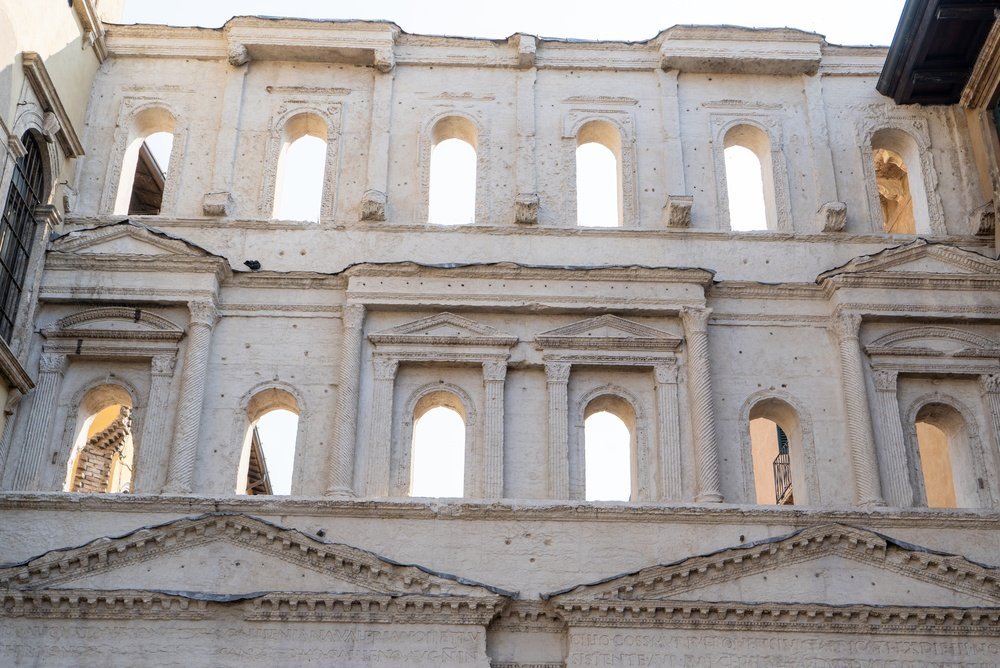
Porta Borsari was the main Roman gateway into the city, and its white stone façade from the first century AD still stands in the middle of the street, with two arches and two rows of windows above. The name comes from the bishop’s tax collectors, who levied tolls here in the Middle Ages. Running through the gate is Corso Porta Borsari, which follows the old Roman main street towards Piazza delle Erbe, lined with shops, bars and old palazzi on both sides.
This is also where the evening begins. Around Corso Porta Borsari and Piazza delle Erbe, the people of Verona meet for aperitivo after work with a glass of Soave, Valpolicella or a spritz and some small snacks. When it’s time to eat, try the city’s own dishes: risotto with Amarone, bigoli with duck sauce, boiled meats with the peppery bread sauce pearà, and pastissada de caval, a horse-meat stew that is more common here than many visitors expect. The Christmas cake pandoro also comes from Verona.
My tip is to skip the restaurants with menus in five languages and photos of the food, and instead seek out the osterie in the side streets and in Veronetta on the other side of the river.
Book a food walk with local specialities and Amarone here.
13. Ponte Pietra
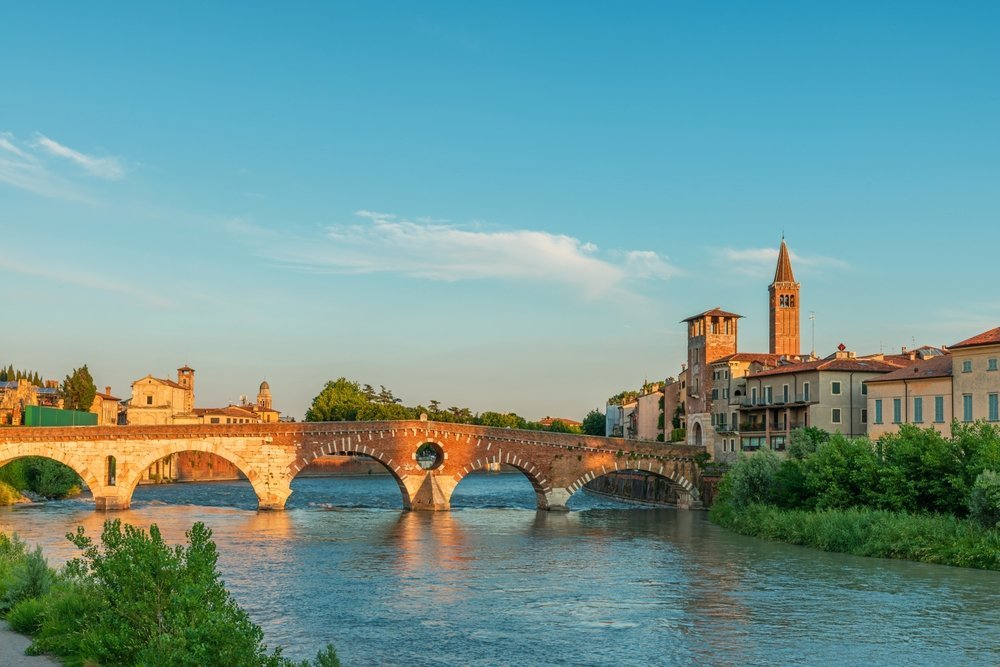
Ponte Pietra is the oldest bridge in Verona and the only one left from Roman times. It was built in the first century BC and carried the road across the Adige to the theatre on the other side of the river. The bridge is a mix of white Roman limestone and red brick from later repairs, and in 1945 retreating German troops blew it up. After the war, the stones were fished out of the river and the bridge was rebuilt at the end of the 1950s using as much of the original material as possible.
The bridge is free and always open, and the view from here up and down the river, with Castel San Pietro on the hill and the cathedral’s bell tower, is one of the finest in the city. It’s also one of the best spots for sunset, while in the morning you’ll have it almost to yourself.
From the bridge you walk straight on to the Teatro Romano and up to Castel San Pietro, so the three sights fit naturally into one outing. Take your photo of the bridge from the embankment on the Old Town side, where you’ll get both the arches and the hill in the shot.
14. Teatro Romano and the Archaeological Museum
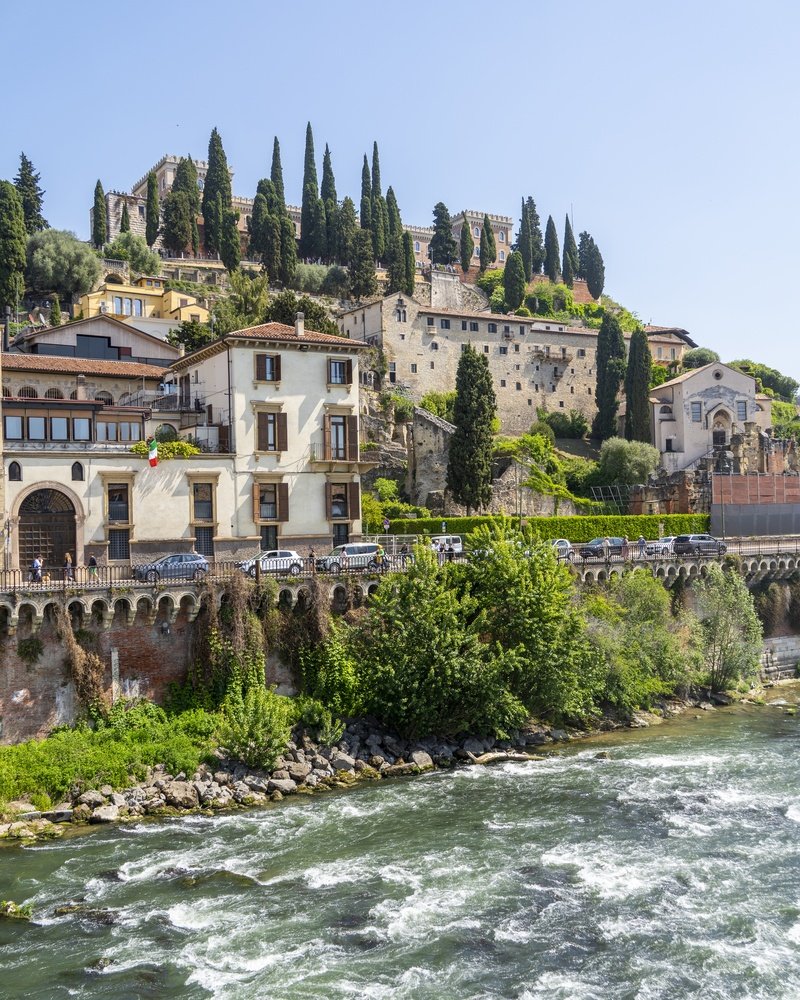
On the other side of Ponte Pietra, the Roman theatre sits on the slope below Castel San Pietro. It was built at the end of the first century BC under Emperor Augustus and lay hidden under houses for centuries until the merchant Andrea Monga began excavating it in 1834. Today you can sit on the same stone steps as the Romans and look out across the river towards the Old Town.
Above the theatre, the Archaeological Museum occupies a 15th-century monastery, with Roman mosaics, statues, glass and gravestones from Verona and the surrounding area. From the large terrace at the top you get one of the best views over the city. It’s open Tuesday to Sunday from 10am to 6pm, closed on Mondays, and entry is included in the Verona Card. In summer the theatre hosts the Estate Teatrale Veronese festival with theatre and concerts, and parts of the route may then be blocked by the stage.
The surrounding neighbourhood is called Veronetta, the city’s student quarter, with the university, cheaper bars and small restaurants, and it’s a good place to stay if you want more for your money. You can see hotels in Veronetta here.
15. Castel San Pietro and the view over the city
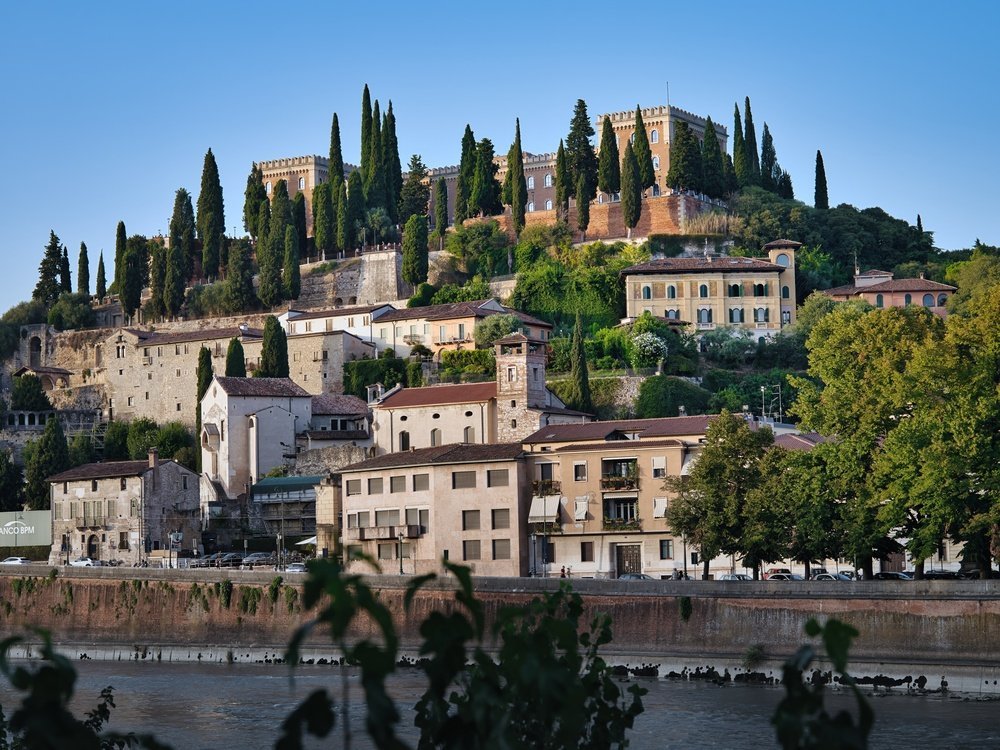
The classic view over Verona, with the bend in the river, Ponte Pietra and all the towers, is from the Colle San Pietro hill just above the theatre. The building on top is an Austrian barracks from the mid-19th century, built on the site of a former medieval castle, and it isn’t open to visitors. It’s the terrace in front that you come for, and it’s free.
You can walk up the steps from Ponte Pietra in 10 to 15 minutes or take the little funicular, which makes the trip in just over a minute, running from 10am to 9pm in summer and until 5pm in winter. A ticket costs about 2 euros (around £1.70) single and 3 euros (around £2.50) return, and the funicular isn’t included in the Verona Card.
My tip is to take the funicular up and walk down, and to come in the last hour before sunset, when the rooftops and façades glow orange. There’s both a café and a bar at the viewpoint, so you can have a drink while the light changes.
Book a city walk with the funicular and a glass of wine afterwards here.
16. Giardino Giusti
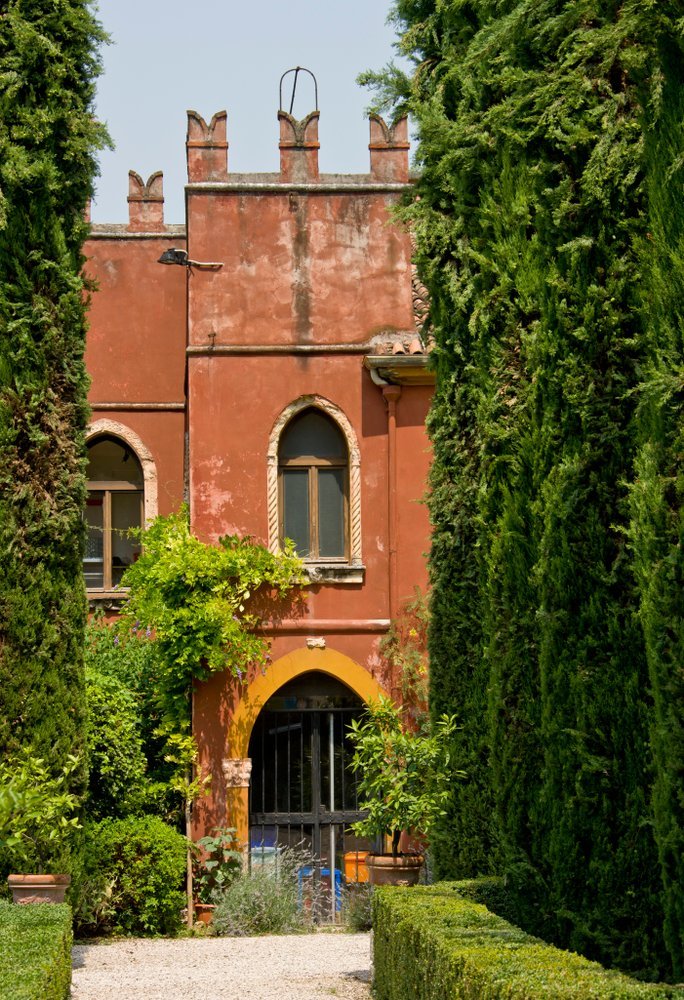
Giardino Giusti is one of Italy’s finest Renaissance gardens, tucked away behind a palazzo façade in Veronetta, a few minutes’ walk from the theatre. The Giusti family laid out the garden at the end of the 16th century with a long avenue of tall cypresses, geometric box-hedged beds, fountains, statues and a small maze. Goethe visited the garden in 1786 and wrote enthusiastically about the cypresses.
At the far end of the garden, a path leads up the slope past a large stone mask, which according to legend once spat flames, to a small tower and a terrace with views over the whole city. A ticket costs 14 euros (around £12) or 9 euros (around £7.50) with the Verona Card, and the garden is open every day except 25 December, usually from 10am to 6pm and longer in summer.
To be honest, it’s an expensive garden, but it’s calm and beautiful, and it’s one of the few places in the centre where you can find shade and peace in the middle of the day. Come early and you’ll have the cypress avenue to yourself.
17. Wine tasting in Valpolicella
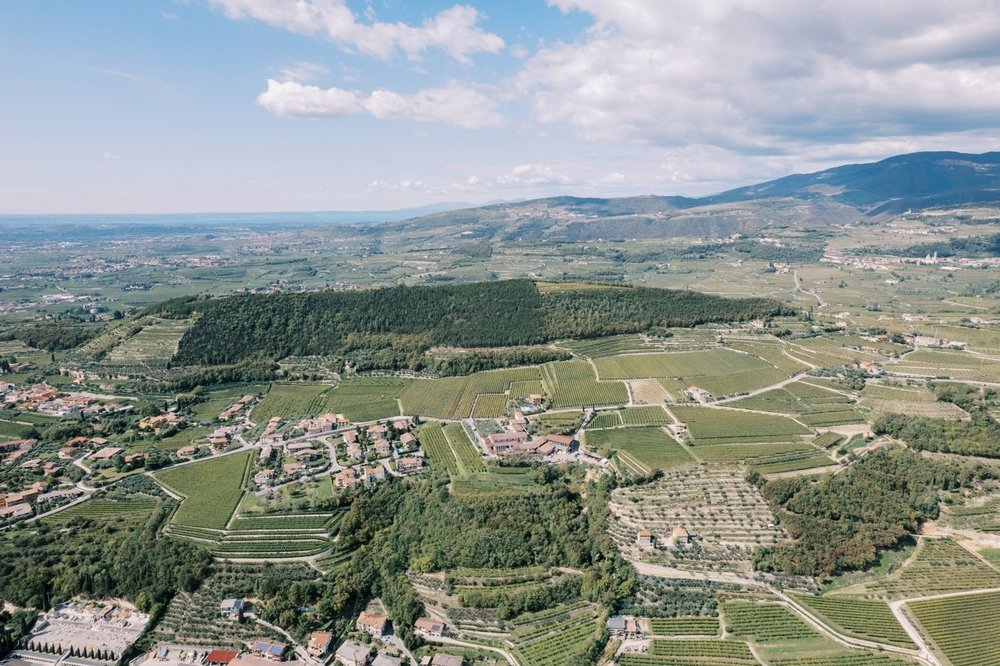
Just 15 to 20 kilometres north-west of Verona lies Valpolicella, the wine region behind Amarone, one of Italy’s most famous red wines. The grapes, especially Corvina, are dried for several months after the harvest to concentrate the sugar, making the wine powerful and full-bodied. The same grapes are also used to make the lighter Valpolicella, the sweet Recioto and Ripasso, which gains extra body from the Amarone skins.
The classic area is made up of five valleys and municipalities, Sant’Ambrogio, San Pietro in Cariano, Fumane, Marano and Negrar, and here the wineries sit close together among the terraces and old villas. Many wineries welcome visitors for tastings, but most require booking, and it’s hard to get around without a car.
The easiest option is an organised half-day trip from Verona with transport, so nobody has to drive, and these typically cost around 100 euros (around £85) including a tasting of several wines. If you’d rather explore on your own, you can compare car hire prices in Verona here, but remember that whoever is driving will have to stick to tasting and spitting.
Book a wine-tasting trip to Valpolicella with Amarone and transport here.
18. Day trip to Sirmione on Lake Garda
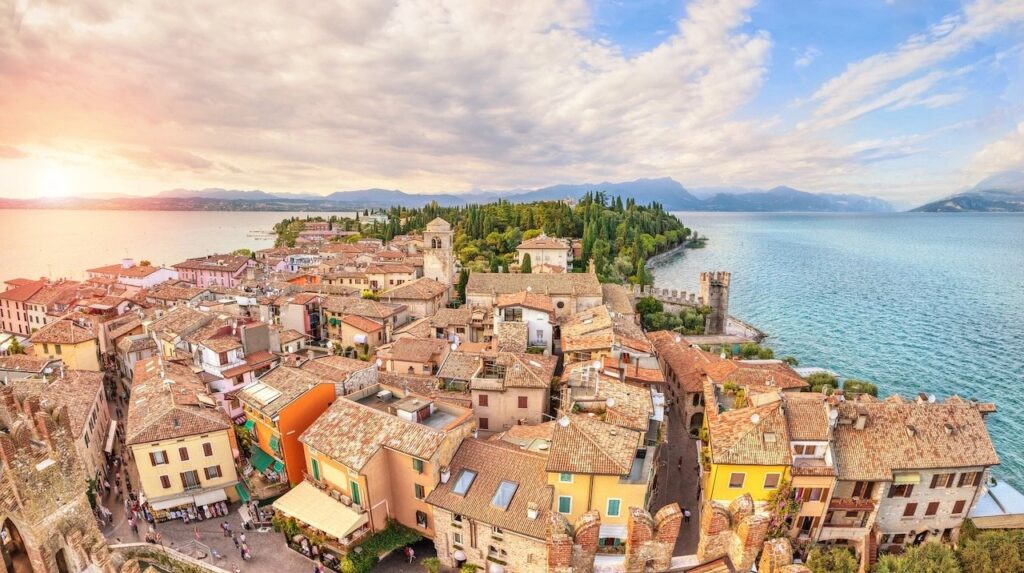
Lake Garda lies only around 30 kilometres west of Verona, and the most obvious day trip is to Sirmione, a small town at the very tip of a narrow peninsula at the southern end of the lake. You enter over a drawbridge through the Rocca Scaligera castle, which the Della Scala family built in the 13th century and which has its own fortified harbour inside the walls. Inside the town you’ll find narrow streets, gelato shops and views of the lake on every side.
Out at the tip of the peninsula lies the Grotte di Catullo, the ruins of the largest Roman villa in northern Italy, covering more than two hectares with olive groves and views over the lake. Admission costs 10 euros (around £8), and a combined ticket including the castle and the Roman villa in Desenzano costs 20 euros (around £17). On Mondays it’s only open in the morning.
The train from Verona Porta Nuova to Desenzano or Peschiera takes around 15 to 25 minutes, and from there you take the bus out to Sirmione. Arrive early, as the town is small and gets packed in the afternoon during the summer holidays. If you’d like to stay a few nights by the lake, I’ve written a guide to where to stay on Lake Garda.
Book a day trip from Verona to Sirmione and Lazise with a boat trip on the lake here.
Practical travel tips for Verona
The Verona Card covers most of the places in this guide. The card costs 33 euros (around £28) for 24 hours and 38 euros (around £32) for 48 hours and gives you entry to the Arena, Torre dei Lamberti, Juliet’s House, Castelvecchio, Teatro Romano, the four major churches and the city buses. Each place can only be visited once, and Juliet’s House still has to be booked online. If you see the Arena, the tower, Castelvecchio, Juliet’s House and the churches, the card has already paid for itself. From November to March, the municipal museums cost just 1 euro (around 85p) on the first Sunday of the month.
The Old Town is small and flat, so you’ll walk most of the time. From Verona Porta Nuova station it’s a 15 to 20-minute walk to Piazza Bra, or you can take one of the many city buses. The airport lies just over 10 kilometres south-west of the city, and the Aerobus runs from there to Porta Nuova in around 20 minutes. If you’re arriving by car, watch out for the limited traffic zone in the centre, and arrange parking with your hotel in advance.
Verona lies on the railway line between Milan and Venice, and on the fast trains you can reach either city in just over an hour. That makes it an obvious stop on a tour of Italy, and you can read more about tickets and routes in my guide to trains in Italy. If you’re travelling on, take my guides to things to do in Venice and things to do in Milan with you.
The best time to visit Verona is April, May, September and October, when it’s warm without being too hot. From June to August there’s opera in the Arena, but also the biggest crowds and the highest hotel prices, and in December the city is decorated with a Christmas market. If you need the full selection, you can see all hotels in Verona on Booking.com, and if you’re heading further around the country, start with my overview of where to stay in Italy.
Travel ressources & websites I use all the time 👇
• Booking.com has the best offers on hotels and unique places to stay
• GetYourGuide is the best place to book tours & activities with free cancellation
• Welcome Pickups is the best & safest place to pre-book airport transfers
Psst 👀 Have you subscribed to my Youtube channel and my Instagram where I provide more useful travel tips?