

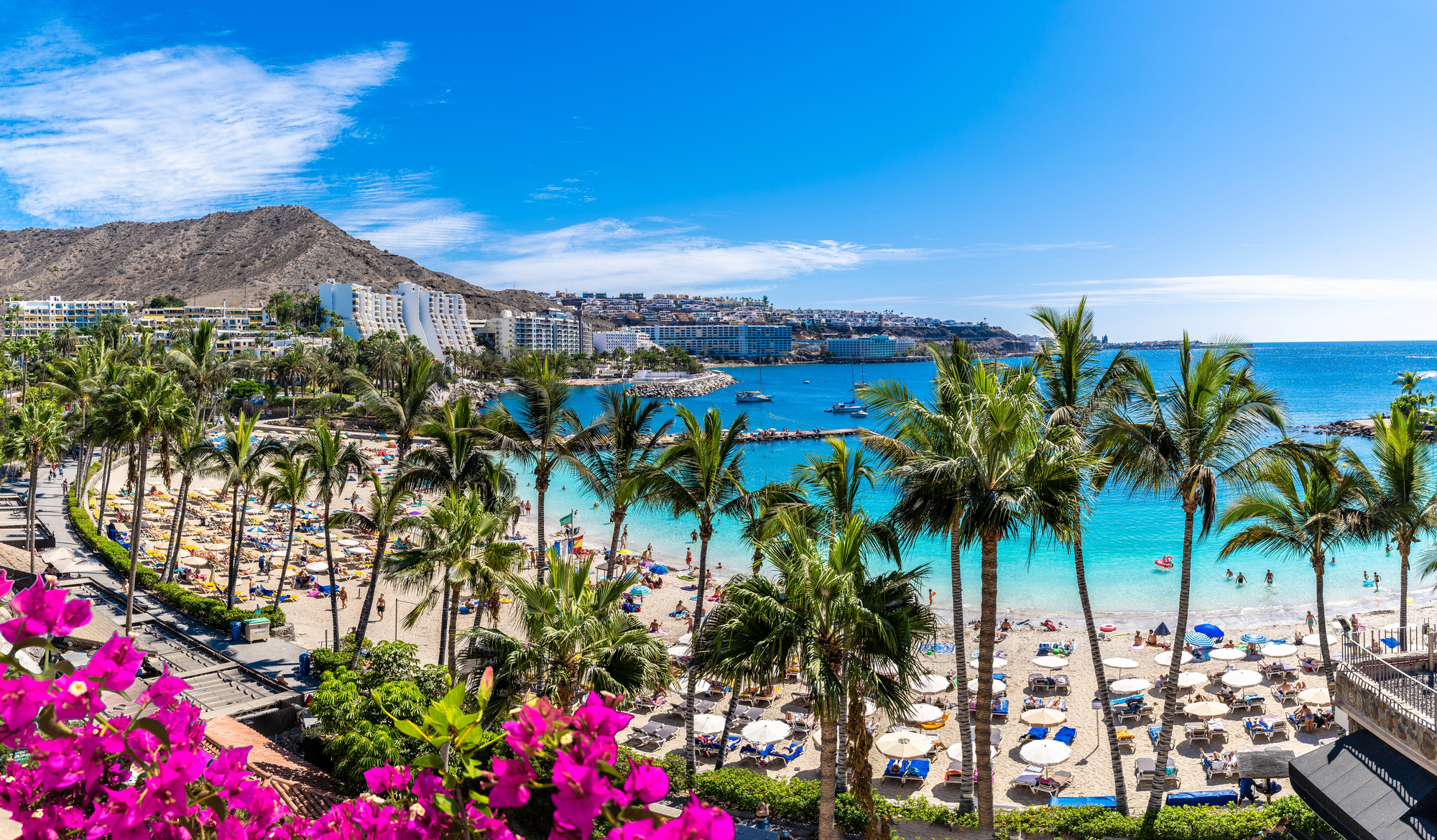
Gran Canaria is much more than sun loungers and hotel pools in the south. In a single day, you can walk in the sand dunes at Maspalomas, drive up through pine forest and rocky peaks to Roque Nublo and finish in the cobbled streets of Las Palmas, where Columbus stopped on his way to the Americas. The island is round and small enough that you can reach most of it in a hire car or on the island’s buses.
Here are my picks for the 17 best things to see and do on Gran Canaria, with prices, opening hours and tips on what to book before you go. Prices are in euros, and 1 euro is roughly £0.84. Roque Nublo requires a reservation during the daytime, and several museums are closed on Mondays, so read the sections before you plan your days. At the end, you’ll find a day trip on the ferry to Tenerife.
Contents
1. Maspalomas Dunes
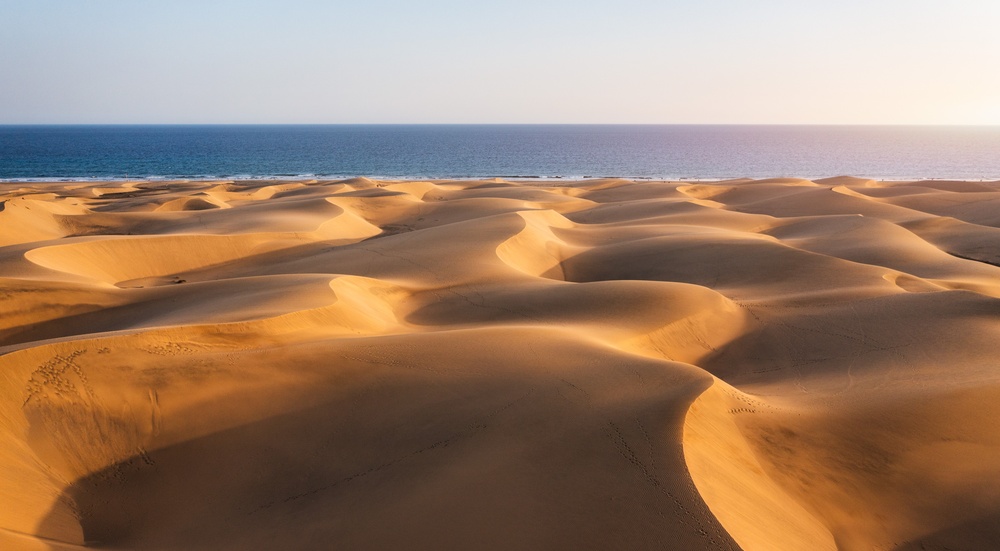
The sand dunes at Maspalomas are Gran Canaria’s most famous sight, and the first time you stand among the tall, golden dunes with the sea behind them, it feels more than anything like a small desert. The dunes, the palm grove and the brackish lagoon, Charca de Maspalomas, are protected as a special nature reserve of around 400 hectares, and by the lagoon you can see both migratory and resident birds.
Entry is free, but you have to stick to the marked paths, because the sand and the plants get damaged when people walk all over them. The easiest way in is from Playa del Inglés or from the beach by the lighthouse. The Faro de Maspalomas lighthouse is 55 metres high and was first lit in 1890, and the seafront promenade from there towards Meloneras is lovely for an evening stroll.
My tip is to head out into the dunes early in the morning or late in the afternoon, when the sand isn’t scorching hot and the light is softer. Wear shoes and bring water, because there’s no shade out there. If you’d like to stay close to the dunes and the lighthouse, Maspalomas and Meloneras is the first area in my guide to where to stay in Gran Canaria, and you can see hotels in Meloneras here.
Book a camel ride in the Maspalomas dunes.
2. Puerto de Mogán
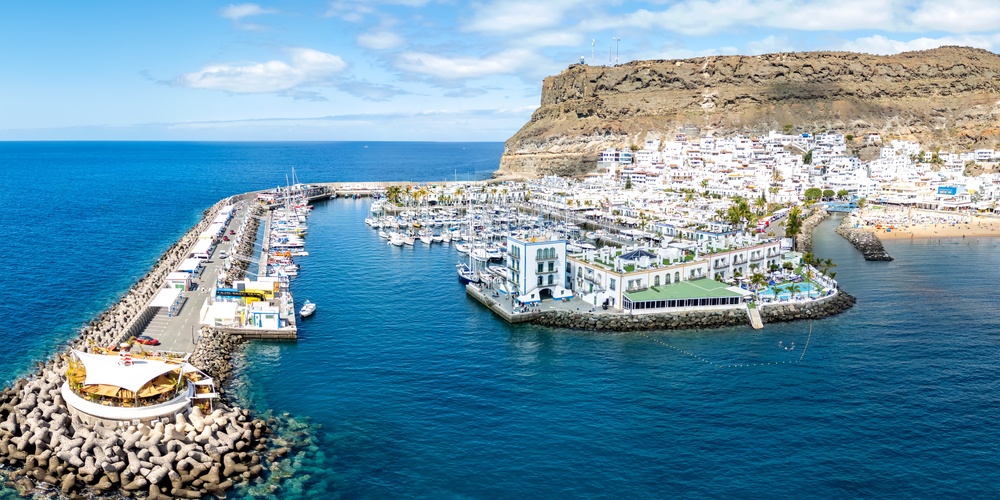
Puerto de Mogán lies right out in the south-west and is the most charming place for a stroll on the south coast. It used to be a fishing village, and today white houses with coloured trim and flowering bougainvillea run down to the marina, where little canals and bridges have earned the town the nickname Little Venice. Next to the harbour, there’s a small, sheltered sandy beach.
On Fridays, there’s a market in Puerto de Mogán from early morning until around 2pm, and the town fills up with stalls selling clothes, souvenirs, fruit and local specialities. It’s great fun, but it’s also very busy, and the car parks fill up quickly. Boats sail along the coast from the harbour, and you can go under the water in a small submarine that shows you the seabed and a couple of wrecks.
From Las Palmas, bus 1 runs all the way to Puerto de Mogán. My tip is to come on a day other than Friday if you’d like to have the town more or less to yourself, and stay until sunset, when the day-trippers have gone home. Puerto de Mogán is also a good place to stay if you prefer a small town to the big resorts, and you can see hotels in Puerto de Mogán here.
Book a submarine trip in Puerto de Mogán.
3. Roque Nublo
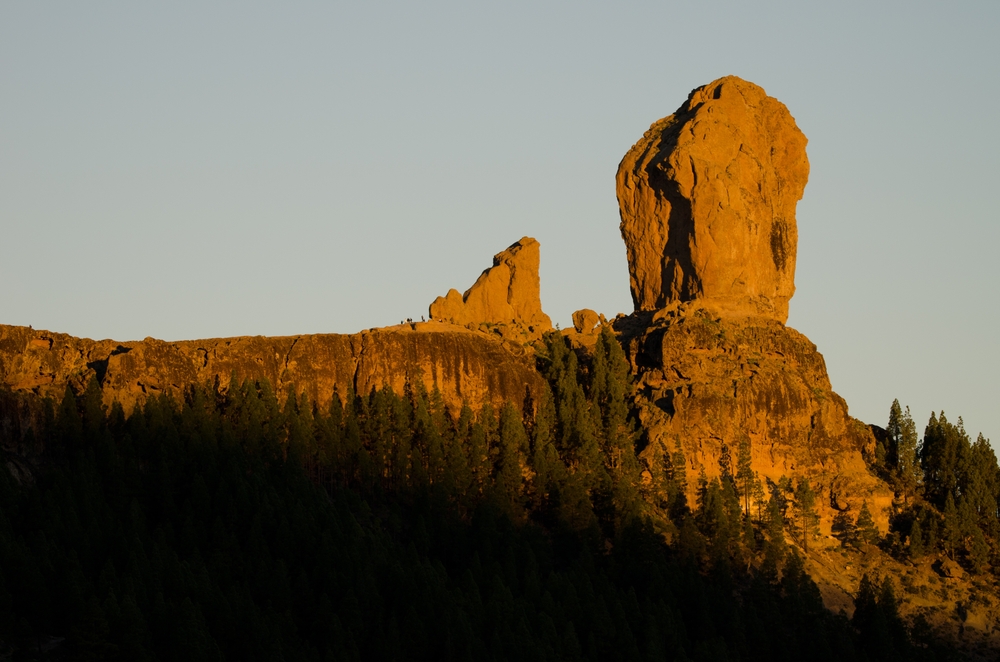
Roque Nublo is the island’s landmark, a rock pillar that rises 80 metres from its base at an altitude of around 1,800 metres in the middle of the island. The place was sacred to the ancient Canarians, and on clear days you can see out over the whole central part of the island from here and often all the way to Teide on Tenerife.
Access is regulated to protect the area. If you’d like to walk up the path from Degollada de La Goleta between 9am and 5pm, you have to reserve a time slot on reservasroquenublo.com, and the places fill up, so it’s a good idea to book several days ahead. Outside those hours, you can walk up without a reservation. Parking along the road by the path is no longer allowed, so you leave the car at the car park at Cruz de Los Llanos or in Tejeda and take the shuttle bus from there. Global’s bus 18 also runs from Faro de Maspalomas to Roque Nublo a couple of times a day.
The path is short, but it climbs steeply over stones and roots, so wear proper shoes. My tip is to come early in the morning, before the clouds settle over the peaks, and bring a jumper, because it’s noticeably colder than on the coast.
4. Pico de las Nieves
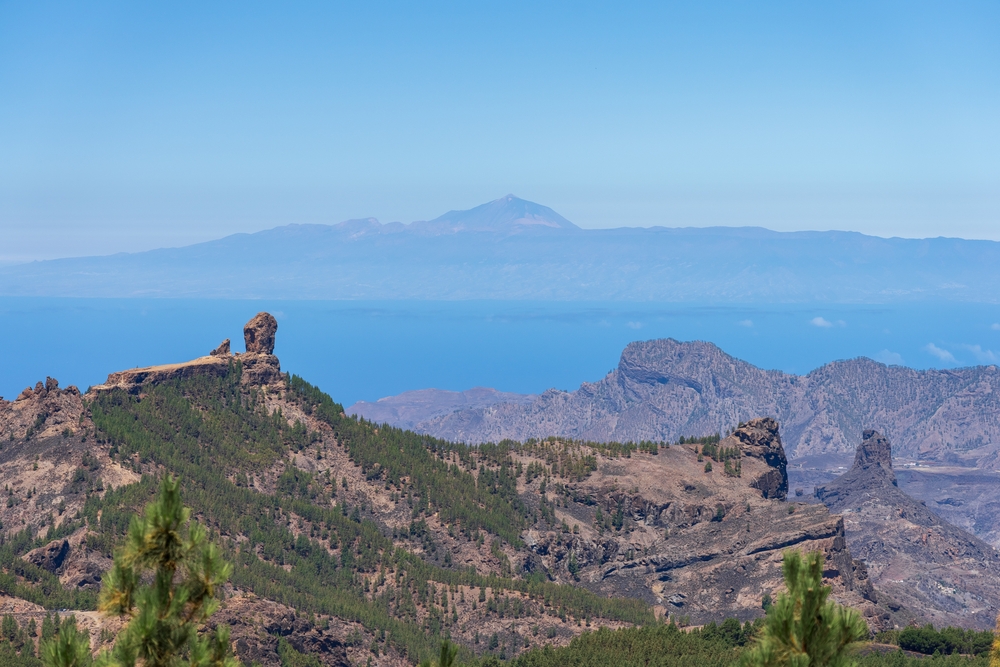
Pico de las Nieves, or Pico de los Pozos de las Nieves, is Gran Canaria’s highest point at 1,949 metres. The name comes from the old snow wells, where people once collected snow in winter and stored it as ice. The summit isn’t a tough climb, because a road goes almost all the way up, and from the car park it’s only a few steps to the viewpoint.
From here, you look down on Roque Nublo and out over the Tejeda caldera, and there’s often a blanket of cloud below you. On clear days, Teide on Tenerife stands out as a silhouette across the sea, and at sunset the view is really special. Entry is free, and the summit is only a short drive from Roque Nublo, so the two fit nicely together on the same day. The highest point itself is a military area with a radar station, so you can’t go all the way to the top, but the view from the platform is the same.
My tip is to check the weather forecast for the mountains and not just for the beach, because it can be sunny on the coast and thick with fog at the top. If you don’t have a car, you can go on an organised tour from Las Palmas that also stops at the Bandama crater and Teror.
Book a day trip to Pico de las Nieves and Roque Nublo from Las Palmas.
5. Tejeda
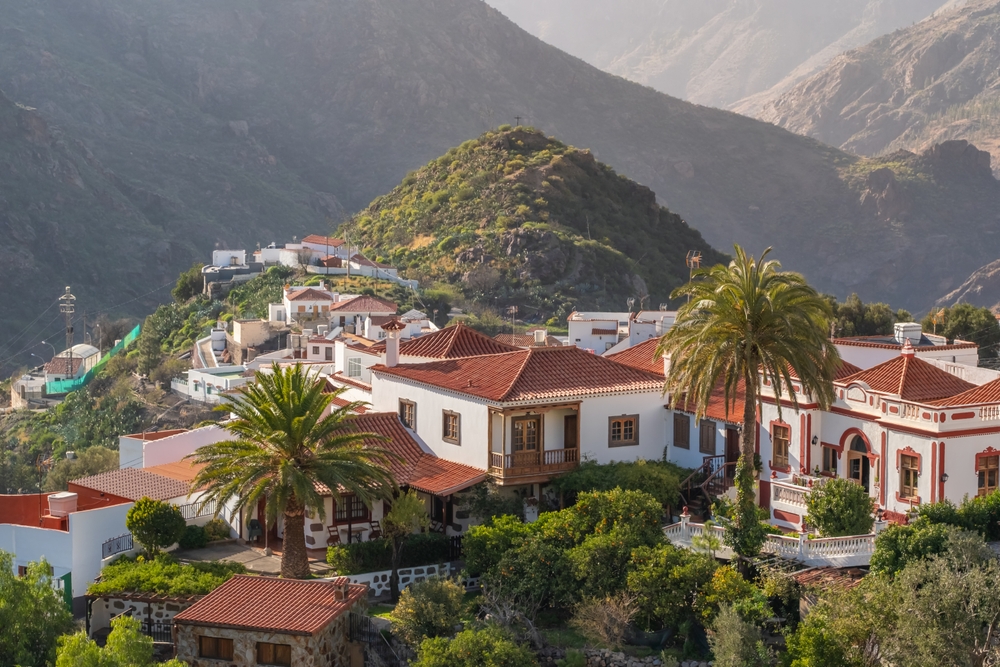
Tejeda is the mountain village in the middle of the island, and since 2015 it’s been a member of Los Pueblos más Bonitos de España, the association of Spain’s most beautiful villages. White houses sit on the slope down towards the Tejeda caldera, one of the largest volcanic calderas in the Canary Islands, and from the village you look straight across to both Roque Bentayga and Roque Nublo.
The village is known for its almond trees, which blossom around the end of January, and for the sweet almond cakes you can buy in the bakeries on the main street. The almond blossom is celebrated with a festival that’s been held since 1970. The village also has a route with six viewpoints that you can follow on foot or by car, and it gives you the best views out over the caldera. Just above the village lies the mountain pass of Cruz de Tejeda, with stalls, restaurants and a parador.
My tip is to use Tejeda as a base for a day or two in the mountains instead of driving back and forth from the south every day. It’s quiet here in the evening, and the starry sky is far clearer than on the coast. It’s a good choice if you’d like to go hiking, and you can see hotels in and around Tejeda here.
6. Roque Bentayga and Risco Caído
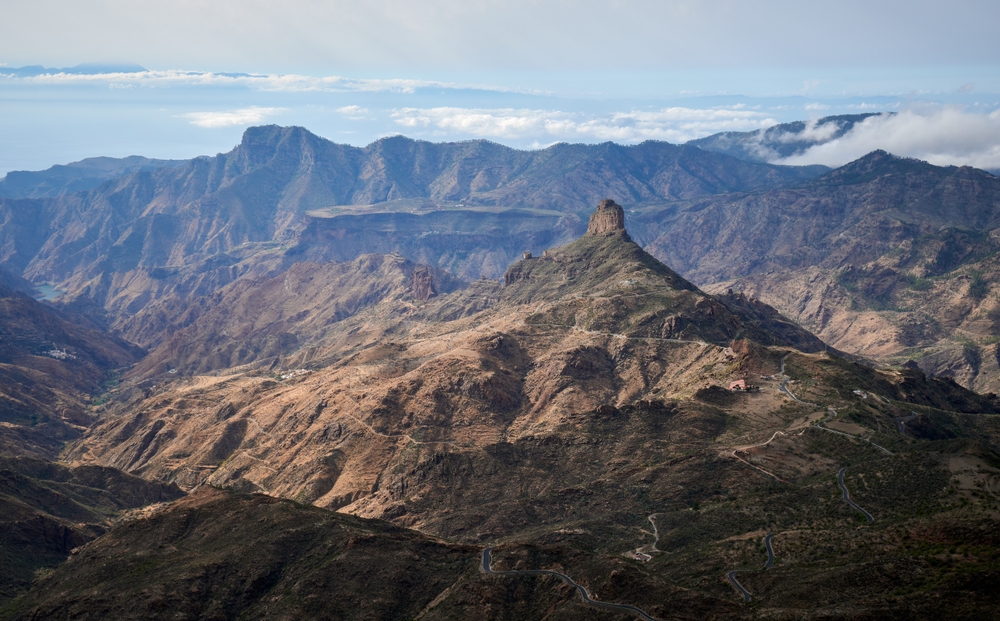
Roque Bentayga is the other big rock in the Tejeda caldera, and it was one of the most important sacred places of the ancient Canarians. Together with Risco Caído near Artenara, it’s part of Risco Caído and the Sacred Mountains of Gran Canaria, which was added to UNESCO’s World Heritage List in 2019. The area covers just over 9,400 hectares with caves, granaries, cisterns and temples, the so-called almogarenes, where ceremonies were held according to the seasons.
At the foot of the rock, you’ll find the Centro de Interpretación del Roque Bentayga, with a small exhibition about the site and the first inhabitants, and from there a path leads up towards the rock. The centre is closed on 1 and 6 January and on 25 and 31 December. The cave at Risco Caído itself is protected, but in Artenara there’s an interpretation centre that explains how the light falls into the cave at the equinoxes.
The road out to Bentayga is narrow and winding, and the car park at the centre is small. My tip is to combine Bentayga with Tejeda, which is only a few kilometres away, and to check the opening hours on the World Heritage site’s website before you drive out, because they change with the seasons.
7. Vegueta and Catedral de Santa Ana
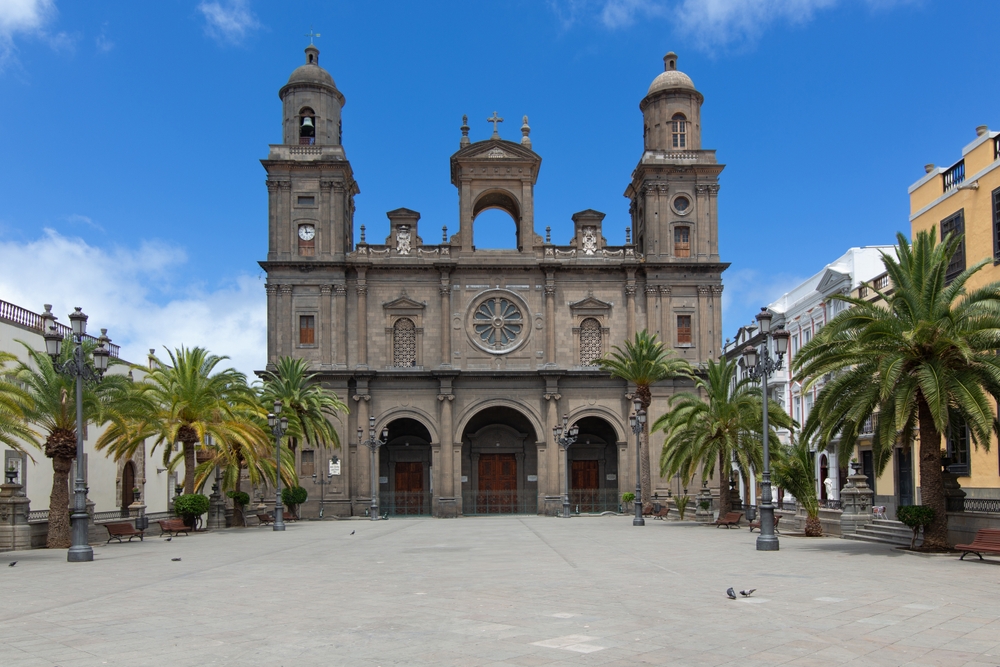
Vegueta is the Old Town of Las Palmas and the place where the city was founded in 1478. Here, you walk on cobblestones between colonial houses with wooden balconies, small squares and churches, and the atmosphere is completely different from the holiday resorts in the south. The district is small and flat, so you can easily walk all of it in a morning.
In the middle of the district, the Catedral de Santa Ana stands on the large Plaza de Santa Ana. Construction began in 1497 and has continued in several stages since then, so inside the church is Gothic and Renaissance, while the facade is neoclassical. The cathedral is open Monday to Friday from 10am to 6pm and on Saturdays from 10am to 4pm, and on Sundays only the tower is open, from 10am to 2pm. A lift and a short staircase take you up the south tower, and a ticket only costs a couple of euros (about £2).
My tip is to take the lift up the tower, because the view over the rooftops of Vegueta and Triana and out over the harbour is one of the best in the city. Afterwards, you can walk over to Triana, the district with the city’s shopping street, Calle Mayor de Triana, or sit down in a tapas bar in Vegueta. If you’re hungry for more, you can go on a guided tapas tour of the district.
Book a guided tapas tour of Vegueta.
8. Casa de Colón and Museo Canario
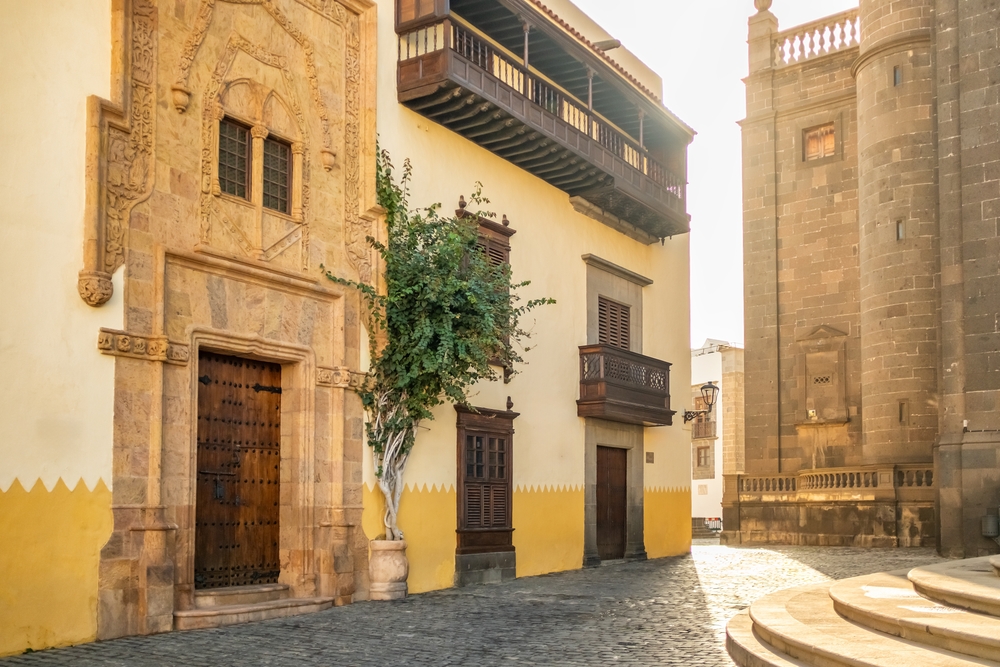
A few minutes from the cathedral is Casa de Colón, a beautiful old governor’s palace with wooden balconies and a green courtyard. Christopher Columbus stopped on Gran Canaria on his first voyage to the Americas, and the museum tells the story of his voyages, the islands’ links with the Americas, the history of Las Palmas and pre-Columbian art from the Americas. A ticket costs €4 (about £3.50), and the museum is open Monday to Saturday from 10am to 6pm and on Sundays and public holidays from 10am to 3pm. It’s closed on 1 January and on 24, 25 and 31 December.
If you’re interested in the island’s history before the Spanish arrived, also visit El Museo Canario a couple of streets away. Here, you’ll see a large collection of objects from the ancient Canarians, including mummies, skulls, pottery and the small stamps they called pintaderas. The museum is open Monday to Friday from 10am to 8pm and at weekends and on public holidays from 10am to 2pm. A ticket costs €5 (about £4), or €3 (about £2.50) for students and pensioners, and children aged 12 and under get in for free.
My tip is to do Museo Canario first, so you know the history before you drive up to Cueva Pintada or Roque Bentayga. You can manage both museums in a couple of hours, so they fit nicely into a day in Las Palmas.
9. Playa de Las Canteras
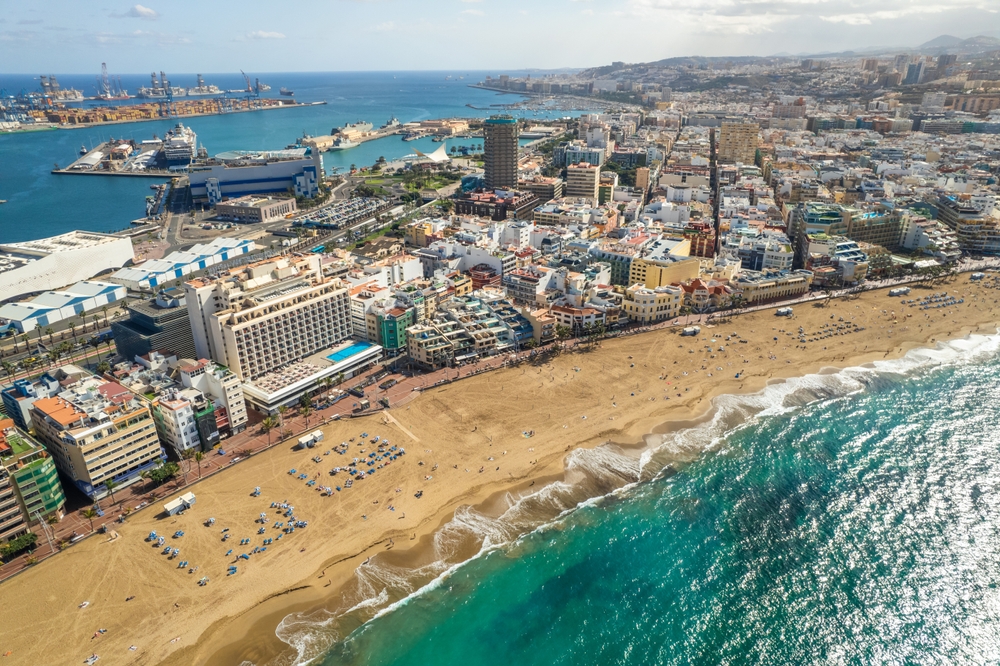
Playa de Las Canteras is the city beach of Las Palmas, and I think it’s one of the best city beaches in Europe. The beach and the promenade stretch for about three kilometres along the bay. Out in the water lies La Barra, a natural limestone reef that’s more than 100,000 years old and acts as a breakwater along more than half of the beach, so the water is calm and nice for swimming.
Along the promenade, you’ll find cafés, ice cream parlours and seafood restaurants, and this is where locals go running, take a walk and meet up after work. At the south-western end, by the Auditorio Alfredo Kraus concert hall, is the area called La Cícer, where the waves are bigger and the surfers hang out. At low tide, you can snorkel by the reef and see fish right off the beach.
My tip is to stay by Las Canteras if you’d like to combine a beach holiday with city life and sightseeing. The weather is often a bit cloudier in Las Palmas than in the south, but in return you get a real Spanish city with local restaurants and prices. You can see hotels by Las Canteras here, and bus 60 runs from the airport into the city.
10. Teror
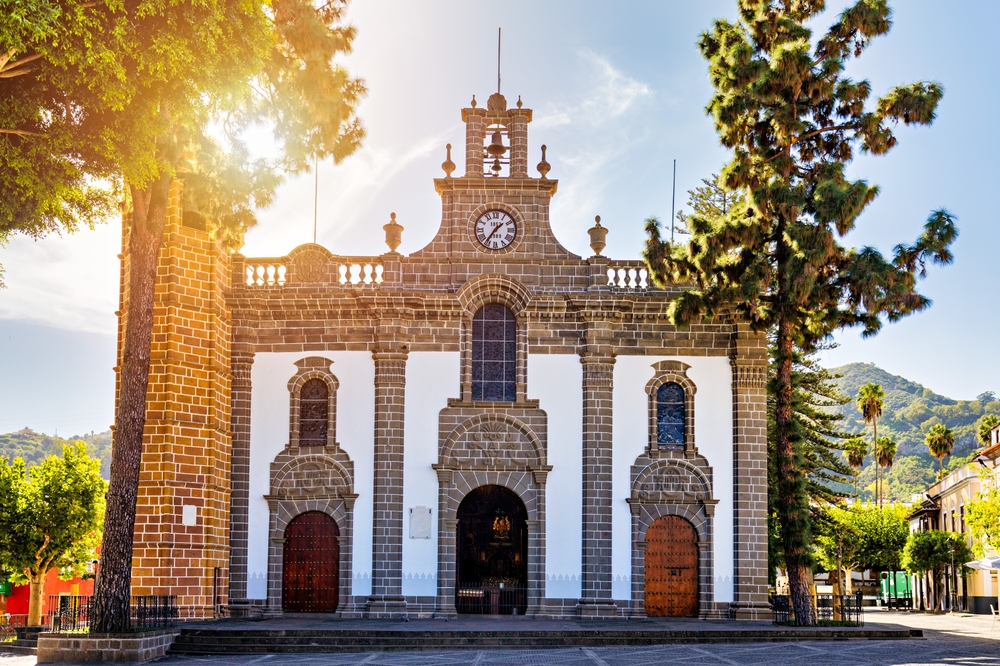
Teror is a small town in the green north, about half an hour’s drive from Las Palmas, and it’s one of the best-preserved old towns on the island. The main street is lined with colourful houses and the typical Canarian wooden balconies, and at the end of it stands the Basílica de Nuestra Señora del Pino. Construction of the present basilica began in 1767, and it houses the statue of Our Lady of the Pine, the patron saint of the islands’ diocese.
Every Sunday from 8am to 2pm, there’s a market around the basilica, where you can buy local vegetables, cakes, black pudding and the soft, spicy chorizo de Teror, which is spread on bread. Around 8 September, the Virgin is celebrated with a big festival, and people make the pilgrimage to the town from all over the island.
My tip is to go to Teror on a Sunday morning while the market is on and have lunch in town afterwards. Come early, because the car parks fill up quickly. Teror is easy to combine with Arucas and the Bandama crater, and then you’ve got a good day in the northern part of the island.
11. Arucas
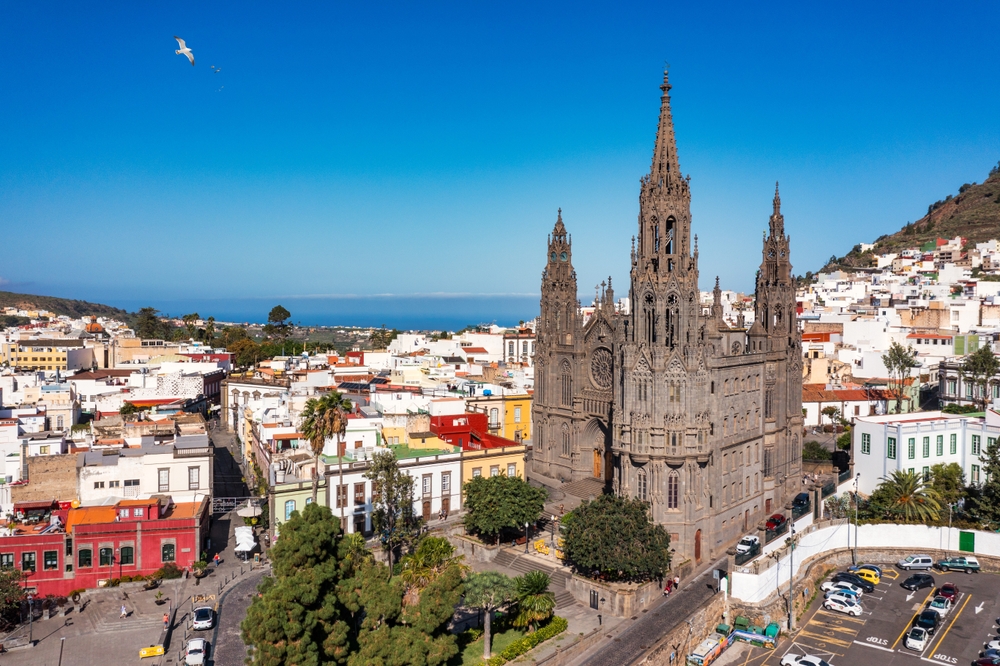
Arucas lies among the banana plantations a little west of Las Palmas, and the town is dominated by the big church, the Iglesia de San Juan Bautista. It’s built in neo-Gothic style from the dark local Arucas stone, and construction began in 1909. It’s often called the cathedral, even though it’s never been one, and inside there are beautiful stained glass windows.
The town is also known for rum. At the Destilerías Arehucas rum distillery, you can see how the rum is made, walk through the cellar with hundreds of barrels and have a tasting afterwards. The distillery is open to visitors Monday to Friday from 9am to 2pm. Just outside the centre lies the Jardín de la Marquesa, a romantic garden around a mansion from 1880, which is open Monday to Saturday from 9am to 6pm.
My tip is to drive up Montaña de Arucas, the small volcanic hill just above the town, where you’ve got a view out over the town, the banana fields and the coast. Arucas takes a couple of hours, and you can easily combine the town with Teror on the same day.
Book a guided tour of the Arehucas rum distillery with a tasting.
12. Agaete and Puerto de las Nieves
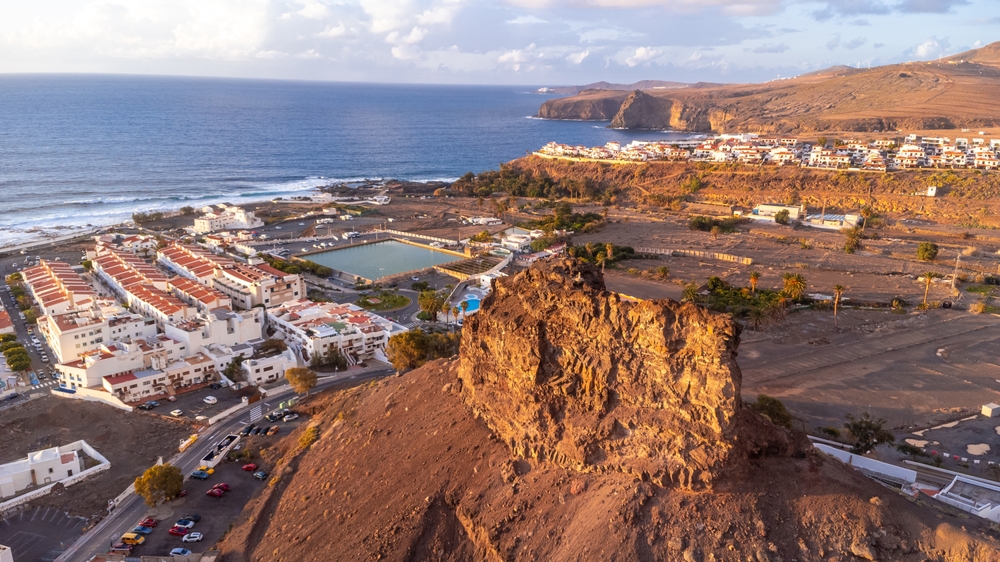
Agaete lies on the north-west coast, where the steep cliffs drop straight into the sea. The small harbour town of Puerto de las Nieves has a 17th-century hermitage with a Flemish altarpiece, and along the waterfront there are restaurants serving the catch of the day. Out in the water, the rock needle Dedo de Dios, God’s Finger, used to stand, but the top broke off in a storm in 2005, so today you only see the lower part.
Right by the town, there are natural rock pools in the lava, where you can swim in seawater without being knocked over by the waves. Inland lies the Valle de Agaete, with fruit plantations, terraces and one of the only places in Europe where coffee is grown. At the fincas in the valley, you can see the plantation and taste the coffee.
The ferries to Tenerife sail from the harbour in Agaete, so this is also where you need to go if you’d like to take a day trip to the neighbouring island. My tip is to go to Agaete in the afternoon, swim in the pools and stay for the sunset behind the cliffs while you eat fish by the harbour.
Book a coffee tour with a tasting in the Agaete Valley.
13. Caldera de Bandama
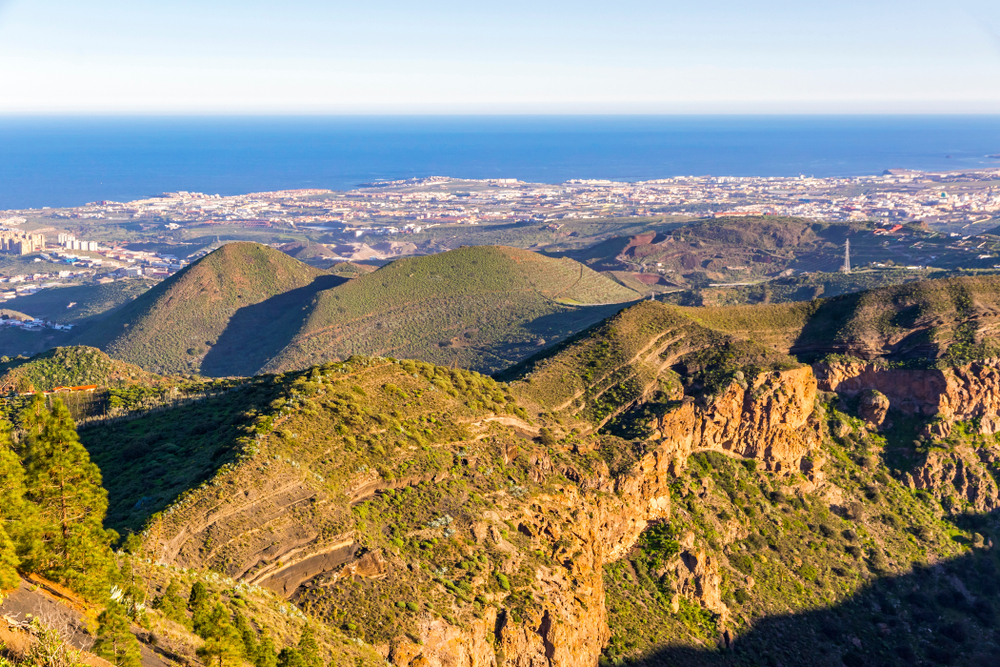
Caldera de Bandama is an almost perfectly round volcanic crater a quarter of an hour’s drive from Las Palmas. It’s about 1,100 metres across and 216 metres deep, and down at the bottom there’s still an old farmhouse and small fields.
The easiest way to see the crater is to drive up to the viewpoint on Pico de Bandama next to it. From here, you look down into the crater and out over Las Palmas and the coast, and entry is free. If you’d like to go down into the crater, the hiking trail starts at the houses of Casas de la Caldera, and a walk round and down takes about two and a half hours. The path is steep, so wear good shoes and make sure you bring water, because there’s nowhere to buy anything along the way.
My tip is to do the walk early in the morning, before the sun is high, and finish at the viewpoint. Bandama is on the road from Las Palmas up towards the mountains, so it’s easy to fit in on your way to Tejeda or Teror.
14. Cueva Pintada in Gáldar
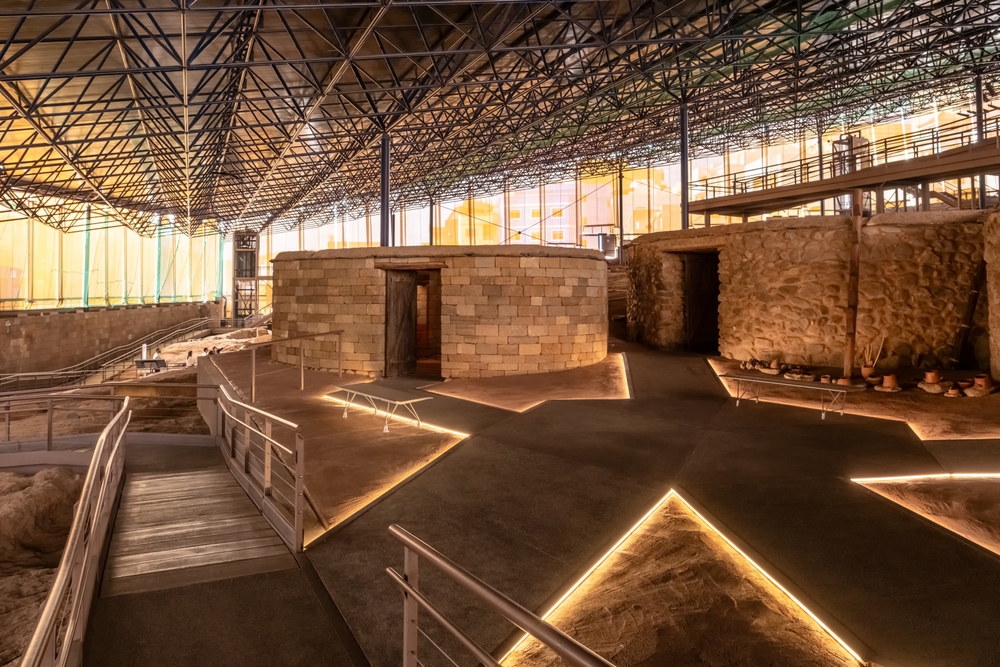
Cueva Pintada in Gáldar is the island’s most important archaeological site and one of the most interesting museums in the Canary Islands. The painted cave was discovered in 1862, and since 1987 the excavations have uncovered an entire village with more than 50 houses and artificial caves. The town was called Agáldar and was one of the island’s most important towns before Gran Canaria came under Castile in 1483.
You walk around on a walkway above the excavations and see the cave itself, with its geometric patterns in red, white and black, behind glass. From October to May, the museum is open Tuesday to Saturday from 10am to 6pm and on Sundays and public holidays from 11am to 6pm, with slightly longer hours in summer, and it’s closed every Monday. A ticket costs €6 (about £5), or €3 (about £2.50) for students under 23 and over-65s, and under-18s go free. On the first weekend of every month, entry is free for everyone.
Visits are guided at fixed times, so call or email the museum and book a time before you drive there. My tip is to combine Gáldar with Agaete, which is only a few kilometres away, and have lunch by the harbour afterwards.
15. Barranco de Guayadeque
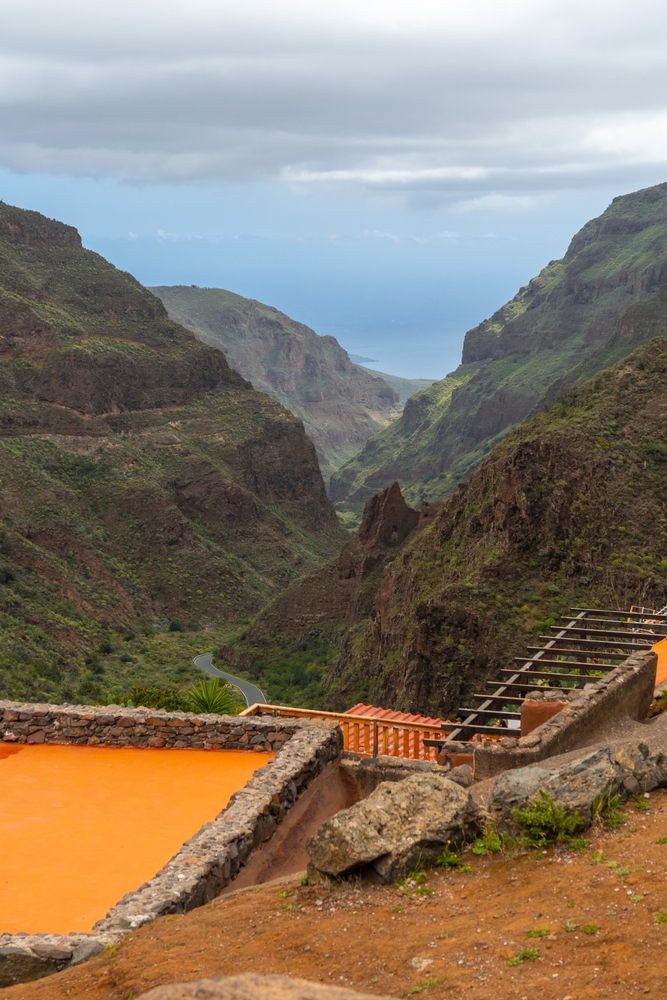
Barranco de Guayadeque is a deep ravine in the south-east of the island, about half an hour’s drive from Maspalomas. The ravine is around 15 kilometres long and lies between the municipalities of Ingenio and Agüimes, and there are more archaeological finds here than anywhere else on the island. The ancient Canarians lived in caves in the rock faces, and many of the caves are still in use as homes, a chapel and restaurants.
At the bottom of the ravine lies the Barranco de Guayadeque visitor centre, which is open Tuesday to Sunday from 9am to 5pm and closed on Mondays. Here, you learn about the first inhabitants and their life in the caves. The road continues up through the ravine to the village of Cuevas Bermejas and on to the end of the road, where there are restaurants carved into the rock.
My tip is to have lunch in one of the cave restaurants at the end of the road, where you’ll get Canarian food such as grilled meat, papas arrugadas with mojo and gofio. Try to come on a weekday, because at weekends lots of local families come up here, and then it’s hard to find both a table and a parking space.
16. Dolphin Watching and Boat Trips from Puerto Rico
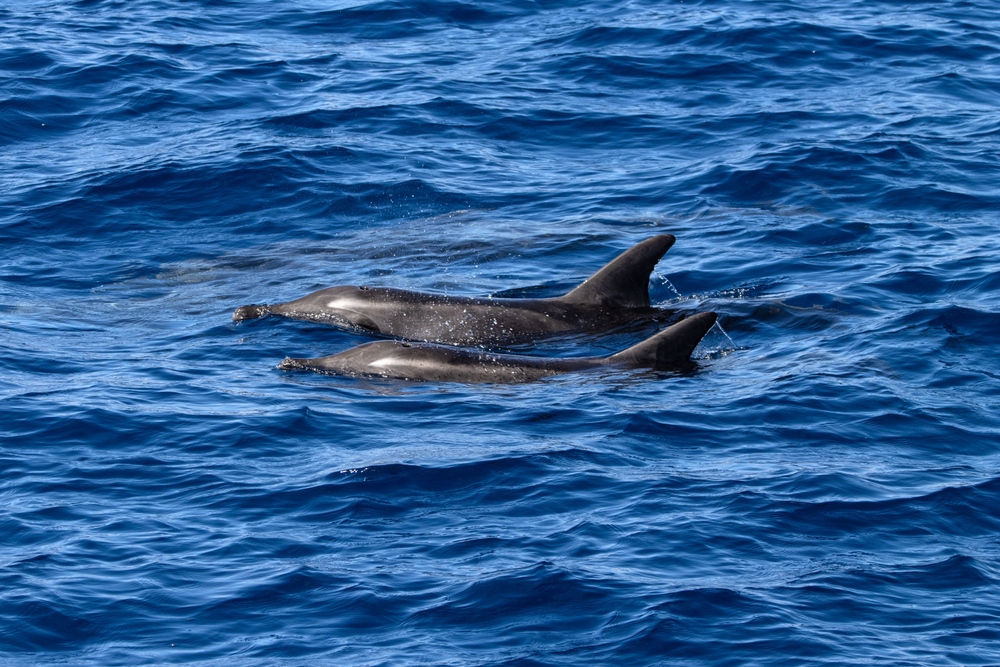
The waters off Gran Canaria’s south coast are a good place to see dolphins, and with a bit of luck you’ll see pilot whales too. Most trips sail from the harbours in Puerto Rico and Arguineguín, and you can choose between big catamarans with glass bottoms and a bar, smaller boats and trips with stops where you can snorkel and swim.
A trip of a couple of hours typically costs around €35 to €40 (about £30 to £35), and many of the companies can pick you up at your hotel. Dolphins are wild animals, so there’s no guarantee you’ll see them, but some companies give you another trip for free if you don’t see any. Choose a company that keeps its distance from the animals and doesn’t chase them with the boat.
My tip is to take a morning trip, when the sea is often calmer, and to take seasickness tablets if you’re the least bit prone to seasickness. Puerto Rico and Arguineguín are also good places to stay if you’re travelling with children, and both towns have their own section in my guide to where to stay in Gran Canaria.
Book a dolphin-watching catamaran trip with snorkelling from Puerto Rico.
17. Day Trip to Tenerife
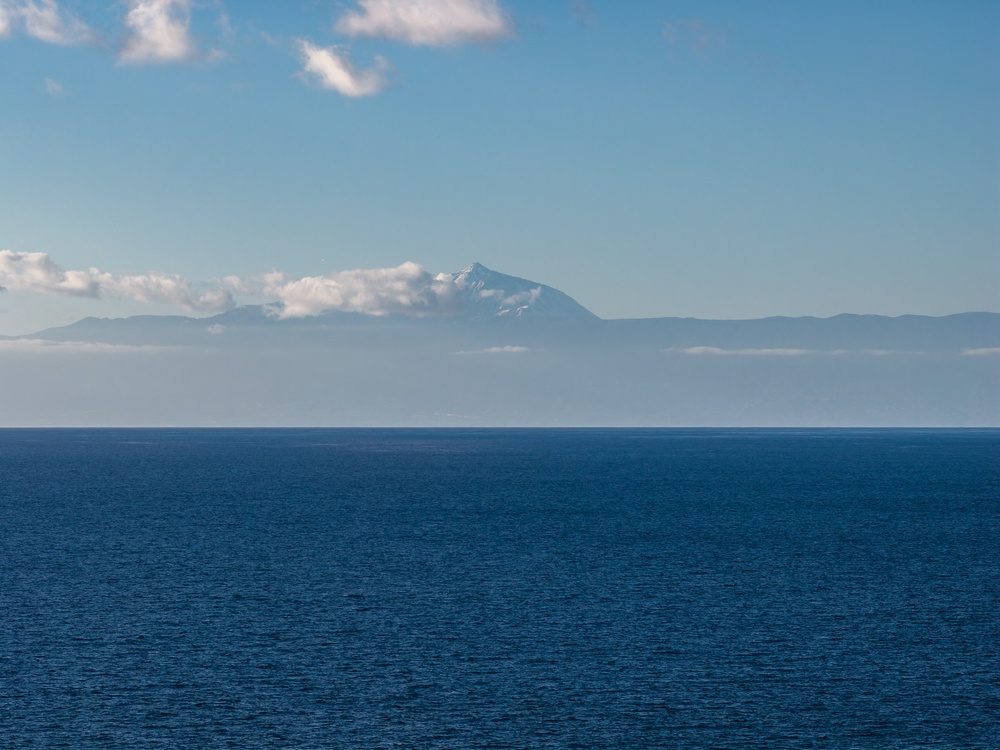
Tenerife lies just west of Gran Canaria, and on clear days you can see Teide from the mountains. Fred. Olsen sails from Agaete to Santa Cruz de Tenerife, and the crossing takes about 80 minutes, so you can easily fit in a day on the island and be back in the evening. From Santa Cruz, it’s not far to La Laguna, Tenerife’s old capital, which is also on UNESCO’s World Heritage List.
With a hire car on Tenerife, you can make it up to Teide, Spain’s highest mountain, but then it becomes a long day. It’s easier to stick to Santa Cruz, La Laguna and the Anaga forests in the north-east of the island. Buy your ferry tickets in advance on the Fred. Olsen website, and check the last departures back before you plan your day.
If you’d rather spend more time on Tenerife, I’ve written a guide to where to stay in Tenerife. Ferries also sail from Las Palmas to Fuerteventura and Lanzarote, and if you fancy island hopping further, you can read where to stay in Fuerteventura and what I recommend if you’d like to stay in Lanzarote.
Practical Travel Tips for Gran Canaria
If you’d like to see more than the beach, a hire car is the easiest way to get around, especially in the mountains, where the buses don’t run very often. The roads up towards Tejeda and Roque Nublo are narrow and winding, so expect it to take longer than the map says. The island’s buses are called guaguas, and Global runs services all over the island. From the airport, bus 60 runs to Las Palmas and bus 66 to Playa del Inglés and Faro de Maspalomas, and bus 91 goes to Puerto Rico.
Plan your week around the days of the week. Cueva Pintada and the visitor centre in Guayadeque are closed on Mondays, the market in Puerto de Mogán is on Fridays, and the market in Teror is on Sundays. On the first weekend of the month, Cueva Pintada is free. Roque Nublo has to be reserved if you’d like to walk up between 9am and 5pm, and the guided tour at Cueva Pintada also needs to be booked in advance.
The weather is sunny in the south for most of the year, while the north coast and Las Palmas are more often under cloud. In the mountains, it can be cold and windy, even when it’s warm enough to swim on the coast, so always bring a jumper. The almond trees in Tejeda blossom around the end of January, and it’s one of the most beautiful times to drive around the mountains.
If you’d like to see the full range, you can see all hotels in Gran Canaria on Booking.com. If you’re not sure which part of the island to stay in, read my guide to where to stay in Gran Canaria before you book.
Travel ressources & websites I use all the time 👇
• Booking.com has the best offers on hotels and unique places to stay
• GetYourGuide is the best place to book tours & activities with free cancellation
• Welcome Pickups is the best & safest place to pre-book airport transfers
Psst 👀 Have you subscribed to my Youtube channel and my Instagram where I provide more useful travel tips?