

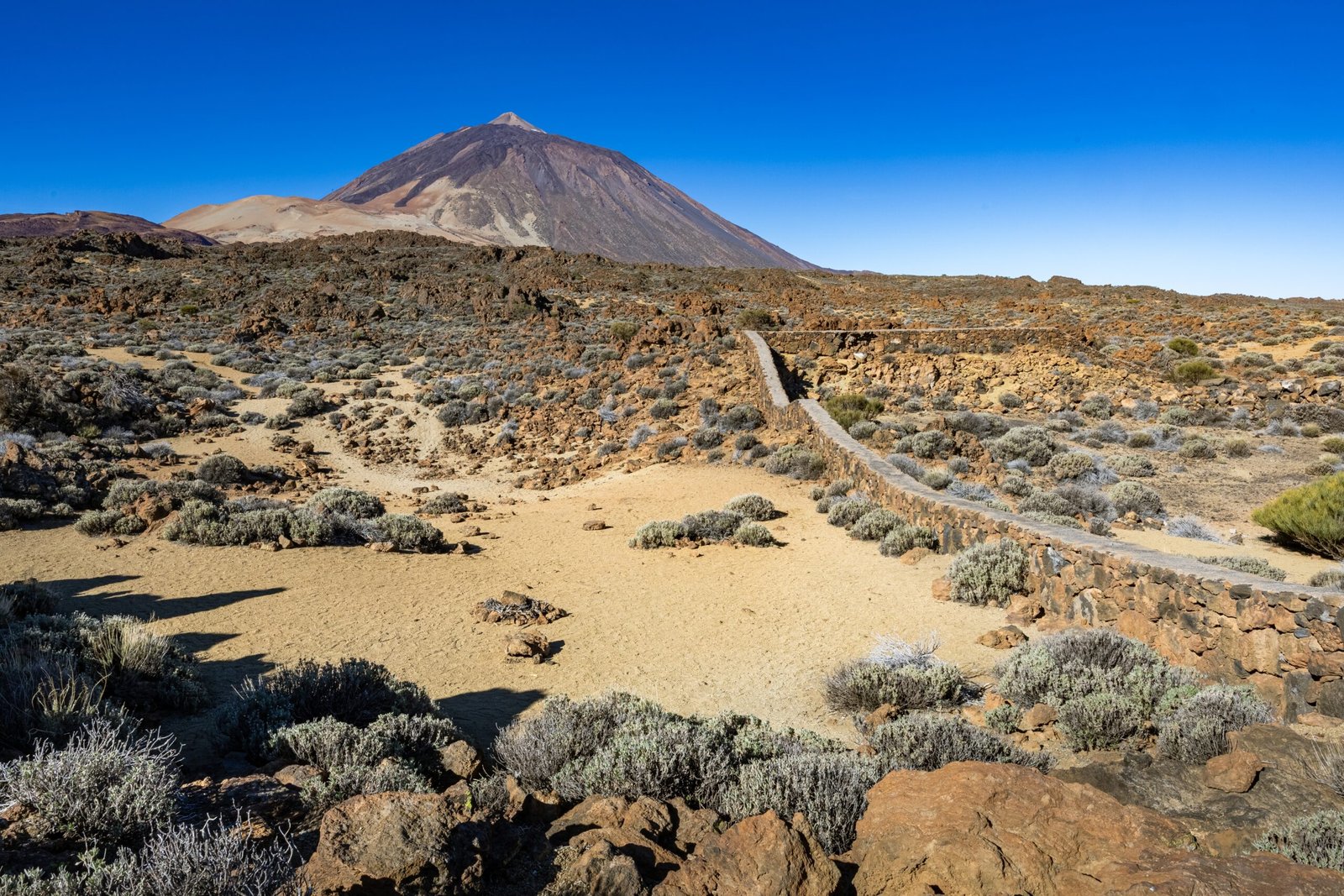
Tenerife is the largest of the Canary Islands, and most people know it for the sunshine and beaches of Costa Adeje and Los Cristianos. But there are plenty more things to do in Tenerife: in the middle of the island the Teide volcano rises to 3,718 metres, and on the north side you’ll find green laurel forests, colonial towns from the 16th century and small harbour towns where life moves more slowly than in the resorts of the south.
Here are my picks for the 18 best things to see and do in Tenerife, with prices, opening hours and tips on what to book before you go. Prices are given in euros, with approximate pound equivalents. Both the summit of Teide and the hike through Masca Gorge require a reservation, so read those two sections before you travel. The final sections cover the small towns in the north and a day trip to the neighbouring island of La Gomera.
Contents
1. Teide National Park
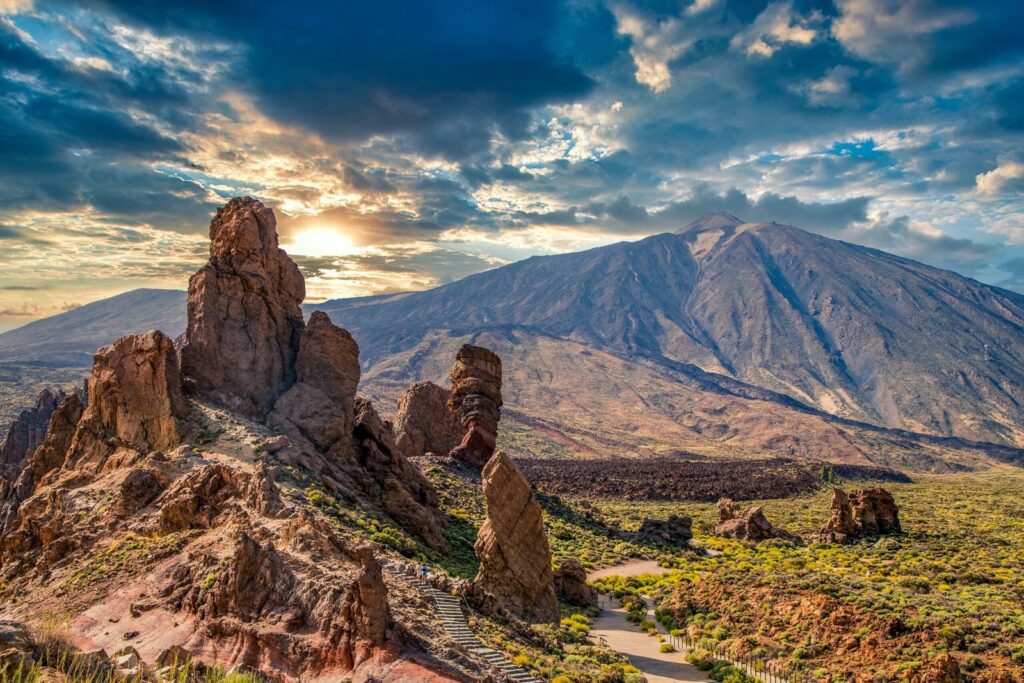
Teide National Park sits in the middle of the island at an altitude of over 2,000 metres and is Tenerife’s biggest attraction. The park covers almost 19,000 hectares and has been on the UNESCO World Heritage List since 2007. The Teide volcano is 3,718 metres high, making it the highest point in Spain, and measured from the seabed it rises around 7,500 metres. According to UNESCO, it is the third-tallest volcanic structure in the world.
Most of the park is a barren landscape of lava flows, pumice and craters in red, black and yellow that looks more like the surface of the moon than anything else. By the Parador hotel stand the rock formations of Roques de García, where a short path loops around the rocks with Teide as a backdrop. The El Portillo visitor centre on the TF-21 road is open every day from 9am to 6pm and only closes on 25 December and 1 January. Entry is free, and the centre has a small exhibition on the park’s geology and wildlife, plus a botanical garden with most of the park’s plant species. It doesn’t cost anything to drive into the park either.
The easiest way to get around the park is by hire car. TITSA’s bus 342 runs only once a day from Costa Adeje and Los Cristianos in the morning and back in the afternoon, and bus 348 does the same from Puerto de la Cruz and La Orotava, so by bus you only get a few hours up there. My tip is to bring a warm jumper, because even on a hot beach day it can be cold and windy at 2,000 metres, and to drive up early, before the tour coaches arrive.
Book a full-day guided tour to Teide, Masca, Icod and Garachico.
2. The cable car and the summit of Teide
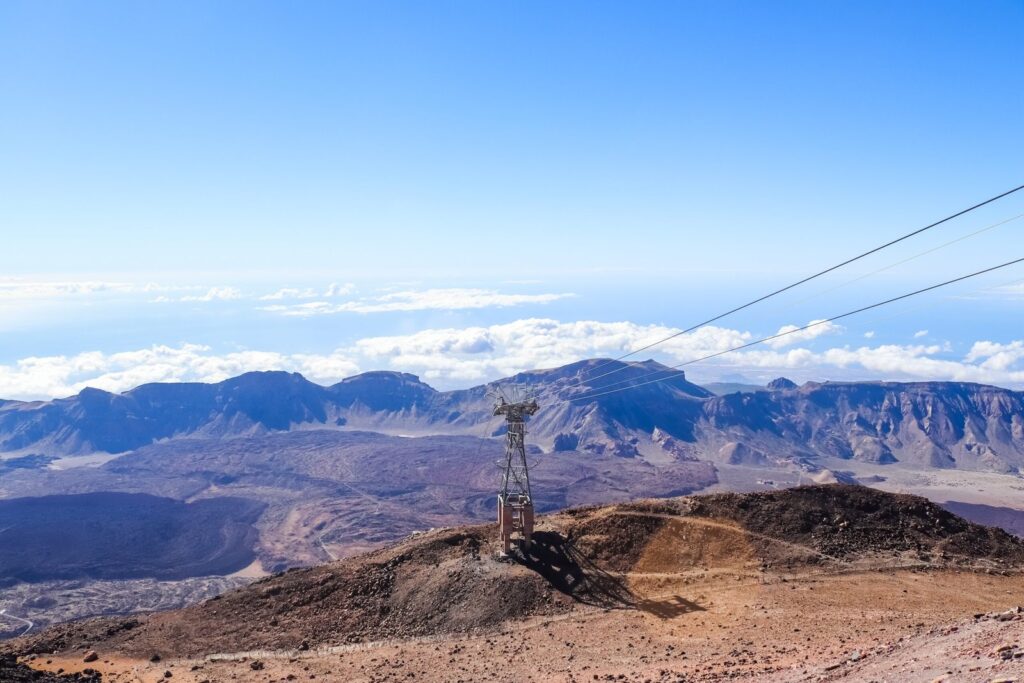
The Teleférico del Teide cable car runs from the base station at 2,356 metres up to La Rambleta station at 3,555 metres, and the ride takes only about eight minutes. Up there the air is thin and cold, and on clear days you can see across the whole island and the sea of clouds that often sits below the summit.
A return ticket costs €42 (around £35) for adults and €21 (around £18) for children aged 3 to 13, and a single costs €23.50 (around £20). The cable car opens at 9am, and for most of the year the last trip up is at 4pm, while it runs later in summer and at Easter. It can close at short notice because of wind, ice or snow, so check the operating status the same morning. Book your ticket online, because the popular time slots sell out in high season.
With a standard ticket you can walk two short paths from La Rambleta out to viewpoints. The final stretch up to the crater on the Telesforo Bravo trail, however, requires a special permit, which you book through Tenerife ON. Places are limited and split into fixed time slots, visitors who don’t live on the island pay a fee, and they go quickly, so book well in advance or join a guided tour that includes the permit. The altitude can cause headaches and shortness of breath, so take it easy up there. My tip is to take one of the first trips in the morning, when the queue at the base station is shortest.
Book the Teide cable car with a return ticket and hotel pick-up.
3. Stargazing on Teide
The sky above Teide is one of the clearest in Europe. Above the cloud layer the air is dry and still, which is why the Observatorio del Teide sits at Izaña at an altitude of 2,390 metres, where the first telescope was set up in 1964. Today the observatory is mainly used to study the sun, and it belongs to the Instituto de Astrofísica de Canarias.
The best way to experience the night sky is on a guided tour that starts with sunset in the national park. Once it gets dark, the guides set up telescopes and show you planets, star clusters and the Milky Way, which you can see with the naked eye on a clear night. Tours typically cost from €35 to €55 (around £30 to £45) with pick-up from hotels in both the south and the north. If you’d rather see the observatory by day, there are also guided tours where you look at the sun through a telescope.
Dress as you would for a cold winter evening back home, because the temperature drops quickly once the sun goes down, and in the winter months there can be frost up there. My tip is to choose an evening close to a new moon, when the sky is darkest. If you drive up yourself, stick to the marked lay-bys and viewpoints along the roads, and switch off your lights when you’re parked.
Book a sunset and stargazing tour in Teide National Park.
4. Masca and Masca Gorge
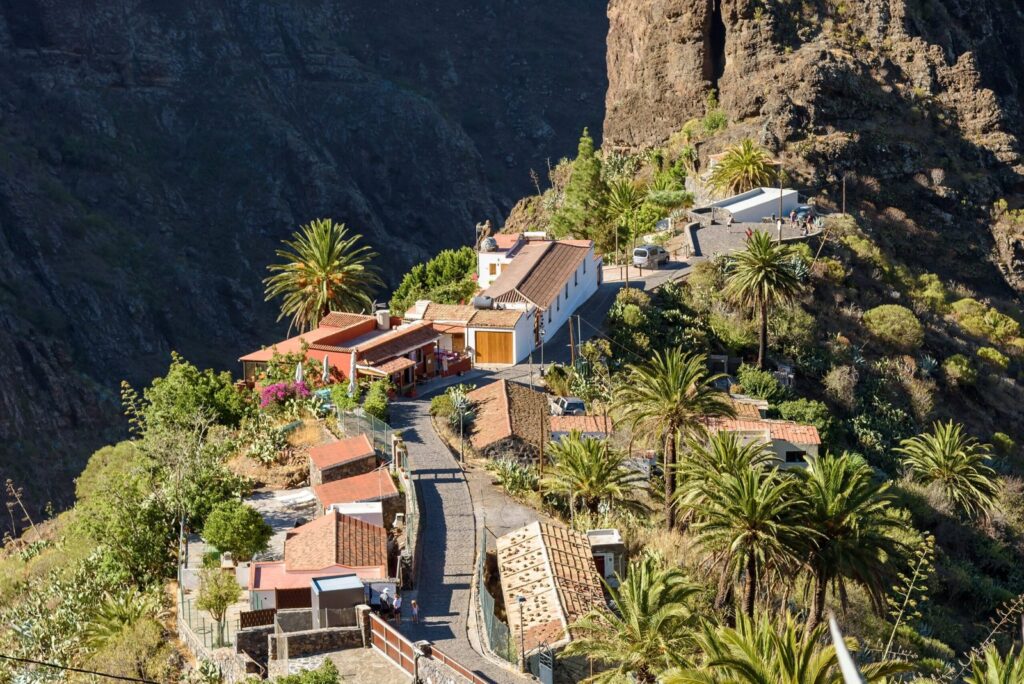
Masca is a small village in the Teno Mountains in the north-west corner of the island, where the houses are squeezed onto narrow ridges between deep ravines. The road up is narrow with lots of hairpin bends, but the views from the village and from the viewpoints along the way are some of the finest in Tenerife.
From the village, the trail through Masca Gorge leads down to the sea. It is about 5 kilometres long, the descent takes around four hours, and it is considered difficult, with uneven ground and slippery rocks. Access is regulated, and you must book a named ticket for a fixed time on the trail’s official website. For visitors who don’t live in the Canary Islands it costs from around €41 (around £35), and the price covers a helmet, insurance and supervision on the trail. Children under 8 are not allowed. The trail is only open on selected days of the week, and you only walk downhill, as the hike ends with a boat from the bay to Los Gigantes, which you pay for separately.
You’re not allowed to drive your own car to the trail. Instead, you park by the cemetery in Santiago del Teide and take TITSA’s bus 355 to Masca, and from Los Gigantes you get back by bus or taxi. If you don’t fancy the hike, drive to the village early in the morning, before the car parks fill up, or join a tour that combines Masca with Teide and the cliffs at Los Gigantes.
Book a tour to Masca, Teide and the cliffs at Los Gigantes.
5. Los Gigantes
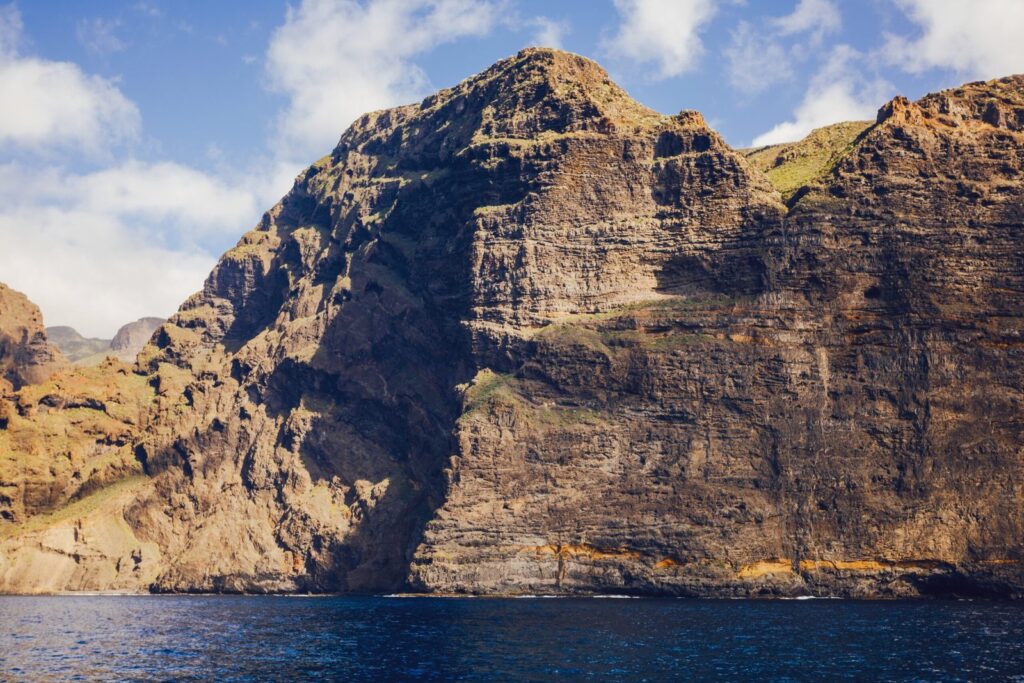
The Acantilados de Los Gigantes cliffs on the west coast drop several hundred metres vertically into the sea, and the name means “the giants”. The small town of Los Gigantes at the foot of the cliffs has a marina, and right next to it is the small black-sand beach of Playa de Los Guíos, looking straight up the cliff face.
The cliffs are best seen from the water. Boats sail from the harbour along the cliff face and often on to the bay below Masca, and many trips combine the cruise with whale watching, because the sea off the west coast is part of the protected Teno-Rasca marine area. The cliffs face west, so my tip is to go in the afternoon, when the sun is on the cliff face.
Los Gigantes is far quieter than the resorts further south, and the town is a good base if you want to hike in the Teno Mountains and see Masca. There aren’t as many hotels as in Costa Adeje, but if you want to stay here, you can see hotels in Los Gigantes here.
Book a boat trip with whale watching from Los Gigantes.
6. Whale watching
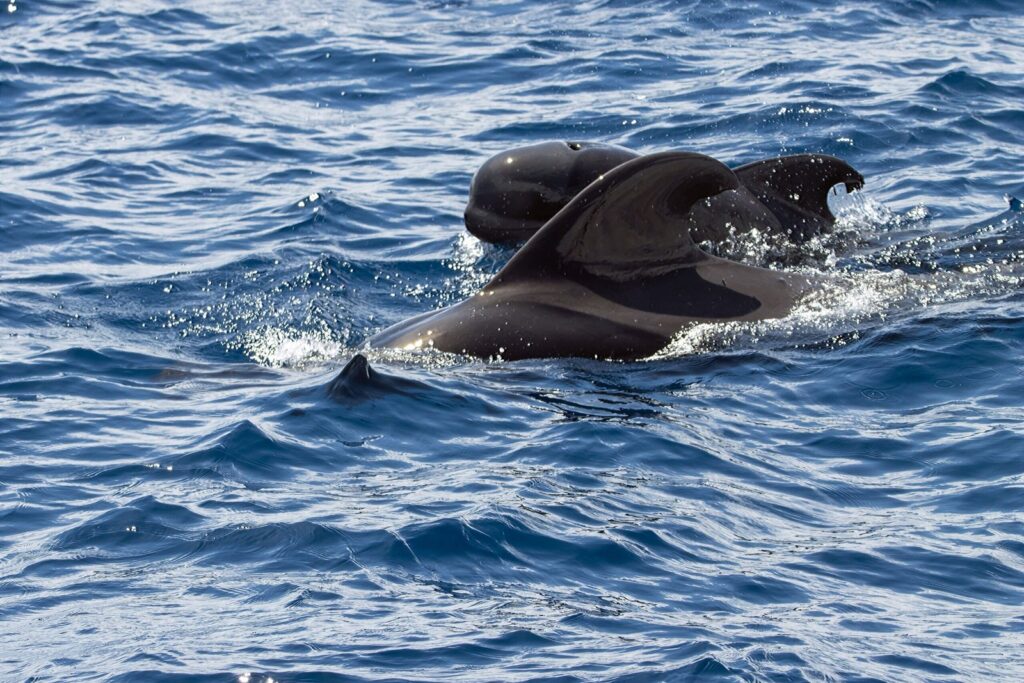
The waters between Tenerife and La Gomera are one of the best places in Europe to see whales and dolphins. The Teno-Rasca marine area along the south and west coasts covers almost 70,000 hectares and has been protected as a conservation area since 2011. Up to 22 species of whales and dolphins have been recorded here, and both pilot whales and bottlenose dolphins live in the area all year round, so your chances of seeing them are good whatever the season.
Trips sail from Los Cristianos, Puerto Colón in Costa Adeje and Los Gigantes. The short trips last around two hours, while the longer ones often include a swimming stop and lunch on board. A short trip typically costs from around €28 (around £25). The rules state that boats must keep at least 60 metres from the animals and stay with them for no more than 30 minutes, and swimming with or feeding them is forbidden.
I think it’s worth choosing an operator that clearly states it doesn’t chase the animals, and going for a slightly smaller boat rather than the big party boats with music. If you suffer from seasickness, take a tablet before you set off, because the sea can be rough once you leave the shelter of the coast.
Book a whale-watching trip from Los Cristianos on a boat that doesn’t chase the animals.
7. Siam Park
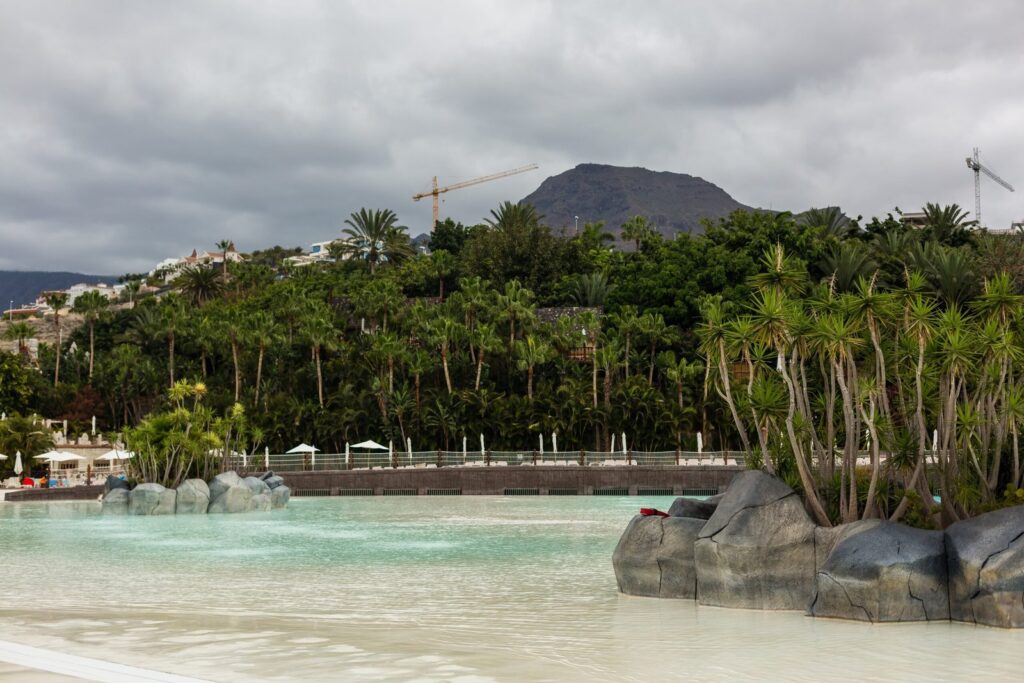
Siam Park in Costa Adeje is one of Europe’s best-known water parks, built in Thai style with temples, dragons and palm trees. The most famous slide is the Tower of Power, which according to the Canary Islands tourist board is 28 metres high and sends you almost vertically down through an aquarium full of sharks. On Siam Beach, waves of up to three metres are created.
The park is open every day from 10am to 5pm in winter and from 10am to 6pm from May to October. A day ticket costs around €44 (around £35), and there’s also a combined ticket with Loro Parque. Fast passes, lockers and sunbeds in the shade cost extra, and the park also sells bus transfers from both the south and the north. I’ll be honest: it’s an expensive day out for a family, and at weekends and during school holidays there are long queues for the popular slides. Arrive when the park opens and do the Tower of Power first.
Costa Adeje is where most people stay in Tenerife, and you’ll find everything from large luxury beachfront hotels to apartments. In my guide to where to stay in Tenerife, I cover the area along with Playa de las Américas, El Médano, Puerto de la Cruz and Los Gigantes, and you can see hotels in Costa Adeje here.
8. Loro Parque
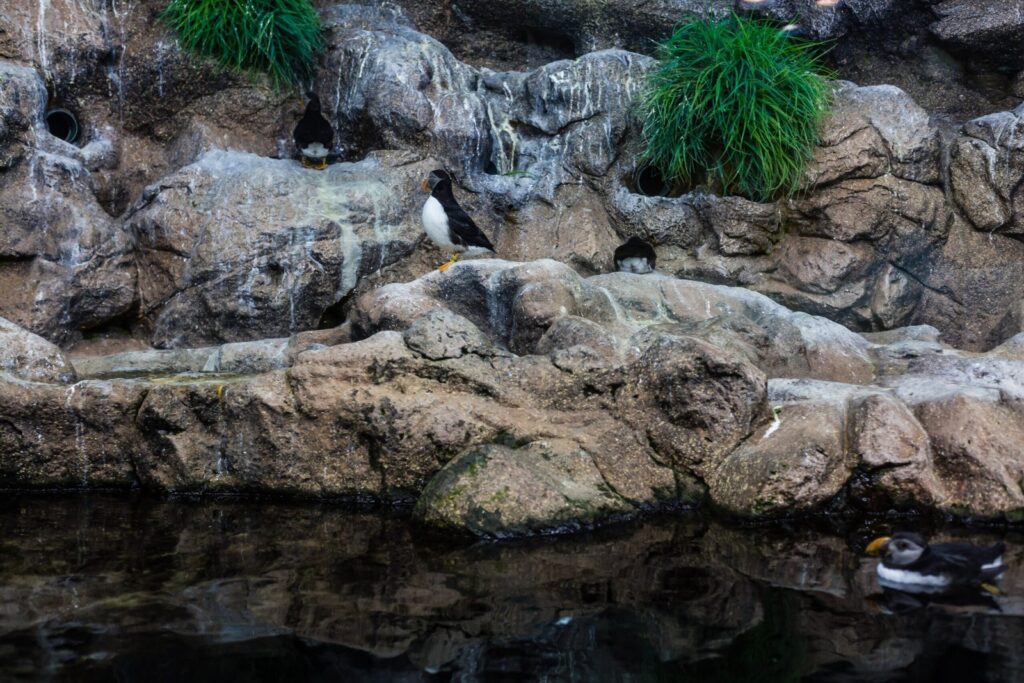
Loro Parque in Puerto de la Cruz started out more than half a century ago as a parrot park, and the name does indeed mean “parrot park”. Today it’s a large zoo with more than 300 species of parrot, a penguin house with over 250 penguins, plus great apes, big cats, sharks, sea lions, dolphins and orcas.
The park is open every day from 9.30am to 5.30pm, every day of the year. Children aged 3 to 11 pay the child price, and children under 3 get in free. An adult ticket costs around €44 (around £35), and a combined ticket for Loro Parque and Siam Park costs around €78 (around £65) and is valid for two weeks, so you can visit the parks on separate days. A free little train runs to the park from Plaza de los Reyes Católicos in Puerto de la Cruz every 20 minutes from 9am.
The park keeps orcas and dolphins in captivity and puts on shows with them, which many animal welfare organisations are critical of. That’s something you’ll need to decide for yourself before buying a ticket. If you do choose to go, set aside a whole day, and check the times of shows and feedings when you arrive so you can plan your route around the park.
9. San Cristóbal de La Laguna
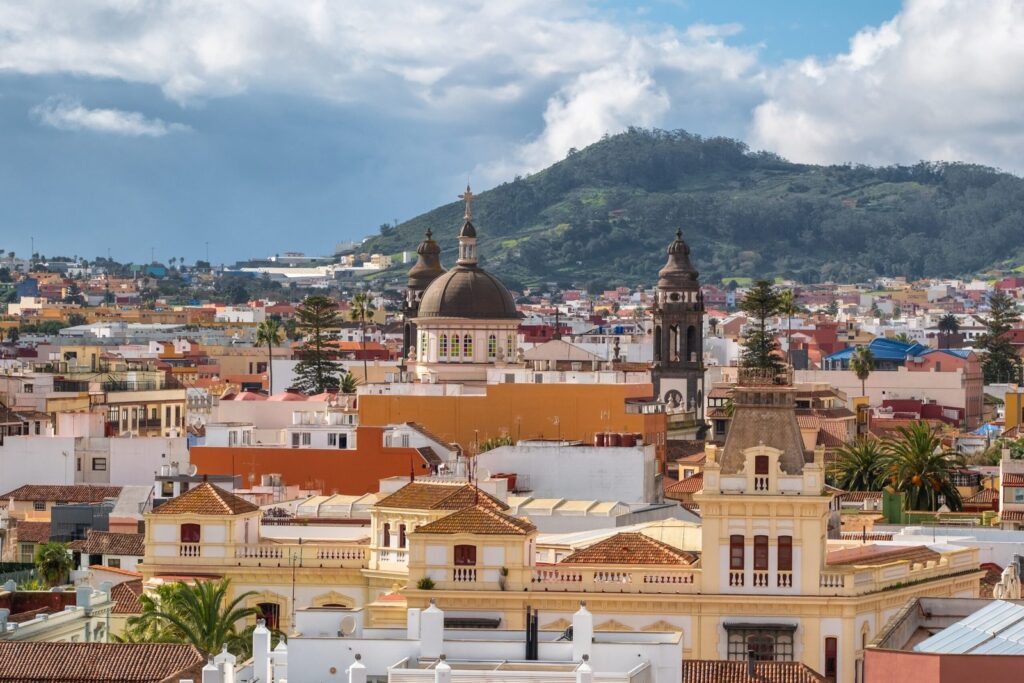
La Laguna, as the town is usually called, sits on a plateau about 550 metres above sea level just above Santa Cruz. It was founded in 1497 and has been on the UNESCO World Heritage List since 1999. According to UNESCO, La Laguna was the first unfortified Spanish colonial town, and its grid of straight streets became a model for many colonial towns in the Americas.
The main streets in the centre are pedestrianised, so you can wander at your leisure between colourful colonial houses with wooden balconies and shady courtyards. Pop into the cathedral and the Iglesia de la Concepción, and walk along Calle San Agustín, home to the Palacio de Lercaro from 1593. The town’s market is by Plaza del Cristo, and because La Laguna is a university town, the tapas bars are buzzing in the evenings.
The tram runs from Santa Cruz up to La Laguna, and from the stop it’s just a few minutes’ walk into the historic centre. My tip is to bring a jacket, as it’s often cooler and cloudier here than in the south, and to combine your visit with the Anaga Mountains, which begin just north of the town.
10. The Anaga Mountains
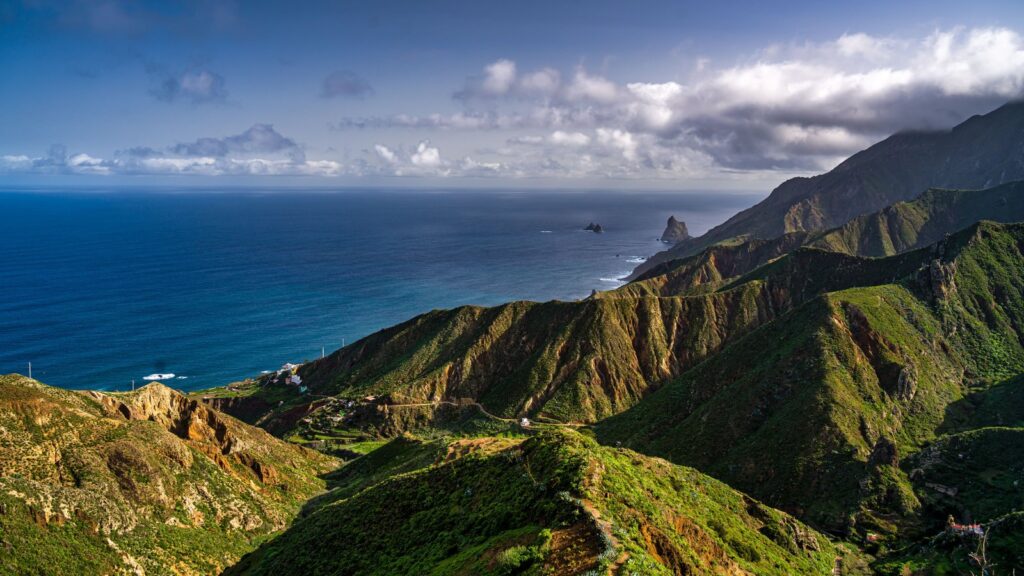
The Anaga Mountains in the north-east corner of the island are the wildest and greenest part of Tenerife. The Parque Rural de Anaga covers almost 14,500 hectares, was protected in 1987 and has been a UNESCO Biosphere Reserve since 2015. On the peaks grows laurel forest, which according to the island’s tourist board is a living remnant of the forests that covered large parts of Europe millions of years ago.
The natural place to start is the Cruz del Carmen visitor centre, which is open every day from 9.30am to 4pm. From here, the short and easy Sendero de los Sentidos trail leads into the forest, and it’s ideal for a first visit. If you drive on towards the coast, you’ll reach the villages of Taganana and Almáciga and the black-sand beach of Playa de Benijo, where the waves crash against the rocks. From La Laguna, buses 076, 077, 273, 274 and 275 run into the mountains, and from Santa Cruz, the 945 and 947.
The roads are narrow and winding, and the clouds often roll in from the north during the day. So my tip is to drive up early in the morning, when the views are best, and to go with a guide if you want to walk one of the longer routes through the forest.
Book a guided hike in the Anaga Mountains.
11. Playa de las Teresitas
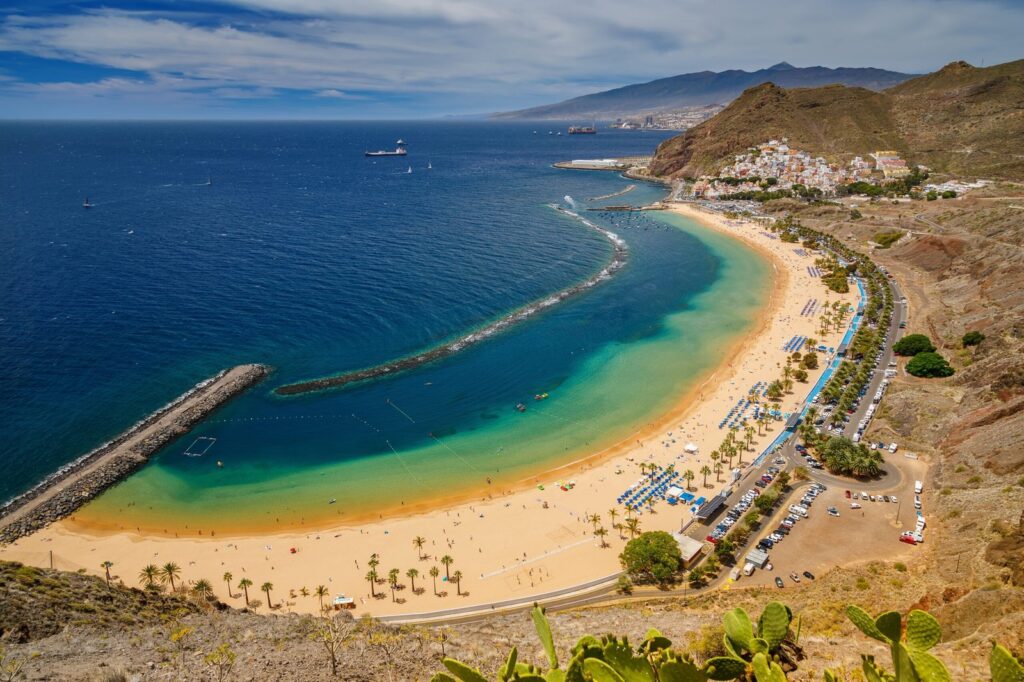
Playa de las Teresitas lies by the fishing village of San Andrés just north-east of Santa Cruz, and it’s one of the most photogenic beaches on the island. The beach is man-made. It opened in 1973 after around 270,000 tonnes of golden sand had been shipped here from the Sahara, and today it stretches for almost one and a half kilometres along the coast.
A long breakwater out in the water keeps the sea calm, so the beach is good for families with children and for anyone who simply wants to swim in peace. Behind the beach rise the steep Anaga Mountains, and the beach is lined with palm trees and small kiosks. Access is free, and in the village of San Andrés there are fish restaurants where you can have lunch after your swim.
At weekends the beach is packed with families from Santa Cruz, so come on a weekday if you want plenty of space. City buses run from Santa Cruz to San Andrés. My tip is to combine the beach with a trip up into the Anaga Mountains, as the road into the mountains starts right by San Andrés.
12. Santa Cruz de Tenerife
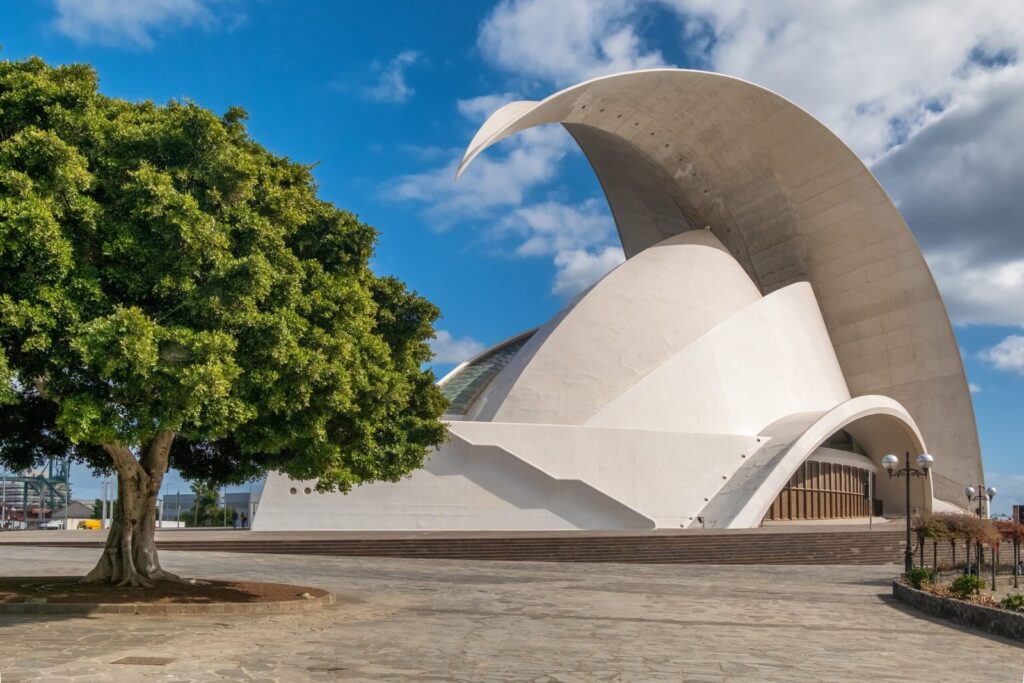
Santa Cruz is the island’s capital and port, and here you’ll see a completely different side of Tenerife from the resorts. On the waterfront stands the Auditorio de Tenerife concert hall, designed by the Spanish architect Santiago Calatrava, with its white roof curving out over the building like a wave. It’s one of the island’s best-known modern landmarks, and it looks its best in the evening light.
Beneath Plaza de España you can see the remains of the Castillo de San Cristóbal fortress and the El Tigre cannon, which helped repel Admiral Nelson’s attack on the city in 1797. The exhibition is open Monday to Saturday from 10am to 6pm and closed on Sundays and certain public holidays. Also take a stroll past the large Mercado de Nuestra Señora de África market and through the Parque García Sanabria city park.
Santa Cruz is best known for its carnival, one of the largest in the world, when the streets fill with music, costumes and parades. If you’re planning a trip during carnival season, book your hotel well in advance. My tip is to spend a day on Santa Cruz and La Laguna together, as the tram connects the two.
13. Puerto de la Cruz
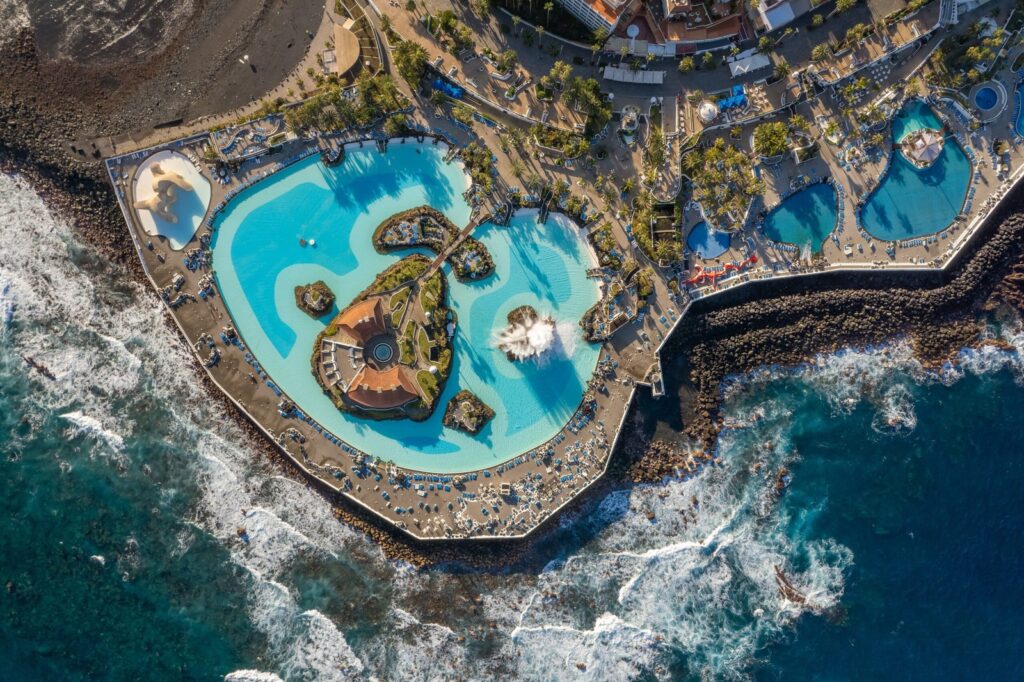
Puerto de la Cruz on the north coast is the island’s oldest resort, and it has kept much of its old charm, with a small fishing harbour, the Plaza del Charco square and narrow streets of colonial houses. On the waterfront is the Lago Martiánez lido, designed by the Lanzarote artist César Manrique in the mid-1970s, with seven saltwater pools set among lava rock and palm trees.
Above the town is the Jardín Botánico botanical garden, founded in 1788 on the orders of the Spanish king Charles III to acclimatise tropical plants. The garden is open every day from 9am to 6pm, and entry costs €3 (around £2.50). It is closed on 1 January, Good Friday and Christmas Day.
The north coast is greener and cooler than the south, and cloud is more common, but on the other hand Puerto de la Cruz is a good base for Teide, La Orotava and Loro Parque, and the town feels more Spanish than Costa Adeje. If you want to stay in the north, you can see hotels in Puerto de la Cruz here.
14. La Orotava
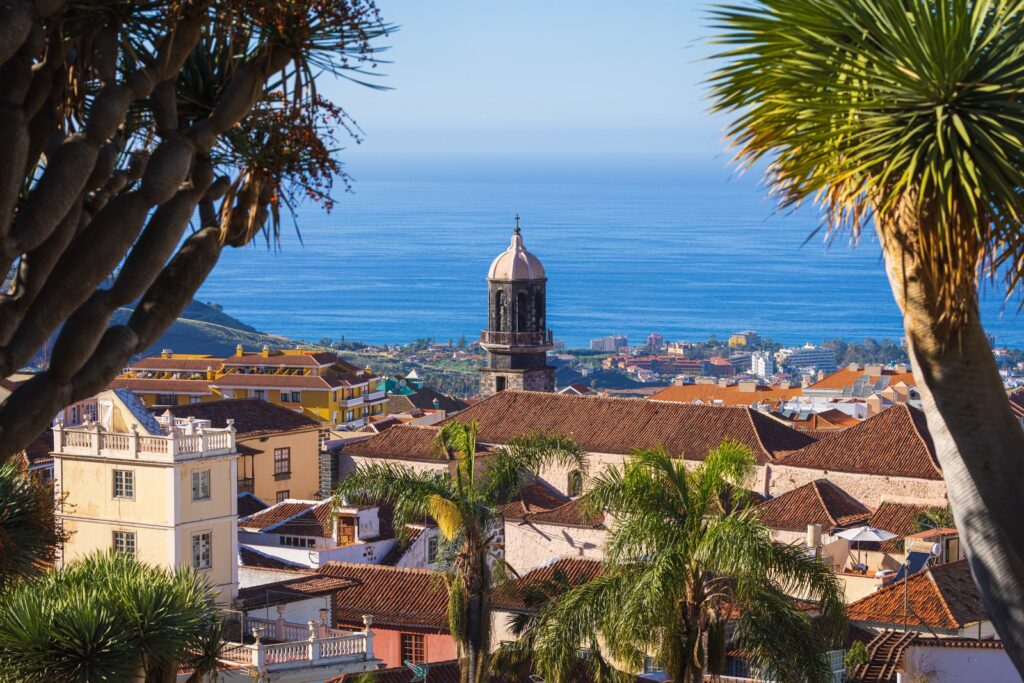
La Orotava sits on the slope above Puerto de la Cruz in the lush Orotava Valley, and its historic centre is one of the most beautiful on the island. Here you walk along steep cobbled streets between church towers and 17th- and 18th-century mansions with carved wooden balconies.
The best-known house is Casa de los Balcones, completed in 1632. Today it houses a shop selling Canarian handicrafts and a small museum about Canarian customs and traditions, and it’s open every day from 8.30am to 6.30pm. Be sure to visit the courtyard, as this is where you’ll get the best view of the many dark wooden balconies.
Just outside the town is the Mirador Humboldt viewpoint, named after the German naturalist Alexander von Humboldt, with views across the valley and down to the sea. Bus 348 to Teide stops in La Orotava, but the streets are steep and parking is scarce, so park a little below the centre and walk up. My tip is to combine the town with a trip to Teide, as the road up to the national park starts here.
15. Garachico
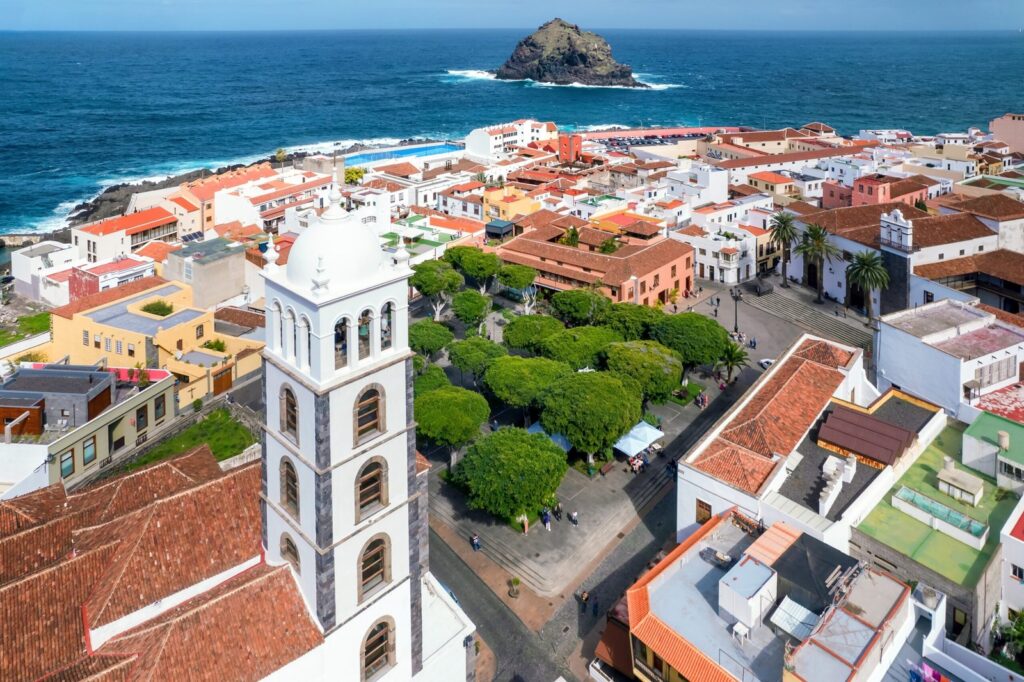
Garachico on the north-west coast was founded in 1496 by the Genoese merchant Cristóbal de Ponte and was for many years one of Tenerife’s most important ports. That ended in 1706, when a volcanic eruption sent lava down through the town and filled the harbour. Today Garachico is a small, peaceful town with cobbled streets, the Plaza de la Libertad square and the Castillo de San Miguel fortress by the water.
Along the coast, the lava has formed natural rock pools, El Caletón, where you can swim when the sea is calm. When the waves are high it’s dangerous, so stay out of the water and just look. Out at sea lies the rocky islet of Roque de Garachico, and from the Mirador de El Guincho viewpoint above the town you can see the whole town and the lava flow from above.
Garachico is perfect for lunch and a couple of hours at a slower pace. My tip is to combine the town with the dragon tree in Icod de los Vinos and Masca on the same day, as the three places are close together, and the trip is easiest by car.
16. Drago Milenario in Icod de los Vinos
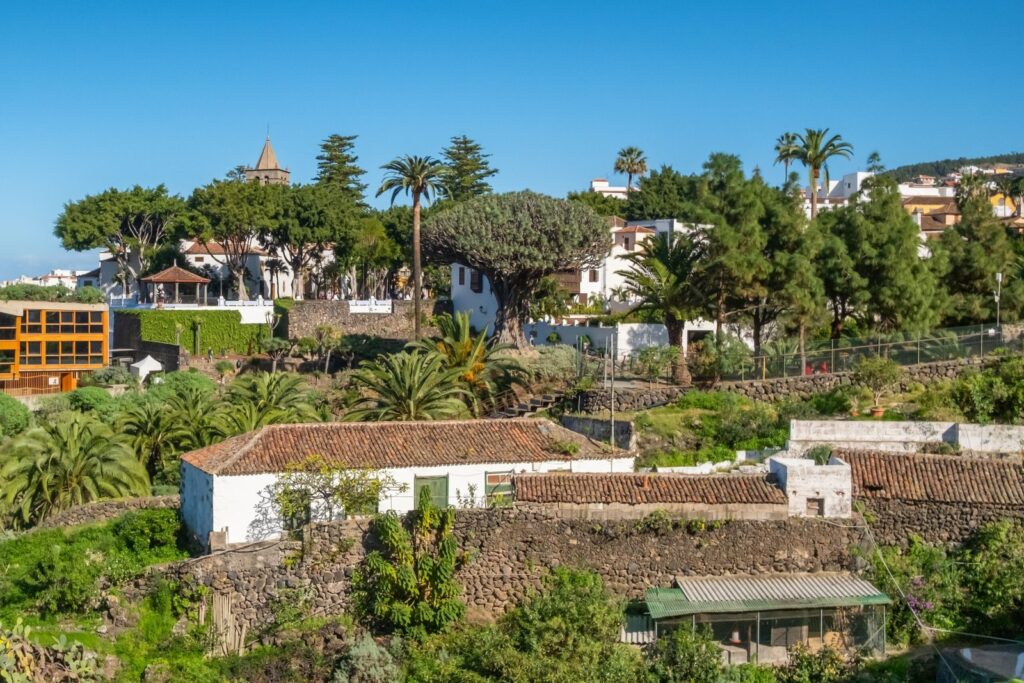
In Icod de los Vinos stands the Drago Milenario, a giant dragon tree that is one of the symbols of the Canary Islands. Dragon trees only grow naturally on a few Atlantic islands and in North Africa, and the specimen in Icod has been protected as a national monument since 1917. No one knows exactly how old it is, but it is often estimated to be several hundred years old.
The tree stands in Parque del Drago, which is open every day from 9am to 8pm from April to October and from 9am to 6pm the rest of the year. Entry costs €5 (around £4) for adults, €3 (around £2.50) for students and pensioners and €2.50 (around £2) for children aged 6 to 11, while children under 6 get in free. In the park you can get right up close to the tree and see other Canarian plants at the same time.
I’ll be honest: it’s a tree, and a visit takes no more than half an hour. You can also see it from the square by the church in the centre without paying to get in. But combined with Garachico, it makes a good stop on a tour of the north-west, and Icod’s old town is a pleasant place to wander afterwards.
17. The Basilica in Candelaria
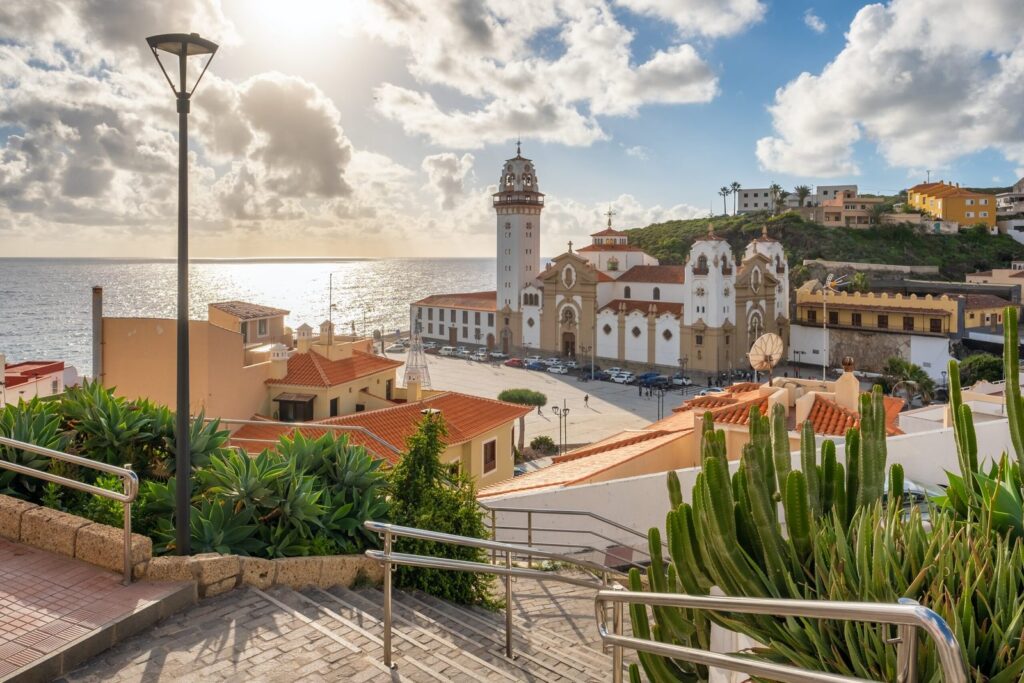
Candelaria on the east coast south of Santa Cruz is Tenerife’s most important place of pilgrimage. Here stands the Basílica de Nuestra Señora de Candelaria, begun in 1959, which houses the figure of the Virgin of Candelaria, proclaimed patron saint of the Canary Islands in 1599. According to legend, a Gothic figure of the Virgin washed ashore here around 100 years before the Spanish conquest of the island.
On the square in front of the church stand nine large bronze statues of the Guanche kings, the menceyes, who ruled the island before the Spanish arrived. The statues are by the sculptor José Abad and stand in a long row facing the sea. The basilica is open on Mondays from 3pm to 7.30pm and Tuesday to Sunday from 7.30am to 7.30pm, and entry is free. Times may change during the religious festivals in February and August.
On 15 August, people from all over the island arrive on foot to celebrate the Virgin, and the town is packed. Candelaria lies right by the TF-1 motorway between the airport in the south and Santa Cruz, and TITSA’s bus 111 stops in the town, so it’s easy to drop in on your way to the capital. Remember to cover your shoulders when you go into the church.
18. Day trip to La Gomera
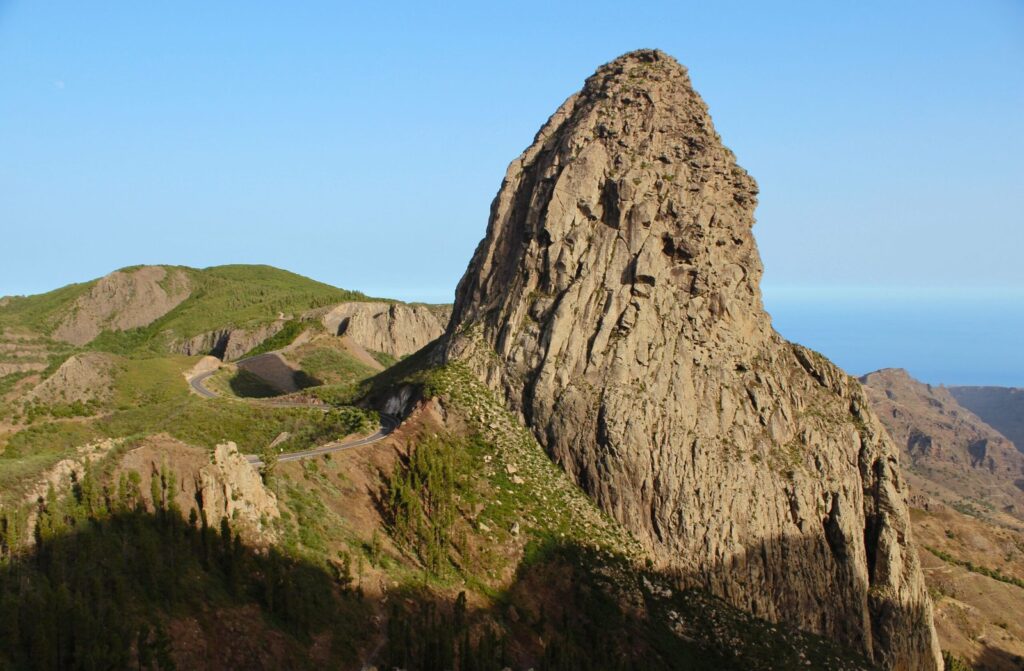
La Gomera is the small, green neighbouring island west of Tenerife, and it’s the obvious choice for a day trip. The fast ferry from Los Cristianos to San Sebastián de La Gomera takes about 50 minutes with Fred. Olsen, and from the harbour you can see Tenerife and Teide across the water.
The island’s main attraction is Garajonay National Park, which has been on the UNESCO World Heritage List since 1986. The park covers around 11 per cent of the island, and about 70 per cent of it is laurel forest, shrouded in mist and cloud for most of the year. The island also has its own whistled language, silbo gomero, which shepherds used to communicate across the deep valleys.
Without a car it’s hard to get around, so either take a hire car on the ferry or join an organised tour. If you’d rather go to Gran Canaria, Fred. Olsen sails from Santa Cruz to Agaete in about 80 minutes, and I’ve also written a guide to where to stay in Gran Canaria if you want to see more of the archipelago.
Book a full-day jeep tour of La Gomera from Tenerife.
Practical travel tips for Tenerife
Tenerife is bigger than many people think, and if you want to see Teide, Masca, Anaga and the towns in the north, a hire car is the easiest option. TITSA’s buses cover the whole island, but services on the mountain routes are infrequent. Buy a Ten+ card for €2 (around £1.70) at the airport or a bus station and load it with a day pass for €10 (around £8.50) or a 7-day pass for €50 (around £40), and you can travel freely on both buses and trams.
The island has two airports. Tenerife Sur is close to the resorts in the south, and Tenerife Norte is near La Laguna, with onward buses from both. Book the summit of Teide, the cable car and Masca Gorge well in advance, and remember that the Masca trail is only open on selected days of the week, that the fortress in Santa Cruz is closed on Sundays, and that the basilica in Candelaria doesn’t open until the afternoon on Mondays.
You can visit Tenerife all year round, as it’s mild on the coast even in winter. On the other hand, there can be snow on Teide in the winter months, and the cable car can close in high winds. The south is the driest and sunniest, while the north is greener and more often under cloud.
If you need the full selection, you can see all hotels in Tenerife on Booking.com. If you’re considering another of the Canary Islands, take a look at my guide to where to stay in Lanzarote.
Travel ressources & websites I use all the time 👇
• Booking.com has the best offers on hotels and unique places to stay
• GetYourGuide is the best place to book tours & activities with free cancellation
• Welcome Pickups is the best & safest place to pre-book airport transfers
Psst 👀 Have you subscribed to my Youtube channel and my Instagram where I provide more useful travel tips?