

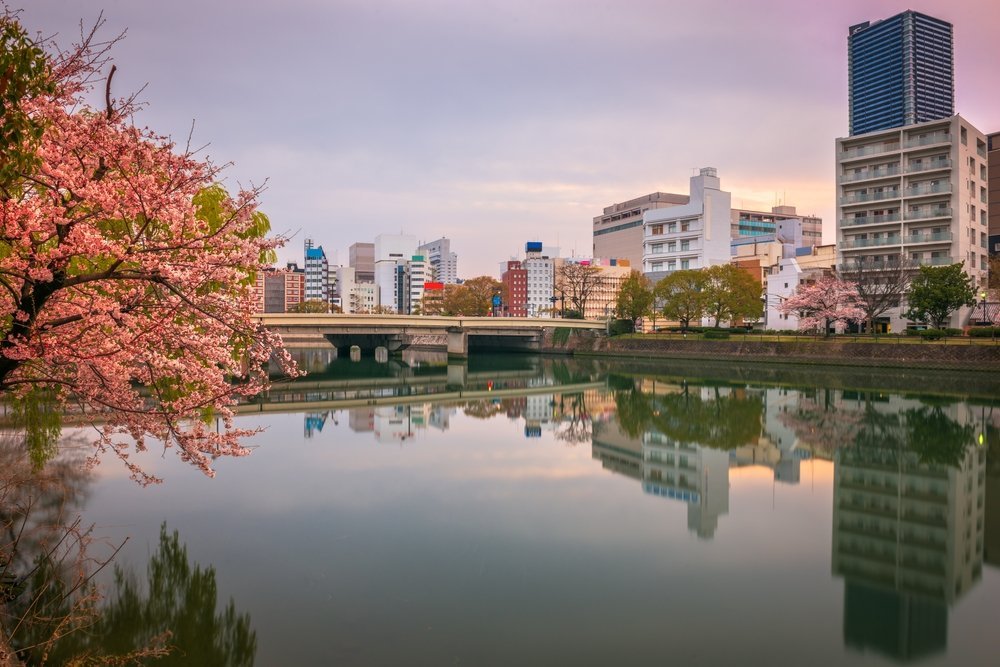
Hiroshima is where the first atomic bomb was dropped on a city in 1945, and today the Peace Memorial Park and the Atomic Bomb Dome are among the most visited places in Japan. At the same time, it’s a lively city with trams, baseball and its own take on okonomiyaki.
So where to stay in Hiroshima? The choice is between the station where the shinkansen stops, the flat streets around the Peace Memorial Park and Hondori, and a ryokan on the sacred island of Miyajima out in the bay.
Planning your trip to Hiroshima at the last minute? 🇯🇵
Here are some of the best things to do, plus hotels and other tips for your trip to Hiroshima.
🛌 Best Hotels:
1. Rihga Royal Hotel Hiroshima is a great four-star hotel with spacious rooms, close to the Atomic Bomb Dome
2. Mitsui Garden Hotel Hiroshima is a four-star hotel with a guest lounge and views over the city, close to Heiwa-odori
3. Hotel Kuretakeso Hiroshima Otemachi is a budget-friendly hotel with a communal bath and a short walk to Peace Memorial Park
Here are my six picks for areas, with three hotels in each area, from luxury to budget.
Contents
Where to Stay in Hiroshima: The Best Areas
- Peace Memorial Park and Naka-ku - best area for first-time visitors and history
- Hondori and Hatchobori - best area for food, shopping and nightlife
- Near Hiroshima Station - best area for the shinkansen and short stays
- Miyajima - best area for a ryokan, the torii gate and quiet evenings
- Miyajimaguchi - best area for onsen hotels by the ferry to Miyajima
- Onomichi - best base for the Shimanami Kaido and a quieter port town
I start at the Peace Memorial Park and move east through the shopping streets of Hondori and Hatchobori to Hiroshima Station. After that, the guide heads out to the island of Miyajima and the ferry port at Miyajimaguchi, and finally east to the port town of Onomichi. For each area you get a map, transport, price level and three places to stay. Prices come from a Booking.com search for a Saturday in May for two people and are given in Japanese yen.
You can visit Hiroshima all year round. The cherry trees usually bloom in late March and early April, and in autumn the maple leaves change colour on Miyajima. Hotel prices rise in both periods. The same happens around 6 August, when the city holds its annual memorial ceremony in the Peace Memorial Park, so book well ahead if you’re travelling at those times.
Shinkansen, flights and the JR Pass
Hiroshima lies on the shinkansen line between Osaka and Fukuoka, with direct trains from Tokyo, Kyoto and Osaka, among other places. Most international visitors fly into Tokyo or Kansai Airport near Osaka. In the guide to getting from Kansai Airport you can see how to reach Shin-Osaka, where the shinkansen to Hiroshima stops, and if you land in Tokyo, see the route from Narita and Haneda.
If Hiroshima is part of a longer trip, I’ve put together seven bases from Tokyo to Hiroshima in my guide to the whole of Japan. If you’re starting in the capital, you can also see the best areas in Tokyo.
If you’re travelling on a Japan Rail Pass, read the pass conditions first. The pass isn’t valid on the fastest trains, the Nozomi and Mizuho, unless you buy a special ticket for them, but it covers both the JR trains to Miyajimaguchi and the JR ferry across to Miyajima. JR West also sells regional passes, which you’ll find on JR West’s English website, and they can be cheaper if you’re only travelling in western Japan.
Hiroshima also has its own airport, Hiroshima Airport (HIJ), with domestic flights and a few international routes within Asia. It’s a fair distance east of the city, and the airport bus runs to the shinkansen exit at Hiroshima Station.
Trams and boats to Miyajima
In the city, the trams are the easiest way to get around. According to Hiroden, the company that runs them, you can board through any door and pay the driver when you get off, either in cash or with an IC card such as ICOCA or Suica. Line 2 runs from Hiroshima Station past the Atomic Bomb Dome all the way out to Hiroden Miyajimaguchi by the ferry.
To reach Miyajima, take the JR train or the tram to Miyajimaguchi and sail from there on the JR ferry or the Matsudai ferry. You can also sail directly from Motoyasu Pier by the Atomic Bomb Dome on the boat run by Hiroshima World Heritage Sea Route, and that’s the easiest option if you’re staying near the Peace Memorial Park. Sailings may be changed or cancelled when the tide is very low, so check on the day.
Everyone who visits Miyajima pays a small visitor tax to the local council, and you have to pay it even if you’re travelling on a Japan Rail Pass.
Good to know before you travel to Hiroshima
- 🛂 Entry: Check the entry rules for your nationality with Japan’s Ministry of Foreign Affairs. Many nationalities can visit Japan visa-free as tourists for up to 90 days. Check the rules before you travel, as they can change.
- 💳 Payment: Get an IC card such as ICOCA or Suica. It works on the JR trains and the trams, and keep a little cash in yen for the small restaurants and the stalls on Miyajima.
- 🧳 Luggage: On the shinkansen line through Hiroshima, very large suitcases need a reserved seat with luggage space. If you’re staying on Miyajima or in Onomichi, with lots of steps, it can pay to send your suitcase with a luggage forwarding service between hotels.
1. Peace Park and Naka-ku - best area for first-time visitors and history 🕊️
- 📍 Distance to the centre: The Peace Park is in the western part of the centre, just over two kilometres from Hiroshima Station and just west of the Hondori shopping street.
- 🚋 Transport: The tram stops at Genbaku Dome-mae right by the Atomic Bomb Dome, and at Hondori and Chuden-mae a little further east.
- ✈️ From the airport: Take the airport bus to Hiroshima Station and continue by tram. With suitcases, a taxi from the station is easiest.
- 💰 Price level: Mid-range. The three hotels below cost around 18,400 to 29,400 yen per night when I searched for a Saturday in May.
- 👮 Safety: Very safe, even late in the evening. During the day the park is full of school classes and tour groups, so go early if you want some peace and quiet at the memorials.
The Peace Park sits on the northern tip of an island between the Motoyasu and Honkawa rivers, close to where the bomb exploded on 6 August 1945. Today it is a large green space full of memorials, and across the river stands the Atomic Bomb Dome. It is on the UNESCO World Heritage List as the only building left standing near the spot where the bomb exploded.
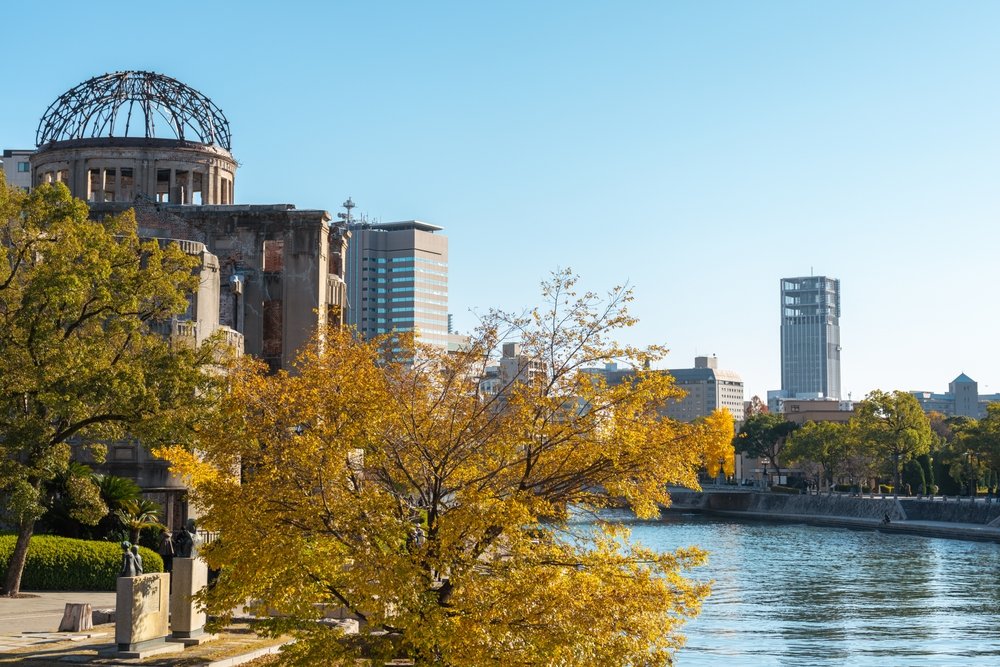
The Hiroshima Peace Memorial Museum is at the southern end of the park and tells the story of the bomb and its victims. Between the museum and the dome are the Cenotaph and the Children’s Peace Monument, where schoolchildren from all over Japan hang up thousands of paper cranes. The museum sells timed online tickets for early mornings and evenings, and it can get so busy that entry is restricted, so check the museum’s official website before you go.
Around the park lies Naka-ku, the city centre, with offices, hotels and the wide Heiwa-odori boulevard along its southern edge. Boats sail directly to Miyajima from the Motoyasu pier by the dome, and Hondori starts just across the river to the east.
See hotels near the Peace Park here.
I would stay here if it is your first trip to Hiroshima and you want to be able to walk to the park early in the morning, before the school classes and tour groups arrive. You are also within walking distance of Hondori and the okonomiyaki restaurants, and the boat to Miyajima leaves right by the dome. If you only have one or two nights in the city, this is where you will make the most of your time.
The downside is that you are just over two kilometres from Hiroshima Station, so you will need a tram or taxi when you arrive by shinkansen. Most hotels here are practical business hotels with small rooms, and around 6 August, when the memorial ceremony is held in the park, they sell out quickly.
Hotels near the Peace Park
Rihga Royal Hotel Hiroshima - large four-star hotel close to the dome and the castle
Rihga Royal is in Motomachi, around 450 metres from the Atomic Bomb Dome and just under 600 metres from Hiroshima Castle as the crow flies. It is the most expensive of my three suggestions here. The hotel has six places to eat, room service and a 24-hour reception, while the pool and gym cost extra. A double room is around 31 square metres, which is large for Japan. It scores 8.4 from just over 4,000 reviews, and the recurring complaint is that the rooms feel a little dated.
One guest writes on Booking.com: “The view is breathtaking, it’s close to the memorial in Hiroshima, and it’s so comfortable!”
See photos and book Rihga Royal Hotel here.
Mitsui Garden Hotel Hiroshima - four-star hotel with a guest lounge and city views
Mitsui Garden Hotel is in Naka-machi near Heiwa-odori, around 700 metres east of the Peace Park, and the Fukuromachi tram stop is a short walk away. The hotel has three places to eat, a breakfast buffet and a guest lounge with views over the city. A double room is only around 16 square metres. It scores 8.3 from just under 4,600 reviews, and the recurring complaint is that the rooms are small or a little worn.
From one review: “The location is absolutely perfect!”
See photos and book Mitsui Garden Hotel here.
Hotel Kuretakeso Hiroshima Otemachi - budget-friendly hotel with communal baths close to the park
Hotel Kuretakeso is in Otemachi, just over half a kilometre south-east of the Peace Park and a minute’s walk from the Chuden-mae tram stop. It was the cheapest of my three suggestions here. There is a restaurant with a breakfast buffet, communal baths and a choice of pillows, but a double room is only around 13 square metres. It scores 8.1 from just over 4,600 reviews, and the recurring complaint is that there is barely any room for suitcases.
One guest writes: “The location is superb, close to the main sights and within walking distance.”
See photos and book Hotel Kuretakeso here.
2. Hondori and Hatchobori - best area for food, shopping and nightlife 🍜
- 📍 Distance to the centre: Hondori and Hatchobori make up the city’s shopping centre, halfway between the Peace Park and the station. From Hatchobori it is about one kilometre to the Peace Park and just over a kilometre to Hiroshima Station as the crow flies.
- 🚋 Transport: The tram stops at Hatchobori, Tatemachi, Hondori and Kamiyacho, and several lines cross at Hatchobori.
- ✈️ From the airport: Take the airport bus to Hiroshima Station and the tram on to Hatchobori. A taxi from the station is a short ride.
- 💰 Price level: From budget to high-end. The three hotels below cost roughly 17,200 to 48,500 yen per night when I searched for a Saturday in May.
- 👮 Safety: Safe. In the evening, most of the action is in Nagarekawa just south of Hatchobori, where the city’s bars and nightclubs are, so choose a hotel a little away from there if you are a light sleeper.
Hondori is a long covered shopping street that starts just east of the Peace Park and runs towards Hatchobori. Clothes shops, cafés, pharmacies and souvenir shops line up side by side, and in Hatchobori you’ll find the city’s big department stores. The roof over the street also makes it a good place to head on a rainy day. From the western end of Hondori, it is only a short walk to Motoyasu Pier, where the boat to Miyajima departs.
Just south of Hondori is Okonomimura, a multi-storey building full of small okonomiyaki stalls, where the chefs cook Hiroshima’s version of the dish on a hotplate right in front of you. According to Japan’s official tourism organisation, the ingredients are layered rather than mixed, and the pancake is served on fried noodles.
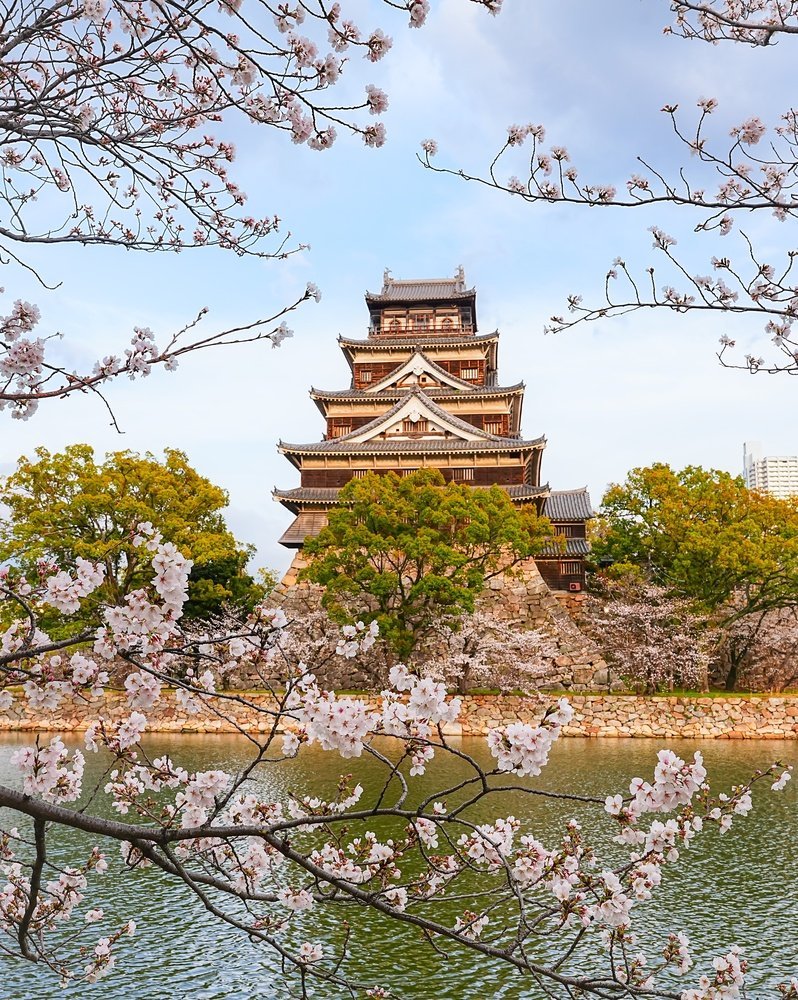
About a kilometre north of Hatchobori is Hiroshima Castle with its moat and castle park, and Shukkeien Garden lies a little further to the north-east. The castle keep itself may be closed at times, but you can walk freely around the castle grounds. In the evening, the action moves south to Nagarekawa, the city’s dense district of izakayas, bars and nightclubs.
See hotels in Hatchobori here.
I would stay here if you want restaurants, bars and shops right outside the door and still want to be able to walk to the Peace Park. Hatchobori sits halfway between the park and the station, and several tram lines stop here, so it’s easy to get around in both directions. It is also the area with the most options for eating late in the evening.
The downsides are the noise around Nagarekawa at weekends and the small rooms, which are the norm at the business hotels here. If you need to catch an early shinkansen, you’ll have to take the tram or a taxi to the station.
Hotels in Hondori and Hatchobori
Candeo Hotels Hiroshima Hatchobori - four-star hotel with an outdoor bath on the roof
Candeo Hotels is in Hatchobori, right by the tram stop and a short walk from Hondori. It is the most expensive of my three suggestions here, and what you pay extra for is the rooftop spa with a shared bath, outdoor bath and sauna. A double room with a desk is only about 16 square metres. It scores 8.3 from just over 3,400 reviews, and the recurring complaint is small rooms with little space for luggage.
One guest writes on Booking.com: “The hotel’s location is absolutely perfect.”
See photos and book Candeo Hotels here.
KIRO Hiroshima by THE SHARE HOTELS - design hotel with a bar and lounge near Okonomimura
KIRO is in Mikawacho between Hondori and Nagarekawa, just a few steps from Okonomimura. The hotel has a bar and lounge, a café, a shared kitchen and a coin laundry, and a standard double room is about 18 square metres. It scores 8.6 from just under 3,000 reviews, and the recurring complaint is small rooms, plus beds and pillows that not every guest is happy with.
From one review: “The bed was comfortable, and the Bluetooth speaker in the room was a nice touch too.”
See photos and book KIRO Hiroshima here.
Chisun Hotel Hiroshima - cheap business hotel by the tram
Chisun Hotel is in Nobori-cho by the Kanayamacho tram stop, just under 400 metres east of Hatchobori, and it is less than a kilometre to the station. It was the cheapest of my three suggestions here. There is a restaurant serving a breakfast buffet and a 24-hour reception, but the rooms are very small, and an economy double room is only about 11.5 square metres. It scores 8.2 from just over 3,400 reviews, and the recurring complaint is small, slightly worn rooms.
One guest writes: “The location is fantastic.”
See photos and book Chisun Hotel here.
3. Around Hiroshima Station - best area for the shinkansen and short stays 🚄
- 📍 Distance to the centre: Hiroshima Station is in the eastern part of the centre, just over a kilometre from Hatchobori and just over two kilometres from the Peace Park as the crow flies.
- 🚆 Transport: The shinkansen, JR trains and trams all run from the station building itself, where the trams stop on the second floor, just a few steps from the train ticket gates.
- ✈️ From the airport: The airport bus from Hiroshima Airport stops at the shinkansen exit on the north side of the station.
- 💰 Price level: From budget to high-end. The three hotels below cost roughly 18,800 to 53,000 yen per night when I searched for a Saturday in May.
- 👮 Safety: Very safe. The area around the station is busy from morning to evening, but quiet at night.
Hiroshima Station is the city’s main transport hub, and the area around it is the most practical place to stay if you only have one night or need to move on early. In and around the station you’ll find shopping centres and restaurants, and the trams stop inside the station building itself, so you can walk from the train to the tram without getting wet. The airport bus stops on the north side by the shinkansen exit, and several of the big hotels are here too.
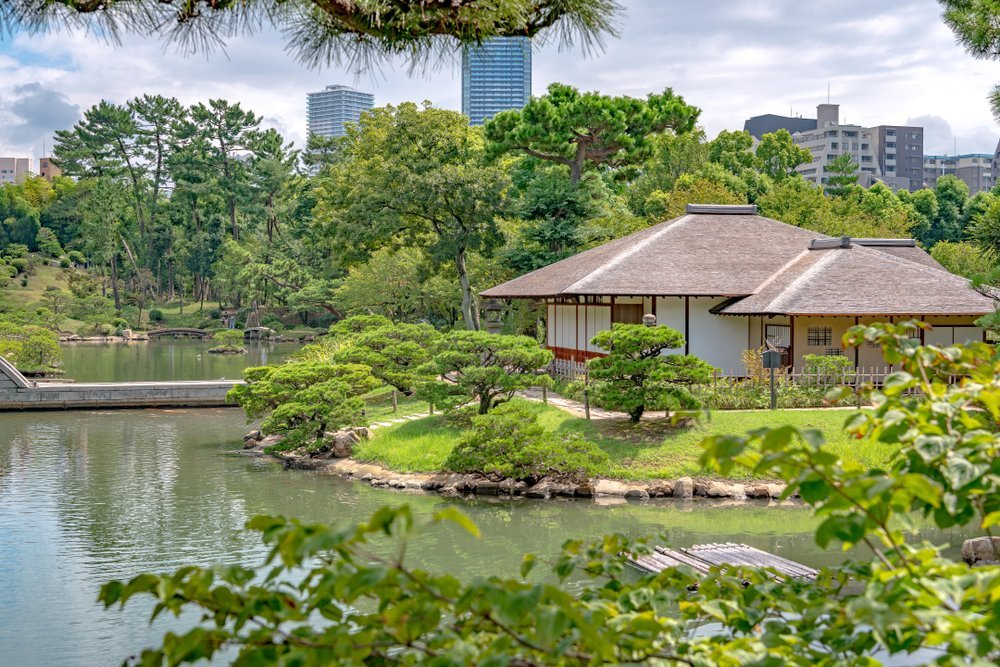
Less than a kilometre west of the station is Shukkeien, a garden with ponds, bridges and teahouses that was laid out in 1620. To the south-east is Mazda Stadium, where the Hiroshima Toyo Carp baseball team play their home games, and on match days a stream of fans dressed in red walks from the station to the stadium. An evening in the stands is a fun way to experience the city, even if you don’t know the rules.
See hotels near Hiroshima Station here.
I’d stay here if you’re arriving late by shinkansen, leaving early, or using Hiroshima as your base for day trips. JR trains to Miyajimaguchi and Onomichi leave from here, so you can head to Miyajima in the morning and be back for dinner without dragging your suitcase around. It’s also the obvious place to stay if you’re going to a baseball game at Mazda Stadium, and if you’re heading on to Onomichi or Osaka the next day, you avoid the trip in and out of the centre.
The downside is that you’re just over two kilometres from the Peace Park and Hondori, so you’ll end up taking the tram or a taxi several times a day. There’s also less going on in the evening than in Hatchobori, and if you want to eat at small local places, you’ll need to head into the centre.
Hotels near Hiroshima Station
Sheraton Grand Hiroshima Hotel - five-star hotel with a pool on the north side of the station
The Sheraton Grand is on the north side of the station, a couple of minutes’ walk from the shinkansen exit. It’s the most expensive of my three suggestions here. The hotel has four places to eat, an indoor pool, a gym, a sauna and a spa, and a Deluxe King room is around 35 square metres. It scores 8.8 from just over 1,400 reviews, and the recurring complaints are that the pool and spa cost extra and that there can be a queue at breakfast.
One guest writes on Booking.com: “The bedroom was large and, most importantly, the bed was comfortable.”
See photos and book the Sheraton Grand here.
Hotel Granvia Hiroshima South Gate - four-star hotel right on top of the station
Hotel Granvia Hiroshima South Gate sits on top of the station by the south entrance, so it’s only a few steps from the train to reception. The hotel has a restaurant, a breakfast buffet, a café and a tour desk, and a standard double room is around 20 square metres. It scores an impressive 9.3 from just over 2,300 reviews, and the recurring complaint is that the rooms are small, while a few guests mention problems at check-in.
From one review: “Excellent location inside Hiroshima Station itself.”
See photos and book Granvia South Gate here.
Via Inn Prime Hiroshima Shinkansenguchi - affordable hotel with a communal bath by the shinkansen exit
Via Inn Prime is on the north side, a few minutes’ walk from the shinkansen exit, and it was the cheapest of my three suggestions here. There’s an outdoor bath and a communal bath, a café serving breakfast and a coin laundry, but a double room is only around 15 square metres. It scores 8.8 from just over 3,200 reviews, and the recurring complaint is small rooms with little space for suitcases.
One guest writes: “Lovely location close to the station, shops and restaurants.”
See photos and book Via Inn Prime here.
4. Miyajima - best area for ryokan, the torii gate and quiet evenings ⛩️
- 📍 Distance to the centre: Miyajima lies out in Hiroshima Bay, about 18 kilometres south-west of Hiroshima Station as the crow flies. The hotels are clustered between the ferry pier and Itsukushima Shrine.
- ⛴️ Transport: You sail from Miyajimaguchi on the JR ferry or the Matsudai ferry, or take the boat from the Peace Park. On the island, you walk everywhere.
- ✈️ From the airport: Take the airport bus to Hiroshima Station, the train to Miyajimaguchi and the ferry across. According to Booking.com, two of the hotels below offer a free shuttle.
- 💰 Price level: High. The three places below cost around 24,800 to 68,100 yen per night when I searched for a Saturday in May. At several of them, the price depends on whether dinner and breakfast are included.
- 👮 Safety: Very safe. Deer roam freely all over the island, so keep a firm grip on your packed lunch and your map.
Miyajima, also known as Itsukushima, is the island many people associate with Japan. Itsukushima Shrine is built out over the water with the great red torii gate in front of it, and according to the shrine’s own website it was added to the UNESCO World Heritage List in 1996. At high tide the gate appears to float on the water, and at low tide you can walk right out to it.
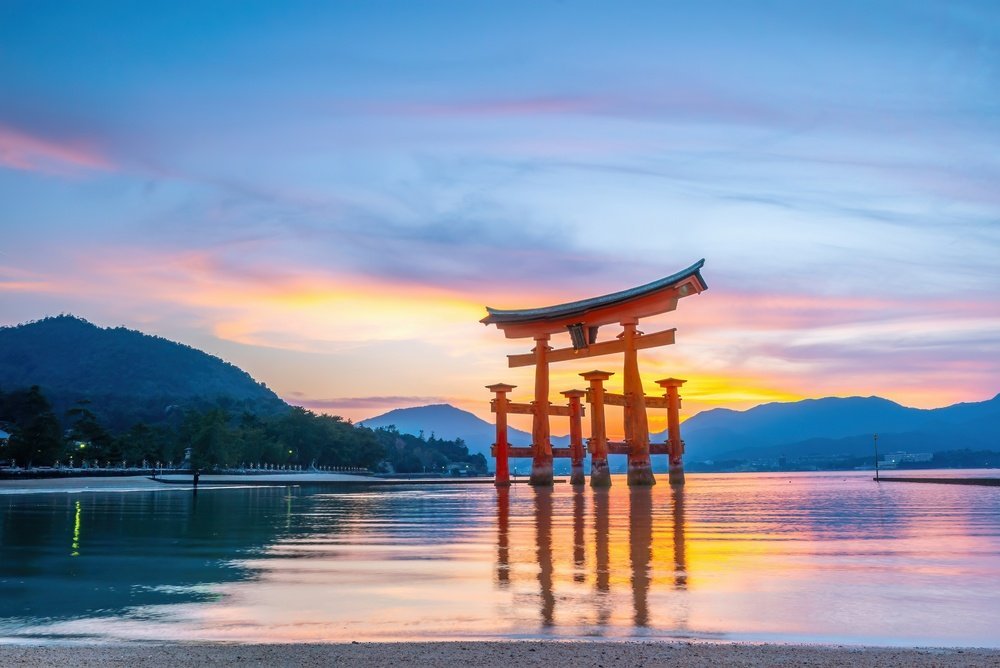
Behind the shrine, footpaths and a ropeway lead up Mount Misen with views over the Seto Inland Sea, and at the foot of the mountain lies Daisho-in Temple. The main street, Omotesando, is packed with stalls selling momiji manju, little cakes shaped like maple leaves, and the island’s other speciality is anago-meshi, grilled conger eel on rice.
The tide dictates much of the day here, so check the tide table from the tourist association before you plan your walk out to the gate. According to the tourist association, the gate and shrine are lit up from half an hour after sunset until 11 pm, and that is the best reason to stay on the island in the evening.
I would stay here for at least one night if your budget allows. Once the day-trippers sail back in the late afternoon, the island goes quiet, and you can see the illuminated torii gate in the evening and walk out to the shrine early in the morning, before the ferries arrive full again. A night at a ryokan with tatami mats, a futon, a communal bath and a Japanese dinner is an experience in itself, too.
The downside is the price. Staying on the island is more expensive than in Hiroshima itself, the choice is limited, and the best ryokan get booked up quickly, especially when the maple leaves change colour in autumn. Many shops and restaurants close early in the evening, so book dinner at your hotel if it isn’t included in the price.
Hotels on Miyajima
Miyajima Grand Hotel Arimoto - ryokan-style hotel with an outdoor bath close to the shrine
Miyajima Grand Hotel Arimoto is about 150 metres from Itsukushima Shrine and just under 700 metres from the ferry pier, and the hotel has a free shuttle. It is the most expensive of my three suggestions here. You can choose between Japanese rooms with tatami and futons and Western-style rooms, and there is a communal bath with an outdoor bath. Whether dinner and breakfast are included depends on the rate you book, and if dinner isn’t included, it has to be ordered in advance. It scores an impressive 9.3 from almost 1,700 reviews, and the recurring complaint is that the decor is a little old-fashioned.
One guest writes on Booking.com: “Both the dinner and the breakfast were excellent! We can only recommend this place.”
See photos and book Miyajima Grand Hotel Arimoto here.
Miyajima Hotel Makoto - ryokan with a communal bath and sauna a short walk from the ferry
Miyajima Hotel Makoto is about 350 metres from the ferry pier and, according to Booking.com, has a free shuttle. You can choose Japanese rooms with tatami and futons or twin rooms, and there is a communal bath and a sauna. If you want to eat at the hotel, choose a rate that includes meals, as they can’t always be added later. It scores 8.6 from just over 1,100 reviews, and the recurring complaints are the old-fashioned decor and that the futons are hard if you’re used to a mattress.
From one review: “The staff were so kind and helpful.”
See photos and book Hotel Makoto here.
Sakuraya - simple ryokan a few minutes’ walk from the ferry
Sakuraya is about 200 metres from the ferry pier and just over half a kilometre from the shrine, and it was the cheapest of my three suggestions here. It is a simple ryokan with tatami rooms, futons and a communal bath, but no dinner is served, and breakfast costs extra where it is offered. It scores 8.9 from just over 4,100 reviews, and the recurring complaints are the small bathrooms and that some rooms share a bathroom and toilet.
One guest writes: “Perfect location on Miyajima and great value for money.”
See photos and book Sakuraya here.
5. Miyajimaguchi - best area for onsen hotels by the ferry to Miyajima ♨️
- 📍 Distance to the centre: Miyajimaguchi is on the mainland opposite Miyajima in the town of Hatsukaichi, about 18 kilometres south-west of Hiroshima Station as the crow flies.
- 🚆 Transport: JR Miyajimaguchi Station and the tram terminus Hiroden Miyajimaguchi are right next to the ferry terminal, where the JR ferry and the Matsudai ferry sail to the island.
- ✈️ From the airport: Take the airport bus to Hiroshima Station and then the JR train on to Miyajimaguchi.
- 💰 Price level: Mid-range to high. The three hotels below cost around 25,100 to 53,500 yen per night when I searched for a Saturday in May.
- 👮 Safety: Very safe and quiet in the evening.
Miyajimaguchi is the small town on the mainland where the ferries to Miyajima depart. The ferry terminal, the JR station and the tram terminus sit side by side, and several hotels line the waterfront with views across the bay to the island. From the ferry, you’ll see the red torii gate as the boat approaches Miyajima.
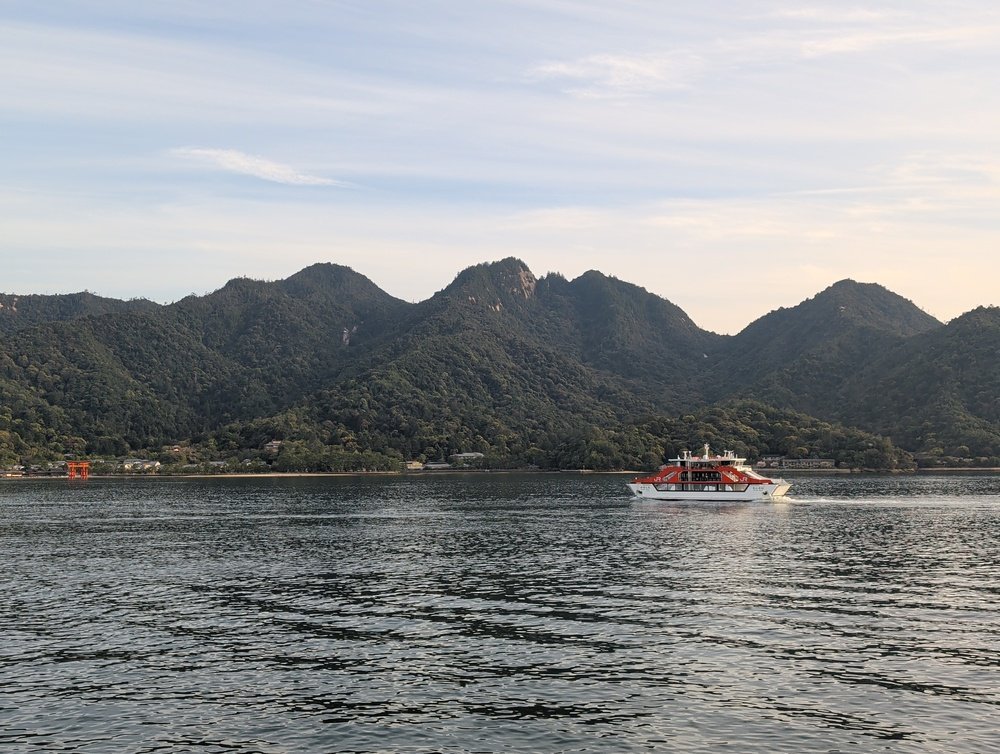
Around the ferry you’ll find restaurants serving anago-meshi, and several of the hotels have onsen, or hot spring baths, and rooms with sea views. According to Booking.com, all three hotels below offer free parking, so the area works well if you’re driving. You can also take the train or tram into Hiroshima, which makes Miyajimaguchi a peaceful base for both the island and the city. If you’re coming from Iwakuni and the Kintaikyo arched bridge further west, Miyajimaguchi lies on the way into Hiroshima, so the area also suits a trip along the coast.
See hotels in Miyajimaguchi here.
I would stay here if the hotels on Miyajima are sold out, or if you’d rather have a modern hotel with an onsen than a traditional ryokan. You can catch one of the first ferries in the morning and be on the island before the big groups arrive, and in the evening you can sail across to see the illuminated gate, as long as you check when the last ferry goes back.
The downside is that you don’t wake up on the island, and enjoying the evening atmosphere on Miyajima means a ferry ride there and back. There are also few restaurants around the hotels in the evening, and two of my three suggestions are some distance from the station, which is a hassle with suitcases if you don’t use the hotel shuttle.
Hotels in Miyajimaguchi
HOTEL FORK & KNIFE Miyajima - five-star hotel with onsen and sea views by the harbour
Fork & Knife is close to the harbour in Miyajimaguchi, just under 600 metres from the JR station, and it’s the most expensive of my three suggestions here. The hotel has hot spring baths including an outdoor bath, a sauna, a spa, a gym, a restaurant and a bar, and some rooms have sea views and a balcony. A King room is about 30 square metres. It scores an impressive 9.4 from just under 150 reviews, and the recurring complaint is that the hotel isn’t on the island itself and that there are few places to eat nearby.
One guest writes on Booking.com: “The food was excellent and made with local produce.”
See photos and book Fork & Knife here.
Grandvrio Hotel Miyajima Wakura - hotel with onsen and sea-view rooms
Grandvrio Hotel Miyajima Wakura belongs to the Route Inn chain and is about 900 metres from both the JR station and the ferry, but according to Booking.com the hotel runs a shuttle. There are hot spring baths, a sauna, a restaurant and free parking, and you can choose rooms overlooking the sea. A double room with a mountain view is about 19.5 square metres. It scores 8.8 from just over 900 reviews, and the recurring complaint is the long walk to the station and the ferry with luggage.
From one review: “The onsen bath was clean and spacious.”
See photos and book Grandvrio Miyajima Wakura here.
Miyajima Coral Hotel - simple hotel right by the ferry terminal
Miyajima Coral Hotel is right by the ferry terminal and about 240 metres from the JR station, and it was the cheapest of my three suggestions here. There are two places to eat, free parking and a coin laundry, and some rooms have sea views. A double room is about 22 square metres. It scores 8.2 from just over 2,500 reviews, and the recurring complaint is that the rooms are basic and a little dated.
One guest writes: “The hotel is wonderfully located right next to the ferry terminal.”
See photos and book Miyajima Coral Hotel here.
6. Onomichi - best base for the Shimanami Kaido and a quieter harbour town 🚲
- 📍 Distance to the centre: Onomichi sits on the Seto Inland Sea about 65 kilometres east of Hiroshima as the crow flies, so it’s a town in its own right rather than a district.
- 🚆 Transport: Local trains from Hiroshima via Mihara or from the shinkansen station in Fukuyama run to Onomichi Station in the middle of town. Shin-Onomichi also has shinkansen services, but not every train stops there, and the station is some way north of the centre.
- ✈️ From the airport: Take the airport bus to Hiroshima Station and continue by train towards Onomichi.
- 💰 Price level: From budget to very high. The three hotels below cost around 15,500 to 83,600 yen per night when I searched for a Saturday in May.
- 👮 Safety: Very safe and peaceful. The town is built on steep slopes with lots of steps, so pack light if your hotel is up on the hillside.
Onomichi is an old harbour town where the houses climb the hillside above a narrow strait, and where steep stone stairways and narrow alleys link the temples. Four temples on the Chugoku 33 Kannon pilgrimage route are here, including Senko-ji, which you can reach by ropeway, and the town’s cats in the narrow lanes are an attraction in their own right.
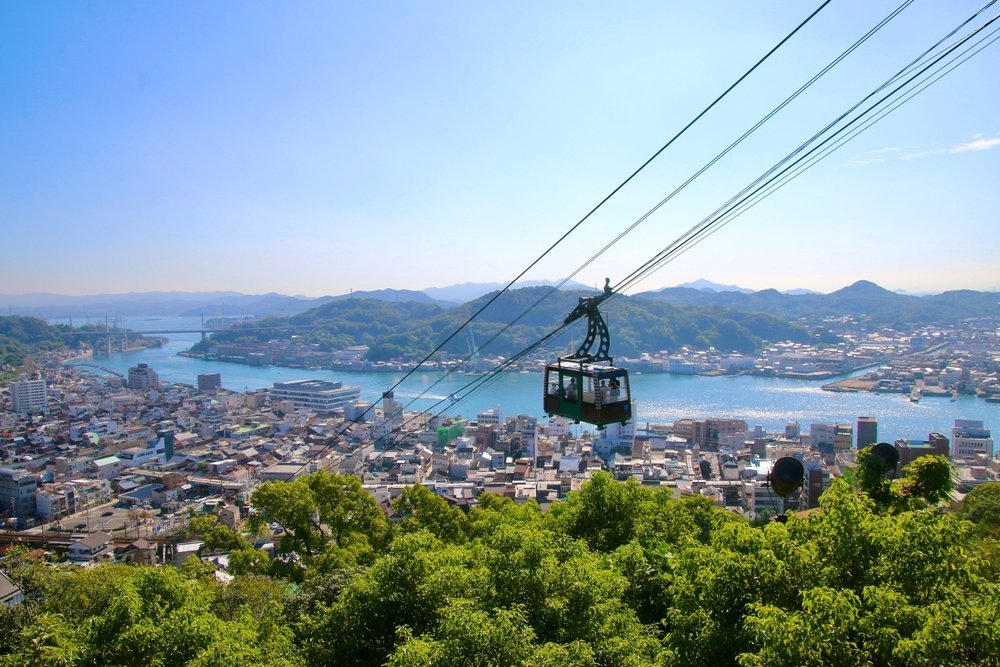
The town is also the starting point of the Shimanami Kaido, which according to the Japan National Tourism Organization is a 70-kilometre national cycling route across seven bridges to Imabari on Shikoku. Several hotels in town have bike parking, so you can set off straight from the door.
Along the waterfront is ONOMICHI U2, a 1943 warehouse converted into a hotel, restaurant, bakery and a bike shop where you can hire bikes, and from the quay small ferries cross to the island of Mukaishima on the other side of the strait. Onomichi ramen, with a soy-based broth and flat noodles, is the town’s own dish and a good reason to stay for dinner.
I would stay here if you want to cycle the Shimanami Kaido, or if you’ve seen Hiroshima and Miyajima and want a couple of quiet days in a smaller town. Onomichi is also on the railway line between Hiroshima and Osaka, so you can add a stop when you’re heading east towards Kyoto and Osaka anyway. The hotels on the waterfront are the most practical if you arrive by train and want to cycle.
The downside is the distance to Hiroshima. Onomichi isn’t a base for day trips to the Peace Park and Miyajima, and several of the town’s most interesting places to stay are up flights of steps where you’ll have to carry your suitcase yourself.
Hotels in Onomichi
LOG - small design hotel on the hillside below Senko-ji
LOG sits halfway up the slope towards Senko-ji in a 1963 apartment building which, according to the Japan Tourism Agency, was converted by the Indian architect Bijoy Jain and his practice Studio Mumbai. The hotel has just six rooms, a restaurant, a garden and a café that turns into a bar in the evening, and it’s the most expensive of my three suggestions here. There are only stairs up to the top floors. It scores 9.3 from just under 50 reviews, and one guest mentions that the price is above average.
One guest writes on Booking.com: “Both the breakfast and the dinner here are excellent!”
Hotel Cycle - hotel for cyclists in an old waterside warehouse
Hotel Cycle is inside ONOMICHI U2 on the waterfront, just under half a kilometre from Onomichi Station. All 28 rooms have a bike rack, you can wheel your bike right up to the 24-hour reception, and you can hire one in the building’s bike shop. There’s a restaurant, bar, café and bakery under the same roof, and a standard twin room is about 20 square metres. It scores 9.0 from just under 1,200 reviews, and the recurring complaint is that the rooms are dark.
From one review: “A really comfortable and stylish hotel for cyclists.”
See photos and book Hotel Cycle here.
Onomichi Kokusai Hotel - affordable hotel with bike parking and a shuttle bus
Onomichi Kokusai Hotel is in Shinhama, just over a kilometre west of the station, but the hotel runs a free shuttle bus that you need to book in advance. It was the cheapest of my three suggestions here. There’s a restaurant, a bar, bike parking in the basement and free parking, and a double room is about 15 square metres. It scores 7.8 from just under 1,000 reviews, and the recurring complaint is the distance to the station and the centre.
One guest writes: “The bed was comfortable, and both the bathtub and the bathroom were quite spacious.”
See photos and book Onomichi Kokusai Hotel here.
Where not to stay in Hiroshima?
I wouldn’t stay out at Hiroshima Airport, which is a long way east of the city and only makes sense the night before a very early flight. Also watch out for cheap hotels that call themselves Hiroshima but are actually in the suburbs, as you’ll lose a lot of time getting around. Always check the map before you book.
Grand Prince Hotel Hiroshima out by the harbour in Ujina has a lovely setting on the bay and, according to Booking.com, a free shuttle, but you’ll be almost six kilometres south of the Peace Park, so it suits you best if you mainly want to relax at the hotel. And if you want a quiet night’s sleep, avoid the streets in Nagarekawa where the bars and nightclubs are most densely packed.
If it’s your first trip to Hiroshima, I would stay by the Peace Park or in Hatchobori and spend a night on Miyajima if the budget allows. The station area is for short stays and early trains, Miyajimaguchi for onsen hotels close to the ferry, and Onomichi for the Shimanami Kaido and a couple of quiet days by the water.
Many people combine Hiroshima with Kyoto and Osaka on a longer trip, and here you can see the best areas in Kyoto and hotels in Osaka. If you also want to see northern Japan, I’ve put together the best areas in Sapporo on Hokkaido. If you’re heading on to South Korea, the shinkansen runs from Hiroshima to Fukuoka, where the ferries to Busan depart, and here you can see the best areas in Busan.
Travel ressources & websites I use all the time 👇
• Booking.com has the best offers on hotels and unique places to stay
• GetYourGuide is the best place to book tours & activities with free cancellation
• Welcome Pickups is the best & safest place to pre-book airport transfers
Psst 👀 Have you subscribed to my Youtube channel and my Instagram where I provide more useful travel tips?