

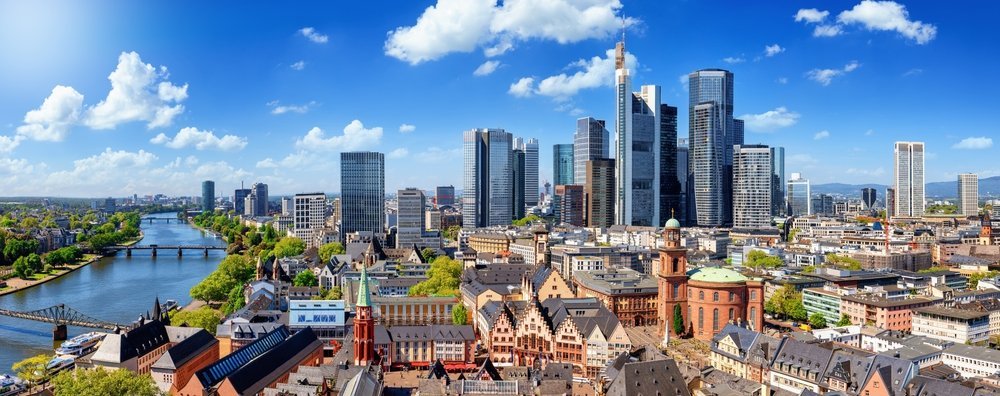
Frankfurt has a reputation as a city of banks and trade fairs, but that’s only half the story. Beneath the skyscrapers lies a rebuilt Old Town with half-timbered houses and an imperial cathedral, a whole row of museums stands side by side on the south bank of the Main, and in Sachsenhausen the locals drink apple wine from ribbed glasses, just as they have for generations. When it comes to things to do in Frankfurt, most of it is so close together that you can walk between the sights, and the U-Bahn, S-Bahn and trams take care of the rest.
Here are the 18 sights in Frankfurt I would prioritise, from Römerberg and Main Tower to Städel, Palmengarten and day trips to Saalburg and the Rhine Valley. Prices are given in euros, with approximate amounts in pounds. Many museums are closed on Mondays, so plan them for the other days. At the bottom, I’ve gathered practical tips on tickets and transport.
Contents
1. Römerberg and Neue Altstadt
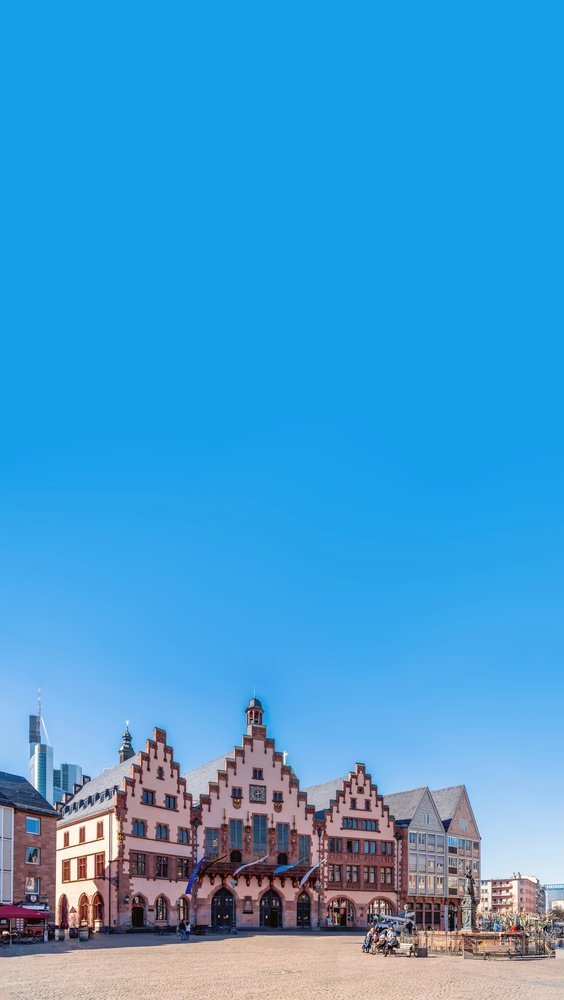
Römerberg is Frankfurt’s old square and the place to start. The Römer, the three gabled houses with stepped gables, has been the city’s town hall since 1405, and opposite stands the row of half-timbered houses rebuilt in the 1980s after the bombing of the Second World War. In the middle of the square is the Gerechtigkeitsbrunnen with its statue of Justitia, and in the corner sits the little Alte Nikolaikirche. Behind the square lies the Neue Altstadt, also known as DomRömer, where 35 houses were completed in 2018, 15 of them faithful copies of the houses that stood here before the war.
It’s free to wander around, and the area is open around the clock. The Kaisersaal on the first floor of the Römer, where the emperors held their coronation banquets, can often be visited for a small entrance fee when the hall isn’t being used for events. U-Bahn lines U4 and U5 stop at Dom/Römer right by the square.
Walk along the Krönungsweg, the coronation route, from Römerberg to the cathedral and look up at Haus zur Goldenen Waage with its carved beams. If you’d like to stay with the Old Town on your doorstep, I’ve rounded up the best areas and hotels in my guide to where to stay in Frankfurt.
Book an English-language walking tour of the Old Town here.
2. Kaiserdom St. Bartholomäus and Domturm
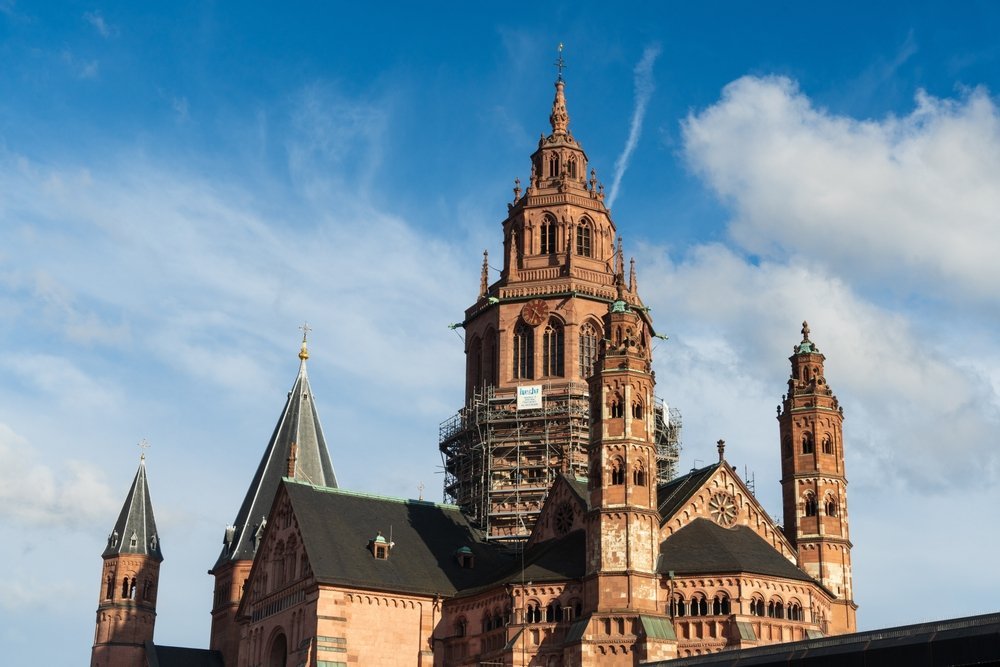
Kaiserdom St. Bartholomäus isn’t a bishop’s seat, but it’s still one of the most important churches in German history. The kings of the Holy Roman Empire were elected here from 1356, and from 1562 they were crowned here too. The red sandstone tower is almost 95 metres tall, and inside you can see the election chapel where the prince-electors met, along with the Gothic altars that survived both the fire of 1867 and the wartime bombing.
Entry to the cathedral is free. To reach the viewing platform in the tower, you climb 328 steps to a height of 66 metres, and a ticket costs around 3 euros (around £2.50). The tower may close in bad weather and has shorter opening hours in winter. The Dommuseum next door is closed on Mondays and at times between exhibitions. It’s a one-minute walk from Dom/Römer.
Choose the tower over Main Tower if you want the Old Town up close with the skyscrapers in the background. If you’d like to sleep beneath the cathedral tower, Hotel Spenerhaus sits on a quiet side street a couple of minutes from the church.
3. Paulskirche
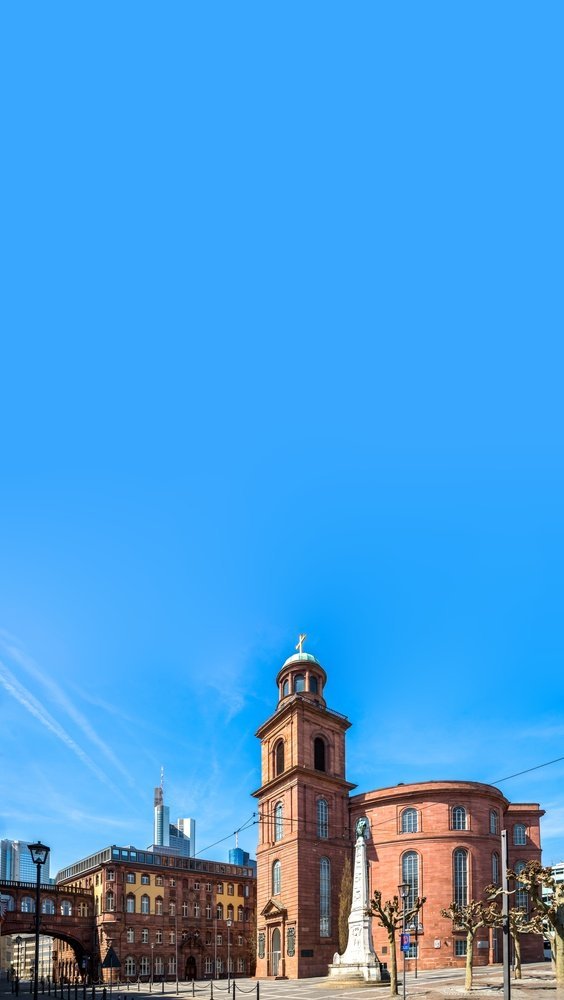
Paulskirche lies a couple of hundred metres from Römerberg and is the building Germans call the cradle of democracy. In 1848 and 1849, the first freely elected German National Assembly met here to draw up a constitution for a united Germany. The attempt failed, but many of its ideas later found their way into the Basic Law. The church burned during the war and was the first major building in the city to be rebuilt, so that it would be ready for the centenary in 1948.
Inside, the space is bright and simple, with the round hall where the German Peace Prize is awarded every year during the book fair. Paulskirche is open daily from 10am to 5pm with a free exhibition about the National Assembly, but it closes when events are taking place. U4 and U5 stop at Dom/Römer, and it’s a five-minute walk from Hauptwache.
Take a look round the exhibition in the corridor below the hall before you head upstairs. If you want to see where Germany’s parliament sits today, I’ve put together the best things to do in Berlin, including the Reichstag and the Brandenburg Gate.
4. Kleinmarkthalle
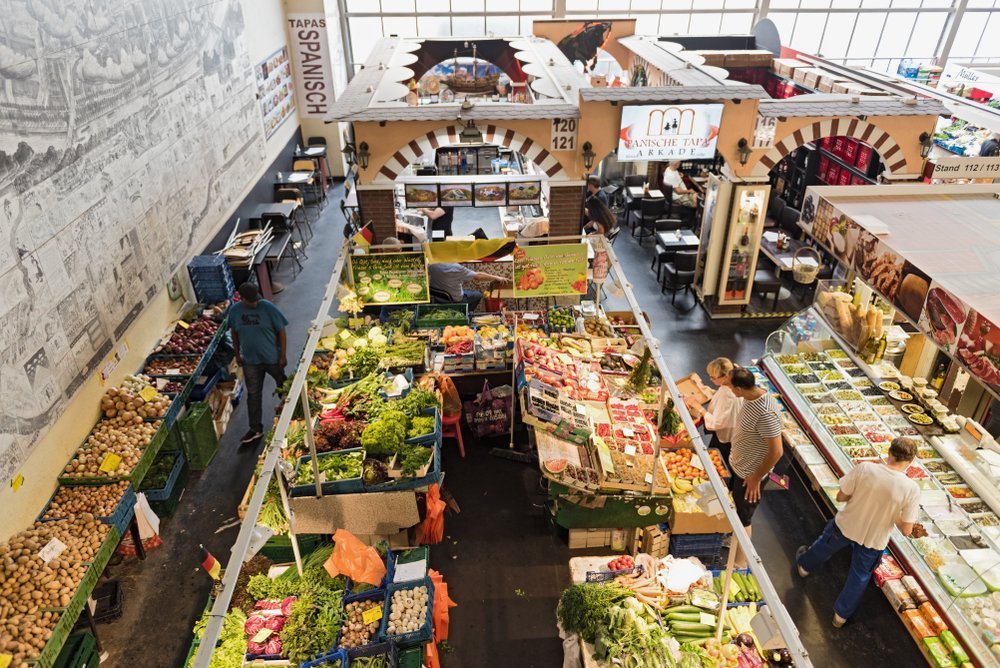
Kleinmarkthalle is Frankfurt’s covered food market, set in a long 1950s hall between the Zeil and Römerberg. This is where locals buy fruit, cheese, bread and fish, and where you’ll find the city’s specialities all in one place. Pick up the herbs for Grüne Soße, the green sauce made with seven herbs that Frankfurters eat with boiled potatoes and eggs, and join the queue at the sausage stalls, where Frankfurter Rindswurst and hot fleischwurst are served with mustard and bread.
It’s free to browse. The hall is open from morning until 6pm on weekdays and until the afternoon on Saturdays, and it’s closed on Sundays. It’s a five-minute walk from Hauptwache and slightly further from Dom/Römer.
Head up to the gallery at one end of the hall, where the wine bar serves a glass of Rheingau wine with a view over the stalls. Come on a weekday morning, as at Saturday lunchtime it’s hard to squeeze between the stalls.
5. Main Tower
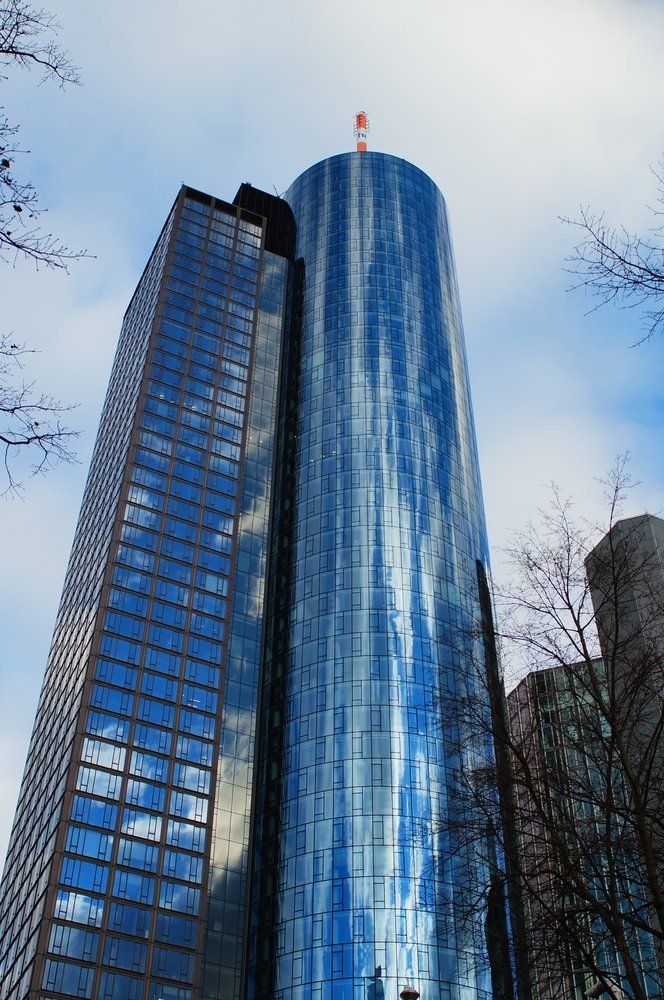
Main Tower is the only one of Frankfurt’s skyscrapers with a public viewing platform, which makes it the place to get the classic shot of the skyline. From the open-air platform at around 200 metres, you look down on the Commerzbank Tower, the European Central Bank, the Main and the whole Old Town, and on a clear day you can see as far as the Taunus mountains to the north-west.
A ticket costs 9 euros (around £7.50), while the reduced price is 6 euros (around £5). The platform opens from 10am until the evening, staying open longest on Fridays and Saturdays and in summer, and the last ascent is 45 minutes before closing. It may close in strong winds and thunderstorms. There’s airport-style security at the entrance. Willy-Brandt-Platz U-Bahn station and Taunusanlage S-Bahn station are both just a few minutes away.
Arrive half an hour before sunset and stay until the lights come on in the skyscrapers. If the clouds are low, wait for another day, as you won’t see a thing.
6. Eiserner Steg and the Main riverbank
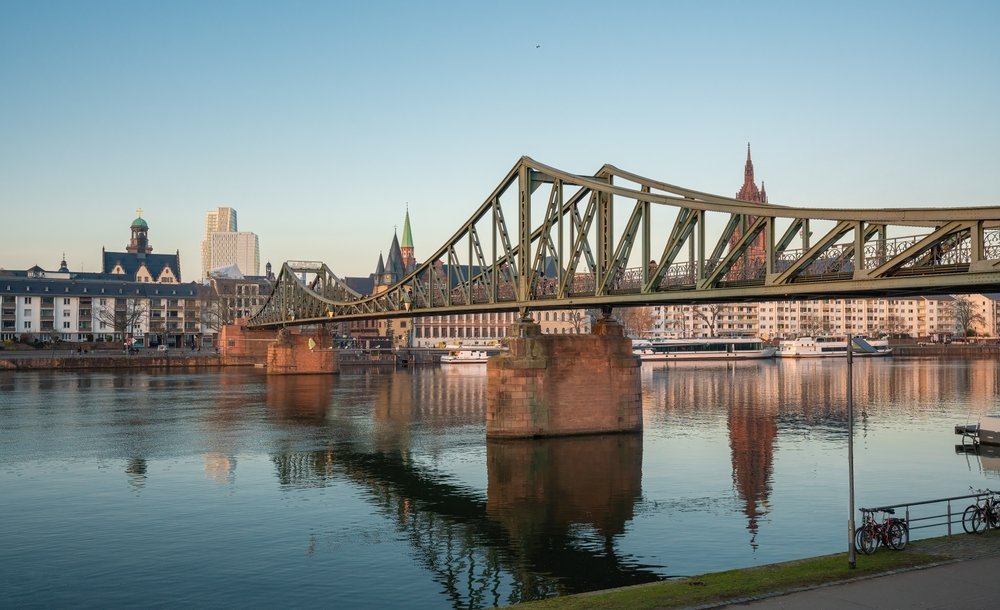
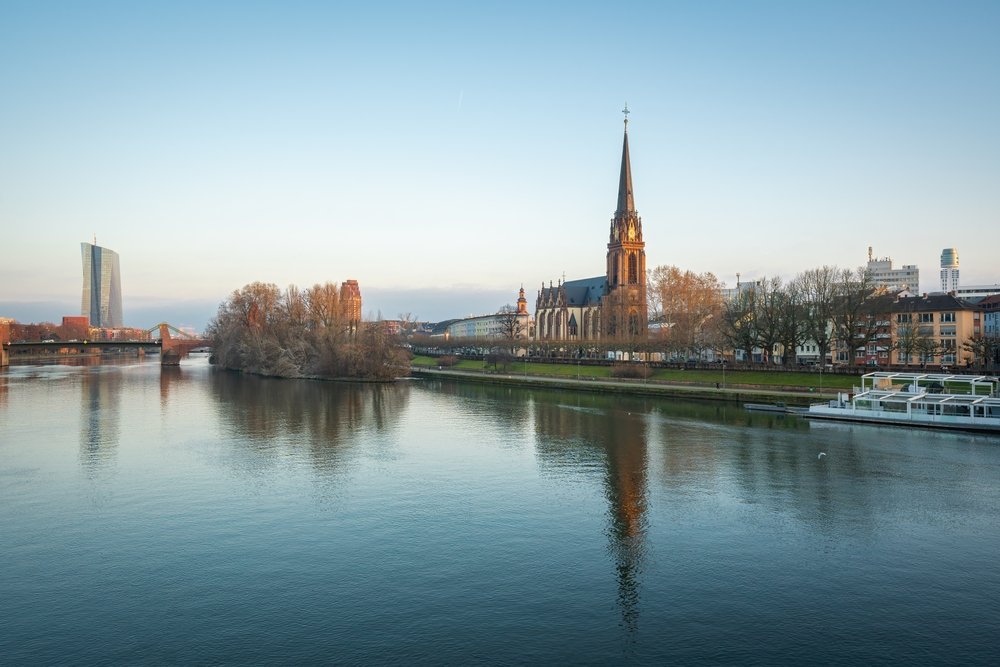
Eiserner Steg is the old iron footbridge over the Main, dating from 1869, and it links Römerberg with Sachsenhausen. Halfway across, you have the cathedral and the Old Town on one side and the skyscrapers in the background, and the railings are covered in padlocks left by couples. Wide promenades and lawns run along both banks, where locals jog, cycle and eat packed lunches when the sun is out.
It’s free and open around the clock. Sightseeing boats depart from the quay right by the bridge on the north bank, and every year on the last weekend of August, the Museumsuferfest fills both banks with stalls, music and fireworks. From Dom/Römer, it’s a five-minute walk down to the river.
Cross the bridge in the late afternoon and carry on west along Schaumainkai on the south bank. This is where you get the best view of the skyline, and it takes you straight to the museums on the Museumsufer.
Book a sightseeing cruise on the Main with views of the skyline here.
7. Städel Museum
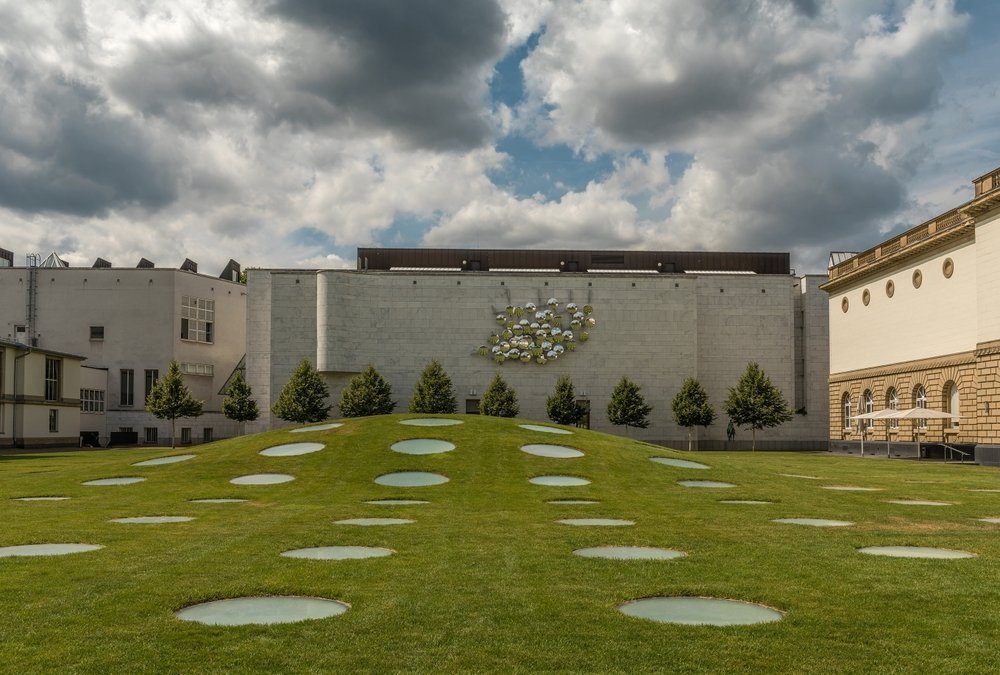
The Städel is Frankfurt’s largest art museum and one of the best in Germany. The banker Johann Friedrich Städel bequeathed his collection to the city in 1815, and today the museum spans 700 years of art, from Botticelli, Dürer and Rembrandt to Monet, Picasso and contemporary works. The most famous painting is Tischbein’s portrait of Goethe reclining in the Italian countryside, and Vermeer’s The Geographer hangs here too. The contemporary collection lies beneath the garden behind the museum, where round skylights poke up through the grass.
A ticket costs 19 euros (around £16), but on Tuesdays from 3 pm to 6 pm it’s 10 euros (around £8), and children under 12 get in free. The museum is closed on Mondays and open until 9 pm on Thursdays. It’s on Schaumainkai, and the nearest stop is Schweizer Platz U-Bahn station, but from the Hauptbahnhof it’s a ten-minute walk across the Holbeinsteg footbridge.
Allow at least three hours, and start with the Old Masters on the top floor. If you’re short on time, come on a Tuesday afternoon, when tickets are cheapest.
8. Museumsufer: Liebieghaus and the Film Museum
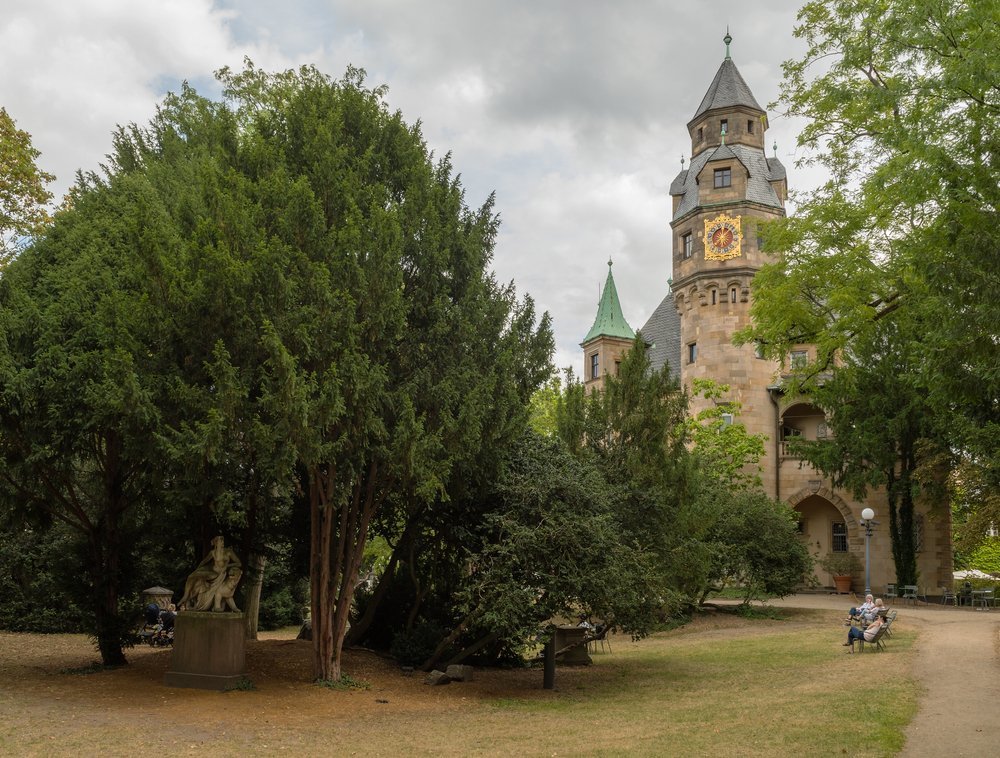
Museumsufer is the name for the row of museums along the Main, most of them on the south bank, in old villas and new buildings side by side. Two of them are worth prioritising after the Städel. Liebieghaus is housed in an 1890s villa and displays 5,000 years of sculpture, from ancient Egypt and classical Greece to the Middle Ages and Neoclassicism, and its garden café is one of the most charming in the city. The Deutsches Filmmuseum traces the history of film from the earliest optical toys to modern special effects, and at weekends you can try your hand at film tricks in the open film studio.
Liebieghaus costs 12 euros (around £10) and is closed on Mondays, and both museums may close for periods between exhibitions. The MuseumsuferTicket costs 21 euros (around £18) and gives you entry to 39 museums on two consecutive days. Schweizer Platz and the Otto-Hahn-Platz tram stop are the closest.
If you’re visiting more than two museums, buy the MuseumsuferTicket, as the Städel and Liebieghaus alone will cover its cost.
9. Goethe House and the Romantik-Museum
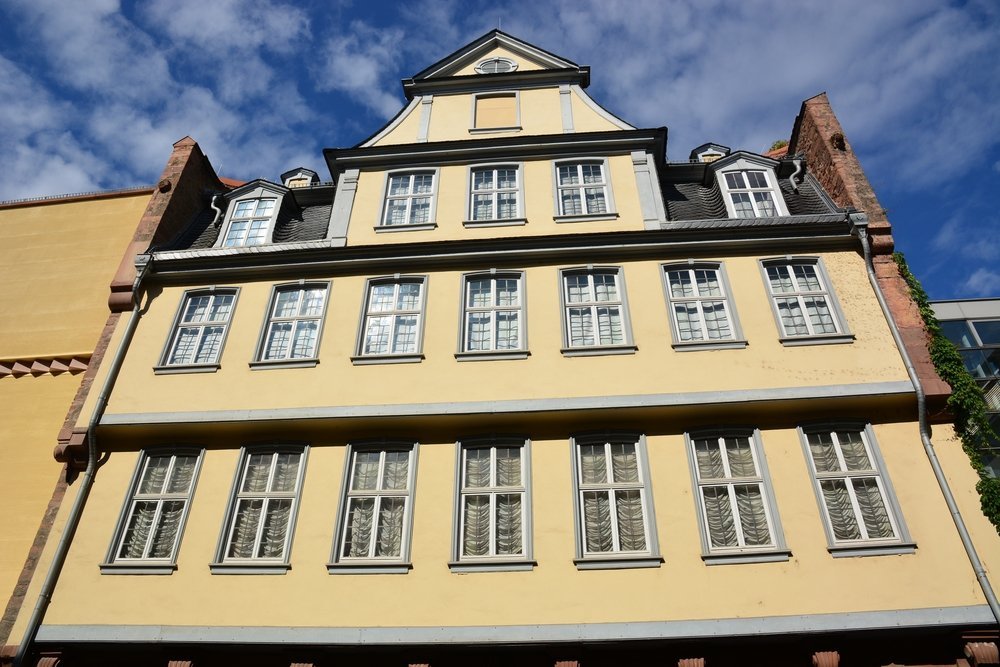
Johann Wolfgang von Goethe was born in 1749 in the yellow townhouse on Großer Hirschgraben, and he lived here until he moved to Weimar as a young man. The house was destroyed by bombs in 1944, but the furniture, paintings and books had been taken to safety, so today you walk through four floors furnished as they were when the family lived here, including the kitchen, the music room and the room where Goethe wrote The Sorrows of Young Werther. Next door is the Deutsches Romantik-Museum, which opened in 2021 and is dedicated to the poets, painters and composers of the Romantic era.
A combined ticket for both museums costs 12 euros (around £10), and on the first Thursday of the month from 6 pm to 9 pm it’s just 1 euro (around 85p). You buy tickets at the desk, and there’s no need to book a time slot. The museums are open from 10 am to 6 pm, and until 9 pm on Thursdays. It’s a five-minute walk from Hauptwache and Willy-Brandt-Platz.
Start in the Goethe-Haus and continue to the Romantik-Museum, where the blue staircase running through the building is one of the most striking spaces in the city.
10. Zeil, Hauptwache and MyZeil
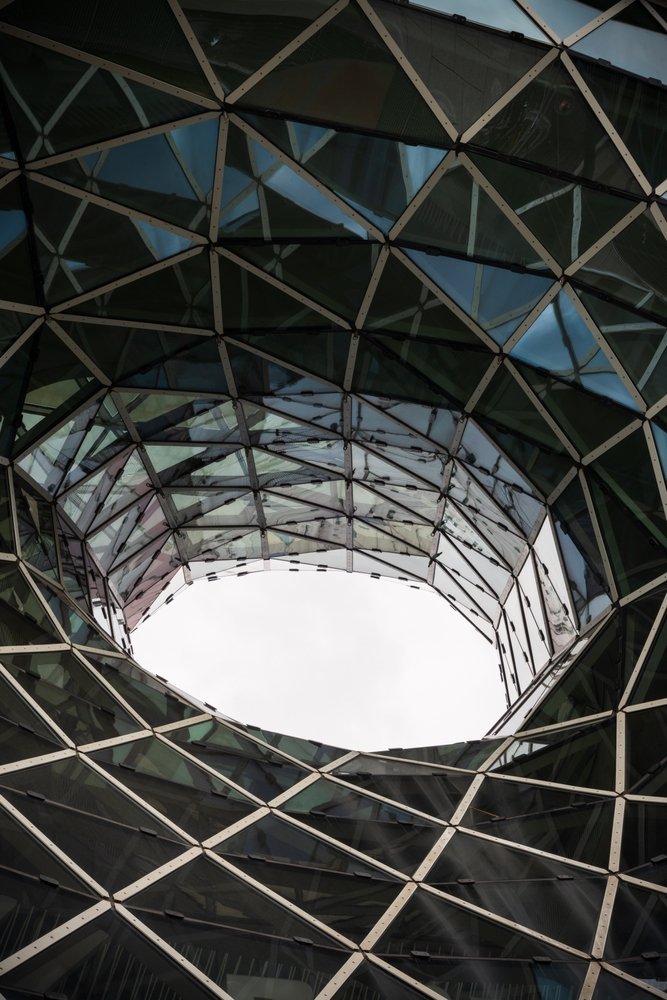
The Zeil is Frankfurt’s main shopping street, a wide pedestrianised avenue running from Hauptwache to Konstablerwache, lined with department stores and chain shops. Hauptwache is the small Baroque building from 1730 that was once the city’s guardhouse and is now a café in the middle of the traffic, and next to it stands the Katharinenkirche, where Goethe was baptised. Halfway along the Zeil is the MyZeil shopping centre, whose glass roof plunges down through the building like a funnel, and inside a very long escalator carries you up through the floors.
It’s free, and the shops are open Monday to Saturday and closed on Sundays. Hauptwache and Konstablerwache are hubs for both the S-Bahn and the U-Bahn, so you can get here from anywhere in the city and directly from the airport. On Thursdays and Saturdays, there’s a farmers’ market at Konstablerwache.
Take the escalator all the way up in MyZeil and head out onto the top-floor terrace, where you can look out over the rooftops for free. If you’d like to stay with the Zeil right on your doorstep, JW Marriott Hotel Frankfurt is in the tower next to MyZeil and has an indoor pool, but it’s also one of the city’s most expensive hotels.
11. Alte Oper and Fressgass
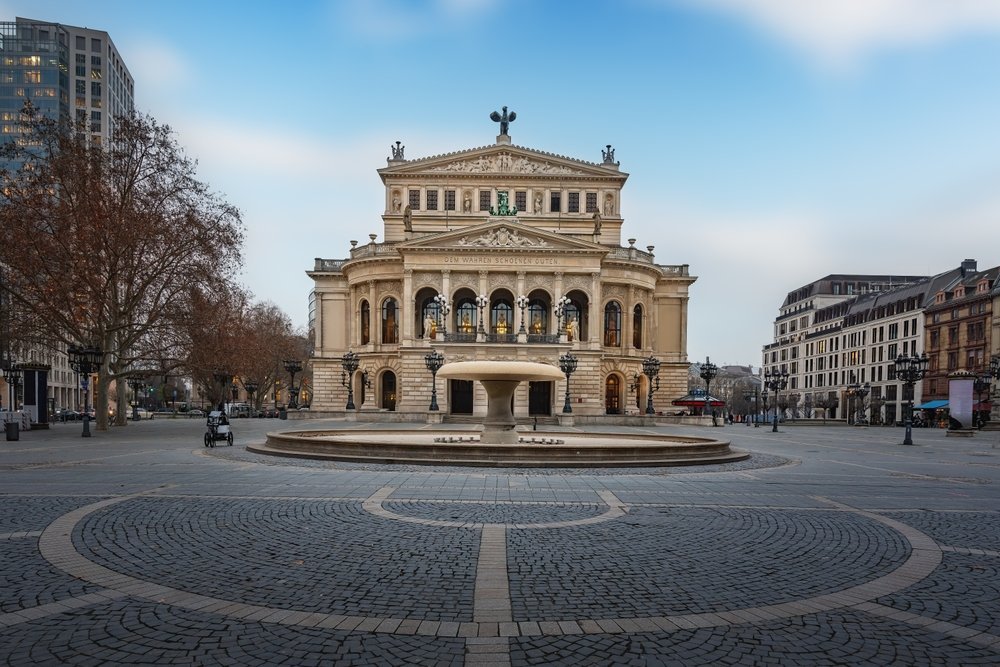
The Alte Oper stands at the end of Opernplatz and is one of Frankfurt’s most beautiful buildings. The opera house opened in 1880, was bombed in 1944 and stood as a ruin for decades before the people of Frankfurt had it rebuilt, and in 1981 it reopened as a concert hall. Above the entrance is the inscription Dem Wahren Schönen Guten, to the true, the beautiful and the good. From the square, Große Bockenheimer Straße runs east, but everyone calls it Fressgass, the “guzzling street”, because it’s packed with delis, wine bars and restaurants with tables out on the pavement.
It’s free to see the square and the building from outside, while concert tickets are sold by the Alte Oper. The U6 and U7 stop at Alte Oper right in front. Continue from Fressgass to Börsenplatz, where a bronze bull and bear stand outside the German stock exchange.
Come in the late afternoon, when office workers fill Fressgass for an after-work drink. If you’d like to stay in the elegant part of the centre, Kimpton Main Frankfurt is a five-minute walk from the Alte Oper and has a guest score of 9.0 on Booking.com.
12. Sachsenhausen and the apple wine taverns
Sachsenhausen is the district on the south bank of the Main, and it’s where you should have dinner at least one evening. Frankfurt’s national drink is Apfelwein, which locals call Ebbelwoi or Äppler. It’s a dry, tart apple wine served in a grey stoneware jug called a Bembel and drunk from a ribbed glass known as a Geripptes. In the old taverns you sit at long wooden tables with strangers and eat Handkäs mit Musik, a tangy cheese with onions, Grüne Soße or schnitzel. A green wreath above the door means the tavern makes its own apple wine.
A glass of apple wine typically costs around 3 euros (about £2.50). The area around Klappergasse and Paradiesgasse in Alt-Sachsenhausen is the most touristy, while the well-known taverns on Schweizer Straße and in the side streets are more local. It’s a ten-minute walk from the Eiserner Steg, and the S-Bahn station Lokalbahnhof is right in the middle of the neighbourhood.
Order a Sauergespritztes, apple wine topped up with sparkling water, if you find the pure apple wine too sour. And don’t wait for the waiter to find you an empty table: just sit down wherever there’s room.
Book a guided apple wine tour with tastings here.
13. Ebbelwei-Express
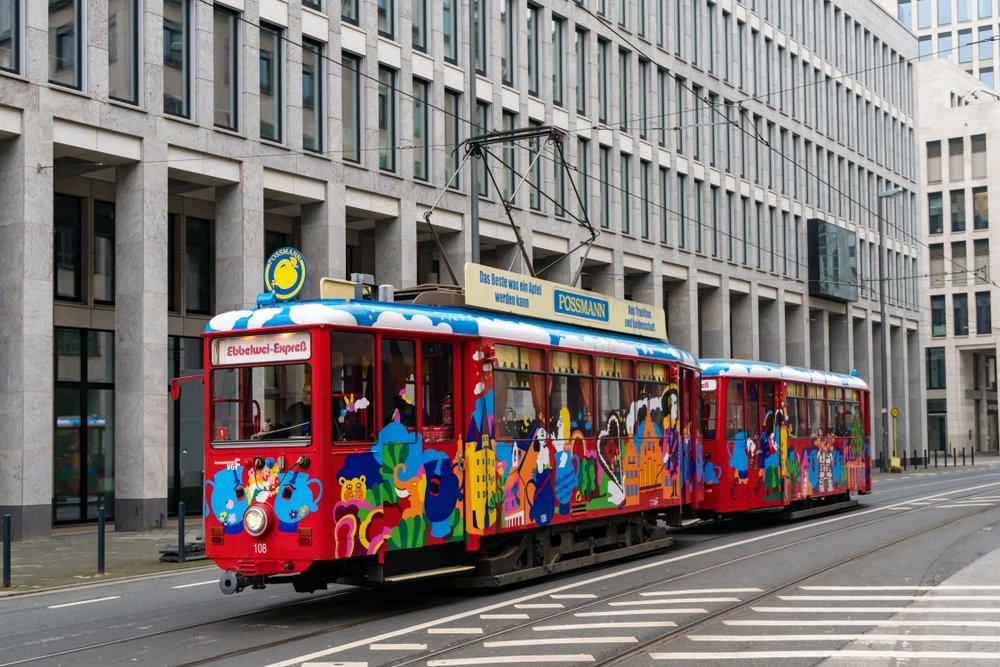
The Ebbelwei-Express is an old, brightly painted tram that runs a circular route through the city centre and Sachsenhausen with apple wine on board. The ride takes about an hour and passes the Zoo, Römer and Paulskirche, Hauptbahnhof, Messe and Sachsenhausen, while cheerful songs play over the speakers and the conductor hands out pretzels. It’s a slightly silly experience, but it’s fun, and you get to see a lot of the city’s neighbourhoods in a short time.
A ticket costs 8 euros (around £7) and 3.50 euros (around £3) for children, and the price includes a bottle of apple wine, apple juice or water and a bag of pretzels. You buy your ticket from the conductor and can board at any stop along the route. The tram runs on weekend and public holiday afternoons, so check the timetable on the website.
Get on at one of the first stops on the route, such as the Zoo, as you’re more likely to get a seat. Try to come in the early afternoon, as the last ride is often full.
14. Palmengarten
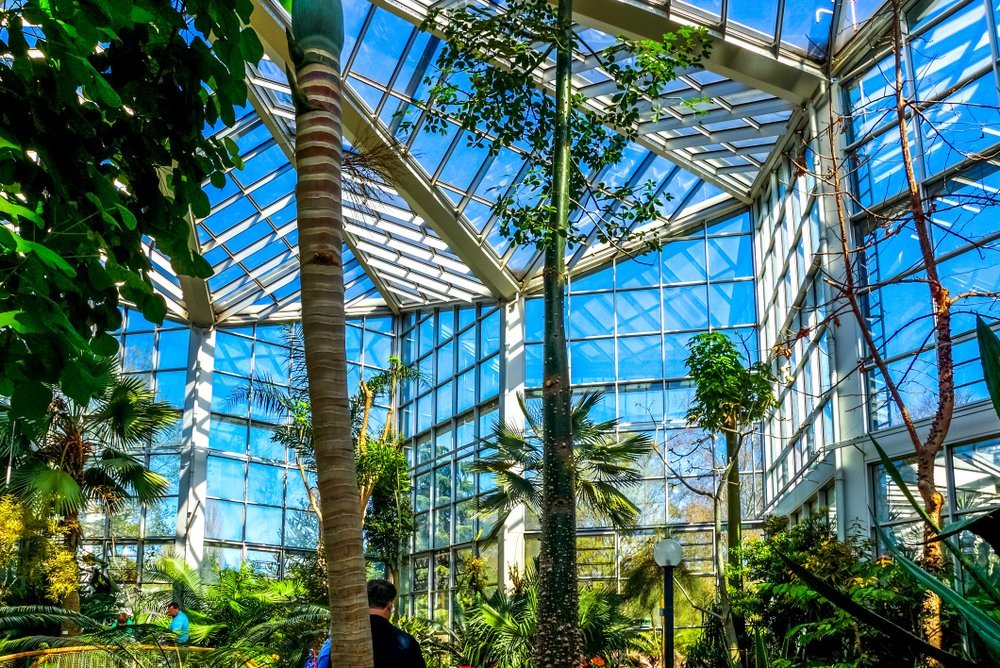
The Palmengarten is Frankfurt’s botanical garden and has been in Westend since 1871. It covers around 20 hectares, with a rose garden, ponds with rowing boats, perennial beds and a long row of glasshouses where you move from rainforest and orchids to desert plants and cacti. The large Palmenhaus from 1869 is the heart of the garden, and the Tropicarium, with rainforest and desert under one roof, is perfect on a cold or wet day. Right next door is Grüneburgpark, where you can carry on walking for free.
Admission costs 9 euros (around £7.50), and children and young people get in free. The garden opens at 9am every day and closes at 7pm from March to October and at 4pm from November to February, while the glasshouses stay open for an hour after ticket sales close. The main entrance is on Siesmayerstraße, and the U-Bahn stations Westend and Bockenheimer Warte are less than ten minutes’ walk away.
Combine the Palmengarten with the Senckenberg Naturmuseum, which is a ten-minute walk away. In winter, the glasshouses are the best escape from the cold in the whole city.
15. Senckenberg Naturmuseum
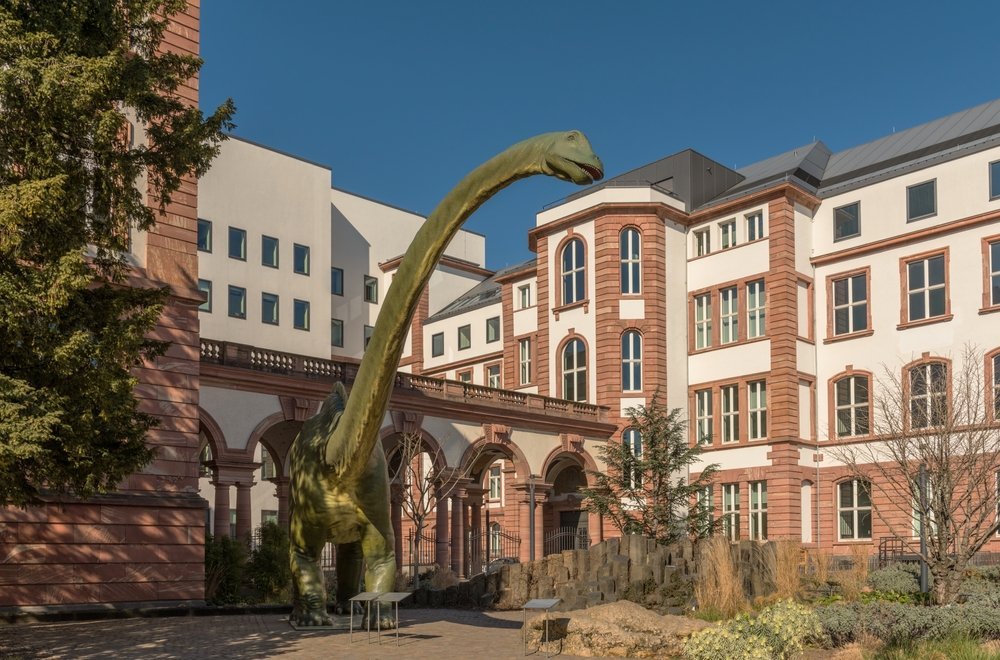
The Senckenberg Naturmuseum is one of the largest natural history museums in Europe, and it’s the place to take the kids. The dinosaur hall on the ground floor has a Tyrannosaurus rex, a long Diplodocus and a rare Edmontosaurus with its skin impression preserved, and the other halls are filled with whales, elephants and hundreds of stuffed animals. The museum also has a large collection of fossils from the Messel Pit south of Frankfurt, a UNESCO World Heritage Site, including early horses the size of a dog.
Tickets cost 12 euros (around £10) for adults and 6 euros (around £5) for children and young people aged 6 to 17, while children under 6 get in free. The museum is open every day from 9am to 5pm on weekdays and until 6pm at weekends, and on Wednesdays it stays open until 8pm. The U-Bahn station Bockenheimer Warte is right next to the museum on Senckenberganlage.
Come on a Wednesday late in the afternoon, when the school groups have gone home and the dinosaur hall is almost empty.
16. Höchst
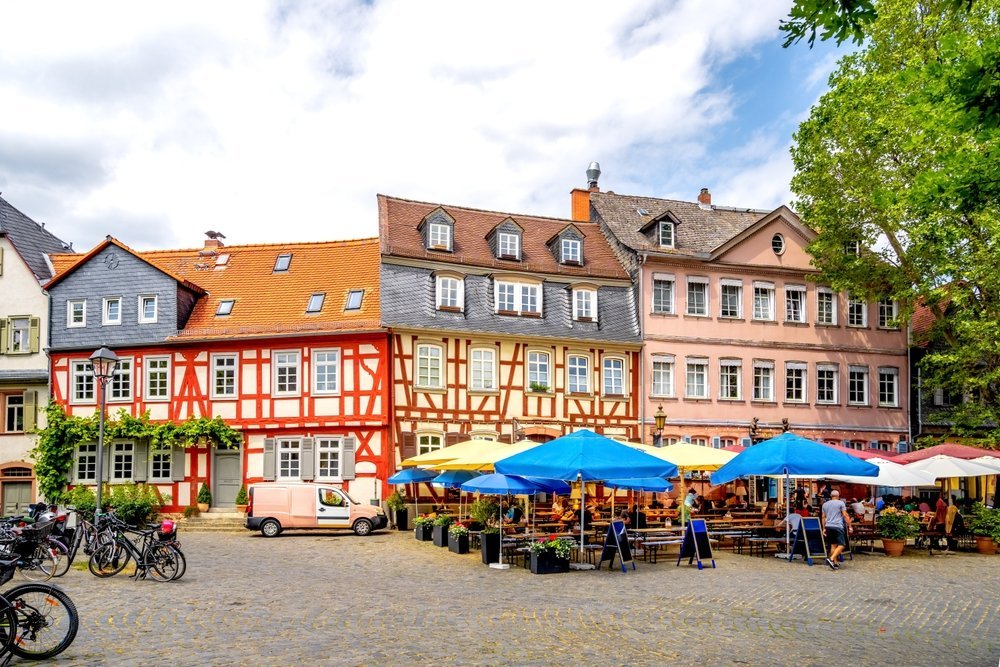
Höchst was an independent town until it became part of Frankfurt in 1928, and you can still feel it. Its small Old Town came through the war more or less intact, so the half-timbered houses here, lining narrow streets down to the Main, are not replicas. The Justinuskirche was built in the 9th century and is Frankfurt’s oldest building, and above the riverbank stands Höchster Schloss with its square tower, along with the baroque Bolongaropalast. Höchst is also known for its porcelain factory, which has been making porcelain since 1746.
Walking around the Old Town and Schlossplatz is free, while the church has limited opening hours, especially in the winter months. S-Bahn lines S1 and S2 run from Hauptbahnhof to Frankfurt-Höchst in about ten minutes, and from the station it’s a five-minute walk down to the Old Town.
Höchst is the right choice if you’ve seen the centre and want to see a Frankfurt that few tourists get to. Head down to the riverbank by the castle and take the little ferry across the Main, if it’s running, for the view back towards the castle and the church.
17. Bad Homburg and Römerkastell Saalburg
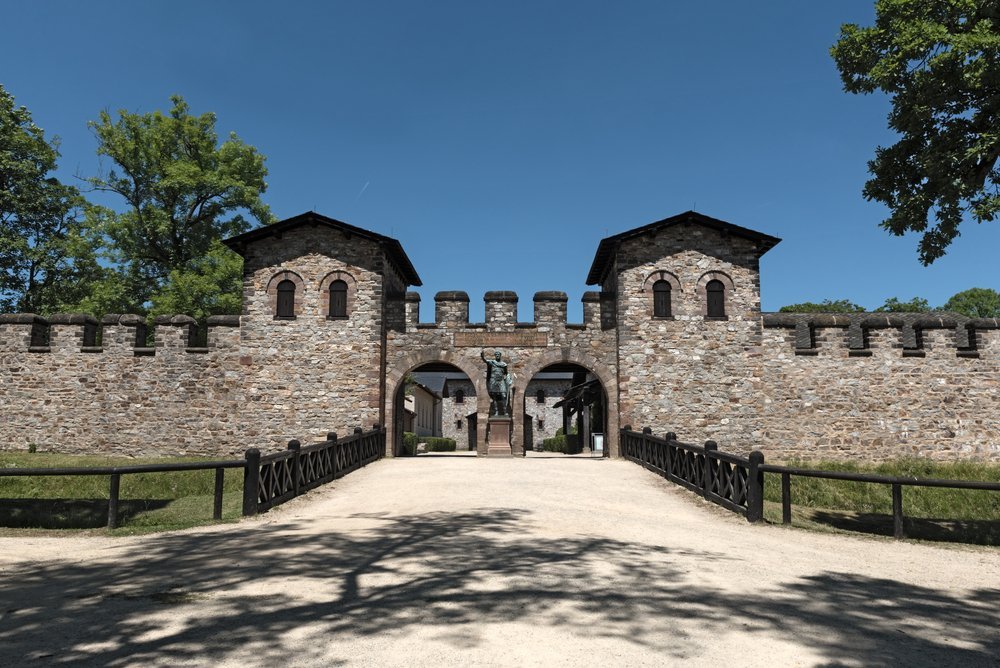
Bad Homburg lies at the foot of the Taunus mountains north of Frankfurt and was a spa resort for Europe’s upper classes in the 19th century. In the Kurpark you can see two Thai temple pavilions, a Russian church and the old spa baths, and the white palace was the summer residence of the German emperors. A few kilometres further up in the forest is Römerkastell Saalburg, a Roman fort on the Limes frontier wall, which Emperor Wilhelm II had rebuilt around 1900. The Limes is a UNESCO World Heritage Site, and at Saalburg you walk through the gate, between the barracks and into the commander’s house.
Admission to Saalburg costs 7 euros (around £6) for adults, and city bus 5 runs from the square in front of Bad Homburg station, but only four times a day. The fort is closed on Mondays and open from 10am to 6pm from March to October and until 4pm in winter. S-Bahn S5 runs from the centre to Bad Homburg in about 20 minutes.
Check the bus timetable before you set off, or take a taxi for the last stretch. Have lunch in the Roman tavern at Saalburg, and round off the day in the Kurpark on your way back.
18. Day Trip to Rüdesheim and the Rhine Valley
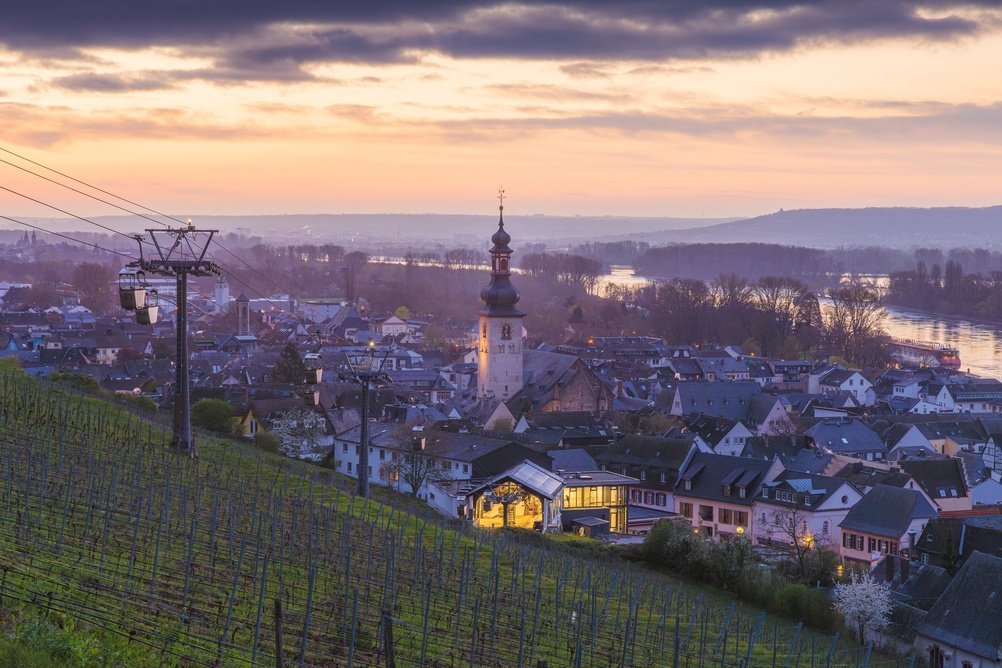
Rüdesheim am Rhein sits where the Rhine turns into the narrow valley between the vine-covered hills, and the town is the gateway to the Upper Middle Rhine Valley, a UNESCO World Heritage Site. In Drosselgasse the wine taverns stand side by side, and from the town a cable car glides over the vineyards up to the Niederwalddenkmal, the huge Germania monument overlooking the river. From here, boats continue down the Rhine past castles and wine villages towards the Loreley, and if you’d like to carry on all the way to Cologne, you can see where to stay in Cologne.
The cable car costs €7.50 (around £6) one way and €12 (around £10) return and runs from spring until early November. The regional train from Frankfurt Hauptbahnhof gets you there in about an hour and a quarter, and if you’d rather drive along the river yourself, you can hire a car in Frankfurt.
Take the cable car up and walk back down through the vineyards, and come on a weekday, because Drosselgasse gets packed at weekends in summer.
Book a guided day trip from Frankfurt to the Rhine Valley with a boat trip and wine tasting here.
Practical Travel Tips for Frankfurt
The U-Bahn, S-Bahn, trams and buses all come under RMV and use the same tickets. A single ticket in Frankfurt costs €3.80 (around £3.20) and a day ticket €7.75 (around £6.50), and you can buy them from the machines at the stations or in the RMV app. The day ticket pays for itself if you’re making more than two journeys, and from the airport the S8 and S9 take you to Hauptbahnhof and Hauptwache in about 15 minutes. The Frankfurt Card gives you free public transport and discounts at many museums, but the MuseumsuferTicket is usually the better buy if you’re mainly visiting museums.
Check the trade fair calendar before you book, as hotel prices shoot up during the big trade fairs. The Christmas market on Römerberg from late November is one of the best times to visit, and in summer the banks of the Main and the courtyards of the apple wine taverns are at their best. If you’d like the full range of accommodation, you can see all hotels in Frankfurt on Booking.com, and in my guide you can read which areas of Frankfurt I recommend.
If you have an extra day, Heidelberg with its castle and old bridge is about an hour away by train, and there are also guided tours out there.
Book a guided day trip from Frankfurt to Heidelberg here.
If you’re heading further south, the ICE train to Munich takes about three and a half hours. I’ve put together the best things to do in Munich, and in another guide you can see where to stay in Munich.
Travel ressources & websites I use all the time 👇
• Booking.com has the best offers on hotels and unique places to stay
• GetYourGuide is the best place to book tours & activities with free cancellation
• Welcome Pickups is the best & safest place to pre-book airport transfers
Psst 👀 Have you subscribed to my Youtube channel and my Instagram where I provide more useful travel tips?