

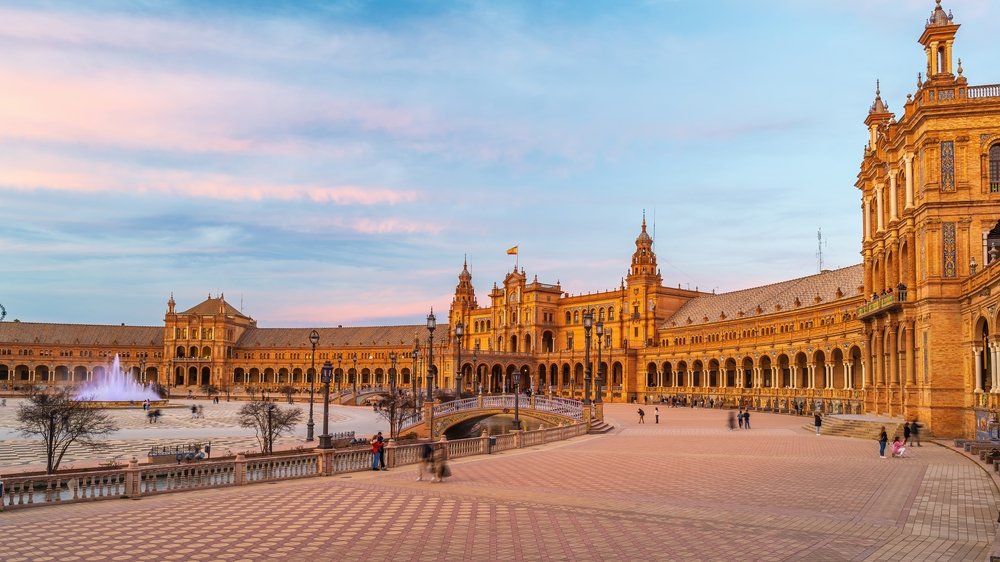
Spain is big cities with tapas until late into the night, white villages in Andalusia, islands in the Mediterranean and winter sun in the Canary Islands. The country is large, and it’s many hours’ drive from the Basque Country in the north to the Costa del Sol in the south, so deciding where to stay in Spain matters more than many people expect.
Here are my 14 suggestions for where to stay in Spain, from Madrid and Barcelona to Mallorca and Tenerife. For each place I’ve picked three hotels: a luxury hotel, a mid-range option and a cheaper alternative.
Contents
Where to Stay in Spain: The Best Areas
- Madrid - best city for museums, tapas and onward train travel around the country
- Barcelona - best city for big-city life and beach at the same time
- Seville - best city for flamenco, the Alcázar and classic Andalusia
- Granada - best city for the Alhambra and Moorish alleyways
- Málaga & the Costa del Sol - best area for a beach holiday with a proper city
- Cádiz - best city for long beaches and an Old Town on the Atlantic
- Valencia - best city for paella, beaches and modern architecture
- Alicante & the Costa Blanca - best area for an easy beach holiday all year round
- San Sebastián & the Basque Country - best area for food, pintxos and a city beach
- Mallorca - best island for variety, from Palma to mountains and coves
- Ibiza - best island for nightlife and coves with clear water
- Menorca - best island for peace, nature and families with children
- Tenerife - best island for winter sun and the Teide volcano
- Gran Canaria - best island for a winter holiday with dunes and long beaches
Below, I go through the 14 places one by one, with a map, transport from the airport and three hotels in each place: the most expensive first, then a mid-range option and finally a cheaper one. Distances to the hotels are measured as the crow flies from the point shown on the map, and journey times from the airports are approximate, so always check the timetable before you travel.
Your first choice is whether you want a city break, a beach holiday or a tour. For a long weekend, Madrid, Barcelona, Seville, Valencia and San Sebastián are obvious picks, because you can walk to most things from your hotel. If you want sun and sand, the Costa del Sol, the Costa Blanca and the islands are the easy choices, and from November to March it’s especially the Canary Islands that offer proper swimming weather.
Spain is a great country to tour by train. According to Spain’s official tourism website, you can get from Madrid to Barcelona, Seville and Málaga in around two and a half hours by high-speed train, and to Valencia in under two hours. Tickets are sold by Renfe and the private train operators, and the cheapest fares go first, so book well in advance. A classic route is Madrid, Seville, Granada and Málaga, so you finish with a few days on the beach before you fly home.
In Andalusia and on the islands, a hire car gives you the most freedom, because the white villages, coves and mountain roads are far from the railway lines. Compare car hire prices in Spain here. In the big cities I wouldn’t have a car, as parking is expensive and several of the cities have low-emission zones in the centre.
Not every place has its own section here, but I’ve written where-to-stay guides for several of them. If you’re considering a trip to the Great Mosque in Córdoba, read my guide to where to stay in Córdoba. If you dream of luxury and golf on the Costa del Sol, see the guide to where to stay in Marbella, and if you’d like to combine Barcelona with small seaside towns, I have a guide to where to stay on the Costa Brava. In the Basque Country you can read about where to stay in Bilbao, and for the Canary Islands I also have guides to Lanzarote, Fuerteventura and La Palma.
1. Madrid - best city for museums, tapas and onward train travel 🏛️
- 📍 Distance to the centre: Puerta del Sol is the heart of the city. The three hotels here are all no more than about 450 metres from the square.
- 🚇 Transport: You can get around the centre on foot, and the metro covers the rest of the city. Trains to the rest of Spain leave from Atocha and Chamartín.
- ✈️ Time from the airport: Madrid-Barajas (MAD) lies north-east of the city. Allow 30-40 minutes by taxi and around 40 minutes by airport bus to the centre.
- 💰 Price level: €€ to €€€€. Often cheaper than Barcelona for the same standard, but expensive around Gran Vía and Sol.
- 👮 Safety: A safe big city. Watch out for pickpockets on the metro and in the crowds at Sol and Plaza Mayor.
Madrid is the capital of Spain and the most practical place to start a tour of the country. The city sits right in the middle of Spain, and high-speed trains run from here in every direction. Madrid is also a big city that can easily carry a whole holiday on its own, with the Prado, the Reina Sofía and the Thyssen-Bornemisza close together along the Paseo del Prado.
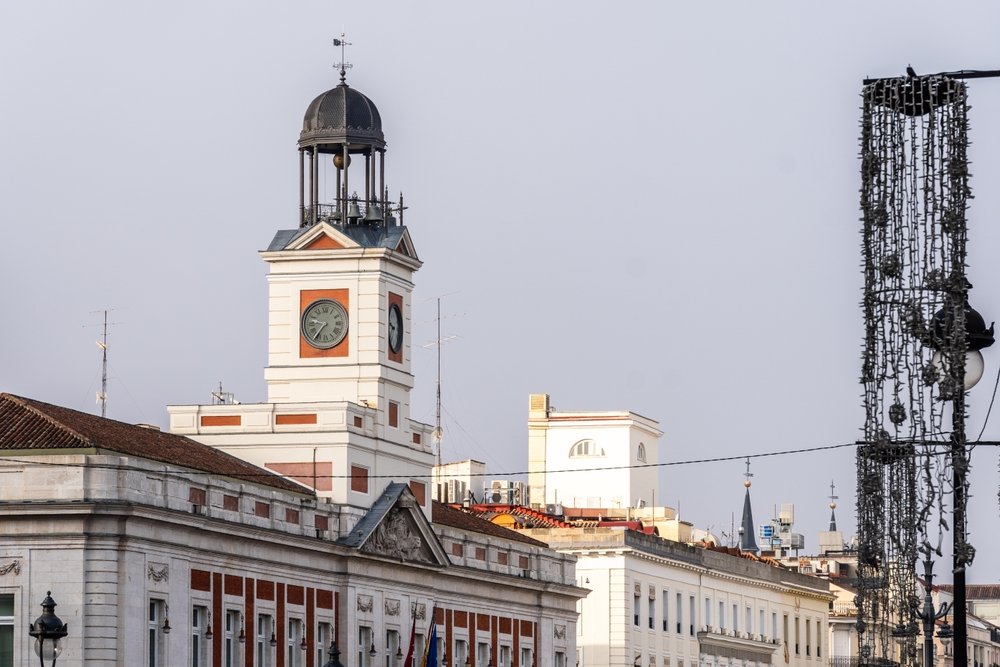
I’ve chosen three hotels around Puerta del Sol, because from here you can walk to Plaza Mayor, the Royal Palace and the museums. In the evening, the tapas bars of Huertas and La Latina are just around the corner. Madrileños eat late, so expect the restaurants not to fill up properly until after 9pm.
If you’d rather stay in elegant Salamanca or alternative Malasaña, I’ve written a full guide to where to stay in Madrid, with more neighbourhoods to choose from. In my guide to things to do in Madrid you’ll find the rest of the city’s highlights, and the guide to getting from Madrid Airport to the city centre explains the metro, bus and taxi options.
Three nights is about right for a first visit. In summer Madrid gets very hot, because the city sits high up inland with no sea breeze, so spring and autumn are the most pleasant seasons. In winter the evenings can be cold, but there are fewer tourists at the museums.
Hotels in Madrid
Four Seasons Hotel Madrid - five-star luxury hotel with a spa and rooftop pool at Canalejas
The Four Seasons is on Calle de Sevilla, less than 300 metres from Puerta del Sol, in a group of former bank buildings. The hotel has a spa with an indoor pool, a rooftop pool and several restaurants and bars. The smallest rooms are 45 square metres, which is large for central Madrid.
It’s the obvious choice if you want to treat yourself in the middle of the city. The price is high and breakfast costs extra, so factor that into your budget. One guest felt the pool was a little cold.
One guest writes on Booking.com: “An excellent hotel. The place was the best in its class, and everything you could wish for was either close at hand or already waiting for you.”
See photos and book Four Seasons Hotel Madrid here.
Room Mate Collection Alba - four-star boutique hotel in the Huertas tapas district
Room Mate Alba is on Calle de las Huertas, about 450 metres from Puerta del Sol and an eight-minute walk from Plaza Mayor. It’s a boutique hotel with a bar, a small gym and a 24-hour reception, and the rooms range from 19 to 26 square metres.
I’d choose it if you want to stay right among the tapas bars and still have a modern room. Breakfast isn’t included, but there are cafés nearby. One guest mentions that the lighting in the corridors could be better.
On the location, one guest writes on Booking.com: “The hotel had a fantastic location. It was boutique in style and very comfortable.”
See photos and book Room Mate Collection Alba here.
Hotel Europa - three-star hotel a few steps from Puerta del Sol
Hotel Europa is on the pedestrianised Calle del Carmen, just a minute’s walk from Puerta del Sol. It’s a three-star hotel with a restaurant and café on the ground floor, and the rooms range from small 9-square-metre singles to two connecting doubles for families.
It’s my budget pick, because you’ll hardly get closer to the centre for the price. The rooms are simple and breakfast costs extra, about 8 euros (around £7) for the light one and 13 euros (around £11) for the full one. The outdoor seating area can get cramped when it’s busy.
One guest sums it up on Booking.com: “The location was fantastic, it couldn’t be better. A lovely hotel with friendly staff.”
See photos and book Hotel Europa here.
2. Barcelona - best city for city break and beach in one 🏖️
- 📍 Distance to the centre: The hotels are between roughly 250 and 550 metres from Plaça de Catalunya, which links the Old Town with Eixample.
- 🚇 Transport: Metro, bus and on foot. From Plaça de Catalunya it’s a couple of kilometres down to the beach in Barceloneta.
- ✈️ Time from the airport: Barcelona-El Prat (BCN) is south-west of the city. The Aerobús runs to Plaça de Catalunya, and by bus or train you should allow 25-35 minutes to the centre.
- 💰 Price level: €€€ to €€€€. One of the most expensive cities in the country, especially in summer and during major trade fairs.
- 👮 Safety: Barcelona is known for pickpockets. Keep a firm grip on your phone on Las Ramblas, on the metro and on the beach.
Barcelona is the city for you if you want it all at once: Gaudí’s buildings, the lanes of the Barri Gòtic, great restaurants and a city beach you can walk to. It isn’t cheap, but it’s an easy city to be a tourist in, and most of the sights are within reach of the metro.
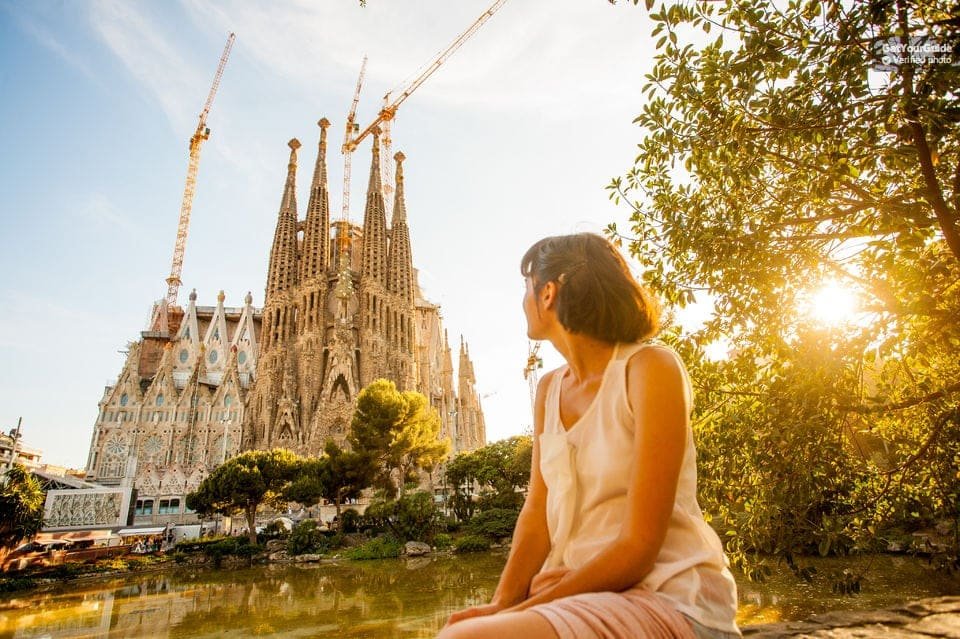
The Sagrada Família is the city’s big draw, and tickets often sell out, so buy them in advance on the basilica’s official website. If you stay around Plaça de Catalunya, you have the Old Town on one side and Eixample with Passeig de Gràcia on the other, and the rest of the city is just a few metro stops away.
In this guide, Barcelona is treated as a single base. If you need to choose between Eixample, the Barri Gòtic, El Born and Barceloneta, I’ve written a separate guide on where to stay in Barcelona, as well as a guide to things to see in Barcelona. If you’re landing at El Prat, also read my guide to getting from Barcelona Airport to the city centre.
Barcelona is also the gateway to the Costa Brava north of the city, with its small seaside towns and rocky coves. Three to four nights in the city is about right, and if you want to swim in peace, you can spend a few days on the coast afterwards. July and August are hot and very busy, so May, June and September are my favourite months.
Hotels in Barcelona
Mandarin Oriental, Barcelona - five-star hotel with a spa and rooftop pool on Passeig de Gràcia
The Mandarin Oriental is on Passeig de Gràcia, just over 500 metres from Plaça de Catalunya, on the city’s smartest shopping street. The hotel has a spa with an indoor pool, an outdoor rooftop pool that’s open in season, and several restaurants. Rooms start at 32 square metres.
It’s for you if you want to stay at the best address in Eixample with top-class service. Breakfast costs extra, and several guests find it very expensive.
One guest writes on Booking.com: “The service was exceptional, well-informed, proactive, engaged and very attentive.”
See photos and book Mandarin Oriental, Barcelona here.
Catalonia Catedral - four-star hotel with a rooftop pool by the cathedral
Catalonia Catedral is in the Barri Gòtic right by the cathedral, just under 500 metres from Plaça de Catalunya. On the roof there’s a pool that’s open in season, and the hotel has a terrace and a Japanese-style garden. Rooms range from 20 to 50 square metres.
I’d choose it if you want to stay in the middle of the Old Town and have a pool to cool off in during the afternoon. The breakfast gets good reviews. The downside is the location on the square, as one guest was disturbed by noise from there.
One delighted guest writes on Booking.com: “What can I say? This hotel is fabulous, you could call it perfect.”
See photos and book Catalonia Catedral here.
Eco Boutique Hostal Grau - small hotel with a roof terrace near Plaça de Catalunya
Hostal Grau is on the edge of the El Raval neighbourhood, just over 200 metres from Plaça de Catalunya and close to Las Ramblas. It’s an official two-star hotel with a roof terrace, and rooms range from 18 to 55 square metres, so there’s room for families too.
It’s my budget pick in Barcelona, but remember that budget is relative in this city. Breakfast isn’t included, but the hotel puts out homemade cake and fruit in the morning. One guest mentions street noise.
One guest writes on Booking.com: “It was very clean, and it was great with the children.”
See photos and book Eco Boutique Hostal Grau here.
3. Seville - the best city for flamenco, the Alcázar and classic Andalusia 💃
- 📍 Distance to the centre: All three hotels are in Santa Cruz, no more than about 450 metres from the cathedral.
- 🚶 Getting around: The Old Town is best explored on foot. High-speed trains stop at Santa Justa, which you can reach by bus or taxi.
- ✈️ Time from the airport: Seville Airport (SVQ) is east of the city. The EA bus takes about 20 minutes to Santa Justa and 35 minutes to Plaza de Armas.
- 💰 Price level: €€ to €€€€. Prices rise sharply during Holy Week (Semana Santa) and the Feria de Abril.
- 👮 Safety: A safe city. The summer heat is the biggest challenge, so plan your walks for the morning and evening.
For many people, Seville is the very picture of Spain, with orange trees, flamenco and horse-drawn carriages in front of the cathedral. The city’s Old Town is one of the largest in Europe, and around the cathedral you’ll find the Real Alcázar royal palace and the old Jewish quarter of Santa Cruz, with its narrow lanes and little squares.
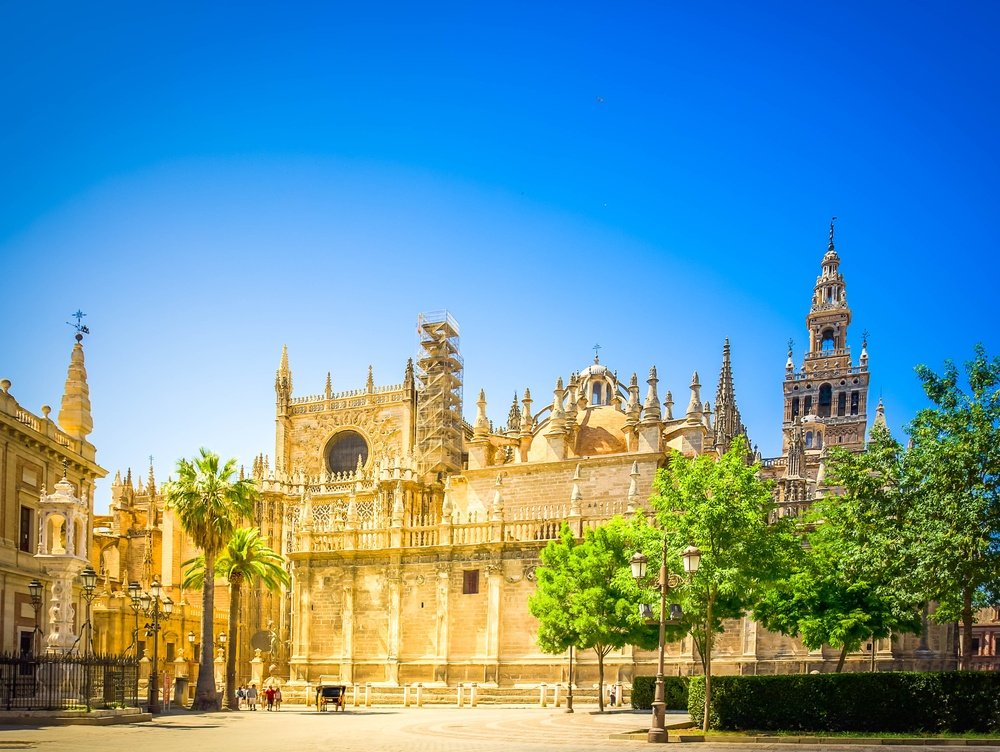
The Real Alcázar is one of the city’s most visited sights, and the queues can get long. Buy your ticket in advance via the palace’s official website, especially in spring. Plaza de España and Parque de María Luisa are a short walk to the south, and across the river lies Triana, where flamenco has deep roots.
I’ve chosen three hotels in Santa Cruz so you can walk everywhere. If you’d rather stay in Triana or El Arenal, I’ve written a separate guide on where to stay in Seville. My guide to things to do in Seville covers the city’s highlights, and in the guide to getting from Seville Airport you can read more about the EA bus and taxi fares.
Seville is also a good base for day trips. Córdoba and its great mosque, the Mezquita, are less than an hour away by high-speed train, and if you’d like to stay the night there, I have a guide on where to stay in Córdoba. In summer it’s often over 35 degrees in Seville, so choose a hotel with a pool and good air conditioning in July and August. Three nights is about right.
Hotels in Seville
Hotel Alfonso XIII - five-star palace hotel by the Real Alcázar
Hotel Alfonso XIII is Seville’s classic luxury hotel, built in neo-Moorish style. It’s on Calle San Fernando, just over 400 metres from the cathedral and close to the Real Alcázar and the university. There’s an outdoor pool, a gym and a garden, and rooms range from 21 to 150 square metres.
It’s for you if you want to stay at one of Spain’s most famous hotels. Breakfast costs extra, and despite the price there’s no spa, which one guest missed.
One guest writes on Booking.com: “An absolutely wonderful hotel that exceeded all my and my husband’s expectations.”
See photos and book Hotel Alfonso XIII here.
Hotel Casa 1800 Sevilla - four-star hotel with a rooftop pool right by the cathedral
Casa 1800 is set in an old townhouse on Calle Rodrigo Caro in Santa Cruz, about 200 metres from the cathedral. On the roof there’s a pool with a view, and rooms range from 22 to 49 square metres.
I’d choose it if you want to stay in style in old Seville without paying Alfonso XIII prices. Breakfast isn’t included. A couple of guests have had problems with the shower or the air conditioning, so let reception know straight away if anything isn’t working.
One guest writes on Booking.com: “The staff were excellent and the hotel itself was beautiful.”
See photos and book Hotel Casa 1800 Sevilla here.
Hotel Amadeus Sevilla - music-themed hotel with a rooftop pool in Santa Cruz
Hotel Amadeus is in Santa Cruz, just over 400 metres from the cathedral. The hotel has a music theme, and on the roof there’s a pool and a jacuzzi. Rooms range from 14 to 35 square metres.
It’s the cheapest of the three, but still a four-star hotel. The standard rooms are small, and one guest recommends choosing a larger category. Breakfast costs about 14 euros (around £12) per person.
One guest highlights on Booking.com: “We loved the hotel, especially the atmosphere, the history and the connection to music.”
See photos and book Hotel Amadeus Sevilla here.
4. Granada - the best city for the Alhambra and Moorish lanes 🏰
- 📍 Distance to the centre: Plaza Nueva is the starting point. The hotels are between roughly 150 and 750 metres from there, and Parador de Granada is inside the Alhambra itself.
- 🚌 Transport: Small city buses run up to the Alhambra and the Albaicín. Otherwise you walk, and the streets are steep.
- ✈️ Time from the airport: Granada has a small airport (GRX) west of the city with few direct routes. Many people fly into Málaga and take a bus or hire car onwards, in which case you should allow around two hours. That’s an estimate.
- 💰 Price level: €€ to €€€. Often cheaper than Seville, but rooms with a view of the Alhambra cost extra.
- 👮 Safety: A safe city. The Albaicín is quiet at night, so stick to the well-lit streets on your way back, and keep an eye on your bag at the viewpoints.
Granada is the city of the Alhambra, the Moorish fortress and palace complex on the hill above town. Together with the Generalife gardens and the Albaicín quarter, it’s on the UNESCO World Heritage List, and it’s one of Spain’s most visited sights. Tickets for the Nasrid Palaces have fixed entry times and often sell out, so sort out your tickets before you book a hotel.
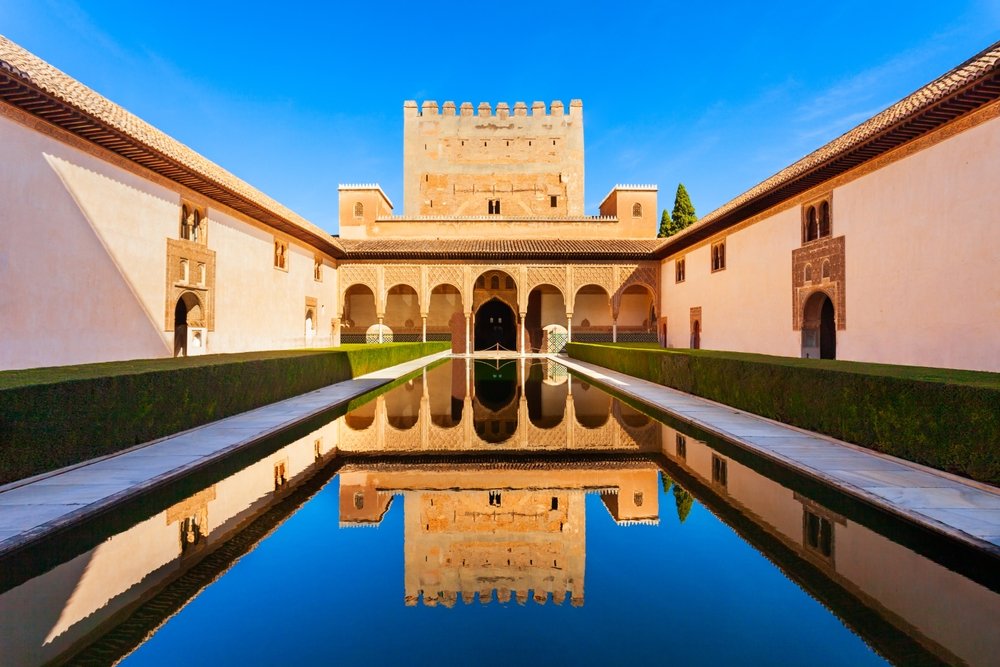
Opposite the Alhambra lies the Albaicín, with white houses, narrow streets and the Mirador de San Nicolás viewpoint, where people gather at sunset. Below the hill are Plaza Nueva and Carrera del Darro, and from here it’s a short walk to both the cathedral and the tapas bars. In many of the city’s bars you get a small tapa with your drinks.
If you’re choosing between the Albaicín, Realejo, the centre and Sacromonte, I’ve written a full guide on where to stay in Granada. Two nights is the minimum, so you have time for both the Alhambra and an evening in the Albaicín. With three nights you can also head up into the Sierra Nevada, where there’s snow in winter.
Granada fits nicely into a road trip between Seville and Málaga, and by car it’s around an hour and a half to Málaga. That’s an estimate. The city sits high up at the foot of the mountains, so in winter the evenings can get cold, even when the days are sunny.
Hotels in Granada
Parador de Granada - historic hotel inside the Alhambra itself
Parador de Granada is set in a former convent within the Alhambra grounds, so you stay right in the middle of the World Heritage Site. It’s just over 700 metres from Plaza Nueva as the crow flies, but the route is uphill. The standard double room is 24 square metres, and some rooms overlook the gardens.
This is a choice for the experience, and the price reflects that. Parking costs around 29 euros (around £25) per night. Guests miss a proper bar, and one guest found the service in the restaurant slow.
One guest writes briefly on Booking.com: “Beautiful hotel in a fabulous location.”
See photos and book Parador de Granada here.
Hotel Casa 1800 Granada - three-star mansion hotel by Plaza Nueva
Casa 1800 Granada is in an old townhouse right by Plaza Nueva, at the foot of the Albaicín. The rooms face either the Andalusian courtyard or the street, and the superior room is 19 square metres. Breakfast is included in some of the rates.
It’s my pick if you want charm and the best location for both the Alhambra and the tapas bars. Parking is nearby and costs around 19 euros (around £16). One guest was bothered by building work in the area.
One guest writes on Booking.com: “Everything was beautiful! The building itself is stunning, and the staff are fantastic.”
See photos and book Hotel Casa 1800 Granada here.
Hotel Casa Morisca - small hotel with Alhambra views in the Albaicín
Casa Morisca is on Cuesta de la Victoria in the Albaicín, around 700 metres from Plaza Nueva along the River Darro. The best rooms look straight out at the Alhambra and the Generalife, and the double room with a view is 15 square metres.
It’s the cheapest of the three and a good choice for couples who want to wake up to the view. Breakfast costs around 15 euros (around £13), and the few free parking spaces need to be reserved. One guest mentions thin walls.
One guest highlights on Booking.com: “Great location, real character and lots of history in the building.”
See photos and book Hotel Casa Morisca here.
5. Málaga & the Costa del Sol - best area for a beach holiday with a real city ☀️
- 📍 Distance to the centre: The hotels are from around 170 metres to just over a kilometre from the cathedral. Gran Hotel Miramar is by La Malagueta beach.
- 🚆 Transport: You can get around the centre on foot. The C1 local train runs along the coast to Torremolinos, Benalmádena and Fuengirola.
- ✈️ Time from the airport: Málaga Airport (AGP) is close to the city. The C1 train takes 12 minutes to Málaga Centro-Alameda and around 10 minutes to Torremolinos.
- 💰 Price level: €€ to €€€€. Málaga city has become more expensive, while the resort towns along the coast are often cheaper.
- 👮 Safety: A safe city and coastline. Watch out for pickpockets in the streets around Calle Larios and on the beach.
Málaga is the largest city on the Costa del Sol and a great choice if you want to combine the beach with a real city. Here you’ll find the Moorish Alcazaba fortress, Gibralfaro Castle, the Picasso Museum, the cathedral and the Atarazanas market hall, and from the centre it’s around a 15-minute walk to the city beach, La Malagueta.
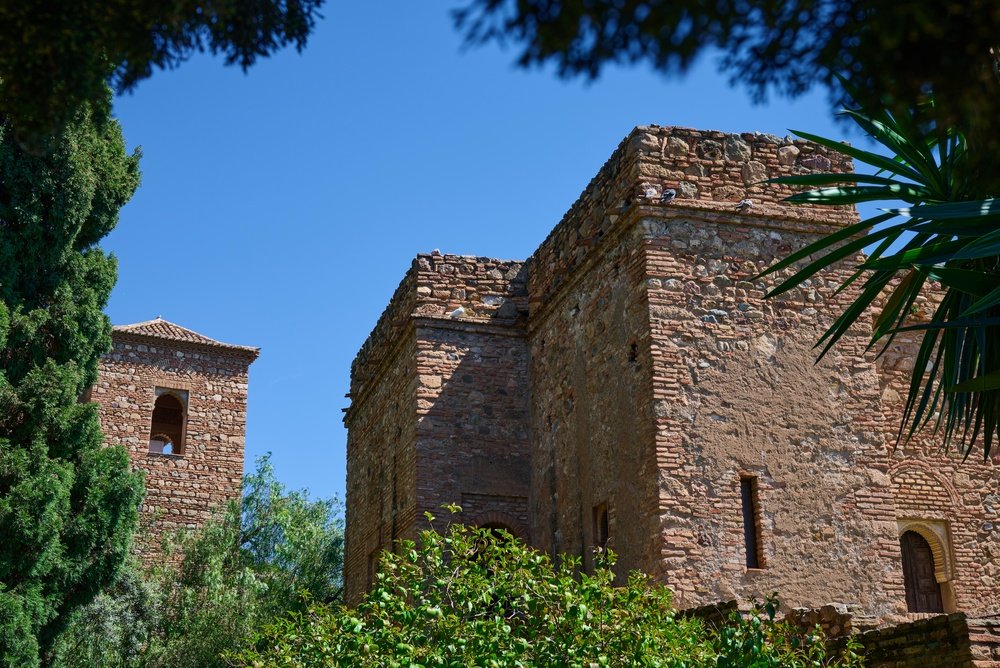
The Costa del Sol stretches west of the city with Torremolinos, Benalmádena, Fuengirola and Marbella, and to the east lies Nerja. According to the airport’s page about the train, the C1 leaves from a station right by Terminal 3, which makes Málaga one of the easiest places in Spain to holiday without a car.
I’ve picked three hotels in Málaga city, so you have restaurants and sights right on your doorstep. If you’re considering one of the resort towns, you can read my guide to where to stay in Málaga, which also covers the nearby towns, and my guide to where to stay in Marbella. In the guide to things to do in Málaga and on the Costa del Sol you’ll find ideas for your days, and the guide to getting from Málaga Airport explains the train, bus and taxi options.
Málaga has mild weather for most of the year and is one of the best cities in Spain for a spring or autumn break. In winter it’s rarely warm enough to swim, but it’s often mild enough to sit outside at lunchtime. Four nights gives you time for both the city and a day trip to Ronda or Nerja.
Hotels in Málaga
Gran Hotel Miramar GL - five-star palace hotel by La Malagueta beach
Gran Hotel Miramar is on Paseo de Reding, right on La Malagueta, just over a kilometre from the cathedral. The hotel has a spa, an outdoor saltwater pool that’s open in season, and rooms from 21 to 60 square metres.
It’s the obvious choice if you want to stay in style by the beach and still be able to walk into the Old Town. Using the spa costs extra, which some guests find too expensive. Another guest feels the breakfast could be better.
One guest writes on Booking.com: “The loveliest hotel I have ever stayed in.”
See photos and book Gran Hotel Miramar GL here.
AC Hotel Málaga Palacio - four-star hotel with a rooftop pool by the cathedral
AC Hotel Málaga Palacio is by the harbour on Cortina del Muelle, less than 200 metres from the cathedral. Its hallmark is the roof terrace with a bar and pool and views over the city and harbour. Rooms range from 24 to 55 square metres.
This is my suggestion if you want to stay right in the centre with views and a pool at a mid-range price. The pool sits in the middle of the rooftop bar, so there’s not much privacy while you’re sunbathing.
About the roof terrace, one guest writes on Booking.com: “The atmosphere on the roof is unbeatable, absolutely fantastic, and every single member of staff without exception is so lovely and so friendly.”
See photos and book AC Hotel Málaga Palacio here.
Hotel del Pintor - three-star hotel in the northern part of the Old Town
Hotel del Pintor is on Calle Álamos, just under 400 metres from the cathedral and close to Plaza de la Merced. It’s a small three-star hotel with simple rooms of 10 to 17 square metres.
This is my budget pick, and you’re paying for the location, not the space. Rooms facing the street can be noisy, so ask for one at the back if you’re a light sleeper.
One guest writes on Booking.com: “The attentiveness from the hotel was remarkable.”
See photos and book Hotel del Pintor here.
6. Cádiz - best city for long beaches and an Old Town on the Atlantic 🌊
- 📍 Distance to the centre: The Old Town sits on a peninsula surrounded by sea. Two of the hotels are no more than about 500 metres from the cathedral, and Playa Victoria is on the beach a little over 3 km to the south.
- 🚶 Transport: The Old Town is compact and best explored on foot. City buses run along Playa de la Victoria to the newer part of the city.
- ✈️ Time from the airport: The nearest airport is Jerez (XRY). The train from the airport reaches Cádiz in about 50 minutes. From Seville Airport, allow around two and a half hours by bus and train.
- 💰 Price level: €€ to €€€. Often cheaper than Seville and Málaga, but prices by the beach go up in summer.
- 👮 Safety: A safe, relaxed city. Keep an eye on your bag on the beach and in the crowded streets during the carnival.
Cádiz is one of Europe’s oldest cities and a great alternative to the big cities of Andalusia. The Old Town sits on a peninsula jutting out into the Atlantic, with the cathedral by the water, narrow streets and old watchtowers on the rooftops. It’s less touristy than Seville and Málaga, and it has long sandy beaches right by the centre.
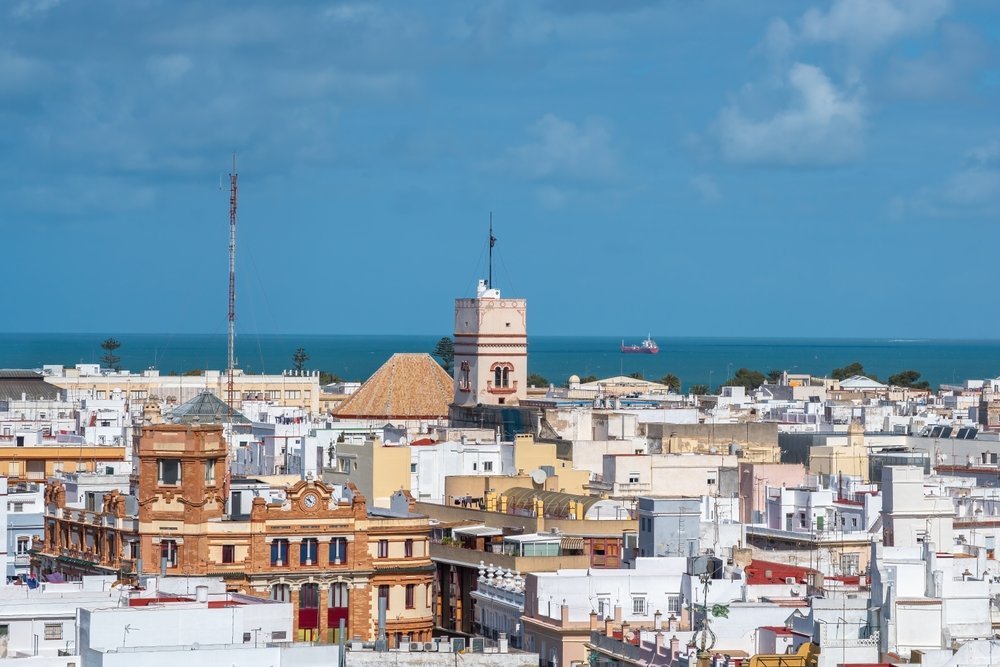
Next to the Old Town is the small beach of La Caleta, and south of the peninsula begins Playa de la Victoria, which stretches for several kilometres. In the evening, people gather in the tapas bars around the market hall and in the La Viña neighbourhood. Around February the city hosts one of Spain’s biggest carnivals, so you’ll need to book your hotel well in advance.
If you’re choosing between the Old Town, El Pópulo, La Caleta and the beach, I’ve written a full guide on where to stay in Cádiz. Cádiz is also a good place to end a tour from Seville, as regional trains connect the two cities. With a hire car, you can take a day trip to the sherry town of Jerez and the white villages inland.
The Atlantic is cooler than the Mediterranean and the wind can be strong, but in return the beaches are wide and rarely as packed as on the Costa del Sol. Two to three nights is about right, and from June to September you can combine the city with long days on the beach.
Hotels in Cádiz
Hotel Playa Victoria - four-star beach hotel with a large pool
Hotel Playa Victoria sits right on Playa de la Victoria, a little over 3 km from the cathedral in the Old Town. The hotel has a large outdoor pool that’s open in season, and rooms from 26 to 70 square metres, many with sea views.
It’s the obvious choice if the beach matters more than the old streets, but you’ll need a bus or taxi into the Old Town. Parking costs about 25 euros a day (around £20), and the breakfast gets some criticism: one guest writes that the hot food was cold.
One guest writes on Booking.com: “Location right on the beach. Beautiful sea views.”
See photos and book Hotel Playa Victoria here.
Hotel Boutique Argantonio - charming boutique hotel in the Old Town
Argantonio is on a small street in the middle of the Old Town, a little over 500 metres from the cathedral. The hotel is beautifully decorated, and the rooms vary a lot in size, from 10 to 70 square metres.
I’d choose it if you want to stay in the heart of Cádiz with charm and peace and quiet. Parking costs about 16 euros a night (around £13), and spaces are limited. One guest found the beds a little hard.
One guest writes on Booking.com: “Charming hotel, beautifully decorated and with a quiet, calming atmosphere.”
See photos and book Hotel Boutique Argantonio here.
Hostal Canalejas - simple hostal close to the harbour
Hostal Canalejas is on Calle Cristóbal Colón in the Old Town, about 300 metres from the cathedral and around 200 metres from the harbour. It’s a simple hostal with a lift and air conditioning, and the rooms range from 6 to 26 square metres.
It’s the cheapest of the three and suits you if you just need a clean bed in the middle of town. Entry is by codes, and one guest found them awkward to use.
One guest writes on Booking.com: “I really like the staff’s communication and friendliness.”
See photos and book Hostal Canalejas here.
7. Valencia - best city for paella, beaches and modern architecture 🥘
- 📍 Distance to the centre: Plaza del Ayuntamiento is the heart of the city. The hotels are anywhere from under 100 metres to just under a kilometre from there.
- 🚇 Transport: Metro, tram and bus. To get to Malvarrosa beach, take the tram or bus, and you can walk to the City of Arts and Sciences through the Turia park.
- ✈️ Time from the airport: Valencia Airport (VLC) is in Manises, west of the city. Metro lines 3 and 5 run to Xàtiva by Estación del Norte in about 20 minutes.
- 💰 Price level: €€ to €€€. Usually better value for money than Barcelona and Madrid.
- 👮 Safety: A safe city. Keep an eye on your bag in the crowds around Mercado Central and during Fallas in March.
Valencia is Spain’s third-largest city and my top tip if you want a big city and a beach without Barcelona’s prices. The Old Town has the cathedral, the La Lonja silk exchange and Mercado Central, and the old Turia riverbed has been turned into a long park that leads all the way out to the modern City of Arts and Sciences.
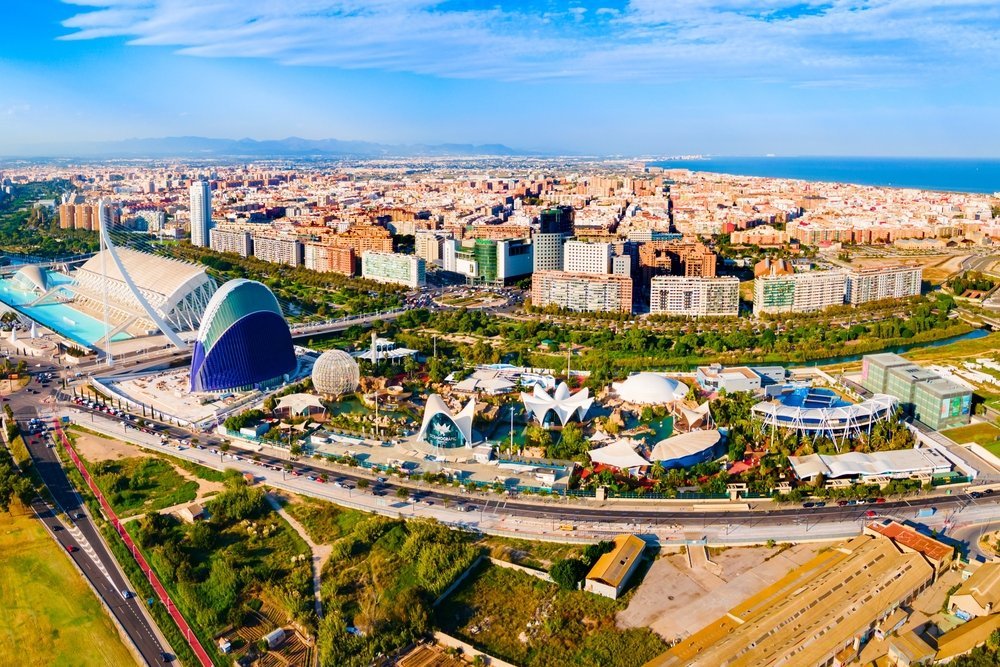
The city is also the home of paella, and the rice is grown around the Albufera lagoon south of the city. In summer, Malvarrosa beach is the big gathering spot, and in March the Fallas festival fills the streets with giant figures, fireworks and bonfires. Book well ahead if you want to experience it.
I’ve chosen hotels in and around the Old Town, so you can walk to most of the sights. If you’d rather stay in Ruzafa or by the beach, I’ve written a guide to where to stay in Valencia. My guide to things to do in Valencia has ideas for your days, and in the guide to getting from Valencia Airport you can read more about the metro and tickets.
The high-speed train from Madrid takes under two hours, so Valencia fits nicely into a tour of the country, and ferries sail from the port to the Balearic Islands. Three nights is about right, and from May to October you can easily squeeze in a beach day.
Hotels in Valencia
Caro Hotel - five-star palace hotel in the Old Town
Caro Hotel is set in an old palace on Calle Almirante in the Old Town, about 200 metres from the cathedral. There’s an outdoor pool that’s open in season, and the rooms range from 25 square metres up to junior suites of 70.
It’s for you if you want to stay surrounded by history and design in the middle of old Valencia. Breakfast isn’t included in the price, and parking costs about 25 euros a day (around £20). One guest feels the pool area could do with an upgrade.
One guest writes on Booking.com: “A phenomenal hotel. The staff couldn’t do enough for us.”
See photos and book Caro Hotel here.
Hotel Dimar - four-star design hotel in Eixample
Hotel Dimar is on Gran Vía Marqués del Turia in the Eixample district, just under a kilometre from Plaza del Ayuntamiento and about a 15-minute walk from the cathedral. The hotel has a gym and sauna, and the standard double room is 20 square metres.
I’d choose it if you want a modern, quiet stay within walking distance of both the Old Town and Ruzafa. Parking costs about 15 euros a day (around £13) and has to be reserved. Breakfast costs extra, and one guest feels the price is a little high.
One guest writes on Booking.com: “Friendly and helpful staff, beautifully decorated and clean rooms.”
See photos and book Hotel Dimar here.
Venecia Plaza Centro - two-star hotel on Plaza del Ayuntamiento
Venecia Plaza Centro sits right on Plaza del Ayuntamiento, so you can’t get any closer to the centre. It’s an officially two-star hotel with almost 10,000 reviews on Booking.com and a score above 9. The rooms are small, and the standard double room is 12 square metres.
It’s my budget pick, because the location is hard to beat. The hotel has few facilities, and the breakfast gets mixed reviews. You’ll find parking in a nearby public car park for about 15 euros a day (around £13).
One guest writes on Booking.com: “Everything was fantastic. I can’t praise the hotel enough and highly recommend it.”
See photos and book Venecia Plaza Centro here.
8. Alicante & Costa Blanca - best area for an easy beach holiday all year round 🌴
- 📍 Distance to the centre: The hotels are no more than around 350 metres from the Explanada de España seafront promenade.
- 🚋 Transport: You can walk to the centre and Postiguet beach. The TRAM runs along the coast towards Benidorm and Dénia.
- ✈️ Time from the airport: Alicante Airport (ALC) is south-west of the city. Bus C6 runs round the clock to Puerta del Mar in around 20-30 minutes, and the direct bus to Benidorm takes around 45 minutes.
- 💰 Price level: €€ to €€€. One of the cheaper places on the Mediterranean.
- 👮 Safety: A safe city. Keep an eye on your bag on the beach and in the nightlife in El Barrio.
Alicante is the main city on the Costa Blanca and a good choice if you want an easy beach holiday with a proper city around you. The Explanada de España promenade, with its palm trees and mosaic tiles, leads from the harbour towards Postiguet beach, and above the city Santa Bárbara Castle sits on Mount Benacantil.
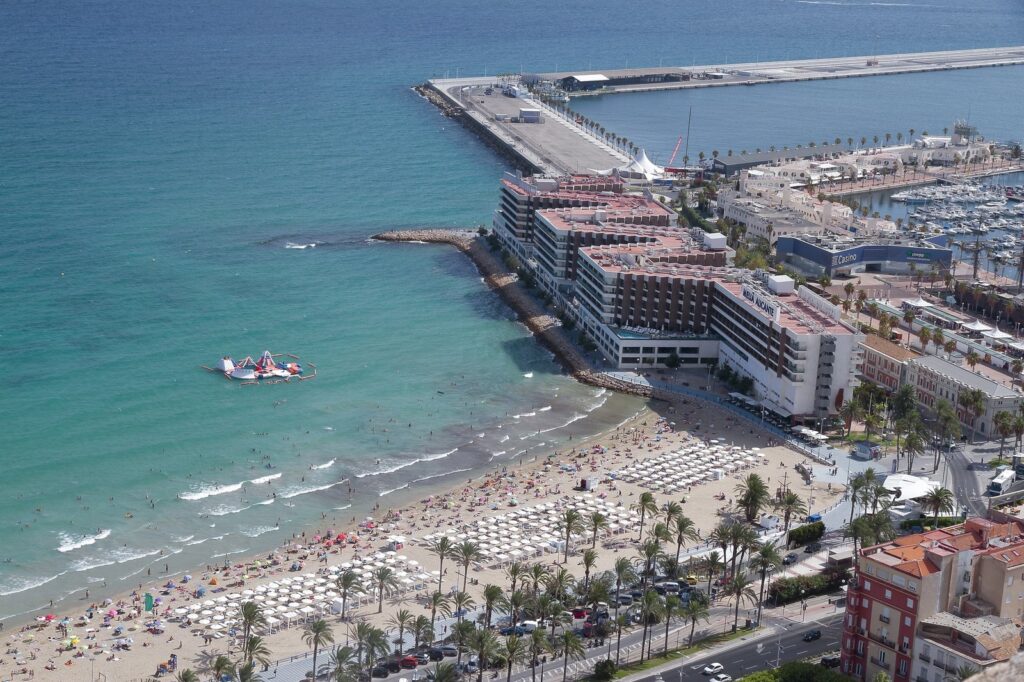
The city has mild weather all year round and direct flights from the UK, so it’s popular in both summer and winter. The Old Town, known here as El Barrio, lies just behind the beach with small squares and tapas bars, and in the evening the streets around San Nicolás Cathedral come alive.
I’ve picked three hotels in the centre between the harbour, the beach and El Barrio. If you’d like to know more about the neighbourhoods and beaches, I’ve written a guide to where to stay in Alicante, and a guide to getting from Alicante Airport by bus, taxi and the bus to Benidorm.
The Costa Blanca stretches north and south of the city. Benidorm has high-rises, long beaches and a huge choice of hotels, while Altea and Jávea are smaller and quieter. For a week with both beach and city, I’d stay in Alicante and take the tram or a hire car on day trips along the coast.
Hotels in Alicante
Hospes Amérigo - five-star design hotel with a spa and rooftop pool
Hospes Amérigo is on Calle Rafael Altamira, less than 150 metres from the Explanada de España. On the roof there’s a spa with a sauna, a pool and a gym with views of the cathedral and Santa Bárbara Castle. Rooms range from 22 to 46 square metres.
This is my luxury pick in Alicante, and the location between the harbour and El Barrio is perfect. Parking costs around 26 euros (around £22) per night. A few guests feel the roof terrace and pool could do with a refresh.
One guest writes on Booking.com: “A beautiful hotel with everything a hotel should have.”
See photos and book Hospes Amérigo here.
Hotel Alicante Gran Sol - four-star tower hotel with views over the harbour
Hotel Alicante Gran Sol is in a high-rise on Rambla Méndez Núñez, a few steps from the Explanada de España. The hotel’s strength is the view over the city and the sea, and at the top there’s a rooftop bar. The standard double room is 16 square metres.
I’d choose it for the view and the location. It has a lower score than the other two, and guests complain about the breakfast and slow lifts. There’s public parking around 200 metres away.
One guest writes on Booking.com: “Fantastic hotel with a great location, a superb view and friendly staff.”
See photos and book Hotel Alicante Gran Sol here.
Les Monges Palace Boutique - characterful hotel in El Barrio
Les Monges Palace is on Calle San Agustín in El Barrio, around 300 metres from the Explanada de España and close to the cathedral. The hotel is known for its quirky, personal décor, and rooms range from 18 to 21 square metres.
This is my budget pick and a good alternative to the big chain hotels. The rooms are small, and breakfast has a limited choice and must be ordered in advance. Private parking costs around 18 euros (around £15) per night and also has to be booked.
One guest writes on Booking.com: “I would definitely recommend this small, friendly hotel with the perfect location!”
See photos and book Les Monges Palace Boutique here.
9. San Sebastián & the Basque Country - best area for food, pintxos and a city beach 🍤
- 📍 Distance to the centre: The hotels are between about 100 metres and a kilometre from La Concha. Pensión Altair is in Gros on the other side of the river.
- 🚶 Transport: The city is small and best explored on foot. City buses run along the bay to Ondarreta and Monte Igueldo.
- ✈️ Time from the airport: Most people fly into Bilbao (BIO), where a bus runs roughly once an hour straight to San Sebastián’s bus station. Allow a little over an hour on the bus. It’s an estimate.
- 💰 Price level: €€€ to €€€€. One of the most expensive cities in Spain, especially in summer.
- 👮 Safety: A very safe city. Keep an eye on your bag in the packed pintxos bars in the Old Town.
San Sebastián, or Donostia in Basque, is Spain’s food city above all others. In the Old Town, the bars sit side by side with counters full of pintxos, the Basque small plates, and the city has a lot of Michelin-starred restaurants for its size. On top of that, it sits on one of Europe’s most beautiful city beaches.
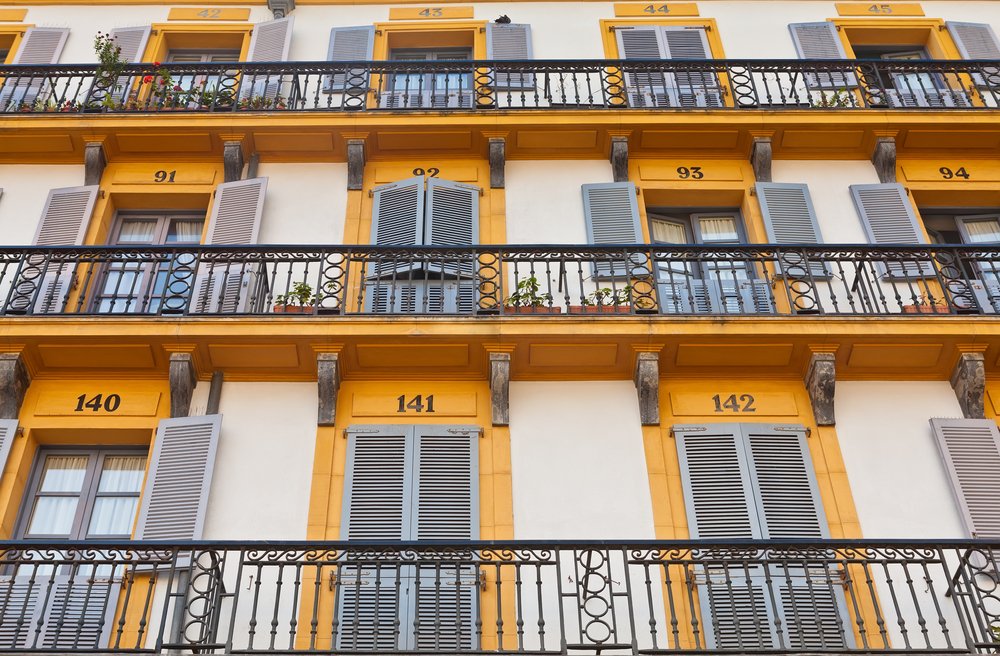
La Concha is the city’s best-known beach, and you can read more about the beach and the promenade on the tourist office’s page about La Concha. Across the River Urumea lies the surf beach of Zurriola in the Gros neighbourhood, and from Monte Igueldo you get a view over the whole bay.
See hotels in San Sebastián here.
If you’re choosing between the Old Town, Centro, Gros and Antiguo, I’ve written a full guide on where to stay in San Sebastián. Bilbao is about an hour away by car and is an obvious place to combine with San Sebastián for the Guggenheim Museum and Casco Viejo. Read my guide on where to stay in Bilbao if you want to split your trip.
The Basque Country has a greener, cooler climate than the rest of Spain, and it rains more often, even in summer. On the plus side, you escape the fierce heat. Two to three nights in San Sebastián is about right, and if you want to eat at one of the famous restaurants, book a table well in advance.
Hotels in San Sebastián
Hotel Maria Cristina - five-star grand hotel on the River Urumea
Hotel Maria Cristina is San Sebastián’s classic grand hotel, set on the River Urumea, about 450 metres from the Old Town and a five-minute walk from La Concha. Many rooms have water views, and rooms range from 35 square metres up to junior suites of 60.
It’s the obvious choice if you want to stay at the city’s most famous hotel. There’s no pool, which one guest missed, and parking costs about 51 euros a day (around £45).
One guest writes simply on Booking.com: “This hotel is just spectacular!!”
See photos and book Hotel Maria Cristina here.
Hotel de Londres y de Inglaterra - four-star hotel on the promenade at La Concha
Hotel de Londres y de Inglaterra sits right on the promenade at La Concha, about a five-minute walk from the Old Town. Many rooms look out over the bay, and rooms range from 22 square metres in a Classic to 38 square metres in a Grand City.
It’s my favourite mid-range pick, because you get the view of La Concha without paying María Cristina prices. Go for a sea-view room if your budget allows. Parking costs about 29 euros a day (around £25), and one guest wasn’t happy with the service in the bar.
One guest writes on Booking.com: “From our room there was a fantastic view over the beautiful La Concha beach.”
See photos and book Hotel de Londres y de Inglaterra here.
Pensión Altair - small guesthouse in the Gros neighbourhood
Pensión Altair is in Gros, just over a kilometre from La Concha and about a ten-minute walk from the Old Town. It’s a small guesthouse with a lift, and the rooms are small, from 10 square metres for a double, but there’s also a 50-square-metre studio.
It’s my budget pick in an expensive city. It feels more like an apartment than a hotel, as reception isn’t always staffed and there are lots of rules in the room. On the other hand, you’re close to the surf beach of Zurriola and the pintxos bars in Gros.
One guest writes on Booking.com: “The best thing is the location, just a ten-minute walk to the Old Town and La Concha beach.”
See photos and book Pensión Altair here.
10. Majorca - the best island for variety, from Palma to mountains and coves 🏝️
- 📍 Distance to the centre: The hotels are in Palma’s Old Town, roughly 400 to 700 metres from La Seu cathedral.
- 🚗 Transport: You can get around Palma on foot and by city bus. The rest of the island is easiest by hire car, but there are also buses and the old train to Sóller.
- ✈️ Time from the airport: Palma Airport (PMI) lies east of the city. Bus A1 runs to Passeig Mallorca in about 25 minutes.
- 💰 Price level: €€ to €€€€. Palma’s boutique hotels are expensive in high season, while the beach resorts have plenty of cheaper hotels.
- 👮 Safety: A safe island. Keep an eye on your bag in Palma’s streets and in the busy beach resorts in summer.
Majorca is the largest of the Balearic Islands and the one that offers the most all at once. Here you’ll find the capital Palma with La Seu cathedral by the harbour, the Serra de Tramuntana mountain range, which is a UNESCO World Heritage Site, small mountain villages such as Valldemossa and Deià, and countless beaches and coves.
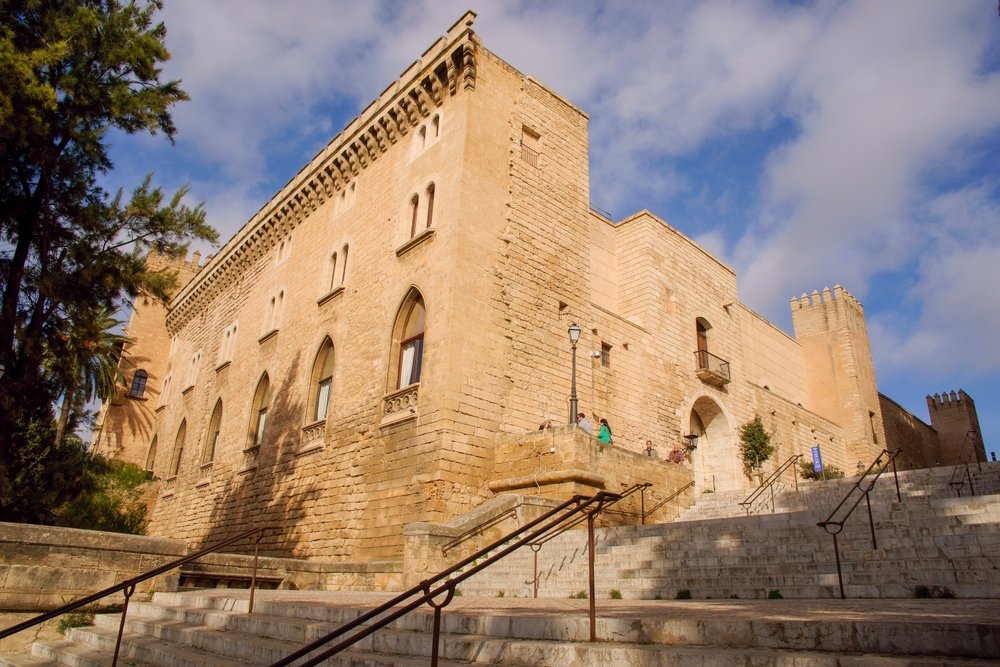
I’ve chosen three hotels in Palma, because the city is the best base if you want to combine city and beach and explore the island by hire car or bus. Palma’s Old Town has restaurants, shops and rooftop terraces with views, and the city beach is a short distance from the centre. If you’d rather have a classic beach holiday, Alcúdia in the north and Cala d’Or in the south-east are good alternatives.
If you’re choosing between Palma, Alcúdia, Sóller and the beach resorts, I’ve written a full guide on where to stay in Majorca. My guide to things to do in Majorca gives you ideas for day trips, and in the guide to transport from Majorca Airport you can read about the A1 bus and the buses to the beach resorts.
Majorca is a summer island, but it’s also good in spring and autumn, when the weather is better for hiking and cycling in the mountains. In winter many hotels in the beach resorts close, while Palma stays open all year. A week is about right if you want to see more than the beach.
Hotels in Majorca
Sant Francesc Hotel Singular - five-star mansion hotel with a rooftop pool in the Old Town
Sant Francesc is set in a mansion on Plaça de Sant Francesc in the Old Town, about 400 metres from the cathedral. On the roof there’s a pool with views over the city’s rooftops, and the hotel has a spa and a restaurant. Rooms range from 25 to 60 square metres.
This is my luxury pick in Palma if you want a quiet stay right in the heart of the old quarter. Valet parking costs around 32 euros (about £27) a day. Guests mention noise from outside and a small gym.
One guest writes on Booking.com: “It was breathtaking! A beautiful hotel with a fantastic view and a bit of history to it.”
See photos and book Sant Francesc Hotel Singular here.
Hotel Saratoga - four-star hotel with a rooftop pool and spa on Passeig Mallorca
Hotel Saratoga is on Passeig Mallorca at the edge of the Old Town, about 700 metres from the cathedral and close to the airport bus’s final stop. The hotel has a rooftop pool, a heated pool and a spa, and rooms range from 22 to 38 square metres.
It’s a good choice if you want a pool and spa without the five-star price. Parking costs around 16.50 euros (about £14) a day. One guest feels the rooftop area can be a little cramped.
One guest writes on Booking.com: “Fantastic hotel! Lovely pool areas, good food, incredibly helpful staff and a great location.”
See photos and book Hotel Saratoga here.
Hostal Pons - simple hostal with a courtyard garden in the Old Town
Hostal Pons is in an old townhouse on Carrer del Vi in the Old Town, just under 500 metres from the cathedral. The house has a garden and terrace, and the rooms are small, from 5 to 15 square metres. Some have a private bathroom, while others share a bathroom with a neighbouring room.
This is my budget pick and suits you if you value charm and location over comfort. One guest didn’t find the beds particularly comfortable, and there’s no parking.
One guest writes on Booking.com: “Everything. Great location, fantastic service and great value for money.”
See photos and book Hostal Pons here.
11. Ibiza - best island for nightlife and clear-water coves 🎶
- 📍 Distance to the centre: The hotels are in Ibiza Town, between roughly 250 and 750 metres from Dalt Vila.
- 🚌 Transport: Buses link Ibiza Town with Sant Antoni, Santa Eulària and the beaches, and boats to Formentera leave from the harbour.
- ✈️ Time from the airport: Ibiza Airport (IBZ) is south of Ibiza Town. Allow around 10-20 minutes by car. This is an estimate.
- 💰 Price level: €€€ to €€€€. One of the most expensive destinations in Spain in July and August.
- 👮 Safety: A safe island. Keep an eye on your belongings when you’re out at night and on the beach, and take a taxi back from the clubs.
Ibiza is famous for its nightlife, but the island is much more than clubs. Ibiza Town has the fortified Old Town of Dalt Vila, a UNESCO World Heritage Site, and around the island you’ll find rocky coves with clear water, whitewashed villages and quiet beaches in the north.
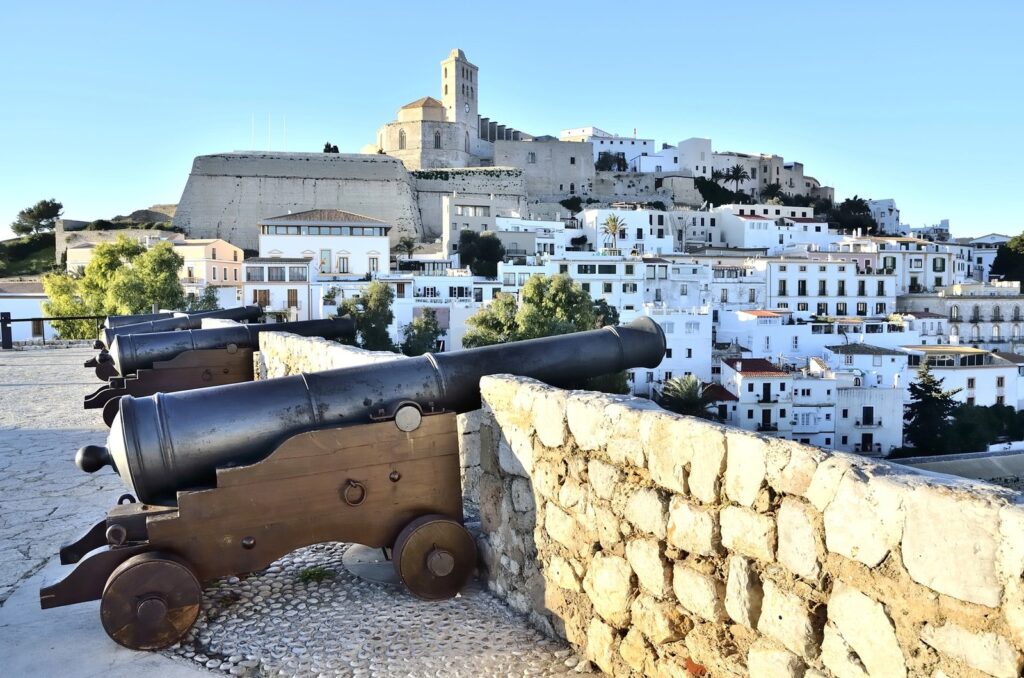
Where you stay makes a big difference to your trip. Ibiza Town and Playa d’en Bossa are the places for nightlife and the big clubs, Sant Antoni is known for its sunset bars, and Santa Eulària and the north coast are quieter and better for families with children. Ferries to Formentera, which has some of the most beautiful beaches in the Mediterranean, leave from the harbour in Ibiza Town.
I’ve picked three hotels in Ibiza Town, because here you have the restaurants, the harbour and the ferries right on your doorstep. If you’d rather stay by the beach or on the quiet side of the island, I’ve written a complete guide to where to stay on Ibiza, with six areas to choose from.
Ibiza is a summer island, and in winter many hotels, restaurants and clubs close. May, June and September bring warm weather and lower prices than July and August. Four to five nights is about right, and a hire car makes it easier to find the small coves.
Hotels on Ibiza
Hotel Mirador de Dalt Vila - five-star boutique hotel inside Dalt Vila
Mirador de Dalt Vila is on Plaça d’Espanya, inside the city walls of Dalt Vila. The hotel has a small outdoor pool and a restaurant, and rooms start at 34 square metres.
It’s for couples who want a quiet, exclusive stay in the heart of the Old Town. According to guests, the pool is small and doesn’t get much sun. It’s about a five-minute walk down to the restaurants in town.
One guest writes on Booking.com: “I loved everything about the place!”
See photos and book Hotel Mirador de Dalt Vila here.
Hotel Royal Plaza - four-star hotel with a rooftop pool near the harbour
Hotel Royal Plaza is in the newer part of Ibiza Town, about 200 metres from the harbour and just over 700 metres from Dalt Vila. On the roof there’s a pool with views over the town, and rooms range from 24 to 26 square metres.
This is my mid-range pick if you want a pool and walking distance to the harbour, the restaurants and the ferry to Formentera. Guests say the hotel feels a little worn, and one guest found the spa and pool under renovation.
One guest writes on Booking.com: “Lovely hotel, friendly staff and a nice, clean and comfortable room.”
See photos and book Hotel Royal Plaza here.
Hostal Ripoll Ibiza - simple hostal in the centre of Ibiza Town
Hostal Ripoll is on Calle Vicente Cuervo in the centre of Ibiza Town, about 150 metres from the harbour. It’s a simple hostal with air conditioning, and some rooms have a shared bathroom.
This is my budget pick on an expensive island and suits you if you’re out most of the day. Check whether your room has its own bathroom, as several guests are unhappy with the shared ones.
One guest writes on Booking.com: “Good location, very spacious and clean.”
See photos and book Hostal Ripoll Ibiza here.
12. Menorca - best island for peace and quiet, nature and families 🐚
- 📍 Distance to the centre: The hotels are in and around Mahón, from about 150 metres to one and a half kilometres from the harbour.
- 🚗 Getting around: Buses connect Mahón with Ciutadella and the beach resorts, but a hire car is the easiest option if you want to explore the coves.
- ✈️ Time from the airport: Menorca Airport (MAH) is just outside Mahón. Allow about 10-15 minutes by car to the town. This is an estimate.
- 💰 Price level: €€ to €€€€. Cheaper than Ibiza, but expensive in July and August.
- 👮 Safety: A very safe island and one of the most family-friendly in Spain.
Menorca is the quietest of the large Balearic Islands. The whole island is a UNESCO Biosphere Reserve, and it’s more low-key than Majorca and Ibiza, with coves of turquoise water, small whitewashed villages and coastal paths.
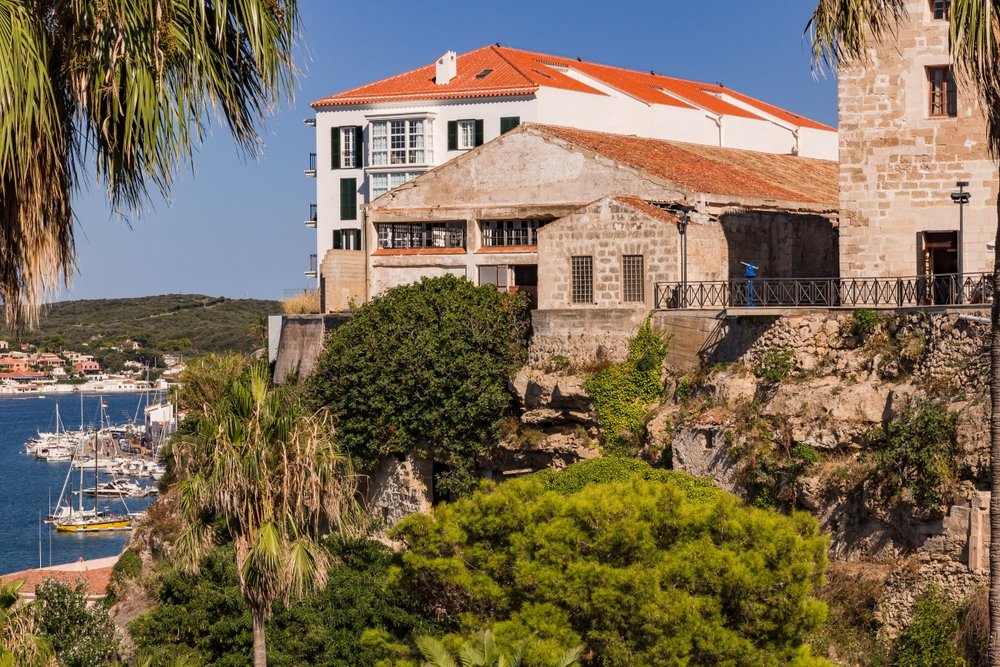
The island’s two towns sit at opposite ends. Mahón in the east has a large natural harbour and is close to the airport, while Ciutadella in the west has a beautiful Old Town and is closer to the famous coves of Macarella and Turqueta. I’ve picked three hotels in and around Mahón, but Ciutadella is just as good a choice.
If you’re choosing between Mahón, Ciutadella and the beach resorts along the south and north coasts, I’ve written a full guide on where to stay on Menorca. Menorca is especially good for families, because several of the beaches have shallow water and the atmosphere is relaxed. It takes about an hour to drive from Mahón to Ciutadella.
Menorca is a summer island, and many hotels close in winter. June and September are my favourite months, because the water is warm and the coves are less crowded. A week is about right, and a hire car is almost a must if you want to see more than one beach.
Hotels on Menorca
Can Alberti 1740 Boutique Hotel - five-star boutique hotel in an old townhouse in Mahón
Can Alberti 1740 is on Calle Isabel II in Mahón’s Old Town, about 200 metres from the harbour. It’s a small boutique hotel in an old townhouse, and the rooms range from 25 to 40 square metres. Breakfast is included.
It suits couples who want to stay somewhere stylish in the middle of town and walk to the harbour restaurants. There isn’t much outdoor space, and the hotel has no pool. You’ll find parking in a nearby car park for about 18 euros a day (around £15).
A guest writes on Booking.com: “A boutique hotel a short walk from the centre of Mahón, quiet and relaxing, and it felt more like staying in a private home.”
See photos and book Can Alberti 1740 Boutique Hotel here.
Hotel del Almirante - historic hotel with a pool and free parking
Hotel del Almirante is on the road between Mahón and Es Castell, a good one and a half kilometres from Mahón’s harbour as the crow flies. The house is also known as Collingwood House, and the hotel has an outdoor pool, a garden and a tennis court. There are family rooms of up to 40 square metres.
I’d choose it if you have a hire car and want a pool and free parking at a reasonable price. It’s about a ten-minute walk to the harbour. Breakfast costs about 16 euros (around £13), and one guest found the beds too hard.
A guest writes on Booking.com: “Charming hotel with a good location, fantastic staff and good facilities. The room was spotlessly clean.”
See photos and book Hotel del Almirante here.
Hostal Jume - modern hostal in the centre of Mahón
Hostal Jume is on Calle Concepción in the centre of Mahón, about 200 metres from the harbour. The rooms are modern and range from 10 to 45 square metres, and breakfast is included in the price.
It’s my budget pick and a good base if you want to stay in town and drive out to the beaches. Parking costs about 15 euros a day (around £13). One guest mentions thin walls.
A guest writes on Booking.com: “The staff were super helpful and friendly, the bed was comfortable, and it was spotlessly clean.”
See photos and book Hostal Jume here.
13. Tenerife - best island for winter sun and the Mount Teide volcano 🌋
- 📍 Distance to the centre: The hotels are on the south coast between La Caleta, Playa de las Américas and Los Cristianos, within about 4 km of Costa Adeje.
- 🚌 Transport: Buses run along the south coast and to Santa Cruz, but a hire car is the easiest way to get to Teide and Masca.
- ✈️ Time from the airport: Tenerife South (TFS) is close to the resorts. Bus 40 runs to Costa Adeje in about 40 minutes, and it’s quicker by car.
- 💰 Price level: €€ to €€€€. Most expensive around Christmas, February half-term and Easter.
- 👮 Safety: A safe island. Respect the red flags on the beach, and don’t leave valuables in view in your hire car.
Tenerife is the largest of the Canary Islands and one of the most popular places in Europe for winter sun. The islands lie off the west coast of Africa, so it’s mild all year round. Tenerife is also home to the Mount Teide volcano, Spain’s highest mountain, and the national park around it is a UNESCO World Heritage Site.
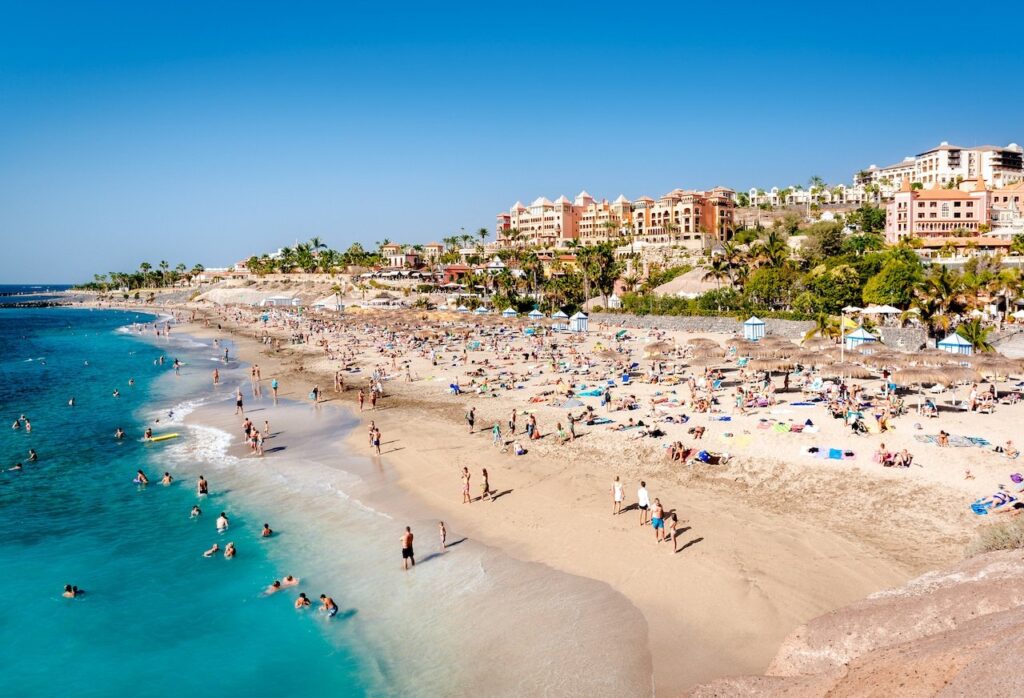
The vast majority of visitors stay in the south, where the sun shines most. Costa Adeje is the most upmarket area with the expensive hotels, Playa de las Américas has nightlife and restaurants, and Los Cristianos is an old fishing town that has become a relaxed resort with a harbour. The north coast, with Puerto de la Cruz and La Orotava, is greener and feels more Spanish, but it’s also cloudier more often.
If you need to choose between the south and the north, or between the individual resorts, I’ve written a full guide on where to stay on Tenerife. In my guide to things to do on Tenerife you’ll find Teide, Masca and Los Gigantes, and the guide to getting from Tenerife Airport explains the buses from both airports.
A week is the most common length of stay, and with a hire car you can drive up to Teide one of the days. If you want to continue to a quieter island, see my guide on where to stay on La Palma, which lies north-west of Tenerife.
Hotels on Tenerife
Royal Hideaway Corales Beach - five-star adults-only hotel in La Caleta
Royal Hideaway Corales Beach is by La Enramada beach in La Caleta, at the northern end of Costa Adeje. The hotel is adults-only and has three pools, including a rooftop infinity pool, as well as a spa and several restaurants. All rooms are junior suites or suites.
It’s for couples who want luxury and peace without children. The breakfast buffet is included, though one guest found it could be slow when busy. Parking costs extra.
One guest writes on Booking.com: “Everything! One of the best places we’ve ever stayed.”
See photos and book Royal Hideaway Corales Beach here.
H10 Conquistador - four-star beach hotel in Playa de las Américas
H10 Conquistador sits right on the beach in Playa de las Américas. The hotel has a large lagoon-style pool, a heated pool, a spa and a kids’ club, so it suits both couples and families.
It’s my mid-range pick if you want to stay by the sea close to restaurants and nightlife. Guests praise the buffet, but according to one guest the large pool is cold, and parking is limited.
One guest writes briefly on Booking.com: “The buffet had a huge selection.”
See photos and book H10 Conquistador here.
Ona Beverly Hills Suites - aparthotel with a pool in Los Cristianos
Ona Beverly Hills Suites is in Los Cristianos, about 2.3 km from the beach in Playa de las Américas. It’s an aparthotel with studios and apartments with kitchens, an outdoor pool and more than 4,000 reviews on Booking.com.
It’s my budget pick, because you get a kitchen and a pool at a low price and can save on eating out. There’s free public parking nearby. One guest complains about low water pressure.
One guest writes on Booking.com: “We liked the pool area and the clean rooms. The staff were very helpful.”
See photos and book Ona Beverly Hills Suites here.
14. Gran Canaria - best island for a winter break with dunes and long beaches 🏜️
- 📍 Distance to the centre: The hotels are in Maspalomas and Playa del Inglés, close to the dunes and the beaches.
- 🚌 Transport: Global buses run along the south coast and to Las Palmas. For the mountain villages, a hire car is the easiest option.
- ✈️ Time from the airport: Gran Canaria Airport (LPA) is on the east coast. The airport bus reaches Playa del Inglés in 25-30 minutes.
- 💰 Price level: €€ to €€€€. High season runs from Christmas to Easter.
- 👮 Safety: A safe island. Watch out for currents at the beach, and don’t leave valuables on the sand while you swim.
Gran Canaria is a classic winter-sun island for British travellers, and with good reason. The south coast has sunshine most of the year, long sandy beaches and the dunes at Maspalomas, which are a nature reserve. Inland you’ll find mountains, ravines and small villages such as Tejeda, and in the north lies the city of Las Palmas with its city beach, Las Canteras.
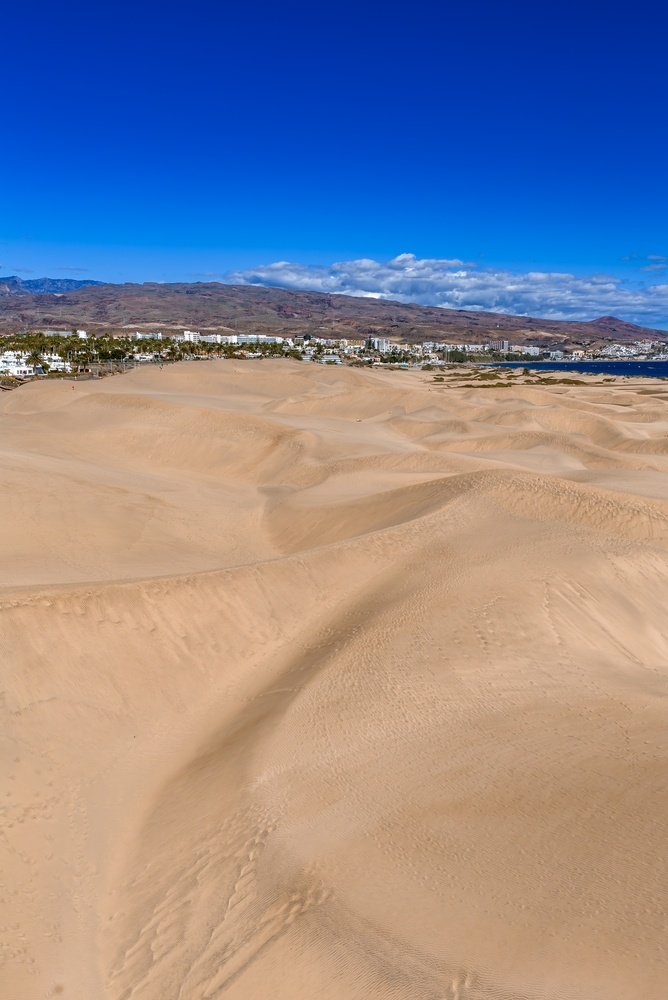
Most people stay in the south. Playa del Inglés is the busiest area, with lots of hotels, restaurants and nightlife, Maspalomas and Meloneras are quieter and a little more expensive, and Puerto Rico and Puerto de Mogán further west sit sheltered in bays. If you want more city life and everyday Spanish living, Las Palmas can be a good choice.
See hotels on Gran Canaria here.
If you need to choose between the individual resorts, I’ve written a full guide on where to stay on Gran Canaria. My guide to things to do on Gran Canaria gives ideas for days away from the beach, and the guide to getting from Gran Canaria Airport explains buses and taxis to both the south and Las Palmas.
If you already know Gran Canaria, the neighbouring islands of Lanzarote and Fuerteventura can be a good alternative, with long beaches and a dry, volcanic landscape. A week is the usual length of stay, and if you want to travel during the February half-term or the Christmas holidays, book early.
Hotels on Gran Canaria
Seaside Grand Hotel Residencia - five-star luxury hotel by the dunes
Seaside Grand Hotel Residencia is in Maspalomas, around 400 metres from the dunes. The hotel has a heated outdoor saltwater pool, a spa with free access for guests, and rooms ranging from 33 square metres to junior suites of 50.
It’s the island’s most exclusive address, and the price reflects that. Guests praise the breakfast and the service, but one guest mentions noise in some rooms, so ask for a quiet room. There is parking on site.
One guest writes on Booking.com: “The breakfast was truly exceptional, with a great selection of cheeses.”
See photos and book Seaside Grand Hotel Residencia here.
Hotel Parque Tropical - four-star hotel with gardens close to the beach
Hotel Parque Tropical is in Playa del Inglés, around 80 metres from the beach. The hotel is known for its large tropical garden and pool, and the rooms are around 40 square metres with a balcony or terrace.
It’s my mid-range pick if you want to stay close to the beach in a hotel with character. The food gets mixed reviews, and one guest found it a bit dull. There is public parking nearby.
One guest writes on Booking.com: “The gardens and the pool were excellent.”
See photos and book Hotel Parque Tropical here.
Apartamentos Don Pedro - self-catering apartments with two pools in Playa del Inglés
Apartamentos Don Pedro is on Avenida de Estados Unidos in Playa del Inglés, around a five-minute walk from the beach. There are two outdoor pools, and the apartments have fully equipped kitchens, from 35 square metres with one bedroom to 52 square metres with two.
It’s my budget pick, especially for families who want to cook some of their own meals. According to one guest, there can be outside noise in the mornings.
One guest writes on Booking.com: “It was very clean, the pool was excellent, and the staff were extremely polite and helpful.”
See photos and book Apartamentos Don Pedro here.
Where not to stay in Spain?
I wouldn’t stay in the big party resorts such as Magaluf, Playa d’en Bossa or Playa de las Américas if you’re looking for peace and quiet, as the nightlife is a big part of the atmosphere there. On the other hand, I wouldn’t choose a small mountain village as a base if you’re travelling without a car, as the buses are infrequent and you’ll spend a lot of time waiting.
In the big cities, I wouldn’t stay far out just to save a little on the room, because you’ll pay the difference back in time and transport every day. And I wouldn’t try to see all of Spain in one trip. The distances are huge, so it’s better to pick one region, for example Andalusia or Northern Spain, and combine it with a city.
If you have a week, I’d choose one city and one beach area, for example three nights in Seville and four in Málaga or Cádiz. With two weeks, you can do the classic round trip of Madrid, Seville, Granada and Málaga, or combine Barcelona with Valencia and one of the islands. If you’re travelling in winter, the Canary Islands are the safest bet for sunshine, while Andalusia and Valencia are great for a city break in mild weather.
Travel ressources & websites I use all the time 👇
• Booking.com has the best offers on hotels and unique places to stay
• GetYourGuide is the best place to book tours & activities with free cancellation
• Welcome Pickups is the best & safest place to pre-book airport transfers
Psst 👀 Have you subscribed to my Youtube channel and my Instagram where I provide more useful travel tips?